http://www.sciencepublishinggroup.com/j/ijmi doi: 10.11648/j.ijmi.20180603.12
ISSN: 2330-8303 (Print); ISSN: 2330-832X (Online)
An Effective Method for e-Medical Data Compression Using
Wavelet Analysis
Ibrahim Abdulai Sawaneh
Department of Computer Science, Institute of Advanced Management and Technology (IAMTECH), Freetown, Sierra Leone
Email address:
To cite this article:
Ibrahim Abdulai Sawaneh. An Effective Method for e-Medical Data Compression Using Wavelet Analysis. International Journal of Medical Imaging. Vol. 6, No. 3, 2018, pp. 25-32. doi: 10.11648/j.ijmi.20180603.12
Received: October 28, 2018; Accepted: November 23, 2018; Published: December 20, 2018
Abstract:
The continuous utilization of massive patient data via telecommunication medium is raising a concern either in data transmission speed, storage, security and privacy. The introduction of Informatization, Internet of Things (IoT), Big Data Technology, and e-health require effective data compression techniques that will help solve the numerous challenges evident in the conventional medical image compression schemes. In order to successfully transmit medical data via the network of networks demands an efficient data compression mechanisms without reduction in the image quality with reduced size. This mechanism greatly minimizes costs, provides mobility and comfort to the users, increase speed in medical file transmission and lot of more. The research investigates the various medical image compression platforms so, as to achieve efficient and effective scheme. Medical image compression require more proactive scheme that maintains vital features of patients. Several compression methods were applied and Discrete Cosine Transform (DCT) proved to have a superior compression ratio as opposed to Discrete Wavelet Transform (DWT). The proposed study indicated that the recovered medical images had similar results compared to the original image data. Finally, the research mitigated data storage issue of hard drive, reduce transmission time, improved patient’s mobility and the high cost of medical hardware devices.Keywords: Wavelet Transform, Discrete Wavelet Transform (DWT), Discrete Cosine Transform (DCT)
1. Introduction
There are several medical applications globally that utilize data compression schemes in order to process the medical image used in health, telemedicine, medicine, e-diagnostic analysis, and other medical data methods [1-2]. This is attributed to the numerous advances in informatization, big data technology, cloud computing and IoT requiring large data storage [3-5]. Analyzing and computing large medical dataset is difficult and complex in nature, especially when working with noisy and heterogeneous data is a challenge [6]. Digitizing the medical image is paramount, and paves an efficient mechanism to store and recover dataset without degradation in the image quality [7-8]. Numerous researches both academic and scientific have highlighted the need for superb medical image compression techniques. This is vital, as it helps hardware designers to minimize or redesign medical device that offers mobility, cost-effectiveness and comfortability to patients. Modern medical healthcare such as, e-health, e-medicare,
telemedicine, tele-health, mobile health and wireless healthcare system render opportunity for medical professionals to perform both physical and online diagnosis [9-11, 5]. However, there exist several challenges in processing and analyzing medical images such as, noise, storage space, and transmission rate as massive data are being transmitted via the network of networks. Some treatments, including brain and heart surgeries require effective transmission of medical images with fast speed. Therefore, medical image compression is needed to help increase transmission rate with fewer megabytes that can be recovered at the receiving computer without lost in the image quality [12].
permits the restructuring of the original image exactly, and lossy, which is the opposite of lossless, but has higher compression ratios. Noting that has the compression ratio increases, so the image quality decreases.
1.1. Research Statement
Fortunately, the need to provide more comfort ability and mobility in medical field using internet platform to transmit medical data from one point to another is growing every that passes by. This is accompanied with massive data usage that occupies larger storage space and low transfer rate.
Image data exhibits superior preference with regards to its usability in terms of bandwidth consumption for medical data communication. Therefore, the research tries to demonstrate the need to design or combine existing data compression schemes to solve the above problems. There exist several disadvantages of the analogue illustration of large images, for instance, CTs, MRI [13], and Ultrasound compared to digital counterpart. Also transmitting unprocessed digital data poses difficulty at the receiving PC resulting in high operation cost. Medical data are sensitive life threatening information meaning; during transmission no records should be lost.
The numerous problems can be addressed by applying DWT that has higher data compression and reconstruction advantage using Matlab. The proposed novel provides enhanced solution for health monitoring systems via DWT, Fourier transform, Fast Fourier transform and haar wavelet to decompress and reconstruct e-healthcare images without information degradation (reduce data size, reduce transmission interval and requires minimal energy use).
1.2. Research Objectives
The directive of the research is to design an effective compression scheme for compressing medical images, using wavelet analysis scheme, without distorting or losing the original features of that image.
1.3. Specific Objectives
The specific objectives of the research are outlined below: (1)To minimize the storage space for recording of patients
bio-data including RMI, CTs scan and ultrasound images.
(2)Pave the way for reduced medical gadget physical sizes that enhances mobility and comfort.
(3)Minimize medical file transfer rates
(4)Increase data transmission rate for diagnostic information.
(5)Enhance image quality after recovering without loss in quality.
(6)Render cost-effective medical gadgets.
2. Related Works
The difficulty exhibited by both time and frequency domains are vital in achieving superior data compression
result. As several medical image signals attribute time space domain with no information about the frequency. Wavelet analysis splits image signal into approximation and detail information. The approximation portion indicates image pixel values overview at the top left hand corner with the other three details (horizontal, vertical and diagonal) showing the changes the image undergo from one stage to another. Usually, the lesser detail coefficients are set to zero. The thresholding assigns values below the detail to zero. Many zeros or sparsity in e-Medicare renders excellent compression ratio. Power consumption is the number of records attained for compression and reconstruction processes that is comparable to the sum of the square pixel values. Noting 100% power preservation is lossless that maintain image quality without depreciation and lossy compression if the energy retention greatly reduces as in TV. A balance should be attained for huge energy loss if more zeros are to be generated.
Wavelet, a mathematical scheme partitions data into many sub-band frequencies. It is pivotal, as many biological samples are being investigated on diverse scale or resolutions referred to as multiresolution, permitting image decomposition. DWT has continuously been used in compressing medical images because of its recovering potentials with several mother wavelet domains. DWT coefficients are normally set to zero fluctuating up and down along the x-axis, and contain compact signal formation that the image is not over obtainable with many zeros rendering the algorithm more reliable and effective for optimal data recovering.
In wavelet transform, detail frequency of image signal is achievable at any particular interval, and in Fourier transform only the amplitude signal is noted while time frequency is discarded[14]. Features like matching pursuit method, basis pursuit, ℓ1 optimization method, mean square error, and
normalized mean square error play fundamental function in data reconstruction scheme. Each representation presents different feature and therefore, programmer needs to select appropriate scheme for particular task. Wavelet function Ψ( ) contains two main features [8];
Ψ ( ) = 0 (1)
For oscillatory function or wavy situation.
│Ψ ( )│ < ∞ (2)
Figure 1. Wavelet Image Compression Framework.
3. Methodology
The research adopted a combined schemes of Huffman coding, DWT and Discrete Wavelet Transform (DCT). This technique reduces the size of image and improves its quality.
3.1. Discrete Wavelet Transform (DWT)
DWT possesses optimal data compression ratio mostly deployed in medical and security applications. DWT consists of many mother wavelet functions [15].
DWT eliminates duplicates in images. Compressing image requires the programmer selecting the right mother wavelet functions. Compressing high quality image require you knowing more details about the sample image at hand.
Discrete wavelets platform uses filter banks. The sample resolution is tailored filtering, and scale altered up-sampling and down-sampling method. High-pass filter maintains high frequency, discarding low frequency records. Low-pass filter retains small frequency data and eliminates high frequency data. The record is further staled in two sub-bands (high and low frequency). The sub-signal obtained from the low filter has the highest frequency half the source image signal. This means the half source image signal is required to recover the source image. This reduces the resolution time. The estimated sub-signal is placed in the filter bank repetitively until the desire intensity of decomposition is attained. The research will finally achieve the estimated coefficients summing sub-signals and knowledgeable sub-signals together and the source image obtained.
Applying high redefinition DWT to support 3D-DWT [16] is essential. Selecting suitable image compression platform to compress 3D and 4D medical image datasets [17-18].
Merits of DW Analysis
(1)Render larger storage capacity.
(2)Enhance wellbeing data transmission rate.
(3)Flexibility in compressing and decompressing files. (4)Ease the mathematical difficulty.
Demerits of Discrete Wavelet Analysis (1)Normally results in transmission error.
(2)Decompresses image signal before making judgment. (3)Sometimes results in complication.
Table 1. Pseudo Code for DWT Compression.
Pseudo Code for DWT Compression
Decomposition Stage
A wavelet type was chosen with N, calculate the wavelet and decompose image signal at N level. Thresholding
Hard thresholding was applied to individual level starting 1 to N to coefficients. Reconstruction Stage
Calculate the reconstructed wavelet from true approximation coefficients.
3.2. Discrete Cosine Transform (DCT) Coding
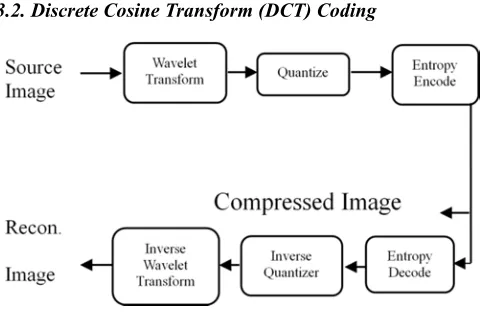
Figure 2. Image Compression Framework.
DCT [19-20] offers approximation discloses Discrete Fourier Transform (DFT) real portion of the series. For instance, in a given set of data of N, the DCT’s computational periodicity is of order log resembles DFT but with optimal convergence than DFT. Figure 2 shows
image originally decomposes into an 8 x 8 partitions allowing forward discrete cosine transform (FDCT) to be executed on each block partition. FDCT concentrates on image signal in lower spatial frequencies whose number of bits are quantified to zero or close zero. The coefficients are then finally quantized and encoded to attain the compressed image, and the revise produces of IDCT achieved the decompression process.
3.3. Image Compression Framework
disks, increases transmission bandwidth and requires more time for both uploading and downloading processes. Therefore image compression answers those questions. Medicare image compression effectively compresses and decompresses images in medical fields. Lossless compression includes Huffman coding, LZW coding, Entropy coding, Bit-plane coding and Run-length coding and lossy examples are fractal compression, wavelet transform, transform coding, Fourier-related transform and discrete cosine transform.
4. Basic Data Compression Types
There exists lossy and lossless compression [23-24] as adopted in healthcare image compression 2.6. Survey Sample
4.1. Lossy Compression
Lossy compression [25] is used in numerous healthcare applications including Transform coding, DCT and DWT. Lossy data compression is not attainable, as the compressed image cannot be regained exactly as the original source image but instead gives an approximation image. Here, sometimes the programmer must choose whether to tradeoff image data size over image quality.
( , ) ( , ) (3)
Lossy scheme process images to lesser size than lossless method, but attaining higher compression ratio.
4.2. Lossless Compression
An enhanced and efficient data compression platform called lossless compression recovers the compressed data exactly as the original data without data loss. The scheme exploits only the statistical duplications and maintains the image quality [26].
5. Image Compression and
Reconstruction
Image Compression decreases the size of an image and hence, reduces the storage capacity and enhanced the file transfer rate. It consists of the encoder and the decoder. Image f (x, y) is placed into the encoder producing a set of input data to epitomize image. The approximation image f '(x, y) is attained by compressing and de-compressing the image.
a
b
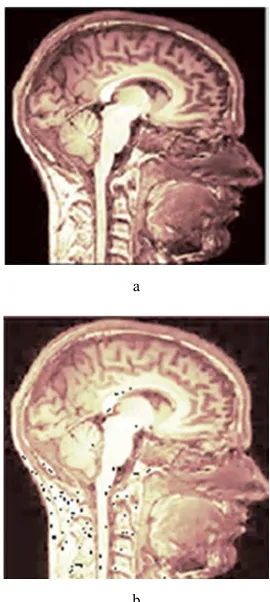
Figure 3. a. Original Image; b. Compressed Sample.
Table 2. Wavelet Image Compression and Decompression.
Algorithm: DWT Image Construction and Decomposition Lunch Matlab and open the wavemenu toolbox
Load the image named brain.jpg with resolution 153 x 150 Choose biorthogonal wavelet type and then select level 3. Click analyze and select compress.
Use “By level thresholding” and select “Bal. Sparsity-norm. Also select “vertical detail coeffs”. Click compress and save the image.
Table 3. Results obtained from figures 3a and 3b.
DWT Level Threshold Values
Level 1 11.86
Level 2 11.86
Level 3 11.86
Figure 3a is the original image, and figure 3b is compressed image. Energy retained in compressing and decomposing the image was 99.995 with 60.03 % zeros.
Several other wavelet types were experimented and the
results are as shown in table 4.
Table 4. Comparison of Wavelet Types.
Wavelet Type Energy Retained (%) Number of Zeros (%)
Haar 99.94 58.90
Bior 99.99 60.03
Coif 99.91 65.57
Sym 99.93 62.06
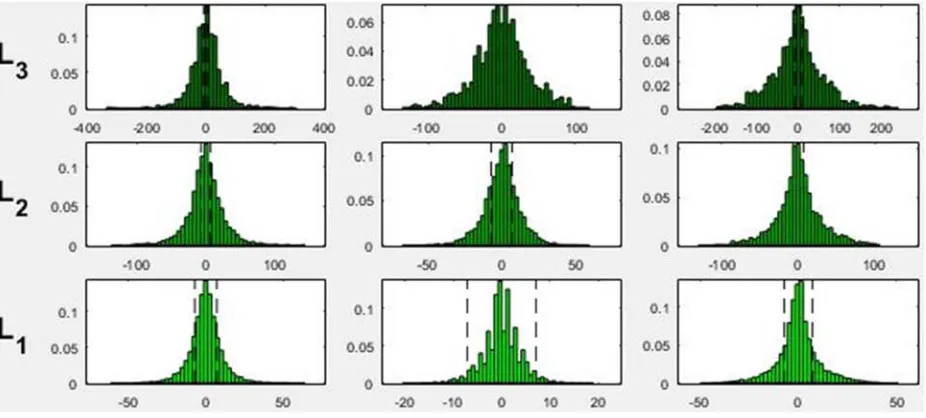
Figure 4. Biorthogonal Medical Image Illustration.
6. Parametric Metrics
Digital images are compressed using several data compression platforms that are examined with one or more metrics [8] are deployed to measure the performance of the processed image in Matlab in equations 4, 5 and 6. Peak Signal to Noise Ratio (PSNR) as a metric proved that the synthesized image attained optimal quality after compression. PSNR and MSE measured in Decibel.
Also, Mean Square Error (MSE) is used to examine image quality. PSNR is inversely proportional to MSE. Compression Ratio, a parametric metric calculate the amount of compression. PSNR and Compression ratios are inversely related. Numerous data compression performance indexes [8].
=10 log 255 /$ % & (4)
$ %
'(∑ ∑ * , + , ,
( -. '
/. (5)
Note, MSE is mean square error, M = Image rows,
N = Image columns.
01 23
234 (6)
01 is Compression ratio.
Example, the CR 80:1 means the source image has 80- bits per unit in the compressed data.
6.1. Haar Wavelet
Haar, a family of the mother wavelet is deployed to construct an orthogonal basis in L2 (IR) via dilations and integer translation. A multiscale differential operator of order 1 is evident in haar mother wavelet. Haar wavelet flows in a discontinuous order, and therefore, it is not differentiable.
However, haar wavelet transform exhibits features that analyses signals, such as to monitor tools failure in machine.
6.2. Biorthogonal Wavelet
Biorthogonal wavelet is a wavelet transform that is invertible and necessary not orthogonal in nature. It allows more degree of freedom compared to orthogonal wavelets, such as the construction of symmetric wavelet function, decomposition (analysis) and reconstruction (synthesis) of images are possible if the requirements assigned to the same orthogonal basis are discarded. It commute roles, to ensure the tilde functions are utilized in analyzing, while the dual ones are used in reconstructing the image.
Importance of Biorthogonal Wavelet
(1)Bior exhibits robust control on healthcare image compression (compactness)
(2)Flexibility is contained in biorthogonal wavelet analysis
(3)Compact domain allows accurate implementation. (4)Wavelet and scaling function are represented by FIR
filter.
6.3. Coiflet Wavelet
It is designed by Ingrid Daubechies on the request of Ronald Coifman. In order to calculate the initial coefficient sequence of the pyramidal algorithm as simply as possible, it is useful to have moments of the scaling function of as high an order as possible equal to zero. They are less asymmetric as compared to the wavelet Ddr.
6.4. Symlet Wavelet
Table 5. Comparison for four wavelet types.
Wavelet Type Original Image in PNG Compressed in PNG Compressed in JPG Compression Ratio in PNG
Haar 44.5KB 14.5KB 6.48KB 3.0700
Bior 44.5KB 15.4KB 6.58KB 2.8900
Coif 44.5KB 18.9KB 6.63KB 2.3545
Sym 44.5KB 18.6KB 6.59KB 2.3925
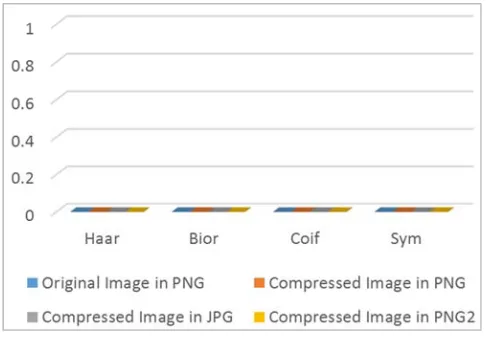
Table 5 shows the comparison among four wavelet types (haar, bior, coif & sym). Coif is proven to have the best compression ratio of 2.3545, haar shows the best compression of 14.5KB in PNG and 6.48KB in JPG. The experiment also proved that JPG has better compression ratio than PNG.
Figure 5. Comparison for Four Wavelet Types.
Table 6. MSE, PSNR and CR values of different performance indexes for Brain.
Wavelet Type MSE PSNR CR
Haar 60.25 30.33 10.9167
Bior 60.25 30.33 10.9167
Coif 58.89 30.43 9.7300
Sym 59.03 30.42 9.6324
Table 6 indicates the assessments of three parametric performance indexes for brain scan with four (4) different wavelet types. The experiment indicates that coif had superior MSE and PSNR as compared to other wavelets, but sym attributes excellent compression performance ratio.
7. Software Implementation
Matab platform was used for implementing the research objective through the graphical user interface toolbox. And experimentation was successful in accurately recovery vital signs with high optimal performance without image loss.
7.1. Experimentation
Different medical images were collected, stored, processed and analyzed using different wavelet types [26]. The study focused more on DWT, Haar wavelet, biorthogonal wavelet because of limited research time. Lossless was used to compress, decompress and de-noise medical images, as medical data requires reliability and completeness.
Performance indexes such as CR, MSE and PSNR were applied to test the effectiveness of our proposed scheme.
7.2. Discussion
Table 4.1indicates an image with resolution 640 x 640 and size 92. 0 KB in JPEG formats for three wavelet types. The wavelet type (sym) proves better compression ration than haar and Biorthogonal wavelets. But our experiment further tells us that haar has superior error with peak signal to noise ratio corrections than the two-wavelet types.
The experimentation adapted better reconstruction scheme is faster and effective several times than the conventional compression-based algorithms.
8. Conclusion
Traditional data compressibility yields little effects on health monitoring system. Other difficulties like bulky wired devices attached to patient restrict mobility and comfort, creates poor image quality, and inability to constantly monitor patient out of hospitals. This report shows that a highly efficient image compression can be achieved when DWT-approximation information is utilized well. Compression-based algorithm skillfully recovers signals & imageries with little alertness of the measurements' sparsity with excellent quality.
Nevertheless, there exist few drawbacks in healthcare image processing for remote health tele-monitoring systems. Non-sparsity of few samples recorded in remote health tele-monitoring pose major challenges.
The proposed scheme uses DWT based-compression technique to compress and decompress medical image for reduced transmission times with superior data compressibility. The author was able to achieve this in reducing data storage space. Therefore, the research is directed towards establishing minimal cost, better data compression for analysis of different models resourceful medical image compression-based algorithm. Many mother wavelet mother types were used including DWT, Fourier Transform, FFT and Haar to check for high efficiency. This is necessary because of the rising utilization of health monitoring systems and intelligent agencies as key foundation.
9. Recommendation
other parametric index such as percentage root-square distortion (PRD).
Acknowledgements
Thanks and appreciation goes to a Thesis title "DWT Based Image Compression for Health Systems" written by (Sawaneh, 2017). The researcher also acknowledges the support received from the Institute of Advanced Management and Technology (IAMTECH), particularly Prof. Paul Kamara and wife Dr. (Mrs.) Abie Paula Kamara, Dr. Michael Nicolas Wundah, and Mrs. Elizabeth Sawaneh. The author would also like to acknowledge Assistant Prof. Nadir Mustafa Mohammed Osman of the University of Blue Nile (UOBN) in Sudan and Professor Jian Ping-Li of the University of Electronic Science and Technology of China.
Appendices
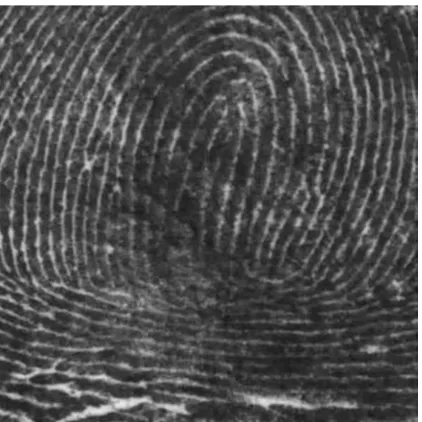
Figure A1. Detfingr_Compressed_haar (19.1KB).
Figure A2. Detfingr_Compressed_bior (19.4KB).
Figure A3. Detfingr_Compressed_coif (18.6KB).
Figure A4. Detfingr_Compressed_sym (19.0KB).
References
[1] Stephen Wong, Loren Zaremba, David Gooden, and H. K. Huang” Radiologic Image Compression-A Review.
[2] S. Hludov, Chr. Meinel Institut of Telematics,” DICOM - image compression.
[3] S. Sagiroglu,D. Sinanc. Big data: A review [C]. International Conference on Collaboration Technologies and Systems, 2013, 42–47.
[4] M. Molly Knapp. Big Data. Journal of Electronic Resources in Medical Libraries [J]. 2013, 10(4), 215–222.
[5] F. F. Costa. Big data in biomedicine [J]. Drug Discovery Today, 2014, 19(4), 433–440.
[7] DCT-BASED IMAGE COMPRESSION by Vision Research and Image Sciences Laboratory.
[8] Andrew B. Watson, NASA Ames Research Center, Image Compression Using the Discrete Cosine Transform, Mathematica Journal, 4 (1), 1994, p. 81-88.
[9] Compression of Medical Images Using Wavelet Transforms- Ruchika, Mooninder Singh, Anant Raj Singh
[10] M. Antonini, et al.: “Image Coding Using Wavelet Transforms” IEEE Trans. Image Processing, vol. 1, no. 2, pp. 205-220, April 1992.
[11] V. Marx, Biology. The big challenges of big data [J]. Nature, 2013, 498(7453), 255
[12] Liang, Z. P.; Lauterbur, P. C. Principles of Magnetic Resonance Imaging: A Signal Processing Perspective; Wiley-IEEE Press: New York, NY, USA, 1999.
[13] Z. Zhang and B. D. Rao, “Extension of SBL algorithms for the recovery of block sparse signals with intra-block correlation,” IEEE Trans. on Signal Processing, vol. 61, no. 8, pp. 2009– 2015, 2013.
[14] ISO/IEC 15444-1 j ITU-T Rec. T.800, Information Technology - JPEG 2000 Image Coding System: Core Coding System, 2002.
[15] P. Schelkens, A. Skodras, T. Ebrahimi, The JPEG 2000 Suite, Wiley Publishing, 2009.
[16] V. Sanchez, J. Bartrina-Rapesta, Lossless compression of medical images based on HEVC intra coding., in: IEEE International Conference on Acoustics, Speech and Signal Processing, ICASSP 2014, Florence, Italy, May 4–9, 2014, 2014, pp. 6622–6626.
[17] V. Sanchez, F. A. Llinàs, J. Bartrina-Rapesta, J. Serra- Sagristà, Improvements to HEVC intra coding for lossless medical image compression, in: Data Compression Conference, DCC 2014, Snowbird, UT, USA, 26– 28 March, 2014, p. 423.
[18] W. B. Pennebarker, J. L. Mitchell, JPEG still Image Data Compression Standard, 1st edition, Kluwer Academic Publisher 1992.
[19] ISO/IEC 10918-1 j ITU-T Rec. T.81, Information Technology – Digital Compression and Coding of Continuous-tone Still Images, 1992.
[20] J. Walker and T. Nguyen. Wavelet-based image compression [J]. 2001
[21] S. Grgic, M. Grgic, B. Zovko-Cihlar. Performance analysis of image compression using wavelets [J].2001, 48 (3), 682–695 [22] Said, A., & Pearlman, W. A. (to appear). An image
multiresolution representation for lossless and lossy compression. IEEE Transactions on Image Processing. [23] R. C. Gonzalez, R. E. Woods, S. L. Eddins, ―Digital Image
Processing using MATLABǁ.
[24] Pu, L.; Marcellin, M. W.; Bilgin, A.; Ashok, A. Image compression based on task-specific information. In Proceedings of the 2014 IEEE International Conference on Image Processing (ICIP), Paris, France, 27–30 October 2014; pp. 4817–4821.
[25] M. Kaur, G. Kaur. A Survey of Lossless and Lossy Image Compression Techniques [J]. 2013,3(2), 323–326