S Y S T E M A T I C R E V I E W P R O T O C O L
Open Access
How effective are slurry storage, cover or catch
crops, woodland creation, controlled trafficking or
break-up of compacted layers, and buffer strips
as on-farm mitigation measures for delivering an
improved water environment?
Nicola P Randall
*, Louise M Donnison and Paul J Lewis
Abstract
Background:Agriculture has intensified over the last 50 years resulting in increased usage of fertilizers and agrochemicals, changes in cropping practices, land drainage and increased stocking rates. In Europe, this has resulted in declines in the quality of soils and waters due to increased run off and water pollution. Fifty percent of nitrates in European rivers are derived from agricultural sources in the UK this value is as high as 70%, where agriculture also contributes to approximately 28% of phosphates and 76% of sediments recorded in rivers. Catchments dominated by agricultural land use have increased levels of pesticides and bacterial pathogens. European member states have a policy commitment to tackle water pollution through the Water Framework Directive. An analysis of the effectiveness of water pollution mitigation measures should enable decision makers and delivery agencies to better facilitate catchment planning.
The aim of this systematic review is to assess the effectiveness of slurry storage, cover/catch crops, woodland creation, controlled trafficking/break-up of compacted layers and buffer strips, as on farm mitigation measures, for delivering an improved water environment.
Methods:The systematic review will consist of a searchable systematic map database for all the named interventions. Where possible, quantitative analysis will be used to assess the effectiveness of interventions. Electronic databases, the internet, and organisational websites will be searched, and stakeholders will be contacted for studies that investigate the impact of the on-farm mitigation measures on water quality. All studies found will be assessed for suitability for inclusion in the next stage. Inclusion criteria will be based on subject, intervention, comparator and outcome. The details of included studies will be incorporated into the systematic map database, and studies scored for effectiveness of intervention and study design. Where there is suitable data available, meta-analysis will be carried out to test the effectiveness of individual mitigation measures. A report will summarise the evidence, highlight any gaps in the available research, and provide recommendations for future research.
Keywords:Farmland pollution, Water quality, Cover crop, Soil compaction, Nitrate, Phosphate, Pesticide, Sediment, Systematic map
* Correspondence:[email protected]
Harper Adams University College, Newport, Shropshire TF10 8NB, UK
Background
Agriculture in Europe has become progressively more intensive over the last 50 years, resulting in increased usage of fertilizers and agrochemicals, changes to crop-ping practices, land drainage, and increased stocking rates [1]. The risk of soil erosion and water run-off have increased due to soil compaction and reduced organic matter content resulting from intensive agricultural practices. Application of nutrients in excess of plant needs, coupled with run-off from agricultural land has contributed to a decline in water quality [2].
Between 2004 and 2007, nitrate levels across Europe exceeded European water quality standards (50 mg/litre) in 15% of groundwater monitoring stations and 3% of surface stations. Particularly high levels of nitrate are found in surface waters of England, Belgium (Flanders), Netherlands, France (Brittany), Estonia, Northern Italy, North East Spain and Slovakia [3]. A recent study of 4 European river basins (Elbe in Czech Republic/Germany, Danube in 10 countries, Schelde in Belgium and Llobre-gat in Spain) has shown that 44 out of 500 chemicals tested for in river water were at levels that could have effects on organisms, and 75% of those chemicals were pesticides [4]. Furthermore, it is estimated that 200 mil-lion cubic metres per year of sediment are dredged from European rivers [5]. In the United Kingdom (UK), for example, approximately 28% of phosphates, 70% of nitrates and 76% of sediments in rivers are derived from agricultural activities [6,7]. In addition, UK catchments dominated by agricultural land use have increased levels of bacterial pathogen counts [8].
A decline in water quality has increased water cleaning costs, reduced reservoir capacities and negatively impacted on wildlife and flood defences [9]. Changes in weather pat-terns may result in further declines in water quality. Climate change scenarios suggest that the UK will experience wetter winters, and warmer, drier summers. Increased extreme wea-ther events may increase the likelihood of heavy rains wash-ing soil and pollutants into river systems and drier summers will concentrate levels of pollutants in rivers [10].
European member states have a policy commitment to tackle water pollution through a number of directives namely the Water Framework Directive (WFD), the Ni-trate Directive, the Ground Water Directive and the Bathing Water Directive. In the UK, Nitrate Vulnerable Zones (NVZs) are used to implement some of this policy nationally [10]. During the last 10 years the UK Depart-ment for EnvironDepart-ment Food and Rural Affairs (Defra) and the Environment Agency (England and Wales) have funded 200 catchment projects at a cost of around 70 million pounds, of which Defra funded 178 [11]. Much of this funding was spent on studies that assessed the ef-ficacy of mitigation measures in delivering an improved water environment [12].
Objective of the Review
In order to inform future decision-making, a need was identified to evaluate the evidence for the effectiveness of five on-farm mitigation measures that may protect or improve environmental water quality [13]. Those mea-sures are slurry storage, cover crops/catch crops, wood-land creation, break-up of compacted layers/controlled trafficking and buffer strips. Slurry storage can reduce pollution incidents caused by spills and leaks, and enables slurry to be kept for spreading when crops are best able to uptake nutrients [14]. Fast growing crops grown between the planting of the main crop (cover crops or catch crops) are used to protect the soil against erosion, minimize the risk of runoff, and ensure that nutrients stay in the root zone [15-17]. Woodlands can improve soil structure, reduce water runoff and aid infil-tration of water into soils which reduces the risk of pol-lutants entering into water sources [18,19]. Confining farm machinery to certain areas of a field to reduce com-paction (controlled trafficking) and breaking up compacted soil layers may reduce soil erosion and water run-off [20]. Buffer strips composed of grass and/or trees can improve water quality by physically trapping sediments and asso-ciated pollutants and immobilizing nutrients through plant uptake or microbial degradation [21,22].
This systematic review will assess the effectiveness of slurry storage, cover/catch crops, woodland creation, controlled trafficking/break-up of compacted layers and buffer strips, as on farm mitigation measures, for deli-vering an improved water environment. The outputs will consist of a searchable systematic map database for all the named interventions, quantitative analysis of each intervention (depending on the availability of suitable data), and a report summarising the findings.
An analysis of the effectiveness of water pollution miti-gation measures should help enable decision makers and delivery agencies to better facilitate catchment planning as required under the European Water Framework Dir-ective [23].
Primary question
This study aims to address the following question: How effective are the following five on-farm mitigation measures in delivering an improved water environment:
Slurry storage
Cover crops/catch crops Woodland creation
Break-up compacted layers (arable and grassland) and controlled trafficking (grassland)
Buffer strips?
Primary outcomes measured will be:
Bacteria in bathing and shellfish waters Pesticides
Sediment loading and colour (in raw water quality abstracted)
Sediment loading and impact on fish and plants
Methods
The methods used in the development of the systematic map and subsequent systematic review analyses will be adapted from the Collaboration for Environmental Evi-dence Systematic Review Guidelines [24] and from an existing systematic map report [25].
Searches
A comprehensive search will be undertaken using mul-tiple information sources to capture an un-biased sample of literature. The search strategy has been developed to identify both published and grey literature.
An initial scoping search was performed to validate the methodology. Search terms were tested for specificity and sensitivity using the online database Web of Knowledge, and used to indicate the volume of relevant literature. In addition, a few search terms were tested on CAB abstracts and Science Direct. The search terms, number of articles found and general quality of the search results were recorded in a spread sheet (Microsoft Excel) [see Add-itional file 1]. The results of the scoping search were used to inform the final search strategy.
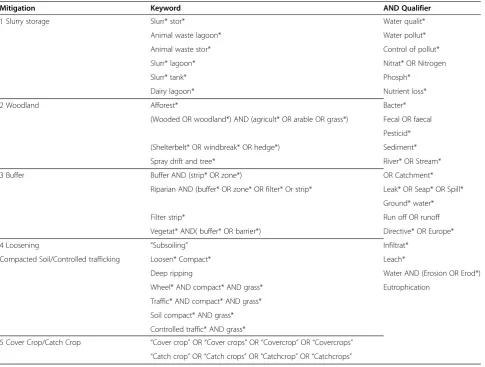
Table 1 lists the search terms which will be utilised for each of the database and web searches.
A wildcard (*) will be used where accepted by a data-base/search engine to pick up multiple word endings. For example pollut* would pick up pollutant, pollution. A keyword may be made more restrictive by the addition of a qualifier e.g. (slurr* stor* AND water qualit*), (slurr* stor* AND water pollut*). The combination of qualifiers and keywords will vary for each intervention, based on the results of the scoping search. The exact keyword and qualifier combinations to be used are listed in the add-itional file [Addadd-itional file 1].
The following online sources will be searched to iden-tify relevant literature:
Electronic databases:
ISI Web of Knowledge involving the following products: ISI Web of Science; ISI Proceedings Science Direct
Wiley Online Library Ingenta Connect Index to Theses Online CAB Abstracts
Agricola Copac
Directory of Open Access Journals
Organisational websites:
Department of Environment Food and Rural Affairs online database (UK)
Environment Agency (UK)
Natural Environment Research Council Open Research Archive (UK)
Forestry Commission/Forestry Research (UK) The Woodland Trust (UK)
Centre for Ecology and Hydrology (UK) Natural England
Countryside Council for Wales Scottish Natural heritage Scottish Environment Agency
Northern Ireland Environment Agency European Environment Agency EU Water Frame Directive
European Commission Joint Research Centre Controlled traffic farming (European site) Finnish Environment Agency
Ministry of Agriculture and Forestry (Finland) Swedish Environment Agency
Danish Environment Agency
Ministry of Food, Agriculture and Fisheries (Denmark) Government Norway Portal
Flemish Environment Agency Agriculture and Agri-Food Canada Environment Canada
US Department of Agriculture US Environment Protection Agency
Agency of the Environment and Energy (France) Federal Environment Agency (Germany)
Federal Ministry of Food, Agriculture and Consumer Protection (Germany)
Netherlands Environmental Assessment Agency Department for the Environment, Transport, Energy and Communication (Switzerland)
Federal Office for Agriculture (Switzerland) Environmental Protection Authority (New Zealand) Ministry of Agriculture and Fisheries (New Zealand) Food and Agriculture Organization of the United Nations
Ecologic Institute (European)
EU Cost (European Cooperation in Science and Technology)
within the field. Database and repository searches will be conducted in the English language. Therefore any Euro-pean Environment Agency or Agricultural Department website which is not searchable in English will be excluded. The potential language bias associated with this strategy was discussed with funders and stakeholders at an initial inception meeting, and was considered acceptable for this review.
Bibliographies of articles viewed at full text will be searched for relevant articles missed by previous searches. For example, Mayar [22] lists over 80 studies that examined the effect of buffer strips on nitrate levels in water. Recognised experts, practitioners and authors will be contacted for further recommendations and for provision of relevant unpublished material or missing data. For example, Corell [26] keeps an annotated and indexed library on the riparian web page, http://www. unl.edu/nac/riparianbibliography.htm, which contains over 890 references relating to“Vegetated Stream Ripar-ian Zones: Their Effects on Stream Nutrients, Sedi-ments, and Toxic Substances”.
The results of each search term on each database will be imported into a separate EndNote X2™library file. All the database libraries will be incorporated into one li-brary, recording the number of references captured. Using the automatic function in the EndNote X2™ soft-ware any duplicates will be removed.
A record of each search will be made to enable a re-run of the search if needed. The following data will be recorded:
Date search conducted Database name Search term Number of hits
Date limits set on records to search (e.g. 1999–2006) Notes
Study inclusion criteria
All retrieved studies will be assessed for relevance using inclusion criteria developed in collaboration with fun-ders, stakeholders and with subject experts as follows:
Table 1 Keywords and qualifiers to be used in literature search
Mitigation Keyword AND Qualifier
1 Slurry storage Slurr* stor* Water qualit*
Animal waste lagoon* Water pollut*
Animal waste stor* Control of pollut*
Slurr* lagoon* Nitrat* OR Nitrogen
Slurr* tank* Phosph*
Dairy lagoon* Nutrient loss*
2 Woodland Afforest* Bacter*
(Wooded OR woodland*) AND (agricult* OR arable OR grass*) Fecal OR faecal
Pesticid*
(Shelterbelt* OR windbreak* OR hedge*) Sediment*
Spray drift and tree* River* OR Stream*
3 Buffer Buffer AND (strip* OR zone*) OR Catchment*
Riparian AND (buffer* OR zone* OR filter* Or strip* Leak* OR Seap* OR Spill*
Ground* water*
Filter strip* Run off OR runoff
Vegetat* AND( buffer* OR barrier*) Directive* OR Europe*
4 Loosening “Subsoiling” Infiltrat*
Compacted Soil/Controlled trafficking Loosen* Compact* Leach*
Deep ripping Water AND (Erosion OR Erod*)
Wheel* AND compact* AND grass* Eutrophication
Traffic* AND compact* AND grass*
Soil compact* AND grass*
Controlled traffic* AND grass*
5 Cover Crop/Catch Crop “Cover crop”OR“Cover crops”OR“Covercrop”OR“Covercrops”
“Catch crop”OR“Catch crops”OR“Catchcrop”OR“Catchcrops”
Relevant subject(s)
Studies that investigate some aspect of water quality im-provement by one of the on farm mitigation measures will be considered for inclusion into the systematic map, irre-spective of scale. Stakeholders agreed that the study should focus on temperate countries with similar farming systems to the UK. Those countries will be: UK, Ireland, France, Belgium, Switzerland, Germany, Holland, Luxem-bourg, Liechtenstein, Denmark, Sweden, Norway, Finland, Austria, Slovakia, Poland, Hungary, Czech Republic, Romania, Lithuania, Latvia, Estonia, Belarus, Ukraine, northern states of the USA, Canada and New Zealand.
Language
Studies published in English.
Date
No date restrictions will be applied.
Types of intervention (mitigation measure)
The following on-farm interventions that aim to improve water quality will be included: slurry storage, cover crops/ catch crops, woodland creation, break-up compacted layers, controlled trafficking and buffer strips.
Types of comparator are likely to include
Woodland compared with other farmland uses; farmland with shelterbelt compared to farm land with no shelter-belt; buffer strip compared to no buffer strip; catch or cover crop compared to fallow; loosening of compacted soil compared to no loosening of compacted soil; no wheel traffic compared to wheel traffic (may be mea-sured in pressure); farming area with high capacity slurry storage compared to farming area with slurry storage of low capacity. Studies that compare or observe effects be-fore and after the implementation of interventions will also be included.
Types of outcome
Differences in water quality measured as change in levels of nitrate, phosphorous, bacterial counts, pesticide and sediments will be considered. If cost information is avail-able it will be noted.
Types of study
Any experimental or correlative research study that col-lects primary data to investigate the effectiveness of one of the named on-farm mitigation measures for delivering an improved water environment will be considered.
Article Screening
The inclusion criteria will be applied by one reviewer to all potential articles at the title and abstract level. Where there is insufficient information to make an informed
decision regarding a studies inclusion, then relevance to the next stage of the review process (full text assess-ment) will be assumed. A second reviewer will examine a random subset of at least 25% of the reference list (up to a maximum of 200 references) to assess repeatability of the selection criteria. Kappa analysis will be per-formed, with a rating of ‘substantial’(0.6 or above) being required to pass the assessment. If the Kappa value is low, the reference list will be reassessed against adjusted inclusion and exclusion criteria. For each stage of the screening process the number of references obtained and excluded will be recorded.
Potential effect modifiers and reasons for heterogeneity:
The following list of potential effect modifiers has been compiled following discussion with subject experts, fun-ders and stakeholfun-ders:
Country of origin
Farm system (e.g. poultry, pig, dairy, grassland, arable, forestry, divided conifer or broadleaved)
Climate (e.g. annual average rainfall values) Soil properties (e.g. free or poor draining)
Nutrient source (soil, manure/excreta and fertiliser) Pollutant pathway (Point, diffuse, subsurface, surface flow)
Pollutant soluble or insoluble Quantity of nutrient addition
Length of time farmed under same regime. Previous farming regimes on land.
Buffer/Shelterbelt width
Vegetation Composition (grass, mixed grass/woodland/ shrub or woodland )
Woodland management (native woodland, short rotation, coppice, agroforestry, energy fuels) Crop Type
Time of planting Slurry storage design
Scale of study (catchment, plot)
Water quality measurement (plot, water source) Distance of mitigation measure from water source Landscape characteristics e.g. slope (angle/length) Percentage of land covered by mitigation measure
Data extraction strategy Systematic map database
pollution swapping), but will not be included in further analysis as those effects have not been searched for spe-cifically. Where there is more than one article found for a study, each article will be recorded and cross refer-enced in the systematic map database.
Expert advice together with examination of relevant agricultural ontologies such as the online thesaurus of agricultural terms provided by The Food and Agriculture Organization of the United Nations (http://aims.fao.org/ website/AGROVOC-Thesaurus/sub) will be used to as-sess the suitability of coding terms.
The database (systematic map) will describe the extent of the research in the field and identify knowledge gaps. It will be searchable by topic and can be arranged according to topic areas, publication date, intervention type, pollutant type, country of study etc. Simple numer-ical accounts of the frequencies in each category can be obtained from the systematic map. Pivot tables can be generated in order to identify trends in the research.
Data will be extracted by one reviewer, and a random subset of at least 25% of the selected studies will be checked by another reviewer to verify repeatability and accuracy. Where information regarding the reasons for heterogeneity is presented in the studies, it will be recorded e.g. climate zone, country etc. Where necessary and feasible, authors will be contacted for missing/suit-able data.
Subject experts will review the completed map to en-sure that all relevant categories have been defined.
Study quality assessment
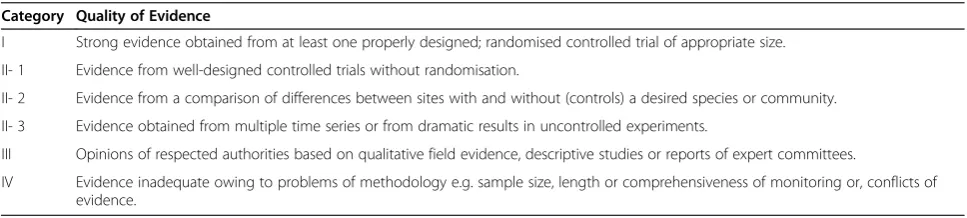
Each study included in the systematic map will be cate-gorised according to a hierarchy of evidence adapted from systematic review guidelines used in medicine and public health [27] and conservation [28]. For example, a rando-mised control trial would be weighted higher than a site comparison study. The hierarchy of evidence will include factors that are both generic to environmental evidence, and specific to water pollution. Categorisation will be based on a ranking system according to the quality of evi-dence. A generic list, adapted for environmental conserva-tion by Pullin and Knight [29], see Table 2, will be
modified and combined with topic-specific quality mea-sures. Topic specific quality measures may include an as-sessment of the sampling methodology used (e.g. number of samples taken, frequency of sampling, period of sam-pling, quality of measure, standards adhered to etc). Cod-ing for these methodological factors will be applied durCod-ing the creation of the systematic map database, and will be used to decide the final categorisation for each study.
The study quality of all accepted full text articles will be categorised by one reviewer during the coding phase. A second reviewer will examine a random subset of at least 25% of the selected studies to assess repeatability of study quality. Disagreement regarding study quality will be resolved by consensus. No studies will be excluded on the basis of study quality, but will be categorised accordingly.
Data synthesis and presentation
Methods of data synthesis will depend on the type of data presented in the accepted studies. As a minimum, all studies accepted for inclusion will be summarised within the systematic map database. Summary tables of study characteristics, study quality and results will be presented, accompanied by a narrative synthesis.
Where quantitative measures of effectiveness (e.g. per-centage reduction in pollutant as opposed to presence/ab-sence data) are present in studies, interventions will be scored for their effectiveness for a particular pollutant. Interventions with a greater impact will score more highly. For each intervention, the measures of effectiveness scores, will be combined with the quality of evidence categorisations to provide an indication the level of ef-fectiveness and the level of knowledge for each interven-tion, i.e. an intervention that consistently provides a small nitrate reduction across high quality studies may be categorized as slightly effective for N, with good qual-ity of evidence. An intervention that has been shown to provide a very large reduction in N, but appears low in the hierarchy of evidence may be categorized as having potential effectiveness, but poor quality of evidence, with a recommendation for further research.
In addition to the basic quality and state of knowledge scores, quantitative analysis will be undertaken on any
Table 2 Generic hierarchy of quality of evidence based on the type of research undertaken for environmental evidence
Category Quality of Evidence
I Strong evidence obtained from at least one properly designed; randomised controlled trial of appropriate size.
II- 1 Evidence from well-designed controlled trials without randomisation.
II- 2 Evidence from a comparison of differences between sites with and without (controls) a desired species or community.
II- 3 Evidence obtained from multiple time series or from dramatic results in uncontrolled experiments.
III Opinions of respected authorities based on qualitative field evidence, descriptive studies or reports of expert committees.
IV Evidence inadequate owing to problems of methodology e.g. sample size, length or comprehensiveness of monitoring or, conflicts of evidence.
data suitable for formal statistical analysis. Where pos-sible, meta-analysis for each of the interventions will be carried out with reasons for heterogeneity assessed by regression (univariate or multivariate). If meta-analysis is not possible, then other appropriate statistical techniques may be performed.
Recommendations will be made for policy decision mak-ing and for future research based on the findmak-ings of both the scoring exercises and the meta-analysis. Subject experts will help interpret meta-analysis results and pro-vide input to final recommendations. The systematic map will enable decision makers to search for specific details of interventions and their impacts in differing contexts.
Additional file
Additional file 1:Results of scoping search, and accepted search terms to be applied.
Competing interests
Financial competing interests–The authors have been commissioned and funded by the UK Department of Environment Food and Rural Affairs to carry out this research.
Authors’contributions
NPR–Conception and design of protocol, involved in drafting and revision of protocol, final approval of version. PJL - Conception and design of protocol, provided guidance on environmental quality and protection and subject expert for buffer strips and slurry storage. LMD–Conception and design of protocol, scoping search, involved in drafting protocol. All authors read and approved the final manuscript.
Acknowledgements
This systematic review is funded by the UK Natural Environment Research Council and the UK Department for Environment Food and Rural Affairs under work order WT0965. The authors are grateful to the following subject experts from Harper Adams University College for their comments and suggestions in the drafting of the protocol: Jim Waterson (Woodland creation), Nigel Hall (cover/catch crops) and Dick Godwin (loosening compacted soils, controlled trafficking and slurry storage).
Received: 18 April 2012 Accepted: 23 July 2012 Published: 1 October 2012
References
1. Herzog F, Steiner B, Bailey D, Baudry J, Billeter R, Bukácek R, De Blust G, De Cock R, Dirksen J, Dormann CF, De Filippi R, Frossard E, Liira J, Schmidt T, Stöckli R:Assessing the intensity of temperate European agriculture at the landscape scale.European J Agronomy2006,24:165–181.
2. Department for Environment:Food and Rural Affairs: Safeguarding our soils. UK: Department for Environment, Food and Rural Affairs; 2009. http://www. Defra.gov.uk/publications/files/pb13297-soil-strategy-090910.pdf. 3. The European Commission:Report from the commission to the council and
the European parliament: On implementation of Council Directive 91/676/EEC concerning the protection of waters against pollution caused by nitrates from agricultural sources based on Member State reports for the period 2004–2007. Brussells: The European Commission; 2011. http://ec.europa.eu/
environment/water/water-nitrates/pdf/sec_2011_909.pdf.
4. Carsten von der Ohe P, Dulio V, Slobodnik J, De Deckere E, Kühne R, Ebert R, Ginebreda A, De Cooman W, Schüürmann G, Brack W:A new risk assessment approach for the prioritization of 500 classical and emerging organic microcontaminants as potential river basin specific pollutants under the European Water Framework Directive.Sci Total Environ2011, 409(11):2064–2077.
5. Salomons W, Brils J:Contaminated Sediments in European River Basins. The Netherlands: European Sediment Research Network; 2004. http://www. sednet.org/download/Sednet_booklet_final.pdf.
6. Collins AL, Anthony SG, Hawley J, Turner T:Predicting potential change in agricultural sediment inputs to rivers across England and Wales by 2015. Mar and Freshwater Res2009,60:626–637.
7. Edwards AC, Withers PJA:Transport and delivery of suspended solids, nitrogen and phosphorus from various sources to freshwaters in the UK. J Hydrology2008,350:144–153.
8. Kay D, Crowther J, Fewtrell L, Francis CA, Hopkins M, Kay C, McDonald AT, Stapleton CM, Watkins J, Wilkinson J, Wyer MD:Quantification and control of microbial pollution from agriculture: a new policy challenge?Environ Sci Policy2008,11(2):171–184.
9. Environment Agency:The State of Soils in England and Wales. UK: Environment Agency; 2004. http://publications.environment-agency.gov.uk/ pdf/GEHO0304BKBH-e-e.pdf.
10. Department for Environment:Food and Rural Affairs: Water for life White Paper. UK: Department for Environment, Food and Rural Affairs; 2011. http:// www.official-documents.gov.uk/document/cm82/8230/8230.asp.
11. Burke A:Synthesis of Diffuse Pollution Research in England and Wales funded by Department for Environment, Food and Rural Affairs and Environment
Agency. UK: Demonstrating Catchment Management; 2011. http://www.
demonstratingcatchmentmanagement.net/wp-content/uploads/2011/11/ A-brief-review-of-diffuse-pollution-research-in-England-and-Wales.pdf. 12. Newell Price JP, Harris D, Taylor M, Williams JR, Anthony SG, Duethmann D,
Gooday RD, Lord EI, Chambers BJ, Chadwick DR, Misselbrook TH:An Inventory of Mitigation Methods and Guide to their effects on Diffuse Water Pollution, Greenhouse Gas Emissions and Ammonia Emissions from Agriculture. UK: Department for Environment, Food and Rural Affairs; 2011. http://randd.Defra.gov.uk/Default.aspx? Menu=Menu&Module=More&Location=None&Completed=0&ProjectID=14421. 13. Department for Environment, Food and Rural Affairs:Competition
details and project specification: Project WT0965 Independent systematic review of impact of on-farm mitigation measures for delivering an
improved water environment. UK: Department for Environment, Food
and Rural Affairs; 2011.
14. Johnson D, Hodgkinson R, Lord E, Silgram M, Cottrill B, Gooday R, Morrow K, Smith S, Adele H:itrates Directive Consultation Document Environmental Impact of the 2009 Nitrates Action Programme and of potential further measures. UK: Department for Environment, Food and Rural Affairs; 2011. http://www.Defra. gov.uk/consult/files/20111220nitrates-directive-consult-evid1.pdf.
15. Shepherd MA:The effectiveness of cover crops during eight years of a UK sand land rotation.Soil Use and Manage1999,15:41–48.
16. Dabney SM, Delgado JA, Reeves DW:Using winter cover crops to improve soil and water quality.Commun in Soil Sci Plant Analysis2009,32:1221–1250. 17. Townsend LG:What evidence is there that the utilization of catch crops can
reduce nitrate leaching in temperate Europe? MSc thesis. UK: Harper Adams University College; 2010.
18. Nisbet T, Silgram M, Shah N, Morrow K, Broadmeadow S:Woodland for Water: Woodland measures for meeting Water Framework Directive objectives. InIn Forest Research Monograph 4. Surrey: Forest Research; 2011. http://www.forestry.gov.uk/pdf/FRMG004_Woodland4Water.pdf/$file/ FRMG004_Woodland4Water.pdf.
19. Donnison L:The effects of farm grown trees on erosion and pollution in the local farmed environment, A review for the Woodland Trust by Harper Adams University College. UK: The Woodland Trust; 2011.
20. Hamza MA, Anderson WK:Soil compaction in cropping systems. A review of the nature, causes and possible solutions.Soil and Tillage Res2005, 82:121–145.
21. Muscutt AD, Harris GL, Bailey SW, Davies DB:Buffer zones to improve water quality: a review of their potential use in UK agriculture. Agriculture, Ecosystems & Environ1993,45:59–77.
22. Mayer PMR, McCutchen SK, Canfield MD, Timothy J:Meta-analysis of nitrogen removal in riparian buffers.J Environ Qual2007,36:1172–1180. 23. Fish R, Potschin M:Catchment Planning and the Ecosystems Approach:
Progress towards Application LWEC Pilot Review. Contract Number: R8/H12/ 107. UK: Nottingham University; 2009. http://www.nottingham.ac.uk/cem/ pdf/Pilot%20Review%20R8H12107.pdf.
25. Randall N, James K:The effectiveness of integrated farm management, organic farming and agri-environment schemes as interventions for conserving biodiversity in temperate Europe?Environ Evid2011, www.environmentalevidence.org/SR35.html.
26. Correll DL:Principles of planning and establishment of buffer zones. Ecol Eng2005,24:433–439.
27. Stevens A, Milne R:The effectiveness revolution and public health. In Progress in Public Health. Edited by Scalley G. London: Royal Society for Medicine Press; 1997:197–225.
28. Pullin AS, Knight TM:Effectiveness in conservation practice: Pointers from medicine and public health.Conserv Biol2001,15:50–54.
29. Pullin AS, Knight TM:Support for decision making in conservation practice: An evidence-based approach.J Nat Conservation2003,11(2):83–90.
doi:10.1186/2047-2382-1-12
Cite this article as:Randallet al.:How effective are slurry storage, cover or catch crops, woodland creation, controlled trafficking or break-up of compacted layers, and buffer strips as on-farm mitigation measures for delivering an improved water environment?.Environmental Evidence2012 1:12.
Submit your next manuscript to BioMed Central and take full advantage of:
• Convenient online submission
• Thorough peer review
• No space constraints or color figure charges
• Immediate publication on acceptance
• Inclusion in PubMed, CAS, Scopus and Google Scholar
• Research which is freely available for redistribution