Research Paper:
Test-Retest and Inter-Rater Reliability
Study of the Schedule for Oral-Motor Assessment in Persian
Children
Manijeh Zarei Mahmood Abadi1, Fariba Yadegari1* , Mehrzad Mehdizade2, Enayatollah Bakhshi3
1. Department of Speech Therapy, University of Social Welfare and Rehabilitation Sciences, Tehran, Iran. 2. Department of Radiology, Children's Medical Center, Tehran University of Medical Sciences, Tehran, Iran. 3. Department of Biostatistics, University of Social Welfare and Rehabilitation Sciences, Tehran, Iran.
* Corresponding Author: Fariba Yadegari, PhD
Address: Department of Speech Therapy, University of Social Welfare and Rehabilitation Sciences, Tehran, Iran. Tel: +98 (21) 22180043
E-mail: [email protected]
Objectives: Reliable and valid clinical tools to screen, diagnose, and describe eating functions
and dysphagia in children are highly warranted. Today most specialists are aware of the role of assessment scales in the treatment of affected individuals. However, the problem is that the clinical tools used might be nonstandard, and worldwide, there is no integrated assessment performed to assess the aforementioned conditions. In a previous study, we translated and
examined the schedule for oral-motor assessment for its content validity. Therefore, in this
study, we aimed to investigate the test-retest and inter-rater reliability of the schedule for
oral-motor assessment.
Methods: In this validation project, 23 children (6-48 month-old) who were referred to the imaging center were recruited. The assessment was based on the schedule for
oral-motor assessment and was conducted by two speech-language pathologists for an inter-rater agreement evaluation. A retest was completed on 13 children up to 7 days. Intraclass Correlation Coefficient (ICC), kappa coefficient, and percentage of agreement were analyzed by using SPSS software (version 17).
Results: We found a moderate Intraclass Correlation Coefficient (ICC=0.48) and a relatively sensible kappa coefficient (K=0.50) for test-retest agreement. Two speech-language pathologists reached 91% agreement on normal-dysfunctional decisions of schedule for oral-motor assessment. Sections 2, 3, 4, and 6 of schedule for oral-oral-motor assessment demonstrated an agreement of 100%, and Sections 1 and 5 demonstrated an agreement of 91%.
Discussion: Schedule for oral-motor assessment meets moderate levels of test-retest and inter-rater reliability criteria. Nonetheless, the percentage of decision consistency for inter-inter-rater and test-retest examination turned out to be excellent.
A B S T R A C T
Article info:
Received: 31 May 2017 Accepted:14 Sep. 2017
Keywords:
Feeding behavior, Observation,
Oral manifestation, Child
Citation: Zarei Mahmood Abadi M, Yadegari F, Mehdizade M, Bakhshi E. Test-Retest and Inter-Rater Reliability Study of the Schedule for Oral-Motor Assessment in Persian Children. Iranian Rehabilitation Journal. 2018; 16(1):45-54. https://doi. org/10.29252/NRIP.IRJ.16.1.45
:
: https://doi.org/10.29252/NRIP.IRJ.16.1.45
Use your device to scan
1. Introduction
evelopment of new scales as assessment tools of swallowing and eating behaviors and dysphagia for children is increas-ing [1-4]. Nowadays, due to appropriate therapeutic techniques, more children and adults are being survived from medical accidents. Thus, swallowing disorders have higher rate of prevalence among children and adults particularly in disabled popu-lations than that of normal adults [5-8].
Identification and describing dysphagia and feeding performance require standard screening and clinical as -sessments [9]. Leonard and Kenda noted the importance
of clinical-observational assessments by which children
at risk of feeding problems are identified. They consid
-ered this as essential not only in the therapeutic affairs
but also in early intervention programs [10]. Currently,
most specialists are aware about the roles of assessment
scales in the assessment and remedy of the aforemen-tioned disorders. The problem is that these tools are
non-standard with sometimes undecided validity; there is no
integrated assessment throughout the world [11].
Precise description of eating conducts in children
re-quires development and improvement of the systems which assess complex set of interconnected motor skills based on observation. Such a system must be clinically
valid and reliable [12]. One of the most famous methods of reliability assessment is test-retest in which a group is tested once and then is tested again in a specified time interval to calculate the correlation of the two tests
[13]. Consequently, we can determine the reliability of oral-motor assessment scales with regard to the child’s eating-related behaviors, for example, having the ability to hold the tongue up while being fed. The other method
known is examining the correlation of two independent ratings of two different observers. This is called inter-rat
-er reliability test. Kappa agreement coefficient is defined
as an agreement index by Cohen which is used for reli-ability assessment [14]. We used this method to estimate
the reliability of assessment scales of feeding behaviors in children, for example, how two raters score a child’s normal and abnormal swallowing motor functions.
There are various scales in the assessment of pediatric
sucking and swallowing; however, only a few of them have been validated, for example, Neonatal Oral-Motor Assessment Scale (NOMAS), developed by Palmer, is
highly used in infant eating assessment. This is the only scale available to evaluate premature infants who are fed
by breast and bottle [1, 9,15], and it also assesses
Nutri-tive Sucking (NS) and Non-NutriNutri-tive Sucking (NNS) up to the age of 8 weeks. In order to assess the infant’s suck
-ing skills, the infant is observed for 2 min and informa
-tion regarding his/her coordina-tion between sucking and swallowing; maintaining the sucking, swallowing, and breathing coordination in bursts; and rhythmic sucking
is collected [16,17].
NOMAS with its 28 items classifies sucking patterns of the babies into 3 groups: 1. Normal sucking pattern
which is shown by infants who can coordinate between
sucking, swallowing, and breathing either in NS and NNS; 2. Disorganized sucking pattern that is observed
in infants who are not able to coordinate swallowing and
breathing actions, for example, infants suffering from breathing problems, a heart condition, or gastrointestinal problems; and 3. Dysfunctional sucking pattern which is
observed in infants who have abnormal motions of jaws
and tongue. It is also common in infants suffering from
either neurological or anatomical disorder [12,15].
Zarem et al. analyzed psychometric aspect of NO
-MAS in a prospective cohort performed on 75 prema
-ture infants (39 girls and 36 boys) born in 30th week of pregnancy or lower with average ages of 26.56 weeks and average weights of 967.33 g. They made a video of
infants eating process before discharging from NICU.
Accordingly, sucking pattern of the infant was classified as normal, disorganized, or dysfunctional. In order to as
-sess the reliability, 6 raters selected 5 random films and defined infant’s sucking pattern according to the scale. Then, 2 weeks later raters randomly observed the films again and defined the sucking pattern. This study proved that infants who showed the abnormal sucking pattern, based on NICU network neurobehavioral scale, con
-fronted more stress. In addition, there was no significant correlation between NOMAS scores and results of chil
-dren who were 2 years of age. This study showed that NOMAS could not predict developmental delays of at risk premature infants and the reliability of the finding
were not ideal [15].
Costa and Schans studied the test-retest and inter-rater reliability of NOMAS on 75 premature infants (26-36 week). Four observers who were certified in performing the scale participated in their study. According to their results, test-retest reliability of NOMAS was found to be good or approximately excellent (K=0.33-0.94), where -as inter-rater reliability w-as found to be medium or
ex-cellent (K=0.4-0.65) [16]. Schedule for Oral-Motor As
-sessment (SOMA) is a scale of observing and recording the oral-motor skills of young children aged 8-24 months
in order to identify their possible abnormalities related to
feeding. It assesses oral-motor abilities using foods with
different textures at 3 levels: 1. Functional area such as lips, jaw, and tongue; 2. Functional units as the job of groups of muscles, for example, the role of lips in keep
-ing food in the mouth; and 3. Discrete oral-motor behav -ior, for example, upper lip removes food from the spoon.
Reilly et al. studied test-retest reliability of SOMA. They studied typically developing children (n=58) with an average age of 12.2 months, Non Organic Failure to
Thrive (NOFT) children with an average developmental
age of 15 months (n=56), and children suffering from
cerebral palsy with an average developmental age of
20.2 months (n=13). Test-retest agreement for 84% of the assessable behaviors proved to be outstanding (kap
-pa=1), and excellent inter-rater agreement was obtained for 62% of the distinct oral-motor behaviors (K>0.75)
[12]. Skuse et al. studied the reliability of SOMA in a
companion paper. As mentioned earlier, this scale was invented for the preverbal children with respect to iden-tifying the defective eating-related organs. The research
was administered on the same 127 children in 3 groups
mentioned above. Their results showed that criterion
va-lidity was reasonably recognized by the analysis and also a shortened form of the SOMA -appropriate for screen -ing- was introduced with a positive predictive validity
larger than 90% and sensitivity higher than 85% useful in identifying infants with substantial oral-motor dis -abilities [18].
With respect to the importance of assessment of chil-dren’s swallowing problems and the remedies which
must be based on such assessment results, in this study, we aimed at answering the following questions: 1. Does SOMA contain good inter-rater reliability in Persian children? 2. Does SOMA contain good test-retest reli -ability in Persian children?
2. Methods
This validation study followed a previous study per
-formed by Zarei and Yadegari on translation of Schedule
for oral motor assessment and examining its content
va-lidity, Middle Eastern Journal of Disability Studies which introduced the Persian translated version of SOMA.
In this study, we used SOMA to identify dysfunctional
areas that lead to eating disorders in children. It contains
65 items in 6 separate sections: each section examines one food texture. Scale sections are as follows: 1. Puree (yogurt) with spoon; 2. Semisolid (creamy cheese) with spoon; 3. Solid (cooked rice) with spoon; 4. Cracker (biscuit) through finger feeding; 5. Liquid (water/milk)
through breast feeding or bottle; and 6. Liquid (water) with cup. Scoring the scale comprises a “yes”/“no” sys
-tem with a score of 0 given to “yes” and 1 for “no” to a normal function; a score of 1 given to “yes” and 0 for “no” to an abnormal function. Cutoff scores of the sec
-tions were as follows: section 1=3; section 2=4; section 3=4; section 4=9; section 5=5; and section 6=5.
Parents were asked to take their children to the speech therapy clinic of Children’s Medical Center, Persia. A questionnaire with 3 sections was completed through in
-terview with the parents: 1. Demographic characteristics; 2. Medical history; and 3. Feeding history. Inclusion cri -teria encompassed children of 6 to 48 months with a
pre-scription of a barium swallow test who were sent to the radiology center of Children’s Medical Center. Exclusion criteria were as follows: 1. 6 to 48 month children who could not be tested with barium swallow test; 2. Children
who were under intubated feeding in the time of barium
swallow test; and 3. Children with poor cooperation.
Consent forms were signed by main caregivers of the
children (almost always their parents). If parents decided
to leave the project, they were allowed to do so. No fee was charged for the experiments. The information of the
participants was confidential. The research was assumed an ethical code (IR.USWR.REC.1395.316) by Ethics Board of the University of Social Welfare and Rehabili -tation Sciences.
The procedure was explained by the first author to the parents mentioning five food textures (yoghurt, cream cheese, cooked rice, cracker, milk, and water regarding the habitual bottle or breast feeding of the child), obser
-vation process by Speech Language Pathologists (SLPs) and mentioned them that there were no side effects for children. As some children stopped eating due to the presence of the strangers, parents were instructed ver -bally and practically to feed children. Feeding scene was easily visible by the raters.
Parents were instructed to fill teaspoon by half while nourishing yoghurt, cream cheese, and cooked rice. They ought to use their fingers while feeding biscuit, keeping the thumb 3/4 inches away from the biscuit edge while holding their forefinger under the biscuit. Mothers were trained how to feed water by glass cups or how to milk by bottle or breast depending on the child’s diet. They
were taught not to transfer to any other food while using one and should wait for the rater’s permission. SLP
seen, a “yes” was ticked on the form; otherwise, a “no” was selected. The assessment of five food textures was
performed in triplicates [12, 18,19].
In case that the child is inclined to test the food him
-self/herself, they were allowed to do so. In all stages, the child was sitting on the bed, but in the fifth stage, the child was in mother’s cuddle while being fed by breast or bottle. Food textures contained 100 g low fat pasteur
-ized and homogen-ized yoghurt (with commercial name of Jal), pasteurized and homogenized cream cheese with 24% fat (with commercial name of Pegah), biscuit with
-out trans fatty acid (with commercial name of Madar), cooked rice, mother’s or formula milk, and Tehran’s ur
-ban drinking water.
To evaluate the inter-rater reliability, 23 children who
were referred for a barium swallow test were recruited. Children were assessed through SOMA by 2 SLPs with at least 8 years of experience with childhood dysphagia. In order to examine test-retest reliability, 13 children (5 girls and 8 boys) were assessed again within 7 days. Data were analyzed by SPSS (version 17). The Intraclass Cor
-relation Coefficient (ICC), agreement percentage, and kappa agreement coefficient were calculated.
3. Results
Inter-rater agreement was completed within 5 months. The examined children were 10 girls and 13 boys in the range of 6 to 48 months of age (mean=18.13, SD=11.72) and birth weight in the range of 1500 g to 3900 g of them,
69.6% had a hospitalization history. Of them, 13% were found to experience breathing difficulty while feeding and 30.4% experienced nonoral feeding. Moreover, 34.8%
of the children experienced tiredness while feeding and
34.8% used to spend more than half an hour eating a meal. In addition, 8.7% of the children suffered a growth delay and 60.9% were under anti-reflux medications.
Calculated ICC for inter-rater reliability was found to
be 0.48. However, two SLPs had 91-100% agreement in their final decision of abnormality or normality of the functions through 6 stages of SOMA. The results indicated 100% agreement for sections 2 (semi-solid), 3 (solid), 4 (cracker), and 6 (liquid cup) and 91% agree
-ment for sections 1 (puree) and 5 (liquid bottle). Cal
-culated ICC for test-retest reliability was found to be 0.50. Table 1 contains the percentage of agreement and
Kappa values of the part 1 of SOMA. As indicated in
Table 1, all the items had above 76% agreement for test-retest and above 47% for inter-rater reliabilities. In addition, 87% of items revealed a Kappa coefficient between 0.23 and 0.68.
Table 2 contains the percentage of agreement and Kap
-pa values of the -part 2 of SOMA. As indicated in Table 2, all the items had above 69% agreement for test-retest and above 47% for inter-rater reliabilities. Furthermore, 62% of the items in part 2 obtained a Kappa value be
-tween 0.11 and 1.
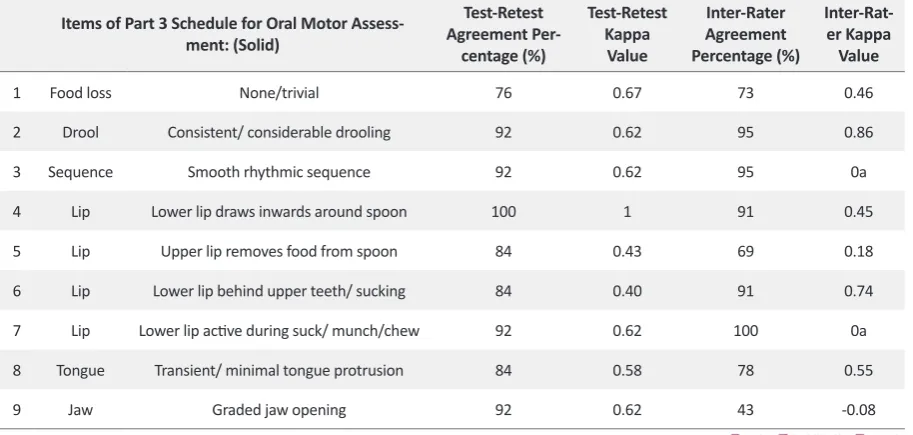
Table 3 contains the percentage of agreement and Kap
-pa values of the -part 3 of SOMA. As indicated in Table 3,
Table 1. Test-retest and inter-rater reliability results of part 1 of SOMA
Items of Part 1 SOMA (Puree) Agreement Test-Retest Percent (%)
Test-Re-test Kappa
Value
Inter-Rater Agreement Percent (%)
Inter-Rat-er Kappa
Value
1 React Head orientation to spoon 84 0.58 86 0.64
2 Sequence Smooth rhythmic sequence 76 -0.11 91 0.45
3 Lip Upper lip removes food from spoon 84 0.58 86 0.68
4 Lip Lower/ upper lip assists in cleaning 84 0a 91 0.46
5 Lip Lower lip active during suck/ munch/ chew 92 0a 86 0.33
6 Tongue Consistent/ considerable protrusion 92 0a 86 0.33
7 Tongue Protrusion beyond incisors 76 -0.11 86 0.49
8 Jaw Graded jaw opening 92 0a 47 -0.08
0a: No statistics are computed because first rater response and second rater response are constants or because test response and
all the items had above 76% agreement for test-retest and above 43% for inter-rater reliabilities. Moreover,66% of the items revealed a Kappa value between 0.18 and 0.86.
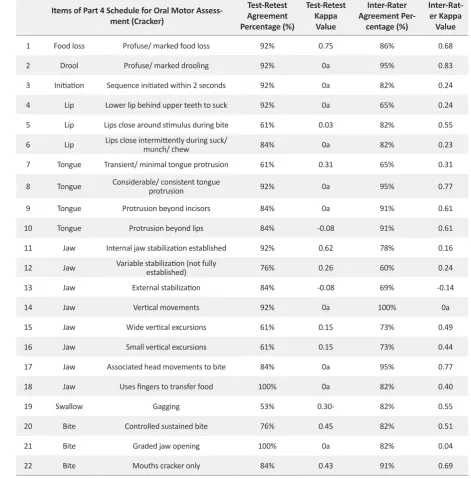
Table 4 contains the percentage of agreement and
Kappa values of the part 4 of SOMA. As indicated in
Table 4, all the items had above 53% agreement for
test-retest and above 60% for inter-rater reliabilities. In addition, 90% of the items obtained a Kappa value between 0.04 and 0.83.
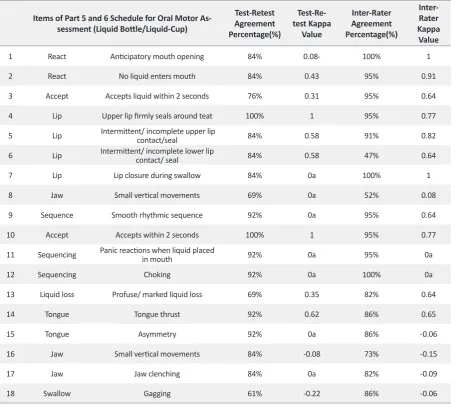
Table 5 contains the percentage of agreement and Kap
-pa values of the -part 5 and 6 of SOMA. As indicated in
Table 5, all the items had above 61% agreement for test-retest and above 47% for inter-rater reliabilities. In addi
-tion, 66% of the items in part 5 and 6 obtained a Kappa value between 0.08 and 1.
Test-retest reliability assessment took 4 months to com
-plete; 13 children (5 girls, 8 boys) within the age range of 7-22 months (mean=12.07, SD=4.09) participated. Of them, 92.3% had a history of hospitalization, 23.1% suffered breathing distress while feeding, and 15.4% experienced nonoral feeding. In addition, 30.8% of the children experienced tiredness while eating and 38.5%
used to spend more than half an hour for eating a meal. Table 2. Test-retest and inter-rater reliability results of part 2 of SOMA
Items of Part 2 Schedule for Oral Motor Assess
-ment: (Semi-Solid)
Test-Retest Agreement
Per-centage (%)
Test-Retest Kappa
Value
Inter-Rater Agreement
Per-centage (%)
Inter-Rat-er Kappa
Value
1 Drool Consistent/ considerable drooling 92 0a 100 1
2 Sequence Smooth rhythmic sequence 76 -0.11 91 0.45
3 Initiation Sequence initiated within 2 seconds 69 0a 86 0a
4 Lip Lip closed during opening 84 -0.08 47 0.11
5 Jaw Graded jaw opening 100 0a 47 -0.08
6 Jaw Internal jaw stabilization 84 -0.08 100 0a
7 Jaw External jaw stabilization required 100% 76 0a 100 1
8 Jaw Associated jaw movements 76 0.67 100 1
Table 3. Test-retest and inter-rater reliability results of part 3 of SOMA
Items of Part 3 Schedule for Oral Motor Assess
-ment: (Solid)
Test-Retest Agreement
Per-centage (%)
Test-Retest Kappa
Value
Inter-Rater Agreement Percentage (%)
Inter-Rat-er Kappa
Value
1 Food loss None/trivial 76 0.67 73 0.46
2 Drool Consistent/ considerable drooling 92 0.62 95 0.86
3 Sequence Smooth rhythmic sequence 92 0.62 95 0a
4 Lip Lower lip draws inwards around spoon 100 1 91 0.45
5 Lip Upper lip removes food from spoon 84 0.43 69 0.18
6 Lip Lower lip behind upper teeth/ sucking 84 0.40 91 0.74
7 Lip Lower lip active during suck/ munch/chew 92 0.62 100 0a
8 Tongue Transient/ minimal tongue protrusion 84 0.58 78 0.55
4. Discussion
In Persia, as valid and reliable assessment scales of “swallowing” in children are scarce, we aimed to
in-vestigate the reliability of a previously translated scale called SOMA [20]. The purpose of this study was to examine the test-retest and inter-rater reliability of the Persian version of SOMA.
According to Reilly et al.’s study, test-retest reli
-ability showed that 84% of the ratings revealed an
outstanding agreement (Kappa=1), 6.2% were larger than 0.75 which was considered an excellent agree
-ment, 8.7% were between 0.40 and 0.75, and 1.1% were lower than 0.40 [12]. If we put our own results of
test-retest reliability into a standard interpretation, the results showed that 10.34% of discrete oral-motor be
-haviors were of an excellent agreement (K=1), 31.03% of discrete oral-motor behaviors were of significant agreement (K=0.61-0.80), 31.03% of them proved to have an average agreement (K=0.41-0.60), 17.24% of
discrete oral-motor behaviors were of poor agreement Table 4. Test-retest and inter-rater reliability results of part 4 of SOMA
Items of Part 4 Schedule for Oral Motor Assess
-ment (Cracker)
Test-Retest Agreement Percentage (%)
Test-Retest Kappa
Value
Inter-Rater Agreement
Per-centage (%)
Inter-Rat-er Kappa
Value
1 Food loss Profuse/ marked food loss 92% 0.75 86% 0.68
2 Drool Profuse/ marked drooling 92% 0a 95% 0.83
3 Initiation Sequence initiated within 2 seconds 92% 0a 82% 0.24
4 Lip Lower lip behind upper teeth to suck 92% 0a 65% 0.24
5 Lip Lips close around stimulus during bite 61% 0.03 82% 0.55
6 Lip Lips close intermittently during suck/ munch/ chew 84% 0a 82% 0.23
7 Tongue Transient/ minimal tongue protrusion 61% 0.31 65% 0.31
8 Tongue Considerable/ consistent tongue protrusion 92% 0a 95% 0.77
9 Tongue Protrusion beyond incisors 84% 0a 91% 0.61
10 Tongue Protrusion beyond lips 84% -0.08 91% 0.61
11 Jaw Internal jaw stabilization established 92% 0.62 78% 0.16
12 Jaw Variable stabilization (not fully established) 76% 0.26 60% 0.24
13 Jaw External stabilization 84% -0.08 69% -0.14
14 Jaw Vertical movements 92% 0a 100% 0a
15 Jaw Wide vertical excursions 61% 0.15 73% 0.49
16 Jaw Small vertical excursions 61% 0.15 73% 0.44
17 Jaw Associated head movements to bite 84% 0a 95% 0.77
18 Jaw Uses fingers to transfer food 100% 0a 82% 0.40
19 Swallow Gagging 53% 0.30- 82% 0.55
20 Bite Controlled sustained bite 76% 0.45 82% 0.51
21 Bite Graded jaw opening 100% 0a 82% 0.04
(K=0.21-0.40) and 10.36% were of very poor agree
-ment (K<0.21) [14]. These results came from those items that their Kappa value was calculable.
In addition, Reilly et al. analyzed an inter-rater agree
-ment of pass/fail of the items that showed the following results. Furthermore, 68% of evaluations led to perfect agreement, 9% were larger than 0.75, 13% of the rat
-ings were between 0.40 and 0.75, and 2% were lower than 0.40 [12]. Inter-rater reliability results of this study showed that 18% of discrete oral-motor behaviors had total agreement (K=1), 30% of the discrete oral-motor behaviors revealed significant agreement (K=0.80-0.61), 24% of the behaviors proved to have an average agree
-ment (K=0.60-0.41), 12% of the discrete oral-motor behaviors had lower-average agreement (K=0.41-0.21),
and 10.36% of the behaviors were of very poor agree
-ment (K<0.21).
Costa and Schans (2008) analyzed the reliability of Neonatal Oral-Motor Assessment Scale (NOMAS). Ac
-cording to their findings, NOMAS proved to have rea
-sonable to excellent test-retest agreement (K=0.33-0.94), whereas inter-rater agreement was found to be modest to considerable (K=0.40-0.65) [16]. Therefore, the test-retest agreement of NOMAS in their study was higher than inter-rater agreement, a result which is contrasting to our results, that is, test-retest agreement was lower than inter-rater agreement. Only 32.28% of the items of the Persian version of SOMA had average and higher than average test-retest agreement, whereas 56.91% of
the items showed average and higher than average. Table 5. Test-retest and inter-rater reliability results of part 5 and 6 of SOMA
Items of Part 5 and 6 Schedule for Oral Motor As
-sessment (Liquid Bottle/Liquid-Cup)
Test-Retest Agreement Percentage(%)
Test-Re-test Kappa
Value
Inter-Rater Agreement Percentage(%)
Inter-Rater Kappa
Value
1 React Anticipatory mouth opening 84% 0.08- 100% 1
2 React No liquid enters mouth 84% 0.43 95% 0.91
3 Accept Accepts liquid within 2 seconds 76% 0.31 95% 0.64
4 Lip Upper lip firmly seals around teat 100% 1 95% 0.77
5 Lip Intermittent/ incomplete upper lip contact/seal 84% 0.58 91% 0.82
6 Lip Intermittent/ incomplete lower lip contact/ seal 84% 0.58 47% 0.64
7 Lip Lip closure during swallow 84% 0a 100% 1
8 Jaw Small vertical movements 69% 0a 52% 0.08
9 Sequence Smooth rhythmic sequence 92% 0a 95% 0.64
10 Accept Accepts within 2 seconds 100% 1 95% 0.77
11 Sequencing Panic reactions when liquid placed in mouth 92% 0a 95% 0a
12 Sequencing Choking 92% 0a 100% 0a
13 Liquid loss Profuse/ marked liquid loss 69% 0.35 82% 0.64
14 Tongue Tongue thrust 92% 0.62 86% 0.65
15 Tongue Asymmetry 92% 0a 86% -0.06
16 Jaw Small vertical movements 84% -0.08 73% -0.15
17 Jaw Jaw clenching 84% 0a 82% -0.09
Skuse et al. (1995) introduced methods of validation that showed SOMA analysis of test-retest and
inter-rater reliability was excellent [18], which is slightly
not consistent with our findings. It is noteworthy that analysis in some items of the SOMA is easier than the
others. For example, the items which are concerned to oral- motor functions of the child rather than discrete oral-motor behaviors, obtaining a good agreement
among raters may be hard. Looking practically, when SLPs were asked to judge an oral-motor functional unit such as “biting” skill as a whole, they were not in a total agreement, but when asked if there is a con
-trolled stable biting, they may well agree [12].
Our study was limited due to not supplying videos, rather we administered live observations. SOMA assess -ment is better run when there are videos to be observed repeatedly, yet this way is not perfect either. This may
be owing to the intrinsic characteristics of such observa
-tions; they seem dependent to the individual rater experi
-ence; these observations seem somewhat confusing and unstable for rating. Finally, we suggest that in order to get higher kappa values and agreement percentage, we
should enhance the number of the participants.
5. Conclusion
Persian version of SOMA proved to have a very good inter-rater and test-retest agreement percentage. Inter-rat
-er agreement p-ercentage was excellent (91%) and in test-retest agreement percent good (84%). In addition, 57% of the items in SOMA for inter-rater reliability were shown to be average and above and 33% of the items for test-retest reliability were shown to be average and above.
Acknowledgements
This paper was extracted from the MSc. thesis of the first author in the Department of Speech Therapy,
University of Social Welfare and Rehabilitation
Sci-ences, Tehran, Iran. The authors wish to thank parents who cooperated in this study. They also wish to thank Mrs. Maryam Khodayar who cooperated actively as an speech-language pathologists rater.
Conflict of Interest
The authors declared no conflicts of interest.
References
[1] Rogers B, Arvedson J. Assessment of infant oral sensorimo-tor and swallowing function. Mental Retardation and Devel-opmental Disabilities Research Reviews. 2005; 11(1):74–82. doi: 10.1002/mrdd.20055
[2] Thoyre SM, Pados BF, Park J, Estrem H, Hodges EA, Mc-Comish C, et al. Development and content validation of the pediatric eating assessment tool (Pedi-EAT). American Journal of Speech-Language Pathology. 2014; 23(1):46. doi: 10.1044/1058-0360(2013/12-0069)
[3] Allen SL, Smith IM, Duku E, Vaillancourt T, Szatmari P, Bry-son S, et al. Behavioral pediatrics feeding assessment scale in young children with autism spectrum disorder: Psychomet-rics and associations with child and parent variables. Journal of Pediatric Psychology. 2015; 40(6):581–90. doi: 10.1093/ jpepsy/jsv006
[4] Serel Arslan S, Demir N, Karaduman AA, Belafsky PC. The pediatric version of the eating assessment tool: A
car-egiver administered dyphagia-specific outcome instrument
for children. Disability and Rehabilitation. 2017; 1–5. doi: 10.1080/09638288.2017.1323235
[5] Romano M, Schultz T, Tai A. The diagnostic test accuracy of clinical swallow assessment for oropharyngeal aspira-tion: A systematic review. JBI Database of Systematic Re-views and Implementation Reports. 2012; 10(56):1–16. doi: 10.11124/01938924-201210561-00002
[6] Kakodkar K, Schroeder JW. Pediatric dysphagia. Pediatric Clinics of North America. 2013; 60(4):969–77. doi: 10.1016/j. pcl.2013.04.010
[7] Alberta Health Services. Oral feeding reference poster [In-ternet]. 2016 [Updated 2016 April 20]. Available from: htt- ps://www.albertahealthservices.ca/assets/programs/ps-1055678-neonatal-oral-feeding-reference-poster.pdf
[8] Heckathorn D-E, Speyer R, Taylor J, Cordier R. Systematic review: Non-instrumental swallowing and feeding assess-ments in pediatrics. Dysphagia. 2015; 31(1):1–23. doi: 10.1007/ s00455-015-9667-5
[9] Arvedson JC. Assessment of pediatric dysphagia and feed-ing disorders: Clinical and instrumental approaches. Devel-opmental Disabilities Research Reviews. 2008; 14(2):118–27. doi: 10.1002/ddrr.17
[10] Lucas G. Critical review: Exploring the inter-rater
reliabil-ity of two assessment tools used to identify feeding problems in neonates. London: University of Western Ontario; 2009.
[11] Arvedson JC, Brodsky L. Pediatric swallowing and
feed-ing: Assessment and management. Boston: Cengage Learn-ing; 2002.
[12] Reilly S, Skuse D, Mathisen B, Wolke D. The objective
rat-ing of oral-motor functions durrat-ing feedrat-ing. Dysphagia. 1995; 10(3):177–91. doi: 10.1007/bf00260975
[13] Seif A. [Measurement,assessment and evaluation of
educa-tion (Persian)]. Tehran: Dowran; 2016.
[14] Pashashrifi H, Sharifi N. [Principles of psychometrics and
psychological testing (Persian)]. Tehran: Roshd; 2014.
[15] Zarem C, Kidokoro H, Neil J, Wallendorf M, Inder T,
scale. Developmental Medicine & Child Neurology. 2013; 55(12):1115–20. doi: 10.1111/dmcn.12202
[16] Da Costa SP. [Development of sucking patterns in preterm
infants [PhD thesis]. Groningen: University Library Gronin-gen; 2010.
[17] Bingham PM, Ashikaga T, Abbasi S. Relationship of
neona-tal oral motor assessment scale to feeding performance of pre-mature infants. Journal of Neonatal Nursing. 2012; 18(1):30–6. doi: 10.1016/j.jnn.2010.09.004
[18] Skuse D, Stevenson J, Reilly S, Mathisen B. Schedule for
oral-motor assessment (SOMA): Methods of validation. Dys-phagia. 1995; 10(3):192–202. doi: 10.1007/bf00260976
[19] Ko MJ, Kang MJ, Ko KJ, Ki YO, Chang HJ, Kwon JY.
Clini-cal usefulness of schedule for oral-motor assessment (SOMA) in children with dysphagia. Annals of Rehabilitation Medi-cine. 2011; 35(4):477. doi: 10.5535/arm.2011.35.4.477
[20] Zarei Mahmood Abadi M, Yadegari F, Bakhshi E.