Published with Creative Commons licence: Attribution–Noncommercial–No Derivatives
Opposing Peripheralization? A case study of rural social
enterprises in Hungary
Melinda Mihály
Centre for Economic and Regional Studies of the Hungarian Academy of Sciences [email protected]
Abstract
Since the collapse of state socialism in 1989 regional disparities have been growing considerably in Hungary. In particular, small settlements in structurally disadvantaged areas are affected by different dimensions of peripheralization processes, such as stigmatization (they are labelled as “lagged behind”, “backwards” or “underdeveloped” areas), selective migration, disconnection, dependence and social exclusion. In addition, social exclusion in Hungary has an ethnic dimension, as Roma people tend to concentrate in peripheralized areas. As a response to these processes, local initiatives, such as rural social enterprises or social and solidarity economy initiatives, have emerged, counting Roma people amongst their stakeholders.
Based on ethnographic methods the article examines the capacity of three rural social enterprises to counteract these peripheralization processes, particularly the dimensions of political dependence and ethnicity-based social exclusion. The analysis has two parts. On the one hand, this paper examines how the institutional basis (civilian-based, municipality-based or faith based social enterprise) influences the political autonomy of a social enterprise, its access to funding and consequently its room for maneuverability. On the other hand, this paper looks to which extent the so-called Gypsy-Hungarian differentiation (Kovai, 2018, Horváth, 2008, Horváth and Kovai, 2010) determines local realities in peripheralized villages and how rural social enterprises can empower Roma people and divert the differentiation between the conceptual “Gypsy” and the conceptual “Hungarian”. The findings suggest that only the civilian-based social enterprise reflects the racialized and gendered oppression of Roma and thus has the greatest potential concerning Roma empowerment. On the other hand, the civilian-based social enterprise faces the most severe structural and financial challenges due to the constraining institutional framework, which favors centralized organization structures.
Keywords
Introduction
Rural areas are generally believed to be the biggest losers of the post-socialist transition in the Central and Eastern European member states of the European Union. Among rural areas the situation of peripheral small villages is the most challenging in Hungary. Poverty and privation characterize these settlements (Koós, 2015). Small villages were already stigmatized in state socialism as “non-functional” or as “relicts of feudalism” and socialist local development policies purposely neglected them (Bajmócy, Józsa and Pócsi, 2007). Those small villages that were located in structurally disadvantaged regions needed to face a severe long-lasting labor market crisis after 1989 due to the collapse of socialist heavy industry and the closing down of agricultural cooperatives (Kovách, 2012). Roma people were among the first to lose their jobs (Kertesi and Kézdi, 2010, 11). Socio-spatial marginalization has an ethnic dimension as 72 percent of the Roma population lives in segregation (Kemény and Janky, 2004) and almost 50 percent of Roma people live in deprived settlements outside Budapest (Koós, 2015).
The multi-dimensional approach to peripheralization (outlined in the second section of this paper) helps to better understand the complex challenges small settlements of structurally disadvantaged areas face. The concept of peripheralization suggests that peripheries are not only determined by geographical location but are socially produced (Kühn, 2015). Mechanisms of stigmatization, selective migration, disconnection, dependence, (Kühn and Weck, 2013, 24) and social exclusion (Leibert and Golinski, 2016) contribute to the (re)production of peripheries. These different dimensions of peripheralization are interconnected and can lead to advanced peripheralization (or “ghettoization”, see e.g. Váradi and Virág 2015). Advanced peripheralization results in “internal colonies” where disadvantaged people, within which Roma are overrepresented, get locked into a “ghetto”, or in other words, into socially and economically deprived spaces (Kóczé, 2011, 129–130).
Despite these structural disadvantages and the resulting restraint of the individual autonomy of marginalized locals, this paper assumes that the autonomy-capacities of marginalized people can be developed. Such a capability-based development (outlined in section three) can successfully empower local agents and thus counteract processes of peripheralization. Empirically, the article focuses on three local social and solidarity economy initiatives: a municipality-based, a civilian-based, and a faith-based rural social enterprise. Section four outlines the case study social enterprises and examines local manifestations of peripheralization in the villages where the case study social enterprises emerged.
Institutional factors (legal frameworks, public policy) hinder or support rural social enterprises in counteracting processes of peripheralization. Empirical evidence from Hungary goes against the normative assumption of social enterprise scholars, i.e. that social enterprises shall be able to preserve their political autonomy even when receiving state funding or money from private foundations. As it will be discussed in section five, certain institutional contexts limit the political autonomy of social enterprises. In Hungary, the government privileges faith-based and municipality-based social enterprises that are embedded in centralized structures over civilian-based social enterprises that have a more grassroots nature.
While rural social enterprises have different access to funding sources based on their institutional ties, their empowerment capacity also differs. To understand the deperipheralizing potential of rural social enterprises section six analyses their empowerment capacity from the perspective of the most marginalized, the Roma. During my fieldwork I have experienced boundaries between “Gypsies” and “Hungarians”1. To grasp the unequal power relations and unspoken rules
between “Hungarians” and “Gypsies” the Hungarian anthropologists Cecília Kovai (2018) and Kata Horváth (Horváth and Kovai, 2010) introduce the concept of Gypsy-Hungarian differentiation. Based on their field experiences in a Northern Hungarian village, they outlined a rural order in which such differences create a strong and rigid boundary between Gypsy and Hungarian families (Kovai 2018, 23). To better understand the empowerment capacity of rural social enterprises from the perspective of the Roma, I will look at the extent to which these initiatives are conscious about the Gypsy-Hungarian differentiation and the structural oppression of Roma. Without such a consciousness, rural social enterprises may be able to deperipheralize spaces only for non-Roma.
Peripheralization, a multi-dimensional process
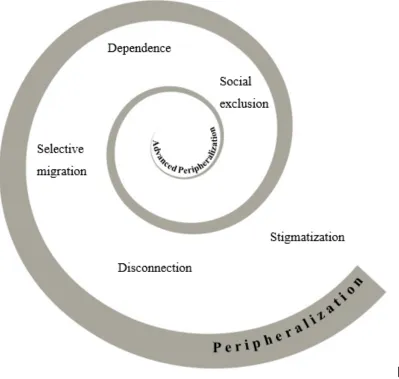
Persons, groups or areas can be subjected to peripheralization (Meyer and Miggelbrink, 2013, 207). The multi-dimensional approach to peripheralization suggests that peripheries are not only determined by geographical location or the quality of the transport infrastructure (Kühn and Weck, 2013, 24), but are socially produced (Kühn, 2015) and driven by actors such as policymakers, economic decision-makers, residents, etc. (Leibert and Golinski, 2016, 257). Peripheries are produced and reproduced through mechanisms of stigmatization, out-migration, disconnection, dependence, (Kühn and Weck, 2013, 24) and social exclusion (Leibert and Golinski, 2016). As discussed here, these different dimensions and the effects of peripheralization are interconnected (see fig.1) and can lead to what I call “advanced peripheralization”.
The stigmatization of peripheral rural villages as “backward”, “lagging behind”, “having no future” can lead to individual decisions to leave. Out-migration is a selective process, as those people leave first, who have the financial, human and social capital to do so. The causes of selective out-migration can be rooted in the economic and infrastructural disconnection of an area. Due to the long-lasting, severe economic crisis that characterized peripheral rural areas of Hungary and shrinking public infrastructure the inhabitants of these areas could access paid work only through migration. Thus on an individual level migration is considered as “the only way out from social and spatial marginality and the existing systems of dependencies” (Nagy et al., 2015, 149). “Those who stay behind, join the group of those who are marginalized in various social nexuses, and become dependent on local agents and institutional practices” (Ibid). Beyond selective out-migration, cheap housing in these areas resulted in the selective in-migration of poor, dominantly Roma families (Lennert et al., 2014). As a result of selective migration, the concentration of immobile population (the elderly, Roma people, the less educated, and the long-term unemployed) can be observed in peripheral rural areas (Leibert, 2013, 115). As Roma have a higher birth rate than non-Roma, not just the ratio of elderly people but also of children (under 14) are extraordinarily high in Northern Hungary and other regions characterized by small settlements (G. Fekete, 2015, 12). Often, these children (either they consider themselves Roma or society considers them as such) are born in deep poverty, and the Hungarian educational system as well as the social policies, provide little chance for these kids to break-out from poverty (Kertesi and Kézdi, 2009; Ercse, 2018).
Figure 1: Mechanisms of peripheralization. Elaborated by author based on Leibert and Golinski (2016).
Dependence is the political dimension of peripheralization and refers to a spatially organized inequality of power relations and access to material and symbolic goods (Fisher-Tahir and Naumann, 2013, 18). The main message of political science theories is that “peripheries are powerless” (Kühn, 2015, 374). It is important to mention though, that a simple dualism between center (power) and periphery (powerlessness) neglects the variety of forms of political negotiation apparent in welfare and federal states and democracies (Ibid.). The political relation between centers and peripheries on the regional level is marked by conflicts between central and peripheral elites (Ibid., 375). This conflict can have four possible outcomes: suppression of counter-elites, neutralization, co-optation of counter-elites in the periphery, or successful replacement of established authorities (Friedmann, 1973, 51). Friedmann grasps power through the concept of autonomy and capability: “To have power is to exercise a measure of autonomy in decisions and to have the ability to carry out these decisions” (Friedmann, 1973, 48). As marginalized communities receive limited authority in decision-making processes and consequently their capabilities to participate in decision-making are underdeveloped, the concept of autonomy and capabilities become important in discussing in what ways communities may counteract processes of peripheralization.
Beyond socio-economic and political processes, when studying the way peripheries are produced, the process of stigmatization, namely, the role of stereotypes and negative images must be considered (Beetz, 2008, Bürk, 2013, Fischer-Tahir and Naumann, 2013, Meyer and Miggelbrink, 2013, Plüschke-Altof, 2017). Local development research (Pike, Rodríguez-Pose and Tomaney, 2007) or regional development policy (Lang, 2015) is always normative (even if its arguments are based on empirical data) and framed by individual and collective values linked to specific understandings and conceptualizations of development, desired policy outcomes and funding priorities. In certain development discourses, through overlooking the structural processes (e.g. infrastructural disinvestment, economic restructuring) causing the structural disadvantages, remote rural areas become stigmatized as “declining”, “backward”, “lagging-behind” or “non-innovative”. Koobak and Marling (2014), show that depicting peripheries as lagging behind and in need to catch up, stems from a discursively hegemonized normative development concept that translates spatial into temporal differences. This developmentalism has been deeply rooted in both capitalist and socialist modernity (Plüschke-Altof, 2017, 63). Conceptualizations of development, desired policy outcomes and funding priorities shape regional policies and investment decisions. As a result, stigmatized rural villages face economic decline and the shrinkage of public infrastructure.
The last dimension of peripheralization mentioned here is social exclusion. It relates mainly to the protection of a certain group’s social status in a way that other groups get into a deprived position (Szalai, 2002). Social exclusion can be manifested in very high levels of long-term and youth unemployment, child poverty and strong dependency on transfer payments (Leibert and Golinski, 2016, 262). In line with the intersectionality theory,2 Szalai (2002) argues that two main types of social exclusion connected to a “shared destiny” can be distinguished in Hungary. A spatial social exclusion affecting people living in isolated small villages in Northeast and Southwest Hungary. These villages are the result of the unequal historical development of the Hungarian settlement structure and are hit by economic deprivation and high unemployment rate. The other type of social exclusion is ethnic-based
and affects impoverished Roma, accounting for approximately 60–80 percent of the total Roma population. These Roma are concentrated in isolated small villages, thus experience social exclusion in multiple ways.
The above mentioned dimensions of peripheralization are interrelated and often accelerate each other’s effects leading to what I call advanced peripheralization. In contrast to Wacquant’s theory of advanced marginality (Wacquant, 2008), the concept of advanced peripheralization is used in this work to emphasize that peripheralization is relational, and among others, national welfare policies, the history of ethnic-based oppression or the ways a locality is embedded into Global Production Networks influence it as well. The uneven social, economic and territorial development in Hungary created “internal colonies” where disadvantaged people, within which Roma are overrepresented, were locked into a “ghetto”, or in other words, into socially and economically deprived spaces (Kóczé, 2011, 129– 130). Mechanisms leading to rural ghettoes are labelled as “ghettoization” in the Hungarian literature (Szalai, 2002; Váradi and Virág, 2015).
Even though the post-socialist transition has resulted in the peripheralization of remote, rural settlements in structurally disadvantaged areas of Central and Eastern Europe, peripheralization seems to have different “stages”. As a result of advanced peripheralization rural ghettoes emerge, which are abandoned by the majority society, by investors and by the state. This level of abandonment is only characteristic in “rural ghettoes”, i.e. settlements undergoing advanced peripheralization. As a consequence, rural social enterprises emerging in “rural ghettoes” face more serious challenges as those rural social enterprises that emerge in settlements undergoing peripheralization to a lesser extent. To better understand the room for local agency in contexts of peripheralization, autonomy and empowerment seem to be promising concepts.
Empowerment, a strategy to counteract peripheralization
For marginalized communities it is “often difficult to gain access to processes of political decision making from which they may be culturally, educationally, and linguistically, as well as physically, remote” (Amin, Cameron and Hudson, 2002, 17). As pointed out by Mészáros (2013, 93) “decision-makers clearly do not trust in the competences of locals”.
The concept of empowerment and autonomy recognize the agency of marginalized communities, while being reflective on structural oppression. Empowerment, here understood as capability development (see e.g. Kesby, 2005) has great potential in counteracting peripheralization on individual and community levels. In line with this capability-based approach, individual autonomy and solidarity seem to be key concepts for a better understanding how empowerment can respond to processes of peripheralization particularly ethnicity-based social exclusion.
Autonomy and empowerment
From a relational perspective, individual autonomy is both a capacity and a status concept and these two dimensions are interrelated. To lead a self-determining life requires not just having the capacities and opportunities to do so, but also regarding oneself, and being recognized by others, as having the social status of an autonomous agent (Mackenzie, 2014a, 44). Failures of recognition are quite typical in social relations involving domination, or inequalities of power, especially when these are inflected by gender, race, ethnicity, or disability (Ibid.). Relational theorists claim that the internalization of non- or misrecognition can corrode the self-affective attitudes of self-respect, self-trust, and self-esteem that underpin one’s sense of oneself as an autonomous agent (Ibid.).
Acknowledging the autonomy of local agents is a precondition for democratic societies. Democratic solidarity is a concept recognizing the autonomy of local agents. It is a term referring to autonomous beings and the aim to preserve the conditions necessary for democratic societies (Gunson, 2009, 245). Democratic solidarity has to be distinguished from philanthropic solidarity. Relations of personal dependence are promoted through philanthropic solidarity. As a result, recipients are at risk of being trapped in a permanent position of inferiority. “In other words, this philanthropic solidarity brings with it a mechanism of social hierarchy and support for the inequality that is built into the social fabric of the community.” (Laville, 2014, 106)
Philanthropic solidarity justifies paternalistic interventions, which express or perpetuate relationships of domination and inequality among members of a community or between the state and its citizens (Mackenzie, 2014a, 55). As such, they involve a failure to recognize the people who are the target of such interventions as having the status of autonomous agents. In contrast, nonpaternalistic forms of protection, in line with the idea of democratic solidarity, recognize marginalized persons or social groups as equal citizens, but as citizens who may need targeted forms of assistance to convert resources into functionings and hence to reach the threshold level of capabilities to enable them to fully realize equal citizenship (Ibid.). Such forms of assistance thus foster and promote autonomy (Ibid.). In contrast with philanthropic solidarity, democratic solidarity promotes autonomy through assuming the legal equality of the people involved (Laville, 2014, 106). A democratic and socially just state has an obligation to develop social, political, and legal institutions that foster citizen autonomy (Mackenzie, 2014a and b).
Empowerment of Roma
Sypros Themelis (2016) frames the post-socialist transition period as the “capitalist reintegration of Eastern Europe” and argues that it has had devastating effects for the Roma, who, even before the transition, used to belong to the most vulnerable section of the working class in economic, cultural and political terms (Themelis, 2016, 7). Themelis points out that there is a biopolitical border between white and racialized working class to prevent class solidarity among the subordinated precarious populations in Europe (Kóczé, 2016, 46). The system covertly promotes the racialization and collective scapegoating of Roma to polarize revolt against neoliberal structural oppression (Ibid). As a result, Roma men are subjected to an ethnic gap and Roma women are subjected to both an ethnic and a gender gap in education and in employment.
Empowerment is a possible way to reduce the ethnic and gender gap. Discourses on empowerment can emerge from both the capabilities and neoliberal approaches. As Kóczé (2016) argues, neoliberal discourses on empowerment miss to challenge racialized and gendered structural oppression, even some feminists reframe and address these structural issues as an individual self-liberating and regulating project. The mechanism of “end of welfare” or “welfare dependency” becomes coded as “empowerment” in relation to Romani women in CEE (Kóczé, 2016, 51). According to Kóczé (2016, 51) certain NGO programs build on the logic of the neoliberal state, which mainly privatizes and philantropizes social service. Promoting Roma community and individual responsibility without addressing structurally racialized and gendered oppression cannot be a socially sustainable strategy (Ibid.). As Kóczé (2016, 51) argues, instead of recreating e.g. self-responsible Romani mothers, it would be important to problematize the role of the government.
to structural factors causing socio-spatial marginality empowerment can be a promising approach to develop the capabilities of marginalized people to become increasingly autonomous agents.
Research design and case study selection
The empirical part of this paper is based on a comparative Ph.D. research centered on the role of social enterprise in rural development in Hungary and (Eastern) Germany3. During my fieldwork I worked with ethnographic methods (semi-structured interviews, field notes and documentary analysis) that help research to go beyond the perspectives of the initiators (founders, mayors, ministers) and shed light on the perspectives of the local stakeholders (the “target group” of social enterprises), particularly the Roma people. The data for ethnographic analysis were collected through six semi-structured interviews conducted with key actors from rural social enterprises, informal talks with nearly 45 local stakeholders (e.g. employees, volunteers, participants of leisure activities), around a week´s stay for participant observation at each case study rural social enterprise, and documentary analysis, including founding documents, financial reports and non-profit reports and virtual documents (website, Facebook page, blogs). Names of settlements and interviewees have been altered to protect the privacy of the research partners.
Table 1: Case Study Initiatives. Source: Elaborated by author.
The selection of cases was based on a two-step strategy. First, by identifying “regions in crisis” in the literature on regional polarization in Hungary (Kovács, 2010 and 2012; Koós, 2015; Dusek, Lukács and Rácz, 2014), and second, by selecting the “best practices” in initiatives of social and solidarity economy in these regions.4 Based on this strategy, three social and solidarity economy
3 The author was an Early Stage Researcher within the international ITN RegPol² project – “Socio-economic and Political Responses to Regional Polarization in Central and Eastern Europe”, http://www.regpol2.eu/ The project received funding from the People Programme (Marie Curie Actions) of the European Union’s Seventh Framework Programme FP7/2007-2013/ under REA grant agreement n° 607022.
4 21 experts of local development or social enterprise (7 academics and 13 practitioners), 5 awards (Ashoka Fellows, NESsT
Portfolio and supported projects, Badur Foundation – founded projects, Sozial Marie – Prize for social innovation, Hungarian winners, UniCredit Lépj velünk! - Social innovation programme) and 5 “best practice” reports and networks were consulted. Those social enterprises have been selected from this pool of initiatives, which are located in the most
Case Studies H1 - Organic Village
Farm
H2 - Equality Foundation and Complex Local Development
H3 – Community Apiculture and Village School
Location Northern Hungary,
extremely small settlement
Southeast Hungary, an extremely small settlement undergoing advanced peripheralization
Northern Hungary, small settlement
Type Municipality-based Civilian-based Faith-based
Property Local Municipality Foundation Congregation
Legal Form(s) Non-profit Ltd., social
initiatives were identified, a civilian-based (Equality Foundation in Tarnót), a municipality-based (Organic Village Farm of Kispatak) and a faith-based social enterprise (the Congregation of Albertháza) (see Table 1).
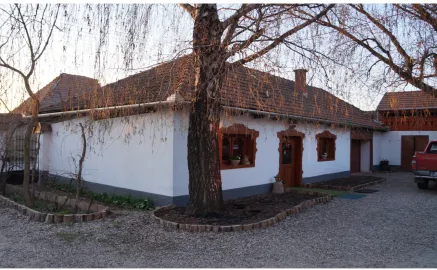
The Organic Village Farm of Kispatak (case study H1) is a municipality-based initiative. The program began in 2012 with 25 local volunteers and the cultivation of 0.6 ha. plot; by 2015 it had grown to 3.5 ha. and 30 paid employees. EU-based grants (ESF, LEADER) played an important role in the start-up of the farm. From 2012-2014, the production of organic vegetables and fruit was complemented by a village shop (which also functions as a centre for handicraft activities), a food processor financed through a LEADER grant, and an herb processing plant financed through an ESF grant. Since 2010, the municipality of Kispatak has been awarded near 600,000 EUR in EU funding to implement the project (Cebotari and Mihály, 2019).
Figure 2: Organic Village Farm. Photo by author.
The second case study (H2) is a civilian-based social enterprise, a Complex Development project in a village undergoing advanced peripheralization. The initiating organization is the Equality Foundation, a Hungarian politically autonomous civil society organization (CSO), based in a small town near Tarnót, where its development project takes place. Using its art-based education program,5
challenging areas and which are widely accepted by the researchers, policy-makers and social enterprise development
agencies as rural social enterprises.
through which the integration of the underprivileged, mainly Roma children was aimed at, the Foundation introduced a model local development program in Tarnót in 2009. To capture the multi-dimensional nature of their local development project they labelled it Complex Development. First, the Foundation focused on community building and community development, especially with the parents of children attending the art-based school. Later, they started a sewing program to offer an opportunity for local women to earn an extra income. They manufacture handmade bags and decorations and sell them in the online store of the Foundation. Building on the success of this program and of their long-term presence in the village (six years at that time), the Equality Foundation opened a community garden and a fruit-processing manufacturer in 2016. With the financial support of international foundations,6 it was able to employ seven people from the village, from the Romungro, Vlach-Roma and non-Roma ethnic groups. This is the only case study, where participative decision-making is used as a way to empower local stakeholders. Decision-making power is concentrated by representatives of the community in the other two cases. In the case of the Congregation of Albertháza, members of the Presbytery make decisions, while in the case of the Organic Village Farm decision-making power is concentrated in the hands of the Mayor (Mihály 2019).
Figure 3: Community center of the Equality Foundation. Photo by author.
The Congregation of Albertháza (case study H3) runs two faith-based rural social enterprises that are interconnected, a Community Apiculture and a Village School. The Community Apiculture started with a donation of bees by the local Lutheran Minister to his congregation in 2006. At first, the apiculture production was part of the local informal economy and worked on principles of solidarity. Once the members of the congregation produced more, then they could consume, the community started to sell honey using their international networks. Meanwhile, the Congregation of Albertháza needed to face a new challenge, as the local municipality could not maintain the local school any
engaging the attention of children coming from extreme poverty. Based on the principle of integration, underprivileged children learn next to more privileged students.
longer. The locals of Albertháza consider the village school of crucial importance to stop further selective out-migration (Interview_H3_I1). The congregation could not prevent the school from closing down in 2008. In order to counteract further selective out-migration from the village the Congregation of Albertháza channeled their income, stemming mainly from international honey sales, into reopening the village school. In 2011, the Congregation was able to reopen the local school as a civilian-based school (through their non-profit Ltd.), but after a year of operation they had financial struggles and handed over the maintenance of the school to the Lutheran Church, as this historic Church had much more funds to cover the fixed costs of the school.7 The Congregation of Albertháza is unique in Hungary in the sense that they could sustain decision-making power on the local level, even after handing over the maintenance rights to the Lutheran Church. In Hungary, schools maintained by Churches are usually subjected to centralized decision-making and local stakeholders have limited power to influence the governance of these schools. Since the Lutheran Church took-over the school as a maintaining institution, the income from honey production has been spent on excursions, community events, scholarships for local youth and the development of infrastructure for the school and kindergarten.
Figure 4: Community Apiculture. Photo by author.
The studied initiatives are located in the Northeast and Southwest region of Hungary. Tarnót is located in the southeast of Hungary, a structurally disadvantaged region next to the Romanian border. Here agriculture was the dominant industry during socialism. Kispatak (H1) and Albertháza (H3), are settlements in Northeast Hungary, in Borsod-Abaúj-Zemplén County, a region that also suffered from economic restructuring after the regime change. The blossom of the extraction industry in this region occurred during socialism. The case study villages have the highest deprivation index (Class 5, where 5 corresponds to the most deprived, Koós, 2015, see Fig.5), suggesting that people live even under the rural average according to certain poverty dimensions (housing, income, labor market opportunities
and qualification) (Koós, 2015, 54). The higher the value of the deprivation indicator is, the lower the average social status is (Ibid.). Even if all case study villages have a high deprivation index, the intensity of peripheralization is different in these villages. To better understand the way the case study villages are peripheralized the following section provides an overview on the local manifestations of peripheralization. Considering the five dimensions of peripheralization, such as stigmatization, selective migration, disconnection, dependence and social exclusion among the three case study villages, only Tarnót can be described as a village undergoing advanced peripheralization.
Figure 5: Case study initiatives and settlement deprivation in rural Hungary, 2011. Source: Koós 2015, 64. Location of studied rural enterprises added by author.
Both state socialist and neoliberal development policies stigmatized small settlements, like Kispatak, Tarnót and Albertháza. Socialist regional policies stigmatized settlements under 3, 000 inhabitants as “relicts of feudalism” and consciously disinvested in the infrastructure of these settlements (Bajmócy, Józsa and Pócsi 2007, 2; G. Fekete, 2015, 8). Disadvantages rooted in socialist development policies (infrastructural deficits, obsolete economic structure and lack of human resources) have made it extremely difficult for these settlements to compete in a neoliberal environment (G. Fekete, 2015, 9).
Ministers of Albertháza (H3) was to serve in one or more small settlements in the mountains of Northern Hungary:
This dream was connected to the fact that no one really wanted to come here. Ministers or General Practitioners only spend one or two years in the region. This is nearly true for all graduates, who arrive in these villages. Very few people stay here. In our class it was usual that people wanted to move to bigger cities or to places where the livelihood is more secure, without having any dilemmas about whether they should buy bread or nappies for their children. (Interview_H3_I1)
The Mayor of Kispatak is a political scientist and after finishing the university, he wanted to return to his village and get engaged in local politics to show that even though peripheral small settlements “lost their functions” they can have a future (Interview_H1_I1). He also mentioned selective out-migration as a core challenge of his village.
Nearly everyone left, who could. We barely have graduates or good skilled workforce in the village (…). The intellectual basis that these villages used to have, ceased to exist in small settlements. (Interview_H1_I1)
While in the case of Albertháza and Kispatak the selective out-migration was emphasized, in the case of Tarnót the selective in-migration of rural poor was underlined. Beyond a larger Vlach Roma family (Interview_H2_I4), ethnic Hungarians from Romania also moved to Tarnót for cheaper housing (Anonymized source, 2016).
The case study villages are spaces of social exclusion. In line with studies that point out the ethnic dimension of socio-spatial marginalization (Kovács, 2010; Koós, 2015; Kertesi and Kézdi, 2009; Nagy et al., 2015), in official statistics the ratio of inhabitants who declared themselves Roma was higher in Tarnót (15 %) and Albertháza (12 %) than the national ratio (3.18 %), and it is slightly lower in Kispatak (3 %) (HCSO, 2011) (see Table 2). Local estimations show a much higher ratio of Roma in Kispatak (30%, Anonymized source, 2011) and Tarnót (70%, Anonymized source, 2016).
One of the main challenges Roma face in the case study villages is educational segregation. With a high-level governmental representation8, the openly segregation-friendly discourse is becoming increasingly accepted in the Hungarian society (Ercse, 2018, 180). In line with this, the role of faith-based schools is emphasized in governmental communication. In contrast with the underfinanced and overcentralized public schools, church-based schools can offer balanced and good quality education for “selected” children (Ercse, 2018, 196). On the local level, the faith-based school neighboring Tarnót is hardly accessible for disadvantaged Roma children. The disadvantaged Roma pupils get concentrated in the local public school (Anonymized source, 2016). Anikó, a Vlach Roma woman from Tarnót does not want to enroll her children to the local public school as it is “full of Gypsy children” (Anikó, Field_notes_H2).
Among the three case study villages Albertháza is the only village, which still has a village school. However, the lack of locally available, good quality, integrative education is not the only cause of increasing disconnection. The low level of car ownership9 in the case study villages (see Table 2) is problematic, considering the reduced availability of public transport and local services. None of the three settlements has a train station and besides daily school bus service, only Kispatak and Albertháza
8 Zoltán Balogh, of the Ministry of Human Capacities, referred to “segregation with love”, as an acceptable practice in the educational system.
has 2-4 buses transporting passengers on weekdays to the micro-regional centers. Locals are also disconnected from other local services; none of the three villages has a General Practitioner or post office. Even in Tarnót a local store and pub are non-existent. Among the three case study villages, Tarnót is the most disconnected, as it can only be accessed through a secondary route, car ownership and the level of locally available services, including public transport, is the lowest.
Table 2: Unemployment, car ownership and ratio of Roma people in the case study villages Source: Elaborated by author based on HCSO (2011 and 2014) and MNE (2015).
Supra-local processes, such as changes in the Hungarian governance system or shifts in priorities in social policy, influence local dependencies. Local municipalities’ access to decision-making power has changed over time in Hungary. While the political autonomy of local communities remained merely formal during state socialism, after the regime changed, granting greater local autonomy became an aim for the central state, and for municipalities, to gain more authority to make decisions on local issues (Velkey, 2017, 159). However, the budgets of local municipalities were narrow and due to the oppressive mechanisms of state socialism, those locals that stayed in peripheralized rural areas were not summoned to be asked when decisions were made. These factors limited the room for local action. After 2010, a new local municipality system was set up, in which public service provision have been radically nationalized (Velkey, 2017, 159). As a result, decision-making power on the local level and the ratio of freely usable financial resources has radically decreased and this has led to a purposefully and hierarchically organized system of dependencies (Velkey, 2017, 160) and a very limited autonomy of local municipalities.
Further dependencies can be mapped in peripheral localities along power distribution between local elites and marginalized communities. The Public Work Programme, which is in the center of Hungarian Social Policy since 2010, further strengthens inequalities of power between the local actors. Among the three case study villages, Kispatak is the only village where local unemployment is lower than the national average (4.35 %, see Table 2). These data might be misleading though, since near 32 % of the active population is not employed in the primary labor market,13 but through the often criticized Public Work Programme (Cebotari and Mihály, 2019). Among others the Public Work Programme reproduces client-patron relationship on the local level as the Mayor can freely choose which inhabitant to select to work in the publicly financed work-integration programme.
Among these three case study villages of high deprivation, Tarnót (H2), refers to an undergoing process of advanced peripheralization. As a result, most of its inhabitants live in poverty with many
10 http://www.ksh.hu/docs/hun/xstadat/xstadat_evkozi/e_qlf027e.html.
11 The level of car ownership significantly reflects the regional income disparities, so that spatial differences can be
observed (Erdősi, 2009).
12 https://www.ksh.hu/docs/hun/xftp/idoszaki/nepsz2011/nepsz_orsz_2011.pdf. 13 Data estimate by author, based on HCSO (2011) and Kajner et al. (2013).
Kispatak Tarnót Albertháza National rate
Unemployment rate 4.35 % 9.97 % 8.99 % 6.2 %10
Car ownership 19 % 15 % 20 % 30 %11
Ratio of Roma people (local estimations in brackets)
of them in deep poverty. Only half of the houses have bathroom and flush toilets in Tarnót, while in Kispatak and Albertháza, more than two-thirds of the households do have them.14
Institutional framework and political autonomy of rural social enterprises in Hungary
Social enterprises are supposed to preserve their political autonomy even when receiving state funding or money from private foundations. According to Coraggio et al. (2015, 243), social and solidarity economy initiatives should not become mere implementers of government programs or social projects initiated by private foundations. However, national institutional frameworks influence the political autonomy of social enterprises. This section explores the specific ways in which the institutional framework and the political context in Hungary influence the capacity of the studied social enterprises (municipality-based, faith-based or civilian-based) to preserve their political autonomy, and hence the extent to which the identified differences influence the capacity of such initiatives to counteract peripheralization.
Policies, regulations and the reorganization of public funding in Hungary have negatively influenced the level of political autonomy of local development initiatives, and the same have also made certain social enterprises, such as faith-based and municipality-based ones, to arise and manage their activities more easily than others, like the civilian-based ones. During state socialism, politically independent civilian organizations were oppressed (G. Fekete et al., 2017), so after the regime change, civil society was already weak and after a revival in the 1990s became marginalized again from the provision of social services (Kinyik and Vitál, 2005; Kövér, 2015) as well as from development projects financed with public funds (Keller, 2011; Kabai, Keller and Németh, 2012). Meanwhile faith-based organizations were strengthened through public resources (Kövér, 2015).
After 2014 politically autonomous civilian organizations were openly attacked by the government. The diplomacy conflict escalating since 2014 between Norway and Hungary over the Norway Civilian Grants (see (Kelemen-Varga et al. 2017) shows well how the Hungarian Government aims to extend its control over funding sources available for civilian organizations. Beyond that those funding sources that are independent from the Hungarian Government get increasingly stigmatized. According to a recently (13th June 2017) accepted law on the Transparency of Foreign Funded Organizations, those Civil Society Organizations that accept more than 20 000 EUR international funding per year have to be registered as “foreign-funded organizations” and make it visible on their website (G. Fekete et al., 2017). (For a more detailed overview of how civilian-based initiatives got increasingly marginalized in Hungary see Mihály, 2019; Kiss and Mihály, 2019).
The empowerment capacity of rural social enterprises: a perspective of the Roma
Dominant discourses see the marginalization and exclusion of Roma as a result of their own problems with morality and cultural traditions (Kóczé, 2015, 95). Accordingly, they suggest that the structural problems they face today must be addressed and solved by the Roma themselves. “Being Roma” overlaps with a rather disadvantageous class position (Kovai, 2018; Stewart, 2001), rooted in the state socialist social policies, and particularly coming from the “assimilation promise”. Being “Roma” was considered not as an ethnic status, but as a condition, a collection of social disadvantages that would be eliminated through wage work and public policies, such as education and the eradication of segregation (Kovai, 2018, 16). After the regime change and the following economic crisis, the employment opportunities in structurally disadvantaged areas were limited, in particular for Roma people. This fact and the still prevailing assimilation promise encouraged people to abandon their “Gypsyness”,
promoting the idea that “being Roma” was shameful, and thus attaching degrading and insulting meanings to it. While “Hungarianness” has been associated with value and something that can be openly admitted, “Gypsyness” on the contrary, has been associated with shame, poverty and worthlessness (Ibid).
The ratio of Roma is significantly higher in Northern Hungary than the rest of the nation, and the far-right Jobbik15 is strongly supported in this region, where Kispatak (H1) is also located. Despite these facts, the Gipsy-Hungarian differentiation16 does not seem to prevail in this village. The products manufactured by Roma and non-Roma are sold equally in the village store, and Roma are represented in the leadership of the Organic Village Farm. Also, both Roma and non-Roma participate in the garden activities that require manual work, as well as in the center for handicraft activities and the food processing manufacturing where skilled workforce is utilized. The Mayor of Kispatak does not advocate a division of the village into Gypsy-Hungarian factions (Field_notes_H1); rather he genuinely seeks to provide better opportunities for all citizens:
Basically, the problems here in Kispatak and in rural areas generally occur not along this line of rupture [Gipsy-Hungarian differentiation]. Moreover, recently, undersocialisation, lagging behind, livelihood challenges also affect larger settlements and are not exclusively related to the Roma. (…) And that´s why I think it can be problematic if the Roma-programs are announced that way in the name of “catching up”. I believe this is not an ethnic-based question anymore. (Interview_H1_I1)
Even if the Mayor of Kispatak seems seeking to provide better opportunities to all citizens of Kispatak, he is unreflective about the general structural mechanisms creating increasing inequalities between Roma and non-Roma people, such as uneven access to education or to the labour market (Interview_H1_I1). His definition of Roma is in line with the assimilation promise of socialism, he refers to “catching up” as something, which used to be an ethnic-based question in the past, but recently, due to the processes of peripheralization it affects everyone who lives in small settlements in structurally disadvantaged areas. Fitting into the neoliberal logic the Mayor puts the responsibility of “lagging behind” on the marginalized individuals. He compares the older generation to a tree with strong roots and the recent generation to a worm without any roots. While for him a tree symbolizes stability and morality the worm symbolizes weakness and immorality (Interview_H1_I1). The main motivation of the mayor to help the locals comes from a philanthropic solidarity. The Mayor does not delegate decision-making power to the community members (Field_notes_H1). The empowerment capacity of the Organic Village Farm is limited as the initiative is completely dependent on the Mayor, and as local development is envisioned to be achieved through patronizing rather than emancipating means.
In contrast, the Complex Development of Tarnót (H2) is explicitly aimed at overcoming the division of the village into Gypsy-Hungarian factions. The initiative is targeting a village in which the ratio of Roma is 70 percent (Equality Foundation17). Tarnót is inhabited by Romungro and Vlach Roma families, and it is a case that shows well the fragmentation within the Roma minority. Romungro and Vlach Roma identities substantially diverge, and hence the relationship between them constitutes an element of internal conflicts in the village (Field_notes_H2).
15 Jobbik is the second largest party in Hungary with strong nationalist radical, antigypsyist narrative.
16 Rooted in the assimilation promise the local societies are divided into Gypsy-Hungarian fractions. This differentiation is enforced both by the “Gypsy” and “Hungarian” inhabitants (Kovai 2018).
The relationship between Romungro and Vlach Roma has been historically conflictive, leading in Tarnót to a fragmented Roma society. Although the “core” Romani culture of Romungro (or Hungarian Roma) were practically diluted through the deliberate policy of the Habsburgs (Kóczé, 2011; Hancock, 2015), Romungro populations are still regarded as “Gypsies” by larger society on the basis of appearance, dress, name, occupation and neighborhood, and are treated accordingly (Hancock, 2015). In contrast, Vlach Roma vigorously maintain their language and culture (Hancock, 2015). In trying to understand the conflicts between Romungro and Vlach Roma, Engebrigtsen (2007), Scheffel (2005) and Kovai (2018) point out that since the Gypsy identity can be lived mainly through kinship, Gypsies outside the kinship usually appear as “others”, being different in their “Gypsyness” from “us”.
Romungro Roma are the majority compared to Vlach Roma and were already living in Tarnót before 1989. Vlach Roma people are “newcomers” as they moved to the village in the 2000s, leading to a highly conflicted relationship between Romungro and Vlach Roma. The situation became stabilized through the domination of Vlach Roma over Romungros (Interview_H2_I4). Zsiga, a Vlach Roma man was elected to represent the interest of both Romungro and Vlach Roma inhabitants as the president of the local Roma Minorities Self-Government. However, there are still conflicts between Romungro and Vlach Roma and their elected Roma representative advocates Vlach Roma interests more than Romungro interests (Field_notes_H2).
The Equality Foundation has been strategic in employing both Romungro and Vlach Roma together with “Hungarians”. It explicitly aims for community building, to reduce local tensions. Zsiga, who worked six months for the Foundation remembers the situation as follows:
To be honest, Aunty Anna reduced the tensions between Romungro and Vlach Roma. We probably became more accepting with each other, you know? (…) they helped me to accept the opinion of other people, and other nationalities’ opinion as well. I am going to baptize a kid of another nationality [Romungro] next month. I know this will help to erase this [conflict] (…) We used to think that Vlach Roma were “superior” (Interview_H2_I4)
The Equality Foundation is conscious about the Gypsy-Hungarian differentiation and aims to identify and reduce structural inequalities. They recognize the agency of marginalized Roma and non-Roma inhabitants of the village, but are also conscious about how uneven access to education or labor market can influence marginality. Their local development project is based on democratic solidarity. They aim to develop the autonomy capacities of the marginalized inhabitants of Tarnót through a capability-based approach and by being conscious about the community and its internal fragmentations.
In contrast with the Equality Foundation, the stakeholders of the Congregation of Albertháza are limitedly conscious about the Gypsy-Hungarian differentiation. While some of their strategies explicitly aim to integrate Roma into the majority society, they implicitly advocate the division of the region into Gypsy-Hungarian factions with some of their actions.
The Congregation of Albertháza has aimed to integrate Roma into the majority society by providing an opportunity for Roma kids to enroll in their alternative (religious) school. Thirty percent of the children enrolled in the village school come from a difficult family situation, mainly from Roma families. In this case, some success stories have emerged, including one of a Roma girl who managed to study with the financial and moral support of the Congregation of Albertháza (Interview_H3_I2). However, along with these positive examples, to the inside of the Congretation, the Gypsy-Hungarian differentiation often characterizes the interactions between the “Hungarian” and the “Gypsy” members. They are separated both discursively and geographically. The Community Apiculture is based in Albertháza, and is rooted in a solidarity economy project in which members of the Lutheran Congregation work on the production of honey for self-consumption. Young locals as well as elderly, but not the Roma, are members of the local congregation. The Community Apiculture is interconnected with the Roma people in the neighboring village, where they run a religious “mission” in which among others, religious education and leisure activities are offered for the Roma children.
Even though the volunteers of the Congregation have good intentions with their “mission”, as representatives of local educational and religious institutions, some of them get engaged in discourses blaming Roma for not being hard-working enough (Field_notes_H3). Such discourses overlook the structural disadvantages Roma are facing, such as educational segregation and the Public Work Programme, which is characterized by a client patron relationship. Participating in camp organizers’ meetings I had the impression that even if the volunteer teachers of the Congregation have good intentions and even if, unlike other teachers in the region, they do turn to Roma kids, some of them do differentiate Roma kids and consider them “uncivilized”, as not being on the same level with them (Field_notes_H3).
However, the Congregation of Albertháza could counteract the peripheralization of the village on both a discursive and material level by making the village attractive to middle-class families, through setting up the Community Apiculture or opening their Village School, their relationship with the local Roma is more patronizing than emancipating. Without being more conscious about the Gypsy-Hungarian differentiation and the structural oppression of Roma this initiative is only capable to counteract the peripheralization of Hungarians. Their “Gypsy mission” is based on philanthropic solidarity and does not recognize Roma as autonomous agents, who are capable to overcome structural inequalities through a capability-based development. Thus, aside from certain examples (scholarship for Roma), the Community Apiculture reproduces the marginality of the Roma.
Summary and discussion
in Tarnót, a village undergoing advanced peripheralization. Disadvantaged people, who due to an ethnic-based socio-spatial marginalization are often Roma, concentrate in the village and live there in privation. Although this situation limits the local population to unfold certain skills and abilities, particularly women are open to cooperate with the Equality Foundation to change their and their children’s situation.
Despite the fact that the Equality Foundation undertakes an important “mission” in Tarnót, it faces serious financial insecurity as a civilian-based social enterprise. In addition to having a very limited access to public funding, it is stigmatized by the Hungarian government for accepting financial support from foreign donors. In contrast to this, the municipality-based Organic Village Farm and the faith-based Community-Apiculture have good access to public funds, but they are embedded into hierarchical structures, which may limit their room for autonomous local action (Mihály 2019). The Congregation of Albertháza is unique in the sense that the Congregation could preserve control over the village school even after the Lutheran Church took over its maintenance. In summary, the capacity of Hungarian rural social enterprises to counteract peripheralization is determined by their institutional ties (municipality-based, faith-based and civilian-based), which may also influence the extent of their political and local autonomy.
The central aim of this paper was to bring in the perspective of the Roma in better understanding the ways rural social enterprises may counteract peripheralization. Even if Roma people are amongst the stakeholders of the rural social enterprises, the initiatives differ in their capacity to empower them. The Gypsy-Hungarian differentiation proved to be beneficial to better understand this question. While all the initiatives aimed at counteracting certain aspects of peripheralization, not all explicitly aimed to empower the Roma through emancipating means. The Mayor of Kispatak utilizes his institutional embeddedness to gain funds to counteract the peripheralization of his village. This project fits well with the agenda of the Public Work Programme in providing work for the socially and spatially marginalized locals of the village. The Mayor made progress in counteracting the economic and infrastructural disconnection of the village through realizing the Organic Village Farm project. Roma people are among the team leaders in the project, but the initiative cannot be considered a project of empowerment, as it became completely dependent on the Mayor, who envisions local development to be achieved through patronizing rather than emancipating means.
The Complex Development Program of Tarnót is explicitly aimed to develop the autonomy capacities of the locals. To overcome the division of the village into Gypsy-Hungarian factions, their initiative purposefully employs Romungro and Vlach Roma, as well as non-Roma people. Their initiative is the only one aiming to provide space for participative decision-making (Mihály, 2019). The project succeeds in counteracting certain dependencies and mechanisms of social exclusion through building bridges between different Roma and non-Roma employees, but there are deeply-rooted tensions at the local level, which can only be overcome in the long term.
The current government shows authoritarian tendencies, when it limits funding sources for civilian-based initiatives. Such a context, leads to municipality-based and faith-based social enterprises to blossom over civilian-based ones. However, these organizations are embedded in centralized structures and they often envision development through patronizing means. However, rural social enterprises are created to ease social tensions in peripheralized areas, they have the potential to reproduce the marginality of Roma within the local society. Civilian-based initiatives have more potential to create spaces of empowerment, but as they are harder to control and may formulate critiques about social policies, they are purposefully “silenced” by the state. Social enterprise researchers need to reflect on the underlying processes resulting in municipality-based or faith-based social enterprises to blossom over civilian-based ones.
Acknowledgements
This research could not have been completed without the openness of the formal and informal interview partners, who gave insights into their daily-life, work and shared parts of their life stories with me. I owe special thanks to Sebastian Lentz, Thilo Lang, Franziska Görmar, Claudia Villegas and to the two anonymous reviewers for their valuable feedbacks on earlier versions of this paper.
References
Amin, Ash; Cameron, Angus; Hudson, Ray. 2002. Placing the social economy. London, New York: Routledge (Contemporary political economy series).
Bajmócy, Péter; Józsa, Klára; Pócsi, Gabriella. 2007. Szélsőséges aprófalvak. Aprófalvak a településlisták végein néhány társadalmi gazdasági mutató alapján. In, Csapó, Tamás; Kocsis, Zsolt (eds.), A kistelepülések helyzete és településföldrajza Magyarországon. [III. Településföldrajzi Konferencia]. Szombathely: Savaria Univ. Press, 24–37.
Beetz, Stephan. 2008. Peripherisierung als raumliche organisation sozialer Ungleichheit in Materialien der Interdisziplinären Arbeitsgruppe Zukunftsorientierte Nutzung ländlicher Räume
Nr. 21, Berlin: Berlin-Brandenburgische Akademie der Wissenschaften.
Bürk, Thomas. 2013. Voices from the margin. The stigmatization process as an effect of socio-spatial peripheralization in small-town Germany. In, Andrea Fischer-Tahir, Matthias Naumann (eds.),
Peripheralization. The making of spatial dependencies and social injustice. Wiesbaden: Springer VS, 168–186.
Cebotari, Sorin; Mihály, Melinda. 2019. Towards a progressive local development approach – Insights from local community initiatives in Hungary and Romania In, Lang, Thilo; Görmar, Franziska (eds.), Regional and Local Development in Times of Polarisation - Re-Thinking Spatial Policies in Europe, Singapore: Palgrave Macmillan, 2019. pp. 253-285. (New geographies of Europe) (ISBN 978-981-13-1189-5)
Coraggio, José; Eynaud, Philippe; Ferrarini, Adrianne; Filho, Genauto Carvalho de Franca; Gaiger, Luis Inácio; Hillenkamp, Isabelle et al. 2015. The theory of social enterprise and pluralism: solidarity-type social enterprise. In, Jean-Louis Laville, Dennis R. Young and Philippe Eynaud (eds.), Civil society, the third sector and social enterprise. Governance and democracy. London, New York, NY: Routledge (Routledge frontiers of political economy, 200), 234–249.
Dusek, Tamás; Lukács, Réka; Rácz, Irma. 2014. Development Differences among the Regions of Hungary. Procedia Economics and Finance 9, 264–277
Erdősi, Ferenc. 2009. Transport. In, Kocsis, Károly; Schweitzer, Ferenc (eds.) Hungary in Maps.
Budapest: HAS Geographical Research Institute, 164-170
Ercse, Kriszta. 2018. Az állam által ösztönzött, egyházasszisztált szegregáció mechanizmusa. In, Fejes, József Balázs and Szűcs, Norbert (eds.), Én vétkem – Helyzetkép az oktatási szegregációról.
Szeged: Motiváció Oktatási Egyesület,
http://www.staff.u-szeged.hu/~fejesj/pdf/En_vetkem_online_hq.pdf#page=177, 177-200
Fischer-Tahir, Andrea; Naumann, Matthias. 2013. Introduction. Peripheralisation as the Social Production of Spatial Dependencies and Injustice. In, Andrea Fischer-Tahir, Matthias Naumann (eds.), Peripheralisation. The making of spatial dependencies and social injustice. Wiesbaden: Springer VS, 9–26.
Friedmann, John. 1973. A theory of polarized development, In, John Friedmann (ed.), Urbanization, Planning, and National Development, Beverly Hills, CA: Sage, 41–67
G. Fekete, Éva. 2015. Csereháti diagnózisok - átfogó térségi helyzetbemutatás. In, Éva G. Fekete (ed.),
Társadalmi innovációk a felzárkózás szolgálatában. Dél-Cserehát - Nyitás a jövőre. Miskolc, 5–51. G. Fekete, Éva; Hubai, László; Kiss, Julianna and Mihály, Melinda. 2017. Social Enterprise in Hungary, ICSEM Working Papers, No. 47, Liege: The International Comparative Social Enterprise
Models (ICSEM) Project. Available online at
https://www.iap-socent.be/sites/default/files/Hungary%20-%20Fekete%20et%20al.pdf
Gunson, Darryl. 2009. Solidarity and the Universal Declaration on Bioethics and Human Rights. The Journal of Medicine and Philosophy: A Forum for Bioethics and Philosophy of Medicine 34 (3), 241–260. DOI: 10.1093/jmp/jhp022.
Hancock, Ian. 2015. Keynote Address: Roma - Explaining Today through History. In, Jan Selling, Markus End, Hristo Kyuchukov, Pia Laskar, Bill Templer, Khristo Ki u chukov, William Templer (eds.). Antiziganism. What's in a word? proceedings from the Uppsala International Conference on the Discrimination, Marginalisation and Persecution of Roma, 23-25 October 2013, Newcastle upon Tyne: Cambridge Scholars Publishing, XIX–XXX.
HCSO. 2014. Hungarian Central Statistical Office. Központi Statisztikai Hivatal /Területi statisztikai adatok rendszere/2014/Közlekedés, hírközlés, www.teir.hu
HCSO. 2011. Hungarian Central Statistical Office. Census data, www.teir.hu
Horváth, Kata; Kovai, Cecília. 2010. A cigány különbségtétel alakulása egy észak-magyarországi
faluban. In, AnBlokk (4), 39-41, Available online at
http://epa.oszk.hu/02700/02725/00003/pdf/EPA02725_anblokk_2010_4_039-041.pdf
Kabai, Gergely; Keller, Judit; Németh, Nándor. 2012. A foglalkoztatás növelésének célja a kormányzati célok rendszerében. Kistérségi fejlesztések. In, Károly Fazekas, Ágota Scharle (eds.),
Nyugdíj, segély, közmunka. A magyar foglalkoztatáspolitika két évtizede, 1990-2010. Budapest: Budapest Szakpolitikai Elemző Intézet és MTA KRTK Közgazdaság-tudományi Intézet, 47–62. Available online at http://econ.core.hu/file/download/20evfoglpol/kotet.pdf.
Kajner, Péter; Lányi, András; Takács-Sánta, András; Munkácsy, Béla; Bertényi, Gábor; Králl, Attila; et al. 2013. A fenntarthatóság felé való átmenet jó példái Magyarországon MIS-ÖKO Kft., Online: http://humanokologia.tatk.elte.hu/wp-content/uploads/a_fenntarthatosag_fele.pdf
Kertesi, Gábor; Kézdi, Gábor. 2009. Általános iskolai szegregáció Magyarországon az ezredforduló után. Közgazdasági Szemle (16), 959–1000.
Kertesi, Gábor; Kézdi, Gábor. 2010. Roma employment in Hungary after the post-communist transition, Budapest Working Papers on the Labour Market, No. BWP -2010/9, ISBN 978–615-5024–28-3, Budapest: Hungarian Academy of Sciences, Institute of Economics
Kesby, Mike. 2005. Retheorizing empowerment-through-participation as a performance in space: Beyond tyranny to transformation. Journal of Woman in Culture and Society 4., 2037–2065. http://doi.org/bsmvw9
Kinyik, Margit, and Vitál, Attila. 2005. Közfeladatok ellátása a nonprofit szektorban. Civil Szemle 2 (2): 90–106.
Kiss, Julianna and Mihály, Melinda. 2019. Social enterprises and their ecosystems in Europe. Updated country report: Hungary, Luxembourg: Publications Office of the European Union
Kóczé, Angéla. 2011. Gender, ethnicity and class: Romani women’s political activism and social struggles. Budapest: Central European University
Kóczé, Angéla. 2015. Political Empowerment or Political Incarceration of Romani? The Hungarian version of the Politics of Disposession. In Péter Krasztev, Jon van Til (eds.), The Hungarian Patient. Social Opposition to an Illiberal Democracy. Budapest, New York: Central European University Press, 91–110.
Kóczé, Angéla. 2016. Romani women and the paradoxes of neoliberalism: Race, gender and class in the era of late capitalism in East-Central Europe In, Eszter Kováts (ed.), Solidarity in struggle. Feminist perspectives
Koobak, Redi; Marling, Raili. 2014. The decolonial challenge. Framing post-socialist Central and Eastern Europe within transnational feminist studies. In, European Journal of Women’s Studies 21 (4), 330–343. DOI: 10.1177/1350506814542882.
Koós, Bálint. 2015. A szegénység és depriváció a magyar településállományban az ezredfordulót követően - avagy kísérlet a települési deprivációs index létrehozására. Tér és Társadalom 29(1), 53–68.
Kovách, Imre. 2012. A vidék az ezredfordulón. A jelenkori magyar vidéki társadalom szerkezeti és hatalmi változásai. Budapest: Argumentum; MTA Társadalomtudományi Kutatóközpont (Szociológiai Intézet).
Kovács, Katalin. 2010. Social and Administrative Crises Interlocking. The Misery of Rural Peripheries in Hungary. Eastern European Countryside 16, 89–113.
Kovács, Katalin. 2012. A cél a "kiegyenlítés". Falvakról, térbeli-társadalmi polarizációról, Enyedi Györgyre emlékezve. Területi Statisztika 15 (52)(6), 570–582.
Kovai, Cecília. 2018. A cigány-magyar különbségtétel és a rokonság, L Harmattan Könyvkiadó Kft., Budapest
Kövér, Ágnes. 2015. Captured by State and Church: Concerns about Civil Society in Democratic Hungary. Nonprofit Policy Forum, De Gruyter, vol. 6(2), pages 187-212, August.
Kühn, Manfred. 2015. Peripheralization. Theoretical Concepts Explaining Socio-Spatial Inequalities.
European Planning Studies 23(2), 367–378. [doi:10.1080/09654313.2013.862518].