https://doi.org/10.5194/gmd-11-697-2018 © Author(s) 2018. This work is distributed under the Creative Commons Attribution 3.0 License.
Nine time steps: ultra-fast statistical consistency testing of the
Community Earth System Model (pyCECT v3.0)
Daniel J. Milroy1, Allison H. Baker2, Dorit M. Hammerling2, and Elizabeth R. Jessup1
1University of Colorado, Boulder, CO, USA
2The National Center for Atmospheric Research, Boulder, CO, USA
Correspondence:Daniel J. Milroy ([email protected]) Received: 28 February 2017 – Discussion started: 27 April 2017
Revised: 21 December 2017 – Accepted: 5 January 2018 – Published: 26 February 2018
Abstract. The Community Earth System Model Ensemble Consistency Test (CESM-ECT) suite was developed as an alternative to requiring bitwise identical output for quality assurance. This objective test provides a statistical measure-ment of consistency between an accepted ensemble created by small initial temperature perturbations and a test set of CESM simulations. In this work, we extend the CESM-ECT suite with an inexpensive and robust test for ensemble con-sistency that is applied to Community Atmospheric Model (CAM) output after only nine model time steps. We demon-strate that adequate ensemble variability is achieved with in-stantaneous variable values at the ninth step, despite rapid perturbation growth and heterogeneous variable spread. We refer to this new test as the Ultra-Fast CAM Ensemble Con-sistency Test (UF-CAM-ECT) and demonstrate its effective-ness in practice, including its ability to detect small-scale events and its applicability to the Community Land Model (CLM). The new ultra-fast test facilitates CESM develop-ment, porting, and optimization efforts, particularly when used to complement information from the original CESM-ECT suite of tools.
1 Introduction
Requiring bit-for-bit (BFB) identical output for quality assur-ance of climate codes is restrictive. The codes are complex and constantly evolving, necessitating an objective method for assuring quality without BFB equivalence. Once the BFB requirement is relaxed, evaluating the possible ways data sets can be distinct while still representing similar states is non-trivial. Baker et al. (2015) address this challenge by
con-sidering statistical distinguishability from an ensemble for the Community Earth System Model (CESM; Hurrell et al., 2013), an open-source Earth system model (ESM) developed principally at the National Center for Atmospheric Research (NCAR). Baker et al. (2015) developed the CESM ensemble consistency test (CESM-ECT) to address the need for a sim-ple method of determining whether non-BFB CESM outputs are statistically consistent with the expected output. Substi-tuting statistical indistinguishability for BFB equivalence al-lows for more aggressive code optimizations, implementa-tion of more efficient algorithms, and execuimplementa-tion on heteroge-neous computational environments.
and accuracy of the test. At this time, CESM-ECT is used by CESM software engineers and scientists for both port veri-fication and quality assurance for code modiveri-fication and up-dates. In light of the success of CAM-ECT, the question arose as to whether the test could also be performed using a time period shorter than 1 year, and in particular, just a small num-ber of time steps.
The effects of rounding, truncation and initial condition perturbation on chaotic dynamical systems is a well-studied area of research with foundations in climate science. The growth of initial condition perturbations on CAM has been investigated since Rosinski and Williamson (1997), whose work resulted in the PerGro test. This test examined the rate of divergence of CAM variables at initial time steps between simulations with different initial conditions. The rates were used to compare the behavior of CAM under modification to that of an established version of the model in the context of the growth of machine roundoff error. With the advent of CAM5, PerGro became less useful for classifying model be-havior, as the new parameterizations in the model resulted in much more rapid spread. Accordingly, it was commonly held that using a small number of time steps was an unten-able strategy due to the belief that the model’s initial vari-ability (that far exceeded machine roundoff) was too great to measure statistical difference effectively. Indeed, even the prospect of using runs of 1 simulation year for CESM-ECT was met with initial skepticism. Note that prior to the CESM-ECT approach, CESM verification was a subjective process predicated on climate scientists’ expertise in analyz-ing multi-century simulation output. The success of CESM-ECT’s technique of using properties of yearly CAM means (Baker et al., 2015) translated to significant cost savings for verifying the model.
Motivated by the success and cost improvement of CESM-ECT, we were curious as to whether its general technique could be applied after a few initial time steps, in analogy with Rosinski and Williamson (1997). This strategy would repre-sent potential further cost savings by reducing the length of the ensemble and test simulations. We were not dissuaded by the fact that the rapid growth of roundoff order perturba-tions in CAM5 negatively impacted PerGro’s ability to detect changes due to its comparison with machine epsilon. In fact, we show that examination of ensemble variability after sev-eral time steps permits accurate pass and fail determinations and complements CAM-ECT in terms of identifying poten-tial problems. In this paper we present an ensemble-based consistency test that evaluates statistical distinguishability at nine time steps, hereafter designated the Ultra-Fast CAM En-semble Consistency Test (UF-CAM-ECT).
A notable difference between CAM-ECT and UF-CAM-ECT is the type of data considered. CAM-UF-CAM-ECT spatially av-erages the yearly mean output to make the ensemble more robust (effectively a double average). Therefore, a limitation of CAM-ECT is that if a bug only produces a small-scale effect, then the overall climate may not be altered in an
aver-age sense at 12 months, and the change may go undetected. In this case a longer simulation time may be needed for the bug to impact the average climate. An example of this is-sue is the modification of the dynamics hyperviscosity pa-rameter (NU) in Baker et al. (2015), which was not detected by CAM-ECT. In contrast, UF-CAM-ECT takes the spatial means of instantaneous values very early in the model run, which can facilitate the detection of smaller-scale modifica-tions. In terms of simulation length for UF-CAM-ECT, we were aware that we would need to satisfy two constraints in choosing an adequate number of initial time steps: some variables can suffer excessive spread while others remain rel-atively constant, complicating pass/fail determinations. Bal-ancing the run time and ensemble variability (hence test clas-sification power) also alters the types of statistical differences the test can detect; exploring the complementarity between CAM-ECT and UF-CAM-ECT is a focus of our work.
In particular, we make four contributions: we demonstrate that adequate ensemble variability can be achieved at the ninth CESM time step in spite of the heterogeneous spread among the variables considered; we evaluate UF-CAM-ECT with experiments from Baker et al. (2015), code modifica-tions from Milroy et al. (2016), and several new CAM tests; we propose an effective ensemble size; and we demonstrate that changes to the Community Land Model (CLM) can be detected by both UF-CAM-ECT and CAM-ECT.
In Sect. 2, we provide background for CESM-ECT, de-scribe our experimental design and applications, and quan-tify CESM divergence by time step. In Sect. 3, we detail the UF-CAM-ECT method. We demonstrate the results of our investigation into the appropriate ensemble size in Sect. 4. We present experimental results in Sect. 5, provide guidance for the tools’ usage in Sect. 6, and conclude with Sect. 7.
2 Background and motivation 2.1 CESM and ECT
The CESM consists of several geophysical models (e.g., at-mosphere, ocean, land); the original CESM-ECT study in Baker et al. (2015) focuses on data from the Community Atmosphere Model (CAM). Currently, CESM-ECT consists of tests for CAM (CAM-ECT and UF-CAM-ECT) and POP (POP-ECT).
In Milroy et al. (2016), the size and composition of the en-semble are further explored, resulting in a refined enen-semble comprised of equal numbers of runs from different compil-ers (Intel, GNU and PGI), and a recommended size of 300 or 453.
Through sensitive dependence on initial conditions, unique initial temperature perturbations guarantee unique trajectories through the state space. The unique trajectories give rise to an ensemble of output variables which represents the model’s natural variability. Both Baker et al. (2015) and Milroy et al. (2016) useO(10−14)perturbations to the initial atmospheric temperature field to create the ensemble at 12 months (Baker et al., 2015).
To compare the statistical characteristics of new runs, CAM-ECT begins by quantifying the variability of the ac-cepted ensemble. Principal component analysis (PCA) is used to transform the original space of CAM variables into a subspace of linear combinations of the standardized vari-ables, which are then uncorrelated. To begin, a set of new runs (three by default) is given to the Python CESM En-semble Consistency Tool (pyCECT), which returns a pass or fail depending on the number of PC scores that fall outside a specified confidence interval (typically 95 %; Baker et al., 2015). The area weighted global means of the test runs are projected into the PC space of the ensemble, and the tool de-termines if the scores of the new runs are within two standard deviations of the distribution of the scores of the accepted ensemble, marking any PC score outside two standard de-viations as a failure (Baker et al., 2015). For example, let
P = {A, B, C}be the set of sets of PCs marked as failures. To make a pass or fail determination CAM-ECT operates as follows: SAB=A∩B, SAC=A∩C, SBC=B∩C;S=
SAB∪SAC∪SBCand returns a failure if|S| ≥3 (Milroy et al.,
2016). The default parameters specifying the pass/fail criteria yield a false positive rate of 0.5 %. Note that the scope of our method is flexible: we can simply add additional output vari-ables (including diagnostic varivari-ables) to the test as long as the number of ensemble members is greater than the number of variables, and recompute the PCA. For a comprehensive explanation of the test method, see Milroy et al. (2016) and Baker et al. (2015).
More recently, another module of CESM-ECT was de-veloped to determine statistical consistency for the Parallel Ocean Program (POP) model of CESM and designated POP-ECT (Baker et al., 2016). While similar to CAM-POP-ECT in that an ensemble of trusted simulations is used to evaluate new runs, the statistical consistency test itself is not the same. In POP data, the spatial variation and temporal scales are much different than in CAM data, and there are many fewer vari-ables. Hence the test does not involve PCA or spatial av-erages, instead making comparisons at each grid location. Note that in this work we demonstrate that CAM-ECT and UF-CAM-ECT testing can be applied directly and success-fully to the CLM component of CESM, because of the tight
coupling between CAM and CLM, indicating that a separate ECT module for CLM is likely unnecessary.
2.2 Motivation: CAM divergence in initial time steps Applying an ensemble consistency test at nine time steps is sensible only if there is an adequate amount of ensemble vari-ability to correctly evaluate new runs as has been shown for the 1-year runs. This issue is key: with too much spread a bug cannot be detected, and without enough spread the test can be too restrictive in its pass and fail determinations. Many stud-ies consider the effects of initial condition perturbations to ensemble members on the predictability of an ESM, and the references in Kay et al. (2015) contain several examples. In particular, Deser et al. (2012) study uncertainty arising from climate model internal variability using an ensemble method, and an earlier work (Branstator and Teng, 2010) considers the predictability and forecast range of a climate model by examining the separate effects and timescales of initial con-ditions and forcings. Branstator and Teng (2010) also study ensemble global means and spread, as well as undertaking an entropy analysis of leading empirical orthogonal functions (comparable to PCA). These studies are primarily concerned with model variability and predictability at the timescale of several years or more. However, we note that concurrent to our work, a new method that considers 1 s time steps has been developed in Wan et al. (2017). Their focus is on comparing the numerical error in time integration between a new run and control runs.
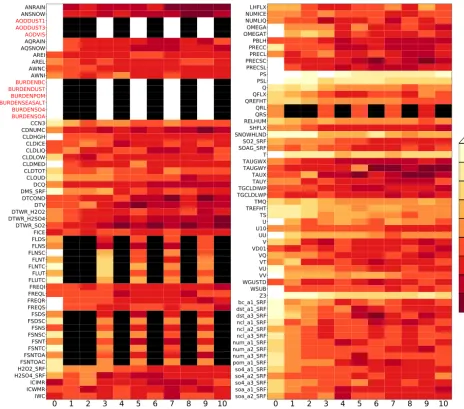
calcu-0 1 2 3 4 5 6 7 8 9 10
CESM time step
ANRAIN ANSNOW AODDUST1 AODDUST3 AODVIS AQRAIN AQSNOW AREI AREL AWNC AWNI BURDENBC BURDENDUST BURDENPOM BURDENSEASALT BURDENSO4 BURDENSOA CCN3 CDNUMC CLDHGH CLDICE CLDLIQ CLDLOW CLDMED CLDTOT CLOUD DCQ DMS_SRF DTCOND DTV DTWR_H2O2 DTWR_H2SO4 DTWR_SO2 FICE FLDS FLNS FLNSC FLNT FLNTC FLUT FLUTC FREQI FREQL FREQR FREQS FSDS FSDSC FSNS FSNSC FSNT FSNTC FSNTOA FSNTOAC H2O2_SRF H2SO4_SRF ICIMR ICWMR IWC
0 1 2 3 4 5 6 7 8 9 10
CESM time step
LHFLX NUMICE NUMLIQ OMEGA OMEGAT PBLH PRECC PRECL PRECSC PRECSL PS PSL Q QFLX QREFHT QRL QRS RELHUM SHFLX SNOWHLND SO2_SRF SOAG_SRF T TAUGWX TAUGWY TAUX TAUY TGCLDIWP TGCLDLWP TMQ TREFHT TS U U10 UU V VD01 VQ VT VU VV WGUSTD WSUB Z3 bc_a1_SRF dst_a1_SRF dst_a3_SRF ncl_a1_SRF ncl_a2_SRF ncl_a3_SRF num_a1_SRF num_a2_SRF num_a3_SRF pom_a1_SRF so4_a1_SRF so4_a2_SRF so4_a3_SRF soa_a1_SRF soa_a2_SRF 1 3 5 7 9
Figure 1.Representation of effects of initial CAM temperature perturbation over 11 time steps (includingt=0). CAM variables are listed on the vertical axis, and the horizontal axis records the simulation time step. The color bar designates equality of the corresponding variables between the unperturbed and perturbed simulations’ area weighted global means after being rounded tonsignificant digits (nis the color) at each time step. Time steps where the corresponding variable was not computed (subcycled variables) are colored black. White indicates equality of greater than nine significant digits (i.e., 10–17). Red variable names are not used by UF-CAM-ECT.
lated. Of the total 134 CAM variables output by default in our version of CESM (see Sect. 3), 117 are utilized by CAM-ECT, as 17 are either redundant or have zero variance. In all following analyses, the first nine sub-cycled variables dis-tinguished by red labels (AODDUST1, AODDUST3, AOD-VIS, BURDENBC, BURDENDUST, BURDENPOM, BUR-DENSEASALT, BURDENSO4, and BURDENSOA) are dis-carded, as they take constant values through time step 45. Thus we use 108 variables from Fig. 1 in the UF-CAM-ECT ensemble.
Next we examine the time series of each CAM variable by looking at the first 45 CESM time steps (t0throught45) for
30 simulations to select a time step when all variables
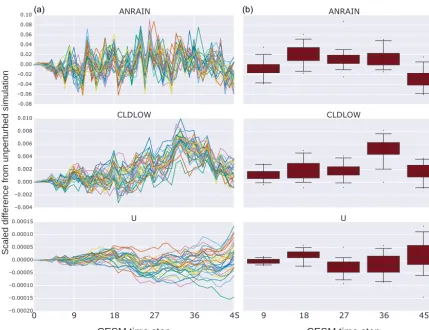
expe-rience sufficient divergence from the values of the reference unperturbed simulation. To illustrate ensemble variability at initial time steps, Fig. 2 depicts the time evolution of three representative CAM variables fromt0tot45. Most CAM
0 9 18 27 36 45
CESM time step
0.00020 0.00015 0.00010 0.00005 0.00000 0.00005 0.00010
0.00015 U
9 18 27 36 45
CESM time step
U
0.004 0.002 0.000 0.002 0.004 0.006 0.008
0.010 CLDLOW CLDLOW
0.08 0.06 0.04 0.02 0.00 0.02 0.04 0.06 0.08
0.10 ANRAIN ANRAIN
Scaled difference from unperturbed simulation
(b) (a)
Figure 2.The vertical axis labels the difference between the unperturbed simulation and the perturbed simulations’ area weighted global means, divided by the unperturbed simulation’s area weighted global mean for the indicated variable at each time step. The horizontal axis is the CESM time step with intervals chosen as multiples of nine. The left column(a)plots are time series representations of the values of three CAM variables chosen as representatives of the entire set (variables behave similarly to one of these three). The right column(b)plots are statistical representations of the 30 values plotted at each vertical grid line of the corresponding left column. More directly, each box plot depicts the distribution of values of each variable for each time step from 9 to 45 in multiples of 9.
the left column. Each box plot represents the values in the left column at nine time step intervals from 9 to 45 (inclu-sive). In most cases, the variables attain measurable but well-contained spread in approximately the first nine time steps. From the standpoint of CAM-ECT, Fig. 2 suggests that an en-semble created at the ninth time step will likely contain suf-ficient variability to categorize experimental sets correctly. Using additional time steps is unlikely to be beneficial in terms of UF-CAM-ECT sensitivity or classification accuracy, and choosing a smaller number of time steps is advantageous from the standpoint of capturing the state of test cases before feedback mechanisms take place (e.g., Sect. 5.3.3). Note that we do not claim that 9 time steps is optimal in terms of com-putational cost, but the difference in run time between 9 and 45 time steps is negligible in comparison to the cost of CAM-ECT 12-month simulations (and the majority of time for such short runs is initialization and I/O). We further discuss en-semble generation and size in Sect. 4 with an investigation of the properties of ensembles created from the ninth time step
and compare their pass/fail determinations of experimental simulations with that of CAM-ECT in Sect. 5.
3 UF-CAM-ECT approach
CAM-ECT into UF-CAM-CAM-ECT, we consider the CAM-ECT framework to have surprisingly broad applicability. Substituting instan-taneous values for yearly averages permits the discernment of different features and modifications – see Sect. 5 and 5.2 for evidence of this assertion.
As in Baker et al. (2015) and Milroy et al. (2016), we run CESM simulations on a 1◦global grid using the CAM5 model version described in Kay et al. (2015), and despite the rapid growth in perturbations in CAM5 with the default time step of 1800 s, we can still characterize its variability. We run simulations with 900 MPI processes and two OpenMP threads per MPI process (unless otherwise noted) on the Yel-lowstone machine at NCAR. YelYel-lowstone is composed of 4536 compute nodes, with two Xeon Sandy Bridge CPUs and 32 GB memory per node. The default compiler on Yel-lowstone for our CESM version is Intel 13.1.2 with -O2 opti-mization. We also use the CESM-supported compilers GNU 4.8.0 and PGI 13.0 in this study. With 900 MPI processes and two OpenMP threads per process, a simulation of nine time steps on Yellowstone is a factor of approximately 70 cheaper in terms of CPU time than a 12-month CESM simulation.
Either single- or double-precision output is suitable for UF-CAM-ECT. While CAM can be instructed to write its history files in single- or double-precision floating-point form, its default is single precision which was used for CAM-ECT in Baker et al. (2015) and Milroy et al. (2016). Sim-ilarly, UF-CAM-ECT takes single-precision output by de-fault. However, we chose to generate double-precision out-put to facilitate the study represented by Fig. 1; it would have been impossible to perform a significance test of up to 17 dig-its otherwise. In the case of new runs written in double pre-cision, both CAM-ECT and UF-CAM-ECT compare ensem-ble values promoted to douensem-ble precision with the unmodified new outputs. We determined that the effects of using double-or single-precision outputs fdouble-or ensemble generation and the evaluation of new runs did not impact statistical distinguisha-bility.
4 UF-CAM-ECT ensemble size
In this section we consider the properties of the UF-CAM-ECT ensemble, particularly focusing on ensemble size. Given the use of instantaneous values at nine time steps in UF-CAM-ECT, our expectation was that the size of the en-semble would differ from that of CAM-ECT. We consid-ered it plausible that a larger number would be required to make proper pass and fail determinations. The ensemble should contain enough variability that UF-CAM-ECT clas-sifies experiments expected to be statistically indistinguish-able as consistent with the ensemble. Furthermore, for ex-periments that significantly alter the climate, UF-CAM-ECT should classify them as statistically distinct from the ensem-ble. Accordingly, the ensemble itself is key, and examining
its size allows us to quantify the variability it contains as the number of ensemble members increases.
Our sets of experimental simulations (new runs) typically consist of 30 members, but by default pyCECT was written to do a single test on three runs. Performing the full set of possible CAM-ECT tests from a given set of experimental simulations allows us to make robust failure determinations as opposed to a single binary pass/fail test. In this work we utilize the Ensemble Exhaustive Test (EET) tool described in Milroy et al. (2016) to calculate an overall failure rate for sets of new runs larger than the pyCECT default. A failure rate provides more detail on the statistical difference between the ensemble and experimental set. To calculate the failure rate, EET efficiently performs all possible tests which are equal in number to the waysNtestsimulations can be chosen from
allNtot simulations (i.e., the binomial coefficient:
Ntot
Ntest
). For this work most experiments consist of 30 simulations, so
Ntot=30 andNtest=3 yields 4060 possible combinations.
With this tool we can make a comparison between the ex-haustive test failure rate and the single-test CAM-ECT false positive rate calibrated to be 0.5 %.
100 150 250 350 450 550 650 750 0
2 4 6 8 10 12 14
Ensemble size
EET failure percent
Figure 3.Box plot of EET failure rate distributions as a function of ensemble size. The distributions are generated by randomly select-ing a number of simulations (ensemble size) from a set of 801 simu-lations to compute PC loadings. From the remaining set, 30 simula-tions are chosen at random. These simulasimula-tions are projected into the PC space of the ensemble and evaluated via EET. For each ensem-ble size, 100 ensemensem-bles are created and 100 experimental sets are selected and evaluated. Thus each distribution contains 10 000 EET results (40 600 000 total tests per distribution). The red horizontal line indicates the chosen false positive rate of 0.5 %.
each ensemble. This study is essentially a resampling method without replacement used jointly with cross validation to as-certain the minimum ensemble size for stable PC calculations and pass/fail determinations. With greater ensemble size the distribution of EET failure rates should narrow, reflecting the increased stability of calculated PC loadings that accompa-nies larger sample sizes. The EET failure rates will never be uniformly zero due to the statistical nature of the test. The chosen false positive rate of 0.5 % is reflected by the red hor-izontal line in Fig. 3. We define an adequate ensemble size as one whose median is less than 0.5 % and whose interquar-tile range (IQR) is narrow. The IQR is defined as the differ-ence between the upper and lower quartiles of a distribution. For the remainder of this work we use the size 350 ensemble shown in Fig. 3, as it is the smallest ensemble that meets our criteria of median below 0.5 % and narrow IQR. The larger ensembles represent diminishing returns at greater compu-tational expense. Note that the relationship between model time step number and the ensemble size necessary to opti-mize test accuracy is complex. Milroy et al. (2016) concludes that ensembles of size 300 or 453 are necessary for accurate CAM-ECT test results, which bounds the 350 chosen for UF-CAM-ECT above and below. Minimizing the cost of ensem-ble generation and test evaluation is not a main consideration of this study, as UF-CAM-ECT is already a sizable improve-ment over CAM-ECT.
5 Results
The UF-CAM-ECT must have properties comparable or complementary to CAM-ECT including high classification
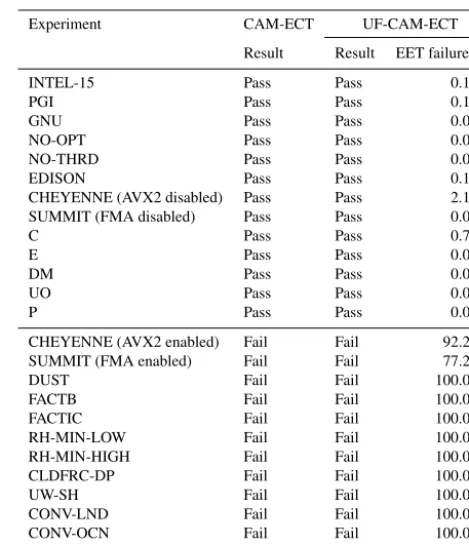
Table 1. CAM-ECT and UF-CAM-ECT return the same result (pass or fail) for the experiments listed. The CAM-ECT column is the result of a single test on three runs. The UF-CAM-ECT col-umn represents EET results from 30 runs. Descriptions of the port-ing experiments (EDISON, CHEYENNE, and SUMMIT) are listed in Sect. 5.1. The remaining experiments are described in Appen-dices A1 and A2.
Experiment CAM-ECT UF-CAM-ECT
Result Result EET failure %
INTEL-15 Pass Pass 0.1 %
PGI Pass Pass 0.1 %
GNU Pass Pass 0.0 %
NO-OPT Pass Pass 0.0 %
NO-THRD Pass Pass 0.0 %
EDISON Pass Pass 0.1 %
CHEYENNE (AVX2 disabled) Pass Pass 2.1 %
SUMMIT (FMA disabled) Pass Pass 0.0 %
C Pass Pass 0.7 %
E Pass Pass 0.0 %
DM Pass Pass 0.0 %
UO Pass Pass 0.0 %
P Pass Pass 0.0 %
CHEYENNE (AVX2 enabled) Fail Fail 92.2 %
SUMMIT (FMA enabled) Fail Fail 77.2 %
DUST Fail Fail 100.0 %
FACTB Fail Fail 100.0 %
FACTIC Fail Fail 100.0 %
RH-MIN-LOW Fail Fail 100.0 %
RH-MIN-HIGH Fail Fail 100.0 %
CLDFRC-DP Fail Fail 100.0 %
UW-SH Fail Fail 100.0 %
CONV-LND Fail Fail 100.0 %
CONV-OCN Fail Fail 100.0 %
NU-P Fail Fail 100.0 %
5.1 Matching expectation and result: where UF and CAM-ECT agree
UF-CAM-ECT should return a pass when run against exper-iments expected to be statistically indistinguishable from the ensemble. A comparison between the EET failures of UF-CAM-ECT and the single-test UF-CAM-ECT for several types of experiments that should all pass is presented in the up-per section of Table 1. The first type of examples for this “should pass” category includes building CESM with a dif-ferent compiler or a difdif-ferent value-safe optimization order (e.g., with no optimization: -O0), or running CESM without OpenMP threading. These tests are labeled INTEL-15, PGI, GNU, NO-OPT, and NO-THRD (see Appendix A1 for fur-ther details).
A second type of should pass examples includes the im-portant category of port verification to other (i.e., not Yel-lowstone) CESM-supported machines. Milroy et al. (2016) determined that running CESM with fused multiply–add (FMA) CPU instructions enabled resulted in statistically distinguishable output on the Argonne National Laboratory Mira supercomputer. With the instructions disabled, the ma-chine passed CAM-ECT. We list results from the mama-chines in Table 1 with FMA enabled and disabled on SUMMIT (note that the SUMMIT results can also be found in Anderson et al., 2017), and with xCORE-AVX2 (a set of optimizations that activates FMA) enabled and disabled on CHEYENNE.
– EDISONCray XC30 with Xeon Ivy Bridge CPUs at the National Energy Research Scientific Computing Center (NERSC; Intel compiler, no FMA capability)
– CHEYENNESGI ICE XA cluster with Xeon Broadwell CPUs at NCAR (Intel compiler, FMA capable)
– SUMMITDell C6320 cluster with Xeon Haswell CPUs at the University of Colorado Boulder for the Rocky Mountain Advanced Computing Consortium (RMACC; Intel compiler, FMA capable)
Finally, a third type of should pass experiments is the min-imal code modifications from Milroy et al. (2016) that were developed to test the variability and classification power of CESM-ECT. These code modifications that should pass UF-CAM-ECT include the following: Combine (C), Expand (E), Division-to-Multiplication (DM), Unpack-Order (UO), and Precision (P; see Appendix A2 for full descriptions). Note that all EET failure rates for the types of experiments that should pass (in the upper section of Table 1) are close to zero for UF-ECT, indicating full agreement between CAM-ECT and UF-CAM-CAM-ECT.
Next we further exercise UF-CAM-ECT by perform-ing tests that are expected to fail, which are presented in the lower section of Table 1. We perform the follow-ing CAM namelist experiments from Baker et al. (2015): DUST, FACTB, FACTIC, RH-MIN-LOW, RH-MIN-HIGH,
CLDFRC-DP, UW-SH, CONV-LND, CONV-OCN, and NU-P (see Appendix A1 for descriptions). For UF-CAM-ECT each “expected to fail” result in Table 1 (lower portion) is identically a 100 % EET failure: a clear indication of statis-tical distinctness from the size 350 UF-CAM-ECT ensem-ble. Therefore, the CAM-ECT and UF-CAM-ECT tests are in agreement for the entire list of examples presented in Ta-ble 1, which is a testament to the utility of UF-CAM-ECT. 5.2 CLM modifications
The CLM, the land model component of CESM, was ini-tially developed to study land surface processes and land– atmosphere interactions, and was a product of a merging of a community land model with the NCAR Land Surface Model (Oleson et al., 2010). More recent versions benefit from the integration of far more sophisticated physical processes than in the original code. Specifically, CLM 4.0 integrates mod-els of vegetation phenology, surface albedos, radiative fluxes, soil and snow temperatures, hydrology, photosynthesis, river transport, urban areas, carbon–nitrogen cycles, and dynamic global vegetation, among many others (Oleson et al., 2010). Moreover, the CLM receives state variables from CAM and updates hydrology calculations, outputting the fields back to CAM (Oleson et al., 2010). It is sensible to assume that since information propagates between the land and atmosphere models, in particular between CLM and CAM, CAM-ECT and UF-CAM-ECT should be capable of detecting changes to CLM.
For our tests we use CLM version 4.0, which is the default for our CESM version (see Sect. 3) and the same version used in all experiments in this work. Our CLM experiments are described as follows:
– CLM_INITchanges from using the default land initial condition file to using a cold restart.
– CO2_PPMV_280 reduces the CO2 type and
con-centration from CLM_CO2_TYPE = “diag-nostic” to CLM_CO2_TYPE = “constant” and CCSM_CO2_PPMV=280.0.
– CLM_VEGactivates CN mode (carbon–nitrogen cycle coupling).
– CLM_URBAN disables urban air conditioning/heating and the waste heat associated with these processes so that the internal building temperature floats freely. See Table 2 for the test results of the experiments. The pass and fail results in this table reflect our high confidence in the expected outcome: all test determinations are in agree-ment, the UF-CAM-ECT passes represent EET failure rates
Table 2.These CLM experiments show agreement between CAM-ECT and UF-CAM-CAM-ECT as well as with the expected outcome. The CAM-ECT column is the result of a single ECT test on three runs. The UF-CAM-ECT column represents EET failure rates from 30 runs.
Experiment CAM-ECT UF-CAM-ECT
Result Result EET failure %
CLM_INIT Fail Fail 100.0 %
CLM_CO2_PPMV_280 Fail Fail 100.0 %
CLM_VEG Fail Fail 100.0 %
CLM_URBAN Pass Pass 0.1 %
be detected immediately and persist through 12 months. CLM_CO2_PPMV_280 is also a tremendous change as it effectively resets the atmospheric CO2 concentration to a
preindustrial value, and changes which CO2value the model
uses. In particular, for CLM_CO2_TYPE = “diagnostic” CLM uses the value from the atmosphere (367.0 ppmv), while CLM_CO2_TYPE=“constant” instructs CLM to use the value specified by CCSM_CO2_PPMV. Therefore both tests detect the large reduction in CO2 concentration,
gen-erating failures at the ninth time step and in the 12-month average. CLM_VEG was also expected to fail immediately, given how quickly the CN coupling is expressed. Finally, the passing results of both CAM-ECT and UF-CAM-ECT for CLM_URBAN is unsurprising as the urban fraction is less than 1 % of the land surface, and heating and air condition-ing only occur over a fraction of this 1 % as well.
Our experiments thus far indicate that both CAM-ECT and UF-CAM-ECT will detect errors in CLM, and that a sep-arate CESM-ECT module for CLM (required for POP) is most likely not needed. While this finding may be unsurpris-ing given how tightly CAM and CLM are coupled, it repre-sents a significant broadening of the tools’ applicability and utility. Note that while we have not generated CAM-ECT or UF-CAM-ECT ensembles with CN mode activated in CLM (which is a common configuration for land modeling), we have no reason to believe that statistical consistency testing of CN-related CLM code changes would not be equally suc-cessful. Consistency testing of active CN mode code changes bears further investigation and will be a subject of future work.
5.3 UF-CAM-ECT and CAM-ECT disagreement In this section we test experiments that result in contradic-tory determinations by UF-CAM-ECT and CAM-ECT. Due to the disagreement, all tests’ EET failure percentages are re-ported for 30 run experimental sets for both UF-CAM-ECT and CAM-ECT. We present the results in Table 3. The mod-ifications are described in the following list (note that NU and RAND-MT can also be found in Baker et al. (2015) and Milroy (2015), respectively):
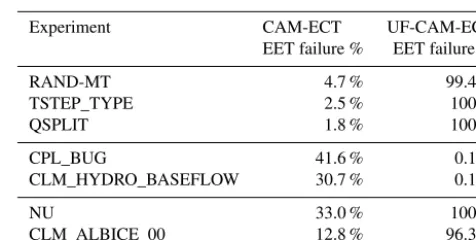
Table 3.These experiments represent disagreement between UF-CAM-ECT and fail UF-CAM-ECT. Shown are the EET failure rates from 30 runs.
Experiment CAM-ECT UF-CAM-ECT
EET failure % EET failure %
RAND-MT 4.7 % 99.4 %
TSTEP_TYPE 2.5 % 100 %
QSPLIT 1.8 % 100 %
CPL_BUG 41.6 % 0.1 %
CLM_HYDRO_BASEFLOW 30.7 % 0.1 %
NU 33.0 % 100 %
CLM_ALBICE_00 12.8 % 96.3 %
– RAND-MT substitutes the Mersenne Twister pseudo-random number generator (PRNG) for the default PRNG in radiation modules.
– TSTEP_TYPEchanges the time-stepping method for the spectral element dynamical core from 4 (Kinnmark & Gray Runge–Kutta 4 stage) to 5 (Kinnmark & Gray Runge–Kutta 5 stage).
– QSPLIT alters how often tracer advection is done in terms of dynamics time steps, the default is one, and we increase it to nine.
– CPL_BUGsets albedos to zero above 57◦N latitude in the coupler.
– CLM_HYDRO_BASEFLOW increases the soil hydrol-ogy baseflow rate coefficient in CLM from 5.5×10⁻³ to 55.
– NU changes the dynamics hyperviscosity (horizontal diffusion) from 1×10¹⁵to 9×10¹⁴.
– CLM_ALBICE_00 changes the albedo of bare ice on glaciers (visible and near-infrared albedos for glacier ice) from 0.80, 0.55 to 0.00, 0.00.
5.3.1 Minor setting changes: RAND-MT, TSTEP_TYPE, and QSPLIT
TSTEP_TYPE and QSPLIT are changes to attributes of the model dynamics: TSTEP_TYPE alters the time-stepping method in the dynamical core, and QSPLIT modifies the fre-quency of tracer advection computation relative to the dy-namics time step. It is well known that CAM is generally much more sensitive to the physics time step than to the dy-namics time step. Time-stepping errors in CAM dydy-namics do not affect large-scale well-resolved waves in the atmosphere but they do affect small-scale fast waves. While short-term weather should be affected, the model climate is not expected to be affected by stepping method or dynamics time-step. However, like the RAND-MT example, UF-CAM-ECT registers the less “smoothed” instantaneous global means as failures for both tests, while CAM-ECT finds the yearly aver-aged global means to be statistically indistinguishable. Small grid-scale waves are affected by choice of TSTEP_TYPE in short runs; however, the long-term climate is not affected by time-stepping method. The results of these experiments are shown in the top section of Table 3, and for experiments of this type, CAM-ECT yields anticipated results. This group of experiments exemplifies the categories of experiments to which UF-CAM-ECT may be sensitive: small-scale or minor changes to initial conditions or settings which are irrelevant in the long term. Therefore, while the UF-CAM-ECT results can be misleading in particular in these cases, they may in-dicate a larger problem as will be seen in the examples in Sect. 5.3.3.
5.3.2 Contrived experiments: CPL_BUG and CLM_HYDRO_BASEFLOW
Motivated by experiments which bifurcate the tests’ find-ings, we seek the reverse of the previous three experiments in Sect. 5.3.1: examples of a parameter change or code modifi-cation that are distinguishable in the yearly global means, but are undetectable in the first time steps. We consulted with cli-mate scientists and CESM software engineers, testing a large number of possible modifications to find some that would pass UF-CAM-ECT and fail CAM-ECT. The results in the center section of Table 3 represent a small fraction of the tests performed, as examples that met the condition of UF-CAM-ECT pass and CAM-UF-CAM-ECT fail were exceedingly difficult to find. In fact, CPL_BUG and CLM_HYDRO_BASEFLOW were devised specifically for that purpose. That their failure rates are far from 100 % is an indication of the challenge of finding an error that is not present at nine time steps, but man-ifests clearly in the annual average.
CPL_BUG is devised to demonstrate that it is possible to construct an example that does not yield substantial differ-ences in output at nine time steps, but does impact the yearly average. Selectively setting the albedos to zero above 57◦N latitude has little effect at nine time steps since this region experiences almost zero solar radiation during the first 5 h of 1 January. The nonzero CAM-ECT result is a consequence of using annual averages since for the Northern Hemisphere
summer months this region is exposed to nearly constant so-lar irradiance.
CLM_HYDRO_BASEFLOW is another manufactured ex-ample of a change designed to be undetectable at the ninth time step. It is an increase in the exponent of the soil hy-drology baseflow rate coefficient, which controls the amount of water drained from the soil. This substantial change (4 orders of magnitude) cannot be detected by UF-CAM-ECT since the differences at nine time steps are confined to deep layers of the soil. However, through the year they propagate to and eventually influence the atmosphere through changes in surface fluxes, which is corroborated by the much higher CAM-ECT failure rate.
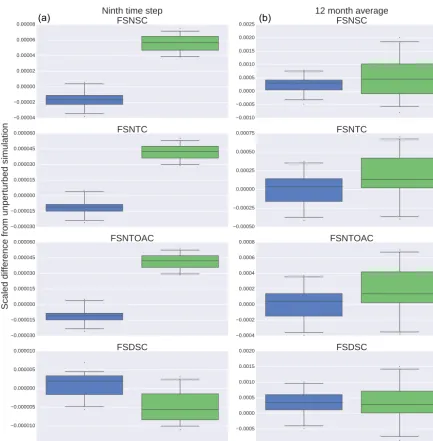
5.3.3 Small but consequential changes: NU and CLM_ALBICE_00
CAM-ECT results in Baker et al. (2015) for the NU periment are of particular interest as climate scientists ex-pected this experiment to fail. NU is an extraordinary case, as Baker et al. (2015) acknowledge: “[b]ecause CESM-ECT [currently CAM-ECT] looks at variable annual global means, the “pass” result [for NU] is not entirely surprising as er-rors in small-scale behavior are unlikely to be detected in a yearly global mean”. The change to NU should be evident only where there are strong field gradients and small-scale precipitation. We applied EET for CAM-ECT with 30 runs and determined the failure rate to be 33.0 % against the refer-ence ensemble. In terms of CAM-ECT this experiment was borderline, as the probability that CAM-ECT will classify three NU runs a “pass” is not much greater than a “fail” out-come. In contrast UF-CAM-ECT is able to detect this dif-ference much more definitively in the instantaneous data at the ninth time step. We would also expect this experiment to fail more definitively for simulations longer than 12 months, once the small but nevertheless consequential change in NU had time to manifest.
0.000030 0.000015 0.000000 0.000015 0.000030 0.000045
0.000060
FSNTOAC
0.0004 0.0002 0.0000 0.0002 0.0004 0.0006
0.0008
FSNTOAC
0.000030 0.000015 0.000000 0.000015 0.000030 0.000045
0.000060
FSNTC
0.00050 0.00025 0.00000 0.00025 0.00050
0.00075
FSNTC
0.00004 0.00002 0.00000 0.00002 0.00004 0.00006 0.00008
Ninth time step
FSNSC
0.0010 0.0005 0.0000 0.0005 0.0010 0.0015 0.0020 0.0025
12 month average
FSNSC
Accepted ensemble
CLM_ALBICE_00
0.0000150.000010 0.000005 0.000000 0.000005
0.000010
FSDSC
Accepted ensemble
CLM_ALBICE_00
0.00100.0005 0.0000 0.0005 0.0010 0.0015
0.0020
FSDSC
Scaled difference from unperturbed simulation
(a) (b)
Figure 4.Each box plot represents the statistical distribution of the difference between the global mean of each variable and the unperturbed, ensemble global mean, then scaled by the unperturbed, ensemble global mean for both the 30 ensemble members and 30 CLM_ALBICE_00 members. The plots on the left(a)are generated from nine time step simulations, while those on the right(b)are from one simulation year.
each value, and then rescaling by the unperturbed ensem-ble value. After analyzing the plots, we isolated four vari-ables (FSDSC: clear-sky downwelling solar flux at surface; FSNSC: sky net solar flux at surface; FSNTC: clear-sky net solar flux at top of model; and FSNTOAC: clear-clear-sky net solar flux at top of atmosphere) that exhibited markedly different behaviors between the ensemble and experimental outputs. Figure 4 displays the results. The left column rep-resents distributions from the ninth time step which demon-strate the distinction between the ensemble and experiment: the top three variables’ distributions have no overlap. For the 12-month runs, the ensemble and experiments are much less
The percentage of grid cells affected by the CLM_ALBICE_00 modification is 0.36 % (calculated by counting the number of cells with nonzero FSNS, fractional snow cover (FSNO in CLM) ∈(1,0), and PCT_GLACIER greater than zero in the surface data set). Remarkably, despite such a small area being affected by the CLM_ALBICE_00 change, UF-CAM-ECT flags these simulations as statistically distinguishable. The results of CLM_ALBICE_00 taken together with NU indicate that UF-CAM-ECT demonstrates the ability to detect small-scale events, fulfilling the desired capability of CAM-ECT mentioned as future work in Baker et al. (2015).
6 Implications and ECT guidelines
In this section we summarize the lessons learned in Sect. 5 to provide both clarification and guidance on the use of the complementary tools UF-CAM-ECT and CAM-ECT in practice. Our extensive experiments, a representative subset of which are presented in Sect. 5, indicate that UF-CAM-ECT and CAM-UF-CAM-ECT typically return the same determina-tion. Indeed, finding counterexamples was non-trivial. Cer-tainly the types of modifications that occur frequently in the CESM development cycle (e.g., compiler upgrades, new CESM-supported platforms, minor code rearrangements for optimization, and initial state changes) are all equally well classified by both UF-CAM-ECT and CAM-ECT. Therefore, in practice we recommend the use of the cheaper UF-CAM-ECT as a first step for port verification, code optimization, and compiler flag changes, as well as other frequent CESM quality assurance procedures. Moreover, the low cost of en-semble generation provides researchers and software engi-neers with the ability to generate ensembles rapidly for evalu-ation of new physics, chemistry, or other modificevalu-ations which could affect the climate.
CAM-ECT is used as a second step only when needed for complementary information as follows. First, our experimen-tation indicates that if UF-CAM-ECT issues a pass, it is very likely that CAM-ECT will also issue a pass. While devising examples where UF-CAM-ECT issues a pass and CAM-ECT issues a fail is conceptually straightforward (e.g., a seasonal or slow-propagating effect), in practice none of the changes suggested by climate scientists and software engineers re-sulted in a discrepancy between CAM-ECT and UF-CAM-ECT. Hence, we constructed the two examples presented in Sect. 5.3.2, using changes which were formulated specifi-cally to be undetectable by UF-CAM-ECT, but flagged as statistically distinguishable by CAM-ECT. It appears that if a change propagates so slowly as not to be detected at the ninth time step, its later effects can be smoothed by the an-nual averaging which includes the initial behavior. Accord-ingly, the change may go undetected by CAM-ECT when used without EET (e.g., failure rates for CAM-ECT in the lower third of Table 3 are well below 100 %). A user may
choose to run both tests, but in practice applying CAM-ECT as a second step should only be considered when UF-CAM-ECT issues a fail. In particular, because we have shown that UF-CAM-ECT is quite sensitive to small-scale errors or al-terations (see CLM_ALBICE_00 in Sect. 5.3.3, which im-pacted less than 1 % of land area), by running CAM-ECT when UF-CAM-ECT fails, we can further determine whether the change also impacted statistical consistency during the first year. If CAM-ECT also fails, then the UF-CAM-ECT result is confirmed. On the other hand, if CAM-ECT passes, the situation is more nuanced. Either a small-scale change has occurred that is unimportant in the long term for the mean climate (e.g., RAND-MT), or a small-scale change has oc-curred that will require a longer timescale than 12 months to manifest decisively (e.g., NU). In either case, the user must have an understanding of the characteristics of the modifi-cation being tested to reconcile the results at this point. Fu-ture work will include investigation of ensembles at longer timescales, which will aid in the overall determination of the relevance of the error.
7 Conclusions
We developed a new Ultra-Fast CAM Ensemble Consistency test from output at the ninth time step of the CESM. Con-ceived largely out of curiosity, it proved to possess surpris-ingly wide applicability in part due to its use of instantaneous values rather than annual means. The short simulation time translated to a cost savings of a factor of approximately 70 over a simulation of 12 months, considerably reducing the expense of ensemble and test run creation. Through methodi-cal testing, we selected a UF-CAM-ECT ensemble size (350) that balances the variability contained in the ensemble (hence its ability to classify new runs) with the cost of generation. We performed extensive experimentation to test which mod-ifications known to produce statistically distinguishable and indistinguishable results would be classified as such by UF-CAM-ECT. These experiments yielded clear pass/fail results that were in agreement between the two tests, allowing us to more confidently prescribe use cases for UF-CAM-ECT. Due to the established feedback mechanisms between the CLM component of CESM and CAM, we extended CESM-ECT testing to CLM. Our determination that both CAM-ECT and UF-CAM-ECT are capable of identifying statistical distin-guishability resulting from alterations to CLM indicates that a separate ECT module for CLM is likely unnecessary. By studying experiments where CAM-ECT and UF-CAM-ECT arrived at different findings we concluded that UF-CAM-ECT is capable of detecting small-scale changes, a feature that facilitates root cause analysis for test failures in conjunc-tion with CAM-ECT.
re-quired when a passing result indicating statistical consistency is issued. Ultimately the two tests can be used in concert to provide richer feedback to software engineers, hardware ex-perts, and climate scientists: combining the results from the ninth time step and 12 months enhances understanding of the timescales on which changes become operative and influen-tial. We intend to refine our understanding of both UF-CAM-ECT and CAM-UF-CAM-ECT via an upcoming study on decadal sim-ulations. We hope to determine whether the tests are capable of identifying statistical consistency (or lack thereof) of mod-ifications that may take many years to manifest fully. Another potential application of the tests is the detection of hardware or software issues during the initial evaluation and routine operation of a supercomputer.
Appendix A: Referenced experiments A1 Experiments from Baker et al. (2015)
– NO-OPT: changing the Intel compiler flag to remove optimization
– INTEL-15: changing the Intel compiler version to 15.0.0
– NO-THRD: compiling CAM without threading (MPI-only)
– PGI: using the CESM-supported PGI compiler (13.0) – GNU: using the CESM-supported GNU compiler
(4.8.0)
– EDISON: National Energy Research Scientific Com-puting Center (Cray XC30, Intel)
– DUST: dust emissions; dust_emis_fact=0.45 (original default 0.55)
– FACTB: wet deposition of aerosols convection factor; sol_factb_interstitial=1.0 (original default 0.1)
– FACTIC: wet deposition of aerosols convection factor; sol_factic_interstitial=1.0 (original default 0.4)
– RH-MIN-LOW: min. relative humidity for low clouds; cldfrc_rhminl=0.85 (original default 0.8975)
– RH-MIN-HIGH: min. relative humidity for high clouds; cldfrc_rhminh=0.9 (original default 0.8)
– CLDFRC-DP: deep convection cloud fraction; cld_frc_dp1=0.14 (original default 0.10)
– UW-SH: penetrative entrainment efficiency – shallow; uwschu_rpen=10.0 (original default 5.0)
– CONV-LND: autoconversion over land in deep convec-tion; zmconv_c0_lnd=0.0035 (original default 0.0059)
– CONV-OCN: autoconversion over ocean in deep con-vection; zmconv_c0_ocn = 0.0035 (original default 0.045)
– NU-P: hyperviscosity for layer thickness (vertical la-grangian dynamics); nu_p=1×10¹⁴ (original default 1×10¹⁵)
– NU: dynamics hyperviscosity (horizontal diffusion); nu =9×10¹⁴(original default 1×10¹⁵)
A2 Experiments from Milroy et al. (2016)
– Combine (C) is a single-line code change to the
preq_omega_pssubroutine.
– Expand(E) is a modification to the preq_hydrostatic
subroutine. We expand the calculation of the variable phi.
– Division-to-Multiplication (DM): the original version of the euler_step subroutine of the primitive trace advection module (prim_advection_mod.F90) includes an operation that divides by a spherical mass matrix spheremp. The modification to this kernel consists of declaring a temporary variable (tmpsphere) defined as the inverse ofspheremp, and substituting a multi-plication for the more expensive division operation. – Unpack-Order(UO) changes the order that an MPI
re-ceive buffer is unpacked in theedgeVunpacksubroutine ofedge_mod.F90. Changing the order of buffer unpack-ing has implications for performance, as traversunpack-ing the buffer sub-optimally can prevent cache prefetching. – Precision (P) is a performance-oriented
Competing interests. The authors declare that they have no conflict of interest.
Acknowledgements. Many thanks are due to Haiying Xu for her help modifying pyCECT for comparison of CESM-ECT single-and double-precision floating-point statistical consistency results. We wish to thank Michael Levy for his suggestion of altering albe-dos above a certain northern latitude (CPL_BUG), Peter Lauritzen for his fruitful discussion of CAM physics and dynamics, and Keith Oleson for his considerable assistance interpreting and visualizing CLM experiments and output.
We would like to acknowledge high-performance computing support from Yellowstone (ark:/85065/d7wd3xhc) and Cheyenne (doi:10.5065/D6RX99HX) provided by NCAR’s Computational and Information Systems Laboratory, sponsored by the National Science Foundation. This work utilized the RMACC Summit supercomputer, which is supported by the National Science Foun-dation (awards ACI-1532235 and ACI-1532236), the University of Colorado Boulder, and Colorado State University. The Summit supercomputer is a joint effort of the University of Colorado Boulder and Colorado State University. This research also used computing resources provided by the National Energy Research Scientific Computing Center, a DOE Office of Science User Facility supported by the Office of Science of the US Department of Energy under contract no. DEAC02-05CH11231. This work was funded in part by the Intel Parallel Computing Center for Weather and Climate Simulation (https://software.intel.com/en-us/articles/intel- parallel-computing-center-at-the-university-of-colorado-boulder-and-the-national).
Edited by: Olivier Marti
Reviewed by: two anonymous referees
References
Anderson, J., Burns, P. J., Milroy, D., Ruprecht, P., Hauser, T., and Siegel, H. J.: Deploying RMACC Summit: An HPC Resource for the Rocky Mountain Region, in: Proceedings of the Prac-tice and Experience in Advanced Research Computing 2017 on Sustainability, Success and Impact, PEARC17, 8:1–8:7, ACM, New York, NY, USA, https://doi.org/10.1145/3093338.3093379, 2017.
Baker, A. H., Hammerling, D. M., Levy, M. N., Xu, H., Den-nis, J. M., Eaton, B. E., Edwards, J., Hannay, C., Mick-elson, S. A., Neale, R. B., Nychka, D., Shollenberger, J., Tribbia, J., Vertenstein, M., and Williamson, D.: A new ensemble-based consistency test for the Community Earth Sys-tem Model (pyCECT v1.0), Geosci. Model Dev., 8, 2829–2840, https://doi.org/10.5194/gmd-8-2829-2015, 2015.
Baker, A. H., Hu, Y., Hammerling, D. M., Tseng, Y.-H., Xu, H., Huang, X., Bryan, F. O., and Yang, G.: Evaluating statistical con-sistency in the ocean model component of the Community Earth System Model (pyCECT v2.0), Geosci. Model Dev., 9, 2391– 2406, https://doi.org/10.5194/gmd-9-2391-2016, 2016.
Branstator, G. and Teng, H.: Two Limits of Initial-Value Decadal Predictability in a CGCM, J. Climate, 23, 6292–6311, https://doi.org/10.1175/2010JCLI3678.1, 2010.
Deser, C., Phillips, A., Bourdette, V., and Teng, H.: Uncertainty in climate change projections: the role of internal variabil-ity, Clim. Dynam., 38, 527–546, https://doi.org/10.1007/s00382-010-0977-x, 2012.
Hurrell, J., Holland, M., Gent, P., Ghan, S., Kay, J., Kushner, P., Lamarque, J.-F., Large, W., Lawrence, D., Lindsay, K., Lip-scomb, W., Long, M., Mahowald, N., Marsh, D., Neale, R., Rasch, P., Vavrus, S., Vertenstein, M., Bader, D., Collins, W., Hack, J., Kiehl, J., and Marshall, S.: The Community Earth Sys-tem Model: A Framework for Collaborative Research, B. Am. Meteorol. Soc., 94, 1339–1360, https://doi.org/10.1175/BAMS-D-12-00121.1, 2013.
Kay, J. E., Deser, C., Phillips, A., Mai, A., Hannay, C., Strand, G., Arblaster, J. M., Bates, S. C., Danabasoglu, G., Edwards, J., Holland, M., Kushner, P., Lamarque, J.-F., Lawrence, D., Lindsay, K., Middleton, A., Munoz, E., Neale, R., Oleson, K., Polvani, L., and Vertenstein, M.: The Community Earth Sys-tem Model (CESM) Large Ensemble Project: A Community Re-source for Studying Climate Change in the Presence of Inter-nal Climate Variability, B. Am. Meteorol. Soc., 96, 1333–1349, https://doi.org/10.1175/BAMS-D-13-00255.1, 2015.
Milroy, D. J.: Refining the composition of CESM-ECT en-sembles, ProQuest Dissertations and Theses, p. 60, available at: http://search.proquest.com/docview/1760171657?accountid= 28174 (last access: 10 January 2017), 2015.
Milroy, D. J., Baker, A. H., Hammerling, D. M., Dennis, J. M., Mickelson, S. A., and Jessup, E. R.: Towards Characterizing the Variability of Statistically Consistent Community Earth Sys-tem Model Simulations, Procedia Computer Science, 80, 1589– 1600, https://doi.org/10.1016/j.procs.2016.05.489, International Conference on Computational Science 2016, ICCS 2016, 6–8 June 2016, San Diego, California, USA, 2016.
Oleson, K. W., Lawrence, D. M., B, G., Flanner, M. G., Kluzek, E., J, P., Levis, S., Swenson, S. C., Thornton, E., Feddema, J., Heald, C. L., Lamarque, J., Niu, G., Qian, T., Running, S., Sakaguchi, K., Yang, L., Zeng, X., and Zeng, X.: Technical description of version 4.0 of the Community Land Model, NCAR Tech. Note NCAR/TN-478+STR, 257.
Rosinski, J. M. and Williamson, D. L.: The Accumulation of Rounding Errors and Port Validation for Global At-mospheric Models, SIAM J. Sci. Comput., 18, 552–564, https://doi.org/10.1137/S1064827594275534, 1997.