International Journal of Scientific Research in
Dental and Medical Sciences
www.ijsrdms.com
* Corresponding author.Pegah Shayestemehr
E-mail address: [email protected]
School of Dentistry, Guilan University of Medical Sciences, Rasht, Iran http://doi.org/10.30485/IJSRDMS.2019.199956.1019
Comparison of the Effect of Iranian Toothpaste Containing Propolis with a Common Toothpaste on
Plaque Index
Pegah Shayestemehr
a , *, Porousha Mahjoub
b, Masoumeh Nikkhah
c a,*School of Dentistry, Guilan University of Medical Sciences, Rasht, Iran
b Department of Pediatrics, School of Dentistry, Guilan University of Medical Sciences, Rasht, Iran
cDepartment of Periodontics, School of Dentistry, Guilan University of Medical Sciences, Rasht, Iran
ARTICLE INFO
Article history:
Received 31 August 2019 Received in revised form 24 October 2019
Accepted 09 November 2019 Available online 22 December 2019
Keywords:
Dental plaque Propolis Toothpaste
ABSTRACT
Background and aim: Dental plaque is the main etiological factor in the development of dental caries, gingivitis and periodontal diseases. Antimicrobial agents in toothpaste can play an essential role in controlling and reducing microbial plaque. Herbex herbal toothpaste is the only Iranian toothpaste containing Propolis. This study aimed to compare the effect of this toothpaste with an ordinary toothpaste on the plaque index.
Material and methods: This double-blind cross-sectional clinical trial was performed on 46 dental students. The subjects were divided randomly into two groups of 23 individuals. Group 1 received treatment A or Herbex toothpaste (Iran) in the first period and treatment B or Crest anticavity regular toothpaste (Germany) in the second period. The primary and secondary plaque index was measured and compared using the O'leary index by the mean of disclosing tablets. To analyze the data, an independent T-test and Paired T-test used.
Results: Considering the data analysis, the mean difference between the primary and secondary plaque index in
Herbex toothpaste was -6.813±5.749. In the Crest toothpaste, it was -7.341± 9.340 that was statistically significant in both types of toothpaste (P > 0.05). A comparison of two toothpaste types in terms of reducing the plaque index did not show a significant difference (P = 0.714).
Conclusion: Both types of toothpaste in the present study reduced the plaque index. There was no significant difference in terms of this reduction among the toothpaste containing Propolis and regular toothpaste.
1.
Introduction
Clinically, dental plaque is defined as a yellowish, flexible, well-structured material that has a strong attachment to the hard surfaces of the mouth. The microbial plaque is composed of soft bacterial sediments that are metabolically interconnected. The bacterial system is highly organized and contains dense masses of microorganisms embedded in the antimicrobial matrix (biofilm). Insufficient concentration can disrupt the host-parasite relationship and cause oral diseases.[1] Dental plaque is the major etiologic
factor in the development and progression of dental caries, gingivitis, and periodontal diseases.[2] Plaque control is an essential goal of maintaining oral
health and preventing caries and periodontal diseases.[3] Mechanical
techniques of plaque control, such as brushing and flossing, are the most conventional techniques for plaque removal. Brushing is the most common method of oral hygiene.[4, 5]
The use of chemicals such as mouthwashes, gels, and toothpaste is of particular importance.[2] Chemicals can be used to help improve plaque
control. Of these, toothpaste is the most common method used to prevent plaque formation and reduce gingivitis.[6] Toothpaste ingredients include
clean and glossy ingredients, detergents, moisturizers, and aromatics. Toothpaste also contains anti-plaque compounds, including Chlorhexidine, Sanguinarine, Stanos Fluoride, sodium bicarbonate, hydrogen peroxide, and Triclosan. Triclosan is one of the essential compounds used as antiplaque agent and gingivitis in toothpaste composition. Since dental plaque is mainly composed of microorganisms, antimicrobial agents in toothpaste can play a critical role in reducing microbial plaque.[7] Recently, the tendency to use
products of natural origin has increased. The use of natural ingredients in toothpaste can reduce the side effects of chemicals on the body. Various natural materials such as Propolis have been studied with increasing studies on the use of naturally occurring substances as medicines or health enhancers.[8] Propolis is a wax-like substance made from bees. Its pasty, sticky
spread of diseases in the hive. In other words, bees use this material to close small holes, seal their hives, and do not allow any foreign agents to enter.[9]
Another significant component is Caffeic acid Phenethyl ester propolis, which has anti-cancer and anti-inflammatory properties. pyran, Cinnamic Acid, 3-Prenyl-4-Hydroxycinnamic and Caffeoylquinic Acid.[9, 10] It has
bacterial, fungal, parasitic, antioxidant, inflammatory, anti-tooth decay properties; Blood pressure is used.[11-15] Propolis has been used in
dentistry to treat aphthous, candidiasis, acute necrotizing ulcerative gingivitis (ANUG), gingivitis, periodontitis and pulpitis. It is also commercially used as toothpaste, mouthwash, etc.[2] Since the properties and characteristics of
Propolis vary in different regions of the world, researchers from different countries have tried to determine the properties and characteristics of native Propolis and to evaluate their applicability in different contexts.[16- 20]
2.
Material and methods
This study was a double-blind cross-over clinical trial, 2x2 (two treatments in two periods), or AB / BA to compare the effect of Iranian toothpaste containing Propolis with an ordinary foreign toothpaste on plaque index and Using Freidoni et al.[2] and considering the mean value of plaque index at the
beginning of the study and at the secondary time, 74.5% and 28.8% with an error of 5% and 90% of test power were 23 in each group and total sample size, respectively. Forty-six were considered. Statistic formulation described as follows:
Z1-α/2 = 1.96
Z1-β = 1.28
Before 74.5% ± 7.7 Mean ALP + SD
After 28.8% ± 6.1
𝛿2
dif =2𝛿2before (1-p) = 47.432%
p = 60%
𝑛 =(𝑧1−𝛼 2⁄ + 𝑧1−𝛽)
2
𝛿𝑑𝑖𝑓2
𝛿2 +
(𝑧1−𝛼 2⁄)2
2
=(1.96 + 1.28)
2× 47.432
(74.5 – 28.8)2 +
(1.96)2
2
𝑛 ≅ 23
All gingival examinations performed by a senior dental student with a periodontist (faculty member). To make blinding, both types of toothpastes provided in tubes covered with white glue. Another one offered duplicate toothpaste to the patient. Therefore, participants and the plaque index registrant were unaware of the type of toothpaste used. This study was conducted by the Pediatric and Periodontics Dept. at the Faculty of Dentistry of Guilan University of Medical Sciences. This study included 46 male and female students studying dentistry at the university. All participants in this study were students of the last two years of general dentistry at the age of 23 to 29 years with a mean age of 24 and an equal number of sexes (23 males and 23 females). The study was informed.
Inclusion criteria:
1. Dental students who volunteered to participate in the study 2. At least 24 teeth
Exclusion criteria: 1. Use any mouthwash
2. Antibiotic therapy within the past two weeks during the study period 3. Periodontal disease
4. Gingival recession
5. Untreated caries and soft and hard tissue lesions 6. Any orthodontic appliance
7. Fixed prosthesis
8. Any immunosuppressive disorders like diabetes, AIDS, etc. 9. Tobacco and alcohol consumption
10. Pregnancy
Upon examination, eligible students gave an informed consent form to participate in this study. The subjects randomly assigned to one of two groups. The allocation of these numbers made randomly using the Random Generator program. Based on the randomized block method and considering four blocks, 12 blocks produced for 48 patients. After providing the list, each individual was assigned a unique code and identified during the study. None of the participants in the study were aware of the randomization list. Also, they used the sealed envelopes numbered to conceal the randomization process, the use, and the envelope of each individual only after confirming the criteria. The individual opened eligibility for the study and signing of the consent form, and the target group was identified. The first group received treatment A (Herbex Iranian Toothpaste containing Propolis) in the first period and the second period B treatment (German Crest Anticavity Regular Toothpaste). Treatments were assigned to those in group II as opposed to the group I. After dividing the students into two groups of 23 matched by gender, first, the individual plaque rate (before the first course) was determined using O'Leary's plaque index method and with the aid of Sweden's TePe PlaqSearch detector. ) Was measured and recorded. O'Leary's plaque index is an indicator that to record this index, the detector solution or tablet is used to examine all four dental surfaces (except occlusal surfaces) for the presence or absence of colored deposits between the tooth and gum. If the plaque is available, it will appear on the chart itself. After all, teeth recorded. The index is calculated by dividing the number of plaque surfaces by the total number of surfaces and multiplying it by the percentage to obtain the percentage of plaque surfaces.[21]
Eventually, In this way, the detector tablet was given to the students, and they asked to chew the tablet in their whole mouth. Then all dental surfaces except the occlusal surface were examined for color deposits. The number of plaque levels was divided by the total number of levels and multiplied by 100, and the plaque index of each individual was determined.[2] After the initial plaque
was recorded (before the intervention of the first period), brushing and prophylaxis were performed under the supervision of a periodontist to reach zero before the start of the first period. During the study, subjects were also asked not to make changes in their diet and perform their usual activities. To establish consistency, all students used dental floss (Oral-B Essential floss) twice daily and a toothbrush (Oral-B ProExpert) with soft bristle and modified bass for two weeks each period. At the end of the second week, the plaque index was evaluated and recorded. Participants then asked to wash out[22] for
After the end of the second period, the plaque index was measured again for the fourth time, with the other stage conditions.
After data collection, data entered into SPSS Ver 22 software. Shapiro Wilk test was used to determine the normality of the data. Independent T-test was
used for comparison between groups, and Paired-T-Test was used for comparison before and after the intervention.
3.
Results
According to this study, the mean age of the first group was 24.217 ± 1.126 and 24.696 ± 1.146 in the second group (24.457 ± 1.149). Then the normality of the data was tested using the Shapiro Wilk test because of the low sample size. If the level of significance in the test is more significant than 0.05, the
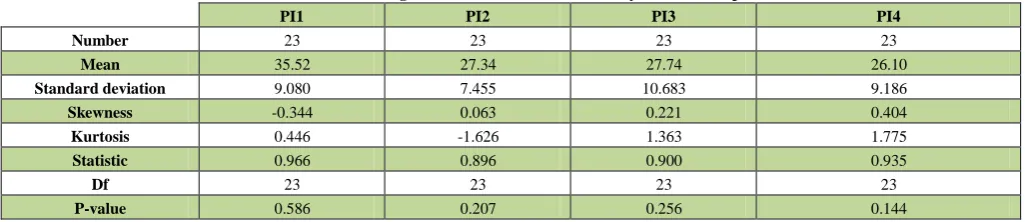
data can be assumed as normal with high confidence. Otherwise, the data cannot be said to be normal distribution. According to Tables 1 and 2, considering the significance level for the variables under study, it can be stated that the data in both groups follow the normal distribution.
Table1. Determining the Normal Distribution of Study Data in Group I.
PI1 PI2 PI3 PI4
Number 23 23 23 23
Mean 35.52 27.34 27.74 26.10
Standard deviation 9.080 7.455 10.683 9.186
Skewness -0.344 0.063 0.221 0.404
Kurtosis 0.446 -1.626 1.363 1.775
Statistic 0.966 0.896 0.900 0.935
Df 23 23 23 23
P-value 0.586 0.207 0.256 0.144
Table 2. Determining the Normal Distribution of Study Data in Group II.
PI1 PI2 PI3 PI4
Number 23 23 23 23
Mean 42.58 30.54 32.31 26.87
Standard deviation 12.986 9.944 8.926 8.914
Skewness 0.278 0.824 0.674 0.446
Kurtosis -0.268 1.061 0.301 -0.617
Statistic 0.966 0.948 0.957 0.963
Df 23 23 23 23
P-value 0.597 0.262 0.410 0.520
In Table 3, using the Independent t-test, the difference between the mean plaque index between the two age groups in the first stage, the mean of the
Table 3. Comparison of mean difference of first period index plaque between two age groups.
Group Number Standard deviation± Mean T P
Less than 24 years old 26 9.043±6.882
-0.927 0.359
More than 24 years old 20 11.515±11.120
In Table 4, the difference between the mean plaque index between the two age groups in the second stage using the Independent t-test was higher in
people older than 24 years. Still, this difference was not statistically significant (p=0.871).
Table4. Comparison of mean difference of second period index plaque between two age groups.
Group Number Standard deviation± Mean T P
Less than 24 years old 26 3.937±4.623
-0.164 0.871
More than 24 years old 20 4.165±4.764
In Table 5, the mean difference between the mean plaque index between the two groups was higher in males compared to the first group using the
Independent t-test, but this difference was not statistically significant (P= 0.244).
Table 5. Comparison of mean difference of index plaque of first period between the two genders.
Group Number Standard deviation± Mean T P
Male 23 11.669±10.051
1.181 0.244
Female 23 8.566±7.595
In Table 6, the mean difference between the mean plaque index between the two groups was higher in males in the second stage, by using the Independent.
T-test, but this difference was not statistically significant (P=0.228).
Table 6. Comparison of mean difference of index plaque of the second period between the two genders.
Group Number Standard deviation± Mean T P
Male 23 4.866±3.771
1.221 0.228
Female 23 3.206±5.316
In Table 7, using the Independent t-test the mean plaque index between the two age groups in the herb toothpaste the individuals younger than 24 years,
but this difference was not statistically significant (P=0.787).
Table 7. Comparison of mean difference of herb toothpaste index between two age groups.
Group Number Standard deviation± Mean T P
Less than 24 years old 26 7.6±016.113
-0.272 0.787
More than 24 years old 20 6.5±546.381
In Table 9, the male mean index plaque was higher in the herb toothpaste between the two males and females, but this difference was not statistically
significant (P=0.155).
Table 9. Comparison of mean difference of index plaque index of toothpaste between two genders.
Group Number Standard deviation± Mean T P
Male 23 8.6±024.749 1.447 0.155
Female 23 5.4±600.354
Table 10 using the Independent t-test compared the mean index plaque between the two groups of males and females, and the mean plaque index in
Table 10. Comparison of mean difference of Crest toothpaste index between two genders.
Group Number Standard deviation± Mean T P
Male 23 8.9±510.683 0.846 0.402
Female 23 6.9±171.045
In Table 11, using the paired t-test and considering the table, there was a significant difference between the index plaque difference in the first and
second periods in group 1 (P <0.0001). There was a more substantial reduction in the index plaque in the first period.
Table 11. Comparison of mean difference between index plaque in the first and second period in the group I.
Period Number Standard deviation± Mean T P
Primary 23 -8.188 ± 6.599 4.258 >0.0001
Secondary 23 -2.634 ± 4.44
Table 12 shows a significant difference between the plaque index indices in the first and second periods in group 2 (P <0.001) to the table.
In the first period, there was a more significant reduction in the index plaque.
Table 12. Comparison of the mean difference of index plaque in the first and second period in group II.
Period Number Standard deviation± Mean T P
Primary 23 -12.047 ± 10.602
3.637 >0.001
Secondary 23 -5.438 ± 4.482
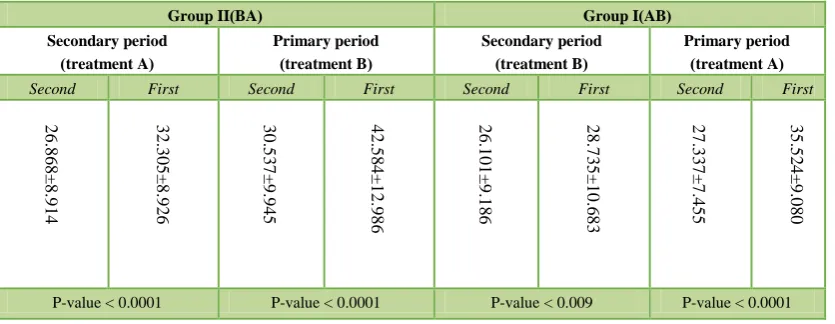
Table 13 showed a significant difference between the primary and secondary plaque index using the Paired t-test in all four periods of study. The mean of
the primary plaque index in each period was higher than the mean of the secondary plaque index.
Table 13. Mean and standard deviation of primary and secondary plaque index in four "period-groups". (
BA )
Group II Group I)AB(
Secondary period ( treatment A ) Primary period ( treatment B ) Secondary period ( treatment B ) Primary period ( treatment A )
Second First Second First Second First Second First
0.0001 <
P-value P-value<0.0001 P-value< 0.009 P-value<0.0001
No significant difference found between the two treatments based on mean plaque index reduction (P=0.714) in Table 14. However, there was a significant difference in the mean decrease in plaque index between the first
and second periods (P=0.0001), so that the mean decrease in plaque index in the first period was more than the second period.
Table 14. Final analysis
Hypothesis tested Standard
deviation± Mean
t-computation Degree of freedom P-value
Same effect of the two groups
A -6.813±5.749 -0.368 45 0.714
B -7.341±9.340
Same effect of the two periods
First -10.118±8.947 -4.256 45 >0.0001
Second -4.036±4.634
4.
Discussion
Dental plaque is the major etiologic factor in the development and progression of dental caries, gingivitis, and periodontal disease.[2] As a result, plaque
control is an important goal in maintaining oral health and preventing caries and periodontal diseases.[3] Various natural materials such as Propolis have
been studied with increasing studies on the use of naturally occurring substances as medicines or health enhancers, and new toothpaste has recently been introduced to prevent the formation of dental plaques containing Propolis.[8] Herbex herbal toothpaste is the only Iranian toothpaste containing
Propolis. In addition, these toothpaste contain herbal extracts, including clove extract, Satureja Khuzestanica Myrtus extract, and licorice extract, each with different therapeutic properties. Since no clinical study has performed on the effects of this toothpaste on dental plaque, we investigated and compared its effect on plaque index compared to a conventional external toothpaste (Crest anti-cavity regular). Both types of toothpaste used in the present study are certified by the Food and Drug Administration of Iran (I.R.I FDA). The anticavity regular toothpaste used in this study for comparison with the herb toothpaste, as standard toothpaste, is approved by the American Dental Association (ADA) and the US Food and Drug Administration (FDA). This study showed that both types of toothpaste significantly reduced dental plaque index regardless of its type. The effect of both types of toothpaste in this study was similar to the plaque index, and there was no statistically significant difference between the two types of toothpaste. In this study, due to the presence of many confounding factors present in the oral environment, it was decided that each person be in control, thus the results of the measurement of the indices and their comparison were validated from the strengths of the study. As mentioned in this study, two treatments (toothpaste type) were presented in two groups over two periods. However, this decrease was greater in the first period than in the second period, and the difference was statistically significant. This difference may be due to prolonging the study period and reducing the participants' accuracy and motivation to apply the brushing technique accurately. The results of comparing the effects of two treatments (two types of toothpaste) and two periods (first and second period) according to the age (under 24 and over 24) and gender (male/ female) showed that no statistically significant difference was found. The difference in different toothpaste can be attributed to the difference in their formulation. Even if the compounds are identical, differences in the concentration of the various components in the formulation, which are not usually disclosed by the manufacturer, can be the cause of the significant difference between the two types of toothpaste. Abrasives and detergents are among the ingredients in toothpaste. Abstract Abrasive factors have long been considered essential in toothpaste to eliminate plaque collagen matrix and reduce microbial plaque.[7]
In the present study, the abrasives used in both toothpaste were silica and phosphate group. One of the differences in formulations of the Herbex Crest toothpaste is the presence of zinc citrate in toothpaste formulation. Meanwhile, zinc and tin salts received the most attention due to their antimicrobial activity besides being safe.[28] According to Giersten's study, the
combination of zinc citrate and SLS further reduces plaque index[29], which
confirmed in similar research.[30, 31] When examining toothpaste with
anti-plaque properties, it should be noted that fluoride-containing products also have some anti-plaque properties compared to placebo.[26, 27], which is present
in both types of toothpaste in the present study. In another study by Rasaie et al.(2017), the antimicrobial effect of the oil extract against oral microorganisms was evaluated. According to the results of this study, the Myrtus plant leaf's oil extract can be used as a potential treatment to prevent the colonization of Streptococcus bacteria on the tooth and, subsequently, the
the effect of Propolis prepared in Iran on dental plaque. They found that the effect of toothpaste containing Propolis on plaque index similar to that of toothpaste lacked this material, which is consistent with this study.[32] In a
study (2015), Torkan compared the effects of the herbal mouthwash (including Myrtus extract, European chamomile, and conifer) on chlorhexidine of dental plaque bacteria in dogs. This study's results showed the desirable effect of herbal mouthwash on the prevention of plaque formation and reduction of oral bacteria, which is in line with the results of the present study.[24] It has also been suggested in the Fani study that Myrtus
extract can be used in mouthwashes or toothpaste to prevent oral infections.[23]
In another in vitro study, Lakshmi et al. (2017) investigated the antibacterial effect of a herbal mouthwash containing licorice root and basil leaves against oral germs. The results of this study revealed that the herbal mouthwash has a significant anti-plaque and anti-cariogenic effect.[25] According to the most
related studies, these herbal ingredients can have a positive and significant effect on reducing dental plaque.
5.
Conclusion
Both types of toothpaste significantly decreased plaque index in the present study (P <0.05). There was no significant difference in the rate of plaque index reduction between Iranian Herbex Propolis toothpaste and herbal extracts and anticavity regular toothpaste (P <0.05).
Conflict of Interest
The authors declared that there is no conflict of interest.
Acknowledgments
This research received no specific grant from any funding agency in the public, commercial, or not-for-profit sectors.
References
1. Listgarten MA. Structure of the microbial flora associated with periodontal health and disease in man: a light and electron microscopic study. Journal of periodontology. 1976; 1;47(1):1-8.
2. Fereidooni M, Khosravi Samani M, Amiri A, Seyed M, Haji Ahmadi M. Comparison of the effect of propolis and traditional toothpaste on bacterial plaque. Journal of Babol University Of Medical Sciences. 2014 Feb 15;16(2):17-22.
3. Barnes VM, Richter R, DeVizio W. Comparison of the short-term antiplaque/antibacterial efficacy of two commercial dentifrices. J Clin Dent. 2010;21(4):101-4.
4. Sadeghi M, Assar S. An in vitro antimicrobial activity of ten Iranian-made toothpastes. Dental research journal. 2009;6(2):87.
5. Sharma NC, Galustians JH, Qaqish JG. An evaluation of a commercial chewing gum in combination with normal toothbrushing for reducing dental plaque and gingivitis. Compendium of continuing education in dentistry (Jamesburg, NJ: 1995). 2001 Jul;22(7A):13-7.
6. Ebadifar A, Naghibi A, Valaie N, Ramezani GH, Sadat Mansori S. Comparing the three color pounehh tooth paste with the conventional one in preventing the formation of the microbial plaque. Journal of Dental Medicine. 2008 Nov 15;21(2):140-4.
7. Yaghini J, Naghsh N, Tavakkoli M, Ghoreishi S, Azari A, Kiani S. Comparative evaluation of the amount of plaque control following toothbrushing with three kinds of toothpastes and brushing without toothpaste: A clinical trial. Beheshti Univ Dent J 2014; 32(1):48-54. 8. Bhat N, Bapat S, Asawa K, Tak M, Chaturvedi P, Gupta VV, George
PP. The antiplaque efficacy of propolis-based herbal toothpaste: A crossover clinical study. Journal of natural science, biology, and medicine. 2015 Jul;6(2):364.
10. DE CAMPOS RO, PAULINO N, DA SILVA CH, SCREMIN A, CALIXTO JB. Natural Products: Anti‐hyperalgesic Effect of an Ethanolic Extract of Propolis in Mice and Rats. Journal of Pharmacy and Pharmacology. 1998 Oct;50(10):1187-93.
11. Król W, Bankova V, Sforcin JM, Szliszka E, Czuba Z, Kuropatnicki AK. Propolis: properties, application, and its potential. Evidence-Based Complementary and Alternative Medicine. 2013;2013.
12. De Luca MP, Franca JR, Macedo FA, Grenho L, Cortes ME, Faraco AA, Moreira AN, Santos VR. Propolis varnish: antimicrobial properties against cariogenic bacteria, cytotoxicity, and sustained-release profile. BioMed research international. 2014;2014..
13. Więckiewicz W, Miernik M, Więckiewicz M, Morawiec T. Does propolis help to maintain oral health?. Evidence-based complementary and alternative medicine. 2013;2013.
14. Ophori EA, Eriagbonye BN, Ugbodaga P. Antimicrobial activity of propolis against Streptococcus mutans. African Journal of Biotechnology. 2010;9(31):4966-9.
15. Gavanji S, Larki B. Comparative effect of propolis of honey bee and some herbal extracts on Candida albicans. Chinese journal of integrative medicine. 2017 Mar 1;23(3):201-7.
16. Ramos AF, Miranda JD. Propolis: a review of its anti-inflammatory and healing actions. Journal of Venomous Animals and Toxins Including Tropical Diseases. 2007;13(4):697-710.
17. de Groot AC. Propolis: a review of properties, applications, chemical composition, contact allergy, and other adverse effects. Dermatitis. 2013 Nov 1;24(6):263-82.
18. Wagh VD. Propolis: a wonder bees product and its pharmacological potentials. Advances in pharmacological sciences. 2013;2013. 19. Kuropatnicki AK, Szliszka E, Krol W. Historical aspects of propolis
research in modern times. Evidence-Based Complementary and Alternative Medicine. 2013;2013.
20. Pasupuleti VR, Sammugam L, Ramesh N, Gan SH. Honey, propolis, and royal jelly: a comprehensive review of their biological actions and health benefits. Oxidative medicine and cellular longevity. 2017;2017. 21. O'Leary TJ, Drake RB, Naylor JE. The plaque control record. Journal
of periodontology. 1972 Jan 1;43(1):38.
22. Naseh M, Gheibi N, Jahanihashemi H, Azizlou E, AlizadehTabari Z. The Effect of Iranian Propolis on Dental Plaque on Dentistry Students of Qazvin, Dental School. Journal of Mashhad Dental School. 2016;40(2):167-76.
23. Fani MM, Kohanteb J, Araghizadeh A. Inhibitory activity of Myrtus communis oil on some clinically isolated oral pathogens. Medical Principles and Practice. 2014;23(4):363-8.
24. Torkan S. Comparison of the Effects of an Herbal Mouthwash with Chlorhexidine on Surface Bacteria Counts of Dental Plaque in Dogs. Biosciences biotechnology research asia. 2015;12(1):955-9.
25. Rakshanaa TR, Lakshmi T. Antibacterial efficacy of herbal mouthwash against oral microbes-in vitro assay. Journal of Advanced Pharmacy Education & Research| Jan-Mar. 2017;7(1).
26. Rashidian A, Shabahang Far M, Koohestani F, Afsharian Zadeh M. The comparison of the two toothpaste Darougar and Kam with Colgate on the dental plaque of the children. Dental Journal of Iranian Children.2012; 7(1): 24-30.
27. Mofid R, Fathieh A, Alavi K, Zamiri M. evaluation and comparison of Iranian antibacterial toothpaste Nasim and Poune with Crest Complete toothpaste on the dental plaque control. Journal of Islamic Dental Society. 2005; 17(5):110-117.
28. Moran J, Addy M, Corry D, Newcombe RG, Haywood J. A study to assess the plaque inhibitory action of a new zinc citrate toothpaste formulation. Journal of clinical periodontology. 2001 Feb 1;28(2):157-61.
29. Giertsen E, Scheie AA, Rölla G. Plaque inhibition by a combination of zinc citrate and sodium lauryl sulfate. Caries research. 1989;23(4):278-83.
30. Saxton CA, Harrap GJ, Lloyd AM. The effect of dentifrices containing zinc citrate on plaque growth and oral zinc levels. Journal of clinical periodontology. 1986 Apr;13(4):301-6.
31. Hu D, Sreenivasan PK, Zhang YP, De Vizio W. The effects of a zinc citrate dentifrice on bacteria found on oral surfaces. Oral health & preventive dentistry. 2010 Jan 1;8(1).
32. Naseh M, Gheibi N, Jahanihashemi H, Azizlou E, AlizadehTabari Z. The Effect of Iranian Propolis on Dental Plaque on Dentistry Students of Qazvin, Dental School. Journal of Mashhad Dental School. 2016;40(2):167-76.