Please cite this article in press as: Akhavansepahi M, Hoseini BL,Tabarai Y. Screening of hypercalciuria among children with persistent J Biostat Epidemiol. 2017; 3(3-4): 106-10.
Original Article
Screening of hypercalciuria among children with persistent asymptomatic hematuria
Mohsen Akhavansepahi1, Bibi Leila Hoseini2,Yaser Tabarai*3
1
Associate Professor of Pediatric Nephrology, Department of Pediatric, School of Medicine, Qom University of Medical Sciences, Qom, Iran
2
Department of Midwifery, School of Medicine, Sabzevar University of Medical Sciences, Sabzevar, Iran 3
Department of Biostatistics and Epidemiology, School of Public Health, Tehran University of Medical Sciences, Tehran, Iran
ARTICLE INFO ABSTRACT
Received 14.08.2017 Revised 02.09.2017 Accepted 17.09.2017 Published 01.10.2017
Hypercalciuria can clinically present different symptoms and signs. The diagnostic methods for hypercalciuria have not yet been standardized. The presented study was accomplished with the aim to assess whether random urinary calcium/creatinine ratio (UCa/Cr) could be used as a screening tool for hypercalciuria among children with persistent asymptomatic hematuria.
Methods & Materials: This cross-sectional study included 100 children with primary hematuria for whom both random and 24-hour urinary evaluations were performed. Pearson correlation coefficient (PCC) was used to assess the correlations.
Results: There was a moderate correlation between random UCa/Cr and 24-hour urinary calcium excretion (UCaE) (r = 0.511, P < 0.001). Body mass index (BMI) and 24-hour UCaE affected random UCa/Cr (r2 = 0.385, P < 0.001).
Conclusion: 24-hour urinary analysis is preferred to random UCa/Cr. Random UCa/Cr is not appropriate for screening hypercalciuria among children with persistent asymptomatic hematuria.
Key words: Hypercalciuria; Hematuria; Child; Urinary tract; Calcium; Creatinine
Introduction
1Hypercalciuria indicates heavy loss of calcium in urine. The incidence of hypercalciuria varies in different countries, however, the methods used to diagnose hypercalciuria have not been standardized (1).
Among children, hypercalciuria is diagnosed by a 24-hour urinary calcium excretion (UCaE) as > 4 mg/kg/24 hours (0.1 mmol/kg/day) or > 0.2 mg/dl (0.6 mmol/l), > 0.8 (mg/dl) (2.3 mmol/mmol), > 0.6 (mg/dl) (1.7 mmol/l), and > 0.5 mg/dl (1.4 mmol/l) for the age of > 2
years, age of 0-6 months, 6-12 months, and 1-2 years, respectively. A fasting random calcium/creatinine ratio on the second morning voided urine sample correlates best with a 24-hour urine calcium measurement (2-4).
Hypercalciuria is commonly observed in accompany with the conditions resulting in * Corresponding Author: Yaser Tabarai, Postal Address: Department of
Biostatistics and Epidemiology, School of Public Health, Tehran University of Medical Sciences, Tehran, Iran
Email: [email protected]
Although the measurement of UCaE using a 24-hour urinary analysis is essential for the diagnosis of hypercalciuria, the procedure is often difficult to apply for young children. Thus, random urinary calcium/creatinine ratio (UCa/Cr) has been used to overcome such difficulties. However, the replacement of 24-hour UCaE with UCa/Cr is controversial. Some reports have found strong correlations (5), however the other studies have not reported convincing evidence (6).
hypercalcemia or may be associated with dent disease, hypophosphatemic rickets, Cushing's syndrome corticosteroid therapy, tubular dysfunction secondary to Fanconi syndrome, Williams syndrome, distal renal tubular acidosis (dRTA), or Bartter syndrome (7-10). Idiopathic hypercalciuria, which may be inherited as an autosomal dominant disorder, is commonly observed (10-12). Hypercalciuria can cause recurrent abdominal pain, flank pain, dysuria, urgency, nocturnal enuresis, recurrent gross hematuria, persistent microscopic hematuria, painful urination, lower abdominal pain, and reduction in bone mineral density (BMD) (13-18). Although microcrystal formation with consequent tissue irritation causes hematuria or dysuria with unknown mechanism (1-2).
Macroscopic hematuria is visible but microscopic hematuria is confirmed by detecting at least 5 erythrocytes per liter of urine per high-power field (1-3).
Persistent asymptomatic microscopic hematuria (AMH) is a commonly presented symptom of renal disorders among children, with an incidence rate of 1% to 2% (19). Although there are many causes of AMH, the vast majority of cases are benign (1). Isolated AMH diagnosed among children is defined as hematuria without hypertension, proteinuria, or renal insufficiency after ruling out of all other possible causes and lack of problem in physical examination (17).
Hypercalciuria has been associated with an increased risk of nephrolithiasis, development of low BMD and also an increased incidence of urinary tract infections (UTI) (9). Idiopathic hypercalciuria has been identified as a risk factor among 20-40 percent of children with kidney stones (2, 4). Most previous studies on the correlation between UCa/Cr and 24-hour UCaE have involved healthy children (20, 21). The aim in this study was to assess whether random UCa/Cr could be used as a screening tool for hypercalciuria among children with persistent asymptomatic hematuria.
Methods
The study was conducted in Nephrology Clinic of Qom University of Medical Sciences,
Iran. A cross-sectional analysis of the reports of all consecutive patients with hematuria was performed on children between 2-10 years of age who were referred to the center for evaluation of hypercaciuria from May 2016 to May 2017.
Patients with hematuria were enrolled in the study. Hematuria was defined as visible bloody urine and urine sediment showing more than 5 red blood cells (RBCs) per high-power field. The study design and objectives were explained to the parents of children and written informed consent was obtained from them. Random morning urine samples were obtained from all the patients for measurement of UCa/Cr (mg/mg) levels calculated as random UCaE (mg/dl) divided by random urinary creatinine excretion (mg/dl). 24-hour UCaE (mg/kg/day) was calculated as the 24-hour UCaE divided by body weight. Idiopathic hypercalciuria was defined as 24-hour urine calcium more than 4mg/kg or Ca/Cr level more than 0.2. In addition, the information for different urinary symptoms was recorded.
Exclusion criteria included: lack of congenital anomaly in kidney and ureter, receiving any drugs, decreased renal function, diagnosis of any glomerular disease, diagnosis of nephrocalcinosis or nephrolithiasis, or diagnosis of UTI.
Patients were given a urine collection cup or bag, a urine container, and written instructions for random or 24-hour urine sample collection. Fasting random urine volume was 10 ml; the first morning urine was discarded in 24-hour urine sample collection on the first day, and each void of that day was continuously collected.
Urinary calcium concentration was measured by an automated chemistry analyzer using the o-cresolphthalein complex one method with the Calcium C-test (Otto analyzer, Hitachi 917, Japan). For evaluation of urinary creatinine, the solution was diluted with an appropriate volume of distilled water. Urinary creatinine was analyzed by the same chemical analyzer using the standard Jaffe kinetic reaction with picric acid (Otto analyzer, Hitachi 917, Japan).
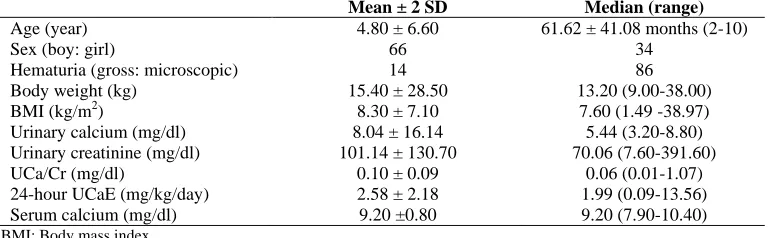
Table 1. Clinical characteristics and laboratory variables of the patients (n = 100)
Mean ± 2 SD Median (range)
Age (year) 4.80 ± 6.60 61.62 ± 41.08 months (2-10)
Sex (boy: girl) 66 34
Hematuria (gross: microscopic) 14 86 Body weight (kg) 15.40 ± 28.50 13.20 (9.00-38.00) BMI (kg/m2) 8.30 ± 7.10 7.60 (1.49 -38.97)
Urinary calcium (mg/dl) 8.04 ± 16.14 5.44 (3.20-8.80) Urinary creatinine (mg/dl) 101.14 ± 130.70 70.06 (7.60-391.60) UCa/Cr (mg/dl) 0.10 ± 0.09 0.06 (0.01-1.07) 24-hour UCaE (mg/kg/day) 2.58 ± 2.18 1.99 (0.09-13.56) Serum calcium (mg/dl) 9.20 ±0.80 9.20 (7.90-10.40) BMI: Body mass index
A multiple linear regression model was used to investigate correlations among factors, including age, body height, body weight, body mass index (BMI), 24-hour UCaE, and UCa/Cr. All statistical analyses were performed with SPSS software (version 20, IBM Corporation, Armonk, NY, USA). P values less than 0.050 were assumed to be significant.
Results
This study was performed on 100 children with persistent asymptomatic hematuria aged between 2-10 years with average age of 61.62 ± 41.08 months. The patients included respectively 66 (66%) boys and 34 (34%) girls. The patients’ age, body weight, and results of the urinary evaluations are shown in table 1. The age, weight, and BMI of the children ranged from 2 to 10 years, 9 to 38 kg, and 1.49 to 38.97 kg/m2, respectively. The mean 24-hour UCaE and UCa/Cr were 2.58 ± 2.18 mg/kg/day, and 0.10 ± 0.09 mg/mg, respectively. In addition, the mean UCa/Cr values according to each age group are shown in table 1.
PCC analysis was performed to assess the correlation between UCa/Cr and 24-hour UCaE. A positive linear correlation was found that was statistically significant (P < 0.001). The PCC (r) for UCa/Cr and 24-hour UCaE was 0.511, showing a moderate correlation, so there were moderate correlations between UCa/Cr and 24-hour UCaE. The common value of ≥ 0.20 mg/mg was used UCa/Cr for screening hypercalciuria. BMI and 24-hour UCaE affected random UCa/Cr (r2 = 0.385, P < 0.001).
A total of 100 patients were enrolled in this study. Among the patients, 86 (86%) and 14
(14%) had microscopic hematuria and gross hematuria, respectively.
Discussion
Hypercalciuria can cause some clinical manifestation, however hematuria is one of the most common symptoms among children caused by hypercalciuria (14-19). UCaE varies with age and has the highest values among young children (21-24). Additional factors, including variations in dietary calcium intake, geography, race, water source, exposure to sunlight, and even season, have been proposed to influence urinary calcium concentration (22-25).
In the present study, the incidence rates of urine metabolic abnormalities among the healthy school children were 23% and 100% for hypercalciuria and hypocitraturia, respectively. Similar to other studies in Iran, this study showed that the incidence of hypercalciuria was significantly higher than other countries (4).
UCaE is best measured with a 24-hour collection. As such collection methods are difficult to obtain among children, UCa/Cr has been often used as an alternative measurement. However, the correlation between UCa/Cr and 24-hour UCaE is controversial.
Reusz et al. reported a close linear correlation between UCa/Cr ratio and UCa/Cr ratio determined based on 24-hour urine specimen (22), however Alconcher et al. found a weak correlation between fasting UCa/Cr ratio and 24-hour UCa level (23). Several studies have reported significant age-related variations in UCa/Cr (22-25).
with health status among children. In this study, the rate of hypercalciuria was assessed among children with hematuria between 2-10 years, so the researchers referred to nephrology office and the correlation between UCa/Cr and 24-hour UCaE urine level, as they speculated that random UCa/Cr could be used as a screening tool for hypercalciuria.
In a study by Biyikli et al., idiopathic hypercalciuria was reported among about 43% of children over 5 years old, with recurrent UTIs (26). Stojanovic et al. found an age-related decrease in UCa/Cr among children < 6 years of age, but they did not specify the age at which UCa/Cr values became stable (27).
The present study had several limitations. The major limitation was the lack of a group of normal children for comparison. The incidence of hypercalciuria among children with hematuria in this study was unknown, which means the accurate judgment about the incidence of hypercalciuria in Iran needs more comprehensive and multicenter studies.
Conclusion
Based on this study, random UCa/Cr is not a good alternative method for 24-hour urinary analysis. Random UCa/Cr is not appropriate for screening hypercalciuria among children with persistent asymptomatic hematuria. If clinicians want to use random UCa/Cr as a screening test for patients with hematuria to take early intervention, it is needed to conduct more researches.
Conflict of Interests
Authors have no conflict of interests.
Acknowledgments
The authors of the present study sincerely thank all colleagues in Qom University of Medical Sciences as well as Dr Razavi and Dr Arsang for their support in performing this study and all patients who participated in the study.
References
1. van der Watt G, Omar F, Brink A, McCulloch
M. Laboratory investigation of the child with suspected renal disease. In: Avner ED, Harmon WE, Niaudet P, Yoshikawa N, Emma F, Goldstein S, Editors. Pediatric Nephrology. 7th ed. Berlin, Germany: Springer Berlin Heidelberg; 2016. p. 626.
2. Sepahi MA, Heidari A, Shajari A. Clinical manifestations and etiology of renal stones in children less than 14 years age. Saudi J Kidney Dis Transpl 2010; 21(1): 181-4. 3. Craig C, Avner ED. Idiopathic Hypercalciuria.
In: Kliegman RM, Stanton B, Editors. Nelson Textbook of Pediatrics. Philadelphia, PA: Elsevier Health Sciences; 2016. p. 2511. 4. Akhavan-Sepahi M, Sharifian M, Mohkam M,
Vafadar M, Hejazi S. Biochemical risk factors for stone formation in healthy school children. Acta Med Iran 2012; 50(12): 814-8.
5. Arrabal-Polo MA, Arias-Santiago S, Giron-Prieto MS, Abad-Menor F, Lopez-Carmona PF, Zuluaga-Gomez A, et al. Hypercalciuria, hyperoxaluria, and hypocitraturia screening from random urine samples in patients with calcium lithiasis. Urol Res 2012; 40(5): 511-5. 6. Hong YH, Dublin N, Razack AH, Mohd MA, Husain R. Twenty-four hour and spot urine metabolic evaluations: Correlations versus agreements. Urology 2010; 75(6): 1294-8. 7. Choi IS, Jung ES, Choi YE, Cho YK, Yang
EM, Kim CJ. Random urinary
calcium/creatinine ratio for screening hypercalciuria in children with hematuria. Ann Lab Med 2013; 33(6): 401-5.
8. Vijayakumar M, Nageswaran P, Tirukalathi OM, Sudha E, Priyadarshini S. Descriptive study of clinical profile and benefit of therapy in childhood hypercalciuria. Int J Nephrol Renovasc Dis 2014; 7: 69-73.
9. Balestracci A, Meni BL, Toledo I, Martin SM, Wainsztein RE. Idiopathic hypercalciuria in children with urinary tract infection. Arch Argent Pediatr 2014; 112(5): 428-33.
10.Ryan LE, Ing SW. Idiopathic hypercalciuria: Can we prevent stones and protect bones? Cleve Clin J Med 2018; 85(1): 47-54.
12.Koratala A, Bhatti V. Medullary nephrocalcinosis in idiopathic hypercalciuria. Clin Case Rep 2017; 5(11): 1903-4.
13.Esteghamati M, Ghasemi K, Nami M. Prevalence of idiopathic hypercalciuria in children with urinary system related symptoms attending a pediatric hospital in Bandar Abbas in 2014. Electron Physician 2017; 9(9): 5261-4.
14.Assadi F, Moghtaderi M. Preventive kidney stones: Continue medical education. Int J Prev Med 2017; 8: 67.
15.Lee JH, Choi HW, Lee YJ, Park YS. Causes and outcomes of asymptomatic gross haematuria in children. Nephrology (Carlton) 2014; 19(2): 101-6.
16.Moghtaderi M, Noohi AH, Safaeyan B, Abbasi A, Sabsechian M, Meherkash M. Screening for microscopic hematuria in school-age children of Gorgan City. Iran J Kidney Dis 2014; 8(1): 70-2.
17.Praga M, Alegre R, Hernandez E, Morales E, Dominguez-Gil B, Carreno A, et al. Familial microscopic hematuria caused by hypercalciuria and hyperuricosuria. Am J Kidney Dis 2000; 35(1): 141-5.
18.Spivacow FR, Del Valle EE, Rey PG. Metabolic risk factors in children with asymptomatic hematuria. Pediatr Nephrol 2016; 31(7): 1101-6.
19.Feld LG, Waz WR, Perez LM, Joseph DB. Hematuria. An integrated medical and surgical approach. Pediatr Clin North Am 1997; 44(5):
1191-210.
20.Koyun M, Guven AG, Filiz S, Akman S, Akbas H, Baysal YE, et al. Screening for hypercalciuria in schoolchildren: What should be the criteria for diagnosis? Pediatr Nephrol 2007; 22(9): 1297-301.
21.Mir S, Serdaroglu E. Quantification of hypercalciuria with the urine calcium osmolality ratio in children. Pediatr Nephrol 2005; 20(11): 1562-5.
22.Reusz GS, Dobos M, Byrd D, Sallay P, Miltenyi M, Tulassay T. Urinary calcium and oxalate excretion in children. Pediatr Nephrol 1995; 9(1): 39-44.
23.Alconcher LF, Castro C, Quintana D, Abt N, Moran L, Gonzalez L, et al. Urinary calcium excretion in healthy school children. Pediatr Nephrol 1997; 11(2): 186-8.
24.Esbjorner E, Jones IL. Urinary calcium excretion in Swedish children. Acta Paediatr 1995; 84(2): 156-9.
25.Safarinejad MR. Urinary mineral excretion in healthy Iranian children. Pediatr Nephrol 2003; 18(2): 140-4.
26.Biyikli NK, Alpay H, Guran T. Hypercalciuria and recurrent urinary tract infections: Incidence and symptoms in children over 5 years of age. Pediatr Nephrol 2005; 20(10): 1435-8.