Applied Research on English Language
V. 8 N. 1 2019 pp: 51-78
http://uijs.ui.ac.ir/are
DOI: 10.22108/are.2018.112142.1333
___________________________________________ *
Corresponding Author.
1 2
Task Complexity Manipulation and EFL learners’ interactions in the
process of collaborative pre-planning
Aasa Moattarian
1*, Mohammad Hassan Tahririan
2, Ahmad Alibabaei
31
PhD Candidate Department of English, Sheikhbahaee University, Baharestan, Iran 2
Professor Department of English, Sheikhbahaee University, Baharestan, Iran 3
Assistant Professor Department of English, Sheikhbahaee University, Baharestan, Iran
Received: 2018/07/18 Accepted: 2018/09/25
Abstract: Today, learners’ interaction and collaborative task performance have attracted
increasing attention from language teachers and researchers. The present study investigated
whether collaborative pre-planning, task complexity manipulation, and language proficiency
level play a role in learners’ interactions. To this end, 128 EFL learners from two different
language proficiency levels carried out three different tasks, whose complexity was
manipulated based on Robinson’s task complexity framework. Retrospective semi-structured
interviews were conducted which led the researchers to a better understanding of the
unobservable underlying processes they underwent in the pre-task planning stage. The learners’
interactions were closely examined, analyzing all their language related episodes quantitatively
as well as qualitatively. The results partially supported the Cognition Hypothesis and
highlighted that cognitively demanding tasks provide more learning opportunities as learners
confront more challenges, compared to undemanding tasks. The results were highly revealing
about the process learners undergo in the pre-task planning stage, which can be considered by
applied linguists, language teachers and material designers in providing considerable learning
opportunities.
Keywords: Collaborative Pre-planning; Cognition Hypothesis; Language-related Episodes;
52 Applied Research on English Language, V. 8 N. 1 2019
ARE
L
Introduction
Communicating needs, wants, and ideas is considered as the primary purpose of language;
therefore, learning to speak is an essential skill in the process of language learning (Nation &
Newton, 2009). If we define communication as the exchange of ideas, information, etc.,
between two or more persons (Richards & Schmidt, 2002) we see that, in this age of
globalization, communication has become much more important than before. People need to
be linked with others; thus, for many people the ability to speak a foreign language means
knowing the language to use it for effective communication. A considerable frustration
learners commonly experience is mastering the speaking skill (Shumin, 2002). Today, it is
believed that language learning results from such processes as interaction between the
learners, collaboration in creating meaning, creation of meaningful verbal interactions,
negotiation of meaning, and the like (Richards, 2006). Thus, investigating the processes
learners undergo in such interactions and collaborations can be highly revealing (Mackey &
Polio, 2009).
In Iran, the traditional form-focused and product-oriented instruction have been
dominant approaches to language teaching for several decades; hence, accuracy has been
strongly emphasized in learners’ performances (Zarrabi & Brown, 2015). In the past couple
of decades, however, there has been a dominant shift from product-oriented approach to a
process-oriented approach with the aim to enhance L2 Learners’ communicative abilities
(Richards, 2006). It has been argued that learners learn a language through the process of
communication, and meaningful communication provides considerable opportunities for
learning (Adams, 2007; Fujii & Mackey 2009). In Iran, also, attempts have been made to
move from the traditional grammar-based approach to communicative approaches (Safari &
Sahragard, 2015). Hence, a great number of studies have been conducted to investigate the
use of tasks and benefits of learner-learner interactions in the process of collaborative
task-based language learning (e.g., Abadikhah, 2011; Birjandi & Alipour, 2010; Roohani,
Forootanfar, & Hashemian, 2017; Tavakoli & Rezazadeh, 2014; Yaghobian, Samuel &
Mahmoudi, 2017).
Taking advantage of pair work or small group work in second language classrooms
rests on strong theoretical and pedagogical bases (Ellis & Shintani, 2014). It is generally
believed that effective interactions are authentic exchanges of ideas, during which learners
use their L2 Knowledge in order to produce meaningful utterances (Cummins, 2011). It
Task Complexity Manipulation and EFL learners’ interactions in the process of collaborative pre-planning 53
meaning, provision of feedback, and production of modified output (Gass & Mackey, 2007),
which are all helpful in the process ofL2 development. Brown (2007) posits that the
Interaction Hypothesis has had considerable influences on SLA research, since it considers
language classrooms not only as a place where learners of different backgrounds, cognitive
abilities, and thinking and learning styles mingle, but also as a place in which learners can
effectively interact.
In this regard, an important concept which has been discussed extensively is
collaborative pre-planning. Pre-task planning provides learners with time to prepare for
performing the task by considering the content they want to encode and to find specific
language codes to express that content. In collaborative pre-planning, planning activities are
completed by peers being engaged in the planning activity (Ellis, 2005). Generally, a
considerable benefit of collaborative pre-planning is that it provides learners with a social
context for generating ideas, conceptualizing thoughts, and finally making linguistic
decisions by the help of peers (Hanjani, 2015; Wigglesworth & Storch, 2009).Therefore,
researchers have appreciated the benefits of collaborative pre-task planning and
learner-learner interactions in collaborative task-based language learning (e.g., Bygate, Skehan, &
Swain 2001; Ellis, 2003; Kim, 2009; Samuda & Bygate, 2008).
A great number of studies have been carried out to investigate the quality of learners’
oral performances with regard to pre-planning conditions (e.g., planning time, guided/
unguided, individual/collaborative, etc.) and cognitive task complexity (e.g., Ahmadian &
Tavakoli, 2011; Ahmadian, Tavakoli & Dastjerddi, 2015; Fakhraee & Ghaemi, 2017; Lee,
2018; Tuan & Storch, 2007; Yuan & Ellis, 2003, to name only a few). It has generally been
reported that planning conditions and task complexity play crucial roles in learners’ final
performance's quality. Thus, the literature has more than enough to support the fact that
different task designs and their implementation conditions can affect L2 performances. The
question facing foreign language teachers is how strongly they should encourage learners to
work jointly on performing tasks, and how to design tasks to gain the advantages of using
collaborative pre-planning in the process of language teaching; they need to know what
learners actually do in the pre-planning stage.
Background
In task-based language research, planning has been considered as one of the task
54 Applied Research on English Language, V. 8 N. 1 2019
ARE
L
comprehensive review of a number of studies on the effects of different kinds of planning on
L2 learners’ oral performances. In his wide-ranging review, there is sufficient convincing
evidence that pre-task planning, specifically collaborative pre planning is considered to be
highly beneficial for learners’ performances. But, it can be reasonably argued that most of the
existing studies on pair and group work in L2 production have adopted a product-oriented
approach. However, some studies have investigated the process that learners undergo in the
pre-planning stage of oral tasks. Nakakubo (2011), for example, investigated not only the
final performance of the learners, but also the process under which they pre-planned. He tried
to understand the process of pre-planning by retrospective interviews after completion of
each task. His findings indicate that learners select similar strategies, regardless of planning
conditions.
Kunitz (2013), also, studied the process of pre-planning by adopting a conversation
analytic perspective to explore the way through which students collaboratively create and
work on emergent linguistic features in their L2 performances. She found significant
differences between the presence and absence of pre-task planning by showing how students
actively accomplish a task based on their ongoing interpretations of the task and specific
settings in which they perform them.
Despite advances in this area of research, many fundamental questions about the
language processes learners undergo in their pre-planning have still remained unresolved.
How collaborative planning benefits learners’ performances in different stages of their
language development is one of the indistinct areas which calls for further investigation. Not
only learners’ communicative performances, but also their strategic pre-task planning
interactions need to be closely examined.
Moreover, the role of task complexity, which can be manipulated to serve different
purposes (Gilbert, 2007) in the process of collaboration, needs to be investigated to see how
cognitive demands may affect the way learners interact in the pre-planning stage. In this
regard, one of the theoretical perspectives on language learning which supports the use of
interaction for learning is the sociocultural theory. Sociocultural research findings suggest
that collaborative activities encourage language learners to consider their own language use
and collaboratively find solutions for their language-related problems (Swain, 2000, 2001).
According to Storch (2005), proponents of the social constructive perspective believe that
Task Complexity Manipulation and EFL learners’ interactions in the process of collaborative pre-planning 55
Swain’s output hypothesis is another theoretical motivation for task planning research
(Swain, 2005). It is generally suggested that with the opportunity to plan for a task, learners
produce better outputs (Gilabert, 2007; Ortega, 2005; Skehan & Foster, 2005). In other
words, task planning can increase the potential to facilitate second language learning; in fact,
these studies show that planned conditions result in improved performances.
Developments in this area of research support the idea that pre-task planning as well as
the task itself play a crucial role in developing learners’ performances. Limited Attentional
Capacity Model (Skehan, 1998; Skehan & Foster, 2001) and the Multiple Attentional
Resources Model or Cognition Hypothesis (Robinson, 1995, 2007, 2011) are two of the best
known models which explain the specific roles tasks play on learners’ linguistic
performances.
The Cognition Hypothesis offers an account of the role of task complexity in
influencing the quality of L2 learner’s output and their interaction in the L2. Closely related to this hypothesis is Robinson’s (2007) Triadic Componential Framework for task
classification. Robinson acknowledges three sources for task cognitive demand as: (1) task
complexity (cognitive factors relating to the specific ways based on which tasks are
designed); (2) task conditions (interactional factors relating to participant variables and their
kind of participation); and (3) task difficulty (learner factors concerning affective and learner
ability variables).
In Robinson’s (2007) framework, task complexity factors can either be
resource-directing or resource-dispersing with regard to cognitive resources such as attention and
memory. Resource-directing factors are those which make cognitive and/or conceptual
demands on attention and memory resources, directing them to aspects of the linguistic code;
whereas resource-dispersing factors are those which make performative and/or procedural
demands on attention and memory resources. Examples of resource-directing factors are: +/-
few elements, +/- here and now, and +/- reasoning demand, while examples of
resource-dispersing factors include: +/- planning, +/- single task, and +/- prior knowledge. It is clearly
specified by Robinson and Gilabert (2007) that both directing and
resource-dispersing task complexity factors will “result in greater amounts of interaction, and negotiation for meaning” in interactive tasks (p. 167).
The Cognition Hypothesis puts considerable emphasis on learners’ linguistic
performance and the interactional processes they undergo as well as the learning
56 Applied Research on English Language, V. 8 N. 1 2019
ARE
L
thoroughly, from theoretical as well as pedagogical perspectives, and to put more emphasis
on the role that task complexity can play in L2 pedagogy, the effect of task complexity on
providing learning opportunities needs more careful investigation.
Learners’ views toward collaborative pre-task planning is another issue which needs further investigation. A great number of studies have investigated learners’ attitudes towards
collaboration; however, due attention has not been paid to their views on the actual process
they undergo in collaborative pre-task planning (strategic planning), and only a few studies
(e.g., Nakakubo, 2011; Ortega, 2005; Tajima, 2003) have tried to shed some light on the
issue. According to Ellis (2009), “It cannot be taken for granted that learners do actually plan
(either strategically or on-line) when given time to do so, especially if they do not see the
planning time as useful” (p. 505). In this regard, Pang and Skehan (2014) investigated learners’ planning behavior and its effects on their final performances. They used learners’
self-reports to find out what they really did while they were planning for performing an oral
narrative task. The researchers concluded that there was a relationship between learners’
planning behavior and their subsequent performances.
The issues discussed above attracted Iranian researchers’ interest too. In Iran, a great
number of studies have investigated the role of task complexity manipulation on language
learners’ performances (e.g., Ahmadian & Tavakoli, 2011; Ahmadian, TAvakoli, &
Dastjerdi, 2015; BIrjandi & Alipour, 2010). A few studies were also conducted to investigate
the effects of task complexity manipulation on learner-learner interactions.
Heidari-Shahreza, Dabaghi, and Kassaian (2012), for example, explored the effects of
task complexity manipulation on the occurrence of LREs during learner-learner interactions.
Their study provided mixed results. While in some versions of the tasks, complexity and the
occurrence of LREs positively correlated, this pattern did not hold true for all the tasks and
proficiency levels. Thus, the study could not confirm the claims of neither Robinson’s Cognition Hypothesis nor Skehan’s Limited Attentional Resources Model.
Generally speaking, such studies were successful in providing insights on task design
and implementation in a variety of EFL settings and different proficiency levels indicating
the point that task complexity should be manipulated with great care and caution otherwise it
may not bear any fruit. Therefore, more extensive studies are needed to get into a more
comprehensive understanding of learner-learner interactions during the planning stage.
Thus, the present study was set to examine learners’ interactions in the pre-task planning
Task Complexity Manipulation and EFL learners’ interactions in the process of collaborative pre-planning 57
Method
Design
This descriptive study was set to explore the process Iranian EFL learners underwent in
collaborative pre-task planning while performing simple and complex tasks. To this end, a
multi-methods approach was employed to analyze the data both quantitatively and
qualitatively. The quantitative analysis of the data provided a general view of learner-learner
interactions in their collaborative pre-task planning stage, while the qualitative analysis
presented a detailed understanding of the process the participants underwent in the pre-
planning stage.
Participants
The participants of the study were male and female EFL university students majoring in
TEFL, translation studies, and English literature at Skeikhbahaee University, Isfahan. A total
of 193 students took part in a placement test (Oxford Quick Placement Test) to be assigned to
two groups of language proficiency levels. To ensure that the students were able to interact in
English, five students whose scores were below 18 (considered as beginners by the designers
of the test) had to be excluded. To assign the rest of the participants to two groups, those who
scored 18-29 were considered as the participants in Group I (low level), and the ones who
scored 30-47 were assigned to Group II (High Level). The rationale behind this division was
the levels defined by the designers of the placement test as elementary and intermediate.
Table 1 shows the distribution of the participants in the two groups.
Table1.Distribution of the Participants in the Two Language Proficiency Levels
Number of participants Minimum scores Maximum scores
Group I 95 18 29
Group II 93 30 45
Finally, from among those 188 participants, 128 from the two different language proficiency
levels took part in the study. The participants from each level were randomly assigned to
three groups to perform the tasks. Table 2 presents the distribution of the participants and
tasks they were assigned to perform.
Table 2.The Distribution of the Participants and the Tasks They Performed
Control Simple Complex Total
Level Low 20 20 20 60
High 22 22 24 68
58 Applied Research on English Language, V. 8 N. 1 2019
ARE
L
Instruments
In each level, the participants performed three oral tasks, simple and complex versions of a
pictorial task (in experimental groups) and another oral task (in control groups). Immediately
after performing the tasks, the researchers conducted retrospective semi-structured interviews
to gain more in depth information about the process the participants underwent in the
pre-planning stage.
Placement Test
Since the proficiency level was one of the variables in this study, in order to assign the L2
learners with the same level of language proficiency in each group, the Quick Placement Test
(QPT) version 2 was administered. The test contained 60 multiple-choice items. With regard
to its scoring procedure, each correct answer counted as “one” point, while each incorrect and no response counted as “zero”; therefore, a total of sixty was the maximum score each
participant could obtain.
Oral Tasks
Within the resource-directing dimensions, +/- reasoning demands, +/-spatial reasoning, and
+/- few elements were the three manipulated factors to create two versions of the task
(designed to be cognitively complex). The researchers adopted and adapted the tasks used in
Malicka and Levkina (2012). Since considerable changes were made to the tasks, they were
finalized based on the feedback received from four experts in applied linguistics.
In the simple version (Appendix I), the participants were given a two page picture task,
one was a living room in which a sofa was placed as a point of reference, and the next page
was ten pictures related to the furniture they needed to furnish the living room. Their task was
to choose six objects and provide reasons for their selection, and then they needed to explain
where they wanted to place the objects in the living room.
In the complex version (Appendix II) of the task, again a two page picture task was
designed. In this task, however, no points of reference were provided on the first page for the
living room. On the second page, twenty three objects were presented. Participants were
supposed to choose ten objects to furnish the living room. They were asked to provide
reasons for their selection and explain where they wanted to place the objects and why.
To ensure the comparability of the results, another task was designed to be performed
Task Complexity Manipulation and EFL learners’ interactions in the process of collaborative pre-planning 59
room which was described in the form of a conversation between two friends in which one
described the new apartment she had just moved in and had not furnished the living room yet.
The participants were asked to choose objects to furnish the living room, and justify their
choices. Then, they had to decide where to place the objects and provide reasons for their
decision.
In performing the three tasks, the participants were given 20 minutes time for
collaborative pre-planning.
Semi-structured Interviews
A semi structured interview protocol was developed to get an in-depth view of the process
learners underwent in the pre-task planning stage. A list of questions were prepared to regard
such issues as the main points of discussion during the pre-task planning stage, their attitudes
toward such collaborations, the way the collaborations could help them meet the challenges
they faced, the reasons behind the use of L1, and also avoidance. The questions were
finalized based on the constructive feedback received from the same panel of experts in
applied linguistics. Interviews were conducted immediately after performing the tasks, in
order not to miss the points they wanted to mention about the task and the process they had
undergone in the pre-task planning stage; each interview took 20 to 30 minutes long. They
were conducted in learners’ L1 (Persian) to ensure that language of the interview is not a barrier to the participants’ self-expressions.
Procedure
The three tasks were administered to the participants in pairs. First, detailed instruction was
given, and then the tasks were presented. The participants were given 20 minutes time for
collaborative pre-planning to ensure that they had enough time to discuss different aspects of
the task. Immediately after completing the tasks, 70 participants were randomly selected for
semi-structured interviews. The interviews led the researchers to a better understanding of
unobservable underlying processes the participants underwent in the planning stage. The
interviews were essential, as they permitted a level of in-depth information gathering, as well
as flexible and free responses that might not be obtained else way.
The whole process of the collaborative pre-task planning stage and retrospective
interviews was audio recorded and transcribed for later analysis. In order to find out how the
60 Applied Research on English Language, V. 8 N. 1 2019
ARE
L
analyzed quantitatively and qualitatively. All Language Related Episodes (LREs) were
carefully examined to get a comprehensive view of their linguistic collaboration in the
pre-task planning stage.
Data Analysis
The qualitative analysis of the data gave an in-depth view of the process the learners
underwent in the planning stage. In fact, the researchers explored not only the learners’
opinions presented in the interviews, but also the LREs that occurred in their interactions.
The quantitative analysis, on the other hand, presented a general view of the LREs in their
collaborative pre-planning stage. The reason behind choosing LREs as units of analysis was
the fact that they include a variety of discourse functions in learners’ interactions; for
example, explicit and implicit feedback, identifying information gaps, negotiation sequences,
etc. (Jackson, 2001).
Data obtained in semi-structured interviews helped the researchers to get an in-depth
view of the participants’ ideas on LREs and what they exactly did during the pre-task
planning stage. To serve the purposes of quantitative analysis, all the LREs produced by the
participants were identified and counted based on the definitions provided for each kind of
episode. To classify the LREs as comprehensively as possible, the researchers examined a
number of previous studies (Kim, 2009; Leeser, 2004; Swain, 1998; and Swain & Lapkin,
1998) and finally analyzed the LREs based on the classification presented below:
I. Content of LREs
A. Lexical
B. Grammatical
II. Resolution of LREs
A. Correctly resolved
B. Incorrectly resolved
C. Unresolved
III. Learner initiated questions to the teacher
IV. Language of LREs
A. L1
B. L2
V. Kind of interaction
A. Interactive
Task Complexity Manipulation and EFL learners’ interactions in the process of collaborative pre-planning 61
Results
Occurrence of LREs
The researchers investigated the relationship between task complexity manipulation and the
occurrence of LREs produced by the learners from different language proficiency levels
during collaborative pre-task planning. Analyzing the data, they found 636 instances of LREs
in all the tasks performed by the participants. Table 3 depicts the frequency of LRE
occurrences during pre-task planning.
Table 3.Distribution of LREs
Task Total
Control Simple Complex
Prof
ici
ency Low 71 (47.3%) 115 (47.9%) 127 (51.6%) 313 (49.2%)
High 79 (52.7%) 125 (52.1%) 119 (48.4%) 323 (50.8%)
Total 150 (100.0%) 240 (100.0%) 246 (100.0%) 636 (100.0%)
According to Table 3, the participants who completed the simple and complex tasks
faced more linguistic challenges compared to the control group. In order to analyze the data
further and compare LRE occurrences in the three groups, a two-way ANOVA was
conducted, the results of which are presented in Table 4.
Table 4.Results of the Two-way ANOVA by Group and Language Proficiency Level
Sum of Squares Df Mean Square F Sig.
Intercept 6319.564 1 6319.564 262.448 .000
Group 251.546 2 125.773 5.223 .008
Level 14.250 1 14.250 .592 .445
The obtained values in this test showed that there was a significant difference among
the three groups with regard to their use of LREs (p=0.008). In order to see how the groups
exactly differed, the Tukey's Honest Significant Difference test (Tukey HSD) was
62 Applied Research on English Language, V. 8 N. 1 2019
ARE
L
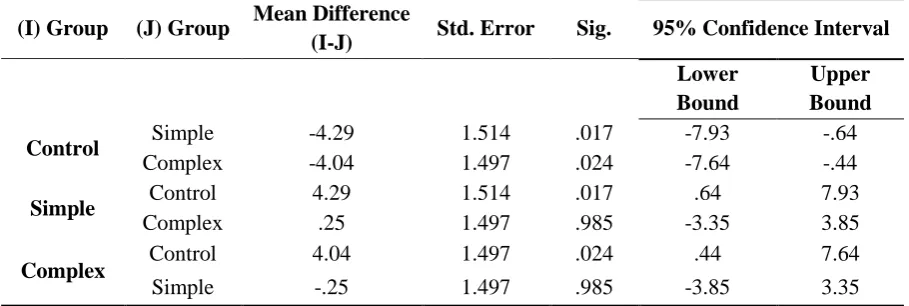
Table 5.The Tukey HSD Test for Multiple Comparisons of the Three Groups
(I) Group (J) Group Mean Difference
(I-J) Std. Error Sig. 95% Confidence Interval Lower
Bound
Upper Bound
Control Simple -4.29 1.514 .017 -7.93 -.64
Complex -4.04 1.497 .024 -7.64 -.44
Simple Control 4.29 1.514 .017 .64 7.93
Complex .25 1.497 .985 -3.35 3.85
Complex Control 4.04 1.497 .024 .44 7.64
Simple -.25 1.497 .985 -3.85 3.35
As depicted in Table 5, there was a significant difference in the use of LREs between
the control group and the other two groups (p= 0.017, p= 0.24); in the control group the
occurrence of LREs was less frequent than in the other two groups. The difference between
the two groups performing simple and complex tasks was not statistically significant
(p= 0.985). The results indicate that in the control group, the participants faced fewer
challenges compared to the other two groups.
In the retrospective interviews, also, the participants mostly believed that the
collaborative pre-task planning was useful, and the LREs were helpful. They pointed out that
it was through the LREs that they could learn something from the tasks; whereas, content
related episodes could only help them in making up their minds to design the living room.
In order to see whether the difference between the occurrences of LREs in the pre-task
planning stage for learners from different language proficiency levels was statistically
significant, a Chi-square test was run, whose results are presented in Table 6.
Table 6.Results of the Chi-square Test for the Occurrences of LREs for Learners from
Different Language Proficiency Levels
Value Df Asymp. Sig. (2-sided)
Pearson Chi-Square .946a 2 .623
According to the results, there was no statistically significant difference between
occurrences of LREs in the two language proficiency groups (p=0.623), which shows that
both groups faced challenges while performing the tasks.
Types of LREs
In order to analyze the LREs more comprehensively, the researchers classified them by kind,
resolution, and content as well as learner initiated questions to the teachers. Table 7 depicts
Task Complexity Manipulation and EFL learners’ interactions in the process of collaborative pre-planning 63
Table 7.Occurrences of Different Types of LREs
Task
Simple Complex Control
Language proficiency
Content of LREs
Lexical High 111 (88.8%) 111 (93.3%) 72 (91.1%)
Low 90 (78.3%) 102 (80.3%) 64 (90.1%)
Grammatical High 14 (11.2%) 8 (6.7%) 7 (8.9%)
Low 25 (21.7%) 25 (19.7%) 7 (9.9%)
Resolution of LREs
Correctly resolved High 87 (69.6%) 86 (72.3%) 66 (8.35%)
Low 93 (80.9%) 97 (76.4%) 54 (76.1%)
Incorrectly resolved High 31 (2408%) 22 (18.5%) 6 (7.6%)
Low 14 (12.2%) 24 (18.9%) 15 (21.1%)
Unresolved High 7 (5.6%) 11 (9.2%) 7 (8.9%)
Low 8 (7.0%) 6 (4.7 %) 2 (2.8%)
Learner initiated questions to the
teachers
High 29 (23.2%) 33 (27.7%) 6 (7.6%)
Low 30 (23.6%) 75 (24.0%) 14 (19.7%)
Language of LREs
L1 High 65 (52.0%) 52 (43.7%) 46 (58.2%)
Low 76 (66.1%) 84 (66.1%) 60 (84.5%)
L2 High 60 (48.0%) 67 (56.3%) 33 (41.8%)
Low 39 (33.9%) 43 (33.9%) 11 (15.5%)
Kind of interaction
Interactive High 125 (100%) 114 (95.8%) 76 (96.2%)
Low 114 (99.1%) 122 (96.1%) 71 (100%)
Non-interactive High 0 (0.0%) 5 (4.2%) 3 (3.8%)
Low 1 (0.9%) 5 (3.9%) 0 (0.0%)
Table 7 is a concise summary of LRE occurrences in the whole process of pre-task
planning interactions. The researchers aimed at exploring the role that language proficiency
and task complexity play in the occurrence of different types of LREs. To this end, a series of
Chi-square tests were run. The tests showed whether the differences in occurrence of LREs in
the pre task planning stage and by learners from the different language proficiency levels
were statistically significant in different tasks. Tables 8 and 9 show the results of the
Chi-square tests.
Table 8.Results of Chi-square Tests for Occurrences of Types of LREs by Task
Value df Sig
Content of LREs 3.780 2 .151
Resolution of LREs 2.027 4 .731
Learner initiated questions to teachers 9.457 2 .009
64 Applied Research on English Language, V. 8 N. 1 2019
ARE
L
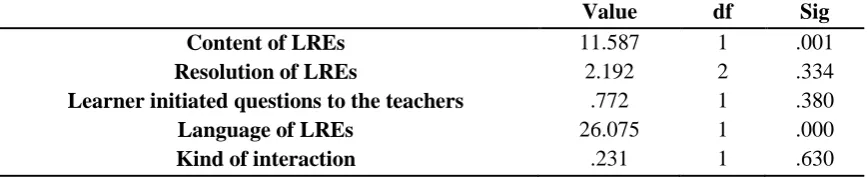
Table 9.Results of Chi-square Tests for Occurrences of Types of LREs by Language
Proficiency Level
Value df Sig
Content of LREs 11.587 1 .001
Resolution of LREs 2.192 2 .334
Learner initiated questions to the teachers .772 1 .380
Language of LREs 26.075 1 .000
Kind of interaction .231 1 .630
The following sections present the quantitative as well as qualitative analysis of the
data for the different types of LREs.
Content of the LREs
Analyzing the content of the LREs, the researchers attempted to find out whether the
challenges the learners faced were more related to grammatical or lexical issues. According
to Table 7, the participants generally used lexical LREs more frequently than grammatical
ones. Based on the Chi-square test results (Table 8), the researchers found that there was no
statistically significant difference between occurrences of lexical and grammatical LREs
(p=0.151), which means all the three groups confronted more lexical challenges than
grammatical ones.
In the interviews, also, when the participants were asked about the content of the LREs,
they mostly emphasized lexical challenges and how they overcame them. They reported that
collaboration had positive effects on expanding their vocabulary knowledge; they had learned
new words in the pre-task planning stage. Some of them emphasized the superiority of
vocabulary over grammar in the whole process of language learning. They said that in their
linguistic performances, lexical challenges were primary. One of the participants stated her
view in this regard as follows:
“In my point of view, once I find the unknown words, I can present my idea in one
way or another without taking my minds busy with grammar”.
Moreover, the participants from the simple and complex groups reported that they had
more time to talk about language problems, since pictures provided the content they needed.
The participants in the control group, on the other hand, believed they had to spend more
time on the content of the task and not to its language.
The next issue the researchers addressed was the differences between the occurrence of
Task Complexity Manipulation and EFL learners’ interactions in the process of collaborative pre-planning 65
the difference between the content of the LREs from the two language proficiency groups
was statistically significant (p=0.001). The frequencies in Table 7 indicate that the learners
from the high language proficiency group were concerned with lexical issues; while the ones
from the lower level had more grammatical challenges.
To analyze the issue more precisely, the researchers reviewed the LREs more
extensively. In the Low Group collaborations, once the participants found the new word they
were looking for, they tried to use them without paying close attention to grammar. In the
High Group, on the other hand, the participants cared not only for vocabulary, but also
grammar. Moreover, in the High Group, the participants addressed grammatical questions
and provided corrective feedback to their partners; while in the Low Group, the grammatical
LREs were mostly in the form of questions.
In their interviews also, the participants from the High Group reported their gains from
grammatical as well as lexical points, while the Low Group believed grammar was not their
main concern.
Resolution of LREs
Examining how the participants tackled their communication problems, the researchers
considered three conditions: positively resolved (the problem was solved), negatively
resolved (a wrong answer was found for the question), and unresolved (no specific answer
was provided for the question). According to Table 7, the participants were successful in
finding correct solutions to problems.
In the interviews, almost all the interviewees referred to their problem solving
opportunities in their collaborations. They acknowledged that, being accompanied by a peer
could encourage them not to let problems remain unresolved. They also stressed the use of
such sources like dictionaries, books, and teachers as their resorts for solving problems,
which they believed motivated them and gave them the courage to ask questions and insist on
finding answers.
Moreover, the researchers further conducted Chi-square tests to analyze the resolution
of the LREs. According to Table 8, there was no statistically significant difference among the
groups doing the simple, complex and control tasks with regard to the resolution of the LREs
(p=0.731). Table 9, also, indicates that the participants in both language proficiency groups
could solve their problems, and the differences between their resolution types were
66 Applied Research on English Language, V. 8 N. 1 2019
ARE
L
In the retrospective interviews, most of the participants stated that they liked
collaborative pre-planning, because they could discover new things. When the learners were
asked about avoidance due to lack of knowledge, they said they did not make use of
avoidance strategies, because they preferred to have an opportunity to learn. One of the
participants accentuated the learning opportunities provided for them and said:
“I think we could learn when we searched for answers to our questions. When I faced a problem, first, I asked my partner if she didn’t know the answer, I checked my dictionary. If I couldn’t solve the problem, I referred to my teacher.
Why avoidance, when we have many ways to find answers for our questions?”
Learner Initiated Questions to the Teacher
Another issue the researchers considered was learner initiated questions to the teacher.
Table 7 shows the extent to which the learners initiated questions to their teachers while
performing the tasks. In order to test the significance of the differences between the
occurrences of this type of episode, Chi-square tests were run; the results of which are
presented in Tables 8 and 9.
As shown in Table 8, the difference between the frequency of initiating questions to
teachers was statistically different (p=0.009). While performing the control tasks, the
participants initiated fewer questions to their teachers compared to simple and complex tasks.
In the interviews, when the participants presented their ideas about the process of
approaching the tasks, there was a considerable difference in their reports. Those who
performed simple and complex tasks said they had to talk about the specific elements and the
design they wanted in the task. For doing the control task, on the other hand, they did not
have such restrictions and started from what they knew.
One of the participants who performed the complex task reported the process she went
through like this:
“My partner and I first looked at the pictures to search for the unknown words in
our dictionaries. If we could not find the intended word, then we referred to our
teacher and she helped us to find the word. Sometimes, we faced grammatical
problems too. We went through the same process to find solutions, but they were
more difficult to be resolved by ourselves. We often had to refer to our teacher.”
Another participant who performed the control task, referred to the process of
Task Complexity Manipulation and EFL learners’ interactions in the process of collaborative pre-planning 67
“We first reviewed the conversation to visualize the living room. Then we started
to design the living room. I, personally, started from what I knew and tried to do
the task. Generally, I did my best to do the task based on my own knowledge. If I
did not know something, I did my best to find the answer by asking my partner,
consulting dictionaries, or asking the teacher.”
Interestingly, the difference between the frequency of referring to teachers by the
participants from the two levels of language proficiency was statistically insignificant
(p=0.380).
Language of LREs
The researchers also aimed at investigating the language of LREs in the participants’ interactions. Table 7 shows the participants’ use of L1 and L2 in LREs by group and by
language proficiency.
Chi-square tests were run to see whether the observed differences in using the L1 by
the participants from the two language proficiency levels were statistically significant.
According to Table 8, the participants used their L1 differently (p=0.008). Compared to the
simple and complex tasks, they used their L1 more frequently while doing the control task.
Moreover, the differences between the participants’ use of their L1 from the high and low
levels of language proficiency was statistically significant (p=0.000). Comparing the figures
reported in Table 7, the researchers concluded that in all the three groups, the lower level
participants used L1 more frequently than the participant who enjoyed a higher level of
language proficiency. Analyzing the data more meticulously, the researchers found that, the
participants used L1 mostly in lexical LREs; whereas, the participants from the lower level
used it more frequently in discussing grammar, the other group used it for the diction.
In the interviews, when the participants were asked about their use of L1, they stressed
that they used L1 to solve lexical problems; they referred to L1 mostly in content related
episodes.
Kind of Interaction
As shown in Table 7, more than 95% of the LREs were interactive, which indicates that the
participants tried to use this opportunity of collaboration as much as possible. In the
interviews, they referred to interactions as their best experience of doing the task. All the
respondents, except one, reported interactions were highly beneficial. The one who did not
68 Applied Research on English Language, V. 8 N. 1 2019
ARE
L
“I do not want to say that this type of collaboration is not useful, never…. . The
problem is that it does not suit my personal characteristics. Personally, I prefer
to do things alone”
All the other interviewees stated that they could take advantage of collaboration. As an
example,
“I found the process of collaboration very interesting and at the same time
helpful. When you see that you are not alone in accomplishing a single task,
you’ll be more motivated. I really liked this kind of collaboration”
Since the frequency of non-interactive LREs was less than 5 for the three groups of
simple, complex and control, Chi-square tests could only show the degree of differences
between the two language proficiency groups. As the results in Table 9 illustrate, there was
no significant difference between the two language proficiency groups, which means the
participants from both levels communicated interactively.
Discussion
The current study was set to examine the effects of task complexity manipulation on the
occurrence of LREs and consequently learning opportunities during pre-task planning
processes learners from different proficiency levels undergo. The findings partially support
the Cognition Hypothesis and highlight that task type and learner proficiency are important
factors affecting the role of task complexity on L2 learning opportunities.
Generally, collaborative planning can help learners overcome challenges they confront
in the planning stage by providing opportunities to exchange immediate feedback on
language. It has been noticed that verbalizing specific linguistic features can lead to a more
in- depth understanding of those features (Swain & Watanabe, 2013). Hence, the findings
support the literature on the benefits of collaborative planning, as the participants discussed
lexical as well as grammatical aspects of their language production and tried to provide a
joint understanding of the problems they faced.
The related literature generally reports that planning and its effects can be taken as
cognitive processes which have implications for learners’ subsequent performances of the
task. Batstone (2005) supports this view in SLA research and contends that when learners
engage in a communicative discourse and have to link form to meaning their interlanguage
develops best. When learners, he argues, do not have to adopt a purely communicative
Task Complexity Manipulation and EFL learners’ interactions in the process of collaborative pre-planning 69
their linguistic resources through their adventurous spirit, they will develop best. The
qualitative and quantitative analyses of the LREs in the present study strongly confirm
Batstone’s (2005) view.
In the current study, no significant difference was found between the occurrence of
LREs in the participants’ interactions during the planning stage for complex and simple tasks.
The findings are consistent with those of Solon, Long and Gurzynski-Weiss (2017) who
report no significant difference between the number of LREs produced in simple and
complex tasks. According to the Cognition Hypothesis, increasing task complexity is
expected to facilitate interaction and promote noticing and consequently create language
learning opportunities. However, this was not confirmed in the present study.
However, fewer LREs occurred in the learners’ interaction in pre-planning for control
task, compared to simple and complex tasks, which indicate that in the control group, the
participants faced fewer challenges compared to the other two groups. It can be inferred that
since the participants were free with regard to the content, they chose the elements and
structures which were less challenging for them. Actually, they tried to present what they
knew, instead of trying to learn new things. For the ones who fulfilled the simple and
complex tasks, on the other hand, the tasks were challenging, since they had to talk about the
objects presented in the tasks. In fact, while doing the simple and complex tasks, the
participants benefited from more learning opportunities.
Nuevo (2006) contends that learners produce more LREs in complex compared to
simple tasks. The present study did not confirm this. Based on the findings, there was no
statistically significant difference between the occurrences of LREs in the performances of
the different language proficiency groups, which is also in contrast with the findings of Kim
(2009) and Riccardi (2014). They report differences in the occurrence of LREs in the pre-task
planning stage for learners from different proficiency levels doing simple and complex tasks.
They reported that in performing simple tasks, the low group learners produced significantly
more LREs compared to the high proficiency group. In contrast, performing complex tasks,
the high group learners produce more LREs compared to the low group. In this study, the
frequency of occurrence of LREs as well as their contents were analyzed and significant
differences were found with regard to their content. More lexical LREs were observed in the
High Group, while there were more grammatical LREs in the Low Group. This is in line with
70 Applied Research on English Language, V. 8 N. 1 2019
ARE
L
The next factor considered was the use of L1. Looking at the matter from a
sociocultural perspective, L1 can play a crucial role as an important psychological tool that
can facilitate interaction processes (Brooks-Lewis, 2009). The learners’ L1 affects their
interactions, sharing ideas, and finding solutions to problems (Anton & DiCamilla, 1998). In
this study, the researchers observed that learners made effective use of L1 in their
interactions. It was revealed that the Low Group learners made more use of L1 than the High
Group, which can be justified by the language repertoire each person has.
Finally, the researchers studied the resolution of LREs and learner initiated questions to
teachers. In most cases, the learners did their best to handle the challenges they met; referring
to the teacher was their last resort, which shows that such collaborations help learners to be
more independent of teachers. The researchers also noted that most of the LREs were
positively resolved. Robinson (2007) argues that complex tasks produce a greater amount of
uptake compared to simple ones; however, in this study no statistically significant difference
was found in the resolution of LREs.
With regard to learner initiated questions to teachers, it was found that the participants
initiated fewer questions to their teacher in performing the control task, compared to the
simple and complex tasks. It can be inferred that since these differences resulted from the
cognitive demands of the tasks, the learners experienced more cognitive demands, they faced
more complicated questions, and therefore, they had to refer to their teachers seeking for
solution.
The findings of this study confirm the Cognition Hypothesis only in a few cases; most
of the predictions made by Robinson did not come true. Generally speaking, the learners
found collaborative pre-planning highly beneficial. In the interviews they identified several
benefits for collaborative pre-planning which can be listed as:
Ability to organize and formulate thought,
Ability to solve lexical and grammatical problems,
Help availability to retrieve known information,
Availability of learning opportunities,
Possibility of self-confidence enhancement,
Possibility of peer-feedback on performance,
Task Complexity Manipulation and EFL learners’ interactions in the process of collaborative pre-planning 71
Conclusion
To date, considering Cognition Hypothesis and task complexity manipulation, many
researchers have conducted studies to examine accuracy, complexity, and fluency of learners’
final production (e.g., Ellis & Yuan, 2005; Gilbert, 2007; Sangarun, 2005; Tavakoli &
Skehan, 2005) ; however, little attention has been paid to the learners’ interaction in the
process of pre task planning (e.g., Kunitz, 2013; Nakakubu, 2011; Ortega, 2005). Since such
interactions can be considered as generated learning opportunities, they become a
fundamental topic for research in the field of task-based language teaching.
Based on the Cognition Hypothesis, the current study investigated the effects of task
complexity manipulation and language proficiency on the occurrence of LREs. The findings
did not support the Cognition Hypothesis in that the differences in the occurrence of LREs of
the learners from different proficiency levels performing different tasks were statistically
insignificant. Qualitative analysis of the data was highly illuminating and enhanced our
understanding of the collaborative pre-task planning stage and nature of learners’
interactions. The findings suggest that collaborative pre-task planning is beneficial in offering
learning opportunities.
The findings suggest several pedagogical and theoretical implications for applied
linguists, language teachers, and material designers. Description of task characteristics and
pre-task planning stage can broaden our view toward the process of language production and
the challenges caused by certain tasks for learners. Such information will be helpful in
broadening our understanding of cognitive-interactionist theories of SLA. The findings can
help material designers and language teachers in providing considerable learning
opportunities; moreover, they can consider the findings of the study for observing logical task
sequencing to be presented to the learners. Language teachers are recommended to use
interactive tasks in L2 classes as much as possible to provide opportunities for learners from
different language proficiency levels to meet challenges which can pave the way for learning.
Material designers are also recommended to pay due attention to pre-task planning and
specific collaborative interactions in the materials they develop.
Although the research has reached its goals, there were some unavoidable limitations.
A notable shortcoming is that the data was obtained in a one-shot design; therefore, the roles
of some affective factors like motivation, anxiety, attitudes, etc., were not considered. If there
were opportunity to collect data in a time series design, the researchers could be more
72 Applied Research on English Language, V. 8 N. 1 2019
ARE
L
tasks. If the researchers had the opportunity to provide a variety of tasks, the findings would
be more informative.
For further research, researchers may take individual differences, different planning
conditions, and different modes of communication into account. More experimental studies
are also suggested to discover more about specific effects of collaborative task planning on
learning progress. Moreover, learners’ uptake of the resolved LREs can be investigated to see
how much the LREs contribute to language learning.
References
Abadikhah, Sh. (2011). Investigating language-related episodes during mechanical andmeaningful
output activities. International Journal of English Linguistics, 1(2), 281-294.
Adams, R. (2007). Do second language learners benefit from interacting with each other? In A.
Mackey (Ed.), Conversational interaction in second language acquisition (pp. 29–51).Oxford:
Oxford University Press.
Ahmadian, M.J., & Tavakoli, M. (2011).The effects of simultaneous use of careful online planning
and task repetition on accuracy, fluency, and complexity of EFL learners’ oral production.
Language Teaching Research, 15 (1), 35–59.
Ahmadian, M.J. Tavakoli, M. & Dastjerdi, H (2015). The combined effects of online planning and
task structure on complexity, accuracy, and fluency of L2 speech. Language learning journal,
43(1), 41-56.
Anton, M. & DiCamilla, F. (1998). Socio-cognitive functions of L1 collaborative interactions in the
L2 classroom. The Canadian Modern Language Review, 54, 314-42.
Batstone, R. (2005). Planning as discourse activity: A sociocognitive view. In R. Ellis (Ed).Planning
and task performance in a second language (pp. 277-297).: Amsterdam John Benjamin’s
Publishing.
Birjandi, P., & Alipour, S. (2010). Comparing the effect of individual and group pre-task planning on
EFL learners’ accuracy and complexity in speaking. JELS, 1(4), 1-22.
Brooks-Lewis, K. A. (2009). Adult learners’ perceptions of the incorporation of their L1 in foreign
language teaching and learning. Applied Linguistics, 30 (2), 216-235.
Brown, H. D. (2007). Principles of language learning and teaching. White Plains, NY: Longman.
Bygate, M., Skehan, P., & Swain, M. (2001).Researching Pedagogic Tasks: Second Language
Learning, Teaching and Testing. Harlow: Pearson Education.
Cummins, J. (2011). Literacy engagement: Fueling academic growth for English learners. The
Reading Teacher, 65(2), 142-146.
Task Complexity Manipulation and EFL learners’ interactions in the process of collaborative pre-planning 73
Ellis, R. (2005). Planning and task-based performance: Theory and research. In R. Ellis (Ed.),
Planning and task performance in a second language (pp. 3–34). Amsterdam: John Benjamin’s
Publishing.
Ellis, R. (2009). The differential effects of three types of task planning on the fluency, complexity,
and accuracy in L2 oral production. Applied Linguistics, 30(4), 474–509.
Ellis, R., & Shintani, N. (2014).Exploring language pedagogy through second language acquisition
research. New York: Routledge.
Ellis, R., & Yuan, F. (2005). The effects of careful within-task planning on oral and written task
performance. In R. Ellis (Ed.), Planning and task performance in a second language (pp.
167-192). Philadelphia: John Benjamin’s Publishing.
Fakhraee Faruji, L, & Ghaemi, F. (2017).Task Complexity Manipulation and Accuracy in Writing
Performance. Journal of Teaching Language Skills, 35(4), 103-132.
Fujii, A., & Mackey, A. (2009). Interactional feedback in learner-learner interactions in a task based
EFL classroom. International Review of Applied Linguistics in Language Teaching, 47, 267–301.
Gass, S.M., & Mackey, A. (2007). Input, interaction and output in SLA. In: Williams, J., Van Pattern,
B. (Eds.). Theories in second language acquisition (pp. 175–199). Mahwah: Lawrence
Erlbaum.
Gilabert, R. (2007). The simultaneous manipulation of task complexity along planning time and [+/−
Here-and-Now]: Effects on L2 oral production. In M. P. Garcia Mayo (Ed.), Investigating tasks
in formal language learning (pp. 44−68). Buffalo, NY: Multilingual Matters.
Hanjani, A. M. (2015). Collaborative revision in L2 writing: Learners’ reflections. ELT Journal, 21,
1–12.
Heidari-Shahreza, M.A., Dabaghi, A. & Kassaian, Z. (2012). The effects of manipulating task
complexity on the occurrence of language-related episodes during learner-learner interaction.
Porta Linguarum, 17, 173-188.
Jackson, D.O. (2001). Language related episodes. ELT journal, 55(3), 289-299.
Kim, Y. (2009). The effects of task complexity on learner–learner interaction. System, 37, 254–268.
Kunitz, B. (2013). Group planning among L2 learners of Italian: A conversation analytic perspective
(doctoral dissertation). University of Illinois, Illinois. Retrieved from:
https://www.diva-portal.org/smash/get/diva2:675648/FULLTEXT01.pdf.
Lee, J. (2018). Task Complexity, Cognitive Load, and L1 Speech. Applied Linguistics, 39(1), 1-35.
Leeser, M.J. (2004). Learner proficiency and focus on form during collaborative dialogue. Language
Teaching Research, 8, 55–81.
Mackey, A., & Polio, Ch. (2009).Introduction. In A. Mackey & Ch. Polio (Eds.), Multiple
74 Applied Research on English Language, V. 8 N. 1 2019
ARE
L
Malicka, A., & Levkina, M. (2012). Measuring task complexity: Does EFL proficiency matter? In A.
Shehadeh, & C. A. Coombe (Eds.), Task-based language teaching in foreign language
contexts: Research and implementation (pp. 43-67).Amsterdam: John Benjamin’s Publishing.
Nakakubo, T. (2011).The effects of planning on second language oral performance in Japanese:
processes and production (doctoral dissertation). University of Iowa, Iowa. Retrieved from:
htp://ir.uiowa.edu/etd/1038
Nation, I. S. P., & Newton, J. (2009). Teaching ESL/EFL Listening and Speaking. New York:
Routledge.
Nuevo, A. (2006). Task complexity and interaction: L2 learning opportunities and development
(Doctoral Dissertation). Georgetown University, Washington, DC. Retrieved from:
https://www.researchgate.net/profile/Ana_Maria_Nuevo/publication
Ortega, L. (2005). What do learners plan? Learner-driven attention to form during pre-task planning.
In R. Ellis (Ed.), Planning and task performance in a second language (pp. 77−109).
Philadelphia: John Benjamin’s Publishing.
Pang, F. & Skehan, P. (2014).Self-reported planning behaviour and second language performance in
narrative retelling. In P. Skehan (Ed).Processing perspectives on task performance (pp.
95-128). Amsterdam: John Benjamin’s Publishing.
Riccardi, D. (2014). Task complexity, task type, and learner-learner interaction: A replication study with
adult ESL learners (Master’s thesis), University of Toronto, retrieved from:
https://tspace.library.utoronto.ca/bitstream/1807/68535/1/Riccardi_Daniel_201411_MA_thesis.pdf
Richards, J. C. (2006). Communicative language teaching today. Cambridge: Cambridge university
press.
Richards, J. C., & Schmidt, R. (2002). Longman dictionary of language teaching and
applied linguistics. Malaysia: Pearson Educated Limited.
Robinson, P. (1995). Task complexity and second language narrative discourse. Language Learning
45, 99–140.
Robinson, P. (2007). Task complexity, theory of mind, and intentional reasoning: effects on L2
speech production, interaction, uptake and perceptions of task difficulty. IRAL, 45, 193–213.
Robinson, P. (2011). Second language task complexity, the cognition hypothesis, language learning,
and performance. In P. Robinson (Ed.): Second Language Task Complexity: Researching the
Cognition Hypothesis of Language Learning and Performance. Amsterdam: John Benjamin’s
Publishing Company.
Robinson, P., & Gilbert, R. (2007).Task complexity, the cognition hypothesis and second language
Task Complexity Manipulation and EFL learners’ interactions in the process of collaborative pre-planning 75
Roohani, A., Forootanfar, F., & Hashemian, M. (2017).Effect of input vs. collaborative output tasks
on Iranian intermediate EFL learners’ grammatical accuracy and willingness to communicate.
Journal of Research in Applied Linguistics, 8(2), 71-92.
Safari, P., & Sahragard, R. (2015). Iranian EFL teachers’ challenges with the new ELT
program after the reform: From dream to reality. Khazar Journal of Humanities and Social
Sciences, 18(4), 65-88.
Samuda, V., Bygate, M. (2008).Tasks in Second Language Learning. New York: Palgrave Macmillan.
Sangarun, J. (2005). The effects of focusing on meaning and form in strategic planning. In R. Ellis
(Ed.), Planning and task performance in a second language (pp. 111-141).
Philadelphia: John Benjamin’s Publishing.
Shumin, K. (2002). Factors to consider: Developing adult EFL student speaking abilities. In J. C.
Richards & W. A. Renandya (Eds.), Methodology in language teaching: An anthology of
current practice (pp. 204-211). Cambridge: Cambridge University Press.
Skehan, P. (1998). A Cognitive Approach to Language Learning. Oxford University Press.
Skehan, P., & Foster, P. (2001).Cognition and tasks. In P. Robinson (Ed.), Cognition and Second
Language Learning (pp.183–205). New York: Cambridge University Press.
Skehan, P., & Foster, P. (2005). Strategic and on-line planning: The influence of surprise information
and task time on second language performance. In R. Ellis (Ed.), Planning and task
performance in a second language (pp. 193−216). Philadelphia: John Benjamin’s Publishing.
Solon, M., Long, A., & Gurzynski-Weiss, L. (2017). Task complexity, language related episodes, and
production of L2 Spanish vowels. Studies in Second Language Acquisition, 39(2), 347-380.
Storch, N. (2005). Collaborative writing: Product, process, and students’ reflections. Journal of
Second Language Writing, 14, 153–173.
Swain, M. (1998). Focus on form through conscious reflection. In C. Doughty, J. Williams (Eds.),
Focus on Form in Classroom Second Language Acquisition (pp. 64–81). Cambridge:
Cambridge University Press.
Swain, M. (2000).The output hypothesis and beyond. In J. P. Lantolf (Ed.), Sociocultural theory and
second language learning (pp. 97–114). Oxford: Oxford University Press.
Swain, M. (2001).Integrating language and content teaching through collaborative tasks. The
Canadian Modern Language Review, 58, 44–63.
Swain, M. (2005). The output hypothesis: Theory and research. In E. Hinkel (Ed.), Handbook on
research in second language teaching and learning (pp. 471–83). Mahwah, NJ: Lawrence
Erlbaum Associates.
Swain, M., & Lapkin, S. (1998). Interaction and second language learning: two adolescent French
76 Applied Research on English Language, V. 8 N. 1 2019
ARE
L
Swain, M., & Watanabe, Y. (2013).Collaborative dialogue as a source of learning. In C. Chapelle
(Ed), The encyclopedia of applied linguistics (pp. 289-310). Oxford, UK: Wiley Blackwell.
Tajima, M. (2003).The Effects of Planning on Oral Performance of Japanese as a Foreign Language
(doctoral dissertation). Purdue University, Indiana. Retrieved from:
https://docs.lib.purdue.edu/dissertations/AAI3113880/
Tavakoli, M., & Rezazadeh, M. (2014). Individual and collaborative planning conditions: Effects on
fluency, complexity and accuracy in L2 argumentative writing. The Journal of Teaching
Language Skills, 5(4), 85-110.
Tavakoli, P., & Skehan, P. (2005). Strategic planning, task structure, and performance testing. In R.
Ellis (Ed.), Planning and task performance in a second language (pp. 239-273). Philadelphia:
John Benjamin’s Publishing.
Tuan, T. A., & Storch, N. (2007). Investigating group planning in preparation for oral presentations in
an EFL class in Vietnam. RELC Journal, 38(1), 104-124.
Wigglesworth, G., & Storch, N. (2009). Pair versus individual writing: Effects on fluency, complexity
and accuracy. Language Testing, 26(3), 445–466.
Yaghobian, F., Samuel, M., & Mahmoudi, M. (2017). Learner’s use of first language in EFL
collaborative learning: A sociocultural view. Malaysian Online Journal of Educational
Sciences, 5(4).
Yuan, F., & Ellis, R. (2003). The effects of pre-task planning and online planning on fluency,
complexity and accuracy in L2 monologic oral production. Applied Linguistics, 24(1), 1-27.
Zarrabi, F. &Brown, J.R. (2015). English language teaching and learning analysis in Iran.