Journal of Applied Linguistics and Language Research Volume 6, Issue 3, 2019, pp. 1-10
Available online at www.jallr.com ISSN: 2376-760X
* Correspondence: Syed Rooquiyya Tabassum, Email: syed.rukia1 gmail.com © 2019 Journal of Applied Linguistics and Language Research
A Study of School Dropouts in India: Sensitivity at Display
Syed Rooquiyya Tabassum *
B.Com., B.Ed., Acharya Nagarjuna University, India
Abstract
Education means enabling a student gain knowledge and wisdom in order to lead a better life. Boys and girls in Indian schools leave school education incomplete giving rise to the sensitive issue of school dropouts. The present study (review study) identifies reasons forcing Indian children to drop out of school, incorporates sufficient data to support the view and lays bare the comparison of boys and girls dropout rate. The data has been extracted from a site- Education for All in India in which a survey was submitted by TNS India Private Limited and also a similar study taken from an Indian newspaper- Times of India. While school dropout rate remains consistently high for boys, it is noteworthy and rather comforting to know that girls depict a low dropout rate. The present study identifies the reasons of dropouts such as- lack of interest in studies, domestic contribution of children for household chores, economic reasons and migration of families. The study paints a picture of helpless school going child and the effort to minimize school dropout rates which is in the hands of all the responsible citizens in India.
Keywords: school dropouts, gender specific, school children, parents
INTRODUCTION
Education means enabling a student gain knowledge and wisdom in order to lead a better life. Education leads to achieve a better job or devising ways and means of self-employment. Education is a way of life; it moulds the child according to the society and cultivates cultural values and beliefs in the child. Although education is not gender specific and everyone has equal right over it, I as a girl, feel that education strikes an immense balance in the life of a girl child.
the morning routine, long distance between school and home etc. challenge the quality of education as well as precision of education to people who belong to any class.
Formalized school education supports and emphasizes formal instruction, examination and promotion to different grades. As the child is promoted to higher grades he or she acquires formal character building, academic insight and knowhow of concepts and formulas that expands the understanding of the child. This understanding connects with the performance of the child inside the classroom and building up of strong society outside the classroom. Though not noticed every day, there is acceptable level of reliability attached.
When talked about the performance of a student in a society at large, it would not be wrong to say that education liberalizes an individual’s deeper understanding of the complexities of learning, preparing to deal with the intricacies and access the competency involved in this engagement.
Boys and girls in most of the Indian schools study in co-education and achieve the same instruction. This ascertains a connection between challenges of reaching the school physically and keeping the concentration and morale high throughout the day. In India, the Right to Education (RTE) Act and the National Policy on Education (NPE) have been motivating, supporting and pushing the children towards education. The Government of India has formulated the National Policy on Education (NPE) to promote education amongst India’s people. The policy covers basic education to colleges in both rural and urban India. The first National Policy on Education was broadcasted in 1968 by the government of Prime Minister Indira Gandhi (Examrace, 2016). The right to education Act provides free and compulsory education to children aged 6 to 14.
Whatever happens in India can be collated parallelly to many nations of the world. The Every Student Succeeds Act (ESSA) which is a US law was signed by President Barak Obama on December 10, 2015. According to the statement of purpose in ESSA, “The purpose of this title is to provide all children significant opportunity to receive a fair, equitable, and high-quality education, and to close educational achievement gaps.” (The Every Student Succeeds Act (ESSA), 2015). This redefined the standard of school education and set forth the measurable goals of improvement because each individual is important.
illiteracy of the parents causes the child to drop out of school and work to contribute to the family. Whereas, in Pakistan teacher parent relationship, lack of trained teachers and corporal punishment causes the children to drop out (Latif, Choudhary, & Hammayun, 2015). As a result, school dropouts are less likely to find a job and earn a living wage, and more likely to be poor and to suffer from variety of adverse health outcomes (Rumberger, 2011). Moreover, they are more likely to rely on public assistance, engage in crime and generate other social costs borne by taxpayers (Belfield & Levin, 2007)
Research questions extracted for this study:
• What are the main reasons forcing Indian children to drop out of school? • Is school dropout gender specific or alike?
• What are the recommendations to control student dropout and not allow it to rise?
LITERATURE REVIEW
This sensitive topic has dealt with globally and there are numerous researches available for worldwide reference. Dropping out is defined by National Centre for Education Statistics (NCES) as leaving school without completing a high school education or equivalent credential such as a General Educational Development (GED) certificate. Despite numerous efforts made by various government bodies, various boards of education, existing policies of education and revival and efforts of NGO’s, many young Indian boys and girls fail to complete their education. This generates an ever-increasing pressure on the society to devise ways and means to send them back to school or independently complete their education. Despite efforts to incorporate all sections of population into the Indian education system, through mechanisms such as positive discrimination and non-formal education, large numbers of young people are still without schooling (Sateesh & Sekher, 2014).
It’s every parent’s dream to educate their children and aspire for big goals .This is the reason that there is a considerable number of students in primary and elementary sections in a school, but there is a gradual decline in the number of students in middle schools and furthermore leading to dropouts at the end of high school owing to reasons that have already been mentioned. According to Satish Gouda and T.V Sekher, although enrolment in primary education has increased, it is estimated that at least 35 million and possibly as many as 60 million children aged 6-14 years are not in school. There are varied reasons accounting to why a student might drop out of school. Poverty, illiterate and ignorant parents, religion, caste and creed, gender inequality, health issues, victims of sexual abuse, bullying at school, poor school facilities, early marriages are a few of the reasons of this exhaustive study.
risky. They are made to work in dangerous conditions such as in chemical factories and coal mines thereby, putting their health at high risk. Illiteracy, poverty, inadequate earnings and poor living conditions of parents force them not only to withdraw their wards from schools but also put them in various types of jobs for contribution to the family income (Rao, 2000).
The dropout rate is also influenced by ignorant and illiterate parents. Unlike educated parents, ignorant and illiterate parents don’t constitute for their children’s regularity at school. However, most of the illiterate parents aspire big for their children. A considerable amount of them are still responsible for school dropouts. This might be due to lack of information about formal school education which they have never been subjected to. Involvement of parents in school academic affairs play a magnificent role. The more a parent intervenes in his or her child’s education, the less are the chances of child dropouts.
The next major problem is bullying and sexual abuse at school. Olweus states that “A student is being bullied when he or she is repeatedly exposed and overtime, to negative actions on the part of one or more students.” The negative action is “One that intentionally inflicts, or attempts to inflict, injury or discomfort on another” (Olweus, 1994). Bullying is one of the major problems faced at school leaving a child feel isolated. A child may be bullied for different reasons like fat shaming, racism and socio–economic status to name a few. While bullying is one of the major reasons, sexual abuse is also one of the constraints of school dropouts. Although, both boys and girls face problems at school, girls are the major victims of sexual abuse, this being one of the major reasons for girls to abandon school. There are many other serious problems which a girl might encounter. They face sanitary problems due to poor school facilities ultimately forcing them to stay back at home. Girls are considered to be a liability, imposed to stay back at home and carry on with household chores or are forced to get married at an early age.
Children with disabilities are also at increased risk of school violence and bullying, preventing the safe enjoyment of their right to education (UNESCO, 2016). Other than this lack of proper infrastructure at school, discrimination and non-availability of apt learning materials also cast the problem further. Moreover, these key elements like discrimination and non-availability of learning materials also have a negative impact on immigrant children. Immigrant children with minimal or no knowledge of the dominant educational system or language tend to drop out from the school. In addition to this, natural disasters also have accountability for dropouts. Floods, earthquakes, cyclones, typhoons etc. cause damage to the surroundings thereby forcing the children to stay back home and some families are enforced to relocate to safer places. Thus children who miss their classes and relocate have the tendency to turn away from school as the gap or missed classes dishonor their success. Moreover, war conflict children too fit in this canvas as they face similar afflictions.
They are sometimes treated unfavorably and in the long run such children are at the verge of leaving school.
METHODOLOGY
Two pillars namely Right to Education Act (RTE) (2009) and the National policy on Education (NPE) (1968) have been involved in the study. Both this Act and policy currently rank among the most serious information scenario to refer to for understanding of education in Indian context. The researcher has built up a detailed skeletal system of Indian educational guidelines. Since the present paper is a review study it also focuses on similar issues identified in the research paper under investigation. These guidelines monitor the direction of the paper and opens up layers of topic, context, background knowledge and understanding the complex process of education.
This is the first phase of the research paper and leads to the second phase involving structuralizing the tables and data available in similar studies. These numbers provide knowledge about the starting point of the school dropout sensitive issue and extends to that point where a significant relationship is built up between this issue and solutions. A total of four figures and a table were identified as suitable based on the studies’ criteria and theoretical prepositions. State wise analysis of school dropout provided the opportunity to an exploratory study. Ultimately six recommendations were worked out as the final extract of the final study.
DATA SOURCE
Data for this study has been extracted from the Survey for Assessment of Dropout Rates at Elementary level in 21 States in the year 2009-2010. The survey was submitted by TNS India Private Limited. This survey illuminates insights on number of students enrolled, students promoted, students who repeated the classes and the number of students who left the school. In order to collect their data, they used research tools like School Schedule, School Leavers Schedule and Student Pass-out Schedule in recognized schools. For the purpose of the present study the rate of dropout analysis is taken into account.
ANALYSIS AND DISCUSSION
Table 1. Grade wise Dropout Rate for the year 2009-10 Sr.
No. State Grade 1 Grade 2 Grade 3 Grade 4 Grade 5 Grade 6 Grade 7 Grade 8
6. Gujarat 0.4 0.4 0.8 2.3 0.5 0.3 7.8 - 7. Haryana 0.8 0.6 0.8 0.7 6.5 0.3 0.1 0.2 8. Himachal Pradesh 0.3 0.4 0.4 0.5 5.0 2.2 0.3 0.2 9. Jammu & Kashmir 0.7 0.8 0.4 0.2 4.5 0.8 0.4 0.3 10. Jharkhand 2.5 2.1 2.1 1.8 6.5 2.7 3.0 2.7 11. Karnataka 1.0 1.2 0.8 1.1 3.5 1.7 9.6 - 12. Kerala 0.1 0.0 0.0 15.5 0.1 0.1 10.5 - 13. Madhya Pradesh 2.3 1.5 1.5 0.9 7.9 2.2 1.7 2.5 14. Maharashtra 1.7 0.7 0.4 4.9 0.2 0.2 3.9 - 15. Orissa 0.5 0.4 0.5 0.5 5.0 1.5 8.3 - 16. Punjab 3.2 2.3 2.6 2.6 9.0 1.7 2.2 0.5 17. Rajasthan 2.6 2.2 2.1 2.5 6.6 2.5 2.2 2.0 18. Tamil Nadu 0.6 0.4 0.6 0.4 6.0 2.3 1.6 1.8 19. Uttar Pradesh 1.5 1.9 1.5 1.0 18.1 1.5 1.7 1.2 20. Uttarakhand 1.0 1.1 0.9 1.0 4.5 1.0 1.0 0.4 21. West Bengal 1.5 1.1 0.8 6.9 0.1 0.4 0.4 0.2 All States 1.6 1.4 1.4 2.1 10.1 1.6 3.3 1.3
The above table depicts the school dropout rates of 21 states in India for the year 2009-2010 for the grades 1 to 8. In grade 1 Punjab had the highest dropout rate at 3.2 and Kerala had the least at 0.1. In grade 2 Kerala had no dropouts whereas, Punjab and Bihar had the highest dropout rate at 2.3. In grade 3 Kerala again had 0.0 dropout rate however, Bihar and Chhattisgarh had the most dropouts at 2.7. Astonishingly Kerala had the highest dropout rate in grade 4 at 15.5 and Delhi had the least at 0.2. Moving ahead to grade 5 Delhi had the highest dropout rate at 21.6 whereas, in grade 4 it had the least dropouts next, Kerala and West Bengal had the least dropouts at 0.1. In grade 6 Chhattisgarh had the highest dropout rate at 6.1 and once again Kerala had the lowest at 0.1. In grade 7 Kerala once again had the highest dropout rate at 10.5 and the lowest recorded rate was 0.1 in Haryana. Moving towards grade 8 there is no input for 7 states namely Andhra Pradesh, Assam, Gujarat, Kerala, Karnataka, Maharashtra and Orissa. However, in the remaining states Jharkhand had the highest dropout rate at 2.7 and the lowest was recorded in Delhi, Haryana, Himachal Pradesh and West Bengal at 0.2. Overall, grade 5 had the highest dropout rate at 10.1 and grade 8 had the lowest at 1.3. Grades 2 and 3 had the same dropout rate which was 1.4. Similarly, grades 1 and 6 also had the same dropout rate standing at 1.6.
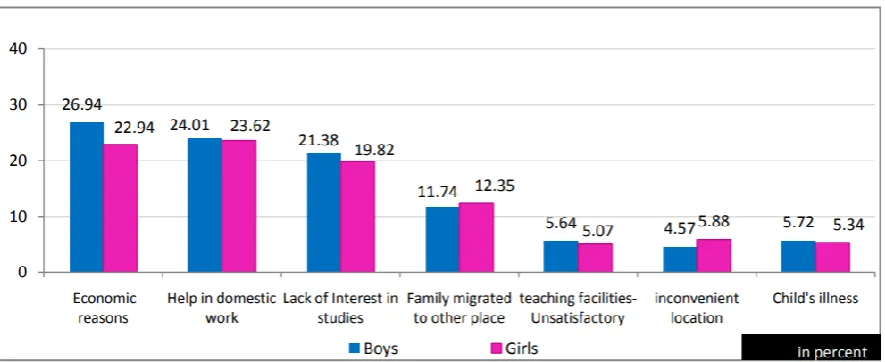
Figure 1. Reasons for dropping out at primary stage in 2009-10
Figure 1 shows the reasons for dropping out at primary stage. According to the survey the topmost reasons for dropping out of the school are economic reasons, domestic help and lack of interest in studies followed by other reasons. The above figure illustrates reasons for dropout by sex of the children for primary education. Economic reasons are one of the main reasons for boys to dropout whereas, help in domestic work accounted as the main reason for girls to dropout. Inconvenient locations was the reason for least dropouts for boys, on the other hand unsatisfactory teaching facilities was the reason for least dropout for girls.
Figure 2. Reasons for dropping out at upper primary stage in 2009-10
A continuum of the survey extended to upper primary stage in figure 2, reports that irrespective of the gender high dropout rates were detected due to children’s involvement in domestic work. Economic reasons and lack of interest in studies stand next in line. A noteworthy detail is that high percentage of students dropped out at primary stage in comparison to upper primary stage due to the children’s illness.
means that sensitivity is grave or more serious in afore mentioned states. This also demands for more attention in these states. This in no way means that the school dropout rate in other states does not need attention.
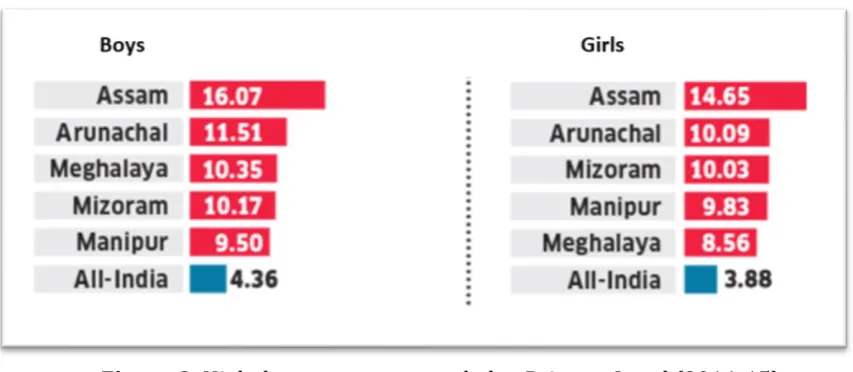
Figure 3. High dropout rates recorded at Primary Level (2014-15)
Figure 3 reports that at Primary level school dropout rate in Assam was the highest for both boys and girls. For boys it was 16.07 while for girls its 14.65. There is a difference of 1.42 in the comparison of boys and girls which denotes large school dropouts for boys. The next state on the list is Arunachal Pradesh showing 11.51 for boys and 10.04 for girls. Meghalaya is the third highest state for school dropouts in boys while Mizoram is the third highest for girls 10.03. The tapering down of values still continue further and the fourth place is occupied by Mizoram for boys at 10.17 and Manipur for girls at 9.83. The fifth place is occupied by Manipur for boys and Meghalaya for girls at 9.50 and 8.56.
Figure 4. High dropout rates recorded at Secondary level (2014-2015)
place Gujarat had the most dropouts for boys and Bihar had the highest dropout for girls at 26.29 and 26.62. From the table it is prominent that girls dropping out in all states was almost similar except for Bihar.
From all the above figures it is evident that boys dropout more in comparison to the girls. This is due to the factor that boys are considered to be the bread winners of the family. More and more number of boys are prone to dropout from schools in order to support their families. Poverty plays a vicious role eventually forcing boys to leave school and look for jobs. Lack of interest in studies is another cause for this. As poverty can be described as an external force, lack of interest in studies is internally generated force causing boys to dropout in large number.
RECOMMENDATIONS
The research study aims at primarily spreading awareness to eliminate school dropouts and if not eliminate totally, at least minimize it. The following recommendations might serve as guidelines for society to ponder over.
1. Government should devise ways and means to control population and educate people about the consequences of population explosion. It cannot be denied that the government is already doing this in India however, the fact remains that much needs to be accomplished. Once population is controlled quality education can be imparted. An African proverb “Each One Teach One” comes handy in this regard. On similar lines Indians should take responsibility of observing young children who are not going to school and try to speak to their parents to convince them to send the children back to school.
2. The problem of physical contribution of children in their household tasks is a grave problem. Children work as laborers for their own parents and they are never paid for it. The exploitation of children is silently carried out by their own families. It is recommended that government conducts awareness camps in cities, towns and villages to expose the hazards of such situations to the parents. Alternatively the government should provide free machines, tools and other equipment to parents so that they free their children and allow them to attend schools.
3. Indian Anganwadi concept started by the Indian government in 1975 is a highly appreciable step in this direction just as the government is providing free education, clothes, food and nutritional supplements, they should launch more similar programs like this.
4. Stabilizing of health standards in India is the need of the hour. There is no doubt about the fact that India has acute shortage of doctors and health care centers. Children in India mostly tend to fall sick due to poor sanitation in and around their surroundings. A strong mind cannot survive in a weak body. The government should consolidate its efforts to improve the overall health of children so that they complete their school education effortlessly.
5. Families living in remote places do not prefer sending their children to schools due to safety reasons and long distance. Hence schools should provide safe transportation as well as establish more schools within the community to motivate the parents to send their children to schools.
CONCLUSION
This paper is an effort to paint a picture of a helpless school going children who suffer from a fatal disease called “DROPOUTISM”. The study illustrates reasons for school dropouts and capsules recommendations to fight this social challenge. The responsibility is uniformly distributed on all the people living in this country. Government, parents, social citizens all should contribute their miniscule share and slowly this tiny share would combine and become a huge mountain. Once the awareness to send students regularly to the school continues, slowly a subtle change will be seen and felt by all of us. The words of T.S Eliot ring in my ears to translate this farfetched dream for eliminating school dropouts from India to reality. “Only those who risk going too far can possibly find out how far one can go.”
REFERENCES
Belfield, C., & Levin, H. M. (2007). The price we pay: Economic and social consequences of inadequate eduction. Washington, D.C.: Brookings Institution Press.
Examrace. (2016, june 3). Journey of National Policy of Education 1968, 1986 and 1992
(Implemented in 2005). Retrieved may 19, 2019, from Examrace:
https://www.examrace.com/Current-Affairs/NEWS-Journey-of-National-Policy-of-Education-1968-1986-and-1992-Implemented-in-2005.htm
Ians. (2016, August 17). UNESCO: 47 million youth in India drop out of school by 10th
standard. Retrieved may 19, 2019, from firstpost:
https://www.firstpost.com/india/unesco-47-million-youth-in-india-drop-out-of-school-by-10th-standard-2961334.html
Jingrong, L. (2004). High Dropout Rates in Rural School.
Latif, A., Choudhary, A., & Hammayun, A. (2015). Economic Effects of Student Dropouts: A Comparative Study. Journal of Global Economics, 1.
Olweus, D. (1994). Bullying at school: Basic facts and effects of a school based intervention program. Journal of Child Psychology and Psychiatry.
Rao, M. M. (2000). Migration of Labour and School Dropouts. Social welfare, 47(6), 26-31. Rumberger, R. W. (2011). Why students dropout of high school and what can be done it.
Cambridge, mass.: Harvard University Press.
Sateesh, G., & Sekher, T. (2014). Factors Leading to School Droupts in India: An Analysis of National Family Health Survey-3 Data. International Journal of Research &
Method in Education.
The Every Student Succeeds Act (ESSA). (2015, December 10). Retrieved may 19, 2019,