PROCESS INTENSIFICATION OF LEMON GRASS OIL
IN A PILOT PLANT
K. Mu’azu
1,*A. Ganiyu
2, A. S. Alkali
3, B. Inuwa
4, A. U. Ahmed
5, S. M. Jibia
6,
M. Shehu
7and I. U. Adamu
81,2, 3, 5, 7, 8,
D
EPARTMENT OFP
ILOTP
LANTS ANDF
ABRICATION,
N
ATIONALR
ESEARCHI
NSTITUTE FORC
HEMICALT
ECHNOLOGY,
K
M4
O
LDK
ANOR
OAD,
B
ASAWAR
OAD,
Z
ARIA,
K
ADUNAS
TATE.
NIGERIA
4,6,
D
EPARTMENT OFI
NDUSTRIAL ANDE
NVIRONMENTALP
OLLUTION,
N
ATIONALR
ESEARCHI
NSTITUTE FORC
HEMICALT
ECHNOLOGY,
K
M4
O
LDK
ANOR
OAD,
B
ASAWAR
OAD,
Z
ARIA,
K
ADUNAS
TATE.
NIGERIA
E-mail addresses:
1[email protected]
,
2[email protected]
,
3[email protected]
,
4[email protected]
,
5[email protected]
,
6[email protected],
7
[email protected],
8[email protected]
ABSTRACT
The extraction of essential oil from lemon-grass was carried out using steam distillation in a locally designed and fabricated pilot plant of 100 kg/day capacity. The extraction pattern and economic analysis of the oil extracted were monitored over time. The extraction revealed that 0.414 litres of oil was produced in a day of five batches with a total production cycle per batch of 1.61 hours. The study further revealed that 94.3% of the oil was extracted in 60 minutes.The GCMS result shows the major components in the extracted Lemon grass oil were Oleic acid, Neral and Citral with percentage composition of 25.69%, 19.32% and 15.38% respectively.These percent compositions compare favourably with literature values. The properties of the Lemon grass oil were found to be: specific gravity, 0.8952; iodine value, 120.7g/g; saponification value, 201.3 mgKOH/g and cetane number, 43.7. The economic analysis on a monthly basis revealed a production cost (direct and indirect) of N160,050.00K and the expected net profit of N378,150.00K.
Keywords: Essential Oil, Lemon Grass, Extraction, Pilot Plant and Process Intensification
1. INTRODUCTION
A new trend in our modern society is “green consumerism”, which de-emphasizes overdependence on synthetic ingredients in food, flavour, and perfume. Plant-derived chemicals are “generally recognized as safe” (GRAS), and hence, they are widely being used in cosmeceuticals, food, flavor, and fragrance [1, 2, 3]. There is also increased application of phyto-chemicals in the field of medicine due to the broad spectrum of structural diversity, efficacy as phytomedicines, and utilization as intermediate compounds in drugs production [4, 5]. Essential oil which is one of the important phyto-chemicals is a mixture of various bioactive compounds [6]. Essential
oil can be referred to as any concentrated, hydrophobic and lipophilic liquid of plants having high volatile aroma compounds carrying a distinctive scent, flavor, or essence of the plant [7].
This class of oils may also be called volatile oils or ethereal oils. Essential oils are found in diverse parts of plant including leaves, seeds, flowers, roots and barks. For the plant, essential oils are thought to be vital for the life of the plant, containing compounds that help to fight parasites and infections. For people, essential oils are used in perfumes, cosmetics, and bath products, for flavoring food and drink, for scenting incense and household cleaning products, and for medicinal purposes. Essential oils are specially
Vol. 38, No. 2, April 2019, pp.
379 – 386
Copyright© Faculty of Engineering, University of Nigeria, Nsukka,Print ISSN: 0331-8443, Electronic ISSN: 2467-8821
www.nijotech.com
applied in aromatherapy, which is a branch of alternative medicine where specific aromas carried by essential oils have curative effects.
Lemon-grass (Cymbopogon Citratus) is a rich source of lemon-scented essential oil. It is a perennial plant with long, thin leaves, and is one of the largely cultivated medicinal plants in parts of Asia, Africa and America [8]. Essential oil, extracted from the leaves of lemon-grass, possesses a wide range of biological activities like anticancer, antimicrobial, antifungal, and antioxidant properties [9-12]. The presence of these properties has made Lemon-grass oil applicable as herbicides and food preservative [13, 14]. It is also applied in the treatment of orthopedics, muscular and skin problems [10]. An important compound present in lemon-grass oil which is responsible for its bioactivities is citral. The quality of the oil is judged by the amount of citral present in the oil [15, 16]. Extraction of essential oil is conventionally carried out using solvent extraction, steam distillation, mechanical expression and hydro-distillation [17-20, 21].Among these methods, steam distillation has been the most common approach to extract the essential oils from aromatic plants in comparison to other methods such as supercritical fluid, solvent extraction, mechanical expression etc. The steam extraction method requires moderate temperature and pressure in comparison to supercritical fluid technique. In addition, the cost of solvent (water) used in steam extraction method is relatively cheaper in comparison to other solvents (hexane, methanol etc) which are commonly used in solvent extraction. The other advantage of using steam distillation is that the separation of oil from water is by gravity unlike solvent extraction where
heat is needed. Extensive research work has been carried out on extraction of lemon-grass at laboratory scale using steam distillation [7, 8]. However, not much work has been done on its extraction at pilot scale. Furthermore, economics for production of lemon-grass oil at pilot plant stage is scarce in the literature. Therefore, this work aims at extraction of lemon-grass oil using steam distillation technique at pilot scale and economics of the production using liquefied petroleum gas (LPG) as energy source. This information can serve as an important resource in attracting investors to the essential oil industry and exploring its commercial utilization.
2. MATERIALS AND METHODOLOGY
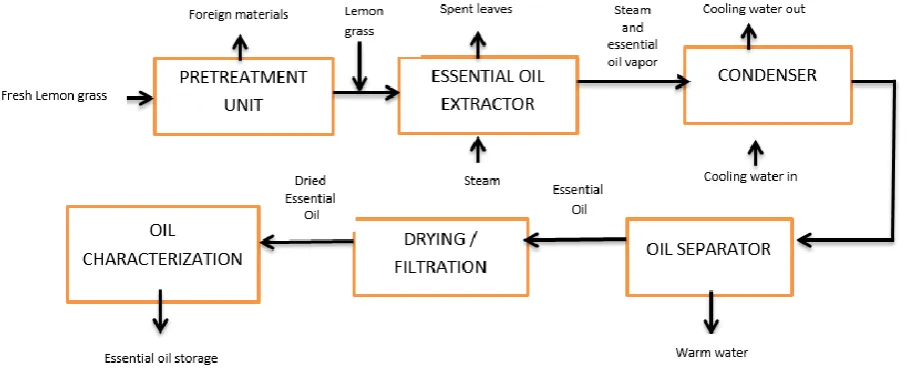
The block diagram for the extraction process of essential oil from Lemon grass using steam distillation method is shown in Figure 1.
2.1 Material Sourcing and Preparation
Fresh Lemon-grass was obtained from the Division of Agricultural Colleges’ plantation, Ahmadu Bello University, Zaria, Nigeria. Prior to commencing the extraction process the unwanted materials found in the Lemon grass were removed and 20kg of the Lemon-grass was weighed for a batch operation.
2.2 Extraction of Essential Oil
The extraction of essential oil was done using water as solvent in the form of steam in a steam distillation pilot plant. The pilot plant is mainly made up of oil extractor, steam boiler, condenser, gas-fired burner and oil separator as shown in Plate 1.
Plate 1: Steam Distillation Pilot Plant for Extracting Essential Oil from Lemon Grass
The oil extractor and condenser were fabricated using grade 304 stainless steel while the oil separator was transparent glass. The boiler section is located at the bottom of the oil extraction chamber and separated by a stainless steel weir mesh. A detail of these equipment specifications is shown in Table 1.
Every component of the steam distillation pilot plant was coupled together as shown in Plate 1 for the extraction of essential oil from lemon grass [22]. The gas-fired burner is connected to a 12.5 kg gas cylinder with a rubber hose and placed directly under the oil extractor. The connections were adequately checked to avoid gas leakages. The cooling water from the overhead tank was allowed to run into the condenser at the rate of 1.67x10⁻³m3/min. This was
done to aid easy condensation of the steam and oil mixture vapour to liquid.
25 litres of water and 20kg (W1) of fresh lemon grass
were charged into the oil extractor. The gas line was opened and the burner was ignited and recorded the time of ignition. The burner fuel- to- air ratio was adjusted until blue flame was obtained implying steady energy supply [23]. After about 24 minutes of igniting the burner (Induction period), steam and oil mixture began to drop in the oil separator as condensate. The oil was then separated from the warm water and measured using measuring cylinder after every 10minutes for a period of 80 minutes. The oil was dried using anhydrous Sodium Sulphate (Na2SO4) and
allowed to stand overnight followed by filtration to remove moisture and suspended impurities.
Table 1: Summary of process unit specifications
Process unit Specification
A. EXTRACTOR
Material of construction Stainless steel
Height 1.65m
Diameter 0.45m
Thickness 0.003m
B. BOILER
Capacity 0.0075m3/hour
C. CONDENSER
Type of condenser shell and tube Material of construction of shell mild steel Material of construction of tube stainless steel Number of passes in the tube 2
Number of pass in the shell 1
Tube length 1.2m
Tube outside diameter 0.02m Tube inside diameter 0.016m
Number of tubes 16
Number of tubes per pass 8 Shell internal diameter 0.385m
Number of baffles 3
Baffles spacing 0.3m
Baffles cut 15%
Baffle pitch Square
Tube side fluid Steam and oil
Shell side fluid Cooling water D. OIL SEPARATOR
Capacity 0.0005 m3
Shape Conical
Flow rate 0.00025m3/min
C
A
B
D
E
F
G
KEY
A=Oil Extractor
B=Boiler
C=Condenser
D=Cooling Water Tank
E=Oil Collector
F=Steam and Oil Line
The same procedures were repeated for subsequent batches with addition of 10 litres of the warm water collected into the boiler as make-up water to maintain minimum of 20 litres at any time. In each case the weight of the dried oil was recorded (W2) and oil yield
was calculated using equation (1).
𝑂𝑖𝑙 𝑌𝑖𝑒𝑙𝑑 = 𝑊2 𝑊1
× 100 (1)
2.3 Energy Utilization
The quantity of gas (G) utilized in kg for every batch operation was calculated by taking the respective difference between the initial weight of gas cylinder (W3) and its final weight (W4) after the production
cycle as presented in equation (2).
𝐺 = 𝑊3− 𝑊4 (2)
The energy utilization, U (in MJ) per batch was thereafter obtained from equation (3).
𝑈 = 𝑄 × 𝐶𝑉 (3)
where Q is the quantity of gas consumed (kg) and CV is the calorific value of gas in MJ/kg and has the value of 46.1MJ/kg for LPG.
2.4. GC-MS Conditions
Composition of the extracted essential oil from lemongrass was analyzed by Gas Chromatography– Mass Spectrometry (GC-MS). The analysis of the essential oil was performed in the capillary column (30 m, 0.32 mm i.d., 0.25 film thickness). Column temperature was initially 40 oC for 2 minutes, and then
gradually increased to 225 oC at the rate of 4 oC/ min.
The extracts were diluted 3:100 (v/v) with acetone 99.99 %. Temperature of the injector and detector were set at 290 oC and 175 oC, respectively. Split ratio
was set at 1:100 and the carrier gas was helium operated at a flow rate of 2.2 ml/min.
2.5. Physical and Chemical Properties of Lemon Grass Oil
The lemon grass oil was analyzed for physical and chemical properties as shown in Table 2 using standard procedures [24].
3. RESULTS AND DISCUSSION 3.1 Extraction Time
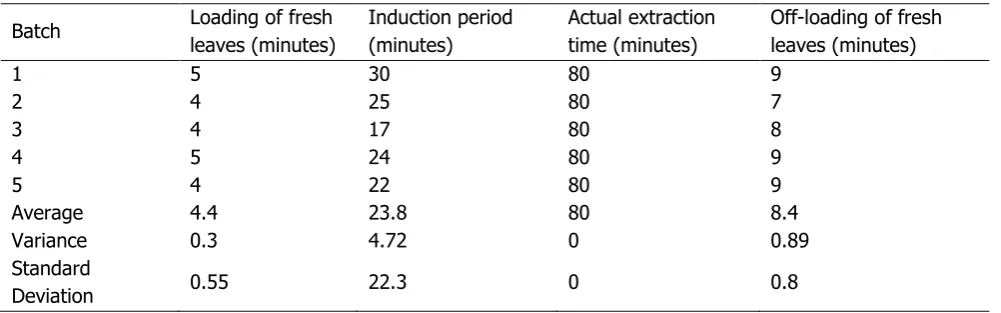
The total extraction time per batch consists of time for loading of lemon grass into the oil extractor, induction time, actual extraction time and time for off-loading the spent lemon grass as shown in Table 3.
It can be seen from Table 3 that the average time required for a batch production was 1 hour 56 minutes which comprised of actual extraction time of the oil of 80 minutes and lag period of 36 minutes. It was also observed that the average time to collect the first drop of the condensate mixture was 24 minutes (Induction period) having standard deviation of 22.3 minutes. The induction time obtained in this study was slightly higher than the value obtained in the laboratory (20 minutes) as reported in other studies [22, 25].
Table 2: Determination of physical and chemical properties using standard methods
Physical and chemical properties Standard method Unit
Specific gravity ASTM D4052-91 (1995c) -
Iodine value AOAC CD1-25 (1993) Centigrams l/g oil
Saponification value AOAC CD3-25 (1997) Mg KOH/g oil
Cetane number ASTM D613 (1979) -
Table 3: Total extraction time in a production cycle
Batch Loading of fresh leaves (minutes)
Induction period (minutes)
Actual extraction time (minutes)
Off-loading of fresh leaves (minutes)
1 5 30 80 9
2 4 25 80 7
3 4 17 80 8
4 5 24 80 9
5 4 22 80 9
Average 4.4 23.8 80 8.4
Variance 0.3 4.72 0 0.89
Standard
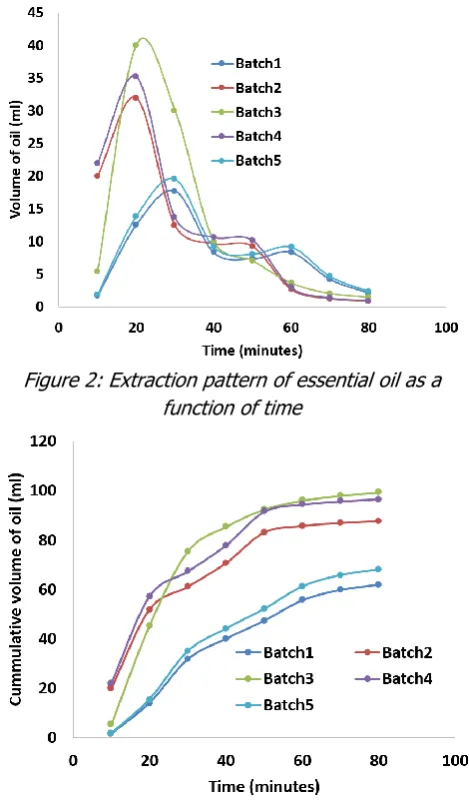
Figure 2: Extraction pattern of essential oil as a function of time
Figure 3: Cumulative volume of essential oil as a function of time
Table 4: Cumulative condensate collected in each batch
Time (minute
s)
Batch 1 (ml)
Batch 2 (ml)
Batch 3 (ml)
Batch 4 (ml)
Batch 5 (ml) 10 1580 1400 1000 1100 1730 20 3260 3020 2400 2640 3580 30 5140 4660 3900 4290 5650 40 6790 6360 5200 5720 7460 50 8410 8020 6420 7060 9250 60 10130 9660 7520 8270 11140 70 12050 11260 8460 9300 13250 80 13810 12900 9380 10310 15190
However, in a separate study, the reported total extraction time of lemon grass oil in a pilot plant using steam distillation method and LPG as source of energy
was 3.37 hours to obtain 87ml of oil using 22 kg of lemon grass [26]. The maximum extraction time from this pilot plant was 1 hour 56 minutes to extract 99.4ml of the oil. Based on this, the extraction time of lemon grass oil using this plant had reduced by 1.7 times (1.93: 3.37) per batch when compared to the earlier reported work [26].
3.2 Effect of Extraction Time on Oil Yield
The effect of extraction time on yield of the essential oil extracted is presented in Figure 2. It can be seen that the yield of the oil increases with increase in extraction time for all the batches until it reached 20 minutes for the 2nd, 3rd and 4th batches and 30 minutes
for the 1st and 5th batches before declining. The
difference in the extraction pattern between these batches could be due to loading pattern of the lemon grass. In a loosely packed lemon grass, the rate of oil extraction is faster when compared with densely packed lemon grass due to effect of pressure drop [27].
The cumulative oil extracted from the five batches is depicted in Figure 3. It can be seen that the oil extracted increases with increase in extraction time with an average cumulative volume of 82.8 ml/20kg (4.14ml/kg) per batch. This oil yield is more than 1.68 ml/kg obtained by other researchers [28].
3.3 Steam Requirement for Extraction
As seen in Table 4 the steam requirement increases with increase in the extraction time for all the five batches. However, the average steam requirement per batch was 12318 ml (12.318 litres). This implies that the steam to oil ratio was 149:1 (12318.0ml/82.8ml).
3.4 Oil Characterization
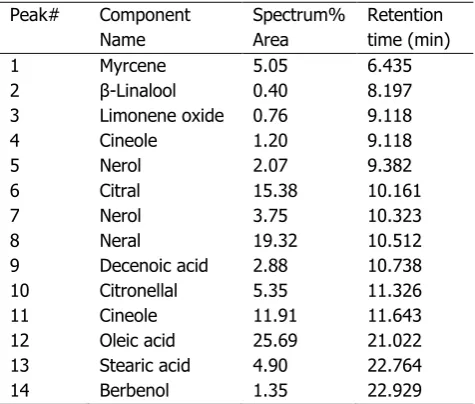
Figure 4 presents the GC-MS of the lemon grass oil extracted and detailed composition of the oil components is given in Table 5.
may be due to the differences in soil fertility and climate of the two regions [29].
The characterized properties of the extracted lemon grass oil as seen in Table 6 fall within the literature values indicating its suitability in both cosmetics and pharmaceutical industries.
Figure 4: GC-MS analysis of lemon grass essential oil
3.5 Energy Requirement
Energy consumption plays a significant role in the extraction of essential oil from aromatic plant using steam distillation method. As seen in Table 7 the first batch consumed more energy as a result of addition of both sensible and latent heats when compared with the other batches where only latent heat was applied. It was observed that the average gas utilization per batch was 1.8 kg with corresponding energy input of 82.98MJ/kg.
3.6 Economic Analysis
Table 8 presents economics for the production of lemon grass essential oil using this pilot plant and LPG as fuel. The analysis was carried out based on the daily throughput of 0.414 litres of the essential oil and 20 working days in a month.
As seen in Table 8, the expected net profit on monthly basis based on the throughput of the pilot plant is N378,150.00. This implies that the production of lemon grass oil using this pilot plant is highly profitable and should be attractive to any potential investors. The net profit obtained in this study was higher than
the net profit obtained in other study using kerosene as source of energy [29].
4. CONCLUSION AND RECOMMENDATIONS 4.1 Conclusion
The yield of lemon grass oil increases with increase in extraction time until it reached about 30 minutes before declining. Maximum yield of 99.4ml was obtained when the pilot plant was operated for 1 hour 56 minutes. The extraction time of lemon grass using this pilot plant had reduced by 1.7 times (1.93: 3.37) per batch in comparison with other plant. The physical and chemical properties of the extracted lemon grass oil were: specific gravity, 0.8952; iodine value, 120.7 cg l/g; cetane number, 43.7 and saponification value, 201.3mgKOH/g. The lemon grass oil can be used in soap, cosmetic and pharmaceutical industries.
Table 5: GC-MS results showing the components present in the oil
Peak# Component
Name
Spectrum% Area
Retention time (min)
1 Myrcene 5.05 6.435
2 β-Linalool 0.40 8.197
3 Limonene oxide 0.76 9.118
4 Cineole 1.20 9.118
5 Nerol 2.07 9.382
6 Citral 15.38 10.161
7 Nerol 3.75 10.323
8 Neral 19.32 10.512
9 Decenoic acid 2.88 10.738
10 Citronellal 5.35 11.326
11 Cineole 11.91 11.643
12 Oleic acid 25.69 21.022
13 Stearic acid 4.90 22.764
14 Berbenol 1.35 22.929
Table 7: Energy utilization for each batch operation
Batch Quantity of gas (kg) Energy utilized (MJ)
1 2.2 101.42
2 1.8 82.98
3 1.6 73.76
4 1.8 82.98
5 1.6 73.76
Table 6: Characterized Properties of the Extracted Lemon grass Oil
Parameter Unit Properties of Extracted Lemon grass Oil Literature Values
Specific gravity - 0.8952 0.8725-0.8965[24]
Iodine value Centigrams l/g oil 120.7 10-185[30]
Saponification value Mg KOH/ g oil 201.3 170-350[30]
Table 8: Monthly economics for lemon grass oil production
4.2 Recommendations
(a) The effect of storage of lemon grass under sun and shade on the oil yield should be investigated using the same pilot extraction plant.
(b) The effect of parking density of lemon grass on the oil yield should be studied using the same pilot extraction plant.
5. ACKNOWLEDGEMENTS
The authors express their sincere appreciation to the Director-General/CEO of National Research Institute for Chemical Technology (NARICT), Zaria for his moral and financial supports towards this project. The friendly cooperation and support by members of staff of Pilot Plants & Fabrication Technology Department, NARICT, Zaria is also highly appreciated.
6. REFERENCES
[1] Burt, S. Essential oils: Their antibacterial properties and potential applications in foods − A review.
International Journal of Food Microbiology, 94(3), 2004, 223−253.
[2] Sacchetti, G., Maietti, S., Muzzoli, M., Scaglianti, M., Manfredini, S., Radice, M., & Bruni, R. Comparative evaluation of 11 essential oils of different origin as functional antioxidants, antiradicals and antimicrobials in foods. Food Chem., 91(4), 2005, 621−632.
[3] Kumar, A., Shukla, R., Singh, P. and Dubey, N. K. Biodeterioration of some herbal raw materials by storage fungi and aflatoxin and assessment of Cymbopogon flexuosus essential oil and its components as antifungal. International Biodeterioration Biodegradable, 63(6), 2009, 712−716.
[4] Raman, G. and Gaikar, V. G. Extraction of piperine from Piper nigrum (black pepper) by hydrotropic
solubilization. Ind. Eng. Chem. Res., 41(12), 2002, 2966−2976.
[5] Sticher, O. Natural product isolation. Nat. Prod. Rep., 25(3), 2008, 517−554.
[6] Hossain, M. A., Shah, M. D., Sang, S. V. and Sakari, M. Chemical composition and antibacterial properties of the essential oils and crude extracts of Merremia borneensis. Journal of. King Saud University of Science, 24(3), 2012, 243−249. [7] Abdurahman, H.N., Ranitha, M. and Azhari. H.N..
Extraction and Characterization of Essential Oil from from Ginger (Zingiber Officinale Roscoe) and Lemongrass (Cymbopogon citratus) by MicrowaveAssisted Hydrodistillation. Research gate conference, 2013
[8] Suryawanshi1, M.A., Mane, V.B. and Kumbhar, G.B. Methodology to Extract Essential Oils From Lemongrass Leaves: Solvent Extraction Approach. International Research Journal of Engineering and Technology (IRJET), 3(8), 2016, 2395-0056.
[9] Sharma, P. R., Mondhe, D. M., Muthiah, S., Pal, H. C., Shahi, A. K., Saxena, A. K. and Qazi, G. N. “Anticancer activity of an essential oil from Cymbopogon flexuosus”. Chem. Biol. Interact., Vol. 179, Number 2-3, 2009, pp 160-168. [10] Schaneberg, B. T. and Khan, I. A. Comparison of
extraction methods for marker compounds in the essential oil of lemongrass by GC. Journal of Agriculture and Food Chem., 50(6), 2002, 1345-1349.
[11] Naik, M. I., Fomda, B. A., Jaykumar, E. and Bhat, J. A. Antibacterial activity of lemongrass (Cymbopogon citratus) oil against some selected pathogenic bacterias. Asian Pac. Journal of Tropical Medicine, 3(7), 2009, 535-538.
[12] Tzortzakis, N. G. and Economakis, C. D. Antifungal activity of lemongrass (Cymbopogon citratus L.) essential oil against key postharvest
S/N Item Unit Quantity Unit cost (N) Cost (N)
A Production costs
1 Lemon grass kg 2,000 20 40,000
2 Liquefied Petroleum Gas (LPG) kg 180 320 57,600
Water Litre 2,000 0.5 1,000
4 Premium Motor Spirit (PMS) Litre 10 145 1,450
5 Manpower - 3 20,000 60,000
Sub-total 160,050
B Selling price
1 Lemon grass oil Litre 8.28 65,000 538,200
pathogens. Innovative Food Science Emerging Technology, 8(2), 2007, 253-258.
[13] Kotzekidou, P., Giannakidis, P. and Boulamatsis, A. Antimicrobial activity of some plant extracts and essential oils against foodborne pathogens in vitro and on the fate of inoculated pathogens in chocolate. LWT Food Science Technology, 41(1), 2008, 119-127.
[14] Dayan, F. E., Cantrell, C. L. and Duke, S. O. Natural products in crop protection. Bioorg. Med. Chem., 17(12), 2009, 4022-4034.
[15] Rauber, C. S., Guterres, S. S. and Schapoval, E. E. S. LC determination of citral in Cymbopogon citratus volatile oil. Journal of Pharmacy Biomedicine Analysis, 37(3), 2005, 597-601. [16] Onawunmi, G. O., Yisak, W. and Ogunlana, E. O.
Antibacterial constituents in the essential oil of Cymbopogon citratus (DC.) Stapf. Journal of Ethnapharmacology, 12(3), 1984, 279-286. [17] Sargenti, S. R. and Lancas, F. M. Supercritical
fluid extraction of Cymbopogon citratus (DC.) Stapf”. Chromatographia, 46(5-6), 1997, 285-290.
[18] Marongiu, B., Piras, A., Porcedda, S. and Tuveri, E. Comparative analysis of the oil and supercritical CO2 extract of Cymbopogon citratus
Stapf. Nat. Prod. Res., 20(5), 2006, 455-459. [19] Silou, T., Malanda, M. and Loubaki, L.
Optimisation de l’extraction de l’huile essentielle de Cymbopogon citratus grâce àun plan factoriel complet 23. J. Food Eng., 65(2), 2004, 219-223. [20] Parikh, J. K. and Desai, M. A. Hydrodistillation of essential oil from Cymbopogon flexuosus. Int. J. Food Eng., 7(1), 2011, 1556-3758.
[21] Usman, J. G., Okonkwo, P. C., and Mukhtar, B. Design and construction of pilot scale process solvent extraction plant for neem seed oil.
Nigerian Journal of Technology, 32(3) 2013, 528-537.
[22] Okonkwo, E. M., Mu’azu, K., Odigure, J. O., Ugwu, J. O., Williams, I. S. and Mohammed, I.
A., Optimisation of process conditions for extraction of essential oil from eucalyptus citriodora leave. International Journal of Physical Science, 2(1), 2010, 88-96.
[23] Okonkwo, E. M., Odigure, J. O., Ugwu, J. O., Mu’azu, K., Williams, I. S., Nwobi, B.E., Okorie, F.K., and Oriah,V.N., Design of pilot plant for the production of essential oil from Eucalyptus leaves
Journal of Scientific and Industrial Research, 65, 2006, 912-915.
[24] Giannelos, P.N., Zannikos, F., Stournas, S., Lois, E. and Anastopoulos, G., Tobacco seed oil as an alternative diesel fuel: physical and chemical properties. Industrial Crops and Products 16, 2002, 1-9
[25] Mu’azu, K., Mohammed-Dabo, I. A. and Waziri, S. M. Development of mathematical model for the prediction of essential oil extraction from Eucalyptus Citriodora leave. Journal of Basic and Applied Scientific Research, 2(3), 2012, 2298-2306.
[26] Braimah, S. R.“Design and optimization of lemon grass oil extraction”. Unpublished M.Sc. thesis, Department of Mechanical Engineering, Kwame Nkrumah University of Science & Technology, Ghana 2016, pp. 4-6.
[27] Okonkwo, E. M., Odigure, J. O., Ugwu, J. O., Mu’azu, K., Williams, I. S., Nwobi, B.E. and Oriah, V.N. “Design of pilot plant for the production of essential oil from Eucalyptus leaves”. Journal of Scientific and Industrial Research, Vol. 65, 2006, pp 912-915.
[28] Nguyen Dang Binh Thanh, Ta Hong Duc, Nguyen Trung Dung. Kinetics and Modeling of oil extraction from vietnam lemongrass by steam distillation, Vietnam Journal of Science and Technology, 55 (5A), 2017, 58-65