1
Red Cabbage Washing with Acidic Electrolyzed Water: Effects on
1
Microbiological and Physicochemical Properties
23
Xia Chen1,2, Sophia Jun Xue1, John Shi 1*, Magdalena Kostrzynska1, Joshua Tang1, Evelyne
4
Guévremont3, Sébastien Villeneuve3, Martin Mondor3
5
6
1 Guelph Research and Development Center, Agriculture and Agri-Food Canada, 93 Stone Road
7
West, Guelph, Ontario N1G 5C9, Canada 8
2 College of Food Science and Engineering, Yangzhou University, Yangzhou, Jiangsu 225127,
9
China 10
3 Hyacinthe Research and Development Centre, 3600 boul. Casavant Ouest,
Saint-11
Hyacinthe, Québec J2S 8E3 Canada 12
* Correspondence authors: Dr John Shi <[email protected]> 13
E-mail:
14
Xia Chen< [email protected]>, <[email protected]> 15
Sophia Jun Xue < [email protected]> 16
John Shi <[email protected] > 17
Magda Kostrzynska < [email protected] > 18
Joshua Tang < [email protected] > 19
Evelyne Guévremont <[email protected] > 20
Sébastien Villeneuve <[email protected] > 21
Martin Mondor <[email protected] > 22
2
Abstract: The effects of acidic electrolyzed water (AEW) on the microbiological and 23
physicochemical properties of fresh-cut red cabbages were studied. The fresh-cut red cabbages 24
and artificially inoculated red cabbages with Salmonella Typhimurium DT104 were washed with 25
distilled water (DW) and different available chlorine concentration (ACC) of AEW for different 26
times. AEW treatments significantly reduced the populations of native aerobic bacteria, molds 27
and yeasts, and artificially inoculated S. Typhimurium DT104 compared to the DW treated and 28
untreated red cabbage samples. The effectiveness of AEW treatments was greatly enhanced with 29
increasing ACC and treatment times. S. Typhimurium DT104 were not detected in the washing 30
water after the red cabbages treated by AEW. The surface color, pH, and total phenolic contents 31
were did not significantly change when the red cabbages were washed with DW and 100 ppm 32
AEW for 3 min. The anthocyanin contents and antioxidant activities of red cabbage were 33
significantly reduced by 18.5% for cyanidin, 22.1% for pelargonidin, and 11.2% for DPPH 34
radical scavenging activity, the impacts on the nutritional benefits of red cabbage were 35
considered as limited and acceptable. The optimal process condition of AEW for washing red 36
cabbage was 100 ppm for 3 min. In these conditions, most of the native microflora were 37
inactivated, and artificial inoculated S. Typhimurium DT104 on the red cabbage were reduced by 38
40.2% (3.67 log CFU/g) and with minimal losses of nutrients and antioxidant activity, as well as 39
no requirement of discontinuation treatment on the washing water. 40
Keywords: Red cabbage, acidic electrolyzed water, decontamination, S. Typhimurium DT104, 41
physicochemical characteristics, anthocyanins. 42
43
44
3
1. Introduction
46
47
Fresh-cut produce markets have increased steadily over the last twenty years worldwide, mainly 48
due to fresh-cut produces containing higher nutrients, greater taste, and easier to prepare [1, 2]. 49
Red cabbage is one of the world widely consumed fresh-cut vegetables with high nutritional values 50
relating to the antioxidants and anti-inflammatory activity of anthocyanins, vitamins, and minerals 51
[3, 4]. However, frequent incidence of food disease outbreaks associated with the consumption of 52
fresh-cut vegetables and fruits have also been a major concerns. Therefore, using effective 53
decontamination processes to remove bacterial contaminants in fresh-cut red cabbage is essential 54
to ensure its safe consumption. Moreover, it is well-known that anthocyanins are very unstable 55
and easily degrade since they are sensitive to factors like oxygen, temperature, pH, light, etc. [5-56
7]. Therefore, it is important to select proper treatment that in not only effective to inactivate 57
pathogenic bacteria but also minimize the loss of nutrients and antioxidant activity of red cabbage. 58
Electrolyzed water is a relatively novel disinfecting solution that has been shown to effectively 59
reduce pathogenic bacteria on fresh produces[8-11]. The acidic electrolyzed water (AEW) contains 60
hypochlorous acid, a weak acid. It has strong oxidation potential, and a shortage of electrons giving 61
it the ability to oxidize and destroy microbes as well as toxins. Therefore, AEW can be used as a 62
disinfectant and antimicrobial agent[9, 12, 13]. It is well known that the treatments with AEW 63
have many advantages in the decontaminations of vegetables and fruits including without impacts 64
on the tissue pH, surface color, general appearance, or customer acceptance, and no off-odor or 65
off-flavor production [14-17]. In recent years, the AEW has gained interest as a bactericidal used 66
against a variety of microorganisms, to remove pesticide residues, and reduce mycotoxins 67
4
Salmonella is the most frequently reported cause of foodborne illness and morbidity in humans. 69
Most developed countries have various surveillance and intervention systems aimed at controlling 70
the problem [20, 21]. It is one of serious pathogens that have been responsible for foods outbreaks 71
in meats, ready-to-eat products, minimally processed foods, fresh produces, and fresh cut products 72
[22, 23]. The fresh produces (vegetables and fruits) can be contaminated with Salmonella pathogen 73
from environmental sources, distribution/storage, and food preparation handling process, thus the 74
Salmonella must be killed on food before consumption. The emerging non-thermal technologies 75
such as irradiation, ultraviolet light, and electrolyzed water treatments have been reported to 76
effectively inactivate salmonella on fresh produces, and in some case are already applied in food 77
industry[8, 23, 24]. Among those technologies, the AEW treatment has advantages associated with 78
low cost, ease of operation, and remove dirt and inactivate various microbial at the same time by 79
using AEW wash meats, vegetables, and fruits. However, the available chlorine concentration 80
(ACC) of AEW and treatment time may greatly influence its antimicrobial activity and bioactivity 81
of phenolic compounds present in the fresh-cut produces. 82
Several disinfection strategies have been studied to reduce or eliminate the microbial load of 83
red cabbages and to ensure microbial safety. To our knowledge, there are little studies on the 84
effects of treatment with AEW on the red cabbage. Therefore, the aim of present study was to 85
evaluate the effects of available chlorine concentration of AEW and treatment time on the 86
inactivation efficacy of native microflora and artificial inoculated S. Typhimurium DT104 on the 87
red cabbage. The possibility of cross-contamination of processing water has also been studied. In 88
addition, the influences of AEW on the physicochemical properties, the changes of color and pH, 89
the total phenolic contents, anthocyanins, and antioxidant were also investigated. 90
5
2. Results and discussion
92
93
2.1. Decontamination of aerobic bacteria and molds and yeasts on fresh-cut red cabbages
94
surface
95
The effects of different available chlorine concentrations of AEW and treatment times on the 96
efficiency of DW and AEW against aerobic bacteria, molds and yeasts on fresh-cut red cabbages 97
are shown in Figure 1. The mean initial population of aerobic bacteria and mold and yeasts on the 98
surface of red cabbage were 6.72±0.06 and 3.48±0.03 log CFU/g, respectively. All AEW (50, 100, 99
and 150 ppm) treatments significantly (p<0.5) reduced the populations of aerobic bacteria, molds 100
and yeasts to the range of 2.33-6.72 log CFU/g and 0.94-3.48 log CFU/g compared to the DW 101
treatment. As the available chlorine concentrations increased from 50 ppm to 150 ppm, the 102
reductions of aerobic bacteria and molds and yeasts were all increased. The aerobic bacteria 103
population reductions increased from 2.33-3.85 log CFU/g to 4.72- 6.72 log CFU/g, and the molds 104
and yeasts reductions increased from 0.94-1.98 log CFU/g to 3.48 log CFU/g. Similar results were 105
reported when neutral electrolyzed water (NEW) were used as sanitizer for disinfecting natural 106
flora on the shredded cabbage and carrot[25]. The disinfection efficacy of NEW was also increased 107
with an increase of the available chlorine concentration. 108
As shown in Figure 1., an increase in the treatment time from 1 min to 5 min, leaded to 109
significant reductions of the populations of aerobic bacteria, molds and yeasts for both DW and 110
AEW.. Moreover, the AEW treatments showed a more pronounced effects of bacterial reductions 111
compared to DW treatments. The aerobic bacteria, molds and yeasts of the red cabbages were 112
inactivated more quickly by 150 ppm AEW than 50 and 100 ppm AEWs. When 100 ppm and 150 113
6 the treated red cabbages. The molds and yeasts were also not detected on the red cabbages treated 115
with 150 ppm AEW for 1 min. 116
The experimental results showed that reductions of aerobic bacteria, molds and yeasts increased 117
with prolonging the AEW treatment times and increasing of ACC. It may be explained by the fact 118
that hypochlorous acid (HOCl) is present in high concentration in the AEW, and it has stronger 119
bactericidal activity [13, 26]. The germicidal action of HOCl was attributed to its penetration into 120
microbial cells across the cell walls and the plasma membrane, leading to the inactivation of 121
bacteria by damage to the membrane and DNA, and perhaps deterioration in membrane transport 122
capacity that is essential for microbial growth. Increasing treatment times and ACC of AEW could 123
provide sufficient exposure time for bacteria, molds, and yeast to react with HOCl leading to 124
enhanced bactericidal activity of AEW. The results agreed with most of the previously reports 125
regarding the use of AEW as disinfectant solutions for reducing the pathogen populations on the 126
surface of vegetables and fruits by 1 to 4 log units[26-29]. When low-concentration of electrolyzed 127
water(4 mg/L) was used to inactivate naturally occurring microflora on the organic broccoli [30], 128
no significant difference (P > 0.05) were observed between treatments with electrolyzed water for 129
5 min and 10 min, and the reductions of the aerobic bacteria, yeasts, and molds in both groups 130
were greater than those detected on dipping for 3 min (P < 0.05). Therefore, the results suggested 131
that the washing treatment with 100 ppm AAC of AEW for 3 min was considered suitable to 132
achieve the desired reduction in microbe numbers in red cabbages. Washing with DW alone cannot 133
7
2.2. Effects of AEW treatments with various conditions on S. Typhimurium DT104 artificially
135
inoculated on fresh-cut red cabbages
136
The effects of different available chlorine concentrations (50, 100, and 150 ppm) and 137
treatment times on the efficiency of AEW against S. Typhimurium DT104 artificially inoculated 138
on red cabbages are shown in Figure 2. The initial population of S. Typhimurium DT104 artificially 139
inoculated on the red cabbages was 9.10 ± 0.01 log CFU/g. The available chlorine concentrations 140
of the AEW significantly affected the inactivation of S. Typhimurium on the red cabbages. The 141
results showed that the disinfection efficiency of different available chlorine concentrations of 142
AEW were significantly greater (P < 0.05) than DW treatments. Washing the inoculated red 143
cabbages with DW reduced S. Typhimurium DT104 populations by 2.02-2.46 log CFU/g, and 144
reduced by 2.44-4.06 log CFU/g when treated with different available chlorine concentrations of 145
AEW. It can be attributed to hypochlorous acid that is present in AEW produced by electrolysis, 146
and to the fact that hypochlorous acid is a source of chlorine in the AEW. The hypochlorous acid 147
inactivates bacterial cells by oxidation of cell surface sulfhydryl compounds, inactivation of 148
enzymes, and inhibition of ATP generation, consequently causing cell death. The red cabbages 149
were immersed in AEW, and AEW contacted S. Typhimurium DT104 on the surface of red 150
cabbages lead to hypochlorous acids diffusion into cell and inactivation of the cells. In general, 151
the diffusivity of hypochlorous acids increased with increasing concentration, and thus enhancing 152
the efficacy of inactivation. Therefore, reductions of S. Typhimurium DT104 increased with 153
increasing available chlorine concentrations of AEW. Similar results were published when slightly 154
acidic electrolyzed water (SAEW) was used as disinfectant for reducing inoculated levels of S.
155
Typhimurium on the oyster mushroom [31]. The SAEW treatments reduced approximately 2.08 156
8 some studies that have reported that using AEW as disinfectant solutions reduced the S.
158
Typhimurium populations on the surface of vegetables and fruits by 2.08 to 5.00 log units [11, 31, 159
32]. As expected, the available chlorine concentrations increase from 50 ppm to 150 ppm led to 160
an increase in the S. Typhimurium DT104 reductions from 2.46-3.39 log CFU/g to 2.89- 3.71 log 161
CFU/g. 162
As shown in Figure 2., both AEW and DW treatments reduced the populations of S.
163
Typhimurium DT104 on the red cabbages with an increase of the treatment time from 1 min to 5 164
min. There was no statistical significant difference (p>0.05) between the washing in 100 ppm and 165
150 ppm AEW for 3 min and 5 min. However, the reductions in all groups were greater than those 166
detected on washing for 1 min. Along all treated red cabbages, the highest reductions of S.
167
Typhimurium DT104 were observed when the red cabbages were treated with 150 ppm AEW for 168
5 min. The exposure time plays a key role in reducing the microbial count in fresh vegetables. 169
However, increasing exposure time may cause dissociation of HOCl, and results in lower 170
antimicrobial activity of AEW. Abadias, Usall (14) reported that increasing the exposure time from 171
1 to 5 min for treatments with electrolyzed water or sodium hypochlorite did not significantly 172
affect the antimicrobial activity on different fresh-cut vegetables. The results suggested that the 173
activity of AEW was lost over a relatively short length of time. 174
175
2.3. Microbiological properties changes of process wash water after application
176
In fresh-cut vegetable processing industry, the maintenance of the processing wash water 177
quality is a major concern because it can be a potential source of microbial contaminations for 178
product if it had been contaminated [33, 34]. To evaluate the risk of potential cross-179
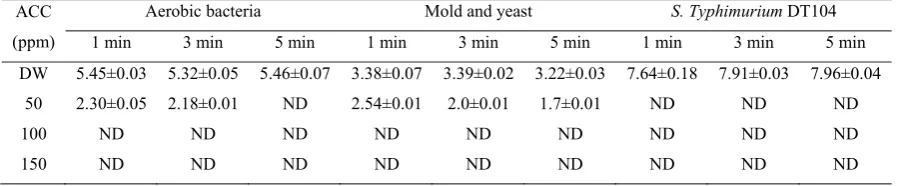
9 processing water after washing fresh-cut red cabbages are shown in Table 2. Aerobic bacteria, 181
molds, yeasts, and S. Typhimurium DT104 were all detected in DW after the treatments with 182
inoculated red cabbages. Aerobic bacteria, molds and yeasts were also found in 50 ppm AEW, 183
but not detected in 100 ppm and 150 ppm AEW. The AEW at 50, 100 and 150 ppm all reduced 184
S. Typhimurium DT104 population to undetectable levels. The results indicated that S.
185
Typhimurium DT104 were more sensitive to the AEW than aerobic bacteria, molds, and yeasts. 186
This might be due to the presence of some spores in aerobic bacteria, molds and yeast [35]. The 187
results were in agreement with the results of some studies [36, 37] that showed similar 188
effectiveness of chlorine against pathogen. The results suggested that only the ACC of AEW up 189
to 100 ppm, it can maintain the washing water not been cross contaminated, and may consider to 190
be recycle and would not apply impact on the environment after discharge from industry waste, 191
or may for further reuse. 192
193
2.4. Color changes in red cabbages after AEW treatment
194
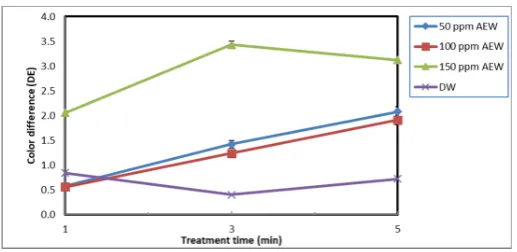
Figure 3. shows the color differences (DE) between the DW-treated and AEW-treated red 195
cabbages at different treatment times compared to the untreated control samples. The ranges of 196
color changes (DE) in the 150 ppm AEW treated red cabbage samples were from 2.06 to 3.43, 197
and the color changes were more noticeable than for other samples. It might due to anthocyanins 198
degradation [3, 38]. According to Obón et al., DE under 5.0 indicates changes in color 199
undetectable by human eye [39]. In this study, the results of all samples resulted in DE values 200
lower than 5.0. Thus the results indicated that those treatments have not significantly changed the 201
surface color of red cabbage. The color differences of the 50 and 100 ppm AEW treated red 202
10 1 min, and greater than DW treated samples for 3 to 5 min. There was no significant influence on 204
the surface color of red cabbage when the ACC of AEW was not greater than 150 ppm and the 205
treatment longer than 5 min. The results were in agreement with most of previous reports that the 206
treatments with AEW have no effects on the surface color, general appearance, or customer 207
acceptance of vegetable and fruits [14, 16]. In contrast, Lee et al. found that the colors of treated 208
cabbage changed noticeably after applying 100 ppm NEW for 30 min, and carrot for 20 min 209
[25]. They also found that the color change was noticeable in the cabbage and carrot after 210
applying 150 ppm NEW for 10 min. Therefore, the AAC and treatment time were all important 211
factors for non-sensorial changes of the vegetables. In the present study, the results suggested 212
that ACC was not in excess of 150 ppm in the AEW and the treatment times were not over 5 min 213
which enabled to maintain the sensorial quality of red cabbage. Therefore, this treatment 214
condition could be considered as appropriate for decontamination of fresh-cut red cabbage 215
216
2.5. pH changes in red cabbages after AEW treatment
217
The changes of pH values of the red cabbage treated with various available chlorine 218
concentrations of AEW and DW for different times are shown in Figure 4. The pH values were 219
ranging from 6.09 to 6.25. Compared to untreated red cabbage, no statistical significant (p > 0.05) 220
difference was observed in the pH level in DW-treated and AEW-treated(50-150 ppm) for 1-5 min. 221
Also no statistical significant difference was found in all treated samples including DW treated 222
and AEW treated (50-150 ppm) samples at different treatment times. These results are in 223
agreement with those of Eda et al. and Bessi et al.[40, 41], who reported that using EW did not 224
affect the pH of sweet cherry and dates. 225
11
2.6. Physicochemical properties changes in red cabbages after AEW treatment
227
Phenolic compounds are the major antioxidants in red cabbage, and they can neutralize active 228
oxygen species and quench free radicals. Anthocyanins are red, orange, blue or purple water 229
soluble pigments occurring in fruit and vegetables[42, 43]. The high content of anthocyanins 230
contribute to purple color of red cabbage. The total phenolic compounds and anthocyanins in red 231
cabbages before and after treatments were determined, as well as the antioxidant capacity was 232
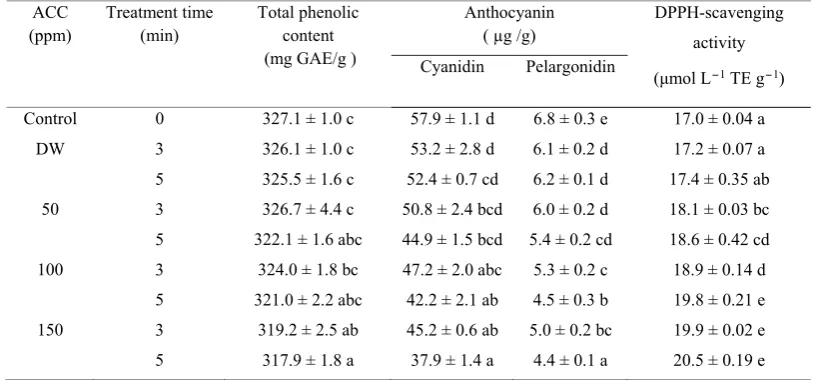
analyzed using DPPH radical scavenging activity method. The results are shown in Table 3. 233
Compared to untreated red cabbage, the treatments with high AAC (150 ppm AEW for 3 and 5 234
min) resulted in a significant decrease (p < 0.05) in total phenolic content. The other treatments 235
did not significantly alter (p > 0.05) the total phenolic content in the treated red cabbages. The 236
average total phenolic content ranged from 317.9 to 327.1 mg GAE/g. It might be attributed to the 237
oxidation property of acidic electrolyzed water, especially at high available chlorine concentration. 238
It would have caused polyphenols oxidation and degradation [44]. In contrast, Puligundla et al. 239
demonstrated that the total phenolic content of broccoli sprouts were not significantly (P > 0.05) 240
affected by washing with the 230 mg/ L AEW for 0-60 s compared to unwashed controls [45]. It 241
was probably due to the treatment time that was shorter than for the present study. These results 242
suggest that decontamination of fresh-cut red cabbage with 150 ppm AEW might result in a 243
negative effect on the total phenolic content. 244
Identification and quantitative analysis of anthocyanins in red cabbage before and after 245
treatments by HPLC method was performed (Table 3). The results showed that the derivatives of 246
cyanidin pelargonidin were found to be the predominant compounds, and the contents of cyanidin 247
were about 10 times more than for pelargonidin contents in red cabbages. Compared to the 248
12 contents when the cabbages were treated with DW and 50 ppm AEW up to 5 min. However, 250
significant decreases were observed in the red cabbages treated with 100 and 150 ppm AEW at 251
treatment times of 3 and 5 min. The results showed that the treatments with DW, 50 , 100, and 150 252
ppm of AEW (3 and 5 min) all resulted in significant decrease in the contents of pelargonidin. 253
Increasing ACC concentrations and treatment times caused decrease of anthocyanin contents. It 254
might be attributed to the fact that anthocyanins are very unstable to processing and storage, since 255
they are sensitive to factors like oxygen, temperature, pH, light, etc. [5, 7, 46]. Cyanidin and 256
pelargonidin are water-soluble compound. During the treatment, the red cabbages are immersed 257
in AEW, the oxidative AEW penetrates cell matrices resulting in the dissolution of cyanidin and 258
pelargonidin and their oxidation in AEW. Castaneda-ovando et al. reported that anthocyanins, 259
those with o-dihydroxyl substitution such as cyanidin, delphinidin and petunidin are the most 260
susceptible to oxidation [47]. The DPPH radical scavenging activity results showed evidences 261
confirming that AEW treatments significantly affected the phenolic compounds and antioxidant 262
activity of red cabbages. No statistical significant difference was found between the untreated 263
cabbages (17.0 ± 0.04 µmol TE/g fresh mass) and the treated cabbages with DW (17.2 ± 0.07 264
µmol TE/g fresh mass at 3min and 17.4 ± 0.35 µmol TE/g fresh mass at 5min) on the DPPH 265
radical scavenging activity (µmol TE/g fresh mass). The DPPH radical scavenging activity were 266
ranged from 17.2 ± 0.0 7 to 20.5 ± 0.19 µmol TE/g fresh mass for all treatments included DW and 267
AEW. The control untreated samples showed 17.0±0.04 µmol TE/g fresh mass. The highest value 268
of DPPH radical scavenging activity indicated the lowest antioxidant activity that was found on 269
the AEW treated red cabbage samples at AAC of 150 ppm and treatment time of 5 min. The results 270
suggested that high AAC of AEW associated with long treatment time may have negative impacts 271
13 3. Materials And Methods
273
274
3.1. Materials
275
Fresh red cabbage and coarse salt (greater than 99.5% NaCl without additives) were purchased 276
from local supermarket. Tryptic Soy Agar (TSA; BD Difco), Tryptic Soy Broth (TSB; BD Difco), 277
Phosphate Buffered Saline (PBS), D/E Neutralizing broth, and Xylose lysine deoxycholate (XLD) 278
agar (BD Difco) were obtained from Fisher Scientific Canada. DPD total Chlorine reagent and 279
free Chlorine reagent were purchased from HACH company ( Colorado, USA)Anthocyanins 280
standards (Cyanidin Chloride and Pelargonidin Chloride) for HPLC analysis were purchased from 281
Indofine Chemical Company Inc (Somerville, NJ). Chemical agents like 6-Hydroxy-2,5,7,8-282
tetramethylchroman-2-carboxylic acid (Trolox), 2,2-diphenyl-1-picrylhydrazyl (DPPH), 2,4,6-283
tri(2-pyridyl)- S-triazine (TPTZ), Folin-Ciocalteu’s phenol reagent, L-Ascorbic acid, gallic acid, 284
formic acid, FeCl3-6H2O, and Na2CO3 were purchased from Sigma-Aldrich Chemical Company
285
(St. Louis, MO, USA) and were analytic grade. HPLC-grade methanol and ethanol were purchased 286
from Caledon Laboratories (Georgetown, Ont., Canada). Water was purified with a Mili-Q system 287
(Millipore, Bedford, MA, USA). 288
289
3.2. Preparation of acidic electrolyzed waters and properties determination.
290
Brine solutions containing 5% (w/v) salt was prepared by dissolving 50 g of coarse salt into 291
Milli-Q water for a final volume of 1L. The brine solution and distilled water were simultaneously 292
pumped into the generator (Mini UL 50, Aquacharge Inc., Canada) to produce the electrolyzed 293
water (EW). The flow rate of brine solution was independently adjusted to 15 mL/min by using 294
14 one acid-water mode and one alkaline-water mode.. The acid-water mode operation was chosen 296
for the present study. According to Mini UL electrolyzed water generator manufacturer’s 297
instruction, the salt solution was pumped directly into the anode side during the acid-water mode 298
of operation. The acidic electrolyzed water (AEW) was collected 5 min after starting the EW 299
generator when the steady states of amperages were reached. The AEW was stored in a 300
polypropylene containers with screw cap, and kept in a dark place until further use (no more than 301
30 hours) [48]. The properties of AEW were determined after the AEW was collected. The pH and 302
oxidation reduction potential (ORP) of all produced AEW was measured with a dual-scale 303
pH/ORP meter (VWR, Traceable, Canada). The total chlorine concentrations and available free 304
chlorine concentrations were measured using a chlorine meter (CL500, Extech Instruments, 305
Taiwan ) with DPD free chlorine reagent and DPD total chlorine reagents (HACH company, 306
Colorado, USA). Different concentrations of AEW based on the available free chlorine 307
concentration of AEW (50, 100, and 150 ppm) were prepared by diluting AEW with sterilized 308
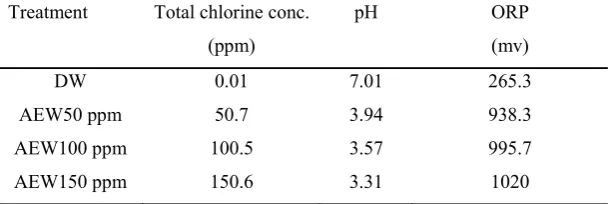
distilled water. The pH, ORP and ACC of all the treatment solutions are shown in Table 1. 309
310
3.3. Preparation of inoculum
311
The bacterial strain used in the present work is Salmonella enterica serovar Typhimurium strain 312
DT104 (strain SA970934) from porcine with antibiotic resistance to ampicillin, chloramphenicol, 313
florfenicol, spectionomycin, streptomycin, sulfisoxazole and tetracycline [49]. From -80oC stock,
314
S. Typhimurium DT104 was streaked on TSA plate, and incubated at 37°C for 24 h. The plates 315
were stored at 4 oC for future use. A single colony was added to 75 mL of TSB in a 125 mL
316
screwcap flask, and incubated 24 h at 37°C with shaking at 180 rpm (MaxQ 420 HP, Thermo 317
15 50 mL centrifuge tube and pelleted by centrifugation at 7000 rpm for 10 min (Sorvall RT1, Thermo 319
Science, ON, Canada). The resulting pellets were washed in 35 mL of PBS and centrifuged at 7000 320
rpm for 10 min. The resulting pellets were resuspended in 7 mL of PBS each and vortexed. Then 321
the two suspensions were combined together and vortexed for homogenization. These suspensions 322
were used as inocula of fresh red cabbages. The population of inocula was approximately 9.0 log 323
CFU/g. 324
325
3.4. Preparation and inoculation of red cabbage
326
The damaged outer leaves of red cabbage were removed and disposed, while the rest of leaves 327
were cut into approximately 0.5×3 cm segments using a sharp knife, and placed in a sterile 328
polyethylene bag and mixed. Twenty grams leaves was randomly weighed for each sample, and 329
put on a sterile polyethylene square (15 cm x 15cm) in the biological safety cabinet (BSC). Spot 330
inoculation was performed with a micropipette by transferring 1 mL (approximately 20 drops) of 331
the well-mixed bacteria suspension randomly onto leaf surfaces of all samples except the negative 332
control. The bacterial suspensions on the leaf surfaces were dried for 2 hours inside BSC. 333
334
3.5. Treatments and microbiological analysis
335
After spots inoculation and drying, the inoculated red cabbage leaves were transferred into 336
sterile stomacher filter bags (FILTER-BAG ®, VWR, Pennsylvania, USA). One hundred eighty 337
millilitres of AEW containing 50 ppm (EW50), 100 ppm (EW100), or 150 ppm (EW150) ACC 338
was added into the bags individually and treated for 1, 3, or 5 min. The inoculated and non-339
inoculated red cabbages treated with sterile distilled water (DW) served as positive and negative 340
16 vigorously in order to ensure all leaves were immersed in AEW or DW. After treatments for 1, 3, 342
or 5 min, the AEW was poured in a sterilized bottle for microbial analysis. Then 180 mL of sterile 343
saline solutions (0.85% NaCl ) were added into the stomacher bags with treated red cabbages. 344
Subsequently, the bagged red cabbage samples were homogenized for 1 min in a paddle blender 345
at 260 rpm (Seward Stomacher 400, London, England). The homogenates were serially diluted in 346
sterile D/E broth, and 100 µL aliquots of diluent were spread-plated on TSA agar in duplicate. The 347
plates were dried with the lid open in the BSC until no visible diluent seen. Subsequently the plates 348
were incubated at 37 °C for 2 h, XLD was poured on the top of TSA agar to create a bilayer plate, 349
and dried them again in BSC. The plates were then incubated at 37 °C for 24 h. The colonies were 350
counted and expressed as log10 colony forming units per gram (log CFU/g). The initial population
351
of S. Typhimurium DT104 on the surface of red cabbage were determined by a series of 10-fold 352
dilutions made in D/E broth directly, and 100 µL was spread-plated on XLD agar, and incubated 353
at 37°C for 24 h. 354
The total natural microbial loads including aerobic bacteria, molds, and yeasts were also 355
determined on the treated cabbage samples that followed the same treatments of AEW and DW 356
(control) as described previously for S. Typhimurium. The selective agars were used to quantify 357
the diversity of microbial population in the cut red cabbage leaves before and after treatment. The 358
TSA for aerobic bacteria and incubated at 37 °C for 2 h, and the potato dextrose agar (PDA) for 359
growing molds and yeasts at room temperature for one week in the dark place. 360
The washing water samples were analyzed using the same enumeration methods than for S.
361
Typhimurium and were expressed as log10 colony forming units per mL (log CFU/g). Three 362
replicates of each experiment were carried out. 363
17
3.6. Effects of AEW treatments on the quality of red cabbages
365
3.6.1 The changes of color
366
The surface color changes of the red cabbage were measured according to the Lee et al. 367
method [25]. A HunterLab LabScan XE spectrocolorimeter (Hunter Associates Laboratory, Inc., 368
Reston, VA, USA) was used to determine the color changes of red cabbage samples in the 369
CIELAB scale with the EasyMatchQC software. Samples were measured in triplicates and 370
results was expressed as values of L, a and b, for darkness/brightness, redness/greenness and 371
yellowness/ blueness. The net color difference (DE) was calculated as follows: 372
Color difference (DE) = 𝑳 − 𝑳𝟎 𝟐+ 𝒂 − 𝒂𝟎 𝟐+ 𝒃 − 𝒃𝟎 𝟐 373
L/L0 L values for the treated/untreated samples.
374
a/a0 a values for the treated/untreated samples.
375
b/b0 b values for the treated/untreated samples
376
377
3.6.2 The changes of pH 378
pH of red cabbages were determined according to the previously given method[25]. Ten grams 379
of the red cabbage samples were treated with 90 mL AEW (50 ppm, 100 ppm, 150 ppm) for 1, 3, 380
and 5 min in a beaker to ensure that the leaves were fully immersed. After treatment, the treated 381
leaves were drained from AEW and surface water was removed using paper towel. Leaves were 382
cut into small pieces and ground with 50 mL of deionized water using a grinder (Magic Bullet, CA 383
USA) for 1 min. The pH of the homogenates were measured at 23°C using a pH meter with glass 384
electrode (Orion Star A111, Thermo Scientific, Indonesia). The leaves treated with DW were used 385
as control and pH of DW was considered as control reference to compare the differences between 386
18 388
3.7. Analysis of physicochemical properties
389
3.7.1 Extraction procedures 390
After treatments with AEW (50 ppm, 100 ppm, and 150 ppm) and DW for 3 and 5 min, the 391
treated leaves (10g) were drained from AEW or DW, and surface water were removed using paper 392
towel. The treated leaves were cut into small pieces, and ground with 25 mL 80% ethanol and 0.35 393
µL formic acid using a grinder (Magic Bullet, CA USA) for 1 min. The extracts were obtained by 394
filtering the samples under vacuum to remove the mashed leaves. The filtrates were then passed 395
through 0.45 m filters, and were immediately subject to anthocyanins (HPLC method), total 396
phenolic, and DPPH radical scavenging activity analysis. The untreated red cabbage leaves were 397
used as control samples, and extracted and analyzed following the same procedures. 398
3.7.2 Total phenolic contents. 399
The effects of AEW on the total phenolic contents of red cabbages were determined by 400
colorimetric method with 96-well microplate based on Folin-Ciocalteu's phenol reagent (FCR) 401
[50]. The values are expressed as mg gallic acid equivalents (GAE) per gram of extract. Twenty 402
five microliters aliquots of various GAE standards (0.03125-0.5 mg/mL) and the diluted red 403
cabbage extracts (8 times) were transferred to the appropriate wells in triplicates, and H2O as a
404
blank. 125 µL of 1/10 diluted FCR were added into each of the wells, the samples were left for 8 405
min. 125 µL7.5% Na2CO3 were pipetted into each of the wells, and were kept at room temperature
406
for 1 h in dark place. Then, the absorbance was recorded against a blank at 725 nm using a 407
microplate reader (BioTek Instruments, VT. USA) 408
19 3.7.3 Determination of anthocyanins
410
Identification and quantitative analysis of anthocyanins was carried out using HPLC (Agilent 411
1100 series system, Agilent Technologies) equipped with a photodiode-array detector (Agilent 412
Technologies, Waldbornn, Germany). The analytical column employed was a C-18 (150 mm × 4.6 413
mm i.d. × 5 uL) column manufactured by Dikma, Inc. The temperature of the column oven was 414
25°C. Gradient elution was performed using 10% formic acid (solution A) and 100% methanol 415
(solution B) as follows: linear gradient from 95% A/5% B to 40% A/60% B, 0-20 min; isocratic 416
elution 40% A/60% B, 20-23 min; linear gradient from 40% A/60% B to 95% A/5% B, 23-24 min; 417
Isocratic elution 95% A/5% B, 24-28 min. The flow rate was 0.7 mL/min, and the injection volume 418
was 20 uL for all samples and standard solutions. The wavelengths used for quantification were 419
520 nm. The standard curves were plotted for each compounds based on the peak area vs known 420
concentrations from 0.5-0.0625 mg/mL. 421
3.7.4 Determination of 2,2 diphenyl-1-1picrylhydrazyl (DPPH) radical scavenging activity 422
Promising antioxidant activity of the treated red cabbages before and after AEWs and DWs were 423
evaluated by using a model of scavenging the stable DPPH radicals scavenging activity [51]. A 424
96-well microplate was used for DPPH assay. Ten microliters of red cabbage extracts and standard 425
solutions (62.5-1000 uM AA) were transferred to appropriate wells in triplicates, then 200 µL 426
DPPH (350 µM) were added into each well. Plates were kept in a dark place at ambient temperature 427
for 6 h before the absorbance (A) at 517 nm was measured by using a microplate reader (BioTek 428
Instruments, VT. USA). A standard curve was plot using 62.5-1000 μmol L−1 Trolox solutions
429
with R2 = 0.99. Methanol without DPPH was used as the blank. Methanol with DPPH was used as
430
control sample. Antioxidant activity was expressed as μmol/ L Trolox equivalent (TE) /g red 431
20 433
3.8. Statistical analysis
434
All experiments and analysis were implemented in triplicate, and the data represented as the 435
mean values with standard deviation. The significance difference was measured at confidence level 436
of 95% (p < 0.05). Data were subjected to analysis of variance and Duncan’s multiple range tests 437
using SPSS v.20.0 software (SPSS Inc., USA). 438
439
4. Conclusion
440
441
In the present study, the effects of available chlorine concentration of AEW and treatment time 442
on the inactivation efficacy of native microflora and artificial inoculated S. Typhimurium DT104 443
on the red cabbage and in the process washing water were evaluated. The distilled water (DW) 444
treatments did not show statistical significant effects on the inactivation of all microbial cells. In 445
contrast, after the red cabbages treated by AEW, the populations of native aerobic bacteria, and 446
molds and yeasts, on the surfaces of red cabbage were significantly reduced 2.33-6.72 log CFU/g, 447
0.94-3.48 log CFU/g, and respectively. The most suitable available chlorine concentration of 448
AEW for washing red cabbage was 100 ppm for 3 min. In this optimal process conditions, most 449
of the native microflora were inactivated, and artificial inoculated S. Typhimurium DT104 on the 450
red cabbage were reduced by 40.2% (3.67 log CFU/g) , also the washing water has not been cross 451
contaminated, and could be recycled. The surface color, pH and total phenolic contents of red 452
cabbage were not significantly affected by 3 min washing with the 100 ppm of AEW. Although 453
the anthocyanins contents and antioxidant activities of red cabbage were significantly reduced by 454
21 but the impacts on the nutritional benefits of red cabbage were considered as limited and acceptable. 456
Therefore, 100 ppm of AEW washing solution can be used as an alternative environmentally-457
friendly sanitizer in fresh-cut food industry to prolong the red cabbage shelf life. The results 458
generated from the present study could provide useful information to the fresh produces and the 459
fresh-cut produce industry to optimize processing conditions, or may be combined with other 460
technologies, such as ultrasound, mild heat, and active packaging to enhance the effectiveness of 461
AEW treatment on the inactivation of pathogens and prevention of nutrients losses. 462
463
References:
464 465
1. Qadri OS, Yousuf B, Srivastava AK. Fresh-cut fruits and vegetables: Critical factors influencing 466
microbiology and novel approaches to prevent microbial risks—A review. Cogent Food & Agriculture. 467
2015;1(1):1121606. 468
2. Baselice A, Colantuoni F, Lass DA, Nardone G, Stasi A. Trends in EU consumers’ attitude towards 469
fresh-cut fruit and vegetables. Food Quality and Preference. 2017;59:87-96. 470
3. Duarte ALA, do Rosário DKA, Oliveira SBS, de Souza HLS, de Carvalho RV, Carneiro JCS, et al. 471
Ultrasound improves antimicrobial effect of sodium dichloroisocyanurate to reduce Salmonella 472
Typhimurium on purple cabbage. International journal of food microbiology. 2018;269:12-8. 473
4. Saluk J, Bijak M, Posmyk MM, Zbikowska HM. Red cabbage anthocyanins as inhibitors of 474
lipopolysaccharide-induced oxidative stress in blood platelets. International Journal of Biological 475
Macromolecules. 2015;80:702-9. 476
5. Amr A, Al‐Tamimi E. Stability of the crude extracts of Ranunculus asiaticus anthocyanins and 477
their use as food colourants. International journal of food science & technology. 2007;42(8):985-91. 478
6. Ersus S, Yurdagel U. Microencapsulation of anthocyanin pigments of black carrot ( Daucus carota 479
L.) by spray drier. Journal of Food Engineering. 2007;80(3):805-12. 480
7. Kırca A, Özkan M, Cemeroğlu B. Effects of temperature, solid content and pH on the stability of 481
black carrot anthocyanins. Food Chemistry. 2007;101(1):212-8. 482
8. Graça A, Santo D, Quintas C, Nunes C. Growth of Escherichia coli, Salmonella enterica and 483
Listeria spp., and their inactivation using ultraviolet energy and electrolyzed water, on ‘Rocha’fresh-cut 484
22 9. Tango CN, Mansur AR, Oh D-H. Fumaric acid and slightly acidic electrolyzed water inactivate 486
gram positive and gram negative foodborne pathogens. Microorganisms. 2015;3(1):34-46. 487
10. Graça A, Esteves E, Nunes C, Abadias M, Quintas C. Microbiological quality and safety of 488
minimally processed fruits in the marketplace of southern Portugal. Food Control. 2017;73:775-83. 489
11. Afari GK, Hung Y-C, King CH, Hu A. Reduction of Escherichia coli O157: H7 and Salmonella 490
Typhimurium DT 104 on fresh produce using an automated washer with near neutral electrolyzed (NEO) 491
water and ultrasound. Food Control. 2016;63:246-54. 492
12. Rahman S, Park JH, Wang J, Oh D-H. Stability of low concentration electrolyzed water and its 493
sanitization potential against foodborne pathogens. Journal of food engineering. 2012;113(4):548-53. 494
13. Rahman S, Khan I, Oh DH. Electrolyzed water as a novel sanitizer in the food industry: current 495
trends and future perspectives. Comprehensive Reviews in Food Science and Food Safety. 2016;15(3):471-496
90. 497
14. Abadias M, Usall J, Oliveira M, Alegre I, Viñas I. Efficacy of neutral electrolyzed water (NEW) 498
for reducing microbial contamination on minimally-processed vegetables. International Journal of Food 499
Microbiology. 2008;123(1-2):151-8. 500
15. Deza M, Araujo M, Garrido M. Inactivation of Escherichia coli O157: H7, Salmonella enteritidis 501
and Listeria monocytogenes on the surface of tomatoes by neutral electrolyzed water. Letters in applied 502
microbiology. 2003;37(6):482-7. 503
16. Deza M, Araujo M, Garrido M. Efficacy of neutral electrolyzed water to inactivate Escherichia coli, 504
Listeria monocytogenes, Pseudomonas aeruginosa, and Staphylococcus aureus on plastic and wooden 505
kitchen cutting boards. Journal of food protection. 2007;70(1):102-8. 506
17. Izumi H. Electrolyzed water as a disinfectant for fresh‐cut vegetables. Journal of Food Science. 507
1999;64(3):536-9. 508
18. AL-HAQ MI, SUGIYAMA J, ISOBE S. Applications of electrolyzed water in agriculture & food 509
industries. Food Science and Technology Research. 2005;11(2):135-50. 510
19. Qi H, Huang Q, Hung Y-C. Effectiveness of electrolyzed oxidizing water treatment in removing 511
pesticide residues and its effect on produce quality. Food chemistry. 2018;239:561-8. 512
20. Finstad S, O'Bryan CA, Marcy JA, Crandall PG, Ricke SC. Salmonella and broiler processing in 513
the United States: relationship to foodborne salmonellosis. Food Research International. 2012;45(2):789-514
94. 515
21. Ethelberg S, Sørensen G, Kristensen B, Christensen K, Krusell L, Hempel-Jørgensen A, et al. 516
Outbreak with multi-resistant Salmonella Typhimurium DT104 linked to carpaccio, Denmark, 2005. 517
23 22. Ölmez H, Kretzschmar U. Potential alternative disinfection methods for organic fresh-cut industry 519
for minimizing water consumption and environmental impact. LWT-Food Science and Technology. 520
2009;42(3):686-93. 521
23. Ramos B, Miller F, Brandão TR, Teixeira P, Silva CL. Fresh fruits and vegetables—an overview 522
on applied methodologies to improve its quality and safety. Innovative Food Science & Emerging 523
Technologies. 2013;20:1-15. 524
24. Jeong S-G, Kang D-H. Inactivation of Escherichia coli O157: H7, Salmonella Typhimurium, and 525
Listeria monocytogenes in ready-to-bake cookie dough by gamma and electron beam irradiation. Food 526
microbiology. 2017;64:172-8. 527
25. Lee NY, Kim NH, Jang IS, Jang SH, Lee SH, Hwang IG, et al. Decontamination efficacy of neutral 528
electrolyzed water to eliminate indigenous flora on a large-scale of cabbage and carrot both in the laboratory 529
and on a real processing line. Food research international. 2014;64:234-40. 530
26. Nan S, Li Y, Li B, Wang C, Cui X, Cao W. Effect of slightly acidic electrolyzed water for 531
inactivating Escherichia coli O157: H7 and Staphylococcus aureus analyzed by transmission electron 532
microscopy. Journal of food protection. 2010;73(12):2211-6. 533
27. Zhang C, Lu Z, Li Y, Shang Y, Zhang G, Cao W. Reduction of Escherichia coli O157: H7 and 534
Salmonella enteritidis on mung bean seeds and sprouts by slightly acidic electrolyzed water. Food Control. 535
2011;22(5):792-6. 536
28. Graca A, Abadias M, Salazar M, Nunes C. The use of electrolyzed water as a disinfectant for 537
minimally processed apples. Postharvest Biology and Technology. 2011;61(2-3):172-7. 538
29. Zhang C, Cao W, Hung Y-C, Li B. Application of electrolyzed oxidizing water in production of 539
radish sprouts to reduce natural microbiota. Food Control. 2016;67:177-82. 540
30. Liu Q, Tan CSC, Yang H, Wang S. Treatment with low-concentration acidic electrolysed water 541
combined with mild heat to sanitise fresh organic broccoli (Brassica oleracea). LWT-Food Science and 542
Technology. 2017;79:594-600. 543
31. Ding T, Rahman S, Oh D-H. Inhibitory effects of low concentration electrolyzed water and other 544
sanitizers against foodborne pathogens on oyster mushroom. Food Control. 2011;22(2):318-22. 545
32. Guentzel JL, Lam KL, Callan MA, Emmons SA, Dunham VL. Reduction of bacteria on spinach, 546
lettuce, and surfaces in food service areas using neutral electrolyzed oxidizing water. Food Microbiology. 547
2008;25(1):36-41. 548
33. Allende A, Selma MV, Lopez-Galvez F, Villaescusa R, Gil MI. Impact of wash water quality on 549
sensory and microbial quality, including Escherichia coli cross-contamination, of fresh-cut escarole. 550
24 34. López-Gálvez F, Allende A, Selma MV, Gil MI. Prevention of Escherichia coli cross-552
contamination by different commercial sanitizers during washing of fresh-cut lettuce. International Journal 553
of Food Microbiology. 2009;133(1-2):167-71. 554
35. Zhang C, Xia X, Li B, Hung Y-C. Disinfection efficacy of electrolyzed oxidizing water on brown 555
rice soaking and germination. Food Control. 2018;89:38-45. 556
36. Petri E, Rodríguez M, García S. Evaluation of combined disinfection methods for reducing 557
Escherichia coli O157: H7 population on fresh-cut vegetables. International journal of environmental 558
research and public health. 2015;12(8):8678-90. 559
37. López-Gálvez F, Gil MI, Truchado P, Selma MV, Allende A. Cross-contamination of fresh-cut 560
lettuce after a short-term exposure during pre-washing cannot be controlled after subsequent washing with 561
chlorine dioxide or sodium hypochlorite. Food Microbiology. 2010;27(2):199-204. 562
38. Patras A, Brunton NP, O'Donnell C, Tiwari B. Effect of thermal processing on anthocyanin stability 563
in foods; mechanisms and kinetics of degradation. Trends in Food Science & Technology. 2010;21(1):3-564
11. 565
39. Obón J, Castellar M, Alacid M, Fernández-López J. Production of a red–purple food colorant from 566
Opuntia stricta fruits by spray drying and its application in food model systems. Journal of Food 567
Engineering. 2009;90(4):471-9. 568
40. Eda H, Seckin AM. The effect of different electrolyzed water treatments on the quality and sensory 569
attributes of sweet cherry during passive atmosphere packaging storage. Postharvest biology and 570
technology. 2015;102:32-41. 571
41. Bessi H, Debbabi H, Grissa K, Bellagha S. Microbial reduction and quality of stored date fruits 572
treated by electrolyzed water. Journal of food quality. 2014;37(1):42-9. 573
42. Hassimotto NMA, Genovese MI, Lajolo FM. Absorption and metabolism of cyanidin-3-glucoside 574
and cyanidin-3-rutinoside extracted from wild mulberry (Morus nigra L.) in rats. Nutrition research. 575
2008;28(3):198-207. 576
43. Wu X, Gu L, Prior RL, McKay S. Characterization of anthocyanins and proanthocyanidins in some 577
cultivars of Ribes, Aronia, and Sambucus and their antioxidant capacity. Journal of agricultural and food 578
chemistry. 2004;52(26):7846-56. 579
44. Shingai Y, Fujimoto A, Nakamura M, Masuda T. Structure and function of the oxidation products 580
of polyphenols and identification of potent lipoxygenase inhibitors from Fe-catalyzed oxidation of 581
resveratrol. Journal of agricultural and food chemistry. 2011;59(15):8180-6. 582
45. Puligundla P, Kim J-W, Mok C. Broccoli sprout washing with electrolyzed water: Effects on 583
25 46. Ersus S, Yurdagel U. Microencapsulation of anthocyanin pigments of black carrot (Daucus carota 585
L.) by spray drier. Journal of Food Engineering. 2007;80(3):805-12. 586
47. Castaneda-Ovando A, de Lourdes Pacheco-Hernández M, Páez-Hernández ME, Rodríguez JA, 587
Galán-Vidal CA. Chemical studies of anthocyanins: A review. Food chemistry. 2009;113(4):859-71. 588
48. Len S-V, Hung Y-C, Chung D, Anderson JL, Erickson MC, Morita K. Effects of storage conditions 589
and pH on chlorine loss in electrolyzed oxidizing (EO) water. Journal of agricultural and food chemistry. 590
2002;50(1):209-12. 591
49. Poppe C, Ziebell K, Martin L, Allen K. Diversity in antimicrobial resistance and other 592
characteristics among Salmonella Typhimurium DT104 isolates. Microbial Drug Resistance. 593
2002;8(2):107-22. 594
50. Zhang Q, Zhang J, Shen J, Silva A, Dennis DA, Barrow CJ. A simple 96-well microplate method 595
for estimation of total polyphenol content in seaweeds. Journal of Applied Phycology. 2006;18(3-5):445-596
50. 597
51. Herald TJ, Gadgil P, Tilley M. High‐throughput micro plate assays for screening flavonoid 598
content and DPPH‐scavenging activity in sorghum bran and flour. Journal of the Science of Food and 599
Agriculture. 2012;92(11):2326-31. 600
601
26
Highlights
619
• The first paper, to study the effect of treatment with AEW on the microbiological and 620
physicochemical properties of fresh-cut red cabbages 621
• The first paper, to study the effect of available chlorine concentration of AEW and 622
treatment time on AEW final properties. 623
• Red cabbage physicochemical and sensory qualities unaffected by 100 ppm AEW 624
washing for 3 min. 625
27
Figure captures
627
• Figure 1. Reductions (log CFU/g) of aerobic bacteria, molds and yeasts on fresh-cut red 628
cabbages after AEW and distilled water treatments for different times 629
• Figure 2. S. Typhimurium reduction (log CFU/g) in fresh-cut red cabbages after AEW 630
treatment 631
• Figure 3. Effect of DW and acidic electrolyzed water (AEW) at various available chlorine 632
concentration on color differences (DE) of red cabbage 633
• Figure 4. pH of fresh-cut red cabbages after DW and AEW treatment 634
635
28
Table 1. Physicochemical properties of the acidic electrolyzed water used in the experiments.
637
638
Treatment Total chlorine conc. (ppm)
pH ORP
(mv)
DW 0.01 7.01 265.3
AEW50 ppm 50.7 3.94 938.3
AEW100 ppm 100.5 3.57 995.7
29
Table 2 .Aerobic bacteria, molds, yeasts, and S. Typhimurium DT104 (log CFU/g) in
639
processing water after washing fresh-cutred cabbages.
640
ACC (ppm)
Aerobic bacteria Mold and yeast S. Typhimurium DT104
1 min 3 min 5 min 1 min 3 min 5 min 1 min 3 min 5 min
DW 5.45±0.03 5.32±0.05 5.46±0.07 3.38±0.07 3.39±0.02 3.22±0.03 7.64±0.18 7.91±0.03 7.96±0.04
50 2.30±0.05 2.18±0.01 ND 2.54±0.01 2.0±0.01 1.7±0.01 ND ND ND
100 ND ND ND ND ND ND ND ND ND
150 ND ND ND ND ND ND ND ND ND
ND: not detected (below the limit of detection of 1.0 CFU/g).
30 Table 3 Physicochemical characteristics of red cabbages treated with DW and AEW.
642
ACC (ppm)
Treatment time (min)
Total phenolic content (mg GAE/g )
Anthocyanin ( µg /g)
DPPH-scavenging activity
(μmol L−1 TE g−1)
Cyanidin Pelargonidin
Control 0 327.1 ± 1.0 c 57.9 ± 1.1 d 6.8 ± 0.3 e 17.0 ± 0.04 a
DW 3 326.1 ± 1.0 c 53.2 ± 2.8 d 6.1 ± 0.2 d 17.2 ± 0.07 a
5 325.5 ± 1.6 c 52.4 ± 0.7 cd 6.2 ± 0.1 d 17.4 ± 0.35 ab
50 3 326.7 ± 4.4 c 50.8 ± 2.4 bcd 6.0 ± 0.2 d 18.1 ± 0.03 bc
5 322.1 ± 1.6 abc 44.9 ± 1.5 bcd 5.4 ± 0.2 cd 18.6 ± 0.42 cd
100 3 324.0 ± 1.8 bc 47.2 ± 2.0 abc 5.3 ± 0.2 c 18.9 ± 0.14 d
5 321.0 ± 2.2 abc 42.2 ± 2.1 ab 4.5 ± 0.3 b 19.8 ± 0.21 e
150 3 319.2 ± 2.5 ab 45.2 ± 0.6 ab 5.0 ± 0.2 bc 19.9 ± 0.02 e
5 317.9 ± 1.8 a 37.9 ± 1.4 a 4.4 ± 0.1 a 20.5 ± 0.19 e
Mean values in the same column with different letters are significantly different (p < 0.05).
31 645
646
647
Figure1. Reductions (log CFU/g) of aerobic bacteria, molds and yeasts on fresh-cut red cabbages 648
32 650
651
33 653
654 655
656
657
658
Figure 3. Effect of DW and acidic electrolyzed water (AEW) at various available chlorine 659
34 661
662 663 664 665