Evaluation of analgesic effect and absorption of
1
buprenorphine after buccal administration in cats
2
with oral disease
3
4
Thaleia- Rengina Stathopoulou,
1Maria Kouki,
2Bruno H. Pypendop,
3Atholl Johnston,
45
Serafeim Papadimitriou,
2Ludovic Pelligand
16
7
1 Clinical Services and Sciences, Royal Veterinary College, , Hawkshead Lane, Hatfield, UK AL97TA
8
2 Aristotle University of Thessaloniki School of Veterinary Medicine, Thessaloniki GR
9
3 Surgical and Radiological Science,School of Veterinary Medicine, University of California, One Shields Avenue,
10
Davis,CA, USA 95616
11
4 Queen Mary University of London, and Analytical Services International, St George's, University of London,
12
Cranmer Terrace, London, SW17 0RE, UK
13
14
15
16
17
Keywords: feline, buprenorphine, gingivostomatitis, buccal administration, analgesia
18
19
20
Corresponding author: Thaleia- Rengina Stathopoulou DVM, MRCVS, MVetMed, Royal Veterinary
21
College, Clinical Services and Sciences, Hawkshead Lane, Hatfield, UK AL97TA
22
Email: [email protected]
24
Abstract
25
Objectives: To evaluate the analgesic effect and the absorption of buprenorphine after buccal
26
administration in cats with oral disease.
27
Methods: Six adult client-owned cats with chronic gingivostomatitis (weighing 5.1kg +/- 1.1kg) were
28
recruited for a randomised, prospective, blinded, saline controlled crossover study. Pain scores, dental
29
examination, stomatitis score and buccal pH measurement were conducted on day 1 under sedation in
30
all cats. On day 2, animals were randomized in two groups and administered one of the two treatments
31
buccally (group A received buprenorphine 0.02mg/ kg and group B received 0.9% saline) and vice versa
32
on day 3. Pain scores and food consumption were measured at 30, 90 and 360 mins after the
33
administration of buprenorphine. Blood samples were taken at the same time and plasma
34
buprenorphine concentration was measured by liquid chromatography- mass spectrometry. Data were
35
statistically analysed as non-parametric and level of significance was set as P<0.05.
36
Results: There were no major side effects after buprenorphine administration. Buccal pH values ranged
37
between 8.5-9.1 and stomatitis disease activity index 122 (17.8+/- 4.5) with the scale ranging from
0-38
30. The maximum buprenorphine plasma concentration (14.8 ng/ ml) was observed 30 minutes after
39
administration and there was low interindividual variability. There was a significant difference
40
between baseline pain scores compared to pain scores after buprenorphine (P<0.05) and between the
41
saline and buprenorphine group at 30 mins (p=0.04) and 90 mins (P=0.04). There was also a significant
42
effect of stomatitis index on pain score. Regarding the pharmacokinetic parameters, cats with stomatitis
43
showed lower bioavailability and shorter absorption half-life after buccal administration of
44
buprenorphine compared to normal cats in previous studies.
45
Conclusion and clinical relevance: Buccal administration of buprenorphine in cats with
46
concentration and it can be incorporated in the multimodal analgesia plan of cats with
48
gingivostomatitis.
49
Introduction
50
Pain management is the cornerstone of veterinary practice and constitutes not only a professional
51
obligation but also a way to enhance animals’ quality of life. In the recent years, there has been increased
52
interest into pain assessment and management in cats that have been historically undertreated for pain
53
compared to other species.1-3
54
Opioids play an important role in the multimodal approach to pain management in cats with
55
buprenorphine being one of the drugs most widely used.4 Buprenorphine, a highly lipophilic semi
56
synthetic partial agonist at μ (mu) opioid receptors, is considered a unique drug with complex
57
pharmacology.5 It is the most commonly used opioid in small animal practice in the UK,1 being also
58
widely used in the vast majority of continental Europe, Australia and South Africa.2, 6 Common
59
morphine and hydromorphone side effects such as nausea, vomiting and salivation are rarely seen after
60
buprenorphine7. This advantage, alongside with its efficacy and long duration of action8, 9 justifying its
61
popularity.
62
In feline patients, studies have proven that the buccal route of administration (OTM) of buprenorphine
63
shows a bioavailability similar to the intravenous (IV) and intramuscular (IM) routes.10-12 According to
64
Robertson et al (2005),10 the analgesia provided by the buccal administration is comparable to the one
65
of alternative routes. However, among others the study from Giordano et al. (2010)13 demonstrated
66
inferior analgesic effect of the buccal route compared to IV and IM after ovariectomy and Santos et al14
67
found less sedative effect after buccal administration of dexmedetomidine and buprenorphine
68
compared to IM route.
69
The systemic absorption of buprenorphine after buccal administration depends on the mucosal pH.
70
cavity with pH between 8 and 9, favours its unionised form and enhances its bioavailability by avoiding
72
the first pass elimination.10, 15
73
The blood-sampling site has also an impact on buprenorphine concentration–time profile. Following
74
buccal administration in cats, venous blood sampling from a jugular site is not an acceptable substitute
75
for arterial blood sampling,16 as the perfusion of the oral mucosa drains from the same vein resulting
76
in overestimation of drug’s systemic availability. The above can explain the high bioavailability of
77
buprenorphine (116%) found in previous studies10 following buccal administration as external jugular
78
was used for sampling.
79
Severe inflammation of the oral cavity, described with the term gingivostomatitis,17 is a multifactorial
80
disease often seen in feline patients and it can be a chronic, devastating and painful condition. The exact
81
aetiology of the condition is unknown, with environmental factors, bacterial and viral infection being
82
most often implicated,18 though neoplastic, autoimmune, developmental and congenital conditions can
83
be recognised as co-factors as well. Clinical signs include oral pain, halitosis, dysphagia, anorexia and
84
weight loss, while some cats are euthanized because of poor quality of life.19 Treatment of
85
gingivostomatitis is mainly symptomatic and involves antibiotics, corticosteroids, opioids,
non-86
steroidal anti- inflammatory agents (NSAIDs), laser thermoablation, cyclosporine, oral surgery and
87
tonsillectomy. Plasmapheresis, human immunoglobin and feline interferon omega have also been
88
used.20 It is not known whether the presence of gingivostomatitis affects the saliva pH and thereby the
89
absorption and the bioavailability of buprenorphine after buccal administration.
90
We designed a saline-controlled crossover efficacy and pharmacokinetic study in cats with
91
gingivostomatitis to assess whether the presence of oral inflammation in the oral cavity affected the
92
rate of oral transmucosal absorption, the overall systemic uptake and the analgesic efficacy of
93
buprenorphine. Our alternative hypothesis was that there would be a difference in analgesia between
94
the buprenorphine and saline groups after buccal administration, with buprenorphine providing
95
higher (13.1%) in studies in United States and Southern Europe.18 Due to the higher prevalence of oral
97
diseases in Southern Europe we recruited patients at the Aristotle University (Greece). 21
98
99
Materials and methods
100
The study was designed as a randomised, prospective, saline-controlled, blinded crossover study. The
101
design is summarised in Figure 1. Ethics approval was granted by the Aristotle University of
102
Thessaloniki, Greece and written owner consent was obtained for this clinical trial.
103
Six client owned adult cats, ASA (American Society of Anaesthesiologists) physical status I or II, with
104
evidence of oral inflammation were included in the study. No abnormal finding other than signs of
105
gingivostomatitis was detected during physical examination. The cats had not received any opioids
106
five days prior their arrival. Concurrent NSAIDs and/or antibiotics course were not exclusion criteria.
107
Allocation of the first treatment was randomised by the means of sealed envelopes containing the
108
number of each cat. The first three chosen by a blinded investigator were assigned to group A and the
109
rest to group B.
110
On day 1, physical examination was performed and baseline pain scores were recorded, according to a
111
modified BOTUCATU pain scale22 (range from 0 to 27, Appendix 1). All cats were, subsequently,
112
sedated with 0.02mg/kgmedetomidine intramuscularly (IM) (Sedastart, Animalcare). During sedation,
113
oral pH was measured with pH stripes (Simplex Health), oral lesions were staged and mapped using a
114
dental examination form and stomatitis disease activity index23 (Appendix 2, 3). An intravenous
115
peripheral catheter (22G, 25mm. Jelco, Smiths Medical) was placed in a cephalic vein to facilitate blood
116
sampling and to decrease any additional discomfort for the patients. Sedation was reversed with 0.05
117
mg/kgof atipamesole (Sedastop, Animalcare) IM. The catheters were flushed every 4 hours with 2ml
118
On day 2, the cats from group A received 0.02 mg/kgof buprenorphine (group BUP, Buprecare,
120
Animalcare) by buccal route and group B received equal volume of 0.9% saline (group SAL, Vetivex1,
121
Dechra Animal Products) by the same route. Both treatments were administered with a 1 ml syringe
122
(B. Braun medical) in the right cheek pouch by the principal investigator (TS) that was blinded to
123
treatment allocation. Cats were assessed for the presence of hypersalivation, mydriasis, grooming
124
activity and food consumption (yes/no) 30, 90 and 360 minutes following the treatment administration.
125
Pain assessments were performed by the same investigator at the same times using the same scale
126
(Modified BOTUCATU pain scale) as for baseline and for day 1.
127
Blood samples were collected by the assessor (MK), who was aware of treatment allocation, 30, 90 and
128
360 mins after buprenorphine buccal administration, but not after saline administration. Following pain
129
scoring, samples were taken from the cephalic catheter after 2 ml of blood were aspirated to ensure a
130
non-diluted blood sample. One ml of blood was collected in potassium EDTA blood tubes (Vetlab). The
131
samples were centrifuged (Centrifuge Heraeus -Christ GmbH Osterode, Harz Simplex, GE) for eight
132
minutes at 4039g within 30minutes after collection. The plasma (0.5 to 0.7 mL) was separated and stored
133
in -80 0 C (Model 725, Thermo-Forma
)
in labelled Eppendorf tubes.134
On day 3, the alternative treatment was administered, with group A receiving the 0.9% saline treatment
135
and group B receiving 0.02 mg /kg buprenorphine buccally, and the same procedure as on day 2 was
136
followed.
137
Plasma samples were shipped to the UK on dry ice and analysed by St Georges University in London.
138
Plasma buprenorphine was measured using a validated liquid chromatography – tandem mass
139
spectrometry method (LC/MS/MS),24 initially validated in man. The method was revalidated for feline
140
plasma and met standards for sensitivity, linearity, precision, accuracy and stability generally accepted
141
in bioanalytical chemistry.25 The lower limit of quantification of the assay was 0.025 ng/mL.
142
Population pharmacokinetic modelling was performed with Phoenix NMLE®, version 1.3, Certara
143
plasma buprenorphine concentration-time data from the present study (sparse sampling) and those
145
from a previously published study performed in healthy cats administered the same dose of
146
buprenorphine intravenously and by the buccal route (rich sampling).26Full description of the joint
147
population PK model is provided in Appendix 4. The goal of including external IV and buccal route
148
data in the PK model was to leverage information (clearances and volumes of distribution assumed to
149
be distributed similarly in stomatitis and healthy cats) and increase the number of degree of freedom,
150
as done in Pelligand et al.27This allowed the fitting of the most likely plasma concentration time-curve
151
in sparsely sampled cats and the estimation of bioavailability and absorption rate constant in the study
152
with stomatitis cats.
153
154
155
Statistical analysis
156
A commercially available programme was used for the statistical analysis (IBM SPSS Statistics 22). Data
157
distribution was assessed for normality graphically and by the results of Kolmogorov -Smirnov
158
statistic. Due to violation of the assumption of normality, the Wilcoxon matched -pairs signed rank test
159
was used was used to compare pain scores obtained as baseline, after saline and after buprenorphine
160
administration and at 30, 90 and 360 mins. The level of significance was set as P < 0.05. Pharmacokinetic
161
parameters distributions were compared between cats with gingivostomatitis and normal cats from a
162
previous study26 using the Mann-Whitney U-test.
163
Correlation analysis was used to describe the strength and the direction of the linear relationship
164
between variables. Spearman Rank Order Correlation was used for non-parametric data testing of
165
correlation between stomatitis activity index score and both pH and pain scores. Food consumption
166
(yes/no) was tested at each time point with a Fisher’s exact test.
167
Results
169
Six, client owned, adult cats were included in this clinical study, four male neutered and two female
170
neutered. Their age ranged from 7 to 10 years (mean 9.1years) and their body weight ranged from 4 to
171
7 kg (mean 5.1kg). Two of the cats were receiving antibiotics, one of them was also receiving meloxicam
172
for their stomatitis, and the last dose was given 48 h before presentation.
173
No adverse effects were noted in this study except hypersalivation in two of the cats after the
174
administration of buprenorphine that resolved within minutes. All cats developed mydriasis within 5
175
minutes after the administration of buprenorphine, except in one cat in which this could not be
176
evaluated due to bilateral enucleation. Mydriasis persisted for several hours after buprenorphine
177
administration. Mydriasis does not correlate with analgesia or antinociception.9
178
The oral pH values ranged from 8.5 to 9 and the stomatitis disease activity index ranged from 10 to 22
179
(mean 17.8+/- 4.5). Three of the cats had partial mouth extractions of the premolar and molar teeth and
180
three had previously full mouth extractions. However, that was completed at least a year before
181
presentation. The positive correlation between the variables of pH and stomatitis disease index and pH
182
was not significant (P= 0.152).
183
Food consumption evaluation was part of the total pain scores. Small amount of wet and dry food was
184
offered repeatedly at these timepoints Overall at 30 mins, all cats in the buprenorphine groups ate
185
some wet food compared to 2 in the saline groups (P= 0.061). At 90 minutes, cats treated with
186
buprenorphine had a significantly higher chance to eat than the ones with saline (6 cats for
187
buprenorphine vs 1 saline, P = 0.0152). There was no difference at 360 minutes (2 cats for buprenorphine
188
vs 3 cats for saline, P = 0.54). None of the cats started eating dry food at any time point.
189
Pain scores (figure 2) decreased significantly with buprenorphine (BUP) and saline (SAL)
190
administration compared to baseline (BSL, P = 0<.001). When testing each time point, the pain scores
191
were significantly lower than SAL at 30 mins (P=0.04) and at 90mins (P=0.04), but not at 360 mins
193
(P=0.09). Linear mixed model also revealed a significant effect of stomatitis index score on pain score
194
(P=0.001).
195
The time of maximum buprenorphine plasma concentrations in cats with gingivostomatitis was at the
196
30-mins blood sample when concentrations ranged from 274 to 1 621 ng/ mL. One cat (10-year female
197
neutered 4.2kg cat treated with clindamycin, meloxicam, dental score 18) had a very high plasma
198
concertation (84 979 ng/mL). This data point was excluded from the analysis on the basis that such high
199
plasma concentrations were not reached even in early 1 and 3-minute samples after IV administration22
200
and is likely to result from contamination of the sample. The most likely buprenorphine plasma
201
concentration-time plot for the cats with gingivostomatitis is shown in figure 3. For all parameters
202
listed below, the inter-individual variability (IIV %) is reported immediately following each estimate
203
where appropriate. Pharmacokinetic parameter (Table 1) estimates for clearance, intercompartmental
204
clearance, volume of distribution of the central and peripheral compartment displayed low
inter-205
individual variability even in a mixed group and were close to values previously reported.26
206
The pharmacokinetic parameters are presented in Table 1 and described in Appendix 4 (figure 4).
207
208
Discussion
209
During this study, no side effects were identified, except hypersalivation in two cats. All cats, except
210
the one that had bilateral enucleation, developed mydriasis.
211
There is a lack of evidence in veterinary literature on whether oral inflammation affects buccal pH
212
values. The values of buccal pH in our study ranged between 8.5 and 9.1 and are relatively lower
213
compared to Robertson’s study10 (p H =9.0) but higher compared to Hedges’s26 (pH =8.0). A correlation
214
is associated with increased salivation in humans28 due to an increase of sodium and bicarbonate.29 In
216
cats, stomatitis is often related with sings of hypersalivation.17
217
Cats showed increased appetite at 30 and 90 mins after buprenorphine administration, which could be
218
due to additional analgesia or euphoria. An increase in food consumption is a rare manifestation of
219
pain in cats.30 None of the cats ate dry food which could be due to insufficient pain relief or to preference
220
as cats were offered simultaneously wet and dry food. The influence of a hospital environment should
221
also be considered. Some cats remain unresponsive and passive in new environments or can be
222
hyperactive.31, 32 Increased food intake would be an important benefit, considering that compromised
223
nutrition is one of the most important problems encountered with gingivostomatitis.33
224
Pain scores following buprenorphine administration were lower than at baseline and following saline
225
administration. This can be attributed to pain relief as well as the euphoria produced by opioids. In
226
addition, local effect of buprenorphine needs to be considered since a study in humans found that
227
buprenorphine decreased the postoperative pain and increased the duration of analgesia when added
228
to the inferior alveolar nerve block for dental surgery, compared to intramuscular administration.34 The
229
fact that the pain scores were lower after saline administration compared to baseline, could be
230
attributed to acclimatisation in the new environment, as well familiarisation with the pain scoring
231
process and the evaluator. The effect of stomatitis index on pain score was expected, as cats with more
232
severe stomatitis are expected to be more painful. Our alternative hypothesis that pain scores would be
233
lower following buprenorphine than following saline was confirmed, as there was a significant
234
difference at 30 and 90 mins. The plasma buprenorphine concentration at 360 mins may have been
235
inadequate to provide analgesia. In any case, the results may suggest that the duration of effect of
236
buprenorphine at the dose used may be shorter than previously reported.
237
The time of maximum plasma buprenorphine concentration was 30 minutes following administration
238
and pharmacokinetic analysis showed low interindividual variability with values close to those
239
depends on many different factors like its concentration and the mucosal contact time.35 Buprenorphine
241
was administered in the cheek pouch but the degree of inflammation on the specific area could not be
242
determined. Inflammation-induced vasodilation could have led to an earlier maximum concentration
243
that we were unable to detect as our first blood sample was at 30 min. In addition, cats might have
244
swallowed or spitted a portion of the drug, as they were sensitive in handling of the head and did not
245
tolerate their mouth to be held closed after treatment. The formulation used in this study was a
multi-246
dose vial (Buprecare, Animalcare,) containing 0.135% chlorocresol as a preservative and it is possible
247
that the preservative free buprenorphine could be better tolerated, while there is no difference
248
regarding their pH among the formulations.36 The multi-dose vials are commonly used in practice due
249
to cost effectiveness and easy usage and storage.
250
In our study, the mean absorption half-life of buprenorphine was longer compared to Hedges et al. ,26
251
which included normal cats. However, there was no significant difference in bioavailability, although
252
the present study may have been underpowered to detect a difference. The difference in absorption
253
rate could be due either to the different formulations of buprenorphine that were used in the two
254
studies, to the actual modalities of administration or an effect of the higher pH and the presence of
255
gingivostomatitis.
256
The study had several limitations. The lack of a sensitive and validated pain scale for oral pain is a
257
major limitation. UNESP-Botucatu scale is the only pain scoring system for cats with published data on
258
reliability, validity and sensitivity30 and we modified it for oral pain using the oral cavity as the painful
259
reference point and the head and neck area as the surrounding tissues. We omitted the blood pressure
260
measurement because it could be stressful and unreliable when repeated in frequent intervals. The
261
maximum point of our pain scale was 27 instead of 30 in the original scale. The small sample size is
262
another limitation that could have affected our statistical analysis. Furthermore, the use of historical
263
data for modelling in lieu constitutes one more limitation, as is the use of data from another study that
264
remodelled using the study population model. The fact that one of the cats was receiving meloxicam
266
constitutes another limitation. However, the last dose was given 48h before presentation and the
267
baseline pain score of this cat that could have been potentially affected was similar to the rest of the
268
cats. In addition, there is no possibility that co-administration of NSAIDs interferes with the
269
quantitative analysis of buprenorphine by liquid chromatography mass spectrometry because of the
270
high specificity of the method. Finally, the values of buccal pH were also obtained on day 1 after the
271
administration of medetomidine that could have also affected the value, so we are not aware of the
272
actual pH value on the time of buprenorphine administration.
273
274
275
Conclusion
276
Buccal administration of buprenorphine in cats with gingivostomatitis produces an analgesic effect and
277
has low interindividual variability regarding plasma concentration. Further studies are needed to
278
elucidate the role of oral inflammation on buccal drug absorption in cats as well as the potential benefit
279
and appropriateness of opioids compared to the current analgesia alternatives such as NSAIDs.
280
Furthermore, considering that sublingual buprenorphine constitutes an effective treatment of chronic
281
pain in humans 37 and that subcutaneous buprenorphine prevented hyperalgesia in cats,38 studies on
282
the long-term use of buprenorphine by the buccal route in cats with chronic gingivostomatitis and the
283
evaluation of the potential benefits and side effects would be of clinical interest.
284
285
286
287
Supplementary material
289
Appendix 1: UNESP-Botucatu Multidimensional Composite Pain Scale for assessing postoperative
290
pain in cats, modified to assess oral pain.
291
292
Subscale 1: PAIN EXPRESSION (0 – 12)
Miscellaneous
behaviour
Observe and mark the presence of the behaviours listed below A - The cat is laying down and quiet, but moving its tail
B - The cat contracts and extends its thoracic limbs and/or contracts its neck muscles C - The cat’s eyes are partially closed (eyes half closed)
D - The cat licks and/or bites the surgical wound
• All above behaviours are absent • Presence of one of the above behaviours
A
B
C
D
0
1
Presence of two of the above behaviours2
Presence of three or all of the above behaviours
3
Reaction to
palpation of
the area
around the
mouth cavity
• The cat does not react when the mouth is touched or pressed;
• The cat does not react when the area around the mouth is touched, but does react when it is pressed. It may vocalize and/or try to bite
• The cat reacts when the mouth is touched and when pressed. It may vocalize and/or try to bite
• The cat reacts when the observer approaches the mouth. It may vocalize and/or try to bite The cat does not allow palpation around mouth cavity
0
1
2
3
Reaction to
palpation of
the head
• The cat does not react when the head is touched
• The cat does not react when the head and neck are touched, but does react when it is pressed. The neck is tense
• The cat reacts when the head and neck are touched and when pressed. The neck is tense
• The cat reacts when the observer approaches the head It may vocalize and/or try to bite The cat does not allow palpation of the head and neck
0
1
2
3
vocalisation
• The cat is quiet, purring when stimulated, or miaows interacting with the observer, but does not growl, groan, or hiss• The cat purrs spontaneously (without being stimulated or handled by the observer)
• The cat growls, howls, or hisses when handled by the observer (when its body position is changed by the observer)
Subscale 2: PSYCHOMOTOR CHANGE (0 – 12)
posture
• The cat is in a natural posture with relaxed muscles (it moves normally)• The cat is in a natural posture but is tense (it moves little or is reluctant to move)
• The cat is sitting or in sternal recumbency with its back arched and head down; or The cat is in dorso-lateral recumbency with its pelvic limbs extended or contracted
0
1
2
The cat frequently alters its body position in an attempt to find a comfortable posture
3
comfort
• The cat is comfortable, awake or asleep, and interacts when stimulated (it interacts with the observer and/or is interested in its surroundings)
• The cat is quiet and slightly receptive when stimulated (it interacts little with the observer and/or is not very interested in its surroundings)
• The cat is quiet and “dissociated from the environment” (even when stimulated it does not interact with the observer and/or has no interest in its surroundings)
The cat may be facing the back of the cage
0
1
2
The cat is uncomfortable, restless (frequently changes its body position), and slightly receptive when stimulated or “dissociated from the environment” The cat may be facing the back of the cage
3
activity
• The cat moves normally (it immediately moves when the cage is opened; outside the cage it moves spontaneously when stimulated or handled)• The cat moves more than normal (inside the cage it moves continuously from side to side) • The cat is quieter than normal (it may hesitate to leave the cage and if removed from the cage tends to
return, outside the cage it moves a little after stimulation or handling)
0
1
2
The cat is reluctant to move (it may hesitate to leave the cage and if removed from the cage tends to return, outside the cage it does not move even when stimulated or handled)
3
attitude
Observe and mark the presence of the mental states listed below
A - Satisfied: The cat is alert and interested in its surroundings (explores its surroundings), friendly and interactive with the observer (plays and/or responds to stimuli)
*The cat may initially interact with the observer through games to distract it from the pain. Carefully observe to distinguish between distraction and satisfaction games
B - Uninterested: The cat does not interact with the observer (not interested by toys or plays a little; does not respond to calls or strokes from the observer)
* In cats, which don’t like to play, evaluate interaction with the observer by its response to calls and strokes
C - Indifferent: The cat is not interested in its surroundings (it is not curious; it does not explore its surroundings)
* The cat can initially be afraid to explore its surroundings. The observer needs to handle the cat and encourage it to move itself (take it out of the cage and/or change its body position)
D - Anxious: The cat is frightened (it tries to hide or escape) or nervous (demonstrating impatience and growling, howling, or hissing when stroked and/or handled)
A
B
C
D
E - Aggressive: The cat is aggressive (tries to bite or scratch when stroked or handled)
E
Presence of the mental state A
0
Presence of one of the mental states B, C, D, or E
1
Presence of two of the mental states B, C, D, or E
2
Subscale 3: PHYSIOLOGICAL VARIABLES (0 – 3)
Appetite
• The cat is eating normally• The cat is eating more than normal • The cat is eating less than normal • The cat is not interested in food
0
1
2
3
TOTAL SCORE (0 – 27)
294
295
296
297
298
299
300
301
302
303
304
305
306
Appendix 2: feline dental chart (Holmstrom S, Frost P and Eisner E. Veterinary dental techniques: for
308
the small animal practitioner. 2nd ed. W. B. Saunders Company, 1998, pp17-18)
309
310
311
312
313
Appendix 3: Stomatitis disease activity index score. 23
315
316
317
318
319
320
321
322
323
324
325
326
327
328
Appendix 4: Population pharmacokinetic-pharmacodynamic modelling
330
A classic two-compartment model with first order absorption was the starting point for compartmental
331
modelling of the buccal route. We used the raw data from a previous publication (Hedges et al. 2013 with 6
332
healthy cats receiving buprenorphine IV and buccally) to support the PK modelling in clinical cats from which
333
only 3 blood samples were taken.
334
335
Parameters: CL: body clearance, CL2: inter-compartmental clearance, V1: central volume of
336
distribution, V2: peripheral volume of distribution, kaBUC_STOM: absorption rate constant in cats with
337
stomatitis, kaBUC_NORM: absorption rate constant in normal cats, FBUC_STOM: bioavailability in cats with
338
stomatitis, FBUC_NORM: bioavailability in normal cats.
339
Goodness of fit:
340
For each Phoenix NMLE run, plots of goodness of fit were prepared 39. The nested candidate models
341
were compared on the basis of their biological plausibility, prediction based diagnostics (PRED,
342
IPRED,), residual-type diagnostics (RES and IRES) and numerical diagnostics (minimisation of the
343
Objective Function Value (OVF) statistically tested with the Likelihood Test Ratio (was LRT
344
as well as measures of model stability and adequacy (convergence, precision of the parameters
346
estimates).
347
348
Statistical description of the model:
349
Inter-animal variability was characterised assuming that individual parameters were log-normally
350
distributed around the population typical value (Eq. 1):
351
𝑃𝑖𝑗= 𝜃𝑗 × exp (𝜂𝑖𝑗) (1)
352
Where Pij is the j-th parameter value for individual i, θj is the typical value for the j-th parameter for
353
the population and ηij is normally distributed around 0 with a variance of ω2j. To minimise the
354
residual variability (difference between predicted and observed values), additive and proportional
355
error models were compared.
356
Parameters bounded between 0 and 1 (typically bioavailabilities, noted F) were expressed and
357
estimated in the model after a logit transform and the typical value of F (θ_F) was back-converted as
358
in equation 2 to yield final estimate.
359
𝐹𝑖= 𝑖𝑛𝑣 𝑙𝑜𝑔𝑖𝑡 (𝜃𝐹+ 𝜂𝐹𝑖) (2)
360
Where Fi is the inverse logit of θF, the typical value of the bioavailability, and ηFi is the residual for
361
the ith invidual.
362
The coefficient of variation of the PK parameter was approximated as follows (Eq. 3):
363
𝐶𝑉(%) = √𝑒𝑥𝑝 (𝜔2) − 1 × 100% (3)
364
Visual predictive checks were built to evaluate the performance of the final model by comparing the
365
median of the simulated (n=5000) plasma concentrations with the observed data (+/- 5th and 95th
366
percentiles).
367
PK modelling
368
Base model development for the buccal administration
369
First, a 2 compartment model was written to fit simultaneously the IV and the buccal route to allow
370
estimation of the physiological PK parameters common to the three routes of administration (namely
371
CL, the total body clearance; V, the volume of the central compartment; CL2, the intercompartmental
372
clearance and V2, the volume of the peripheral compartment), as well as the buccal absorption rate
373
were fixed to reduce the number of parameters to estimate in the modelling of the complex SC
375
absorption.
376
Table1: Comparison of rival models for joint IV and buccal buprenorphine model and selection of
377
best model
378
Joint model OFV
(-2LL)
AIC Comment
Combined IV and buccal, proportional error
221 255 Best model
Combined IV and buccal, additional error
443 477
379
PK parameters estimates (see also Table 1 in manuscript):
380
The two routes of administration shared four central PK parameters; clearance (CL = 1.26 L/ kg/ hour,
381
1.1%), volume of distribution of the central compartment (V1 = 0.65 L/kg, 0.9%), intercompartmental
382
clearance (CL2 = 1.19 L /kg/hour, 2.3%) and peripheral volume of distribution (V2 = 6.96 L/ kg, 7.8%)
383
with a common proportional residual error term.
384
For PK parameters specific to the buccal treatment, the mean bioavailability in the cats with
385
gingivostomatitis with the current formulation (Buprecare®, animalcare) was 19.5% (IIV 65.7%)
386
compared to 28.8% (IIV 19.6%) in the normal cats in the study by Hedges et al26, in which another
387
formulation was used (Buprenex® Injectable; Reckitt Beckiser Pharmaceuticals). This difference was not
388
significant (P = 0.31). The absorption rate constant in cats with gingivostomatitis was 0.57/hour, yielding
389
an absorption half-life of 1.2 hours. For the normal cats in the study by Hedges et al. 26, the absorption
390
rate constant was 1.39/hour, yielding a significantly shorter absorption half-life of 0.49 hours.
391
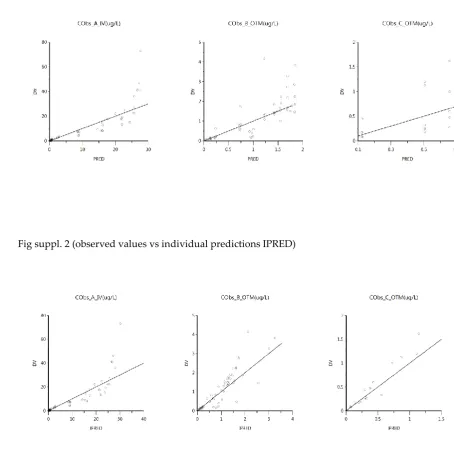
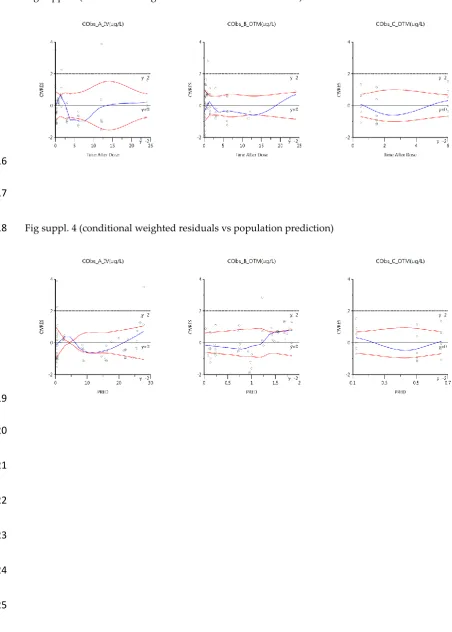
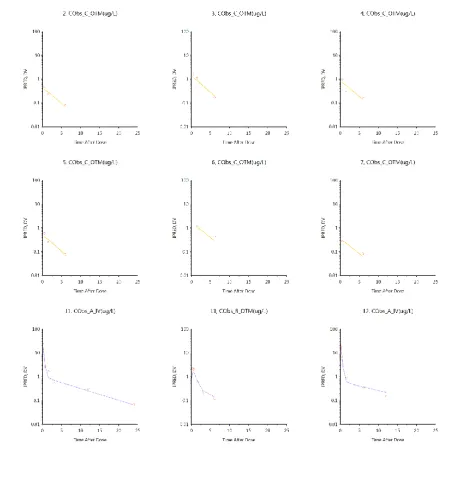
Results and goodness of fit plots:
392
The goodness of fit figures for the final PK model fitting (buprenorphine and metabolite) are included
393
thereafter:
394
- Fig suppl. 1: observed values vs population prediction,
395
- Fig suppl. 2: observed values vs individual predictions,
396
- Fig suppl. 4: conditional weighted residuals vs population prediction,
398
- Fig suppl. 5: individual observed concentrations and model predictions vs time,
399
400
Fig suppl. 1 (observed values vs population predictions PRED)
401
Legends: CObs_A_IV: buprenorphine after IV administration (Hedges et al, 2013), CObs_B_OTM:
402
buprenorphine after buccal administration (Hedges et al, 2013), CObs_C_OTM: buprenorphine after
403
buccal administration (present study), DV = dependent variable (observed value), PRED = population
404
predictions, IPRED = individual predictions
405
406
407
408
409
410
Fig suppl. 2 (observed values vs individual predictions IPRED)
411
412
414
Fig suppl. 3 (conditional weighted residuals vs time after dose)
415
416
417
Fig suppl. 4 (conditional weighted residuals vs population prediction)
418
419
420
421
422
423
424
Fig suppl. 5: Invididual observed concentrations and model predictions vs time. Cats 2 to 7 has
426
gingivostomatitis and were sparsely sampled after administration of buprenorphine 0.02 mg/kg
427
buccally (Formulation: Buprecare, Animalcare). Cats 11 to 16 were normal cats and were densely
428
sampled after administration of 0.02 mg/kg buprenorphine IV (CObs_A) and buccally (Cobs_B)
429
(Formulation: Buprenex, Reckitt Beckiser Pharmaceuticals)
430
431
432
434
435
436
437
438
439
440
Conflict of interest
442
The authors declared no potential conflict of interest for the completion of this study.
443
444
Funding
445
The authors received no kind of financial support for the research, authorship or publication of this
446
article.447
448
449
References
450
451
1.
Lascelles D, Capner C and Waterman-Pearson A. Current British veterinary attitudes to
452
perioperative analgesia for cats and. The Veterinary Record. 1999; 145: 601-4.
453
2.
Dohoo SE and Dohoo IR. Factors influencing the postoperative use of analgesics in dogs and
454
cats by Canadian veterinarians. The Canadian Veterinary Journal. 1996; 37: 552.
455
3.
Watson A, Nicholson A, Church D and Pearson M. Use of anti‐inflammatory and analgesic
456
drugs in dogs and cats. Australian veterinary journal. 1996; 74: 203-10.
457
4.
Bortolami E and Love EJ. Practical use of opioids in cats: a state-of-the-art, evidence-based
458
review. Journal of feline medicine and surgery. 2015; 17: 283-311.
459
5.
Lutfy K and Cowan A. Buprenorphine: a unique drug with complex pharmacology.
Current
460
neuropharmacology. 2004; 2: 395-402.
461
6.
Joubert K. The use of analgesic drugs by South African veterinarians: continuing education.
462
Journal of the South African Veterinary Association. 2001; 72: 57-60.
463
7.
Robertson S, Taylor P and Sear J. Systemic uptake of buprenorphine by cats after oral mucosal
464
administration. The veterinary record. 2003; 152: 675-8.
465
8.
Taylor P, Robertson S, Dixon M, et al. Morphine, pethidine and buprenorphine disposition in
466
the cat. Journal of veterinary pharmacology and therapeutics. 2001; 24: 391-8.
467
9.
Steagall P, Monteiro‐Steagall B and Taylor P. A review of the studies using buprenorphine in
468
cats. Journal of veterinary internal medicine. 2014; 28: 762-70.
469
10.
Robertson S, Lascelles B, Taylor P and Sear J. PK‐PD modeling of buprenorphine in cats:
470
intravenous and oral transmucosal administration1.
Journal of veterinary pharmacology and
471
therapeutics. 2005; 28: 453-60.
472
11.
Abbo LA, Ko DJC, Maxwell LK, Galinsky RE and Moody DE. Pharmacokinetics of buprenorphine
473
following intravenous and oral transmucosal administration in dogs. Veterinary therapeutics: research
474
in applied veterinary medicine. 2008.
475
12.
Ko JC, Freeman LJ, Barletta M, et al. Efficacy of oral transmucosal and intravenous
476
administration of buprenorphine before surgery for postoperative analgesia in dogs undergoing
477
13.
Giordano T, Steagall PV, Ferreira TH, et al. Postoperative analgesic effects of intravenous,
479
intramuscular, subcutaneous or oral transmucosal buprenorphine administered to cats undergoing
480
ovariohysterectomy. Veterinary anaesthesia and analgesia. 2010; 37: 357-66.
481
14.
Santos LCP, Ludders JW, Erb HN, Basher KL, Kirch P and Gleed RD. Sedative and
482
cardiorespiratory effects of dexmedetomidine and buprenorphine administered to cats via oral
483
transmucosal or intramuscular routes. Veterinary anaesthesia and analgesia. 2010; 37: 417-24.
484
15.
Mendelson J, Upton RA, Everhart ET, Iii PJ and Jones RT. Bioavailability of Sublingual
485
Buprenorphine. The Journal of Clinical Pharmacology. 1997; 37: 31-7.
486
16.
Hedges A, Pypendop BH, Shilo Y, Stanley SD and Ilkiw J. Impact of the blood sampling site on
487
time
–
concentration drug profiles following intravenous or buccal drug administration.
Journal of
488
veterinary pharmacology and therapeutics. 2014; 37: 145-50.
489
17.
Lyon KF. Gingivostomatitis. Veterinary Clinics of North America: small animal practice. 2005;
490
35: 891-911.
491
18.
Dolieslager SMJ, Lappin DF, Bennett D, Graham L, Johnston N and Riggio MP. The influence of
492
oral bacteria on tissue levels of Toll-like receptor and cytokine mRNAs in feline chronic
493
gingivostomatitis and oral health. Veterinary immunology and immunopathology. 2013; 151: 263-74.
494
19.
Dowers KL, Hawley JR, Brewer MM, Morris AK, Radecki SV and Lappin MR. Association of
495
Bartonella species, feline calicivirus, and feline herpesvirus 1 infection with gingivostomatitis in cats.
496
Journal of feline medicine and surgery. 2010; 12: 314-21.
497
20.
Leal R, Gil S, Mcgahie D, et al. The Use Of Oral Recombinant Feline Interferon-omega In
498
Naturally Feline Immunodeficiency Virus Infected Cats: New Insights Into An Alternative
499
Immunomodulation Therapy. Journal of Veterinary Internal Medicine. 2014; 28: 729.
500
21.
Healey KA, Dawson S, Burrow R, et al. Prevalence of feline chronic gingivo-stomatitis in first
501
opinion veterinary practice. Journal of Feline Medicine & Surgery. 2007; 9: 373-81.
502
22.
Brondani JT, Mama KR, Luna SP, et al. Validation of the English version of the UNESP-Botucatu
503
multidimensional composite pain scale for assessing postoperative pain in cats.
BMC veterinary
504
research. 2013; 9: 143.
505
23.
Lommer MJ. Efficacy of cyclosporine for chronic, refractory stomatitis in cats: A randomized,
506
placebo-controlled, double-blinded clinical study. Journal of veterinary dentistry. 2013; 30: 8-17.
507
24.
McKeown DA LT, Button J, et al. . A sensitive and specific liquid chromatography
–
tandem mass
508
spectrometry method for the analysis of buprenorphine and norbuprenorphine in human plasma. In:
509
Monitoring: TD, (ed.).
10th International Congress of Therapeutic Drug Monitoring & Clinical
510
Toxicology Nice, France2007, p. 460-551.
511
25.
Food U and Administration D. FDA guidance for industry: bioanalytical method validation. US
512
Department of Health and Human Services, Food and Drug Administration, Center for Drug Evaluation
513
and Research: Rockville, MD. 2001.
514
26.
Hedges A, Pypendop BH, Shilo‐Benjamini Y, Stanley SD and Ilkiw J. Pharmacokinetics of
515
buprenorphine following intravenous and buccal administration in cats, and effects on thermal
516
threshold. Journal of veterinary pharmacology and therapeutics. 2014; 37: 252-9.
517
27.
Pelligand L, Soubret A, King J, Elliott J and Mochel J. Modeling of Large Pharmacokinetic Data
518
Using Nonlinear Mixed‐Effects: A Paradigm Shift in Veterinary Pharmacology. A Case Study With
519
Robenacoxib in Cats. CPT: Pharmacometrics & Systems Pharmacology. 2016; 5: 625-35.
520
28.
Preoteasa E, Tâncu A, Iosif L, Imre MM, Murariu-
Măgureanu C and Pr
eoteasa C. Salivary
521
changes related to systemic diseases in the edentulous patients. Journal of medicine and life. 2014; 7:
522
577.
523
29.
Patel VF, Liu F and Brown MB. Advances in oral transmucosal drug delivery.
Journal of
524
controlled release. 2011; 153: 106-16.
525
30.
Merola I and Mills DS. Systematic review of the behavioural assessment of pain in cats. Journal
526
of feline medicine and surgery. 2016; 18: 60-76.
527
31.
Ellis SL. Environmental enrichment: practical strategies for improving feline welfare.
Journal
528
32.
Rodan I. Understanding feline behavior and application for appropriate handling and
530
management. Topics in companion animal medicine. 2010; 25: 178-88.
531
33.
Southerden P. Review of feline oral disease 1. Periodontitis and chronic gingivostomatitis. In
532
Practice. 2010; 32: 2-7.
533
34.
Chhabra N, Sharma P, Chhabra S and Gupta N. Efficacy of buprenorphine added to 2%
534
lignocaine plus adrenaline 1: 80,000 in providing postoperative analgesia after lower third molar
535
surgery. International Journal of Oral and Maxillofacial Surgery. 2016; 45: 1644-51.
536
35.
Madhav NS, Shakya AK, Shakya P and Singh K. Orotransmucosal drug delivery systems: a
537
review. Journal of controlled release. 2009; 140: 2-11.
538
36.
Bortolami E, Slingsby L and Love E. Comparison of two formulations of buprenorphine in cats
539
administered by the oral transmucosal route. Veterinary Anaesthesia and Analgesia. 2011; 38: 21-2.
540
37.
Malinoff HL, Barkin RL and Wilson G. Sublingual buprenorphine is effective in the treatment
541
of chronic pain syndrome. American journal of therapeutics. 2005; 12: 379-84.
542
38.
Taylor P, Steagall P, Dixon M, Ferreira T and Luna SPL. Carprofen and buprenorphine prevent
543
hyperalgesia in a model of inflammatory pain in cats.
Research in veterinary science. 2007; 83:
369-544
75.
545
39.
Karlsson MO and Savic RM. Diagnosing model diagnostics.
Clinical pharmacology and
546
therapeutics. 2007; 82: 17-20.
547