R E V I E W
Open Access
Where do we stand? The availability and
efficacy of diabetes related foot health
programs for Aboriginal and Torres Strait
Islander Australians: a systematic review
Vivienne Chuter
1,2*, Matthew West
1, Fiona Hawke
1and Angela Searle
1Abstract
Background:Aboriginal and Torres Islander Australians experience considerably higher rates of diabetes and diabetes related foot complications and amputations than non-Indigenous Australians. Therefore there is a need to identify aspects of Aboriginal and Torres Islander focussed foot health programs that have had successful outcomes in reducing diabetes related foot complications. Wider knowledge and implementation of these programs may help reduce the high burden of diabetes related foot disease experienced by Aboriginal and Torres Islander Australians. Methods:PubMeD, Informit Indigenous collection, CINAHL, SCOPUS, the Cochrane Library and grey literature sources were searched to 28th August 2018. We included any published reports or studies of stand-alone diabetes related foot care interventions, programs, services, educational resources or assessment of these interventions, designed for Aboriginal and Torres Strait Islander Australians.
Results: Thirteen studies detailing interventions in the Northern Territory, New South Wales, Queensland and Western Australia met the inclusion criteria. Five reports described delivery of podiatry services while the other eight investigated educational and training programs. Half of the reports related to aspects of the Indigenous Diabetic Foot program which provides culturally appropriate foot education and training workshops for health care providers. One article reported quantitative data related to clinical patient outcome measures.
Conclusions:No state- or nation-wide foot health programs for prevention of diabetes related foot complications in Aboriginal and Torres Strait Islander Australians were identified. One program achieved high adherence to the national guidelines regarding timing of podiatry review treatments through use of an evidence based foot risk classification tool and provision of services in a culturally appropriate centre.
Keywords:Aboriginal and Torres Strait islander, Indigenous, Foot, Diabetes, Program, Prevention
Background
Diabetes mellitus is one of the fastest growing chronic diseases in the world [1]. Aboriginal and Torres Islander Australians experience four times the rate of diabetes compared to non-Indigenous Australians, with an over-all incidence of 13% [2], and rates as high as 42% re-ported in some remote communities [3]. As the leading
cause of lower limb amputation, and with high rates of as-sociated mortality, diabetes related foot complications are a major but poorly recognised health care burden in Australia, estimated to cost in excess of $1.6 billion annu-ally [4, 5]. Evidence demonstrates Aboriginal and Torres Islander Australians have a three to six fold increased risk of diabetes related foot complications including neur-opathy, foot ulcer and lower limb amputation compared to non-Indigenous Australians [6,7].
Consequently the National Health and Medical Re-search Council Guidelines for the prevention of foot complications in diabetes state that ‘Until adequately
© The Author(s). 2019Open AccessThis article is distributed under the terms of the Creative Commons Attribution 4.0 International License (http://creativecommons.org/licenses/by/4.0/), which permits unrestricted use, distribution, and reproduction in any medium, provided you give appropriate credit to the original author(s) and the source, provide a link to the Creative Commons license, and indicate if changes were made. The Creative Commons Public Domain Dedication waiver (http://creativecommons.org/publicdomain/zero/1.0/) applies to the data made available in this article, unless otherwise stated. * Correspondence:[email protected]
1Faculty of Health and Medicine, School of Health Sciences, University of Newcastle, PO Box 127, Ourimbah, NSW 2258, Australia
assessed all Aboriginal and Torres Strait Islander people with diabetes are considered to be at high risk of develop-ing foot complications and therefore will require foot checks at every clinical encounter and active follow-up’ [8]. International guidelines suggest that up to 85% of dia-betes related amputations could be prevented with early detection of problems and appropriate treatment [9]. Des-pite the evident need for effective preventative foot care in this population, available data indicate poor engagement with existing preventative care services in contrast to high rates of related hospitalisation and amputation [6,7,10].
A number of examples of culturally safe services for Aboriginal and Torres Strait Islander communities in Australia have increased access to combined diabetes care services and improved patient outcomes [11–17]. These share common characteristics, including commu-nity consultation in the development, implementation and ongoing management of the service; involvement of Aboriginal Health Workers (AHW); and a focus on self-management and patient participation in health through improved health literacy. There is an obvious and urgent need to identify similarly successful stand-alone foot health programs for the prevention of diabetes related foot complications in Aboriginal and Torres Strait Islander Australians.
Methods
An electronic database search of PubMeD (using Lit.-search https://www.lowitja.org.au/litsearch from the Lowitja Institute which was developed as a search tool for Aboriginal and Torres Strait Islander health articles), Informit Indigenous collection, CINAHL, SCOPUS, and the Cochrane Library was conducted from database in-ception to 28th August 2018. Additional hand searches of grey literature sources were also conducted including of the Lowitja Institute, Menzies School of Health Re-search, Australian Indigenous HealthInfoNet (www. healthinfonet.ecu.edu.au), Services for Australian Rural and Remote Allied Health (www.sarrah.org.au), and the Australia Institute of Health and Welfare (http://www. aihw.gov.au/). Reference lists of included studies, clinical guidelines and review articles were also searched. Au-thors of included studies and reports were contacted where intentions of further evaluation was stated, and, where information was provided, it has been included in this review. The PubMed search strategy as generated from the Lowitja Institute is detailed in Additional file1. Inclusion criteria were any published reports of stand-alone diabetes related foot care interventions, pro-grams, services, educational resources or assessment of these interventions, designed for Aboriginal and Torres Strait Islander Australians. Interventions were excluded if foot care was embedded within a broader health pro-gram due to likelihood of variability in the extent and
reporting of the foot care component, and, the confound-ing effect of the broader health care program on foot specific outcomes. Foot care programs not designed spe-cifically for Aboriginal and Torres Strait Islander Austra-lians were also excluded. One reviewer conducted the electronic searches (AS). Titles and abstracts were inde-pendently assessed by two reviewers (AS and VC). Dis-agreements were resolved by consensus and a third reviewer where necessary (MW).
Extraction of the study data and assessment of the methodological quality of the included studies was con-ducted by two authors (AS and VC) using the Observa-tional Study and Qualitative Study Appraisal Checklists designed by Health Evidence Bulletins – Wales [18]. These checklists are designed for critical appraisal of ob-servational and qualitative studies and were selected as they include a small number of key domains, are simple checklists rather than scales and were developed using a variety of literature sources [19].
Results
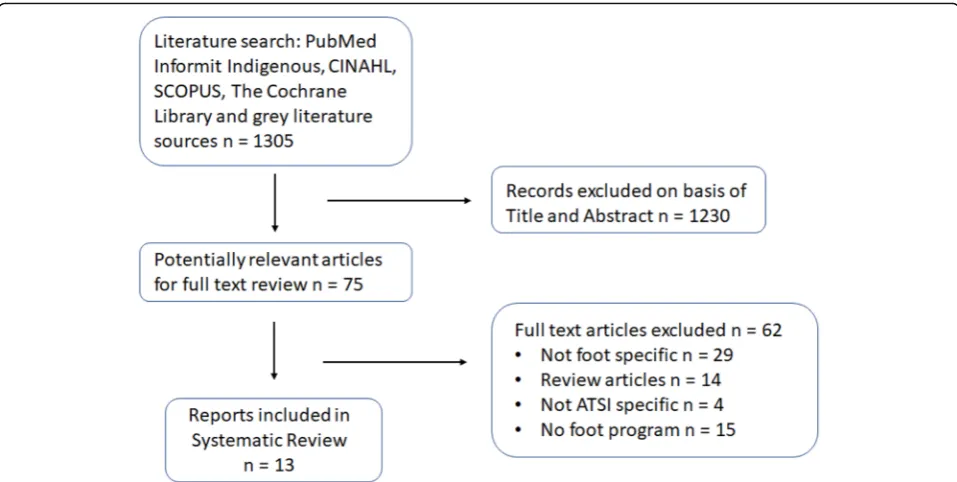
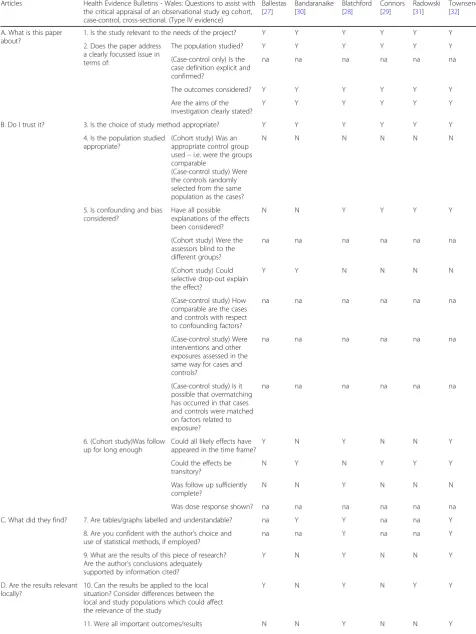
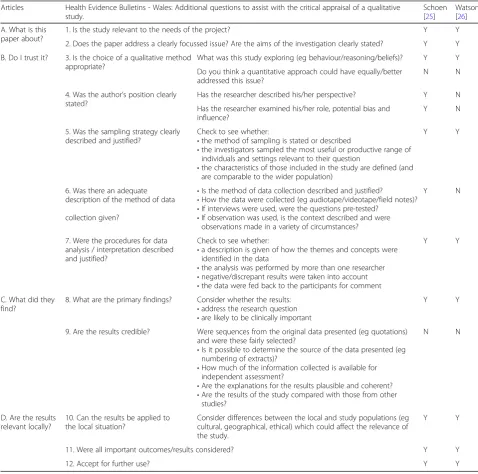
The database and literature search resulted in a total of 1305 citations of which 75 were appropriate for full text review (Fig.1). After review, 13 articles met the inclusion criteria (Table 1), and 62 studies were excluded (Add-itional file2). The methodological quality of the included articles is detailed in Tables2and3. Five articles were re-ports providing overviews of services provided or mate-rials produced so quality assessment was not considered appropriate [20–24]. Of the remaining articles, two were qualitative studies [25, 26] and six were cohort or cross-sectional studies [27–32]. All of the studies provided detailed information regarding the population studied and aims of the investigations. One of the studies reviewed mainly hospital-based renal dialysis patients, which could make comparison to wider community-based populations difficult [30]. None of the trials reported any cost informa-tion related to development or implementainforma-tion of the interventions.
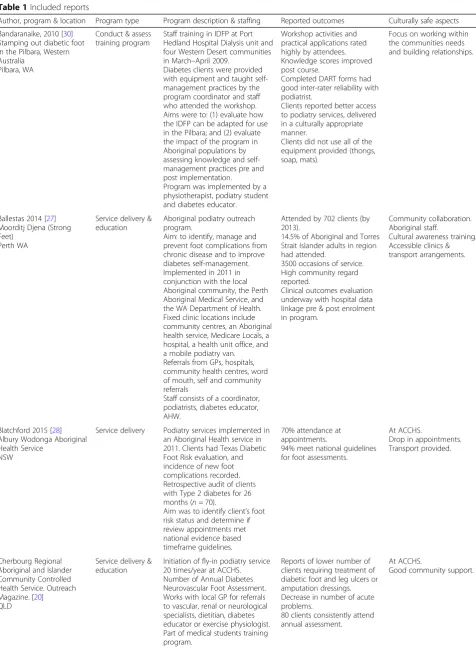
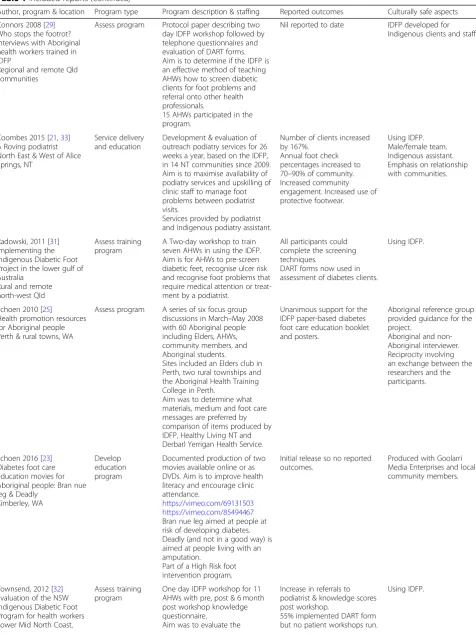
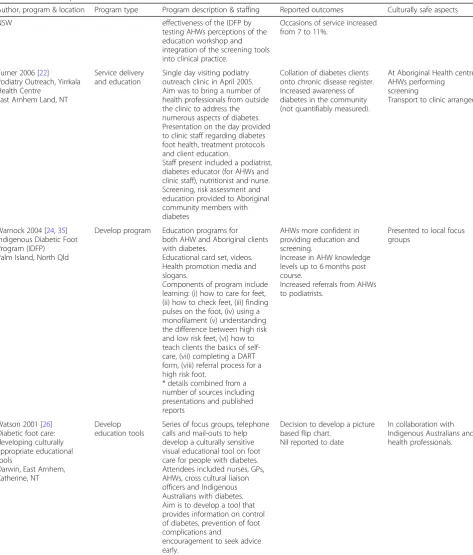
The thirteen articles detailed foot programs which were conducted in New South Wales (NSW), Queensland (QLD), Western Australia (WA) and the Northern Terri-tory (NT) with the majority in rural, regional or remote areas (Table1). Five of the articles described delivery of po-diatry services to Aboriginal communities [20–22, 27, 28, 33], three described the development of specific foot educa-tion resources [23,24,26], and the remaining five assessed foot educational and training programs [25, 29–32]. Seven of the thirteen reports described aspects of the Indigenous Diabetic Foot Program (IDFP) [21,24,25,29–32].
Delivery of podiatry services
which was initially funded as part of the Australian Fed-eral Government’s ‘Closing the Gap’ program [27, 34]. The program’s aim is to identify, manage and prevent
foot complications and to improve diabetes
self-management. Culturally secure treatment is offered in community venues as well as two customised mobile vans. Staff include AHWs, podiatrists and diabetes edu-cators. An initial review of the program describes the number of clients seen, occasions of service, percentage of local Aboriginal and Torres Strait Islander clients with diabetes seen by the clinic (14.5%), and staff per-ceptions of the program.
One study outlines the findings from a retrospective 26 month (2012 to 2014) clinical audit undertaken at the Albury-Wodonga Aboriginal Health Service (AHS) in NSW. [28] Podiatry services only commenced at the health service in 2011 and the audit’s aim was to determine if evidence based standards for podiatry services based on the patients risk classification were being met. In the sample population (n = 729) a high rate (94%) of adherence to the national guidelines re-garding podiatric review timeframes was found. The authors suggested that the excellent outcomes may be due to provision of services according to national guidelines, in a culturally safe manner, alongside flex-ible arrangements such as drop in appointments and access to transport services [28].
The establishment of podiatry outreach services in re-mote communities is described by three reports [20–22].
Table 1Included reports
Author, program & location Program type Program description & staffing Reported outcomes Culturally safe aspects
Bandaranaike, 2010 [30] Stamping out diabetic foot in the Pilbara, Western Australia
Pilbara, WA
Conduct & assess training program
Staff training in IDFP at Port Hedland Hospital Dialysis unit and four Western Desert communities in March–April 2009.
Diabetes clients were provided with equipment and taught self-management practices by the program coordinator and staff who attended the workshop. Aims were to: (1) evaluate how the IDFP can be adapted for use in the Pilbara; and (2) evaluate the impact of the program in Aboriginal populations by assessing knowledge and self-management practices pre and post implementation.
Program was implemented by a physiotherapist, podiatry student and diabetes educator.
Workshop activities and practical applications rated highly by attendees. Knowledge scores improved post course.
Completed DART forms had good inter-rater reliability with podiatrist.
Clients reported better access to podiatry services, delivered in a culturally appropriate manner.
Clients did not use all of the equipment provided (thongs, soap, mats).
Focus on working within the communities needs and building relationships.
Ballestas 2014 [27] Moorditj Djena (Strong Feet)
Perth WA
Service delivery & education
Aboriginal podiatry outreach program.
Aim: to identify, manage and prevent foot complications from chronic disease and to improve diabetes self-management. Implemented in 2011 in conjunction with the local Aboriginal community, the Perth Aboriginal Medical Service, and the WA Department of Health. Fixed clinic locations include community centres, an Aboriginal health service, Medicare Locals, a hospital, a health unit office, and a mobile podiatry van. Referrals from GPs, hospitals, community health centres, word of mouth, self and community referrals
Staff consists of a coordinator, podiatrists, diabetes educator, AHW.
Attended by 702 clients (by 2013).
14.5% of Aboriginal and Torres Strait Islander adults in region had attended.
3500 occasions of service. High community regard reported.
Clinical outcomes evaluation underway with hospital data linkage pre & post enrolment in program.
Community collaboration. Aboriginal staff.
Cultural awareness training. Accessible clinics & transport arrangements.
Blatchford 2015 [28] Albury Wodonga Aboriginal Health Service
NSW
Service delivery Podiatry services implemented in an Aboriginal Health service in 2011. Clients had Texas Diabetic Foot Risk evaluation, and incidence of new foot complications recorded. Retrospective audit of clients with Type 2 diabetes for 26 months (n= 70).
Aim was to identify client’s foot risk status and determine if review appointments met national evidence based timeframe guidelines.
70% attendance at appointments.
94% meet national guidelines for foot assessments.
At ACCHS.
Drop in appointments. Transport provided.
Cherbourg Regional Aboriginal and Islander Community Controlled Health Service. Outreach Magazine. [20] QLD
Service delivery & education
Initiation of fly-in podiatry service 20 times/year at ACCHS. Number of Annual Diabetes Neurovascular Foot Assessment. Works with local GP for referrals to vascular, renal or neurological specialists, dietitian, diabetes educator or exercise physiologist. Part of medical students training program.
Reports of lower number of clients requiring treatment of diabetic foot and leg ulcers or amputation dressings. Decrease in number of acute problems.
80 clients consistently attend annual assessment.
At ACCHS.
Table 1Included reports(Continued)
Author, program & location Program type Program description & staffing Reported outcomes Culturally safe aspects
Connors 2008 [29] Who stops the footrot? Interviews with Aboriginal health workers trained in IDFP
Regional and remote Qld communities
Assess program Protocol paper describing two day IDFP workshop followed by telephone questionnaires and evaluation of DART forms. Aim is to determine if the IDFP is an effective method of teaching AHWs how to screen diabetic clients for foot problems and referral onto other health professionals.
15 AHWs participated in the program.
Nil reported to date IDFP developed for Indigenous clients and staff.
Coombes 2015 [21,33] A Roving podiatrist North East & West of Alice Springs, NT
Service delivery and education
Development & evaluation of outreach podiatry services for 26 weeks a year, based on the IDFP, in 14 NT communities since 2009. Aim is to maximise availability of podiatry services and upskilling of clinic staff to manage foot problems between podiatrist visits.
Services provided by podiatrist and Indigenous podiatry assistant.
Number of clients increased by 167%.
Annual foot check percentages increased to 70–90% of community. Increased community engagement. Increased use of protective footwear.
Using IDFP. Male/female team. Indigenous assistant. Emphasis on relationship with communities.
Radowski, 2011 [31] Implementing the Indigenous Diabetic Foot Project in the lower gulf of Australia
Rural and remote north-west Qld
Assess training program
A Two-day workshop to train seven AHWs in using the IDFP. Aim is for AHWs to pre-screen diabetic feet, recognise ulcer risk and recognise foot problems that require medical attention or treat-ment by a podiatrist.
All participants could complete the screening techniques.
DART forms now used in assessment of diabetes clients.
Using IDFP.
Schoen 2010 [25]
Health promotion resources for Aboriginal people Perth & rural towns, WA
Assess program A series of six focus group discussions in March–May 2008 with 60 Aboriginal people including Elders, AHWs, community members, and Aboriginal students.
Sites included an Elders club in Perth, two rural townships and the Aboriginal Health Training College in Perth.
Aim was to determine what materials, medium and foot care messages are preferred by comparison of items produced by IDFP, Healthy Living NT and Derbarl Yerrigan Health Service.
Unanimous support for the IDFP paper-based diabetes foot care education booklet and posters.
Aboriginal reference group provided guidance for the project.
Aboriginal and non-Aboriginal interviewer. Reciprocity involving an exchange between the researchers and the participants.
Schoen 2016 [23] Diabetes foot care education movies for Aboriginal people: Bran nue leg & Deadly
Kimberley, WA
Develop education program
Documented production of two movies available online or as DVDs. Aim is to improve health literacy and encourage clinic attendance.
https://vimeo.com/69131503 https://vimeo.com/85494467
Bran nue leg aimed at people at risk of developing diabetes. Deadly (and not in a good way) is aimed at people living with an amputation.
Part of a High Risk foot intervention program.
Initial release so no reported outcomes.
Produced with Goolarri Media Enterprises and local community members.
Townsend, 2012 [32] Evaluation of the NSW Indigenous Diabetic Foot Program for health workers Lower Mid North Coast,
Assess training program
One day IDFP workshop for 11 AHWs with pre, post & 6 month post workshop knowledge questionnaire.
Aim was to evaluate the
Increase in referrals to podiatrist & knowledge scores post workshop.
55% implemented DART form but no patient workshops run.
Outreach Fund [20]. The podiatrist visits twenty times a year and also encourages attendance for an annual diabetes neurovascular foot assessment. The program
is supported by the medical community with the local general practitioner (GP) providing follow-up care and referrals to specialists as required.
Table 1Included reports(Continued)
Author, program & location Program type Program description & staffing Reported outcomes Culturally safe aspects
NSW effectiveness of the IDFP by
testing AHWs perceptions of the education workshop and integration of the screening tools into clinical practice.
Occasions of service increased from 7 to 11%.
Turner 2006 [22] Podiatry Outreach, Yirrkala Health Centre
East Arnhem Land, NT
Service delivery and education
Single day visiting podiatry outreach clinic in April 2005. Aim was to bring a number of health professionals from outside the clinic to address the numerous aspects of diabetes. Presentation on the day provided to clinic staff regarding diabetes foot health, treatment protocols and client education.
Staff present included a podiatrist, diabetes educator (for AHWs and clinic staff), nutritionist and nurse. Screening, risk assessment and education provided to Aboriginal community members with diabetes
Collation of diabetes clients onto chronic disease register. Increased awareness of diabetes in the community (not quantifiably measured).
At Aboriginal Health centre. AHWs performing screening
Transport to clinic arranged.
Warnock 2004 [24,35] Indigenous Diabetic Foot Program (IDFP) Palm Island, North Qld
Develop program Education programs for both AHW and Aboriginal clients with diabetes.
Educational card set, videos. Health promotion media and slogans.
Components of program include learning: (i) how to care for feet, (ii) how to check feet, (iii) finding pulses on the foot, (iv) using a monofilament (v) understanding the difference between high risk and low risk feet, (vi) how to teach clients the basics of self-care, (vii) completing a DART form, (viii) referral process for a high risk foot.
* details combined from a number of sources including presentations and published reports
AHWs more confident in providing education and screening.
Increase in AHW knowledge levels up to 6 months post course.
Increased referrals from AHWs to podiatrists.
Presented to local focus groups
Watson 2001 [26] Diabetic foot care: developing culturally appropriate educational tools
Darwin, East Arnhem, Katherine, NT
Develop education tools
Series of focus groups, telephone calls and mail-outs to help develop a culturally sensitive visual educational tool on foot care for people with diabetes. Attendees included nurses, GPs, AHWs, cross cultural liaison officers and Indigenous Australians with diabetes. Aim is to develop a tool that provides information on control of diabetes, prevention of foot complications and
encouragement to seek advice early.
Decision to develop a picture based flip chart.
Nil reported to date
In collaboration with Indigenous Australians and health professionals.
Table 2Quality Assessment of Included Studies - cohort, case-control, cross-sectional studies
Articles Health Evidence Bulletins - Wales: Questions to assist with the critical appraisal of an observational study eg cohort, case-control, cross-sectional. (Type IV evidence)
Ballestas [27]
Bandaranaike [30]
Blatchford [28]
Connors [29]
Radowski [31]
Townsend [32] A. What is this paper
about?
1. Is the study relevant to the needs of the project? Y Y Y Y Y Y
2. Does the paper address a clearly focussed issue in terms of:
The population studied? Y Y Y Y Y Y
(Case-control only) Is the case definition explicit and confirmed?
na na na na na na
The outcomes considered? Y Y Y Y Y Y
Are the aims of the investigation clearly stated?
Y Y Y Y Y Y
B. Do I trust it? 3. Is the choice of study method appropriate? Y Y Y Y Y Y
4. Is the population studied appropriate?
(Cohort study) Was an appropriate control group used–i.e. were the groups comparable
(Case-control study) Were the controls randomly selected from the same population as the cases?
N N N N N N
5. Is confounding and bias considered?
Have all possible explanations of the effects been considered?
N N Y Y Y Y
(Cohort study) Were the assessors blind to the different groups?
na na na na na na
(Cohort study) Could selective drop-out explain the effect?
Y Y N N N N
(Case-control study) How comparable are the cases and controls with respect to confounding factors?
na na na na na na
(Case-control study) Were interventions and other exposures assessed in the same way for cases and controls?
na na na na na na
(Case-control study) Is it possible that overmatching has occurred in that cases and controls were matched on factors related to exposure?
na na na na na na
6. (Cohort study)Was follow up for long enough
Could all likely effects have appeared in the time frame?
Y N Y N N Y
Could the effects be transitory?
N Y N Y Y Y
Was follow up sufficiently complete?
N N Y N N N
Was dose response shown? na na na na na na
C. What did they find? 7. Are tables/graphs labelled and understandable? na Y Y na na Y
8. Are you confident with the author’s choice and use of statistical methods, if employed?
na na Y na na Y
9. What are the results of this piece of research? Are the author’s conclusions adequately supported by information cited?
Y N Y N N Y
D. Are the results relevant locally?
10. Can the results be applied to the local situation? Consider differences between the local and study populations which could affect the relevance of the study
Y N Y N Y Y
Table 3Quality Assessment of Included Studies - qualitative studies
Articles Health Evidence Bulletins - Wales: Additional questions to assist with the critical appraisal of a qualitative study.
Schoen [25]
Watson [26] A. What is this
paper about?
1. Is the study relevant to the needs of the project? Y Y
2. Does the paper address a clearly focussed issue? Are the aims of the investigation clearly stated? Y Y
B. Do I trust it? 3. Is the choice of a qualitative method appropriate?
What was this study exploring (eg behaviour/reasoning/beliefs)? Y Y
Do you think a quantitative approach could have equally/better addressed this issue?
N N
4. Was the author’s position clearly stated?
Has the researcher described his/her perspective? Y N
Has the researcher examined his/her role, potential bias and influence?
Y N
5. Was the sampling strategy clearly described and justified?
Check to see whether:
•the method of sampling is stated or described
•the investigators sampled the most useful or productive range of individuals and settings relevant to their question
•the characteristics of those included in the study are defined (and are comparable to the wider population)
Y Y
6. Was there an adequate description of the method of data
collection given?
•Is the method of data collection described and justified?
•How the data were collected (eg audiotape/videotape/field notes)? •If interviews were used, were the questions pre-tested?
•If observation was used, is the context described and were observations made in a variety of circumstances?
Y N
7. Were the procedures for data analysis / interpretation described and justified?
Check to see whether:
•a description is given of how the themes and concepts were identified in the data
•the analysis was performed by more than one researcher •negative/discrepant results were taken into account •the data were fed back to the participants for comment
Y Y
C. What did they find?
8. What are the primary findings? Consider whether the results: •address the research question •are likely to be clinically important
Y Y
9. Are the results credible? Were sequences from the original data presented (eg quotations) and were these fairly selected?
•Is it possible to determine the source of the data presented (eg numbering of extracts)?
•How much of the information collected is available for independent assessment?
•Are the explanations for the results plausible and coherent? •Are the results of the study compared with those from other
studies?
N N
D. Are the results relevant locally?
10. Can the results be applied to the local situation?
Consider differences between the local and study populations (eg cultural, geographical, ethical) which could affect the relevance of the study.
Y Y
11. Were all important outcomes/results considered? Y Y
12. Accept for further use? Y Y
Table 2Quality Assessment of Included Studies - cohort, case-control, cross-sectional studies(Continued) Articles Health Evidence Bulletins - Wales: Questions to assist with
the critical appraisal of an observational study eg cohort, case-control, cross-sectional. (Type IV evidence)
Ballestas [27]
Bandaranaike [30]
Blatchford [28]
Connors [29]
Radowski [31]
Townsend [32] considered?
12. Is any cost information provided? N N N N N N
Development of foot educational resources
The Indigenous Diabetic Foot Program (IDFP) is the most widely used template for delivery of diabetes re-lated podiatry services to Aboriginal and Torres Strait Islander Australians. The IDFP was developed in QLD in 2005 to provide culturally appropriate foot education for Aboriginal and Torres Strait Islander Australians and training workshops for AHWs and podiatrists regarding diabetic foot screening [24,35]. The education resources developed for clients are mostly visual aids (posters, a CD ROM, videos and an educational card set), which feature Aboriginal feet and stories. Resources for AHWs and podiatrists include a Diabetic Foot Assessment of Risk (DART) form, a self-care education model for use with clients, and advice on referral pathways if required. The DART form requires assessment of the foot (pulses, sensation, foot lesions and deformities, amputations or scars), assessment of client self-care practices (awareness of the need for foot care, wearing footwear, and ability for self-care), assessment of an overall risk classification and a date for future foot review.
The development of culturally sensitive visual educa-tional resources for Aboriginal and Torres Strait Islander Australians are described by two studies [23, 26]. Two diabetes foot care movies (‘Bran nue leg’ and ‘Deadly (and not in a good way)’) were produced as part of a lar-ger High Risk Foot intervention in WA [23]. An Abori-ginal media company and local Kimberly community members were involved in production of the movies, en-suring the message was delivered in a culturally sensitive manner. The aim was to improve health literacy related to at-risk feet, and encourage early presentation to health services for foot problems by Aboriginal Austra-lians in the Kimberley. The report described the recent development and release of the movies and we did not identify any follow up report of the evaluation or effect-iveness of the movies. Another study details the pro-cesses behind the creation of a foot care educational tool for Aboriginal and Torres Strait Islander Australians in the NT [26]. The preferred educational resource, a graphical flip-chart, was determined following a work-shop and a series of focus groups with health profes-sionals (including general practitioners, nurses, and AHWs) and Aboriginal and Torres Strait Islander Aus-tralians with diabetes. Again, the study was published prior to the release of the materials, and assessment of the effectiveness of the tool was not identified in this review.
Assessment of foot educational and training programs
Assessment of aspects of the IDFP is described by five reports [25, 29–32]. One study conducted focus groups with 60 Aboriginal Elders, health workers, students and nurses, to determine their preferred messages and media
for communication of diabetes foot care information [25]. The paper-based resources produced by the IDFP, with photographs of feet of Aboriginal and Torres Strait Islander Australians, were the participants’ favoured option.
The other four studies describe training and evaluation of AHWs knowledge and competency when using the IDFP [29–32]. One report described a protocol for a two-day IDFP workshop in QLD to teach AHWs how to screen for diabetes related foot problems. Follow up in-vestigations included telephone questionnaires with AHWs, examination of completed DART forms and comparison of completed DART forms versus number of people in the community with diabetes [29]. No pub-lished assessment of the workshop was identified during this search. Another report describes the evaluation of the IDFP in a hospital site and four remote communities in the Pilbara WA [30]. Workshop attendees completed a workshop evaluation form and DART forms completed in the hospital were cross-checked by a podiatrist. Com-munity members were assessed regarding their percep-tions of the course as well as knowledge and self-care for diabetic feet. Feedback suggested that the program was culturally safe and improvements were seen in com-munity member’s knowledge and self-care pre and post course. An assessment of AHWs perceptions of the IDFP following a one day course and integration of the tools into practice was also conducted on the Lower Mid Coast of NSW [32]. The participants had higher knowledge and confidence levels immediately after and six months after the workshop. Just over half (55%) of participants implemented the DART screening form into clinical practice, however none had implemented a‘Look after your feet workshop’, which is one of the patient education components of the IDFP. While an increase in the number of Aboriginal and Torres Strait Is-lander people attending the podiatrist was also reported, this could not be attributed to the effects of the training as the number of referrals from course attendees was not tracked. The final report describes a two-day IDFP workshop run in the Lower Gulf area in QLD to train AHWs in screening diabetic feet [31]. Following the training, the AHWs implemented the DART form as a standard for all clients with diabetes.
Discussion
The aim of this review was to systematically evaluate the current literature to determine the availability and effect-iveness of stand-alone foot health programs for the pre-vention of diabetes related foot complications in Aboriginal and Torres Strait Islander Australians.
programs for prevention of diabetes related foot compli-cations were identified in the literature. Benefits of exist-ing foot care programs for Aboriginal and Torres Strait Islander peoples are therefore largely restricted to the area/s in which they are delivered. Of the thirteen re-ports that met the inclusion criteria (Table 1), one de-tailed quantitative data related to clinical patient outcome measures following implementation of the pro-gram [28]. The most widely used propro-gram, the IDFP (In-digenous Diabetic Foot Program), has been assessed with regard to workshop attendee competency and client perceptions of the educational material provided. Evalu-ation of the IDFP’s impact in terms of patient outcomes and rates of diabetes related foot complications is yet to be undertaken/published [35].
Despite years of research, Aboriginal and Torres Strait Islander Australians still have worse health outcomes than non-Indigenous Australians. A key criticism of the re-search to date, both in Australia and in Indigenous popu-lations of other countries, is a high concentration of descriptive research regarding populations, risks and mea-sures, rather than a focus on assessment of the efficacy of interventions to close the health outcome gap [36,37]. To enable an intervention to be successfully and widely im-plemented by front-line clinicians it must meet rigorously designed methodological standards, it must have been tested for its effectiveness and reproducibility, and it must be easily accessible in peer reviewed literature [36]. While six of thirteen reports (46%) in this review do describe in-terventions, only one (8%) of the reports [28] describes pa-tient based clinical outcomes following implementation of a podiatry service. Overall, methodological quality of the studies that were eligible to be assessed was mixed. Lack of robust assessment of outcome data, including compari-son to control data in relation to patient outcomes, was common to all studies. In addition, reporting of economic analysis related to development or implementation of the interventions was not provided in any study. Lack of doc-umented follow-up evaluation of interventions, similar to that seen in the stand-alone foot programs in this review, has been described previously. A report investigating the implementation of 1082 Australian Indigenous health, cul-tural and education programs, found only 8% of programs were evaluated [38]. Additionally, in contrast to non-Indigenous health interventions, the majority of the reports included in this review were published in non-peer reviewed grey literature. These factors make it challenging for clinicians and researchers to locate and implement best practice evidence in relation to foot health programs for the prevention of diabetes related foot com-plications in Aboriginal and Torres Strait Islander Australians.
Although assessment of clinical outcomes following implementation of foot health strategies has not been
commonplace in the past that seems to be changing. The current lack of evidence regarding successful com-ponents of Aboriginal and Torres Strait Islander fo-cussed foot health programs in reducing diabetes related foot complications has been clearly recognised by those working in clinical areas. Programs and assessments that are currently underway have incorporated clinical and cost outcomes as part of their implementation plans. In WA the Moorditj Djena program [27] has recently con-ducted an internal review, the results of which will be published upon completion (private correspondence). The review includes a data linkage project to examine participant outcomes pre and post enrolment in the pro-gram. In particular, they examined the population reach of the program, the reach in high-risk settings, occasions of service versus comorbidity, and the number and dur-ation of hospitalisdur-ations for diabetes-related conditions. NSW Health is currently in the planning stages of a Healthy Deadly Foot initiative (private correspondence). It has the potential to be the largest foot health program for Aboriginal and Torres Strait Islander Australians im-plemented to date. One metropolitan local health district (Central Coast), three rural and regional local health dis-tricts (Hunter New England, Illawarra Shoalhaven, West-ern NSW), and one speciality network (St. Vincent’s Health Network) have committed to the project. Goals include the development of AHW roles in local health districts and Aboriginal communities, delivery of appro-priate cultural and clinical support, encouraging more Aboriginal and Torres Strait Islander people to train as podiatrists and an evaluation strategy to examine the outcomes of the project. In addition, in 2018, the au-thors of this report embedded an Aboriginal and Torres Strait Islander foot health clinic into the undergraduate podiatry program at the University of Newcastle. The clinic, led by an Aboriginal podiatrist and AHW, pro-vides prevention and management services for diabetic foot complications for Aboriginal and Torres Strait Is-lander Australians in the local community. It also pro-vides clinical placement to all undergraduate podiatry students as a mechanism to increase cultural awareness in the future podiatry workforce. The service is currently undergoing clinical and educational outcome evaluation for peer-reviewed publication. This includes evaluation of service utilisation with historical control data for the broader clinical service, effectiveness of diabetes education for improving client knowledge of diabetes self-care, and post-placement changes in self-perceived confidence in provision of culturally safe care in undergraduate students.
Australian health initiatives involving diabetes related foot disease specifically delivered for Aboriginal and Torres Strait Islander Australians. Many of these reports are located in grey literature sources and structured search engines are not available. Additionally, this review only describes programs where reports regarding the de-velopment, implementation, or effectiveness of initiatives were publically available. It is likely that programs exist that have not been published in any form; this is particu-larly probable where these involve individual practi-tioners, or are in small service delivery models.
Conclusions
No state- or nation-wide foot health programs for pre-vention of diabetes related foot complications in Abori-ginal and Torres Strait Islander Australians were identified by this review. One report, a clinical audit of podiatry services offered at a NSW AHS, provided data supporting the clinical effectiveness of the program. The authors describe a high rate of adherence to the national guidelines regarding timing of podiatry appointments which may be related to classification of patients accord-ing to evidence based risk status, and provision of ser-vices in a culturally safe manner. More data regarding aspects of successful Aboriginal and Torres Strait Is-lander foot programs should soon become available with planning and assessment of programs already underway in both WA and NSW.
Additional files
Additional file 1:PubMed search strategy as generated from the Lowitja Institute. (DOCX 28 kb)
Additional file 2:Excluded studies. (DOCX 13 kb)
Abbreviations
ACCHS:Aboriginal Community Controlled Health Services; AHS: Aboriginal health service; AHW: Aboriginal health worker; DART: Diabetic Foot Assessment of Risk form; DM: Diabetes mellitus; GP: General Practitioner; IDFP: Indigenous diabetic foot program; NSW: New South Wales; NT: Northern Territory; QLD: Queensland; WA: Western Australia
Acknowledgments
We would like to thank Associate Professor Sara Jones (University of South Australia), Dr. Suzanne McEvoy (Western Australian Health), Mrs. Sara Coombes (Twinkle Toes Podiatry), Mr. Hassan Kadous (NSW Ministry of Health), Mr. Charles Davison (NSW Ministry of Health) and Ms. Georgina Frank (Podiatry Department, Concord Hospital) for providing information regarding the programs in this review.
Funding
This research was supported by funding from the School of Health Sciences, University of Newcastle.
Availability of data and materials
The datasets used and/or analysed during the current study are available from the corresponding author on reasonable request.
Authors’contributions
VC and FH conceived the study. AS conducted the electronic searches. AS, VC and MW assessed the abstracts and included articles. All authors revised and provided significant input to the final manuscript. All authors read and approved the final manuscript.
Ethics approval and consent to participate Not applicable.
Consent for publication Not applicable.
Competing interests
The authors declare that they have no competing interests.
Publisher’s Note
Springer Nature remains neutral with regard to jurisdictional claims in published maps and institutional affiliations.
Received: 6 December 2018 Accepted: 1 March 2019
References
1. World Health Organization. Global report on diabetes. Geneva: World Health Organization; 2016.
2. Diabetes snapshot [Internet]. Australian Government; 2018 [28th July 2018]. Available from: https://www.aihw.gov.au/reports/diabetes/diabetes-snapshot/contents/how-many-australians-have-diabetes.
3. Mobbs R, Nguyen HT, Bell A. The chronic disease self-management project at Katherine West health board aboriginal Corporation in the Northern Territory: a report of the first year. Aust J Prim Health. 2003;9(2–3):160–7. 4. Lazzarini PA. The burden of foot disease in inpatient populations: PhD by
Publication. Queensland: Queensland University of Technology; 2016. 5. Lazzarini PA, Gurr JM, Rogers JR, Schox A, Bergin SM. Diabetes foot disease:
the Cinderella of Australian diabetes management? J Foot Ankle Res. 2012; 5(1):24.
6. West M, Chuter V, Munteanu S, Hawke F. Defining the gap: a systematic review of the difference in rates of diabetes-related foot complications in aboriginal and Torres Strait islander Australians and non-indigenous Australians. J Foot Ankle Res. 2017;10:48.
7. Norman PE, Schoen DE, Gurr JM, Kolybaba ML. High rates of amputation among indigenous people in Western Australia. Med J Aust. 2010;192(7):421. 8. National Evidence-Based Guideline on Prevention, Identification and
Management of Foot Complications in Diabetes (Part of the Guidelines on Management of Type 2 Diabetes). Melbourne; 2011.
9. Bakker K, Apelqvist J, Schaper NC. Practical guidelines on the management and prevention of the diabetic foot 2011. Diabetes Metab Res Rev. 2012; 28(Suppl 1):225–31.
10. West M, Chuter V, Follent D, Hawke F. Utilisation of public podiatry and diabetes services by the aboriginal and Torres Strait islander community of the central coast of NSW. Aust Indigenous Health Bull. 2016;16:4. 11. Bailie R, Si D, Dowden M, O'Donoghue L, Connors C, Robinson G, et al.
Improving organisational systems for diabetes care in Australian indigenous communities. BMC Health Serv Res. 2007;7:67.
12. McDermott R, Segal L. Cost impact of improved primary level diabetes care in remote Australian indigenous communities. Aust J Prim Health. 2006; 12(2):124–30.
13. McDermott R, Tulip F, Schmidt B, Sinha A. Sustaining better diabetes care in remote indigenous Australian communities. BMJ. 2003;327(7412):428–30. 14. McDermott RA, Schmidt B, Preece C, Owens V, Taylor S, Ming L, et al.
Community health workers improve diabetes care in remote Australian indigenous communities: results of a pragmatic cluster randomized controlled trial. BMC Health Serv Res. 2015;15(1):1–8.
15. Cooper J, Moore S, Palmer L, Reinhardt J, Roberts M, Solomon A, et al. Partnership approach to indigenous primary health care and diabetes: a case study from regional New South Wales. Aust J Rural Health. 2007;15(1): 67–70.
17. Tyrrell M, Grundy J, Lynch P, Wakerman J. Laramba diabetes project: an evaluation of a participatory project in a remote Northern Territory community. Health Promot J Aust. 2003;14(1):48–53.
18. Weightman A, Mann M, Sander L, Turley R. Health evidence bulletins Wales: a systematic approach to identifying the evidence. Project Methodology 5. Cardiff: Information Services UWCM; 2004.
19. Sanderson S, Tatt ID, Higgins JPT. Tools for assessing quality and susceptibility to bias in observational studies in epidemiology: a systematic review and annotated bibliography. Int J Epidemiol. 2007;36(3):666–76. 20. Podiatry service in Cherbourg kicking goals in diabetes foot care. Outreach
IMPACT 2016;(3).https://www.checkup.org.au/icms_docs/254242_IMPACT_ Issue_3.pdf
21. Coombes S. A model of podiatry care in remote Central Australia. Darwin: 13th National Rural Health Conference; 2015.
22. Turner J. Diabetes health in East Arnhem Land–from the feet up. Aboriginal Isl Health Worker J. 2006;30(1):21–3.
23. Schoen DE, Thompson SC. Diabetes foot care education movies for aboriginal people: bran nue leg. Health Promot J Austr. 2016;27(1):88–9. 24. Warnock J. SARRAH’s: indigenous diabetic foot project. Aboriginal Isl Health
Worker J. 2004;28(5):31.
25. Schoen D, Balchin D, Thompson S. Health promotion resources for aboriginal people: lessons learned from consultation and evaluation of diabetes foot care resources. Health Promot J Austr. 2010;21(1):64–9. 26. Watson J, Obersteller EA, Rennie L, Whitbread C. Diabetic foot care:
developing culturally appropriate educational tools for aboriginal and Torres Strait islander peoples in the Northern Territory, Australia. Aust J Rural Health. 2001;9(3):121–6.
27. Ballestas T, McEvoy S, Swift-Otero V, Unsworth M. A metropolitan aboriginal podiatry and diabetes outreach clinic to ameliorate foot-related
complications in aboriginal people. Aust N Z J Public Health. 2014;38(5): 492–3.
28. Blatchford L, Morey P, McConigley R. Identifying type 2 diabetes risk classification systems and recommendations for review of podiatric care in an Australian aboriginal health clinic. J Foot Ankle Res. 2015;8:34. 29. Connors R. Who stops the footrot? Interviews with Aboriginal health
workers trained in Indigenous Diabetic Foot Health program. Yeppoon: The National SARRAH Conference; 2008.
30. Bandaranaike A. Stamping out diabetic foot in the Pilbara, Western Australia. Broome: 2010 SARRAH National Conference; 2010.
31. Radowski C, Willett C, Thomas C, Wisely R. Implementing the indigenous diabetic foot project in the lower gulf of Australia. Poster presentation. J Foot Ankle Res. 2011;4(Suppl 1):P46.
32. Townsend E. Evaluation of the NSW indigenous diabetic foot program for health workers whose primary role is with aboriginal people in the lower mid north coast. Aust Indigenous Health Bull. 2012;12:2.
33. Coombes S. A step in the right direction. Australian Healthcare & Hospitals Association (AHHA) Health Advocate; 2017.https://ahha.asn.au/system/files/ docs/publications/feb2017_tha_web.pdf
34. South & North Metropolitan Health Services - Moorditj Djena– ‘Strong Feet’. Diabetes WA 3rd Annual Aboriginal Health Forum; 2015.
35. Services for Australian Rural and Remote Allied Health. Addressing Diabetes-Related Foot Disease in Indigenous NSW. A Scan of Available Evidence. Canberra: Research report prepared for NSW Ministry of Health, workforce development and planning branch; 2016.
36. Paul CL, Sanson-Fisher R, Stewart J, Anderson AE. Being sorry is not enough: the sorry state of the evidence base for improving the health of indigenous populations. Am J Prev Med. 2010;38(5):566–8.
37. Bainbridge R, Tsey K, McCalman J, Kinchin I, Saunders V, Lui F, et al. No one’s discussing the elephant in the room: contemplating questions of research impact and benefit in aboriginal and Torres Strait islander Australian health research. BMC Public Health. 2015;15:696.