Open Access
C O M M E N T A R Y
© 2010 Cozzens; licensee BioMed Central Ltd. This is an Open Access article distributed under the terms of the Creative Commons At-tribution License (http://creativecommons.org/licenses/by/2.0), which permits unrestricted use, disAt-tribution, and reproduction in any medium, provided the original work is properly cited.
Commentary
Quality of life returns from basic research
Susan E Cozzens
Abstract
Background: Assessing the consequences of research is an increasingly important task in research and innovation policy. This paper takes a broader view of those consequences than the conventional economic approach, placing researchers and their activities in the centre of the assessment process and examining results for professional practice and general education as well as contributions to knowledge.
Methods: The paper uses historical and documentary analysis to illustrate the approach, focusing on U.S. biomedicine over the past century. At aggregate level, the analysis attributes portions of the change in aggregate health indicators to research and research-based institutions, through several available types of logic: either through correlations between timing of institutional changes and changes in the indicators or through direct or indirect causal connections. Results: The analysis shows that while biomedical research has certainly contributed to improved health in the United States, other factors have also contributed. In some ways the institutional structure of science-based medicine has worked against creating benefits for some groups in U.S. society.
Conclusions: The paper concludes with a call for more strategic attention to dimensions of impact other than knowledge outcomes and for participatory planning for research.
Background
An earlier version of this article was originally presented in 1994 to a policy audience in Washington, DC. It appears here at the invitation of the editors because it raises issues that are still open in the assessment of bio-medical research. The intervening years have seen the introduction of much stronger processes in the United States for strategic planning and accountability through evaluation, as the article advocates. Yet the broader dimensions of relationships between biomedical research and society outlined here have not been incorporated into those systems. The article's message is thus still per-tinent; perhaps conditions are riper now for its accep-tance. Updated information and additional references suggested by HARPS reviewers have been added in Table 1, to maintain the original flow of the argument.
Quality of life goals for science and technology have taken on new prominence in many industrialized nations in the post-Cold War period in the United States. National security has by no means disappeared as a rea-son for maintaining national technical capacity, nor have
the benefits of research for innovation and economic competitiveness been discounted. But healthy, educated citizens and high-quality, high-paying jobs have moved up in the list of priorities. And equally important, new ways of reaching the older goals are being articulated. The United States is not only concerned to be among the world's leaders in science and engineering, but also to do so in a way that lives up to America's ideals of equal opportunity and utilizes all of its talents. Many nations are aiming not just for a changing world, nor just for a more technologically-intensive one, but also for a socially and environmentally sustainable one. Objectives have shifted from simply developing technology to doing so responsibly, and the goal of "wealth" has transformed into that of "prosperity."
My questions here concern how to achieve what we want in these added dimensions of scientific progress and technological change. What has basic research contrib-uted to the quality of life as we define it today? How can we judge whether current efforts are succeeding by these criteria? How can we set goals and manage research to achieve the returns in quality of life that we want, for our-selves, for our children, and for our grandchildren?
* Correspondence: [email protected]
1 Technology Policy and Assessment Center, School of Public Policy, Georgia Institute of Technology, Atlanta GA 30332-0345 USA
Methods
A crisp definition of quality of life goals eludes me in this article, as it has eluded and probably will elude public dis-cussion. All true national goals are fuzzy and permit many definitions, because they represent broad consen-sus rather than scholarly precision. National security and economic competitiveness are goals of this sort, and quality of life need not be any clearer. Like other national goals, quality of life goals are translated through decision making processes into quality of life objectives. The objectives need to be proposed in context, debated pub-licly, and put into operation in relation to specific pro-grams, rather than set by fiat in a paper such as this one. In addition, the term quality of life is likely to carry differ-ent meanings in differdiffer-ent cultural contexts. (See Table 1, Row A for an additional context.)
In general, however, I use the term quality of life goals to apply to goals with the following characteristics:
• They apply to the way the full range of humans live, including their diverse work, family, home, and com-munity lives.
• They refer to objectives with importance above and beyond their economic exchange value.
• They refer as much to the way we do science and use technology as to the content of science or perfor-mance characteristics of technology.
In short, they are goals that allow people to articulate what they need from scientists and engineers in order to live in a world of their own choosing.
Two kinds of goals that fit these criteria have emerged over the years in research policy discussions. I refer to them in this paper as what and how goals. Quality of life
Table 1: Selected Updated References
A There is a large literature within medicine on quality of life measurement. For example, the Centers for Disease Control in the United States measure "health-related quality of life" in terms of healthy vs. unhealthy days, as reported on health surveys. "Unhealthy days are an estimate of the overall number of days during the previous 30 days when the respondent felt that either his or her physical or mental health was not good." (http://www.cdc.gov/hrqol/methods.htm, accessed January 1, 2010). CDC reports that "in recent years, several organizations have found these Healthy Days measures useful at the national level for (1) identifying health disparities, (2) tracking population trends, and (3) building broad coalitions around a measure of population health compatible with the World Health Organization's definition of health." (http://www.cdc.gov/hrqol/methods.htm, accessed January 1, 2010). In this article, I use the term quality of life goal in a broader sense, to indicate a family of public goals articulated for research. The health-related quality of life measure are one example of indicators that could be used to implement planning and evaluation for such goals. For example, they could be used at the aggregate assessment level described in a later section of the paper.
B It would be interesting to compare the U.S. case with other national examples, such as the quite distinctive institutional developments in the United Kingdom. See Shergold, M and J Grant, Freedom and need: The evolution of public strategy for biomedical and health research in England, Health Research Policy and Systems 2008, 6(1):2-12.
C There is of course a substantial literature on the ways knowledge is co-produced with its social context. It is beyond the scope of this article to review that literature, but interested readers may wish to refer first to Nowotny, H, P Scott, and M Gibbons, Re-Thinking Science: Knowledge and the Public in an Age of Uncertainty. Cambridge: Polity Press, 2003.
D This dimension corresponds to knowledge utilization, which again has its own signficiant literature. As a starting point into this literature, the reader may wish to consult the work of Carol Weiss, for example her 1980 article "Knowledge creep and decision accretion," in Knowledge: Creation , Diffusion, Utilization 1: 381-404.
E Science communication has its own large literature and a central journal, Public Understanding of Science http://pus.sagepub.com. The emphasis on teaching as a form of science communication taken in this article as it was first written calls attention to systemic structural aspects of the science communication system that get little attention in the science communication literature.
F In the U.K., a whole new health research strategy was introduced in 2006, including institutional mechanisms designed to increase translational research and move research knowledge from "bench to bedside." For the strategy, see http://www.dh.gov.uk/en/ Publicationsandstatistics/Publications/PublicationsPolicyAndGuidance/DH_4127127, accessed January 1, 2010. For a description of the work of one of the new institutions, see http://www.nihr.ac.uk/about/Pages/default.aspx, accessed January 1, 2010.
G In the United States, the Washington Research Evaluation Network (WREN) played such a role; its efforts have been folded into an interagency group developing the Science of Science Policy (http://scienceofsciencepolicy.net, accessed January 1, 2010). There is an active branch of this community in the U.K. and the Netherlands, and the Swedish Research Council has helped to move the state of the art forward with two workshops (http://www.vr.se/forskningvistodjer/seminariedokumentation/medicin/
what-goals for research include health, education, and environmental quality. Quality of life how-goals include equity, democracy, and community. What-goals enter sci-ence policy discussion most often as program objectives. How-goals often enter as selection and evaluation crite-ria.
The article begins by describing the general approach I take to assessing progress toward quality of life goals. I then sketch how that assessment might look if we con-centrated on one area of research, biomedicine, and looked back over two time perspectives in the United States:
• a century-long perspective, going back to the time when, in very approximate terms, science-based tech-nology and medicine began to be institutionalized on a large scale in America;
• a half century perspective, approximately since the addition of government support to the institutional matrix for scientists in the United States.
Having looked to the past, I then turn toward the future, asking how we could use current research policy and management methods to maintain progress toward quality of life goals over the next twenty years, which seems about the right time frame for thinking about achieving quality of life results through shaping support for researchers today.
I use U.S. biomedicine as an extended example in my analysis (but see Table 1, Row B). Biomedicine has often been invoked as the exemplar of strategic research, that is, of fundamental science consciously organized to con-tribute in the long run to the solution of practical prob-lems. Judging by the levels of direct public involvement in biomedical research policy, it is also clearly a high priority for a wide range of citizens in affluent countries. Every area of science, every public program that supports sci-ence, however, sits in a slightly different ecology of rela-tionships with practice and education. In the final section, I discuss the applicability of the model I work with to other areas of science, and point toward needs for further research in this area.
The Conceptual Framework
Bringing people back in
In policy discussions, research is often described abstractly: a national government supports "research"; "research" produces benefits for society. This form of lan-guage follows the conventions of scientific writing, which call on authors to remove themselves from their texts. But it distorts our assessment of the connections between research and quality of life by leaving the people who do science out of view. In this particular bit of imagination-stretching, I ask my readers to bring the people back in, for two reasons. First, when we see research as the con-crete activity of specific individuals, whose jobs involve
activities other than research and who also lead lives out-side science, we bring both their institutions and their communities back into view as well. This step is impor-tant in assessing the full connections of research with the quality of life.
Second, we need to bring the people back in to re-ori-ent our thinking about the purposes of governmre-ori-ent sup-port for research. I treat research here as the advancement of knowledge in the sciences. But I treat the central goal of government support of fundamental research not as the production of knowledge per se, but rather the maintenance and renewal of national technical capacity in the form of researchers. By this, I do not mean that national governments should support researchers whether or not they are producing new knowledge; far from it. Instead, I call attention to the consequences for society that come from having researchers around, conse-quences that go beyond the production of knowledge.
One of the most important consequences of bringing the people back in to research policy is that it frees us from thinking in terms of targeting knowledge produc-tion. Instead of trying to plan what we need to know next to move toward a quality of life goal, we can plan where, in society or the economy, we want to develop technical capacity. That is, we ask, where do we want researchers to be, and who do we want them to be talking to? We can then leave the question of what specific questions they ask completely in their hands.
A Three Dimensional Model
To be able to trace the connections between researchers and quality of life outcomes, I suggest a simplifying scheme [1]. We can trace the results researchers produce in three directions, which I will refer to as knowledge, practice, and education.
• The primary job of the researcher is to produce
knowledge that contributes to a research front. The
researcher's contributions then become part of a larger pool of knowledge. (See Table 1, Row C.) • The long-term benefits we associate with research begin when someone draws on that pool of knowl-edge. That person might use the knowledge to improve practice, for example, in industry, medicine, or agriculture. What practitioners reads in the research literature can also change their concepts, frameworks, and world views, directly or indirectly. (See Table 1, Row D.)
• Or the person might draw on it in the context of
teaching or science communication, to transmit the
current best understanding of how the natural and technological worlds work to students and the general public. (See Table 1, Row E.)
indi-vidual knowledge contribution that seeing the connec-tions between basic research and the quality of life is so difficult when one thinks of research only in terms of knowledge outputs.
When one focuses on researchers themselves as the primary product of government support programs, how-ever, the other routes through which benefits are accom-plished spring into view. For example,
• the researcher may use his or her expanding exper-tise and familiarity with the knowledge pool directly
in practice, by consulting (as engineers do often, with
public and private organizations), by combining prac-tice and research in the same job description (as med-ical researchers who are also active clinicians do), or by serving as an advisor to a governmental or non-governmental organization at national, state, or local levels.
• Some researchers, those who do graduate training, also contribute to practice by training professionals. When they leave their training in a research setting, professionals are up to date on the contents of the knowledge pool and equipped with the inclination and skills to dip into it later when they need it. • In an analogous way, researchers on university cam-puses contribute to the utilization of the knowledge pool by providing up to date undergraduate teaching, and creating a life-long love of learning among col-lege-educated people. Among Americans, for exam-ple, half go to college, and the other half are taught by people who went to college. The quality of undergrad-uate science education and the extent to which it cre-ates a sense of competence with regard to technical matters thus has a very wide influence on quality of life in the United States.
I organize my discussion of the quality of life results of basic research along these three dimensions--knowledge, practice, and education.
Approaches to assessing quality of life outcomes
Before turning to my example, biomedicine, I must ask the indulgence of my readers through one more set of rather abstract considerations, which they will want to follow in relation to the example. Quality of life outcomes of basic research, like its economic outcomes, can be assessed either at aggregate or at program level. The logic of the assessment is different at these two levels, and the way the two sets of analyses interact is important in building up a knowledge base on quality of life returns.
At the aggregate level, the assessment begins by identi-fying indicators of the relevant what-goals--in the bio-medical case, for example, indicators of health. Given that the goals themselves are broad, multiple indicators will undoubtedly be available, and experts will not all agree on any single key indicator. But there is likely to be broad
agreement, at least retrospectively, about the direction of progress implied in the indicators as a set.
The analysis then attributes portions of the change in the indicators to research, through several available types of logic. One can use the timing of the research contribu-tions and change in the indicators, as, for example, in this analysis of the contribution of medical research to health outcomes:
The tide of infectious and nutritional diseases was rapidly receding when the laboratory scientist moved into action at the end of the past century.... In reality, the monstrous specter of infection had become but an enfeebled shadow of its former self by the time serums, vaccines, and drugs became available to com-bat microbes [2].
Alternatively, one can trace direct causal connections, for example, between the introduction of a vaccine and a subsequent dramatic drop in the incidence of a disease, or indirect causal connections, for example, through the facilitation of an approach or technique, or the incorpo-ration of the knowledge into a technology.
A genre of research called "retrospective studies" has demonstrated the general usefulness of such explorations of the rich network of connections linking research with outcomes. Most early retrospective studies, however, started with specific advances in an area of practice and traced the events that led to them [3,4]. To judge quality of life outcomes, one must use a broader set of indicators, since some of the data may show lack of or the opposite of progress. Clearly, it is just as important to ask why some problems are getting worse and what research capacity we need to reverse those trends as it is to assess what research has contributed to past progress toward quality of life. It is also important to examine both how-goals and what-goals in such an analysis--that is, for example, not just whether biomedical research contributed ultimately to health, but whether it did so in a way that contributed to or detracted from equity, and contributed to or detracted from the empowerment of citizens.
Individual programs have their own goals, of both the "what" and "how" varieties, and cannot be evaluated by whether they have moved the entire set of quality of life indicators in a particular direction. Government-level leadership, however, can compare the sum total of indica-tors in a particular quality of life area with the sum total of contributions and consequences that result from pub-lic programs and assess whether the portfolio of pro-grams is connected richly enough to the institutions that produce what-outcomes and is operating in a manner that will produce how-outcomes. Thus aggregate retro-spective studies combine with program assessments to give high-level decision makers the needed information base to manage for quality of life outcomes. I return to these activities in my discussion and conclusions.
Results
What has research contributed to quality of life?
We do not know as much as we could about the connec-tions between researchers and the changing quality of life in America; but we do know some things. This section provides only a broad-brush view, based on commonly-accepted observations, to sketch in the categories of link-ages discussed above in relation to the example of bio-medicine. It does not provide an assessment itself, but rather points the way to one. I concentrate here on the what-goal of health, and the how-goals of equity and democracy.
The century-long perspective
Researchers
In U.S. biomedicine, the century-long viewpoint takes us back to an era of a major reform in medical education in America [see [5-8]]. In the post Civil War years, doctors were a weak professional group in American society, competing with each other for a small market and with no special claim to authority over medical care. For admission to medical school, only a high school educa-tion was required. The medical curriculum followed no special order, and the graduation requirements were min-imal. In 1871, Harvard led the way to raising standards, extending the academic year from four to nine months and the full course from two to three years. Other institu-tions found they could not afford not to follow suit. In 1890, the new Association of American Medical Colleges, which included the most progressive one third of medical schools, set minimum requirements of three years, six months a year, with laboratory work in histology, chemis-try, and pathology.
In 1893, the Johns Hopkins University opened its medi-cal school, embodying "a conception of medimedi-cal educa-tion as a field of graduate study, rooted in basic science and hospital medicine, that was eventually to govern all institutions in the country. Scientific research and clinical
instruction now moved to center stage" [[5], p. 115]. Hop-kins recruited faculty nationally instead of locally; required two years of pre-clinical sciences and two on the wards; and created advanced residencies in specialized fields. We now talk of "partnerships" with regard to research: Hopkins invented them in biomedicine, estab-lishing a hospital in connection with the medical school, joining science firmly to clinical hospital practice. Hop-kins graduates exported this model around the country over the next decades.
Disparities grew between schools following this model and smaller, commercial or special-interest institutions, and reached a watershed early in the twentieth century. In 1910, a young Hopkins-connected educator, Abraham Flexner, was hired by the American Medical Association to study the quality of education at American medical colleges. His report recommended closing most of them: he would have kept only 31 out of 131. In the wake of the report, many did not survive, and those that did raised their standards. An influx of private philanthropic sup-port reinforced this shift. Rockefeller's General Education Board channeled $91 million into medical schools over the next two decades, with seven institutions receiving over two thirds of the funds. Its staff actively encouraged medical education more closely linked to medical science than to medical practice. "These policies determined not so much which institutions would survive as which would dominate, how they would be run, and what ideals would prevail" [[5], p. 121].
Knowledge
Thus the seeds were sown for the post-War growth of government-sponsored biomedical research. Aside from the institutional base built through private philanthropy at a small group of research hospitals, only a few govern-ment-sponsored health-oriented research institutions existed before the Second World War. These included a small Laboratory of Hygiene that would grow up to be the National Institutes of Health.
Two important aspects of the pattern of biomedical research in the 20th century appeared during this period.
practi-tioners, a gap opened up between the new scientific medicine and general medical practice.
Practice
The gap took several forms. First, at the individual level, "academic and private physicians began to diverge and represent distinctive interests and values" [[5], p. 122]. Thus, while medical science could respond to clinical problems as they appeared in the context of the great teaching hospital, most doctors might find the research results distant and hard to assimilate into their practice. In addition,
the medical profession grew more uniform in its social composition. The high costs of medical educa-tion and more stringent requirements limited the entry of students from the lower and working classes. And deliberate policies of discrimination against Jews, women, and blacks promoted still greater social homogeneity. The opening of medicine to immigrants and women, which the competitive system of medical education allowed in the 1890s, was now reversed. [[5], p. 124]
Second, at the community level, the move to scientific medicine created great disparities. Flexner's recommen-dations to reduce the number of medical schools to 31 would have left twenty states without any medical schools. In the end, over 70 survived, and state legisla-tures stepped in to assure at least one institution in virtu-ally every state. Even these institutions did not produce doctors for every community, however. "Before the Flex-ner report, there had been seven medical schools for blacks in the United States; only Howard and Meharry survived" the 1910 watershed. (For the impact of the Flex-ner report at Howard, see [9].) African Americans faced outright exclusion from internships and hospital privi-leges at most institutions. In 1930, only one out of every 3,000 black Americans was a doctor, and in the Deep South, the ratio was one in over 14,000. One can only imagine what the comparable numbers were for, for example, Asian Americans and American Indians. One might assume that European American doctors were pro-viding adequate health care for African Americans as well, but segregation and racism must surely have inter-vened. (See the account in [10] as an example.) Doctors from communities that lost access to medical expertise in the wake of the Flexner report complained that while their local medical training might not be the equivalent of Harvard's or the University of Pennsylvania's, it was bet-ter than having no doctors at all in poor and rural com-munities. "Would you say," one wrote, "that such people should be denied physicians? Can the wealthy who are in a minority say to the poor majority, you shall not have a doctor?" [[5], p. 125] The implicit answer was, "Yes."
Education
Another consequence of the way U.S. biomedical research was established institutionally was its isolation from the general educational stream. Biomedical researchers were medical school faculty, and did not gen-erally teach undergraduates, even at Harvard, Johns Hop-kins, or any of the other universities where they were located. What biomedical researchers were learning about basic biology, then, had to be diffused through the general pool of biological knowledge before it could reach college students, and through them the school curricu-lum. The routes for diffusion of research knowledge to general medical practitioners were strong in comparison. Thus the institutional location of biomedical research contributed to a growing gap in expertise between medi-cal practitioners and their patients.
Outcomes
From the advent of scientific medicine to the Second World War, the average health of Americans certainly improved. But medicine itself, and scientific medicine in particular, is generally credited with only a small part of this improvement. A working group of the Carnegie Commission on Science, Technology, and Government gives considerable credit to factors other than research:
The health of the American people, as judged by life expectancy, has been improving since the turn of the century. Initial improvements in longevity primarily reflected diminished mortality from infections and were largely attributable to improvements in sanita-tion and nutrisanita-tion and to the development of effective vaccines. Sulfonamides, penicillin, and other antibiot-ics contributed to a further decrease in death rates [11].
In short, specific preventive and therapeutic measures developed during this period probably only accelerated a decline in mortality rates that was already underway.
The half century perspective
Knowledge
Research within the medical context received a tremen-dous boost in the post-War period, and continues to dominate the profile of government-sponsored basic research. The story is quite well known. Following stun-ning contributions to the war effort, researchers gained dominance in the Public Health Service in the late 1940s. Two wealthy women, Mary Lasker and Florence Mahoney, raised the public profile of biomedical research and stimulated a coalition among researchers, members of Congress, and segments of the mobilized public, which resulted in a phenomenal growth rate in funding in the 1950s. The new biomedical coalition adopted a strategy of seeking funds under the rubric of specific diseases, and the now-plural National Institutes of Health subdivided rapidly on this basis. Researchers retained a remarkable degree of control over research, through institutional mechanisms such as peer review (see discusion in [5], drawing on [12,13], and [14].)
In terms of the content of knowledge itself, by far the most prominent trend has been the move toward the molecular level of analysis. Within the framework of dis-ease-oriented institutes, biomedical researchers are now more tied to each other in their exploration of the funda-mental dynamics of genetic expression. Moving to this level of analysis has also reunited biomedical knowledge with the rest of biology more powerfully than before. Researchers
The enormous quantitative increase in the amount of biomedical research activity has brought with it a broader, more complex institutional base of researchers. Three quarters of NIH's current extramural research is done in higher educational institutions; just over half of the support goes to medical schools alone [15]. Outside the medical schools, large numbers of applications come from biology, chemistry, and biochemistry departments, but two thirds are spread across the rest of the university. About 20 percent of extramural funding goes to non-profit research institutes, independent hospitals, and other non-profit institutions. Geographically, while the funds are by no means distributed evenly on a per capita basis, every state gets something: even Wyoming, ranked last, had over $7 million in NIH funds in 2007 [16]. About one in four NIH applications has traditionally been from a person with a medical degree [17]. Industry has also built its technical capacity by hiring biomedical research-ers, a trend that was only beginning in the 1930s and did not become a major activity until after the war. Pharma-ceutical firms have significant in-house research efforts, and the medical device industry is also quite research-intensive, using researchers with many kinds of expertise including biomedical.
Minority communities, however, continue to lack access to this technical capacity. Biomedical research is still largely a white domain in America, more white than medical practice itself. In the 1990s, an advisory body of minority researchers and practitioners chose building minority biomedical technical capacity as the keystone of the Minority Health Initiative at the National Institutes of Health. A counterpart group considering women's health issues had focused on the shorter-term strategy of addressing the knowledge base with regard to specific female health problems like menopause and breast can-cer; only in later rounds of resource allocation did the question of training programs for female researchers arise. But the minority group allocated over half of the available resources from the beginning to training pro-grams, thus affirming the perceived importance of the equitable distribution of technical capacity among Amer-icans [18,19].
Practice
The connections between present-day biomedical research and various kinds of practice are clearly rich. Biomedical researchers themselves consult, own biotech-nology and drug firms, and are practicing physicians, among other roles. In medical schools, they train new generations of doctors and provide continuing education for doctors already in practice. Through graduate training for researchers who end up in industry and continuing collaborative relations with industrial researchers, they build the technical capacity of pharmaceutical and other firms, maintain personal connections between industrial and academic research, and increase the likelihood that industrial researchers will have the knowledge and incli-nation to draw on the pool of biomedical knowledge as they need to in their work. As we saw in the earlier period, from the viewpoint of researchers, institutional locations create a powerful network keeping them aware of practical problems and providing channels for their research results to be incorporated into practice.
Some of the most controversial outcomes of the growth of biomedical research are mediated through the training of medical practitioners and the symbiotic relationship between science-based medicine and medical technology. There is a growing body of anthropological evidence examining the relationship between patients and the medical system as a factor shaping a personal sense of autonomy and empowerment. In this analysis, the grow-ing scientific knowledge of medical practitioners can increase a sense of powerlessness in patients. This sense is exacerbated by medical technology, which transports one's experience of one's own body outside the body, onto imaging screens and into numerical test results. The women's health movement has been particularly vocal in drawing attention to the disempowerment that can result from standard doctor/patient or patient/hospital interac-tions (see, for example, [20-22]). The point applies with even more force to poor communities, whether rural or urban. Given the number of interactions Americans have over a lifetime with medical care providers, any such sense of disempowerment can accumulate to the point of leading to a larger sense of alienation from authority. The situation is thus of no inconsiderable consequence for general levels of democratic participation.
Education
One clear benefit from the vast growth of biomedical knowledge and the push to the molecular level is the increased probability of integrating biomedical results with those of the rest of biology. As mentioned, biomedi-cal research is no longer confined to the medibiomedi-cal schools within the university. Biology and chemistry teachers, who regularly teach undergraduates, are also contribut-ing to the biomedical effort. Thus it is not surpriscontribut-ing that the basic results of biomedical research are making their way into college textbooks, and thus on to school level science training. The limitations on this diffusion route come largely from the problems of the educational system itself. The gap between what biomedical researchers know about the human body and what high school stu-dents in the nation's weakest schools know is undoubt-edly widening. Likewise, other parts of the public are differentially exposed to new concepts in medicine. Most of modern genetics, for example, has been discovered in the time since the President's generation took high school biology. Public broadcasting documentaries, science sec-tions of newspapers, and science museums combined do not reach more than a small segment of that generation with the simplest of knowledge of the major themes of contemporary biomedical research. Physicians and other health care providers can end up being the major science educators, but in relation to specific conditions and at times of stress. Thus the physician/patient relationship takes on yet another significant role in shaping the char-acter of life with science for Americans.
Outcomes
An overall assessment of the outcomes of post-War bio-medical research is of course a matter for debate and dis-cussion. The high cost of health care is an issue: per capita health care spending in the United States has increased at a faster rate than per capita income for a number of decades [23]. And whether the gains in health were related to those costs, or to the investment in bio-medical research, is controversial. Again I quote from the Carnegie Commission report as a sympathetic summary:
In recent years, increases in life expectancy have resulted primarily from reductions in cardiovascular death rates from stroke and coronary artery disease. These improvements reflect control of hypertension, a decrease in the prevalence of smoking, decreases in the intake of fats and cholesterol, better weight con-trol, and healthier lifestyles. There have also been substantial reductions in death rates from certain types of cancer, owing to improvements in surgery, radiation, and chemotherapy. Unfortunately,
increases in lung cancer due to smoking have approx-imately canceled out the successes with other forms of cancer. [[11], p. 42]
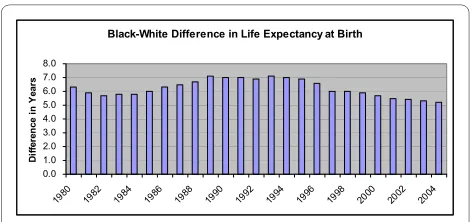
The aggregate numbers again mask differences in out-comes for different groups in the population. Between 1980 and 1990, the overall life expectancy at birth for Americans increased from 73.7 to 75.4 years. But life expectancy for the white population increased by 1.7 years and in the black population by 1.0 year, thereby wid-ening the gap between the two. In 1990, the infant mor-tality rate for Americans as a group was 9.2 deaths per 1,000 live births, but it was 7.6 for white mothers and 18 for black mothers--and again the gap had widened between 1980 and 1990 [[24], p.1].
Discussion
The next twenty years
hand, by talking about health, and not just health research, we have been forced to put the specific agendas and accomplishments of particular research communities into a broader perspective of life in America. The result-ing discussion bears certain resemblance to now-familiar aggregate assessment of the contribution of basic research to the economy.
As with aggregate economic assessment, however, such broad-brush assessment of quality of life issues provides little direction to researchers, research managers, or pol-icy makers in how to achieve quality of life goals. The question becomes pressing: How do we get from where we are now to where we want to be? I argue in this section that the conventional tools of research policy and man-agement--goal-setting and program evaluation and plan-ning--are appropriate to this task and that there has been progress in putting them to work.
Quality of life goals do put at least two new new requirements on research policy, however. The first is to think in terms of long term institutional and community development - something akin to the 100-year view in the analysis presented here. The second is the inclusion of the public--or to be more precise, publics--in all these pro-cesses. Just as we brought people back in to the concept of what government support for research is about, we must bring people back in to research management. Researchers themselves are not the experts on quality of life outcomes; they are partners in producing them. All the partners need to be involved in running the firm.
Goal setting
In the years preceding the first version of this article, the variety and insistence of calls to set goals for research in the United States had been striking. The Carnegie Com-mission report, already quoted, stressed the need to set long-term goals, rather than squander technical resources on short-term objectives with no vision of the future in mind.
If this emphasis continues, the problems we have encountered in recent years, such as erosion of the nation's industrial competitiveness and the difficulties of meeting increasingly challenging standards of envi-ronmental quality, could overwhelm promising opportunities for progress. However, we believe there is an alternative. The United States could base its S&T policies more firmly on long-range considerations and link these policies to societal goals through more comprehensive assessment of opportunities, costs, and benefits. [[11], p. 11]
The report gave a long list of examples of major societal goals to which science and technology contribute, includ-ing personal and public health and safety, creation and maintenance of civic culture, and environmental quality and protection. It proposed a National Forum on Science
and Technology Goals to facilitate "a balanced and effec-tive interaction ... between the scientific and engineering communities and those representing a broad range of other societal interests." [[11], p. 13]
The call for goals had also been voiced within govern-ment. An influential senator had called for 60 percent of the National Science Foundation's budget to be devoted to strategic research, in areas such as high performance computing, biotechnology, materials science, and manu-facturing [25], and the White House had taken up the challenge in its guidance for the budget process [26]. For biomedical research, a goals document of approximately the kind envisioned in the Carnegie Commission report existed: Healthy People 2000: National Health Promotion and Disease Prevention Objectives. "After extensive pub-lic review and comment, involving more than 10,000 peo-ple, the objectives were revised and refined to produce" the final report in 1990 [[27], title page]. The process of producing the report would seem to be a model for the sort of National Forum the Carnegie Commission had recommended.
Still, Healthy People 2000 illustrated the lack of connec-tion between research program planning and long-term national goal setting. The Carnegie Commission noted the problem:
There is a mismatch between the long-term societal goals necessary for our society's well-being in the 21st century and many of the present scientific goals of research. The implications for biomedical research of a new social goal of cost-effective and equitable health care delivery to the entire U.S. population have not yet been carefully analyzed. [[11], p. 43]
The first version of an NIH strategic plan, announced to the press in the summer of 1992 but never released, seemed not to have taken Healthy People and its national goals into account.
years of healthy life" and "eliminate health disparities." [28]) The intersections begin to appear among NIH's "strategic research objectives" and other performance goals. But among the 70 specific objectives (chosen as illustrative, not comprehensive), only two refer directly to the Healthy People document. A few more are aimed at "health disparities" or "underserved groups." But still it appears that even a government-wide effort asking agen-cies to articulate strategic goals has not produced much obvious alignment between the national health plan and the biomedical research plan for the United States (see Table 1, Row F for a related U.K. example).
Program planning and evaluation
The question of how to get from here to our goals is actu-ally answered in the process of program planning. In the-ory, this process translates broad government goals and objectives into specific program activities and budget requests. In practice, over the past decade, this process should have been engaging agency program planning much more powerfully with national goal setting, because of the new planning and budgeting processes introduced in the mid-1990s.
The language of planning tends to raise fears among scientists that policy makers are asking them to plan research. When we think of the goal of a research pro-gram as putting active researchers in certain kinds of con-texts, however, the reason for the fears disappears. When we bring people back in, program planning for basic research programs no longer involves controlling the contents of research projects, but instead pays attention to where researchers are working, who they talk to, what communities they empower, and what else they do besides research.
Exactly what these criteria entail will vary from pro-gram to propro-gram. NSF's Engineering Research Centers and Science and Technology Centers serve as an example of how this approach can be used; the new U.K. Biomedi-cal Research Centres are another [31]. The NSF Centers are not told in detail what to study, but they are required to show that they are embedded in a set of partnerships that is likely to move their research results into practice, and they are required to make a commitment to under-graduate education as well as under-graduate. When these broader functions of research become the focus, it is important to think in terms of aggregates of researchers rather than individual ones; no individual researcher needs to perform equally on all three dimensions of eval-uation, but rather a set of researchers should do so. Thus it is the sum of centre-affiliated researchers that maintain the connections in three directions: knowledge, practice, and education. Likewise, any government research pro-gram can be seen as a sum of researchers, who together
contribute to the knowledge base, maintain connections to practice, and enhance education.
The difference between a centre and a program, in this comparison, is that the centre is required to have a strate-gic planning process that directs research toward topics that the specific clients of the centre find important. Researchers and clients together participate in that pro-cess. A program consisting of a portfolio of individual grants (from individuals or teams) does not need to determine centrally what topics the investigators study. But it does need processes in which researchers and their partners together discuss how the total research ongoing in the program relates to its primary contexts of use, so that researchers themselves remain aware of these con-texts and can take them into consideration in their own choice of research topics. The process of program plan-ning provides one such opportunity, but the investigators themselves are seldom involved in that process. Program evaluation processes, however, which usually involve extensive interaction with program participants, offer a better setting for this negotiation [32].
Program evaluation for a program aimed at technical capacity asks, not "Have the researchers in this program answered a specific question?" nor "Have they achieved some particular result?" but
• Are they doing excellent research?
• What are they learning from it, and who else is learning it?
• Who draws on the pool of knowledge these researchers contribute to?
• Are these researchers talking to the people who use that pool of knowledge, to remain aware of the long-term practical problems it relates to?
• Are these researchers empowering citizens and con-sumers, directly or indirectly, with the knowledge they produce and how they produce it?
The information gathered in the evaluation can be used to shape the program, for example, by shedding light on the mix of resources investigators need to do excellent research and facilitate its use, or by identifying new part-ners or ways of interacting with partpart-ners that can increase the program's effectiveness. The evaluation pro-cess itself raises the awareness of both researchers and partners to the way the program actually works to con-tribute to quality of life goals, that is, how it sets processes in motion that end up in those results. In an untargeted program, the process of evaluation thus serves some of the same functions that the strategic planning process serves for a centralized research unit, but does so in a way that leaves choice of research topics and judgment of technical excellence entirely in the hands of researchers.
through which the program is having its impact, evalua-tion panels need only a minority of researchers, but a majority that includes a wide range of people with other kinds of knowledge. One important set of such people is usually called "next-stage users" of research. These are people with knowledge of practice applications (like phy-sicians, nurses, and counselors in biomedical research). The other important set of participants is end-users, that is, those who have experienced and thoughtfully consid-ered the ultimate results of the researchers' work. For bio-medicine, all members of the public are potentially end-users in this sense. Just as with the selection of research-ers for evaluation committees, the challenge is to find participants with broad enough perspective and relevant experience to cover the range the committee needs. Find-ing such people is worth the effort, however. Unless the processes of program evaluation and planning include quite a wide range of such partners, they will not be able to judge quality of life outcomes effectively.
At the highest level, NIH has increased public involve-ment in shaping its programs. The NIH Director estab-lished the NIH Council of Public Representatives in 1999 [33]. The group includes medical practitioners and health advocates from a variety of disease and population groups. The Council issued a report in 2004 on enhanc-ing public involvement in priority settenhanc-ing [34], urgenhanc-ing the biomedical research community to "active listening" to those it intends to serve. The Council sets a new standard for NIH in public involvement.
The earlier analysis reported health outcomes for the decades examined. It would be naïve to trace any of the small changes we have seen in biomedical planning and evaluation directly to health outcomes in the United States. Nonetheless, let us end with at least one sign of movement in the right direction. Although the gap in life expectancy between white and black Americans remained unacceptably large, at least in the mid-2000s, the trend was in the right direction [Figure 1].
Conclusions
The last section began to address the question of whether the framework I have been developing applies outside biomedicine. Parts of it, in particular the link between researchers and practice goals, are well developed in U.S. military R&D. Next-stage users are involved in many planning and evaluation processes for research there and in industry-oriented programs. End-stage users are involved in a few, including some military R&D assess-ment processes and NIH's councils. In disciplinary sci-ence programs in the United States, a different mix of the three dimensions is appropriate, with more emphasis on educational responsibilities, more diffuse relationships to practice, and more involvement of users within the sci-ence community, drawn both from the discipline sup-ported by the program and from other disciplines that depend on its knowledge pool. Any government program of research can be seen profitably within the framework, however, as long as the appropriate weight is put on each of the three dimensions.
Two related bodies of knowledge and experience need to be built up extensively, to put this framework into practice effectively. First, we need to know much more about the activities and institutions that link basic research to quality of life outcomes. These are identifiable in specific cases, but there is no general body of knowl-edge, equivalent to the body of knowledge about indus-trial innovation processes, to provide general concepts in this area. Without general concepts, every retrospective study and evaluation process starts de novo to identify these links, and the overall effort required is much greater. A small community of researchers devoted to understanding these links is developing, through work-shops and research projects, to play a role for quality of life outcomes that parallels the role of economists of R&D in relation to industrial innovation (see Table 1, Row G).
Second, we need to build up experience with locating appropriate public members of evaluation and planning panels, and utilizing their insights effectively. NIH has traditionally looked to organized patient and patient-fam-ily groups as members of its councils, as well as non-sci-ence professionals who bring different perspectives to the process. The new Council of Public Representatives strengthens this system. The U.K. has been working actively on public involvement for decades, through an effort now called INVOLVE [35]. These are positive steps, and can provide the beginnings of creative thought about broader representation. Once representatives of various public are on these panels, however, chairs and executive secretaries can easily be at a loss as to how to give them an effective voice. In the absence of a set of guidelines for effective public-researcher interaction in
Figure 1 Black-White Difference in Life Expectancy at Birth. Source: http://www.cdc.gov/nchs/data/hus/hus07.pdf#027, accessed 6 July 2008.
Black-White Difference in Life Expectancy at Birth
0.0 1.0 2.0 3.0 4.0 5.0 6.0 7.0 8.0
1980 1982 1984 1986 1988 1990 1992 1994 1996 1998 2000 2002 2004
Di
ffe
re
n
ce
i
n
Y
ea
research decision making processes, such committees are open to unconscious domination by the research com-munity, a process that defeats the purpose of public rep-resentation. If we are serious about achieving quality of life returns from basic research, we cannot afford to lose the benefit of the expertise of public members of these groups. We should therefore make concerted attempts to collate the experience to date with mixed committees of this sort, and build a base of research knowledge that can provide practical guidance to chairs and executive secre-taries of future committees.
There is thus a great deal of work to be done to use the framework I have discussed in this paper to increase the effectiveness of programs with regard to quality of life goals. The challenges involve both of the ways I have dis-cussed here of bringing people back in.
• Putting the researcher back at the center of research evaluation and planning concepts. We have focused too long and too exclusively on the knowledge prod-ucts of research. Thinking about researchers as multi-dimensional contributors will take some imagination, and then some effort in translating that understand-ing into appropriate program structures and resources.
• Putting the public back in evaluation and planning processes. Public involvement in research manage-ment has been seen for too long as a threat to auton-omy and a form of political control. In the framework I have outlined, the opposite is true. Public involve-ment in program evaluation and planning may be the only route, under current circumstances, to leaving researchers in control of their research topics and processes. Furthermore, it is a necessary condition for using technical capacity to contribute to quality of life goals, since researchers themselves have part of the expertise, but not all the expertise, needed to identify the complex links between research and these out-comes.
In short, I call for a quiet revolution in science policy, a transformation within existing structures and processes that will maintain, utilize, and expand the important strengths of current basic research systems.
Competing interests
The author declares that they have no competing interests.
Authors' contributions
Single author.
Acknowledgements
This article was originally prepared for the Joint Conference, National Science Foundation, American Enterprise Institute, Brookings Institution on "The Con-tributions of Basic Research to the Economy and Society," Washington, DC, 3 October 1994. That version appears as pages 184-209 in Bruce L. R. Smith and Claude E. Barfield, Technology, R&D, and the Economy (Washington, D.C.: Brookings Institution and American Enterprise Institute, 1996) and is repro-duced with the permission of Brookings Institution Press. The author thanks
two reviewers for their helpful pointers to areas where practice in impact eval-uation has moved forward since the original was published. The views expressed in this document are the author's alone and do not necessarily rep-resent those of her institution or any of the sponsoring organizations.
Author Details
Technology Policy and Assessment Center, School of Public Policy, Georgia Institute of Technology, Atlanta GA 30332-0345 USA
References
1. Cozzens SE: Strategic Evaluation and the Keystone Model of Basic Research. In Science and Technology Policy Yearbook, 1994 Edited by: Teich AH, Nelson S, McEnaney C. Washington, DC: American Association for the Advancement of Science; 1995.
2. Dubos R: The Mirage of Health Rockefeller Medicine Men Edited by: Richard Brown E. Berkeley: University of California Press; 1979:220.
3. Comroe and Dripps: Scientific Basis for the Support of Medical Science.
Science 1976, 192:105-111.
4. Institute for Defense Analysis: DARPA Technical Achievements Arlington, VA; 1991.
5. Starr P: The Social Transformation of American Medicine New York: Basic Books; 1982.
6. Stevens R: American Medicine and the Public Interest New Have: Yale University Press; 1971.
7. Rosenberg CE: The Care of Strangers: The Rise of America's Hospital System
New York: Basic Books; 1987.
8. Stevens R: In Sickness and in Wealth: American Hospitals in the Twentieth
Century New York: Basic Books, Inc; 1989.
9. Manning KR: Black Apollo of Science: The Life of Ernest Everett Just New York: Oxford University Press; 1983.
10. Angelou Maya: I Know Why the Caged Bird Sings New York: Bantam Books; 1971.
11. Carnegie Commission on Science Technology and Government: Enabling
the Future: Linking Science and Technology to Societal Goals Washington,
DC, September; 1992.
12. Shryock R: American Medical Research New York: Commonwealth Fund; 1947.
13. Strickland S: Politics, Science, and Dread Disease: A Short History of Medical
Research Policy Cambridge: Harvard University Press; 1972.
14. Rettig RA: Cancer Crusade: The Story of the National Cancer Act of 1971
Princeton, NJ: Princeton University Press; 1977.
15. [http://report.nih.gov/award/trends/Inst_Char_All_2007.xls]. accessed July 1 2008
16. [http://report.nih.gov/award/trends/State_Congressional/ StateOverview.cfm]. accessed July 1 2008
17. NIH Extramural Trends, Fiscal Years 1983-1992 . NIH Publication No. 93-3506,
November 1993
18. Minority Programs Fact-Finding Team Recommendations, presented to the
NIH Associate Director for Minority Programs, February 1992 .
19. Report of the National Institutes of Health: Opportunities for Research on
Women's Health, Summary Report, Office of Research on Women's Health, Office of the Director, National Institutes of Health, NIH Publication No.
92-3457A, September 1992 .
20. Fee E: Women and Health: The Politics of Sex in Medicine Farmingdale, NY: Baywood Publishing Company; 1983.
21. Martin E: The Woman in the Body Boston: Beacon Press; 1989.
22. Nelkin D, Tancredi L: Dangerous Diagnostics: The Social Power of Biological
Information New York: Basic Books; 1989.
23. [http://www.voanews.com/english/2008-06-17-voa39.cfm]. accessed July 1 2008
24. National Center for Health Statistics: Center for Disease Control and Prevention, Public Health Service. U.S. Department of Health and Human
Services, "Health United States 1992," DHHS Pub. No. PHS 93-1232 .
25. Senate Turns Up the Heat on NSF. Science 1993, 261:1512-1513. 26. Memo Backs Basic Research with Words, Not Cash. Science 1994,
264(3):1395-96.
27. Department of Health and Human Services Public Health Service, "Healthy People 2000," conference edition. 1990.
Received: 16 September 2008 Accepted: 7 June 2010 Published: 7 June 2010
This article is available from: http://www.health-policy-systems.com/content/8/1/18 © 2010 Cozzens; licensee BioMed Central Ltd.
28. [http://www.healthypeople.gov]. accessed July 1 2008
29. [http://officeofbudget.od.nih.gov/ui/2008/Overview.pdf]. accessed 6 July 2008
30. :4 [http://officeofbudget.od.nih.gov/ui/2008/
Summary%20of%20FY%202009%20Budget-Press%20Release.pdf]. 31. [http://www.nihr.ac.uk/infrastructure/Pages/
infrastructure_biomedical_research_centres.aspx]. accessed January 1 2010
32. Cozzens S, Popper S, Bonomo J, Koizumi K, Flanagan A: Methods for
Evaluating Fundamental Science Washington, DC: Critical Technologies
Institute, Rand Corporation; 1994. 33. [http://copr.nih.gov/]. accessed July 6 2008
34. [http://copr.nih.gov/reports/enhancing.pdf]. accessed July 6 2008 35. [http://www.invo.org.uk]. accessed September 6 2008
doi: 10.1186/1478-4505-8-18
Cite this article as: Cozzens, Quality of life returns from basic research Health