Open Access
Research article
Tailoring an intervention to the context and system redesign
related to the intervention: A case study of implementing shared
medical appointments for diabetes
Susan R Kirsh*
1,2, Renée H Lawrence
1and David C Aron
1,2Address: 1Center for Quality Improvement Research, Louis Stokes Cleveland Veterans Affairs Medical Center, Cleveland, Ohio, USA and 2School
of Medicine, Case Western Reserve University, Cleveland, Ohio, USA
Email: Susan R Kirsh* - [email protected]; Renée H Lawrence - [email protected]; David C Aron - [email protected] * Corresponding author
Abstract
Background: Incorporating shared medical appointments (SMAs) or group visits into clinical practice to improve care and increase efficiency has become a popular intervention, but the processes to implement and sustain them have not been well described. The purpose of this study was to describe the process of implementation of SMAs in the local context of a primary care clinic over time.
Methods: The setting was a primary care clinic of an urban academic medical center of the Veterans Health Administration. We performed an in-depth case analysis utilizing both an innovations framework and a nested systems framework approach. This analysis helped organize and summarize implementation and sustainability issues, specifically: the pre-SMA local context; the processes of tailoring and implementation of the intervention; and the evolution and sustainability of the intervention and its context.
Results: Both the improvement intervention and the local context co-adapted and evolved during implementation, ensuring sustainability. The most important promoting factors were the formation of a core team committed to quality and improvement, and the clinic leadership that was supported strongly by the team members. Tailoring had to also take into account key innovation-hindering factors, including limited resources (such as space), potential to alter longstanding patient-provider relationships, and organizational silos (disconnected groups) with core team members reporting to different supervisors.
Conclusion: Although interventions must be designed to meet the needs of the sites in which they are implemented, specific guidance tailored to the practice environment was lacking. SMAs require complex changes that impact on care routines, collaborations, and various organizational levels. Although the SMA was not envisioned originally as a form of system redesign that would alter the context in which it was implemented, it became clear that tailoring the intervention alone would not ensure sustainability, and therefore adjustments to the system were required. The innovation necessitated reconfiguring some aspects of the primary care clinic itself and other services from which the patients and the team were derived. In addition, the relationships among different parts of the system were altered.
Published: 4 June 2008
Implementation Science 2008, 3:34 doi:10.1186/1748-5908-3-34
Received: 26 September 2007 Accepted: 4 June 2008
This article is available from: http://www.implementationscience.com/content/3/1/34
© 2008 Kirsh et al; licensee BioMed Central Ltd.
Background
Successful implementation is a function of the relation-ship between the nature of the evidence, the context in which the proposed change is to be implemented, and the methods by which the change is facilitated [1,2]. How-ever, operationalizing improvement within a specific con-text based on the literature is challenging, due in part to the limitations of the literature describing improvement efforts [3]. For example, often the rationale for the choice of an improvement intervention is not given except in the most general terms. Similarly, specific barriers, especially factors other than those related to the individual profes-sional (e.g., factors related to the patient, the healthcare team, the healthcare organization and the healthcare sys-tem when addressed) also tend to be presented in general terms [4-14]. This lack of specificity inherently recognizes the need for decisions to tailor the general concept to the specific location, but at the same time there is rarely guid-ance provided for thinking about local challenges and opportunities. Nor is there guidance for making those types of decisions. This phenomenon of context-depend-ence has led to calls for tailoring interventions [6,15-20].
Local and global problems
Although the concept of tailoring interventions is gener-ally accepted, a systematic review of tailored strategies for behavior change in healthcare professionals revealed mixed results [20]. Moreover, much of the work describ-ing tailored interventions has focused on individuals (end users), such as adaptation to patients' cultural background or adaptation of practice guidelines for healthcare profes-sionals [21-24]. Thus, the process by which an organiza-tion-level practice change intervention can be individualized and implemented has not been well described. We suggest that part of the problem is concep-tualizing the process as simply that of tailoring interven-tions to the context, and not recognizing or adjusting the unique local context to optimize success of that interven-tion. In fact, there have been relatively few studies of adaptation at multiple organizational levels, from the individual level (both patient and healthcare profes-sional) to clinical microsystem, mesosystem, macrosys-tem, and even supramacrosystem. Even fewer describe the adaptation process itself, i.e., the basis for the choices made in determining the makeup of the intervention, and the evolution of the intervention over time. We will describe in detail the implementation of a specific inter-vention – shared medical appointments/group visits – in a specific context in order to elucidate these many issues.
Intended Improvement
Shared medical appointments (SMAs) constitute a prom-ising improvement strategy to help address the complexi-ties and demands of managing chronic health conditions. There is evidence in support of this approach, including
our own experience [25]. Shared medical appointments may also be called group visits, cluster visits, or chronic healthcare clinics. They have been described as a form of medical appointment with varying medical staff and patient populations and have been utilized for patients with chronic illnesses for whom education, self-manage-ment, and problem-solving skills are essential. The SMA is a patient medical appointment in which a multi-discipli-nary team of providers (ranging from two to six) see a group of patients (eight to twenty) in a one and one-half to two hour visit. The implementation of SMAs was designed as a quality improvement project to improve intermediate outcome measures for diabetes – A1c, systo-lic blood pressure, low density lipoprotein cholesterol (LDL-cholesterol) – focusing on those patients at highest cardiovascular risk. We have previously reported the ini-tial results in 44 patients who participated in these group visits: Levels of A1c, fell significantly post-intervention, with a mean (95% CI) decrease of A1c of 1.4% (0.8, 2.1) (p <0.001). The reduction in A1c was significantly greater in the intervention group relative to concurrent but non-randomized controls: 1.44 versus -0.30 (p = 0.002) [25].
While not all evaluations of outcomes associated with SMAs are as encouraging, the format remains appealing in an environment of growing demands and limited resources. In fact, the lack of success may be attributed to implementation challenges and issues that have not been adequately examined [26,27]. The general structure and processes for conducting SMAs have been established, but there is a lack of specific guidance to ensure success. As with other complex interventions, SMAs necessitate a sys-temic redesign that intersects a wide range of levels of a system (micro- to supramacro) for successful implemen-tation and sustainability: SMAs require reconfiguring var-ious levels of an organization's model of primary care.
Study purpose
within a supra-macrosystem, the Veterans Healthcare Administration (VHA) healthcare system.
Methods
Setting
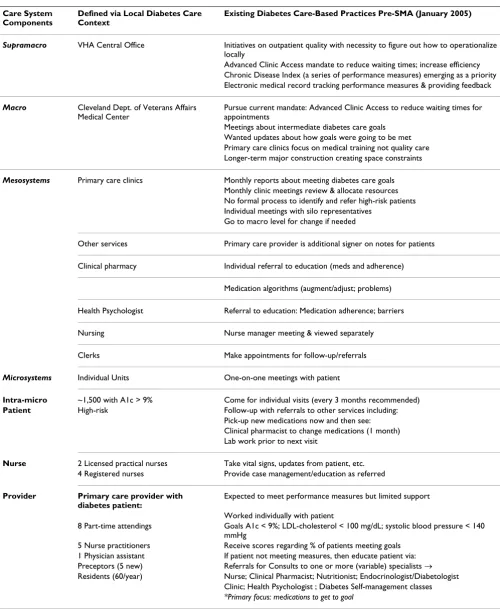
This intervention was initiated within the primary care clinic of an urban academic medical center of the Veterans Health Administration. This clinic's primary care provid-ers – five nurse practitionprovid-ers (NPs), one physician assist-ant, eight part-time attending physicians, and 60 resident physicians – provide care for 11,000 patients, of whom 25% have diabetes. In addition to having a sophisticated electronic medical record, aspects of the Chronic Care Model routinely integrated into this clinic included nurse case management, and a clinical reminder system with feedback on performance [25]. The local context prior to initiating SMAs for patients with diabetes is outlined in Table 1, and follows a scheme adapted from Batalden et al [28]. The clinical microsystem is the small, frontline unit that is the primary clinical care unit (primary care pro-vider and patient), which is nested within a mesosystem, and further nested within a macrosystem. Specifically, Table 1 defines the local context in January 2005 related to care for patients with diabetes and lists key elements related to diabetes care-based practices before introducing SMAs.
Planning the intervention
The microsystem prior to SMAs consisted of the patient care visit (primary care providers and patients). The visits consisted solely of one-on-one encounters with patients and differing providers (primary care provider, nurse, clinical pharmacist, and psychologist). The mesosystem was the whole primary care clinic where patients were seen. The clinic culture was characterized by a focus on individual responsibility of primary care providers rather than systems-based practice and there was relatively little interdisciplinary care. However, usual care also included referral to a dietician, certified diabetes educator, clinical pharmacist, or endocrine/diabetes specialty clinic at the discretion of the primary care provider. Thus, high-risk patients (part of the clinical microsystem) not meeting physiologic or process measure goals for diabetes were referred to any number of support staff for further educa-tion and treatment (mesosystem). A link back to the pri-mary care provider existed via the electronic medical record. Additionally, different disciplines were not super-vised by one director, but by leaders in their own disci-pline who did not work within the mesosystem. Changes in processes of care were difficult to achieve without many discussions with multiple discipline-specific supervisors. Improvement efforts previously were primarily top-down, based on mandates from the top management at the facil-ity. At the macro-system level, the Cleveland VAMC was engaged in demonstrating quality measures for diabetes
determined by the supramacro-system level of the VHA Central Office. At both supra and macro levels, there was increasing awareness of SMAs as a means to improve wait-ing times while meetwait-ing quality imperatives in an efficient manner. Organizational direction at the level of the macro- and supramacro-systems had a greater influence; there were mandates to conduct SMAs issued by the VHA, primarily to address issues related to waiting times and clinic access. Mandates from outside the local medical center aside, local leadership in general and in the primary care clinic in particular were strongly supportive of improvement efforts and open to the use of novel meth-ods of care delivery. Moreover, the local facility has had a long history of support for and success in the implemen-tation of clinical improvement allowing reliance on inter-nal rather than exterinter-nal facilitation [29]. A committee formed to address the quality of diabetes care was an out-growth of a day-long clinic retreat conducted off-site by two of the authors (SRK and DCA), among others. Clinic staff who previously had little involvement in system redesign began to take part.
Planning the study
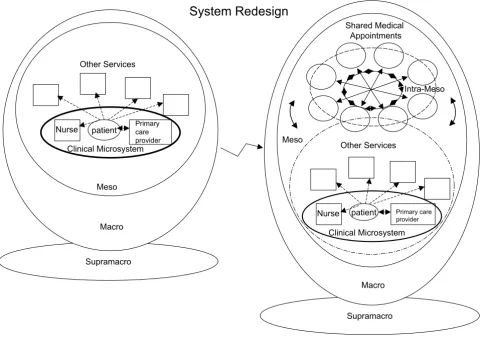
We used a nested systems framework to help organize and summarize implementation and sustainability issues [28]. Figure 1 provides a visual representation and frame-work for understanding the system redesign associated with successfully tailoring the intervention and the local context. Specifically, the left side of Figure 1 depicts the initial conceptual model of our healthcare system. The microsystem links to the mesosystem in that patients are referred, as needed, to nursing and other services. The macrosystem level refers to the local organization. The local organization is also linked to the national organiza-tion (supramacro level). We represented the supramacro-system as a perpendicular layer to emphasize the role as a foundation and the distant though defining influence of the supramacrosystem on the local context. Figure 1 also depicts the conceptual model that evolved to describe the successful implementation of SMAs for patients with dia-betes (right side of the figure; see below for discussion).
Methods of evaluation and analysis
Table 1: Defining the local context prior to introducing shared medical appointments (SMAs)
Care System Components
Defined via Local Diabetes Care Context
Existing Diabetes Care-Based Practices Pre-SMA (January 2005)
Supramacro VHA Central Office Initiatives on outpatient quality with necessity to figure out how to operationalize
locally
Advanced Clinic Access mandate to reduce waiting times; increase efficiency Chronic Disease Index (a series of performance measures) emerging as a priority Electronic medical record tracking performance measures & providing feedback
Macro Cleveland Dept. of Veterans Affairs
Medical Center
Pursue current mandate: Advanced Clinic Access to reduce waiting times for appointments
Meetings about intermediate diabetes care goals Wanted updates about how goals were going to be met Primary care clinics focus on medical training not quality care Longer-term major construction creating space constraints
Mesosystems Primary care clinics Monthly reports about meeting diabetes care goals
Monthly clinic meetings review & allocate resources No formal process to identify and refer high-risk patients Individual meetings with silo representatives
Go to macro level for change if needed
Other services Primary care provider is additional signer on notes for patients
Clinical pharmacy Individual referral to education (meds and adherence)
Medication algorithms (augment/adjust; problems)
Health Psychologist Referral to education: Medication adherence; barriers
Nursing Nurse manager meeting & viewed separately
Clerks Make appointments for follow-up/referrals
Microsystems Individual Units One-on-one meetings with patient
Intra-micro ~1,500 with A1c > 9% Come for individual visits (every 3 months recommended)
Patient High-risk Follow-up with referrals to other services including: Pick-up new medications now and then see: Clinical pharmacist to change medications (1 month) Lab work prior to next visit
Nurse 2 Licensed practical nurses Take vital signs, updates from patient, etc.
4 Registered nurses Provide case management/education as referred
Provider Primary care provider with diabetes patient:
Expected to meet performance measures but limited support
Worked individually with patient
8 Part-time attendings Goals A1c < 9%; LDL-cholesterol < 100 mg/dL; systolic blood pressure < 140 mmHg
5 Nurse practitioners Receive scores regarding % of patients meeting goals
1 Physician assistant If patient not meeting measures, then educate patient via:
Preceptors (5 new) Referrals for Consults to one or more (variable) specialists →
Residents (60/year) Nurse; Clinical Pharmacist; Nutritionist; Endocrinologist/Diabetologist Clinic; Health Psychologist ; Diabetes Self-management classes
processes and key elements impacting on those processes. [37-40]. Notes from meetings and debriefings, including feedback from primary care providers, patient surveys, e-mails, and meeting summaries (e.g., meetings of the team developing the related research grant application and the practice manual), were reviewed, cataloged, and coded for relevance to the implementation process. In addition, this quality improvement project took place in concert with the Academic Chronic Care Collaborative sponsored by the Association of American Medical Colleges and the Institute for Healthcare Improvement. Monthly reports submitted to this Collaborative were reviewed. This was done in an iterative process combined with interviews with key participants and observations. Seven local indi-viduals familiar with the implementation processes of this project or SMAs were asked to independently review the summaries and findings. Six provided written feedback and were interviewed in a semi-structured format for vali-dation purposes. The model presented here and the
for-mats for structuring the presentation emerged from this participatory/action based and grounded-theory approaches [36,41].
Results
Accommodating the innovation into the local context: initial decisions
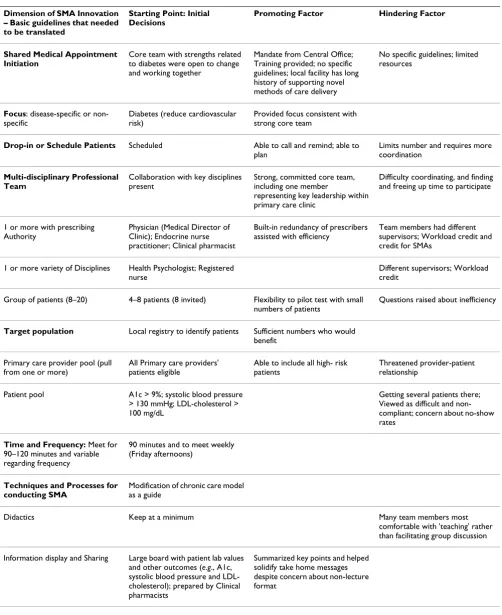
Once the decision was made to begin SMAs, it was neces-sary to create general guidelines about SMAs and translate those into the local context, with its resources and needs. Implementation fidelity is often presented as critical to achieving the levels of efficacy demonstrated in clinical trials. However, it became apparent that descriptions of SMA interventions provided insufficient detail to guide implementation into differing clinical settings. While decisions and potential options were sometimes dis-cussed, guidance on translating and mapping out to the local context was not provided. Table 2 outlines the initial dimensions of the SMA innovation we identified (first Visual representation and framework for understanding the transformation (system redesign) associated with successful SMA implementation as intra-meso component
Figure 1
Visual representation and framework for understanding the transformation (system redesign) associated with successful SMA implementation as intra-meso component. The figure on the left side is the initial model and the right side includes the system redesign.
patient Other Services
Clinical Microsystem
Primary care provider
Nurse
Supramacro Macro Meso
patient Other Services
Clinical Microsystem
Primary care provider
Nurse
Supramacro Macro Meso
Shared Medical Appointments
System Redesign
Table 2: Analysis of SMAs Innovation: Translating SMA into Local Context (February 2005)
Dimension of SMA Innovation – Basic guidelines that needed to be translated
Starting Point: Initial Decisions
Promoting Factor Hindering Factor
Shared Medical Appointment Initiation
Core team with strengths related to diabetes were open to change and working together
Mandate from Central Office; Training provided; no specific guidelines; local facility has long history of supporting novel methods of care delivery
No specific guidelines; limited resources
Focus: disease-specific or non-specific
Diabetes (reduce cardiovascular risk)
Provided focus consistent with strong core team
Drop-in or Schedule Patients Scheduled Able to call and remind; able to plan
Limits number and requires more coordination
Multi-disciplinary Professional Team
Collaboration with key disciplines present
Strong, committed core team, including one member
representing key leadership within primary care clinic
Difficulty coordinating, and finding and freeing up time to participate
1 or more with prescribing Authority
Physician (Medical Director of Clinic); Endocrine nurse practitioner; Clinical pharmacist
Built-in redundancy of prescribers assisted with efficiency
Team members had different supervisors; Workload credit and credit for SMAs
1 or more variety of Disciplines Health Psychologist; Registered nurse
Different supervisors; Workload credit
Group of patients (8–20) 4–8 patients (8 invited) Flexibility to pilot test with small numbers of patients
Questions raised about inefficiency
Target population Local registry to identify patients Sufficient numbers who would benefit
Primary care provider pool (pull from one or more)
All Primary care providers' patients eligible
Able to include all high- risk patients
Threatened provider-patient relationship
Patient pool A1c > 9%; systolic blood pressure
> 130 mmHg; LDL-cholesterol > 100 mg/dL
Getting several patients there; Viewed as difficult and non-compliant; concern about no-show rates
Time and Frequency: Meet for 90–120 minutes and variable regarding frequency
90 minutes and to meet weekly (Friday afternoons)
Techniques and Processes for conducting SMA
Modification of chronic care model as a guide
Didactics Keep at a minimum Many team members most
comfortable with 'teaching' rather than facilitating group discussion
Information display and Sharing Large board with patient lab values and other outcomes (e.g., A1c, systolic blood pressure and LDL-cholesterol); prepared by Clinical pharmacists
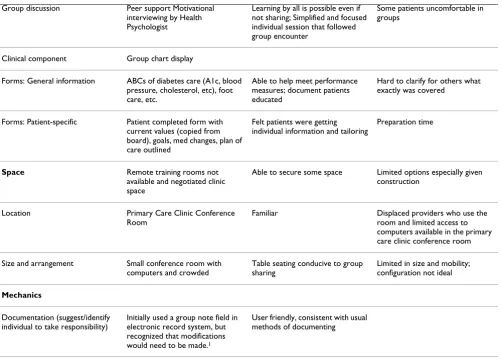
column). The second column delineates our initial deci-sions or translation of the intervention to the needs of the local context. In order to maximize success and meet demanding clinical care needs, we began with diabetes as a focus because of the existing core team and its openness to change, some collaboration between key disciplines was loosely in place, the volume of patients with diabetes, the cost to the organization, and the high demand of resources required to manage patients with diabetes. However, as is true with most decisions, there were aspects of many decisions that included promoting factors but also came with hindering factors. Therefore, Table 2 also outlines the promoting and hindering factors associated with each of the initial decisions.
It is worth highlighting key promoting factors for the innovation that relate to the system levels because ulti-mate system redesign requires successful alignment and interplay between all levels. While the organizational structure is very hierarchical (Figure 1), there was
open-ness to novelty. In fact, there was the supramacrosystem level mandate to begin SMAs, with considerable latitude given to how those mandates were achieved. Descriptions of the transformation of the VHA describe these seemingly contradictory strains [42]. Thus, at the supramacrosystem level, promoting factors included the mandate for action to address performance deficiencies, the so-called 'burn-ing platform' and the simultaneous freedom and flexibil-ity to pilot test to secure buy-in [43]. At the macrosystem level, there was similar support for innovation. At the mesosystem level, a strong core care team was essential that reflected multi-disciplinary members from the vari-ous services that would be linked. This team was open to new care models and expanding roles with a leader who had the ability to make changes at the microsystem level. Although Table 2 identifies a number of promoting fac-tors, we believe that the most essential factors were the formation of a core team committed to quality and improvement, and the leadership provided by the clinic
Group discussion Peer support Motivational
interviewing by Health Psychologist
Learning by all is possible even if not sharing; Simplified and focused individual session that followed group encounter
Some patients uncomfortable in groups
Clinical component Group chart display
Forms: General information ABCs of diabetes care (A1c, blood pressure, cholesterol, etc), foot care, etc.
Able to help meet performance measures; document patients educated
Hard to clarify for others what exactly was covered
Forms: Patient-specific Patient completed form with
current values (copied from board), goals, med changes, plan of care outlined
Felt patients were getting individual information and tailoring
Preparation time
Space Remote training rooms not
available and negotiated clinic space
Able to secure some space Limited options especially given construction
Location Primary Care Clinic Conference
Room
Familiar Displaced providers who use the
room and limited access to computers available in the primary care clinic conference room
Size and arrangement Small conference room with
computers and crowded
Table seating conducive to group sharing
Limited in size and mobility; configuration not ideal
Mechanics
Documentation (suggest/identify individual to take responsibility)
Initially used a group note field in electronic record system, but recognized that modifications would need to be made.1
User friendly, consistent with usual methods of documenting
1The group note fieldallows text to be entered that will appear in the note of every patient in the group. However, it was recognized early on that
such a note did not allow for customization. Therefore, we initiated the development of a templated note with embedded guidelines that was user-friendly and facilitated the efficiency of documentation and standardization and completeness of individual treatment plans. This development took place over a period of several months.
director that was supported strongly by the team mem-bers.
At the same time, there were several key innovation-hin-dering factors associated with the general mandate to con-duct SMAs and the specific decision to translate the mandated innovation into the local context: limited resources (such as space); potential to alter longstanding patient-provider relationships; organizational silos (dis-connected groups) with core team members reporting to different supervisors; difficulties in documenting work-load for credit; and finally, the flexibility itself and absence of specific guidelines for meeting the mandates, resulting in a certain inefficiency and delay in the process. Implementation in a space-constrained facility that was in the midst of major construction and renovation meant that the choice of a location resulted in displaced provid-ers who used the space, and limited access to computprovid-ers available in the conference room. There was concern that group visits with different providers would disrupt estab-lished provider-patient relationships and inhibit those providers from referring patients. The different lines of authority for each of the core team members necessitated negotiations with four different supervisors, some of whom were more open to SMAs than others. In this organization, there is a strongly perceived need (varying among different clinical and administrative departments) for meticulous accounting of one's workload. It was not intuitively obvious how to account for SMA work within current accounting systems.
Implementation and evolution
SMAs require complex changes that impact on care rou-tines, collaborations, and various levels of the organiza-tion. As such, implementing the initial decisions involved more than putting decisions into place. As noted by oth-ers, implementers and champions of innovation are criti-cal. This is particularly true the more complex the change and the need for system redesign. Those who conduct and carry out the implementation obviously play a key role in helping to initiate and sustain the intervention. Imple-menters for our SMA intervention included a physician who was the Medical Director of the clinic and an Endo-crine Nurse Practitioner. The physician was an established leader of the Primary Care Clinic for two years prior to ini-tiating the intervention and had some training in Quality Improvement. The physician felt ownership of the improvement processes overall and had the authority to solicit and get approval for staff in other disciplines to par-ticipate in the SMA. The Endocrine Nurse Practitioner was not a member of the Primary Care Clinic but was consid-ered to be a content expert and opinion leader at our insti-tution. She had worked with high-risk patients with diabetes for 20 years prior to the intervention and was willing to share her expertise with patients as well as other
less knowledgeable team members. All members of the core team were strongly committed to working together and were key stakeholders at the mesosystem level.
Although the initial analysis and translation of the inno-vation (Table 2) provided a starting point and the imple-menters provided additional local motivation, further analysis of the SMA beyond the promoting and hindering factors associated with the decision to implement was necessary for guidance to tailor and adjust the innovation to the local context. Grol et al. identified a series of char-acteristics of innovations that might promote or hinder implementation processes [32]. The relationship between these factors and the local context is outlined in Table 3. While the relative advantage/utility was appreciated by the initiators early on, three other innovation characteris-tics also appeared to be critical to successful implementa-tion: compatibility, involvement, and collective action. This innovation was very compatible with the norms and values of the institution in promoting improvement in chronic disease quality measures. The involvement of the core team who would be implementing the SMA was very high. Individuals met to collectively decide the specific details of the clinical experience for patients and provid-ers. However, hindering factors included: low compatibil-ity with the traditional one-on-one visit with a primary care provider, high complexity in that the innovation was difficult to explain, and low collective action from the pri-mary care providers who did not have input into the SMAs into which their patients would be recruited.
Table 3: Key implementation and evolution factors using Grol and Wensing's Characteristics of Innovations Framework [32].
Characteristic of Innovation ~Degree to which innovation provides or is:
Promoting Factor for SMA Implementation
Hindering Factor for SMA Implementation
Addressing the Issues to Facilitate Implementation and Sustainability
Relative advantage or utility
over existing or other methods
Advantage of seeing several experts at same time, especially for behavioral barriers
No clear evidence; questioned value and whether patients would accept group format
Proved not to be a major issue
Compatibility with existing norms and values
Consistent with norm and values of achieving process measures
Inconsistent with norm and value of sacred primary care provider-patient relationship; Different roles of healthcare professionals filling in-difficult switching from traditional to multidisciplinary team approach
Had a few team building and motivational interviewing learning sessions-lecture versus facilitation of patient info
Complexity of explaining, understanding and using
Too vague and many unknowns; not easy to explain
Explain and sell it and take advantage of a trial period with small numbers of patients to highlight success and have observers (it was easier for providers to see it first hand)
Costs relative to benefits and level of investment
Efficacy questioned regarding clinical physiological outcomes and uncertain level of investment for various stakeholders
1. Reorganizing flow allowed up to 18 patients to be seen in one SMA
2. Change in way patient data distributed in order to reduce prep time of Clinical Pharmacist and overall cost
3. Introduced use of templated notes that included documentation of SMA activities at a general group level and also permitted individualized patient level documentation
Risks related to uncertainty regarding results and consequences
High-risk – no conceptual model for designing or plan for diffusion
The organizational culture supported risk taking
Flexibility, adaptability to situation/needs of local context/ target group
Vagueness provided options for adapting to local context and needs
Key non-flexible components not consistent with micro-system and mesosystem silo design
Recognition of additional patient needs prompted addition of a nutritionist to the team
Involvement of target group in development
High involvement of the core team only
Existing structure impeding additional staff involvement
Unanticipated impact on staff not involved feeling left out addressed by creating opportunities for these staff to observe and get feedback/ up dates
Divisibility so able to try out parts separately
Low divisibility of shared appointments (i.e., can't try out various parts)
Unable to address; we have kept the basic model of SMAs
Trialability, reversibility
without risk if doesn't work
High and approached as a trial period
local context and needs throughout the implementation process. As an example, we recognized after initiation of the SMA process that patients wanted to discuss dietary issues in detail, and we subsequently added a nutritionist. Another example is the response to the challenges of doc-umenting the patient visit. We initially used the group note function in our electronic medical record. The group note field allows text to be entered that will appear in the note of every patient in the group. However, it was recog-nized early on that such a note did not allow for custom-ization. Therefore, we initiated the development of a template note with embedded guidelines that was user-friendly and facilitated the efficiency of documentation and standardization and completeness of individual treat-ment plans. This developtreat-ment took place over a period of several months. Another characteristic is that of complex-ity of both the innovation (SMA) and its implementation. The SMA was something that was identified initially as a vague unknown type of clinical care which was not easy to explain to the primary care staff. This constituted a barrier
to successful implementation. We decided to take advan-tage of a trial period with small numbers of patients to highlight success as well as allow clinic practitioners to sit in on one to three SMAs. Through identification of this barrier we were able to develop a strategy to overcome it.
Results: Evolution of the conceptual model
The right side of Figure 1 depicts the conceptual model that evolved with the successful implementation of SMAs for patients with diabetes. The system redesign that resulted from implementing SMAs included continuous tailoring of the intervention to and continuous adjust-ment of the local context. This interplay of co-evolving components added a new clinical venue to which referral of patients was possible. SMAs were designed with the idea that they would exhibit the characteristics of a high-performing clinical microsystem; e.g., alignment of roles and training for efficiency and staff satisfaction; interde-pendence of the care team to meet patient needs; integra-tion of informaintegra-tion and technology into work flows; and
Visibility, observability of results by other people
High – part of local culture is feedback
High – part of local culture is feedback
Patient successes led to increased referral of patients close to performance measure goals overloading the clinic and prompting the redirection of resources
Centrality of impact on daily working routine
High Impact of patients' stories has
contributed to team finding meaning in their work, negating the effects of the changes in work routine
Pervasiveness, scope, impact
on total work, people involved, time it takes and relationships
High: fear more work and would jeopardize primary care provider-patient relationships
Proved not to be a major issue
Magnitude, disruptiveness, radicalness
High The core team was made up of
individuals willing to take risk and were unafraid of the potential disruption
Duration for when innovation/ change must take place
Not a pressing factor
Form, physical properties of innovation: material or social; technical or administrative, etc.)
High: material change, space requirements, schedule changes, administrative and technical adjustments
Continues to provide challenges
Collective action related to decisions
Low collective action Strong core team (3–5 members) Unanticipated impact on staff not involved feeling left out. Some of these staff were recruited to participate in other types of SMAs where they were involved in the decision-making.
Nature of Presentation: length, clarity, attractiveness
High attractiveness Low clarity Began projects to share knowledge
and experience with others
supportiveness of the larger organization [36,44]. How-ever, we felt that to conceptualize SMAs as another clinical microsystem was confusing, given the co-presence of the more traditional microsystem and the unique way SMAs expanded and integrated other services and resources of the primary care clinics that was contrary to traditional thinking about care. Moreover, the primary responsibility for the patients seen in the SMAs was and would remain in the hands of the primary care provider in his or her microsystem. Accordingly, SMAs are identified as an intra-mesosystem component to recognize the linkages among and between other meso components (intra-meso) beyond the microsystem, and to emphasize the system redesign. Additionally, the SMA with its own iterative improvements and evolution seemed a separate system as opposed to a higher functioning system that already existed. This is in contrast to the initial system design where there was only the closed microsystem with the components within (intra-micro) the inner clinical microsystem.
System redesign is also reflected in the arrangement of the SMAs: the squares in Figure 1 represent participants on equal footing by recognizing the role of each discipline's expertise, including the patients who also bring expertise to the exchange. In addition, the graphic representation of the flow of communication underscores the mutual con-tributions and simultaneous, non-sequential nature of the interactions for patients and providers. Finally, the clini-cal microsystem and the intra-mesosystem (SMAs) are overlapping to reflect that SMAs do not eliminate the tra-ditional clinical microsystem but rather offer another opportunity for care, with both approaches co-evolving. This point is particularly important to recognize, as one concern providers often expressed was the potential undermining impact SMAs might have on the individual provider-patient relationship.
Local context and sustainability of SMAs two years later
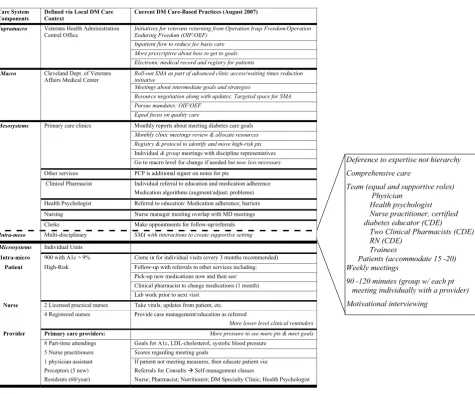
The current local context and care-based practices related to diabetes are summarized in Figure 2. Changes or differ-ences are denoted in italics, with items directly impacting on diabetes care aligned on the right side of the last col-umn. The current state of the SMAs for patients with dia-betes is summarized in the pull-out box that reflects the intra-mesosystem redesign level. Figures 1 and 2 help to identify the major changes and shifts in local context as well as the issues related to tailoring the intervention and adjusting the context.
It is worth highlighting some issues at each level of the care system. At the supramacro level, while continued improvement in information technology helps further support the SMA as configured at the local level, the man-dates and priorities have changed. While this is to be
expected, it does alert innovators and implementers to appreciating windows of opportunity. If the innovation has not taken off and achieved a force of its own (includ-ing demonstrat(includ-ing some levels or areas of success consist-ent with the organizational goals), changing priorities (new mandates), and the lack of success will create increasingly difficult challenges.
Given the demonstrated successes, leaders at the mac-rosystem system want the SMAs to be expanded to other conditions and possibly other care sites, e.g., the commu-nity-based outpatient clinics linked to the main facility. Some new or adjusted practices beyond the actual SMA venue at the mesosystem level have also come about because of SMAs (e.g., monthly clinic meetings to discuss resource allocation and group meetings among discipline representatives) and some will help to further propel SMAs forward (e.g., registry and protocol development to identify high-risk patients).
At the microsystem level, primary care providers are expe-riencing more pressure to meet performance measures of quality and productivity (and at the supramacrosystem level, the current context is also for more prescriptive approaches about how to achieve goals). The objectives of the diabetes SMA map out to the increased pressures expe-rienced by providers. Seeing the successes of the SMA, pro-viders began to send patients with A1c levels very close to goal. This was not necessarily all positive, as we were una-ble to accommodate those identified in the registry with an A1c of greater than 9%. While the magnitude of the increase in referrals to SMAs created some unanticipated adjustments, we have worked and continue to work and negotiate with providers to prioritize resources. Their clear desire to refer more patients to SMAs underscores the growing foundation for sustainability.
after each SMA continues to occur to discuss patients and processes to assure that all team members have an open forum to voice concerns and make group changes, thus maintaining the high degree of shared governance. In addition, beyond improved clinical outcomes, patient sat-isfaction has helped confirm the added value to providers and to administration (macro- and supramacrosystems). Patient satisfaction surveys routinely are administered fol-lowing the SMA. Typical comments from patients have included: 'I learned a lot', 'this clinic really takes such good care of patients' and 'I wish this kind of clinic existed 20 years ago.'
Discussion
Although the SMA originally was not envisioned as a form of system redesign that would alter the context in which it was implemented, it became clear that tailoring the
inter-vention alone would not ensure sustainability without adjustments to the system. The innovation necessitated reconfiguring some aspects of the mesosytem (the pri-mary care clinic and other services from which the patients and the team were derived) and relationships with the microsystems. Though not specifically antici-pated, evolution of the former was associated with evolu-tion of the latter: As the patients from the primary care providers were seen in the SMA and then transitioned back to them there was transfer (spread) of management knowledge in patients with diabetes, particularly among the nurse practitioner providers. We have gained the impression that many more primary care providers initi-ate insulin appropriiniti-ately at a lower threshold. Addition-ally, the use of patient check-out sheets that had been modified for the SMA to include lab results, targets, and self-management goals have been adopted by primary Current (post-transformation) local context and care-based practices related to diabetes management
Figure 2
Current (post-transformation) local context and care-based practices related to diabetes management.
Care System Components
Defined via Local DM Care Context
Current DM Care-Based Practices (August 2007)
Supramacro Veterans Health Administration Central Office
Initiatives for veterans returning from Operation Iraqi Freedom/Operation Enduring Freedom (OIF/OEF)
Inpatient flow to reduce fee basis care More prescriptive about how to get to goals Electronic medical record and registry for patients Macro Cleveland Dept. of Veterans
Affairs Medical Center
Roll-out SMA as part of advanced clinic access/waiting times reduction initiative
Meetings about intermediate goals and strategies
Resource negotiation along with updates; Targeted space for SMA Pursue mandates: OIF/OEF
Equal focus on quality care
Mesosystems Primary care clinics Monthly reports about meeting diabetes care goals
Monthly clinic meetings review & allocate resources Registry & protocol to identify and move high-risk pts
Individual& group meetings with discipline representatives Go to macro level for change if needed but now less necessary
Other services PCP is additional signer on notes for pts
Clinical Pharmacist Individual referral to education and medication adherence Medication algorithms (augment/adjust; problems) Health Psychologist Referral to education: Medication adherence; barriers Nursing Nurse manager meeting overlap with MD meetings Clerks Make appointments for follow-up/referrals
Intra-meso Multi-disciplinary SMA with interactions to create supportive setting Microsystems Individual Units
Intra-micro 900 with A1c > 9% Come in for individual visits (every 3 months recommended) Patient High-Risk Follow-up with referrals to other services including: Pick-up new medications now and then see: Clinical pharmacist to change medications (1 month) Lab work prior to next visit
Nurse 2 Licensed practical nurses Take vitals, updates from patient, etc. 4 Registered nurses Provide case management/education as referred
More lower level clinical reminders
Provider Primary care providers: More pressure to see more pts & meet goals
8 Part-time attendings Goals for A1c, LDL-cholesterol, systolic blood pressure 5 Nurse practitioners Scores regarding meeting goals
1 physician assistant If patient not meeting measures, then educate patient via: Preceptors (5 new) Referrals for Consults Æ Self-management classes
Residents (60/year) Nurse; Pharmacist; Nutritionist; DM Specialty Clinic; Health Psychologist
Deference to expertise not hierarchy
Comprehensive care
Team (equal and supportive roles) Physician
Health psychologist Nurse practitioner, certified diabetes educator (CDE)
Two Clinical Pharmacists (CDE)
RN (CDE)
Trainees
Patients (accommodate 15 -20) Weekly meetings
90 -120 minutes (group w/ each pt meeting individually with a provider)
care providers. When they reviewed the SMA sheets, they wanted the additional information on the check-out sheets for all clinic patients, not just patients seen in the groups.
Other sustainability ingredients observed at the mesosys-tem level include a high level of interest and volunteers to help staff additional SMAs for hypertension and hyperlip-idemia. This will provide the cadre of individuals neces-sary for sustainability. At the macrosystem level, the implementation of a SMA for diabetes and its success has come to the attention of the Chief of Staff and Medical Center Director. They have committed resources (i.e., financial resources) to maintain our clinical registry which serves as part of the critical infrastructure supporting SMAs. There has also been some redesign of clinic space to better accommodate the needs of SMAs. A construction project is planned to create a new room within the clinic designed specifically for group visits.
The fact that implementation could be accomplished without requiring the hiring of additional personnel facil-itated gaining administrative support (macrosystem), but this required a compromise – using a less cost-effective approach to visit documentation. The organizational mandate and sponsorship of the clinic leader allowed time to be freed up for the staff. Different policies had to be developed for scheduling for the new clinic. Over time, this innovation became 'accepted practice' and SMAs for other conditions have been established; the mesosystem redesign factors and processes directly and indirectly related to SMAs for patients with diabetes is ongoing. Recent analyses of routine clinical quality assurance data have suggested the continued beneficial patient impact of SMAs.
Limitations
Our study has a number of limitations. First, this was a ret-rospective study of a quality improvement project. Stand-ardized written materials pertaining to the implementation were limited. Consequently, recall of information with its attendant shortcomings was an important source of the data. However, all available mate-rial was evaluated systematically and triangulated with other individuals. Second, the study is limited to one local context and one intervention. At the same time, the issues faced – both the challenges and opportunities – are not unique. While predicting change and its course are chal-lenging, understanding case studies of the process of indi-vidualizing or tailoring interventions to the existing and evolving environment provides important lessons, as oth-ers have noted [46]. Our adaptations did not sacrifice the improved clinical outcomes, and in fact may have enhanced clinical outcomes. Thus, our study provides insights into a successful implementation process for
SMAs by describing how we addressed initial contextual decisions, and why those decisions were made, by identi-fying factors and considerations that necessitated adjust-ing initial decisions. Actions regardadjust-ing issues ranged from clinic set-up to provider roles and tasks, sharing strategies to sustain this clinic as an adjunct to the primary care clinic, and providing information on how and what we chose to evaluate.
Conclusion
Competing interests
The authors declare that they have no competing interests.
Authors' contributions
The authors shared equally in the conception of the study, design, coordination and drafting the manuscript. All authors work in the medical center with two working in the clinic (SRK and DCA). Specifically, two of the authors (SRK and DCA) participated in the initiation and develop-ment of the SMA, with SRK being a regular team member and DCA being a back-up team member. All authors read and approved the final manuscript.
Acknowledgements
The authors wish to thank the SMA Team including Gerald Strauss, Ph.D., Mary Ellen O'Day, Pharm D, CDE, Sharon Watts, ND, RN-C, CDE, NP, Julie Gee, RN, MSN, CNP, Kimberley Schaub, Ph.D., Gloria Taylor, RN, CDE, and Elizabeth Kern, MD, MS, for offering insights and clarifications to the implementation processes.
Contributions were supported by awards to Dr. Susan Kirsh and Dr. David Aron from the Quality Enhancement Research Initiative (Diabetes) of the Health Services Research & Development Service, Department of Veterans Affairs, USA.
References
1. Rycroft-Malone J, Kitson A, Harvey G, McCormack B, Seers K,
Titchen A, Estabrooks C: Ingredients for change: revisiting a conceptual framework. Qual Saf Health Care 2002, 11:147-180.
2. Rycroft-Malone J: The PARIHS framework-a framework for
guiding the implemention of evidence-based practice. J Nurs Care Qual 2004, 19:297-304.
3. Davidoff F, Batalden P: Toward stronger evidence on quality improvement. Qual Saf Health Care 2005, 14:319-325.
4. Brown J, Harris S, Webster-Bogaert S, Wetmore S, Faulds C, Stewart M: The role of patient, physician and systemic factors in the management of type 2 diabetes mellitus. Family Practice 2002,
19:344-349.
5. Fixson D, Naoom S, Blase K, Friedman R, Wallace F: Implementation Research: A Synthesis of the Literature Tampa: National Implementation Research Network; 2005.
6. Grimshaw J, Thomas R, MacLennan G, Fraser C, Ramsay C, Vale L, Whitty P, Eccles M, Matowe L, Shirran L, Wensing M, Dijkstra R, Don-aldson C: Effectiveness and efficiency of guideline dissemina-tion and implmentadissemina-tion strategies. Health Technology Assessment 2004, 8:iii-72.
7. Helfrich C, Savitz L, Swiger K, Weiner B: Adoption and implemen-tation of mandated diabetes registries by community health centers. Am J Prev Med 2007, 33:S50-S65.
8. Hulscher M, Wensing M, Grol R, Weijden T van der, van Weel C:
Interventions to Improve the Delivery of Preventive Serv-ices in Primary Care. American Journal of Public Health 1999,
89:737-746.
9. Hysong S, Best R, Pugh J: Guideline Implementation Strategy Patterns in Veterans Affairs Primary Care Clinics. HSR: Health Services Research 2007, 42:84-103.
10. Li R, Siomn J, Bodenheimer T, Gillie R, Casalino L, Schmittdiel J, Short-ell S: Organizational factors affecting the adoption of diabe-tes care management processes in physican organizations. Diabetes Care 2004, 27:2312-2316.
11. Macfarlane R, Bate P, Kyriakidou O: Diffusion of innovations in service organizations: systematic review and recommenda-tions. Milbank Q 2004, 82:581-629.
12. Renders C, Valk G, Griffin S, Wagner A, Eljk Van J, Assendelft J: Inter-ventions to improve the management of diabetes in primary care, outpatient, and community settings: a systematic review. Diabetes Care 2001, 24:1821-1833.
13. Savitz L, Kaluzny A: Assessing the implementation of clinical process innovations: a cross-case comparison. J Healthc Manag 2000, 45:379.
14. Weiner B, Helfrich C, Savitz L, Swiger K: Adoption and Imple-mentation of Strategies for Diabetes Management in Pri-mary Care Practices. American Journal of Preventive Medicine 2007,
33:S35-S49.
15. Bosch M, Weijden T van der, Wensing M, Grol R: Tailoring quality improvement interventions to identified barriers: a mulitple case analysis. Journal of Evaluation in Clinical Practice 2007,
13:161-168.
16. Davies B, Hodett E, Hannah M, O'Brien-Pallas L, Pringle D, Wells G:
Fetal health surveillance: a community-wide approach ver-sus a tailored intervention for the implementation of clinical practice guidelines. Canadian Medical Association Journal 2002,
167:469-474.
17. Flottorp Signe, Oxman Andrew: Identifying barriers and tailor-ing interventions to improve the management of urinary tract infections and sore thoart: a pragmatic study using qualitative methods. BMC Health Services Research 2003, 3:3. 18. Goodwin M, Zyzanski S, Zronek S, Ruhe M, Weyer S, Konrad N,
Esola D, Stange K: A clinical trial of tailored office systems for preventive service delivery: The study enhanced prevention by understanding practice (STEP-UP). American Journal of Pre-ventive Medicine 2001, 21:20-28.
19. Jansen Y, deBont A, Foets M, Bruijnzeels M, Bal R: Tailoring inter-vention procedures to routine primary health care practice: an ethnographic process evaluation. BMC Health Services Research 2007, 7:125.
20. Shaw B, Shaw B, Cheater F, Baker R, Gillies C, Hearnshaw H, Flottorp S, Robertson N: Tailored interventions to overcome identified barriers to change: effects on professional practice and health outcomes. The Cochrane Database of Systematic Reviews 2005.
21. Castro F, Barrera M, Martinez C: The Cultural Adaptation of Prevention Interventions: Resolving Tensions Between Fidelity and Fit. Prevention Science 2004, 5:41-45.
22. Gonzales J, Ringeisen H, Chambers D: The Tangled and Thorny Path of Science to Practice: Tensions in Interpreting and Applying 'Evidence'. Clinical Psychology: Science and Practice 2002,
9:204-209.
23. Hill L, Maucione K: A Focused Approach to Assessing Program Fidelity. Preventive Science 2007, 8:25-34.
24. Rohrbach L, Grana R, Sussman S, Valente T: Type Translation Transporting Prevention Interventions From Research to Real-World Settings. Evaluation & the Health Professions 2006,
29:302-333.
25. Kirsh SR, Watts S, Pascuzzi K, O'Day M, Davidson D, Strauss G, Kern
E, Aron D: Shared medical appointments based on the
chronic care model: a quality improvement project to address the challenges of patients with diabetes with high cardiovascular risk. Quality Safety in Health Care 2007, 16:349-353. 26. Jaber R, Braksmajer A, Trilling J: Group Visits: A Qualitative Review of Current Research. Journal of American Board of Family Medicine 2006, 19:276-290.
27. Wagner E, Grothaus L, Sandhu N, Galvin M, McGgregor M, Artz K,
Coleman E: Chronic Care Clinics for Diabetes in Primary
Care. Diabetes Care 2001, 24:695-700.
28. Batalden P, Nelson E, Edwards W, Godfrey M, Mohr J: Microsys-tems in Health Care: Part 9. Developing Small Clinical Units to Attain Peak Performance. Joint Commission Journal on Quality and Patient Safety 2003, 29:M575-585.
29. Stetler C, Legro M, Rycroft-Malone J, Bowman C, Curran G, Guihan M, Hagedorn H, Pineros S, Wallace C: The importance of 'facili-tation' to the implementation of research findings: reflective expereinces from the field. Implementation Science 2006, 1:23. 30. Abelson J, Forest P, Eyles J, Casebeer A, Martin E, Mackean G:
Exam-ining the role of context in the implementation of a deliber-ative public participation experiment: Results from a Canadian comparative study. Social Science & Medicine 2007,
64:2115-2128.
Publish with BioMed Central and every scientist can read your work free of charge
"BioMed Central will be the most significant development for disseminating the results of biomedical researc h in our lifetime."
Sir Paul Nurse, Cancer Research UK
Your research papers will be:
available free of charge to the entire biomedical community
peer reviewed and published immediately upon acceptance
cited in PubMed and archived on PubMed Central
yours — you keep the copyright
Submit your manuscript here:
http://www.biomedcentral.com/info/publishing_adv.asp
BioMedcentral
32. Grol R, Bosch M, Hulscher M, Eccles M, Wensing M: Planning and studying improvement in patient care: the use of theoretical perspectives. Milbank Q 2007, 85:93-138.
33. Kochevar L, Yano E: Understanding Health Care Orgnization
Needs and Context: Beyond Performance Gaps. J Gen Intern Med 2006, 21:S25-S29.
34. May C, Mair F, Dowrick C, Finch T: Process evaluation for com-plex interventions in primary care: understanding trials using the normalization process model. BMC Family Practice 2007, 8:42.
35. May C: A rational model for assessing and evaluating complex interventions in health care. BMC Health Services Research 2006,
6:86.
36. Meyer J: Using qualitative methods in health related action research. BMJ 2000, 320:178-181.
37. Anderson R, Crabtree B, Steele D, McDaniel R: Case Study
Research: The View From Complexity Science. Qualitative Health Research 2005, 15:669-685.
38. Flyvbjerg B: Five Misunderstandings About Case-Study
Research. Qualitative Inquiry 2006, 12:219-245.
39. Lenz M, Stecklberg A, Richter B, Mûhlhauser I: Meta-analysis does not allow appraisal of complex interventions in diabetes and hypertension self-management: a methodological review. Diabetologia 2007, 50:1375-1383.
40. Yin R: Case Study Reseach 3rd edition. Thousand Oaks: Sage Publica-tions; 2003.
41. Crabtree B, Miller W: Doing Qualitative Research 2nd edition. Thou-sand Oaks, CA: Sage Publications; 1999.
42. Oliver A: The Veterans Health Administration: An American
Success Story? Milbank Q 2007, 85:5-35.
43. Kizer KW, Demakis JG, Feussner JR: Reinventing VA health care: systematizing quality improvement and quality innovation. Med Care 2000, 386:I7-I16.
44. Nelson E, Batalden P, Huber T, Mohr J, Godfrey M, Headrick L, Was-son J: Microsystems in Health Care: Part 1. Learning from High-Performing Front-Line Clinical Units. Journal of Quality Improvement The Joint Commission 2002, 28:472-493.
45. Lencioni P: The Five Dysfunctions of a TEAM: A Leadership Fable San Francisco: Jossey-Bass; 2002.
46. Ruhe M, Weyer S, Zronck S, Wilkinson A, Wilkinson PS, Stange K:
Facilitating practice change: lessons from the STEP-UP clin-ical trial. Preventive Medicine 2005, 40:729-734.
![Table 3: Key implementation and evolution factors using Grol and Wensing's Characteristics of Innovations Framework [32].](https://thumb-us.123doks.com/thumbv2/123dok_us/652190.1561253/9.612.57.555.100.681/table-implementation-evolution-factors-wensing-characteristics-innovations-framework.webp)
![Table 3: Key implementation and evolution factors using Grol and Wensing's Characteristics of Innovations Framework [32]](https://thumb-us.123doks.com/thumbv2/123dok_us/652190.1561253/10.612.54.555.88.497/table-implementation-evolution-factors-wensing-characteristics-innovations-framework.webp)