R E V I E W
Open Access
Towards a framework for analyzing
determinants of performance of
community health workers in malaria
prevention and control: a systematic review
Helen Mwiinga Chipukuma
1*, Joseph Mumba Zulu
2, Choolwe Jacobs
3, Gershom Chongwe
3, Mumbi Chola
3,
Hikabasa Halwiindi
4, Jessy Zgambo
3and Charles Michelo
3Abstract
Background:Community health workers (CHWs) are an important human resource in improving coverage of and success to interventions aimed at reducing malaria incidence. Evidence suggests that the performance of CHWs in malaria programs varies in different contexts. However, comprehensive frameworks, based on systematic reviews, to guide the analysis of determinants of performance of CHWs in malaria prevention and control programs are lacking.
Methods:We systematically searched Google Scholar, Science Direct, and PubMed including reference lists that had English language publications. We included 16 full text articles that evaluated CHW performance in malaria control. Search terms were used and studies that had performance as an outcome of interest attributed to community-based interventions done by CHWs were included.
Results:Sixteen studies were included in the final review and were mostly on malaria Rapid Diagnosis and Treatment, as well as adherence to referral guidelines. Factors determining performance and effective
implementation of CHW malaria programs included health system factors such as nature of training of CHWs; type of supervision including feedback process; availability of stocks, supplies, and job aids; nature of work environment and reporting systems; availability of financial resources and transport systems; types of remuneration; health staff confidence in CHWs; and workload. In addition, community dynamics such as nature of community connectedness and support from the community and utilization of services by the community also influenced performance. Furthermore, community health worker characteristics such marital status, sex, and CHW confidence levels also shaped CHW performance.
Conclusions: Effectively analyzing and promoting the performance of CHWs in malaria prevention and control programs may require adopting a framework that considers health systems and community factors as well as community health worker characteristics.
Keywords: Community health worker, Performance, Evaluation, Malaria, Assessment, Utilization, Implementation, Policy
* Correspondence:[email protected]
1Department of Health Policy Unit, School of Public Health, University of
Zambia, P.O. Box 50110, Lusaka, Zambia
Full list of author information is available at the end of the article
Background
Globally, malaria has declined in incidence by 37% and mor-tality rate by 60% between 2000 and 2015 [1]. Community interventions through Community Health Workers (CHWs), who are a link between the community and the health facil-ity, have contributed to this reduction [2–4]. The World Health Organization (WHO), in attempting to move toward elimination of malaria, has come up with a strategy that has three main building blocks which are to ensure universal access to malaria prevention, diagnosis, and treatment, to ac-celerate efforts toward elimination of malaria and attainment of malaria-free status, and to transform malaria surveillance into a core intervention [2]. These building blocks can be best achieved through Primary Health Care (PHC) using the CHW as key actors in the strategy, which most countries adopted after the 1978 Declaration of Alma-Ata [3,4].
Community health workers are men and women with basic literacy and numeracy levels, chosen by the com-munity and trained to deal with individual and commu-nity health problems while working in close relationship with the formal health care system [5–7]. This review fo-cused on trained CHWs who work as community mal-aria agents (CMAs) carrying out malmal-aria prevention and control interventions in the community.
Studies have shown that CHW performance can help reduce morbidity and mortality in resource constrained settings [3, 7, 8]. The CHW performance is context-specific [7], and there is little evidence on what specific factors have contributed to effective implementation of the CHW strategy in malaria interventions. Community health workers provide cost-effective and sustainable ways of delivering malaria control interventions in the community. These interventions include conducting rapid diagnostic tests, malaria treatment, community sensitization for IRS, and distribution of insecticide treated nets (ITNs) [9]. Despite great efforts to combat it, the threat of resurgent malaria is present across differ-ent settings. Resurgence has in part been attributed to non-cooperation of communities in control initiatives [10]. Awareness of this threat and the development of systems to minimize resurgence are key to further pro-gress in malaria control [10]. This systematic review was done to gather evidence of CHW performance evalua-tions in malaria and how they were measured, highlight-ing determinants of their performance in malaria prevention and control programs.
Methods
Search strategy
Google Scholar, Science Direct, and PubMed were searched from September to October 2017. We also searched for and retrieved articles from reference lists using different terms for community health workers. Search terms included“Community Health Workers”OR
“Community Malaria Agents” OR “Community Based Volunteers” OR“Village Health Workers” OR“ Commu-nity Health Aides” OR “Community Health Agents”
“Health Extension Workers”OR“Health Surveillance As-sistants” OR “Community Medicine Distributors” AND malaria AND“evaluation”OR“assessment”OR“ perform-ance” AND “Sub-Sahara Africa”. Alternative terms for performance were evaluation and assessment.
Inclusion criteria
The search was limited to English peer-reviewed pub-lications of observational and interventional studies with quantitative and mixed methods analysis. The re-view included publications addressing evaluation or performance assessment outcomes of CHWs working in malaria preventive and curative programs in the sub-Sahara Africa. Only publications from 2000 to 2016 were included, as this marked the period in which there was a distinct drop in malaria cases and deaths attributed to CHW efforts. Studies that evalu-ated CHW programs which covered effectiveness of CHWs or responsiveness of individual CHWs, com-munity and program implementers to the malaria CHW strategy with regards to sensitization, surveil-lance, diagnosis, treatment, follow-up of malaria cases, environmental management, and described a factor promoting or affecting malaria CHW program out-comes were included.
Study selection and quality assessment
Four reviewers from a team of eight independently assessed titles and abstracts. The other four reviewers read the full texts of identified peer-reviewed articles to evaluate potential eligibility. Another reviewer’s opinion was sought in case of persisting disagreements until con-sensus was reached. The study selection was guided by the PRISMA guidelines, and quality of these studies was assessed using the critical appraisal skills program (CASP 2015) to ensure methodically proven reliable evidence-based studies in the review. The quality criteria we used were as follows:
Whether the research questions or objectives were
clearly stated?
Whether the approach was appropriate for the
research question?
Whether the study context was clearly described?
Whether the role of the researcher was clearly
described?
Whether the sampling method was clearly
described?
Whether the sampling strategy was appropriate for
Whether the method of data collection was clearly described?
Whether the data collection method was
appropriate to the research question?
Whether the method of analysis was clearly
described?
Whether the analysis was appropriate for the
research question?
Whether the claims made are supported by
sufficient evidence?
All studies included in the review focused on malaria CHW strategy with clearly stated objectives addressing the question under review and highlighting factors that affected performance positively or negatively. The sam-pling methods were well explained, and the data collec-tion methods were described clearly with appropriate analyses whose claims were supported by evidence in all the articles.
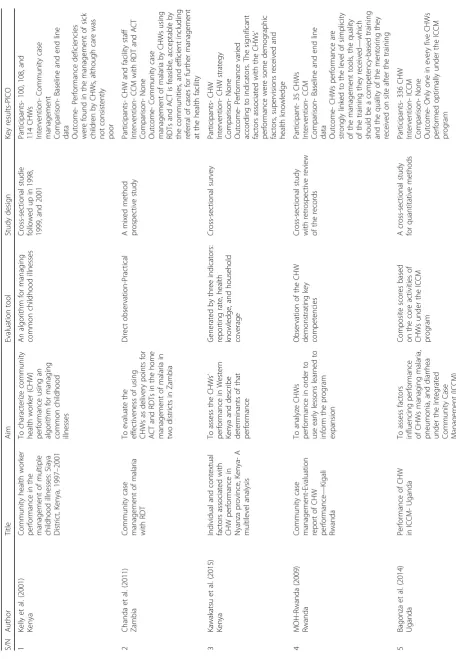
Data was extracted onto a data extraction form cre-ated in Microsoft Excel to assess information on key study aspects such as the objectives, designs, sample, performance measurement tool, and results. The data extraction form also contained a description of the intervention of study and the outcome measures (Table 1).
Data analysis and synthesis
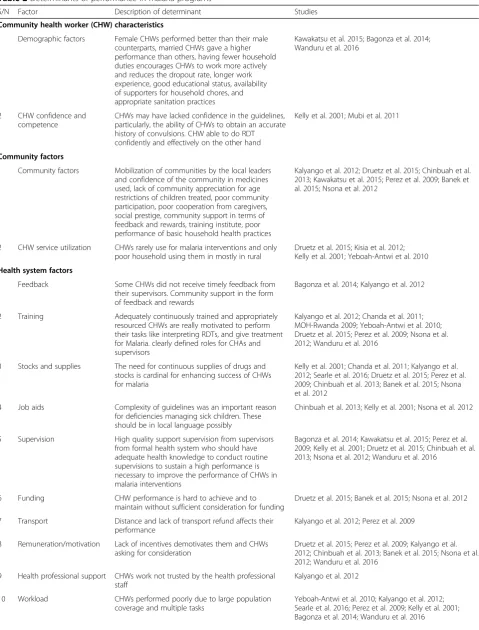
Data from the selected articles was analyzed using NVivo version 10 software. The analysis involved identification, coding, and exploration of relationships of themes within data. A code list was developed which comprised of broad themes collectively agreed upon by the research team members after preliminary reading of abstracts. The code list was later modified to accommodate emergent themes and imported into NVivo. Data from the included articles was coded in the respective nodes by two separate researchers in-cluding the principal investigator to allow for inter-coder reliability tests. Where there were discrepancies, the researchers discussed until consensus was reached on how information could be coded. Code reports were for identification of specific factors affecting per-formance of CHW in malaria programs. Descriptive analysis of the contents of all papers reviewed was conducted per category (thematic coding) and new (sub) categories deriving from the literature were added to the framework (Table 2).
Results
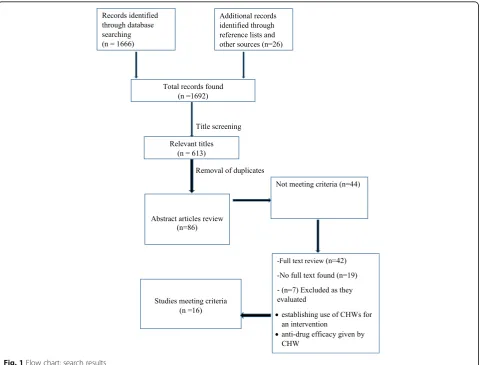
The search resulted in a total of N = 1692 results appearing on the databases of whichn = 251 were from Google Scholar, n = 796 from Science Direct, n = 619 from PubMed, and n = 26 from reference lists of some
articles. After title screening, n = 613 articles remained andn = 527duplicates were removed leavingn = 86 arti-cles for full abstract assessment. Abstracts not reporting the outcome of interest were n = 44, and n = 42 were considered for full text review. No full texts were found forn = 19articles, andn = 7were excluded as they were establishing use of CHW for an intervention while others were establishing efficacy of antimalarial drug given by CHWs. Some papers were excluded because they were not from sub-Saharan Africa and were published out-side the review period. All the search results were man-aged in Endnote referencing software (Thomson Reuters, Philadelphia, USA) and the final 16 articles have been reported in this systematic review (Fig.1).
Study characteristics
A total of 16 studies are included in this review, 5 of which were from East Africa, 4 from Central Africa, 3 from West Africa, and 4 from Southern Africa. Coun-tries represented were Uganda with four studies [11– 14], Kenya with three [15–17], one from Rwanda [18], one from Tanzania [19], one from Burkina Faso [20], one from Ghana [21], one from Mali [22], one from Malawi [23], and three from Zambia [24–27]. Twelve of the studies had a cross-sectional design [11–18,20,
22, 23, 25], one was a mixed methods prospective study [24], one was a cluster randomized control trial [26], one was a randomized crossover trial [22], and one randomized control stepped wedge trial [21] (Table1).
Outcome of malaria evaluations
Table 2Determinants of performance in malaria programs
S/N Factor Description of determinant Studies
Community health worker (CHW) characteristics
1 Demographic factors Female CHWs performed better than their male counterparts, married CHWs gave a higher performance than others, having fewer household duties encourages CHWs to work more actively and reduces the dropout rate, longer work experience, good educational status, availability of supporters for household chores, and appropriate sanitation practices
Kawakatsu et al. 2015; Bagonza et al. 2014; Wanduru et al. 2016
2 CHW confidence and
competence
CHWs may have lacked confidence in the guidelines, particularly, the ability of CHWs to obtain an accurate history of convulsions. CHW able to do RDT confidently and effectively on the other hand
Kelly et al. 2001; Mubi et al. 2011
Community factors
1 Community factors Mobilization of communities by the local leaders and confidence of the community in medicines used, lack of community appreciation for age restrictions of children treated, poor community participation, poor cooperation from caregivers, social prestige, community support in terms of feedback and rewards, training institute, poor performance of basic household health practices
Kalyango et al. 2012; Druetz et al. 2015; Chinbuah et al. 2013; Kawakatsu et al. 2015; Perez et al. 2009; Banek et al. 2015; Nsona et al. 2012
2 CHW service utilization CHWs rarely use for malaria interventions and only poor household using them in mostly in rural
Druetz et al. 2015; Kisia et al. 2012; Kelly et al. 2001; Yeboah-Antwi et al. 2010
Health system factors
1 Feedback Some CHWs did not receive timely feedback from
their supervisors. Community support in the form of feedback and rewards
Bagonza et al. 2014; Kalyango et al. 2012
2 Training Adequately continuously trained and appropriately
resourced CHWs are really motivated to perform their tasks like interpreting RDTs, and give treatment for Malaria. clearly defined roles for CHAs and supervisors
Kalyango et al. 2012; Chanda et al. 2011; MOH-Rwanda 2009; Yeboah-Antwi et al. 2010; Druetz et al. 2015; Perez et al. 2009; Nsona et al. 2012; Wanduru et al. 2016
3 Stocks and supplies The need for continuous supplies of drugs and stocks is cardinal for enhancing success of CHWs for malaria
Kelly et al. 2001; Chanda et al. 2011; Kalyango et al. 2012; Searle et al. 2016; Druetz et al. 2015; Perez et al. 2009; Chinbuah et al. 2013; Banek et al. 2015; Nsona et al. 2012
4 Job aids Complexity of guidelines was an important reason
for deficiencies managing sick children. These should be in local language possibly
Chinbuah et al. 2013; Kelly et al. 2001; Nsona et al. 2012
5 Supervision High quality support supervision from supervisors
from formal health system who should have adequate health knowledge to conduct routine supervisions to sustain a high performance is necessary to improve the performance of CHWs in malaria interventions
Bagonza et al. 2014; Kawakatsu et al. 2015; Perez et al. 2009; Kelly et al. 2001; Druetz et al. 2015; Chinbuah et al. 2013; Nsona et al. 2012; Wanduru et al. 2016
6 Funding CHW performance is hard to achieve and to
maintain without sufficient consideration for funding
Druetz et al. 2015; Banek et al. 2015; Nsona et al. 2012
7 Transport Distance and lack of transport refund affects their
performance
Kalyango et al. 2012; Perez et al. 2009
8 Remuneration/motivation Lack of incentives demotivates them and CHWs asking for consideration
Druetz et al. 2015; Perez et al. 2009; Kalyango et al. 2012; Chinbuah et al. 2013; Banek et al. 2015; Nsona et al. 2012; Wanduru et al. 2016
9 Health professional support CHWs work not trusted by the health professional staff
Kalyango et al. 2012
10 Workload CHWs performed poorly due to large population
coverage and multiple tasks
sample characteristics, intervention, comparison, and the outcome of the study (PICO).
Factors shaping the performance of community health workers in malaria prevention interventions
This section outlines the factors that shape the perform-ance of CHWs in programs aimed at managing malaria. The factors have been grouped into three major head-ings: CHW characteristics, health systems factors, and community factors. Table2gives details of different fac-tors influencing performance of CHW in malaria interventions.
Community health worker characteristics Demographic factors
Being a female CHW was associated with performance as some female community members who were found home during CHW visits felt freer to be served by a fel-low female CHW [11]. Being married also showed to have an influence on performance due to availability of supporters within the household of the CHWs to enable him or her perform her malaria-related duties [11, 15]. Attainment of secondary-level education positively influ-enced performance as CHWs would easily read and write monthly reports [14]. Longer work experience also
Table 2Determinants of performance in malaria programs(Continued)
S/N Factor Description of determinant Studies
11 Evaluation environment Evaluated in a different setting other than area of usual practice
Kelly et al. 2001
12 Reporting CHW performance may have been underestimated
because a failure to document was interpreted as an error—missing data
Kelly et al. 2001; Nsona et al. 2012
13 Program coordination Poor CHW program coordination at all levels affects performance negatively
Nsona et al. 2012
positively influenced performance as it provided an op-portunity to receive effective training, supervision, and incentives and to build a confidential relationship with community members [15].
Competence and confidence levels
How well the CHWs were conversant with the guide-lines for Integrated Management of Childhood Illnesses (IMCI) guidelines was vital in promoting work perform-ance. CHWs who lacked knowledge in the guidelines could not perform certain tasks such as obtaining an ac-curate history of convulsions in successive evaluations due to different terms used that may have meant shiver-ing or startles hence recordshiver-ing poor performance [16]. Competence and confidence in undertaking tasks was considered in four studies investigating CHW ability to use RDT for malaria diagnosis and treatment in the community [19, 24, 26, 28]. Results showed that CHWs were able to manage malaria fevers correctly and that RDTs in the hands of CHWs may safely improve early and well-targeted ACT treatment in malaria patients at community level in Africa. Following guidelines was a key determinant of competence and confidence in one’s responsibilities [16].
Health system factors
Availability of financial resources
Poor performance in Community Case Management (CCM) was partly due to inadequate funding which negatively affected CHW work motivation as CHWs could not meet the set targets [13, 20, 23]. In Burkina Faso, for instance, less than 10% of the overall funding to scale up interventions against malaria was allocated to CCM, despite the ambitious objective to have CHWs manage 80% of all simple malaria cases. This goes to confirm the statement, “there has been no serious at-tempt to globalize investment in CHWs as a strategy to combat malaria”[20].
Motivation
Eight studies emphasized on the importance of motivation for enhancing CHW performance [12, 13,16,20–23, 27]. Motivation of CHWs with adequate support from the health system through the introduction of financial incen-tives and remuneration were among key factors to improve the work of CHWs in rural-urban area communities [13,
20, 22]. Rewards such as t-shirts, blood pressure checks, and transport fares remunerated during review meetings were also found to have greater influence on CHW per-formance [12, 21]. The CHWs were, in several programs, employed on a voluntary basis or as a regular employee without a fixed monthly salary [22]. Studies have recom-mended that local health authorities and community repre-sentatives clarify how CHWs will be employed. This has a
bearing on their motivation to perform tasks, feasibility of sustaining community health activities, as well as affecting efforts of decreasing dropout rates of CHWs to avoid additional costs of replacing them [15,22]. In Malawi, the stability and community earned respect of the Health Surveillance Assistants (HSAs) has been attributed to their recognition as formal members of the health work force. Provision of adequate housing to HSAs in hard-to-reach areas through village health committees also helped in im-proving performance, as well as raising the social status of the CHWs and their families [13,16,23].
Transport systems
Community health workers may live in places too far for community members to consult them [20]. Lack of transport for following up treated children and deliver-ing malaria tasks is another hindrance to work perform-ance [12, 22]. In most cases, CHWs cover vast areas, which complicate their ability to effectively follow up children in rural communities [12,22].
Training
Supervision process
High quality support and supervision by supervisors from the formal health system is necessary to improve CHW performance. The ability of the supervisor to effectively translate knowledge acquired from the super-visory course into proper definition of tasks at the health posts was essential in enhancing performance [11, 15,
16,20–23,27].
Insufficient supervision affected the performance of CHWs. For instance, in some supervisory records, fewer than half of CHWs who performed poorly had received one-on-one clinical supervision at a health facility in the past year and a few others had not received any supervi-sion in the previous 6 months [16, 20, 22]. The CHWs who had met with their supervisors in the last 3 months were likely to perform better than those who had not [27], and performance improvement was noticed when trained field supervisors provided additional support and fortnight supervision [21].
Another aspect of supervision is feedback processes. Two studies emphasized the importance of providing feedback in shaping work performance in the ICCM [11, 12, 27]. However, nearly a half of the CHWs did not receive timely feedback from their supervisors [11]. Regular supervision and CHW involvement in meetings were important because it provided oppor-tunities for interactions, clarifications, and receiving feedback, which can act as a social glue for holding staff together [27].
CHW program coordination
Strong links between community programs and the for-mal health system are required to ensure appropriate training and supervision, and adequate remuneration of community health workers but these components still re-main weak [23]. There must be clear leadership at central (Ministry of Health), provincial, and district levels and an understanding of stakeholders’ roles and responsibilities under WHO guidelines. These are to monitor and evalu-ate programs and develop approprievalu-ate evaluation tools, reporting tools, and registers. Quality of care assessment of CHWs performance is important as well as district-community-clinic review meetings to strengthen imple-mentation of CHW programs for malaria [23].
Reporting System
Only two studies [16, 23] highlighted issues concerning reporting CHW performance. The two studies indicated that performance may have been underestimated be-cause failure to document could have been interpreted as an error-missing data [16]. Performance and efficiency may be improved with innovations such as provision of mobile phones to CHWs. This would facilitate contact and SMS-based reporting and for logistics management
information systems to strengthen use and management of medicines and other supplies [16,23].
Availability of stocks and supplies
The need for continuous supply of stock is cardinal for motivation and enhancing success of CHWs [12,
16, 20–25]. Following training, the health facility should provide logistics and supplies for the CHWs’ routine work [24, 25]. Some studies indicated poor performance due to CHW program factors such as ir-regular supply or lack of materials to enable them to perform their work at night and during rainy weather [12]. Insufficient RDTs reported by over 50% of CHWs sometimes were as a consequence of high number of cases during the peak malaria season [25] and difficulty in anticipating additional quantities of RDTs needed to conduct reactive case detection. This highlights the need for guidance on quantification of medicines to District Medical Officers [23]. Provision of medicines and supplies to CHWs by supervisors during their monthly visits may help to alleviate stock outs [23]. Other hindrances included the lack of aides such as watches and treatment guidelines. The treat-ment guidelines were reported to be long and that they had ambiguities in the clinical algorithm, and they also showed discrepancies between the drug dos-ing chart and the algorithm [16].
Nature of health professional support
The CHWs expressed concern about criticism from health professional staff for unnecessarily referring a child to a health facility. As a result, when CHWs are in doubt, they may tend to choose a less severe classifica-tion or decide not to recommend referral even when they assign a severe classification [16]. Sometimes CHWs would refer a patient to the health center but they would not get the needed attention as the health workers displayed mistrust of the referral instead of at-tending to the patient [12].
Nature of the evaluation environment
The unfamiliar hospital setting also made some CHWs nervous, leading to errors [16]. Although they were instructed to provide treatment as though they were in their home community, some CHWs did not follow the procedures correctly in the hospital envir-onment and could not also document the need for referral [16]. As a result the evaluation which was conducted in the hospital setting showed that some referral data were missing [16].
Amount of workload
CHWs performed poorly due to large population cover-age and multiple tasks. They tend to get overwhelmed with so many programs when they are to be apportioned only a reasonable amount of work. Workload was men-tioned as a key determinant of performance in qualita-tive analysis [14]. For example, poor basic household health practices put pressure on CHWs for regular follow-up [11, 12, 22]. Thus follow-ups were difficult due to high number of cases during peak malaria season [22,25]. In contrast, in terms of multitasking, two stud-ies concluded that with appropriate training, adequate supervision, provision of drugs and necessary supplies, community support, and feedback provision from the formal health system, CHWs can provide integrated treatment for malaria and pneumonia, and that add-itional tasks do not reduce the quality of malaria com-munity case management [11,12,16,26].
Community factors
Support from the community and community connectedness
Eight studies reported community factors and their role in shaping work performance [12, 13, 15, 20–23, 27]. Community ownership through dialog before introduc-tion of the services is vital for successful participaintroduc-tion in the malaria programs, for instance, formation of village health committees (VHC) and engagement of commu-nity leaders to manage the VHC [23]. Factors affecting performance included mobilization of communities by local leaders and confidence of the community in medi-cines used by CHWs. Community support in the form of feedback and rewards such as in-kind incentives from community members was found to have greater influ-ence on CHW performance than that from the health system [12, 27]. Some settings have faced some of the most common obstacles to performance, such as care-givers resisting to be being referred [20,21] and unreal-istic expectations of caregivers [13]. Social prestige and community support are the important community level factors associated with CHW performance [15].
Utilization of services provided by CHWs
Another factor affecting performance related to how the community is utilizing the services provided by CHWs [16,17,20,26]. Certain skills such as referral by CHWs in some areas could not be meaningfully evaluated because of the small number of clients [16, 20]. People chose a different source of treatment other than CHWs because of various reasons, but distance was statistically significant [20,26]. Poor and smaller community size of less than 100 households were important characteristics influencing the utilization of CHW services as commu-nity case management was offered for free and that CHWs provided prompt treatment at household level
[17]. This suggests that issues related to implementation fidelity, acceptability, or feasibility have undermined the effectiveness of CHW programs in countries like Bur-kina Faso [20].
Discussion
This systematic review has found that CHW perform-ance was evaluated differently in different malaria en-demic settings without a standard evaluation tool. Most evaluations were competency based, focusing mainly on RDT, treatment, and referral services. This is similar to a study by Yasauko (2010) that assessed the quality of ser-vice of village malaria workers in Cambodia. In this study, village health workers (VHW) focused on diagno-sis and treatment, ignoring other community malaria preventive roles. The study recommended the need to cover other aspects of malaria control in order to further strengthen community-based malaria control [29]. The roles need to include an integrated approach covering surveillance, communication, vector control, and envir-onmental management including evaluating implemen-tation of these instilled CHW skills in terms of quality and a measure of the intended purpose of the interven-tion to the community as CHW performance cannot only be evaluated through a skill but also by an outcome of the intervention [30].
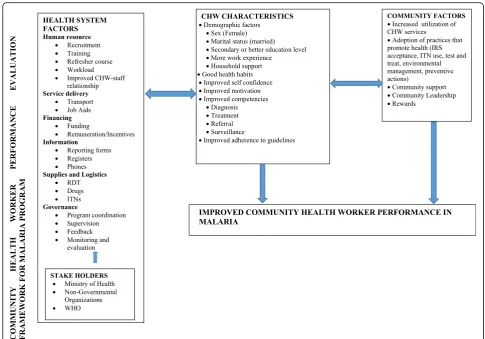
Using evidence of determinants of performance in malaria interventions, we have proposed a performance framework which shows the elements that are vital for determining performance in community malaria pro-grams. The major components are health system factors, CHW characteristics, and community factors (Fig.2).
selecting which CHWs may be engaged as this may assist in obtaining positive response from the commu-nity to the malaria interventions [7]. In addition, while WHO recommends that CHWs should receive remuneration, most CHWs are working on voluntary basis and their working terms are not made clear to them except for example the Malawian government that has salaried the health surveillance assistants in-cluding providing accommodation, a system that has led to improvement and scaling up of ICCM [23].
Improvement of CHW-professional staff relationship is important for improving CHW confidence, as it provides a level of motivation for a well-coordinated CHW program. Improved cognitive reflections exhib-ited in CHWs are part of performance measurements worth considering [30]. The CHW competencies in diagnosis, treatment, referral, and surveillance are a measure of individual CHW performance in malaria, but output is also dependent on training received, re-fresher courses, supervision, logistics, and supplies. Evidence indicates that competence evaluations through observations may have better results if
evaluations are done within the CHW work environ-ment [16]. A systematic review by Smith et al. 2014 on the effectiveness of strategies to improve commu-nity case management (CCM) of malaria reports that CHWs are able to provide good quality malaria care, including performing procedures such as rapid diag-nostic tests with appropriate training, clear guidelines, and regular supportive supervision [31]. Evidence from a systematic review on the impact and imple-mentation of supervision suggests that improving supervision quality has a greater impact than increas-ing frequency of supervision alone [32].
There is a need to strengthen CHW program coordin-ation among stakeholders such as health ministries and nongovernmental organizations that play a big role in strategy or intervention implementation at district level. These stakeholders have a direct influence on the health system factors related to production of guidelines, regis-ters, checklists, reporting tools, and evaluation tools of which studies revealed not to have had reporting or standard evaluation tools for malaria programs [11, 12,
15]. However, this review found that there are few or no
Fig. 2Framework for factors surrounding improved malaria CHW performance-Health system factors, community health worker characteristics
reporting or standard evaluation tools for malaria pro-grams though an innovation to improve the information system through use of phones for reporting has been effected in some countries like Zambia [33].
Motivated CHW may help encourage the community to adopt practices that promote health through witnes-sing visible changes in the community by CHW efforts as they are a link to the community [7]. Remuneration, availability of supplies, and relevant infrastructure have been found to be important demotivating factors for health workers [34]. To avoid demotivating CHW and health workers alike, sufficient remuneration; supplies of RDT, drugs, and ITNs; and job aids need to be consist-ent, including relevant infrastructure [23, 27, 34]. One study indicates that there is no serious attempt to globalize investment in CHWs as a strategy to combat malaria [35] hence funding allocation and remuneration for CHW programs should be increased if malaria elim-ination is to be achieved [20,23,35].
In this review, CHWs performed poorly due to in-creased workload as they have a large population cover-age and perform multiple tasks. There is need for scaling up of these malaria CHW interventions and pro-moting continued use of CHWs in national programs as an important human resource that contributes to long-term impact of interventions [4,35]. Integrating malaria control activities for CHWs as a holistic package is crit-ical in the fight to eradicate malaria [27]. This entails continued recruitment and training to help reduce the workload and increase coverage. A systematic review assessing the most effective approach to delivering mal-aria treatment in developing countries recommended that CHWs roles should be recognized, integrated, and expanded as they were effective despite challenges met [35]. Adequate training and refresher courses are vital as knowledge on malaria epidemiology and vector ecology is essential in promoting integration and expansion of CHW practice [36]. This integrated approach may help foster the new WHO pillar strategy that has three main building blocks which are to ensure universal access to malaria prevention, diagnosis, and treatment, to acceler-ate efforts toward elimination of malaria and attainment of malaria-free status, and to transform malaria surveil-lance into a core intervention [2]. However, integrating and multitasking with other health programs needs total health system support as priority for CHWs to perform as an important cadre in delivery of primary health care services to the community [4].
The CHWs serve the community, and community feedback is therefore vital as this influences perform-ance. Studies included in the review indicated poor utilization of CHW services [20] and that only the rural poor are utilizing their services [17]. Utilization of CHWs can be improved through engagement of
community leadership who may influence the commu-nity to support the CHW malaria strategy through re-wards [17] and adopting practices that prevent and control malaria. The CHW program is intended not only to improve intervention coverage but also to improve surveillance and reduce congestion in health facilities even in urban areas which are densely populated [3].
Strengths and limitations
The strength of this review is that it shows actual determinants of CHW performance specific to community malaria interventions in the sub-Saharan Africa region. It adds value to current literature, as it included both qualitative and quantitative studies and was able to explore perceptions. Additionally, this review reflects performance evaluation areas that have been previously poorly explored with respect to CHW interventions in malaria programs. Emphasis has been on improved competencies in diagnosis, treatment, and referral, concentrating on factors within the CHW sphere that enhance performance but are a measure of individual performance in itself. Despite these findings, this systematic review may have been limited by language restriction to English only and also by CHWs having different names in different settings, possibly leading to exclusion of some eligible studies.
Conclusion
This review has shown that health system factors, com-munity factors, and CHW characteristics were important factors that affect CHW performance with the health system factors being the most important. These CHWs are available and willing to serve the community but a workable environment for them has not been well estab-lished in many health systems. Factors affecting per-formance highlighted in this review should be taken into account by policymakers during designing, implementa-tion, and adjusting of CHW programs with consider-ation that these factors interlink. Using evidence of performance determinants in malaria programs from various studies, we therefore suggest that a CHW per-formance framework developed from these studies could guide designing, implementation, and evaluation of community-based malaria prevention programs.
Abbreviations
ACT:Artemisinin-based combination therapy; CBV: Community-based
Acknowledgments
Helen Mwiinga Chipukuma/H.M.C. is a recipient of a TDR scholarship under the Postgraduate Training Scheme in Implementation Research at the University of Zambia. We are grateful to the financial support for the training scheme as provided by the UNICEF/UNDP/World Bank/WHO Special Program for Research and Training in Tropical Diseases (TDR). I am also grateful to my husband Kelvin Mwiinga for his encouragement and unending academic support.
Availability of data and materials Data is included in the manuscript
Authors’contributions
HMC conceived the review and did the literature search, analysis, and reporting. The data was extracted by HMC, JMZ, and CJ. JMZ refined the title, aided in drafting manuscript, and structured the review. JMZ, CJ, GC, JZ, HH, MC, and CM reviewed and edited the manuscript for intellectual content. All authors contributed to analysis and interpretation of data. The opinions expressed are those of authors alone. All authors read and approved final manuscript.
Authors’information
The main author, Helen Mwiinga Chipukuma ([email protected]), is a Public Health Masters graduate from the University of Zambia, School of Public Health in the Department of Health Policy and Management with implementation research.
Ethics approval and consent to participate Not applicable
Competing interests
The authors declare that they have no competing interests.
Publisher’s Note
Springer Nature remains neutral with regard to jurisdictional claims in published maps and institutional affiliations.
Author details 1
Department of Health Policy Unit, School of Public Health, University of Zambia, P.O. Box 50110, Lusaka, Zambia.2Department of Health Promotion Unit, School of Public Health, University of Zambia, P.O. Box 50110, Lusaka, Zambia.3Department of Epidemiology and Biostatistics Unit, School of Public Health, University of Zambia, P.O. Box 50110, Lusaka, Zambia.4Department of Environmental Health Unit, School of Public Health, University of Zambia, P.O. Box 50110, Lusaka, Zambia.
Received: 30 May 2017 Accepted: 19 April 2018
References
1. WHO. Regional profiles 2015. Geneva: World Health Organization; 2015. 2. WHO. World malaria report 2015. Geneva: World Health Organization; 2015.
3. Pallas SW, et al. Community health workers in low-and middle-income
countries: what do we know about scaling up and sustainability? Am J Public Health. 2013;103(7):e74–82.
4. Christopher JB, et al. Thirty years after Alma-Ata: a systematic review of the impact of community health workers delivering curative interventions against malaria, pneumonia and diarrhoea on child mortality and morbidity in sub-Saharan Africa. Hum Resour Health. 2011;9:27.
5. Lehman U, Sanders D. Community health workers: what do we know about
them? The state of the evidence on programmes, activities, costs and impact on health outcomes of using community health workers. Geneva: World Health Organization; 2007. p. 1–42.
6. Zulu JM, et al. Developing the national community health assistant
strategy in Zambia: a policy analysis. Health Res Policy Syst. 2013;11(24).
https://doi.org/10.1186/1478-4505-11-24.
7. WHO. Community health workers: what do we know about them? Geneva:
WHO Department of Human Resources for Health; 2007.
8. Haines A, et al. Achieving child survival goals: potential contribution of community health workers. Lancet. 2007;369(9579):2121–31.
9. Yasuoka J, et al. Scale-up of community-based malaria control can be achieved without degrading community health workers’service quality: the village malaria worker project in Cambodia. Malar J. 2012;11:4.
10. Cohen JM, et al. Malaria resurgence: a systematic review and assessment of its causes. Malar J. 2012;11:122.
11. Bagonza J, Kibira S, Rutebemberwa E. Performance of community health
workers managing malaria, pneumonia and diarrhoea under the community case management programme in central Uganda: a cross sectional study. Malar J. 2014;13(1):367.
12. Kalyango JN, et al. Performance of community health workers under integrated community case management of childhood illnesses in eastern Uganda. Malar J. 2012;11:282.
13. Banek K, et al. Community case management of malaria: exploring support, capacity and motivation of community medicine distributors in Uganda. Health Policy Plan. 2015;30(4):451–61.
14. Wanduru P, et al. The performance of community health workers in the
management of multiple childhood infectious diseases in Lira, northern Uganda—a mixed methods cross-sectional study. Glob Health Action. 2016;9:33194.
15. Kawakatsu Y, et al. Individual and contextual factors associated with community health workers’performance in Nyanza Province, Kenya: a multilevel analysis. BMC Health Serv Res. 2015;15(1):1.
16. Kelly JM, et al. Community health worker performance in the management
of multiple childhood illnesses: Siaya District, Kenya, 1997–2001. Am J Public Health. 2001;91(10):1617–24.
17. Kisia J, et al. Factors associated with utilization of community health workers in improving access to malaria treatment among children in Kenya. Malar J. 2012;11:248.
18. MOH-Rwanda. Community IMCI/community case management: evaluation
report of community health workers performance. Kigali: Rwanda Ministry of Health; 2009. http://www.basics.org/documents/community-IMCI-%20and-Community-Case-Management-Evaluation_Rwanda.pdf. Accessed 21 Dec 2015.
19. Mubi M, et al. Malaria rapid testing by community health workers is effective and safe for targeting malaria treatment: randomised cross-over trial in Tanzania. PLoS One. 2011;6(7):e19753.
20. Druetz T, et al. Utilization of community health workers for malaria treatment: results from a three-year panel study in the districts of Kaya and Zorgho, Burkina Faso. Malar J. 2015;14:71.
21. Chinbuah MA, et al. Assessment of the adherence of community health
workers to dosing and referral guidelines for the management of fever in children under 5 years: a study in Dangme West District, Ghana. Int Health. 2013;5(2):148–56.
22. Perez F, et al. The role of community health workers in improving child health programmes in Mali. BMC Int Health Hum Rights. 2009;9(1):28.
23. Nsona H, et al. Scaling up integrated community case management of
childhood illness: update from Malawi. Am J Trop Med Hyg. 2012;87(5 Suppl):54–60.
24. Chanda P, et al. Community case management of malaria using ACT and
RDT in two districts in Zambia: achieving high adherence to test results using community health workers. Malar J. 2011;10:158.
25. Searle KM, et al. Evaluation of the operational challenges in implementing reactive screen-and-treat and implications of reactive case detection strategies for malaria elimination in a region of low transmission in southern Zambia. Malar J. 2016;15(1):412.
26. Yeboah-Antwi K, et al. Community case management of fever due to
malaria and pneumonia in children under five in Zambia: a cluster randomized controlled trial. PLoS Med. 2010;7(9):e1000340.
27. Zulu JM, et al. Hope and despair: community health assistants’experiences of working in a rural district in Zambia. Hum Resour Health. 2014;12(1):30. 28. Counihan H, et al. Community health workers use malaria rapid diagnostic
tests (RDTs) safely and accurately: results of a longitudinal study in Zambia. Am J Trop Med Hyg. 2012;87(1):57–63.
29. Yasuoka J, et al. Assessing the quality of service of village malaria workers to strengthen community-based malaria control in Cambodia. Malar J. 2010;9:109. 30. Kok MC. Performance of community health workers: optimizing the benefits
of their unique position between communities and the health sector. 's-Hertogenbosch: Uitgeverij Box Press; 2015.
32. Hill Z, et al. Supervising community health workers in low-income countries—a review of impact and implementation issues. Glob Health Action. 2014;7(1):24085.
33. Hamainza B, et al. Comparison of a mobile phone-based malaria
reporting system with source participant register data for capturing spatial and temporal trends in epidemiological indicators of malaria transmission collected by community health workers in rural Zambia. Malar J. 2014;13:489.
34. Thu NTH, Wilson A, McDonald F. Motivation or demotivation of health workers providing maternal health services in rural areas in Vietnam: findings from a mixed-methods study. Hum Resour Health. 2015;13(1):91. 35. Kamal-Yanni MM, Potet J, Saunders PM. Scaling-up malaria treatment: a
review of the performance of different providers. Malar J. 2012;11:414. 36. Lim S, et al. Promoting community knowledge and action for malaria