I
NTERNATIONAL
J
OURNAL OF
E
NGINEERING
S
CIENCES &
M
ANAGEMENT
PERMEABLE PAVEMENT SYSTEM
PankajJoon
Assistant Professor Ganga Technical Campus, Bahadurgarh, Haryana, India
ABSTRACT
Uncontrolled stormwater runoff not only creates drainage problems and flash floods but also presents a considerable threat to water quality and the environment. These problems can, to a large extent, be reduced by a type of stormwater management approach employing permeable pavement systems (PPS) in urban, industrial and commercial areas, where frequent problems are caused by intense undrained stormwater. PPS could be an efficient solution for sustainable drainage systems, and control water security as well as renewable energy in certain cases. Considerable research has been conducted on the function of PPS and their improvement to ensure sustainable drainage systems and water quality. This paper presents a review of the use of permeable pavement for different purposes. The paper focuses on drainage systems and stormwater runoff quality from roads, driveways, rooftops and parking lots. PPS are very effective for stormwater management and water reuse. Moreover, geotextiles provide additional facilities to reduce the pollutants from infiltrate runoff into the ground, creating a suitable environment for the biodegradation process. Furthermore, recently, ground source heat pumps and PPS have been found to be an excellent combination for sustainable renewable energy. In addition, this study has identified several gaps in the present state of knowledge on PPS and indicates some research needs for future consideration.
Keywords- permeable pavement; porous pavement; geotextiles; ground source heat pumps (GSHP); sustainable drainage.
INTRODUCTION
Sustainable urban drainage systems
A sustainable drainage system (SUDS) is designed to reduce the potential impact of new and existing developments with respect to surface water drainage discharges. The term sustainable urban drainage system is not the accepted name, the 'Urban' reference having been removed so as to accommodate rural sustainable water management practices. Increasing urbanization has caused problems with increased flash flooding after sudden rain. As areas of vegetation are replaced by concrete, asphalt, or roofed structures, the area loses its ability to absorb rainwater. This rain is instead directed into surface water drainage systems, often overloading them and causing floods.
The idea behind SUDS is to try to replicate natural systems that use cost effective solutions with low environmental impact to drain away dirty and surface water run-off through collection, storage, and cleaning before allowing it to be released slowly back into the environment, such as into water courses. This is to counter the effects of conventional drainage systems that often allow for flooding, pollution of the environment – with the resultant harm to wildlife – and contamination of groundwater sources used to provide drinking water. The paradigm of SuDS solutions should be that of a system that is easy to manage, requiring little or no energy input (except from environmental sources such as sunlight, etc.), resilient to use, and being environmentally as well as aesthetically attractive. Examples of this type of system are basins (shallow landscape depressions that are dry most of the time when it's not raining), rain-gardens (shallow landscape depressions with shrub or herbaceous planting), swales (shallow normally-dry, wide-based ditches), filter drains (gravel filled trench drain), bioretention basins (shallow depressions with gravel and/or sand filtration layers beneath the growing medium), reed beds and other wetland habitats that collect, store, and filter dirty water along with providing a habitat for wildlife.
Originally the term SUDS described the UK approach to sustainable urban drainage systems. These developments may not necessarily be in "urban" areas, and thus the "urban" part of SuDS is now usually dropped to reduce confusion. Other countries have similar approaches in place using a different terminology such as best management practice (BMP) and low-impact development in the United States,[8]and water-sensitive urban design in Australia .
SuDS use the following techniques: [1] Source control
[4] Storm water infiltration
[5] Evapo-transpiration (e.g. from a green roof)
A common misconception of SuDS systems is that they reduce flooding on the development site. In fact the SUDS system is designed to reduce the impact that the surface water drainage system of one site has on other sites. For instance, sewer flooding is a problem in many places. Paving or building over land can result in flash flooding. This happens when flows entering a sewer exceed its capacity and it overflows. The SuDS system aims to minimise or eliminate discharges from the site, thus reducing the impact, the idea being that if all development sites incorporated SuDS then urban sewer flooding would be less of a problem. Unlike traditional urban stormwater drainage systems, SuDS can also help to protect and enhance ground water quality.
Technologies of SUDS
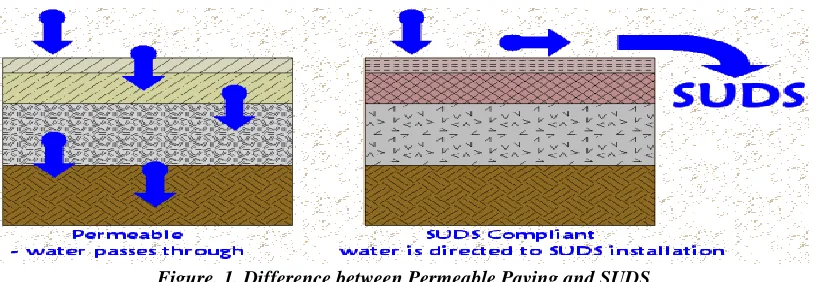
There are dozens, if not hundreds of different SUDS applications, ranging from reed-bed treatment systems for polluted water, to settlement ponds for sediment, to simple swales and filter drains. Schemes are usually site- specific, taking a range of core technologies and using them either singly or in combination to create and application that deals with the surface water drainage for a particular site. One of such technology is Permeable Paving or Permeable Pavement Systems, but there is a suitable difference between these two which is permeable pavements allows water to pass through the paving structure, whereas suds-friendly pavements simply direct surface water to a suds installation such as a soakaway, a swale, etc. The permeable pavement systems and SUDS are differentiated in the Figure. 1. Suds-compliant pavements which can be defined as any pavement from which surface water is
Figure. 1. Difference between Permeable Paving and SUDS
sent to a suds installation from where it may have the opportunity to drain to ground or be temporarily stored rather than being directly channelled into the public sewer system or an open watercourse.
PERMEABLE PAVEMENT SYSTEMS
Permeable paving is a range of sustainable materials and techniques for permeable pavements with a base and subbase that allow the movement of stormwater through the surface. In addition to reducing runoff, this effectively traps suspended solids and filters pollutants from the water.[1] Examples include roads, paths, lawns and lots that are subject
to light vehicular traffic, such as car/parking lots, cycle-paths, service or emergency access lanes, road and airport shoulders, and residential sidewalks and driveways.
Although some porous paving materials appear nearly indistinguishable from nonporous materials, their environmental effects are qualitatively different. Whether it is pervious concrete, porous asphalt, paving stones or concrete or plastic-based pavers, all these pervious materials allow stormwater to percolate and infiltrate the surface areas, traditionally impervious to the soil below. The goal is to control stormwater at the source, reduce runoff and improve water quality by filtering pollutants in the substrata layers.
Types
Pervious concrete
Pervious concrete is widely available, can bear frequent traffic, and is universally accessible. Pervious concrete quality depends on the installer's knowledge and experience.
Plastic Grids
Plastic grids allow for a 100% porous system using structural grid systems for containing and stabilizing either gravel or turf. These grids come in a variety of shapes and sizes depending on use; from pathways to commercial parking lots. These systems have been used readily in Europe for over a decade, but are gaining popularity in North America due to requirements by government for many projects to meet LEED environmental building standards. Plastic grid system is also popular with homeowners due to their lower cost to install, ease of installation, and versatility. The ideal design for this type of grid system is a closed cell system, which prevents gravel/sand/turf from migrating laterally. It is also known as Grass pavers / Turf Pavers in India.
Porous asphalt
Porous asphalt is produced and placed using the same methods as conventional asphalt concrete; it differs in that fine (small) aggregates are omitted from the asphalt mixture. The remaining large, single-sized aggregate particles leave open voids that give the material its porosity and permeability. To ensure pavement strength, fiber may be added to the mix or a polymer-modified asphalt binder may be used. Generally, porous asphalt pavements are designed with a subsurface reservoir that holds water that passes through the pavement, allowing it to evaporate and/or percolate slowly into the surround soils.
Open-graded friction courses (OGFC) are a porous asphalt surface course used on highways to improve driving safety by removing water from the surface. Unlike a full-depth porous asphalt pavement, OGFCs do not drain water to the base of a pavement. Instead, they allow water to infiltrate the top 3/4 to 1.5 inch of the pavement and then drain out to the side of the roadway. This can improve the friction characteristics of the road and reducing road spray.
Single-sized aggregate
Single-sized aggregate without any binder, e.g. loose gravel, stone-chippings, is another alternative. Although it can only be safely used in very low-speed, low-traffic settings, e.g. car-parks and drives, its potential cumulative area is great.
Porous turf
Porous turf, if properly constructed, can be used for occasional parking like that at churches and stadia. Plastic turf reinforcing grids can be used to support the increased load. Living turf transpires water, actively counteracting the "heat island" with what appears to be a green open lawn.
Grass pavement
Permeable interlocking concrete pavements
Permeable clay brick pavements
Permeable clay brick pavements are fired clay brick units with open, permeable spaces between the units. Clay pavers provide a durable surface that allows stormwater runoff to permeate through the joints.
Resin bound paving
Resin bound paving is a mixture of resin binder and aggregate. Clear resin is used to fully coat each aggregate particle before laying. Enough resin is used to allow each aggregate particle to adhere to one another and to the base yet leave voids for water to permeate through. Resin bound paving provides a strong and durable surface that is suitable for pedestrian and vehicular traffic in applications such as pathways, driveways, car parks and access roads.
Bound recycled glass porous pavement
Elastomerically bound recycled glass porous pavement consisting of bonding processed post consumer glass with a mixture of resins, pigments, granite and binding agents. Approximately 75 percent of glass in the U.S. is disposed in landfills.
WATER QUALITY
Pollutants
Pollution which presents on the road and car park surfaces as a result of oil and fuel leaks, and drips, tyre wear, and dust from the atmosphere. This type of pollution arises from a wide variety of sources and is spread throughout an urban area also known as diffuse pollution. Rainwater washes the pollutants off the surfaces. Conventional.
Drainage systems, as well as attenuation tanks, effectively concentrate pollutants, which are flushed directly into the drainage system during rainfall and then into watercourses or groundwater. The impact of this is to reduce the environmental quality of watercourses. Impervious surfaces have a high potential for introducing pollution to watercourses. Possible water quality variables of concern include the following as stated in D’Arcy et al. (1998) and NCDENR (2005):
• Sediment and suspended solids (including phosphorus and some metals); • Organic waste with high biochemical oxygen demand;
• Oil and grease; and faecal pathogens.
• Dissolved nutrients and pollutants (including nitrogen, heavy metals, solvents, herbicides and pesticides);
Five processes that affect the concentration of pollutants in the soil’s unsaturated zone: Sorption, Filtration, Degradation, Volatilization, and Water transport. Sorption tends to be the dominant process, and most pollutants will either be sorbed to soil particles or to organic matter. Storm water pollutants can also be adsorbed onto surrounding sediments in the storm water before they infiltrate into the soil. (Mikkelsen et al. (1994)) compiled research data showing that approximately 50 percent of the heavy metal load in storm water could be removed through either sedimentation or filtration. Permeable pavements have a good track record at removing suspended solids and nitrogen. However, PPS, which do not rely on below ground infiltration and the use of an underdrain system, will not be successful in the removal of nitrogen. When an underdrain system is incorporated into the pavement design, storm water tends not to infiltrate into the soil, but into the underdrain, where it can be denitrified or removed by plant uptake (NCDENR, 2005). (Dierkes et al. (2002)) summarised possible ranges of pollutant concentrations in rain, and roof and road runoff, taken from more than 60 sites throughout Europe. Rain may contain 5-day biochemical oxygen demand (1–2 mg/l), sulphate (0.56–14.40 mg/l), chloride (0.2–5.2 mg/l), ammonia (0.1–2.0 mg/l), nitrate (0.l–7.4 mg/l), and total phosphate (0.01–0.19 mg/l), copper (1–355 mg/l) and zinc (5–235 mg/l). Another laboratory study by Fach and Geiger, (2005) examined pollution removal rates of Cd, Zn, Pb, and Cu for permeable concrete block paving and three variations of concrete block pavers; one with wide infiltration pores (29mm), another with narrow pores (3mm), and pavers with a crushed brick substrate infill. Permeable concrete have the highest heavy metal removal rate (96.5% average) followed by block paving with brick substrate infill (92.9% average). No significant differences between the narrow infiltration pores and the wide pores were observed (63.1% and 78.6% average removal rates, respectively). When set over a 4 cm crushed basalt or brick substrate roadbed and a 40 cm limestone base course, average pollution removal rates for all pavements and substructures were very high, ranging from 96 to 99.8 percent.
Hydrocarbons
solids. Models have been designed to estimate the suspended solids load and its dynamics during rainfall events, leading to better understanding of receiving waters being polluted by hydrocarbons. Concerning various pavement systems, Booth showed that infiltrated water had significantly lower levels of copper and zinc in comparison to the direct surface runoff from the asphalt area. Motor oil was detected in 89% of samples from the asphalt runoff, but not in any outflow water sample from the PPS. Diesel fuel was not detected in any sample. Infiltrate measured five years earlier displayed significantly higher concentrations of zinc, and significantly lower concentrations of copper and lead. Permeable pavements can operate as efficient hydrocarbon traps and powerful in-situ bioreactors. Coupe et al. found out that a PPS specifically inoculated with hydrocarbon- degrading microorganisms does not successfully retain a viable population of organisms for the purpose of increased hydrocarbon degradation over many years. Naturally developed microbial communities (i.e. no inoculation with allochthonous microorganisms) degrade oil successfully. For the successful biodegradation of polycyclic aromatic hydrocarbons, certain environmental conditions need to be met. Degradation takes place when prolonged aerobic, sulphate reducing and denitrifying conditions occur. Very large hydrocarbon spills can be contained due to absorption processes within the pavement. Wilson incorporated an oil interceptor into a porous surface construction. Tests were carried out for worst-case scenarios such as the worst possible combined pollution and rainfall event to assess how the system retains pollutants within its structure. The results successfully demonstrated that this system can retain hydrocarbons, and can therefore offer outflow with improved water quality. However, where certain detergents are present in the pavement system, they can cause contamination of the outflow water, which may require secondary treatment to improve its water quality.
Metals
Studies have shown an improvement of water quality by filtration through PPS, which work well in removing suspended solids and particularly heavy metals from runoff. For example, Legret showed that suspended solids and lead can be reduced by PPS up to 64% and 79%, respectively. Kellems showed that enhanced filtration using organic media was an effective alternative to chemical precipitation for the treatment of storm water. Filtration through a specific adsorbent organic medium can remove about 95% of dissolved copper and zinc.
In comparison to pavements made of asphalt, concentrations of zinc, copper and lead were significantly lower on permeable structures. Lead concentrations were in fact undetectable. A PPS should regularly be kept clean to prevent clogging. Generally, PPS are efficient in trapping dissolved heavy metals in surface runoff. However, not all pavers and joint fillings have the ability to trap dissolved heavy metals. Pavements with large joints for infiltration must have a suitable joint filling. Otherwise, metals will pass through them, and may subsequently enter groundwater resources. Particles usually accumulate in geotextiles and on pavement surfaces. Geotextiles usually separate micro pollutants such as cadmium, zinc and copper from the underlying soil, therefore preventing groundwater from becoming contaminated.
Microbiology
PPS are powerful in-situ bioreactors, which can reduce hydrocarbon contamination by 98.7%. Biodegradation in PPS is enhanced by bacteria and fungi. When inoculated with microorganisms, the protozoan population diversity within a PPS increases more rapidly than in a similar non-inoculated system. Pavements contain testate amoebae, ciliates, flagellates and gym amoebae. The understanding of microbial biodiversity helps to interpret biodegradation mechanisms. PPS have the capacity to degrade large quantities of clean motor oil. Bio-treat HD, a commercially available oil degrading microbial mixture, will not degrade oil any better that the local microbial biomass established within the pavement over a long period of time. However, the local microbial biomass can only achieve high degradation rates, if there is adequate supply of nutrients (i.e. nitrogen and phosphorous) in the feed. Monitoring of biofilm development through scanning electron microscopy has revealed that a PPS can obtain a high degree of biodiversity due to the development of complex microbial compositions.
The assessment of the microbiological water quality has been an important process in preventing waterborne diseases. The two most common alternate tests carried out are for coliforms and Escherichia coli, or faecal coliforms. Total coliforms, faecal coliforms, faecal streptococci, heterotrophs, fungi, Pseudomonas aeruginosa, Leptospira, salmonellae and viruses are often analysed in an attempt to determine the temporal distribution of bacterial pathogens and viruses in storm water runoff. However, findings usually show that it is not possible to accurately predict the time when peak microbial populations including human pathogens occur in runoff waters.
RECENT RESEARCH WORKS
Introduction to Geothermal Heat Pumps.
The technology has many names: ground source heat pump (GSHP), ground coupled heat pump (GCHP), geo-thermal heat pump (GHP), geo-exchange (GX), Earth energy system. Geothermal heat pumps (GHP) or geo exchange systems are commonly used in North America, China, Japan and some European countries. Most GSHP use refrigerant to move unwanted energy (i.e. heat) out of buildings during summer and into them (if required) during winter. (Bose JE. (2005)) they use constant temperatures of surrounding grounds, which are lower than the corresponding air temperatures during warm seasons (heat sinks) and higher during cold seasons (heat sources). For ground connections, plastic pipes are installed within the soil. Various applications such as horizontal, vertical, Looped or submerged designs can be used. The main thermal carrier within coils is a mixture of water and a deciding agent. The length and width of the loops is determined by ground conductivity abilities. The most important variables are type of soil, geology and area of available land for such installations.
Integration of PPS with Geothermal Heat Pumps
Environment not only prevents and reduces the risk of flooding and pollution of watercourses, but also reduces energy costs by the application of a green energy source (earth energy) which adds many other environmental benefits (Scholz and Graboweicki, 2008). Permeable pavement engineering is an effective and simple method of providing structural pavements whilst allowing storm water to infiltrate freely through the surfaces for temporary storage, storm attenuation, dispersal and reuse. Permeable pavement systems (PPS) are a sustainable urban drainage system (SUDS) whereby water from urban runoff can be treated by filtration and sedimentation for recycling, harvesting or reuse purposes. Geothermal Heat Pumps (GHPs) also referred to as ground source heat pumps are receiving increasing interest because of its potential to reduce primary energy consumption, reduce emissions of greenhouse gases and thus reduce the effects of climate change (Tota-Maharaj et al., 2009).
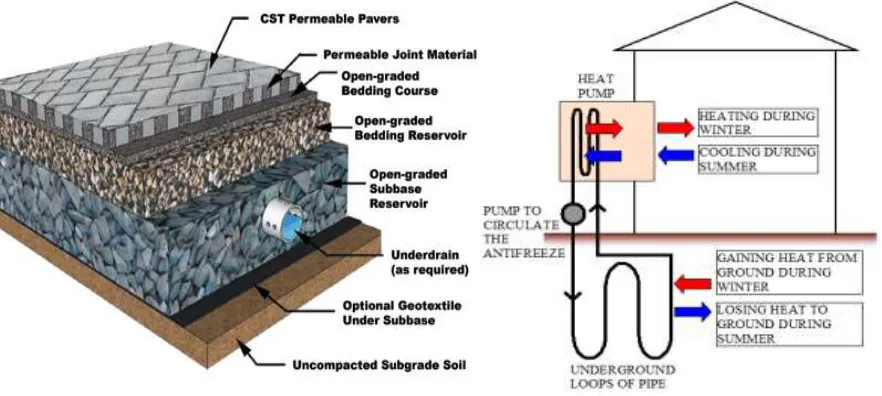
Figure 3.Cross section of PPS Figure 4.Process of heat transfer in GHP
Health risks associated with permeable pavement systems.
applications as discussed by the authors previously (Grabowiecki P et al. (2006)). Both PPS and GSHP are commercially available applications, but were never used as combined systems in a research project. A combined system has the potential to capture, detain and treat runoff, and to either cool or heat a nearby building at the same time. The sub-base is only heated passively during the summer when hot air with in an adjacent building needs to be cooled down by transferring access heat to below the permeable pavement. The heat is in fact a waste product that has the additional benefit of enhancing biodegradation within the sub-base.
Water recycling using permeable paving
The physical attenuation of storm water pollutants by permeable pavements with varying designs of geotextile membranes. The research would give an indication as to the effects of contaminants present in urban runoff and the possibility of biodegradation by anaerobic processes occurs. One of the guiding principles of SUDS is centred on mitigating adverse effects of urban storm water runoff such as increased urban flooding and deteriorating receiving water quality. SUDS such as permeable pavements are commonly perceived as an effective source control measure to reduce storm water flows and pollution loads. However, there have only been limited studies aimed specifically at quantifying the effectiveness of utilising permeable pavements as a source control measure.
The recycling and reuse of rainwater, using permeable paving as the reservoir for storage, shows great potential in the reduction of mains water use for low grade uses. Water for toilet flushing, landscaping and car washing can be stored in the pavement structure and pumped out for reuse.
Rainwater harvesting after storage in permeable pavements
Permeable pavements built to the Hanson Form pave specification have an average storage capacity of around 1m3 per 10m2 of paving with an excavation depth of 500 mm. This storage capacity is easily realised by the provision of a lining system, usually based on a Visqueen-type material. Once the build is complete, accessories such as electric pumps can be added in order to move the water into the house for WC flushing or for external use such as landscaping. The onsite use of rainwater for non-potable purposes in both domestic and industrial settings shows great promise in reducing the need for highly purified mains water. In a domestic setting at certain times of the year, over 50 % of water could be supplied by the use of rainwater, certainly when feeding sprinkler systems in dry weather. The use of a permeable pavement as the storage element in rainwater harvesting makes efficient use of a large potential storage volume adheres to SUDS principles and value engineering good practice, realising significant savings for the end user.
Contamination of stored rainwater
When rainwater falls onto an urban receiving surface, whether that surface is a roof, road, pavement or car, it usually becomes contaminated relative to the water quality of the original rainfall. This is because rainfall is relatively free of contaminants except for materials like pollen, microbial spores, very fine dust and sometimes dissolved gases such as SO2 and NO2. After falling and coming into contact with surfaces, non-permeable urban surfaces tend to have any pollutants on them scoured off by the rainfall and moved, sometimes quite a large distance from their origin (Charlesworth et al, 2003). If rainwater is to be harvested for later use then there are many measures available to remove the larger contaminating waterborne fractions; these include filters, screens or grit traps. These measures are very effective in preventing blockages of pipework, but do not remove most of the smaller particles which may find their way into the storage reservoir. These smaller sized fractions include microorganisms typically between 2 and 20 micrometres in size.
Microbiological contamination of harvested rainwater
Any microbiological contamination in water harvesting schemes would come primarily from animal wastes from cats, dogs, rodents or birds. The unpredictability of any such contamination episodes is one of the reasons why such phenomena are difficult to study. It is clear that at times the number of potentially harmful microbes in urban water, e.g. faecal coliforms, is high (Ferguson et al, 1996: Butler and Davies, 2000). Potentially there are a number of possible contaminating microbial types in harvested rainwater, of different taxonomic descriptions (Evans et al, 2006; Grabiowiecki et al, 2008) and which may increase in number under a variety of different conditions.
require some maintenance. However, in general, a properly designed, installed, monitored and maintained harvesting system should provide excellent water saving benefits with little risk to the user.
Despite these safeguards, from an information gathering perspective and also to simulate a ‘worst case’ scenario, it was decided to apply two selected microbial contaminants from the above list to a simulated permeable paving system to determine the density of these microbes within the paving system after contact with the Aqua flow geotextile, Inbitex is known to very effectively filter out chemical and particulate pollutants from water (Newman et al, 2002). The interactions between the contaminants and the indigenous microbial population of the paving system were also of considerable interest to reduce the microbial effects on the urban runoff.
INNOVATIONS AND FUTURE RESEARCH
To date, the application of permeable pavement systems has been limited to roadways for vehicular travel. On-going and future research could potentially allow for new and innovative applications such as with airport runways. There is a myriad of different applications where human’s quest for development is hindered by environmental consequences. It is possible that with the use of permeable pavements these events may not be so catastrophic. Landslides are one example. Until recently, landslides were only thought to be associated with high intensity rainstorms on steep inclines. However, recent studies have shown that the threshold of rainfall intensity versus duration for shallow sloped landslides to occur is lower than previous estimates (Guzzetti, E. et al. 2007).
It was found that the rainfall intensity plays a more important role in increasing the chances for landslides to occur due to the sheer quantity of water draining over a short amount of time (Guzzetti, E. et al. 2007). These conditions can be exasperated by human development, which alters the drainage path of the rainwater, increasing the likelihood of a landslide (Ozdemir, A et al. 2008). This is where the permeable pavement design could come in to play. Virtually all the studies conducted on permeable pavement have noted its incredible hydrological properties; because the permeable pavement allows water to pass through it in to the soil it does not significantly alter the drainage path of the rainwater. This means that structures could potentially be built with a permeable foundation. So, they would have little impact on the surrounding environment. The research focuses also on improving the growth of microorganisms during artificial temperature fluctuations induced by the heat pump. Further research on the short and long-term effects of contaminants that remain in the PPS should be undertaken.
The self-sustainability of these relatively new systems in comparison to traditional pavements requires further assessment. Moreover, the long-term impact of PPS on the environment is still unclear. Before all of this can be accomplished though more research has to be put into improving the lifespan as well as decreasing the costs of permeable pavement. Hopefully if these two negative aspects of permeable pavement can be eliminated these systems can be installed in more places around the world.
CONCLUSIONS
This paper looked at various studies conducted on permeable pavement systems and their current application. Also discussed about the detailed design of permeable interlocking concrete pavement in brief. Maintenance and water quality control aspects relevant to the practitioner were outlined for permeable pavement systems. The water quality aspects are highlighted. Recent innovations were highlighted and explained, and their potential for further research work was outlined. The recent innovations like development of a combined geothermal heating and cooling, water treatment and recycling pavement system is promising and it is detailed in cut short, future research works are outlined in brief.
These permeable pavement systems are changing the way human development interacts with the natural environment. Its application towards parking lots, highways and even airport runways are all improvements in terms of water quality, water quantity and safety.
REFERENCES
[1] North Carolina Department of Environment and Natural Resources (NCDENR). NCDENR Storm water BMP Manual. NCDENR.North Carolina, 2007.
[2] Hun-Dorris, Tara. Advances in Porous Pavement.Storm water, 2005.
[4] ASTM C 1319-95, Standard Specification for Concrete Grid Paving Units, Annual Book of ASTM Standards, Vol. 04.04, American Society for Testing and Materials, Conshohocken, Pennsylvania, 1996. [5] Ferguson, B. K. (2005). Porous Pavements. Boca Raton, Fla.: CRC Press.
[6] D’Arcy BJ, Usman F, Griffiths D, Chatfield P. Initiatives to tackle diffuse pollution in the UK. Water Science and Technology 1998; 38(10): pp.131–8, 2006.
[7] Dierkes C, Kuhlman L, Kandasamy J, Angelis G. Pollution retention capability and maintenance of permeable pavements. In: Strecker EW, editor. Proceedings of the ninth international conference on urban drainage, Portland, USA, pp. 8–13, September 2002.
[8] Tota-Maharaj, K., and Scholz, M., Permeable (pervious) pavements and geothermal heat pumps: addressing sustainable urban stormwater management and renewable energy. International Journal of Green Economics, Vol. 3 (3-4), pp.447-461, 2009.
[9] Tota-Maharaj, K., Grabowiecki, P., and Scholz, M., Energy and temperature performance analysis of geothermal (ground source) heat pumps integrated with permeable pavement systems for urban run-off reuse International Journal of Sustainable Engineering, Vol. 2 (3), pp.201–213, 2009.
[10]Charlesworth S. M., Everett M., McCarthy R., Ordóñez A. and De Miguel, E. A (2003b) A Comparative Study of Heavy Metal Concentration and distribution in Deposited Street Dusts in a Large and a Small Urban Area: Birmingham and Coventry, West Midlands,UK. Environment International. 29: pp.563 – 573. [11]Grabowiecki, P., Scholz, M. and Coupe S.J. Combined permeable pavement and ground source heat pump
systems to control runoff and recycle energy. 11th International Conference on Urban Drainage, Edinburgh, Scotland, UK August 31st-September 5th 2008.
[12]Newman, A.P., Pratt, C.J., Coupe, S.J. and Cresswell, N. Oil biodegradation in permeable pavements by inoculated and indigenous microbial communities. Water Science and Technology 45: pp.51-56, 2002. [13]Guzzetti, E., S. Peruccacci, M. Rossi, and C.P. Stark. The Rainfall Intensity–Duration Control of Shallow
Landslides and Debris Flows: An Update, Springer-Verlag, 2007.