O R I G I N A L A R T I C L E
Influence on pulping yield and pulp properties of wood density
of
Acacia melanoxylon
Anto´nio Santos•Ofe´lia Anjos •Maria Emı´lia Amaral• Nuno Gil• Helena Pereira• Roge´rio Simo˜es
Received: 18 November 2011 / Accepted: 25 July 2012 / Published online: 22 August 2012 ÓThe Japan Wood Research Society 2012
Abstract Wood density and pulp yield are key parameters in the evaluation of tree productivity and quality for pulping and their relationships are of high practical importance. The influence of wood density on pulp yield and other pulp quality parameters was investigated usingAcacia melanox-ylonand its natural variability as a case study. Twenty trees were harvested (five trees in each of four sites in Portugal), and wood discs taken at different height levels, from the base to the top of the tree, providing 100 wood samples, covering the natural variability of wood density ranging from 449 kg m-3to 649 kg m-3. Under the same experimental conditions of kraft pulping, screened pulp yield ranged 47.0–58.2 %, Kappa number 10.9–18.4, ISO brightness 14.9–45.6, fibre length 0.660–0.940 mm and fibre width 16.2–22.9lm. The pulp yield and Kappa number were not correlated with wood density. Higher pulp yields were associated with lower Kappa numbers and alkali consump-tion, suggesting the important role of chemical composition of wood on kraft cooking. The results confirm the high
pulping potential of Acacia melanoxylon trees grown in Portugal and suggest the possibility of tree selection using both wood density and pulp yield.
Keywords Acacia melanoxylon Wood density Pulp yield Fibre lengthKappa number
Introduction
Wood density is a complex physical property related to both the anatomical structure and the chemical composition of wood, and responding to genetic, environmental and physiological influences [1,2]. On the other hand, density is related to most of the resistance properties of timber as well as many aspects of wood processing (chipping, transport, pulping) and product quality [3–7]. In fact, wood density and pulp yield have been considered as key parameters in tree-selection programs for pulping, in addition to tree growth [1, 8]. Digester productivity can increase with wood density and pulp yield, as well as, with milder pulping conditions (mainly lower retention time). The hypothetical correlation between pulp yield and wood density is, therefore, of technical and economical rele-vance, and their determining genetic parameters will be the key factors in breeding [1,9].
Reported results have shown various examples of no correlation, or only a weak relationship, between pulp yield and wood density. Data from clonally replicated full-sib families and unrelated Eucalyptus globulus clones sug-gested that pulp yield can be independent of wood density and growth rate [1]. Mokfienski et al. [10] observed a weak correlation between pulp yield and wood density in ten Eucalyptus species, and with a negative impact of wood density on pulp yield. Seca and Domingues [11], with 120 A. SantosH. Pereira
Forestry Research Centre, School of Agriculture,
Technical University of Lisbon, Tapada da Ajuda 1349-017, Lisboa, Portugal
A. SantosO. Anjos (&)
CERNAS-Research Centre for Natural Resources, Environment and Society, 3040-316 Coimbra, Portugal e-mail: [email protected]
O. Anjos
Polytechnic Institute of Castelo Branco/Agrarian School, Quinta da Senhora de Me´rcules, Apartado 119, 6001-909 Castelo Branco, Portugal
M. E. AmaralN. GilR. Simo˜es
Research Unit of Textile and Paper Materials,
E. globulustrees harvested in a restricted area of Portugal, observed that pulp yields were independent of wood den-sity and instead associated with lignin composition. Mir-anda and Pereira [12] did not observe significant correlation between pulp yield and wood density in prov-enances ofE. globulus. However, two types ofE. globulus clones which showed markedly different wood density values, grown in different sites in Portugal showed a positive correlation between wood density and pulp yield [13]. On the other hand, pulp and paper properties are strongly influenced by sheet formation and fibre morphology that are highly dependent on wood density [4,7,14,15]. Anjos et al. [16] have shown forAcacia melanoxylonthat wood basic density may be a predictor of fibre morphology and papermaking potential.
Acacia melanoxylon (R.Br.) is one of the main wattle species that have disseminated in Portugal since introduc-tion through plantaintroduc-tions in the dry and poor sandy soils along the coast in the beginning of the nineteenth century. A. melanoxylon is one important timber tree and the potential as pulpwood ofA. melanoxylongrown in Portugal has been recently studied [16–20].
The aim of this study was to investigate the influence of wood density on pulp yield and other pulp variables such as Kappa number, brightness and fibre morphological characteristics, as well as the relationships between them, takingAcacia melanoxylonand its natural variability as a case study. The study was carried out using twenty A. melanoxylontrees harvested from four sites in Portugal and with wood samples collected at different height levels in the tree.
Materials and methods
Acacia melanoxylon (R.Br.) trees were harvested from even aged stands at four sites in Portugal: Caminha (Camarido National Forest), Ovar (Forest Perimeter of Ovar Dunes), Ponte de Lima (Forest Perimeter of
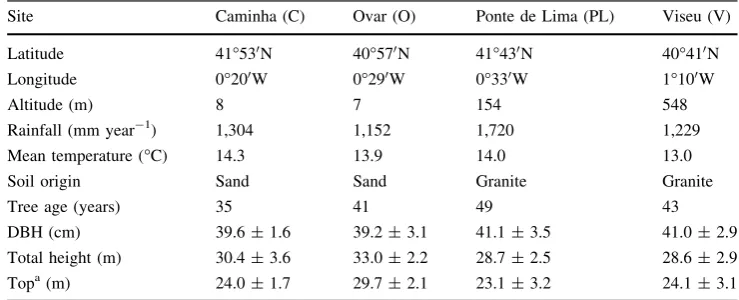
Rebordo˜es Santa Maria) and Viseu (Forest Perimeter of Crasto). A selective harvest was made for a diameter (measured at 1.3 m) above 40 cm (sawmill requirement) corresponding to an approximate age class of 40 years. Five trees were randomly selected at each site. Table1
shows site characteristics and tree biometric values. The stand densities were low and quite diverse. Detailed information on the sites and stands is available elsewhere [17,19].
Five stem discs with 5-cm thickness were cut from each tree at different height levels along the stem: at the base (B), and at 5, 15, 35 and 65 % of total tree height.
Each wood disc was fully hand-chipped into chips with approximately 50-mm length, 10-mm width and 5-mm thickness. The chips from each sample were carefully homogenized and two 100–250 g aliquots were used for basic density determination using the water displacement method [21]. The remaining chips were milled using a knife mill (Retsch) with a 1-mm output screen and the fraction coarser than 0.25 mm was selected for pulping. This procedure aims to enhance the homogeneity of the cooking. For wood chemical characterization, the wood meal fraction was further milled to get material that passes through a 40 mesh sieve.
Chemical composition was determined in seven selected wood samples, aiming to cover the broad range of pulp yield and density previously observed. Wood ash content was determined according to TAPPI 21 [1, 22] and extractives content was determined with ethanol:toluene mixture (v/v, 1:3) according to TAPPI 204 [23]. lignin (acid insoluble and soluble), neutral sugars and acetic acid were determined following the standard biomass analytical procedures of the National Renewable Energy Laboratory [24]. The sugars and acetic acid were determined after acid hydrolysis by high performance liquid chromatography, using an Aminex HPX-87H column (Bio-Rad, Hercules, CA) and 0.005 M H2SO4 as eluent with a flow rate of
0.4 mL min-1keeping oven temperature at 65°C, with RI detector and UV/VIS-detector at 280 nm. Calibration was
Table 1 Location and description of the sites and samples (mean of five trees and standard deviation)
a Top was located at
approximately 80 % of total tree height
Site Caminha (C) Ovar (O) Ponte de Lima (PL) Viseu (V)
Latitude 41°530N 40°570N 41°430N 40°410N
Longitude 0°200W 0°290W 0°330W 1°100W
Altitude (m) 8 7 154 548
Rainfall (mm year-1) 1,304 1,152 1,720 1,229
Mean temperature (°C) 14.3 13.9 14.0 13.0
Soil origin Sand Sand Granite Granite
Tree age (years) 35 41 49 43
DBH (cm) 39.6±1.6 39.2±3.1 41.1±3.5 41.0±2.9
Total height (m) 30.4±3.6 33.0±2.2 28.7±2.5 28.6±2.9
made with glucose, xylose, arabinose, and acetic acid as standards. As the chromatograph column does not separate xylose from mannose and galactose, these three sugars were accounted as xylose. The global recovery yield of neutral sugars and acetic acid was close to 90 %. The data were normalized to 100 % yield, assuming equivalent losses for all sugars.
The wood chips were pulped with a kraft cooking pro-cess under the following reaction conditions: active alkali charge 21.3 % (as NaOH); sulfidity index 30 %; liquor/ wood ratio 4/1; time to temperature 90 min; time at tem-perature (160°C) 90 min. Experiments were carried out with 25 g (oven dry) of wood, using 200 mL rotary digesters immersed into a thermostatic polyethyleneglycol bath. The cooked chips were disintegrated, washed and screened on a Lorentzen & Wettre screen with 0.3-mm slot width, and recovered with a 200 mesh screen. Screened pulp yield and uncooked material were determined gravi-metrically. Kappa number and ISO brightness of the pulps were determined according to ISO 302 [25] and ISO 2470 [26], respectively.
The residual effective alkali in the black liquor was determined by potentiometric titration with 0.1 M HCl to pH 9.3 (TAPPI T 625 [27]), and the effective alkali
consumption estimated by difference between the initial effective alkali charge and the residual effective alkali charge.
The morphological properties (fibre width and fibre length weighted in length) of the pulp fibres were deter-mined automatically by image analysis of a diluted sus-pension (20 mg L-1) in the flow chamber of a TECHPAP/ MorfiÒequipment, by measuring more than 5,000 fibres.
Statistical analysis of the data used a two way analysis of variance with site and tree height level as fixed factor effects, and principal component analysis. The software used was the Statistics version 7.
Results and discussion
Wood density and chemical composition
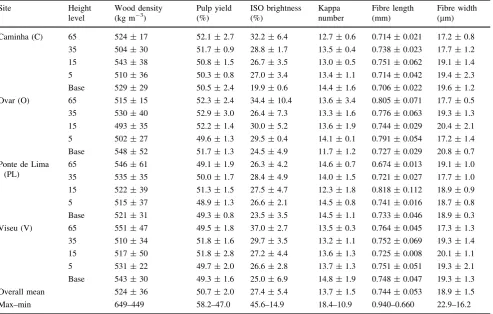
Table2 summarizes the data for wood density, screened pulp yield, Kappa number, ISO brightness and pulp mor-phological properties (fibre length and fibre width) deter-mined for the 100 wood samples, covering the variability between the four sites, the five trees per site and the five height levels within the trees.
Table 2 Mean values and standard deviation ofAcacia melanoxylonwood and pulp properties, at different sites and height levels in the trees (mean of five trees and an overall total of 100 samples)
Site Height level
Wood density (kg m-3)
Pulp yield (%)
ISO brightness (%)
Kappa number
Fibre length (mm)
Fibre width (lm)
Caminha (C) 65 524±17 52.1±2.7 32.2±6.4 12.7±0.6 0.714±0.021 17.2±0.8
35 504±30 51.7±0.9 28.8±1.7 13.5±0.4 0.738±0.023 17.7±1.2
15 543±38 50.8±1.5 26.7±3.5 13.0±0.5 0.751±0.062 19.1±1.4
5 510±36 50.3±0.8 27.0±3.4 13.4±1.1 0.714±0.042 19.4±2.3
Base 529±29 50.5±2.4 19.9±0.6 14.4±1.6 0.706±0.022 19.6±1.2
Ovar (O) 65 515±15 52.3±2.4 34.4±10.4 13.6±3.4 0.805±0.071 17.7±0.5
35 530±40 52.9±3.0 26.4±7.3 13.3±1.6 0.776±0.063 19.3±1.3
15 493±35 52.2±1.4 30.0±5.2 13.6±1.9 0.744±0.029 20.4±2.1
5 502±27 49.6±1.3 29.5±0.4 14.1±0.1 0.791±0.054 17.2±1.4
Base 548±52 51.7±1.3 24.5±4.9 11.7±1.2 0.727±0.029 20.8±0.7
Ponte de Lima (PL)
65 546±61 49.1±1.9 26.3±4.2 14.6±0.7 0.674±0.013 19.1±1.0
35 535±35 50.0±1.7 28.4±4.9 14.0±1.5 0.721±0.027 17.7±1.0
15 522±39 51.3±1.5 27.5±4.7 12.3±1.8 0.818±0.112 18.9±0.9
5 515±37 48.9±1.3 26.6±2.1 14.5±0.8 0.741±0.016 18.7±0.8
Base 521±31 49.3±0.8 23.5±3.5 14.5±1.1 0.733±0.046 18.9±0.3
Viseu (V) 65 551±47 49.5±1.8 37.0±2.7 13.5±0.3 0.764±0.045 17.3±1.3
35 510±34 51.8±1.6 29.7±3.5 13.2±1.1 0.752±0.069 19.3±1.4
15 517±50 51.8±2.8 27.2±4.4 13.6±1.3 0.725±0.008 20.1±1.1
5 531±22 49.7±2.0 26.6±2.8 13.7±1.3 0.751±0.051 19.3±2.1
Base 543±30 49.3±1.6 25.0±6.9 14.8±1.9 0.748±0.047 19.3±1.3
Overall mean 524±36 50.7±2.0 27.4±5.4 13.7±1.5 0.744±0.053 18.9±1.5
For example, the overall mean wood density at 5 % stem height level (near the breast height level) was 524 kg m-3, ranging from 454 to 582 kg m-3. The data are of the same magnitude of those reported in the litera-ture for the same species grown at different latitudes [28–30].
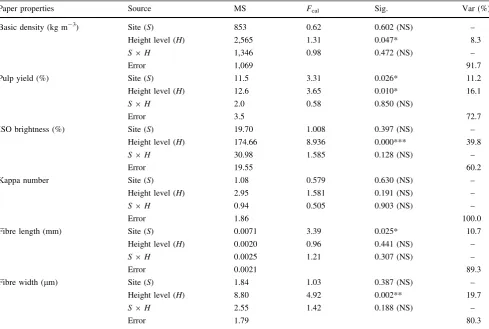
The data analysis of variance (Table3) showed that height level in the tree is a significant factor of variation, although explaining only 8.3 % of the total variation, while sites showed no statistically significant influence on the variation of density. Most of the variation was included in the residue (91.7 %) and refers to the between-tree vari-ability, and to other factors not considered in this study. Figure1 illustrates the wood-density profile along the stem, revealing not only a high variability but also a clear trend.
The wood chemical composition was determined on seven samples, with different wood density values, and is summarized in Table4. Extractives ranged 5.3–7.8 %, and Klason lignin between 19.8 and 22.4 %. In comparison with lignin contents reported by Lourenc¸o et al. [18], the
present values are slightly higher, which can be ascribed to the different experimental procedure used (we used NREL [24] procedure, while Lourenc¸o et al. [18] used TAPPI 222). No correlation could be assigned between wood density and lignin content (r2=0.040 for Klason lignin and r2=0.017 for total lignin) and wood density and extractives (r2=0.012).
Table 3 Component variance analysis forAcacia melanoxylonwood and pulp properties
Paper properties Source MS Fcal Sig. Var (%)
Basic density (kg m-3) Site (S) 853 0.62 0.602 (NS) –
Height level (H) 2,565 1.31 0.047* 8.3
S9H 1,346 0.98 0.472 (NS) –
Error 1,069 91.7
Pulp yield (%) Site (S) 11.5 3.31 0.026* 11.2
Height level (H) 12.6 3.65 0.010* 16.1
S9H 2.0 0.58 0.850 (NS)
Error 3.5 72.7
ISO brightness (%) Site (S) 19.70 1.008 0.397 (NS) –
Height level (H) 174.66 8.936 0.000*** 39.8
S9H 30.98 1.585 0.128 (NS) –
Error 19.55 60.2
Kappa number Site (S) 1.08 0.579 0.630 (NS) –
Height level (H) 2.95 1.581 0.191 (NS) –
S9H 0.94 0.505 0.903 (NS) –
Error 1.86 100.0
Fibre length (mm) Site (S) 0.0071 3.39 0.025* 10.7
Height level (H) 0.0020 0.96 0.441 (NS) –
S9H 0.0025 1.21 0.307 (NS) –
Error 0.0021 89.3
Fibre width (lm) Site (S) 1.84 1.03 0.387 (NS) –
Height level (H) 8.80 4.92 0.002** 19.7
S9H 2.55 1.42 0.188 (NS) –
Error 1.79 80.3
MSmean square,FcalFcalculated,Sig.significance level,Varvariance percentage
NSnot significant (p[0.05), * significant (0.01\p\0.05), ** very significant (0.001\p\0.01), *** highly significant (p\0.001)
Pulp yield and properties
The overall mean screened pulp yield was 50.7 %, ranging from 47.0 to 58.2 %. The range narrowed if considering the mean of the five trees per site, as in Table2. The uncooked material (rejects retained on the 0.3-mm width screen) was very low and close to zero in most of the cases due to the small dimensions of the chips used in the cooking experi-ments. However, higher amounts of uncooked material were obtained for the samples from the base and 5 % height levels in the trees, but exceptions were observed.
Statistical analysis revealed that site and height level in the tree had a significant effect on the screened pulp yield and explained 11.2 and 16.1 %, respectively, of the total variance.
The pulps were well delignified showing Kappa num-bers between 10.9 and 18.4. The ISO brightness ranged
between 14.9 and 45.6 %. Considering the wide sampling carried out in this study, covering the variability given by site and within and between trees, the obtained results confirm the high potential of A. melanoxylon wood as a pulping raw-material, as referred previously [17,18].
The mean pulp fibre length and width exhibited some variability between samples, ranging for fibre length from 0.660 to 0.940 mm, and for fibre width from 16.2 to 22.9lm; Santos et al. [17] reported forA. melanoxylonsimilar values of 0.650 mm and 17.9lm, respectively. This species also compares favourably with other important pulpwoods such asE. globulus. Santos et al. [7] observed values from 0.710 to 0.850 mm and from 18.3 to 19.3lm, and Miranda et al. [31] reported 0.780 to 1.05 mm and 14.5 to 22.2lm, respec-tively, for fibre length and fibre width.
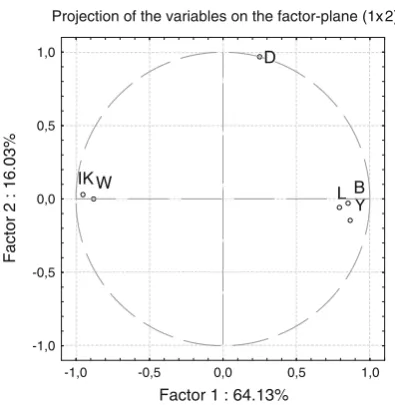
The pulp yield was well correlated with ISO brightness and fibre length. Pulp yield was well correlated also with Kappa number and fibre width but negatively (Fig.2). Correlation of wood density with pulping parameters The representation of pulp yield as a function of wood density (Fig. 3) revealed no influence of wood density on pulp yield (r2=0.003). As a consequence, very different
Table 4 Wood chemical composition, screened pulp yield, Kappa number and alkali consumption ofAcacia melanoxylonsamples with different wood basic densities (average of, at least, two determinations)
Wood density (kg m-3)
Ash (%)
Extractives (%)
Klason lignin (%)
Total lignin (%)
Glucose (%)
Xylose (%)
Acetic acid (%)
Pulp yield (%)
Kappa number
Alkali consumption (%)
498 0.36 6.89 22.40 27.67 45.52 18.25 1.30 48.2 15.5 18.3
501 0.39 6.61 20.47 25.92 47.72 17.38 1.97 51.6 12.4 18.1
534 0.51 5.29 20.12 25.22 49.08 18.39 1.51 52.6 11.1 Missing value
538 0.35 7.80 19.77 25.28 47.85 17.06 1.67 54.4 12.3 16.7
541 0.46 5.91 22.09 27.82 45.85 18.79 1.18 49.8 15.6 17.9
575 0.35 7.59 22.32 28.23 45.76 16.95 1.11 47.9 16.6 17.9
583 0.44 5.50 19.46 24.58 49.58 18.53 1.35 55.0 12.4 16.6
Projection of the variables on the factor-plane (1x
B IK
L W
Y
-1,0 -0,5 0,0 0,5 1,0
Factor 1 : 64.13%
-1,0 -0,5 0,0 0,5 1,0
Factor 2 : 16.03%
D
2)
Fig. 2 Principal component analysis for pulp parameters ofAcacia
melanoxylonfor all samples.Lfiber length (mm),Wfiber width (lm),
Ypulp yield (%),IKKappa number,Dwood density (kg m-3),BISO brightness (%)
yields were obtained with samples with similar wood densities, e.g., pulp yield could range from 47.9 to 55.6 % for samples with densities around 550 kg m-3. This find-ing that screened pulp yield is not correlated with wood density opens good opportunities for tree selection for both traits inA. melanoxylonstands in Portugal. The results also follow the general trend shown by other researchers of no correlation between wood density and pulp yield, such as reported forE. globulusby Miranda and Pereira [12], Seca and Domingues [11] and Silva et al. [1].
No relationship was obtained between pulp Kappa number, which provides an estimation of the residual lig-nin, and the wood density (r2=0.002), but a very high scattering was observed (figure not shown). Therefore, it is possible to select wood samples with high densities that will provide kraft pulps with low Kappa numbers.
The fact that both pulp yield and Kappa number could markedly differ between samples with similar wood den-sity indicates that other factors should be involved. Most of this variation is likely to be associated with differences of wood chemical composition between the individual samples. Extractives content, lignin content and structure (syringyl(S)/guaiacyl(G) ratio) have been considered as the main causes of this variability [11,12]. This topic will be analyzed later in the paper.
The pulp morphological characteristics showed that fibre length was independent of wood density (r2=0.020), while the distribution of fibre width showed a trend of lower density being associated with wider fibres although the effect was not significant (r2=0.046). These results are, in accordance with the theoretical reasoning that wood density should be determined, at least partially, by cell wall proportion in the wood unit volume. Inagaki et al. [32] found a good correlation for 5-year-old Eucalyptus cam-aldulensis, tree but different methodologies were used. Figure2 illustrates the principal component analysis and confirms that no significant correlation was found between wood density and the other studied pulp parameters. Correlations between pulp properties
A significant correlation was observed when the screened pulp yield was represented as a function of Kappa number (Fig.4). The samples with higher pulp yields had lower Kappa numbers. It is important to note that this profile is the opposite to an expected decrease of pulp yield with the decrease of Kappa number for a given material, as a con-sequence of carbohydrate degradation due more intensive conditions to attain lower Kappa number, i.e., higher alkali charges and/or prolonged delignification. However, it should be stressed that in the present work, the cooking conditions were the same for all the samples. Therefore, these results of high pulp yields simultaneous with low
Kappa numbers deserve further analysis with emphasis on wood chemical composition, namely on extractives and lignin contents and structure (S/Gratio).
The hypothesis of higher lignin reactivity (higher S/G ratio) would cause a higher alkali concentration at the end of the cooking (lower alkali consumption) and, conse-quently, a slightly higher polysaccharides degradation and lower pulp yield. As this was not the case, the hypothesis of a more favourable S/G ratio alone cannot justify the observed behaviour. Extractives can play a significant role and a low extractives content will be related to higher pulp yields, as the work of Lourenc¸o et al. [18] clearly dem-onstrated. However, the representation (not shown) of pulp yield as a function of ethanol/toluene extractives content for the seven wood samples (taken from different sites and height levels in the tree) characterized in Table4 did not support a significant negative correlation (r2=0.097). The reason for this apparent contradiction may be due to the fact that heartwood and sapwood proportions in each sample were not considered. In fact, heartwood varies within the tree and samples taken at different height levels may have different heartwood proportion [19]. Lourenc¸o et al. [18] worked with wood samples only from the 5 % height level and separating sapwood and heartwood in each wood disc. In our case, if the sample with 538 kg m-3 wood density is excluded, the negative correlation was revealed (r2=0.65).
Figure5 presents the relationship between pulp yield and total lignin content for the seven samples of Table 4. A significant negative correlation can be observed, which points out to the key role of lignin content on pulp yield.
In summary, the chemical composition of the selected wood samples covering the range of pulp yields (Table4) seems to support the trend that samples with pulp yields close to 53 % had about 2 % lower extractives content and 2 % lower lignin content, in comparison with the samples with lower pulp yields (close to 48 %). The positive impact on pulp yield of lower extractives and lignin contents is
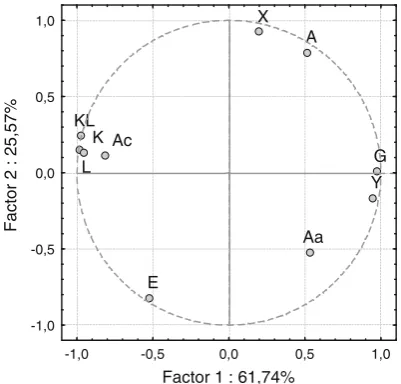
well documented [12,18]. The positive influence of lignin structure, such a higher S/G ratio and total phenols [11], was not investigated in the scope of the present work. As expected, the pulp yield increased with the carbohydrates content, in particular with glucose content (associated to cellulose), in good agreement with the literature [9, 10]. These correlations accord with the principal component analysis of pulp properties and chemical analysis (Fig.6). No separation was found between the different densities. Pulp yield was well correlated with glucose content and also, but in inverse order, with alkali consumption, Klason lignin, total lignin and Kappa number.
The pulp ISO brightness increased with the decrease in Kappa number (r2=0.207), as a consequence of a lower residual lignin content (Fig.7). However, high data
scattering was observed, e.g., pulp brightness ranged from 20 to 40 % at Kappa number 13. This behaviour is prob-ably due to differences between pulps at physical and chemical levels. The residual lignin can have different levels of condensation, which can impart different light absorption coefficients to the pulp material. In addition, the Kubelka–Munk’s theory [33] anticipates that reflectance can be affected by variation of the light scattering coeffi-cient of the material, and this may occur in the present case, since the pulps had different morphological charac-teristics (Table2).
Figure8 presents the values of alkali consumption (expressed as NaOH on wood) as a function of the ratio between pulp yield and pulp Kappa number. This ratio was selected as it reveals the higher cooking performance when pulp yield is higher and Kappa number is lower. In spite of the data scattering, a clear trend toward lower alkali con-sumption occurred for higher ratios (higher pulp yield and lower Kappa number), which is a coherent result. The prin-cipal components analysis also supported this conclusion.
Fig. 5 Screened pulp yield as a function of lignin content in wood of
Acacia melanoxylon
A
E KL
G X
Aa Y K Ac
-1,0 -0,5 0,0 0,5 1,0
Factor 1 : 61,74%
-1,0 -0,5 0,0 0,5 1,0
Factor 2 : 25,57%
L
Fig. 6 Projection of the pulp and chemical variables on the factor plane made by principal component analysis forAcacia melanoxylon.
Aash (%),Eextractives (%),KLKlason lignin (%),Ltotal lignin (%),
Gglucose (%),Xxylose (%),Aaacetic acid (%),Ypulp yield (%),
KKappa number,Acalkali consumption (%)
Fig. 7 Brightness versus Kappa number for all pulp samples of
Acacia melanoxylon
Conclusions
The experimental data confirmed the high pulping potential ofAcacia melanoxylontrees grown in Portugal as given by the high pulp yields, low residual lignin and favourable brightness, notwithstanding the variability found between sites, trees and within the tree.
The pulp yield and Kappa number were not correlated with wood density. Moreover, the variation of pulp yield and Kappa number, at a given wood density, allows selection of trees for a more efficient pulp production. Interestingly, the samples exhibiting higher pulp yield also had lower Kappa number, which is consistent with an advantageous chemical composition, namely in terms of lower lignin and extractives contents.
References
1. Silva JC, Borralho NMG, Arau´jo JA´ , Vaillancourt RE, Potts BM (2009) Genetic parameters for growth, wood density and pulp yield in Eucalyptus globulus. Tree Genet Genomes 5:291–305 2. Zobel BJ, Buijtenen JP (1989) Wood variation, its causes and
control. Springer, Heidelberg, pp 189–216 (p 286)
3. Balodis V (1980) Assessment of the pulpwood quality of forest resources. CSIRO Aust Div Chem Technol Research Review: 13–32
4. Rudie AW (1998) Wood and how it relates to paper products. Tappi J 81(5):223–228
5. Wimmer R, Downes GM, Evans R, Rasmussen G, French J (2002) Direct effects of wood characteristics on pulp and hand-sheet properties of Eucalyptus globulus. Holzforschung 56:244–252
6. Pisuttipiched S, Retulainen E, Malinen R, Kolehmainen H, Ru-hanen M, Siripattanadilok S (2003) Effect of harvesting age on the quality of Eucalyptus camaldulensis bleached kraft pulp. Appita J 56(5):385–390
7. Santos A, Amaral ME, Vaz A, Anjos O, Simo˜es R (2008) Effect
ofEucalyptus globuluswood density on papermaking potential.
Tappi J 7(5):25–32
8. Borralho NMG, Cotterill PP, Kanowski PL (1993) Breeding objectives for pulp production of Eucalyptus globulus under different industrial cost structures. Can J For Res 23(4):648–656 9. Raymond CA, Schimleck LR (2002) Development of near infrared reflectance analysis calibrations for estimating genetic parameters for cellulose content in Eucalyptus globulus. Can J For Res 32:170–176
10. Mokfienski A, Colodette JL, Gomide JL, Carvalho AML (2008) Relative importance of wood density and carbohydrate content on pulping yield and product quality. Cieˆncia florestal Santa Maria 18(3–4):401–413
11. Seca AML, Domingues FMJ (2006) Basic density and pulp yield relationship with some chemical parameters in eucalyptus trees. Pesquisa Agropecua´ria Brasileira 41(12):1687–1691
12. Miranda I, Pereira H (2001) Provenance effect on wood chemical composition and pulp yield for Eucalyptus globulus Labill. Appita J 54(4):347–351
13. Santos AJA, Anjos OMS, Simo˜es RMS (2008) Influence of kraft cooking conditions on the pulp quality ofEucalyptus globulus. Appita J 61(2):148–155
14. Paavilainen L (2000) Quality-competitiveness of Asian short-fibre raw materials in different paper grades. Paper and Timber 82(3):156 (Paperi ja´ Puu)
15. Paulapuro H (2000) Papermaking part 1: stock preparation and wet end. In: Gullichsen J, Paulapuro H (eds) Papermaking science and technology series. Fapet, Helsinki
16. Anjos OMS, Santos AJA, Simo˜es RMS (2011) Effect ofAcacia
melanoxylonfibre morphology on papermaking potential. Appita
J 64(2):185–191
17. Santos AJA, Anjos OMS, Simo˜es RMS (2006) Papermaking potential ofAcacia dealbataandAcacia melanoxylon. Appita J 59(1):58–64
18. Lourenc¸o A, Baptista I, Gominho J, Pereira H (2008) The influence of heartwood in the pulping properties ofAcacia
mel-anoxylonwood. J Wood Sci 54(6):464–469
19. Knapic S, Tavares F, Pereira H (2006) Heartwood and sapwood variation inAcaciamelanoxylon R.Br. trees in Portugal. Forestry 79(4):371–380
20. Santos AJA, Alves AMM, Simo˜es RMS, Pereira H, Rodrigues J, Schwanninger M (2012) Estimation of wood basic density of
Acacia melanoxylon (R. Br.) by near infrared spectroscopy.
J Near Infrared Spectrosc 20(2):267–274
21. TAPPI 258 om-89 (1992) Basic density and moisture content of pulpwood. Tappi Test Methods, Atlanta
22. TAPPI 211 om-85 (1992) Ash in wood and pulp. Tappi Test Methods, Atlanta
23. TAPPI 204 om-88 (1992) Solvent extractives of wood and pulp. Tappi Test Methods, Atlanta
24. Sluiter A, Hames B, Ruiz R, Scarlata C, Sluiter J, Templeton D, Crocker D (2008) Determination of structural carbohydrates and lignin in biomass: laboratory analytical procedure (LAP). Golden, CO: National Renewable Energy Laboratory, USA.http://www. nrel.gov/biomass/analytical.procedures.html. Accessed 28 Sep-tember 2010
25. ISO 302:2004, Pulps: determination of Kappa number
26. ISO 2470:1999(E) Paper, board and pulps: measurement of dif-fuse blue reflectance factor (ISO brightness)
27. Tappi T 625 cm-85 (1992) Analysis of soda and sulphate black liquor. Tappi Test Methods, Atlanta
28. Ananias A (1989) Variation in basic density and shrinkage of wood fromAcacia melanoxylon. Ciencia e Investigacion Forestal 6:118–130
29. Llic J, Boland D, McDonald M, Downes G, Blakemore P (2000) Woody density phase 1: state of knowledge. CSIRO Forestry and Forest Products. National Carbon Accounting System Technical Report No. 18. Australian Greenhouse office
30. Searle SD, Owen JV (2005) Variation in basic wood density and percentage heartwood in temperate Australian Acacia species. Australian Forestry 68(2):126–136
31. Miranda I, Almeida M, Pereira H (2001) Variation of fibre biometry in different provenances ofEucalyptus globulusLabill. Appita J 54(3):272–280
32. Inagaki T, Schwanninger M, Kato T, Kurata Y, Thanapase W, Tuthson P, Tsuchikawa S (2012) Eucalyptus camaldulensis
density and fiber length estimated by near-infrared spectroscopy. Wood Sci Technol 46:143–155