United Kingdom Vol. VI, Issue 12, December 2018
Licensed under Creative Common Page 109
http://ijecm.co.uk/
ISSN 2348 0386
AFFECTIVE COMMITMENT AS A MODERATOR IN
THE RELATIONSHIP BETWEEN EMOTIONAL
INTELLIGENCE AND WORK OUTCOMES
Ali Muhammad
Kuwait University, Kuwait [email protected]
Abstract
The purpose of this study is to determine the moderating effect of affective organizational
commitment in the relationship between emotional intelligence and work outcomes. The study
presents a new model to explain the mechanism through which emotional intelligence
influences work outcomes. The model includes emotional intelligence as an independent
variable, organizational commitment as a moderating variable, and work performance, job
involvement, job satisfaction, organizational citizenship behavior, and intention to leave as
dependent variables. A sample of 208 employees working in eight Kuwaiti business
organizations (from industrial, banking, service, and financial sectors) were surveyed and data
collected was analyzed using structural equation modeling. Results indicate that emotional
intelligence is positively associated to organizational commitment, work performance, and job
satisfaction. Furthermore, the findings reveal that the positive effect of emotional intelligence on
job involvement, and organizational citizenship behavioris moderated by organizational
commitment. The results of the current study are discussed and compared to the results of
previous studies in this area. Finally, the directions for future research are suggested.
Keywords: Emotional intelligence, affective organizational commitment, work performance, job
Licensed under Creative Common Page 110
INTRODUCTION
Emotional intelligence had increased in popularity in the management literature in the past decade. Previous studies focused not only on the theoretical applications of emotional intelligence but also on its practical applications. Human-resource professionals utilized emotional intelligence as a mechanism for hiring and training employees (Joseph & Newman, 2010). The most notable conceptualization of emotional intelligence is based on the Mayer-Salovey-Caruso model (Cherniss, 2010). The model measures emotional intelligence as it pertains to an individual’s ability to recognize their emotions, incorporate emotional experiences,
comprehend and explain emotions, and control emotions (Mayer, Caruso, & Salovey, 1999). This new form of intelligence was found to be significantly related to employees’
behavior, attitudes, and performance in work organizations (Goleman, 1998; Caruso & Salvoy, 2004) .Recent findings indicate that an increase in employees’ performance may be related to
their emotional intelligence, and emotional intelligence could have a significant role in shaping positive work attitudes and behavior among organization members (Rezvani, et al. 2016).
Importance of the Study
Despite research evidence that illustrate the importance of emotional intelligence in improving employees’ performance and in enhancing the effectiveness of the organization, we noticed a
lack of research studies examining how emotional intelligence effects work outcomes. Moreover, to the best of our knowledge, very little research is done within the Arab context, to examine the effects of emotional intelligence on employees’ attitudes and behavior. This lack of
empirical studies investigating the relationship between emotional intelligence and work outcomes, led many researchers to doubt the importance of emotional intelligence in improving employees performance and organizational effectiveness , some researchers even questioned whether emotional intelligence deserve the attention it was given (Landy, 2005; Locke 2005). Furthermore, we noticed that the studies that investigated emotional intelligence in work organizations tested the direct relationships between emotional intelligence and work outcomes. Our study aims at building a model the tests both the direct and indirect relationships between emotional and work outcomes. In our model, we introduce organizational commitment as a moderator in the relationships between emotional intelligence and some work outcomes.
Licensed under Creative Common Page 111 emotional intelligence positively effects organizational commitment, which in turn, increases, organizational citizenship behavior, and job.
LITERATURE REVIEW
The moderating effect of organizational commitment in the relationship between
emotional intelligence and organizational citizenship behavior and job involvement
Organizational commitment refers to an employee’s belief in and acceptance of an organization’s goals and values, a willingness to exert effort on behalf of the organization, and a
desire to maintain membership in the organization (Mowday, Steers, and Porter, 1979). Individuals form positive attitudes and psychological attachments with an organization, which postulates in an active relationship between employees and their organization (Mowday et al., 1979). Many scholars have differentiated between continuance, affective, and normative organizational commitments (Meyer & Allen, 1991). Affective commitment is led by feelings of self-determination, intrinsic motivation, continuance and normative behavior involve feelings of pressure, and obligation to be attached (Meyer, Becker, & Vandenberghe, 2004).
Emotionally intelligent employees are better aware of work problems and realize the frustrations associated with it, therefore, there are less likely to blame their organization for their failures at work (Abraham, 1999). In addition, emotionally intelligent employees are able to quickly eliminate negative emotions associated with performance failures, and maintain their emotional balance in the face of work problems. They are also effective in directing their emotions toward constructive activities, which benefit them both instrumentally and emotionally. By enabling employees to manage their emotions and intellectual advancement, emotional intelligence enhances employee’s commitment to the organization in achieving its objectives
(Vasudevan & Mahadi, 2017).
Hypothesis 1: Emotional Intelligence will have a positive effect on organizational commitment.
Organizational citizenship refers to all activities that are not part of one’s formal duties in the organization and have a positive effect on organization’s performance. By increasing
organizational commitment, emotional intelligence contributes to the increase in organizational citizenship behavior. Organizational commitment reflects employee’s attachment to the
Licensed under Creative Common Page 112 Hypothesis 2: Organizational commitment moderates the relationship between emotional intelligence and organizational citizenship behavior.
Job involvement refers to the importance of job performance in an employee’s determination of
self-worth. High job involvement reflects a high level of organizational commitment, and employee’s perception that his/her happiness and willingness is dependent on job performance.
The psychological attachment of an employee to the job does not occur not only for objective reasons, but also for emotional attachment (Ashforth & Humphry, 1995). Emotionally intelligent employees have higher levels of organizational commitment and attachment to their jobs. Based on the previous discussion we propose the following
Hypothesis 3: Organizational commitment moderates the relationship between emotional intelligence and job involvement.
Emotional Intelligence and Work Performance
Emotional Intelligence effects performance in two different interrelated mechanisms (Law, Wong, & Song, 2004). First, the ability of emotionally intelligent employees to recognize, understand, and consider the emotions of others in the organization, make them effective communicators and facilitates their interactions with their customers, fellow employees, and supervisors. These interpersonal skills contribute to the improvement in performance. The second mechanism through which emotional intelligence effects performance is related to their abilities to control their emotions and channel these emotions in such a way to enhance their performance (Loewenstein and Lerner, 2003, Seo, Barrett, & Bartunek, 2004). Both of these mechanisms are related to employee’s attachment to the organization. A more recent meta-analytic examination conducted by Joseph, Jin, Newman, and O’Boyle (2015) revealed that
mixed emotional intelligence have a positive impact on work performance. Based on the previous discussion we propose the following:
Hypothesis 4: Emotional Intelligence will have a positive effect on work Performance.
Emotional Intelligence and Job Satisfaction
Job satisfaction refers to an employee’s attitudes toward his/her job. Job satisfaction is a reflection of employee’s emotions toward his job. In this context, emotionally intelligent are able
Licensed under Creative Common Page 113 organizational commitment and job satisfaction (Carmeli, 2003). A recent study by Kassim, Bambale, and Jakada (2016) revealed a significant relationship between use of emotion, regulation of emotion with job satisfaction while self -emotional appraisal and other emotion appraisal were found to have no relationship with job satisfaction. Therefore
Hypothesis 5: Emotional Intelligence will have a positive effect on job satisfaction.
METHODOLOGY
Participants and Survey
This study was conducted using a convenient sample. The sample consists of eightwork organizations in the State of Kuwait. The data were collected using self-administered questionnaires. A total of 450 employees, working in supervisory and non-supervisory positions, were surveyed. This survey methodology yielded a 47% response rate (N=204). Out of total participants, 71% were male, 86% were 40 years or younger, 75% had worked for the organization 10 years or less, and the entire sample consisted of Arab employees.
Measures
Since most of the respondents did not have a good command of English, the questionnaire was administered in Arabic. In order to check consistency between the English and Arabic versions of the questionnaire, the process of back-translation was used.
Emotional Intelligence (EI)
Twelve-items of EI developed by Wong and Law (2002) were adopted by our study, the instrument is called WLEIS, and it was validated by Law, Wong, and Song (2004). Illustrative items are: “I have good understanding of my own emotions”, “I always know my friends' emotions from their behavior”, “I am quite capable of controlling my own emotions”; “I am a self-motivating person”; Ratings were made on a five-point Likert type scale that ranged from 1 (“Strongly disagree) to 5 (“strongly agree”). The Cronbach’s coefficient alpha for this eight-item
scale was 0.83.
Affective Organizational commitment
Licensed under Creative Common Page 114 ranged from 1 (“Strongly disagree) to 5 (“strongly agree”). The Cronbach’s coefficient alpha for
this four-item scale was 0.77.
Organizational citizenship behavior (OCB)
Organizational citizenship behavior was measured with an eight-item scale derived from Podsakoff, Mackenzie, Moorman, and Fetter (1990) scale. Participants responded using a five-point Likert-type scale with anchors (1) never to (5) always. A sample item from the OCBI scale is, “Willingly give your time to help others who have work-related problems” and a sample item from the OCBO scale is, “Take action to protect the organization from potential problems”. The
Cronbach coefficient alpha for OCBI and OCBO were 0.73, 0.72 respectively.
Job satisfaction
Job satisfaction was measured using four items from Emerson’s (2013) scale designed to measure employees’ satisfaction with their job. Examples of these items are, “Compared to what you think it should be, how satisfied are you with the type of work you currently do”?
Compared to what you think it should be, what is your current overall level of satisfaction with your job? and “Compared to what you think it should be, how satisfied are you with the amount
of work that you currently do? Ratings were made on a five-point Likert-type scale with anchors (1) not at all satisfied to (5) very satisfied. The Cronbach coefficient alpha for this three-item scale was 0.84.
Work Performance
Work performance was measured using five items from Carmeli’s (2003) scale. The items are, “I accomplish my tasks on time”, I achieve my work goals”, “I am able to fit in with others at work”, “the quality of my work is exceptional”, “I excel in my performance at work”. Ratings were made on a five-point Likert-type scale that ranged from 1 (“Strongly disagree”) to 5 (“strongly agree”). The Cronbach’s coefficient alpha for this four-item scale was 0.78.
Job Involvement
Job involvement was measured with a seven-item scale derived from Velde, Bossink, and Jensen (2003) instrument. Examples of the items are “my job is the center of my life”; most of my personal goals are related to my job”; my job is an essential part of my personal configuration”. Ratings were made on a five-point Likert-type scale that ranged from 1 (“Strongly disagree”) to 5 (“strongly agree”). The Cronbach’s coefficient alpha for this four-item scale was
Licensed under Creative Common Page 115
ANALYSES AND RESULTS
Descriptive statistics, reliability tests, multiple response test, non-parametric tests, correlation analysis, structural equation modeling, and path analysis were used to analyze the data in this study. The range of possible values, means, and standard deviations of the variables analyzed in this paper are reported in Table 1.
Table 1 Descriptive statistics (N=358)
Variable Min Max Mean SD
Emotional Intelligence 31 80 66 7.2
Performance 12 25 21 2.9
Job satisfaction 5 20 16 3.5
Commitment 4 20 15 4.2
Job Involvement 7 35 23 6.6
OCB 10 40 32 4.9
To ensure the insensitivity of the response to changes in demographical characteristics, non-parametric tests were conducted to test of significant differences in responses within these characteristics. Specifically, given their general potential to inflate or suppress emotional intelligence, five demographical characteristics: gender, tenure, nationality, age, and job type were tested for.
Table 2 Results of Mann-Whitney and Kruskal-Wallis tests Mann-Whitney
P-values
Kruskal-Wallis test
P-values
Gender Job Tenure Nation Age
Top mgmt. Support .13 .62 ..06 .75 .79
The results, reported in Tables 2, reveal that there are no significant differences between different categories of gender, tenure, nationality, age, and job type in emotional intelligence (P > .05).
Licensed under Creative Common Page 116 organizational commitment (P=0.00), job satisfaction (P=0.00), job involvement (P=0.00),and OCB (P=0.00).
Table 3 Spearman’s correlations coefficients and reliabilities
2 3 4 5 6 Rel.
1. Emotional Intelligence 0.47* 0.52* 0.38* 0.45* 0.48* 0.70
2. Performance 0.51* 0.45* 0.41* 0.50* 0.85
3. Job satisfaction 0.56* 0.52* 0.37* 0.79
4. Commitment 0.65* 0.38* 0.74
5. Job Involvement 0.44* 0.71
6. OCB 0.73
* Correlation is significant at <0.01 level.
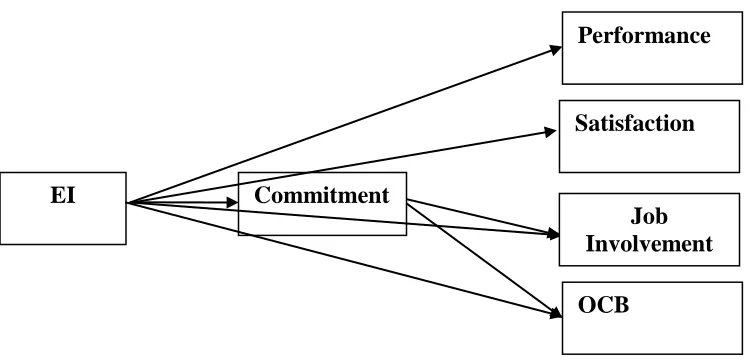
Figure 1 illustrates the direct and indirect relationships between emotional intelligence and work outcomes. Hypotheses were tested using structural equation modeling and path analysis. LISREL computer software was used to perform the structural equation analysis. Data was fitted against several competitor models. The most reasonable model provided GFI (goodness of fit index) = 0.78 and RMR (root mean square residual) = 0.09. Results of path analysis presented in Tables 4 and 5.
Figure 1 The relationships between EI, Commitment, and work outcomes
EI
OCB
Performance
Satisfaction
Commitment
Licensed under Creative Common Page 117 Table 4 Structural Equation modeling
Performance = 0.47 * EI
Satisfaction = 0.55 * EI
Involvement = 0.06 * EI
OCB = 0.42 * EI
Commitment = 0.45 * EI
Involvement = 0.74 * COM
OCB = 0.17 * COM
Table 5 Path coefficients and their significance
Research Hypothesis Path Coefficients t-value P-value
EI Performance 0.47 5.58 0.00
EI Satisfaction 0.55 7.23 0.00
EI Involvement 0.06 0.94 0.17
EI OCB 0.42 4.52 0.00
EI Commitment 0.45 6.13 0.00
Commitment Involvement 0.74 9.82 0.00
Commitment OCB 0.17 2.09 0.01
Table 5 illustrates the mathematical equations of the model in Figure 1. Results of path analysis presented in Table 5 indicate a significant positive direct effect of Emotional Intelligence on organizational commitment (t = 6.13, P = 0.00), work performance (t = 5.583, P = 0.00), and on satisfaction (t = 7.23, P = 0.00). These results confirm hypotheses 1, 4, and 5.
Furthermore, results in Table 5 also show that there is direct positive effect of Emotional intelligence on OCB (t = 4.52, p = 0.00), and no direct effect of emotional intelligence on job involvement (t = 0.94, P = 0.17.
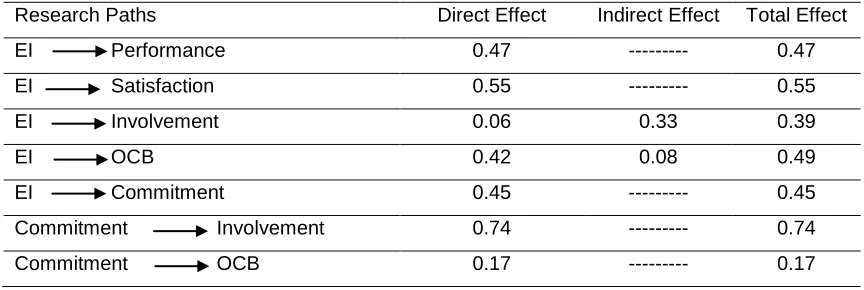
Table 6 Direct and indirect effects of organizational trust and perceived organizational support
Research Paths Direct Effect Indirect Effect Total Effect
EI Performance 0.47 --- 0.47
EI Satisfaction 0.55 --- 0.55
EI Involvement 0.06 0.33 0.39
EI OCB 0.42 0.08 0.49
EI Commitment 0.45 --- 0.45
Commitment Involvement 0.74 --- 0.74
Licensed under Creative Common Page 118 Results in Table 5 show that the direct paths from organizational emotional intelligence to job involvement is not statistically insignificant (p-values > 0.05), and the path from emotional intelligence to organizational citizenship behavior is significant (t = 4.52, p = 0.00). However, Table 6 and Table 7 show that the path from emotional intelligence to other endogenous constructs (Involvement, OCB) become strongly significant via Organizational commitment (0.39. 0.49), P = 0.00.
The combined results in Tables 6 and 7 provide support for the moderating role of organizational commitment in the relationships between emotional intelligence and job involvement and organizational citizenship behavior. These results provide support for hypotheses 2, and 3.
Table 7 Total effect of EI on work outcomes
EI Absence of Commitment Via Commitment
Total Casual Effect Total Casual Effect
Involvement 0.06 0.39
OCB 0.42 0.49
DISCUSSION
The present study is the first empirical study to examine the moderating role of affective organizational commitment in relationships between emotional intelligence and work outcomes. The research tested if emotional intelligence affects work outcomes by influencing an employees’ organizational commitment, and if organizational commitment prompts the
reciprocation of positive work outcomes. Research results provided support for a relationship between emotional intelligence and organizational commitment and between organizational commitment and two work outcomes, job involvement, and organizational citizenship behavior. More specifically, research results show that organizational commitment mediates the relationships between emotional intelligence and job involvement, organizational citizenship behavior. Furthermore, emotional intelligence was found to have direct affect on work performance and job satisfaction.
Licensed under Creative Common Page 119 are in line with the propositions of the social exchange theory Blau (1964). According to Blue, social exchange refers to the voluntary actions of individuals that are motivated by the returns they are expected to bring and typically do in fact bring from others.
THEORETICAL AND PRACTICAL IMPLICATIONS
The current research findings present a justification for why emotional intelligence may affect employees’ work attitudes and behaviors. The apparent mechanism is that emotional
intelligence affects the degrees to which employees identify with the organization and accept its values, and this commitment creates a climate in which the employees are likely to reciprocate with positive work outcomes. The research results support the role of emotional intelligence perceived as an antecedent to organizational commitment. Other possible antecedents of perceived organizational commitment include job satisfaction, quality of work life and self efficacy (Khan & Khan, 2017).
As part of the practical implications of the present study, organizations interested in fostering positive work outcomes must adopt policies and practices that contribute to maintaining a workforce with high levels of emotional intelligence. Furthermore, emotional intelligence need to be monitored within the organization. Measurement techniques which provide insight about must be adopted.
Moreover, the research results presented in this paper, clearly establish the mediating role of organizational commitment between emotional intelligence and positive work outcomes. Management should monitor organizational commitment level, if commitment is found to be low or less than satisfactory, management will be faced with what actions need to be taken to strengthen the commitment. The present research suggests that management should focus on developing and effectively implementing various organizational commitment mechanisms. Through such an approach, commitment can be enhanced which in turn leads to positive work outcomes.
LIMITATIONS AND FUTURE RESEARCH
Licensed under Creative Common Page 120 This type of research design will make it possible to unambiguously determine the causal sequence from emotional intelligence to organizational commitment and work outcomes.
Second, despite the fact that the magnitude of the correlations shown in table 3 indicates relatively low levels of shared variance, my reliance on self-reported data suggests that the reported relationships could potentially be attributed to method variance. There is a need for additional research employing controls for various potential biasing effects.
Finally, it needs to be emphasized that this employee behavioral study was conducted in a collectivist society with strong religious orientation. These cultural characteristics may have influenced the research findings. This contextual aspect can be claimed to be the strength of this research representing the very few research studies of this nature carried out in Arab countries. This strength of research also limits its generalizability on a global scale as most of the western countries are characterized by individualistic and secular cultural traits. In order to broaden the generalizability of the present research, it needs to be replicated in the context of Western industrialized countries. This West Vs. East is well recognized in management literature as evidence by the organizational behaviors of both employers and employees in Eastern industrialized countries like Japan and South Korea significantly differing from similar behaviors in Western industrialized countries.
ACKNOWLEDGMENT
The author is grateful to the research department at Kuwait University for financially supporting this study under the code number IM02/16
REFERENCES
Abraham, R. (1999), Emotional intelligence in organizations: A conceptualization, Genetic, Social, and General Psychology Monographs, Vol. 125 No. 2, pp. 209-24.
Blau, P. M. (1964). Exchange and power in social life. New York: John Wiley.
Ashforth, B.E., & Humphrey, R.H. (1995). Emotion in the workplace: A reappraisal, Human Relations, 48 (2): 97-125. Carmeli, A. (2003). The relationship between emotional intelligence and work attitudes, behavior and outcomes. Journal of Managerial Psychology, 18: 788-813.
Caruso, D.R. & Salovey, P. (2004). The emotionally intelligent manager: how to develop and use the four key emotional skills of leadership. San Francisco, CA: Jossey-Bass.
Cherniss, C. (2010). Emotional intelligence: Toward clarification of a concept. Industrial and Organizational Psychology, 3(2), 110-126.
Eisenberg, N. (2000). Emotions, regulation, and moral development. Annual Review of Psychology, 51: 665-697. Emerson, D. (2013). Organizational Culture, Job Satisfaction and Turnover Intentions: The Mediating Role of Perceived Organizational Support. Virginia Commonwealth University, Dissertations Publishing.
Goleman, D. (1998). Working with Emotional Intelligence. Bantam, New York.
Licensed under Creative Common Page 121
Joseph, D. L., & Newman, D. A. (2010). Emotional intelligence: An integrative meta- analysis and cascading model. Journal of Applied Psychology, 95, 54-78.
Kassim, S. I., Bambale, A. J., Jakada, B. A. (2016). Emotional intelligence and job satisfaction among lecturers of universities in Kano State: Empirical evidence, Journal of Education and Practice, 7, 10, 53-59.
Khan, M. A.; & Khan, S. M. (2017). Search for antecedents of organisational commitment: A Structural equation model. Journal of Organisation and Human Behaviour, 6, 4, 8-15.
Landy, F.J. (2005). Some historical and scientific issues related to research on emotional intelligence. Journal of Organizational Behavior, 26, 411-424.
Law, K. S., Wong, C. S., & Song, L. J. (2004). The construct and criterion validity of emotional intelligence and its potential utility for management studies. Journal of Applied Psychology, 89: 483-496.
Locke, E.A. (2005). Why emotional intelligence is an invalid concept. Journal of Organizational Behavior, 26, 425-431.
Libbrecht, N., Lievens, F., Carette. B., & Côté, S. (2014). Emotional intelligence predicts success in medical school, Emotion, 14, 64–73.
Loewenstien, G., & Lerner, J. S. (2003). The role of affect in decision-making. In R. Davidson, K. Scherer, & H. Goldsmith (eds.), Handbook of Affective Sciences: 619-642. New York: Oxford University Press.
Mayer, J. D., Caruso, D. R., & Salovey, P. (1999). Emotional intelligence meets traditional standards for intelligence. Intelligence, 27(4), 267-298.
Meyer, J. P., & Allen, N. J. (1991). A three-component conceptualization of organizational commitment. Human Resource Management Review, 1, 61–89.
Meyer, J. P., Becker, T. E., & Vandenberghe, C. (2004). Employee commitment and motivation: A conceptual analysis and integrative model. Journal of Applied Psychology, 89, 991-1007.
Mowday, R., Steers, R., & Porter, L. (1979). The measurement of organizational commitment. Journal of Vocational Behavior. 4: 224-247.
Podsakoff, P. M., MacKenzie, S. B., Moorman, R. H., & Fetter, R. (1990). Transformational leader behaviors and their effects on followers’ trust in leader, satisfaction, and organizational citizenship behavior. Leadership Quarterly, 1, 107-142.
Rezvani, A., Chang, A., Wiewiora, A., Ashkanasy, N. M., Jordan, P. J., & Zolin, R. (2016). Manager emotional intelligence and project success: The mediating role of job satisfaction and trust. International Journal of Project Management, 34, 1112–1122.
Seo. M. A., Barret, L., & Bartunek, J. (2004). The work of affective experience in work motivation. Academy of Management Journal, 29: 423-439.
Vasudevan, H., &Mahadi, N. (2017).A case study of organizational behavior and resistance to changes in Malaysia’s commercial banking industry, Review of Integrative Business and Economics Research, 6, Supplementary Issue 1, 202.
Velde, M. E., Bossink, C. J., & Jansen, P. W. (2003). Gender differences in the influence pf professional tenure on work attitudes. Sex Roles, 49: 153-163.
Wong, C., & Law, K. (2002). The effects of leader and follower emotional intelligence on performance and attitude: An exploratory study. Leadership Quarterly, 13: 243-274.