Themed Section: Science and Technology
Performance Analysis of EEPB and BTSNA-DS Routing Protocol
for MANET
R. Saraswathi*1, Dr. A.Subramani2
*1Research Scholar, Department of Computer Science, Periyar University, Salem, Tamil Nadu, India 2Assistant Professor, Department of Computer Science, M.V. Muthiah Govt. Arts College for Women, Dindigul,
Tamil Nadu, India
ABSTRACT
Mobile Adhoc Networks (MANET) technology is used for communications during emergency situations like disaster management and military deployment, which don’t have any fixed infrastructure. This has drawn much attention for research, due to its adhoc nature. New members can join and leave the network at any time. Due to this mobility nature of the Mobile Adhoc networks, the nodes state information changes frequently and finding a channel schedule for the nodes in the network becomes difficult. The channel bandwidth and battery lifetime are the two resources to be optimized to improve the performance of the Mobile Adhoc Networks and it is important to study the effect of different transmission power levels on the performance of the mobile adhoc networks. In recent years, it has received tremendous amount of attention from researchers, which led to the design and implementation of several routing protocols. In this paper, proposed a new routing algorithm named Binary Tree Structured based Network Approach using Depth Search (BTSNA-DS) for energy efficient path between sender and receiver using broadcast expenses controlling techniques. Finally, proposed BTSNA-DS algorithms provide a better performance compare to Energy Efficient Probabilistic Broadcasting (EEPB) Protocol and also increasing throughput and reducing transmission power with number of nodes, transmission range, and mobility is increased.
Keywords: Broadcasting, Flooding, Transmission Power, Neighbour Coverage, Throughput.
I.
INTRODUCTION
The network is decentralized, where all network activity including discovering the topology and delivering messages must be executed by the nodes themselves (i.e. routing functionality will be incorporated into mobile nodes). Node mobility in an MANET causes frequent changes of the network topology. The insecurity of the wireless links, energy constraints, relatively poor physical protection of nodes in a hostile environment, and the vulnerability of statically configured security schemes have been identified as the major challenges. MANETs operate in highly dynamic environment and due to which their topology cannot be always defined and limitation
poses a problem of security of the network and there is always a need for optimized and secured routing protocol. Till now, a number of routing protocols have been developed for MANETs the set of applications for MANETs is diverse, ranging from small, static networks that are constrained by power sources, to large-scale, mobile, highly dynamic networks.
recent years, MANET has gained popularity and lots of research is being done on different aspects of MANET. It is an infrastructure less network having no fixed base stations. MANET is characterized by dynamic topology low bandwidth and low power consumption. All the nodes in the network are moving i.e. topology of the network is dynamic so the nodes can act both as host as well as router to route information unnecessary for its use. Nodes of a MANET do not have a centralized administration mechanism. It is known for its routable network properties where each node act as a router to forward the traffic to other specified node in the network. MANET is a wireless multihop network without any fixed infrastructure, in contrast to today's wireless communications, which is based on fixed, pre-established infrastructure.
II.
RELATED WORKS
Survey of Broadcast Expenses Controlling Techniques in Mobile Adhoc Networks have been studied and discussed from Naeem Ahmad, et.al (2015). Performance Analysis of Broadcast Based Energy Efficient Routing Protocol for MANET Using BTSNA-DS Algorithm have been proposed by Saraswathi, R. et. al (2018). Broadcasting Based Energy Efficient Protocol to Enhance the Routing Performance in MANET Using BTSNA-DS Algorithm have been proposed by Saraswathi, R. et. al (2018). Energy Efficient Neighbor Coverage Protocol for Reducing Rebroadcast in MANET were discussed and analyzed from RagulRavi.Ra, et. al (2015). Enhance Internet Access Ability for Ad Hoc Network with On-Demand Gateway Broadcast Strategy were studied and discussed from Huaqiang Xu, Lei Ju, and Zhiping Jia, (2015). An efficient broadcast-based information transfer method based on location data over MANET were discussed from Yosuke Totani, et. al (2016). Network resource efficient routing in mobile ad hoc wireless Networks have been discussed from Ahyoung Lee, and Ilkyeun Ra, (2015). Performance analysis of
an extended grid based broadcast algorithm in mobile ad-hoc networks have been discussed nad analyzed from Abderezak Touzene, et al (2015). Location Based Dynamic Probabilistic Broadcasting for MANETs have been discussed from Imran Ali Khan et al (2011). Performance comparisons of routing protocol in MANET were discussed from Prabu, K., et.al, (2012). Energy efficient routing in MANET through edge node selection using ESPR algorithm were discussed and analyzed from Prabu, K., et.al, (2014). Cluster based controlling of route exploring packets in ad-hoc networks were investigated by Hussain, S.Z., and Ahmad, N., (2014). Minimizing Broadcast Expenses in Clustered based Mobile Adhoc Networks were studied by Hussain, S.Z., and Ahmad, N (2016). Analytical studies of energy–time efficiency of blocking expanding ring search were analyzed by Pu, I.M., and Shen, Y., (2010). Energy evaluations of AID protocol in Mobile Ad Hoc Networks were studied by M. Bakhouya, J. (2015). Approaches for Engineering Adaptive Systems in Ubiquitous and Pervasive Environments were studied and discussed by M. Bakhouya and J. Gaber (2015). Energy Efficient Probabilistic Broadcasting for Mobile Ad-Hoc Network have been proposed by Sumit Kumar, and Shabana Mehfuz1 (2016). Broadcasting Mechanism with Less Flooding Packets by Optimally Constructing Forwarding and Non-Forwarding Nodes in Mobile Ad Hoc Networks have been proposed by R. Reka, and R. S. D. Wahidabanu (2014).
III.
ENERGY EFFICIENT PROBABILISTIC
BROADCASTING (EEPB) PROTOCOL
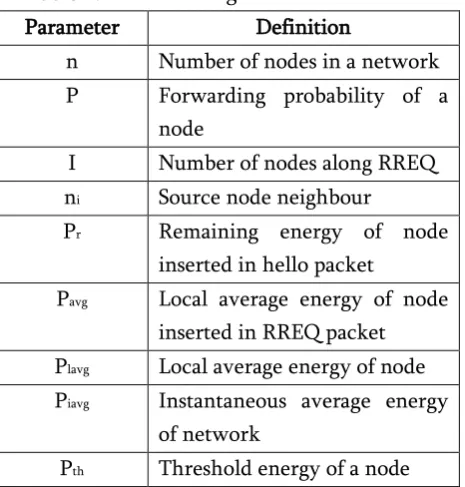
Table 1. EEPB Routing Protocol Parameters
Parameter Definition
n Number of nodes in a network P Forwarding probability of a
node
I Number of nodes along RREQ ni Source node neighbour
Pr Remaining energy of node inserted in hello packet
Pavg Local average energy of node inserted in RREQ packet Plavg Local average energy of node Piavg Instantaneous average energy
of network
Pth Threshold energy of a node
In this method for determining the energy threshold is calculated by using the local average energy of all the nodes. The objective of EEPB algorithm is to broadcast a control packet depending upon their remaining energy and also balancing energy utilization among all nodes in the network. For calculating the average energy of the network one needs to have information of all nodes of network for this exchange of packets. Therefore in place of adding new control packets for this purpose, the existing control packets in AODV for sending the essential energy knowledge of other nodes are changed. The remaining energy of all nodes in EEPB is exchanged between all nodes by using HELLO packets in AODV. For accumulating this knowledge a fresh field named remaining energy (Pr) is inserted in HELLO packet. EEPB uses the modified RREQ of AODV for broadcasting in the route discovery process and as well as to get the local average remaining energy knowledge down side the node path traced by the packets. When a source node sends a RREQ for route discovery it adds its local average energy as a new field denoted by Pavg. Every intermediate node will revise Pavg field by adding its local average energy possessed by that node to it. The instant when RREQ
packets are being sent on the forward path, at the same time the local energy information of all the nodes in that route, reaches to each and every node in the backward path. The instantaneous average energy of all nodes of the network can be calculated by the given equation as follows,
(
)⁄
Where, Pavg is the local average energy of node inserted in RREQ packet; Plavg, the local average energy of node; i (ni), the number of nodes along the downside path traced by the node; and Piavg is the instantaneous average energy of network. As the exact average energy of the network is not available, such instantaneous average energy of network is just an approximation of it. While sending a RREQ packet, the sender node has inserted its own local average energy to the Plavg field as well as every intermediary node which broadcasts this RREQ has revised Plavg by adding its own local average energy. As a result, Piavg is a fine estimation of average remaining energy, as it takes average energy information from all nodes on the route as well as from their neighbours. While knowing the instantaneous average energy of the network, the threshold energy of a node is set by given equation as follows,
Where, α is the network parameter for which the range is 0\α\1. α stands for various safety levels. By setting smaller values of α, the intermediate nodes can be more often made to participate in the route discovery procedure.
IV.
PROPOSED CONCEPT
discovery phase which are common for every routing protocol. Some of these are listed below:
Reducing the Flooding Expenses: The main drawback of the blind flooding is the broadcast storm problem that congests the entire network. This congestion develops due to the unnecessary propagation of query packets. This undesirable circulation is reduced by using a suitable broadcast repealing technique.
Limiting the Packet Dropping: In ad-hoc networks, multiple classes of congestion exist that cause the packet dropping. To increase the reliability of the packet transmission, a traffic control technique is used which works during the packet broadcast to estimate the traffic in the network.
Optimizing the Path Length: End-to-End delay is the average time taken by the source node to transfer the packet successfully, because this is depend on the length of requested path and traffic on that path. Therefore, such a broadcasting technique is used that optimizes the desired path.
Increasing Reliability of the Path: Reliability of any path depends on the stability of the path. Independent movement of the mobile nodes changes the topology of the network that causes link breakage. Frequent link breakage decreases the reliability of the path. Therefore, Broadcasting of the query packet is done in such a way that the packet can cover the smallest enough area of the network and choose the set of nodes with maximum battery life. Length of the path is also taken into account so that the data transmission can be done through a stable route with shortest length.
Utilizing Unicast and Multicast Modes: These properties solely depend on the broadcasting techniques. The use of multicasting in bounded broadcasting techniques can decrease the cost of packet diffusion by utilizing packet diffusion for group communication where the source node needs to find multiple routes at once for a particular group of nodes. In unicast mode, unbounded broadcasting techniques are useful because of selective flooding.
Algorithm for BTSNA-DS.
Depth Search (D-Search):
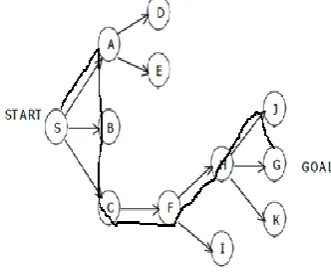
The exploration of a new node cannot begin until the node currently being explored is fully explored. D-search like state space D-search is called LIFO (Last In First Out) search which uses stack data structure. To illustrate the D-search let us consider the following tree (figure 1):
Figure 1. Tree Structure.
The search order for goal node (G) is as follows: S, A, B, C, F, H, I, J, G. The result tree is (fig 2)
Figure 2. Path Using D-Search.
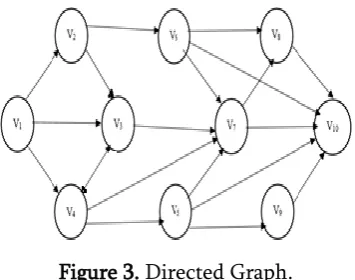
Figure 3. Directed Graph.
In the above graph the node V3 three times received the broadcasting signal from node V1, in via V1,V2 and V3, then V1 toV3 finally V1,V4, and V3. In this case the node V3 received the duplicate signal from various node, this situation rise the network complexity, So Instead of this the node V3 receive the signal only one time it reduce the complexity and also it helps to quick forwarded message to next nodes for that case this research introduce the new algorithm to construct the Binary Tree Structured based Network Approach using Depth Search (BTSNA-DS).
Algorithm for BTSNA-DS
i) Calculate the in-degree and out-degree for each node.
ii)Assign source node (in-degree=0).
iii)Find the destination node (out-degree=0).
// other node have out-degree =0 that node 0 is called terminated node.
iv)Construct the tree structure for given node. Id: In--degree
Od: Out-degree Ei: In-degree Edge E Eo: Out-degree Edge E
//construct the tree, the node have no child (Rchild, Lchild) first add Lchild then Rchild.
// whenever added the new node to existing tree to find the minimum distance from root node to that node.
// which edges have to create the minimum path length, that edges will be selected, other edges simply rejected.
Table 1
Step 1: First select V1 have the no in-degree so consider as a root node.
Step 2: Select V2, that node have in-degree=1, out-degree=2. Node V2 have only one in-degree edge (V1-V2) Ei, so take it as it is. Then V1node does not have Lchild so add V2 as left child of V1. Step 3: Next select V3 node, it have in-degree=3,
out-degree =1, that node have three Ei in-degree edges (V1-V3) (V2-V3) (V4-V3). In these three edges first we consider (V2-V3) edge that connect from node V2, the node V3 connect V2 left child the level will be increased by 1, so that node added right child of node V1through edge (V1-V3), in this case the node V2, V3 have the same level. Then (V4-V3) edge not yet finalized so simply it discarded.
Step 5: In this manner the remaining nodes all are added to construct the Binary Tree Based Network Structured created using Depth Search Technique.
Pseudo code for BTSNA-DS (Graph G) // G is a graph (Network structure)
// T 0 is empty tree before constructing the binary tree structure networks.
// Input is an Ad-hoc network structure // Output is Binary tree structured networks.
// the given graph is consider as a directed graph because the broadcasting signal send // toward to destination node
//Idi in-degree, Odi out-degree of that node
//Ei in-degree edge and Eo out-degree edge of that node.
Find In-degree (Id) and Out-degree (Od) of every vertices
For i = 1 to N // N number of node present in the networks.
{
Vi ( Idi , Odi)
Idi = {Ei}E // i = 0 to Idi Odi = {Eo} E, // i = 0 to Odi }
Root Node Construction
(i.e Here root node is source node that node does not have in-degree )
for i = 1 to N {
If (Vi (Idi) == 0)
then that node have successor Vi is root node
else
Vi is terminated node (that nodes does not have successor i.e., dead end node)
End if }
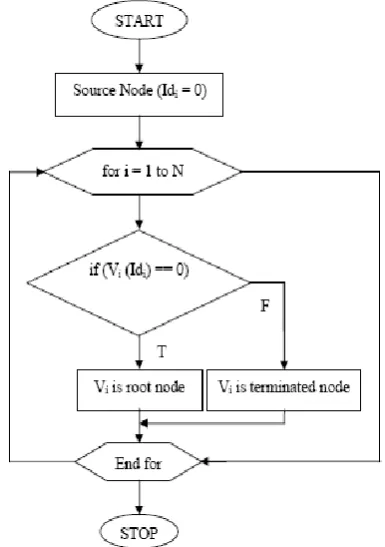
Figure 4. Root Node Construction for BTSNA-DS.
Here root node is a source node that node have don’t in-degree. Select the next node is successor that Vi is root node, otherwise Vi is terminated node (dead end node). The same procedure executes to find the path from source to destination and also hop1, hop2 and so on until reach the destination.
Binary Tree Structure Network Construction Select next Vertex (Node)
Root node V1
// the selected vertex have only one in-degree edge for i = 2 to N
{
if (Vi(Idi) == 1) then
select edge Vi(Ei) // select in-degree edge of that node if root node Vi does not have Lchild or Rchild
then
Add V1 (Lchild (Vi(Ei)) else
Add V1 (Rchild (Vi(Ei)) End if
Call D-search (Vi) // node have more than one in-degree edges
End if }
Algorithm D-Search (Vi) Select next Vertex Root node V1
// the selected vertex have more than one in-degree edge
For i = 2 to N {
if (Vi(Idi) > 1) then
for i=0 to Idi {
select edge Vi(Ei)
if root node V1 does not have Lchild or Rchild then
Add V1 (Lchild (Vi(Ei)) else
Add V1 (Rchild (Vi(Ei)) End if
//if root node V1 have both child
// Then check the next level nodes left child or right child edges
//then
//search the next level nodes using Depth search (D-Search)
if (L == 0) // root node
all nodes have both child in the level L then
level L will be increased by 1 L=L+1
for i=1 to LN // number of node present in the same level L
{
If (Vi(Lchild(Vi(Ei))) does not have Lchild then
Add Vi (Lchild (Vi(Ei)) else
Add Vi (Rchild (Vi(Ei)) End if
If (V1(Rchild(Vi(Ei))) does not have Lchild then
Add Vi (Lchild (Vi(Ei)) else
Add Vi (Rchild (Vi(Ei)) End if
} End if }
A vertex contain more than one in-degree edges, at that same time more than one nodes does not have left child or right child, in this case we choose the level as a main constrains, We select which edge have minimum level (length of the path) that edge connected to their parent. The remaining edges simply discarded.
V.
RESULTS AND DISCUSSION
Table 2. Simulation Parameters.
Parameters Values
Simulation NS-2
MAC Layer Protocol IEEE 802.11
Mobility Model Random
Waypoint
Terrain Range 1,000 X 1,000
m2
Transmission Range 250 Meters
Examined routing
protocol BTSNA-DS
Speed 5-25 m/s
Application Traffic CBR
Simulation Time 1000 s
Propagation mode Free space
Data Packet size 512 bytes
Number of mobile
nodes 20–100
Contention interval 6 s
The following performance metrics to evaluate through networks simulation (NS2):
1. Throughput: Throughput is the number of bytes or bits per seconds arriving at the time interval t. It is generally measured by (kbps) or (mbps).
Figure 5. Throughput (kbps) Vs. Number of Nodes.
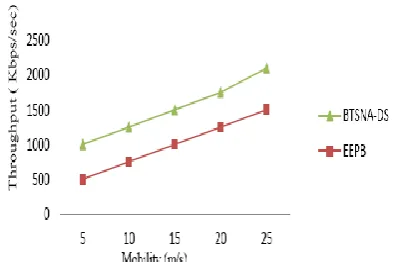
In this part performance analysis of proposed BTSNA-DS algorithm with existing Energy Efficient Probabilistic Broadcasting (EEPB) protocol. In Fig. 5 that the proposed BTSNA-DS algorithm provides better performance compare to existing EEPB protocol
and also increasing the throughput (kbps) with number of node is increased.
Figure 6. Throughput (kbps) Vs. Transmission Range (Meters).
In this part performance analysis of proposed BTSNA-DS algorithm with existing Energy Efficient Probabilistic Broadcasting (EEPB) protocol. In Fig. 6 that the proposed BTSNA-DS algorithm provides better performance compare to existing EEPB protocol and also increasing the throughput (kbps) with transmission range (meters) is increased.
Figure 7. Throughput (kbps) Vs. Mobility (m/s).
2. Transmission Power: Total transmission powers are expensive at time interval t.
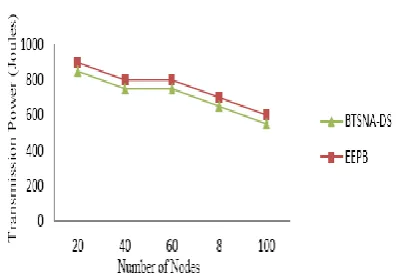
Figure 8. Transmission Power (Joules) Vs. Number of Nodes.
In this part performance analysis of proposed BTSNA-DS algorithm with existing Energy Efficient Probabilistic Broadcasting (EEPB) protocol. In Fig. 8 that the proposed BTSNA-DS algorithm provides better performance compare to existing EEPB protocol and also reducing the transmission power (joules) with number of node is increased.
Figure 9. Transmission Power (Joules) Vs. Transmission Range (Meters).
In this part performance analysis of proposed BTSNA-DS algorithm with existing Energy Efficient Probabilistic Broadcasting (EEPB) protocol. In Fig. 9 that the proposed BTSNA-DS algorithm provides better performance compare to existing EEPB protocol and also reducing the transmission power (joules) with transmission range (meters) is increased.
Figure 10. Transmission Power (Joules) Vs. Mobility (m/s).
In this part performance analysis of proposed BTSNA-DS algorithm with existing Energy Efficient Probabilistic Broadcasting (EEPB) protocol. In Fig. 10 that the proposed BTSNA-DS algorithm provides better performance compare to existing EEPB protocol and also reducing the transmission power (joules) with mobility (m/s) is increased.
VI.
CONCLUSION
provide a better performance compare to Energy Efficient Probabilistic Broadcasting (EEPB) Protocol and also increasing throughput and reducing transmission power with number of nodes, transmission range, and mobility is increased.
VII.
REFERENCES
[1]. Naeem Ahmad, and S. Zeeshan Hussain, "Broadcast Expenses Controlling Techniques in Mobile Ad-hoc Networks: A Survey", Journal of King Saud University-Computer and Information Sciences", Article in Press (2015), http://dx.doi.org/10.1016/j.jksuci.2015.08.004. [2]. Saraswathi, R. and Subramani, A., "Performance
Analysis of Broadcast Based Energy Efficient Routing Protocol for MANET Using BTSNA-DS Algorithm" Proc. ICIRTCTA’18 Organized by School of Computing Sciences, Vels University, Chennai, Feb 08th & 09th, 2018.
[3]. Saraswathi, R. and Subramani, A., "Broadcasting Based Energy Efficient Protocol to Enhance the Routing Performance in MANET Using BTSNA-DS Algorithm", International Journal of Computer Science and Mobile Applications, Vol.6 Issue. 2, PP: 31-49, 2018.
[4]. RagulRavi.Ra, and Jayanthi.V, "Energy Efficient Neighbor Coverage Protocol for Reducing Rebroadcast in MANET", Procedia Computer Science, Vol: 47, PP: 417-423, 2015.
[5]. Huaqiang Xu, Lei Ju, and Zhiping Jia, "Enhance Internet Access Ability for Ad Hoc Network with On-Demand Gateway Broadcast Strategy", Int. J Wireless Inf. Networks, Vol: 22, PP: 415-427, 2015.
[6]. Yosuke Totani, Kei Kobayashi, Keisuke Utsu, and Hiroshi Ishii, "An efficient broadcast-based information transfer method based on location data over MANET", J Super comput, Vol: 72, PP: 1422-1430, 2016.
[7]. Ahyoung Lee, and Ilkyeun Ra, "Network resource efficient routing in mobile ad hoc
wireless Networks", Telecommun Syst, Vol: 60, PP: 215-223, 2015.
[8]. Abderezak Touzene, and Abdulsalam Alkathiri, "Performance analysis of an extended grid based broadcast algorithm in mobile ad-hoc networks", Wireless Netw, Vol: 21, PP: 659-672, 2015.
[9]. Imran Ali Khan, Sajjad Ahmad Madani, Waqas Anwar and Khizar Hayat, "Location Based Dynamic Probabilistic Broadcasting for MANETs", World Applied Sciences Journal, Vol: 13, Iss: 11, PP: 2296-2305, 2011.
[10]. Prabu, K., et.al, "Performance comparison of routing protocol in MANET’, Int. J. of Adv. Research in Com. Sci. and Soft Engg., Vol. 2, No. 9, pp.388-392, 2012.
[11]. Hussain, S.Z., and Ahmad, N., "Cluster based controlling of route exploring packets in ad-hoc networks", Advanced Computing, Networking and Informatics (Springer), Vol: 2, PP: 103-112, 2014.
[12]. Hussain, S.Z., and Ahmad, N. "Minimizing Broadcast Expenses in Clustered Ad-hoc Networks", Journal of King Saud University-Computer and Information Sciences (2016), http://dx.doi.org/10.1016/j.jksuci.2016.05.001. [13]. Pu, I.M., and Shen, Y., "Analytical studies of
energy-time efficiency of blocking expanding ring search", Math. Comput. Sci, Vol: 3, Iss: 4, PP: 443- 456, 2010.
[14]. M. Bakhouya, J. Gaber, P. Lorenz. "Energy evaluation of AID protocol in Mobile Ad Hoc Networks", Journal of Network and Computer Applications, Vol: 58, PP: 287-293, 2015.
[15]. M. Bakhouya and J. Gaber. "Approaches for Engineering Adaptive Systems in Ubiquitous and Pervasive Environments", Journal of Reliable Intelligent Environments, Vol: 1, Iss: 2, PP: 75-86, 2015.
[17]. Prabu, K., et.al, "Energy efficient routing in MANET through edge node selection using ESPR algorithm", Int. J. Mobile Network Design and Innovation, Vol. 5, No. 3, pp.166-175, 2014. [18]. Sumit Kumar, Shabana Mehfuz1 "Energy
Efficient Probabilistic Broadcasting for Mobile Ad-Hoc Network", J. Inst. Eng. India Ser. B (Springer), 2016, DOI 10.1007/s40031-016-0265-1.
[19]. R. Reka, R. S. D. Wahidabanu "Broadcasting