University of Pennsylvania
ScholarlyCommons
Publicly Accessible Penn Dissertations
1-1-2012
IR-UV Spectroscopic Studies of OH and CN
Radical Complexes
Bridget Anne O'Donnell
University of Pennsylvania, [email protected]
Follow this and additional works at:http://repository.upenn.edu/edissertations
Part of theChemistry Commons
Recommended Citation
O'Donnell, Bridget Anne, "IR-UV Spectroscopic Studies of OH and CN Radical Complexes" (2012).Publicly Accessible Penn Dissertations. 558.
IR-UV Spectroscopic Studies of OH and CN Radical Complexes
Abstract
Infrared action spectroscopy is used to identify the OH-HONO2complex, an intermediate proposed to be
important in the reaction of OH with HONO2. Two features are observed in the OH stretching region: a
rotationally structured band corresponding to the OH radical stretch and a broadened feature assigned to the OH stretch of HONO2. Assignments are based on vibrational frequencies, analysis of rotational structure, and
comparison withab initiocalculations. Nascent OH product state distributions give a binding energy of ≤5.3 kcal mol-1.
Infrared action spectroscopy is also used to examine the H2O-HO complex, a primary interaction in the
hydration of OH. A rotationally structured band is assigned to the OH radical stretch of H2O-HO. The
stability of the complex, ≤5.14 kcal mol-1, is derived from the nascent OH product state distribution. The assignment is supported byab initiopredictions of the spectral shift and dissociation energy. A second feature to lower frequency is attributed to a hot band from an H2O bending state based on theoretical modeling.
IR-UV double resonance spectroscopy is used to characterize hindered rotor states in the ground electronic state of CN-Ne and CN-Ar. Infrared spectra exhibit perturbations due to Coriolis coupling: a deperturbation analysis gives rotational constants and coupling strengths. The energetic ordering and spacings of the hindered rotor states provide a probe of the anisotropic intermolecular potential, which is compared withab initio
calculations. The CN monomer is nearly free rotor-like within both complexes. A similar approach yields the infrared spectrum of H2-CN, which exhibits rotational structure consistent withortho-H2-CN in a linear
C≡N-H-H configuration.
Lastly, laser-induced fluorescence and IR-UV fluorescence depletion studies are used to characterize the lowest intermolecular levels of CN-Ar correlating with CNB2Σ++ Ar. Fluorescence depletion spectra confirm that specific features originate from a common ground state. The observed energy level pattern and intensity profile reflect the change in configuration from a weakly anisotropic potential about linear N≡C-Ar in the ground state to linear C≡N-Ar in the excited electronic state.
Degree Type
Dissertation
Degree Name
Doctor of Philosophy (PhD)
Graduate Group
Chemistry
First Advisor
Marsha I. Lester
Keywords
cyano radical, hydrogen bond, hydroxyl radical, infrared spectroscopy, rare gas
Subject Categories
IR-UV SPECTROSCOPIC STUDIES OF OH AND CN RADICAL COMPLEXES
Bridget A. O’Donnell
A DISSERTATION
in
Chemistry
Presented to the Faculties of the University of Pennsylvania
in
Partial Fulfillment of the Requirements for the
Degree of Doctor of Philosophy
2012
Supervisor of Dissertation
__________________________
Marsha I. Lester
Edmund J. Kahn Distinguished Professor
Graduate Group Chairperson
__________________________
Gary A. Molander, Hirschmann-Makineni Professor of Chemistry
Dissertation Committee
Michael R. Topp, Professor of Chemistry
Jeffery G. Saven, Associate Professor of Chemistry
Dedication
To my parents,
iii
Acknowledgements
I owe many thanks to those who have supported and encouraged me throughout
my graduate career at Penn. First of all, my advisor Marsha Lester, who has been a
wonderful mentor and advisor. I would also like to thank my dissertation committee,
Prof. Michael Topp, Prof. Feng Gai, and Prof. Jeffrey Saven, for helpful discussions and
guidance.
I would also like to thank members of the Lester research group, past and present,
who have helped me along the way. Thanks especially to Joseph Beames, who I have
worked closely with over the past two years and is more talented than he would care to
admit. Thanks also to current graduate students Julia Lehman and Fang Liu. I wish both
of you the best of luck at Penn. I would also like to thank past members Eunice Li, Ian
Konen, Craig Murray, Logan Dempsey, and Erika Derro, for being patient with me as I
began my research and adjusted to the steep learning curve.
Last, but certainly not least, I would like to thank my family. To my parents, who
have been incredibly supportive of me throughout my academic career and, without
whom, I could not have made it to where I am. To my siblings Janey, Ryan, Erin, and
Casey, thank you for keeping me sane throughout this process. And finally, to my
husband Rob, who has been incredibly patient, I can’t thank you enough for sticking by
Abstract
IR-UV SPECTROSCOPIC STUDIES OF OH AND CN RADICAL COMPLEXES
Bridget A. O’Donnell
Marsha I. Lester
Infrared action spectroscopy is used to identify the OH-HONO2 complex, an
intermediate proposed to be important in the reaction of OH with HONO2. Two features
are observed in the OH stretching region: a rotationally structured band corresponding to
the OH radical stretch and a broadened feature assigned to the OH stretch of HONO2.
Assignments are based on vibrational frequencies, analysis of rotational structure, and
comparison with ab initio calculations. Nascent OH product state distributions give a
binding energy of ≤5.3 kcal mol-1.
Infrared action spectroscopy is also used to examine the H2O-HO complex, a
primary interaction in the hydration of OH. A rotationally structured band is assigned to
the OH radical stretch of H2O-HO. The stability of the complex, ≤5.14 kcal mol-1, is
derived from the nascent OH product state distribution. The assignment is supported by
ab initio predictions of the spectral shift and dissociation energy. A second feature to
lower frequency is attributed to a hot band from an H2O bending state based on
theoretical modeling.
v
perturbations due to Coriolis coupling: a deperturbation analysis gives rotational
constants and coupling strengths. The energetic ordering and spacings of the hindered
rotor states provide a probe of the anisotropic intermolecular potential, which is
compared with ab initio calculations. The CN monomer is nearly free rotor-like within
both complexes. A similar approach yields the infrared spectrum of H2-CN, which
exhibits rotational structure consistent with ortho-H2-CN in a linear C≡N–H-H
configuration.
Lastly, laser-induced fluorescence and IR-UV fluorescence depletion studies are
used to characterize the lowest intermolecular levels of CN-Ar correlating with CN B2Σ+
+ Ar. Fluorescence depletion spectra confirm that specific features originate from a
common ground state. The observed energy level pattern and intensity profile reflect the
change in configuration from a weakly anisotropic potential about linear N≡C–Ar in the
Table of Contents
Abstract... iv
Table of Contents ... vi
List of Tables ... xi
List of Figures... xiv
Chapter 1 Introduction...1
References...19
Chapter 2 Spectroscopic Identification and Stability of the Intermediate in the OH + HONO2 Reaction ...24
I. Introduction...25
II. Results...29
A. Infrared Action Spectra...29
B. OH Product State Distribution...36
C. Insights From Theory...40
III. Discussion...44
IV. Materials and Methods...46
References...49
Chapter 3 Infrared Spectrum and Stability of the H2O-HO Complex: Experiment and Theory ...54
I. Introduction...55
II. Experimental Methods...61
III. Theoretical Methods ...63
vii
B. Two-Dimensional Potentials and Vibrational Energy Levels ...65
C. Dipole Moment Surface and Transition Strengths...67
IV. Infrared Spectral Results: Experiment and Theory...69
V. Dissociation Energy: Experiment and Theory...76
VI. Interpretation of IR Action Spectrum ...82
A. 2A′ Electronic State...82
B. 2A″ Electronic State ...93
VII. Conclusions...97
References...100
Chapter 4 Experimental Characterization of the Weakly Anisotropic CN X2Σ+ + Ne Potential from IR-UV Double Resonance Studies of the CN-Ne Complex ...106
I. Introduction...107
II. Experimental and Theoretical Methods ...113
III. Experimental Results ...115
IV. Analysis...128
A. Coriolis Coupling Effects and Deperturbation Analysis ...128
B. Hindered Rotor Analysis...130
V. Discussion...137
A. Experimental Determination of Potential Anisotropy ...137
B. Ab initio MRCI potentials for CN (X 2Σ+, B 2Σ+) + Ne...138
C. Generation of Body Fixed Wavefunctions and Implications...144
VI. Conclusions...146
References...149
Chapter 5 Insights on the CN B 2Σ+ + Ar potential from UV fluorescence excitation and IR depletion studies of the CN-Ar complex...152
I. Introduction...153
II. Experimental Methods...158
III. Results...160
A. Electronic spectroscopy via laser-induced fluorescence studies ...160
B. Infrared spectroscopy via fluorescence depletion and IR-UV double resonance methods ...166
C. Electronic spectroscopy via fluorescence depletion methods...171
IV. Discussion...174
V. Conclusions...182
References...184
Chapter 6 Experimental Characterization of the CN X2Σ+ + Ar and H2 potentials via IR-UV Double Resonance Spectroscopy ...187
I. Introduction...188
II. Experimental Methods...192
III. Experimental Results ...196
A. IR overtone excitation of CN-Ar ...196
B. Infrared overtone excitation of H2-CN ...203
ix
1. CN-Ar ...208
2. H2-CN ...211
B. Hindered rotor analysis ...211
V. Discussion...213
A. Angular potential for CN + Ar...213
B. H2-CN potential ...216
VI. Conclusions...218
References...220
Chapter 7 Future Directions ...223
References...229
Appendix 1 Spectroscopic Identification and Stability of the Intermediate in the OH + HONO2 Reaction Supporting Information ...230
Appendix 2 Infrared Spectrum and Stability of the H2O-HO Complex: Experiment and Theory Supporting Information ...235
Appendix 3 Experimental Characterization of the Weakly Anisotropic CN X2Σ+ + Ne Potential from IR-UV Double Resonance Studies of the CN-Ne Complex Supplementary Material ...250
I. Theoretical Methods ...251
II. Hindered Rotor Analysis...251
References...256
Appendix 4 Experimental Characterization of the CN X2Σ+ + Ar Potential via IR-UV Double Resonance Spectroscopy Supplementary Material...257
II. Reassignment of H2-CN A-X spectrum...261
xi
List of Tables
Chapter 2.
Table 1. Vibrational frequencies (cm-1), spectral shifts (cm-1) relative to the
monomer vibrations, and binding energies (kcal mol-1) of the OH-HONO2
complex predicted by various theoretical methods and observed
experimentally...32
Chapter 3.
Table 1. Vibrational frequencies (cm−1) and spectral shifts (Δ, cm−1) for the high
frequency modes of H2O-HO in the X2A′ state...75
Table 2. Dissociation and binding energies (kcal mol−1) for H2O-HO in the X2A′
state ...80
Table 3. Calculated energies for (ν2,ν6) levels of H2O-HO, ν6 energy spacings
(ΔE), frequencies for (ν2′,ν6′) ← (ν2″,ν6″) transitions and their
corresponding strengths (M2), and spectral shifts (Δ) relative to free OH
for the 2A′ and 2A″ surfaces ...89
Table 4. Calculated heights of the barrier to planarity Ve (φ=0) and equilibrium
values of the out-of-plane angle (φe) obtained at different levels of
theory/basis sets ...92
Chapter 4
Table 1. Experimental CN-Ne band origins (cm-1) with corresponding CN stretch
and hindered rotor assignments (νCN, nK) for IR and UV transitions in
...121
Table 2 Spectroscopic constants (cm-1) for CN-Ne derived from infrared overtone spectra ...122
Chapter 5 Table 1. Spectroscopic constants for rotationally structured bands assigned in IR and UV B-X spectra of CN-Ar ...170
Chapter 6 Table 1. Spectroscopic constants (cm-1) for CN-Ar (vCN, vs, nK) states derived from infrared overtone spectra and deperturbation analysis...204
Appendix 1 Table A1. Optimized geometry for OH-HONO2 in Å for distances and degrees for angles ...231
Table A2. Vibrational frequencies (cm-1) for OH-HONO2...232
Table A3. Rotational constants for OH-HONO2...233
Table A4. Binding energetics for the OH-HONO2 complex ...234
Appendix 2 Table A1. Energies of purely electronic potential Ve and adiabatic potentials 2 Vν with ν2 = 0 and 1 for H2O-HO on the 2A′ surface as a function of out-of-plane angle φ...236
xiii
Table A3. Z-matrix used to vary the OH bond length in H2O-HO at a specific value
of φ. O1 is the oxygen of water, O2 is the oxygen of the OH radical, X1 is
a dummy atom, H1 is the hydrogen of the OH radical, and H2 and H3 are
the hydrogen atoms of the water molecule ...238
Table A4. Fit coefficients for the Morse potential as a function of φ for H2O-HO on
the 2A′ surface...239
Table A5. Fit coefficients for the Morse potential as a function of φ for H2O-HO on
the 2A″ surface ...240
Table A6. Fit coefficients for the extended Morse potential as a function of φ for
H2O-HO on the 2A′ surface...241
Table A7. Fit coefficients for the extended Morse potential as a function of φ for
H2O-HO on the 2A′ surface...242
Table A8. Fit coefficients for the adiabatic potentials Vν2
( )
φ with ν2=0 and ν2=1 forH2O-HO on the 2A′ and 2A″ surfaces ...243
Table A9. Fit coefficients for μ
( )
r,φ along the a-inertial axis as a function of φ forH2O-HO on the 2A′ surface...244
Table A10. Fit coefficients for μ
( )
r,φ along the c-inertial axis as a function of φ forH2O-HO on the 2A′ surface...245
Table A11. Fit coefficients for μ
( )
r,φ along the a-inertial axis as a function of φ forTable A12. Fit coefficients for μ
( )
r,φ along the c-inertial axis as a function of φ forH2O-HO on the 2A″ surface ...247
Table A13. Fit coefficients for transition dipole μ φ10( ) for H2O-HO on the 2A′ surface
...248
Table A14. Fit coefficients for transition dipole μ φ10( ) for H2O-HO on the 2A″
xv
List of Figures
Chapter 1
Figure 1. Reaction coordinate for the OH + HONO2→ H2O + NO3 reaction
illustrating the presence of a hydrogen-bonded OH-HONO2 intermediate.
...8
Chapter 2
Figure 1. Reaction coordinate for the OH + HONO2→ H2O + NO3 reaction
illustrating the presence of a hydrogen-bonded OH-HONO2 intermediate.
...28
Figure 2. Infrared action spectra of features assigned to the fundamental OH radical
stretch (ν1) and the OH stretch of nitric acid (ν2) of the OH-HONO2
complex...31
Figure 3. High-resolution infrared action spectrum of the OH radical stretch of
OH-HONO2 at 3516.8 cm-1 (origin) ...35
Figure 4. Nascent quantum state distribution of the OH (v=0, N) products observed
following excitation the radical stretch (ν1) at 3516.8 cm-1 and the nitric
acid stretch (ν2) at 3268.4 cm-1 of the OH-HONO2 intermediate...39
Figure 5. Natural bond orbital analysis reveals the primary interaction of the sigma
antibonding orbital σ*(O2-H5) of nitric acid with the lone pair O7 of the
OH radical and the secondary interaction of the lone pair of O3 of HONO2
with the sigma antibonding orbital σ*(O6-H7) of the OH radical...
...42
Figure 1. The H2O-HO complex in its global minimum geometry...57
Figure 2. Infrared action spectrum attributed to the H2O-HO complex in the
fundamental OH radical stretch region ...71
Figure 3. Nascent quantum state distribution of the OH (v=0, N) products observed
following excitation of the OH radical stretch, ν2, of the H2O-HO complex
at 3491.3 cm−1...78
Figure 4. Calculated H2O-HO potentials as a function of the angle out-of-plane φ
with all other coordinates optimized to minimize the total energy, using
DFT with the B3LYP functional and the aug-cc-pVTZ basis ...
...85
Figure 5. Harmonic frequency, ωe, and anharmonicity, ωexe, of the H2O-HO
potential on the 2A′ surface, obtained from the parameters in the Morse fit
of the OH radical stretch as a function of the angle out-of-plane φ...
...87
Figure 6. Calculated transition moment for H2O-HO, μ10(φ) plotted as a function of
the angle out-of-plane φ...95
Chapter 4
Figure 1. IR-UV double resonance scheme is shown on schematic radial potentials
for CN (B 2Σ+, X 2Σ+) + Ne ...112
Figure 2. UV transitions observed for CN-Ne complexes in the B (νCN=0)-X (νCN=2)
region following IR excitation at 4061.7 cm-1, which prepares the X (νCN,
xvii
Figure 3. Rotationally structured CN-Ne bands in the CN overtone region observed
by IR-UV double resonance spectroscopy...120
Figure 4. Experimental and simulated rotational band contours for the (νCN, nK) =
(2,11) ← (0,00) (upper panel) and (2,10) ← (0,00) (lower panel) transitions .
...126
Figure 5. Potential anisotropy for CN X 2Σ+ (νCN=2) + Ne as a function of
intermolecular angle θ...134
Figure 6. Potential anisotropy for CN B 2Σ+ (νCN=0) + Ne as a function of θ...
...136
Figure 7. CASSCF(9,8)//MRCI+Q/CBS ab initio potentials for the CN X 2Σ+ + Ne
and CN B 2Σ+ + Ne electronic states ...140
Figure 8. Hindered rotor probability distributions for the CN-Ne (0,00), CN-Ne
(0,10) and CN-Ne (0,11) states correlating with CN X 2Σ+ + Ne compared
with the free rotor probability distributions ...143
Chapter 5
Figure 1. Laser-induced fluorescence (LIF), fluorescence depletion (FD), and
IR-UV double resonance (DR) schemes for probing CN-Ar ...155
Figure 2. Laser-induced fluorescence (LIF) spectrum of CN-Ar in the B-X (0,0)
spectral region...162
Figure 3. Rotational band structures and simulated contours for the newly observed
Figure 4. IR overtone spectra of CN-Ar excited to a hindered internal rotor level
(nK=11) with vCN=2 obtained by fluorescence depletion (FD) and double
resonance (DR) methods...168
Figure 5. Electronic spectra of CN-Ar in the B-X (0,0) region recorded by
laser-induced fluorescence (LIF) and fluorescence depletion (FD) methods...
...173
Figure 6. Experimentally observed CN-Ar transitions and theoretically predicted
CN-Ar B (vs, vbK) energy levels ...176
Figure 7. Minimum energy pathway of CN X 2Σ+ + Ar and CN B 2Σ+ + Ar potentials
as a function of intermolecular angle, θ...181
Chapter 6
Figure 1. IR-UV double resonance method illustrated on schematic radial potentials
for CN (X 2Σ+, B 2Σ+) + Ar...194
Figure 2. Rotationally structured CN-Ar bands in the CN overtone region observed
using IR-UV double resonance spectroscopy...200
Figure 3. Experimental and simulated band contours for transitions to the (vCN, vs,
nK) = (2,0,11) and (2,0,10) hindered internal rotor states of CN-Ar
originating from its ground (0,0,00) state...202
Figure 4. Infrared overtone spectrum of H2-CN complex obtained using an IR-UV
double resonance technique ...206
Figure 5. Potential anisotropy for CN X 2Σ+ + Ar as a function of intermolecular
xix
Figure 1. Scheme for the reaction of CN with CH2Cl2...228
Appendix 3
Figure A1. Correlation diagram depicting the energies of nK states for CN-Ne X
(νCN=2) ...255
Appendix 4
Figure A1. CN-Ar B-X LIF spectra recorded in the CN B-X (0,0) region, CN B-X (2,2)
region, and CN B-X (2,0) region...260
Figure A2. Simulated band contour for the A-X electronic transition of H2-CN ...
...263
Figure A3. Correlation diagram depicting the energies of nK states for CN-Ar X
Chapter 1:
2
Atmospheric chemistry has been a subject of scientific interest for over three
centuries beginning with determination of the major constituents which make up Earth’s
atmosphere. Over the past century, the subject of study has shifted away from the major
components of the atmosphere to trace species, which, although small in concentration,
play a major role in the chemistry of Earth’s atmosphere. In addition, the ever-evolving
nature of the atmosphere over time results in significant changes of basic chemical
processes. For example, one of the most important trace species whose concentration has
changed significantly over time is ozone (O3), which in the stratosphere acts as a
protective screen blocking ultraviolet photons from reaching Earth’s surface, but whose
rising concentration in the troposphere is harmful to both plants and humans. Particularly
in recent years, with ever-increasing concern over pollution and climate change,
atmospheric chemistry remains an active field of research.1,2
The chemistry of the atmosphere is driven by a wide variety of trace species, but
the hydroxyl radical (OH) ranks as one of the most significant. It is widely termed the
“detergent” of Earth’s atmosphere because of its high reactivity towards a large variety of
destructive species in the atmosphere, most notably carbon monoxide (CO) and methane
(CH4). The hydroxyl radical (OH) is formed primarily through the photolysis of ozone
by ultraviolet (UV) photons (λ<340 nm) to form O (1D), which then reacts with water in
the atmosphere to produce two OH radicals.
O3 + hν→ O (1D) + O2
O (1D) + H2O → 2OH
The formation of OH competes with deactivation of the excited oxygen atom to form
ground state O (3P) via collisional relaxation (M). In addition to this primary production
pathway, OH may also be formed in polluted areas through photolysis of nitrous acid
(HONO) and hydrogen peroxide (H2O2) where high concentrations of these species are
present.
HONO + hν (λ<400 nm) → OH + NO
HOOH + hν (λ<370 nm) → 2OH
There are many varied pathways for OH production aside from the primary one listed
above, and the amount of OH in any given scenario varies greatly depending upon the
time of day and geographical region being studied. In addition, because the formation
pathways are mostly photolytic in nature, OH is a major oxidant during daylight hours.1,2
The OH radical is also a key component in the tropospheric HOx cycle, which is
the production pathway responsible for ozone formation and hydrocarbon oxidation.
OH reacts with a hydrocarbon (RH) to form an alkyl radical, R, which then reacts with
4
O2 to form the hydroperoxyl radical, HO2, which combines with NO to reform OH and
produces another ozone molecule and NO2. The net result of the tropospheric HOx cycle
is the oxidation of a single hydrocarbon molecule and formation of two ozone molecules.
It is important to note that OH is reformed in the process, leading to no net loss.1,2
Nitric acid (HONO2) is another important trace species in the atmosphere; it acts
as a relatively stable sink for NO2 and is one of the most abundant acids in Earth’s
atmosphere. The formation of nitric acid (HONO2) in the gas phase includes several
pathways as shown below
NO2 + OH + M→ HONO2 + M
N2O5 + H2O → 2HONO2
NO3 + RH → HONO2 + R
In the first reaction, formation of nitric acid serves as a reservoir for NO2, which reacts
readily with OH to form HONO2. Again, because OH sources are primarily photolytic,
the formation of HONO2 in this case is a daytime reaction. The second reaction is the
dominant formation pathway of nitric acid in the Northern Hemisphere arising from
hydrolysis of dinitrogen pentoxide, N2O5, to form two HONO2 molecules. The reaction
is known to be catalyzed by surfaces and the reaction occurs rapidly at aqueous interfaces
on many surfaces to form HONO2 (l). The last mechanism is reaction of the nitrate
radical (NO3) with an organic species (i.e. aldeydes, alkanes) to form HONO2 and a
carbon containing radical, R.1,2
The primary removal pathway of nitric acid in the troposphere is through wet or
surfaces. However, in the upper troposphere and stratosphere, where there is no rain,
HONO2 is removed by solar photolysis and reaction with OH.
HONO2 + hν (λ<350 nm) → OH + NO2
→ O + HONO
OH + HONO2→ H2O + NO3
The quantum yield (φ) for formation of OH and NO2 in the first reaction is unity down to
222 nm, while φ for production of O and HONO at 193 nm is 0.8. The reaction of nitric
acid with OH results in conversion of HONO2 into reactive NOx species as the unstable
NO3 radical rapidly decomposes to form NO and NO2.1,2 The reaction of OH with nitric
acid has been the subject of many experimental3-8 and theoretical studies4,9,10 aimed at
understanding the reaction mechanism.
Kinetic studies of the reaction of OH and HONO2 have revealed several unusual
characteristics including a negative temperature dependence, pressure dependence, and a
strong isotope effect with deuterium substitution in HONO2.3-8 The observed kinetics
have been modeled using the scheme pictured below. The reaction begins through
formation of an energized pre-reactive intermediate, OH-HONO2*, which may be
stabilized via collisions, redissociate to form OH and HONO2, or react to form products,
H2O and NO3. The collisionally stabilized complex, OH-HONO2, may also lead to
reaction.
*
2 2 2 3
2 2 3
OH + HONO
OH HONO
H O + NO
[M]
OH HONO
H O + NO
−
→
−
→
R
6
The negative temperature dependence and pressure dependence are attributed to the
enhanced stabilization and formation of the reaction intermediate while the greatly
decreased reaction rate with deuterium substitution is attributed to lowered tunneling
efficiency with increasing mass. It should be noted that deuterium substitution in the
hydroxyl radical does not change the reaction rate significantly.
The structure and stability of the pre-reactive intermediate in the reaction of OH
with HONO2 have been predicted theoretically using a variety of methods.4,9,10 The
complex is predicted to form a doubly hydrogen-bonded complex where the H of OH
hydrogen-bonds to an oxygen atom of HONO2 and the H of HONO2 hydrogen-bonds to
the oxygen atom of OH, forming a planar six-membered ring-like structure as pictured in
Figure 1. The stability (De) has been predicted to be between 6.9 and 9.8 kcal mol-1
while the zero-point corrected binding energy (D0) is predicted to lie between 5.6 and 8.1
kcal mol-1. A transition state is predicted 3.5 kcal mol-1 higher in energy where the O-H
bond in HONO2 is extended and the H atom is nearly equidistant between HONO2 and
OH.10 The ab initio structure of the transition state supports the proposed mechanism
made in kinetic studies that reaction occurs via tunneling of the H atom through the
reaction barrier at low temperature.
In our lab, OH-HONO2 is stabilized and probed directly using infrared (IR) action
spectroscopy, allowing for spectral characterization of the intermediate as detailed in
Chapter 2. The complex is formed through the association of photolytically generated
OH radicals with HONO2 and subsequent stabilization via three-body collisions in a
supersonic jet. IR action spectroscopy is then used to identify both the hydroxyl OH
Figure 1. (a) Minimum energy geometries of OH-HONO2 and (b) H2O-HO, and
bands display characteristic features of hydrogen bonding,11 including spectral shifts to
lower energy of their respective monomer frequencies and, in the case of ν2, extensive
spectral broadening arising from anharmonic coupling between vibrational states.
Vibrational predissociation of the complex upon infrared excitation to form OH and
subsequent measurement of the populated rotational states of OH (EOH), allows for
determination of an upper limit of the complex’s binding energy, D0, based upon a simple
energy balance equation,
2 0
IR HONO OH t
hν −D =E +E +E . Due to the fact that the internal
energy of HONO2 (EHONO2) and the translational energy of both fragments (Et) are not
characterized, an upper limit alone may be determined of D0≤ 5.3 kcal mol-1.
Complementary ab initio calculations provided supporting evidence for the spectral
assignments made.
Because of the importance of OH as a “cleanser” of trace species in the
atmosphere, it is crucial to find what role complexes with OH, including non-reactive
ones, may play in the broader chemistry of the atmosphere.12 Complexation of OH with
water is one such system which has attracted interest. The H2O-HO complex has been
detected directly in infrared spectroscopy in matrices13-15 and microwave spectroscopy in
the gas phase16-19 in addition to being calculated theoretically via a plethora of different
methods.20-23 Apart from acting as a sink for OH radicals, the OH-H2O complex is also
theoretically predicted to be more reactive than OH, specifically in reaction with
saturated hydrocarbons.12
The H2O-HO complex is predicted to have a global minimum structure where the
10
atoms of the water molecule are situated out-of-plane resulting in a minimum energy Cs
symmetry as shown in Figure 1.20-23 There are two equivalent Cs minima with a planar
C2v symmetry structure as a barrier between them, predicted to be ~18 cm-1 in
magnitude.22 There is also a second local minimum in which one hydrogen atom of
water is hydrogen bonded to the oxygen atom of OH. It is predicted to be less well
bound than the global minimum by a factor of ~2. In addition to structural
considerations, frequency calculations have been carried out which predicted a red-shift
of the OH stretch in the global minimum geometry, consistent with the hydrogen bonding
motif.22,23
In addition to ab initio predictions, the H2O-HO complex has been observed in
argon and neon matrices13-15 and in the gas phase using microwave spectroscopy.16-19
Three vibrational modes of the H2O-HO complex attributed to the various OH stretching
states were observed in an argon matrix consistent with the minimum energy geometry
predicted by theory. The analogous three bands were also observed in the deuterated
counterpart, D2O-DO, confirming the structural assignment.13 The OH stretch of the
complex (ν2) was also observed in a Ne matrix.15 In both matrices, ν2 was shifted to
lower frequency relative to the monomer matrix frequency, verifying the trend predicted
theoretically. The H2O-HO complex and its associated isotopomers, both D and 18O
substituted, have also observed in microwave spectroscopy in the gas-phase, where the
vibrationally averaged configuration was found to be planar.16-19
In our lab, the H2O-HO complex is stabilized and probed using IR action
spectroscopy as described in Chapter 3. The OH radical stretch of the complex, ν2, is
signature of the hydrogen bond in H2O-HO. The stability of the H2O-HO complex is
derived in the same manner as described above to be D0≤ 5.14 kcal mol-1.
Complementary ab initio calculations verify the observed spectral shift and stability
measured experimentally. In addition to the main feature assigned to ν2, an additional
feature is observed, shifted 15 cm-1 lower in frequency which is assigned as a hot band
originating from an out-of-plane H2O bending state.
The cyano radical, although not prevalent in Earth’s atmosphere, is important in
planetary atmospheres, interstellar medium, and is an important product in the
combustion of nitrogen containing fuels.24-28 It is also important in the removal of
harmful NOx products from combustion in a process called reburning. In the combustion
of natural gas and other low nitrogen-containing fuels, NOx is produced in significant
quantities such that combustion modification technologies have been developed to
decrease their emissions. In the reburning process, a secondary combustion zone is
introduced after the main combustion zone where additional fuel is introduced and NOx
undergoes both formation and removal reactions, ultimately leading to a decrease in NOx
concentrations of 50-70%.25 Although there are several mechanisms for NOx removal,
the basic process begins with carbon-containing radicals which are formed in the
reburning stage that reduce the NO concentration by converting it to various species with
C-N bonds, including the cyano radical. These species are then reduced in reactions with
various radicals to produce NH species that finally react with NO to form N2. The
removal of NO is then twofold; first by reaction with carbon-containing radicals forming
12
CN + O2→ NCO + O
CN + OH → NCO + H
NCO + H → NH + CO
NH + NO → N2 + OH
The inclusion of additives to the reburning process can further reduce NOx emissions by
as much as 90%.25
In addition to its use as a NOx “scrubber”, the reaction of CN with hydrocarbons
in both the gas and solution phase has gained significant interest. 29-37 The reaction of
CN with alkanes has been shown to display non-Arrhenius behavior with a negative
temperature dependence at low temperature. Specifically, in the case of the reaction of
CN with ethane (C2H6), the reaction rate exhibited a sharp minimum in the rate constant
at ~200 K. Theoretical calculations were carried out to explain the observed behavior,
and it was proposed that, at low temperature, the rate determining step for reaction
involved the formation of a weakly bound complex. At higher temperature, the barrier to
reaction, which is predicted to lie below the reactant asymptote, is surmounted.38 To
accurately model the observed kinetics of CN reactions, it is important to take into
account both the formation of stable complexes as well as the presence of a barrier to
products and its position above or below the reactant asymptote. While the presence of
bound van der Waals complexes have been inferred from the kinetics studies, the
complexes have not been probed directly. Preliminary investigation of CN-rare gas and
CN-H2 complexes provides a means for future studies of more complicated systems.
There has been extensive experimental and theoretical work on CN-Ne,39-42
focused on electronic spectroscopy and excited state dynamics in these systems. In all
three systems, electronic spectra of the complexes have been recorded in the CN B2Σ+-X
2Σ+ region using laser induced fluorescence (LIF), hereafter referred to as
B-X transitions
of the complexes. In CN-Ne, rotationally structured bands have been observed through
excitation of the complex to the B state and subsequent fluorescence of the complex back
to the ground state. The electronic spectrum of CN-Ne displays a progression of
vibrational bands with a B-X electronic origin shifted minimally from free CN.40,42 The
excited state dynamics of both CN-Ar and CN-H2 are drastically different from that
observed in CN-Ne. In CN-Ar, the complex undergoes electronic predissociation after
excitation to the B state, forming vibrationally excited CN radicals in the A state. The
resulting long-wavelength and long lifetime CN A-X fluorescence is then collected. The
CN-Ar B-X spectrum is congested and difficult to analyze, displaying groupings of
vibrational bands that are not easily assignable.44 In CN-H2, the complex is excited to a
continuum above the CN B2Σ+ + H2 asymptote, resulting in CN B-X fluorescence which
is then collected. Due to the bound-free nature of the transition, the CN-H2B-X spectrum
is unstructured, however the dissociation threshold has been determined allowing for an
estimate of the ground state binding energy, D0.50
In addition to extensive experimental work, ab initio calculations on the potential
energy surfaces (PES) of CN-Ne,52,53 Ar,43 and H251 have been carried out. Two
geometric parameters were used to describe the CN-Ne and CN-Ar complexes; R is the
distance from the center of mass of CN to Ne/Ar and θ is the angle between C, the center
14
mass of CN to the center of mass of H2, θ1 is the angle between C, the center of mass of
CN, and the center of mass of H2, θ2 is the angle between H, the center of mass of H2,
and the center of mass of CN, and φ is the dihedral angle defined between H, the center
of mass of H2, the center of mass of CN, and C (Figure 1). In CN-Ne, MRCI+Q surfaces
were generated which revealed a long-range interaction between the Ne atom and the CN
X2Σ+ radical (Re=3.75 Å) with a stability, De, of only 31.3 cm-1. The potential exhibits a
very small anisotropy, with a barrier to free CN rotation within the complex of less than
2 cm-1.53 In the CN X2Σ+ + Ar potential, RSPT2 calculations predict a more anisotropic
potential with a bent minimum configuration (θe=133°, Re=3.83 Å) and larger binding
energy, De=39 cm-1. The barrier to free rotation of CN within CN-Ar is larger at 27 cm-1
compared to CN-Ne. PES calculations for the excited state of CN-Ar were also carried
out and reveal a large change in geometry from the ground state which is unsurprising
given that the sign of the CN dipole changes in going from the ground X2Σ+ state to the
excited B2Σ+ state of CN. The minimum geometry in this case is linear (θe=0°) with a
shorter bond length, Re=3.57 Å, and stronger intermolecular interaction, De=256 cm-1. In
addition, the anisotropy of the excited state is much greater with a barrier to internal
rotation of 160 cm-1.43 Lastly, for CN X2Σ+ + H2, the global minimum configuration is
calculated to be linear (θe=0°) with Re=3.94 Å and De=100.89 cm-1 using the MRSDCI
method. In addition, bound state calculations predict that CN will be bound more
strongly to ortho-H2 over para-H2 by 11 cm-1.51
Given the shallow nature of the ground states of the CN-Ne and CN-Ar
internal rotation of CN within the complex is expected in both infrared and vibronic
spectra (and is observed and assigned as such in previously recorded CN-Ne B-X
spectra40). As such, the ground states are treated in the same manner as laid out by
Dubernet et al54 for open-shell van der Waals complexes which reduces the effective
Hamiltonian to the bending mode alone. The reduced Hamiltonian in this case follows a
Hund’s case (b) approximation and is similar to the closed-shell system because the
electron spin is only weakly coupled to the nuclear axis. The diatomic rotational
quantum number is denoted as n and its projection onto the intermolecular axis is K
which takes on values of n, n-1, n-2,…,0. L is the pseudo-diatomic quantum number
which describes end-over-end rotation of the complex and couples with K to form a
resultant N, which is the total angular momentum excluding spin and is a good quantum
number. As such, quantum states in the ground state and excited state of CN-Ne and in
the ground state of CN-Ar are labeled by their hindered rotor state, nK, CN vibrational
state, vCN, and intermolecular stretch, vs. Because the excited B state of CN-Ar is much
more anisotropic, the appropriate quantum labels are those of a linear triatomic where vb
is the intermolecular bending mode and K is its projection onto the intermolecular axis.
K in this case takes on values of vb, vb-2, vb-4,…, 0 or 1.
In Chapter 4, the ground state of CN-Ne is probed using IR-UV double
resonance spectroscopy. The IR laser prepares a hindered rotor level in vCN=2, and the
UV subsequently excites the complex to the excited B state. The resulting fluorescence
of the complex back to the ground state is then collected. Two rotationally resolved
transitions are observed in the infrared and are assigned as transitions from the ground
16
and display complex rotational structure typical of Coriolis coupling observed in similar
HX-rare gas systems.55-57 A deperturbation analysis similar to that derived previously for
HX-rare gas complexes, is carried out to obtain accurate rotational constants for the
hindered rotor states and their associated average R values and coupling strength. In
addition, the energetic ordering and spacing of the hindered rotor states provides direct
experimental information on the angular anisotropy of the CN X2Σ+ + Ne potential and
reveals a small barrier to free CN rotation within the complex of ~8 cm-1.
Complementary MRCI+Q calculations extrapolated to the one-electron complete basis
set limit are carried out and agree remarkably well with the angular potential derived
from the experiment. The excited state angular potential is also calculated and indicates a
slightly more anisotropic potential with a barrier to internal rotation of ~16 cm-1.
In Chapter 5, the B-X electronic spectrum of CN-Ar is revisited and spectral
assignments, previously unidentified,43 are made using IR-UV fluorescence depletion
spectroscopy. Two additional features are observed in the electronic spectrum of CN-Ar
in the CN B-X spectral region to lower frequency. Both bands display rotational structure
which is analyzed as a pseudo-diatomic to give rotational constants and associated
average separation distances. The lowest energy feature at 25714.1 cm-1 is assigned as a
transition from the ground state to the (vCN, vs, vbK)=(0,0,00) in the excited state while the
broader, higher energy feature centered at 25755.5 cm-1 is assigned as a combination of
two transitions from the ground state to (0,11,0) and (0,00,1). Fluorescence depletion
spectra are then recorded by fixing the IR on a transition from the ground state to vCN=2,
nK=11, and scanning the UV laser in the CN B-X spectral region. All of the observed
originate from the same species and share a common ground state. Assignments for the
lowest five features in the B-X electronic spectrum are made based on the observed band
types, and previous bound state calculations for the excited state of CN-Ar43 verify the
ordering and energetic spacings observed experimentally. The binding energy of the B
state of CN-Ar is also derived with the newly observed and assigned feature at 25714.1
cm-1 to be D0=186±2 cm-1. Lastly, the intensity pattern observed in the progression of the
bending modes is rationalized by the large angular change predicted in going from the
ground state (θe=133°) to the excited state(θe=0°) in CN-Ar.43
In Chapter 6, the ground state of CN-Ar and CN-H2 are probed in a similar
fashion to that described above for CN-Ne in IR-UV double resonance. Two transitions
are observed attributed to CN-Ar in the infrared originating from the ground state and
terminating in vCN=2, nK=11 and 10. As in CN-Ne, evidence for Coriolis coupling is
observed in the rotational structure of the closely spaced bands and, as such, a
deperturbation analysis is carried out to derive deperturbed rotational constants, average
values for R, and the strength of coupling between the two hindered rotor states. The
energetic ordering and spacings of the hindered rotor states are similarly used to derive
information on the angular anisotropy of the CN X2Σ+ + Ar potential. The barrier to
internal rotation determined of ~12 cm-1 is only slightly higher than that determined in
CN-Ne of ~8 cm-1 indicating that CN is nearly free rotor in the ground state of the CN-Ar
complex. The experimental results are compared with previous predictions for CN X2Σ+
+ Ar which are found to match the shape of the angular potential well, but predict a larger
CN-18
their observed Σ-Σ and Π-Σ band types. Assignments are verified by comparison of the
References
1. B. J. Finlayson-Pitts and J. James N. Pitts, Chemistry of the Upper and Lower
Atmosphere. (Academic Press, San Diego, 2000).
2. J. H. Seinfeld and S. N. Pandis, Atmospheric Chemistry and Physics. (John Wiley
& Sons, Inc., New York, 1998).
3. S. S. Brown, J. B. Burkholder, R. K. Talukdar, and A. R. Ravishankara, J. Phys.
Chem. A 105, 1605 (2001).
4. J. J. Lamb, M. Mozurkewich, and S. W. Benson, J. Phys. Chem. 88, 6441 (1984).
5. J. J. Margitan and R. T. Watson, J. Phys. Chem. 86, 3819 (1982).
6. W. J. Marinelli and H. S. Johnston, J. Chem. Phys. 77, 1225 (1982).
7. A. R. Ravishankara, F. L. Eisele, and P. H. Wine, J. Phys. Chem. 86, 1854 (1982).
8. P. H. Wine, A. R. Ravishankara, N. M. Kreutter, R. C. Shah, J. M. Nicovich, R.
L. Thompson, and D. J. Wuebbles, Journal of Geophysical Research-Oceans and
Atmospheres 86, 1105 (1981).
9. S. Aloisio and J. S. Francisco, J. Phys. Chem. A 103, 6049 (1999).
10. W. S. Xia and M. C. Lin, J. Chem. Phys. 114, 4522 (2001).
11. G. C. Pimentel and A. L. McClellan, The Hydrogen Bond. (Reinhold Publishing
Corporation, New York, 1960).
12. S. Aloisio and J. S. Francisco, Acc. Chem. Res. 33, 825 (2000).
13. P. D. Cooper, H. G. Kjaergaard, V. S. Langford, A. J. McKinley, T. I.
Quickenden, and D. P. Schofield, J. Am. Chem. Soc. 125, 6048 (2003).
20
15. K. Tsuji and K. Shibuya, J. Phys. Chem. A 113, 9945 (2009).
16. C. Brauer, S., G. Sedo, E. Dahlke, S. Wu, E. M. Grumstrup, K. R. Leopold, M. D.
Marshall, H. O. Leung, and D. G. Truhlar, J. Chem. Phys. 129, 104304 (2008).
17. C. S. Brauer, G. Sedo, E. M. Grumstrup, K. R. Leopold, M. D. Marshall, and H.
O. Leung, Chem. Phys. Lett. 401, 420 (2005).
18. Y. Ohshima, K. Sato, Y. Sumiyoshi, and Y. Endo, J. Am. Chem. Soc. 127, 1108
(2005).
19. Z. Wu, H. A. Gillis, N. V. Klassen, and G. G. Teather, J. Chem. Phys. 78, 2449
(1983).
20. K. S. Kim, H. S. Kim, J. H. Jang, H. S. Kim, B.-J. Mhin, Y. Xie, and H. F.
Schaefer, J. Chem. Phys. 94, 2057 (1991).
21. B. S. Wang, H. Hou, and Y. S. Gu, Chem. Phys. Lett. 303, 96 (1999).
22. Y. Xie and H. F. Schaefer, J. Chem. Phys. 98, 8829 (1993).
23. Z. Zhou, Y. Qu, A. Fu, B. Du, F. He, and H. Gao, Int. J. Quantum Chem. 89, 550
(2002).
24. D. L. Yang and M. C. Lin, in The Chemical Dynamics and Kinetics of Small
Radicals Part I, edited by K. Liu and A. Wagner (World Scientific Publishing Co.
Pte., Ltd., Singapore, 1995), Vol. 6, pp. 164.
25. V. V. Lissianski, V. M. Zamansky, and W. C. Gardiner, in Gas-Phase
Combustion Chemistry, edited by W. C. Gardiner (Springer, New York, 2000),
pp. 1.
26. F. El-Mahallawy and S. E.-D. Habik, Fundamentals and Technology of
27. J. A. Miller and C. T. Bowman, Progress in Energy and Combustion Science 15,
287 (1989).
28. P. Casavecchia, N. Balucani, L. Cartechini, G. Capozza, A. Bergeat, and G. G.
Volpi, Faraday Discussions 119, 27 (2001).
29. A. C. Crowther, S. L. Carrier, T. J. Preston, and F. F. Crim, J. Phys. Chem. A 113,
3758 (2009).
30. A. C. Crowther, S. L. Carrier, T. J. Preston, and F. F. Crim, J. Phys. Chem. A 112,
12081 (2008).
31. A. C. Moskun and S. E. Bradforth, J. Chem. Phys. 119, 4500 (2003).
32. P. A. Pieniazek, S. E. Bradforth, and A. I. Krylov, J. Phys. Chem. A 110, 4854
(2006).
33. R. A. Rose, S. J. Greaves, T. A. A. Oliver, I. P. Clark, G. M. Greetham, A. W.
Parker, M. Towrie, and A. J. Orr-Ewing, J. Chem. Phys. 134, 224503 (2011).
34. R. J. Balla, K. H. Casleton, J. S. Adams, and L. Pasternack, J. Phys. Chem. 95,
8694 (1991).
35. L. R. Copeland, F. Mohammad, M. Zahedi, D. H. Volman, and W. M. Jackson, J.
Chem. Phys. 96, 5817 (1992).
36. I. R. Sims, J. L. Queffelec, D. Travers, B. R. Rowe, L. B. Herbert, J. Karthauser,
and I. W. M. Smith, Chem. Phys. Lett. 211, 461 (1993).
37. D. L. Yang, T. Yu, N. S. Wang, and M. C. Lin, Chem. Phys. 160, 307 (1992).
38. Y. Georgievskii and S. J. Klippenstein, J. Phys. Chem. A 111, 3802 (2007).
22
40. S. Fei and M. C. Heaven, Proceedings of SPIE - The International Society for
Optical Engineering 1858, 286 (1993).
41. S. Fei and M. C. Heaven, J. Chem. Phys. 98, 753 (1993).
42. Y. Lin and M. C. Heaven, J. Chem. Phys. 94, 5765 (1991).
43. J. Han, M. C. Heaven, U. Schnupf, and M. H. Alexander, J. Chem. Phys. 128,
104308/1 (2008).
44. J. Han, M. C. Heaven, and U. Schnupf, J. Chem. Phys. 128, 224309/1 (2008).
45. Y. Chen and M. C. Heaven, J. Chem. Phys. 109, 2808 (1998).
46. H. S. Lin, M. G. Erickson, Y. Lin, W. H. Basinger, W. G. Lawrence, and M. C.
Heaven, Chem. Phys. 189, 235 (1994).
47. A. L. Kaledin and M. C. Heaven, Chem. Phys. Lett. 347, 199 (2001).
48. Y. Chen and M. C. Heaven, J. Chem. Phys. 112, 7416 (2000).
49. A. L. Kaledin, M. C. Heaven, and J. M. Bowman, J. Chem. Phys. 110, 10380
(1999).
50. Y. Chen and M. C. Heaven, J. Chem. Phys. 109, 5171 (1998).
51. A. L. Kaledin, M. C. Heaven, and J. M. Bowman, J. Chem. Phys. 110, 10380
(1999).
52. I. Vrábel, V. Lukeš, V. Laurinc, and S. Biskupič, J. Phys. Chem. A 104, 96
(1999).
53. M. Yang and H. Alexander Millard, J. Chem. Phys. 107, 7148 (1997).
54. M.-L. Dubernet, D. Flower, and J. M. Hutson, J. Chem. Phys. 94, 7602 (1991).
55. C. M. Lovejoy, J. M. Hutson, and D. J. Nesbitt, J. Chem. Phys. 97, 8009 (1992).
24
Chapter 2:
Spectroscopic Identification and Stability of the Intermediate in the
OH + HONO
2Reaction
This research has been published in the Proceedings of the National Academy of Sciences
of the United States of America (2008), 105, 12678 and was performed with graduate
student Eunice X. J. Li and Marsha I. Lester in the Department of Chemistry, University
of Pennsylvania. Theoretical calculations were carried out by Joseph S. Francisco in the
I. Introduction
Nitric acid is a chemically inactive and photochemically stable reservoir for
reactive HOx and NOx species in the atmosphere. In the troposphere, HONO2 is usually
removed by dry deposition or rainout faster than it is photochemically converted back to
NOx, making it a permanent sink for NOx (1, 2). In the upper troposphere and
stratosphere, where there is no rain, HONO2 can be removed by solar photolysis and
reaction with OH (3, 4),
2 2 3
OH + HONO → H O + NO .
This reaction results in the conversion of HONO2 into reactive NOx species, since the
unstable nitrate radical rapidly decomposes into NO or NO2.
Kinetic studies have shown that the OH + HONO2 reaction is unusual in several
respects (3, 5-11), particularly under the temperature and pressure conditions found in the
lower atmosphere. Under these conditions, this reaction exhibits a negative temperature
dependence, a pressure dependence and a strong kinetic isotope effect. The indirect
mechanism inferred from these studies consists of initial OH radical addition forming an
energized OH-HONO2* intermediate, followed by dissociation or reaction to form
products. The energized intermediate can also be temporarily stabilized by collisions
with bath gas M, and then redissociate to reactants or decompose to products as shown in
the following scheme:
*
2 2 2 3
2 2 3
OH + HONO
OH HONO
H O + NO
[M]
OH HONO
H O + NO
−
→
−
→
R
26
The unusual kinetic behavior arises because of enhanced formation and collisional
stabilization of the reaction intermediate under lower temperature and higher pressure
conditions. Yet, the proposed intermediate has not been identified experimentally to
date.
Prior theoretical work anticipated that OH + HONO2 can form a doubly
hydrogen-bonded complex with a planar six-membered ring-like structure (5, 12, 13).
The stability of the OH-HONO2 complex was predicted to be De ~ 6.9-9.8 kcal mol-1 with
an estimated binding energy of D0 ~ 5.6-8.1 kcal mol-1 (12, 13). The transition state to
reaction has also been predicted to lie 3.5 kcal mol-1 above the reactant asymptote as
shown in Fig. 1 (13), with reaction presumably occurring by tunneling through the barrier
as evidenced by the large kinetic isotope effect (3).
This paper reports the first experimental identification of the OH-HONO2
intermediate associated with this significant atmospheric reaction. The structure and
stability of the reaction intermediate are obtained from direct spectroscopic
characterization of the OH-HONO2 complex and its unimolecular dissociation dynamics
using an IR pump – UV probe technique (14), in which the UV laser probes the OH
products following vibrational predissociation of OH-HONO2 as illustrated in Fig. 1.
Two transitions are identified in the fundamental OH stretch region: the OH radical
stretch (ν1) and OH stretch of nitric acid (ν2) of the OH-HONO2 complex. In addition,
these same vibrational transitions are identified for the fully deuterated OD-DONO2
complex. Complementary high-level ab initio calculations are also presented in support
Figure 1. Reaction coordinate for the OH + HONO2→ H2O + NO3 reaction illustrating
the presence of a hydrogen-bonded OH-HONO2 intermediate. The stability of the
OH-HONO2 intermediate is taken from current expiermental results and the barrier height
separating the intermediate from products is taken from theoretical predictions in this and
earlier work (12, 13). The OH-HONO2 intermediate is characterized by infrared action
spectroscopy of the OH radical stretch (ν1) and the OH stretch in nitric acid (ν2), which
II. Results
A. Infrared action spectra
The OH-HONO2 intermediate has been stabilized in a pulsed supersonic jet by
combining photolytically generated OH with residual nitric acid precursor as described in
detail in the materials and methods section. A spectroscopic search in the fundamental
OH stretching region has revealed two features that we attribute to the OH-HONO2
intermediate based on a combination of experimental and theoretical results. Both
spectral features were detected with the probe laser fixed on the OH A-X (1,0) R1(3)
transition. One feature is a rotationally structured band at 3516.8 cm-1 (origin) and the
second, much broader feature is centered at ∼3260 cm-1, as shown in Fig. 2. The
significant shift, -290 cm-1 from the OH stretch of the HONO2 monomer, and broadening
associated with the second feature is characteristic of strong hydrogen bonding, while the
modest shift of the structured band, -52 cm-1 from free OH, suggests a weaker interaction
(15). The vibrational frequencies of these features and their shifts relative to the
monomers strongly suggest their assignment as the OH radical stretch (ν1) and the OH
acid stretch (ν2) modes of OH-HONO2, particularly when compared with theoretical
predictions of the spectral shifts (see below and Table 1).
The assignment of the 3516.8 cm-1 feature as the OH radical stretch (ν1) of the
OH-HONO2 complex is further supported by analysis of the rotational structure of the
band. Preliminary simulations with rotational constants predicted from ab initio theory
30
Figure 2. Infrared action spectra of features assigned to the fundamental OH radical
stretch (ν1, blue) and the OH stretch of nitric acid (ν2, red) of the OH-HONO2 complex.
These spectral features are observed with the UV probe laser fixed on the OH A-X (1,0)
R1(3) line. The fundamental vibrational frequencies of the OH radical and the OH stretch
of the nitric acid monomers are indicated with blue and red dash lines, respectively. The
integrated intensity of the OH acid stretch relative to the OH radical stretch feature in the
infrared action spectrum is 5.5(4):1. The OH acid stretch can be modeled as two broad
components (black) at 3248.1(6) and 3270.8(5) cm-1 with Lorentzian linewidths of 22
32
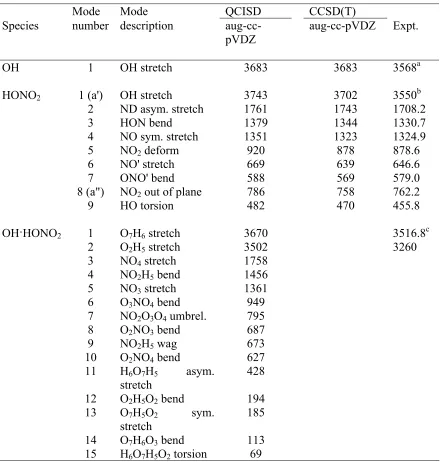
Table 1. Vibrational frequencies (cm-1), spectral shifts (cm-1) relative to the monomer
vibrations, and binding energies (kcal mol-1) of the OH-HONO2 complex predicted by
various theoretical methods and observed experimentally. The frequencies and shifts of
deuterated species are indicated in parentheses.
Vibrational frequencies (cm-1)
B3LYP
6-311++G(3df,3pd)a
B3LYP 6-311G(d,p)b
QCISD aug-cc-pVDZc
Experimentc
OH 3712 3704 (2698) 3683 3568.5 (2631.5)
HONO2 3723 3735 (2719) 3743 3550.0 (2621.5)
OH-HONO2
ν1 3639 3621 (2636) 3670 3516.8 (2594)
ν2 3365 3370 (2463) 3502 3260 (2425)
Δ1d -73 -83 (-62) -13 -51.7 (-38)
Δ2e -358 -365 (-256) -241 -290 (-197)
Energy (kcal mol-1)
CCSD(T)
6-311++G(2d,2p)a
G2M(cc3)b CCSD(T)
aug-cc-pV∞Zc
Experimentc
De 6.9 9.8 7.4
D0 5.6 8.1 5.9 ≤ 5.3
a Ref. (12)
b Ref. (13)
c This work.
d Spectral shift of OH radical stretch of OH-HONO
2 relative to fundamental of free OH.
e Spectral shift of OH acid stretch of OH-HONO
2 relative to OH stretch of HONO2
transition dipole along the OH radical axis capture much of the rotational structure. The
observed band structure shown in Fig.3 was more faithfully reproduced, however, by
including a spin-rotation interaction to account for the effects of electronic state mixing
in the open-shell species; this effect has been demonstrated previously in high-resolution
studies of OH-water and other systems (16-18). The resultant rotational band simulation
shown in Fig. 3 extends over ∼12 cm-1 at 10 K. The rotational band also exhibits some
line broadening (homogeneous linewidth of 0.25 cm-1 compared to the laser bandwidth of
0.02 cm-1) that likely arises from intramolecular vibrational redistribution (IVR),
dissociation, and/or reaction following vibrational excitation.
By contrast, a much broader feature centered around 3260 cm-1 and spanning ~80
cm-1 in breadth was assigned as the OH acid stretch (ν2). The resultant spectrum appears
to be composed of two broad components, although some rotational substructure is still
observable. As shown in Fig. 2, the two broad components can be simulated as bands at
3248.1(6) and 3270.8(5) cm-1 with a corresponding intensity ratio of 1:1.4(1) and
Lorentzian linewidths of 22 cm-1. The fact that the 3260 cm-1 feature (as well as its two
subcomponents) is much broader than the OH radical stretch feature is consistent with
strong anharmonic coupling between two (or possibly more) vibrational states. We
carried out a vibrational deperturbation analysis (19) in an effort to characterize the
energies and couplings of zero-order states that might give rise to the two components of
the 3260 cm-1 feature. A two state deperturbation analysis indicates that the
experimentally observed mixed states would arise from coupling between zero-order
34
Figure 3. High-resolution infrared action spectrum of the OH radical stretch of
OH-HONO2 (black) at 3516.8 cm-1 (origin). A simulation of the rotational band structure
(blue) is generated using rotational constants predicted for the OH-HONO2 complex
(Table A3) and assumed spin-rotation parameters, εaa=-0.25 cm-1, εbb=-0.55 cm-1, to
account for the open-shell character. A simulation of the intensity profile using the b
-component of the transition dipole moment, rotational temperature of 10 K, and a
homogeneous linewidth of 0.25 cm-1 provides a good representation of the observed band
36
of 11.2(2) cm-1 between the zero-order states. One of the zero-order states is the optically
bright OH acid stretch (ν2) of OH-HONO2; the identity of the second zero-order state is
unknown, but will be the subject of future theoretical studies. The OH stretch in nitric
acid is predicted to have a transition intensity ~10 times stronger than that of the OH
radical stretch (12). Our experimental measurements yield an integrated intensity ratio of
5.5(4):1 for the acid stretch to the radical stretch in infrared action spectra. The fractional
population in the OH product channel being detected is essentially the same (20%)
following ν1 and ν2 excitation; however, the branching between dissociation and reaction
following ν1 and ν2 excitation is not known.
In addition, these same vibrational transitions have been identified for the fully
deuterated OD-DONO2 complex by infrared action spectroscopy. The spectra were
recorded with the probe laser fixed on the P1(3) line of the OD A-X (1,0) transition (20).
The OD radical stretch (ν1) of OD-DONO2 is observed at 2594 cm-1, shifted 38 cm-1 to
lower frequency of that in free OD (21). The OD stretch of DONO2 (ν2) is observed at
2425 cm-1, corresponding to a -197 cm-1 shift compared to the OD stretch of the
monomer (21). The OD radical stretch band spans ∼15 cm-1, while the OD acid stretch
feature is spread over ∼40 cm-1. These spectral properties are consistent with a strong
hydrogen bond for the acid and a weaker interaction for the radical.
B. OH product state distribution
The IR excitation provides sufficient energy to induce dissociation and/or reaction
between the components of the OH-HONO2 intermediate. In this work, we examine the
determination of the stability of the intermediate. For both ν1 and ν2 excitation, the
product state distributions peak at the lowest rotational level that can be observed, N=2,
F1,* and fall off with increasing rotational energy, as shown in Fig. 4. There are no
noticeable fine structure (Λ-doublet or spin-orbit) preferences. Following ν1 excitation of
OH-HONO2 at 3516.8 cm-1, the highest energetically observed OH level is N=9, F1,
Π(A″) with an internal energy of 1654.6 cm-1; the same OH product state appears to be
closed following ν2 excitation at 3260 cm-1 (3268.4 cm-1 or 3250.7 cm-1). In the latter
case, the highest energetically observed OH channel is N=8, F1, Π(A″) with an internal
energy of 1324.3 cm-1. The ν1 infrared excitation energy, hνIR, and the energy of the
highest open OH product channel, EOH, indicate that 1862.2 cm-1 (5.3 kcal mol-1) is
available for dissociation of OH-HONO2, D0, internal excitation of the HONO2
cofragment, 2 HONO
E , and translational energy of the recoiling fragments, Et, according to
the following energy balance equation:
2 2
IR 0 OH-HONO OH HONO t
hν −D +E =E +E +E
The internal energy of OH-HONO2, EOH-HONO2, is negligible at ∼10 K and EHONO2 and Et
are unknown. Therefore, our experiment provides a rigorous upper limit for the
OH-HONO2 binding energy of D0≤ 5.3 kcal mol-1. The same calculation for ν2 excitation
yields D0≤ 5.5 kcal mol-1 (1935.7 cm-1); the large spacing (∼330 cm-1) to the next higher
OH rotational level, N=9, which appears to be closed, precludes further refinement of this
limit.
*The population in the lowest rovibrational state, OH X2Π (
38
Figure 4. Nascent quantum state distribution of the OH (v=0, N) products observed
following excitation the radical stretch (ν1) at 3516.8 cm-1 (upper panel, blue) and the
nitric acid stretch (ν2) at 3268.4 cm-1 (lower panel, red) of the OH-HONO2 intermediate.
Ticks identify OH rotational levels in the F1 spin-orbit manifold, while the Π(A′) and
Π(A″) Λ-doublet components are distinguished by triangle and circle symbols,
respectively. The OH product state distributions peak at low rotational states and fall off
with increasing rotational excitation. For ν1 excitation, the highest observed product state
is N=9, F1Π(A″) with 1654.6 cm-1 of internal energy, while for ν2 excitation the highest
state is N=8, F1Π(A″) with 1324.3 cm-1 of internal energy. The smooth curves through
the data are prior statistical distributions with Eavail derived from the IR excitation