http://www.sciencepublishinggroup.com/j/sr doi: 10.11648/j.sr.20180606.12
ISSN: 2329-0935 (Print); ISSN: 2329-0927 (Online)
Blockchain Technology for Data Entirety
Khuat Thanh Son
1, Nguyen Truong Thang
1, Tran Manh Dong
1, Nguyen Ha Thanh
21
Institute of Information Technology, Vietnam Academy of Science and Technology, Ha Noi, Vietnam
2
University of Engineering and Technology, Vietnam National University, Ha Noi, Vietnam
Email address:
To cite this article:
Khuat Thanh Son, Nguyen Truong Thang, Tran Manh Dong, Nguyen Ha Thanh. Blockchain Technology for Data Entirety. Science Research. Vol. 6, No. 6, 2018, pp. 68-75. doi: 10.11648/j.sr.20180606.12
Received: November 27, 2018; Accepted: December 17, 2018; Published: January 23, 2019
Abstract:
This paper studies blockchain technology - which is getting strong attention from the industry and also being applied in many fields. Based on the nature of blockchain's data security, the paper analyzes the application of blockchain technology to deal with the problem of data entirety and transparency for text documents. Firstly, the paper presents an overview of some technology components constituting to blockchain and its relevance and optimization to the data authentication/protection problem. Next, an experimental application of blockchain to form a network which stores documents and maintains the entirety of data stored in the network for external queries.Keywords:
Blockchain, Hash Table, Peer Networks, Game Theory, Digital Signatures, Cryptography, ECDSA, SHA-265, Documentation1. Introduction
Blockchain technology currently has started its establishment in many areas such as government, banking and finance, supply chain, e-commerce, hi-tech agriculture to IoT. Similar issues with stakeholder trust and data entirety have been identified in many industries [1-4]. Blockchain, a distributed ledger technology, is a potential solution to the problem of trust in numerous use cases [5-6]. Several organizations, particularly in the financial industry, have started to explore whether blockchain technology can be successfully integrated into existing software to address the need for a more visible and immutable audit log [7]. More recently, the use of blockchain for applications outside of currency and financial services has also received significant attention. Within healthcare, blockchain has been proposed as a possible solution for managing patient and provider identity, permissions to healthcare data, and to manage participant consent [8-10]. Indeed, it is undeniable that blockchain is being used more and more in every aspect of life, especially in the field of data and document authentication because its nature is about information safety and network security.
The blockchain research article gives potential applications in protecting the entirety and transparency of data. The paper
first briefs through its core component technologies, analyzes the outstanding features of the technology compared to the existing tools with respect to the authenticity and transparency of document content, especially the texts of legal documents.
The rest of the paper is structured as follows: Section 2 presents fundamental components and the nature of blockchain. Sections 3 and 4 give more details about its encryption mechanisms via digital signatures, hashing functions and cryptography techniques. Section 5 is the key contribution of this paper as it describes an experimental application which can securely store text documents in a blockchain network while maintaining the entirety and transparency of document contents. Section 6 concludes the paper and points out further development from this stage.
2. Component Technology and
Blockchain Nature
Blockchain is said to be the combination of the three component technologies. Those are:
1.Cryptography: Using public key and hash function to ensure transparency, entirety and privacy.
2.Peer-to-Peer Network: Each node in the network is considered as a client and a server for storing application replicas.
3.Game theory: All nodes participating in the system must comply with the rules of consensus and be motivated by economic incentives.
3. Digital Signature and Cryptographic
Technology
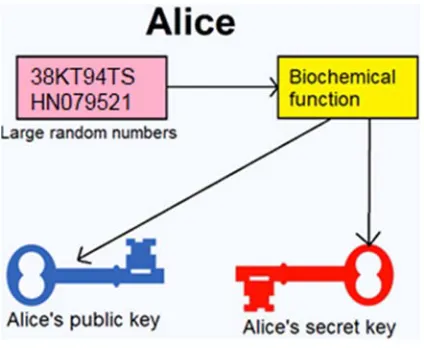
The specifically electronic signature is the electronic signature used in blockchain, which is built on public key cryptography [11-12], also known as asymmetric crytography.
Figure 1. Public encryption.
Our electronic signature system must meet the following two characteristics:
1.The correct signature must be checked for the correct result: verify (pk, m, sign (sk, m)) = true
2.The signature can not be forged. pk: the public key
sk: the secret key
m: the clear text
sign (sk, m): the function sign accepts a message m and a
secret key sk input, then creates signature sg for message
m under private key sk
In this paper, Python library is used to simulate the electronic signature scheme [13].
Modern blockchain uses optimized cryptographic technology such as Elliptic Curve Cryptography (ECC) to ensure entirety for its components. Elliptic Curve Digital Signature Algorithm (ECDSA) was first introduced in 1991 from independent works by Neals Koblitz and Victor Miller [14]. Since the 2000s, the United States, Russia, Japan, South Korea and several European countries have researched intensively this area and made some standardizing efforts via international bodies such as ISO, ANSI, IEEE, SECG, FIPS.
4. Hash Function Sha-256, Role of the
Hash Code in Blockchain
SHA (Secure Hash Algorithm) [15] has been recognized among US standards in 1992 and is applied in conjunction with the DSS digital signature algorithm. This algorithm accepts a message M of any length as the input and delivers 160-bit long output. Blockchain uses SHA-256 hash function with the following characteristics:
SHA-256 hash function is developed by NSA and it is irreversible. This is actually used in BTC (bitcoin) exploits as proof of the work algorithm and in the creation of BTC addresses thanks to its security. This paper mentions about the role of the hash in the blockchain network built in Section V.
In blockchain, the current state-of-the-art hash function is considered to be safe due to the following analysis.
1. Suppose a hacker wants to crack a private key of 256-bit length. That is, it must exhaust 2256 the possible cases of the key. A typical modern super-computers can perform 1018 key tests per second. So the hacking system must take 3x1051 year so that it can exhaust the searching space of the key.
Even in the worse case when the hacker is equipped with a extremely powerful super-computer which can handle the above searching space in only a day instead of 3x1051 years, blockchain network can withstand the attack by linking blocks together using a cryptographic hash function:
1.Suppose the current block is A and its hash value "H_A".
2.When a new block B is added to blockchain network, the miner's task is to calculate the hash value of the new block. This process is the solution to the PoW problem. 3.To realize a link between A and B, the hash value H_A
of block A is will be involved in the computation of the hash value for block B. The formula for computing the hash value of block B is as simple as: "H_B = hash (H_A + info_block_B + nonce) < target". Here, info_block_B is the transaction information in block B, nonce is the value to look for to solve the PoW problem, and target is the threshold to find the nonce value to satisfy the current difficulty.
In the next section, the paper presents the application of blockchain to a specific problem, namely the entirety and transparency of text documents.
5. Experimental Application of
Blockchain for Data Entirety
As Sections 3 and 4 mention, blockchain is based on the combination of 3 fundamental technologies, the use of the hash code [16] to link to the original data can be further extended. In a hostile environment, storing and linking large amounts of data enhance document and data security againts potential changes.
experiment is implemented as a chain or linked list. The link between a block and its immediate predecessor is implemented by simultaneously storing a hash value of the previous block. If there is a change in the previous data structure, the hash value will be changed and the link will be broken. Such a structure is suitable for storing and linking data blocks that do not appear concurrently, which occurs in turn from time to time. Combined with the Merkle tree model, a sequence of data units can be linked together in chronological order. Thus a blockchain data structure always starts with an initial block called the genesis block. The data structure of each block contains the following fields:
- Index is used to store address of block based on type of input text. Different types of text will have different index codes. For example, a type of legal document will be indexed from PL01.1 to PL01.20, which will be indexed differently for search and retrieval
1.Timestamp: 2.Data:
3.Nonce: 32 bits ensure that each block is used only once 4.Previous hash value
5.Hash code
For illustration purppose, Javascript is used as the programming language to simulate blockchain network. In the following case, the Nonce case will be removed because this paper does not deploy the mining algorithm. The hash array of the block selected by us is the SHA-256 hash function [17] created by combining the above domains. Firstly, a Structor Block with the above attributes is created. ClassBlock includes a constructor which is the block's property in the network and calculates the hash code for the block in the network.
The calculateHash function takes every element in a block's data. As a result, if any piece of data is modified, the block's hash function will change the value immediately. This is a great feature to ensure data security in blockchain. Below is the code of the functions to build the next block and link ito a network of blocks.
Here is a block installed in the same way as the blockchain principle:
"chain": [ {
"index": 0,
"timestamp": "01/02/2018", "data": "KTS Blockchain test", "previousHash": "0",
"hash":"363290b53efe3d6e83480203b5116c2d85 4c6ae83087e0866888796a85a867f2",
"nonce": 0 },]
In the next part, this paper will conduct to test the use of that network for ensuring the entirety and transparency of a document. As a result of the above part, this can see that the blocks created are linked together according to the principle: the following block will connect to the previous block through PreviousHash. However, the important part is the data (where the data is stored without being encrypted). In
this experiment, the paper conduct the data encryption with signatures based on the elliptic curve.
According to the Weierstrass formula [18], the elliptic curve E in the domain K is the set of points (x, y) ∈ KxK
satisfying the equation:
y2 + a1xy + a3xy = x3 + a2x2 + a4x+ a6
(ai∈ K và 4a43 + 27a62 ≠0)
Where an O point called point at infinity [19].
To set up the ECDSA signature scheme, this paper chooses the elliptic curve E on the domain Fq with O being the infinity point, the base point G ∈E and n is the degree of G (nG = O).
a. Possible attacks on ECDSA are classified as follows: b.An attack on discrete logarithm problem on an elliptic
curve: this is a successful calculation way for opponent to calculate A’s private key from the parameters and Q’s public key. Then the opponent can forge A's signature on any selected message.
c. Attack on the hash function. Ideal security: A t-bit hash function is considered to be ideal security if two conditions are satisfied simultaneously:
1. Give a hash output, generate a reverse mapping (i) 2. Create the conflict (ii)
Because the documents needed to sign are usually long. One way for signing is to divide the documents into small chunks. Each chunk is then separately signed and those signed are reassembled into blockchain. However, the disadvantage of this method is that the signature is large. Furthermore, the signing speed is slow because the signing function is based on public key cryptography. In addition, the signature may not consider the page number within the document that may effect the entirety of the document. Therefore, the blockchain protocol need to sign to the hash value of the documents, because the value of the hash function always provides the specified length.
Based on the above mechanism, the following advantages are observed:
(1)Authenticity (Ability to identify the origin of digital signatures)
(2)Anti- denial (No deny for responsibility) (3)Entirety
→ The safety of the ECDSA signature scheme corresponds to the complexity of the discrete logarithm problem on the elliptic curve.
6. Experiment and Evaluation
After establishing a blockchain, the paper will show how to build up a blockchain network and a block struct is defined as in Section 5. Next, this paper will introduce the construction procedure of blockchain and the principle to
validate the entirety and transparency of a data in the network.
According to Section 5, after a block has been created, a set of structs in the block is constructed and each struct stores a page of text as shown in the following figure:
Figure 2. Structure of a block.
A Page_struct consists of the same components as those of a complete block, connected together through previousHash and a dimensional page_struct:
1.Index: document page code with 8-bit length 2.Timestamp: 18 bits
3.Data: 256 bits (the contents of the page are encrypted, using the SHA-256 hash function)
4.Nonce: 32 bits
5. Hash value of previous block (PreviousHash) 256 bits 6. Hash code: 256 bits
A book_block block is a set of multiple page_struct. To distinguish between different documents, the paper design two more elements index_book in the book_block in order to store the document code. This paper defines this document code according to each different type of document (refer to classification in the National Library of Vietnam).
As such, after having an input data, this paper encodes and initialize a block with a size that depends on the number of pages and an average block of 500 pages has the size of about 20,121 kB.
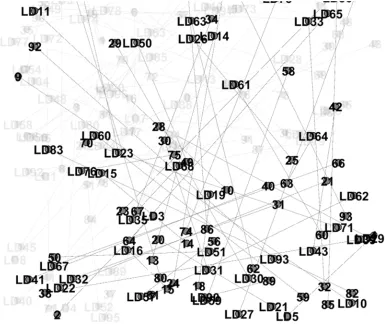
After having created interconnected structs, a network of different struct strings connected through the previewHash code was created. As shown in Figure 3, one node is a page_struct with the full fields defined by us.
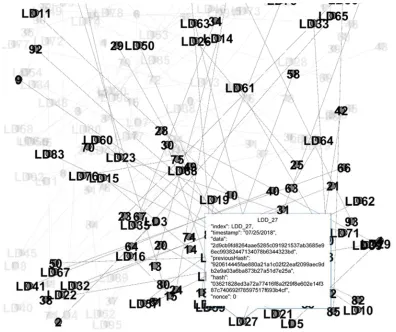
Figure 4. Information about a node (page_struct).
As shown in Figure 4, when looking at the index, the paper identifies that it is the page 27 of the LDD document, in which an initial date is 07/25/2018 and the data is encoded by the render_data function, preview_hash is the hash code of page 26, and the hash code is generated via the calculateHash function as we have stated in Section 5.
After building the book_block, a network of book_blocks connected together was created. And the blocks are connected together into a chain of blocks called chains.
Based on the combined characteristics of the three technologies, Blockchain uses game theory to create equal credibility within the network, requesting the consensus of all the members in the network when making any change or modification to the Blockchain. Therefore, the information in Blockchain can not be changed. And if an information would like to be added, the consensus of all the nodes is requested. Even if a part of the new technology system falls, the remaining computers and nodes will still work to protect the information.
Figure 5. Block network.
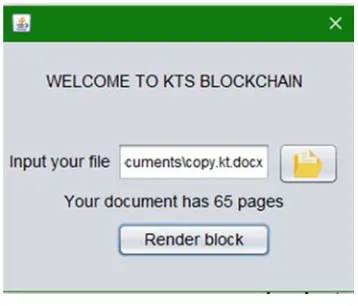
The users use the system for two tasks: - Importing original document
- Checking the entirety and transparency of any document The user will import the original document. The user will push the document and the system will calculate the page number of the document and return the user full block sequence information including information as we have described.
Figure 6. Importing original document.
Then the user will take the chain received on the Blockchain network, here we use the demo similar to the site https://blockchaindemo.io/. In addition to the information described, there will also be an index located at the block location on the block network.
Next, to authenticate any document, the user will perform the following steps to authenticate a document on the
Blockchain network. The first step, the user will put the document to check entirety and transparency on the system, the system will hash data then check the index and check on the block sequence. The second step, the system will use the index of the hash document to check out the document on the block sequence. If the hash code of the user's document wants to be checked after the block network (figure 5) check that is 41.8% of the network nodes on the network, the user's text is acceptable.
Figure 7. Check the entirety and transparency.
Blockchain Demo KTS
your Chain has been created!!!!! Is Blockchain valid? True
Last hash of Blockchain:
45ec275032fda932efbd9c05f24d675b1a8ca21c1abb044ad a731695d2a8063f
And if there is a difference, i.e. the same percentage is less than 43.6%, the system will determine the deviation coming from which block. In this paper, we also use a function to check the accuracy of blocks in a chain (checkBlockchain), the system browses from the first hash value to the end of the chain and gives the index of the first difference block. This helps check the data change. If changing the text being only a space, the generated hash code will be different from the previously saved hash code. Here we use more a changed position check statement to give the exact position of the change.
If the text is modified, e.g. a space insertion on page 18 of a text, after re-running, we have the result that the user's chain is not the same as the original text originally uploaded and sends the message to the user:
Blockchain Demo KTS
your Chain has been created!!!!! Is blockchain valid? true Last hash of System:
45ec275032fda932efbd9c05f24d675b1a8ca21c1abb044ad a731695d2a8063f
Last hash of your blockchain:
363290b53efe3d6e83480203b5116c2d854c6ae83087e086 6888796a85a867f2
Blockchain has been changed! The document has changed at line: 36
Thus, according to the results obtained, we have created a network block. In particular, each different type of text will be attached to a different index based on the type of document, the number of years to release so that it can be easily retrieved later. This block network is used to authenticate one or more documents to verify that the text is accurate according to the original or modified text and, if so, providing a warning when the data change and showing where the change is located. The exact authentication is evaluated in the environment: a block network with 1326 blocks, archiving 101 documents with 08 different domains being about 97%. In this paper, we mention that there are many legal documents (decisions, circulars, etc.) currently being published on the Internet, but it is not possible to identify which type of documents is intact and not modified by even a space, and through the network block paper stated, we can indicate the authentication of the document to be examined.
In combination with hashing twice, we calculate and give the result if the attack occurs, the small ratio will go to about 0.00003136, combined with the signing of a number in the data stored in the block, the safety of each block decreases by the logarithm on the elliptic curve.
Combining with the peer-to-peer network and game theory that blockchain possesses, changing one part of the content is difficult and changing the whole document is harder, the probability to break the structure blockchain is 0.00002158.
However, in this paper, we assume the formation of a
network of computers that own blockchain technology as in Section 6.
7. Conclusion
In this paper, we presented the content relating to the blockchain: Analyzing the technologies that Blockchain uses, analyzing in depth the issue ensuring entirety of the data. We rely on the knowledge of technology in blockchain to create a simple block network, testing into an input data ientered through any file. However, in this paper, the application of blockchain is simply to ensure the data entirety and the blockchain network is still simple with a few computers, this makes the elimination of text can still be done without being detected. The development relating to blockchain technology is extensive, such as the construction of a system applicable to agencies and organizations in issues ensuring that the agency's materials are intact and used on the entire computer network to jointly participate on the network to increase the entirety and transparency for documentation. This is a direction we will continue to study in the coming time to further develop our research.
Acknowledgements
The paper would like to thank CS'18.17 topic: "Application of Blockchain technology in legal document security", Institute of Information Technology, Vietnam Academy of Science and Technology that has provided funding for the study. We would also like to thank the support of project of key lab, code "17.08", title: "Testing safety and security for IoT devices", under the theme of Key Laboratory of Network Technology and Multimedia, Institute of Information Technology, Vietnam Academy of Science and Technology
References
[1] Riera A, Brown P. Bringing confidence to electronic voting. Electronic Journal of e-Government 2003; 1 (1):43-50. [2] Kirkos E, Spathis C, Manolopoulos Y. Data mining techniques
for the detection of fraudulent financial statements. Expert systems with applications 2007; 32 (4):995-1003.
[3] Server O. Corruption: A major problem for urban management: Some evidence from Indonesia. Habitat International 1996; 20 (1):23-41.
[4] Hofmann H, Schleper MC, Blome C. Conflict minerals and supply chain due diligence: an exploratory study of multi-tier supply chains. Journal of business ethics 2018; 147 (1):115-41.
[5] Crosby M, Pattanayak P, Verma S. Blockchain technology: Beyond Bitcoin. 2016.
[7] Khan C, Lewis A, Rutland E, Wan C, Rutter K, Thompson C. A Distributed-Ledger Consortium Model for Collaborative Innovation. Computer 2017; 50 (9):29-37.
[8] Benchoufi M, Porcher R, Ravaud P. Blockchain protocols in clinical trials: Transparency and traceability of consent. F1000Research 2017; 6:66.
[9] Azaria A, Ekblaw A, Vieira T, Lippman A. MedRec: Using blockchain for medical data access and permission management. Open and Big Data (OBD), IEEE International Conference on; 2016.
[10] Dagher GG, Mohler J, Milojkovic M, Marella PB. Ancile: Privacy-preserving framework for access control and interoperability of electronic health records using blockchain technology. Sustainable Cities and Society 2018; 39:283-97. [11] Diffie, Whitfield; Hellman, Martin (8 June 1976). "Multi-user
cryptographic techniques".
[12] Menezes, A. J.; van Oorschot, P. C.; Vanstone, S. A. “Handbook of Applied Cryptography”.
[13] Alfred J. Menezes, Paul C. van Oorschot, and Scott A. Vanstone (October 1996). "11: Digital Signatures". Handbook of Applied Cryptography.
[14] V. Miller, "Uses of elliptic curves in cryptography" in Advances in Cryptology Crypto 85, Springer Verlag, vol. 218, pp. 417-426, 1986.
[15] Stevens, Marc; Bursztein, Elie; Karpman, Pierre; Albertini, Ange; Markov, Yarik. "The first collision for full SHA-1" (PDF). Shattered IO. Retrieved 23 February 2017.
[16] An Illustrated Guide to Cryptographic Hashes. (2015, May 9). Retrieved from http://www.unixwiz.net/techtips/iguide-crypto-hashes.html.
[17] Veness, Chris. “SHA-256.” SHA-256 Cryptographic Hash Algorithm Implemented in JavaScript | Movable Type Scripts, 2015, www.movable-type.co.uk/scripts/sha256.html.
[18] O'Connor, J. J.; Robertson, E. F. (October 1998). "Karl Theodor Wilhelm Weierstrass". School of Mathematics and Statistics, University of St Andrews, Scotland. Retrieved 7 September 2014.
[19] W. Stallings, Cryptography and Network Security 5th Edition, Prentice Hall Pearson Education, Inc, 2011.
[20] Marling Engle. Vulnerabilities of P2P systems and a critical look at their solutions, May, 2006.