O R I G I N A L A R T I C L E
Open Access
Detecting contract cheating in essay and
report submissions: process, patterns, clues
and conversations
Ann M. Rogerson
Correspondence:[email protected] Faculty of Business, University of Wollongong, Northfields Avenue, Wollongong, NSW 2522, Australia
Abstract
Detecting contract cheating in written submissions can be difficult beyond direct plagiarism detectable via technology. Successfully identifying potential cases of contract cheating in written work such as essays and reports is largely dependent on the experience of assessors and knowledge of student. It is further dependent on their familiarity with the patterns and clues evident in sections of body text and reference materials to identify irregularities. Consequently, some knowledge of what the patterns and clues look like is required. This paper documents how to identify some of the patterns and clues observed in essay and report submissions. Effective assessment design with specific contextual requirements make irregularities easier to detect and interpret. The irregularities identified were confirmed as instances of contract cheating through conversations held with postgraduate students. An essential element of the conversations was the evidence presented for discussion. Irregularities were noted on a pro-forma specifically developed for this purpose. Patterns identified include misrepresented bibliographic data, inappropriate references, irrelevant material and generalised text that did not address the assessment question or grading criteria. The validated patterns formed the basis of identifying potential instances of contract cheating in later submissions. Timely conversations with students before the end of semester are essential to determining whether the patterns and clues link to poor knowledge of academic writing
conventions or classified as contract cheating necessitating the application of appropriate penalties under institutional policies and procedures.
Keywords:Contract cheating, Plagiarism, Detection, Turnitin, Student conversations, Assessment design
Introduction
Detecting situations where students have not fully authored their own written submis-sions is an ongoing challenge for educators and institutions. This includes detecting work that is the result of various forms of contract cheating. Contract cheating has ex-tended beyond earlier definitions used to describe students outsourcing assessable work to external parties (Clarke & Lancaster, 2006) to include other behaviours such as sharing, trading, ghosting and impersonation (Bretag et al. 2017). While the range of identified contract cheating behaviours continues to expand, and our understanding of the cause and prevalence of the issue improves, the methods to detect their
occurrence is still largely reliant on the person charged with the responsibility for grad-ing the work (Bretag & Mahmud, 2009; Dawson & Sutherland-Smith, 2017; Lancaster & Clarke, 2007; Rogerson, 2014; Rogerson & McCarthy, 2017).
Educators grade assessable student work against rubrics, discipline criteria and task specifications. They are also required to determine if the students’ work is their own. Due to the continuing and evolving practices of contract cheating, there is a need for an evolutionary approach to enhance assessor evaluation skills beyond discipline related practices and academic writing conventions. What is also necessary is an approach that can streamline the methods of determining irregularities and documenting evidence for evaluation and discussion. Conversation and interpretive skills are also required to dis-tinguish between plagiarised, repurposed, purchased, ghosted or traded work and stu-dents whose work is the result of a poor understanding of academic writing conventions (Rogerson & Bretag, 2015). Differentiating between purposeful misrepre-sentation of authorship and a genuine lack of academic writing expertise is reliant on the skills and experience of the assessor in addition to their ability to identify and inter-pret clues and patterns (Rogerson & Bassanta, 2016).
Identifying the patterns and clues in essays and report assessments can be a challenge in itself due to the random and erratic nature of encountering students trying to cheat the sys-tem. Studies such as Coughlin (2015) are aligned to post-completion investigations without the benefit of the student voice and where a grade or outcome is already recorded. Dawson and Sutherland-Smith (2017) reported that academics can identify some forms of contract cheating, but again their experiment was outside of the time pressures of providing grading and feedback within sessional requirements, and without the need to discuss irregularities with students. Other studies focus on how to classify the seriousness of incidents and apply consistent penalty decisions once issues such as plagiarism are identified (Carroll & Apple-ton, 2005; Yeo & Chien, 2007). Studies such as these improve our understanding of some is-sues related to contract cheating, yet do not capture nor examine the cheating behaviours as and when they occurred within a teaching session, nor include student insights.
In order to support academic integrity principles, detection of irregularities of potential contract cheating issues is ideally required at the time the student is taking a class. This means identifying, examining and evaluating submissions for indicators of contract cheat-ing before releascheat-ing grades to students. Returncheat-ing work with a grade and feedback indi-cates to the student that the work has passed the academic integrity test, and where a student has used contract cheating to pass encourages them to risk repeating or even, promote the behaviour. Once a grade is released to a student it is more difficult (but not impossible) to apply the penalties for academic misconduct and change a pass to a fail for a paper, subject or degree. Retrospective application of penalties leaves the institution open to appeals and public enquiries about standards and processes, all of which are add-itional burdens in terms of time, resources, and reputation. A more effective and efficient approach is to confront the issue through effective assessment design, communication and to address potential contract cheating issues as and when they occur.
submissions. The focus on postgraduates was the consequence of the author’s teaching allocations. The student insights and explanations are the result of conversations held to evaluate irregularities. Evidence of the irregularities identified during the grading process were noted on a template, which was subsequently used to document relevant insights resulting from conversations held with students about their submissions. Retrospective ethics approval was granted to examine the notes and evidence once the material was matched and de-identified, and all students had completed their course of study or had left the university.
Detecting if a student submission involves contract cheating–What do I look for?
Manual observation skills and academic judgement are required to assess written work in order to detect unoriginal submissions (Bretag & Mahmud, 2009). Detection of unoriginal materials in essays and reports through manual observation is reliant on the identification of irregularities or patterns of concern (Rogerson, 2014) as at this time technology can only detect some but not all cases of plagiarism and contract cheating (Dahl, 2007; Roger-son & McCarthy, 2017). There is also the issue that some instances of contract cheating may appear on the surface to be very similar to instances of poor academic practice (Dick et al., 2002). Consequently, a process approach is required to identify, document, and in-vestigate irregularities using technological, interpretive, and conversational means. A prac-tical process approach augments many of the methods already used by individuals grading assessment submissions but incorporates them in a more systematic way.
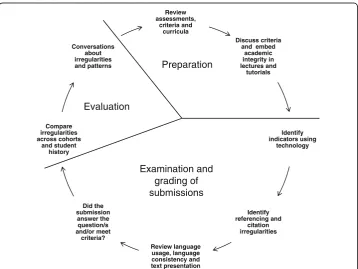
Figure 1 depicts a process that is a continuous cycle where the areas of preparation, examination and grading of submissions, and the evaluation stage feed into each other.
Review assessments,
criteria and curricula
Discuss criteria and embed
academic integrity in lectures and
tutorials
Identify indicators using
technology
Identify referencing and
citation irregularities
Review language usage, language consistency and text presentation Did the
submission answer the question/s and/or meet
criteria? Compare irregularities across cohorts
and student history
Conversations about irregularities and patterns
Examination and grading of submissions
Preparation
Evaluation
The approach outlined in Fig. 1 was developed and refined by the author using an ac-tion research approach to address a cohort situaac-tion where a larger than normal num-ber of irregular submissions were identified (see Rogerson, 2014). Action research in education seeks to improve teaching strategies as well as institutional practices (Kember & Gow, 1992) incorporating steps of planning, action, observation and evalu-ation of strategies tried out in practice (Lewin, 1946). This approach includes reflection as people learn from their own experiences (McTaggart, 1991).
The method outline in Fig. 1 was and continues to be successful in identifying, exam-ining, evaluating and confirming cases of contract cheating, and differentiating allega-tions of contract cheating from cases where there is a poor or underdeveloped understanding of academic writing conventions. Ongoing use of the cycle establishes a spiral of continuous improvement and refinement. The stages do not and cannot pre-vent students from cheating, but can discourage the practice while being successful in reducing the use of contract cheating behaviours. Using combination of process and reflecting on experience has resulted in contract cheating behaviours becoming more obvious and therefore easier to detect.
Preparation phase
The preparation phase is essential to set meaningful assessment tasks that deliver learn-ing outcomes. It is a startlearn-ing point but as indicated in Fig. 1, it should draw on observa-tions and on insights gained through previous sessions, student interacobserva-tions, data analytics, training and development, reflection and feedback. This phase involves reviewing assessment tasks, grading criteria ensuring that any refinements align with curriculum, in addition to institutional polices and assessment strategies.
Review assessments, criteria and curriculum
Assessment and curriculum design can have an influence contract cheating behaviours (Hrasky & Kronenberg, 2011). Other influences include the frequency, volume and scheduling of assessment tasks within the session (Bretag et al., 2017; Gijbels, van de Watering, & Dochy, 2005). When a series of assessment tasks are due on a similar date/time, students are required to be more diligent in their scheduling and time man-agement. The self-scheduling skills necessary in higher education are not necessarily developed in different educational environments such as the transition from high school to university. A lack of preparation and planning may see students seeking short cuts leading to the use of contract cheating practices. Tight scheduling, large classes, and other workload requirements also places pressure on individuals grading work who have limited time to turn around student submissions. Consideration of some of these aspects when designing assessments and curriculum can benefit both the students and the academics.
or situations) makes it more difficult for sites selling assignments to address. Bretag et al.,(2017) reported that the inclusion of contextual or individualised requirements and outlining specific instructions reduces the motivation for students to outsource assess-able work which can be detected by Turnitin®. A reliance on or use of textbook ques-tions, or the repeated use of a particular case study from session to session has a greater potential for previously submitted assignments to be reused by students. It should also be noted that instructor’s guides with model answers are readily available for purchase or access on the Internet, therefore, using questions from set texts is more likely to lead to a student being tempted to cheat.
Embedding discussion in lectures and tutorials
As a further step in preparation, embedding discussion to educate students about criteria, assessment requirements and in lectures and tutorials can contribute to limiting attempts to cheat Bretag et al., (2017). Embedding skills for students sees observations from previ-ous sessions used to establish preventative measures in current or future sessions (Kelley, Tong, & Choi, 2010). This approach establishes an authentic learning environment (Meyers & Nulty, 2009) and is considered as best practice in developing student capabil-ities (McWilliams & Allan, 2014). When embedded learning elements are complemented by information about known cheating behaviours in lecture and tutorial based discussion it can lead to a reduction attempts to cheat (Dick et al., 2002), particularly when informa-tion about the severity of penalties is included (LaSalle, 2009).
Some skill development sessions can embedded into lectures and tutorials including how to identify and cite quality reference sources, in addition to exercises on academic writing conventions such as structuring arguments and paraphrasing. Academic skill de-velopment is shown to be effective as a deterrent to contract cheating behaviours when embedded in course material (Divan, Bowman, & Seabourne, 2015, Jones & Maxwell; 2015), but is also dependent on students engaging with classes either online, or through actual attendance. Class discussion about assessment requirement should also include highlighting when and what type of collaboration is and is not permitted within the class and/or assessment task (Seals, Hammons, & Mamiseishvili, 2014). Clarifying complex terms such as collusion counteracts another form of academic misconduct covered in more recent institutional policies, as some terms are not necessarily understood by stu-dents (Gullifer & Tyson, 2014). Annotated exemplars accompanied by explanatory dia-logue assist students in understanding the relationship between submitted work, grading criteria and descriptors (Bell, Mladenovic, & Price, 2013). Providing students with exem-plars discourages students from searching the Internet, or posting questions on private Facebook® groups in attempts to see what an assessment response looks like.
Viper and after a period (currently three months) publishes the essay in their free re-sources section.
“When you scan a document, you agree that 3 months after completion of your scan, we will automatically upload your essay to our student essays database which will ap-pear on one of our network of websites so that other students may use it to help them write their own essays.” Source: https://www.ukessays.com/plagiarism-scanner/terms-and-conditions.php#storage
Unless students read the fine print closely under the terms and conditions, they will actually contribute to contract cheating resources. Class discussions tied to assessment tasks also provides an opportunity to highlight to students that using free “resources” such as those promoted by UK Essays (https://www.ukessays.com/resources/) are not a reliable or credible reference source, and that institutions know this type of site exists.
Embedding academic literacy activities and initiating short discussions about contract cheating in lectures and tutorials has an additional benefit. Openly discussing the issue reduces the excuses students can proffer in the evaluation phase about the lack of ori-ginality of their work as assessment criteria, requirements and academic integrity prin-ciples are made explicit.
Examination and grading phase
In the examination and grading phase, it is important to note any observed irregular-ities. Making notes while grading provides a basis for comparing observations within a cohort. To facilitate this, a template can form the basis of note taking, which also pro-vides a basis for evidence should it be required for a future conversation with a student to examine irregularities. Based on previous experiences in identifying unoriginal work where a detailed examination of a range of irregularities within a particular student co-hort was required (Rogerson, 2014), a template process was trialled and implemented.
Due to the large number of irregularities identified when grading an assessment task in one session, the author created a template to document irregularities as they were observed. An example of the template created is provided as Additional file 1 (page 1) and Additional file 2 (page 2). Common irregularities are listed with yes/no responses for ease of circling (Turnitin® matches, differences in English expression; referencing and citation issues) with an “Other”category to capture any other issues of note. Areas on the form include space for listing examples of the irregularities observed (For ex-ample: percentage of match, page numbers, and citation details). The template facili-tates note taking about any irregularities identified, which are useful in the evaluation phase. The template only takes a few minutes to complete including noting the student details, circling irregularities and brief notes about examples. It is only used in situa-tions where irregularities are observed. The next secsitua-tions outline some of the irregular-ities observed during grading process working through the areas in an ordered way.
Identifying concerns using technology
The promise of technological means of detecting unoriginal written submissions is par-tially effective in cases where text is directly taken in whole or in part from publicly ac-cessible Internet sources, reused by a student, or shared between subject instances.
detection tools” can establish an over-reliance on them as the sole means of detecting cheating at the expense of trusting personal judgement (Ellis, 2012, p.50). Conse-quently, some knowledge of the practices of students, in addition to the more subtle means of detecting irregularities using text-matching technology can be useful to iden-tify instances of potential contract cheating.
Turnitin® similarity reports and originality percentages
Turnitin® is one company providing a suite of online educative and evaluation tools (www.turnitin.com) including an area that checks for originality of work submitted to the system. Materials such as written assessments and presentations uploaded to Turni-tin® are checked against a database of assignments lodged in previous sessions in addition to other published and Internet based works. Turnitin® generates a similarity percentage score to indicate the amount of material in the submission matched to other sources. An accompanying report highlights where the matches are in the sub-mission, the percentage of individual match, and indicate the source of the match. The reports are an indicator but require interpretation as there may be false positives (Bag-galey & Spencer, 2005) and may miss some types of contract cheating (Lines, 2016; Rogerson, 2014; Rogerson & McCarthy, 2017).
A common question asked by students in discussions about the use of Turnitin® is
“what is a good score to aim for?”The most common misconception about Turnitin® is that a zero similarity percentage score (0%) is good, inferring that no plagiarism is iden-tified. The reality is an overall similarity score of 0 %, or an unusually low score is a cause for concern and an indicator that some irregularity is evident (Lines, 2016; Rogerson, 2014). For example: A good quality reference list or bibliography using aca-demic journals will match to the original sources and result in an overall similarity
index somewhere in the range of 20%–30%, or even higher depending on the number
of citations/references included and the ratio between word and citation counts. A zero score can indicate issues such as falsified reference material, use of paraphrasing tools, or inappropriate use of embedded files. Other situations with zero or low scores may be cases where .jpg or .png images of texts or reference lists have been included in a document. Text matching algorithms cannot currently detect these embedded file types. It is a deliberate form of deception to hide direct copies of materials. In order to identify this type of deception, documents uploaded to Turnitin® need to be down-loaded and reviewed. Where submissions are lodged as portable document format (PDF) documents, it is necessary to unlock the PDF to open the original text for review of properties (to see who actually authored the document) and body text elements. Documents without authoring information may be the result of a purchased assign-ment where all tracking information has been removed. Reviews of this nature have also revealed unacknowledged and inappropriate embedded items such as paragraphs, pages and/or bibliographic entries.
either shared, or used a reference list previously used by another student in a previous ses-sion. Switching off the matching function may reduce the initial score, but would mean that shared or copying of reference lists are not identified. An example of this found in a later session where two students had matching reference lists, but no Turnitin® matches in the body text of the assessment task. This is highly unusual. Discussions were held with both students where it was revealed that one student had expressed their personal diffi-culty in understanding fadiffi-culty referencing requirements. The other student had offered to assist and requested an entire copy of the assignment to enter the reference data. Com-paring the two assignments side by side, the placement of the in-text citations was identi-cal, yet there were no matches in the body text of the originality reports. The student who had “helped” with the referencing had actually taken the assignment and changed all of the sentences (beyond synonym replacement), left the in-text citations in the same places and submitted the work as their own. If the bibliographic measure in Turnitin® had been set to ignore in the default settings, this incident of contract cheating by sharing (Bretag et al., 2017) would never have been detected except through memorising student refer-ence lists when grading.
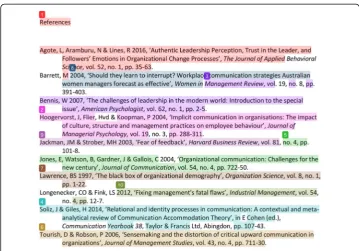
To assist students in further evaluating their submissions and originality reports the visual trigger of rainbows in the reference list has been used with great success. A refer-ence list linking to academic journals will show a range of colours matching to sources as shown in Fig. 2.“Rainbows”in the reference list are promoted as a positive indicator for students to understand what their similarity reports are showing (Rogerson, 2016). This visual clue in addition to the ability to view their reports with and without biblio-graphic materials in the originality calculation have provided students with assurances of what is and is not appropriate and taken away the pressure to achieve a ‘zero’ per-cent in the similarity score. Students are educated in class time how to use the filter functions available on the originality report settings so that they can see the originality percentage with, and without bibliographic input. Providing students with clear referen-cing criteria (minimum-maximum number, type of references, select sources) gives clear guidelines and expected percentages that can be discussed in class, and highlighting how measures can be switched off and on allowing for student self-feedback prior to due dates.
If there are no reference matches in a Turnitin® similarity report, some other form of plagiarism detection avoidance may have been used. This can include embedded reference lists as images (such as .png or .jpeg file extensions as discussed earlier) or using other cheat approaches where spacing, punctuation additions, hidden or recoloured characters are used to try to circumvent similarity checking algorithms. Turnitin® originality reports can reveal just as much by what they do not show, as what they do show. It comes down to knowledge and building experience in interpreting originality reports.
Other referencing and citation irregularities
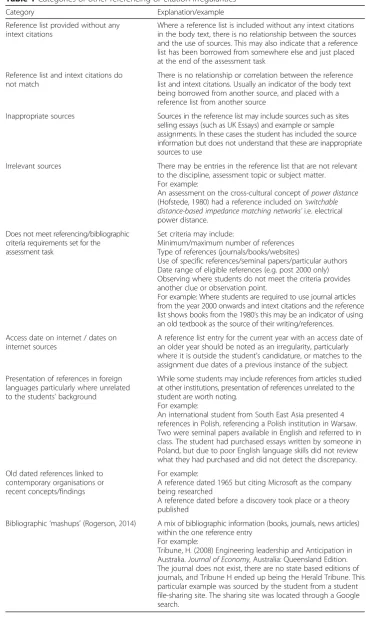
where as a poorer presentation may be indicative of a more casual or ill-informed ap-proach to acknowledgement of sources. Table 1 outlines some of the irregularities ob-served in referencing and citation data.
Lines (2016) review of ghost-writing services also highlighted how inadequate refer-encing could be noted in purchased sources with references either irrelevant to the question, inappropriate, inadequate or insufficient. A visual scan of the reference list can determine whether disciplinary and subject related references are listed and used.
Reviewing language usage and consistency
After reviewing referencing and citation for irregularities, the body text can be exam-ined from both a presentation and content perspective. The Centre for Academic Development at Victoria University in Wellington (New Zealand-Aotearoa) provides a summary list of some formatting, style and content questions that can be considered while examining body text (Centre for Academic Development, n.d.). This includes shifts in font size, gaps within the document, unusual sentence and paragraph fragmen-tation, and changes in grammar, tense and spelling. While their list is labelled as a Pla-giarism Detection List, many of the questions posited are reported to be just as relevant to identifying contract cheating behaviours (Doró, 2016).
Descriptors such as language shifts are useful markers but they can indicate a number of other issues. Other issues may be related to poor skills in a second language (Abasi, Akbari, & Graves, 2006), use of Internet based translation (Somers, Gaspari, & Niño, 2006) or back translation (Jones & Sheridan, 2015), use of paraphrasing tools or article spinners (Rogerson & McCarthy, 2017), or a lack of understanding of discipline aca-demic writing standards. It can also indicate the partially or fully borrowed, stolen or repurposed work of others that are forms of contract cheating.
Table 1Categories of other referencing or citation irregularities
Category Explanation/example
Reference list provided without any intext citations
Where a reference list is included without any intext citations in the body text, there is no relationship between the sources and the use of sources. This may also indicate that a reference list has been borrowed from somewhere else and just placed at the end of the assessment task
Reference list and intext citations do not match
There is no relationship or correlation between the reference list and intext citations. Usually an indicator of the body text being borrowed from another source, and placed with a reference list from another source
Inappropriate sources Sources in the reference list may include sources such as sites selling essays (such as UK Essays) and example or sample assignments. In these cases the student has included the source information but does not understand that these are inappropriate sources to use
Irrelevant sources There may be entries in the reference list that are not relevant to the discipline, assessment topic or subject matter. For example:
An assessment on the cross-cultural concept ofpower distance (Hofstede, 1980) had a reference included on‘switchable distance-based impedance matching networks’i.e. electrical power distance.
Does not meet referencing/bibliographic criteria requirements set for the assessment task
Set criteria may include:
Minimum/maximum number of references Type of references (journals/books/websites)
Use of specific references/seminal papers/particular authors Date range of eligible references (e.g. post 2000 only) Observing where students do not meet the criteria provides another clue or observation point.
For example: Where students are required to use journal articles from the year 2000 onwards and intext citations and the reference list shows books from the 1980’s this may be an indicator of using an old textbook as the source of their writing/references.
Access date on internet / dates on internet sources
A reference list entry for the current year with an access date of an older year should be noted as an irregularity, particularly where it is outside the student’s candidature, or matches to the assignment due dates of a previous instance of the subject.
Presentation of references in foreign languages particularly where unrelated to the students’background
While some students may include references from articles studied at other institutions, presentation of references unrelated to the student are worth noting.
For example:
An international student from South East Asia presented 4 references in Polish, referencing a Polish institution in Warsaw. Two were seminal papers available in English and referred to in class. The student had purchased essays written by someone in Poland, but due to poor English language skills did not review what they had purchased and did not detect the discrepancy.
Old dated references linked to contemporary organisations or recent concepts/findings
For example:
A reference dated 1965 but citing Microsoft as the company being researched
A reference dated before a discovery took place or a theory published
Bibliographic‘mashups’(Rogerson,2014) A mix of bibliographic information (books, journals, news articles) within the one reference entry
For example:
Answering the question and addressing criteria
The content of assessment tasks is another area for identifying irregularities. This includes determining whether the student addressed the actual assessment question. An earlier examination of a number submissions found that purchased assessments were bland, and lacked relevance to the topic area, theory or met requirements for the use of examples (Rogerson, 2014). Further irregularities identified include the misuse of terminology, incorrect definitions, misattribution of theoretical concepts, or lack of citations within areas clearly referring to ideas or phenomena. These observations are supported by a recent pilot study where contract cheating was correctly identified in cases where submissions identified as
instances of contract cheating “did not address key questions”, or had “poor
conceptualisation” (Dawson & Sutherland-Smith, 2017, p.4). Providing students
with clear criteria requirements as part of the question can assist in identifying situations where a student may not have written their own submission. Current evidence suggests that many contract cheating sites are not adept in addressing specific details in essay and report writing tasks.
Evaluation phase
The evaluation phase comprises two distinct steps. Firstly, comparing irregularities across the cohort to identify any irregularities that align with expected patterns and classify issues beyond the students’control. Secondly, to initiate conversations with stu-dents to explore irregularities to differentiate between contract cheating behaviours that are forms of academic misconduct and underdeveloped writing skills and determine ap-propriate next steps.
Comparing irregularities across the cohort
Once observations are documented during the examination phase (by using a pro-forma such as those provided in the appendices, or similar), notes should be compared within the class/across the cohort. Comparing observations will highlight whether some or any of the inconsistencies noted relate to a particular group of students (for example, students new to the institution, differences in disciplinary backgrounds).
Comparing cohort or class data can also identify if there is a pattern to the irregularities that may not necessarily be the result of the quality of the students’work, or their behav-iours. It may even be the result of our own actions in the way we have set an assessment task, clarified (or not specified) criteria and expectations, the result of someone new taking on a subject, or influenced by other factors such as technology glitches and/or corruptions. One off irregularities can appear to be a random event leading to students being given the benefit of the doubt and likely to be considered as the student attempting (but not yet realising) their own writing voice. Alternatively, a repeated pattern across a number of submissions may indicate an undercurrent of a broader institutional issue of admission standards and/or more sinister cheating behaviours spread by word-of-mouth.
Consider prior student performance
When determining which irregularities are part of a pattern of performance, or an un-usual occurrence, a quick view of the student’s prior performance can provide further insight. Past performance in academic study has been reported as being a good indicator of ongoing and future performance (Ayán & García, 2008; House, Hurst, & Keely, 1996). Where electronic grading and assessment are used (or electronic copies of earlier assess-ments are held in repositories such as Turnitin®), later assessassess-ments can be compared against current assessments (for example comparing results between assessments 1 and 2). (Bretag et al. 2017) identified that knowledge of a student and the relationship that a teacher has with that student is one of the key methods of identifying potentially unoriginal work.
Observations, such as language shifts either within a submission or between submis-sions, can highlight discrepancies in the way language is used, inconsistency in the writing style, and extreme shifts from very poor to a very high level of expression. Reviewing a students’prior performance may actually result in some irregularities being reclassified as consistent with the students’performance, or provide further evidence that what is being observed is in fact irregular. For example, a student enrolled in a degree where a large number of calculations are required may perform well in any mathematical or statistical course but struggle when it comes to writing an essay or report. Any clues or patterns noted at this stage can assist in exploring observations with students.
Exploring irregularities through conversations with students
After noting and recording observations, and examples of where any irregularity is identified, the only way of exploring the issue is to interact with the student to gain fur-ther insight. Discussing concerns with students about the quality and originality of their writing does not mean accusing them immediately of plagiarism, contract cheating, or copying from other students. It means stating that there are some concerns and irregu-larities observed in their submission and presenting the evidence that causes an asses-sor to have those concerns (Rogerson & Bretag, 2015). Explanations can then be sought from the student as to why the observations appear the way they do, ensuring they have the opportunity to express their point of view, and bring to light other contextual fac-tors which are not apparent when reviewing a written submission. Conversations of this nature enlighten us and provide opportunities to explore and evaluate learning practice and differentiate between contract cheating and poor academic writing skills.
Questions about lecture and tutorial content
When presenting evidence of irregularities for discussion, questions can also be asked about relevant content, an approach which Dick et al.(2002, p.180) describe as a“
verifi-cation process”. This provides a further opportunity for the student to demonstrate
some of these issues can be corrected in written work by using spelling and grammar checks or external (or friend/family member) editing as was the case with one student. This is where initiating conversations with students is important. In this situation, a student was married to an Australian born English as a first language speaker. After doing poorly in their first assignment, the student used the feedback to ensure they ad-dressed all criteria and then asked their spouse to edit their second assignment submis-sion. A few questions about the assessment and topic matter clearly demonstrated that the student had an excellent understanding of the material, could articulate how they had improved between the two assignments, and that the explanation for the language shift was the result of editing assistance. This case is more closely aligned with sharing behaviours (Bretag et al., 2017) than contract cheating. The insights gained through this conversation could not have been gleaned from the submitted content alone.
Denials of wrongdoing
While students confronted with suspicions of cheating are likely to proffer a vehement denial as to purchasing or reusing the work of others, in many of these interviews stu-dents seemed somewhat relieved to admit to what they had done. An honest admission in an open evaluative conversation provided an opportunity to drill down to why the student had done what they had, discuss the implications for dishonest academic be-haviour, and plan support to (hopefully) prevent a recurrence. Personalised feedback delivered face-to-face is highly valued by students, but students vary in what type of feedback they are seeking with some wanting only praise, while others seek guidance on how to improve (Evans & Waring, 2011).
Referencing irregularities
Where referencing or citation irregularities are identified and present, some students were asked to demonstrate how they found their references. This is one way of testing whether or not the students are comfortable searching for legitimate reference mate-rials, and can also assist in identifying contract cheating sites such as the bibliographic mashups discussed previously under the referencing heading. While we need to ac-knowledge that a student may feel nervous about searching, some small allowance for nerves is necessary in meetings. However, it becomes clear when the students cannot locate the reference in question or have difficulty in retrieving any of the references, the reference may not exist or the student has resorted to copying, borrowing, or pur-chasing materials from elsewhere.
Closing the loop: Using outcomes to inform and improve practice
Implications for practice: Working with staff
Speaking directly with a student about irregularities provides insight about the submis-sion in addition to the students’understanding of what they have learnt. It can be both easier and convenient for time pressed educators to comment on a need for writing improvement, providing feedback and recommending support materials for students to consider when they next prepare a piece of writing. The alternative approach, discuss-ing irregularities in a face-to-face consultation, is time consumdiscuss-ing and a potentially confronting interaction particularly when an academic may suspect misconduct but not necessarily know how to identify the evidence within a submission and present the evidence to the student for explanation. Conversations with students can be very
posi-tive experiences and mean the difference between a student’s future success, and
whether they are motivated and committed enough to continue with their studies. Conversations also provide direct feedback on our own practices that can inform future subject instances.
Where electronic means of detection are employed a level of academic judgement is still required due to expected matches such as topic areas; restating an essay question; use of specific materials, references, materials, formulae, design, theory; and/or discip-linary specific terms such as treatment methods, chemical compounds, jurisdiction or curricula. Academic judgement is also required as text matching algorithms rely on word and character matches, as at this time, semantic meaning cannot be matched through electronic assessment checking (Rogerson & McCarthy, 2017). Identifying pat-terns of irregularities and clarifying interpretations through conversations develops and refines individual judgement.
A further and necessary element of this type of academic skill development is sharing discoveries and learnings with both colleagues and students. This includes the dissem-ination of patterns and clues that can alert assessors to work submitted because of contract cheating behaviours and the methods employed by students seeking to avoid writing their own work. Institutions should seek to implement methods to discourage situations where potential cases of contract cheating are ignored or bypassed due to unclear procedures or where it is considered too much work (Doró, 2016). The design of assessment tasks can make some of the practices and observations outlined in this paper more obvious, particularly where specific criteria and contextual factors are stipulated.
Implications for practice: Working with students
Open discussion is required. This includes discussing what we, as assessors know about cheating, fraud, plagiarism and misappropriation practices while promoting academic integrity. Conversations with students to determine the reason behind concerns identi-fied in assignments can lead to a greater understanding of student approaches and great discussions about academic integrity and its links to personal integrity. Including elements of academic integrity when discussing assessment tasks alerts those interested in cheating that collectively, as an institution and a sector are aware of the issues. Open dialogue reassures the diligent student that academic integrity is taken seriously. An
upfront approach also ensures that students cannot claim ‘naivety’ as an excuse for
inappropriate actions when the issues have been openly discussed in class. Short dis-cussions in all classes can clarify any expected matches relevant to the assessment task or subject matter. Repeating this in multiple classes reinforces the message and does not leave the responsibility in the hands of a few. Students weighing up the risk are less likely to attempt an action if the actions are consistent between classes, across the insti-tution and where teachers follow through on suspect actions (East, 2009). Discussions in class about irregularities identified in previous sessions, and the penalties imposed on previous infractions provide a practical and real application of academic policies, and allow students to ask questions about them to gain a deeper understanding of the principles and application of academic integrity.
Where irregularities are the result of students employing less legitimate approaches to assessment tasks where work has actually been purchased, traded, borrowed or taken, the lack of action in following through about what is observed can actually reinforce the behaviour. For students who are attempting to cheat their way through their education, a lack of detection or action gives the student the confidence to repeat the action and share their success with others leaving institutions open to the possibil-ity of other students adopting the practice. The greater level of action and follow through in the grading and assessment process discourages those considering whether to ‘try it out’as others appear to be getting away with it. Unless conversations are initi-ated with students where irregularities are determined to be the results of a lack of skills or confidence in academic writing, they have no cause to understand that their approach to using the writing of others in whole or in part is inappropriate while contravening academic integrity policies. Ignoring contract cheating behaviours only amplifies the range of issues that teachers, assessors and institutions have to manage.
A further approach taken to address these issues in skill development is supporting students learning to use a citation manager such as EndNote®. Taking the pressure off collecting, collating and formatting reference material has improved the quality of sub-missions, required less time in giving feedback about incorrect referencing formats, and reduced the need for students to copy and paste or borrow references. Consider-ation can be given to using a reference library developed by a student as part of a port-folio of evidence of achievement in addition to encouraging students to build links between sources across a degree curriculum instead of confining a reference source to a particular subject or course.
Conclusions and recommendations for future research
succeed. Where patterns of submission indicate the possibility of broader issues, insti-tutions should ensure that poor assessment design and/or repetition of questions is not a contributing factor.
Further studies into detection and detection behaviours are required to build a compre-hensive approach to addressing the issue of contract cheating including approaches used to discuss actual cases with students. Implementing this type of study would also be bene-ficial in determining the influence of conversations on future revisions to assessment tasks and the prevention and detection of contract cheating in written submissions.
Moving beyond identification to using the findings to inform students of examples of inappropriate scholarship while improving student academic practice is a positive step in placing boundaries around temptations available to students to participate in con-tract cheating behaviours. It is not only educating ourselves about the patterns, markers and clues, but also educating students about what is and is not acceptable practice to countermand the use and prevalence of methods of contract cheating in written sub-missions. Encouraging a practical and systematic approach to the preparation, grading, examination and evaluation of assessments for evidence of contract cheating as pre-sented in this paper will assist in a proactive way to address contract cheating behav-iours at an institutional level.
Additional files
Additional file 1:Example template for documenting irregularities page 1. (PDF 66 kb)
Additional file 2:Example template for documenting irregularities page 2. (PDF 26 kb)
Acknowledgments
The author would like to thank her colleagues Dr. Celeste Rossetto and Dr. Oriana Price for their useful feedback on early manuscript drafts, and the two anonymous reviewers for their constructive feedback on the original review version of this manuscript.
Competing interests
The author declares that they have no competing interests.
Publisher’s Note
Springer Nature remains neutral with regard to jurisdictional claims in published maps and institutional affiliations.
Received: 3 September 2017 Accepted: 31 October 2017
References
Abasi AR, Akbari N, Graves B (2006) Discourse appropriation, construction of identities, and the complex issue of plagiarism: ESL students writing in graduate school. J Second Lang Writ 15(2):102–117.
doi:10.1016/j.jslw.2006.05.001
Ayán MNR, García MTC (2008) Prediction of university students' academic achievement by linear and logistic models. The Spanish journal of psychology 11(1):275–288
Baggaley J, Spencer B (2005) The mind of a plagiarist. Learning, Media and Technology 30(1):55–62. doi:10.1080/13581650500075587
Bell A, Mladenovic R, Price M (2013) Students’perceptions of the usefulness of marking guides, grade descriptors and annotated exemplars. Assessment & Evaluation in Higher Education 38(7):769–788.
doi:10.1080/02602938.2012.714738
Bretag T, Harper R, Ellis C, Newton P, Rozenberg P, Saddiqui S, van Haeringen K (2017) Preliminary findings from a survey of students and staff in Australian higher education. In: Contract cheating and assessment design OLT project Retrieved from www.cheatingandassessment.edu.au/resources/
Bretag, T., & Mahmud, S. (2009). A model for determining student plagiarism: Electronic detection and academic judgement. Paper presented at the 4APFEI Asia Pacific Conference on Education Integrity APFEI, Wollongong Buckley E, Cowap L (2013) An evaluation of the use of Turnitin for electronic submission and marking and as a
formative feedback tool from an educator's perspective. Br J Educ Technol 44(4):562–570. doi:10.1111/bjet.12054 Carroll J, Appleton J (2005) Towards consistent penalty decisions for breaches of academic regulations in one UK
Centre for Academic Development. (n.d.). Recognising plagiarism checklist. Retrieved from www.cad.vuw.ac.nz/wiki/ images/d/d7/PlagiarismChecklist.doc
Clarke, R., & Lancaster, T. (2006). Eliminating the successor to plagiarism? Identifying the usage of contract cheating sites. Paper presented at the Proceedings of 2nd International Plagiarism Conference
Coughlin PE (2015) Plagiarism in five universities in Mozambique: Magnitude, detection techniques, and control measures. Int J Educ Integr 11(1):2. doi:10.1007/s40979-015-0003-5
Dahl S (2007) Turnitin®: the student perspective on using plagiarism detection software. Act Learn High Educ 8(2):173–191 Dawson P, Sutherland-Smith W (2017) Can markers detect contract cheating? Results from a pilot study. Assessment &
Evaluation in Higher Education:1–8. doi:10.1080/02602938.2017.1336746
Dick M, Sheard J, Bareiss C, Carter J, Joyce D, Harding T, Laxer C (2002) Addressing student cheating: definitions and solutions. In: Paper presented at the ACM SigCSE Bulletin
Divan A, Bowman M, Seabourne A (2015) Reducing unintentional plagiarism amongst international students in the biological sciences: an embedded academic writing development programme. J Furth High Educ 39(3):358–378. doi:10.1080/0309877X.2013.858674
Doró K (2016) To see or not to see: Indentifying and assessing plagiarism in non-native students’academic writing without using text-matching software. EDULINGUA 2(1):15–26
East J (2009) Aligning policy and practice: an approach to integrating academic integrity. J Academic Language and Learning 3(1):A38–A51
Ellis C (2012) Streamlining plagiarism detection: the role of electronic assessment management. Int J Educ Integr 8(2):46–56 Evans C, Waring M (2011) Exploring students' perceptions of feedback in relation to cognitive styles and culture. Res
Pap Educ 26(2):171–190. doi:10.1080/02671522.2011.561976
Gijbels D, van de Watering G, Dochy F (2005) Integrating assessment tasks in a problem-based learning environment. Assessment & Evaluation in Higher Education 30(1):73–86. doi:10.1080/0260293042003243913
Gullifer JM, Tyson GA (2014) Who has read the policy on plagiarism? Unpacking students' understanding of plagiarism. Stud High Educ 39(7):1202–1218. https://doi.org/10.1080/03075079.2013.777412
House JD, Hurst RS, Keely EJ (1996) Relationship between learner attitudes, prior achievement, and performance in a general education course: a multi-institutional study. Int J instructional media 23(3):257–271
Hrasky S, Kronenberg D (2011) Curriculum redesign as a faculty-centred approach to plagiarism reduction. Int J Educ Integr 7(2):23–36
Jones L, Maxwell J (2015) Engaging midwifery students in academic integrity through a multi-faceted, integrated approach. Journal of Education and Human Development 4(4):32–38
Jones M, Sheridan L (2015) Back translation: an emerging sophisticated cyber strategy to subvert advances in‘digital age’plagiarism detection and prevention. Assessment & Evaluation in Higher Education 40(5):712–724. doi:10.1080/02602938.2014.950553
Kelley C, Tong P, Choi BJ (2010) A review of assessment of student learning programs at AACSB schools: a Dean's perspective. J Educ Bus 85(5):299–306
Kember D, Gow L (1992) Action research as a form of staff development in higher education. High Educ 23(3):297–310 Lancaster T, Clarke R (2007) Assessing contract cheating through auction sites–a computing perspective. In: Paper
presented at the proceedings of 8th annual conference for information and computer sciences
LaSalle RE (2009) The perception of detection, severity of punishment and the probability of cheating. J Forensic Studies in Accounting & Business 1(2):93–112
Lewin K (1946) Action research and minority problems. J Soc Issues 2(4):34–46
Lines L (2016) Ghostwriters guaranteeing grades? The quality of online ghostwriting services available to tertiary students in Australia. Teach High Educ 21(8):889–914. doi:10.1080/13562517.2016.1198759
McCarthy G, Rogerson AM (2009) Links are not enough: using originality reports to improve academic standards, compliance and learning outcomes among postgraduate students. Int J Educ Integrity 5(2):47–57 McTaggart R (1991) Principles for participatory action research. Adult Educ Q 41(3):168–187
McWilliams R, Allan Q (2014) Embedding academic literacy skills: towards a best practice model. J University Teaching and Learning Practice 11(3):1–20
Meyers NM, Nulty DD (2009) How to use (five) curriculum design principles to align authentic learning environments, assessment, students’approaches to thinking and learning outcomes. Assessment & Evaluation in Higher Education 34(5):565–577
Rogerson, A. M. (2014, 16–18 June 2014). Detecting the work of essay mills and file swapping sites: some clues they leave behind.Paper presented at the 6th International Integrity and Plagiarism Conference Newcastle-on-Tyne Rogerson AM (2016) Being AWARE about academic integrity: a framework to promote discussion, identification and
recall. Paper presented at the Higher Education Compliance and Quality Forum, Melbourne
Rogerson AM, Bassanta G (2016) Peer-to-peer file sharing and academic integrity in the internet age. In: Bretag T (ed) Handbook of academic integrity. Springer, Singapore, pp 273–285
Rogerson AM, Bretag T (2015) Developing the confidence to intervene. In: Paper presented at the 7APCEI 7th Asia Pacific Conference on Educational Integrity. Charles Sturt University, Albury
Rogerson AM, McCarthy G (2017) Using internet based paraphrasing tools: original work, patchwriting or facilitated plagiarism? Int J Educ Integr 13(1):1–15. doi:10.1007/s40979-016-0013-y
Seals M, Hammons JO, Mamiseishvili K (2014) Teaching assistants' preparation for, attitudes towards, and experiences with academic dishonesty: lessons learned. Int J Teaching and Learning in Higher Education 26(1):26–36 Somers, H., Gaspari, F., & Niño, A. (2006, 19-20 June 2006). Detecting inappropriate use of free online
machine-translation by language students-a special case of plagiarism detection.Paper presented at the 11th annual conference of the European Association for Machine Translation–Proceedings, Oslo, Norway
Sowden C (2005) Plagiarism and the culture of multilingual students in higher education abroad. ELT J 59(3):226–233. doi:10.1093/elt/cci042