
R E S E A R C H A R T I C L E
Accelerated estimation and permutation inference for
ACE modeling
Xu Chen
1,2,3,4| Elia Formisano
2,3| Gabriëlla A. M. Blokland
5,6,7|
Lachlan T. Strike
8| Katie L. McMahon
9| Greig I. de Zubicaray
10|
Paul M. Thompson
11| Margaret J. Wright
8,9| Anderson M. Winkler
12,13|
Tian Ge
5,6,14| Thomas E. Nichols
1,151
Department of Statistics, University of Warwick, Coventry, UK
2
Department of Cognitive Neuroscience, Faculty of Psychology and Neuroscience, Maastricht University, Maastricht, the Netherlands
3
Maastricht Centre for Systems Biology (MaCSBio), Maastricht University, Maastricht, the Netherlands
4
Department of Biomedical Data Sciences, Leiden University Medical Center, Leiden, the Netherlands
5
Psychiatric and Neurodevelopmental Genetics Unit, Center for Genomic Medicine, Massachusetts General Hospital, Boston, Massachusetts
6
Stanley Center for Psychiatric Research, Broad Institute of MIT and Harvard, Cambridge, Massachusetts
7
Department of Psychiatry, Massachusetts General Hospital, Harvard Medical School, Boston, Massachusetts
8
Queensland Brain Institute, University of Queensland, Brisbane, Queensland, Australia
9
Centre for Advanced Imaging, University of Queensland, Brisbane, Queensland, Australia
10
Faculty of Health and Institute of Health and Biomedical Innovation, Queensland University of Technology, Brisbane, Queensland, Australia
11
Imaging Genetics Center, University of Southern California, Los Angeles, California
12
Emotion and Development Branch, National Institute of Mental Health, National Institutes of Health, Bethesda, Maryland
13
Department of Psychiatry, Yale University School of Medicine, New Haven, Connecticut
14
Athinoula A. Martinos Center for Biomedical Imaging, Massachusetts General Hospital, Charlestown, Massachusetts
15
Oxford Big Data Institute, Li Ka Shing Centre for Health Information and Discovery, Nuffield Department of Population Health, University of Oxford, Oxford, UK
Correspondence
Xu Chen, Department of Biomedical Data Sciences, Leiden University Medical Center, Leiden, the Netherlands.
Email: [email protected]
Funding information
Australian Research Council, Grant/Award Numbers: A7960034, A79801419, A79906588, DP0212016; Eunice Kennedy Shriver National Institute of Child Health and Human Development, Grant/Award Number: RO1 HD050735; National Health and Medical Research Council, Grant/Award Number: 496682; National Institutes of Health, Grant/ Award Number: K99AG054573; Stichting voor de Technische Wetenschappen, Grant/Award Number: 12724
Abstract
There are a wealth of tools for fitting linear models at each location in the brain in
neu-roimaging analysis, and a wealth of genetic tools for estimating heritability for a small
number of phenotypes. But there remains a need for computationally efficient
neuro-imaging genetic tools that can conduct analyses at the brain-wide scale. Here we
pre-sent a simple method for heritability estimation on twins that replaces a variance
component model-which requires iterative optimisation-with a (noniterative) linear
regression model, by transforming data to squared twin-pair differences. We
demon-strate that the method has comparable bias, mean squared error, false positive risk, and
power to best practice maximum-likelihood-based methods, while requiring a small
fraction of the computation time. Combined with permutation, we call this approach
“
Accelerated Permutation Inference for the ACE Model (APACE)
”
where ACE refers to
the additive genetic (A) effects, and common (C), and unique (E) environmental
influ-ences on the trait. We show how the use of spatial statistics like cluster size can
DOI: 10.1002/hbm.24611
This is an open access article under the terms of the Creative Commons Attribution License, which permits use, distribution and reproduction in any medium, provided the original work is properly cited.
© 2019 The Authors.Human Brain Mappingpublished by Wiley Periodicals, Inc.
dramatically improve power, and illustrate the method on a heritability analysis of an
fMRI working memory dataset.
K E Y W O R D S
ACE model, heritability inference, permutation test, twin studies
1
|
I N T R O D U C T I O N
There continues to be growing interest in the joint study of imaging
phenotypes and genetic data (genotypes; Glahn, Thompson, &
Blangero, 2007). Imaging genetics is a multidisciplinary research area
investigating the genetic influences on brain structure and function
using both imaging and genetic information. A phenotype is an
observ-able characteristic that results from the interaction of genetic
inheri-tance and environmental conditions. To quantify the degree of the
genetic effects on a phenotype, heritability is defined as the proportion
of phenotypic variation that is due to genetic factors, where the genetic
variability can be attributed to a particular gene or the aggregate of
multiple genes. Several studies have examined the heritability of
psychi-atric disorders, and many of them suggest that most psychipsychi-atric
disor-ders are moderately to highly heritable, with an estimated heritability of
0.83 for schizophrenia (Cannon, Kaprio, Lönnqvist, Huttunen, &
Koskenvuo, 1998) and 0.85 for bipolar affective disorder (McGuffin
et al., 2003). There also exists a large number of neuroimaging studies
investigating the heritability of neuroanatomical phenotypes and brain
functions and reporting considerable heritability (see for example, Ge
et al., 2015, 2016; Ge, Holmes, Buckner, Smoller, & Sabuncu, 2017;
Glahn et al., 2010; Thompson, Ge, Glahn, Jahanshad, & Nichols, 2013).
Recently, the development of genomic technologies has allowed
direct heritability analysis from unrelated individuals using
genome-wide genetic data (Ge, Chen, Neale, Sabuncu, & Smoller, 2017; Yang
et al., 2010; Yang, Lee, Goddard, & Visscher, 2011). Without genetic
data, heritability can be estimated by studying individuals with varying
degrees of genetic relatedness. Classic twin studies are often employed
to estimate the level of genetic and environmental variations in traits.
The method of moments and the maximum likelihood approach are
most commonly used methods to estimating heritability. Falconer's
for-mula provides a simple point estimator for heritability based on moment
matching (Falconer & Mackay, 1996). The best practice,
likelihood-based method uses the variance component model, which
parameter-izes different degrees of covariance expected with varying relatedness
between subjects; the variance parameters are estimated by applying
the maximum likelihood criterion (Neale & Cardon, 1992).
While the first neuroimaging studies measuring heritability used
Falconer's method (e.g., Wright, Sham, Murray, Weinberger, &
Bullmore, 2002), the likelihood-based approach is now routine, with
variance components or structural equation modeling (SEM) methods
applied one voxel at a time. However, such methods cannot exploit
the spatial nature of the data, nor can they provide accurate
infer-ences corrected for family-wise error rate over the brain. Although a
simple Bonferroni correction offers the control of family-wise error
rate, it is typically quite conservative for smooth images. When
feasi-ble, permutation inference offers an exact control of false positive risk
and allows for specialized spatial statistics, such as inference by
clus-ter size, which delivers family-wise error rate corrections while
implic-itly accounting for spatial dependence. However, most commonly
used software tools for heritability estimation using twin data at
pre-sent are too slow and unreliable to allow permutation.
In this article, we propose a linear regression-based method that is
new to the neuroimaging community, based on the method of Grimes
and Harvey (1980) and closely related to the Haseman–Elston
regres-sion for genetic linkage studies (Ge et al., 2018; Haseman & Elston,
1972). It allows voxel-wise heritability estimation with an approximate
but remarkably fast and accurate performance. Using detailed Monte
Carlo evaluations, we demonstrate that this method is valid with
con-trolled false positive risk, and its statistical power is comparable to
existing methods. With the speed advantage, this newly proposed
method makes permutation inference more feasible and applicable.
Here we also present for the first time our permutation approach in
detail, which is developed for both voxel- and cluster-wise inferences,
with an application to a real fMRI blood oxygen level dependent
(BOLD) dataset. Aside from fMRI data, this approach can also be
applied to any other type of neuroimaging data.
2
|
T H E O R Y A N D M E T H O D S
Heritability can be interpreted as the proportion of phenotypic
vari-ance explained by a single genetic marker (Filippini et al., 2008) or any
subset of genes/markers of the genome (Stein et al., 2010). To
quan-tify heritability, the total phenotypic variance (σ2
P) can be partitioned
into genetic (σ2
G) and environmental (σ2E) components (Falconer &
Mac-kay, 1996) in a linear manner:
σ2
P=σ2G+σ2E:
The heritability in the broad sense (H2) measures the overall
genetic influence on a trait, defined by
H2=σ
2 G σ2 P
,
where the genetic variationσ2
Gsummarizes the additive and
nonaddi-tive genetic contributions. The addinonaddi-tive genetic effect arises from the
contributions at different gene loci, while the nonadditive genetic
effect refers to, for example, dominance or the interactive influence
among alleles within or between gene loci (e.g., epistasis). The additive
genetic variation is generally of more interest since it is the summed
effects of a particular allele or alleles at a given locus or at multiple
trait-related loci. Thus, the narrow-sense heritability is defined as the
proportion of phenotypic variation accounted for by the additive
genetic effect (σ2
A) with an expression of
h2=σ
2 A σ2 P
,
which is more commonly used and is usually just called“heritability”.
We now detail the models employed to assess heritability using
twin data.
2.1
|
The model
2.1.1
|
Twin studies and ACE modeling
Normally twins are categorized as identical or monozygotic (MZ) and
fra-ternal or dizygotic (DZ) twins. MZ twins have identical genotypes and DZ
twins share, on average, 50% of their gene variants, which leads to the
assumption of differential levels of sharing of additive genetic effects.
Even in the absence of genetic influences on a phenotype, it is likely that
twins are phenotypically more similar than unrelated individuals since
they have been raised in the same family environment. This gives rise to
the common environmental factor, which contributes to the covariance
within twin pairs regardless of MZ or DZ type. Finally, there is an
inde-pendent unique error, corresponding to the usual indeinde-pendent and
iden-tically distributed (i.i.d.) noise corrupting the measurements plus actual
unique environmental influences, for example, trauma and illness. The
phenotypic variance (σ2
P) within the population is assumed to be the
same and can be divided into additive genetic (A), common
environ-mental (C), and unique environmental (E) components, written as
σ2
P=A+C+E:
The so-called ACE modeling in twin studies is based on this variance
decomposition (Lee et al., 2010). Narrow-sense heritability is denoted by
h2= A
A+C+E, ð1Þ
and similarly, the contribution of common environmental factor can
be defined as
c2= C
A+C+E, ð2Þ
which describes the relative variance attributable to common
mental causes. The estimation of heritability and common
environ-mental variance constitutes the analysis of variance components.
2.1.2
|
Notation
In this section, we will outline the notation used in this article. Assume
the experiment consists ofn participants, includingnMZMZ twins
(nMZ/2 pairs),nDZDZ twins (nDZ/2 pairs), andnSsingletons (unrelated
subjects and denoted by S), such thatn=nMZ+nDZ+nS. For each
(brain) image, withV voxels per subject, Yi,vdenotes the data from
subjectiand voxelv(v= 1,…,V). For voxelv, the data from all
sub-jects can be written as a column vectorYv.
Some types of brain imaging data are directly measured, for example,
grey matter density, producing one image per subject. However, fMRI
requires hundreds of scans per subject to estimate blood flow change. A
within-subject model is often fitted to the imaging data for each subject,
producing an image of BOLD effect magnitude for each subject
(Frackowiak et al., 2004). Since the same form of model is fit at each
voxel, going forward we suppress the voxel indexv.Thus, the general
linear model (GLM) in a matrix form for each voxel can be constructed as
Y=Xβ+ϵ, ð3Þ
whereXis ann×pdesign matrix includingp−1 covariates, andϵis
the error vector, assumed to be normally distributed, written asϵ~N
(0,V); the covariance matrixV is defined below. Typical covariates
include age, sex, or other between-subject effects.
To simplify the description of variance/covariance decomposition,
we introduce a subject type indicator functionT: {1,…,n}!{MZ, DZ,
S}. The function Tð Þ associates subject index i to subject type:
T ið Þ 2fMZ, DZ, Sgfori= 1,…,n; that is,T ið Þ= MZ when subjectiis an
MZ twin,T ið Þ= DZ when subjectiis a DZ twin, andT ið Þ= S when
sub-jectiis a singleton. We now consider different possible covariance
structures for pairs of subjects (i,j). To identify twins, letj(i) be the
index of the twin pair of subjecti.The MZ twin covariance can then
be written, foriwithT ið Þ=T j iðð ÞÞ= MZ, as
CovMZ =Cov Yi
Yj ið Þ
!
= A+C+E A+C
A+C A+C+E
: ð4Þ
The DZ twin covariance, foriwithT ið Þ=T j iðð ÞÞ= DZ, is
CovDZ =Cov Yi
Yj ið Þ
!
= A+C+E A=2 +C
A=2 +C A+C+E
: ð5Þ
For subject pairs involving one or more singletons from different
families without twins, (i, j) with T ið Þ= S or T jð Þ= S, or pairs of
unrelated twins, (i,j) withj6¼j(i), we have unrelated covariance of
CovUN =Cov Yi
Yj
= A+C+E 0
0 A+C+E
: ð6Þ
To facilitate a general implementation, we re-write the pair-wise
covariance matrices for MZ twins (4), DZ twins (5) and unrelated
sub-jects (6) as the linear combinations of some known matrices,
CovMZ = A+C+E A+C
A+C A+C+E
=A 1 1
1 1
+C 1 1
1 1
+E 1 0
0 1
,
ð7Þ
CovDZ = A+C+E A=2 +C
A=2 +C A+C+E
=A 1 1=2
1=2 1
+C 1 1
1 1
+E 1 0
0 1
,
ð8Þ
CovUN = A+C+E 0
0 A+C+E
=A 1 0
0 1
+C 1 0
0 1
+E 1 0
0 1
,
ð9Þ
where variance components are extracted as the coefficients. If we
denote the vector of variance componentsA,C,Ebyρ= (A,C,E)0, a
concise notation of the error variance-covariance matrixVis
V=X
3
r= 1 ρrQr,
whereQr(r= 1, 2, 3) is constructed with the use of between-subject
covariances (7), (8), and (9), corresponding to the arrangement of MZ,
DZ and singletons in the data vector. The full likelihood and restricted
likelihood (ReML) that accounts for nuisance regressors can be found
in (Harville, 1977).
2.2
|
Voxel-wise heritability estimation
For each voxel, we fit the GLM model to the voxel-wise data from
twins and singletons, then estimate the model parameters—variance
components, and finally obtain the estimate of heritability. We will
first describe our proposed method in detail, and then briefly review
other methods/tools that are widely used for heritability estimation.
2.2.1
|
Linear regression with squared differences
In the 1980s, a simple linear regression method for variance component
estimation using squared differences (SqD’s) of each subject pair was
proposed by Grimes and Harvey (1980). For a sample ofnsubjects,
there are (n2−n)/2 distinct SqD’s. Note that the expectation of a SqD
depends on the covariance, that is,EhðA−BÞ2i=VarðA−BÞ=Varð ÞA + Varð ÞB −2CovðA,BÞfor random variablesAandBwithE½ A=E½ B. This allows SqD's to be related to variance parameters in a linear fashion,
in particular construction of a linear regression where coefficients
cor-respond to the variance componentsA,C,E(Grimes & Harvey, 1980;
Lindquist, Spicer, Asllani, & Wager, 2012). Grimes and Harvey (1980)
used ordinary least squares (OLS), which can produce negative
vari-ance component estimates that they simply neglected.
To deal with the non-negativity problem, Lawson and Hanson (1987)
proposed a now ubiquitous non-negative least squares (NNLS) algorithm.
The foundation of this algorithm is the Karush–Kuhn–Tucker (KKT)
con-ditions (Karush, 1939; Kuhn & Tucker, 1951), which were first proposed
for more complex nonlinear programming problems. In our case with the
linearity assumption, the KKT conditions can be simplified to accelerate
the computation. Although other methods had been proposed to solve
this non-negativity problem for large and sparse matrix settings, Luo and
Duraiswami (2011) suggested that NNLS still maintained its superiority
when small or moderate dense matrices were handled.
While Grimes and Harvey's method specifies a linear regression with
the use of (n2−n)/2 different observations of SqD’s, our modification of
this method simplifies the computation such that only (nMZ+nDZ)/2
observations are utilized in computing SqD’s. Thus, the integration of the
construction of the linear regression model with SqD’s and estimating
variance-covariance parameters using NNLS with computational
modifi-cation yields a novel and fast NNLS regression approach for unknown
variance component estimation, entitled“Accelerated Permutation
Infer-ence for the ACE model (APACE)”. The method of linear regression
model construction with SqD’s vary depending on whether
subject-specific covariates are included in the GLM model or not.
One sample model
Consider the case when the original GLM (3) is a simple linear
regres-sion model with an intercept only:
Y=1β0+ϵ, ð10Þ
where1is an all-ones vector andβ0denotes the population mean. By the
extension of the covariance matrices (4), (5), and (6) and the basic
proper-ties of the variance operator, for MZ twin pairs (i,j(i)),T ið Þ= MZ, we have
EYi−Yj ið Þ2
h i
=Varϵi−ϵj ið Þ= 2E, ð11Þ
for DZ twin pairs (i,j(i)),T ið Þ= DZ, we have
EYi−Yj ið Þ2
h i
=Varϵi−ϵj ið Þ=A+ 2E, ð12Þ
and for unrelated pairs of subjects (i,j),
E Yi−Yj2
h i
=Varϵi−ϵj= 2A+ 2C+ 2E: ð13Þ
The relationships (11), (12), and (13) describe the expected values
for all these (n2
−n)/2 SqD’s and specify the mean structure of a
lin-ear regression model:
E
Y1−Yjð Þ1
2
...
YnMZ=2 + 1−Yj nðMZ=2 + 1Þ
2
...
Yi−Yj
2 ... 0 B B B B B B B B B B B B B @ 1 C C C C C C C C C C C C C A 2 6 6 6 6 6 6 6 6 6 6 6 6 6 4 3 7 7 7 7 7 7 7 7 7 7 7 7 7 5 = 0 0 2
...
1 0 2
...
2 2 2
... 0 B B B B B B B B B B @ 1 C C C C C C C C C C A A C E 0 B @ 1 C A,
where the firstnMZ/2 rows are the SqD’s of MZ twins, the nextnDZ/2
rows are for the DZ twins, and the remaining (n2
−nDZ/2 rows are for the remaining unrelated subject pairings. We denote this as
E½ D =Zρ, ð14Þ
where,Dis an (n2−n)/2×1 SqD vector of observations,Zis an (n2−n)/
2×3 design matrix, andρis the unknown variance parameter vector.
Multiple linear regression
Now suppose that the GLM (3) is a multiple regression model
con-taining an regression intercept and multiple covariates, expressed as
Y=1β0+X1β1+…+Xp−1βp−1+ϵ, ð15Þ
where then-vectorsX1,…,Xp−1are regressors, each associated with
one of thep−1 covariates, andβ1,…,βp−1are the corresponding
regression coefficients. The parametersβ= (β0,…,βp−1)
0
are not of
interest and we treat them as nuisance parameters in variance
compo-nent analysis. If we estimate β using OLS with an expression of
^
βOLS=ðX0XÞ−1X0Y, whereX= (1,X1,…,Xp−1) is the complete design
matrix, the resulting OLS residuals are
e=Y−XβOLS^ = I−X Xð 0XÞ−1 X0
Y: ð16Þ
Denote the residual projection matrix byR=I−X(X0X)−1X0
, and
the OLS residual vectore=RY follows a normal distribution with
meanE½ e=0and varianceCov(e) =RVR, that is,e~N(0,RVR), where
the projection matrixRprojects the unobservable error vectorϵto its
estimateethat is orthogonal to the space spanned by the columns of
the design matrixX. When the sample sizenis large enough, the error
vector ϵ can be well approximated by the residual vector e. We
assume that the correlation induced by removing covariates and mean
centering is negligible when compared with variance components,
that is,RVR≈V, which is a reasonable assumption for sufficientn.
Here the variance components are derived in terms of
nuisance-free errors:
Eei−ej ið Þ2
h i
=Varei−ej ið Þ≈2E
for MZ twin pairs,
Eei−ej ið Þ2
h i
=Varei−ej ið Þ≈A+ 2E
for DZ twin pairs, and
E ei−ej
2
h i
=Var ei−ej
≈2A+ 2C+ 2E:
for the remaining unrelated subject pairs. Therefore, the derived linear
regression model with SqD’s can be analogously denoted as
E½ D≈Zρ: ð17Þ
Computational simplification For largen, the (n2
−n)/2 rows of the SqD data and design matrix is
unwieldy. Hence we modify how we compute estimatesρ^=ðZ0ZÞ−1
Z0D. First,Z0Zis directly found as
Z0Z=
nDZ=2 + 4notw 4notw nDZ+ 4notw
4notw 4notw 4notw
nDZ+ 4notw 4notw 2n2−n
0 B @ 1 C A,
wherenotw= (n
2
−n)/2−nMZ/2−nDZ/2. Next, observe that
Z0D=
PðnMZ+nDZÞ=2 l=nMZ=2 + 1 Dl+ 2
Pðn2−nÞ=2 l=ðnMZ+nDZÞ=2 + 1Dl
2Pn
2−n
ð Þ=2 l=ðnMZ+nDZÞ=2 + 1Dl
2Pn
2−n
ð Þ=2 l= 1 Dl 0 B B B B @ 1 C C C C A =
2SSD−2SSDMZ−SSDDZ
2SSD−2SSDMZ−2SSDDZ
2SSD 0 B @ 1 C A,
where, Dlis thel
th
element ofD, SSD =Pn
2−n
ð Þ=2
l= 1 Dlis the sum of all
squared differences, SSDMZis the sum ofnMZ/2 squared differences
for MZ, and SSDDZis the sum ofnDZ/2 squared differences for DZ. A
fundamental result (see Appendix A) shows that SSD is just a multiple
of the sample variance:
SSD =n2−ns2ð ÞY,
where s2ð ÞY =Pn
i Yi−Y
2
=ðn−1Þ. With the nuisance variables, we
approximate this sum with the residual variance from the GLM (3),
that is,
SSD≈n2−nσ^2,
whereσ^2=e0e=ðn−pÞis the unbiased estimator for the phenotypic
varianceσ2. With simulations, we verified that estimating SSD with
this residual variance had a negligible impact on parameter estimates.
Non-negative least squares
Our APACE method proceeds by applying the NNLS algorithm to the
linear regression model with SqD’s (10) or (15) for unknown variance
component estimation; precisely, we seek
minρfð Þρ s:t:ρ≥0,
wheref(ρ) =kZρ−Dk2/2 is the objective function to be minimized.
KKT conditions provide the necessary conditions for this optimization
problem: Ifρ* is the local minimizer off(ρ) satisfying the inequality
constraintρ≥0, then the following conditions hold:
rfρ* 0ρ*= 0,rf ρ* ≥0,ρ*≥0,
where, the gradient vector isrf(ρ) =Z0(Zρ−D) (Karush, 1939; Kuhn &
Tucker, 1951). AsZ0(Zρ−D) =0corresponds to the least squares
nor-mal equations, for anyZ,D, andρfound by OLS, the first two
condi-tions are trivially satisfied, and hence, only the third condition needs
estimateρand checking for negative elements. If a negative element
is found, it is set to zero, effectively dropping that column from theZ,
and OLS is re-fit.
Algorithm simplification
The NNLS algorithm can be further modified and simplified for the
computation in ACE modeling since there are only three parameters
A,C,Ein total. There are only a total of 23−1 = 7 possible models
that can arise under NNLS, but we require the unique environmental
factorEto always be present due to the unavoidable measurement
error or noise. Thus we only need to consider four possible models E,
AE, CE, and ACE withρE= (0, 0,E)
0
, ρAE= (A, 0,E) 0
, ρCE= (0,C,E) 0
andρACE= (A,C,E) 0
representing the vectors of unknown parameters,
respectively.
Since the space of possible models is so small, we can enumerate
and evaluate these four models. We first fit the full ACE model, and if
all theA,C,Eparameters are non-negative, this estimateρACE^ is used;
otherwise, the remaining estimatesρE^,ρAE^ , andρCE^ corresponding to
the three restricted models are computed. Among the optional models
with valid estimates (i.e., all non-negative), the best fitting model is
selected; as valid AE and CE models will always explain more
variabil-ity than an E model, these are next selected when available. If both
AE and CE models have valid estimates, we have two methods to
assess the model fit. The model with the smallest residual sum of
squares, that is,ðD−Zρ^Þ0ðD−Zρ^Þ, can be selected, which is our default APACE setting. Alternatively, we can return to the original GLM
model (3) and select the model with the higher ReML log-likelihood
for APACE-computedρAE^ andρCE^ . This process to choose between
the two models is equivalent to using a model selection method based
on Akaike's information criterion or Bayesian information criterion.
Likelihood ratio test
Tests on parameter estimates are performed as usual, with a likelihood
ratio test (LRT) comparing the fitted model (alternative model) H1:A> 0
to the null model H0:A= 0, that is, the full ACE model is compared to
the nested CE model, or AE to E. The LRT statistic is defined as
T=−2×½ℓðρ0^jYÞ−ℓðρ1^jYÞ,
where,ρ0^ andρ1^ are parameter estimates derived from the null and
alternative models, respectively, andℓðρ^jYÞis the ReML log-likelihood
given observationsY. Under the assumption of normality, the
likeli-hood function can be analytically computed (see for example, Harville,
1977). Wilks' theorem states that under certain regularity conditions,
the null distribution of the LRT statistic for comparing nested models
(e.g., CE vs. ACE) converges to a chi-squared distribution asn!∞
(Wilks, 1938). In particular,Tis usually regarded to asymptotically
fol-low a chi-squared distribution with 1 degree of freedom, that is,χ2
1,
based on Wilks' theorem. However, the null value of the variance
parameterAlies on the boundary of the parameter space and thus the
asymptotic sampling distribution of this LRT statistic, under H0, is a
half-half mixture of chi-squared distributions, that is, χ20=2 +χ21=2,
instead of a commonly used standard chi-square distribution, that is, χ2
1(Dominicus, Skrondal, Gjessing, Pedersen, & Palmgren, 2006; Self &
Liang, 1987; Zhang & Lin, 2008).
Given the asymptotic null distribution of the LRT statistic, the
theo-reticalp-value can be easily calculated. Obtaining ap-value less than a
given significance level α, which is typically a small number
(e.g.,α= 0.05), suggests that there is significant evidence against the null
hypothesis and the null hypothesis should be rejected at levelα.We
note that when data is non-Gaussian, the LRT computed under the
nor-mality assumption can be inaccurate and the use of Wilk's theorem in
approximating its null distribution might lead to invalid results, which will
be investigated in our simulation studies. We therefore compute both
the asymptotic theoreticalp-value and the permutation-basedp-value
based on the empirical distribution of the LRT statistic (see below).
2.2.2
|
Existing methods
Several approaches have been proposed for the analysis of
heritabil-ity, and we briefly introduce these existing approaches in this section.
Falconer's method
The heritability method due to Falconer and Mackay (1996) is based
on moment matching of intraclass correlation coefficients between
MZ twins (rMZ) and DZ twins (rDZ):
E½rMZ=
A+C A+C+E,
E½rDZ=
A=2 +C A+C+E:
8 > > < > > :
Solving for narrow-sense heritability (2), these equations give
Fal-coner's heritability estimator:
^
h2F= max 0, 2ð ðrMZ−rDZÞÞ:
This method has been widely used and is the simplest way to
esti-mate heritability (Falconer & Mackay, 1996). However, methods of
moments estimators can perform poorly relative to optimal maximum
likelihood estimators (Nichols, Friston, Roiser, & Viding, 2009). We
consider this in a small set of simulations, described below.
The null hypothesis of zero heritability can be tested by comparing
the MZ and DZ correlation coefficients after Fisher's
variance-stabilising transformation. For MZ, Fisher's transformation is
zMZ=
1
2log
1 +rMZ
1−rMZ
,
which is approximately normally distributed with mean
E½zMZ=
1
2log
1 +ρMZ
1−ρMZ
VarðzMZÞ=
1
nMZ=2−3,
whereρMZis the true population correlation coefficient; likewise for
zDZ. To test for the equality ofrMZandrDZ, that is, zero heritability,
we can use the test statistic
TF=
zMZ−zDZ
ffiffiffiffiffiffiffiffiffiffiffiffiffiffiffiffiffiffiffiffiffiffiffiffiffiffiffiffiffiffiffiffiffi
1 nMZ=2−3+
1 nDZ=2−3
q 1 h2
F> 0
f g,
where1{}is the indicator function. Without the positivity constrain,
this test statistic would be asymptotically distributed as a standard
normal distribution under H0(Sakaori, 2002). Considering the
positiv-ity constraint, we consider the null distribution to be a half-half
mix-ture of a point mass at zero (a.k.a.χ2
0) and a half normal distribution.
Bayesian ReML
Statistical parametric mapping (SPM) software (http://www.fil.ion.ucl.
ac.uk/spm) provides a general framework for variance component
model estimation in a Bayesian setting, and, as a special case, can
implement the ACE model. Based on preliminary studies (Nichols
et al., 2009), we show that this Bayesian approach produces
heritabil-ity estimates with lower bias and variance than Falconer's method.
SPM's Bayesian ReML uses a log Gaussian prior on variance
parame-ters, ensuring non-negative variance parameter estimates. We set the
prior mean and variance of the log variance parameters to be
hE = logðVar Yð ÞÞ−1 andhC = exp(8) to produce uninformative priors.
We considered perturbations of these settings but simulations found
that these priors were best in terms of estimation accuracy and power
(not shown). SPM uses the expectation-maximization (EM) algorithm
to iteratively search for the maximum a posteriori estimates of the
parameters in the log space (Friston et al., 2002b).
Structural equation modeling
The freely available R package “OpenMx”(http://openmx.psyc.virginia.
edu) offers a structural equation SEM framework to allow flexible model
definition and parameter estimation for variance components, both of
which are commonly used in analysing genetic data for heritability
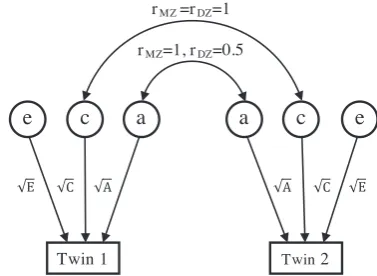
infer-ence. The SEM ACE model for univariate twin data can be displayed as a
path diagram, shown in Figure 1, where the influence caused by the latent
variablesa,c, andecan be described by the path coefficientspffiffiffiA,pffiffiffiffiCand
ffiffiffi
E
p
, respectively (Rijsdijk & Sham, 2002). According to path tracing
rules, the covariance matrices for MZ and DZ twin pairs are
CovMZ = A+C+E A+C
A+C A+C+E
!
,
CovDZ = A+C+E A=2 +C
A=2 +C A+C+E
!
,
which have the same structure as matrices (4) and (5). The goodness
of fit of this model is also measured using the maximum likelihood
cri-terion (Rijsdijk & Sham, 2002). However, there exist some drawbacks
of this SEM approach employed in OpenMx for imaging data analysis.
The goodness-of-fit LRT statistic asymptotically follows a mixture of
chi-square distributions (Dominicus et al., 2006; Self & Liang, 1987;
Zhang & Lin, 2008), but we can observe that OpenMx incorrectly uses
a single standard chi-square distribution with 1 degree of freedom
(Rijsdijk & Sham, 2002). For neuroimaging, a relative weakness of
OpenMx is lack of direct tools for operating with neuroimaging data.
Solar
The sequential oligogenic linkage analysis routines (SOLAR) software
is designed for the investigation of genetic effects in imaging genetics
studies (Almasy & Blangero, 1998; Koran et al., 2014). In addition, the
SOLAR package is capable of estimating heritability with the data
from diverse family structures. SOLAR uses maximum likelihood to
estimate the variance parameters,A,C,E.To test the null hypothesis
of zero heritability, the LRT test statistic, which is asymptotically
dis-tributed as a mixture of chi-square distributions, can be calculated
(Almasy & Blangero, 1998). While SOLAR itself cannot read brain
imaging data, the related software SOLAReclipse (https://www.nitrc.
org/projects/se_linux) can read and write neuroimaging data.
2.3
|
Permutation inference
Permutation testing is a nonparametric technique that makes minimal
assumptions about the data. With a few simple assumptions like
exchangeability of the observed data under the null hypothesis, the
nonparametric permutation test is conceptually simple and
theoreti-cally intuitive (Nichols & Hayasaka, 2003; Nichols & Holmes, 2001).
When the null hypothesis is true, the data will exhibit the feature of
exchangeability, allowing permutation, re-fitting the model and
com-putation of the test statistic. With multiple permutations, an empirical
null distribution can be constructed and critical thresholds and p
-values computed. This approach has become feasible owing to the
widespread availability of powerful computers.
Applying variance component inference approach voxel-by-voxel
yields a test statistic image. For each voxel, if the null hypothesis of
no heritability, that is, H0:h2= 0, is assumed to be true, MZ and DZ
twin pairs become exchangeable, allowing Np=
nMZ+nDZ
ð Þ=2
nMZ=2
possible permutations of MZ and DZ labels on twin pairs. In the
pres-ence of nuisance covariatesX, residuals are permuted (here, as stated
above, we assume that the residualseapproximate the true errorsϵ).
Crucially, twin pairs stay linked, preserving any common environment
effects. As even moderate sample sizes can yieldNptoo large to allow
computing all permutations, in this case, an approximate or Monte
Carlo permutation test is conducted for a smaller number of
permuta-tions, sayNp= 1,000, based on a random subsample of all
permuta-tions (Nichols & Holmes, 2001).
In order to resolve the multiple comparisons problem and strictly
control false positives over the whole volume of regions of interest
(ROI's) or voxels simultaneously, a permutation test can also be used
to compute inferences corrected for the family-wise error (FWE).
FWE-correctedp-values are found by considering the null distribution
of maximum test statistics (Nichols & Holmes, 2001). With a
permuta-tion test, we obtain FWE-correctedp-values on peak height
(voxel-wise test statistic value) for voxel-(voxel-wise inference, and cluster size
(number of voxels involved in a cluster after thresholding) and cluster
mass (sum of voxel-wise test statistic values of all voxels within a
clus-ter afclus-ter thresholding) for clusclus-ter-level inference. Hence, this
permuta-tion approach can be further partipermuta-tioned into two parts: voxel-wise
single threshold test and cluster-wise supra-threshold tests.
2.3.1
|
Voxel-wise single threshold test
Letπ = 1,…,Npbe the permutations considered including correctly
labeled data. At a single ROI/voxel, the permutation test produces a
levelαthreshold by finding thebαNpc+ 1 largest value of the null
dis-tribution;p-values are computed as the proportion of null distribution
values as large as or larger than the observed test statistic.
To control the FWE, the relevant null distribution is that of the
maximum test statistic. That is, the level-αFWE thresholdTFWE
α is the
bαNpc+ 1 largest value of the maximum distribution, and
FWE-correctedp-value, denoted bypFWE
T , for any given test statisticT0is
likewise the proportion of permutation maximum distribution values
equaling or exceeding that value (Nichols & Holmes, 2001):
pFWE T =
# Tπmax≥T0
Np
,
whereTmax
π is elementπof the maximum distribution.
2.3.2
|
Cluster-wise supra-threshold tests
The significance of supra-threshold cluster tests can be assessed by the
spatially informed cluster statistics, such as cluster size and cluster
mass. A preselected cluster-forming threshold u, which can be
expressed as ap-value using the sampling distribution of the test
tic, is applied to the derived test statistic image to threshold test
statis-tic values and form supra-threshold clusters. A cluster sizeK, the count
of voxels in a cluster, or a cluster massM, the sum of test statistic
values exceedingu, can be computed. As clusters are random in number
and location, uncorrectedp-values can be found but reflect an
assump-tion of homogeneity over space and typically are not computed.
Computation of FWE-corrected inferences proceeds as with the
single-threshold test. ThebαNpc+ 1 largest element of the null
distribu-tion of maximum size (or mass) defines a critical level-αFWE-corrected
thresholdKFWE
α (orMFWEα ). The associated FWE-correctedp-values are
pFWEK =# K
max π ≥K0
Np
,
pFWEM =# M
max π ≥M0
Np
,
for cluster statistics of size and mass, respectively, where Kπmax
(or Mπmax) is element π of the maximum cluster size (or mass)
distribution.
3
|
S I M U L A T I O N S T U D I E S
In this section, univariate simulation analysis is conducted to compare
our newly proposed voxel-wise heritability estimation methods with
existing methods in terms of prediction accuracy, validity, sensitivity,
and the overall computation time for different variance component
settings. The ROC-based simulation studies generate 2D image data
for power evaluation and comparison between the voxel- and
cluster-wise heritability inference approaches for various settings.
3.1
|
Univariate simulation evaluations
We use Monte Carlo simulations to evaluate our proposed linear
regression methods, LR-SqD Perm (LR-SqD using empirical p-value
based on 1,000 permutations), LR-SqD (LR-SqD using asymptoticp
-value) and LR-SqD ReML, and existing methods including Falconer's
method, Bayesian ReML in SPM, SEM in OpenMx, and SOLAR.
3.1.1
|
Simulation setting
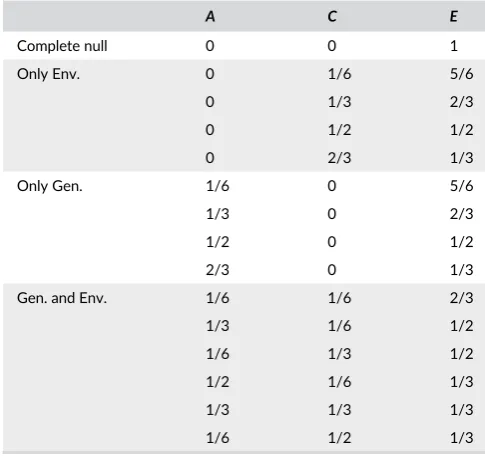
The parameter settings shown in Table 1 are motivated as follows. If we
create a 3D Cartesian coordinate system with x, y and z axes representing
the possible values forA,C,E, then the 3D parameter space can be
visual-ized as an equilateral triangle in 2D space utilizing a Barycentric
coordi-nate system, as shown in Figure 2. SinceEmax(A,C) usually holds in
practice, we choose 15 possible sets ofA,C,Efrom the upper part of this
parameter space satisfyingE≥1/3. Note that we assign values ofA,C,
Esuch thatA+C+E= 1, meaningAis directly interpretable ash2. That
is, the value ofAis exactlyh2. However, we still use
^
h2= A^
^
A+C^+E^
during computation to account for the genetic random variation in
For balanced design with an equal number of subjects for each
group (MZ and DZ twins), three samples are considered with the size
ofn= 100, 300, 1,000. For instance, the sample of 100 subjects is
comprised of 25 MZ twin pairs (50 subjects) and 25 DZ twin pairs
(50 subjects). For the unbalanced design, the sample size is fixed as
n= 300, and we consider the MZ:DZ ratios being 1:4 and 4:1, that is,
n= 60 + 240 andn= 240 + 60.
Apart from the Gaussian random error, we also take into account
the case where the error term is not normally distributed. Here we
consider a log-normally distributed unique environmental random
noise. The sample considered is balanced with the size ofn= 300,
that is, the number of MZ and DZ twin pairs is identical.
In total, 5 samples with balanced/unbalanced design and Gaussian/
non-Gaussian random error, along with 15 (A,C,E) parameter settings,
lead to totally 90 simulation settings. For each setting, we consider both
the one sample model (10) and multiple linear regression (15) to fit
SqD's. For the one sample model, no covariates are included in the
model (3) and the design matrix is an all-ones vector. For multiple linear
regression, age, sex, the interaction between age and sex and a standard
normally distributed continuous variable are included as covariates. The
regressors are simulated using Matlab.Xthus has five columns, in which
the first column is an all-ones vector for the intercept and the remaining
are randomly generated vectors approximating the four covariates.
Results are based on 1,000 realisations.
The mean squared error (MSE) is calculated to compare 6
estima-tion methods including LR-SqD, LR-SqD ReML, Falconer's method,
Bayesian ReML in SPM, SEM in OpenMx, and SOLAR. For each of all
seven testing (inference) methods considered (LR-SqD Perm, LR-SqD,
LR-SqD ReML, Falconer's method, Bayesian ReML in SPM, SEM in
OpenMx and SOLAR), we compute false positive rate (FPR), statistical
power, and overall running time. As the one sample model and
multi-ple linear regression model have qualitatively similar results, we will
only report the results obtained from multiple linear regression.
3.1.2
|
Comparison results
Accuracy and precision
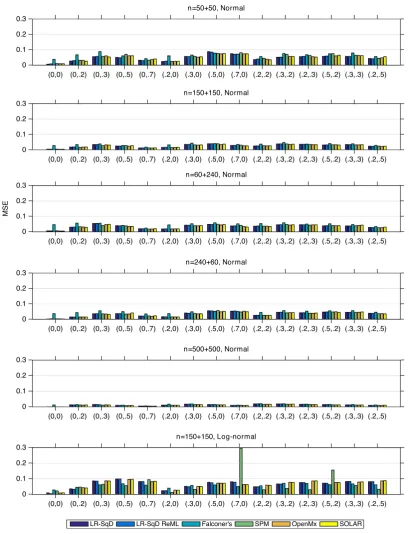
The MSE comparison of six methods is shown in Figure 3, which
shows that the two linear regression methods, LR-SqD and LR-SqD
ReML, have MSE virtually identical to each other. For the first five
rows with Gaussian noise, with the exception of Falconer's method,
which generally has markedly worse MSE, all of the methods exhibit
roughly comparable MSE performance. For the sixth row with
non-Gaussian noise, the MSE of all methods is larger than that for Row
2 for nearly all parameter settings, and Falconer's method works
sometimes better and sometimes worse than the other methods.
Specificity and statistical sensitivity
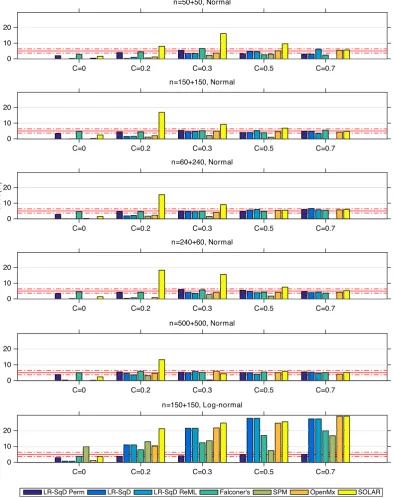
Figure 4 shows the specificity comparison of the seven testing
methods at a nominal significance level α = 0.05 (under the null
hypothesis of no heritability). With Gaussian noise (Rows 1–5), when
the common environment effectCis also zero, all methods are highly
conservative except LR-SqD Perm and Falconer's, both of which are
close to exact for sufficient sample sizes. In the presence ofC> 0, the
methods are generally valid but SOLAR struggles, having inflated FPR.
We believe this is due to convergence problems for small samples.
For the non-Gaussian case (Row 6), we note that all methods are
inva-lid with inflated FPR except LR-SqD Perm, which does not rely on the
assumption of normality.
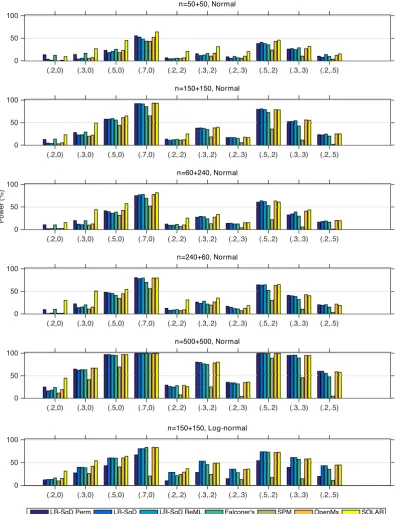
Figure 5 plots the power results. In the case of Gaussian noise, if
we set aside SOLAR's results that must be interpreted in light of its
inflated FPR, we find our linear regression methods using asymptotic
theoretical p-value and OpenMx have comparable power. LR-SqD
T A B L E 1 FifteenA,C,Eparameter settings
A C E
Complete null 0 0 1
Only Env. 0 1/6 5/6
0 1/3 2/3
0 1/2 1/2
0 2/3 1/3
Only Gen. 1/6 0 5/6
1/3 0 2/3
1/2 0 1/2
2/3 0 1/3
Gen. and Env. 1/6 1/6 2/3
1/3 1/6 1/2
1/6 1/3 1/2
1/2 1/6 1/3
1/3 1/3 1/3
1/6 1/2 1/3
F I G U R E 2 Parameter space with various (A,C, E) parameter
settings using Barycentric coordinates with barycenter (A,C,E) = (1/3,
1/3, 1/3). The large equilateral triangle (solid line) shows the ACE
parameter space with the constraintsA+C+E= 1,A, C,E≥0, where
the vertices (filled circles) represents the selectedA,C,Eparameter
settings shown in Table 1. The color of each vertex indicates the
Perm using permutation-based empirical p-values has the largest power in almost all settings, particularly for small values of heritability
and zeroCeffect. SPM's ReML method is generally less powerful.
Fal-coner's method is around the linear regression methods using
asymp-totic p-value and OpenMx, sometimes more, sometimes less
powerful. In the case of log-normally distributed random error (Row
6), we only consider LR-SqD Perm with controlled FPR. As expected,
the power is generally lower for all settings when compared with the
Gaussian case withn= 150 + 150 (Row 2).
Running time comparison
We evaluated the relative running time (relative to the running time
of Falconer's method) for completion of 1,000 simulated datasets (see
Figure 6). The computational performance comparing six methods
F I G U R E 3 The MSE comparison of LR-SqD, LR-SqD ReML, Falconer's method, Bayesian ReML in SPM, SEM in OpenMx, and SOLAR, based
on 1,000 realizations (Rows 1–5 for Gaussian error and Row 6 for non-Gaussian error). Comma ordered pairs onx-axis correspond to the
rounded parameter values ofAandC, that is, (A,C); see Table 1 and Figure 2 for exact parameter settings used [Color figure can be viewed at
reveals that Falconer's method and the linear regression methods with
SqD's using asymptotic theoreticalp-values (i.e., LR-SqD and LR-SqD
ReML) always outperform other iterative methods including Bayesian
ReML in SPM, SEM in OpenMx, and SOLAR. For each simulation
set-ting, the overall computation time of all simulations for those
non-iterative methods is far smaller than the other non-iterative methods. The
LR-SqD Perm, based on 1,000 permutations, has running time
compa-rable to, or even longer than, those iterative methods. Nonetheless,
applying parallelization by running multiple jobs in parallel can help
reduce the overall computation time.
3.2
|
ROC-based power evaluation
To evaluate the sensitivity of the voxel- and cluster-wise heritability
inference approaches described in Section 2.3, we conduct a receiver
operating characteristic (ROC) analysis.
F I G U R E 4 The comparison of the estimated false positive rate (FPR) with a nominal levelα= 0.05 for true null hypothesis (H0:h2= 0, that is,
A= 0), among LR-SqD perm using 1,000 permutations, LR-SqD, LR-SqD ReML, Falconer's method, Bayesian ReML in SPM, SEM in OpenMx, and
SOLAR, based on 1,000 realisations (Rows 1–5 for Gaussian error and Row 6 for non-Gaussian error). Thex-axis represents the rounded values
ofC.The two red dash-dotted lines show the lower and upper bounds of the 95% binomial proportion confidence interval. The FPR should be
3.2.1
|
Simulation setting
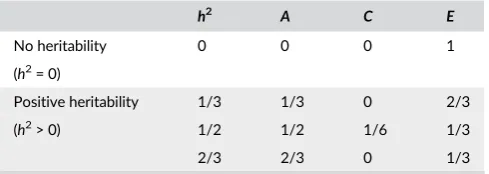
In this set of simulations, we usen= 20, 60, 100, using only twins and
equal number of MZ and DZ pairs. The signal is generated with four
parameter settings shown in Table 2 consisting of different values of heritability and shared environmental variance.
The simulated images are 2D, with 128×128 pixels. Two spatial
configurations of signal were considered, a single large region or nine
separate regions, having similar number of signal pixels (1,020
vs. 1,024); see Figure 7. The set ofNIimages were first created by
fill-ing each pixel with i.i.d. standard Gaussian noise, and then inducfill-ing
the signal with the Cholesky decomposition of the desired
variance/covariance structure. Spatial Gaussian smoothing kernels
with full width at half maximum (FWHM) of 0, 1.5, 3, or 6 pixels were
applied to blur these images in order to accommodate spatial
F I G U R E 5 The statistical power comparison with a nominal levelα= 0.05 for false null hypothesis (H0:h2= 0) of LR-SqD Perm using 1,000 permutations, LR-SqD, LR-SqD ReML, Falconer's method, Bayesian ReML in SPM, SEM in OpenMx, and SOLAR, based on 1,000 realizations
(Rows 1–5 for Gaussian error and Row 6 for non-Gaussian error). Comma ordered pairs onx-axis correspond to the rounded parameter values of
dependence across neighbouring voxels. A total ofNI= 1000 images were generated for each simulation setting.
3.2.2
|
ROC analysis
The ROC curves plot true positive rate (TPR; y-axis) against FPR
with varying threshold levels. A standard ROC analysis is suitable
for only a single outcome, while we have 1282 outcomes.
Hence we use an alternative, free-response ROC approach
(Chakraborty & Winter, 1990). As described in (Smith & Nichols,
2009), a free-response ROC, consisting of a y-axis representing
the probability of true detection, averaged over pixels withA> 0,
and anx-axis representing the probability of any false detections,
is deployed.
F I G U R E 6 The relative running time comparison after base-10 log transformation, denoted by log10(t/tF) for LR-SqD Perm using 1,000
permutations, LR-SqD, LR-SqD ReML, Bayesian ReML in SPM, SEM in OpenMx, and SOLAR, based on 1,000 realizations, wheretFdenotes the
running time for Falconer's method, that is, log10(t/tF) = 0 for Falconer's method (Rows 1–5 for Gaussian error and Row 6 for non-Gaussian error).
Comma ordered pairs onx-axis correspond to the rounded parameter values of (A,C); see Table 1 and Figure 2 for exact parameter settings used
We summarize the ROC curve by a normalized area under the
curve (AUC), with a larger value for better performance. Since we are
mostly concerned about FPR values between 0 and 0.05,
corresponding to a family-wise error rate of 5%, the normalised AUC
is 20×AUC for FPR < 0.05, maintaining a“perfect”AUC of 1. We
cal-culate this free-response ROC curve for both voxel- and cluster-wise
inferences. For wise inference, we set the voxel-level
cluster-forming threshold toα= 0.05 or LRT statistic valueuα= 2.71.
For clarity, the exact steps in this ROC calculation are as follows.
1. GenerateNI= 1000 i.i.d. 2D smoothed null images with standard
Gaussian random noise, where (A, C, E) = (0, 0, 1), and the
corresponding smoothed heritability signal images, where the
sig-nal were generated with (A, C, E) as per one configuration in
Table 2, and one of two spatial configurations in Figure 7.
2. For each image, estimate heritability pixel-by-pixel and create the
LRT test statistic image.
3. Voxel-wise inference.Apply a large number of predefined grids of thresholds to the LRT test statistic image, obtain the
supra-threshold pixels, and then calculate family-wise FPR and TPR for
each of these threshold levels, obtaining FPR from noise-only
image and TPR from theA> 0 pixels in signal images.
Cluster-wise inference.Threshold the LRT statistic images with a
predetermined cluster-forming threshold (p-valueαor statisticuα)
and form clusters. Use a predefined grid of cluster size thresholds
to define each cluster as detected or not.
4. Compute the family-wise FPR and TPR:
FPR.Using the smoothed random noise images, for each threshold,
the family-wise FPR is the proportion of realizations having any
(false) detections.
TPR.Using the heritability images, for each threshold, compute the
proportion of true positive pixels (detected andA> 0) out of all
possible (number of theA> 0 pixels). This is computed for each
realization and averaged over realizations.
5. Plot the ROC curves and calculate the corresponding normalized
AUC values.
3.2.3
|
ROC-based simulation results
As described above, a range of simulation settings are investigated for
both voxel- and cluster-wise inference approaches using APACE. For
different extents of smoothness, the returned ROC curves have fairly
similar shape, so we will only illustrate the ROC curves created by
medium degree of smoothing with FWHM of three pixels, which are
shown in Figures 8 and 9 for the simulated focal and distributed
sig-nals, respectively. The corresponding normalized AUC comparison is
then shown in Figure 10.
For both focal and distributed signal, ROC curves of the
cluster-wise method are always above those of the voxel-cluster-wise method,
reflecting higher statistical power obtained for cluster- than
voxel-wise inference approaches. In general, for a particular family-voxel-wise FPR
level, the TPR value of both inference methods becomes larger when
the sample size or the heritability is increased.
The normalized AUC values (Figure 10) show that the voxel-wise
method has poor performance overall for all simulation settings with
negligible AUC values, while the cluster-wise inference approach has
much larger AUC values. While the absolute power is low here,
reflecting the challenge of detecting nonzero heritability with just
100 subjects, these results show that the cluster-wise approach is
more sensitive to such spatial signals and demonstrates the value of
such spatial statistics.
4
|
R E A L D A T A A N A L Y S I S
Here we report the heritability analysis of a working memory fMRI
task. We illustrate the above-mentioned heritability inference
approaches including univariate LR-SqD and permutations.
T A B L E 2 Four parameter settings of heritabilityh2and
parametersA,C,E
h2 A C E
No heritability 0 0 0 1
(h2= 0)
Positive heritability 1/3 1/3 0 2/3
(h2> 0) 1/2 1/2 1/6 1/3
2/3 2/3 0 1/3
4.1
|
Real data acquisition
The experimental sample comprisesn= 319 young and healthy
partic-ipants from Queensland, Australia (199 females and 120 males),
con-sisting ofnMZ= 150 MZ twins (75 pairs with 46 female and 29 male
pairs), nDZ= 132 DZ twins (66 pairs with 30 female, 11 male, and
25 opposite sex pairs) and nS= 37 unpaired twins (22 female and
15 male). The age range of all these subjects is 20–28 years (mean
±SD: 23.6 ± 1.8). A 4T Bruker Medspec full-body scanner was utilized
and task-related fMRI BOLD was acquired while participants
per-formed a block design n-back task, consisting of 0-back and 2-back
conditions. Imaging preprocessing was implemented using SPM5
soft-ware in Matlab, including image realignment with a mean image
gen-erated, spatial normalization to the standard T1 template in MNI atlas
space, spatial smoothing with an isotropic Gaussian kernel, removal of
global signal effects, and the use of high-pass and low-pass filtering to
discard uninterested signals. For each subject, the brain activation,
measured as the 2-back >0-backt-contrast images using a one-sample
t-test, was extracted. Only areas of expected activation in the frontal
and parietal regions are included in the mask, comprised of 14,627
voxels in total. Age, sex, and 2-back performance accuracy (the
per-centage of correct responses) are included as the covariates in the
sta-tistical analysis (Blokland et al., 2011).
4.2
|
Real data results
The permutation-based empirical distribution of maximum LRT
statis-ticTπmaxgives 5% FWE threshold ofTFWEα = 11:32, and for the
cluster-wise results, the 5% FWE thresholds of maximum supra-threshold
cluster sizeKmax
π and maximum supra-threshold cluster massMπmaxare
KFWE
α = 62 and MFWEα = 271:74, respectively. The most significant
FWE-correctedp-values are 0.007, 0.001, and 0.001 for voxel, cluster
size and cluster mass statistics, respectively.
The supra-threshold cluster tests found much larger significant
brain regions than the single threshold test by comparing their
FWE-correctedp-value images. For the voxel-wise single threshold test,
F I G U R E 8 The ROC curve comparison of voxel- (“V,”dashed
lines) and cluster-wise (“C,”solid lines) inference approaches for three
settings of (A,C,E) = (0.3, 0, 0.7), (0.5, 0.2, 0.3), (0.7, 0, 0.3),
corresponding toh2= 0.3, 0.5, 0.7, for the focal signal with three
sample sizes of 10 + 10 (upper), 30 + 30 (middle) and 50 + 50 (lower),
where“V-0.3”and“C-0.3”represent the settings of voxel-wise
inference andh2= 0.3 and cluster-wise inference andh2= 0.3,
respectively [Color figure can be viewed at wileyonlinelibrary.com]
F I G U R E 9 The ROC curve comparison of voxel- (“V,”dashed
lines) and cluster-wise (“C,”solid lines) inference approaches for
3 settings of (A,C,E) = (0.3, 0, 0.7), (0.5, 0.2, 0.3), (0.7, 0, 0.3),
corresponding toh2= 0.3, 0.5, 0.7, for the distributed signal with
three sample sizes of 10 + 10 (upper), 30 + 30 (middle) and 50 + 50
(lower), where“V-0.3”and“C-0.3”represent the settings of
voxel-wise inference andh2= 0.3 and cluster-wise inference andh2= 0.3,
F I G U R E 1 0 The normalized AUC (20×AUC for FPR = 0:0.05) comparison of voxel- and cluster-wise inference approaches for different (A,
C,E) parameter settings, three samples of sizen= 10 + 10, 30 + 30, 50 + 50, and two tested signals (focal and distributed) with positive
heritabilityh2> 0 [Color figure can be viewed at wileyonlinelibrary.com]
F I G U R E 1 1 The log-transformed
FWE-correctedp-value image, that is,
−log10 pFWEK
only two significant voxels were identified, while there were four
clus-ters with a total of 634 voxels identified to be significant for the
cluster-wise tests. The FWE-corrected p-value image after log-10
transformation, that is,−log10(pFWE), for significant supra-threshold
clusters with respect to size statistic is shown in Figure 11. The
herita-bility estimate image is shown in Figure 12, where the heritaherita-bility
esti-mate ranges between 0 and 0.59, and the significant voxels based on
cluster-wise inference have a heritability range of 0.18 and 0.59. The
most heritability-significant regions found using both the single
threshold test and the supra-threshold cluster tests overlap with the
most significant regions from the previous Mx analysis (Blokland
et al., 2011).
5
|
C O N C L U S I O N A N D D I S C U S S I O N
In this article, we have presented two novel linear regression-based
estimation methods for heritability inference in neuroimaging, trying
to improve statistical power and reduce computational complexity. A
simple LR-SqD method based on linear regression modeling with
squared differences of paired observations has been developed, and
found to have comparable or even better estimation accuracy and
sta-tistical power relative to existing methods. LR-SqD, as simple as
Fal-coner's method, only requires linear regression to improve prediction
accuracy. The univariate simulation study also showed that apart from
Falconer's method, LR-SqD is the most time-efficient approach when
compared with those likelihood-based iterative methods, and will
never encounter any convergence problems. The fast, accurate and
noniterative properties of LR-SqD make it more flexible and feasible
to be applied for permutation inference.
A permutation-based heritability inference approach by
embed-ding LR-SqD method in a permutation framework has also been
devel-oped. This permutation inference allows us to perform more exact
heritability inference using LR-SqD Perm at each voxel, to control the
FWER, and also to consider alternative cluster-wise imaging statistics.
The fact that adjacent voxels or regions in a brain image tend to be
structurally and functionally homologous can be exploited by spatial
statistics like cluster size and mass. Our use of LR-SqD, the fast and
accurate noniterative method (free of any convergence issues), makes
these spatially informed statistics more accessible. For equivalent
FWERs, the cluster-wise approach was found to have higher
sensitiv-ity, and thus more powerful in ROC-based power simulations, which
demonstrates the importance of such spatial statistics over voxel-wise
statistics and the need for permutation inference to take advantage of
these cluster statistics. With few weak assumptions, permutation
inference is a feasible alternative to the parametric approaches, which
is even preferable in studies having small sample sizes or when the
stronger assumptions of the parametric approaches cannot be met
(Nichols & Holmes, 2001).
Except for LR-SqD Perm, methods being compared in univariate
simulations are asymptotic. We found our permutation-based LR-SqD
method, LR-SqD Perm, is more robust, being the most powerful
approach for nearly all simulation settings. Other asymptotic LR-SqD
methods, LR-SqD and LR-SqD ReML, also have good power, and cluster
inference methods have better detection power than voxel-wise
methods. A sample size of 1,000 is still insufficient, for some parameter
settings, resulting in limited power (far below 80%) for detecting
herita-bility, but at least we found all methods are valid with normally
distrib-uted errors except SOLAR, which is specially designed for family studies
with large sample sizes of various degrees of relatedness. For Gaussian
noise, although Falconer's method has poor estimation accuracy, it
seems to work well with the power comparable to that of LR-SqD Perm.
However, it relies on the normality assumption to test for the
equiva-lence of MZ and DZ correlations. For non-Gaussian noise, the null
distri-bution of LRT computed under the misspecified normality assumption
can be inaccurate and the corresponding asymptotic null distribution of
LRT based on Wilk's theorem is problematic, which results in inflated
FPR as shown in our simulations. LR-SqD Perm, which relaxes the
assumption of normality, is the only applicable method that maintains
valid FPR control in the case of non-Gaussian error, and thus we
sug-gest sticking to LR-SqD Perm. During univariate evaluations, we found
adding singletons can improve neither estimation accuracy nor
cal power. However, we still suggest including singletons in the
statisti-cal analysis since a better estimate of the phenotypic variance can be
obtained with more data taken into account. Averaging across all the
simulation settings, we found LR-SqD is roughly 2.5 times faster than
LR-SqD ReML, and around 45.5, 84.8, and 995.7 times faster than
SPM, OpenMx and SOLAR, respectively.
The LRT statistic for testing H0:A= 0 is not asymptotically pivotal
and its distribution varies discontinuously across the parameter space
depending on the true value of variance componentC.The
configura-tions ofCon the parameter space can be partitioned into two cases:
(1)C> 0, (2)C= 0. For standard Case (1), the reference distribution for
the LRT involving one parameter on the boundary of the parameter
space has been proven to be a half-half mixture ofχ2
0andχ21(Dominicus
et al., 2006; Self & Liang, 1987). For nonstandard Case (2), under the
null, bothAandCare boundary parameters and the asymptotic
distri-bution of the LRT statistic is a mixture ofχ2
0,χ21, andχ22with mixing
probabilities 1/2−p, 1/2 andp, where 0≤p≤1/2 (Dominicus et al.,
2006; Self & Liang, 1987). Even ifC> 0 for Case (1), the asymptotic
null distribution of the LRT statistic for a finite sample can be more
sim-ilar to that for Case (2) whenCis close enough to the boundary (Self &
Liang, 1987). When the sample size tends to infinity or is sufficiently
large, the asymptotic approximation is enhanced, and the tendency
eases with the reference distribution more resembling that for Case (1).
This leads to the conservativeness of the asymptotic LRT-based tests
when compared with the permutation-based LR-SqD Perm, and thus
we recommend using the nonparametric permutation inference.
The existence of nonzero variance componentsAandCinduces
the familial correlation (Dominicus et al., 2006). When the true value
ofAis nonzero, testing the null hypothesis of no heritability is similar
to testing for the familial correlation since it would be difficult to
pre-cisely separate the familial influences and explicitly distinguish
between theAandCeffects due to the inevitable noise, which has
been revealed in univariate simulation evaluations. Therefore,
increas-ing the variance parameterCmay improve the power of the test for
the null hypothesis of no heritability while holding the validity of the
test. In addition, whenC is zero, the test comparing the AE model
against the E model could probably offer higher power than the test
of ACE versus CE. However, the variance parameterCis unknown in
reality and impulsively using the test of AE versus E would lead to
inflated FPR and invalid conclusions with overestimated power.
We have developed a Matlab-based tool“Accelerated Permutation
Inference for the ACE Model (APACE)”, which provides different
analy-sis approaches specialized for heritability inference based on LR-SqD
and is freely available at https://github.com/NISOx-BDI/APACE.
Com-pared with the popular analysis tools such as OpenMx and SOLAR,
APACE is designed specifically for neuroimaging data and is applicable
for any sample sizes with controlled FPR. The use of the flexible
permu-tation approach allows for any test statistics (e.g., LRT, cluster size, and
so on) to be applied in computing thep-values, and enabling parallel
execution further accelerates the implementation. The current version
of APACE can be adopted for the family design including twins, siblings
and singletons, and the generalization of APACE for any family designs
is possible with the use of the pedigree information.
A C K N O W L E D G M E N T S
This work was supported by Technology Foundation STW (project
no. 12724 to E.F.), the Dutch Province of Limburg (MaCSBio), and
National Institutes of Health (K99AG054573 to T.G.). The n-back fMRI
data were acquired as part of the Queensland Twin Imaging Study. The
QTIM study is an ongoing longitudinal study of healthy young twins
with structural and functional MRI, diffusion tensor imaging, genetics,
and comprehensive cognitive assessments (de Zubicaray et al., 2008).
This study was supported by grant number R01HD050735 from the
Eunice Kennedy Shriver National Institute of Child Health and Human
Development, USA, and Project Grant 496682 from the National
Health and Medical Research Council (NHMRC), Australia. Zygosity
typ-ing was supported by the Australian Research Council (ARC;
A7960034, A79906588, A79801419, and DP0212016). The content of
this article is solely the responsibility of the authors and does not
neces-sarily represent the official views of the Eunice Kennedy Shriver
National Institute of Child Health and Human Development, NIH,
NHMRC, or ARC.
D A T A A C C E S S I B I L I T Y
We have developed a Matlab-based tool“Accelerated Permutation
Inference for the ACE Model (APACE)”, which provides different
anal-ysis approaches specialized for heritability inference based on LR-SqD
and is freely available at https://github.com/NISOx-BDI/APACE.
O R C I D
Xu Chen https://orcid.org/0000-0001-9506-1815
Gabriëlla A. M. Blokland https://orcid.org/0000-0003-0566-444X
![FIGURE 6The relative running time comparison after base-10 log transformation, denoted by log10(t/tF) for LR-SqD Perm using 1,000permutations, LR-SqD, LR-SqD ReML, Bayesian ReML in SPM, SEM in OpenMx, and SOLAR, based on 1,000 realizations, where tF denotes therunning time for Falconer's method, that is, log10(t/tF) = 0 for Falconer's method (Rows 1–5 for Gaussian error and Row 6 for non-Gaussian error).Comma ordered pairs on x-axis correspond to the rounded parameter values of (A, C); see Table 1 and Figure 2 for exact parameter settings used[Color figure can be viewed at wileyonlinelibrary.com]](https://thumb-us.123doks.com/thumbv2/123dok_us/9705333.1498183/13.595.101.503.50.574/comparison-transformation-permutations-realizations-therunning-correspond-parameter-wileyonlinelibrary.webp)
![FIGURE 8The ROC curve comparison of voxel- (corresponding toinference andlines) and cluster-wise (settings of (sample sizes of 10 + 10 (upper), 30 + 30 (middle) and 50 + 50 (lower),where“V,” dashed“C,” solid lines) inference approaches for threeA, C, E) = (0.3, 0, 0.7), (0.5, 0.2, 0.3), (0.7, 0, 0.3), h2 = 0.3, 0.5, 0.7, for the focal signal with three “V-0.3” and “C-0.3” represent the settings of voxel-wise h2 = 0.3 and cluster-wise inference and h2 = 0.3,respectively [Color figure can be viewed at wileyonlinelibrary.com]](https://thumb-us.123doks.com/thumbv2/123dok_us/9705333.1498183/15.595.50.291.49.394/comparison-corresponding-toinference-approaches-represent-inference-respectively-wileyonlinelibrary.webp)
![FIGURE 10The normalized AUC (20heritabilityC × AUC for FPR = 0:0.05) comparison of voxel- and cluster-wise inference approaches for different (A,, E) parameter settings, three samples of size n = 10 + 10, 30 + 30, 50 + 50, and two tested signals (focal and distributed) with positive h2 > 0 [Color figure can be viewed at wileyonlinelibrary.com]](https://thumb-us.123doks.com/thumbv2/123dok_us/9705333.1498183/16.595.206.548.412.730/normalized-heritabilityc-comparison-approaches-different-parameter-distributed-wileyonlinelibrary.webp)
![FIGURE 12The heritability image forthe masked brain regions. The heritabilityestimates vary between 0 and 0.59, andthe heritability estimates of significantvoxels using cluster size inference rangefrom 0.18 to 0.59 [Color figure can beviewed at wileyonlinelibrary.com]](https://thumb-us.123doks.com/thumbv2/123dok_us/9705333.1498183/17.595.45.388.50.369/heritability-heritabilityestimates-heritability-estimates-significantvoxels-inference-rangefrom-wileyonlinelibrary.webp)
