and Community Development
Volume
5, Issue
1
Fall
2014
Published by the Food Systems Development Project with the support of:
and with the support of our institutional sponsors:
Food Systems Development Project Leadership Team Ardyth Harris Gillespie, Nutritional Sciences (Retired), Cornell University (cochair) Heidi Mouillesseaux-Kunzman, Development Sociology, Cornell University (cochair)* Cheryl Danley, FoodCorps
Mary Jo Dudley, Development Sociology and Cornell Farmworker Program, Cornell University Gilbert W. Gillespie, Development Sociology, Cornell University (Retired)*
Joanna Green, Groundswell Center for Local Food & Farming, Ithaca, New York Richard Kiely, Center for Community Engaged Learning and Research, Cornell University Scott Peters, Imagining America, Syracuse University
Ricardo Salvador, Union of Concerned Scientists Jennifer Wilkins, Nutritional Sciences, Cornell University
JAFSCD Advisors Laura Brown, University of Wisconsin Cooperative Extension
(USA)*
Kate Clancy, Minnesota Institute for Sustainable Agriculture (USA)†
Craig Chase, Leopold Center for Sustainable Agriculture, Iowa State University (USA)
Nevin Cohen, The New School (USA)* David Conner, University of Vermont (USA)* Cornelia Butler Flora, Iowa State University (USA) Julia Freedgood, American Farmland Trust (USA)* Gilbert Gillespie, Jr., Cornell University (Retired) (USA)* R. Bruce Gregory, Farmer, Mitchell Bay Farm & Nursery (USA)* Shermain Hardesty, University of California (USA)*
John Ikerd, University of Missouri, Columbia (Emeritus) (USA)†
Anupama Joshi, National Farm to School Network/Occidental College (USA)*
Jane Kolodinsky, Food Systems Initiative, University of Vermont (USA)*
Larry Lev, Oregon State University (USA) Joseph McIntyre, Ag Innovations Network (USA)*
Shawn McKenzie, Johns Hopkins Center for a Livable Future (USA)
Ken Meter, Crossroads Resource Center (USA)*†
Kent Mullinix, Institute for Sustainable Food Systems, Kwantlen Polytechnic University (Canada)
Rich Pirog, Center for Regional Food Systems at Michigan State University (USA)
Ken Robinson, Clemson University (USA) John Smithers, University of Guelph (Canada)
G. W. (Steve) Stevenson, University of Wisconsin-Madison (USA)
Dawn Thilmany McFadden, Colorado State University (USA) Larry Yee, Fairhaven Strategy Group (USA)
Rami Zurayk, American University of Beirut (Lebanon)*† * Also serves on reviewer team
† Also writes a regular column
JAFSCD Staff
Publisher and Editor in Chief: Duncan L. Hilchey [email protected] / +1-607-342-0259 / Skype: duncan.hilchey Managing Editor: Amy S. Christian / [email protected] / +1-607-342-0258 / Skype: amy.christian295
The Journal of Agriculture, Food Systems, and Community Development, ISSN 2152-0801 (online only), is published quarterly (Summer, Fall, Winter, Spring) by the Food Systems Development Project of the Center for Transformative Action (an affiliate of Cornell University). Journal office: 295 Hook Place, Ithaca, NY 14850 USA.
Online subscriptions: Farmer/Student/Sole Proprietor/Retiree: US$39; Agency/Nonprofit Staffperson: US$49; Faculty/Consultant/Corporate Employee: US$69; Institutional Library: US$227–US$658 (based on FTE students).
Mahbubul Alam, Ehime U (Japan) Colin R. Anderson, Coventry U (UK) Molly Anderson, College of the Atlantic (USA) Hossein Azadi, Ghent U (Belgium)
Sandip Banerjee, Hawassa U (India)
Mary Margaret Barth, Responsible Source, UIUC (USA)
Ricky Martin Bates, Penn State U (USA) Dani E. Battle, Patriot RC&D (USA) Mark Bauermeister, Iowa State U (USA) Molly K. Bean, The Ohio State U (USA) Mihaela Begea, Institute of Food Research
(Romania)
Ghose Bishwajit, Tong Ji Medical College (China) Eliav Bitan, Darden School of Business, U of
Virginia (USA)
Rachelle Bostwick, Farmer, Earthkeeper Farm (USA)
Mladen Brnčić, U of Zagreb (Croatia) Megan Carney, U.C.–Santa Barbara (USA) Michelle Carnegie, U of New England (Australia) Marcia Caton Campbell, Center for Resilient
Cities (USA)
Kuo-Chiang (Matt) Chang, South Dakota State U (USA)
Hannah Chiswell, U of Exeter (UK)
Elizabeth Church, Jacobs Farm/DelCabo (USA) Renee Ciulla, Instituto Ricerche Economico
Sociale (USA)
Sean Connelly, Alberta Social Economy Research Alliance Centre for Sustainable Community Development (Canada)
Christine Costello, Cornell U (USA) Valencia Coty-Barker, Ashford U (USA) Sasha Cuerda, U of Illinois at Urbana-Champaign
(USA)
Kynda R. Curtis, Utah State U (USA) Carolyn Dimitri, New York U (USA) Michael L. Dougherty, Illinois State U (USA) Leslie Duram, Southern Illinois U (USA) Ayman Ekram Fahim, Suez Canal U (Egypt) Hamid El Bilali, Mediterranean Agronomic
Institute of Bari (CIHEAM-MAIB) (Italy) Patti Taranto Erickson, Salisbury U (USA) Mark Estep, Montana Mobile Processing Co.
(USA)
James R. Farmer, Earlham College (USA) David Fazzino, Bloomsburg U of Pennsylvania
(USA)
Melissa Fernandez Arrigoitia, London School of Economics (UK)
Ian Finch, U of Montana (USA) Rok Fink, Univerza v Ljubljani (Slovenia) Danielle Fisher, Eagle Ridge Ranch Beef (USA) Jill Ann Fitzsimmons, U of Massachusetts–
Amherst (USA)
Nancy Franz, Iowa S tate U (USA)
Kathlee Freeman, Food Tank (USA)
Jasenka Gajdoš Kljusurić, U of Zagreb (Croatia) Stephan Goetz, Pennsylvania State U (USA) Angela Gordon Glore, AmeriCorps/VISTA
(USA)
Carol Goland, Ohio Ecological Food and Farm Association (USA)
Sheila L. Gray, Washington State U–Lewis County Extension (USA)
Arthur Green, Okanagan College (Canada) John Guszkowski, CME Associates, Inc. (USA) Ella Haley, Athabasca U (Canada)
Edmund Harris, Clark U (USA) Neva Hassanein, U of Montana (USA) Lena Hatchett, Loyola U Chicago (USA) Amber A. Heckelman, Washington State U (USA) Mary Hendrickson, U of Missouri (USA) Leslie Hossfeld, U of North Carolina–Wilmington
(USA)
Guiping Hu, Iowa State U (USA)
Lauren Hunter, Coop. Extension, U of Idaho-Blaine County (USA)
Lucilla Iacumin, U of Udine (Italy) Valerie Imbruce, Bennington College (USA) Martin Kabaluapa, World Food Programme
(Kenya)
Sanjay Kharod, New Orleans Food and Farm Network (USA)
David A. Knauft, U of Georgia (USA) Fiona Knight, Private food system consulting
practice (Canada)
Uma Koirala, Tribhuvan U (Nepal) Jane Kolodinsky, U of Vermont (USA) Laura Lavid, Florida Organic Growers (USA) Dale Levering, LCC International U (Lithuania) Matt Lobley, U of Exeter (UK)
Bohdan Lojka, Czech U of Life Sciences (Czech Republic)
Samya Lutz, Whatcom County (USA) Uford A. Madden, Florida A&M U (USA) William Armand Mala, U of Yaounde I
(Cameroon)
Christian Man, Bring It Food Hub (USA) Lisa Markowitz, U of Louisville (USA) Sarah Martin, U of Waterloo (Canada) Derek Masselink, Masselink Environmental
Design (Canada)
Florentina Matei, Universitatea de Stiinte Agronomice si Medicina Veterinara – Bucuresti (Romania)
Nathan McClintock, Portland State U (USA) Jesse C. McEntee, Food Systems Research
Institute, LLC (USA)
Devan McGranahan, North Dakota State U (USA)
Kim McMann, Berkshire Community Action Council (USA)
Mahbubur R. Meenar, Temple U (USA)
(USA)
Farhad Mirzaei, Animal Sciences Research Institute of Iran (Iran)
Bernadette Montanari, U of Kent, Canterbury (UK)
Alfonso Morales, U of Wisconsin–Madison (USA)
Vicki Morrone, Michigan State U (USA) Phil Mount, U of Guelph (Canada) Joe Nasr, Centre for Studies in Food Security,
Ryerson U (Canada)
Kim L. Niewolny, Virginia Tech (USA) Samantha Noll, Michigan State U (USA) Kimberly Norris, U of Maryland (USA) Lydia Oberholtzer, Penn State U (USA) Fernando Ona, Tufts U (USA) Aleck Ostry, U of Victoria (Canada)
Isidro Ovando-Medina, U of Chiapas (Mexico) Laxmi Prasad Pant, U of Guelph (Canada) Tapan B. Pathak, U of Nebraska (USA) François Pelatan, AMAP Dordogne (France) Robert Perry, U of Kentucky (USA) Greg Pillar, Queens U of Charlotte (USA) Emily Piltch, Tufts U (USA)
Michael Pinto, Osborn Architects (USA) Madeleine Pullman, Portland State U (USA) Masud Parves Rana, Rajshahi U (Bangladesh) Shivaugn M. Rayl, Carolina Farm Stewardship
Association (USA)
Taylor Reid, Michigan State U (USA) Kristin A. Reynolds, The New School (USA) David Richey, Lane Council of Governments
(USA)
Suzana Rimac Brnčić, U of Zagreb (Croatia) Antonio Roman-Alcalá, Alemany Farm (USA) Natalie R. Sampson, U of Michigan (USA) Brian J. Schilling, Rutgers U (USA) Syed Suhail Mumtaz Shah, The Agronomy
Institute (Scotland)
Uma i Shankari, Rashtriya Raithu Seva Samithi, a farmers’ organization (India)
Garry Stephenson, Oregon State U (USA) Bill Swanson, Valentine Hill Farm (USA) Nicole Elizabeth Tichenor, Tufts U (USA) Diana Vergis Vinh, Public Health Department,
Seattle (USA)
Matteo Vittuari, U of Bologna (Italy) Gerald W. Warmann, South Dakota State U
(USA)
Amy Webb Girard, Emory U (USA) E. Christian Wells, U of South Florida (USA) Robert Wengronowitz, U of Chicago (USA) Spencer D. Wood, Kansas State U (USA) Jen Wrye, Carleton U (USA)
Steve Young-Burns, PastureLand Cooperative and freelance food writer (USA)
Contents |
Volume 5, Issue 1 / Fall 2014
On the cover: After watching a knife skills demonstration, food service professionals rolled up their sleeves and practiced washing, slicing, and dicing fresh produce at a professional development workshop hosted by the New Jersey Farm to School Network. Access to training and proper equipment is essential to the success of local food procurement in school cafeterias since many local products are delivered whole and unprocessed.
(Photo by Chelsey Simpson, National Farm To School Network, and used with permission.)
Editorials
In This Issue: A Challenging New Profession: Food Systems Development Practice / Duncan L. Hilchey 1
Guest Editorial: Evaluation and the Local Foods Data Void / Corry Bregendahl and Craig Chase,
Leopold Center for Sustainable Agriculture 5
Column
The Economic Pamphleteer: Multifunctionality: A New Future for Family Farms / John Ikerd 11
Commentary
Looking at Sierra Leone’s Ebola Epidemic Through an Agrarian Lens / Rami Zurayk 15
Open Access Paper
(subscription not required)
Increasing Prosperity for Small Farms Through Sustainable Livestock Production, Processing, and Marketing / Darin Saul, Soren Newman, Tracie Lee, Steven Peterson, Stephen Devadoss,
Dev Shrestha, and Nick Sanyal 21
Open Call Papers
Exurban Farmers’ Perceptions of Land Use Policy Effectiveness: Implications for the Next Generation
of Policy Development / Jill K. Clark, Shoshanah M. Inwood, and Douglas Jackson-Smith 39
The Farm Fresh Healthcare Project: Analysis of a Hybrid Values-based Supply Chain / Kendra
Klein and Ariane Michas 57
A Framework for Site Assessment Guides for Urban Impacted Soils: A Vancouver Case Study /
Melissa Iverson, Maja Krzic, and Arthur Bomke 75
Examining Farmers Markets’ Usage of Social Media: An Investigation of a Farmers Market
Facebook Page / Yue Cui 87
Mapping the Cost of a Balanced Diet, as a Function of Travel Time and Food Price / Nathan Hilbert, Jennifer Evans-Cowley, Jason Reece, Christy Rogers, Wendy Ake,
and Casey Hoy 105
Bridging the Gap Between Farmers and Food Service Directors: The Social Challenges in Farm
to School Purchasing / Brandi Janssen 129
Gardeners, Locavores, Hipsters, and Residents: An Alternative Local Food Market’s Potential for
“Community” Building / Yuki Kato 145
Conceptualizing Community Buy-in and its Application to Urban Farming / Melissa N. Poulsen,
Marie L. Spiker, and Peter J. Winch 161
Illinois Farmers Markets Using EBT: Impacts on SNAP Redemption and Market Sales /
Afroza Hasin, Sylvia Smith, and Pat Stieren 179
Reviews
Native to Place: Grass, Soil, Hope by Courtney White / Philip A. Loring 189
Building Blocks for Sustainable Food Systems (a review of Sustainable Food Systems: Building a
New Paradigm, edited by Terry Marsden and Adrian Morley) / Molly D. Anderson 193
More Than One Meaning of “Chain” in Food Chains, a Documentary Film / Jane Kolodinsky 197
I
NT
HISI
SSUED
UNCANL.
H
ILCHEYA challenging new profession:
Food systems development practice
Published online December 19, 2014
Citation: Hilchey, D. L. (2014). A challenging new profession: Food systems development practice [Editorial]. Journal of Agriculture, Food Systems, and Community Development, 5(1),1–3. http://dx.doi.org/10.5304/jafscd.2014.043.018
Copyright © 2014 by New Leaf Associates, Inc.
n this issue of the Food Systems Journal we offer a bountiful fall harvest of papers on subjects ranging from urban soils and supply chains to social networks and community building. A cursory look at the titles in this issue would probably not yield a common theme, but it is there in plain sight. It’s the same theme that cuts across all our accepted papers and across all issues we publish. That theme is people — us — food systems development practitioners, working hard and enjoying our work (as this fall issue’s cover image depicts). We are scholars, farmer-activists, land-use officials, organizers, nutritionists, farmers market managers, food service directors, planners, program volunteers, extension educators, graduate students, and the list goes on. We are stewards of a vast, complicated, and fragile system that is linked to food security, livelihoods, culture, open space, quality of life, and many other multifunctional benefits. Yet as people we have our needs as well.
To learn more about us — our needs and challenges in food systems work — JAFSCD conducted a survey in collaboration with a group of colleagues around North America of self-identified “food systems development practitioners” in 2011–12. We promoted the survey on COMFOOD and other email lists, and even developed a Québécois version of the survey in order to have more participation from French Canadians. Given the “whiteness” of food systems work, we also made a special effort to encourage people of color to complete the survey. To our amazement, over 1,300 individuals responded. What we learned, in a nutshell, was that not only is the food system fragile, but so too are the projects many of us are working on, along with our livelihoods. By all accounts food systems work is emerging as a profession (or as a facet of other traditional professions like planning or extension), but during these nascent stages the profession is subject to the whims of pubic and private funders and ultimately, by unfortunate necessity, the stock market. This dictates the size of endowments and government coffers — the core resources for funding food systems work.
With the results of the survey in hand, a working group of over 100 survey respondents was formed to address the professional development needs of food systems development practitioners, and a steering committee was created to provide some leadership to the group. Without resources, the launch of what has become known as the North American Food Systems Network (NAFSN) has been challenging. But the development of this “community of practice” is ongoing and has begun to focus on establishing a food systems development certification curriculum that will provide a foundation of practice to those who are working in the trenches on hunger, new farmer programing, farm-to-institution projects, food hubs, food policy councils, agriculture of the middle value chains, etc., including the practical tools they need to plan and execute successful projects — tools such as methods of stakeholder participation, asset mapping, and metrics for measuring success and impacts.
As I write this, a partnership of national organizations and institutions is forming to help move NAFSN’s agenda forward in 2015. Anyone interested in joining the NAFSN working group is invited to contact me at [email protected].
We start off this issue with a guest editorial from JAFSCD’s cosponsor, the Leopold Center for Sustainable Agriculture at Iowa State University. In Evaluation and the Local Foods Data Void,Corry Bregendahl and Craig Chase offer a fresh approach to gathering impact data on local food initiatives.
Next up is a column from John Ikerd, who is developing a keen interest in multifunctionality in agriculture and food systems. In Multifunctionality: A New Future for Family Farms, he puts the spotlight on recognizing multifunctionality as a means to a more sustainable future for family farmers.
Instead of writing his regular column, in this issue Rami Zurayk has written a deeper commentary of the insidious links between Ebola and fragile food systems in Looking at Sierra Leone’s Ebola Epidemic Through an Agrarian Lens.
In an open access paper entitled Increasing Prosperity for Small Farms Through Sustainable Livestock Production, Processing, and Marketing,Darin Saul, Soren Newman, Tracie Lee, Steven Peterson, Stephen Devadoss, Dev Shrestha, and Nick Sanyal explore the feasibility of regional livestock strategies in surmounting very high supply-chain barriers.
Jill Clark, Shoshanah Inwood, and Douglas Jackson-Smith present stakeholders’ feedback on farmland protection policy in the hinterlands of cities in Exurban Farmers’ Perceptions of Land Use Policy Effectiveness: Implications for the Next Generation of Policy Development.
The Farm Fresh Healthcare Project: Analysis of a Hybrid Values-based Supply Chain by Kendra Klein and Ariane Michas provides an inside view of a farm-to-institution project attempting to balance values and efficiency.
In A Framework for Site Assessment Guides for Urban Impacted Soils: A Vancouver Case Study,Melissa Iverson, Maja Krzic, and Arthur Bomke proffer a comprehensive method of evaluating and addressing the problems of soils in cities.
Next, Yue Cui evaluates the online social networking potential of farmers markets in Examining Farmers Markets’ Usage of Social Media: An Investigation of a Farmers Market Facebook Page.
Nathan Hilbert, Jennifer Evans-Cowley, Jason Reece, Christy Rogers, Wendy Ake, and Casey Hoy then challenge us to measure travel time in our identification of food deserts in Mapping the Cost of a Balanced Diet, as a Function of Travel Time and Food Price.
In Bridging the Gap Between Farmers and Food Service Directors: The Social Challenges in Farm to School
Purchasing,Brandi Janssen presents an insightful reflective essay on the social barriers between farmers and food service directors.
Melissa Poulsen, Marie Spiker, and Peter Winch then explore the value of the acceptance and active engagement of local residents in Conceptualizing Community Buy-in and its Application to Urban Farming.
In our final paper of the issue, entitled Illinois Farmers Markets Using EBT: Impacts on SNAP Redemption and Market Sales,Afroza Hasin, Sylvia Smith, and Pat Stieren find that accepting EBT does increase market sales, and that the use of incentives, receipts and direct swipes, and volunteers handling EBT transactions can have significant positive effects on EBT sales.
In this issue we also offer two book reviews and JAFSCD’s first movie review. Philip Loring reviews Grass, Soil, Hope: A Journey Through Carbon Country, by Courtney White, and Molly Anderson reviews Sustainable Food Systems: Building a New Paradigm, edited by Terry Marsden and Adrian Morley. Finally, Jane Kolodinsky goes to the movies and discovers there’s more than one meaning of “chains” in the documentary Food Chains.
Best wishes for a healthy and happy New Year!
G
UESTE
DITORIALC
ORRYB
REGENDAHL ANDC
RAIGC
HASEL
EOPOLDC
ENTER FORS
USTAINABLEA
GRICULTUREEvaluation and the local foods data void
Published online November 20, 2014
Citation: Bregendahl, C., & Chase, C. (2014). Evaluation and the local foods data void [Guest editorial]. Journal of Agriculture, Food Systems, and Community Development, 5(1), 5–9.
http://dx.doi.org/10.5304/jafscd.2014.051.007
Copyright © 2014 by New Leaf Associates, Inc.
ocal and regional food system professionals are obliged to rely on imperfect, incomplete, and evolving measures to track economic changes in the local food industry. These data are critical for informing decisions on how to invest limited resources to create optimal impacts. U.S. Department of Agriculture (USDA) Census of Agriculture figures indicate that direct food sales in the U.S. appeared to have increased from US$1.2 billion in 2007 to US$1.3 billion in 2012 — but when adjusted for inflation, sales actually remained steady. These figures, however, do not account for local food sales to institutions, restaurants, and retailers. The 2008 Agricultural Resource Management Survey (ARMS) partially addressed this gap by tracking local food sales from farmers to both individuals and “intermediated” markets such as restaurants and
grocery stores. But the ARMS data did not include local food sales to institutions such as schools or hospitals, thus leaving another gap in the data.
Data derived from various national sources indicate that local food systems may be growing, but the data collection methods are inconsistent and the results piecemeal (Hunt & Matteson, 2012). Moreover, the information is presented at a scale that often is irrelevant to local professionals serving constituents within a specific geographic region. The absence of locally relevant pre-existing data on local foods means that entities like local governments, community foundations, school administrators, and others are creating policies, programs, and investments that affect the local food sector without having basic information about its scope.
In the 2013 summer issue of JAFSCD, O’Hara and Pirog called for more local food studies to (1) be conducted on a larger geographic scale and (2) measure more diverse economic impacts (i.e., more than just jobs). We would add to O’Hara and Pirog’s first recommendation that in order to be useful for local food professionals, a national dataset should be reducible to smaller units for more detailed and relevant analysis.
L
Corry Bregendahl is associate scientist at the Leopold Center for Sustainable Agriculture and can be contacted at 209 Curtiss Hall; Ames, Iowa 50011 USA; +1-515-462-0450; [email protected].
Craig Chase leads the Marketing and Food Systems Initiative at the Leopold Center for Sustainable Agriculture and the Iowa Food Systems Working Group for Iowa State University Extension and Outreach. He can be contacted at [email protected].
The second recommendation, for tracking economic indicators beyond jobs, is important because other economic factors related to local and regional food systems are affecting communities and families. These include, among others, changes in wages; net household income for farmers, farm businesses, and farm service providers; dollars leveraged by communities; and local institutional food purchases.
O’Hara and Pirog (2013) also described three categories of economic studies that have been done on local foods, two of which rely on economic models and associated assumptions. These two include estimates of the regional impacts of specific local food markets and farm-level impacts derived from a specified level of local produce consumption (say, five servings a day). They identified a third category of economic impact studies that examine local food sales at a multistate or national level. To this, we would add a fourth category: economic evaluations of local food system efforts.
To address all of the data gaps we encountered at the national level and to get a better handle on the economics of the local foodscape in Iowa, in 2012 we began coordinating data collection with the help of a network of local food coordinators. This was not a study per se, but an evaluation of impacts from a decade of work with the Iowa Regional Food Systems Working Group (RFSWG). We set out to discover and
document outcomes — or what changed — as a result of, or in association with, particular actions. In our 2013 (Bregendahl & Enderton, 2013) and forthcoming 2014 reports we collected and analyzed data on four economic measures:
1. Local food sales reported by farmers in our network;
2. Local food purchases reported by institutional and intermediated buyers in our network (grocery stores, restaurants, schools, etc.);
3. Jobs created in connection with local food production and procurement reported by local food farmers and buyers in our network; and
4. Financial leverage (grants, donations, fundraisers, county Extension funds, etc.) secured by our local food coordinators to support regional food system development.
We began the process by convening an advisory group of local food coordinators drawn from the RFSWG who had experience in tracking and documenting outcomes of their work. Together, we developed a draft evaluation plan that borrowed heavily from their pre-existing work. After much dialogue and revision, a final evaluation plan emerged that relied on the entire network of 15 local food coordinators to recruit local food farmers and local food buyers from their respective regions to complete one of two surveys (a farmer survey and a buyer survey). All the local food coordinators were encouraged to participate through a series of presentations, discussions, and conference calls delivered at or between each quarterly RFSWG meeting. All coordinators who participated received a small stipend for their cooperation and were promised not only inclusion by name in the statewide report but also a customized report with their region’s results. Each local food coordinator was encouraged to use this professionally designed, color, two-page report to share their progress with local partners and stakeholders, including farmers and buyers of local food who had completed the surveys. Follow-up with these two latter groups after the work was done gave local food coordinators the opportunity to (1) show respondents how their data was used and reported, (2) improve transparency, (3) strength the relationship, and (4) provide additional support.
farmers in their region and were most likely to elicit a response. Having local food coordinators involved in the process also provided some accountability in terms of vetting the information that farmers provided since most local food coordinators had access to and reviewed the data prior to submission to us. Farmers were instructed to consult their IRS Schedule F for local food sales figures from the previous calendar year. However, they were also allowed to estimate their sales and indicate if they provided actual figures or estimates.
In the guidebook we provided local food coordinators tips and strategies for maximizing participation. Among them were:
• Build quality relationships with partners early on by hosting meet-and-greets or calling local food farmers and buyers;
• Consider providing something in exchange for survey participation, such as farm labor or recruiting volunteers to help on the farm;
• Initiate multiple and gentle modes of contact with potential respondents, all of whom are busy;
• Ask farmers how they prefer to respond (electronically, hard copy, or through a personal conversation); and
• Time distribution of the surveys to coincide with tax deadlines and prior to the next growing season. Once the data were collected, we generated a list of respondent identification numbers and sent them to local food coordinators, if they did not already have that information, so they could determine who had not responded so they could make follow-up calls. We also reviewed each completed survey for skewed or missing data and followed up as warranted. To address concerns that self-reported data may not be reliable, readers should note that the U.S. Census of Agriculture relies on self-reported data. Furthermore, no data collection process is without bias or error. In addition, it would have been unrealistic to expect farmers to hand over their tax returns or business financial records, nor did we have the resources to protect those documents and analyze them given we received no funding to conduct the evaluation. As a team we agreed that unrealistic standards of perfection would not prevent us from gathering heretofore uncollected information on local food system change in Iowa.
In November of this year, we completed our second year of data collection. Sample data from the forthcoming 2014 report are shown in Table 1.
Table 1. Selected Data from Evaluation of the Iowa Regional Food Systems Working Group (all in US$)
2012 2013 % change
Total local food sales by farmers $10,549,296 $13,035,445 +23%
Total local food purchases by institutions and
intermediated markets $8,934,126 $13,129,702 +47%
Total funds leveraged by regional food groups for use in
the calendar year $766,020 $882,842 +15%
Total number of new jobs created by local food
producers and local food buyers 53 118 +123%
Total number of new full-time jobs 24 39 +63%
Public cost of creating 1 new full-time job $17,874 $14,300 –20%
As a result, evaluation is often dismissed as having little to contribute to scientific discourse on what constitutes valid and reliable data, specifically related to local foods or otherwise. This is in error. While the results of our economic impact evaluation are specific to Iowa and our networks, they are actual results generated from a process of systematic and scientific inquiry. They are not estimates based on assumptions, but rather measured impacts that help us understand what difference coordinated local/regional food systems efforts have made in Iowa.
Like any organized system of inquiry with rules and conventions, evaluation also has its limitations. The primary limitation is its ability to measure complete impacts. Given that outcomes-based evaluation efforts typically only receive between 0 and 10 percent of total project budgets, evaluations typically lack ample resources to include feedback from those who were not directly involved in a given program, but probably were affected by it. Thus, outcomes-based evaluations are likely to be more conservative than what has actually occurred. Evaluation and the scientific method are both tools we have at our disposal to better understand the world we live in. However, we underutilize the former for a variety of reasons.
First, we underutilize evaluation because it lacks institutional scientific credibility, given that evaluators do not test hypotheses. For academia this is a perceived weakness, but it is not for practitioners, who work outside “ideal” conditions. Second, evaluation results (particularly long-term ones) are often difficult to track because they typically appear long after a project is no longer funded. Third, if an evaluation is conducted, results are rarely circulated to the public. Fourth, evaluation reports fall into the genre of technical writing and are typically both visually and substantively unappealing to the casual observer and even those directly
involved in project management. We need these things to change. The following are some recommendations based on our experience for conducting project evaluations:
• Bring project leaders and partners on board to appreciate the value and potential of evaluation to inform local/regional food work and to ensure that resources are secured to fund evaluation. We often are heavily engaged in activities but fail to reflect on what outcomes the activities achieved once the work is completed. Evaluation aims to find out what changed as a result of those activities, who or which groups changed and why, which groups benefited, and why it matters. Evaluation can be especially critical for positioning work to receive new sources of support when the work expands.
• Implement evaluation using common metrics across different places, people, and projects or efforts to track the collective impact (Kania & Kramer, 2011) of cross-sectoral work. Although this sounds easy, in practice it becomes a major effort to bring people together around common measures and ways of measuring change. The key is to start small with a focus on a few indicators, especially if you have many partners. In our case, developing a shared measurement system to track and report the four economic indicators cited above took over a year and half for the RFSWG, which represented 15 geographic areas. However, the coordinated process we used has become the foundation for tracking impacts of other regions’ work in local and regional food systems, namely the Michigan Food Charter (R. Pirog, personal communication, Oct. 21, 2014).
In the absence of national census or research data, as acknowledged by O’Hara and Pirog (2013), evaluation can be a locally achievable solution for addressing the data gap. Local food leaders, practitioners, politicians, business owners, and the public are thirsty for new, relevant, credible, and accessible sources of information on changes to their local food systems. In Iowa, these groups are using the data to make funding decisions on how to support regional food systems development, assess public health needs, and grow rural businesses. Local food evaluators, particularly those focusing on regional collective impact, can inform that work by systematically measuring a few key indicators and telling the story of change to help the movement overcome the void in local food data.
References
Bregendahl, C., & Enderton, A. (2013). 2012 economic impacts of Iowa’s Regional Food Systems Working Group. Ames, Iowa: Leopold Center for Sustainable Agriculture. Retrieved from
http://www.leopold.iastate.edu/pubs-and-papers/2013-11-2012-economic-impacts-iowas-regional-food-systems-working-group
Bregendahl, C., Kleiman, L., & Wiemerslage, T. (2013). Collecting data for collective impact: A guide for coordinators in the Regional Food Systems Working Group. A how-to manual for documenting the economic impact of regional food systems work in Iowa. Ames, Iowa: Leopold Center for Sustainable Agriculture. Retrieved from
http://www.leopold.iastate.edu/pubs-and-papers/2013-02-rfswg-data-collection-guide
Kania, J., & Kramer, M. (2011). Collective impact. Stanford Social Innovation Review, 1(9), 36–41. Retrieved from
http://www.ssireview.org/pdf/2011_WI_Feature_Kania.pdf
Hunt, A. R., & Matteson, G. (2012). More than counting beans: Adapting USDA data collection practices to track marketing channel diversification. Journal of Agriculture, Food Systems, and Community Development, 2(4), 101–117.
http://dx.doi.org/10.5304/jafscd.2012.024.010
T
HEE
CONOMICP
AMPHLETEERJ
OHNI
KERDMultifunctionality: A new future for family farms
Published online December 19, 2014
Citation: Ikerd, J. (2014). Multifunctionality: A new future for family farms. Journal of Agriculture, Food Systems, and Community Development, 5(1), 11–13. http://dx.doi.org/10.5304/jafscd.2014.051.016
Copyright © 2014 by New Leaf Associates, Inc.
was surprised to have been asked recently by the Food and Agricultural Organization (FAO) of the United Nations to write a policy paper on family farming in North America in recognition of the International Year of the Family Farm (Ikerd, 2014). I questioned whether the FAO actually wanted me to write the paper, because of my non-conventional views of American agriculture. In the
process, however, I discovered that much of the rest of the world is awakening to the realization that the values of traditional family farming are essential to ensure global food security. The U.S., Canada, and Australia have found few allies in their championing of industrial agriculture as being necessary to avoid massive hunger in the future.
The concept of multifunctional agriculture, as
I
Why did I name my column “The Economic Pamphleteer”? Pamphlets historically were short, thoughtfully written opinion pieces and were at the center of every revolution in western history. Current ways of economic thinking aren’t working and aren’t going to work in the future. Nowhere are the negative
consequences more apparent than in foods, farms, and communities. I know where today’s economists are coming from; I have been there. I spent the first half of my 30-year academic career as a very conventional free-market, bottom-line agricultural economist. I eventually became convinced that the economics I had been taught and was teaching wasn’t good for farmers, wasn’t good for rural communities, and didn’t even produce food that was good for people. I have spent the 25 years since learning and teaching the principles of a new economics of sustainability. Hopefully my “pamphlets” will help spark a revolution in economic thinking.
John Ikerd is professor emeritus of agricultural economics, University of Missouri, Columbia. He was raised on a small dairy farm in southwest Missouri and received his BS, MS, and Ph.D. degrees in agricultural economics from the University of Missouri. He worked in private industry for a time and spent 30 years in various professorial positions at North Carolina State University, Oklahoma State University, University of Georgia, and the University of Missouri before retiring in 2000. Since retiring, he spends most of his time writing and speaking on issues related to sustainability with an emphasis on economics and agriculture. Ikerd is author of Sustainable Capitalism; A Return to Common Sense; Small Farms Are Real Farms; Crisis and Opportunity:Sustainability in American Agriculture; A Revolution of the Middle; and the just-released The Essentials of Economic Sustainability. More background and selected writings are at
commonly used in international trade and policy discussions, refers to the multiple potential benefits of agriculture, emphasizing the importance of non-economic benefits of agriculture. Farms in this context are inherently multifunctional in that they have multiple ecological, social, and economic impacts on nature and society. A global report, Agriculture at a Crossroads, points out that multifunc-tional agriculture “provides food, feed, fiber, fuel and other goods…has a major influence on other essential ecosystem services such as water supply and carbon sequestration or
release…plays an important social role, providing employ-ment and a way of life…is a medium of cultural trans-mission and cultural practices worldwide…[and] provide[s] a foundation for local econo-mies” (International Assess-ment of Agricultural Know-ledge, Science, and Technology for Development [IAASTD], p. 6).
The report also points out that “sustainable development is about meeting current needs without compromising the
ability of future generations to meet their own needs. It is indisputable that agriculture as a sector cannot meet this goal on its own. Agriculture, however, fulfills a series of additional goals besides food production. Last but by no means least, agriculture ensures the delivery of a range of ecosystem services. In view of a globally
sustainable form of development, the importance of this role may increase and become central for human survival on this planet” (IAASTD, p. 15). At least four recent UN-sponsored global reports have confirmed that multifunctional farming is the best hope for global food security and agricultural sustainability (Kirschenmann, 2012).
Sustainable farms are unique in that they are intentionally multifunctional. They are intentionally managed to provide multiple positive benefits, not only for the economic bottom line. The global food policy agenda is being shifted toward agricul-tural sustainability by the growing realization that
industrial agriculture is inherently incapable of providing long-run global food security. In retro-spect, many so-called developing nations see the Green Revolution as a failure. It failed to provide food for those who were hungry because most hungry people are poor. Many subsistence family farmers were displaced, leaving them without their previous means of meeting the basic food needs of their families.
Farms managed solely or even predominately for the economic bottom line are managed
mono-functionally, even though they have multiple impacts on com-munities and ecosystems. Agri-cultural industrialization is moti-vated by economic efficiency and thus industrial farms, including those of the Green Revolution, are managed monofunctionally — even if they are owned and operated by families. There is no economic value in doing anything for the sole benefit of society as a whole or the future of human-ity. The myopic pursuit of economic efficiency inevitably degrades natural ecosystems and degenerates societies. Monofunctional farms are not sustainable.
Historically, family farms have been held in cultural positions of high esteem. Thomas Jeffer-son, for example, believed strongly that the “yeoman farmer” best exemplified the kind of “independence and virtue” essential for democracy. He did not believe financiers, bankers, or industri-alists could be trusted to be responsible citizens. Adam Smith, an icon of capitalism, observed that farmers ranked among the highest social classes in China and India and suggested it would be the same everywhere if the “corporate spirit” did not prevent it. Smith never trusted businessmen and distrusted corporations in particular. The philoso-phy of Confucius ranked farmers second only to academics and scholars in the Chinese social order, who were then followed by workers, and lastly, businessmen. All of these respected historical figures placed farmers at or near the top of society
Many farms today share far
more characteristics with the
businessmen, financiers, and
corporate managers
distrusted by Jefferson,
Smith, and Confucius than
and those concerned with business and economics at the bottom.
Today, Americans are being subjected to an ongoing multimillion-dollar corporately funded propaganda campaign designed
to convince us that today’s conventional farm businesses deserve the same high esteem historically reserved for family farmers (Lappe, 2011). All family-owned or -operated farm businesses are being portrayed as “modern family farms,” suggesting they possess the same values and virtues of the family farmers idealized by Jefferson and Smith. In truth,
many farms today share far more characteristics with the businessmen, financiers, and corporate managers distrusted by Jefferson, Smith, and Confucius than with the farmers valorized in past cultures.
The family farms deemed uniquely worthy of high esteem were intentionally multifunctional family farms. They were managed to provide positive ecological, social, and economic benefits. On a true family farm, the farm and the family are
inseparable. This sense of personal
interconnectedness of the family with the farm is ultimately what makes a farm a “family farm” and a family a “farm family.” The same farm with a different family would be a different farm, and the same family with a different farm would be a different family. The well-being of the farm is inseparable from the well-being of the family.
A true family farm is managed to reflect the cultural and social values of the farm family as well as their economic necessities and preferences. The core “culture” of agriculture embodied in family farming is one of stewardship or caring for the land, society, and humanity. The core social value of family farming is one of neighborliness and caring for community and society. At the same time, a true family farm must also provide the
economic essentials of a desirable quality of life. These were the virtues of farming idealized by past cultures and are the virtues still essential for global food security and agricultural sustainability.
Family farmers have the advantages of a natural motivation and an inherent potential to farm sustainably. Intentionally multifunctional farms need not be owned or operated by families, but they must reflect the traditional cultural and social values of family farmers. Returning multifunctional farming to its honored, almost sacred, position in the cultures of North America and the world promises a bright, new future for family farming.
References
Ikerd, J. E. (2014). Family farms of North America [North American regional perspective]. In Food and Agriculture Organization of the United Nations (Ed.), Deep Roots (pages 30–32). Rome: FAO. Retrieved from http://www.fao.org/3/a-i3976e.pdf
International Assessment of Agricultural Knowledge, Science, and Technology for Development (IAASTD). (2009). Agriculture at a crossroads: Global report. Washington, D.C.: Island Press. Retrieved from http://www.agassessment.org/reports/ IAASTD/EN/Agriculture%20at%20a%20Cross
roads_Global%20Report%20(English).pdf
Kirschenmann, F. (2012, Winter). The challenge of ending hunger. Leopold Letter, 24(4), 5. Retrieved from the Leopold Center for Sustainable Agriculture website: http://www.leopold.iastate.
edu/news/leopold-letter/2012/winter/future
Lappe, A. (2011, September 27). Who’s behind the US Farmers & Ranchers Alliance and why it matters [Web log post]. Retrieved from http://grist.org/ factory-farms/2011-09-26-whos-behind-the-u-s-farmers-ranchers-alliance-and-why-it-m/
The core “culture” of
agriculture embodied in
family farming is one of
stewardship or caring for the
C
OMMENTARYLooking at Sierra Leone’s Ebola epidemic
through an agrarian lens
Rami Zurayk
American University of Beirut
Submitted November 10, 2014 / Published online November 17, 2014
Citation: Zurayk, R. (2014). Looking at Sierra Leone’s Ebola epidemic through an agrarian lens [Commentary]. Journal of Agriculture, Food Systems, and Community Development, 5(1), 15–20.
http://dx.doi.org/10.5304/jafscd.2014.051.005
Copyright © 2014 by New Leaf Associates, Inc.
hen the residents of the small town of Fort Kent in rural Maine expressed their con-cerns about Sierra Leone’s Ebola epidemic arriving “on their doorstep” (Freyer, 2014), they may have not known that they were right to realize that Sierra Leone is actually far closer to the United States than may be immediately obvious. The West African country, which is about the size of the state of Maine, is home to a population of six million, among whom many are descended from the 1,200 freed enslaved people who were brought back from the U.S. in 1791. The freed slaves had been
returned to the same spot of the African coast from which millions of slaves had been shipped to the U.S. to work in the rice and sugar cane
plantations.
The history of Sierra Leone is one of dispos-session, enslavement, exploitation, and thievery at the hand of local, colonial, and imperial powers. These hardships have contributed to the enrich-ment of many, including Hollywood magnates and actors who dug into the country’s 1991–2002 civil war, fueled by the illegal sale of the country’s diamonds, for inspiration. The award-winning 2006 movie Blood Diamond, starring Leonardo DiCaprio, grossed over US$170 million, of which the people of Sierra Leone never saw a single cent.
For this is Sierra Leone’s predicament: its people do not benefit from its riches. For instance, while natural resources abound, especially fertile lands, diamonds, and tropical forests, the country is plagued by land grabs, blood diamonds, and con-flict timber (McCoy, 2014). Sierra Leone is one of
W
the poorest countries in the world, with a Human Development Index ranking in 2013 of 183 out of 187 (United Nations Development Programme [UNDP], 2014).
Rural Sierra Leone: Poverty, Food Insecurity, and Land Grabs
Like its population, poverty in Sierra Leone is mainly rural. Data from the World Food Pro-gramme (WFP) shows that up to 70 percent of the population live below the national poverty line of US$2 per day (WFP, 2011, p. 31). Food insecurity is rife: 45 percent of people are food insecure (WFP, 2011, p. 9). Even though 95 percent of the population grow food crops (WFP, 2008, p. X), 63 percent of the household income is spent on food (WFP, 2011 p. 34). However, farming is the exclu-sive source of livelihood for just 15 percent of producers (WFP, 2008, p. 57), and only 5.5 percent of rice cultivators can feed their families from their own production for the whole year (WFP, 2011, p. 38). Livelihood diversification strategies are essen-tially based on natural resources: oil palm extrac-tion, fishing, animal husbandry, or charcoal-making. Coping strategies in times of crises are essentially borrowing food and money (WFP, 2008, p. 53)
Although yields are very low (often below 1 metric ton per hectare or 0.45 U.S. tons per acre), Sierra Leone’s small farmers produced about 80 percent of the country’s rice needs in 2010 (WFP, 2011, p. 19). The rest is imported from volatile international markets. Improving access to agricul-tural inputs and introducing better farming prac-tices would greatly contribute to enhancing the sustainability of production, and would have posi-tive impacts on food security and poverty allevia-tion. A relatively straightforward agrarian develop-ment program aiming to bolster small farm pro-ductivity needs to be put in place with the clear goals of improving access to resources and bridg-ing the yield gap usbridg-ing agroecological approaches. The issue of land tenure and fair access to resources will need to be given careful consid-eration, as tenure is predominantly communal and under the control of local chiefs. This system is unfavorable to vulnerable groups who cannot easily gain access to land, and to women who cannot inherit land (Larbi, 2012).
Instead of an agrarian revolution aimed at improving the sustainability of small farmers, rural Sierra Leone is experiencing a different kind of agricultural restructuring. According to a recent report commissioned by international organiza-tions (Baxter, 2013), up to one-fifth of the country’s farmland has been leased since 2009 to industrial agriculture investors, most often for the production of bioethanol from palm oil and sugar cane. International investors co-opt local chiefs to serve the projects at the expense of their traditional duties, which include fair allocation of land to culti-vators. Money becomes the main currency of social power, to the great disadvantage of the poor and the disenfranchised.
These investments have resulted in turning scores of farmers into farmworkers earning wages of US$2–US$3 per day, dangerously close to the poverty line. It is sadly ironic that the descendants of the freed slaves from the sugarcane fields of America are now held in quasibondage as wage laborers in sugarcane farms and factories in their own countries. Examples of agricultural investment projects include 44,000 ha (109,000 acres) of long-term land leases to the Addax Corporation in the district of Bombali, and 42,000 ha (104,000 acres) to the same corporation in Port Loko district, where there is widespread discontent about the deals (Baxter, 2013). Port Loko is also the site of a controversial project by the Portuguals Quifel Group, whose work started in Brazil but, attracted by lower land prices, was moved to Sierra Leone (Environmental Justice Atlas, 2014). In total, 231,326 ha (40 percent of the total area of the districts) in seven of 11 chiefdoms of Port Loko have been leased (Baxter, 2013, p. 14). It is worth noting here that the independent WFP report reported that over 70 percent of households in Port Loko are food insecure (WFP, 2011 p. 10). A full environmental, social, and economic impact assessment and cost-benefit analysis, including a wealth of quantitative data about agriculture in Sierra Leone, can be found in the extensive report by Baxter (2013).
An Epidemic Anchored in Rurality
must be examined. This is especially important as reports at the time of writing (November 2014) indicate that the virus may be spreading “9 times faster” than two months ago in rural Sierra Leone while it is subsiding in neighboring Liberia (Al Jazeera, 2014).
The rural origins of the current epidemic can be traced with relative certainty to a first case that may have involved bat-child infection in Guinea. Its toll, however, has been heaviest in rural Sierra Leone. Experts agree that the mechanism and modalities underlying the spread in rural areas are still unknown. For David Heymann, professor of infectious disease epidemiology at the London School of Hygiene and Tropical Medicine, speak-ing to the UK’s Guardian (Krysiak, 2014), the inability to stop the epidemic in rural areas is baf-fling, as “there is better community organisa-tion…traditional systems which help people better understand the cause of the disease and how to prevent spread” (para. 7). He dismisses the possibility that this may be due solely to an ailing health system, since previous epidemics in Zaire and the Democratic Republic of the Congo were controlled in spite of the existing poor health sys-tems. Richards et al. (2014), one of the few re-search teams with direct access to present-time field data, called the spread in rural areas “the least understood part of the epidemic” (para. 1). They report in an article in the PLOS Neglected Tropical Diseases on the interaction between the pathways of transmission of the disease and social networking in rural communities, with particular focus on the relationships between marriage, funerals, and land tenure. Funeral rites, including the washing of corpses, are practiced in order to mark the “end” of marriage and address the complex issue of land rights. The authors also look at the role of migra-tion and (food) markets in the transmission of the disease. They conclude that risk reduction may require rural people to adapt their behavior regard-ing funeral rites to the Ebola crisis, somethregard-ing they have observed to be currently happening. However, they recommend improved access to health-care facilities, transportation to hospitals and triage cen-ters, and health education about the modes of transmission of the disease.
Most of the emerging literature on the 2014
Ebola outbreak has focused on the epidemiological and medical determinants of the spread of the dis-ease. A few, such as the insightful article by Rich-ards et al. (2014), have addressed the socio-cultural determinants of the crisis. Even fewer have sought to unravel in any depth the ecological and liveli-hood linkages (Bausch & Schwarz, 2014; McCoy, 2014). Bausch and Schwarz (2014) underscore the importance of the sociopolitical landscape in the emergence and spread of Ebola. Driven by need, the poor move into the forest and tap natural resources to diversify vulnerable livelihoods, thus increasing risks of exposure. This “dive into the forest” for income supplementation is indeed the main livelihood diversification of the vulnerable in Sierra Leone (WFP, 2008, p. 57).
My own rudimentary spatial analysis of the current outbreak confirms the marked linkages between the socio-politico-economic landscape and the spread of the epidemic in rural Sierra Leone. As of November 7, and according to data released by the Government of Sierra Leone (Gov-ernment of Sierra Leone, 2014), the cumulative confirmed cases of Ebola had reached 4,234. Fifty-three percent of these cases were in 4 of the 14 districts of the country: these are Port Loko (565) and Bombali (631) (both proximal districts in the North), and Kailahun (555) and Kenema (490) (both proximal districts in the South). Overlaying this information with the available data on poverty, food security, and economic activity shows that these districts are also home to 45 percent of the nation’s farmers and include 45 percent of its farm-land. While geographically, ethnically, and ecologi-cally distinct, the affected districts are also among the poorest of the country (WFP, 2011 p. 32). Kenema is the center of both the (blood) diamond trade and the mining industry. As shown above, Bombali and Port Loko are zones of expansion of overseas agricultural investments for bioethanol production. Kailahun is the coffee and cocoa grow-ing zone and was also a stronghold for Revolution-ary United Front (RUF) rebels during the civil war, when forests were decimated to fund the conflict.
Ebola. When people spend over two-thirds of their incomes on food, and 3 percent on education and 3 percent on soap (WFP, 2011 p. 34), it does not take a genius to figure that out. However, poverty is merely an indicator, a number, a statistic. What is more important than listing poverty figures and associating them with biomedical circumstances is to develop an in-depth understanding of why people are poor in Sierra Leone. The mechanisms underlying the dispossession, the local accumula-tion, as well as the flight of capital outside of this resource-rich but money-poor country must be understood, exposed, and dismantled. The latter poses serious questions regarding the role of the global financial policeman, the U.S., which largely controls the flow of money in the global economy and is able to pursue, sue, and embargo entire nations, such as Iran and South Korea, by tracing money all the way into individual accounts in com-mercial banks tens of thousands of miles away from the U.S. mainland. There is also a pressing need to evaluate the impact of decades of interna-tional aid to Sierra Leone. Donor countries cur-rently cover up to 20 percent of the cost of Sierra Leone’s health sector (McCoy, 2014) but as the current epidemic shows, there is not much to show for it. The role of the swarm of micro-NGOs in the health and other sectors such as rural develop-ment needs particular scrutiny. As the Ebola crisis has shown, these do not have a sustainable impact. Kenema district has its very own WWOOF pro-gram (see http://www.wwoofsl.org/preview.php). Kailahun, with its cocoa and coffee plantations, is an area predisposed to organic farming and fair trade. The Ebola epidemic has dismantled the frag-ile architecture of development aid and alternative trade . A report from the FairMatch Support organization dated October 20, 2014, reveals that work was frozen on May 30, 2014, and that 17,000 cocoa and coffee growers are now out of the certification and trade program as they could not be audited, while 20 local staff were sent home on leaves without pay (Huurdeman, 2014).
The Ebola crisis has elicited responses from across the globe. Nearly every international medical NGO and UN organization have intervened in some way. The U.S. and the UK have formed a minicoalition and have sent troops (Mpoke Bigg
and Fofana, 2014). China is building a hospital in Liberia. Even Cuba has sent a team that has been lauded for its people-oriented, sustainable develop-ment approach (Sifferlin, 2014). The United Nations is calling for investments in the health sys-tem, the latest estimates being US$1 billion (UNMEER, 2014). The International Monetary Fund (IMF) has already approved US$130 million in new credit for Sierra Leone, Guinea, and Liberia (IMF, 2014). There is a race between pharmaceuti-cal corporations for the development of a vaccine (Economist, November 1, 2014).
Two not unrelated issues emerge here: one is the question of whether it is at all possible to build a (health) system that will operate durably within a larger sociopolitical system that does not. This seems to negate the most basic laws of systems. The issue of the possibility of constructing a stand-alone, effective, and functional health system in Sierra Leone where plunder, pillage, and economic laissez-faire dominate the scene needs deeper consideration before starting to accumulate debt.
The second issue relates to why are we seeing such willingness on behalf of the international community to participate in the battle against Ebola. After all, we live in a world where 3.1 mil-lion children die every year from a fully preventable death by malnutrition (WFP, 2014). One is
tempted by the easy answer: because Western/ financial capital’s interests are threatened. It is true that the diamond trade has receded during this period, but there is so much reserve in De Beers vaults that this setback will only contribute to increasing profits due to temporary scarcity. I am also not convinced of the argument that involves the potential exposure of the entire world due to globalization, as experts agree that Ebola is rela-tively easy to contain where proper structures exist (Walsh, 2014).
Cuba. The obliteration of the shark in the movie symbolizes the annihilation of all these fears, pro-viding psychological solace without actually having to directly address any of the fear-triggering issues. I contend that Ebola is today used as the materiali-zation of the ailments of Africa, and that the vast mobilization will achieve an epic victory in halting the epidemic that will substitute for addressing any of the real political and economic problems remaining in Africa. This is akin to the relief felt by spectators when, after a heroic battle involving an impressive array of weaponry, Roy Scheider blasts the shark in the movie’s apocalyptic final scene. This, of course, did not prevent Hollywood from producing Jaws 2 and Jaws 3 a few years later…
References
Al Jazeera. (2014, November 2). Ebola cases ‘surge’ in rural Sierra Leone. Al Jazeera News. Retrieved from
http://www.aljazeera.com/news/africa/2014/11/e bola-cases-surge-rural-sierra-leone-2014112221854
603455.html
Bausch, D. G., & Schwarz, L. (2014). Outbreak of Ebola virus disease in Guinea: Where ecology meets economy. PLOS Neglected Tropical Diseases, 8(7), e3056.
http://dx.doi.org/10.1371/journal.pntd.0003056
Baxter, J. (2013). Who is benefitting? The social and economic impact of three large-scale land investments in Sierra Leone: A cost benefit analysis. Freetown, Sierra Leone: Action for Large-scale Land Acquisition Transparency (ALLAT). Retrieved from http://www.christianaid. org.uk/images/who-is-benefitting-Sierra-Leone-report.pdf
Economist, The. (2014, November 1). Vaccine-makers and Ebola: Giving it a shot. Retrieved from
http://www.economist.com/news/business/21629 399-drugmakers-bet-vaccines-will-help-fight-against-ebola-giving-it-shot
Environmental Justice Atlas. (2014). Quifel Agribusiness agrofuels or foodcrops projects in Port Loko, Sierra Leone. Retrieved November 6, 2014, from
http://ejatlas.org/conflict/quifel-agribusiness- agrofuels-or-foodcrop-projects-in-port-loko-sierra-leone
Freyer, F. (2014, October 31). The specter of Ebola arrives on the doorstep of rural Maine. The Boston
Globe. Retrieved from http://www.bostonglobe. com/metro/2014/10/30/the-specter-ebola-arrives-doorstep-rural-maine/3AFQuK1qf DIJ9zITH sujOO/story.html
Government of Sierra Leone. (2014). Ebola outbreak updates—November 7, 2014. Retrieved from
http://reliefweb.int/sites/reliefweb.int/files/
resources/Ebola-Update-November-7-2014.pdf
Huurdeman, K. (2014). Ebola report from Sierra Leone.
Retrieved from the FairMatch Support website:
http://www.fairmatchsupport.nl/en/ebola-report-from-sierra-leone-2
International Monetary Fund (IMF). (2014). IMF approves $130 million for countries worst hit by Ebola.
Retrieved from http://www.imf.org/external/
pubs/ft/survey/so/2014/new092614a.htm
Krysiak, E. (Producer). (2014, November 4). What does the Ebola crisis reveal about the state of global health? — podcast transcript. Retrieved from The Guardian Global Development website: http://www. theguardian.com/global-development/2014/nov/ 04/ebola-crisis-global-health-podcast-transcript
Larbi, A. (2012). Country pasture/forage resources profiles: Sierra Leone. Retrieved November 6, 2014, from
http://www.fao.org/ag/agp/AGPC/doc/
Counprof/Sierraleone/Sierraleone.htm
McCoy, D. (2014, November 3). The social, political and ecological pathologies of the Ebola crisis cannot be ignored [Web log post]. Retrieved from
http://blogs.bmj.com/bmj/2014/11/03/david-
mccoy-the-social-political-and-ecological-pathologies-of-the-ebola-crisis-cannot-be-ignored/
Mpoke Bigg, M., &Fofana, U. (2014, October 8). U.N. Liberia medic catches Ebola; Sierra Leone burial teams end strike. Reuters [U.S. Edition]. Retrieved from http://www.reuters.com/article/2014/10/ 08/us-health-ebola-liberia-un-idUSKCN0HX0Y
520141008
Richards, P., Amara, J., Ferme, M. C., Kamara, P., Mokuwa, E., Sheriff, A. I., Suluku, R., & Voors, M. (In press). Social pathways for Ebola virus disease in rural Sierra Leone, and some implications for containment. PLOS Neglected Tropical Diseases.
Sifferlin, A. (2014, November). Why Cuba is so good at fighting Ebola. Time. Retrieved from
http://time.com/3556670/ebola-cuba/
United Nations Development Programme [UNDP]. (2014). Human Development Report 2014: Sierra Leone.
Retrieved from http://hdr.undp.org/sites/all/
themes/hdr_theme/country-notes/SLE.pdf
United Nations Mission for Ebola Emergency Response [UNMEER]. (2014, October 17). External situation report. Retrieved from http://www.un.org/ebola
response/pdf/Situation_Report-Ebola-17Oct14.pdf
Walsh, B. (2014, October 21). Why Ebola isn’t really a threat to the U.S. Time. Retrieved from
http://time.com/3525385/ebola-threat-us-cdc/
World Food Programme [WFP]. (2008). Sierra Leone: household food security survey in rural areas. Retrieved from http://home.wfp.org/stellent/groups/ public/documents/ena/wfp216299.pdf
WFP. (2011).The state of food security and nutrition in Sierra Leone 2011. Retrieved from http://documents. wfp.org/stellent/groups/public/documents/ena/ wfp250158.pdf
Increasing prosperity for small farms through sustainable
livestock production, processing, and marketing
Darin A. Saul,a * Soren M. Newman,b Tracie Lee,c Steven Peterson,d Stephen Devadoss,e Dev S. Shrestha,f and Nick Sanyal g
University of Idaho
Submitted February 10, 2014 / Revised May 9 and August 21, 2014 / Accepted August 24, 2014 / Published online November 9, 2014
Citation: Saul, D. A., Newman, S. M., Lee, T., Peterson, S., Devadoss, S, Shrestha, D. S, & Sanyal, N. (2014). Increasing prosperity for small farms through sustainable livestock production, processing, and marketing. Journal of Agriculture, Food Systems, and Community Development, 5(1), 21–37.
http://dx.doi.org/10.5304/jafscd.2014.051.004
Copyright © 2014 by New Leaf Associates, Inc.
Abstract
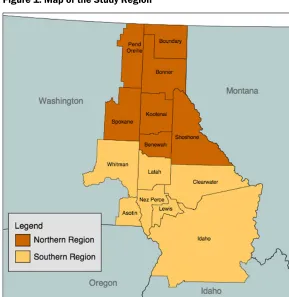
This article presents results from a multidisci-plinary project that examined whether increased production and processing of livestock for local and regional markets was a feasible economic development strategy in rural areas of northern Idaho and eastern Washington. Currently no substantial, accessible feedlot or U.S. Department
of Agriculture (USDA)-inspected processing infrastructure exists in the study area, leading most small producers to sell their livestock at auction with few options for branding their products to participate in higher value markets. The closest substantial processing facilities are a four to six hour drive from the area — farther than most producers are willing to transport their livestock. To assess and overcome these barriers to local and regional markets, we explored the viability of a Interim Director, Office of Community Partnerships,
University of Idaho; [email protected]
b Research Associate, Office of Community Partnerships,
University of Idaho; [email protected]
c Instructor of Operations Management, Department of
Business, University of Idaho; [email protected] d Instructor of Economics, Department of Business,
University of Idaho; [email protected]
e Professor, Agricultural Economics and Rural Sociology,
University of Idaho; [email protected]
f Associate Professor, Department of Biological and
Agricul-tural Engineering, University of Idaho; [email protected] g Associate Professor, Department of Conservation, Social
Sciences and Bioregional Planning and Community Design, University of Idaho; [email protected]
different USDA-inspected processing options to better understand economic feasibility, environ-mental impacts, and the small-scale livestock production value chain (i.e., consumer demand, producer capacity and willingness to participate, and processing capacity). In this paper, we present results from stakeholder surveys, interviews, forums, and an economic impact analysis. Results indicate that several livestock processing develop-ment scenarios are socially, economically, and environmentally viable in the region. Project findings are relevant to many areas of the United States, especially areas of the West, that have low population densities, large transportation distances, and few processing options for small-scale
livestock producers.
Keywords
economic impacts, food systems, local, livestock producer attitudes, regional, USDA-inspected meat processing
Introduction and Literature Review
While the business model for large-scale agriculture involves specialization, many small farms survive through diversification. Raising livestock can be an important mainstay of or supplement to small diversified farms. Unfortunately, the conventional livestock system includes pricing determined large-ly by the efficiencies and business models of the largest livestock operations, reducing the viability of small-scale livestock producers. At the same time, many consumers and small producers have become dissatisfied with the industrial food system, resulting in a national resurgence of interest in local foods (Hinrichs & Welsh, 2003). Sales of locally produced fruits, vegetables, and beef products are on the rise (Springer, Biermacher, Childs, Alkire, & Grooms, 2009). The revival of farmers markets, community gardens, and food co-ops, the recent media coverage of food safety issues, the use of local foods in restaurants, and the pressure to include sourcing information in grocery stores all represent the increasing market value and consumer interest in local foods.
The increased interest in and demand for locally produced foods is well documented. The Agricultural Sustainability Institute at the
University of California, Davis published a biblio-graphy (2013) that includes over 2,000 articles published in the past 13 years on local and regional food systems. Many consumers prefer meat products sourced locally or produced by someone they know (Winter, 2003) and are willing to pay considerably more for these products (Carpio & Isengildina-Massa, 2009; Darby, Batte, Ernst, & Roe, 2008). Restaurants have also increased their purchases of locally grown products in response to consumer interest (National Restaurant Association, 2009).
A growing body of research highlights the potential benefits of small-scale food systems, including rural community revitalization, ecological sustainability, and improved social equity (Brehm & Eisenhauer, 2008; Feenstra, 1997; Hultine, Cooperband, Curry, & Gasteyer, 2007). Worosz, Knight, Harris, and Conner (2008) found that local food system participation increases the quality of life for farmers, their employees, and livestock. Some research found that selling to local markets provides economic support for rural areas. Foltz, Jackson-Smith, and Chen (2002) found that smaller, independent farms that market their products directly to local communities support local busi-nesses and stimulate economic activity.
Growing interest in local foods presents an opportunity for small-scale livestock producers to en