Image Clinic Employees’ Attitude Facing Health
Solid Waste
JULIANA MACHADO DO COUTO E MELO
Business Administration Graduate Program, FUMEC University. Av. Afonso Pena, 3880. Bairro Cruzeiro, Belo Horizonte, MG, CEP. 30130-009
Brazil.
JERSONE TASSO MOREIRA SILVA
Business Administration Graduate Program, FUMEC University. Av. Afonso Pena, 3880. Bairro Cruzeiro, Belo Horizonte, MG, CEP. 30130-009
Brazil.
Abstract
Health organizations seek to achieve their goals by creating protocols and applying standardization processes in order to minimize mistakes. For that, we need to plan the actions with the creation of manuals whose rules define the forms of action on organization internal processes, such as the disposal of solid waste generated in the health services, whose failure could generate serious consequences for the environment and human’s health. Hospitals have routines that need to be followed to achieve better strategic and operational performance. Accordingly, the aim of this study is to analyze the perception of the employees of a health organization on the application and implementation procedures in the medical waste handling in an image clinic in the city of Belo Horizonte, Minas Gerais, Brazil. The study is characterized as being qualitative and descriptive with the use of semi-structured questionnaire. The results have shown that the current reverse procedure is adequate, but this does not reflect the level of commitment of those involved in the process, thus need improvement. This case study concluded that the disposal of the researched health clinic’s solid waste despite of followed rules established by the company and benchmarks, does not provide proper training to its employees, which leads to lack of awareness and commitment to the disposal process, weakening the efficiency and increasing risks.
Keywords: medical clinics, solid waste, health impairment, hospital routines.
1. INTRODUCTION
Organizations are social action sites, more or less open to knowledge of formal disciplines and explicitly organized with marketing, production and so on" (CLEGG AND HARDY, 2007). These organizations seek to achieve their goals through various strategies. Minimizing errors is one of these strategies and so they resort to behaviors and processes standardization, creating protocols and standardizations.
Resolutions, documentation, norms, bureaucracy and institutionalization are ways to streamline processes, generating business organization. These need the commitment and attitude of the human being so that the world might work better.
With the globalization, the perception that the planet is a living being and with the development of technology, the information could be transmitted expeditiously causing global problems to become everyone's responsibility. The market came up with this new paradigm that contributes to the companies changing profile that have pursued a more sustainable management, with less impact on the planet. This form of management with greater respect for the environment and maintenance of the human species has become a necessity in addition to positive marketing parameter.
According to Gerth and Mills (2002), the bureaucracy seeks the elimination of nonproductive and administrative dysfunctions of society and their organizations by controlling the individual’s behavior from a social arrangement, which operates independently of human interests and affections; they must be eradicated so that the system works continuously and without errors, like a set of gears on a machine. We observe, however, that the mere imposition of rules and regulations does not guarantee the adherence of individuals to them. Within this consciousness is the correct waste disposal of various human actions that is now a problem for developing countries, one of the biggest current dilemmas about sustainable production.
The term "hospital medical waste" (HMW), in general, refers to those from health units, hospitals, medical clinics and other large generators that are often referred to as "medical waste" and has a diverse nature (ZAMONER, 2009).
The worldwide concern about the disposal of HMW is growing and that is observed by the Brazilian´s National Agency for Sanitary Surveillance (ANVISA) with a Resolution RDC drafted # 306, of December 7, 2004, which provides for the Technical Regulation for managing health services waste (ANVISA, 2004) and it still says that every Health Services waste generator should develop a Plan for Health Services Waste Management. This document presents and describes the actions related to the proper management of solid waste.
Numerous medical clinics emerge and has emerged from physicians’ association whose actions are to provide health services. These clinics are in large numbers administered by medical practitioners that in general did not have any management training. But, with the creation of undergraduate and post-graduate courses in health management has created an opportunity to professionalize and to the improve health knowledge and hospital management.
In this sense, this study’s problem was to answer the following question: What are the perceptions of the employees of an image clinic on the application and procedures implementation for the handling of medical waste? This research aims to analyze the perception of the employees of a health organization on the application and implementation of procedures for the handling of medical waste.
2. LITERATURE REVIEW Ecological Attitude
The development of humanity shows that the individual level of commitment has been growing with the cultural, social, biological and technological sector, through a close relationship with the environment (Takayanagui, 1993).
As man is a rational animal, endowed with perception and consciousness, he and the society of which it is part, are responsible to live according to the nature laws (OLIVEIRA, PIROLA AND PEREIRA, 2011).
Oliveira, Pirola and Pereira (2011), state that the resources that come from nature are being used in a negative way, causing damage to the environment and having bad reflexes on men’s life and health.
According to Takayanagui (1993), the natural biological balance between humans and nature has become extinct in the world so that the hunter became a farmer, but the problems of natural resources preservation had been missing since the dawn of humanity.
According to Valverde (2013), technological development and population growth are key factors for the increase in consumption and, in turn, generate an accumulation of waste. One of the biggest urban environmental problems in the world today is the difficulty of placing the trash (Leite, 2003).
According to Takayanagui (1993), in Sweden, in 1972, it was held the first major event related to the environment, the International Conference in Stockholm, developed by the United Nations, with the participation of 113 nations that have developed guidelines for all people, with goal of improving the relationship between man and the environment. This event made humanity think about its problems with nature.
The biggest event that mankind has ever witnessed on the problems related to the environment was the Second United Nations Conference on Environment and Development - UNCED, also called ECO-92 or 92 Rio Conference, held in June 1992 in Rio de Janeiro, Brazil.
Ecological awareness is a new incentive factor that is being monitored by companies and the government in order to reduce various types of environmental impact, generating greater protection to society and consequently the future interests (Valverde, 2013).
Oliveira, Pirola and Pereira (2011), state that everything became valid in the name of progress, the welfare of society and a more comfortable life. However, the demand for better human life is bringing him illness, social problems and jeopardizing its future on the globe, since many of their attitudes are degrading and irresponsible in a sustainable direction.
According to Oliveira, Pirola and Pereira (2011), one can put that the environmental problem in a priority position in the world today, especially for health workers, for the power to live healthily is closely linked to the quality of human and environmental life.
The lack of information from health professionals, family members and the community regarding the proper separation of materials, storage and hospital medical waste disposal often cause these procedures to be ignored or run erratically (REZENDE , 2006).
Hospital Medical Waste Disposal Standardization
According to ANVISA (2004), the generated waste in the health services are classified into five Groups: A, B, C, D and E, as Table 01 below:
Table 01: Health Waste Classification Group
Group A
Residues where there is a possibility of biological agents, that by their higher concentrations characteristics can cause infection risk. Examples: signs and laboratory dishes, carcasses, body parts (limbs), tissues, transfusion bags containing blood, among others.
Group B
Waste containing chemicals that may present a risk to public health or the environment, depending on its characteristics of flammability, corrosiveness, reactivity and toxicity. Ex: seized drugs, laboratory reagents, and waste containing heavy metals, among others.
Group C
Any material resulting from human activities containing radionuclides in excess of the exemption limits specified in the standards of the National Nuclear Energy Commission (CNEN) and for which reuse is inappropriate or not provided as, for example, services for nuclear medicine and radiation quantities etc. Group D Waste not containing the chemical or radiological health or the environment biological hazards can be
compared to domestic waste. E.g. Food scraps and, waste of administrative areas etc.
Group E Sharp or hazardous material such as razor blades, needles, glass ampoules, diamond burs, scalpel blades, lancets, spatulas and the like.
Source: Adapted from Anvisa’s manual, 2004.
Based on CONAMA (2005), the Hospital Medical Waste generators are defined as: All services related to human and animal, including home care services and the health services field treatments; analytical laboratories of health products; mortuaries, and funeral services are held where embalming activities (tanatopraxy, somatosensory and conservation); forensic medicine, drugstores and pharmacies including handling service; educational establishments and research in health, zoonosis control center, distributors of pharmaceutical products, importers, distributors and product materials and controls for in vitro diagnosis; care mobile health units, acupuncture services, tattooing services and others similar.
RDC ANVISA Resolutions 306/2004 and 358/2005 CONAMA are the federal documents, which has the power of the State over the waste generators, and yet the content of these documents still suffers criticism of concepts inadequacy and classification index contamination of HMW ( Rezende–2006).
Cassaro (2006), states that for a health services safe waste management to occur is a priority for all people who work in the health care to know what risks their activities represent and, in addition, these professionals must be trained to deal with waste. The information must be clear and all staff, waste generators of the health service, must serve doctors, nurses, attendants, administrative, maintenance.
Solid waste management, according to Cussiol (2008), is the set of technical and administrative activities applicable to handling, to minimize the generation, segregation at source, the collection, transport, storage, treatment, control the registration and final waste disposal. The wastes from healthcare services if they are not packed, collected, transported, treated and disposed of properly, can turn into an environmental problem.
CONAMA (2005), considers that consortium solutions for treatment and waste disposal from healthcare services, are particularly suitable for small generators and small municipalities. Clinics and private hospitals of Minas Gerais outsource the collection and waste treatment in the health service. These subcontractors are called Environmental Solutions Service Provider and should be registered and licensed by the State Foundation for the Environment (FEAM). The waste generator companies are partnering with providers and external transportation service companies to collect, but are vulnerable to the layout they present.
The HMW are managed in a piecemeal fashion, as each establishment takes care of its process: a healthcare company conducts its part and the collect company takes care of its waste. Furthermore, although there is a situation far beyond the creation and enforcement of laws for the environment protection, a complex situation involving environmental, health workers, government officials and economists, with different interests, often opposed reaching divergences.
3. METHODOLOGY
This research is a qualitative study using a semi-structured questionnaire. This research was conducted in an image clinic in the city of Belo Horizonte with a staff of 8 doctors and 15 employees. The questionnaires were answered by a medical director, a manager (administrator), two attendants responsible for segregation, separation of solid health waste, and two nursing technicians responsible for the collection of waste and the professional responsible for the material route up to his storage subsequent collection by the outsourced company.
The questionnaire was delivered to each of the respondents and the researcher waited, without interfering with the response, while the professionals were writing. This procedure was carried out for two days. The researcher observed and followed the internal process of waste transportation to the temporary storage location. The questionnaire included eleven essay questions and an objective question.
Professionals responsible for the collection of solid waste were interviewed. This responsibility should be in all organization levels: strategic, tactical and operational.
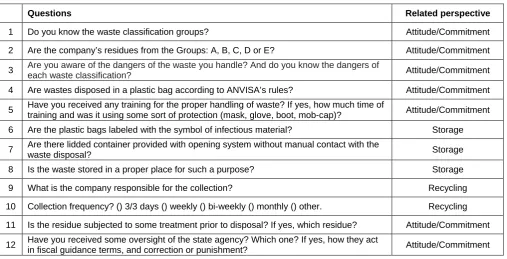
Table 2 lists the questions that were developed according to the research’s objective, categorizing the questions into three categories of research, called perspectives related: Attitude, Commitment, Storage and Recycling.
Table 02 - Questionnaire Classification
Questions Related perspective
1 Do you know the waste classification groups? Attitude/Commitment 2 Are the company’s residues from the Groups: A, B, C, D or E? Attitude/Commitment 3 Are you aware of the dangers of the waste you handle? And do you know the dangers of
each waste classification? Attitude/Commitment
4 Are wastes disposed in a plastic bag according to ANVISA’s rules? Attitude/Commitment 5 Have you received any training for the proper handling of waste? If yes, how much time of
training and was it using some sort of protection (mask, glove, boot, mob-cap)? Attitude/Commitment 6 Are the plastic bags labeled with the symbol of infectious material? Storage 7 Are there lidded container provided with opening system without manual contact with the
waste disposal? Storage
8 Is the waste stored in a proper place for such a purpose? Storage 9 What is the company responsible for the collection? Recycling 10 Collection frequency? () 3/3 days () weekly () bi-weekly () monthly () other. Recycling 11 Is the residue subjected to some treatment prior to disposal? If yes, which residue? Attitude/Commitment 12 Have you received some oversight of the state agency? Which one? If yes, how they act
in fiscal guidance terms, and correction or punishment? Attitude/Commitment
SOURCE: Developed by authors - Elaborated according to RDC 306/2004 and Resolução CONAMA 358/2005.
4. RESULTS
Within the applicability of the questionnaire about the knowledge of Waste Classification Groups we observe that not all respondents know about the Waste Classification Groups and the responsible professional for the material delivery up to his storage for collection by the outsourced company is not aware of the distinction between groups. The level of education seems to have influenced this item. He knows it is a hazardous material due to different packaging and instructions "danger, hazardous material." The other employees know that the company only generates waste from Group A and Group D (described in Table 01) and know the dangers that these residues exhibit.
According to Taraboulsi (2004), people can rarely be productive if they do not know the direction they are going. Working every day with diligence and dedication does not mean perform their tasks efficiently. It takes more than that. A proper training should be conducted by the company for the correct waste disposal and it was showed that the training was not performed. Thus not knowing the correct process affects the outcome. Training was provided only for the waste collection responsible for in the examination rooms. He knew, in that case, that he should use boots, gloves, apron and cap and said he had received several trainings.
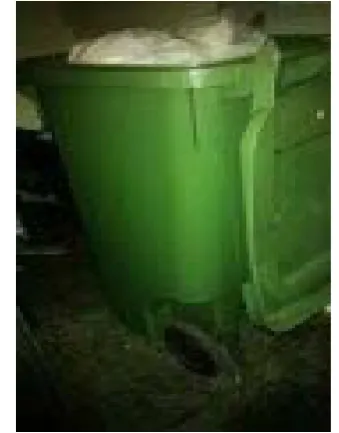
assumptions will guide the course of action and decision making. Thus ,the variations of possible behavior will necessarily be constrained by the limits given by the premises or assumptions. Moreover, even in situations in which they have a greater knowledge of the choice consequences, their anticipation unlikely produce more effective results, since preferences change depending on the prevailing values, making the premeditated assessment inaccurate; it will suffer changes in value from initial consideration to the practical implementation. According to Cussiol (2008), Group A must be in milky white bags with the appropriate symbol to be recognized and properly packaged internally to be taken to external collection shown in Figure 1 and the bags are set in the container shown in Figure 2.
Figure 1: White milky bag with biological material symbol
Source: Cussiol, 2008
Figure 2 - Container for the milky white bag waste placement.
Source: Photo supplied by the researched clinic
Figure 3 - Trolley for transportation from the point of generation to the point of temporary storage
Source: Photo supplied by the researched clinic
Outsourced company vehicles responsible for external medical waste collection only perform this collection procedure once a week. Thus, the residues are packed in temporary storage place for a week, waiting to be collected for proper disposal.
In the researched clinic we observed that it performs the correctly separation by placing the milky white bag material inside a metal container (Figure 2) and separated from the rest of the garbage (waste type D). At this point, the personnel collects the milky bag, handling everything with gloves and boots, as determined by the FEAM manual, which is along with the utilities room, due to the fact the company is having only residues A and D, which is authorized by FEAM (CUSSIOL, 2008). At this time, the medical solid waste is in temporary storage as shown in Figure 4.
Figure 4 - Container suitable for residue of Group A.
Source: Photo supplied by the researched clinic
5. CONCLUSION
Corporate behavior must not be analyzed based on results only, it is important to include process by which they are obtained. This can be seen within the research results. The studied company is a small business and their solutions are simple, but could be better managed. It was observed a lack of training given to employees regarding proper handling, storage and recycling of solid wastes.
The researched clinic performs correctly the recycling and storage handling. It follows the rules, doing the proper disposal of solid waste, but does not provide training for the professionals generating the unawareness of the correct procedure, and, consequently, the lack of Attitude / Commitment of employees in relation to the proper disposal.
Based on Taraboulsi (2004), the role of leaders and managers through training is ideal for employees’ high performance, making them enlightened and high-achieving people on their daily task. Thus, it is observed that employees, based on the knowledge that they have about the process being undertaken, do everything correctly. The problem lies on the information they receive and how this information is transmitted.
In organizations the individuals behave rationally only with respect to one set of data in a particular situation. These data comprise the knowledge (or assumptions) of future events or probability distributions regarding future events, knowledge of alternative available actions, knowledge of the consequences of these alternatives - knowledge that can be more or less complete - and rules or principles according to which the individual establishes an order of preference for the consequences or alternatives.
People with attitude enable quality services to be performed, thus reflecting an alignment between business objectives and the environment and what is being done operationally. Consortial solutions such as subcontractors’ collection, for treatment and disposal of wastes from healthcare services, are interesting for small waste generators. They help making the right path to be followed, but a better employees knowledge of the contracting firm minimizes the risk of failures and deviations from targets.
The importance and the necessity of implementing the resolutions governing the issue of medical wastes are undeniable, especially when there is a growing awareness of the environment importance as a support for life continuity.
REFERENCES
ANVISA - Agência Nacional de Vigilância Sanitária. Resolução – RDC n.° 306 de 07 de dezembro de 2004. Dispõe sobre o Regulamento Técnico para o gerenciamento de resíduos de serviço de saúde. Available in: http://bvsms.saude.gov.br/bvs/saudelegis/anvisa/2004/res0306_07_12_2004.html>
Cassaro, L. (2006). Health waste. Publicado em 2006. Available in: < http://www.cenedcursos.com.br/residuos-de-saude.html>
Clegg, S. T. R.; Hardy, C. (2007). Introduction: organization and organizational studies. São Paulo: Editora Atlas.
CONAMA – Conselho Nacional de Meio Ambiente. Resolução nº 358 de 29 de abril de 2005. Dispõe sobre o tratamento e a disposição final dos resíduos de serviços de saúde e dá outras providencias. Diário Oficial da União de 04 de maio
de 2005. Available in: <http://www.esa.ensino.eb.br/meioambiente/arquivos/CONAMA_RES_CONS_2005_358_residuo_hospitalar.pdf >
Cussiol, N. A. M. (2008) Waste management manual for health service. Belo Horizonte: FEAM, 2008. Available in: < http://www.feam.br/images/stories/arquivos/minassemlixoes/cartilha_rss_alta.pdf>
Garriga, E.; Melé, D. (2004). Corporate social responsibility theories: Mapping the territory. Journal of business ethics, 53(1-2): 51-71.
Gerth, H. H.; Mills, C. W.(2002). Ensaios de sociologia. Rio de Janeiro: LTC, p. 138-170, 5ª Ed. Leite, P. R. (2003). Reverse Logistics: Environment and Competitiveness. São Paulo: Prenctice Hall. March, J. G.; Simon, H. A. (1972). Organization theory. Rio de Janeiro: FGV, p. 192-238.
Oliveira, W. F.; Pirola, J. C.; Pereira, J. L. G. (2011). The relationship between health and the quality of the man-made environment: a matter of debate. Revbea, Rio Grande, 6: 20-27, 2011. Revista Brasileira de educação ambiental. Disponível em: <file:///C:/Users/Usu%C3%A1rio/Downloads/2021-5339-1-PB.pdf
Rezende, L. R. (2006). Vulnerability of medical waste generators to resolutions n° 358 CONAMA e RDC n° 306 ANVISA. O mundo da saúde. São Paulo, V. 30, n. 4, p. 588 – 597, out/dez, 2006. Available in: <http://www.saocamilo-sp.br/pdf/mundo_saude/41/08_Vulnerabilidade.pdf
Rodrigues, C. R. B. (2009). Legal and environmental aspects of hospital waste disposal. Dissertação (Mestre em Engenharia de Produção), Universidade Tecnológica Federal do Paraná (UTFPR), Ponta Grossa, 110 f.
Takayanagui, A. M. M. (1993). Health workers and the environment: educational action by nurses in raising awareness for solid waste management. Tese Doutorado. Universidade de São Paulo Escola de Enfermagem de Ribeirão Preto. Taraboulsi, F. A. (2004). Hospital hospitality management. São Paulo: Editora Atlas. 2ª Ed.
Valverde, V. V. (2013). Health waste reverse logistics in private hospitals of Minas Gerais. Dissertação de mestrado em administração – Universidade FUMEC.