Original Research Article
Risk factors associated with severe asthma exacerbations in children
attending Alexandria University Children’s Hospital, Egypt
Ihab H. El Sawy
1, Reham M. Wagdy
1*, Afaf G. Ibrahim
2, Suzy W. Ibrahim
3INTRODUCTION
Worldwide, childhood asthma appears to be increasing in prevalence, despite considerable improvements in management.1 Acute asthma exacerbation is one of the most distressing events of childhood persistent asthma specially the severe attacks. In addition to significant burden on the hospital resources, severe exacerbations are serious conditions that might necessitate course of systemic corticosteroids in order to prevent unfavourable
outcomes or death.2 Substantial efforts have been invested through many studies to assess severity and to identify children at risk for severe asthma exacerbations at the Emergency Department (ED). Modified Paediatric Pulmonary Index Score (PPIS) and asthma exacerbation clinical score are good applications.3,4 However, awareness of risk factors for severe asthma exacerbations by parents or family is still challenging. Anxious families may visit ED frequently even for mild exacerbations however, other families might present late to the hospital
ABSTRACT
Background: Severe asthma exacerbation is one of the common pediatric medical emergencies that necessitates hospital visits. The study aimed to identify risk factors associated with pediatric severe asthma exacerbations that might have the potential to guide the parents for early medical consultations and physicians at primary health care centers for proper management.
Methods: A case-control study was conducted on over 100 asthmatic children below 12 years attending the Emergency Department of Alexandria University Children’s Hospital in acute exacerbation. Based on a modified pulmonary index score, the patients were allocated into 2 groups; study group (50 patients with severe asthma exacerbation) and control group (50 patients with mild asthma exacerbations). Demographic data, history of illness, alarming clinical signs, medications, and outcome of all participants were recorded.
Results: Severe asthma exacerbations were more encountered among males, older age, and with a longer duration of asthma (X±SD=28.4±15.9 months) with significant differences when compared to controls. Comparing the studied groups revealed higher risk for severe asthma exacerbations mainly with; history of sudden onset of severe respiratory distress (Odds ratio ―OR‖=30.13, 95% CI, 13.78-66.69) and chronic steroid-dependent asthma (OR=14.46, 95% CI, 3.97-52.65). Cyanosis, lethargy, and inability to talk were alarming signs in patients with severe asthma exacerbation when compared to those with mild asthma exacerbation (p<0.05).
Conclusions: Severe asthma exacerbation in children is still associated with many risk factors that may alert the patients’ caregivers and physicians prospectively for early proper management.
Keywords: Childhood asthma, Severe exacerbation, Pulmonary index scoring, Hypoxia, Silent chest
1
Department of Paediatrics, 2Department of Community Medicine, Faculty of medicine, Alexandria University, Alexandria, Egypt
3
Alexandria University Children’s hospital, Alexandria, Egypt
Received: 25 July 2018
Revised: 12 August 2018
Accepted: 14 August 2018
*Correspondence:
Dr. Reham M. Wagdy,
E-mail: [email protected]
Copyright: © the author(s), publisher and licensee Medip Academy. This is an open-access article distributed under the terms of the Creative Commons Attribution Non-Commercial License, which permits unrestricted non-commercial use, distribution, and reproduction in any medium, provided the original work is properly cited.
with severe attacks. The current study was conducted for identification of risk factors associated with pediatric severe asthma exacerbations that might have the potential to guide the parents for early medical consultations and physicians at primary health care centres for proper management.
METHODS
Ethical considerations
Ethical approval was obtained from the Ethical Review Committee, Alexandria University, Egypt. Informed consents were obtained from all patients’ caregivers. Study settings and design
The current study was case control study. It was conducted over asthmatic children who attended ED of Alexandria University Children’s Hospital due to exacerbation of their asthma symptoms during the period from April 2011 to March 2012.
Study population
The current study included 100 children; 50 cases presented with severe asthma exacerbations (study group) and 50 children presented with mild asthma exacerbations (control group).
Inclusion criteria
Children diagnosed as persistent bronchial asthma and presenting during acute asthma exacerbation were included in the study provided that their ages ranged between 3-12 years. Asthmatics older than 3 years were selected to avoid misdiagnoses with bronchiolitis and transient wheezing of early childhood which disappear by 3 years old. Cases were selected consecutively from ED and the asthma exacerbation severity was assessed according to modified PPIS by Carroll et al before receiving medications.5 Mild attacks scored from 6-9 while severe attacks scored from 15-18.
Exclusion criteria
Asthmatic children with other associated illnesses or underlying diseases that may affect asthma exacerbation severity were excluded from our study e.g. congenital heart disease, pneumonia, cystic fibrosis, immuno-deficiency disease, ciliary dyskinesia etc.
Methods
The study was based on collecting demographic data, history data, alarming signs, medications and patient’s outcome through patients questionnaire and examination. Demographic data of the patients included age, gender and age of onset of asthma. The following history data related to their disease status were recorded; history of
chronic steroid intake, prior intensive care admission, prior mechanical ventilation for asthma, recurrent visits to ED in the past 48 hours, sudden onset of severe respiratory distress, poor compliance with therapy, poor recognition of severity of attack by patients' family or their physician, prior use of systemic corticosteroid in last year, previous history of respiratory arrest or hypoxic seizures/encephalopathy, over-reliance on short acting β2-agonist inhaler therapy and previous history of delay hospital or intensive care unit admission. Thorough clinical examination was done and focused on the level of consciousness, cyanosis and talking pattern.
In addition, oxygen saturation (SpO2%) by pulse
oximeter and PEFR by Wrights peak flowmeter for cooperative children ≥6-year-old were measured. Arterial blood gases were only measured for cases admitted to PICU. The treatment protocol used for asthma exacerbation was adopted by the Pediatric Department, Faculty of Medicine, Alexandria University, and all given medications were recorded.6 Patients’ outcome (recovery and discharging from ED, admission to hospital or Pediatric Intensive Care Unit (PICU), or death) were recorded.
Statistical analysis
Data were checked and analysed by SPSS system files (SPSS package version 18). A Chi-squared or Fisher exact test was used to compare categorical variables. Continuous variables were determined by Student’s t-test or univariate analysis. All continuous data are expressed as means±standard deviation. A two-tailed p value of <0.05 was considered statistically significant.
RESULTS
(OR=10.2, 95% CI; 3.4-30.6), history of respiratory arrest (OR=9.03, 95% CI; 2.46-33.12), history of prior use of systemic corticosteroid in last year (OR=8.22, 95% CI; 1.33-49.23), history of over-reliance on rapid short acting β2 agonist inhaler therapy (OR=8, 95% CI; 3.36-20.38), history of recurrent visits to emergency unit in last 48 hours (OR=7.87, 95% CI; 1.07-57.56) and history of
prior mechanical ventilation for asthma exacerbation (OR=5.27, 95% CI; 1.08-25.79). On the other hand, cases with history of poor recognition of the severity of the attack and history of hypoxic seizures were weakly associated with severe asthma exacerbation (OR=2.25, 95% CI; 0.17-7.14 and OR=7.70, 95% CI; 0.78-75.77, respectively).
Table 1: Comparison between the studied groups as regards age, gender and duration of disease.
Personal data and history of illness
Study group (patients with severe asthma exacerbation)
(N=50)
Control group (patients with severe asthma exacerbation)
(N=50) P value
No % No %
Gender
Male 35 70 23 46
0.015*
Female 15 30 27 54
Age (years)
Min-Max 5-11 3-10
<0.0001*
Mean age±SD 6.9±1.4 5.2±1.4
Duration of illness (month)
Min-Max 6-84 5-72
<0.0001*
Mean±SD 28.4±15.9 16.7±13.5
*significant at p≤0.05.
Table 2: Comparison between cases and controls concerning patients’ history profile of bronchial asthma.
History of asthma
Study group (N=50)
Control group
(N=50) Odds
ratio
95% confidence interval
No. % No. %
Chronic steroid-dependent asthma 24 48 3 6 14.46 3.97 to 52.65
Prior intensive care admission 18 36 2 4 13.5 2.93-62.21
Prior mechanical ventilation for asthma 9 18 2 4 5.27 1.08-25.79
Recurrent visits to emergency unit in last 48 hrs 50 100 46 92 7.87 1.07-57.56
Sudden onset of severe respiratory distress 50 100 8 16 30.38 13.78-66.96
Poor compliance with therapy 29 58 6 12 10.13 3.65-28.13
Poor recognition of severity of attack 10 20 5 10 2.25 0.17-7.14
Prior use of systemic corticosteroid in last year 50 100 44 88 8.22 1.33-49.23
Respiratory arrest 10 20 0 0 9.03 2.46-33.12
Hypoxic seizures/encephalopathy 3 6 0 0 7.70 0.78-75.77
Over-reliance on rapid & short acting β2 agonist,
inhaler therapy 35 70 11 22 8.27 3.36-20.38
Delayed admission to hospital or ICU 15 30 0 0 10.27 3.45-30.62
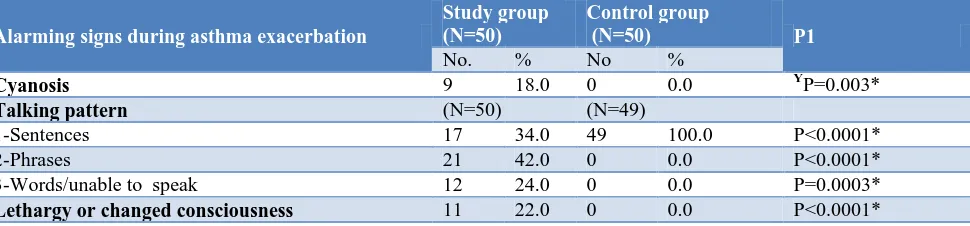
Table 3: Comparison between cases and controls according to associated alarming physical signs during asthma exacerbations.
Alarming signs during asthma exacerbation
Study group (N=50)
Control group
(N=50) P1
No. % No %
Cyanosis 9 18.0 0 0.0 YP=0.003*
Talking pattern (N=50) (N=49)
1-Sentences 17 34.0 49 100.0 P<0.0001*
2-Phrases 21 42.0 0 0.0 P<0.0001*
3-Words/unable to speak 12 24.0 0 0.0 P=0.0003*
Lethargy or changed consciousness 11 22.0 0 0.0 P<0.0001*
Y
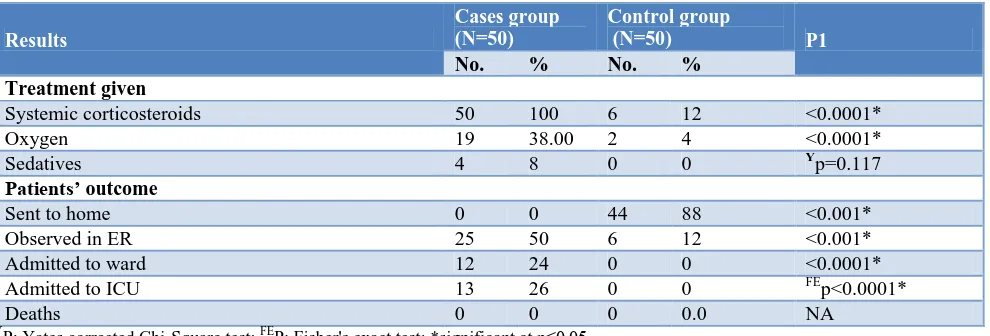
Table 4: Comparison between cases and controls according to the used medications during asthma exacerbations and according to patients’ outcome.
Results
Cases group (N=50)
Control group
(N=50) P1
No. % No. %
Treatment given
Systemic corticosteroids 50 100 6 12 <0.0001*
Oxygen 19 38.00 2 4 <0.0001*
Sedatives 4 8 0 0 Yp=0.117
Patients’ outcome
Sent to home 0 0 44 88 <0.001*
Observed in ER 25 50 6 12 <0.001*
Admitted to ward 12 24 0 0 <0.0001*
Admitted to ICU 13 26 0 0 FEp<0.0001*
Deaths 0 0 0 0.0 NA
Y
P: Yates corrected Chi-Square test; FEP: Fisher's exact test; *significant at p≤0.05.
The percentage of patients with severe exacerbation having cyanosis, altered sensorium and talking in words/unable to speak (Table 3) were 18%, 22%, and 24% respectively, while no patients in the control group had these signs (p<0.05).
In the current study all the enrolled cases received β2 agonist delivered by nebulizer to relive the exacerbation at ED. Meanwhile, 100% of severe cases received systemic corticosteroid compared to 12% of mild group (p<0.0001) (Table 4). Also, oxygen supply was used in ED in 38% of cases with severe asthma exacerbation compared to 4% of the cases with mild exacerbation (P=0.0001). Concerning patients’ outcome, 26% of the cases with severe exacerbation were admitted to ICU, 24% to wards while the remaining 50% were managed in ED up to 24 hours, while in control group 88% were sent home after receiving inhaled β2 agonist and 12% were observed in ED for 2 hours. These differences in the patients’ outcome between the study and control groups were significant (p<0.001).
DISCUSSION
Acute asthma exacerbation is the most common cause of childhood emergency department visits and hospitalizations. Adequate management of persistent asthma have been consistently shown to reduce the risk of severe exacerbations.7 However, some children with persistent asthma who developed one severe exacerbation in the prior year have a two folds increased risk of subsequent severe exacerbations despite use of controller medications suggesting that apart from medical control there are other risk factors for precipitating severe attacks.8 This study was conducted to identify risk factors of severe exacerbations of asthmatic children to guide the parents for early medical consultations and physicians at primary health care centres for proper management. Gender, age and disease duration represented the main checked demographic data. In agreement with Schatz et
al and Sears et al the study showed that severe asthma exacerbations were affecting more male patients.9,10 Also, these severe attacks were frequently encountered among older asthmatic children than younger children. This is contradictory to Engelsvol et al who reported that severe attacks were highly related to younger age.11 This may be explained in our study by excluding children below 3 years to avoid early transient wheezing. On addition, children with severe asthma exacerbations had longer duration of the disease than in mild exacerbations group. Similarly to this finding, Tsukioka et al concluded that with chronicity of the disease, poor lung function will be more expected and more symptomatology.12
Poor asthma control was a risk factor for asthma exacerbations as concluded by Haselkorn et al who studied asthmatic children between 6 to 11 years for risk of severe asthma exacerbation.13 Yavuz et al found that most of severe asthma exacerbations were among less controlled school children.14 As in our study, the high risk for severe asthma exacerbation due to poor compliance to therapy was approved by Scarfone et al, Johnston et al and recent GINA guidelines.15-17 An adherence to daily inhaled corticosteroid (ICS) therapy is the cornerstone of asthma control and discontinuation leads to deterioration of clinical control.18 About half of the study patients with severe asthma exacerbation were chronic steroid dependent and those were more likely to have severe attacks. Moreover, frequent use of short acting β2 agonist (SABA) medication is a key indicator of poor asthma control as reported by Gibson et al and Butz et al.19, 20 Our results showed that over reliance on SABA could be an important risk associated with severe exacerbations similar to results found by Paris et al.21
studies.22-25 In addition, delayed admission to hospital was important factor for developing severe asthma exacerbation. Renato Stein et al found that the delay may have contributed to the need for ICU admission.26 In our study, history of hypoxic seizures were weakly associated with severe asthma exacerbation and it was found among 6% of severe asthma exacerbation group. Although, this matched Stein et al (7.5%) but it was contradictory to GINA guidelines and this may be explained by small sample size of the study group.26,17 Also, we found in our study poor recognition of severity of attack was weakly associated risk factor with severe asthma exacerbations and this may be attributed to illiteracy, lack of health education of caregivers and suboptimal interventions of physicians caring for patients with asthma mainly in poor urban areas.
Our study reported some alarming physical signs as central cyanosis and altered sensorium which were highly associated with severe asthma exacerbation and could be considered red flags for the family or for general practitioners. Similar results were reported by Fábregas et al and Brenner et al.27,28 Also, analysis of talking pattern of patients during the exacerbations showed that inability to speak or talking in words were found to be highly associated risk factor for severe asthma exacerbations similar to literature.29
Regarding treatment of acute asthma exacerbations at ED, in general, primary treatment included administration of oxygen, inhalation of β2-agonists with or without systemic corticosteroids along with frequent patient monitoring. The current study revealed higher percentage of patients with severe asthma exacerbation received oxygen therapy and systemic corticosteroid when compared to mild asthma exacerbations. On addition, sedation therapy was only used in 8% of the patients with severe asthma exacerbation as it was not recommended except when patient intubated for mechanical ventilation as reported by Camargo et al.30 As regards the patients’ outcome, the percentages of hospitalized patients or those admitted to ICU with severe asthma exacerbations after ED treatment were significantly higher than those with mild asthma exacerbations. These findings are similar to that reported by Kelly et al.31 No deaths occurred among the studied cases which matched the average outcome of acute exacerbations published by many authors.32,33 Limitations of the study
The study was limited by small sample size and the subjectivity for some data. Despite these limitations, the results provided important information regarding the risk factors associated with severe asthma exacerbation in children.
CONCLUSION
Severe exacerbations might be anticipated for older, male asthmatic children with long disease duration, and with a
history profile including a sudden severe respiratory distress in previous attacks, poor drug compliance, chronic steroid-dependent asthma, prior intensive care admission and/or over-reliance on short beta 2 agonists inhaler. During asthma exacerbations, cyanosis, altered sensorium and inability to talk or speaking few words could be considered red flag signs for severe asthma exacerbations.
Recommendation
Awareness of risk factors related to severe asthma exacerbation in children may alert children’ caregivers and physicians for prompt interventions in order to reduce asthma morbidity and mortalities.
ACKNOWLEDGEMENTS
The authors would like to thank all the staff members of the ED and nursing team of Alexandria University Children’s Hospital for their cooperation.
Funding: No funding sources Conflict of interest: None declared
Ethical approval: The study was approved by the Institutional Ethics Committee, Alexandria University. Ethical Review Committee of Faculty of Medicine, Alexandria University
REFERENCES
1. Zahran HS, Bailey CM, Damon SA, Garbe PL, Breysse PN. Vital Signs: Asthma in Children — United States, 2001–2016. MMWR. 2018;67(5);149–55.
2. Sears MR. Epidemiology of asthma exacerbations. J Allergy Clin Immunol. 2008;122:662-8.
3. Hsu P, Lam LT, Browne G. The pulmonary index score as a clinical assessment tool for acute childhood asthma. Ann Allergy Asthma Immunol. 2010;105:425-7.
4. Forno E, Celedón JC. Predicting Asthma Exacerbations in Children. Curr Opin Pulm Med. 2012;18(1):63–9.
5. Carroll CL, Sekaran AK, Lerer TJ, Schramm CM. A modified pulmonary index score with predictive value for pediatric asthma exacerbations. Ann Allergy Asthma Immunol. 2005;94:355-9.
6. Amer Y, Elzalabany M, Omar T, Dowidar N, Badr-Eldin O, Elsawy I, et al. Treatment of Acute Asthma in Children: A Clinical Practice Guideline from the Alexandria University Hospitals, Center for Evidence-Based Clinical Practice Guidelines, Healthcare Quality Directorate and the Alexandria Faculty of Medicine, Department of Pediatrics, Pediatric Respiratory, Allergy & Immunology Unit and Alexandria University Children's Hospital. Conference Paper in GMS e-journal, 2012.
Different From Predictors of Severe Exacerbations From Asthma in Children. Chest. 2011;140(1):100– 7.
8. Covar RA, Szefler SJ, Zeiger RS, Sorkness CA, Moss M, Mauger DT, et al. Factors associated with asthma exacerbations during a long-term clinical trial of controller medications in children. J Allergy Clin Immunol. 2008;122(4):741–7.
9. Schatz M, Clark S, Camargo CA, Jr. Sex Differences in the Presentation and Course of Asthma Hospitalizations. Chest. 2006;129:50-5. 10. Sears M. Epidemiology of asthma exacerbations. J
Allergy Clin Immunol. 2008;122:662-8.
11. Engelsvold D, Øymar K. Hospital admissions for childhood asthma in Rogaland, Norway from 1984 to 2000. Acta Paediatrica. 2003;92:610-6.
12. Tsukioka K, Toyabe S, Akazawa K. Relationship between asthma severity and age at onset in Japanese adults. Nihon Kokyuki Gakkai Zasshi. 2010;48:898.
13. Haselkorn T, Zeiger RS, Chipps BE, Mink DR, Szefler SJ, Simons FE, et al. Recent asthma exacerbations predict future exacerbations in children with severe or difficult-to-treat asthma. J Allergy Clin Immunol. 2009;124(5):921-7.
14. Yavuz TS, Kartal O, Kaya G, Gulec M, Saldir M, Sener O. Risk factors associated with asthma exacerbations in school-age children. Clin Translational Allergy. 2015;5(2):6.
15. Scarfone RJ, Zorc JJ, Angsuco CJ. Emergency physicians’ prescribing of asthma controller medications. Pediatrics. 2006;117:821-7.
16. Johnston NW, Johnston SL, Duncan JM, Greene JM, Kabadze T, Keith PK, et al. The September epidemic of asthma exacerbations in children: a search for etiology. J Allergy Clin Immunol. 2005;115:132-8.
17. Guidelines is: From the Global Strategy for Asthma Management and Prevention, Global Initiative for Asthma (GINA) 2015. Available at: http:// www.ginasthma.org/. Accessed December 15, 2015. 18. Gibson PG, Henry D, Francis L, Cruickshank D,
Dupen F, Higginbotham N, et al. Association between availability of non-prescription beta 2 agonist inhalers and under treatment of asthma. British Medical J. 1993;306:1514-8.
19. Hossny E, Rosario N, Lee BW, Singh M, El-Ghoneimy D, Soh JY, Le Souef P. The use of inhaled corticosteroids in pediatric asthma: update World Allergy Organ J. 2016;9:26.
20. Butz AM, Ogborn J, Mudd S, Ballreich J, Tsoukleris M, Kub J, et al. Factors Associated with High Short Acting B2 Agonist (SABA) Use In Urban Children with Asthma Ann Allergy Asthma Immunol. 2015;114(5):385-92.
21. Paris J, Peterson EL, Wells K, Pladevall M, Burchard EG, Choudhry S, Lanfear DE, Williams LK. Relationship between recent short-acting
beta-agonist use and subsequent asthma exacerbations. Ann Allergy Asthma Immunol. 2008;101(5):482-7. 22. McFadden ER, Jr. Acute Severe Asthma. Am J
Respiratory Critical Care Med. 2003;168:740-59. 23. Wu AC, Tantisira K, Li L, Schuemann B, Weiss ST,
Fuhlbrigge AL. Predictors of Symptoms Are Different From Predictors of Severe Exacerbations From Asthma in Children Chest. 2011;140(1):100-7.
24. Alvarez GG, Schulzer M, Jung D, Fitz Gerald JM. A systematic review of risk factors associated with near-fatal and fatal asthma. Can Respir J. 2005;12:265-70.
25. Covar RA, Szefler SJ, Zeiger RS, Sorkness CA, Moss M, Mauger DT, Boehmer SJ, Strunk RC, Martinez FD, Taussig LM Factors associated with asthma exacerbations during a long-term clinical trial of controller medications in children.J Allergy Clin Immunol. 2008;122(4):741-7.
26. Renato Stein, Gerard J. Canny, Desmond J. Bohn, Joseph J. Reisman, Henry Levison. Severe Acute Asthma in a Pediatric Intensive Care Unit: Six Years' Experience. Pediatrics. 1989;83:1023-8. 27. Fábregas ML, de Diego Damiá A, MartínezFrancés
M, Cordero Rodríguez P, PerpiñáTordera M. Relationship between peak expiratory flow and clinical exploration and arterial gas analysis in assessing the severity of an asthma attack. Arch Broncopneumol. 1996;32:4-9.
28. Brenner B, Corbridge T, Kazzi A. Intubation and Mechanical Ventilation of the Asthmatic Patient in Respiratory Failure, Proceedings of the American Thoracic Society. 2009;6:371-9.
29. Fuhlbrigge A, Peden D, Apter AJ, Boushey HA, Camargo Jr. CA, Gern J, et al. Asthma outcomes: Exacerbations. J Allergy Clin Immunol. 2012;129:34-48.
30. Camargo CA Jr., Rachelefsky G, Schatz M. Managing Asthma Exacerbations in the Emergency Department. Proceedings of the American Thoracic Society. 2009;6:357-66.
31. Kelly AM, Kerr D, Powell C. Is severity assessment after one hour of treatment better for predicting the need for admission in acute asthma? Respiratory Med. 2004;98:777-81.
32. Engelkes M, Janssens HM, de Ridder MA, Sturkenboom MC, de Jongste JC, Verhamme KM. Real life data on incidence and risk factors of severe asthma exacerbations in children in primary care Respir Med. 2016;119:48-54.
33. Sly RM. Continuing decreases in asthma mortality in the United States. Ann Allergy Asthma Immunol 2004;92:313-8.
Cite this article as: El Sawy IH, Wagdy RM, Ibrahim AG, Ibrahim SW.Risk factors associated with severe asthma exacerbations in children attending Alexandria University Children’s Hospital, Egypt. Int J Community Med Public Health