Geschke Center
Doctoral Dissertations Theses, Dissertations, Capstones and Projects
2017
Ready to Lead? An Examination of the Alignment
of California Preservice School Leaders’ Fieldwork
Experiences with State Leadership Standards
Sandie Stringfellow
University of San Francisco, [email protected]
Follow this and additional works at:https://repository.usfca.edu/diss
Part of theEducational Administration and Supervision Commons,Educational Leadership
Commons, and theEducational Methods Commons
This Dissertation is brought to you for free and open access by the Theses, Dissertations, Capstones and Projects at USF Scholarship: a digital repository @ Gleeson Library | Geschke Center. It has been accepted for inclusion in Doctoral Dissertations by an authorized administrator of USF Scholarship: a digital repository @ Gleeson Library | Geschke Center. For more information, please [email protected].
Recommended Citation
Stringfellow, Sandie, "Ready to Lead? An Examination of the Alignment of California Preservice School Leaders’ Fieldwork Experiences with State Leadership Standards" (2017).Doctoral Dissertations. 349.
READY TO LEAD?
AN EXAMINATION OF THE ALIGNMENT OF CALIFORNIA PRESERVICE SCHOOL LEADERS’ FIELDWORK EXPERIENCES WITH
STATE LEADERSHIP STANDARDS
A Dissertation Presented
to
The Faculty of the School of Education Department of Leadership Studies Organization and Leadership Program
In Partial Fulfillment
of the Requirements for the Degree Doctor of Education
by
i
Dissertation Abstract
ABSTRACT
This study explored how three preservice school leaders (PSLs) in
California spent their time during their fieldwork for their
school-leader-preparation programs and if they were gaining experience in all of the
California Professional Standards for Education Leaders (CPSEL).
Specifically, my dissertation examined the use of a daily log (Project Reflect),
a custom-built web-based application that is designed to serve as an
easy-to-use measure of preservice-school-leader practice. The application was
accessed from Internet-connected devices and logged time spent in practical
situations in each of the CPSEL. This exploratory case study was conducted
with three preservice school leaders in the San Francisco Bay Area. The
mobile web-based application allowed the PSLs and the researcher to gain a
better understanding of how the PSLs use their time during their fieldwork.
Data also were collected from PSLs through short surveys and semistructured
interviews. School-leader-preparation programs have been criticized heavily
for failing to provide adequate training for future leaders. The findings
indicated that preservice school leaders do not feel adequately prepared to
lead schools after a program that includes fieldwork, rather than an internship
or residency. Fieldwork is limited by seasonality of the work, the
responsibilities of the PSLs’ job, and their ability to access experiences in all
standards. The themes that emerged during the study were seasonality of
ii
understanding of how PSLs spend their during their reparation programs and
iii
This dissertation, written under the direction of the candidate’s dissertation
committee and approved by the members of the committee, has been
presented to and accepted by the Faculty of the School of Education in partial
fulfillment of the requirements for the degree of Doctor of Education. The
content and research methodologies presented in this work represent the work
of the candidate alone.
Sandie Stringfellow December 8, 2016
Candidate Date
Dissertation Committee
Dr. Patricia Mitchell_________ December 8, 2016
Chairperson
Dr. Patricia Busk December 8, 2016
iv
This dissertation is dedicated to my family, who has supported this
endeavor for the last five years. Without the support of my husband Alastair, and
my mom Emie, I would not have been able to complete this program. My children
Freddy and Weezy have also been very patient with mommy spending weekend
after weekend, away from them while writing in a café or a library! I know my
dad would have been proud of me for all the hard work that has gone into my
doctoral studies and my dissertation as well. This work is dedicated to my family
v
This dissertation would not be complete without the tireless support of the
following champions:
For my Mom: Thank you for supporting this giant endeavor. I would not
have been able to get through this without your support, encouragement, and help
with the kids!
For my husband and children: Thank you for standing by my side for the
last five years as I trudged toward my goal of receiving my doctorate. I am
looking forward to having my weekends free to spend with you!
For my committee: Thank you for believing in me enough to sign up for
this challenge.
While I am grateful for the journey we took together, I want to thank each
of you as individual champions:
For Dr. Mitchell: Thank you so very much for always being willing to go
above and beyond to support your students. Your encouragement and
kindness are truly inspirational. I am also tremendously grateful for your
willingness to jump right in and serve as my dissertation chairwomen.
For Dr. Busk: I am very grateful for all the feedback you have given me
throughout this process. I appreciate your high standards for your students,
vi
longer and challenging process. I really appreciate your input and am very
grateful that you agreed to work with me.
Special thanks:
For Dr. Thomas: Thank you for pushing me to grow over the last few
years. You have taught me to be confident as a researcher-practitioner.
Your faith in this dissertation has greatly contributed to its success.
For Dr. Baab: Thank you for your constant willingness to let me bounce
ideas off of you and your willingness to review my work and give me
feedback. Your classes were amongst my favorite in the program, thanks
in part to your ability to make even the most difficult topics
understandable!
For my writing posse: Heather, Christina, and Courtney, thank you for
keeping me sane (well, as sane as possible!) throughout this process. We’ve been
through many ups and downs together, but I always knew that I had your support.
You have all helped get me to the finish line in this process. I could not have done
this without you.
For my amazing circle of friends and family: Thank you for your support
and kindness through this process. A big shout out to people who contributed to
my crowdfunding campaign, which allowed me to have the application
vii
Sigler, Namita Mani Paes, Steve Stringfellow, Mike Kiedel, Art Sederquist, Brian
Becker, Michelle Galant, Jeff Frame, Kayse Key, Yasameen Behdad, Don Waits,
Jennifer McFarland, Jon Stouffer, Meredith Oda, Jared Stanley, Emie
Stringfellow, Jim Kurtz, Mark and Kara Edgar, Sonia Kurtz, Dawn Crompton,
David Winckles, Katherine Veazey Morris, Nicole Fusco-Evans, Angela and Abir
Majumdar, Alexis Walsh, Christian Rudder, Renae Waneka, Sarah Lightfoot, Jim
and Wendy Taylor, Jon Black, Martha Pope, Jay Kowalski, Anthony and Keiko
Greenberg, Emily and Dan Boglioli, Jesse Parry, Evan Anderson, Linda Kandel,
Cat Deakins, Sirie Godshalk, Stacye Baker, Jen and Ethan Zweig, and Alastair
viii
ABSTRACT ... i
DEDICATION ... iv
ACKNOWLEDGEMENTS ...v
TABLE OF CONTENTS ... viii
LIST OF FIGURES ... xi
LIST OF TABLES ... xii
CHAPTER I ...1
Purpose of the Study ...7
Significance of the Study ...8
Theoretical Framework ...9
Background and Need ...12
Understanding Time Use in Practical Experiences……… 13
Measuring Time Spent on Standards……… 15
Research Questions ...19
Definition of Terms...20
Summary ...21
CHAPTER II REVIEW OF THE LITERATURE...23
School Leader Preparation ...24
Preservice School Leaders’ Practical Experiences ...31
Standards in Preservice School-Leader-Preparation Programs ...35
Time Use ...40
Relationship between Time Use and Outcomes……… 41
Tools to Collect Time-Use Data……… 47
Summary ...58
CHAPTER III METHODOLOGY ...60
Research Questions ...60
Research Design...60
Participants ...62
Carla………... 65
Joy ………..67
Lily ………..69
Protection of Human Subjects ...70
Procedures ...71
Background of the Researcher ...72
Instruments ...73
Predata-Collection-Cycle Survey………...74
Project Reflect………75
Postdata-Collection-Cycle Survey ……….76
ix
Pre- and Postdata-Collection-Cycle Surveys……….80
Time Log………81
Interviews………...81
Member Checks ……….82
CHAPTER IV RESULTS ...84
Research Question 1 ...85
Carla Cycle 1………..86
Carla Cycle 2………..90
Carla Cycle 3………..95
Summary for Carla……….99
Joy Cycle 1……….99
Joy Cycle 2………...104
Joy Cycle 3………...107
Summary for Joy ………..110
Lily Cycle 1………..110
Lily Cycle 2………..113
Summary for Lily……….121
Research Question 2 ...121
Seasonality of Work……….124
Carla ……….124
Joy ………125
Lily ………...126
Purposefully Accessing Opportunities……….127
Carla ……….127
Joy ………129
Lily ………...132
Benefits of Self-Tracking……….133
Carla ……….133
Joy ………134
Lily ………...134
Preparation in the Standards ………135
Carla ……….135
Joy ………136
Lily ………...136
Summary ………..137
CHAPTER V SUMMARY, LIMITATIONS, DISCUSSION, IMPLICATIONS AND RECOMMENDATIONS ...142
Summary ...142
Limitations ...145
Discussion ...147
Seasonality of Work 147
x
Implications and Recommendations ...169
Recommendations for Future Practice 170 Recommendations for Future Research 172 Concluding Remarks ...175
References ...177
Appendices ...187
Appendix A California Preliminary Administrative Services Credential Overview ...188
Appendix B Screenshots Of Project Reflect ...192
Appendix C California Professional Standards for Education Leaders (CPSEL) Standards, Elements, And Example Indicators ...199
Appendix D Alignment of CAPE, CPSEL and ISLLC ...212
Appendix E Work Flow Plan ...238
xi
Figure 1. The Experiential Learning Model. Adapted from Kolb (1976) ...10
Figure 2. Standards and performance measures for the ASC Credentials. Adapted from Commission on Teacher Credentialing (2014). ...18
Figure 3. Participant Analysis Matrix, adapted from Miles and Huberman (1994) ...80
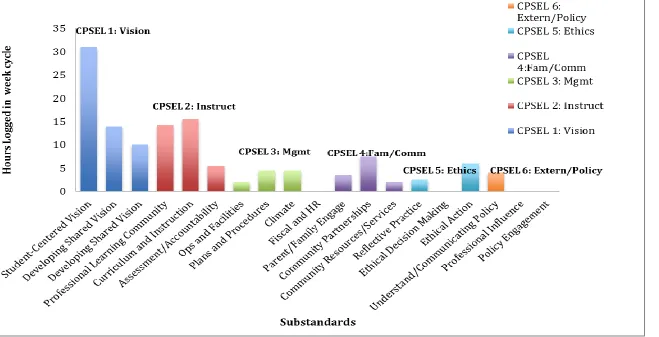
Figure 4. Carla’s time-use data for cycle 1 experience in the standards………80
Figure 5. Carla’s time use data cycle 2 experience in the standards...84
Figure 6. Carla’s time-use data for cycle 3 experience ...88
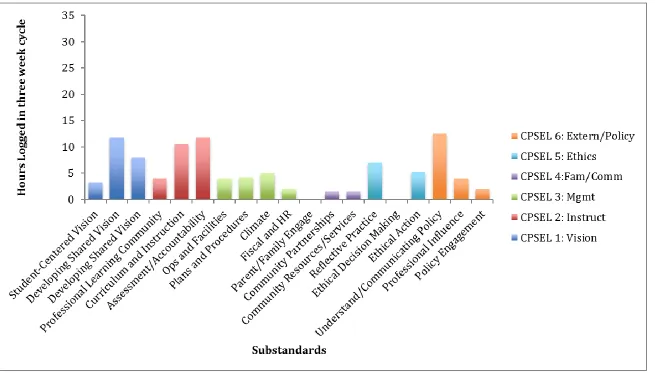
Figure 7. Joy’s time-use data for cycle 1 experience in the standard ...101
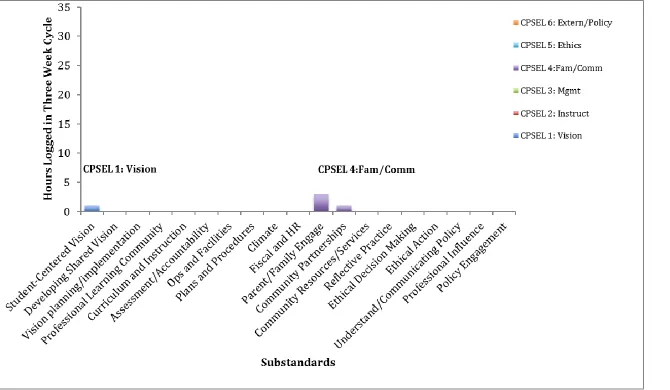
Figure 8. Joy’s time-use data cycle 2 experience in the standard ...94
Figure 9. Joy’s time-use data cycle 3 experiences in standard ...109
Figure 10. Joy’s total time-use data from all 3 cycles until March 2016 experiences in standards……… ……112
Figure 11. Lily’s time-use data collection cycle 1 experiences in standards ...115
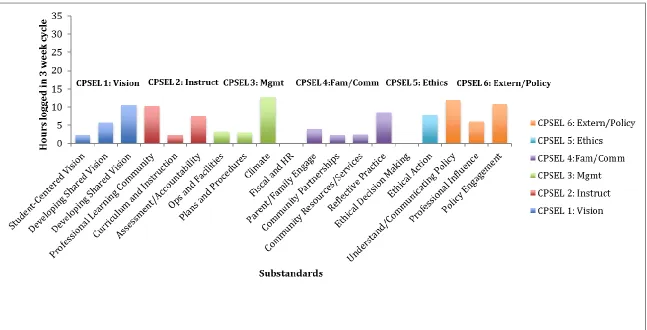
Figure 12. Lily’s time-use data for cycle 2 experience in standards ...119
xii
Table 1. Mindful and Mindless Comparison ...12
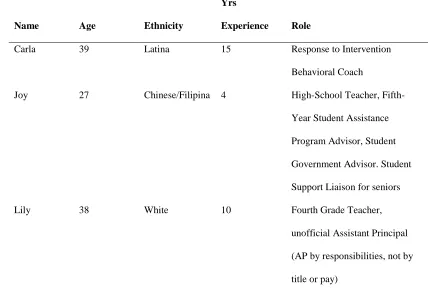
Table 2: Participant Demographics ...63
Table 3. Carla’s Predata-Collection-Survey Responses: Cycles 1, 2, and 3...90
Table 4. Carla’s Postdata Collection Cycle 1,2,3 Survey Responses ...91
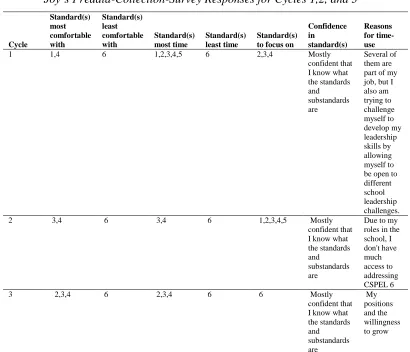
Table 5. Joy’s Predata-Collection-Survey Responses for Cycles 1,2, and 3 ...103
Table 6. Joy’s Postdata-Collection-Survey Responses for Cycle 1,2,3 ...103
Table 7. Lily’s Predata-collection Cycle 1,2,and 3 Survey Responses ...116
CHAPTER I INTRODUCTION
The field of school-leader preparation has moved away from traditional
pedagogy centering solely on lectures and coursework to an emphasis on
including authentic practical experiences for preservice school leaders (PSLs)
during their preparation programs (Perez, Uline, Johnson, James-Ward, & Basom,
2011). The authentic practical experiences are delivered through fieldwork in
which PSLs work at school sites, taking on leadership roles, and engaging in
leadership experiences. Fieldwork is defined as the work that PSLs do at a school
site to apply knowledge gained during coursework into practice and is a form of
experiential learning. Research shows that the most successful leadership
preparation programs include practical experiences and are programs based on
state or nationally recommended leadership standards (Orr & Orphanos, 2011).
Little is known, however, about PSLs’ time use during their fieldwork and the
reasons for their time use.
Several studies have identified school-leader-preparation programs that
graduate well-prepared school leaders (Davis & Darling-Hammond, 2012; Davis,
Darling-Hammond, LaPointe, & Meyerson, 2005; Orr & Orphanos, 2011). The
following characteristics have been deemed to be the foundations of a strong
school-leader preparation program:
A well-defined theory of leadership focused on school improvement,
A curriculum that is aligned with state and professional standards,
Practical experiences that allow for the application of leadership knowledge
and skills, guided by an experienced mentor,
Quality faculty,
A cohort model,
Standards-based assessments for candidate and program feedback, which
drive continuous programmatic improvement,
Rigorous candidate and faculty recruitment, and
Strong partnerships with schools and districts (Davis & Darling-Hammond,
2012; Davis et al., 2005; Orr & Orphanos, 2011).
Although the list of characteristics of successful programs includes many
aspects, the focus of this study is on the time spent in fieldwork by students in
preliminary-administrative-service-credentialing programs. Fieldwork gives
candidates the opportunity to apply theory learned in coursework to an authentic
setting. Fieldwork provides PSLs with leadership and administrative
responsibilities and offers PSLs a chance to refine and develop skills that will
enable them to support the diversity of schools in California (Commission on
Teacher Credentialing, 2011).
Even though fieldwork is recognized as a crucial element of successful
school-leader-preparation programs, it “is often the most ad hoc part of the
program” (Hafner, Allison, Jones, & Herrera Stewart, 2012, p. 1136). Often, PSLs
plan and complete fieldwork based on convenience and opportunity, rather than
on what they need to be practicing, leaving them lacking in the skills and
preparation programs appear to offer a fieldwork only in order to remain in
compliance with accreditation requirements (Perez et al., 2011). Given
fieldwork’s importance but its often impromptu approach, it is helpful to gain a
better understanding of what PSLs actually do during their fieldwork experiences
and why they have the experiences that they have.
Although the fieldwork should be aligned with the California Professional
Standards for Educational Leaders (CPSEL; Commission on Teacher
Credentialing, 2014) fieldwork must expand the experience and knowledge base
of each student and thus has to have some opportunities for personalization
(Barton & Cox, 2012). This study is based on previous studies of fieldwork and
will serve to close gaps in knowledge about PSLs’ time use during their fieldwork
experiences. This study measured fieldwork experiences in leadership standards
by PSLs logging time spent engaged in activities in the standards. Different
programs have different requirements for the amount of fieldwork the PSLs must
complete, and each program has its own way of logging the time (journals,
spreadsheets, forms).
This study is California specific. California has a two-tier credential
structure. The first credential that a PSL can earn is the 5-year preliminary
credential. The focus of this study is on preliminary-administrative-services
credentials only. Over 50 colleges and universities in California offer
preliminary-administrative-service-credentialing programs (Association of California School
Administrators; ACSA, n.d.). In addition to the programs offered through colleges
alternative programs that are approved by the Commission on Teacher
Credentialing (ASCA, n.d.). Further information about the requirements of
preliminary-administrative-services-credentialing programs can be found in
Appendix A.
School-leader preparation should include opportunities for the PSLs to
personalize their learning, to reflect on their own practice, and to develop
self-insight (Richardson, 2015). Reflecting on their own practice can stimulate
preservice school leaders’ thoughts and actions (Browne-Ferrigno, 2003) and can
prepare the PSLs to face new challenges (Cooner, Quinn, & Dickman, 2008).
“Personalization, observation, analysis, and reflection on learning become
hallmarks of a preparation program designed to help aspiring leaders transfer
learning to their leadership role” (Richardson, 2015, p. 2072). PSLs have the
opportunity to transfer their learning into practice as leaders during their
fieldwork experience, which makes fieldwork a critical component of a
preparation program.
To assess PSLs’ knowledge and skills during their preparation programs
and to determine which components of the program are developing specific
knowledge is challenging (Hafner et al., 2012). Although there is consensus that
practical experiences such as fieldwork are one part of a good preparation
program, little is known about what happens during the fieldwork. Some studies
have sought to address this lack of understanding on what actually occurs during
spend in different activities and whether the PSLs are spending this time engaging
in all of the standards.
There is need to learn what the activities are that candidates perform
during fieldwork and begin to understand why the PSLs are spending time doing
the activities they do. This understanding of what activities the PSLs’ engage in
during fieldwork can elucidate relationships between their program, placement,
comfort performing certain activities, or other variables that determine why the
PSLs engage in certain activities.
Hafner et al. (2012) compared two PSL preparation programs in order to
investigate which one produced a greater number of satisfied graduates who were
knowledgeable in their field and who were prepared to become a school leader.
The researchers conducted a survey of current and graduated students of a PSL
preparation program that had a practical experience component and current and
graduated students of a PSL preparation program that did not have a practical
experience component. These data included self-report surveys and job status
data. Hafner et al. (2012) found that students attending or graduated from the
program with a practical experience component were more prepared to become
school leaders. Although this study found practical experience to be beneficial,
the study did not examine closely exactly what the PSLs did during their practical
experience.
Barton and Cox (2012) studied how prepared PSLs were in the CPSEL
because of their fieldwork experiences. This study did not investigate what was
leaders were because they had participated in fieldwork. Although this study
further confirmed the importance of fieldwork, it did not account for the specific
content of the fieldwork and why the fieldwork helped the PSLs be better
prepared.
Perez et al. (2011) also investigated the role of fieldwork in a
California-based school-leader-preparation program. The researchers collected data from
PSLs in a preparation program that had a fieldwork component. The PSLs were
interviewed about their perceptions concerning the main function of school
leaders, what problems school leaders addressed in their roles, and about the
PSLs’ perceptions of preparation. The PSLs also were asked to reflect on how
their thoughts about the roles of school leaders may have been changed during
their fieldwork and coursework. Again, in this study PSLs were surveyed about
their fieldwork, but there was no investigation on what activities were being done
during the fieldwork experiences.
Even though there is research outlining the characteristics of successful
school-leader-preparation programs, little is known about the actual experiences
that PSLs have during their programs’ fieldwork component and how those
experiences relate to standards (Browne-Ferrigno, 2003; Darling-Hammond,
LaPointe, Meyerson, Orr, & Cohen, 2007).
The purposes of this study addressed the stated problem by investigating if
PSLs actually are obtaining practical experience in the standards that the State of
California has determined to be key drivers of success for schools and students.
the study was to support further the relationship between program preparation and
participant learning with a specific focus on the fieldwork component. This
relationship was investigated by examining both how much time PSLs spend on
different activities outlined in the state standards and why the PSLs spend the
time on the standards that they did.
Purpose of the Study
The purpose of this exploratory case study was (a) to address the lack of
knowledge of the activities on which preservice school leaders (PSLs) spend their
time during practical experiences by examining PSLs’ time use during fieldwork
as measured by California state leadership standards and (b) to explore why the
PSLs spend the time on the standards that they do. This study was designed to
support PSL as they embark on their required fieldwork experiences. The purpose
of the mobile web-based daily log (Project Reflect, a mobile web-based
application, see Appendix B) was used in this study is to collect data on the
preservice school leaders’ fieldwork.. A daily log is a “closed-ended time
allocation diary…and is used to capture how people allocate their time across
activities and tasks” (Camburn, Huff, Goldring, & May, 2010, p. 713). The data
collected captured how much time the PSLs spent doing activities in each of the
CPSEL. The PSLs could then review the data and learn if they were having
fieldwork experiences in each of the CPSEL.
In summary, this study sought to understand what the standards were that
future school leaders focused on during their practical training and to investigate
explored whether future school leaders were receiving practical preparation in
each of the California state standards for school leaders (see Appendix C).
Significance of the Study
This study has advanced the current state of research on
school-leader-preparation programs by providing the type of practical experiences in which
PSLs have engaged during their training and how much time they spent on the
leadership standards. This study has contributed to the body of knowledge on
PSLs’ practical experiences by improving understanding of how they spend their
time.
The relationship between time spent on CPSEL during fieldwork was a
previously unexplored topic. The CPSEL have been developed as knowledge
guidelines for preservice school leaders and acting school leaders. As such, the
preparation programs should have been providing the preservice school leaders
with practical experiences in CPSEL.
PSLs should be prepared adequately to lead schools that foster student
achievement. If the CPSEL are being held as the standards against which
preservice school leaders and school leaders are to be measured, then preservice
school leaders must be prepared to implement the standards upon completing their
preparation programs (Barton & Cox, 2012). The PSLs should have experiences
in their fieldwork that prepare them for their future career. This study is
significant because it measures PSLs’ time use in the CPSEL during the PSLs’
fieldwork in order to determine what the PSLs are doing during that fieldwork
Theoretical Framework
The theoretical framework underlying this study is experiential learning
theory (ELT; Kolb, 1984). ELT defines learning as the creation of knowledge
through the transformations that arise from experiences (Kayes, Kayes, & Kolb,
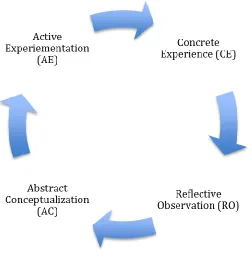
2005). Kolb (1984) viewed the learning process as tension between a cycle
involving concrete experience (CE) and abstract conceptualization (AC) and
involving reflective observation (RO) and active experimentation (AE). ELT is
based on the following six propositions:
1. Learning is a process,
2. All learning includes relearning and integrates new knowledge into more refined
ideas and understandings,
3. Learning requires learners to move between reflection, action, feeling, and
thinking,
4. Learning is a holistic process of adapting to life,
5. Learning requires synergistic transactions between the learner and his or her
world, and
6. Learning is the process of creating knowledge.
The experiential learning framework encompasses the dialectical learning
abilities of Concrete Experience (CE), Reflective Observation (RO), Abstract
Conceptualization (AC), and Active Experimentation (AE). These four
approaches to learning can be divided into two groups. CE and AC are two
the concrete and the abstract. The learning process can begin at any stage of the
cycle.
CE means being involved directly in a new experience, whereas AC
occurs when an individual creates theories to explain the things that he or she is
observing. RO and AE are two opposing but related modes of how the world is
experienced, with a tension between reflecting and doing. RO happens when
individuals observe others and in doing so also begin to reflect on their own
practice. In AE, individuals use theories to solve problems and to guide their
decision-making process (Figure 1)
Figure 1. The Experiential Learning Model. Adapted from Kolb (1976)
Different types of learners will lean toward certain abilities, but all
learners will engage with each of the modes to some extent (Kolb, 1981) and will
experience a learning spiral in which all four of the modes are activated (Kayes,
given meaning by thinking, and transformed by action, the new experience
created becomes richer, broader, and deeper” (Kolb & Kolb, 2009, p. 297).
Experiential learning underscores the concept of being mindful when
experiencing life (Yeganeh & Kolb, 2009). Mindfulness around one’s own actions
creates a state of constant development and changes how someone thinks of the
world. (Table 1). Yeganeh and Kolb (2009) defined mindfulness in experiential
learning as “an approach in which a learner focuses on present and direct
experience, is intentionally aware and attentive, and accepts life as an emergent
process of change” (p.14).
In contrast, mindlessness in learning and in life is manifest when a learner
does things from habit and does not fold new experiences into his or her
worldview. This theoretical framework was used in this study because the study
focused on the experiential learning component of PSLs’ preparation program.
This framework guided the study, the analysis of the data, and the presentation of
the findings. The PSLs conducted their fieldwork, which was concrete experience.
Through interviews and surveys, the PSLs engaged in reflective observation and
were prompted to think about their fieldwork experience and why they were
involved in the different activities. The PSLs also experienced abstract
conceptualization by discussing their CE and RO during semistructured
interviews. In active experimentation, the PSLs tried new activities or new ways
Table 1
Mindful and Mindless Comparison
Mindfulness Mindlessness
Awareness of context
Open to new information and ideas
Creation of new cognitive categories
when new required by new influx of
information and knowledge
Multiple perspectives
Focusing on present activities
Purposeful
Accepting and nonjudgmental
Autopilot
Following predetermined rules
Routinized behavior
Rigid perspectives
Lack of variation in activities
Reacting habitually
Being judgmental of new experiences
Focusing on the past or future
Note. Adapted from Yeganeh and Kolb (2009).
Fieldwork was well aligned with this conceptual framework because
fieldwork was the experiential component of PSLs’ preparation. Fieldwork was
where PSLs had the opportunity to convert theory into practice and to experiment
with implementing new knowledge. Through the surveys, time collection, and
interviews, the PSLs created a space where they could reflect, experiment, and
make changes.
Background and Need
This section establishes the context surrounding the background and
examining time use for PSRs during fieldwork is needed. Second, the importance
of using standards as the basis for measuring time use was explored.
Understanding Time Use in Practical Experiences
It is important for preservice school leaders to engage in authentic school
leader experiences when they are preparing for the profession. Fieldwork has been
identified as one characteristic of effective school-leader-preparation programs,
allowing preservice school leaders to apply their theoretical knowledge to
practical situations (Davis & Darling-Hammond, 2012; Orphanos & Orr, 2014;
Orr & Orphanos, 2011). Focusing on activities that are relevant to actual work
experience led preservice school leaders to be well-prepared when they assumed
leadership roles (Geer, Anast-May, & Gurlery, 2014).
Barton and Cox (2012) found that preservice school leaders’ experiences
in the CPSEL during fieldwork led to greater preparedness, by using a pre- and
postsurvey to allow the preservice school leaders’ to reflect on their own practice.
The study supported the value of a pre- and postsurvey instrument to measure
growth and that self-reflecting allowed the preservice school leaders to identify
their own areas of expertise and the areas that they needed to gain more
experience in.
In order to understand what contributes to school and student success,
researchers have begun to study how practicing school leaders spend their time
(Camburn, Spillane, & Sebastian, 2010; Grissom, Loeb, & Master, 2013; Horng,
Klasik, & Loeb, 2010). One method of studying how school leaders spend their
time-collection instrument for the proposed study. The mobile web-based daily
log also is connected to the standards in that the time being logged is measured as
time being spent in an activity that matched against leadership standards.
Capturing time use for PSLs was a need that could be addressed by using the
mobile web-based daily log, which has been found to be an effective
measurement tool for logging time (Camburn, Spillane, et al., 2010).
The mobile web-based daily log is a tool that allows school leaders to
examine their own practice and to make adjustments to their practice based on the
data they collect around their daily activities (Camburn, Spillane, et al., 2010).
When using a mobile web-based daily log, the user completes a log of his or her
practice throughout the day. Conceptually, the mobile web-based daily log is
similar to a journal in that users make note of their actions throughout the day. In
practice, it is slightly different in that the actions are based on the CPSEL and the
individuals using the mobile web-based daily log is just noting how much time
they have spent on each of the standards.
Mobile web-based daily logs have been found to be valid measures of
school leaders’ time use that are more effective than year-end surveys (Camburn,
Huff, et al., 2010; Horng et al., 2010; Spillane & Zuberi, 2009). Additionally,
mobile web-based daily logs have been found to yield high response rates
(Camburn, Huff, et al., 2010; Horng et al., 2010; Spillane & Zuberi, 2009) and
also greatly reduce “self-reporting and memory biases” (Horng et al., 2010, p.
492). Additional benefits of the mobile web-based daily log are that closed-ended
spending excessive time logging information (Spillane & Zuberi, 2009), and also
the instrument is not intrusive (Camburn, Huff, et al., 2010).
In a recent study on mobile web-based daily logs, participating school
leaders found that taking inventory of their practice allowed them to use the data
as a formative feedback system to identify their strengths and areas requiring
improvement, to determine what they were spending most of their time doing, and
to compare their time use to what they thought should be their priorities
(Camburn, Huff et al., 2010). The school leaders’ feedback on the tool reflected
its usefulness as a way to better understand their own time usage, and some
districts are using mobile web-based daily logs as a way for school leaders to
engage in self-reflective professional learning (Camburn et al., 2010).
No studies have investigated California preservice school leaders’ time
use with a mobile web-based daily log for the purpose of determining the de facto
focus of their practical experience and whether this experience aligned with the
State standards. During the practical experience, which is delivered through
fieldwork, preservice school leaders mirror a credentialed administrator in an
apprentice role.
Measuring Time Spent on Standards
Although the California Administrator Performance Expectations (CAPE)
are geared specifically toward students in preliminary credential programs and,
thus, may be a more natural choice for the standards guiding this study, these
standards were adopted in 2013. At the time that this study was conducted,
guide their programs. According to Karen Kearney, the Director of the Leadership
Initiative in California and a member of the committee that writes the leadership
standards for the Commission on Teacher Credentialing (CTC), the CPSEL are a
good fit for this study. Whereas the CAPEs are designed specifically to guide the
practice of preliminary credential students, the CPSEL are the overarching
standards that can guide the practice of school leaders throughout their career (K.
Kearney, personal communication, January 29, 2015). Figure 2 gives an overview
of the general alignment of the CAPEs and the CPSEL. Refer to Appendix C for
more information about the alignment of the CAPEs, CPSEL, and Interstate
School Leaders Licensure Consortium (ISLLC; Council of Chief State School
Officers, 2014).
Since 2001, CPSEL have been a part of the preparation continuum for
school leaders. The creation of the standards was a joint effort among many
leading education authorities including the California School Leadership
Academy at WestEd, the Association of California School Administrators, the
Commission on Teacher Credentialing (CTC), the California Department of
Education (CDE), California public and private universities, and county offices of
education (CTC, 2014). Standards such as the CPSEL (CTC, 2014) and Interstate
School Leaders Licensure Consortium have been designed thoughtfully and
rigorously so that school leaders create learning environments in which all
high-school graduates are prepared to enter college or the workforce (Council of Chief
The CPSEL were based on national standards, namely, the ISLLC. These
standards originally were drafted in 1996 and the latest version of updates was
created in 2014. The ISLLC served as a guideline for the CPSEL, but the CPSEL
were designed specifically to meet the unique needs of California (CTC, 2014).
The CPSEL has been a part of the Administrative Services Clear Credential since
2004. The ISLLC Standards for School Leaders were designed to serve many
purposes. The main objective was to inform both policy and practice. The
standards were designed to improve learning and engagement for all students and
were grounded in empirical research (Council of Chief State School Officers,
2014). In short, the CPSEL and the ISLLC are recognized as the skills that
Figure 2. Standards and performance measures for the ASC Credentials. Adapted
from Commission on Teacher Credentialing (2014).
In their meta-analysis of studies conducted between 1975 and 2002 in
leading education journals and then of articles published between 2001and 2007
on the characteristics of school-leadership-preparation-program students,
Brown-Ferrigno and Muth (2012) found that there were almost no empirical studies
examining the students in the programs. This lack of research is concerning
because it hinders an understanding of what components of a preparation program
influence candidates’ development.
There is a gap in the literature around PSLs’ time-use fieldwork
experience. This gap was addressed in this research by studying how California
PSLs spend their time during fieldwork and how that time spent aligns with the
CPSEL. The consensus in the field is that programs are ineffective and do not
prepare preservice school leaders to be strong leaders who drive positive school
outcomes and learning gains for all children (Davis & Darling-Hammond, 2012).
To address this concern, it is important to understand what preservice school
leaders do in their programs and how such activity aligns with leadership
standards.
Barton and Cox (2012) examined preservice school leaders’ fieldwork
through the lens of CPSEL. Their quantitative study looked at pre- and posttest
self-assessments on students’ knowledge in the CPSEL. Other time-use studies
have been conducted on practicing school leaders and also have been quantitative
the professional growth of a cohort of students preparing to become school
leaders, but it did not look at growth against standards. These exemplify the very
few studies about preservice school leaders’ preparation experiences.
The CPSEL are the competencies that school leaders must possess in order
to affect positive school outcomes; therefore, it is essential that future school
leaders have experience in each standard (Barton & Cox, 2012). Previous studies
have been conducted on how acting school leaders use their time, as captured by a
mobile web-based daily log. There are, however, no daily-log studies on PSLs’
fieldwork experiences (Camburn, Spillane, et al., 2010; Grissom et al., 2013;
Horng et al., 2010; Spillane & Hunt, 2010; Spillane & Zuberi, 2009). In the
current study, the mobile web-based daily log examined time use specifically in
the state leadership standards to learn if preservice school leaders were gaining
practical experience that was aligned with these competencies that the state has
identified as being critical skills and knowledge for school leaders to possess in
order to be successful in their jobs.
In summary, the need for this study stems from the fact that fieldwork is
considered to be an important component of preservice school leader preparation
(Davis & Darling-Hammond, 2012) and yet not much is known about how PSLs
spend their time during their fieldwork as related to the standards (Barton & Cox,
2012).
Research Questions
Based on the purpose of this study, which is framed by the background
1. How do preservice school leaders use their time during fieldwork experiences?
2. Why do preservice school leaders have the fieldwork experiences that they do
(e.g., convenience, purposefully pursuing certain experiences, etc.)?
Definition of Terms
This section lists and defines key terms in this study to ensure consistency
in understanding. Other definitions of these terms may exist, but the following are
the definitions that were used in this study.
Effective school leaders Effective school leaders are individuals who have received rigorous training as outlined earlier in the chapter (Davis &
Darling-Hammond, 2012) and are able to create systems that support positive teacher and
student outcomes (Béteille, Kalogrides, & Loeb, 2012; Horng et al., 2010).
Mobile web application “Apps are mobile device software applications that allow users to access the app’s information from their smart phone, tablet, or
personal computing device. There has been a proliferation of apps for a wide
variety of purposes, including education, entertainment, personal health,
coaching, and much more” (Prentice & Dobson, 2014, p. 282).
Mobile web-based daily log A mobile web-based daily log is a “closed-ended time allocation diary…and is used to capture how people allocate their time
across activities and tasks” (Camburn, Spillane et al., 2010, p. 713).
Preservice school leader (PSL) A preservice school leader (PSL) is an individual working toward his or her preliminary-administrative-services credential.
Time use Time-use studies examine how people spend their time, in particular, how long the people are engaging in certain types of activities during their day.
Summary
The purpose of this study was to examine how preservice school leaders
use their time during their fieldwork. This study specifically looked at PSLs’ time
use in the California Professional Standards for Educational Leaders (CPSEL).
This study was needed because there was a gap in the literature on what PSLs do
during their fieldwork and whether they are actually getting practical experiences
in the CPSEL. The need to fill these gaps lies in the fact that PSLs must be
prepared to be successful in their careers as school leaders.
This study provided data on whether the school-leader-preparation
programs for the individuals in the study are aligned with the real demands of the
role of school leader. These findings are important because there is currently a
limited understanding of what PSLs do during their fieldwork and if their
fieldwork experience is aligned with state or national standards.
The following chapters in this study are as follows. Chapter II- Review of
the Literature builds the case for why this study was done, and how this study
filled a void in the current literature around preservice school leaders’ time use
during their fieldwork. The following chapter of II is Chapter III-Methodology.
This chapter explains how data were collected for this exploratory case study,
using time logs, surveys, and semistructured interviews. This section gives more
information about the instruments used to collect data in this study. The next
emerged from the study. The final chapter is Chapter V-Summary, Limitations,
Discussion, Implications and Recommendations. This section summarizes the
study, details the study’s limitations, presents a discussion of the results, the
CHAPTER II
REVIEW OF THE LITERATURE
The purpose of this exploratory case study was (a) to address the lack of
knowledge of the activities on which preservice school leaders (PSLs) spend their
time during practical experiences by examining PSLs’ time use during fieldwork
as measured by California state leadership standards and (b) to explore why the
PSLs spend the time on the standards that they do. This study was designed to
support PSL as they embark on their required fieldwork experiences. The
literature on the subject of preservice school leadership, specifically how current
systems prepare PSLs to become school leaders, is presented in this chapter. The
literature review reveals the need for the present study by describing existing
research on the preparation of PSLs and by highlighting areas in which existing
research is incomplete or nonexistent.
The importance of school-leader-preparation is provided in the first
section. It highlights the relationship between school leader effectiveness and
school-leader-preparation programs. In further depth, it introduces best practices
in school-leader-preparation with a particular focus on fieldwork and
standards-based-preparation programs.
The second section is about time-use studies. As the present study is a
time-use study, it is necessary to understand past time-use studies, how these
studies worked, what were their limitations, and what was learned from them.
tracking time formatively has been performed. The section concludes with gaps in
the literature and the need for this study.
School Leader Preparation
The literature on school-leader preparation with a focus on the importance
of fieldwork and the importance for preparation programs to be standards based is
reviewed in this section. Effective school leaders draw from a similar,
overlapping set of practices (Leithwood, Harris, & Hopkins, 2008). The practices
and skills that make a leader successful should be learned and exhibited by school
leaders, should be covered in school-leader-preparation programs, and should be
outlined in leadership standards (Davis & Darling-Hammond, 2012). These
beliefs are related to the current study as this study uses leadership standards as a
gauge through which preservice school leaders develop leadership skills (as
measured through time spent on the skills). The research concerning preparation
programs including what makes a preparation program effective and what
elements should be included in a preparation program in order to ensure that
graduates of the program are competent school leaders is reviewed (Davis &
Darling-Hammond, 2012; Orphanos & Orr, 2014). The research in this section
underscores the importance of fieldwork and standards in
school-leader-preparation programs.
School leadership is a complicated and multidimensional job (Loeb &
Valant, 2009). Among other functions, school leaders must manage staff, plan
staff professional development, manage the budget and facilities, oversee
2004; Lynch, 2012). School leaders are under tremendous pressure from both
state and national authority to demonstrate successful student learning in their
schools (Hernandez & Roberts, 2012). Given school leaders’ critical role, the
importance of quality school-leader-preparation programs cannot be
overemphasized (Donmoyer, Yennie-Donmoyer, & Galloway, 2012; Duncan,
Range, & Scherz, 2011; Orr, 2011). Educators, research, and policymakers have
examined preparation programs and tried to determine ways in which the
programs can have positive influences on the practices of future school leaders
(Orphanos & Orr, 2014).
Over 95% of the United States’ nearly 200,000 principals graduate from a
university-based school-leadership-preparation program (Orr, 2006a; Rhines
Cheney, & Davis, 2011). There are 450 to 500 schools and colleges of education
that offer leadership preparation in the United States (Orr, 2006a), and, as well,
there are numerous alternative nonuniversity-based programs such as the Boston
Aspiring Principal Training, programs run by the Broad Foundation, and
Knowledge is Power Program (KIPP) charter schools’ school-leader training
fellowships (Young, Mountford, & Crow, 2005).
These numerous programs are responsible for preparing well-qualified
school leaders and, by self-proclamation, avoid the mass production of “mediocre
candidates with administrative certificates, lacking the knowledge, skills, interest,
motivation, and commitment to lead our nation's schools” (Young & Creighton,
2002, p. 222). According to Gloria Hassel, the Dean of Principal and Leadership
she oversees have been developed to ensure that PSLs have the practical
experiences and mentorship needed to succeed in their profession (personal
correspondence, February 13, 2017).
Nurturing school-leader talent requires rigorous and effective preparation
programs (Donmoyer et al., 2012), and there is constant concern for the quality of
these programs internally and externally among the stakeholders in the
educational process (Young & Brewer, 2008). A Public Agenda (Farkas, Johnson,
Duffett, Foleno, & Foley, 2001) survey of 853 randomly selected superintendents
and 909 randomly selected school leaders found that 80% of superintendents and
69% of school leaders agreed with the statement, “The typical leadership
programs in graduate schools of education are out of touch with the realities of
what it takes to run today’s school district” (p. 31). The survey data are of concern
for many reasons because school leaders are the critical link by which policy
descends from the states to its districts, schools, and classrooms, in other words,
the critical link to success is great school leaders (Loeb & Valant, 2009).
Given the critical importance of school leaders, there is a growing interest
in the United States in having school-leader-preparation programs demonstrate
the effectiveness of these programs (Donmoyer et al., 2012; Loeb & Valant,
2009). School-leader-preparation programs can no longer simply teach students
material and assume that they have learned it and know how to use it (Kelly,
2013). Current policies such as No Child Left Behind and Race to the Top
measureable outcomes such as how the school leaders’ training affects teachers
and students (Davis & Darling-Hammond, 2012).
There is general agreement as to the importance of school leaders, but
there is a lack of research that investigates the relationship between
school-leader-preparation programs and school leader outcomes (Fuller, Young, & Baker,
2011). Further, several studies have demonstrated that the majority of school
leaders believed that their preparation was inadequate, and they reported that they
were unprepared upon completion of such programs to lead a school (Hernandez
& Roberts, 2012). There is a need for research-based evidence of a preparation
program’s effectiveness (Fuller et al., 2011). Proof of effectiveness, however, has
been a challenge, with most claims resting on weak empirical evidence coming
mostly from perception studies (Davis & Darling-Hammond, 2012).
Given the ever-present growing need to improve the effectiveness of
school leader training, the overhaul of such programs in graduate schools of
education is a fairly frequent occurrence (Orr, 2006b). Since 2010, innovations
have addressed five areas: (a) a focus on school leaders as spearheading schools’
improvements in teaching and learning; (b) the thoughtful design of program
content, pedagogy, and field-based learning experiences that can prepare leaders
more holistically; (c) the redesign of the education doctorate as meaningful
midcareer professional development; (d) practical partnerships with schools,
districts, and organizations outside of the university to provide richer learning
opportunities for preservice school leaders; and (e) a commitment to data-driven
feature confidence in the school leaders by the teachers they lead (Young et al.,
2011).
Several studies have indicated that school-leader-preparation programs
have a positive relationship with school leaders’ ability to lead successful schools.
Orr and Orphanos’s (2011) study investigated the influence of high-quality
leadership-preparation programs on school leaders’ leadership knowledge,
leadership practices, and relationship between leadership practices and the
school’s learning climate. A school’s learning climate is how stakeholders of a
school experience the quality and accessibility of learning (Huang et al., 2015).
Orr’s (2006b) conceptual model was the basis for the current study. The
independent variable of this model is leadership preparation programs and the
dependent variable is graduates’ knowledge about school leadership and
leadership practices. This study added to the small body of research that has
sought to identify the relationship between leadership practices and school
outcomes (Orr & Orphanos, 2011). Drawing from the research, Orr and
Orphanos (2011) posited that the completion of a quality leadership-preparation
program might have a positive relationship with leadership knowledge, effective
leadership practices, school improvement, and effective school climate.
Orr and Orphanos (2011) drew from surveys of 65 school leaders who had
graduated from exemplary preparation programs, compared them with a sample
of 111 school leaders from a national sample, and analyzed the data using
structural equation modeling (SEM) techniques. Orr and Orphanos (2011)
student selection, (b) an emphasis on instructional leadership and robust
internships that closely mirror the work of acting school leaders, and (c) the
existence of a university-district partnership. The school leaders in the national
sample met certain criteria such as (a) the school leaders’ graduation date from
their preparation program, (b) whether their program required an internship, and
(c) whether they currently were serving as school leaders. The survey was based
on an instrument developed and piloted by the University Council for Educational
Administration/Teaching Educational Administration Special Interest Group of
the American Educational Research Association (UCEA/TEA- SIG) Taskforce on
Evaluating Leadership Preparation Programs.
The study found that participation in an exemplary leadership-preparation
program had a statistically significant positive relationship with learning about
effective leadership practices, which in turn are positively related to
school-improvement progress and school-effectiveness climate (Orr & Orphanos, 2011).
The researchers urged the individuals responsible for preparation programs to be
thoughtful in program and practical experience design, as preparation programs
do have a relationship with student achievement. Some limitations of this study
were (a) that it depended primarily on self-reported data from the school leaders
and (b) that the study was cross-sectional, meaning data were only collected at a
specific moment in time. It is possible that the data obtained at that single point in
time are not representative of data that would have been collected over a longer
Darling-Hammond et al. (2007) found a positive relationship between a
preparation program and a school leader’s leadership abilities. The school leaders’
preparation programs were screened against multiple criteria in order to identify
four exemplary preparation programs and to compare them with other programs.
The researchers surveyed 1,086 respondents, of which 661 were part of the
national comparison sample and 425 had experienced an exemplary program.
This study found that it is possible to create preservice and inservice programs
that develop school leaders’ skills and knowledge. The school leaders from the
exemplary preparation and professional-development programs reported being
better trained, having more positive attitudes, and engaging in more effective
practices on average than did the school leaders from comparison groups. School
leaders from the exemplary programs held more positive beliefs about and were
strongly committed to being school leaders than the comparison group from
nonexemplary programs.
The alumni of exemplary programs stated intentions to stay in their jobs,
even though they often led schools that served relatively greater low-income
populations and that they experienced more challenges than the leaders from
comparison-group schools. The alumni from exemplary programs also reported
spending more time than school leaders from the comparison-group focused on
instructional activities that are associated with stronger school performance, such
as creating professional learning communities within the school, evaluating and
Limitations of this study were that it relied on self-reports and was cross-sectional
(as opposed to longitudinal) in nature.
The results of the literature review show agreement on the importance of
school-leader-preparation programs. There are several shared practices in
effective programs. These practices are examined more closely in the following
sections.
Preservice School Leaders’ Practical Experiences
Practical experiences for preservice school leaders are one of the
components of an effective school-leader-preparation program (Davis &
Darling-Hammond, 2012). Practical experiences can be found in numerous fields
including business, medicine, and health care and are considered a way to ensure
that a pool of qualified candidates are entering the field (Clayton, 2012). It is
crucial for preservice school leaders to develop the necessary skills to lead
schools and to effect positive school outcomes (Harris, 2006; Havard, Morgan, &
Patrick, 2010). Both coursework and fieldwork should be planned carefully and
purposefully (Davis & Darling-Hammond, 2012).
The various components of the preparation program must be integrated
and cohesive so that the field experience is grounded in the theory and knowledge
covered in the coursework (Harris, 2006). The purpose of providing preservice
school leaders with opportunities to have practical experience is to link theory
with practice and to provide experience dealing with situations that will face
educators when actually leading a school (Dunaway, Bird, Flowers, Lyons, &
can be measured by changes in the preservice school leader’s behavior (Adamec
Brown, 2012). It is easier to measure growth when evaluating skills, knowledge,
or behaviors against predetermined goals such as standards (Adamec Brown,
2012). As preservice school leaders experience the actual work of improving
school outcomes, they learn about and are involved in all facets of school
leadership, as a holistic, contextual experience (Perez, Uline, Johnson,
James-Ward, & Basom, 2011).
School leaders report that their fieldwork would have been strengthened
with additional focus on how to (a) plan changes in curriculum and teaching, (b)
support cultures of learning, and (c) use data to support continuous school
improvement (Anast-May, Buckner, & Geer, 2011). Further, Anast-May et al.
(2011) found that preservice school leaders do not perceive that they are always
given the opportunities to learn things that will assist them as future school
leaders.
Dunaway et al. (2010) conducted a study to investigate the perceptions of
internships from the perspective of both the preservice school leader and the
mentors overseeing the internships. The convenience sample for this study was
160 students who completed the 10-month principal internship in the Masters in
School Administration graduate program in a large Southeastern university. The
study had a 37% response rate comprised of 42 females (71%) and 17 males
(29%). A 75-item questionnaire measured preservice school leaders’
and a second questionnaire measured their mentors’ assessment of the preservice
school leaders’ knowledge and skill acquisition.
The PSLs reported their lowest levels of learning in the categories of
school budget, working cooperatively stakeholders such as parents and the
community to develop and implement the school’s vision, and summative
evaluations and recommendations for continued employment of teaching staff
including untenured and weak teachers. Preservice school leaders assessed their
knowledge of school operations more highly than other administrative activities.
The preservice school leaders reported their highest levels of learning in law,
policy, and ethical decision-making and behavior.
There must be an alignment between what school leaders need to know
and what preservice school leaders are learning. PSLs must be confident that they
have the necessary skills to tackle all the challenges of running a successful
school. The results of this study show that upon reflection preservice school
leaders are not confident that they are getting equal experience and opportunities
to master all of the tasks that they will be expected to perform when managing a
school.
Dunaway et al. (2010) listed one of the limitations of this study to be that
the convenience sample limits this study to students at one single university; thus,
it cannot be assumed that the results are generalizable to a broader population.
The current study explored how much time preservice school leaders spent on
different standards, to learn if there is an emphasis, whether intentional or not, on
researchers recommended is that the levels of learning that the preservice school
leaders must demonstrate should be defined more clearly. By using standards to
track preservice school leaders’ time use, this current study attempted to use
clearly defined learning outcomes, that is, those based on standards.
“Internships, practica, and field experiences have been touted as essential
to prepare effective school leaders” (University Council for Educational
Administration, UCEA, 2010, p. 1). Although there are many manners of practical
experience for preparing future school leaders, research on this topic is limited.
The lack of research and knowledge indicates a need to examine if and how these
types of practical experiences provide the time, rigor, or relevance needed to
change future school leaders’ attitudes and behaviors (UCEA, 2010). Additional
critiques of PSLs’ practical experiences include the concern that there is no clear
agreement as to what the PSLs should be focusing on (Havard et al., 2010). This
current study aims to examine the amount of time PSLs spend on different
standards and, thus, to address one part of the gap in research.
The review of the literature concerning practical experiences has
demonstrated that this is an important component of an effective
school-leader-preparation program. Further, the literature has also demonstrated that although
practical experience is critical, it must be designed more purposefully and
executed in order to ensure that the PSLs are being trained in all areas of school
leadership. Also, although the practical experience is very important, there is not
study seeks to fill this gap in the literature by examining how PSLs use their time
during their fieldwork.
Standards in Preservice School-Leader-Preparation Programs
There is a developing interest in using standards as a method of improving
school leadership (Cravens et al., 2013). Educational leadership programs often
use national standards as guidelines when developing course content (Kelly,
2013). Standards can be used to assess student learning and program improvement
cannot occur if there is no accountability for program learning outcomes (Kelly,
2013).
The most recent version of the Interstate School Leaders Licensure
Consortium (ISLLC) standards were published by the Council of Chief State
School Officers (CCSSO) and were adopted by the National Policy Board for
Educational Administration (NPBEA) in 2008. These standards were an update of
the original 1996 standards (Markson, 2013). A draft of the 2014 ISLLC
standards is under review by the CCSSO. The standards were designed to guide
state policy makers and educational leaders in the selection, training, licensing,
and professional development of K-12 school leaders (Markson, 2013).
The ISLLC standards are grounded in empirical research on effective
schools and school improvement and were designed to reshape the profession of
school administration, as well as to direct policy, practice, and research (Murphy,
2005). Since their initial drafting, these standards have grown in influence on the
mechanism that has driven change in the understanding of the role of school
leaders (Williams & Alawiye, 2014).
California has adopted standards to guide school leaders. The standards in
California, the California Professional Standards for Educational Leaders
(CPSEL), were introduced in 2001 and were adapted from the ISLLC standards
(California Commission on Teacher Credentialing, 2014). These standards were a
joint effort between several educational institutions including the California
School Leadership Academy at WestEd, the Association of California School
Administrators, the Commission on Teacher Credentialing, the California
Department of Education, and California public and private universities. The
CPSEL outlines quality standards of professional behavior for all levels of
education leaders (California Commission on Teacher Credentialing, 2014). The
CPSEL were adopted as the program standards for administrator credentialing in
2004 (California Commission on Teacher Credentialing, 2014).
In January 2013, California Administrator Performance Expectations
(CAPE) and California Administrator Content Expectations for Commission were
drafted (California Commission on Teacher Credentialing, 2013). The drafts of
the CAPE and Content Expectations are a product of two Administrative Services
Standards writing-group meetings in which currently existing standards were
analyzed and discussed (California Commission on Teacher Credentialing, 2013).
The standards analyzed and discussed included but were not limited to the
CPSEL, ISLLC standards, and the National Board standards (California
reflect the roles and responsibilities of California public-school administrators
(California Commission on Teacher Credentialing, 2013).
The California standards (CPSEL) are based on national research and the
national ISLLC, as well as expert opinion from practitioners in California who
participated in the rigorous review activities to develop California’s standards
(Kearney, 2005). Increasingly, school-leadership standards have been used to
guide school-leader-preparation programs, to ensure that school leaders are being
trained adequately, and for source data for program improvement (Hackmann &
Alsbury, 2005). The standards can serve as guidelines to assess preservice school
leaders’ learning needs and to evaluate their knowledge and skills (Williams &
Szal, 2011).
Standards and accountability have become a central issue of educational
reform, and the development of professional standards for educators are now the
core performance assessment (Møller, 2008), even though there is a lack of
research on the influence of standards in school-leader-preparation programs
(Stevenson, Cooner, & Fritz, 2008). There is no consistent, systematic set of
standards in preservice-school-leader-preparation programs (Koonce & Causey,
2011), although “a rational, sound, and coherent standard-setting process adds to
the credibility of an assessment” (Cravens et al., 2013, p. 124). In many states,
changes in the preparation and credentialing of school leaders are now based on
recognized leadership standards (Spanneut, Tobin, & Ayers, 2012). The point of