Available online on 15.05.2016 at http://jddtonline.info
Journal of Drug Delivery and Therapeutics
An International Peer Reviewed Journal Open access to Pharmaceutical and Medical research
© 2016, publisher and licensee JDDT, This is an Open Access article which permits unrestricted noncommercial use, provided the original work is properly cited
RESEARCH ARTICLE
FORMULATION DEVELOPMENT, OPTIMIZATION &
IN VITRO
CHARATERIZATION OF LIQUISOLID COMPACTS OF AN OXICAM DERIVATIVE
Kapoor D, Lad C, Vyas R, Patel M
Dr. Dayaram Patel Pharmacy College, Sardar baug, Station Road, Bardoli, Dist – Surat, Gujarat, India, Pin-394601
Received 28 March 2016; Review Completed 24 April 2016; Accepted 27 April 2016, Available online 15 May 2016
INTRODUCTION:
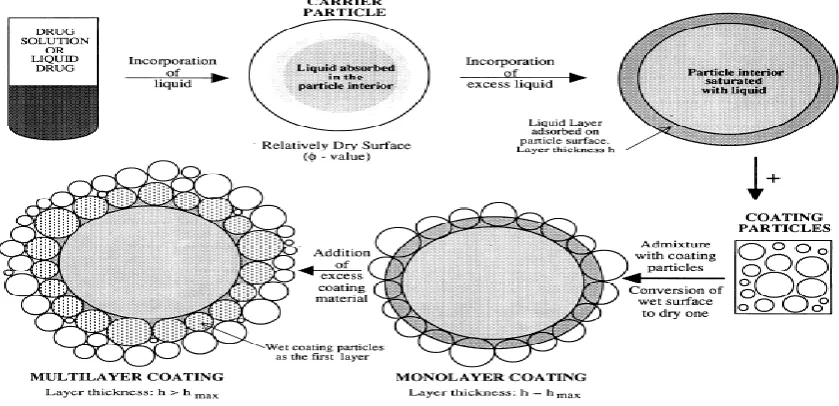
The solubility/dissolution behavior of a drug is key determinant to its oral bioavailability, the latest frequency being the rate-limiting step of absorption of drugs from the gastrointestinal tract. As a result, more than 40% of new candidates entering drug development pipeline fail because of non optimal biopharmaceutical properties 1. Several researchers have shown that the liquisolid technique is the most promising method for promoting dissolution rate of poorly water soluble drugs 2, 3. The liquisolid technology is described by Spireas as liquid may be transformed into a free-flowing, readily compressible, and apparently dry powder by simple physical blending with selected excipients named the carrier and coating material (Figure 1).
A more recent technique, entitled powdered solution technology, has been applied to prepare water-insoluble drugs into rapid-release solid dosage forms. Powdered solutions are designed to contain liquid medications in powdered form. The concept of powdered solutions enables one to convert a liquid
drug or poorly water-soluble solid drug dissolved in a suitable non-volatile solvent into a dry, non-adherent, free-flowing and readily compressible powder by its simple admixture with selected carrier and coating materials. This method does not involve drying or evaporation. It is well established that better bioavailability of a relatively water-insoluble drug is achieved when the drug is in solution form.Absorption of a liquid by a powder material occurs when the absorbate molecules diffuse inside the absorbent and are eventually captured and held by the powder particles within their bulk. In some cases, the liquid is not truly absorbed, and instead of being dispersed throughout the interior of the solid, the liquid molecules only cling to its available surface i.e., internal and external. This process is known as adsorption. 4, 5
*Corresponding Author Dr. Devesh Kapoor Dr. Dayaram Patel Pharmacy College, Sardar baug, Station Road, Bardoli, Dist – Surat, Gujarat, India-394601 E-mail id – [email protected], Contact- +91-7874223242 ABSTRACT:
The rationale of the current research was to investigate the in vitro dissolution properties of poorly water soluble piroxicam by utilizingliquisolid technology. Dissimilar liquisoli compacts were formulated using a factorial design to estimate the required quantities of powder and liquid ingredients to fabricate adequately flowable and compressible admixture. About 16 different formulations were developed using factorial design with carriers Neusilin (Magnesium aluminometasilicate) and Avicel PH 102, binder PVP K-30 and vehicle PEG-400 as independent variables and Aerosil 200 is used as coating material. The In-vitro drug release from the LSC has used a dependent variable. The empirical method by Spireas and Bolton was applied to calculate the amounts of carrier and coating materials and obtained the improved flow characteristics and hardness by changing the proportion of carrier and coating materials. Liquid solid compacts were fabricated and evaluated for their tabletting properties. Fourier transform infrared (FTIR) analysis, differential scanning calorimetry (DSC) and X- ray powder diffraction (XRPD) were performed. The FTIR spectra showed disappearance of the characteristic absorption band of piroxicam (3338.78 cm-1) in liquisolid formulations which might be attributed to the formation of hydrogen bonding between the drug and liquid vehicle; this resulted in drug dissolution enhancement. A 23 factorial design is used and developed liquid soild compacts using Neusilin LSCN1 to LSCN8 and Avicel PH 102 LSCA1 to LSCA8. The physicochemical characterization of all formulations exhibited well within the specification limits with respect to weight variation, hardness, friability and content uniformity. The In-vitro drug release from these liquid soild compacts was evaluated in 0.1 N HCl and the optimized formulation LSCA8 was compared with pure drug (capsule) and physical mixture (tablet). The release studies suggested that the liquisolid tablets outcome in higher release profile than pure active pharmaceutical ingredient and physical mixture due to enhance in surface and wetting properties of the active pharmaceutical ingredient. Liquid solid compacts technique confirmed the enhanced dissolution rate of oxicam derivative, which in turn promotes in enhancing bioavailability.
Figure 1: Schematic representation of liquisolid systems.
Piroxicam is an oxicam derivative with potent non-steroidal anti-inflammatory activity (NSAID). It is used in various acute and chronic musculoskeletal and joint disorders such as ankylosing spondylitis, osteoarthritis and rheumatoid arthritis and in acute gout, dysmenorrhoea and sometimes for pain associated with inflammation 9. For poorly soluble, highly permeable (class II) drugs (like piroxicam), the rate of oral absorption is often controlled by the dissolution rate in the gastrointestinal (GI) tract. 6.
Compressible liquid retention potential is the compression force applied to produce tablets with acceptable strength without squeezing out any liquid during compression. Excipient ratio (R) is defined as carrier to coating ratio quoted as given by equation (1)
R= Q/q (1)
Where, Q = Carrier material and q = Coating material. Liquid load factor (L
f) is defined as the weight of liquid
medicament (W) to the weight of carrier (w). The equation is given below (2)
L
f= W/Q (2)
The Ø value is for calculating excipients quantities as shown in the equation (3).
L
f =Ø+Ø (1/R) (3)
Where, Ø and Ø are values of carrier and coating material. 7
MATERIALS AND METHODS:
Piroxicam is a gift sample Sun Pharmaceuticals Haridwar, Neusilin (Magnesium aluminometasilicate) were obtained as gift sample from Fuji Chemical Industry Co. Ltd., Japan.
Aerosil 200, PVP K-30, Avicel PH 102, Magnesium stearate, Lactose, Propylene glycol (PG), Glycerine, Tween 80, PEG 300 are procured from S. D. Fine
Chem Limited, Mumbai and used in the study. PEG 400 obtained from fischer scinetific pvt. Ltd.
Solubility studies:
Solubility studies of oxicam derivative were carried out in SGF, SIF, propylene glycol and PEG 400. Saturated solutions were fabricated by adding surplus API to the vehicles and shaking on the shaker for 48h at 25±0.5°C under unvarying vibration. After this period the solutions were filtered, diluted and analysed by Uvspectrophotometer. Three determinations were carried out for each sample to reckon the solubility of piroxicam.8
Piroxicam estimation by UV:
Piroxicam estimation was made in 0.1N hydrochloric acid (pH 1.2) solution at λ
max of 333 nm by UV spectrophotometry. The calibration curve was obeyed Beer Lambert’s law in the concentration range of 0-40 μg/ml (R2= 0.997) 9.
Characterization of piroxicam:
The efavirenz purity was characterized by melting point, FT-IR studies, DSC studies and XRD studies. The micrometric properties of piroxicam were determined by the angle of repose, bulk density, tapped density, compressibility index, and Hausner’s ratio.
Drug-excipient compatibility studies:
The excipients used in the formulation were selected from drug-excipients compatibility studies using spectral interference and Fourier Transform Infrared (FTIR) Spectroscopy analysis.
Determination of the flowable liquid retention potential:
liquid/powder admixture was calculated using the following equation (4).
Ø− value = weight of liquid weight of solid .... (4)
The Ø-values were plotted against the corresponding angle of the slide to identify optimal flow properties.
The angle of slide value of 32o corresponding to the liquid/powder admixture is represented as the ideal Flowable liquid-retention potential 10.
Formulation development:
The liquisolid compacts of efavirenz were developed
by using 23factorial design, i.e., 3 variables and 2
levels. The variables include the concentration of drug in the liquid vehicle (% w/w), concentration of binding agent (PVP K-30) in the formulation (%w/w) and concentration of super disintegrant (cross caramellose sodium) in the formulation (%w/w). The factorial design was applied at lower and higher levels using two different carries (Neusilin and Avicel PH 102) and developed eight formulations for each carrier. The absolute levels of variables used in the study are given in the table 1 and the plan of experiments with coded levels of variables is given in the table 2.
Table 1: Absolute values of levels of variables employed in factorial design
S.N. Variables Levels
Absolute Coded -1 +1
1 Concentration of drug in the liquid vehicle (% w/w) X1 50 75
2 Concentration of PVP-K30 in the formulation (% w/w) X2 2.5 5.5
3 Concentration of super disintegrant in the formulation (% w/w) X3 2 5.5
Table 2: Plan of experiments with coded values of variables of efavirenz liquisolid compacts formulation using
23design 9
S.No Order of run Drug concentration in the liquid vehicle (% w/w)
Concentration of PVP-K30 in the formulation (% w/w)
Concentration of cross caramellose sodium in the formulation (% w/w)
01. LSC1 -1 -1 -1
02. LSC2 +1 -1 -1
03. LSC3 -1 +1 -1
04. LSC4 +1 +1 -1
05. LSC5 -1 -1 +1
06. LSC6 +1 -1 +1
07. LSC7 -1 +1 +1
08. LSC8 +1 +1 +1
Characterization of liquisolid compacts:
Flow property:
Flow property of liquisolid admixture was accessed by measuring the angle of repose, Carr’s index and Hausner’s ratio. Each study was carried out in triplicate. The angle of repose was calculated by a fixed height cone method. Carr’s index & Hausner’s ratio were determined using bulk density apparatus as reported in the literature 11.
Weight variation:
Weight variation was calculated as per method described in USP. Twenty tablets were selected at random and their average weight was determined using an electronic balance. The tablets were weighed individually and compared with average weight. The requirements are met if the weights of not more than 2 of tablets differ by more than the percentage listed in the table 3 and no tablets differ in weight by more than double that percentage 12.
Table 3: Acceptance criteria for weight variation
S.No Average weight of tablet (mg)
%±deviation allowed
01. 130 or less 10
02. More than 130 & less than 324 7.5
03. 324 and above 5
Tablet thickness:
Thickness and diameter of formulation trials were measured using a digital hardness tester. 10 tablets of each trial formulation were taken and measured individually at frequent intervals 13.
Hardness:
position was applied by moving the screw knob in a clockwise direction. The scale was moved so that the indicator was fixed at zero. The pressure was applied until tablet breaks. The reading was noted, indicating the pressure that was needed to break the tablet. The mean hardness of each batch was determined and
expressed in kg/cm2 14.
Disintegration time:
Disintegration test was carried out using USP tablet disintegration test apparatus using of 0.1N hydrochloric acid at room temperature (37±2 ⁰C). Disintegration apparatus with a basket rack assembly containing six open-ended tubes and 10-mesh screen on the bottom was used. A tablet was placed in each tube of the basket and the time for complete disintegration of the six tablets was recorded 15.
Content uniformity:
Ten tablets from each formulation were powdered. The powdered sample equivalent to 5 mg of active pharmaceutical ingredient was transferred to a 100 ml volumetric flask containing 5 ml of 0.1N hydrochloric acid solution. The contents were shaken up to 30 min and made up to mark with HCl. The solution was further diluted with 0.1N Hydrochloric acid solution if required. The drug content was determined by measuring the absorbance at 247 nm 16.
In-vitro drug releases study:
In vitro drug release of the samples was carried out using USP-type II dissolution apparatus. The temperature of the medium was maintained at 37±0.5
°C. The apparatus was allowed to run for 50 RPM. Aliquots of samples were withdrawn at various intervals. The samples were filtered through Whatman filter. Fresh dissolution medium (0.1N HCl solution) was replaced every time with the same quantity of the sample. Collected samples were analyzed at λ
max 333 nm. The percentage cumulative drug release was calculated 17.
RESULT AND DISCUSSION:
FT-IR spectrum of active pharmaceutical ingredient:
The FT-IR was performed to detect any sign of interaction which would be reflected by a change in the position or disappearance of any characteristic stretching vibration of piroxicam. FTIR spectra of piroxicam show a band at 3338.78 cm-1 (Figure 2) which indicates that the drug is in the cubic polymorphic form. Other characteristic bands are attributed to the stretching of different group vibrations: 1629.85 cm-1 stretching of amide carbonyl, 1529 cm- 1 stretching of the second amide band, 1435 cm- 1 stretching of asymmetric methyl group, 1352 cm- 1 stretching of symmetric methyl group, 1149 cm-1 stretching of –SO2-N- group and 775 cm- 1 as stretching of ortho-disubstitued phenyl [23]. Pattern of conventional formulation show band at 3336.88 cm- 1 which indicates that the piroxicam was remained in the cubic polymorphic form and no interaction with excipients occurred. 18
Figure 2: FTIR spectra of active pharmaceutical ingredient piroxicam
XRD of active pharmaceutical ingredient:
The purity and crystallinity of efavirenz was identified using XRD studies. The XRD graph of piroxicam was recorded in the figure 3. The XRD studies confirm the crystalline nature of the drug.
Drug–excipients compatibility studies:
Spectral interference analysis:
The absorbance of the solutions containing drug (10 μg/ml) and for a drug with the excipients mixture in 0.1 N HCl solutions were measured at 333 nm to find out the influence of excipients on drug substance table 4. The absorbances of the solutions (drug and additive) were nearly closer to the absorbance of the drug solution. Thus, the analysis exposed that drug has no interference with the excipients used in the formulation.
Table 4: Data obtained in the spectral interference analysis
S.No Sample Absorabnce
01. Drug solution without additive 0.489
02. Drug solution with Avicel PH 102
0.490
03. Drug solution with PEG-400 0.492
04. Drug solution with PVP K-30 0.487
05. Drug solution with Aerosil 200 0.496
06. Drug solution with Neusilin 0.509
Saturation solubility study
The solubility studies for piroxicam in different solvents showed a varied solubility as shown in the figure 4. The highest solubility of the drug was observed in PEG 400 among the various solvents used in the study. Hence, PEG 400 was selected as a non-solvent in the formulation of liquisolid compacts of efavirenz.
Figure 4: Solubility studies of piroxicam in different solvents
Differential scanning calorimetry:
DSC was performed in order to assess the thermotropic propertiesand thermal behavior of the drug (Piroxicam) and the liquisolidcompacts prepared. The DSC thermogram of the drug figure 5 indicating a sharp characteristic peak around its melting point. This shows that Piroxicam used was in pure crystalline state.
Figure 5: DSC thermogram of piroxicam
Characterization of tablets of liquisolid:
Flow properties: Bulk density:
It is the ratio of given mass of powder and its bulk volume determined by measuring the volume of known mass powder sample that has been passed through the screen into graduating cylinder. Bulk density was determined according to USP method I. The powder sample under test was screened through sieve no 18 and an appropriate amount of pure drug and the formulation blend were accurately weighed and filled in a 100 mL graduated cylinder and the powder were leveled and the unsettled volume (V
o) was noted. Bulk density (D
b) was calculated in g/ml by the formula: D
b = M/Vo
M= Mass of powder taken
Vo= Unsettled apparent volume
Flowable liquid retention potential (Φ–value)
This test is performed at 3 different ratios of carrier and coating material (i.e., R at 20, 25, and 30).
Table 5: Flowable liquid load factor (Lf) for various R values
R 1/R Flowable liquid load factor(L
f)
Neusilin Avicel PH 102
20 0.06 0.859 0.696
25 0.08 0.966 0.758
30 0.09 0.995 0.852
Tapped density
After carrying out the procedure as given in the measurement of bulk density, the cylinder containing the sample was tapped using a mechanically tapped density tester (Electro lab). The cylinder was tapped
until no change in volume and then tapped volume Vt was measured to the nearest graduated unit. The tapped density was calculated, in grams per mL, using the formula:
D
t = M/Vt 0
10 20 30 40 50 60 70
SGF (PH 1.2) Propylene Glycols
SIF (PH6.8) PEG400
Solubility (mg/ml)
Where, M = weight of sample powder
Vt = final tapped volume
Compressibility index (% Compressibility):
Carr's compressibility index, i.e., % compressibility indicates the flow property and packing ability of the tablet. It is determined by measuring both the bulk and tapped density of a powder. When the % compressibility ranges from 5 to16, the materials have acceptable flow property and packing ability. Compressibility Index was calculated using following equation:
CI (%) = (D
t-Db)/Dt] x 100
Where, D
t= Tapped density D
b= Bulk density
Hausner's ratio:
The Hausner's ratio indicates the flowability and packing ability of the tablet. When the Hauser's ratio is close to 1, materials have acceptable flow and packing ability. Hausner's ratio was calculated using the formula:
Hausner's ratio = D t/Db Where, D
t= Tapped density D
b = Bulk density
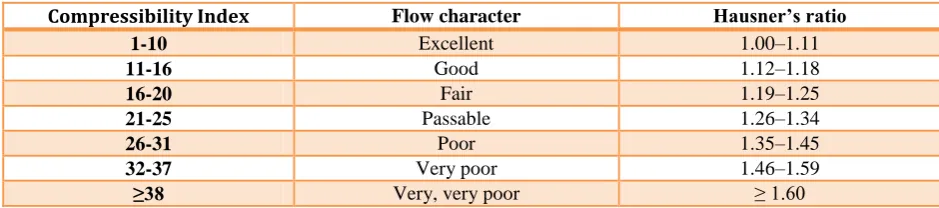
Table 6: Correlation of compressibility index and Hausner’s ratio with flow properties
Compressibility Index Flow character Hausner’s ratio
1-10 Excellent 1.00–1.11
11-16 Good 1.12–1.18
16-20 Fair 1.19–1.25
21-25 Passable 1.26–1.34
26-31 Poor 1.35–1.45
32-37 Very poor 1.46–1.59
≥38 Very, very poor ≥ 1.60
Weight variation test:
Weight variation was calculated as per method described in USP. Twenty tablets were selected at random and their average weight was determined using an electronic balance. The tablets were weighed individually and compared with average weight. The requirements are met if the weights of not more than 2 tablets differ by more than the percentage listed and no tablets differ in weight by more than double that percentage.
Thickness:
Thickness and diameter of formulation trials were measured using a digital hardness tester. 10 tablets of each trial formulation were taken and considered individually at frequent intervals. The thickness of formulations LSCN1 to LSCN8 was found to be in the range of 2.27 mm to 4.67 mm and the formulations LSCA1 to LSCA8 was found to be in the range of 3.57 mm to 4.88 mm
Content uniformity:
Ten tablets from each formulation were powdered. The powdered sample equivalent to 100 mg of drug was transferred to a 100 ml volumetric flask containing 100 ml of methanol. The contents were shaken up to 30 min. The solution was further diluted with 1% SLS solution. The drug content was determined by measuring the absorbance at 333 nm.
Drug content for formulations LSCN1 to LSCN8 was found to be in the range of 97.45-98.09%. In the case of LSCA1 to LSCA8 was found to be in the range of 98.45-99.76%.
Disintegration time:
Disintegration test, measured using USP tablet disintegration test apparatus using 900 ml of distilled water at room temperature (37±2 ⁰C). For a drug to be absorbed from a solid dosage form after oral administration, it must first be in solution, and the condition is breakup of the tablet, a process called disintegration. The disintegration test is a measure of the time required under a given set of conditions for a group of tablets to disintegrate into particles which will pass through a 10 mesh screen. Generally the test is useful as a quality assurance tool for dosage forms. The tablet disintegration time ranges from 125 to 235 seconds for LSCN1 to LSCN8 formulations and 132 to 222 seconds for LSCA1 to LSCA8. The disintegration time was found to within the tolerable range. It is clearly obvious that as the concentration of disintegrant augmented, the disintegration time declined.
In-vitro dissolution studies:
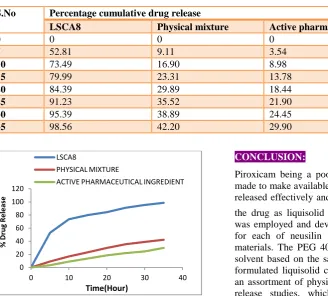
All the prepared liquisolid compacts of piroxicam using neusilin and Avicel PH 102 were subjected for in-vitro drug release studies. The dissolution studies were conducted simultaneously for the active pharmaceutical ingredient and for the physical mixture (tablet) in 0.1 N hydrochloric acid solution using Type-II apparatus. All the studies were conducted in triplicate at 50 rpm and at 37±0.5 °C.
Table 7: In-vitro dissolution data obtained for LSCA8, pure drug and physical mixture
S.No Percentage cumulative drug release
LSCA8 Physical mixture Active pharmaceutical ingredient
0 0 0 0
5 52.81 9.11 3.54
10 73.49 16.90 8.98
15 79.99 23.31 13.78
20 84.39 29.89 18.44
25 91.23 35.52 21.90
30 95.39 38.89 24.45
35 98.56 42.20 29.90
Figure 6: Comparative in-vitro dissolution profile of the optimized formulation LSCA8, pure drug and physical
mixture
CONCLUSION:
Piroxicam being a poorly water soluble drug can be made to make available a better treatment if the drug is released effectively and this is attained by formulating
the drug as liquisolid compacts. A 23factorial design was employed and developed 8 different formulations for each of neusilin and Avicel PH 102 as carrier materials. The PEG 400 was chosen as the best non-solvent based on the saturation solubility studies. The formulated liquisolid compacts were characterized for an assortment of physicochemical studies and in-vitro release studies, which indicated the formulations, shower better drug release in comparison to pure drug and physical mixture.
REFERENCES:
1. Prentis RA, Lis Y and Walker SR. Pharmaceutical innovation by the seven UK-owned pharmaceutical companies (1964–1985), British Journal of Clinical Pharmacology 1988; 25(3): 387-396.
2. Kapsi SG and Ayres JW. Processing factors in development of solid solution formulation of itraconazole for enhancement of drug dissolution and bioavailability. International Journal of Pharmaceutics 2001; 229: 1-2. 3. Javadzadeh Y, Jafari-Navimipour B, and Nokhodchi A.
Liquisolid technique for dissolution rate enhancement of a high dose water-insoluble drug (carbamazepine), International Journal of Pharmaceutics 2007: 341(1-2): 26-34.
4. Spireas S, Wang T. Grover R. Effect of powder substrate on the dissolution properties of methchrothiazide liquisolid compacts. Drug Dev. Ind. Pharm. 1999; 25 (2):163–168. 5. Nokhodchi A. The effect of type and concentration of
vehicles on the dissolution rate of a poorly soluble drug (indomethacin) from liquisolid compacts. J. Pharm. Pharma. Sci 2005; 8 (1): 18–25.
6. Javadzadeh Y, Siahi-Shadbad M.R., Barzegar-Jalali M, Nokhodchi A. Enhancement of dissolution rate of piroxicam using liquisolid compacts. Il Farmaco. 2005; 60: 361–365. 7. Javadzadih Y, Stahi MR, Asnaashari S, Nokhodchi A.
Liquisolid technique as a tool for enhancement of poorly water-soluble drugs and evaluation of their physicochemical properties. Acta Pharm 2007;57:99–109.
8. Vatyam JM, Vijaya Vani CS, Rao VU. Enhancement of solubility and dissolution rate of efavirenz using liquisolid compact technique. Int J Pharm 2014;4:150-6.
9. Christian L, Jennifer D. Improving drug solubility for oral delivery using solid dispersions. Eur J Pharm Biopharm 2000;50:47-60.
10. Kang MJ, Jung SY, Song WH, Park JS, Choi SU, Oh KT, et al. Immediate release of efavirenz from Fujicalin®-based fast-dissolving self-emulsifying tablets. Drug Dev Ind Pharm 2011;31:1298-305.
11. Naveen C, Shastri N, Tadikonda RR. Use of the liquisolid compact technique for improvement of the dissolution rate of valsartan. Acta Pharm Sin B 2012;2:502-8.
12. Pratik Kumar A. Commercial telmisartan tablets: a comparative evaluation with innovator brand micardis pratik Kumar A. Int J Pharm Sci Res 2010;1:282-92.
13. Rajesh K, Raja Lakshmi R, Uma Maheswari J, Ashok Kumar C. Liquisolid technique a novel approach to enhance solubility and bioavailability. Int J Biopharm 2011; 2:8-13. 14. Raghavendra Gubbi S, Jarag R. Formulation and
characterization of atorvastatin calcium liquisolid compacts. Asian J Pharm Sci 2010;5:50-60.
15. Spireas S, Bolton M. Liquisolid systems and methods of preparing same. U. S. Patent; 1999. p. 968, 550.
16. Tiong N, Elkordy AA. Effects of liquisolid formulations on the dissolution of naproxen. Eur J Pharm Biopharm 2009;73:373-84.
17. Vijay N, Ramarao T, Jaya Veera K. Liquisolid compacts a novel approach to enhance bioavailability of poorly soluble drugs. Int J Pharm Biol Sci 2011;1:89-102.
18. Wen X, Tan F, Jing Z, Liu Z. Preparation and study the 1:2 inclusion complex of carvedilol with beta-cyclodextrin. J Pharm Biomed Anal 2004;34:517-23.
How to cite this article:
Kapoor D, Lad C, Vyas R, Patel M, Formulation development, optimization & in vitro characterization of liquisolid compacts of an oxicam derivative, Journal of Drug Delivery & Therapeutics. 2016; 6(3):64-70
0 20 40 60 80 100 120
0 10 20 30 40
%
D
rug
R
e
le
ase
Time(Hour) LSCA8
PHYSICAL MIXTURE