Western Oregon University
Digital Commons@WOU
Master's of Arts in Interpreting Studies (MAIS)Theses Interpreting Studies
3-21-2018
Developing bilingualism in interpreting students
Amelia BowdellFollow this and additional works at:https://digitalcommons.wou.edu/theses
Part of theBilingual, Multilingual, and Multicultural Education Commons,Educational
Assessment, Evaluation, and Research Commons, and theLanguage Interpretation and Translation Commons
This Thesis is brought to you for free and open access by the Interpreting Studies at Digital Commons@WOU. It has been accepted for inclusion in Master's of Arts in Interpreting Studies (MAIS) Theses by an authorized administrator of Digital Commons@WOU. For more information, please [email protected], [email protected], [email protected].
Recommended Citation
Bowdell, A. (2018).Developing bilingualism in interpreting students(master's thesis). Western Oregon University, Monmouth, Oregon. Retrieved fromhttps://digitalcommons.wou.edu/theses/44
Developing Bilingualism in Interpreting Students
By
Amelia Marie Burkhardt Bowdell, MA, NIC
A thesis to fulfill the requirements for the degree of: Master of Arts in Interpreting Studies: Teaching Interpreting
Western Oregon University March 2018
COPYRIGHT
© 2018 Amelia Bowdell March 2018. All rights reserved
ACKNOWLEDGEMENTS
To my amazing cohort-mates at Western Oregon University in the
Master’s Degree in Interpreting Studies program including: Ann Adamiak, Royce Carpenter, Jenna Curtis, Cyndi Fisher, Colleen Jones, Jen Kinnamon, Angie O’Bleness, Brenda Puhlman, and Sheridan Whitworth. I feel like I have learned so much from all of you. Thank you for helping me view concepts and topics from so many different perspectives. I know that all of you amazing women are going to contribute so many positive and impactful changes in the world. The honor is mine to be colleagues in the field alongside you.
To my brilliant professors including Vicki Darden, Sarah Hewlett, Dr. Elisa Maroney, Amanda Smith, Erin Trine, and Erica West Oyedele. I thank you for your guidance on this journey of learning. Your passion for topics inspired me to reach out and learn more at every turn. I look forward to working with you in the future.
To Dr. Elisa Maroney, Erin Trine, and Earl Smith: I am grateful for your guidance along this journey as members of my thesis committee. Each of you brought essential knowledge and experiences, which helped the thesis grow. Thank you for your time and effort. Dr. Elisa Maroney, I will truly miss our
frequent virtual meetings. You have a dedication to research in our field and the patience to allow each student to find their own passion in turn. It is a rare gift in this world. Your attention to detail and deep thinking are a beacon to the field.
To those who took the time to fill out the online survey: Thank you for your time and honesty. It is through this honesty that we can learn and grow as a field.
To the Deaf, hard of hearing, and DeafBlind communities and colleagues who allow me to use their language every day: I cannot ever thank you enough. American Sign Language is a gift to humanity. Thank you to the people for whom and with whom I have interpreted. I appreciate you for your team effort.
With all my heart, I thank my family and friends who encouraged and supported me while I was on this journey. Your involvement while I processed the information I was learning and researching will always be treasured. A very special thank you to Adam and Andrew Burkhardt for being the best brothers one could have. I have and will continue to learn so much from both of you. Thank you to our parents for providing an environment where education is valued and lifelong learning is a way of life.
To my sweet husband, Jeffrey Bowdell: Thank you for your unwavering support as I went through a second master’s degree journey. Thank you for making sure everything else in our lives ran smoothly and for taking care of me in the process. I know I cannot do what I do without you. I love you so much, my dear!
TABLE OF CONTENTS
ACKNOWLEDGEMENTS ... iii
LIST OF TABLES ... vii
LIST OF FIGURES ... viii
CHAPTER 1: INTRODUCTION ... 1
Introduction and Background to the Study ... 1
Statement of the Problem ... 4
Theoretical Bases ... 5
Purpose of the Study ... 6
Limitations of the Study ... 6
Definition of Terms ... 7
CHAPTER 2: REVIEW OF LITERATURE ... 10
Past Research Regarding IEP Language Assessment ... 14
CCIE Standards that Relate to Bilingualism ... 15
Second Language Acquisition Theories ... 18
Post-Graduation ... 23
CHAPTER 3: METHODOLOGY ... 26
Design of the Investigation ... 26
Sample Population ... 27
Process ... 27
Data Analysis Procedures ... 28
CHAPTER 4: RESULTS AND DISCUSSION ... 29
Presentation of the Findings ... 29
IEP Prerequisites ... 30
Language Assessments within IEPs ... 32
ASL Assessment: When and How ... 33
English Assessment: When and How ... 36
Discussion of the Findings ... 40
CHAPTER 5: CONCLUSIONS AND RECOMMENDATIONS... 42
REFERENCES ... 47
APPENDIX B: ONLINE SURVEY QUESTIONS ... 57 APPENDIX C: CCIE ACCREDITED BACHELOR’S DEGREE PROGRAMS ... 60
LIST OF TABLES
Table 1 ASL, English, and Linguistics Requirements in CCIE Accredited
Bachelor’s Degree Programs... 21
Table 2 When ASL is Assessed in the IEP ... 34
Table 3 Tools used for ASL Assessment ... 36
Table 4 Language Assessed within the IEP ... 37
LIST OF FIGURES
Figure 1 Average ASL, English and Linguistic Requirements ... 22
Figure 2 Participants' Roles within the Institution ... 30
Figure 3 Language Skills Assessed as Prerequisites to IEP ... 31
Figure 4 Prerequisites: ASL versus English Assessment ... 31
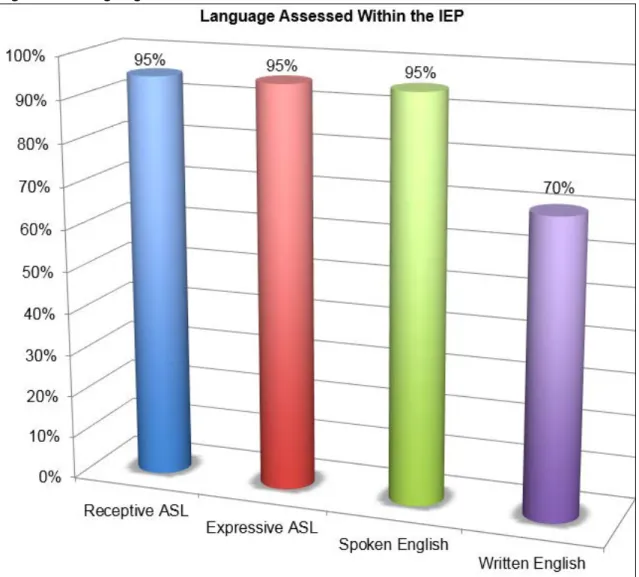
Figure 5 Language Assessed within the IEP ... 32
Figure 6 When ASL is Assessed within an IEP ... 35
Abstract
Developing Bilingualism in Interpreting Students
By
Amelia Marie Burkhardt Bowdell, MA, NIC
Master of Arts in Interpreting Studies: Teaching Interpreting Deaf Studies and Professional Studies (DSPS)
Western Oregon University March 2018
© 2018 Amelia Bowdell
American Sign Language (ASL)/English interpreters have a responsibility to the communities and consumers with whom they work to be ethical and effective interpreters. Being bilingual is part of being an effective interpreter. A student’s level of bilingualism at the point of graduation from an interpreter education program is influenced, in part, by the coursework they are required to take while in college. With this in mind, students’ fluency in both ASL and English
should be an essential part of the coursework. This also suggests that faculty should assess their students’ levels of fluency in both languages to insure that true bilingualism has been achieved. The purpose of this thesis is to look at the curriculum of the bachelor’s degrees accredited by the Commission on Collegiate Interpreter Education (CCIE) as of February 2018 and to review their curriculum related to developing and assessing students’ level of bilingualism. The focus is on the number and types of ASL, English, and linguistic courses, as well as how various programs are assessing their students’ level of bilingualism. This thesis also outlines ways to apply second language acquisition theories and research to ASL and interpreting programs.
CHAPTER 1: INTRODUCTION
Introduction and Background to the Study
As Claude Bowers stated, “History is the torch that is meant to illuminate the past to guard us against the repetition of our mistakes of other days” (Ball, 2013, p. ix). Signed language and spoken language interpreting have had their own journey, but both fields have commonalities. How people view the work of interpreters in the United States has changed over time. For example,
Sacajawea and Sarah Winnemucca were oppressed people who colonists of the United States took advantage of due, in part, to their bilingualism and ability to interpret (Karttunen, 1994).
The American Sign Language (ASL) interpreting field has only recently been viewed as a profession that requires training (Ball, 2013). Prior to the 1960s, most interpreters were family or friends of Deaf people, many of whom had no formal training in ASL, linguistics, interpreting, or translating, who
volunteered their time (Ball, 2013). Anecdotally, this researcher has been asked several times if providing interpreting services is strictly a volunteer position, suggesting the perception that anyone could do it with little or no training. These experiences suggest that interpreting may not be viewed as a respected
profession in the United States.
On a positive note, small groups of people do not share this view. President Lyndon B. Johnson, for example, had a reputation for respecting interpreters and the work they do, and often asked them for advice on the
character of various foreign leaders (Obst, 2010). According to Obst (2010), Chief Interpreter Donald Barns said that President Johnson was asked what he would do if his entire cabinet went on strike. President Johnson said he would temporally appoint interpreters to run each department because they were already interpreting so much top-secret information and were up to speed (Obst, 2010).
Obst (2010) referred to interpreting as an “important profession in any civilized and developed society, especially in the United States of America” (p. xxi). It is interesting to note there are more interpreting schools in the country of Finland than in all of the United States; however, it is unclear if Obst (2010) included signed language interpreting programs in his comparison. Interpreting requires having a wide range of knowledge in various fields, skills in cultural mediation, extreme concentration, interpreting skills, and bilingualism (Obst, 2010). According to Obst (2010), at times “accurate interpretation is not less sophisticated, complex, and intellectually demanding than brain surgery” (p. xi). According to Jacobs (1996), “United Nations Interpreters [are] seen as highly valued language/culture experts (and paid accordingly) and ASL-English interpreters are seen as social service providers” (p. 200).
The Commission on Collegiate Interpreter Education (CCIE), established in 2006, emerged from collaborative efforts of American Sign Language
Teachers Association, Association of Visual Language Interpreters of Canada, Conference of Interpreter Trainers (CIT), National Alliance of Black Interpreters, Inc., National Association of the Deaf, and Registry of Interpreters for the Deaf
(CCIE, 2015c; Conference of Interpreter Trainers, 2006-2014). The CCIE was founded to “promote professionalism in the field of sign language interpreting education through the process of accreditation” for interpreting education programs (CCIE, 2015c, para. 1).
Currently, many ASL interpreters attend some type of academic
interpreter education program (Ball, 2013). There are currently approximately 86 associate’s level, 46 bachelor’s level, six master’s level, and one doctoral level IEP degree for ASL-English Interpreting in the United States (National
Consortium of Interpreter Education Centers, n.d.). As a profession, ASL
interpreting has come far, but there is always room for growth and improvement in the field.
Extensive research has been conducted in the field of second language acquisition and developing bilingualism in students (National Association for Language Development, 2011). Some of the landmark research in the field of second language acquisition includes the following: Behaviorist Learning Theory
by Skinner in 1950s versus Mentalist Language Acquisition Theory by Chomsky in the 1960s, Significance of Learners’ Errors by Corder in 1967, ‘Interlanguage’
by Selinker in 1972, Acculturation Model by Schumann in 1978, Basic
Interpersonal Communicative Skills (BICS) and Cognitive Academic Language Proficiency (CALP) by Cummins 1979, The Five Second Language Theories
(also known as Input Hypothesis) by Krashen in the 1970s and 1980s, Learner Competence by White in 1980s, ‘Interlanguage’ as a Stylist Continuum by
Tarone in 1983, Accommodation Theory by Giles in 1984, and Social Identity and Investment in Second Language Learning by Peirce in 1995 (Ellis, 2008).
Statement of the Problem
The term second language acquisition relates to the idea that individuals learn their first language differently than they learn any subsequent language (Morehouse, 2017). Several research studies in the field of second language acquisition have “important relevance to language teaching with many serving as important resources to inform classroom practices such as the role of learners’ consciousness in second language acquisition processes, input and interaction, and learners’ needs and motivation” (Nassaji, 2012, p. 340) as well as corrective feedback (Ellis, 2008; Pica, 1994). Unfortunately, many instructors do not have a background in second language acquisition research and techniques (Nassaji, 2012). ASL instructors may not be taking advantage of second language acquisition theories and techniques.
According to Johnson and Witter-Merithew (2005), being bilingual is an important skill for interpreters, so knowledge of second language acquisition and second language teaching techniques could strengthen instructors and, in turn, interpreting students. In order to be bilingual, an individual needs to be able to use BICS and CALP in both languages (National Association for Language
Development in the Curriculum, 2011). In a perfect world, all students entering an IEP would have already mastered BICS and CALP in both of their working
languages. BICS takes approximately the first two to three years of language study to acquire, and CALP takes—at minimum—five or more years (Malone,
2012; National Association for Language Development in the Curriculum, 2011; Smith, 2000). This is especially true for languages that are so linguistically different from each other, such as ASL and English. According to the National Consortium of Interpreter Education Centers (n.d.), a majority of ASL coursework programs are shorter than the length of time needed to develop BICS and CALP in a second language.
Theoretical Bases
The theoretical bases for this research lie in the field of second language acquisition. The concepts of Basic Interpersonal Communicative Skills (BICS)
and Cognitive Academic Language Proficiency (CALP) by Cummins 1979 will be discussed as it relates to working toward a goal of bilingualism. In addition, the second language acquisition theories of Natural Order Hypothesis by Krashen in the 1980s with comments by Zafar in 2009, Linguistic Transference by Weinreich in 1953, and Theory of Comprehensible Input: i+1 by Krashen will also be
explored.
Natural Order Hypothesis assumes there is a predictable ‘natural order’ for learning a second language’s grammatical structures (Ellis, 2008). Zafar went on to state that not all second language learners learn the grammatical structures of the new language in the same order (Zafar, 2009). The order they learn
grammatical structures will somewhat depend on what the student’s first
language is (Zafar, 2009). The grammatical structures that are similar between the two languages will be easier for the student to acquire in their second language (Zafar, 2009). Linguistic Transference takes place when a student
transfers aspects of grammar and syntax from their first language to their second language (Kemp, 1998; Odlin, 1989; Towell & Hawkins, 1994). Depending
whether or not that specific grammatical aspect is the same or different between the two languages, will depend if it is considered a positive or negative linguistic transfer (Odlin, 1989; Towell & Hawkins, 1994). This linguistic transfer concept can affect syntax, lexicon, morphology, phonetics/phonology, and discourse (Odlin, 1989; Towell & Hawkins, 1994).
Comprehensible Input is the “part of the total input that the learner understands and which is hypothesized to be necessary for acquisition [of the second language] to take place” (Ellis, 2008, p. 138). Ideally the instructor would teach one step beyond what is already comprehensible to the student (Ellis, 2008). These second language acquisition theories will be further explored throughout the thesis.
Purpose of the Study
The purpose of the study was to see how ASL and English fluency is being assessed in the 13 CCIE-accredited bachelor’s degree programs (CCIE, 2015a). The researcher also explores second language acquisition theory and how it could be applied within the accredited CCIE bachelor’s degree programs.
Limitations of the Study
A limitation of this study may be that the data in Table 1 and Figure 1 were compiled by the researcher from reviewing online websites and course
catalogues of CCIE-accredited bachelor’s degree programs. If the programs’ websites were not up to date, then the data in Table 1 and Figure 1 would also
be outdated. Moreover, websites are not static and change over time. In addition, some of the courses could have additional prerequisites not outlined on the websites, that students would be required to take.
Definition of Terms
For the purpose of this thesis, the following terms and their definitions will be used:
Basic Interpersonal Communicative Skills (BICS): BICS “describes the development of conversational fluency” (National Association for Language Development in the Curriculum, 2011, para. 17). Examples of BICS include social and conversational language, which involve informal and conversational registers (Bilash, 2011). As a student learns BICS, they can begin to gradually learn Cognitive Academic Language Proficiency (CALP).
Bilingual: Bilingualism can be a result of second language learning, but is not a guaranteed result. In order for a person to be considered bilingual, the individual must have both Basic Interpersonal Communicative Skills (BICS) and Cognitive Academic Language Proficiency (CALP) in two languages (National Association for Language Development in the Curriculum, 2011). Cummins labeled the terms BICS and CALP in 1979 (National Association for Language Development in the Curriculum, 2011). Being bilingual is a “prerequisite to becoming an interpreter” (Jacobs, 1996, p. 191).
Cognitive Academic Language Proficiency (CALP): CALP “describes the use of language in decontextualized academic situations” (National Association for Language Development in the Curriculum, 2011, para. 17). CALP requires
understanding nuances within the language (Bilash, 2011). Some examples of CALP include textbooks and scholarly sources. A student learns CALP
predominantly after they learn Basic Interpersonal Communicative Skills (BICS).
Fluency: Fluency is achieved when a person has acquired Basic
Interpersonal Communicative Skills (BICS) and Cognitive Academic Language Proficiency (CALP) in a language.
Interpreter Education Program (IEP): IEP is an umbrella term that refers to a “formalized education program with a dedicated curriculum that is offered through a college, university, or technical school that prepares students for a career in the field of interpreting” (Registry of Interpreters for the Deaf, 2015-2018, para. 1). For the purpose of this study, an IEP is defined as any academic program whose objective is to prepare its students to become ASL/English interpreters. IEPs go by a variety of names including, but not limited to the following: ASL Interpreter Education, ASL/English Interpreting, ASL Interpreter Preparation, ASL Interpreter Training, Deaf Studies, Interpreter Preparation Program, Interpreter Training Program, and Signed Language Studies.
Interpreting: In the Commission on Collegiate Interpreter Education (CCIE) Accreditation Standards 2014, interpreting is defined as the “art and science of receiving a message from one language, understanding it, contextualizing it, analyzing it for intent, and rendering it into another language” with the
appropriate “transfer and transmission of culturally based linguistic and nonlinguistic information” (p. 1).
Morphemes: A morpheme is the smallest unit of a language that contains meaning (SIL International, 2018).
Native Language: The first spoken or signed language a person learns in life is their native language. Other common terms for native language include primary language, first language, mother tongue, and L1.
Second Language Acquisition: The process of learning one’s second language, third, fourth, or any subsequent language. According to Morehouse (2017), “The way you learned your first language is fundamentally different from the way you learn any additional language after that” (para. 54).
CHAPTER 2: REVIEW OF LITERATURE
Being able to interpret requires interpreters to be proficient in their working languages. The National Association for Language Development in the
Curriculum (2011) stated that bilingualism is “an advanced level of proficiency, which allows the speaker to function and appear as a native-like speaker of two languages” (para. 9). The term “speaker” could refer to any spoken or signed language user; as the user of a language. Moreover, in order for a person to be bilingual, they must have both Basic Interpersonal Communicative Skills (BICS) as well as Cognitive Academic Language Proficiency (CALP) in their working languages (National Association for Language Development in the Curriculum, 2011). In 1979, Cummings stated that BICS and CALP require different
timeframes (Malone, 2012). Students must focus on learning BICS before they can gradually add more CALP into their second language (Bilash, 2011). On average, BICS in one’s primary language can usually be learned in a non-primary language in approximately two to three years of study, though the length of time can vary (Smith, 2000). The time it takes to develop CALP skills in a non-primary language varies as well and could take five or more years of study (Malone, 2012; National Association for Language Development in the
Curriculum, 2011; Smith, 2000). According to the U. S Department of State (n.d.), Collier’s (1989) research was quoted as suggesting that “academic competence comparable to that of a native-language peer takes … between five and ten years” of study (para. 17).
The total length of time for a student to develop BICS and CALP in their non-primary language depends on a variety of factors. One important factor is whether the student’s primary language, such as English, and non-primary language, such as ASL, are linguistically related (U. S Department of State: Foreign Service Institute: School of Language Studies, n.d.). For example,
English and ASL are not located within the same linguistic family (Jacobs, 1996). English is part of the Indo-European language family while ASL is not; therefore, the morphology, grammar, and discourse structure of English and ASL are very different (Jacobs, 1996; Walton, 1992). Languages that are linguistically and culturally very different from English are harder and take longer for native English users to learn (U. S. Department of State: Foreign Service Institute: School of Language Studies, n.d.). The number of years to develop BICS and CALP in ASL is important because the majority of ASL programs are two or three years long, which is less than the required amount of time to obtain BICS and CALP
(Conference of Interpreter Trainers, 2006-2014; Malone, 2012; National
Association for Language Development in the Curriculum, 2011; Smith, 2000). There are many other aspects of ASL that are difficult for native English users to learn and use correctly, including:
nonmanual (facial) grammar including nonmanual markers (including eyebrow movement, head tilting and nodding to show topic/comment structure, yes/no vs. wh-questions, relative clauses…), modifiers (ASL mouth [morphemes], tongue movement and so forth to show adjectives
and adverbs), eyegaze ([for] pronominalization and turn-taking), classifiers, and temporal aspect. (Jacobs, 1996, p. 194)
For native English users learning ASL, learning nonmanual grammar may be as difficult as learning tones in Mandarin Chinese (Jacobs, 1996). Mandarin
Chinese is a tonal language where the “pitch or intonation in which a sound is spoken affects the meaning” (Ibrahim, 2014, para. 9). According to the United States: Foreign Service Institute (n.d.), Chinese is one of the most difficult languages for native English users to learn; therefore, it takes longer to learn than other languages. For many of the reasons above, Jacobs (1996) stated that ASL is one of the most difficult languages to learn for native English speakers.
There are several additional aspects of ASL morphemes that are hard to understand and utilize correctly for native English users. A morpheme is the smallest unit of a language that contains meaning (SIL International, 2018). Overall, the way morphemes are combined in ASL is very different from how they are structured in English (Jacobs, 1996). For example, in English morphemes are combined in order of prefix, root word, and then suffix (Jacobs, 1996). On the other hand, in ASL, multiple morphemes expressed at the same time are possible. Second, Jacobs suggests that ASL is a polysynthetic language, while English is a synthetic language (1996). According to Jacobs, a polysynthetic language, such as ASL, utilizes several morphological inflections, whereas a synthetic language like English “uses a combination of syntax and morphological inflections” (p. 194). Morphemes are another example of how English and ASL
are linguistically different, which makes ASL difficult for native English users to master.
According to Odlin (1989), Towell and Hawkins (1994), and Kemp (1998), one factor that can cause difficulties in achieving fluency in a second language is linguistic transference, when students transfer aspects of grammar and syntax from their first language to their second language. According to Kemp (1998), one example is the misuse of ASL directional verbs. For example, if a person were going to translate the English sentence “My mother gave me the book” into ASL and the student did not use the directional verb “gave” correctly, it would seem as if they “gave” the book to an invisible person (Kemp, 1998, p. 258). This application of English grammar and syntax to ASL is an example of how
language transference can cause difficulty in achieving fluency in a students’ second language (Kemp, 1998).
Bienvenu (2014) presented at StreetLeverage, discussing whether a majority of interpreters are completely bilingual in English and ASL. In her presentation, she discussed how some interpreters were not completely fluent (Bienvenu, 2014). In addition she stated that Deaf people commented on how they would adjust their language for certain interpreters to insure that their message could/would be interpreted accurately (Bienvenu, 2014). Keeping in mind the National Association for Language Development in the Curriculum’s definition of bilingualism, this may suggest that some interpreters have difficulty with CALP skills in ASL (Bienvenu, 2014; National Association for Language Development in the Curriculum, 2011).
Past Research Regarding IEP Language Assessment
In 2015, Carter conducted research to determine whether there was a common assessment used to assess ASL and English fluency as part of pre-assessment into IEPs (Carter, 2015). According to Carter (2015), the Conference of Interpreter Trainers (CIT), the Registry of Interpreters for the Deaf (RID), and the CCIE have tasked IEPs with a majority of the responsibility to “graduate competent interpreters, which included ASL and English” (p. 1).
Of the 44 programs that participated in Carter’s (2015) study, 24 (55%) were conducting a type of “ASL and/or English language competency
assessment, while 20 programs did not have any defined pre-admission ASL and English language competency assessment” (p. 24). Furthermore, of the 24
programs that did have a pre-assessment for ASL and/or English, only five of those programs were using a standardized form of ASL assessment (Carter, 2015). With regard to the English language competency assessments, 14 of the 24 programs utilized their institution’s metrics or written materials submitted by the student with their IEP application (Carter, 2015). The Association of Visual Language Interpreters of Canada (n.d.) suggested to potential IEP students that, when trying to decide which IEPs to apply for, applicants should look for a “strong curriculum, fully developed and in place (including very clear and measurable entrance and exit criteria)” (para. 6). Carter (2015) also noted that a majority of students who apply to interpreter education programs are predominantly second language learners to ASL who have come from a two-year ASL program. Second language learners learn BICS and can slowly integrate CALP (National
Association for Language Development in the Curriculum, 2011). This is of great importance because competency in a student’s second language BICS can take two to three years and CALP can take five or more years, which is significantly longer than most ASL courses before entering into interpreting programs
(National Association for Language Development in the Curriculum, 2011; Smith, 2000).
CCIE Standards that Relate to Bilingualism
The Conference of Interpreter Trainers (CIT) encourages IEPs to seek accreditation through the CCIE (2006-2014). The current CCIE standards, published in 2014, address several aspects of an IEP that relate to bilingualism, including curriculum design and outcome assessment evaluation (CCIE, 2014). Curriculum Design standard 5.3 states that “The program assures that students have a strong foundation in English and ASL before entering into the interpreting skills classes” (CCIE, 2014, p. 7). Evidence must include how students are assessed in ASL and English for current students as well as from the past three years (CCIE, 2014).
Standard 5.4 states that the program have “explicit and measurable” entry and exit requirements (CCIE, 2014, p.7). The New Media Consortium Horizon Report (2017) identified a trend in higher education of programs being able to document and evaluate student learning progress and skill acquisition (Adams Becker et al., 2017). In the same report, the authors further stated, “colleges and universities must rethink how to define, measure, and demonstrate subject mastery” (Adams Becker et al., 2017, p. 14). One way for CCIE-accredited
bachelor’s degree programs to meet these requirements is by using valid and reliable measurements that can come in the form of formal summative
assessments.
ASL and English language assessments can be administered by faculty before students are admitted into an interpreting program, and they may or may not be followed up with additional assessments and/or conducted after a student has completed the entire interpreting program (Moser-Mercer, 1994). Depending on the purpose of the language assessment, program coordinators have two options if students do not demonstrate adequate language proficiency (Moser-Mercer, 1994). One option is to require students to re-test after completing additional language practice, which could be additional formal coursework in development of the language (Moser-Mercer, 1994). Moser-Mercer recommends having the student wait at least one year before re-testing. Another option is for program coordinators to advise students to change their course of study (Moser-Mercer, 1994).
Beyond assessing language skills, the CCIE Standards also address the interpreting content and curriculum (CCIE, 2014). CCIE Standard 6.5 states that the interpreting content itself should be taught using CALP in both ASL and English (CCIE, 2014; National Association for Language Development in the Curriculum, 2011; Smith, 2000). This is important because depending on the length of ASL language development coursework, not all students will have well-developed CALP skills prior to entering an IEP. This means some aspects of ASL CALP will beyond what the students understand.
One ASL assessment of ASL fluency is known as the Sign Language Proficiency Interview (SLPI), which was developed at the Rochester Institute of Technology (Rochester Institute of Technology; 2007a). The SLPI was adapted from the Language/Oral Proficiency Interview, which was originally developed by the U. S. government (Rochester Institute of Technology, 2007a). ASL fluency is assessed on an 11-point rating scale in the SLPI (Rochester Institute of
Technology, 2007b). The SLPI was designed to look at a person’s ASL
“language vocabulary, production, fluency, grammar, and comprehension skills” (Rochester Institute of Technology, 2007b, para. 3).
According to Malone (2012), both Krashen and Cummings stated that the learner’s level of fluency in their first language plays a critical role in any
subsequent language development. Malone (2012) made the same point that becoming fluent in a second language requires “a strong foundation and a good bridge” (p. 1). If the native language is not strong enough, then any second language bridge built upon it will be in danger (Malone, 2012). In other words, one’s fluency in the second language is hindered or helped by their fluency in the first language. This suggests that assessing students’ fluency in their first
language is an essential and important task. In regards to assessing English fluency, best practice is to assess speaking, listening, reading, and writing skills, because some students are stronger in one set of communication skills than another (Powers, 2010). According to Powers (2010), if an assessment for English fluency does not assess all four communication skills it could provide a “less than adequate estimate of what a person [could] do in a real life setting” (p.
1). Therefore, by assessing all four English skills: listening, speaking, reading, and writing, instructors and the student would have a well-rounded picture of what their abilities are in English (Powers, 2010). For any Deaf and hard of students, they could assess reading and writing or whichever skills would be most appropriate for that specific student. If any student needs to improve in one or more of the communication skills in English, an intervention plan could be developed to support them.
Fluency in both languages is necessary for interpreters to be effective. According to Godfrey (2010), for a majority of IEP students their first language is English and their second language is American Sign Language, which is why second language acquisition theory and teaching is applicable to the field of interpreter education.
Second Language Acquisition Theories
In the 1970s and 1980s, Krashen developed five main hypotheses that relate to second language acquisition (Malone, 2012). One of these is that there is a “natural order” or progression for learning a second language’s grammatical structure (Malone, 2012, p. 5). While Zafar agreed with certain parts of Krashen’s hypothesis, Zafar (2009) stated that not all second language learners learn the grammar of a subsequent language in the same order, but there is logic to how they learn the grammatical structure of the new language. Taking into account the grammatical structure of a student’s first language, certain grammatical structures will be easier to learn if they are similar to their first language (Zafar, 2009). On the other hand, grammatical structures that are different from a
student’s first language will be more challenging to learn (Zafar, 2009). Zafar encouraged teachers to begin teaching structures that are similar to the student’s first language and then move onto grammatical structures that are different and, therefore, more difficult for students. Godfrey (2010) suggested that most IEP students’ first language is English and they are learning ASL as their second language. Therefore, second language acquisition research suggests that IEP students should learn ASL grammatical structures that are more similar to English before they learn the grammatical structures that are different from English structure (Zafar, 2009).
The theory of finding a natural order is also supported by Krashen’s
“Theory of Comprehensive Input, i+1” (Malone, 2012, p. 9). Comprehensive Input is defined by Ellis (2008) as the “part of the total input that the learner
understands and which is hypothesized to be necessary for acquisition to take place” (p. 47). The “i” is what the learner currently knows and can do and the “1” refers to one step above what the learner can currently do (Malone, 2012, p. 9). This means that the teacher is always carefully building upon what the students already know. Krashen’s Theory of Comprehensive Input can be applied in the classroom through the use of language scaffolding, where an instructor provides an appropriate amount of support (Malone, 2012). In applying Krashen’s Theory of Comprehensible Input, the amount of support that would be “appropriate” would be one step beyond what the learner is currently able to do (Malone, 2012).
According to the CCIE, as of February 2018, the organization’s board has accredited a total of 13 IEP bachelor’s degrees (CCIE, 2015a), which are listed in Appendix C. The researcher looked at the each of the programs’ public websites and institutions public course catalogs. Table 1 compiles the number of ASL, English, and linguistics courses required in each of the CCIE-accredited
bachelor’s degree programs. The data in Figure 1 displays the average number of required ASL, English, and linguistic courses. There may be additional
prerequisites to these required courses that are not explicitly outlined on the program’s website. It is important to note, that not all institutions’ courses require the same amount of class time. Another factor to consider is whether the
institution is on semesters, quarters, or terms. For example, Western Oregon University is on quarters for their academic school year. The courses listed in Table 1 are offered in a variety of face-to-face, hybrid, and online formats.
Table 1
ASL, English, and Linguistics Requirements in CCIE Accredited Bachelor’s Degree Programs
CCIE-Accredited Bachelor's Degree Schools
ASL Courses English Courses Linguistics Courses
Western Oregon University 9 2 2
University of Northern Colorado
(Concentration: Community Interpreting) 8 4 1
University of Northern Colorado
(Concentration: Educational Interpreting) 8 4 0
St. Catherine University 7 3 1
Eastern Kentucky University 7 2 1
University of New Hampshire 6 4 1
Mt. Aloysius College 6 3 2
Northeastern University 6 2 2
University of Southern Maine 6 1 5
University of North Florida
(Concentration: Community Interpreting) 5 3 2
University of Arkansas at Little Rock 5 2 1
Augustana University 5 1 1
University of New Mexico 4 3 1-2?
Columbia College Chicago 4 2 1
University of North Florida
(Concentration: General Practice) 1? 3 1
Note. Data from each college’s/university’s official website and course catalog. The websites include Augustana University (2017), Columbia College Chicago (2017); Eastern Kentucky University (n.d.), Mt. Aloysius College (n.d.),
Northeastern University (2014), St. Catherine University, (2017), University of Arkansas at Little Rock (n.d.), University of New Hampshire (2017), University of New Mexico (n.d.), University of North Florida (2016), University of Northern Colorado (2017), University of Southern Maine (2017), Western Oregon University (n.d.).
Figure 1. Average ASL, English and Linguistic Requirements
A publication titled Entry-to-Practice Competencies for ASL/English Interpreters (Johnson & Witter-Merithew, 2005) focused on the competencies that the community should be able to expect from beginning interpreters. The different domains identified by Johnson and Witter-Merithew were human relations, theory and knowledge, language skills, interpreting skills, and
professionalism (2005). Domain three outlines the language skills for recent IEP graduates, which include:
demonstrate superior proficiency and flexibility in one’s native language by effectively communicating in a wide range of situations [and] demonstrate near-native like communicative competence and flexibility in one’s second
language by effectively communicating in a variety of routine personal and professional situations. (Johnson & Witter-Merithew, 2005, p. 6)
Post-Graduation
Once IEP students complete all curriculum and program-related requirements in their program, they graduate with their respective degrees. Under Outcome Assessment Evaluation standard 9.2, IEPs should track “alumni to determine their experiences and earned interpreting credentials after
graduation … the number of alumni currently working in related fields…and continued education” (CCIE, 2014, p. 12). When students graduate from an IEP program—depending upon where they live—there may be different requirements and credential(s) that must be fulfilled prior to entering the field of interpreting.
Readiness-to-Credential Gap refers to the time between when a person graduates from an IEP and when that person earns some form of formal credential (Godfrey, 2010). Credentialing includes state licensure and national certification. This is also referred to as the Graduation-to-Work Gap or
Readiness-to-Work Gap (Carter, 2015). Godfrey (2010) believed that one
contributing factor to the Credential Gap is a “lack of pre-requisite language skills (primarily ASL) of students entering IEPs” (p. 20).
According to Maroney and Smith (2010), the term “gap” can be defined as the “difference between skills of recent interpreter education program graduates and the skills necessary for entry-level interpreter work” (p. 35). According to the Registry of Interpreters for the Deaf 2016 Annual Report, the first-time pass rate for the NIC was 23.69%. While educational demographics of first-time NIC test
takers is not known, there was an increased pass rate of 3.24% among people retaking the NIC (Registry of Interpreters for the Deaf, 2016). Maroney and Smith (2010) conducted research on 18 students who were graduating with grades of C or better from a four-year degree ASL/English interpreting program in 2009. Their research study looked at the passing rate of the students for the NIC Knowledge Exam, NIC Interview and Performance Exam, and the Educational Interpreter Performance Assessment (Maroney & Smith, 2010). While 100% of the 18 students in the study passed the NIC Knowledge Exam, approximately 23% percent of the students did not pass the NIC Interview and Performance Examination (Maroney & Smith, 2010).
Another potential credential is the Educational Interpreter Performance Assessment (EIPA; n.d.). The EIPA is administered by the Boys Town National Research Hospital. When the EIPA was reviewed, it was deemed
“psychometrically valid and reliable” (EIPA, n.d.; Smith & Maroney, 2018, p. 4). Smith and Maroney (2018) looked into the EIPA rating system and categorized the 36 criteria. They found that “86% of the criteria are related to linguistic skills, while only 14% seem related to interpreting tasks” (Smith & Maroney, 2018, para. 16). Maroney and Smith concluded that the EIPA focuses more on language assessment than interpreting skills (2018). Unfortunately, the researcher could not find any published data about the national rate for various EIPA scores, which could have added to the original picture of recent IEP graduates.
Smith and Maroney (2018) conducted a longitudinal study to look at Western Oregon University’s bachelor’s degree students for the existence and
extent of the gap between graduation and EIPA certification, and readiness-to-work. Smith and Maroney (2018) concluded that the EIPA scores could not provide unequivocal proof of the readiness-to-work gap. However, they did report that the average EIPA scores of their students were higher when the IEP cohort size was smaller (Smith & Maroney, 2018). This was especially true for cohorts with less than 13 students.
According to Johnson and Witter-Merithew (2005), students who enter an IEP with less-than-fluent ASL skills could become practitioners who enter the field of interpreting needing remediation and additional development in ASL proficiency. According to Maroney and Smith (2010), “the field has much left to determine in terms of the ‘gap,’ interpreter education, certification, and readiness-to-work” (p. 37). There is always room for improvement in any field. The Deaf community and all the communities served by signed language interpreters deserve the best, so we must continue to work to improve our field (M. Meldrum, personal communication, January, 2004).
CHAPTER 3: METHODOLOGY
Part of being an ASL/English interpreter is the need to be fluent in both ASL and English. The CCIE accreditation standards require that IEPs teach and assess for bilingualism prior to entry into the IEP (CCIE, 2014). The researcher investigated how the CCIE-accredited bachelor's degree programs are teaching and assessing fluency in ASL and English.
Design of the Investigation
The researcher planned to use a mixed methods qualitative design (Hale & Napier, 2013). The target population for this research was people who work full-time at a college/university that has a CCIE-accredited bachelor's degree interpreter education program. At the time of this study, there were 13 CCIE-accredited bachelor's degree IEPs in the United States (CCIE, 2015a). The CCIE's mission is to “promote professionalism in the field of sign language
interpreter education” (CCIE, 2015b, para. 1). This organization has accreditation standards that must be met and maintained for an IEP to be considered
accredited by the CCIE. The researcher wanted to focus on this target population because these programs are required (by the CCIE accreditation standards) to teach and assess their students’ and graduates' fluency in both ASL and English, which was the focus of this research study. In addition, the benefit of using this specific target population is that they are all bachelor’s degree programs, and they are all held to the same CCIE accreditation standards, which makes for
fewer variables within the target population than there would be in a random sampling of IEPs.
Sample Population
The target population for this research was educators over the age of 18 who work full-time at a college/university that currently has a CCIE-accredited bachelor's degree program. In order to find and contact these participants, the researcher used the CCIE-accredited programs' websites.
Process
The online survey was sent out to full-time faculty, administrators, and program directors of CCIE-accredited bachelor’s degree programs via email. To reiterate, as of February 2018, the CCIE had 13 accredited bachelor’s degree programs (CCIE, 2015a; see Appendix C). The online survey was confidential to encourage participants to be open and honest; at no time during the survey were participants asked for which CCIE-accredited institution they currently work. The risks for the online survey were a loss of time to devote to work and personal time. Prior to the survey, the participants read the consent form, and they were asked if they were willing to participate. A copy of the consent form can be found in Appendix A.
The online survey consisted of multiple choice, check all that apply, short answer, and long answer questions. The online survey questions are included in Appendix B. Most of the questions on the survey related to if and how the
accredited program evaluates its students with regards to ASL and English fluency. First, the participants were asked about their role within their institution.
Second, participants were asked about the language skills assessed within the program. Delving deeper into ASL assessed, participants were asked at what points ASL is assessed. Participants were allowed to choose all that apply to their program. Third, participants were asked which type of tool was used to assess ASL. Participants were again allowed to choose all that apply. Fourth, the researcher turned their attention toward English assessment. Participants were asked when and how their program assess a student’s English fluency.
At the end of the survey, participants were asked if they would be willing to participate in the second phase of the study. Several participants responded with multiple detailed responses. The researcher felt much of the information was clear. There were a few responses that the researcher would like to have
clarified; however, due to the decision to keep the online survey confidential, it is not possible to know which participant supplied which responses. Furthermore, given the overall complete and clear responses to the survey, the researcher decided that phase two of the methodology was not necessary.
Data Analysis Procedures
The data from the online survey have been analyzed by the researcher from two main perspectives. The data was being reviewed as one whole sample population (Hale & Napier, 2013). In addition, each completed survey could be viewed as one IEP as it relates to assessing fluency in ASL and English (Hale & Napier, 2013). The researcher also looked for correlations between various responses within each completed survey (Hale & Napier, 2013).
CHAPTER 4: RESULTS AND DISCUSSION
Presentation of the Findings
Twenty-three responses were submitted to the confidential online survey. Three respondents indicated that they do not currently work full-time at a
college/university. Rather, they currently work part time or are retired from CCIE-accredited institutions. Consequently, only 20 respondents met eligibility criteria. Before delving into the programs, the role of these respondents in each of their programs will be reported. Of the 20 respondents, 11 (55%) self-identified as faculty. Seven (35%) respondents identified their roles as both faculty and administrator. One respondent (5%) identified as faculty and program
coordinator, but not as administrator. One respondent (5%) identified as faculty and staff interpreter. None of the respondents identified themselves as strictly administrators. In other words, 100% of the respondents reported that their position was some type of faculty role. These data are displayed in Figure 2.
Figure 2. Participants' Roles within the Institution
IEP Prerequisites
Overall, 80% of IEPs had some type of ASL assessment, and 55% had some type of English assessment (see Figure 4). Eleven (55%) participants reported assessing written English. Nine (45%) participants reported assessing spoken English. One (5%) reported not knowing about their IEP’s English assessment. Three (15%) participants reported that their program had open enrollment or no prerequisites for students to be admitted into their IEP. For those IEP(s), the potential student would simply need to be admitted into the college/university as a whole. One response (5%) said they did not know what, if any, language skills were being assessed prior to students entering the IEP (see Figure 3).
Figure 3. Language Skills Assessed as Prerequisites to IEP
Language Assessments within IEPs
Nineteen (95%) of the respondents said they assess both receptive and expressive ASL language skills. When asked about English language skills that are assessed within the IEP, 14 (70%) of the respondents stated that the IEP’s faculty assess written English skills. When asked about spoken language skills, 19 participants (95%) reported assessing those skills (see Figure 5).
ASL Assessment: When and How
Fourteen of the 20 (70%) respondents reported that ASL is assessed periodically in different classes where each instructor utilizes their own form of assessment. However, seven (35%) reported that ASL is assessed periodically in different classes where a standard department-wide assessment is utilized. Four (20%) of the participants reported that ASL is assessed as part of an exit
requirement for the interpreting program, but they did not indicate when the benchmark examination is administered. One of the respondents (5%) has an ASL assessment for students as a benchmark exam. In addition, one participant (5%) has an ASL assessment as part of a placement into ASL coursework after the student(s) are already accepted into the IEP. Finally, one of the respondents (5%) reported that an “external ASLA or ASLPI is required prior to entering advanced ASL classes and intermediate interpreting classes (score must be above a 2 out of 5) and again before practicum (score must be above a 3 out of 5).”
It is noteworthy that 15 respondents stated that ASL assessment is part of pre-admission to the IEP. This is interesting because, on a previous question in the survey, 16 of the respondents said that ASL receptive and expressive skills are assessed as part of the IEP prerequisites. The single respondent data variance could be due to the participant being confused as to why a similar question was asked twice (see Table 2 and Figure 6).
Table 2
When ASL is Assessed in the IEP
Percent Out of 20
Part of pre-admission to the interpreting program 75% 15
Periodically in different classes. Each instructor uses their own assessment
70% 14
Periodically in different classes. All instructors use a department wide assessment
35% 7
Part of an exit requirement for the interpreting program 20% 4
External ASLA or ASLPI is required prior to advanced ASL classes and intermediate interpreting classes (must be above 2/5) and again before practicum (must be above 3)
5% 1
Part of placement into ASL after acceptance 5% 1
Figure 6. When ASL is Assessed within an IEP
Next, participants were asked in greater detail about the ASL
assessment(s) itself. Participants were then asked if there was a standardized assessment tool that was used as a base or model to assess ASL. Seven (36.8%) participants stated that the program where they work used the Sign Language Proficiency Interview (SLPI). Four (21.10%) based their ASL
assessment on the American Sign Language Proficiency Interview (ASLPI). One respondent (5%) said that their ASL assessment was based on American Sign Language Teachers Association (ASLTA). The American Council on the
participants. One (5%) stated that faculty in the department are discussing beginning to use the ACTFL; however, the same participant did not state what the faculty are currently using as an ASL assessment tool. Five (25%) stated that they use a home-grown departmental assessment. One (5%) said that a Deaf assistant director conducts the assessment but did not clarify what type of assessment tool was being used. One (5%) stated they did not know whether a standardized tool was being used to assess ASL. One participant did not answer the question (see Table 3).
Table 3
Tools used for ASL Assessment
Percentage Out of 20
SLPI 36.80% 7
Home-grown department assessment 25% 5
ASLPI 21.10% 4
ACTFL 15.80% 3
ASLTA 5% 1
Deaf assistant director conducts their own
assessments 5% 1
Department currently discussing changing to
department using ACTFL 5% 1
Don't Know 5% 1
No response 5% 1
English Assessment: When and How
Next, the researcher turned the focus to English assessment. Nineteen out of 20 (95%) participants reported that English is assessed within the IEP (see Table 4). One respondent stated that while their program does not currently assess English in the IEP, the faculty members are considering doing so in the future.
Table 4
Language Assessed within the IEP
Percentage Number out of 20
ASL 100% 20
English 95% 19
Next, the researcher looked into when English is assessed within the IEP program. Participants were told to choose all that apply. One respondent stated their program does not assess English within their IEP. Eighteen (out of 19; 94.7%) participants assess English periodically in different classes and each instructor uses their own assessment. Eleven (57.9%) stated that English was assessed in one or more English classes within the English department. In addition, three (15.8%) participants used an English assessment as part of the exit requirement for the interpreting program. One (5.26%) of the respondents assessed English in different classes using one department-wide assessment. One (5.26%) respondent said that English is assessed using a portfolio.
Finally, one participant (5.26%) said that English was assessed as part of a “pre-interpreting panel run by full-time faculty.” Later on in the survey, the same respondent expanded on this, saying that the pre-consecutive interpreting
assessment panel is done at the end of the second year. At that time students are required to complete the first ASL Department Panel Assessment where full-time faculty assess signed and spoken language skills to see if the student is prepared to enter the IEP major. If they are not ready for major core courses, individual remediation plans are created by faculty for the given student.
One other respondent indicated that they have brought up the concept of reducing time spent on writing research papers and doing spoken language presentations within their IEP on multiple occasions. Each time this idea was presented the colleague was informed by their supervisor that this is an ASL-English interpreting program and that both ASL and ASL-English, both written and spoken, assessments needed to be done and reinforced. Data relating to when English is assessed within the IEP is found in Table 5 and Figure 7.
Table 5
When English is Assessed in the IEP
Percentage Out of 19
Periodically in different classes. Each instructor uses their own assessment
94.70% 18
Assessed in 1 or more English classes by the English department
57.90% 11
Part of an exit requirement for the interpreting program
15.80% 3
Periodically in different classes. All instructors use a department wide assessment
5.26% 1
Pre-interpreting panel run by full-time faculty 5.26% 1
Figure 7. When English is Assessed in an IEP
Next, the researcher asked whether the English assessment was based on or modeled after any standardized assessment tool. Six out of 10 (60%) of the respondents stated that the English assessment was not based on a
standardized assessment. Two (20%) participants said that their institution’s English department has English assessments that are based on a standardized assessment tool, but they were not sure what standardized tool it was. One (10%) said that their English assessment is modeled or based on the American
that they did not know whether the English assessment was based on any standardized assessment tool or not.
Discussion of the Findings
This research was designed for a small target population of 13 CCIE-accredited bachelor’s degree interpreting programs. In order for respondents to stay completely anonymous, participants were not asked to identify in which of the 13 programs they currently work. The purpose of the research survey was to encourage respondents to be as open and honest as possible. Since there were 20 qualified responses from 13 CCIE-accredited bachelor’s degree IEPs, it is possible to have received one or more responses from each of the IEPs.
One participant indicated that their ASL assessment was based on the American Sign Language Teachers Association (ASLTA). According to the ASLTA website (2017), their organization offers a certification process to ensure “teachers possess the skills and knowledge to teach ASL and the culture of the US Deaf community” (para. 2). However, this type of certification was not
designed to assess interpreting according to the CCIE’s definition of interpreting. Another participant stated that their ASL assessment was based on the American Council on the Teaching of Foreign Language (ACTFL) assessment. This was surprising to the researcher because for most IEP students English is their native language (Godfrey, 2010). However, student demographics were not included in the online survey, so the researcher is not aware of specific
institutions’ student demographics. Based on a review of the ACTFL website (n.d.), the organization offers several language assessments. This includes
assessments for speaking, listening, reading, and writing abilities, as well as one assessment that assess all four of the above language skills within one
assessment (ACTFL, n.d.). While these assessments were offered in several spoken languages, they were not offered in any signed language (ACTFL, n.d.). Within the data, several participants indicated the ways their IEPs were
assessing ASL fluency, but multiple participants indicated they were not sure how their institution was assessing English fluency.
The same types of questions were asked about English assessments, but different types of responses were elicited. The responses about the types of English assessments were more indistinct. Several participants stated they did not know how English was being assessed.
In viewing the responses one at a time, the researcher anticipated being able to see similarities in responses that could possibly indicate that the two responses were from faculty from the same CCIE-accredited bachelor’s degree program. While there were some similarities to be found, there was also a variety of answers regarding when and how each language skill was assessed, which surprised the researcher. The differences in responses could be due to individual faculty not being familiar with department-wide assessment background and plans. Perhaps the assessment was created before those specific faculty were employed at the college and this specific information was not recorded or conveyed to the newer faculty who participated in the survey.
CHAPTER 5: CONCLUSIONS AND RECOMMENDATIONS
According to Moser-Mercer (1994), instructors “seem to instinctively know the level of language competence” that is needed for a specific level of [ASL] coursework; however, it is evident that a “clearer definition of linguistic
competence needs to be developed” (p. 58) that could be used to aid potential students and instructors in creating assessments and evaluating students’ bilingualism. Once IEP instructors establish an agreed-upon definition of linguistic competence for ASL/English interpreting, standardized language fluency assessments could be used to see if students/graduates meet that agreed-upon definition. Currently, there is not a singular standardized English and ASL language bilingualism assessment that all ASL interpreting students are required to take in the United States. The American Sign Language Proficiency Interview (ASLPI) and Sign Language Proficiency Interview (SLPI) can be used to assist in assessing language proficiency in ASL; however, not all ASL students are required to take either one of them (Rochester Institute of Technology,
2007a).
Several survey participants gave a variety of answers in relation to how English is being assessed. A student’s fluency in English can have a
determinative impact, whether positive or negative on their ability to reach fluency in their second language, continued exposure to the second language, notwithstanding (Malone, 2012). Therefore, having a way to thoroughly assess a student’s level of fluency in their first language, such as English, is important.
There are several standardized assessments for English that could be used to assess English fluency. Having a compressive exam that assesses English listening, speaking, reading, and writing skills would be a good idea (Powers, 2010). In this way, if a student is stronger or weaker in a specific skill, a plan could be made to help the student improve in a specific area. The survey did not address listening and reading skills; therefore, this would be another
opportunity for further research. Being able to have an outside assessment of a student’s fluency in ASL and English could help students and instructors alike in supporting current students and designing curriculum to help future students.
According to Godfrey (2010), for a majority of IEP students, their first language is English and their second language is American Sign Language, which would indicate embedding second language theory and teaching strategies within curriculum would be essential. One opportunity could be for current and future instructors to take coursework or workshops in second language
acquisition.
With regard to learning ASL as a second language, further research needs to done to determine, as much as possible, a “natural order” for learning ASL as a second language (Malone, 2012; Schütz, 2017). It should take into account the grammar of native language structures versus the ASL structures that students are learning. This research could include how and in what order students learn ASL grammatical concepts most effectively. This research on “natural order” to learn ASL as a second language can eventually be used to find additional ways to incorporate Krashen’s Theory of Comprehensive Input, i+1, into the classroom
(Malone, 2012; Schütz, 2017). Additional research could also be done to see whether other applications for second language acquisition exist. The knowledge could be used to help instructors design curriculum and textbooks that could grammatically build upon what the students learned in the previous lesson, while helping combat language transference for ASL students.
Looking at second language acquisition theory and the recommended time to develop BICS and CALP in an individual’s second language, and
considering that a majority of ASL language and IEP programs are currently two to four year programs including interpreting coursework, it is interesting to note the difference in years of required language coursework in the second language. Because of how linguistically different English—the native language for most IEP students—is from ASL, it takes longer for students to become fluent in ASL, their second language (Godfrey, 2010; U. S. Department of State: Foreign Service Institute: School of Language Studies, n.d.).
Further research also needs to be done on the current demographics of students in IEP programs. Student demographics can change, so it is important to be aware of the most current demographic information. This information can help IEP faculty design their curriculum around the needs of their current student population. For example, if the current trend continues, where most of the IEP students are learning ASL as their non-native language, programs would benefit from curriculum using additional second language acquisition techniques
(Godfrey, 2010). Therefore, IEP and ASL instructors could benefit from knowledge of second language acquisition theory.
Moving forward, there are several possible opportunities and solutions for instructors in IEPs to consider. IEP programs that are shorter in length could alter the focus of the program to become ASL, Deaf Studies, Pre-Interpreting, or Signed Language Studies programs, which would allow their schools to partner with five to seven year language interpreting programs. On the other hand, some current shorter IEPs might have the ability to extend their programs into a five to seven year language and interpreting program. Several other fields of study do not offer shorter programs if the knowledge necessary for the specific field requires additional study. A parallel example might be that of the “advanced practice registered nurse,” which leads to careers such as “nurse anesthetist, nurse midwife, clinical nurse specialist, and nurse practitioner” (White, 2018). One path toward this career could include an Associate degree in science, a bachelor’s degree in nursing and then a master’s degree in advanced practice registered nursing (White, 2018). Another example is if an individual wanted to become a physician’s assistant, one option would be to get an Associate degree in biology or a related field, a bachelor’s degree in pre-med, and then continue onto graduate work in the field of medicine (Gillett, 2016). There is not an option for a student to get a two to four year degree in medicine or physician’s assistant (Gillett, 2016). In many fields, the program of study becomes more specific as one progresses further into higher education. Every step along the educational journey is important.
Program changes and further research could have several positive impacts for instructors, students, interpreters, and, therefore, the Deaf,
hard-of-hearing, and DeafBlind Communities served. If programs added additional courses to their curriculum this could result in the need for additional instructors to be hired. Assessing for English fluency would insure students have a strong bridge upon which to build second language fluency in ASL. Further research into application for second language acquisition within curriculum could lead to more comprehensive curriculum, textbooks, and materials that push students to gain further fluency in ASL. In turn, if students become more fluent in English and ASL, their bilingualism will be enhanced and, in turn, their proficiency as
interpreters will improve.
According to the research, achieving bilingualism in one’s non-native language is not easy especially if the two languages are linguistically different (Jacobs, 1996; Kemp, 1998). Regardless of this difficult goal, the field of ASL and English interpreting must hold high expectations for learners to attain true
bilingualism, which means IEPs need to continue to support students on their journeys toward bilingualism using research based theories and methodologies (Kemp, 1998).