THE UNIVERSITY OF READING
Coronavirus proteins and their directed
evolution to inhibit virus replication
A thesis submitted for the degree of Doctor of Philosophy in
Microbiology/ Virology
By
BAN ODAY ABDULSATTAR
Supervisors:
Dr. Benjamin W. Neuman
Dr. Geraldine Mulley
School of Biological Sciences
The University of Reading, UK
Declaration
I confirm that this is my own work and that it has not been previously submitted for a degree at any university or institution. The use of all materials from other sources has been properly and fully acknowledged. All drawings not cited are original artwork by the author.
Abstract
Coronaviruses are enveloped, positive sense, RNA viruses that infect many species of animals, including humans. Of the six coronaviruses that can infect humans, SARS-CoV and MERS-CoV are the etiological agents of most concern currently. Coronaviruses possess the most complex and largest RNA genomes among all RNA viruses. The genome contains up to 15 genes with multiple open reading frames (ORFs) encoding both structural and non-structural proteins. Coronaviruses encode about 30 proteins that play specific, and often essential, roles in viral replication and assembly.
This thesis presents work done to express Murine hepatitis virus strain A59 (MHV-A59) proteins such as Nucleoprotein and membrane genes, non-structural proteins (5,6,7,8,9,10,16) from gene1, part of non-structural proteins (Plpro, Y-domain from nsp3 and N-terminal from nsp12) and RdRp from C-terminal part of nsp12 in E. coli BL21 cells and mammalian 17clone-1 cells, the latter of which are permissive for MHV-A59. The efficiency of transfection and expression of the proteins in mammalian cells was evaluated. SUMOStar (small ubiquitin-like modifier) fusion technology was used to enhance protein expression in the eukaryotic system. Expressed proteins were detected by Western blot with an anti-His tag antibody. The ability of virus-expressed proteins to interfere with virus infection was tested and an inhibitory effect was detected by plaque assay.
The coronavirus nucleoprotein (N) is an important component for both viral replication and transcription. Error-prone PCR (ep-PCR) was used with the N protein as template to introduce random error and the number of mutations
introduced was calculated after 100 random colonies were sequenced to validate the mutagenesis. Transient expression of N protein was shown to increase the efficiency of infection and virus yield. The function of N was investigated by screening for dominant-negative N mutants, using a library of N variants constructed using ep-PCR. The cytotoxicity of N variants was tested by MTT assay. Expressed N variants showed a range of effects ranging from a 10-fold increase in virus yield associated with the wild type N to 10-fold inhibition of virus growth. One particular N variant, mut38, was non-toxic, but reproducibly inhibited virus growth. The potential to screen for dominant-negative N variants using cell survival was also assessed using different N libraries. The thesis also investigated different strategies aimed at purification of non-structural protein 16 (nsp16). The overall findings suggest an ability of virus-expressed proteins in eukaryotic cells to interfere with virus infection and demonstrate that such antiviral activity can be generated by mutating an important viral protein.
Dedication
This thesis is dedicated to my father and mother, for their endless love, support and encouragement. I am truly thankful for having you in my life. This work is also dedicated to my brother and sisters, Mohammed, Hanan and Jwan, who stand by me when things look bleak and to all the people in my life who touch my heart.
Acknowledgments
Firstly, I would like to express my sincere gratitude to my supervisor Dr. Ben Neuman for his constant support, advice and useful scientific discussions. His guidance helped me in all the time of research. I could not have imagined having a better advisor and mentor for my Ph.D study. I specially thank Dr. Mulley for the assistance she provided at all levels of the research project and during writing of this thesis.
I would like to express my special appreciation and thanks to Professor Ian Jones who gave access to his laboratory and for brilliant suggestions and also for his guidance and help during writing of this thesis.
A very special thanks goes out to Dr. Hawaa Almulla who always kindly advised and helped me. A would also like to thank Saad Mutlk for his help and support.
I would also like to thank all the staff in knight building for their kindness and help, with special thanks to Mrs Jessica del Rio.
My sincere gratitude goes to my sponsor Ministry of Higher Education and Scientific Research in Iraq and Al-Mustansiriyah University; I recognize that this research would not have been possible without their financial support.
Finally, I would like to thank my parents, my brother and sisters. They were always supporting me and encouraging me with their best wishes. Your prayer for me was what sustained me thus far.
And…. To all who I have mentioned and everyone that I forgot, I thank you all once again.
Presentations
1- A novel approach in gene therapy by using directed evolution to generate antiviral drug. Society of General Microbiology annual conference 2015. The international convention centre Birmingham. Presented poster.
2- Suppression of MHV infectivity by virus proteins and dominant negative mutants. Society of General Microbiology annual conference 2016. ACC Liverpool. Presented poster.
3- A novel approach in gene therapy by using directed evolution to generate antiviral drug. Society of General Microbiology annual conference 2017. The Edinburgh International Conference Centre (EICC), Edinburgh. Presented poster.
Table of contents
Declaration ... 1 Abstract ... 2 Dedication ... 4 Acknowledgments ... 5 Presentations ... 6 Table of contents ... 7 List of Figures ... 11 List of Tables ... 15 Abbreviations ... 16 1 Introduction ... 20 1.1 Coronaviruses ... 20 1.2 Taxonomy ... 21 1.3 Morphology ... 251.4 Coronavirus life cycle ... 26
1.5 Coronavirus genome ... 30
1.5.1 Non structural proteins ... 31
1.5.2 Structural proteins ... 37
1.5.2.1 Spike protein (S) ... 37
1.5.2.2 Membrane protein (M) ... 40
1.5.2.3 N protein (N) ... 42
1.5.2.4 Envelope protein (E) ... 44
1.6 Antiviral drugs ... 44
1.7 Therapies against coronavirus infection ... 48
1.8 Directed evolution ... 52
1.9 Aims of this research ... 55
2 Materials and methods ... 56
2.1 Plasmid construction and cloning of desired DNA fragment ... 56
2.1.1 Primers ... 56
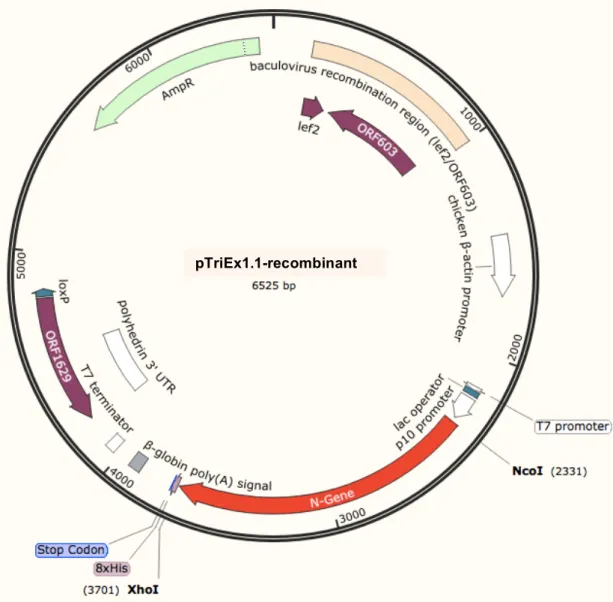
2.1.3 pTriEx1.1-recombinant map ... 61
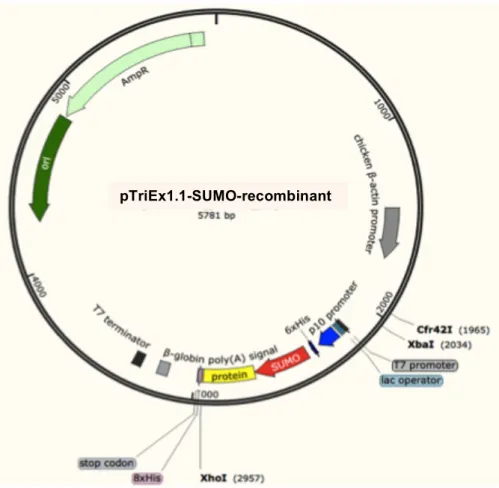
2.1.4 SUMO-pTriEx1.1 ... 61
2.1.5 Amplification of DNA fragments ... 62
2.1.6 Double digest and gel extraction of pTriEx1.1 vector ... 63
2.1.7 In-Fusion cloning of desired proteins to the pTriEx1.1 vector ... 64
2.2 DNA agarose electrophoresis ... 64
2.3 Transformation of E. coli competent cells ... 64
2.4 Colony PCR screening of transformant bacteria ... 65
2.4.1 Colony PCR analysis ... 65
2.4.2 Plasmid DNA purification and sequencing ... 65
2.5 BL21 (DE3)-pLysS transformation ... 66
2.6 Cloning with SUMOStar ... 67
2.6.1 Amplification of SUMOStar and desired protein fragments ... 67
2.6.2 Restriction digest of pTriEx1.1 plasmid and DNA fragments ... 67
2.6.3 Ligation of PCR fragments in pTriEx1.1 ... 68
2.7 Transfection of mammalian cells ... 68
2.8 Treatment with proteasome inhibitor ... 69
2.9 SDS Polyacrylamide gel electrophoresis (PAGE) ... 69
2.10 Protein staining with coomassie blue ... 70
2.11 Western blotting analysis ... 70
2.12 Immunoprecipitation ... 71
2.13 Error-prone PCR ... 72
2.14 Directed evolution ... 73
2.15 Cell culture ... 74
2.16 Determination of viral titre by plaque assay ... 74
2.17 Evaluation of cytotoxicity using 3-(4,5-dimethylthiazol-2-yl)-2,5- diphenyltetrazolium bromide assay (MTT) ... 75
2.18 Nsp16 protein purification ... 76
2.18.1 Preparation of LOBSTR E. coli competent cells ... 76
2.18.2 Heat shock transformation of competent LOBSTR E. coli ... 77
2.18.3 Small scale protein expression ... 77
2.18.4 Large scale protein expression ... 78
2.18.5 Cell lysis ... 78
2.18.7 Determination of protein concentration by Bradford Assay ... 79
2.18.8 Statistical analysis ... 80
3 Cloning and expression of MHV genes and proteins in E. coli BL21(DE3)-pLysS competent cells and mammalian cells. ... 81
3.1 Introduction ... 81
3.2 Results ... 86
3.2.1 PCR amplification of DNA fragments from cDNA of MHV-A59 ... 88
3.2.2 Transformation of In-Fusion products into competent E.coli cells90 3.2.3 Correction of random mutation in nsp12_N-terminal ... 92
3.2.4 Protein expression in E. coli BL21(DE3)-pLysS competent cells by IPTG induction ... 95
3.2.5 Expression and optimization of transfection in mammalian cells………..101
3.2.5.1 Optimization of transfection reagents ... 102
3.2.5.2 Optimization of cell density ... 103
3.2.5.3 Optimization of incubation time ... 103
3.3 Discussion ... 109
4 Inhibition of MHV-A59 infectivity by virus proteins in vitro ... 114
4.1 Introduction ... 114
4.2 Results ... 117
4.2.1 Cloning strategy for SUMOStar-MHV fragments in pTriEx1.1 vector 117 4.2.2 Amplification of MHV-A59 and SUMOStar fragments ... 119
4.2.3 Generation of SUMOStar-MHV fragments by overlap extension PCR…….. ... 120
4.2.4 Ligation of SUMOStar-MHV fragments in pTriEx1.1 vector ... 121
4.2.5 Transformation in StellarTM E. coli competent cells and restriction digest with SacII and XhoI restriction enzymes ... 121
4.2.6 Transfection and expression of SUMOStar-MHV fusion proteins in mammalian cells ... 123
4.2.7 Suppression of MHV infectivity by virus proteins ... 124
5.1 Introduction ... 132
5.2 Results ... 138
5.2.1 Plaque assay of virus yield in the presence of N protein expressed in trans ... 138
5.2.2 Error prone PCR ... 140
5.2.3 Construction of library variant ... 145
5.2.4 Phylogenetic tree analysis ... 150
5.2.5 Effect of mutated N proteins on virus replication ... 152
5.2.6 MTT assay ... 158
5.3 Discussion ... 160
6 Directed evolution ... 165
6.1 Introduction ... 165
6.2 Results ... 168
6.2.1 Directed evolution for N protein and mut38 ... 168
6.2.1.1 Round 1: wild type and mut38 ... 168
6.2.1.2 Round 2: wild type and mut38 ... 172
6.2.1.3 Round 3: wild type and mut38 ... 173
6.2.1.4 Round 4: wild type and mut38 ... 173
6.2.2 Directed evolution for 10 variants ... 174
6.2.3 Directed evolution of a complex N protein library ... 177
6.3 Discussion ... 180
7 Expression and purification of MHV-A59 Mtase protein ... 183
7.1 Introduction ... 183
7.2 Results ... 187
7.2.1 Optimizing conditions of nsp16 expression and purification ... 187
7.3 Discussion ... 191 8 General discussion ... 193 9 Appendix ... 198 References ... 203
List of Figures
Figure 1.1. Phylogeny of nidoviruses in comparison to the Tree of life (ToL). 22 Figure 1.2. Schematic representation of the taxonomy of coronaviridae
according to the International Committee on Taxonomy of Viruses. ... 24
Figure 1.3. (A) Electron microscopy image of coronavirus. (B) Schematic diagram of a coronavirus particle ... 26
Figure 1.4. A schematic representation of MHV-A59 genome organization and expression ... 27
Figure 1.5. Life cycle of SARS-CoV ... 29
Figure 1.6. Coronavirus genome organization ... 31
Figure 1.7. Schematic of the S protein domains ... 38
Figure 1.8. Coronavirus M protein structure ... 40
Figure 1.9. Domain organization of coronavirus nucleocapsid protein ... 43
Figure 2.10. Map of the pTriEx1.1 vector showing the cloning sites. ... 60
Figure 2.11. Vector map of the pTriEx1.1 vector showing the site of insertion 61 Figure 2.12. Vector map of the pTriEx1.1 vector showing the site of protein and SUMO tag insertion. ... 62
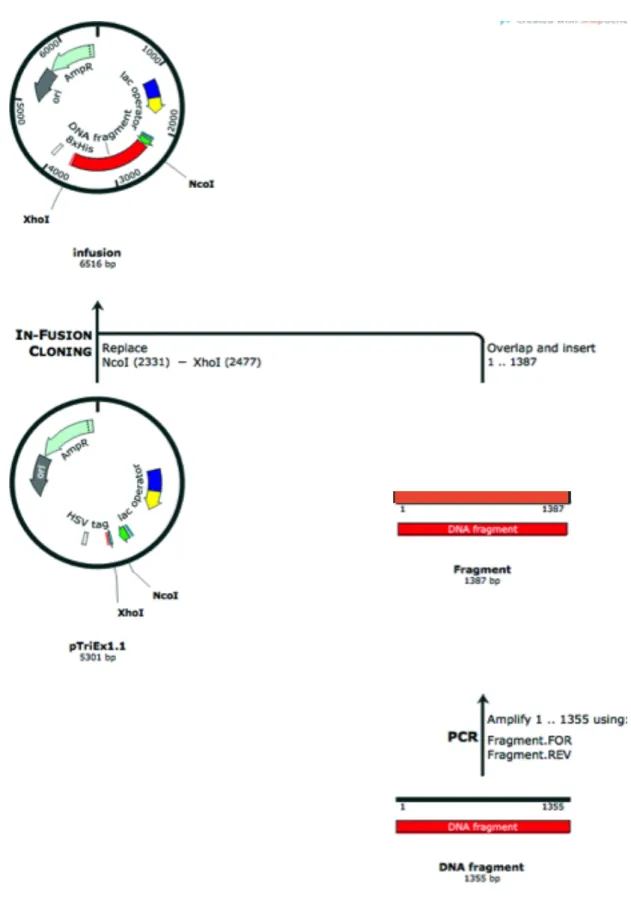
Figure 3.13. The In-Fusion system ... 84
Figure 3.14. Cloning design using In-Fusion protocol ... 87
Figure 3.15. Amplification of membrane gene, nsp3_Y-domain, nsp8 and nsp9 from cDNA of MHV-A59 ... 88
Figure 3.16. Amplification of nsp12, nsp12_C-terminal, N protein, nsp5, nsp6 and nsp3_PlPro from cDNA of MHV-A59 ... 89
Figure 3.17. Agarose gel electrophoresis of nsp10, nsp12_N-terminal and nsp16 amplified by PCR from cDNA of MHV-A59 ... 89
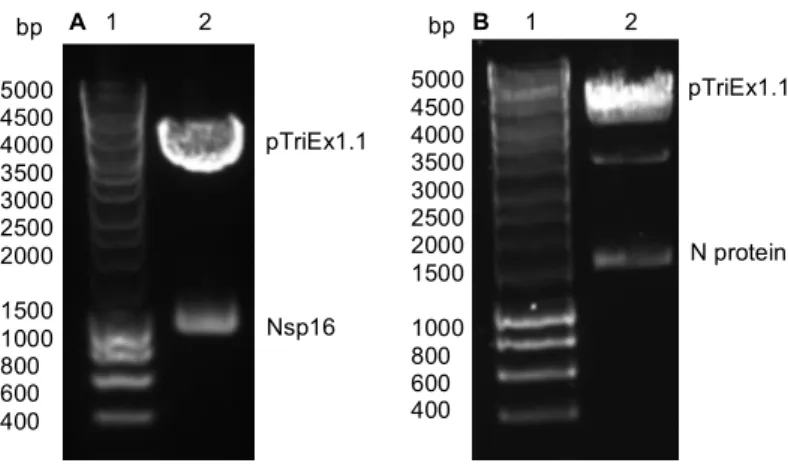
Figure 3.18. Double digest of pTriEx1.1 ... 90
Figure 3.19. N protein screened by PCR ... 91
Figure 3.20. Gel electrophoresis of double digested pTriEx1.1 containing nsp16 and N protein. ... 92
Figure 3.21. Gel electrophoresis of PCR products following amplification of nsp12_N-terminal for one transformant using protein-specific primers .... 93 Figure 3.22. Agarose gel electrophoresis of two joined parts of
nsp12_N-Figure 3.23. Gel electrophoresis of colony PCR of Nsp12N in pTriEx1.1
plasmid ... 95
Figure 3.24. Western blot analysis of recombinant expression of nsp16 in E. coli BL21(DE3)-pLysS competent cells ... 96
Figure 3.25. Western blot analysis of recombinant expression of N protein in E. coli BL21(DE3)-pLysS competent cells ... 97
Figure 3.26. Western blot analysis of recombinant expression of nsp8 in E. coli BL21(DE3)-pLysS competent cells ... 97
Figure 3.27. Western blot analysis of recombinant expression of nsp3_Y-domain in E. coli BL21(DE3)-pLysS competent cells ... 98
Figure 3.28. Western blot analysis of recombinant expression of nsp12_C-terminal in E. coli BL21(DE3)-pLysS competent cells ... 98
Figure 3.29. Western blot analysis of recombinant expression of nsp7 in E. coli BL21(DE3)-pLysS competent cells ... 99
Figure 3.30. Western blot analysis of recombinant expression of membrane protein (M) in E. coli BL21(DE3)-pLysS competent cells ... 100
Figure 3.31. Western blot analysis of recombinant expression of nsp3_PlPro in E. coli BL21(DE3)-pLysS competent cells ... 100
Figure 3.32. Western blot analysis of recombinant expression of nsp12_N-terminal in E. coli BL21(DE3)-pLysS competent cells ... 101
Figure 3.33. Western blot analysis of recombinant expression of nsp9 in E. coli BL21(DE3)-pLysS competent cells ... 101
Figure 3.34. In vitro transfection of 17clone-1 cells with pTriEx1.1-GFP using different transfection reagents ... 102
Figure 3.35. In vitro transfection of 17clone-1 cells with pTriEx1.1-GFP using different cells density ... 103
Figure 3.36. N protein expressed in mammalian cells ... 105
Figure 3.37. Western blot analysis of MHV-A59 proteins using conjugated and unconjugated antibody ... 106
Figure 3.38. Protein inhibitor does not stimulate protein expression ... 107
Figure 3.39. Nsp16 protein is not detected by immunoprecipitation ... 108
Figure 4.40. Cloning design ... 118
Figure 4.41. Gel electrophoresis of nsp7, nsp8, nsp9, nsp10, nsp16, nsp12_C-terminal, nsp3_Y-domain amplified by PCR from cDNA of MHV-A59.. . 119
Figure 4.42. Gel electrophoresis of SUMOStar PCR product following amplification of SUMOStar fragment ... 120 Figure 4.43. Nsp7 screened by PCR ... 122 Figure 4.44. Gel electrophoresis of double digest pTriEx1.1 contains SUMOStar-nsp7 fragment ... 123 Figure 4.45. Protein expression in mammalian cells using SUMOStar fusion tag ... 124 Figure 4.46. In vitro effect of transient expression of MHV-SUMO fusion proteins on MHV virus replication ... 126 Figure 4.47. Effect of the MHV-A59 proteins on the virus replication in vitro.
... 127 Figure 5.48. N protein effect on MHV-A59 virus replication ... 139 Figure 5.49. Affect of N protein expression on MHV replication in 17clone-1 mammalian cells ... 140 Figure 5.50. Gel electrophoresis of N protein amplified by first error-prone PCR protocol from cDNA of MHV-A59 ... 141 Figure 5.51. N protein screened by PCR ... 141 Figure 5.52. Agarose gel electrophoresis of N protein amplified by second PCR protocol from cDNA of MHV-A59 ... 142 Figure 5.53. Gel electrophoresis of error-prone libraries double digest containing N protein ... 143 Figure 5.54. Error-prone libraries screened by colony PCR ... 144 Figure 5.55. Distribution of amino acid mutations in 2 variants from 50μM MnCl2 and 100μM MnCl2 libraries generated with error-prone PCR. ... 146 Figure 5.56. Distribution of amino acid mutations in 10 variants generated with error-prone PCR ... 149 Figure 5.57. Phylogenetic analysis between non-mutated and mutated N protein ... 151 Figure 5.58. Effect of mutated N protein on MHV-A59 virus replication. ... 153 Figure 5.59. Inhibitory activity of different mutated N protein on virus replication tested by plaque assay ... 154 Figure 5.60. Inhibition of MHV-A59 infectivity by mut38 ... 155 Figure 5.61.Comparison of wild type and mut38 nucleotides sequences .... 156
Figure 5.62. Comparison of wild type and mut38 amino acid sequences. .... 157 Figure 5.63. Cytotoxicity of wild type and mut38 ... 159 Figure 6.64. Work flow for directed evolution of MHV N protein in 17clone-1 cells ... 166 Figure 6.65. Gel electrophoresis of N protein extracted from survived cell. .. 169 Figure 6.66. Gel electrophoresis of error-prone library double digest containing variants (wild type and mut38) of N protein ... 170 Figure 6.67. N protein (wild type and mut38) screened by PCR ... 171 Figure 6.68. Sequence alignment of 10 isolates with wild type. ... 171 Figure 6.69. Gel electrophoresis of N protein extracted from survived cell (2nd
round of selection) ... 172 Figure 6.70. Gel electrophoresis of N protein extracted from survived cell. .. 175 Figure 6.71. Gel electrophoresis of error-prone library (10 variants) double digest ... 175 Figure 6.72. N protein (10 variants library) screened by colony PCR ... 176 Figure 6.73. Gel electrophoresis of N protein generated by error prone PCR (50 μM MnCl2) ... 178 Figure 6.74. Inhibition of virus replication tested by plaque assay. ... 179 Figure 7.75. Expression and purification of nsp16 protein from BL21
(DE3)-pLysS competent cells ... 188 Figure 7.76. Expression and purification of nsp16 protein from LOBSTR competent cells ... 189 Figure 7.77. Expression and purification of nsp16 protein from LOBSTR competent cells in AIM media ... 190 Figure 9.78. The sequence of SUMOStar tag protein ... 199 Figure 9.79. Distribution of nucleotide mutations in 10 variants generated by ep-PCR ... 200 Figure 9.80. Distribution of nucleotide mutations in 10 variants generated by ep-PCR ... 201 Figure 9.81. Distribution of amino acid mutations in 37 variants generated with ep-PCR and subjected to plaque assay ... 202
List of Tables
Table 2.1. Oligonucleotides used for cloning in pTriEx1.1 plasmid. ... 57 Table 2.2. Sequencing primers ... 57 Table 2.3. Primers used for correction of random mutation in
nsp12_N-terminal. ... 58 Table 2.4. Primers used for SUMO cloning in pTriEx1.1 plasmid. ... 58 Table 2.5. Primers for SUMOStar cloning ... 59 Table 5.6. Sequence analysis and mutation rate of 10 mutated colonies
generated by error-prone PCR. ... 147 Table 5.7. Point mutation sequence analysis and mutation rates of variant
library generated by ep-PCR. ... 148 Table 5.8. Point mutation sequence analysis and mutation rates of 100
variants library generated by error-prone PCR. ... 150 Table 6.9. Screening of N protein variants after 3 rounds of directed
evolution... ... 177 Table 9.10. Coronavirus MHV-A59 protein sizes ... 198
Abbreviations
Amino acid A Alanine C Cysteine D Aspartic acid E Glutamic acid F Phenylalanine G Glycine H Histidine I Isoleucine K Lysine L Leucine M Methionine N Asparagine P Proline Q Glutamine R Arginine S Serine T Threonine V Valine W Tryptophan Y Tyrosine A Adenine Ab Antibody Ag AntigenAIM Auto induction media
Amp Ampicillin
bp Base pair
BSA Bovine serum albumin
C Cytosine
°C Degree Celsius
cAMP Cyclic adenosine monophosphate CaCl2 Calcium chloride
CEACAM1 Carcinoembryonic antigen-related cell adhesion molecule1
CMV Cytomegalovirus
CoV Coronavirus
Cryo-EM Electron cryomicroscopy
CTD C-terminal dimerization domain dATP Deoxyadenosine triphosphate dCTP Deoxycytidine triphosphate dGTP Deoxyguanosine triphosphate dH2O Distilled water
DMSO Dimethyl sulfoxide DNA Deoxyribonucleic acid
dNTP Deoxyribonucleotidet riphosphat dTTP Deoxythymidine triphosphate ECL Enhanced chemiluminescence E. coli Escherichia coli
EDTA Ethylene Diamine Tetra Acetic acid
EM Electron microscopy
ep-PCR Error-prone polymerase chain reaction
ERGIC Endoplasmic Reticulum-Golgi Intermediate Compartment FBS Fetal bovine serum
G Guanine
GFP Green Florescent Protein GST Glutathione-S -transferase
HCoV-HKU1 Human coronavirus- Hong Kong University strain1 HEK293 cells Human embryonic kidney cells 293
HRP Horse reddish peroxidase IBV Infectious Bronchitis Virus IDT Integrated DNA Technology
IFN Interferon
IMAC Immobilized metal ion chromatography IPTG Isopropyl β-D-1-thiogalactopyranoside
kb Kilo base pairs
kDa Kilo Daltons
LB Luria- Bertani
LOBSTR Low background strain competent cells
M Molar
MBP Maltose binding protein
MERS Middle Eastern Respiratory Syndrome
mg Milligram(s)
µg Micro gram
MgCl2 Magnesium chloride MHV Mouse Hepatitis Virus
ml Milliliter(s) µl Micro liter(s)
mM Millimolar
µM Micro molar
MnCl2 Manganese (II) chloride MOI Multiplicity of infection M protein Membrane protein
mRNA Messenger RNA
MTases Methyltransferases
MTT 3-(4,5-dimethylthiazol-2-yl)-2,5- diphenyltetrazolium bromide
N N protein protein
NEAA Non-essential amino acids
ng Nanogram(s)
nm Nanometer(s)
NMR Nuclear magnetic resonance nsp Non structural protein
NTD N-terminal RNA-binding domain
OD Optical density
oligo Oligonucleotides
ORF Open Reading Frame
ori Origin of replication PBS Phosphate Buffer Saline PCR Polymerase chain reaction PEDV Porcine epidemic diarrhea virus PFU Plaque forming unit
Pfu-Pol Pyrococcus furious polymerase
pH Hydrogen potential
pi Post infection
Plpro Papain-like proteinases PVDF Polyvinylidene fluoride
RdRp RNA dependent RNA polymerase
RNA Ribonucleic acid
rpm Revolutions per minute
RTC Replication transcription complex SARS Sever Acute Respiratory Syndrome SAXS Small-angle X-ray scattering
SDS-PAGE SiRNA
Sodium dodecyl sulphate-polyacrylamide gel electrophoresis Small interfering RNA
SOC Super Optimal Broth
SR Serine/Arginine
ssDNA Single stranded deoxyribonucleic acid ssRNA Single stranded ribonucleic acid SUMOStar Small ubiquitin-related modifier
T Thiamine
Taq-Pol Thermus aquaticus polymerase TBST Tris-buffered saline Tween20 TGEV Transmissible gastroenteritis virus TPase RNA Triphosphatase
Trx Thioredoxin
Ub Ubiquitin
v/v Concentration, volume to volume VLPs Virus-like particles
WT Wild type
1 Introduction
1.1 Coronaviruses
Coronaviruses are a group of important pathogens that infect both humans and a variety of domesticated animals. Infections caused by this group have resulted in significant economic losses for the domestic animal industry worldwide and has recently threatened human health with multiple outbreaks, becoming potentially pandemic. Coronaviruses have been studied since the 1930’s; the first described virus was called avian infectious bronchitis virus (IBV) followed by murine hepatitis virus (MHV) and transmissible gastroenteritis virus (TGEV) (Beaudette and Hudson, 1937; Doyle and Hutchings, 1946; JB, 1949; Schalk and Hawn, 1931). However, the relationships between these viruses was not clearly realized until the 1960’s when the human coronaviruses HCoV-229E and HCoV-OC43 were described (Hamre and Procknow, 1966). All of these viruses possessed a distinct morphology of a crown-like appearance and so were called coronaviruses (Tyrell et al., 1968). Coronaviruses (CoVs) may infect and cause diseases in a wide variety of animals, including bats, birds, cats, dogs, pigs, mice, horses and whales in addition to humans (De Groot,RJ et al., 2012). They can cause respiratory, enteric, hepatic, and neurological diseases with highly variable severity and cause acute or persistent infections.
The first human coronavirus epidemic occurred in 2003 with the outbreak of severe acute respiratory syndrome (SARS) caused by SARS-CoV (Marra et al., 2003; Rota et al., 2003). Then, in 2012 a novel coronavirus emerged in the Middle East (Zaki et al., 2012). The novel Middle East Respiratory Syndrome coronavirus
(MERS-CoV) causes severe pneumonia as well as renal failure, with a high fatality rate.
Over the past ten years significant effort has resulted in the discovery of new additional human coronaviruses such as HCoV-NL63 and HCoV-HKU1 (van der Hoek et al., 2004; Woo et al., 2005b) and in the development of effective therapies by both the academic sector and pharmaceutical industries. Despite this and although more than 10 years have passed since the SARS-CoV outbreak, there are presently still no available approved vaccines or antiviral drugs for human coronavirus infection. Therefore, revealing any undiscovered aspects of the coronavirus genome and it’s replication might help improve our understanding of the role of each gene and suggest useful antiviral drug targets.
1.2 Taxonomy
Coronaviruses are a group of enveloped complex ssRNA viruses that belong to the order Nidovirales. The order Nidovirales is a large group of RNA viruses that posses the largest genomes known to date. The phylogenetic analysis of nidovirus members shows a great genetic distance, which is almost equivalent to that of the archaea, eubacteria and eukaryote combined Figure 1.1, and due to the extremely high mutation rates and lack of fossil records this group remains difficult to study.
Figure 1.1. Phylogeny of nidoviruses in comparison to the Tree of life (ToL). Bayesian phylogenies of nidoviruses (A) and ToL (B) are drawn to a common scale of 0.1 amino acid substitutions per position. Major lineages are indicated by vertical bars and names; arteri: Arteriviridae, mesoni: Mesoniviridae, roni: Roniviridae, toro: Torovirinae, corona: Coronavirinae. Rooting was according to either (A) domain- specific outgroups (Nga et al., 2011) or (B) as described (Boussau et al., 2008). A common normalized scale of (0,1) is used. Posterior probability support values and fixed basal branch points (*) are indicated. The nidovirus and ToL alignments include, respectively, three enzymes and 56 single-gene protein families, 604 and 3336 columns, 2.95% and 2.8% gaps. Taken from (Lauber et al., 2013).
Nidoviruses are named for their eminent feature of a set of multiple 3’-nested subgenomic RNAs (nidus = nest). Nidoviruses possess a linear 5'-capped positive sense single stranded, non-segmented RNA with two large open reading frames (ORFs) 1a and 1b located at the 5’-end of the genome. The order historically included three families, which are coronaviridae, roniviridae and arteriviridae, the first two families with large genome size (26.3-31.3 kb) and the third one with smaller genome sizes (12.7-15.7 kb) (De Groot,RJ et al., 2012). Recently a fourth family Mesonviridae joined the previous three families with an intermediate genome size between those of the coronaviridae and arteriviridae (Gorbalenya et al., 2006; Lauber et al., 2012; Nauwynck et al., 2012). Coronavirinae and torovirinae are two subfamilies of coronaviridae. Until a few years ago the coronavirinae family was divided into three groups (I, II and III) based on genotypic and serological differences. However these groups have since been elevated to genus level and named alphacoronavirus, betacoronavirus and gammacoronavirus, which respectively represent groups I, II and III (Gonzalez et al., 2003) and a new genus, deltacoronavirus, was added recently (King et al., 2011). The genus alphacoronavirus is further separated into a and b clades while betacoronavirus are subdivided into clades a to d. The alphacoronavirus genus is exclusively found in mammalian hosts, and includes the human pathogens 229E and HCoV-NL63, in addition to porcine Epidemic Diarrhea Virus (PEDV) and Transmissible Gastroenteritis Virus (TGEV) in pigs Figure 1.2.
Figure 1.2. Schematic representation of the taxonomy of coronaviridae according to the International Committee on Taxonomy of Viruses. Human coronavirus-NL63 (HCoV-NL63), Human coronavirus-229E (HCoV-229E), Murine hepatitis virus (MHV), Severe acute respiratory syndrome (SARS), Middle East respiratory syndrome (MERS), Avian infectious bronchitis virus (IBV), Bulbul coronavirus HKU11 (HKU11).
Betacoronaviruses are also associated exclusively with mammalian hosts. Examples of pathogenic betacoronaviruses include the human pathogen HCoV-OC43, murine hepatitis virus (MHV) and SARS-CoV, which causes severe acute respiratory syndrome. Intensive studies led to the finding of several more novel coronavirus in human and animals after the 2003 SARS-CoV epidemic outbreak (Poon et al., 2005). New studies indicate that bats are the natural reservoirs of these two genera and suggest that bats are likely to play an important role in the introduction of coronaviruses to other species as well as the evolution and
Torovirinae Coronavirinae Delta coronavirus Gamma coronavirus Beta coronavirus Alpha coronavirus
Coronaviridae Roniviridae Mesonviridae Arteriviridae
Nidovirales HKU11 IBV a b c d MHV MERS SARS a b HCoV-NL63 HCoV-229E
dissemination of coronaviruses (Tong et al., 2009). Conversely, the majority of gammacoronavirus are isolated from birds such as Infectious Bronchitis Virus (IBV) in chickens and Grey Goose coronavirus (GCoV) in geese. A new genus, deltacoronavirus, was detected in pigs and birds, and includes Bulbul coronavirus HKU11, Thrush coronavirus HKU12 and Munia coronavirus HKU13 (Chu et al., 2011). Both gammacoronavirus and deltacoronavirus reservoirs are birds (Woo et al., 2012).
1.3 Morphology
The virion of coronavirus is spherical or pleomorphic, approximately 50-150nm in diameter (Neuman, 2008). The virion membrane as shown in Figure 1.3 contains three viral proteins, the spike protein (S) which gives the virus it’s crown shape under the electron microscope and plays a role in viral attachment to the cell and the subsequent fusion process, the membrane protein (M) with multi spanning membrane domains, large carboxy terminus and small amino terminus, and the envelope protein (E) with highly hydrophobic amino and carboxy-terminal regions (Bond et al., 1979). Both E protein and M proteins are involved in the virus assembly process (Hsieh et al., 2005). Some coronaviruses from the betacoronavirus group also contain a hemagglutinin esterase (HE) protein on the virion surface that may serve as another protein for binding or release from the host cell. Moreover, SARS-CoV contains accessory proteins such as 3a, 6 and 7a, that are involved in cellular processes or modulating virus-host interactions (McBride and Fielding, 2012). Inside the virion there is a helical nucleocapsid that contains the largest known viral RNA genome associated with the nucleoprotein (N) (Lai and Anderson, 2007).
Figure 1.3. (A) Electron microscopy image of coronavirus. Adapted from (Davies and Macnaughton, 1979). (B) Schematic diagram of a coronavirus particle. The viral RNA is associated with the nucleocapsid protein (N). The lipid bilayer includes the spike protein (S), the membrane protein (M) and the envelope protein (E) (Figure is adapted from (Stadler et al., 2003)).
1.4 Coronavirus life cycle
The first step of the coronavirus life cycle starts by interaction of the spike protein with a specific receptor on the host cell surface. There are different receptors across the coronavirus family: carcinoembryonic antigen 1 (CEACAM1) for MHV (Tan et al., 2002), human angiotensin converting enzyme 2 (hACE2) for SARS-CoV (Li, 2013) and NL63 (Glowacka et al., 2010; Wu et al., 2009), dipeptidyl peptidase 4 (DPP4) for MERS-CoV (Wang et al., 2013) and aminopeptidase N (APN) for TGEV (Shahwan et al., 2013). After attachment and uptake into a vesicle, a major conformational change occurs in the spike protein (S) (Gallagher and Buchmeier, 2001). The spike glycoprotein typically can be divided into the S1 domain (the amino-proximal half), which contains the receptor-binding domain and the S2 domain (the carboxyl- proximal half), which contains elements involved in membrane fusion (Heald-Sargent & Gallagher, 2012). The two domains are cleaved from each other by the activity of a cellular furin-like enzyme (de Haan et
al., 2004). Like most RNA viruses, coronaviruses replicate in the cytoplasm of an infected cell. Once the genome has entered the cytoplasm it serves as an mRNA since it has a 5’-methyl cap structure and a polyadenylated tail, which mimics mRNAs of eukaryotes. Two thirds of the genome at the 5’ end is occupied by the two large open reading frames (ORFs 1a and 1b) which together encode the replicase gene while the rest of the genome encodes structural and accessory genes in the 3’ one-third. A frame shift region in the replicase gene connects ORF1a and ORF1b and will direct the expression of ORF1b to facilitate the formation of an ORF1ab polyprotein (pp1ab) (Bredenbeek et al., 1990; Brian and Baric, 2005; Brierley and Dos Ramos, 2006) Figure 1.4.
Figure 1.4. A schematic representation of MHV-A59 genome organization and expression. Replicase components are processed from two forms of polyprotein translated from the genomic RNA into non-structural proteins (nsp1- nsp16) by autoproteolytic processing. Nested sets of positive sense sub-genomic sized mRNAs are translated by host ribosomes into viral structural (S, E, M, N) and accessory proteins. Figure adapted from (Sawicki et al., 2005).
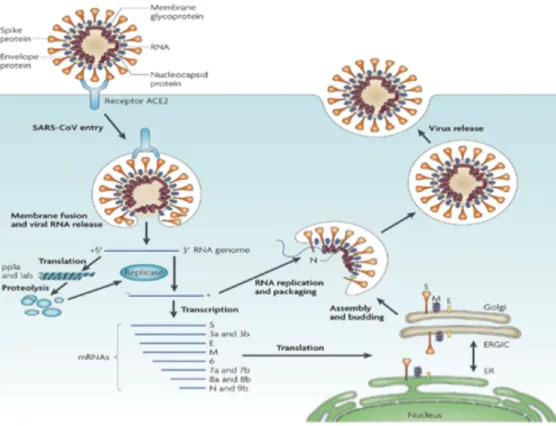
After translation, the papain-like protease(s) (PlPro) and main protease (MPro) proteins, which are encoded in ORF1ab, cleave the replicase polyprotein into 15 to 16 non-structural proteins (nsps) (Woo et al., 2007, 2005a). The non-structural proteins are anchored onto double membrane vesicles (DMVs) to make up the bulk of the replication/transcription complex (RTC) and this is the site where all events for virus transcription/replication take place (Brockway et al., 2003; Gosert et al., 2002; Snijder et al., 2006). A full-length negative-stranded RNA intermediate serves as template for the synthesis of more full-length positive sense RNA (Sawicki et al., 2007). While not completely understood, subgenomic mRNA synthesis in the nidovirales involves a unique discontinuous transcription mechanism which produces a 3’ co-terminal nested set of mRNAs (La Monica et al., 1992). The mRNA synthesis is regulated by transcription-regulating sequences (TRSs) present in the genomic RNA upstream of most open reading frames (La Monica et al., 1992). Both new copies of the complete genome and sub-genomic mRNA species, which are synthesized from the negative strand RNA intermediate later, are translated into structural and accessory proteins. After translation of the structural proteins, the N protein wraps the genomic RNA to form the nucleocapsid (a helical structure). All structural proteins, and the HE protein in some species, are located in the endoplasmic reticulum (ER) and aggregate with the nucleocapsid in the endoplasmic reticulum Golgi intermediate compartment (ERGIC) for virion assembly, which is driven by M and E proteins (Hsieh et al., 2005; Neuman et al., 2011; Tseng et al., 2005). Later, virions are released extracellularly either from the basolateral and apical surfaces for MHV (Rossen et al., 1996) or from the apical surface of the host cell for TGEV and SARS-CoV (Rossen et al., 1994; Tseng et al., 2005) Figure 1.5.
Figure 1.5. Life cycle of SARS-CoV. First spike protein binds to the specific receptor (ACE2) to form ACE2-virus complex. Then the complex is translocated to endosomes in which S protein is cleaved by the endosomal acid protease (cathepsin L) for activation of it’s fusion activity. The viral genome is released inside the cell, and then replicase gene is translated to polyproteins pp 1a and 1ab, which is cleaved into small products by viral proteinases. Subgenomic negative-strand templates are synthesized from discontinuous transcription on the plus-strand genome and act as templates for mRNA synthesis to produce negative-sens RNA and subgenomic RNAs. Nucleocapsid is assembled from genomic RNA and N protein in the cytoplasm. The structural proteins S, E, M are translated and inserted in the endoplasmic reticulum (ER) to meet nuclecapsid in the endoplasmic reticulum (ER)-Golgi intermediate compartment ERGIC. Virions are released from the cell by exocytosis. Figure adapted from (Du et al., 2009).
1.5 Coronavirus genome
Coronaviruses possess the largest and most complex RNA genome among all RNA viruses ranging from 26.4 kb - 31.7 kb (Woo et al., 2009). The genome contains up to 15 genes with multiple open reading frames (ORFs) encoding both structural and non-structural proteins (Sawicki et al., 2005; Ziebuhr, 2005). The RNA genome comprises a 5’ leader sequence (60-80 nucleotides), followed by an un-translated region (UTR) (200-600 nucleotides). The first gene (replicase) comprises two-thirds of the genome with the two large ORFs (ORF 1a and ORF 1b) translated to give polyprotein 1a and polyprotein 1ab, the latter via a frameshift mechanism. Despite it’s positive strand nature the replicase is the only translated product derived from the genome. The last third of the genome is occupied by genes for structural proteins with the order S-E-M-N, all of which are expressed following the production of several subgenomic RNAs. Between these genes there are a variable numbers of ORFs encoding accessory proteins (Sawicki et al., 2007). The transcriptional regulatory sequences (TRSs) that are present at the 3’ end of each gene represent a signal for subgenomic RNA transcription of the following gene. At the 3’ end of the genome, there are 270-500 nucleotides of UTR followed by the poly A tail Figure 1.6.
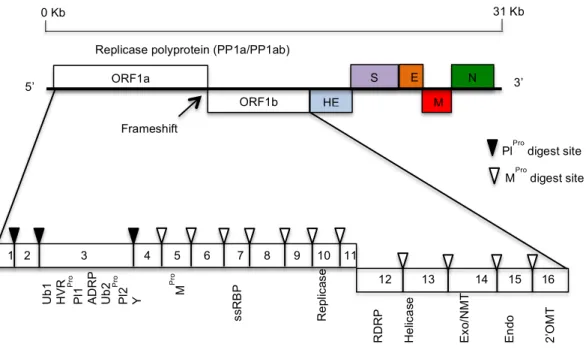
Figure 1.6. Coronavirus genome organization. ORF1a and ORF1b are located at the 5’ two thirds and encode two polyproteins, namely pp1a and pp1ab which include 16 nonstructural proteins (nsp1 to nsp16) contain ubiquitin-like (Ub1), hypervariable region (HVR), papain-like protease (Pl1pro), ADP-ribose 1″ phosphatase (ADRP), papain-like
protease (Plpro2) Y-domain, 3C-like main proteinase (MPro), single-strand RNA binding
protein (ssRDP), RNA-dependent RNA polymerase (RDRP), replicase, exonuclease (ExoN), N7 methyltransferase (NMT), endoribonuclease (Endo), 2′-O-methyltransferase (2′-O-MTase). The first 3 non-structural proteins are cleaved by viral papin-like proteinase(s) (PLpro), the other 13 non-structural proteins are cleaved by the 3C-like main proteinase (MPro). The four structural proteins are coded by the remaining one third of the
genome in coronaviruses and include the spike (S) protein, envelope (E) protein, membrane (M) protein, nuclepcapsid (N) protein and HE (hemagglutinin) is found on some betacoronaviruses.
1.5.1 Non structural proteins
The nonstructural proteins required for the replication/transcription complex (RTC) are encoded by the replicase gene, which is expressed from two overlapping ORFs. The first three non structural proteins in ORF1a are released by cleavage by a viral papin-like proteinase(s) (Plpro) while the 3C-like main proteinase (Mpro) cleaves 11 sites in polyprotein 1ab to release 13 non-structural proteins (Denison et al., 1992; Namy et al., 2006; Prentice et al., 2004; Snijder et al., 2003; Ziebuhr et al., 2000). The second ORF, 1b, is translated via a ribosomal frameshift signal
ORF1a ORF1b HE S E M N 5’ 3’ 31 Kb 0 Kb M Pr o RDRP He lic a se Ex o/ N M T En do 2’ O M T ss R B P 1 2 3 4 5 6 7 8 9 10 11 12 13 14 15 16 Re pl ic as e Ub 1 HV R Pl 1 Pr o AD R P Ub 2 Pl 2 Pr o Y
PlPro digest site MPro digest site Replicase polyprotein (PP1a/PP1ab)
which is stimulated by a slippery sequence (UUUAAAC) and a pseudoknot structure, resulting in higher levels of the truncated ORF1a product relative to the larger protein 1ab which contains 5 additional non-structural proteins (nsp12-nsp16) (Subissi et al., 2014). ORF1a includes the viral proteinase, anti-host activities, membrane-anchoring domains, RNA-binding and RNA-modifying activities while ORF1b encodes enzymes required in RNA replication, transcription, proofreading and capping (Decroly et al., 2008).
The first region (ORF1a) of the replicase gene encodes non-structural proteins (nsp) 1-11. The first mature protein released is nsp1. This protein is ~110 residues in betacoronaviruses and can be used as a group specific marker due to it’s high sequence variability and the absence of nsp1 in both gammacoronaviruses and deltacoronaviruses. Nsp1 has been reported to inhibit host gene expression most likely by promoting host mRNA degradation as described for SARS-CoV (Kamitani et al., 2006; Narayanan et al., 2008; Züst et al., 2007), it also prevents type I interferon production in infected cells (Wathelet et al., 2007). The nsp2 possesses a highly divergent sequence across the coronaviruses and it’s function remains unknown. Nsp3 is the largest coronavirus-encoded protein. It is a glycosylated, transmembrane, multidomain protein that interacts with several proteins involved in the replication and transcription processes (Barretto et al., 2005; Imbert et al., 2008; Kanjanahaluethai et al., 2007; Neuman et al., 2008; von Brunn et al., 2007). Nsp3 proteins in coronavirus contain 10-16 domains (Neuman, 2016). Some of the nsp3 domains are duplicated and are conserved in all coronaviruses. The N-terminal region of nsp3 contains ubiquitin (Ub1), a hypervariable region (HVR) and a papain-like protease (PLP) domain PL1Pro(Neuman, 2016). In MHV, Ub1 initiates viral RNA synthesis by interacting with the N protein (Hurst et al., 2013; Hurst-Hess
et al., 2015) while PL1Pro is responsible for the 3 cleavage sites at the N-terminal sites in the replicase to release nsp1, nsp2 and nsp3 respectively. However, there are different mechanisms of processing in different coronaviruses (Gadlage and Denison, 2010; Ziebuhr et al., 2007). In some cases one PLP is sufficient while in others two active PLP may have specialized or overlapping functions (Baker et al., 1993; Bonilla et al., 1997; Graham and Denison, 2006). The ADRP like domain is a conserved domain in coronavirus and is associated with proteins involved in ADP-ribosylation or poly (ADP-ribose) polymerization and ATP-dependent chromatin re-modeling (Egloff et al., 2004; Saikatendu et al., 2005). Many coronaviruses encode two like proteases, however SARS-CoV has only a single copy of a papain-like cysteine protease (PL2pro), which cleaves polyprotein 1a at three sites to release the three non-structural proteins (Harcourt et al., 2004; Thiel et al., 2003). The Y domain at the C-terminus of nsp3 is highly conserved in all coronaviruses, but the function of this domain is unclear (Neuman et al., 2008). Nsp4 is about 500 amino acids in length, contains four transmembrane helices and a carboxy-terminal domain (Oostra et al., 2008). This protein is fundamental for cytoplasmic membrane modification with the assistance of nsp3 and nsp6 (Angelini et al., 2013). Nsp5 is the 3C-like main protease (Mpro) which has a three-domain structure that mediates maturation cleavages of nsp4 to nsp16 (Perlman and Netland, 2009; Ziebuhr et al., 2000). Nsp6 is involved in the activation of autophagy which induces vesicles that contain Atg5 and LC3-II (Cottam et al., 2011). LC3 is present in the cell in a cytoplasmic form (LC3-I) that is converted into an active lipidated form (LC3-II) by specific covalent linkage upon autophagy induction (Mizushima et al., 2004). The conversion of LC3-I into LC3-II requires several proteins including Atg5 (Mizushima et al., 2001; Yoshimori and Noda, 2008) and Atg7 (Komatsu et al.,
2005). Furthermore, nsp6 interacts with other proteins such as nsp2, nsp3, nsp4, nsp8 and nsp9 (Krogh et al., 2001; von Brunn et al., 2007). In SARS-CoV, the crystal structure of the nsp7 (12kDa) and nsp8 (22-kDa) complex revealed a hollow, cylindrical hexadecamer composed of eight copies of nsp7 and eight copies of nsp8. This complex might provide a platform which improves the processivity of RNA synthesis by nsp12 and the increased binding of nsp12 to RNA (Zhai et al., 2005). However the role of nsp8 is not yet clear despite some studies indicating that nsp8 may act as an RNA primase for nsp12 in SARS-CoV, since it polymerizes small oligomers via it’s C-terminal domain, similar to those that can bind the palm subdomain of RNA dependent RNA polymerase (RdRp) (Subissi et al., 2014). Nsp9 is possibly involved in binding single stranded RNA as part of the viral replication complex as well as other proteins required for this complex (Sutton et al., 2004).
Nsp10 represents a novel fold that consists of a pair of antiparallel N-terminal helices, ß-strand, a loop at C-terminus, and two zinc fingers (Krishna et al., 2003). Studies proposed that nsp10 might play important roles in the synthesis of the viral RNA and in polyprotein processing through interaction with the nsp5 (Donaldson et al., 2007). Recently, studies proposed that it may act as a co-factor for nsp16 2`-O -Meythyltransferase activity for the regulation of viral RNA capping (Bouvet et al., 2010) and/or enhancing ExoN activity by interaction with nsp14 (Bouvet et al., 2012; Chen et al., 2011; Decroly et al., 2011). Nsp10 is followed by nsp11, a short peptide of highly variable sequence that is not conserved in different coronavirus genomes (Neuman et al., 2014). Nsp11 of SARS-CoV is attached to nsp10 but appears not to cause a significant difference in the core nsp10 structure (Su et al., 2006) and there is no indication of nsp11 interaction with nsp10 or any other
protein.
The second region of gene1 (ORF1b) encodes non-structural proteins 12-16. Nsp12 is about 102 kDa (932 amino acid residues), and is the most conserved protein in coronavirus, produced by Mpro (nsp5) action to result in pp1ab cleavage. The C-terminal domain of nsp12 contains the canonical RNA-dependent RNA polymerase (RdRp) motifs. RdRp is the core catalytic subunit that synthesizes negative strand RNA, new genome molecules and subgenomic messenger RNAs (mRNA) in many groups of RNA viruses (Ahlquist et al., 2003; Miller and Koev, 2000). Nsp12 therefore plays a key role in the viral replication/transcription complex. This enzyme carries a conserved active site (Ser-Asp-Asp - motif C) that is conserved in all nidovirales. Another motif, G, has a SXGXP conserved sequence and is consistently followed by a conserved basic residue (Gorbalenya et al., 2002). Motif G in SARS-CoV RdRp has also been shown to initiate RNA synthesis in a primer-dependent manner (te Velthuis et al., 2010). Several studies have shown a validated direct interaction between nsp8 and nsp12 (Imbert et al., 2006; von Brunn et al., 2007), while new studies indicate that nsp7/nsp8 complexes increase binding of nsp12 to RNA as a result of a major increase in the number of nucleotides synthesized per binding event. Nsp8 carries a second, non-canonical RdRp activity (Imbert et al., 2006; te Velthuis et al., 2012; Xiao et al., 2012). The ability of nsp8 to polymerize small oligomers in a sequence-specific manner suggests it acts as an RNA primase for nsp12. The interaction of RdRp with other viral proteins could be either directly or indirectly. Taken together, these data suggest nsp12 as a good candidate for the development of an antiviral drug. Nsp13 (66.5kDa) is a multi-functional protein that contains a zinc-binding domain at the amino-terminus and a helicase at the carboxy-terminus (Gorbalenya et al.,
1989) and unwinds both dsDNA and dsRNA in a 5’ to 3’ direction (Ivanov and Ziebuhr, 2004; Ivanov et al., 2004a; Lee et al., 2010; Tanner et al., 2003). This protein is essential for viral replication (Fang et al., 2007) and the presence of nsp12 stimulates helicase activity (2-fold) through the direct interaction of both proteins (Adedeji et al., 2012). Nsp13 has been also shown to exhibit RNA triphosphatase (TPase) activity in vitro and may be involved in the RNA capping reaction (Ivanov and Ziebuhr, 2004; Ivanov et al., 2004b), however, this proposed role requires further experimental evidence. Nsp14 is a N-terminal 3’-5’exonuclease domain (ExoN) which is unique to nidoviruses (Minskaia et al., 2006). This enzyme is capable of hydrolyzing single-stranded and double-stranded RNAs to final products of 8-12 and 5-7 nucleotides respectively and acts as a proofreading system that is involved in improving the fidelity of the large coronavirus genome during replication (Lauber et al., 2013). Furthermore, the presence of nsp10 was found to stimulate the activity of nsp14 in vitro by more than 35-fold (Bouvet et al., 2012) in a reaction which appears to be dsRNA-specific and is able to excise one 3´ mismatched nucleotide, mimicking a polymerase-mediated misincorporation product, which strongly indicates a role for the 5’-exonuclease activity in RNA synthesis proofreading. The nsp15 is a uridine-specific endoribonuclease (Snijder et al., 2003) and forms a hexamer (Guarino et al., 2005; Ricagno et al., 2006) with the active site at the C-terminus. Neither the exact function of nsp15 in viral replication nor the stimulating effect of Mn2+ on nsp15 activity is well understood. Finally, nsp16 is a 2´-O-methyltransferase (Chen et al., 2011; Decroly et al., 2008) that plays a key role in the coronavirus life cycle by preventing virus detection by the cell innate sensing mechanisms. In MERS-CoV, 2′O-methyltransferase is an S-adenosyl-L-methionine (SAM)-dependent 2′-O
-methyltransferase (2′-O-MTase) which is stimulated by nsp10 which acts as an allosteric activator of the nsp16 2′-O-methyltransferase activity (Aouadi et al., 2017a). This protein is expected to be involved in the final step in cap synthesis by adding the final methyl group to complete the cap structure (Bouvet et al., 2010; Chen et al., 2011). The cap structure is a distinct feature of eukaryotic mRNAs, essential for it’s translation and stability (Cougot et al., 2004; Furuichi and Shatkin, 2000; Lewis and Izaurflde, 1997; Schwer et al., 1998). Uncapped virus RNAs may be detected as ‘non-self’ by the host cell, triggering an antiviral innate immune response through the production of interferons (Züst et al., 2011). Therefore, many viruses that replicate in the cytoplasm of eukaryotes have evolved the means to mimic host mRNA by modifying their mRNA through capping. Capping involves the sequential activity of three enzymes. First, an RNA triphosphatase (TPase) will remove the γ- phosphate group from the 5’-triphosphate end (pppN) of the nascent mRNA chain to generate the diphosphate 5’-ppN. The second step, a RNA guanylyltransferase (GTase) transfers a GMP to the 5’-diphosphate end to yield the cap core structure (GpppN). The cap is then methylated at the N-7 position of it’s guanine by a N7-methyltransferase (MTase) to produce a cap-0 structure (m7GpppN) (Furuichi and Shatkin, 2000).
1.5.2 Structural proteins
1.5.2.1 Spike protein (S)
The first step in viral infection of host cells is receptor recognition (Baranowski et al., 2001). Coronavirus entry into host cells is mediated by the envelope-anchored spike protein, first by binding to a specific receptor on the host cell surface and then by fusing viral and host membranes (Bosch et al., 2003; Spaan et al., 1988).
The spike protein is the largest of the coronavirus structural proteins (Dye and Siddell, 2005) and is a member of the class 1 fusion proteins (Eckert and Kim, 2001; Harrison, 2008; Skehel and Wiley, 2000; Wilson et al., 1981). The spike varies from 1,160 to 1,450 amino acids in length and is heavily glycosylated with 21 to 35 N-glycosylation sites (Belouzard et al., 2012). The spike protein is a trimer located at the surface of the virion and gives the distinctive corona shape recognized by EM (Xu et al., 2004), consists of three segments; a large ectodomain, a single-pass transmembrane anchor, and a short intracellular tail (Beniac et al., 2006; Li et al., 2006). The ectodomain of coronavirus S protein can be further divided into two domains, binding S1 subunit (variable domain) and a membrane-fusion S2 subunit (more conserved domain) Figure 1.7.
Figure 1.7. Schematic of the S protein domains. Domain structure of MHV spike protein. NTD: N-terminal domain; FB: fusion protein; HR: Heptad repeat; TM: transmembrane domain.
The globular S1 gives the virus it’s crown-like appearance and is exposed on the outside the virus. It contains the receptor binding domain (RBD) within the first 330 amino acids at the amino terminus that binds to a variety of proteins and sugars, responsible for cellular attachment and therefore cell tropism. In coronaviruses, the interaction between the RBD and it’s receptor is one of the most important determinants of host range and cross-species infection (Li, 2013; Li et al., 2006). Furthermore, RBDs contain major neutralization epitopes, which induce most of the host immune response and may serve as subunits for vaccine development
N C S2 subunit S1 subunit NTD C-Domain FB HR1 HR2 TM
Receptor binding Fusion
against coronavirus infections (Du et al., 2014, 2009; He et al., 2005; Jiang et al., 2014; Sui et al., 2004; Ying et al., 2014). The S2 subunit forms the stalk region of the spike protein that is anchored in the membrane and contains two heptad repeats HR1 and HR2, a typical feature of class I viral fusion proteins, a putative fusion peptide (FP) and one short transmembrane domain (Chambers et al., 1990). The S2 domain mediates fusion of the viral and host membranes. In addition, cell-cell fusion is activated by the expressed viral fusion proteins to form giant multinucleated cell named syncytia (Belouzard et al., 2012; Bosch et al., 2003; Luo and Weiss, 1998). Some betacoronavirus and gammacoronavirus groups also posses a small hemagglutinin-esterase (HE) protein, standing 5-7 nm on the envelope along with the S protein (Kienzle et al., 1990). The HE protein contains a disulfide link to form a homodimer with both hemagglutinating and esterase activity (Brian et al., 1995; Kienzle et al., 1990). The HE protein is believed to have been gained from Influenza C virus, where it is the sole glycoprotein, as a result of recombination with a coronavirus ancestor (Vlasak et al., 1988). This protein may play a role in the entry and/or release of the virus. However, it doesn’t appear to be essential for viral replication or virulence (Kazi et al., 2005; Popova and Zhang, 2002).
Since the S protein plays an essential role in virus entry and determines tissue and
cell tropism as well as host range (Lu et al., 2015), this is deemed an excellent target for the development of vaccines and antiviral drugs. The S protein proves an important target for T cell responses and epitopes located in it’s N- terminal portion trigger the production of virus-neutralizing antibodies. The coronavirus S protein, when inoculated alone, can induce protective immunity for a number of viruses (Cavanagh, 2005). For example, studies on SARS-CoV revealed that vaccines
based on the S protein could induce antibodies to block virus binding and fusion to neutralize virus infection (Du et al., 2009). For therapeutic targeting, the S protein RBD or S2 regions so far appear to be the most investigated targets to identify various specific antivirals (Du et al., 2014; Gao et al., 2013; Jiang et al., 2014; Li et al., 2015; Lu et al., 2014; Pascal et al., 2015).
1.5.2.2 Membrane protein (M)
The membrane protein (M) is about 25-30 kDa in size (221-262 amino acids) and is the most abundant protein embedded within the coronavirus envelope. M contains a short amino terminus located outside the virion, followed by three transmembrane domains (Tm), and a large carboxy-terminal domain that is usually located inside the virion (Hogue and Machamer, 2008) Figure 1.8.
Figure 1.8. Coronavirus M protein structure. A schematic representation of MHV-A59 M protein domains. Ecto: ectodomain; TM: transmembrane domain; endo: endodomain.
As yet, studies have revealed limited structural information for the M protein, it’s transmembrane nature making it difficult to express and purify. The protein is moderately well conserved within each group but completely divergent across the three groups (Den Boon et al., 1991). M proteins of coronavirus exclusively localize to the ER/Golgi area with the exception of SARS-CoV, TGEV and Feline Infectious Peritonitis virus, where it is capable of reaching the plasma membrane (Jacobse-Geels and Horzinek, 1983; Krijnse-Locker et al., 1994; Laviada et al., 1990; To et
Ecto TM TM TM endo C N
al., 1991; Tooze and Tooze, 1985; Tooze et al., 1984; Voß et al., 2006). Alphacoronavirus and gammacoronavirus M proteins are believed to be O-glycosylated, while M is N-glycosylated in betacoronavirus (de Haan et al., 2003). Glycosylation may play a role in virus-host interaction but does not appear to be important for virus assembly or infectivity (de Haan et al., 2003). M protein is involved directly in viral assembly and budding in addition to it’s functions in host interaction, along with E, S and N (de Haan et al., 1999; Haan et al., 1998; Neuman et al., 2011). Studies showed that the endodomain is the locus for M-N (Escors et al., 2001; Fang et al., 2005; Hurst et al., 2005; Kuo and Masters, 2002; Luo et al., 2006a; Verma et al., 2007, 2006) and S-M interaction (de Haan et al., 1999; McBride and Machamer, 2010). Cryo-electron micrographic (cryo-EM) and tomographic reconstructions (Neuman et al., 2011) and inferences drawn from a genetic study of evolved M mutants (Kuo and Masters, 2010) indicate that M-M monomer interactions occur via the transmembrane (Tm) domains, whilst higher-order oligomerization of M dimers is predominatly driven by the endodomain. In innate antiviral responses, type I interferons (IFNs) are the prime effector cytokines. IFN production is induced by pathogen-associated molecular patterns such as viral double-stranded RNA, which are sensed by host pattern recognition receptors. M protein is postulated to suppress type I IFN production potently by preventing the formation of a functional TRAF3–TANK–TBK1/IKKe complex which signals IFN gene expression downstream of interaction of virus RNA with innate sensors such as RIG-I or MDA-5 (Siu et al., 2009). A study suggested that interaction between the domain N3 of N protein and endodomain of M protein is involved in the gRNA packaging process (Kuo et al., 2016). For these reasons, the M protein could be an attractive target for development as an antiviral.
1.5.2.3 N protein (N)
N protein (N) protein is one of the most abundant coronavirus structural proteins, located inside the virus particle. The N protein’s primary function is to enclose the viral RNA genome in a helically symmetric ribonucleoprotein (RNP) (Masters and Sturman, 1990; Masters et al., 1990). The RNP complex is important to maintain the RNA genome in an ordered conformation for replication and transcription. N protein is a helical, highly basic and phosphorylated protein, about 50-60 kDa in size. Based on MHV strain sequence comparisons, the N protein has three conserved domains with a high serine content (7-11%) (Tan et al., 2006). The N protein consists of two structural domains: N-terminal domain (NTD) and C-terminal domain (CTD) linked by a poorly structured linkage region (Linker) containing a serine/arginine- rich (S/R) domain (SRD) (Chang et al., 2006; Q. Huang et al., 2004; Luo et al., 2006a, 2005) Figure 1.9. The NTD domain of the N protein in coronaviruses is involved in RNA binding while the CTD domain is involved in RNA binding and self-association of the protein to form higher-order oligomers (Chang et al., 2014, 2013; Lo et al., 2013; Ma et al., 2010; Yu et al., 2006). A critical determinant for recognition of the genomic RNA packaging signal has been mapped to the NTD of the N protein in MHV (Kuo et al., 2014). A domain called N3 can be found at the carboxy terminus of the N protein and has been reported in many studies, but not all, to be a locus for N-M interaction (Fang et al., 2006; Hatakeyama et al., 2008; He et al., 2004; Hurst et al., 2005; Kuo and Masters, 2002; Luo et al., 2006b; Verma et al., 2007, 2006). In addition to it’s primary function in packaging the RNA genome in a helical nucleocapsid structure during the encapsidation process, N protein plays a role in viral replication and discontinuous transcription (Baric et al., 1988; Compton et al., 1987). The N protein
of MHV and SARS-CoV posseses chaperone activity (Thiel et al., 2001; Zúñiga et al., 2007) that appears important during template switching events. Furthermore, the N protein plays a structural role in virus assembly (Hurst et al., 2005).
Figure 1.9. Domain organization of coronavirus nucleocapsid protein. Schematic of the coronavirus N protein divided into domains: N1a, NTD: N-terminal RNA-binding domain, SR: serine/ arginine region, CTD: C-terminal dimerization domain, N3: N3 domain.
Development of antiviral drugs traditionally targets enzymatic proteins such as proteases, polymerases and helicases. However, the multifunctional and crucial role of N protein during the viral life cycle could make it an attractive target for antiviral design. In addition, detailed high-resolution structural information about N proteins from various coronavirus species provides a good starting point for structure-based drug discovery, while most replicase protein structures are still unknown. For instance, mutations in the center of the NTD domain in HCoV-OC43 significantly decreased the RNA-binding affinity of the N protein and subsequently decreased viral replication which is consistent with it being considered a target for the development of RNA-binding inhibitors (Lin et al., 2014). Removal of 40 amino acids from the C-terminal tail of the SARS-CoV N protein decreased protein oligomerization (Luo et al., 2006a). N protein has been also considered an eligible target for DNA or recombinant-protein-mediated vaccination. N protein does not elicit neutralizing antibodies because it resides inside the virus particle so the goal of N based vaccines is to induce the generation of cytotoxic T lymphocytes (CTLs) capable of destroying infected cells. Studies reported that SARS-CoV N protein
1 40 194 257 378 408 545
N1a NTD SR region N2a (CTD) B spacer N3
N C
RNA binding Oligomerization RNA binding
could induce high CTL activity when introduced into mice (Zhao et al., 2005; Zhu et al., 2004).
1.5.2.4 Envelope protein (E)
The envelope protein (E) is the smallest structural protein. Envelope protein is a small monomeric, non-glycosylated protein of 76-109 amino acids with a single hydrophobic domain (HD). This protein is usually encoded either by the second or third ORF in a bi- or tri cistronic mRNA (Boursnell et al., 1985; Budzilowicz and Weiss, 1987) and plays an important role in viral assembly. However, recent studies indicate that E protein is also essential for efficient trafficking of the virions through the secretory pathway, which may be due to an ion channel activity (Nieto-Torres et al., 2011; Ruch and Machamer, 2012). The expression of E protein only or together with M protein can induce virus like particle synthesis (VLP) but some reports indicate that M and N (Y. Huang et al., 2004), M and E (Hsieh et al., 2005) or only M protein are able to drive the production of released vesicles (Tseng et al., 2010), all effectively enabling study of virus-like particle production in different cell types and expression systems. E protein is not the best target for development as an antiviral as it is the smallest and least abundant of the coronavirus structural proteins. It is also poorly conserved across the coronavirus genera (Masters, 2006) and lacks confirmed direct interactions with the other structural proteins.
1.6 Antiviral drugs
Since the SARS-CoV outbreak and it’s worldwide spread, intensified research efforts targeting the coronavirus group have resulted in the discovery of two new human coronaviruses, and most recently the discovery of MERS-CoV. However, high throughput screening is still ongoing for the discovery of antivirals targeting