EXPLORING THE INFLUENCE OF PROFESSIONAL INTERACTIONSWITHIN SCHOOL ENVIRONMENTS ON
LEVELS OF TEACHER JOB SATISFACTION:
A COMPARATIVE STUDY ACROSS DIFFERENT SCHOOL TYPES
BY
PREGASEN KOOGATHASSAN MOODLEY
A DISSERTATION SUBMITTED IN PARTIAL FULFILMENT WITH THE REQUIREMENTS OF THE DEGREE OF DOCTOR OF EDUCATION
UNIVERSITY OF KWAZULU NATAL EDGEWOOD CAMPUS
SUPERVISOR: PROFESSOR LABBY RAMRATHAN 2018
ACKNOWLEDGEMENTS
I must firstly thank God Almighty for making this journey possible and for His
guidance through the course of this study.
My sincere thanks and appreciation to my supervisor Professor Labby
Ramrathan for his patience, dedication and commitment to his students. It is
through his wisdom, excellent knowledge and guidance that this study has come
to fruition.
To my family, my wife Prabashanie and my sons, a very big thank you for all
the support and sacrifices made during the course of my studies.
To my Dad Koogathassan Moodley and my late Mum Thilorthomay Moodley, a
very special thanks for investing in my education. Your support and
encouragement is deeply appreciated.
My
sincere appreciation to the principals of the participating schools for
granting me permission
to use their schools as research sites, thus enabling this
study, and to all the participants without whom this study would not have been
possible. Your co-operation is much appreciated.
A special thanks to Dr. S. M. Ramson for his willingness to assist, support and
for the editing of this thesis.
DECLARATION
I, PregasenKoogathassan Moodley, student number: 209530183,
declare that this research study is my own work and that all the sources used
have been indicated and acknowledged as required.
________________ ______
Signature Date
ABSTRACT
Since the end of apartheid school education in South Africa has been constantly reviewed, undergone transformation and critiqued with a view to influencing school reforms that would produce a quality driven school education system. Given the changes of the education system since the advent of democracy, teachers have been subject to numerous demands in terms of curricula, assessments, policies, work contexts, the types of management and peer relationships, and the way they need to view such changes. All of these impinge upon the level of job satisfaction teachers feel, which influence motivation to teach and ultimately filter to the quality of teaching and learning that occurs in the classroom.
This study, located within the Kranskloof ward of the Pinetown district, Durban, South Africa, focused on teacher job satisfaction across public, private and Ex-Model C schools, sought to answer the following research questions: 1) What are the current levels of teacher job satisfaction within each of the different school types and how do these levels differ across school types? 2) What is the nature and frequency of professionnal interactions occurring within each of the different school types? 3) How do these professional interactions in the different school types influence levels of teacher job satisfaction? and 4) Why do these professional interactions in the different school types influence teacher job satisfaction in the way they do? In answering these research questions, this study explored how teachers feel about their role as professionals and how this contribute to their levels of job satisfaction. In the context of this study, professional interactions encompassed the principal’s leadership style, teacher involvement in matters concerning their work and the level of teacher collegiality and collaboration. These three themes focusing on the level of professional interactions between the principal and teachers and between the teachers themselves, contributed to the body of literature on teacher job satisfaction by identifying the school context as a professional field, a concept that will be elaborated on later in the study, and its influence on levels of teacher job satisfaction.
This study was mainly underpinned by the needs-based approach, arising from the seminal theories of Fredrick Herzberg (1966) and Abraham Maslow (1959). According to these theories, the level of job satisfaction is influenced by the extent to which teachers’ needs within the school environment are met.These theories categorize factors influencing teachers’ levels of job satisfaction as being extrinsic and intrinsic and the extent to which these needs are satisfied is measured through the nature and frequency of professional interaction
activities occurring within the school environment. Whilst acknowledging that these two theories are the dominant theories in this study, other theories were mentioned as a means of supplementing the discussion. These additional theories highlighted the influence of teacher’s needs being satisfied as a factor influencing job satisfaction. These theories included The Discrepancy Theory of Porter and Lawler (1968), the Affect/Expectancy Theory of Locke (1976) which explained job satisfaction as the difference between expectation and outcome and The Three Factor Theory of David Sirota (2005) which highlighted the significance of inter-personal relationships as a factor within school environments influencing job satisfaction. A mixed method sequential explanatory design was used and involved a first phase quantitative survey of a total of fifty level one teacher participants from the three different school types, and a second phase of semi-structured interviews with nine teachers, three from each school type.
The survey research aimed to provide information on the current status of teachers’ job satisfaction levels and to identify the nature and frequency of professional interaction activities occurring within the different school environments and to identify possible relationships between aspects of professional interactions and levels of teacher job satisfaction, whilst the qualitative data sought to explain the relationships between these variables.
The overall finding of this study showed that both extrinsic factors which shape the school context and identity through professional interactions (principal’s leadership style, teacher involvement and teacher collegiality and collaboration), and intrinsic factors (achievement and recognition, teacher involvement and engagement in matters concerning their work, and professional advancement and growth) influenced levels of teacher job satisfaction. The main concepts dealing with professional interactions as identified in the literature correlate with the constructs of the theoretical framework underpinning this study.
A significant finding of this study was that job satisfaction amongst teachers ranked according to the school type in which they taught. Significant relationships between professional interactions and levels of teacher job satisfaction existed across all school types, but individual schools presented varying results, showing that the school context does influence levels of teacher job satisfaction.
Based on the findings of this study, it is recommended that school management and education policymakers pay attention to the importance of school contexts, through its professional interactions, in influencing levels of job satisfaction of teachers.
KEY WORDS: Job satisfaction, professional interactions, professional field, transformational leadership, collaboration
Contents
ACKNOWLEDGEMENTS ... ii
DECLARATION ... iii
ABSTRACT ... iv
CONTENTS PAGE vii
LIST OF TABLES ... xi
LIST OF FIGURES ... xiii
APPENDICES xiv
CHAPTER ONE Context, Objectives and Overview ... 1
1.1 Introduction ... 1
1.2 The purpose of this study ... 5
1.3 Research questions ... 6
1.4 Rationale for the study ... 6
1.5. An annotated literature review ... 9
1.5.1 Evolving aspects of teacher job satisfaction ... 9
1.5.2. Contextualising job satisfaction of teachers ... 10
1.5.3. Professional interactions within school campuses ... 11
1.6. Research methodology ... 12
1.7. Limitations of the study... 13
1.8. Overview of the study ... 14
CHAPTER TWO Literature review ... 16
2.1. Introduction ... 16
2.2. What constitutes professional interactions within school environments? ... 17
2.3. Definitions of job satisfaction ... 19
2.4. An evolving conception of job satisfaction and its significance ... 21
2.6. Identifying factors influencing teacher job satisfaction ... 31
2.6.1. The principal’s leadership style ... 34
2.6.2. The level of teacher involvement and engagement in matters concerning their work ... 35
2.6.3. The level of teacher collegiality and teacher collaboration ... 36
2.7. An understanding of school contexts as professional fields and its influence on teacher job satisfaction... 37
2.7.1. Teachers’ feelings of competence ... 37
2.7.2. Administrative control ... 45
2.7.3. The organisational culture of the school environment as a factor influencing teacher job satisfaction ... 50
2.7.4. School types and school contexts as factors influencing teacher job satisfaction levels. ... 59
2.8. Overview ... 62
CHAPTER THREE Theoretical Orientation ... 64
3.1. Introduction ... 64
3.2. Herzberg’s two factor theory... 67
3.3. Maslow’s hierarchy of needs theory ... 72
3.4. Deci and Ryan's Self-Determination Theory 78
3.5. Locke’s Affect/Expectancy Theory: ... 78
3.6. Porter & Lawler’s The Discrepancy Theory: ... 79
3.7. Sirota’s Three Factor Theory: ... 79
3.8. Conclusion 80
CHAPTER FOUR Research Methodology ... 82
4.1. Introduction ... 82
4.2. The Research design... 82
4.3. The methodology... 84
4.3.2. Data collection instruments ... 87
4.3.3 The participants and the sampling procedures ... 93
4.3.4 The Case Study ... 95
4.3.5 Data Analysis Plan... 97
4.4. The key research questions and hypotheses that guided the study design ... 99
4.5. Reliability and validity issues ... 100
4.6. The pilot study ... 101
4.7. Ethical considerations ... 102
4.8. Limitations ... 103
4.9. Conclusion ... 104
CHAPTER FIVE Part 1: Findings: Data Analysis, Interpretation and Discussion of research questions 1 & 2 ... 105
5.1. Introduction ... 105
5.2. Response rate in the study ... 107
5.3. How was the data analysed?... 108
5.4. The biographical data ... 115
5.5. Results of part two of the survey questionnaire - the teacher job satisfaction survey 121 5.6. Professional interactions, according to teacher’s perceptions, that will enhance their levels of job satisfaction ... 124
5.7 The key factors influencing teacher job satisfaction: ... 126
5.8. Summarizing ideas about factors influencing teacher job satisfaction ... 145
5.9. Research question two: What is the nature and frequency of professional interactions occurring within the different school environments? ... 145
CHAPTER 6 Part 2: Findings: Data Analysis, Interpretation and Discussion of research
questions 3 & 4 ... 176
6.1. Introduction ... 176
6.2 Professional Interactions ... 176
6.2.1. Theme 1: The principal’s leadership style and its relation to teacher job satisfaction ... 176
6.2.2. Theme 2: The level of teacher involvement in school matters concerning their work. ... 183
6.2.3. Theme 3: Teacher collegiality and teacher collaboration as factors influencing teacher job satisfaction. The creation of a community culture in schools. ... 188
6.3. Concluding remarks on research question three ... 192
6.4. Findings in respect of the null hypotheses guiding this research study ... 193
6.5. An annotated summary of research question four ... 195
6.5.1. The leadership style of the principal ... 195
6.5.2. Teacher involvement and engagement in matters concerning their work ... 196
6.5.3. Teacher collegiality and teacher collaboration ... 196
6.6. Concluding comments on research question four: ... 197
CHAPTER 7 Theorizing the findings of this study ... 198
7.1. Introduction 198
7.2. Introducing the notion of professional fields in this study 199
7.3. The key findings of this study 200
7.4. Inserting a Theoretical Lens on teacher job satisfaction ... 214
7.5. Conclusion ... 216
CHAPTER 8 Summary, conclusion and recommendations for future research ... 217
8.1 Summary and conclusion: ... 217
8.2. Concluding thoughts, implications and recommendations ... 223
8.2.1.Implications for Principals ... 224
8.2.2. Implications for Teachers 225
8.2.4. Implications for further research. ... 227 REFERENCES 229 APPENDICES 260
LIST OF TABLES
TABLE 4.1. Items and number of items that made up the questionnaire 89
TABLE 5.1. KMO and Bartlett’s test 110
TABLE 5.2. Factors that would enhance your job satisfaction level 111
TABLE 5.3. Principal and teacher professional interactions 112
TABLE 5.4. Teacher- Teacher professional interactions 114
TABLE 5.5. Cronbach’s Alpha Scores 115
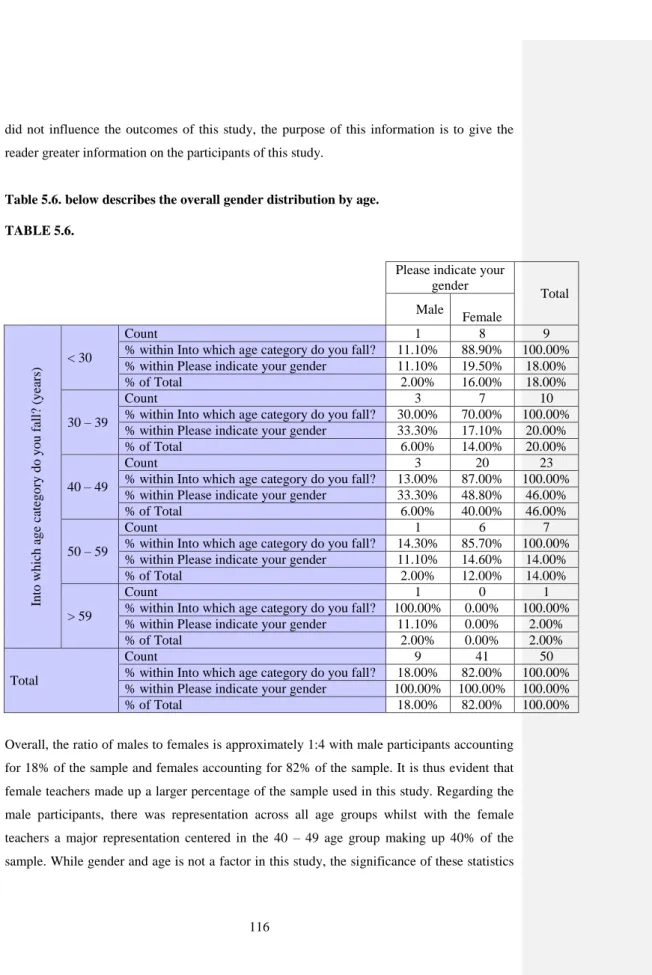
TABLE 5.6. Overall gender distribution by age 116
TABLE 5.7. Number of respondents in each school type 117
TABLE 5.8. Racial composition of the sample 119
TABLE 5.9. Results of teacher job satisfaction survey 122
TABLE 5.10. Teacher’s choice of career 124
TABLE 5.11. Professional interactions that will enhance job satisfaction 125
TABLE 5.12. The influence of the principal’s leadership style 148
TABLE 5.13. Teacher involvement and engagement in matters concerning their work 158
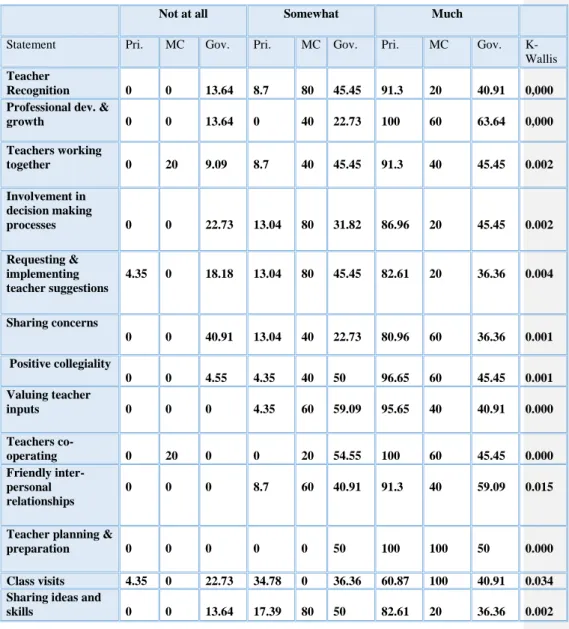
TABLE 5.14. The influence of teacher collegiality and collaboration 164
TABLE 6.1. Relationship between principal’s leadership style and teacher Job satisfaction 177
TABLE 6.2. Relationship between teacher involvement and job satisfaction 183
TABLE 6.3. Relationship between teacher collegiality and teacher collaboration and teacher job satisfaction 188
LIST OF FIGURES
FIGURE 1 Diagrammatic representation of theoretical frameworks 4
FIGURE 2 Elements contributing to teacher job satisfaction 32
FIGURE 3 Motivators and Hygiene Factors 67
FIGURE 4 The Influence of Motivators and Hygiene factors 68
FIGURE 5 Graphical representations of Herzberg’s description of Satisfiers and Dissatisfiers 69
FIGURE 6 Maslow’s Hierarchy of needs theory 72
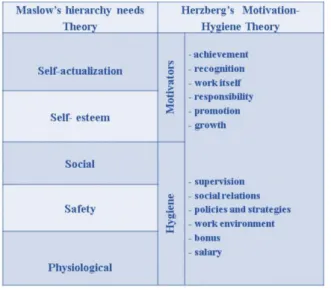
FIGURE 7 Comparison of Maslow’s and Herzberg’s theories 76
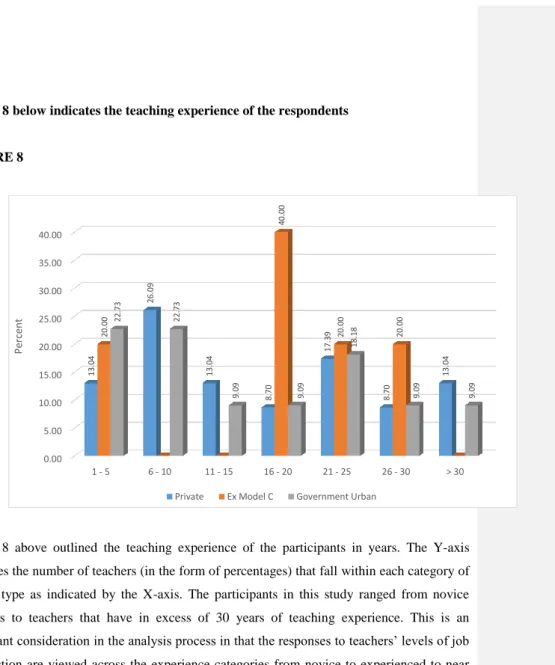
FIGURE 8 Teaching experience of the respondents 118
FIGURE 9 Teacher’s perceptions of job satisfaction levels of colleagues 123
FIGURE 10 Aspects of principal’s leadership style influencing teacher Job satisfaction 200
FIGURE 11 Aspects of teacher involvement influencing job satisfaction 200
FIGURE 12 Aspects of teacher collegiality and teacher collaboration Influencing teacher job satisfaction 200
FIGURE 13 Factors in a professional field influencing job satisfaction 206
FIGURE 14 Professional fields and areas of engagement 211
FIGURE 15 The three areas of engagement influencing job satisfaction 213
APPENDICES
APPENDIX A: Department Permission to conduct research
APPENDIX B: Ethical clearance.
APPENDIX C: Letters seeking Consent and Declaration of Confidentiality
APPENDIX D: Quantitative questionnaire
APPENDIX E: Semi-structured interview schedule
APPENDIX F: Receipt for the Turn- it- in submission APPENDIX G: A copy of the editor’s report
CHAPTER ONE
Context, Objectives and Overview
1.1 Introduction
School education in South Africa since the end of apartheid has been under constant review, transformation and critique with a view to influencing school reforms that would produce a quality driven school education system. The reviews, transformation and critique have been the subject of all aspects of schooling, including curriculum, teacher development, school infrastructure, school leadership and management and school resourcing (Bloch, 2009). Learner performance in annual national assessments and in national senior certificate results became the benchmark to evaluate the quality of school education. All schools were then evaluated against their performance in these tests and this became a point of reference for quality school provisioning. Several interventions have been made to address the concerns related to school education and include constant curriculum renewals, more teacher development requirements, school leadership development and infrastructure and resource provisioning. Yet such interventions have revealed little difference in school learner performances as the majority of learners continue to underperform in schools (Bloch, 2009).
A more fine-grained analysis of school education is, therefore needed. This study delves into this fine-grained situational analysis with a focus on teachers. Thus, the purpose of this chapter is to introduce the research study and to motivate for its significance. Teachers, during these national intervention processes, have had to endure several episodes of curriculum change and teacher professional development demands. As a teacher, I have experienced the numerous interventions that have been made in a quest to improve education standards in South Africa. Firstly, the curriculum changes included system wide changes in terms of curriculum renewals beginning with the introduction of Outcomes Based Education through the Curriculum 2005 process of gradually introducing OBE across all phases of school education, through the Revised National Curriculum Statement, the National Curriculum Statement and now with the Curriculum and Assessment Policy Statement (CAPS).
Teacher professional development began with the upgrading of unqualified and under-qualified teachers, retraining for implementation of OBE curriculum, on-going professional development and new teacher education frameworks that influenced the work and training of
teachers for school education. In addition, school governance development within school education increased substantially with increasing teacher accountability and within a human rights discourse that is undergirding school education. The impact of these changes and demands on teachers is, therefore, a subject of exploration in this study. How teachers feel about their role as professionals, their levels of job satisfaction, the leadership style of the principal, teacher involvement in matters concerning their work, and the quality of the teacher collegiality and collaboration as factors shaping the school context is the major focus of this study.
The MetLife Survey (2013) has reported a steady decline in levels of teacher job satisfaction over the years and according to this report something has to be done to prevent the teaching profession from looking gloomy and heading for crisis seeing that teacher satisfaction levels have dropped from 59% in 2009 to just 39% in 2013.
Learner performance, poverty level indexes of schools, infrastructure variations amongst schools and school geographic locations led to schools being categorised according to various indicators (Bloch, 2009). For example, infrastructure variations have led to schools being categorised as quintile one to quintile five schools, poverty indexes have led to schools being categorised as feeding schools and non-feeding schools. Learner performance has led to schools being categorised as performing and non-performing schools. There are many other kinds of categorisations that embrace the South African education system. Whilst, in some cases, these categorisations are useful in managing the school education systems in terms of reporting and interventions, the effects of these categorisations have not been explored beyond reporting and interventions. This is where the uniqueness of this study comes in as it explores school categorisation beyond just reporting.
In bringing these areas of exploration together in this study, I chose the teacher as my primary vantage point in this exploration. Furthermore, campaigns to provide quality education in schools thus far have tended to ignore the teachers perspective, although they are the chief classroom practitioners (Griffin, 2010). This study, therefore, attempts to address this gap by focusing on the teacher’s perspective on this issue.
The primary purpose of this research study was to explore the job satisfaction levels of teachers in the different school types and to gain insight into how these levels differ across school types, and secondly to explore the influence of the school context, shaped by the
professional interactions occurring herein on levels of teacher job satisfaction. The secondary purpose was to explore what might explain the relationship between the school context through its professional interactions and levels of teacher job satisfaction The main research questions of this study focused on what the current levels of teacher job satisfaction is in the different school types and how these levels differ across school types; what is the nature and frequency of professional interactions occurring within the different school types; how do professional interactions within the different school types influence job satisfaction, and finally why these professional interactions influence teacher job satisfaction the way they do. In light of what has been said above, it is relevant to cite Zembylas and Papanastasiou (2004) regarding the premise upon which this study is based. According to Zembylas and Papanastasiou (2004) what people think, how they feel and what they do is shaped by the social context in which they work.
Teacher job satisfaction can and has been explored from various vantage points but for the purpose of this study, teacher job satisfaction will be explored from a personal perspective. By personal perspective I mean from an individual’s perspective. This involves looking into teacher needs as professional practitioners and the extent to which these needs are satisfied as key to their levels of job satisfaction since the concept, being an affective and subjective concept, can mean different things to different people in that what satisfies one may not necessarily satisfy another (Gaicovad, 2011; Panday, 2010). This study thus approaches teacher job satisfaction from a needs perspective by exploring the levels to which teacher needs are met in their work context and this subsequently influences their level of job satisfaction. As human beings and individuals we have different likes, dislikes and needs. Whilst some teachers may derive satisfaction from their learners’ good performance, others may find their involvement in decision making processes concerning their work rewarding and satisfying. It is thus important to identify those factors within the school environment that contributes to teachers being satisfied with their jobs. Building on this point, the main theories underpinning this study has relevance in that they explain job satisfaction in terms of needs gratification. Herzberg’s (1966) Two Factor Theory; Maslow’s (1959) Hierarchy of Needs Theory; Locke’s (1976) Affect/ Expectancy Theory, and Porter and Lawler’s (1968) Discrepancy Theoryare all needs based theories and thus link teacher job satisfaction to the fulfilment of their needs within the school environment. A more recent theory, David Sirota’s (2005) Three Factor Theory takes a fresher look at aspects of professional interactions within the school environment influencing levels of teacher job satisfaction by focusing on teacher
collegiality and teacher collaboration and will be used in this study. These theories will be further elaborated upon in Chapter Four, the theoretical orientation chapter.
The following diagrammatic representation is my creation and encompasses the focus of this study as well as that of the key theories underpinning this study. Furthermore it succinctly provides an explanation of what has been summarised above.
FIGURE 1: Diagram showing how the theoretical frameworks used in this study influence levels of job satisfaction of teachers
TEACHER EXPECTATION = FAVOURABLE OUTCOME = JOB SATISFACTION According to this model, job satisfaction is the result of what teachers expect from their working environment, which is based on their needs, equalling what they actually receive. It has its fundamental basis on Porter and Lawler’s Discrepancy (1968) Theory which asserts that the greater the difference between teacher expectations and teacher outcomes, the greater the levels of job dissatisfaction and vice versa. Furthermore, in respect of this study, teachers’ needs are identified through the theories of Herzberg’s (1966) Two Factor theory and Maslow’s (1959) Hierarchy of Needs theory and are explained in terms of the professional interaction activities that do occur within school environments.
The uniqueness of this study lies in the exploration of the influence of interactions between the principal and teachers and between the teachers themselves as a means of explaining job satisfaction levels of teachers. This study, in particular, focuses on the leadership style of the principal, the level of teacher involvement in matters concerning their work and the nature of teacher collegiality and teacher collaboration as factors which influence teacher job satisfaction.
Teacher job satisfaction is important for many reasons and has thus become a focal point of research. Teachers’ levels of job satisfaction impact significantly on curriculum delivery and subsequently on learner performance. Apart from dissatisfied teachers suffering from stress related problems which impact negatively on school attendance, they also display apathy,
resentfulness, low motivation and poor self-esteem (Grobler,Warnich, Carrell, Elbert, & Hatfield, 2006). This argument is supported by studies (Demirtas, 2010; Monyatsi, 2012 & Moola, 2005) which concluded that dissatisfied teachers experience a host of physical and psychological problems which can have detrimental consequences for learner performance.
The purpose of this chapter is to introduce the research study and to motivate for its significance. This is done by focusing on the background to the study, and by providing clarification on the purpose of this study. This chapter also includes a presentation of the research questions, the research design and the methodology used in the collection and analysing of the data. This chapter then concludes with a discussion of the limitations of this study so that the findings could be placed in their correct perspective.
1.2 The purpose of this study
Despite numerous interventions by schools and the department of education to improve learner performance, little or no difference has been noted. A review of the literature (Gaicovad, 2011; Griffin, 2010; Panday, 2010) indicates that the teacher as the key practitioner in the classroom has largely been ignored in these intervention programmes. I therefore intend, through this study, to contribute to the discourse on the role of teachers as key role players in education from a personal perspective by studying their levels of teacher job satisfaction from a needs perspective. Through this study I intend to identiufy the extent to which teacher’s professional needs are being met in their school contexts and the extent to which this influences their levels of job satisfaction. Low teacher morale and teacher job dissatisfaction has contributed to the failure of South Africa’s education system and subsequently learner poor performance (Makgato, 2006; Mentz, 2007; Naidoo, Botha and Bissschoff, 2013). This study also sought to contribute to the discourses and debates on learner performance by focusing on the teacher and exploring the extent to which the satisfaction of their needs within the school context influences their levels of job satisfaction. Several studies (Bolin, 2007; Calaguas, 2017; Josanov-Vrgovic & Pavlovic, 2014) assert that happy teachers are satisfied teachers and that satisfied teachers are productive and committed teachers. Following these assertions and descriptions of teacher job satisfaction thus far, this study intends to explore the significance of the school context, shaped by its professional interactions, on influencing levels of teachers’ job satisfaction.
A literature search for this study indicates a dearth of information about elements of professional interactions within school environments that contribute to teacher job satisfaction. Some studies focused particularly on the schools’ organisational climate (e.g. Xiaofu & Qiwen, 2007) as a factor influencing job satisfaction levels which alludes to aspects of professional interactions. This study therefore, hopes to stimulate discussions and debates on the influence of the school’s organisational climate shaped by the nature and occurrence of professional interactions on levels of teachers’ job satisfaction.
The literature on teacher job satisfaction appears to have focused mainly on secondary school teachers, which creates the need for research in primary schools (Akhter, 2013). This study intends to address this gap and contribute to the literature by researching job satisfaction levels amongst primary school teachers.
The purpose of this study was thus to explore the current levels of teacher job satisfaction within each of the different school types and how these levels differ across different school types and to explore the influence of professional interactions on levels of teacher job satisfaction.
1.3 Research questions
The following research questions outline the objectives of the study and inform the methodology used.
(1) What are the current levels of teacher job satisfaction within each of the different school types and how do these levels differ across school types?
(2) What is the nature and frequency of professional interaction occurring within each of the different school types?
(3) How do the professional interactions in the different school types influence levels of teacher job satisfaction?
(4) Why do the professional interactions in the different school types influence teacher jobsatisfaction in the way they do?
1.4 Rationale for the study
The study was driven by both a personal and research imperative. Having spent all of my teaching years, thus far, in a government school and being exposed to government school
teachers’ perceptions of job satisfaction, I became curious about how teachers in the other school types (e.g. independent schools and Ex- Model C schools) feel about their jobs and to what extent their school environments influence levels of teacher job satisfaction. It is generally assumed by teachers (through my interactions with them) teaching in government schools that the private and Ex-Model C schools are more professionally organised, hence the higher levels of job satisfaction experienced by the teachers in these school types. By undertaking this comparative study, I hope to either confirm or reject this assumption that teachers have through an analysis of the data. Based on the findings of this study, recommendations will be provided on ways in which to improve levels of teacher job satisfaction across school types.
Work motivation and job satisfaction are considered to be significant to the success of educational institutions (Ackerman, 2011; Zeb & Jamal, 2016). Poor work motivation and high levels of job dissatisfaction can contribute significantly to teacher burnout and learner poor performance (Johnson, Kraft & Papay, 2011). By improving job satisfaction levels of teachers, it is envisaged that this will lead to a more committed and productive workforce (Calaguas, 2017; Nguni et al., 2006; Zeb & Jamal, 2016).
Being a teacher for 32 years of which fourteen years have been in a management position, it is a concernto observethe decline in teacher morale, commitment and job satisfaction levels. More and more teachers in my school speak daily about exiting the system, hence my interest in improving their levels of job satisfaction by exploring and addressing the causes of their dissatisfaction. I decided to approach this exploration from a needs perspective focusing on professional interactions between the principal and teachers and between the teachers themselves. Based on the key theories underpinning this study, this study attempts to link job satisfaction levels of teachers to the gratification of their needs within their school contexts. An analysis of the data will shed light on the extent to which the gratification of teachers’ needs influences how they feel about their jobs.
The South African schooling system is characterized by categorization and quintile rankings. Schools are classified as Private, ex-model C, Government urban, Township and Rural schools, whilst quintile rankings see quintile one schools as being the poorest resourced and quintile five as being adequately resourced to promote teaching and learning. In reporting on learner performance, researchers (e.g. Spaull, 2013) have suggested that more affluent schools tend to produce better results. From my interactions with the teachers in my school in
particular and within the teaching profession in general, there is a general perception that teachers in the private and ex-model C schools enjoy higher levels of job satisfaction than those teachers teaching in government public schools. This is what prompted me to do this comparative study across the different school types. This comparison was intended to explore the similarities and differences of selected aspects of professional interaction activities occurring within the different school types and to highlight the influence of these on the differences that might exist on levels of teacher job satisfaction. This study will therefore provide me with the insights into teacher job satisfaction across school types that will enable me as a school leader to construct a school environment that promotes a healthy context for professional interactions that will in turn lead to higher levels of teacher job satisfaction amongst my staff. There is thus a need to explore the variations within and across these various school types as categorised by, amongst others, performance levels, quintile rankings, geographic locations and governance types (section 20, section 21 and independent schools).
In this regard, this study explores aspects of these variations amongst school types with a view to illuminating how the contextual realities of the various school types influence teaching and learning. In this study specific focus is on professional interactions across three school types and the relationships between school types, professional interactions and teacher job satisfaction.
The present day teacher has been exposed to numerous curriculum and policy changes, excessive demands from education administrators and authorities and a changing face of learner make-up. Without the necessary support and adjustments, this is likely to cause demotivation, disillusionment and stress amongst teachers. These characteristics are all associated with negatively affecting the quality of teaching and learning in schools (Antoniou, Ploumpi & Ntalla, 2013) and furthermore job stress is associated with poor work performance and productivity, as well as teacher burnout as it directly affects morale and commitment (Panagopoulous, Anastasiou & Goloni, 2014). It has thus become necessary for school management teams to develop strategies that promote healthy working conditions as high quality, motivated and satisfied teachers are crucial for effective educational systems (OECD, 2005). It is within this framework that this study on the job satisfaction of teachers is undertaken. It is envisaged that the possible outcomes of this study may assist in understanding how teachers can increase their levels of job satisfaction within a constantly evolving school education system. .
1.5. An annotated literature review
1.5.1 Evolving aspects of teacher job satisfaction
Job satisfaction is one of the most thought over and discussed terms in the professional world and is an area of complex research and theory (Gaicovad, 2011) and has thus become an integral part of policy making exercises (Vassallo, 2011). This is because more and more teachers are becoming increasingly dissatisfied with their work as indicated by the 2013 MetLife survey which saw job satisfaction levels of teachers drop from 59% in 2009 to 39% in 2013.
This shift from the material conditions of work to relational conditions of work as it relates to job satisfaction opens up spaces for a deeper understanding of job satisfaction, especially in a context where little opportunities to change jobs are available and where teachers, for example, have to endure their working contexts throughout their teaching careers in the same school. This study, therefore, elaborates on this shift by focusing on the influence of the school context which in this study will be referred to as professional fields, on levels of teacher job satisfaction.
Generally studies on job satisfaction are broken up into two components. The first and most prominent one in the research is global job satisfaction, which refers to the general and overall feelings that a person has about the job, whilst the second component refers to facet job satisfaction (Mueller & Kim, 2008). Facet job satisfaction refers to how an individual feels about individual aspects of the job and identifies specific aspects that may require improvement in its quest to improve satisfaction levels. This can include amongst other things salary, growth opportunities and the quality of relationships with colleagues etc. (Mueller & Kim, 2008). What this means is that an individual can enjoy overall job satisfaction and still be dissatisfied with certain aspects of what goes on in the school environment. The opposite is also true in that teachers can be satisfied with individual aspects of the job but can still, overall, be dissatisfied with their jobs. By examining the influence of aspects of professional interactions on levels of teacher job satisfaction, the focus of this study is on facet job satisfaction.
The democratisation of education in the post-apartheid era in South Africa has seen a number of changes and challenges facing teachers today. With teachers’ frustrations and dissatisfaction levels increasing, it has become necessary to look beyond the conventional
methods associated with research on teacher job satisfaction. These call for more attention to be placed on other areas and these may include facets such as the school context and the professional interactions occurring within each school context. Contextual factors such as the principal’s leadership style, the level of involvement of teachers in matters concerning their work and the level of teacher collegiality and teacher collaboration could be explored as part of the facet aspects of teacher job satisfaction. This study takes the facet aspect of teacher job satisfaction as its vantage point.
1.5.2. Contextualising job satisfaction of teachers
Research on teacher job satisfaction began in 1935 with Hoppock’s classic study in which he discovered that social interactions with co-workers and the working conditions impacted to a great extent on teacher job satisfaction (Brief & Weiss, 2002).
Locke (1976), proposed, what is probably one of the most widely used theories of job satisfaction. His theory defined job satisfaction as “a pleasurable or positive emotional state resulting from the appraisal of one’s job or job experiences” (Locke, 1976, p.1304). Since then, research on job satisfaction has been explained in terms of varying factors but in recent times the emphasis falls on the organizational climate of the school (Skaalvik & Skaalvik, 2011; Tran & Le, 2015)). The organisational climate focuses on those interaction activities that shape the context of the school. These include the leadership style of the principal as school leader (Hulpia & Devos, 2010; May & Supovitz, 2011; Sarier & Uysal, 2013), the extent to which teachers are involved in matters concerning their work (Christopher, 2014; Hatchett, 2010; Sarafidou & Chatzioiannidis, 2013), the quality of inter-personal relationships and the level to which teachers collaborate with each other (Abdullah, Uli & Parasuraman, 2009; Barnes & Conti, 2009; Johnson et al., 2011). It is within this ambit that the main focus of this study falls.
The literature supports the important contributions of the organisational climate of the school to levels of job satisfaction as outlined above. A study by Johnson et al. (2011) concluded that school environments, in which teachers collaborate frequently, receive meaningful feedback about their instructional practices and are recognised for their efforts to promote teacher improvement and teacher job satisfaction whilst May and Supovitz (2011) found that the leadership style of the principal and the level of peer collaboration directly relate to teacher job satisfaction. These concur with the findings of Akhter (2013), who concluded that
teachers are more satisfied in schools with an organizational climate characterized by experienced leadership, collegial collaboration and ample opportunities for professional advancement.
Previous comparative research studies on teacher job satisfaction across school types varied in their findings. A study by Dhingra (2006) of teachers in India found that the organizational climate influenced teacher job satisfaction more than the school type itself, whilst a study by Crossman & Harris (2006) found that the type of school accounted for greater job satisfaction. These findings suggest that the school type does influence teacher job satisfaction, opening up possibilities for exploring, in more nuanced ways, the various kinds or types of schools (in the case of South African schools – quintile rankings, geography and former apartheid categories) within which teachers work and the nature and levels of job satisfaction of these teachers.
1.5.3. Professional interactions within school campuses
In the context of and for the purpose of this study professional interactions refer to the nature of professional relationships and activities between the school principal and teachers and between the teachers themselves which relate specifically to the teaching, learning and school leadership and management processes. The professional interactions between teachers and learners were not considered in this study as this would have made the study too broad. This is an aspect for further research as it can be dealt with as a study on its own.
According to Barnes & Conti Associates (2009), friendly and co-operative interpersonal relationships enhance job satisfaction because of the source of emotional support, comfort and professional advice and assistance. In these instances, teachers are not forced to work in isolation but find comfort in knowing that support from colleagues is on hand in addressing challenges.
The school is an institution which involves working with people (Dorozynska, 2016; OECD, 2014) thus making relationships and interactions an important part of school functionality. No one can work alone and work is typically done in teams and through collaboration whereby the employees become part of a web of relationships across and between themselves (Sargent & Hannum, 2005). Professional interactions and social interactions thus become a significant part of these relationships where teachers constantly engage with each other. Teacher engagement and professional development empowers and capacitates teachers
making them more effective than teachers working in less supportive environments (Boyd et al., 2011; May & Supovitz, 2011).
Professional interactions characterized by sound inter- personal relationships, teacher co-operation and teacher involvement are said to create higher levels of job satisfaction amongst teachers (Abdullah et al., 2009). According to Hatchett (2010) teachers need to be valued and supported. She found that teachers tend to be more productive when they feel accepted and the school environment is open to teachers being involved in matters concerning their work. Hence, in this study, professional interactions are a key component of the exploration and is conceptualised as any interactions amongst teachers and between teachers and school leadership that is focused on teaching, learning and management within a school context.
1.6. Research methodology
This section will provide insight synopsis into the methodology dynamics of this study, namely, a discussion of the research design, the research sites and participants, the data collection instruments and the data analysis processes. A more detailed report will be presented in the methodology chapter (Chapter 4).
This study took on an explanatory mixed methods approach within the interpretivist paradigm. The mixed methods approach involves using both quantitative and qualitative methods in the same study. For the purpose of this study, the quantitative part of this study, which was done through the survey questionnaire, answered research questions 1, 2 and 3 whilst the qualitative part of the study which was mainly exploratory in nature focused on unpacking what might explain the relationships between professional interactions and levels of job satisfaction identified in research question three. The data collected during the open - ended questions in the survey questionnaire and the semi-structured interviews with teachers were analysed for this purpose. It is also important to mention at this point that the questions for the interview schedule were guided by the responses of the teachers during the survey questionnaire. I set out to achieve in the qualitative part of this study. Before commencing with the interviews, the interview schedule was discussed with my supervisor to check on the validity of the questions.
Being a comparative study across the different school types, it was important to use purposive sampling as the different school types formed the sites of exploration. One school from each of the different school types within the Ethekwini region of Kwa-Zulu Natal was
selected as a research site viz, a private school, an ex-model C school and an urban government school. All the permanent teachers within each of these selected schools were the primary participants. For the qualitative part of the study, convenience sampling was used as only those teachers who were willing by volunteering to continue with the data collection process formed the participant pool from which three participants from each school type were selected.
1.7. Limitations of the study
Limitations of a study refer to those factors that can influence the outcomes of a study (Cresswell, 2013). It is, thus, important that these limitations be declared so that the results of the study can be seen in context. By declaring and addressing the limitations of the study, the study is given credibility.
The following were some of the limitations of this research study and the steps taken to address them. The results of this study must be interpreted with these limitations in mind. The sample used in this study may not have been truly representative of the teacher population as well as of all schools as per identified school types. In an attempt to increase representivity in this study, questionnaires were used as a data collection method and were issued to all permanent teachers within each school type.
Secondly, the possibility exists that participants may not have been truly honest in their responses which could subsequently affect the outcome of the study. Some of the reasons for this occurring may include fear of reprisals, some participants may respond in a manner to please the researcher or to protect the image of the school. To address this issue, the researcher emphasised the anonymity of the respondents and the research sites and urged the participants to be honest in their responses.
From a contextual point of view, it is possible that other factors too, besides professional interactions, may influence levels of teacher job satisfaction. Such factors may include teaching experience and other personal characteristics. However, the influence of these personal characteristics were not analysed as part of the study. Its purpose was to define the credibility of the participants. Furthermore, by specifying the objectives of this study, the variables affecting teacher job satisfaction were delimited to just the influence of professional interactions on levels of job satisfaction of teachers.
From a conceptual point of view, teacher job satisfaction is a variable that can be measured from different perspectives and is a subjective term which can mean different things to different people (Gaicovad, 2011; Panday, 2010) and is fluid in nature. Fluidity implies that job satisfaction is not long term and can vary from day to day, week to week or even month to month. Furthermore, its interpretations can thus vary from person to person in that what satisfies one individual may not necessarily satisfy another, as individuals have different needs and desires. Whilst, some may regard learner performance as important and satisfying contributors to their job satisfaction, others may value involvement in matters concerning their work or inter-personal relationships with colleagues as being important for them. With this in mind, individuals will evaluate their jobs based on those factors that they regard as being important and meaningful to them (Sempane, Rieger & Roodt, 2002).
Another limitation of this study on job satisfaction is found in the wide array of definitions that are presented in the literature. According to Alzaidi (2008) the term job satisfaction has no agreed universal definition and seeing that it is more of a psychological concept, giving it a scientific definition may just be misleading.
1.8. Overview of the study
The purpose of this chapter was to introduce this research study by focusing on its purpose and rationale. An outline of the methodology used in this study as well issues relating to reliability and validity and trustworthiness were briefly presented.
Chapter Two reviews literature to provide justification for the purpose and rationale for this study.
Chapter Three will focus on the key theoretical frameworks underpinning this study.
Chapter Four will outline the research design, methodology, the participants and research sites, data collection techniques and methods of data analysis used in this study.
Chapter Five will provide insight into how the data was analysed and present the interpretation, discussion and summary of the findings for research questions one and two.
Chapter Six presents part two of the data analysis chapter and deals with research questions three and four.
Chapter Seven deals with the key findings of this study and is presented as the theorising chapter.
Chapter Eight concludes this study by providing a summary of the findings, identifying areas for future research and finally provides recommendations that will bring the findings of this study to fruition.
CHAPTER TWO
Literature review
2.1. Introduction
In the previous chapter I contextualised the study and presented the research focus and research questions that guided this study. The broad aim of this chapter was to identify and elaborate on the current discourses, debates and challenges that are influencing the research, knowledge and trajectory of teacher job satisfaction that will underpin the focus of the study on exploring the influence of the school context through professional interactions, on levels of teacher job satisfaction, through a needs perspective. As human beings, teachers have needs and the extent to which these needs are fulfilled or unfulfilled influences levels of job satisfaction or job dissatisfaction. This study approached job satisfaction from a needs perspective and sought to explore teacher job satisfaction in terms of their needs being fulfilled within the school context in which they work. Aspects of professional interactions within school contexts resonate with the theories of Fredrick Herzberg (1966) and Abraham Maslow (1959) in terms of motivators and dissatisfiers. Although seminal theories, most research studies on motivation and job satisfaction are cemented in these theories. Furthermore, these theories identify perfectly with the objectives of this study in terms of those factors associated with job satisfaction and factors associated with job dissatisfaction. The main aspects of professional interactions used to study the school contexts were identified through the several literature sources, namely, hardcopy, electronic and online sources like scholarly articles, journals, and books and accredited job satisfaction surveys. The accessed information was categorized into themes, and reviewed in a critical discursive manner that illuminates the classical and the contemporary issues related to the themes, its challenges and debates and potential aspects for further research.The review of the literature in this study was arranged and presented conceptually for greater clarification and direction.
Firstly, I focused on an understanding of the concepts of professional interactions and job satisfaction and a detailed account on the significance of job satisfaction by presenting a critical engagement on conceptions and theories that provide a frame of reference for interpretation. Furthermore, during this engagement an explanation was given on how research on teacher job satisfaction has evolved over the years and to highlight these shifts in foci.
The literature review then explored the school environment as professional fields which are shaped by the interactions and social relationships between the various role-players. This speaks to an in-depth study of the literature on school climates and school ethos. Researchers (Zembylas & Papanastasiou, 2004) have (relatively) recently begun to understand how different elements of the workplace affect the teachers’ ability to teach and that the teacher’s ability to deliver effective instruction is deeply affected by the context in which they work. For the purpose of this study, the work of renowned authors and scholars were presented with particular attention to the principals’ leadership style involving his/her interactive disposition with his/her teachers, the nature and extent of teacher involvement in matters concerning their work and finally, the quality of the working relationships between teachers characterised by collegiality and collaboration. These areas are essential to professional interactions that were undertaken in this study.
As the study involved a comparison across school types, literature on different school types were also reviewed, with the purpose of understanding how diverse contexts may account for differences in levels of teacher job satisfaction.
The chapter concludes with a summary of the main points extracted from this review of the literature.
2.2. What constitutes professional interactions within school environments?
Interaction is defined as a mutual or reciprocal action or exchange (Johnston, 1995) and these professional interactions can take on different forms. They can be written or verbal and they can range from informal conversations to the more formal, planned gatherings. These interactions are characterised by the participants’ willingness to actively listen and to respond thoughtfully to ideas and perceptions of students and colleagues in a way so as to promote teaching and learning. According to Kunter et al.,(2013) these interactions involve the sharing of updated thoughts and ideas on teaching techniques and strategies and these interactions between teachers reduce teacher isolation and tend to produce better informed and committed teachers (Vassallo, 2011; Westheimer, 2008). Teachers’ professional interactions have been found to be an important part of efforts to enhance teacher motivation, increase self-efficacy, provide moral support and augment teacher job satisfaction (Ackerman, 2011).
For the purpose of this study, professional interactions referred to and focused on the interactions between the school principaland teachers and between the teachers themselves. In looking at these relationships, a more detailed insight was provided on the leadership styles of principals, the levels of teacher engagement in matters concerning their work and on the quality of inter-relationships and the working relationships between these significant role-players in schools. All of these aspects give rise to a new culture of teachers collaborating and co-operating as opposed to the traditional school culture characterised by teacher isolation (Johnston, 1995) which had a negative effect upon the quality of the school climate (Halloway, 2004).
Later views of teaching (Darling-Hammond, Davis, La Pointe & Meyerson, 2005) see teachers co-operating in teams, building professional learning communities and participating in school development. This professional co-operation facilitates the co-ordination of strategies and the creation of opportunities for social and emotional support for teachers. Westheimer (2008) raised concerns regarding the failure of schools to create opportunities for teachers to interact on a professional level to share their knowledge and skills with each other. It is the lack of this atmosphere that contributes to levels of dissatisfaction amongst teachers as it promotes teacher isolation. According to Hargreaves (1994) isolation breeds isolation and when teachers choose to work alone, their decisions and expertise is based on their own experiences and background. It is against this backdrop that reformers of education are beginning to look for ways that foster teachers working together by encouraging collegiality and professional dialogue as opposed to them working in isolation. This is where the principal’s leadership style is influential as suggested by Thompson, Gregg and Niska (2004) who emphasise that principals need to work from the front and to empower teachers to work together in capacitating themselves. The basic principle is that teachers learn more together than they would on their own.
It is these interactions and relationships that shape the school climate by creating a sense of community. According to Collie, Shapka and Perry (2012) and Dorozynska (2016), the school climate is indicative of the quality of social relations and the support given to each other and this has a direct influence on teacher job satisfaction. Research findings (Collie et al., 2012; Du Four, 2004; Johnson et al. 2011, Njambi, 2014) indicate that school environments in which teachers collaborate frequently, receive meaningful feedback regarding their instructional practices, are acknowledged and receive recognition for their
efforts and are given opportunities to participate in matters concerning their work contribute to higher levels of job satisfaction.
It can thus be summarised from the above that professional interactions within the context of the school refers to the way in which the principal, as school leader, engages with his/her teachers and the way in which teachers engage with each other in the execution of their duties. The professional interactions highlighted as part of the principal’s leadership focuses on the recognition and acknowledgement of teacher’s efforts, his/her level of engagement with teachers through his/her visibility and accessibility and his/her readiness to entertain teachers’ concerns. Furthermore, attention is also paid to the level of teacher involvement in decision making processes concerning their work and levels of autonomy as allowed by the principal. From a teachers’ perspective, professional interactions involve the level of collegiality and collaboration displayed during planning and addressing challenges that they encounter during the teaching and learning process as professional interactions also involve the nature and quality of inter-personal relationships teachers share with each other in the execution of their duties.
2.3. Definitions of job satisfaction
Due the popularity of job satisfaction within the field of occupational and organisational psychology, various researchers and practitioners have provided their own definitions of what job satisfaction is. However, two of the most commonly used definitions in the literature describing job satisfaction are “the pleasurable emotional state resulting from the appraisal of one’s job as achieving or facilitating the achievement of one’s job values” (Locke, 1976, p. 1342) and “the extent to which people like (satisfaction) or dislike (dissatisfaction) their jobs” (Spector, 1997,pg. 2). Teacher job satisfaction is also measured by the level of motivation to do the job and the level of morale (Otanga & Mange, 2014). These definitions effectively summarise the key aspects that are provided in other definitions by other theorists and authors.
The study of job satisfaction began as early as 1935 with Hoppock defining it as “a combination of psychological, physiological and environmental circumstances” that can result in people honestly saying that they enjoy what they are doing (Aziri, 2011, p.47) and has since become one of the most thought over and discussed terms in the professional world
and is an area of complex research and theory (Lu, Barribal, Zhang & While, 2012; Gaikovad, 2011).
The concept job satisfaction has no agreed and universal definition (Alzaidi, 2008), but rather that it is more of a combination of psychological, physiological and environmental circumstances that leads to people saying that that are happy with their job (Oliver, 2007). Alzaidi (2008) warns that giving it a scientific definition may just be misleading and that part of this misconception can be attributed to the different theories underpinning job satisfaction (Evans, 2010). Furthermore, job dissatisfaction must not be seen as the opposite of job satisfaction (Alemi, 2014).
Other definitions of job satisfaction identified in the literature included: an emotional reaction of an employee’s mental health, morale, performanceand attitudes or perceptions of how they feel, overall, towards the job or towards facets of the job (Mullins, 2005;Ommen et al., 2009; Williams, 2004). Robbins and Judge (2008) see job satisfaction as a positive feeling resulting from the evaluation of its characteristics, while Garcia-Bernal et al. (2005) define job satisfaction as a set of favourable or unfavourable feelings by which a person perceives his job. It posits an emotional state resulting from the pleasure derived from the job. According to Locke (1976) (cited in Saari and Judge, 2004, p.396) job satisfaction is“a pleasurable or positive emotional state resulting from the appraisal of one’s job or job experiences”. This definition of job satisfaction ties in with the Discrepancy theory of Porter and Lawler (1968) and the Expectancy theory of Locke (1976) which explains job satisfaction in terms of the level of job satisfaction being measured by the extent to which the needs of the individual are satisfied within the work context. In terms of this theory, the greater the discrepancy between what one expects from the work context and what one actually receives, the higher the level of dissatisfaction and vice versa (Anderson, 2007; Ho, Chang, Shih & Liang, 2009; Zembylas and Papanastasiou, 2006). An individual’s perception and evaluation of his job is influenced by the fulfilment ofone’s needs, values and expectancies (Kompier, 2006). It can thus be said that individuals will evaluate their jobs based on factors that they regard as being important and meaningful to them (Sempane et al., 2002). This is key to this study as it sets out to explore the extent to which teachers’ needs are met within their school contexts.
It can thus be summarised that job satisfaction is subjective and can mean different things to different people depending on their perceptions on what is important to them. It refers to the amount of pleasure they derive from doing their jobs. In terms of this study it has to do
mainly with needs fulfilment as outlined by Locke’s Equity theory and Porter and Lawler’s Discrepancy theory. The greater the parity between what teachers expect from the job and what they receive, the higher their level of job satisfaction and vice versa.
2.4. An evolving conception of job satisfaction and its significance
Job satisfaction is one of the most researched variables in the area of workplace psychology (Lu,Barribal et al., 2012) and has been associated with numerous psychosocial issues like the changing world of work and organisational factors which range from leadership to job design (Spector, 1999). Job satisfaction is a complex area confronting managers and despite its significance on motivation, commitment and productivity, it remains one of the aspects that is not given its necessary attention amongst scholars and researchers (Aziri, 2011).
Although studies by Peckham (2007) and Rebora (2009) indicate that job satisfaction levels amongst teachers is at a high, Landers, Alter and Servilio (2008) are quick to point out that this is not the case. This finding by Landers et al. (2008) is corroborated by a Washington post report which states that teacher job satisfaction is at a 25 year low (Strauss, 2013) and The Bulletin Board (2013) which reported that only 32% of American teachers are satisfied with their jobs compared to the 62% in 2008. The tracking of the decline in levels of teacher job satisfaction is further supported by The MetLife Survey of the American Teacher: Teachers, Parents and the Economy (2013) which tracked the decline in teacher job satisfaction levels from 59% in 2009 to just 39% in 2013. A study by Crossman and Harris (2006) of secondary school teachers in the United Kingdom highlighted low job satisfaction levels of teachers as a possible cause of teachers quitting the profession. Attempts were made, through a literature search, to provide statistics on the job satisfaction levels of teachers in South Africa. Unfortunately, my searches failed to provide this information. It is from this perspective that this study is able to contribute to the literature on levels of teacher job satisfaction from a South African viewpoint.
From the above statistics, it is clear that job satisfaction levels amongst teachers is declining and teacher retention strategies are being put into place to curb the number of teachers exiting the profession. It has thus become necessary to identify the causes of teacher dissatisfaction and to address them. During the course of this review of the literature, more information will be given for these declining figures of teacher job satisfaction internationally. It is at this