Electronic Learning in the 21
stCentury: A Solution to the Falling
Education Standards in Nigeria
Dr. (Mrs.) Christiana Ogeri Chukwu
Department Of Mass Communication, Ebonyi State University, Abakaliki – Nigeria Abstract
Shawinina (2001), ICT is all the digital technologies including: computer, scanner, printer, telephone, internet, digital satellite system (DSS), direct broadcast satellite (DSB), pocket switching, fiber optic cables, laser disc, microwaves and multimedia system for collection, processing, storage and dissemination of information all over the world. The paper attempted to investigate the application of electronic teaching and learning (e-learning and e-teaching) in Nigerian educational system. Information and Communication Technology (ICT) in education is an excellent instrument in the pursuit of self-reliance. The essay centred on electronic learning in the 21st century
as a solution to the falling education standards in Nigeria. It pictured learning as a focal point, features of learning, guiding principles, components, relevance, learning styles, applications prospects and challenges of e-learning and education system in Nigeria. The research also uncovered that despite the roles of ICT in educational institutions, Nigeria is yet to be dully involved due to high level of illiteracy, lack of internet, inadequate electricity, lack of interest ensure adequate among other problems. The paper finally made useful recommendations that can ensure adequate application of ICTs in Nigerian schools.
Keywords: 21st Century, Falling, Education standard, Nigeria, E-learning.
Introduction
Education is the bed rock for national development. It is a catalyst that accelerates the social, political and economic development of every nation. Daurillard, (1993) in agreement with this, defined education as aggregate of all the process by means of which an individual develops abilities, skills and other forms of positive behaviour in the society in which he lives.
However, in the recent time, e-learning and e-teaching has revolutionalized the face of education in the world. E-learning refers to using electronic applications and process to learn. E-learning is also called web based learning, distributed learning, computer assisted instruction, or internet based learning. Content is delivered through the internet, extranet, satellite TV, and CD-ROM with multimedia capabilities (ISP, 2004). E-learning is an individualized instruction delivered over public (internet) or private (internet) computer networks. E-learning was first called “internet-based training” then web-based training. Today, you will still find these terms being used, along with variations of e-learning (Lim, 2001).
Meanwhile, Eya (2006) sees ICT as a newer, better, faster and more robust means of information generation and dissemination. The author further disclosed that, ICT encompasses the application of sophisticated electronic approach. In the view of Duru (2008), ICT involves the process of learning through electronic means and accessing knowledge from the global world through the internet system. Eya (2006) agreed that ICT is a tool that has led to the integration of computer technology and tele-communication. As a result of this new technology, the world is now knowledge-driven and leading to globalization. The world is presently marked by increasing emphasis on information, and with modern networking technology, one’s ability is enhanced to access and communicate with the wider world (Nnajiofor, 2007).
Reviewing the relevance of ICT application, Mbachu (2008) declares that most of the developed countries have explored the potentials of ICT to transform, particularly in instructional process. Information and Communication Technologies (ICTs) is a capacity building tool that can empower our youths, as they gear for more knowledge acquisition in their day to day activities. They are eager to catch up with the rest of the youths in the developed economies, as they try to mark their positions in the global economy.
With their accelerated interest in computer related gadgets, learners in Nigerian classrooms can be stimulated to learn better as they play and learn with ICT tools. With the use of ICT in education, Nigeria is likely to acquire more knowledge and more connected, and learners cum teachers will develop more positive attitudes to schooling. Villanueva (2000) posits that the above facts could be achieved through the diversity of learning goals, projects, activities and exercises created by ICT-rich classrooms. He affirmed that these cannot be easily present in the traditional classroom.
Villanueva outlined the true picture of an ICT-rich classroom thus:
The use of ICT in our education system leads to incitation of a curriculum reform, development of a more positive attitude to schooling with learners having more control over educational content and activities, breaking the professional isolation which many teachers in the traditional classroom suffers, present an interactive feature of learning resources that enables learners to become increasingly engaged in the construction of content and having
in-built technical tools that makes learning easier. He also, disclosed that with the help of ICT, teachers and learners are stimulated to research and impact knowledge on learners because of easy access to information gathering.
Technology has indeed made the world a global village and it has more impacts than traditional classroom learning. E-learning has the capacity to play a pivotal role in improving the state of education in Nigeria. Therefore, Nigerians should see the urgent need to use electronic learning of the 21st century as a
solution to the falling standard of education. Schools across the country should adopt e-learning as a role model in reviving educational standard in the country. The new innovation enhances teaching and learning through the applications of ICT tools. Teachers as an agent of change, guidance, innovators, creative thinkers, experimenters and researchers should focus more on e-learning method to expose their students on new learning trends. The curriculum planners should also develop content on software with e-learning platform to help in sustaining them with e-teaching and e-learning respectively.
With the growing trends of ICT being a tool for teaching and learning in Nigeria, it will pave way for educational reform. It will be recalled that in Nigerian, Governments formulated and launched an ICT policy in 1987. The policy was titled “The National Policy on Computer Literacy and Education”. This is geared on equipping Nigerians at all levels of education with the preliminary ICT tools.
According to section 11, sub-section 102 (a & b) of the National Policy on Education (FRN, 2004) stipulates thus:
A network of educational service centres in Nigeria (NESCN) shall be set up to provide a forum for exchange of ideas on the development and use of innovative materials for improvement of education. All states, teachers, resource centres, institutes of education of Universities and other professional bodies, shall belong to the network of ICT.
That government shall provide facilities and necessary infrastructure for the promotion of ICT at all levels of education (p. 54).
These remarkable objectives of the government indicates that plans have to be made on the proper integration of ICT into the Nigerians educational curricula. Teachers and students have to prepare to use ICT facilities in their teaching and learning. In agreement with the above assertion, UNESCO (2003) stated that teachers and teacher educators are of central importance in tapping the potentials offered by ICT, to enhance the quality of education. As a chief actor in teaching and learning, UNESCO guidelines states:
Understanding the regional guideline for ICT integration in teaching and learning. Comprehending the analytical framework of competency standards for ICT-integration. Integrating productivity-enhancing ICT tools, in the teaching-learning context.
Enhancing teaching and facilitating learning using multi-model courseware cum shareware.
Integrating ICT using pedagogical innovations, to develop higher order thinking skill among earners (p. 43).
From the training modular pictured above, the document now filed below instructional methodologies and strategies for efficient and effective training of teachers:
Interactive theme presentation.
Group discussion and round table tasks. ICT integration and its demonstration. Sharing of experiences, and
Hands-on-practice.
It is believed that if these modules and their methodologies are properly used during teacher training, it will lead to faster ways of integrating ICT technology in our education system. The present study is focusing on “Electronic learning in the 21st century: A solution to the falling Education Standards in Nigeria”.
The impacts of this topic to Nigerian educational system cannot be over emphasized. According to Naidoo (2003), he perceives that e-learning is a tool for disadvantaged learners, and a good access route to teaching, learning and research materials. He said that e-learning is a tool that makes delivery of lesson flexible, interactive and long lasting. Supporting Naidoo, Eya (2006) stressed that e-learning is the largest and the most challenging application of ICT in the delivery of education. The author pictured learning as the process of e-literate teachers communicating with e-e-literate learners, with up-to-date books and information using electronic skills.
E-learning with its web-based facilities provide the learners with exciting opportunities to reach for more educational information. This paves way for the development of inquiry of the mind, creativity and good study habits. Professional segregation that many teachers suffer in the traditional classrooms becomes a thing of the past. This is because e-learning connects teachers with other professional colleagues worldwide. By so doing, teachers have direct access to their colleagues, materials, information and new innovations and also have the opportunities of sharing their teaching experiences cum challenges. E-learning provides direct interaction between teachers and learners of diverse background. In the process, they share real life experiences and also
discuss events as it happens immediately. E-learning is indeed a panacea for teachers who lack certain pedagogical principles for their traditional classroom system and a practical e-learning offers the ability to manage quality of scale, and share resources across networks, its greater flexi0062ility of provision of time and place makes it good for widening participation.
Review of Related Literature
The concept and nature of innovation according to Chauhan (1981) is a trend that shows up either by multiplying or adjusting or erasing entirely issue or policies in the curriculum. This implies that educational change involves a deviation in policies and programmes or its methods, from its original plans or schedule corroborating this assertion, Agabi, (1999.1) argues that such change can be quantitative or qualitative in nature, planned or unplanned, adopting any style or method. Further, he defines educational innovation as a constructively planned and direct change that is aimed at achieving a specific goal (s). discussing the diverse views on innovation, Mkpa and Izuagba (2004) define innovation as a transformation of an earlier practice to something better, introduce something new and disseminate information and to acquire knowledge, skills and attitudes. Innovation of any kind is based upon a broad and purposeful concepts drawn from the facets of the society. This can come as an introduction of a new idea or a change from the old traditional practices that has been abandoned by the people. Therefore, an innovation is a technological process to improve educational goals. There is need to improve educational goals. There is need to introduce new ideas into our teaching methods to improve the standard of education. The National Policy on Education (FRN, 2004) supports this assertion and said that, the quality of teachers produced shall determine the level of improvement of our education system.
Change is dynamic and brings about challenges, needs or and problems that may require new knowledge or skills to tackle them, (Mkpa, 1987). Since education is an instrument purposely designed to equip individuals in any society to live a happier life, it has to change from time to time. Such will explore opportunities with potentials for improved education that can fit into the contemporary situation in any society. With the ICT-based education globally, any education system of any country must gear to fit into the global system. This brings in exploring and embracing new techniques and ways to update education system for total reorganization of the education system. This will aid the citizens digitally to face the challenges in life.
In 1987, the Nigerian government launches an ICT policy titled “The National Policy on Computer Literacy and Education” aimed at equipping Nigerians at all levels of education. It was a network of educational services centres for exchange of ideas and programmes on the development and use of innovative materials for the improvement of education.
The cardinal objectives of the government was for the proper integration of the ICT into Nigeria’s curricula. Also, for the teachers and students to be equipped to use ICT facilities in their teaching and learning. Electronic learning (E-learning) is an online education or online learning or virtual education has diverse applications with information technologies and ommunicating same through sophisticated electronic approach (Naidoo, 2003). Supporting this view, Eya (2006) perceives e-learning as the use of computer-aided-gadgets to aid learning. Further, Rees, Mackay, Martins, Canole and Davis (2008) see e-learning as the application of advanced learning technology that is computer based.
E-learning is a good remedial backup tool for teachers who lack certain pedagogical principles for their traditional classrooms, to improve on their teachings (UNESCO, 2003; Naidoo, 2003 and Nnajiofor, 2007). E-learning accommodates better selection of content and methodology in order to aid individual differences in learning. Inyiama and Nwafor (2006) say that, learners come into the classroom with diverse learning styles, and they have to be encouraged. Further, they emphasized that perpetual learning methods of the students must be monitored and utilized in the teaching process. These learning styles according to them are: visual, Aural and Kinesthetic/Tactile.
To make learning exciting for students, they should be allowed to use their individual learning styles. In essence different and varied coursewares are developed and presented. The coursewares in an e-learning format are arranged in two styles or methods: (i) The learning object concept and (ii) The learning Nugget concept. Wiley (2000) defines the learning objects as texts, graphics, exercises, assignments and interactions. In another form, he sees learning object as a programme, a course, a module or a lesson segment. Also, Wiley, regards learning object concepts to have basic attitudes, such as Accessibility; Interoperability, Reusability, Durability and Granularity.
According to Rees et al (2008) the learning nugget concepts, is to develop a platform for collaborative work, and to develop the met-data needed for easy transfer of e-learning materials from one institution’s Virtual Learning Environment (VLE) to another. He further explains that the process involves identifying common elements called ‘Nuggets’ on which to base the merger. These nuggets contain learning materials, students’ assignments and evaluation of students’ achievements modules.
Adibe and Inyiama (2005) state that, learning materials i.e. e-learning formats are divided into ‘Chunks’ i.e. learning bits. These bits come in the form of modules or book chapters, to make learning easier. These
‘Chunks’ according to the authors, if applied and scheduled appropriately will encourage frequent and meaningful interactions among the learners, and between the learners and teachers. Presenting the learning procedures in e-learning, the authors state;
Learning activities for an online course should encourage human interaction. Students’ involvement with the instructor and other students is an integral part of an online/internet course. Some strategies to do this include-Email; Web Board, Social Chartrooms, Electronic Mailing lists, Phone Conferencing, Personal Web Page with photos, Collaborative projects and Discussion Groups.
Adibe and Inyiama encouraged interactivity between learners and members of staff such institutions to aid the students’ learning experiences. Further, they perceive that, students should be motivated to get deeply involved and display interest in the subject matter using these styles or methods: Case study, Journal, Research Report, Test/Quiz, and Bulletin Board or Chart Discussion. Buttressing this point, Davis (1997) says that, the most effective way of promoting students’ participation in e-learning class is to carry them along in all the stages of learning. That, participation in e-learning ranges from attendance, which is called ‘Logging on, Reading in the class, posting messages in discussion forums, and taking part in small group activities.
E-learning displays levels of technological investment and preparation. Its success involves the provision of Computers, Internet Connections, Virtual Learning Environments (VLEs); specialist softwares, digital or Computerized e-learning materials, Teachers who can implement these resources, and students who are able to use such systems (Rees et al, 2008).
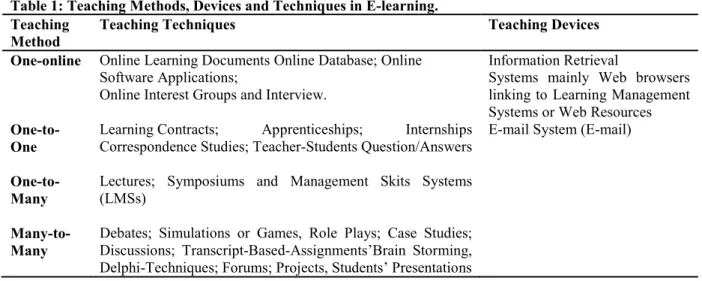
Table 1: Teaching Methods, Devices and Techniques in E-learning. Teaching
Method
Teaching Techniques Teaching Devices
One-online Online Learning Documents Online Database; Online
Software Applications;
Online Interest Groups and Interview.
Information Retrieval
Systems mainly Web browsers linking to Learning Management Systems or Web Resources
One-to-One
Learning Contracts; Apprenticeships; Internships
Correspondence Studies; Teacher-Students Question/Answers
E-mail System (E-mail)
One-to-Many
Lectures; Symposiums and Management Skits Systems (LMSs)
Many-to-Many
Debates; Simulations or Games, Role Plays; Case Studies; Discussions; Transcript-Based-Assignments’Brain Storming, Delphi-Techniques; Forums; Projects, Students’ Presentations (Adapted from Paulsen in Rees et al, 2008:7)
learning evaluation presents a cleaner and clearer reinforcement patterns than the traditional approach. E-learning reinforce the positive outcomes rather than the negative ones, as is the case in the traditional classrooms (Adibe and Inyiama, 2005). E-learning evaluation patterns focus on how performances can be improved in the future, rather than dwell on the past. Skinner (1986) explains that, the feedback gotten from the e-learning evaluation helps to re-shape and re-pattern the programmes. He further emphasized that, when feedback is delivered as soon as possible after the act that provoked it, it becomes a very powerful reinforcer. He further posits that, the immediate feedback will likely lead to quick change in behaviours in the learners, and maintains its strength for a long period of time.
Theoretical framework of the study
The study adopted the Newer Emergent Theories of Educational Change which resulted because of the dissatisfaction with the outdated process of the early theories. Blenkin et al (1975) and Izuagba and Mkpa (2004) empirically examined the views of the originators of these modern theories. These originators are lippit, Watson and Westley, Rogers and Lionberger in Nduanya (1991). In developing more of these works, Havelock (1971) concentrated on the process of educational change that emanated as a result of his promotion of innovation. Blenkin et al said Havelock reviewed over four thousand empirical studies on innovation during his time. From his reviewes four models that are used to describe, disseminate and utilize an innovation knowledge emerged, which the contemporary authors are currently working on such are;
a. The Research Development and Diffusion Model (RD&D).
b. The Social Interaction Model (S.I).
c. The Problem – Solving Model (P.S) , and
d. The Linkage Model (L)
Characteristics of E-learning
Eya (2006:65) and Adimabua, Obukohwo and Okechukwu (2006:134-135) outline the following characteristics of e-learning:
Easy process of operation: E-learning facilities materials according to the authors are arranged in a simplified format to make them interesting and exciting for both teachers and students.
It is open and transparent: E-learning facilities in time and space, except for coded centres/information that require a password to open them.
Information in e-learning format is reliable: This means that any information stored in this format does not change, but remains the way it is kept. It can be retrieved at any point in time.
E-learning is a world of community communicating: The authors posit that e-learning open a wide door for exchange of ideas from diverse geographical location. This leads to a powerful academic revolution characterized by death of space.
The process of e-learning is life-long: In essence, staff/students can get into the net at their own convenience to search for materials or to communicate with each other.
Having examined the above characteristics, Adimabua (2006) noticed that educational processes are restructured through e-learning:
Learning pattern will be changed from group to individual learning. Passive learning will be changed from teacher centered to self-initiating. Source of knowledge will be changed from simple to multiple.
Periodic study will change into life-long learning.
Education will have the purpose of obtaining the ability to learn knowledge, and Updating the cycle of knowledge will be done more quickly (p. 134).
Guiding principles in e-learning application
Electronic learning is one of the integral parts of education that requires principles in its application. To this reason, Davis (1997) stated the following guiding principles in e-learning application.
E-learning enhances cooperation among students: According to Davis, learning is more of a teamwork,
and working with others often increase involvement and learning. E-learning involves collaborative learning, group problem solving and discussion of assignments. All these activities facilitate learning. E-learning encourages active learning: Students learning more when they talk about what they are learning and writing respectively. They relate it to past experiences and apply it to their daily lives. Davis recommends the use of ‘word ware’ i.e. software like word processors to deliver e-learning. Emphasize time on task: Davis made it clear that, time plus energy is equals to learning. He added that the time allocation must be realistically done for effective teaching and learning in e-learning.
Communicate high expectations: Davis posits that poorly prepared and unwilling students should be encouraged to expect much from their learning. For the bright students, they will need to be encouraged to do more.
Respect diverse talents and ways of learning: Students due come to learning arena with diverse learning styles. So, Davis suggests that these styles should be encouraged to improve on the students’ abilities (p. 586).
Components of e-learning
Creating e-learning material involves several components: Once content is developed, it must be managed, delivered, and standardized. Content comprises all instructional material, which can range in complexity from discrete items to larger instructional modules. A digital learning objects is defined as my grouping of digital materials structured in a meaningful way and tied to an educational objective. Learning objects represent discrete, self-contained units of instructional material assembled and reassembled around specific learning objectives, which are used to build larger educational material such as lessons, modules, or complete courses to meet the requirements of specified curriculum.
Content management includes all the administrative functions (for instance, storing, indexing, cataloging) needed to make e-learning content available to learners. Examples include portals, repositories, digital libraries, learning management system, search engines, and portfolios. A learning management system can serve several functions beyond delivering e-learning content. It can simplify and automate administrative and supervisory tasks, track learners’ achievement of competencies, and operate as a repository for instructional resources twenty-four hours a day.
Content delivery may be either synchronous or asynchronous. Synchronous deliver refers to real-time, instructor-led e-learning, where all learners receive information simultaneously and communicate directly with other learners. Examples include teleconferencing (audio, video or both). Internet chat forum, and instant messaging. With asynchronous delivery, the transmission and receipt of information do not occur simultaneously.
The learners are responsible for pacing their own self-instruction and learning. The instructor and learners communicate using e-mail or feedback technologies, but not in real time. A variety of method can be used for asynchronous delivery, including e-mail, online bulletin boards, list serves, newsgroups, and weblogs. The vexing issue now is that it is becoming increasingly clear that standards are needed through the creation of new e-learning material. Such standard promote compatibility and use ability of products across many computer system, facilitating the widespread use of e-learning materials.
The Scope and Importance of Electronic Learning
The term-electronic learning is often used as a related term to online education, online learning, web-based learning, electronic education, distributed learning and virtual education (Eya, 2006). Its different names are as a result of its diverse applications. E-learning is a subset of newer ICT, encompassing the application of information technologies, and communicating same through sophisticated electronic approach (Naidoo, 2003). Eya (2006) simply perceives e-learning as the use of computer aided-gadgets to aid learning.
Telecommunications technology and personal computers provide the general timeline of electronic learning. E-learning plays important roles in the nation educational sector. Globalization is focused on e-learning due to its potentials to improve learning opportunities to large audiences than has ever been possible. E-learning promotes self-reliance skills. It also helps in training new generation of teachers as well as upgrading the skills of the existing teaching force to use the 21st century tools and pedagogies for learning. E-learning has played
increasing roles in fostering economic and educational growth of industrial nations. Yang (2011 p. 19) puts it that, many nations are not only coping with storage of lectures but with the challenges of updating the knowledge and skills of the existing teaching force.
Advancement in ICT has revolutionalized e-learning and e-learning in various creative ways. For instance, increasing access to post-secondary instruction, improving the availability of educational interactions among learners. The power of the ICT has become a critical strategy among institutions willing to aid environment for rapidly growing and diverse communities of learners. Many school of thought viewed distance and online education as alternative education. With the present electronic age, technology has enhanced learning process with distance and online instruction recognized as veritable tools necessary for the preparation of the citizens to involve the technologically driven global environment. A multi-disciplinary approach to online pedagogical research recognized the value of technology in enhancing teaching and learning as a crucial means in the mix of diverse strategies. It’s centrality in the global market place has been enhanced by a new culture shared by many educators. The culture has been exemplified by an open movement, with diverse champions from remote village classrooms to ivory towers. Unfortunately, Nigeria as a developing nation is still backward in ICT application and use (Aduwa Ogiegban and Iyamu, 2008).
Learning styles in Education system.
Individual learning styles differ, and these individual differences become more important in the area of education. Therefore, the real challenge in e-learning is keeping the people it is designed for in mind (Canavan, 2004). Learning style is defined as an individual’s inherited foundation, particularly past life experience and the demands of the present environment that emphasize some learning abilities over others (Kolb Rubin and Mcntyre, 1974). Educators should be aware of how people obtain and present skills and how they access information to help their progress. (Hultz, 1993) indicates that, a primary goal in studying a new medium of communication for educational delivery must be the identification of its impact on learning style. Students may benefits from understanding their own learning style by taking measures to adjust the way they acquire knowledge (Ivowi, 2008).
While instructors cannot always accommodate each students need, it is important that several learning opportunities are provided (TU and MC Isaac, 2002). It is expected that when the learning experience is more effective for the students, an increased level of user acceptance of information system will result. Researchers believe that learning is a good predictor of an individual’s preferred learning behaviour (Bostrom, Olfman and Sein, 1993). Lindsay (1999) found that a match between learning style and teaching style reveals increases in student achievement and satisfaction.
Application of Electronic Learning in Teaching Profession
It was necessary to review empirically based ICT perceptions and applications as it relates to the present study. This is because the current works done so far rest solely on ICT application in education generally. Also, skeletal empirical works so far done on e-learning under ICT. Hence, a brief examination of some of these studies done under ICT may likely present a picture of e-learning, which is the focus of the present study.
Meanwhile, Ikechi and Arodo Kalu (2005) worked on children’s surfing activities in the slums of Lagos State. The study was specifically designed to:
b) Determine their interests in regular learning activities. Ikechi and Arodo uncovered these through their research:
(i) In early age, the children are interested and satisfied with regular classroom studies. As they grow older, their interests are waning, and they become dissatisfied with classroom work. In the process, they avoid classes, and complain of hostile learning environment and overcrowded classrooms, among others.
(ii) The more the children are exposed to the internet, the more unfavourable posture they take towards learning.
Uncovering these trends the authors concluded that early socialization of children into the web may contribute to a positive stand for learning. Through the surfing activities, the interest to learning maintained. The authors suggested that classroom activities should be packaged using the internet. The process will lead to deeper involvement of children in the whole process of learning.
Digitalization of the nation’s classrooms was deemed necessary in this era in line with the global trend. This led to the development of the NERDC (2002) “National Computer Education Curriculum” for the Nation’s primary schools. The main aim of the digitalization curriculum was to establish basic computer rudiments in the learners. In order to ascertain its implementation compliancy, Oyebola (2006) carried out a study on the implementation of the curriculum in Kubwa-Abuja.
The study was geared on the following:
a) Find out if the teachers are aware of the existence of a primary computer education curriculum. b) Check if teachers have access to copies of the curriculum.
c) Assess if teachers based their teaching on the curriculum.
d) Ascertain if teachers received adequate training to enable them teach with computers, and e) Find out if the schools have computers, and whether the pupils are allowed to use it.
The design of the study was a descriptive survey type. The sample size for the study was not specified. A structured copies of questionnaire was used to collect data, which was subsequently analyzed using percentages. The findings show that:
(1) Over 50% of the respondents are not aware of the existence of the computer curriculum.
(2) Some of the respondent claim that they don’t have access to the computer curriculum, as such, their teachings are not based on it. Oyebola now concluded that Nigerians are yet to be sensitized on the need for a digital education at any level of our education system.
In another development, Kayode-Isola, Olisama and Bayulaye (2008) designed another study to ascertain the application of ICT principle in teaching and learning. They carried out a study to examine the availability and utilization of ICT in curriculum delivery in public schools, in Oshodi-Isolo L.G.A of Lagos. The study focused on:
1) Investigate the extent of ICT applications in curriculum delivery in our schools.
2) Examine how adequately equipped the schools are in terms of computers, and well qualified resource
personnel, to impact ICT-based teaching process, and how essential it is to the overall intellectual development of our students. The study used descriptive survey design, and sample size of one hundred (100) was drawn using non-probability purposive sampling techniques. The researcher used a structured questionnaire to collect the data. The data was analyzed using simple percentage. The study reveal that:
(a) Though computer education was taught in the schools, ICT-based teaching was not employed, and
(b) All the schools were not adequately equipped with computers, and qualified resource personnel to impact ICT-based knowledge were scared. From the study and its findings, Kayoed-Isola, Olisoma and Bayulaye emphasized that computer education is essential for the overall development of students. They posit that if ICT-based teaching is effectively used in curriculum delivery, it will lead to the enhancement of the learning process of the students.
E-learning: A New Innovation Approach in Educational System in Nigeria.
Aguokogbuo (2005:121) curriculum innovation is the deliberate introduction of novelties into the curriculum.
“chauhan (1981) sees innovation as the alteration that comes about either by adding or removing items in the
curriculum. It then implies that any educational change involves a deviation or variation in educational policy, practices, objectives or methodology, from what it used to be. Agabi (1999) posit that the change can be quantitative or qualitative in nature, planned or unplanned, and can assume any dimension. He defined educational innovation as positively planned and specific change that is initiated to facilitate the achievement of some defined goals”. In a brief remarks on innovation, Mkpa and Izuagba (2004) described innovation as a transformation or alteration of a condition of practice, which is known to be, and introduced something that is better. For the authors, innovation involves more efficient utilization of human and materials resources, as well as novel techniques and practices.
start as an introduction of new idea or a rejuvenation of old traditional practice that have been discarded. Sometimes, it can be an adoption of a practice that has long been practiced in some societies. The most important thing is that, there is an introduction of new or old practice or ideas. Changes or innovation practice occur from time to time, and these changes influence educational practices (Mkpa and Izuagba, 2004). It is wise to note that an innovation is a technological process to improve educational outcome.
The present study is on electronic learning in the 21st century: A solution to the falling education
standard in Nigeria. In the view of Oluwole (2007) disclosed that, “innovation in teaching and learning involves the introduction of something new to the process of disseminating and acquiring knowledge, skill and attitudes. The author also affirmed that the need to introduce new ideas into our teaching methods is a most for
teacher-educators, in order to raise the standard of education”. This assertion (FRN, 2004) also added that the quality of
the teachers produced will determine the level of rise of our education system. Needs for E-learning in Educational Institutions in Nigeria
The phenomenon of change is inevitable because our society is dynamic and it keeps changing. Changes in world events bring about challenges, needs or skills to tackle them, (Mkpa, 1987). Since education is an instrument deliberately designed to equip individuals in any society to live worthy and happy life, it has to change from time to time, the need for e-learning in educational institution in Nigeria are to:
• Enable Nigerians cope with pressures and problems from social change especially in education sector.
• Utilize research findings geared towards teaching and learning.
• Explore opportunities with potentials for improved education and
• Search for more relevant education that can fit the contemporary situation in any country. (Unrub and Alexander in Mkpa, 1987:494-510, Agabi, 1999:5) persecuted the explanation of the above points thus;
(a) Need to Cope with Pressures from social change
Changes occur in various facets of life. In this era of new technology, obsolete techniques and knowledge are dropped and new ones are utilized in the education system. There are changes in societal value system, and new challenges and problems emerge. Ways of tackling them must be devised immediately, hence
innovative techniques and ideas are devised to solve the problems. Agabi (1999) sees “these new pressures
emanating from societal changes, demanding new values, technology, skills and knowledge to tackle them. In essence, this will lead to total reorganization of the education system”.
(b) Need to Adopt Research Findings
The aim of any research is to put in new ideas or theories that need to be tried out and adopted. These works may be carried out to solve problems in the society. Also research may be carried out to enrich existing knowledge or as a routine training exercise for students in higher institutions. (Mkpa and Izuagba, 2004). With time, some of these research findings may be tried out and adopted into the education system as an innovation to improve teaching and learning.
(c) Need to improve Teaching and Learning.
Education content needs to be delivered to the learner in the most effective way. Mkpa and Izuagba (2004) states that “teachers who want to achieve improved quality of instruction must explore variety of ways of doing so. This need become obvious as teachers face learners with diverse learning styles. Agbai (1999) observed that series of researches have been carried out on daily basis to explore new ways of improving teaching and learning. Olagunju, Adesoji, Iroegbu and Ige in Oluwole (2007) discovered that innovation raises the standard of teaching production. The authors also noted that teaching and learning is important because:
(i) With emerging newer theories of behaviour, newer teaching and learning is needed.
(ii) Academic achievements of students need to be improved continually.
(iii) Our education system needs to meet up with the challenges of modern society.
(iv) Innovations produce greater motivation in both teachers and learners alike, thus encouraging improved learning outcomes (p. 3).
Farrant, Mkpa and Izuagba (2004) outlines, contain innovations aimed at improving teaching and learning:
(i) Competency Based Education.
(ii) Continuous Assessment.
(iii) Credit Obtainable.
(iv) Games and Simulations.
(v) Incentive Schemes.
(vi) Individualized Learning.
(vii) Modules, i.e. Self-contained units of study materials.
(viii) Open-plan Teaching.
(ix) Resource Centers for easy location of study materials.
(xi) Study and Teacher Centers (p. 496-503).
Just of recent, computer based education was added to the list, of which e-learning is a special aspect that concerns teaching and learning.
(d) Need to Explore Opportunities with Potentials for improved and Relevant Education.
There are numerous avenues and outlets available for educational development. Most of these outlets have not been explored and utilized in teaching and learning processes. Mkpa (1987) laments that:
Good managerial efficiency, teaching resource and techniques are lacking in our education system. He went further to mention certain teaching media and educational services that can boost the education system. Among them are engaging the services of teachers and school aids. These two groups help in one way or the other in the running of the school.
With the current trend of ICT-based education worldwide, any education system of any nation must make every effort to fit into the global system. As a result, nations of the world are exploring and embracing the techniques and methods, to up-date their education system. This is to make their citizens digitally fit in order to face the challenges of changes in various facets of life.
Role of school personnel in implementing E-learning in Nigerian schools
The roles of school personnel in implementing e-learning in schools cannot be over emphasized. However, the following school personnels has unique roles to play;
(1) Teachers’ Role: teachers are the key figures in the implementation of any educational programme. If they
are fully involved in the change process, the innovation will have high chances of acceptance and easy adoption. On the contrary, if they are not fully in integrated in the whole process, there might be a likelihood of the failure of the innovation. Teachers know how to establish rappore with parents, students and education authorities on a pressing need in the society. They do this properly because they are trained to impactt knowledge and to communicate directly or indirectly to their listeners. With those remarkable roles of teaching in impacting knowledge to our children, e-learning in Nigerian schools will produce fruitful results.
(2) Students’ Role: any educational innovation is expected to bring about a change in the learners. This change can be in their attitudes, skills or knowledge. Students’ inputs in any innovation are very significant. This can be done through focusing their interest in the change process, especially during the field of try-out phase. These students’ inputs can be in form of comments of questionnaire fillings as part of their contributions to establish the new innovation. In the statement of pragmatists’ education principles, students need interests and concerns as a focal point in building any educational programme (Okafor, 1984).
(3) School Administrators’ Role: innovation according to Mkpa and Izugba (2004) cannot take place in a vacuum, but within a structured administrative set up. The nature of the administrative set up in the education system will likely determine the introduction and implementation of an innovation. The school set up will determine the extent of financial involvement, resources available and accessibility to back up support for the innovation.
Preparation for Effective E-learning in Nigeria
In order to implement effective e-learning in Nigeria certain considerations and preparations have to be made. According to Adibe and Inyiama, (2005), course objectives and instructional practices involved have to be specified. The authors outlined the basic considerations to be noted in planning e-learning thus:
Formal or informal instructional and audience analyses should be conducted prior to the onset of a course design. This is to ensure that, the right course is given to the deserving group. This involves knowing their personal characteristics, intellectual skills, subject knowledge, among others. The authors made it clear that there is need to clarify what is involved in the course and the needs of the audience in order to formulate appropriate instructional goals and objectives.
Course learning goals and objectives should be stated in a manner that is clear and measurable. Adibe and Inyiama emphasized that such goals/objectives should be made public and communicated explicitly to the learners.
Specify instructional activities should be directed towards providing learners with the necessary skills, knowledge and experiences required to meet the goals and objectives of the course (p. 1-4).
Teaching and Learning Procedure of E-learning
Early forms of instruction have been instituted in some of our educational set ups with the aid of computer soft programs designed for specific instructions. These softwares are designed in multi-media and hyper-media forms that make them very attractive for teaching and learning (Galanter, 1983, and Davis, 1997). It has been noted that with the use of electricity computer skills, educational deficiencies can be remedied through what has been termed computer Aided-Instruction (CAI), Computer-Aided Learning (CAL) and Compputer-Mediated
Communication (CMC). Galanter (1983) notes that, these programs are so rich that when students work with them they tend to develop new concepts exercise the three domains of educational objectives and are drilled on
keyboard inputs. The author observes that when students work and play around computer-aided gadgets, there
are generally excited, and this helps their creativity and educational inquisitiveness. Of interest to this study is the use of the electronic paths and highways of the internet, to teach and to learn called ‘e-learning’, with special interest on knowledge acquisition. This section of the work is organized under the following sub-headings:
(a) Instructional and Audience Analysis in E-learning. (b) Virtual classroom in E-learning.
(c) Virtual library in E-learning.
(d) Lesson delivery pattern: Method, Techniques and Devices in E-learning.
(e) Reinforcement/Evaluation pattern in E-learning.
(f) Specifics of E-learning for education, teaching, learning and development. Now explanation of the above points:
1. Instructional and Audience Analysis in E-learning
Certain analysis and considerations have to be made before a successful e-learning activity can take place. The electronic high ways (internet) are jampaded with relevant and irrelevant activities/materials. So care is needed in order to organize these pathways for the use of the learners (Adibe and Inyiama, 2005). To make the whole process easier, the authors suggested the following:
i. A consideration of the nature of the course and its effective method of presentation.
ii. Determination of areas of knowledge, skills, values and the designing of relevant instructional patter. iii. A course is being designed, the designer (s) has to bear in mind who the course is designed for and how the
information gained in the course will be utilized.
iv. The course objectives have to be vividly stated to help both the instructors and the students to select course contents and teaching methods.
v. Statement of objectives of the course should be included in the e-learning syllabus, and made available on
the first day of registration.
vi. Adibe and Inyiama further said that, the course designers should bear in mind that students have different
ways of learning.
vii. Strategies and technology for establishing and maintaining learning communities among learners in various
geographical locations have to be developed.
viii. The authors are of the opinion that while selecting appropriate instructional materials, the instructors should be aware of the online proceedings. These include copyright issues and laws applicable, in order to carefully observe them (p. 4-7).
2. Virtual Classroom Arrangement in E-learning
Virtual in electronic set up connotes unlimited space and time. Therefore, a virtual classroom is a classroom without space or time of operation. In the actual sense according to Adimabua, (2006), a virtual classroom is a learning space without boarders that has a computer workstation or node, linked to an operating network. This implies that a virtual classroom permits study at anytime and anywhere by computer networks, linked to the school home page. The classroom has staff and students who wish to register online programme. so any registered member can start to study at anytime and at anywhere, by connecting his/her computer on the network linked to the virtual home page. Students can come in search for relevant materials, teachers’ texts references in multimedia format from the network, and study at their own pace and convenience (Adimabua, 2006).
Commenting on the arrangement in the virtual classroom, Davis (1997) said that classroom is arranged
in such a way that students of all categories, no matter their geographic location, are comfortably positioned to
express their views, ask and answer questions, and carry out instructions. Davisexplains to work together are
designated as “virtual learning centres”. Students can now be grouped based on their interests, skills and competences to work together in circles.
A virtual classroom serves as a good center for developing learning circles or learning communities. These learning circles or communities are electronic communities composed of about eight or more classrooms each, whose students/teachers collaborate on relevant educational projects (Lim, 2001). Once there is unity of purpose, learning circles thrive and this enhances teaching and learning. The presence of ample computer workstations and interconnectivity in a virtual classroom determine the flow of teaching and learning in e-learning medium. With the advanced technology of moveable wireless computers in form of laptopps and palmtops, mobile virtual classrooms can be set up for individuals or groups collaborating in learning. As long as students and staff within the range of the transmitters signal, they can carry their computers from place to place, and still work as if they are in their fixed work stations (Davis, 1997).
3. Virtual Library in E-learning.
Virtual as stated earlier connotes unlimited space and time. A virtual library means a library without space limitation. According to Adimabua, (2006) virtual library is a digital library built up on a network that store
books in database. Users are now expected to use ‘search engines’ to find books quickly. However, some of the
library sites are coded and require a user to connect if he/she has the password for the sites. It then implies that, the user must be a registered user of a site that is coded. The internet can also be accessed through ‘File Transfer Protect’ (FTP), newsgroups and the Gopher (McBride, 1998). The internet is the resource base of the virtual library and is very vast and grows daily. It has links with computers and networks in many universities and research centre all over the world. In order to interact with the internet, McBride (1998) states that many routes
lead to it of which the most popular is the World Wide Web (w.w.w), this enhances linkage of networks. In this
views of McBride (1998), and Ani, (2005), it is one of the several ways of interacting with the net. The authors described it as one of the fastest pathway of the internet that makes browsing easier because of its numbers of pages scattered worldwide. The attractive multimedia nature of the web page to page. McBride (1998:103) described the library of the ‘web’ thus:
The Worldwide Web virtual library is a unique resource. Its catalogue is organized subject-by-subject, much as an ordinary book in the library. The main structure is defined and the links in the ‘Overview’ kept up to date by Stanford University, but specialist scattered throughout the world maintain its component points. The result is an extremely useful resource, particularly for academic research at any level (p. 34).
In the view of Davis (1997), he described the internet as a network of national and international computers that allow access to an interconnected web of information. He described that the WWW links documents together through the use of hypertext and is accessed through easy to use browsers such as the internet explorer and netscope.
On his part, Glasser (2007) sees the expansion of managerial functions of the librarians as a result of the proliferation of electronic resources like-e-books, e-journals, internet sites and digitalization of projects. He presents his view this way: library users today especially students are getting used to the WWW and they prefer electronic formats to traditional paper resources. These have increased the users’ desire to gain access to recorded knowledge and information via the internet using computer. The library profession and technical services’ staff in particular, must assume an aggressive role in providing effective intellectual access to these resources (p. 42).
4. Methods of Lesson Delivery in E-learning
Lesson delivery just like the traditional classroom, e-learning requires proper selection and methodology in order to balance individual differences in learning. According to Inyama and Nwafor (2006) they posit that, learners come into the classroom with diverse learning styles, and they have to be encouraged. In the process, the author stressed that perpetual learning styles of student have to be monitored and utilized in the teaching process. These learning styles according to them are: Virtual, Aural, and Kinsesthetic/Tactile.
According to Inyama and Nwafor (2006), virtual learners better when they see what they are learning in order to create mental pictures of new information. For the aural learning, the authors said that, this group prefers to hear new information, so they are mostly good readers and listeners. The kinesthetic learners on the other hand are good performers. On the other hand, the group excels when given the chance to practice what they are learning. In order to make learning exciting for student, they should be allowed to use their learning style. Different course ware should be developed and present to student in order to accommodate diverse learning styles.
(a) Course arrangement pattern in e-learning: courseware in an e-learning format can be arranged in two ways:
i. The learning object concept.
ii. The learning nugget concept.
However, in the comment of Rose, (2008), each of the concept patterns serves a particular purpose in e-learning. 1. The Learning Object Concept: According to Wiley (2000), he defines learning objects as tightly bundles of learning materials, texts, graphics, exercise, assignments and interactions involved in e-learning. He further said that learning object is a programme, a course, a module or a lesson segment. He also outlined accessibility, interproperability, reusability, durability and granularity as the basic attribute of learning object concept.
a) Accessibility: learning object materials can be sourced from one remote location called virtual learning environment and delivered to many other locations.
b) Interoperability: this means learning objects developed at one point with one set of tools or platforms. It can be used at other locations with different set of tools.
c) Reusability: Wiley said that this attribute is a vital characteristic of well designed learning concept. He disclosed that it involves incorporating a developed learning concept into a new application without its
nature changing. This means that learning concept can be transferred from one application to another as a user wishes.
d) Durability: durability means that the learning concept materials can still be used when their base changes
without re-designing or re-programming them. Wiley concluded that this attribute of learning object concept has a longer shelf-life. That is, its content and relevance can stand the test of time.
e) Granularity: this attribute refers to how the learning objects are defined and stored. The issue here is that the final the granularity, the more re-usable the learning object would be.
2. The Learning Nugget Concept: this concept according to Rees, (2008) is to develop a platform for collaborative work and also to develop the metta-data needed for easy transfer of e-learning materials from one institution to another. It involves identifying common elements called “Nuggets” on which to base the merger. These nuggets contain learning materials, students assignments and evaluation of students achievements modules. Adibe and Inyiama (2005) state that, learning materials for e-learning formats are divided into ‘chunks’ i.e. Learnable bits. These bits are in form of modules or book chapters, to enhance easy learning. The authors advised that these learning materials should be arranged to accommodate the various learning style earlier indicated. These ‘chunks’ according to them should be applied appropriately, and scheduled in such a way as to encourage frequent and meaningful interactions among learners and between learners and teachers. The authors outlined the following learning procedures in e-learning.
Learning activities for an online course should encourage human interaction. Students’ involvement with the instructors and other students is an integral part of an online/internet course. Some strategies to this include E-mail, web-board, social-chartrooms, electron-mailing-lists, phone-conferencing, personal-web-page with photos, collaborative projects and discussion groups.
Adibe and Inyiama further encouraged interactivity between learners and staff to enhance and motivate students to be deeply involved and activate interest of the students in the subject matter using the method. Davis (1997) pointed out that, the most effective way of promoting students participation in e-learning. He said that participation in e-learning ranges from attendance, which is called “logging on” reading in the class, posting messages in discussion forums, and taking part in small group activities.
5. E-learning Delivery Procedures and Devices
E-learning involves some levels of technological investment and preparation if it has to be successful. They include provision of computers, internet connections, virtual learning environments, specialist software, digital or computerized e-learning material. Teachers and students should be able to utilize these resources and system (Rees, 2008).
Okeke and Oni in Duru (2008) made it that a successful web lesson can be built on a model that they called “Web Quest”. The model format should follow this way:
(a) Orient the learner to what is coming and create interest in the lesson. (b) Describe what the learner should have completed at the end of the exercise. (c) Describe the steps the learner should go through in completing the task.
(d) Evaluation: this provides a basis for examining student’s products in the learning process. Again, it presents an opportunity to summarize and reflect on the experiences of the learning process, and to generalize on what was learned (Okeke and Oni in Duru (2008:8).
Types of Interaction Techniques
There are two types of interaction techniques. According to Davis (1997), interaction in e-learning can be synchronous or asynchronous. In synchronous interaction, teaching and learning together simultaneously in the designated locations. Questions and answers are effected within the stipulated lesson time. In the case of asynchronous interaction, Davis said that response may not be immediate. As a result of this, interaction can be more succinct and to the point as participant have more time to organize and present their point better. Villanueva (2000) emphasizes that discussion under asynchronous interaction can stay more on track and students can get the chance to present their response better. He explained that this method of communication can lead to more thoughtful and creative conversations in e-learning environment.
• Direct web E-learning Delivery Pattern
Okafor in Mbachu (2008) sees web delivery pattern in e-learning as the provision of courses online via the net. He made it clear that there are shareware of gigabytes of files that can be downloaded at any time. The author explained that different computers are able to talk to one another when they are running programmes that use the same communication standard called an ‘internet protocol’. Mbachu (2008) disclosed that the internet as a medium consisting of all networks that cooperate to form one seamless gird for collective users. Relevant educational materials are posted online by the log online in order to join the lesson. The students and their teachers through the internet gain access to the world of academic concepts, principles and theories posted online. Thus providing access to vast amount of information and resources that cannot be attained in a single
instructional setting (Villancueva, 2000). In a similar view, Harasim (1990) described the internet pathways as a conglomeration of networks scattered all over the geographical space and loaded with educational materials. He said that these networks allow many students and their teachers to communicate with many other students and teachers. This now encourages collaboration and active participation on the parts of the learners.
• Teaching through Teleconferencing
Teleconferencing refers to a teaching-learning situation where teachers and learners interact by using modern online gadgets. Nwafor (2006) posits that the teacher sets the pace of the lesson conference in a centre that host a number of students. According to him, the centre has telephone links with loudspeakers for audible communication. The teacher seeks comments from the students from time to time as the conference proceeds. In another development, modern network computers connected to the internet provide teleconferencing bases at various points across the globe. The participants are teachers and their students located across the space with conference control point from a source (Davis, 1997). He further added that conference meeting just like in the traditional classroom conference has a coordinator who directs the flow of the conference proceedings from the control centre. At the end of the conference, a summary of the meeting are collaborated, collected and packaged for dispatch. It will then be posted t individual participants’ e-mail cum website for further development and utilization. Teleconferencing not only helps students to develop listening skills but also help them at their geographical locations at the appointed time through the use of synchronous interaction.
• Teaching through E-mail
E-mail is one of the popular modes of communication in this era of digital interaction. It is one of the effective means of teaching and learning in e-learning format. E-mail links computer by wired or wireless connections and allow users via electronic mail boxes to send and receive messages (Ani, Momoh and Sanusi, 2005). The authors said that e-mail involves typing in year secret number or password, and the box will open for one to read or send back a reply.
Davis (1999) states that e-mail as a communication tools provides the following functions: Opportunities for social interaction.
Means for parallel problem-solving. Sequential creations.
A means of electronic process writing and peer tutoring, and receiving feedback from other students. E-mail with its loaded benefits is a versatile communication pathway for course development. Perkins (1995) said that course developers employ e-mail to integrate discussion groups output into the net in form of tutorials, assignments and other materials for lectures. E-mail addresses of students and their teachers are posted together on the web boards or bulletin boards in the chatting rooms. Questions or topic contents are e-mailed to the receiving students or message groups. Students are required to read up these information at their own time and respond actively (Perkins, 1995). The method of interaction mostly used in e-mailing is asynchronous interaction.
• Teaching through Discussion Forum
Discussion in electronic format just like in the traditional classroom paves way for active participation and also enhance learning. Davis (1997) asserted that active learning involves freedom of communication for the students like talking, listening, reading, writing and reflecting as they approach course content. He suggested that the course content delivery should include problem-solving exercises, informal small groups’ case studies, role-playing and other activities. He emphasized that learning is enhanced when students actively involved in the learning process. There are various ways to start a discussion in e-learning environment. Davis (1997) states that is some institutions, a lesson may begin with a whole group discussing to refresh their minds on past works or assignments.
In some other setting, students may be required to list critical points on emerging issues, trends or general questions from assigned passages. The author viewed that a successful class discussion will involve planning on the part of the teacher and preparation on the part of the students. Davis suggested that teachers should inform the students that they are expected to play active role during discussion. Through discussion, new opportunities are created for groups to work together. This can be in form of creating shared electronic conversations that can be thoughtful and more permanent than traditional voice conversations. Davis (1997) observed that faculty teams anywhere in the world are made up of teachers, researchers, scientists, and experiences professionals develop discussion materials and contribute their own intellectual points in the discussion.
Discussion forum can be synchronous or asynchronous in nature. In synchronous discussion, the discussion group meets at their various virtual classrooms at the appointed time. Prior to the schedule meeting, discussion topics are posted to the participants mail boxes for consideration. A moderator is involved and with the help of hypermedia and multimedia kits, moderates the discussion.
The course instructors serve as contributors of points and clarify points raised. On the other hand, asynchronous discussion is viewed as a better part of discussion procedure, as it makes way for differential learning styles and time creation. A discussion topic is posted on the web board or bulletin and the participating