The University of Southern Mississippi The University of Southern Mississippi
The Aquila Digital Community
The Aquila Digital Community
Dissertations
Fall 12-2017
Examining the Perceived Influence of a Comprehensive Youth
Examining the Perceived Influence of a Comprehensive Youth
Development Program for Promoting Black Male High School
Development Program for Promoting Black Male High School
Persistence
Persistence
Richard Gray WalkerUniversity of Southern Mississippi
Follow this and additional works at: https://aquila.usm.edu/dissertations
Part of the Developmental Psychology Commons, Educational Psychology Commons, Multicultural Psychology Commons, Other Social and Behavioral Sciences Commons, School Psychology Commons, Secondary Education Commons, and the Social Psychology Commons
Recommended Citation Recommended Citation
Walker, Richard Gray, "Examining the Perceived Influence of a Comprehensive Youth Development Program for Promoting Black Male High School Persistence" (2017). Dissertations. 1463.
https://aquila.usm.edu/dissertations/1463
This Dissertation is brought to you for free and open access by The Aquila Digital Community. It has been accepted for inclusion in Dissertations by an authorized administrator of The Aquila Digital Community. For more
EXAMINING THE PERCEIVED INFLUENCE OF A COMPREHENSIVE YOUTH DEVELOPMENT PROGRAM FOR PROMOTING BLACK MALE HIGH SCHOOL
PERSISTENCE by
Richard Gray Walker
A Dissertation
Submitted to the Graduate School, the College of Science and Technology, and the Department of Human Capital Development
at The University of Southern Mississippi in Partial Fulfillment of the Requirements for the Degree of Doctor of Philosophy
EXAMINING THE PERCEIVED INFLUENCE OF A COMPREHENSIVE YOUTH DEVELOPMENT PROGRAM FOR PROMOTING BLACK MALE HIGH SCHOOL
PERSISTENCE by Richard Gray Walker
December 2017
Approved by:
________________________________________________ Dr. Cyndi H. Gaudet, Committee Chair
Professor, Human Capital Development
________________________________________________ Dr. Heather M. Annulis, Committee Member
Professor, Human Capital Development
________________________________________________ Dr. H. Quincy Brown, Committee Member
Assistant Professor, Human Capital Development
________________________________________________ Dr. Dale L. Lunsford, Committee Member
Associate Professor, Human Capital Development
________________________________________________ Dr. Patti P. Phillips, Committee Member
Adjunct Professor, Human Capital Development
________________________________________________ Dr. Cyndi H. Gaudet
Chair, Department of Human Capital Development
________________________________________________ Dr. Karen S. Coats
COPYRIGHT BY
Richard Gray Walker
2017
ABSTRACT
EXAMINING THE PERCEIVED INFLUENCE OF A COMPREHENSIVE YOUTH DEVELOPMENT PROGRAM FOR PROMOTING BLACK MALE HIGH SCHOOL
PERSISTENCE by Richard Gray Walker
December 2017
Black male youth in the United States drop out of high school at a rate consistently higher than their White counterparts. A lack of academic persistence contributes to lower workforce participation rates among Black Americans, which leads to lower national productivity and unrealized personal prosperity. Youth development research has developed an extensive body of knowledge regarding possible causes and contributing factors of minority high school dropout. Literature shows youth experience higher dropout rates when they grow up in adversity. Adversity risks such as
dysfunctional families, cultural discontinuity between home and school, dysfunctional neighborhoods, or low-expectations from teachers contribute to graduation failure. Interventions that positively influence youth who grow up with adversity may improve high school persistence and related workforce outcomes.
Youth development literature details numerous intervention elements to enable coping with adversity and influencing positive outcomes. Long-term, meaningful relationships with adults and peers, challenging tasks with high expectations for performance, meaningful opportunities for skill development and personal growth are frequently cited as effective youth program elements. Scholars call for programs to apply these elements to improve intervention effectiveness.
This research examines the influence of a theoretical comprehensive youth development program (CYDP) on adversity risk as perceived by program participants. The Boy Scouts of America serves as a proxy for a CYDP containing numerous program elements described in literature. Interpretive Phenomenological Analysis (IPA)
methodology guided the examination of personal experiences of six Eagle Scouts who graduated high school to determine CYDP influence on their decision to graduate.
The study reveals a CYDP can be an effective intervention for youth facing adversity risk during high school. Study participants described adult leaders and youth peers as having strong, positive influence on character development and academic achievement. They emphasized their CYDP experiences built confidence, taught teamwork and leadership, instilled empathy, and enabled personal growth. Every participant described actual program influences aligned with theoretical influences as described by scholars. Results indicate youth interventions should include as large a mix of theoretical youth development program elements as possible to improve effectiveness for youth facing adversity risk.
ACKNOWLEDGMENTS
My dissertation journey includes contributions by so many people and I want to acknowledge just a few whose help, support, and guidance were especially important to my success. First, I offer my deepest appreciation to Dr. Cyndi Gaudet, who kept me on track during this very long process. Your help went far beyond the role of Committee Chair. I thank Dr. Heather Annulis and Dr. Patti Phillips of The University of Southern Mississippi and Dr. Daniel Warren of Tufts University for your invaluable discussions and guidance that aided my topic development and methodology refinement. You helped me escape the seemingly endless rabbit trails. I also thank Dr. Dale Lunsford and Dr. Quincy Brown of The University of Southern Mississippi for their vital assistance as members of my dissertation committee. Because your perspective of my work was different from my own, your questions made me examine my work from a different point of view. In the end, your contributions yielded a better project.
I owe a large debt of gratitude to Mr. Jeffrey Berger and Ms. Margee Egan of the Boy Scouts of America, National Capital Area Council headquarters and to Scoutmasters Robert Simpson, Charles Hall, and Mark Adams for your vital support to this research project. More importantly, I thank you for your tireless work with Scouts and I hope you realize the vital difference your efforts make in their lives. Finally, to my bride, Dr. Angie Walker, thank you for blazing our trail and keeping me going when it would have been so very easy to walk away from this journey. Thank you all.
DEDICATION For my Dad.
TABLE OF CONTENTS
ABSTRACT ... ii
ACKNOWLEDGMENTS ... iv
DEDICATION ... v
LIST OF TABLES ... xii
LIST OF ILLUSTRATIONS ... xiii
CHAPTER I – INTRODUCTION TO THE STUDY ... 1
Background ... 1
The Cost of Dropping Out ... 2
Unique Challenges for Black Youth ... 3
Designing an Effective Intervention ... 4
Statement of the Problem ... 7
Purpose of the Study ... 9
Significance of the Study ... 10
Research Objectives ... 10 Theoretical Framework ... 11 Limitations ... 14 Delimitations ... 15 Definitions of Terms ... 15 Summary ... 16
CHAPTER II – REVIEW OF THE LITERATURE... 18
Youth Development Processes ... 19
Human Capital Theory ... 19
Social Capital Theory ... 21
Relational Developmental Systems Theory ... 23
Developing Strength to Overcome Adversity ... 26
Youth Resilience ... 26
Risk Factors ... 28
Protective Factors... 30
Protective Mechanisms ... 32
Positive Youth Development ... 35
Youth Development Complexity ... 42
Mentoring to build Social and Human Capital ... 43
Mentoring Youth ... 44
Addressing Minority Challenges ... 49
Summary ... 54
CHAPTER III - METHODOLOGY ... 56
Research Overview ... 56
Research Design... 57
Sample Description ... 62
Sample Location ... 63
Sample Recruitment ... 64
Sample Size ... 66
Researcher’s Role ... 66
Institutional Review Board Approval ... 68
Data Collection ... 69 Pilot Study ... 70 Interview Plan ... 70 Data Analysis ... 72 Trustworthiness ... 76 Ethical Considerations ... 77 Summary ... 78 CHAPTER IV – RESULTS ... 79 Participant Demographics ... 79 Participant Summary ... 81 Antonio ... 81 Cameron ... 82 Kevin ... 83 Lacey ... 84
Robert ... 85
Tyler ... 85
Theme Outline ... 86
Analysis Results ... 87
Summary ... 100
CHAPTER V – FINDINGS, CONCLUSIONS, AND RECOMMENDATIONS ... 101
Study Summary ... 101
Study Findings, Conclusions, and Recommendations ... 101
Finding 1: Personal connections are crucial for youth coping with adversity. ... 102
Conclusion 1: A CYDP can provide support for coping. ... 102
Recommendation 1: Youth programs should provide opportunities to build meaningful, long-term connections between youth, peers, and adults. ... 103
Finding 2: Youth need to be stretched with challenging assignments and demanding expectations for results. ... 103
Conclusion 2: A CYDP can provide challenges that youth thought were beyond their abilities. ... 104
Recommendation 2: Youth programs must challenge members to take on activities and produce results they do not think they can achieve... 104
Finding 3: Adversity risk influence varies with individual perception of risk. ... 105
Neighborhood Dysfunction ... 106
Conclusion 3: Youth perception of risk may be a more important measure of risk influence that the reality of risk. ... 107
Recommendation 3: Interventions for mitigating adversity risk influence should focus on creating a sense of security among member youth. ... 107
Recommendations for Additional Study ... 107
What do other youth populations think? ... 108
What do former scouts who didn’t earn Eagle Scout rank think? ... 108
Perception versus Reality: Does meeting needs change perception of risk? ... 108
Summary ... 109
APPENDIX A Permission to Use Figure 2... 112
APPENDIX B Permission to Use Figure 3 ... 113
APPENDIX C BSA NCAC Data Collection Authorization ... 114
APPENDIX D Participant Demographics Questionnaire ... 115
APPENDIX E Interview Guide ... 116
APPENDIX F Informed Consent Form ... 118
APPENDIX G Instructions to Scoutmasters ... 120
APPENDIX H Invitation to Participate Email ... 122
APPENDIX I Participant Recruiting Information Sheet ... 123
APPENDIX K IRB Approval Letter ... 126
APPENDIX L Post Interview Email to Participants ... 127
APPENDIX M Member-Checking Email to Participants ... 128
APPENDIX N Final Thank You Letter to Participants ... 129
APPENDIX O Transcript Analysis Excerpt ... 130
APPENDIX P Emergent Theme Matrix ... 132
APPENDIX Q Theme Cluster Matrix... 134
LIST OF TABLES
Table 1 Interview Question to Research Objective Matrix ... 71 Table 2 Data Collection and Analysis Timeline ... 75 Table 3 Participant Demographics ... 81
LIST OF ILLUSTRATIONS
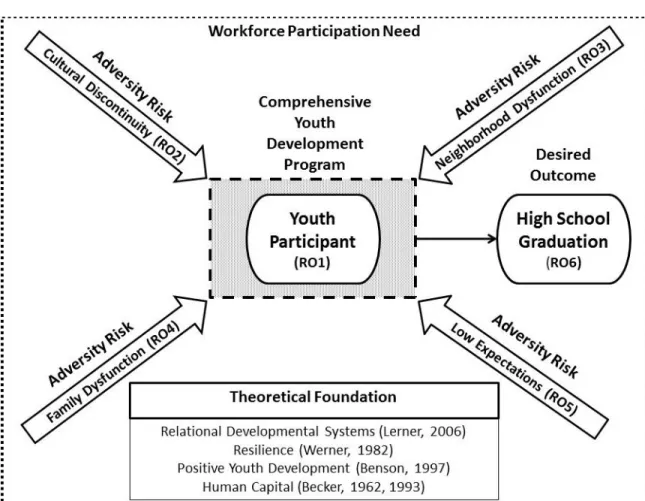
Figure 1. Theoretical framework ... 11
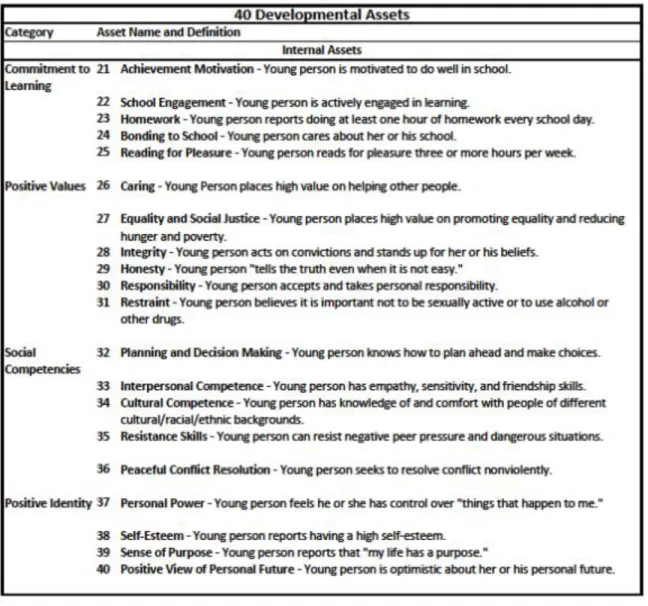
Figure 2. Forty developmental assets ... 39
CHAPTER I– INTRODUCTION TO THE STUDY
In 1855, Frederick Douglass is widely attributed to have written in a letter to a southern planter that "it is easier to build strong children than to repair broken men" (Kristoff, 2012). Douglass’ declaration is over 150 years old, but his words are still relevant to the contemporary struggle of young Black men seeking to overcome a myriad of obstacles to achieve a rewarding and happy life. Programs for crime prevention, addiction treatment, and prison rehabilitation abound and yet problems among America’s young Black men persist. Douglass’ words assert to the nation that it is better to develop youth who successfully cope with adversity and thrive rather than continue treating the symptoms of adult failure.
Chapter I introduces the research study and includes a discussion of the
importance of increasing high school graduation among Black male youth. The chapter provides background information on the state of high school dropout in the United States, a statement of the problem, the purpose, and significance of the study. The research objectives of the study, theoretical framework, study limitations, and delimitations are presented. Chapter I concludes with a summary of the study problem and purpose and an introduction to the chapters that follow.
Background
Black male youth in the United States drop out of high school at a higher rate than White male youth. According to the National Center for Education Statistics (NCES) (2016), between 1967 and 2013, for White and Black males, age 16 to 24 years, the gap in high school persistence has remained considerably higher for Blacks. In 1967, high school dropout rates were 14.7% for Whites and 30.6% for Blacks. In 1972, dropout
rates were 11.6% and 22.3% for White males and Black males respectively. In 2013, the last year of the report, dropout rates for White males decreased to 5.5% and 8.2% for Black males (NCES, 2016). While the decreasing trend line is encouraging, the consistent disparity in minority academic persistence remains troubling (Child Trends, 2015; Fry, 2014).
The Cost of Dropping Out
In the United States, education has long served as the gateway to the adult
workforce and to personal success and independence (Desilver, 2013; Fry, 2014; Griffin, Care, & McGraw, 2012). This linkage is noteworthy because the need for a highly trained national workforce continues to increase (Rothwell, 2011; Stewart, 2007). Menial, repetitious, low-skill jobs are fast-evolving into technical jobs that demand, not only the knowledge, but also the mental discipline learned in a challenging academic environment (Rothwell, 2011; Stewart, 2007). Workforce requirements are changing at the same time the nation experiences large-scale labor losses due to baby-boom
generation retirements creating a greater need for a skilled United States populous (DeLong, 2004; Herman, Olivio, & Gioia, 2003).
Considering the Black population makes up over 14% of the total United States population, closing the academic persistence gap and enhancing workforce participation rates is critical to the long-term health of both the nation and the Black population (Bureau of Labor Statistics, 2016a, 2016b; Herman et al., 2003; Leach & Williams, 2007). From the perspective of the creation and maintenance of useful skills and expertise among the American population, enduring minority dropout statistics reveal a
problem in national workforce development, and specifically, a problem in national minority youth development (Nafukho, Hairston, & Brooks, 2004).
Unique Challenges for Black Youth
Black male youth development literature identifies developmental obstacles that White male youth either do not face or are more successful in overcoming (Garrett, 1995; Harper & Davis, 2012; Morales, 2008a, 2008b, Ogbu, 2004; Thompson & Schwartz, 2014). Youth development researchers identify cultural differences, or “cultural
discontinuity,” between Black male youth experiences at home and in their neighborhood and issues commonly encountered at school as substantial factors in academic failure (Morales, 2008a, 2008b; Wilcox, 2015). Cultural discontinuity between home and school can include mismatched language and communication styles, differences in “acceptable” behavior, and personal-family-peer priorities that may not value academic achievement (Dumas & Nelson, 2016; Golden & Womack, 2016; Harper, 2009; Morales, 2016; Neblett, Rivas-Drake, & Umana-Taylor, 2012; Ogbu & Wilson, 1990; Wilcox, 2015). Cultural discontinuity can be a risk factor for Black male youth who fail to successfully acclimate to academic environments. Such young men often begin a self-defeating behavioral trend that ends in dropping out of school (Morales, 2008a, 2008b, 2016; Wilcox, 2015).
Neighborhood dysfunction is a second risk factor for Black male youth that includes adversities such as gang violence, poor infrastructure, and high rates of teen pregnancy or drug use. Family dysfunction is another risk factor and includes such adversities as missing or abusive parents, poverty, or no support for academic success. A final important risk factor for Black male youth are low expectations for performance
from teachers who often consider challenging academic work “beyond” the ability of minority students (Masten, 2014a; Morales, 2008a, 2008b, 2016; Sanchez-Jankowski, 2008; Werner & Smith, 1982). Additionally, adversity risk factors rarely occur in isolation, often overlapping, producing compound effects, and increasing the likelihood of negative outcomes (Morales, 2008a, 2008b; Masten, 2011; Rutter, 1987; Werner & Smith, 1982). The compounding of adversity risk factors requires interventions to focus on multiple risk factors at once (Overton, 2013). For example, a minority youth program cannot address family dysfunction without also addressing related problems with
neighborhood dysfunction because the two cannot be separated. Black male youth face a compounding, comprehensive set of challenges. Interventions intended to improve the probability of positive outcomes must use a comprehensive set of factors to develop resilience to adversity (Jain & Cohen, 2013; Morales, 2008a, 2008b, 2016; Masten, 2014a, 2014b, 2011; Werner, 1993, 2012; Werner & Smith, 1982).
Designing an Effective Intervention
Through the 1980s, strategies for youth development were commonly based on deficit models that assumed a youth who failed to finish school was somehow “broken” and needed to be “fixed” (Lerner, 2006; Lerner, DeStafanis, & Ladd, 1998). Following that assumption, researchers attempted to identify and define the causes of the dropout problem within the individual from a psychological stance and mitigation strategies addressing the failure focused on behavioral modification (Damon, 2004; Lerner et al., 1998; Lerner, Almerigi, Theokas & Lerner, 2006; Morales & Trotman, 2011). Beginning in the 1990’s, human development theorists began to approach the question of effective youth development from the viewpoint that youth are a valuable resource with knowable
strengths and talents to be nurtured and enhanced (Lerner et al., 1998). Positive youth development (PYD) evolved as a theory assuming all youth initially have the same ability to succeed and failures must be attributed to external factors (Damon, 2004; Lerner et al., 2005; Larson, 2000; Larson, Eccles, & Gootman, 2004; Masten, 2011; Morales, 2008a, 2008b; Morales & Trotman, 2011). If all youth begin with similar internal abilities, variations in outcomes are most likely due to differences in family support,
environmental surroundings, cultural strengths and weaknesses, and other external factors (Masten, 2011). PYD-based strategies seek to build upon a youth’s natural strengths to develop and enhance coping with external risk factors that threaten success (Larson, 2000; Larson et al., 2004; Masten, 2014a; Morales, 2016).
One successful intervention for improving youth academic persistence is mentoring (DuBois, Portillo, Rhodes, Silverthorn, & Valentine, 2011; Karcher &
Nakkula, 2010; Rhodes & DuBois, 2008). Youth mentoring programs commonly match adults with youth in a one-to-one relationship to model desired behaviors, teach methods and skills, and provide guidance and counseling (DuBois, 2005; Rhodes & DuBois, 2008). Research shows youth mentoring to be statistically significant for improving academic performance in youth; however, the relationship is statistically weak and the results short-lived once the intervention ceased (Masten, 2014a, 2014b; Rhodes &
DuBois, 2008; Rhodes, Spencer, Keller, Liang, & Noam, 2006). Furthermore, traditional mentoring methods have been more successful with White youth than with Black youth (Gordon, Iwamoto, Ward, Potts, & Boyd, 2009; Jackson, Sealey-Ruiz, & Watson, 2014; Morales, 2008a, 2008b; Ogbu & Wilson, 1990). Studies indicate cultural discontinuity risk is difficult to overcome with typical mentoring applications. Common mentoring
program limitations such as limited contact time between youth and adult and limited peer interactions weaken long-term program effectiveness (Gordon et al., 2009; Jackson et al., 2014; Morales, 2008a, 2008b; Ogbu & Wilson, 1990; Wilcox, 2015).
Study results suggest programs should include mentoring as one of many components of a more complex system of elements. Youth programs should be more comprehensive in design with multiple program elements working together to yield protective factors against the adversity risk routinely faced by Black male youth (Rutter, 1987). The extensive body of relevant literature calls for structured youth programs to consider racial identity and culture, rely on family and peers, commit to long-term adult-youth relationships, and focus on challenging goals with high expectations for results (Dumas & Nelson, 2016; Jackson et al, 2014; Maxwell & Connell, 2013; Morales, 2016; Ogbu & Wilson, 1990; Poland, Kim, Jang, Johnson, & Smith, 2013; Wang, Ferris, Hershberg, & Lerner, 2015).
Youth development scholars have studied a variety of programs, including 4-H, Big Brothers-Big Sisters (BBBS), intended to produce positive outcomes for at-risk populations (Herrera, Grossman, Kauh, & McMaken, 2011; Hershberg, DeSuza, Warren, Lerner, & Lerner, 2014; Gordon et al, 2009). Research into such programs and their outcomes yields theory-based recommendations for interventions to develop protective factors against adversity risks such as cultural discontinuity, family or neighborhood dysfunction, and low expectations (DuBois et al., 2011; Garmezy, 1985; Garmezy, Masten, & Tellegen, 1984; Gordon et al., 2009; Morales, 2016; Sanchez-Jankowski, 2008). Rutter (1987) names any process that produces protective factors for at-risk-youth a protective mechanism and likens protective mechanisms to the application of medical
immunizations. An immunization does not remove the risk of disease but exposes the patient to an infection in a way that enables coping and resilience development. Similarly, providing youth with challenging tasks that lead to increased success builds confidence and strong self-esteem. These traits tend to protect youth from adversity risks and promote positive outcomes such as high school persistence (Gordon et al., 2009; Jackson et al., 2014; Lerner et al., 2005; Morales, 2011, 2016; Ogbu & Wilson, 1990; Sanchez-Jankowski, 2008; Rutter, 1987).
Youth programs can function as protective mechanisms if they culturally align to participants’ needs and interests, develop and maintain long-term and trusting adult-youth relationships, present challenging requirements with high expectations for results,
provide noteworthy leadership opportunities, and offer meaningful peer interactions (Ashanti & Feliciano, 2012; Grossman & Rhodes, 2002; Jackson et al., 2014; Morales, 2016; Rhodes & Dubois, 2008; Rutter, 1987; Werner & Smith, 1982). The researcher applies the label comprehensive youth development program (CYDP) to youth programs containing such a diverse set of functions. A CYDP draws from existing program models such as PYD and expands them with additional theory-based elements such as required youth leadership and peer mentoring for all program youth. If a CYDP effectively promotes positive outcomes such as graduating high school, it may be considered a valuable tool for increasing the human capital value of minority youth and enabling their eventual workforce participation (Herman et al., 2003; Leach & Williams, 2007).
Statement of the Problem
American Black males drop out of high school at nearly double the rate of White males (NCES, 2016; Child Trends, 2015). Failure to complete a foundational high school
education is a primary contributor to failing to enter the national workforce (Weber, 2011). An increased number of individuals who fail to enter the workforce contributes to lost productivity, reduced innovation, and stunted economic growth for the American economy and a human capital cost that translates to unrealized monetary income, diminished personal identity, and weakened family security for Black Americans (Desilver, 2013; Griffin et al., 2012; Herman et al., 2003; Stewart, 2007).
Psychologists and human development professionals have extensively studied the phenomenon of minority high school dropout. Research focuses on youth mentoring programs and the body of youth mentoring research predominately examines one-to-one, adult-youth programs such as BBBS and 4-H with mixed results (Masten, 2014a, 2014b; Rhodes & DuBois, 2008). Adult-youth programs are relatively short in duration, tend to narrowly focus on single functions like mentoring, and provide limited opportunities for peer leadership and interaction (Herrera et al., 2011; Lerner et al., 2011; Rhodes et al., 2006). While studies demonstrate youth mentoring programs are effective for promoting positive outcomes, their effect is commonly characterized as statistically weak and susceptible to deterioration once the mentoring application ceased (Masten, 2014a, 2014b; Rhodes & DuBois, 2008; Rhodes et al., 2006).
Scholars question the effectiveness of mentoring programs for minority youth if programs are not tailored to minority culture and do not bridge gaps between home and academic environments (DuBois et al., 2011; Eby et al., 2008; Harper, 2009; Neblettet al., 2012; Morales, 2016; Ogbu, 2004). Minority youth development programs should be expanded to develop protective factors that promote resilience for the compounded effects of adversity risks such as cultural discontinuity, neighborhood dysfunction, family
dysfunction, and low expectations (Morales, 2016; Rhodes & Dubois, 2008; Rutter, 1987; Sanchez-Jankowski, 2008; Van Thompson & Schwartz, 2014; Werner & Smith, 1982).
Protective factors are more likely to develop in culturally aligned programs that include substantial peer interactions, quality youth-adult relationships, and challenging requirements with high expectations for achievement (Ashanti & Feliciano, 2012;
Grossman & Rhodes, 2002; Jackson et al., 2014; Morales, 2016; Rhodes & Dubois, 2008; Rhodes & Lowe, 2008; Rutter, 1987; Werner, 1993, 2012; Werner & Smith, 1982). Examining the influence of a CYDP on positive outcomes can provide useful insights for designing future youth interventions. A CYDP that develops protective factors to enable Black male high school graduation represents one possible avenue for reducing minority unemployment, and increasing overall workforce productivity and innovation (Desilver, 2013; Griffin et al., 2012).
Purpose of the Study
The purpose of the study is to determine the perceived influence of a CYDP for promoting Black male high school graduation by examining the experiences of Black male CYDP members who successfully graduated high school. The study will examine how a CYDP might enable coping with adversity risk and promote desirable outcomes. The results of this examination are intended to inform the design and implementation of youth interventions intended to increase high school persistence among Black male youth.
Significance of the Study
This study is significant for considering minority high school graduation a workforce problem beyond a simple question of equity or diversity. The relevance of Black male high school graduation is considered from the perspective of lost benefits to the nation, to communities, and to individuals which can potentially derive from the skills, talent, and imagination of Black Americans. This study examines the potential effect of theoretical youth development processes for improving Black male youth high school graduation to possibly increase workforce participation, that eventually improve national workforce effectiveness and Black American opportunities.
Research Objectives
Research objectives frame the study. The following objectives were established based on a review of the relevant literature:
RO1 Describe the study participants in terms of age, years since high school graduation, length of time spent in a CYDP, and leadership positions held within the CYDP.
RO2 Determine the perceived influence of a CYDP on the cultural discontinuity experienced by Black male youth program members.
RO3 Determine the perceived influence of a CYDP on the neighborhood dysfunction experienced by Black male youth program members.
RO4 Determine the perceived influence of a CYDP on the family dysfunction experienced by Black male youth program members.
RO5 Determine the perceived influence of a CYDP on the low neighborhood and school expectations experienced by Black male youth program members.
RO6 Determine the perceived influence of a CYDP to promote high school persistence among Black male youth program members.
Theoretical Framework
Figure 1.Theoretical framework
Note. The framework illustrates a CYDP application serving as a protective mechanism against adversity risk and promoting the
desired outcome. The framework is underpinned by four foundational psychology and human development theories and surrounded
by the overarching need for maximum workforce participation.
The study’s theoretical framework illustrates the posited relationship between Black male youth, adversity risk, a CYDP intervention, protective factors, and the desired high school graduation outcome. The youth psychology and human development
provide the foundation for creating a CYDP. Youth development programs can build protective factors that instill resilience to adversity risk and promote desirable, positive outcomes. The study research objectives assessed various concepts and
recommendations derived from these theories. Figure 1 is a graphical representation of the theoretical framework.
Adversity related risks like cultural discontinuity between home and academic environments, neighborhood and family dysfunction, and low expectations for
achievement from teachers and adults reveal a connection between individual youth and their home, neighborhood, or school environment, or “context” (Lerner, 2006; Morales, 2008a, 2008b; Rutter, 1987; Sanchez-Jankowski, 2008; Van Thompson & Schwartz, 2014; Werner & Smith, 1982). RDST is an important departure from traditional theories of human development that considers the individual-context relationship critical for understanding inter-related developmental outcomes (Lerner, 2006; Lerner & Schmid-Callina, 2014). The concept of context in RDST includes the living environment, culture, time in history, and people who surround an individual to influence actions and decision-making (Lerner, 2006; Lerner & Schmid-Callina, 2014). According to RDST,
implementing interventions designed to affect youth outcomes must consider the
individual-context link as unbreakable by examining the complexity of the individual, the complexity of the context, and the interchanges between the two. To understand an individual’s reaction to an experience, one must understand the surrounding context and its interactions with the individual (Lerner, 2006; Lerner & Schmid-Callina, 2014). This approach is particularly valuable when considering minority youth who often face
Ogbu & Wilson, 1990). Youth development scholars apply the principles of RDST by identifying culturally aligned programs as important for addressing problems in a youth’s neighborhood, family, and school.
The study examines the influence of a CYDP for enabling Black male youth to cope with adversity and graduate high school. This examination considers PYD theory to be an integral concept enabling youth to cope with adversity and achieve positive
outcomes such as high school graduation. PYD differs from traditional human development strategies by rejecting a deficit-based focus to change youth’s wrong choices and instead highlight their strengths and abilities to design processes for promoting desirable, positive outcomes (Benson, 1997; Larson, 2000; Lerner, 2006). PYD stresses youth must be considered a resource to be led and developed rather than a problem to be treated. This study of a CYDP focuses on how to enhance a youth’s inner strengths and abilities rather than how to correct problems. Quality adult and peer relationships that mentor and encourage good choices together with challenging
requirements with high expectations for results that stretch an individual youth’s abilities and build confidence are central elements of PYD (Benson, 1997; Larson et al., 2004; Lerner et al., 2005). A CYDP expands on the PYD model by emphasizing youth leadership for every program member and high challenge activities to build confidence and skills. These challenges align with Morales’ (2008a, 2008b) mitigation strategies for overcoming risks of low-expectations commonly found in minority schools and some intervention programs.
Empowering the ability to overcome substantial adversity risk is a primary goal of minority youth development. Resilience theory suggests resilience as a key factor for
avoiding risk behaviors and achieving positive outcomes (Garmezy, 1985; Rutter, 1987; Werner & Smith, 1982). Resilience is not as much an inherited trait or quality as a descriptor for the ability to adapt to and cope with substantial adversity. Scholars claim a youth development program can function as a mechanism for building resilience when it provides protective factors that offset specific risk such as a dysfunctional neighborhood characterized by violence and widespread drug abuse (Garmezy, 1985; Garmezy, Masten, & Tellegen, 1984; Goleman, 2006; Masten, 2011; Morales, 2008a, 2008b; Rutter, 1987; Sanchez-Jankowski, 2008; Werner, 1993, 2012; Werner & Smith, 1982).
Limitations
Research limitations are factors outside the researcher’s control that may affect study results and conclusions. A limitation of the study is the potential inaccuracy between the actual details of a lived experience and how a program participant might recall, interpret, and relay an experience to the researcher. Smith et al., (2009) explain that individuals do not discuss real experiences. Rather, they provide a recollection and interpretation of the experience. Smith and Osborn (2016) add that researchers, by necessity, apply a second layer of interpretation during analysis of interview data by filtering the participant’s responses through the researcher’s own frames of reference to report results and draw conclusions. For this study, the researcher’s personal experience with the proxy CYDP aides both data collection and analysis by providing familiarity with program elements, terminology, and processes. A second limitation is the small population of Black male youth who meet the study criteria, some 22 individuals, so the sample size is small.
Delimitations
Study delimitations are those factors chosen by the researcher to limit the scope of the research. First, the study examines only Black male youth to limit variation due to differences between minority groups. Second, the study examines Black male youth from a single urban area who completed the proxy CYDP and graduated high school in the last five years to form a purposefully homogenous sample as described by Smith et al. (2009). Third, the study focuses on high school graduation as a measurable indicator of academic achievement. Last, the study examines a single program as a representative of possible CYDP interventions to limit the number of program elements being considered.
Definitions of Terms The following terms are defined for the study:
Cultural Discontinuity – The real and perceived differences in such things as language and communications methods, “acceptable” behavior, work ethic, dress, and personal priorities between informal home and neighborhood context and formal academic context (Morales, 2008a, 2008b).
Family Dysfunction – A family situation in which conflict, violence, and neglect or abuse on the part of individual parents occur continually and regularly (Kaslow, 1996).
Human Capital – The accumulated knowledge, skills, talent, and experience enabling an individual to act in new ways that provide economic value and productivity (Becker, 1962, 1993).
Neighborhood Dysfunction – A community situation in which unemployment, substance abuse, crime, violence, neglected infrastructure, and a sense of hopelessness are pervasive (Sanchez-Jankowski, 2008).
Positive Youth Development – A youth development philosophy that considers youth from an asset-perspective as a resource to be developed according to their
individual potential instead of from a deficit-perspective as a problem to be managed and mitigated (Benson, 1997).
Protective Factor – A contextual feature that enables successful adaptation to and coping with adversity risk rather than removing or insulating its effects (Werner & Smith, 1982).
Protective Mechanism – Developmental processes that yield protective factors against adversity risk (Rutter, 1987).
Relational Developmental Systems – The connection between an individual’s complete environment or “context” including personal culture, historical setting, neighborhood culture, information patterns, and sense of self (Lerner, 2006).
Resilience – A dynamic process for successfully adapting to and overcoming the effects of considerable adversity (Werner, 1982).
Risk Factor – An overt characteristic of environmental context, existing in either the past or present, that tends to promote undesirable, negative outcomes (Bernard, 1991).
Social Capital – The interactions, relations, behavioral norms, and sanctions that shape individual and group actions and decisions (Coleman, 1988).
Summary
The health of the American economy depends, in part, on development and maintenance of a skill national workforce. A large percentage of Black male youth face substantial adversity during development which contributes to many failing to complete high school and subsequently failing to enter the American workforce. The loss to the
workforce of the inherent ingenuity, talent, and skill of Black males is a human and youth development problem. A review of the relevant literature outlines the evolution of youth development as a science and provides a sketch of the challenges faced by youth
development practitioners attempting to improve minority youth outcomes. The
literature describes resilient youth who adapt to adversity and achieve positive outcomes and offers effective youth program elements for developing resilience to adversity risk.
The details of the study are presented in five chapters. Chapter II provides a review of the relevant scholarly literature. Chapter III presents the research methodology including the study participants, data sources, data collection techniques, and data
analysis procedures. Chapter IV presents participant demographics and interview results. Chapter V provides a discussion of study conclusions and recommendations for
application and additional research. Finally, a set of appendices and reference list are provided.
CHAPTER II – REVIEW OF THE LITERATURE
This chapter provides an examination of the scholarly literature related to youth development programs that may promote Black male high school persistence. The first section describes foundational human development theories including HCT and SCT. The theoretical foundation establishes the concept of human capital, including youth, as a resource to be developed and underpins the study problem that high school dropout rates reveal a loss of innovation and value, both to the nation and for individual Americans. Social capital is presented as a vital concept for building human capital by providing supportive relationships and RDST calls for a holistic focus on both the individual his or her ecological context as an inseparable system.
The second section reviews resilience and PYD theories. Youth who adapt to substantial adversity and avoid vulnerabilities to risk and then achieve positive life outcomes are considered resilient. Viewing youth as strong and talented resources with capacity to overcome adversity is central to PYD and contrasts sharply to traditional deficit models of youth development. Deficit models focus on environmental risk factors and attempt to minimize their influence while largely ignoring a youth’s strength and adaptability.
The final section discusses youth mentoring and reviews specific considerations for mentoring young minority Black males presented in the literature. Youth
development scholars present mentoring as an effective intervention for at-risk youth to promote academic achievement and persistence. Mentoring is a common youth program element but results are mixed depending on program elements and application. Youth development researchers list common characteristics of successful programs including
trusting and long-duration relationships, youth-focused goals, high expectations, and meaningful tasks. Minority mentoring researchers add cultural and contextual alignment as necessary characteristics of effective minority youth mentoring stating there is no one-size-fits-all solution. Youth development interventions must align with minority culture and help bridge any real or perceived gaps between a youth’s home context and
“mainstream” academic context. Positive focused, culturally aligned youth development programs are presented as potentially effective interventions for promoting resilience and yielding desirable outcomes including academic persistence. The chapter summary introduces the study methodology discussion in Chapter III.
Youth Development Processes
Until the mid-twentieth century, economists defined business capital in terms of tangible assets such as buildings, machinery, and raw materials (Becker, 1993).
However, classical theories of economics and psychology were not able to fully explain observed variation in the performance of the U.S. economy so the generic term “residual factors” was used to account for un-identified effects in economic calculations (Nafukho et al., 2004). Schultz (1961) introduced the concept of “human capital” as a means of more accurately accounting for variation in workforce skills, innovation, and
productivity. Human capital is the accumulated knowledge, skills, talent, and experience enabling an individual to act in new ways that provide economic value and productivity (Becker, 1962, 1993; Schultz, 1961; Tan, 2014).
Human Capital Theory
Neoclassical economic thought forms the foundation of HCT where individuals maximize benefits to themselves via personal investments in skill enhancements such as
education and training that provide positive returns in income and professional advancement (Becker, 1962, 1993; Tan 2014). HCT does not view education and training investments as one-time events. Rather, investments in learning span an individual’s lifetime to include primary and secondary schooling, on-the-job training, advanced professional degrees, and formal apprenticeships (Becker, 1962, 1993; Tan 2014). Increased knowledge and ability provided by learning investments yields returns to the individual measured in increased earnings, higher life satisfaction, increased productivity, and upward mobility. Returns to an organization are measured in increased productivity, increased innovation, and higher personnel morale and retention (Becker, 1962, 1993; Swanson & Holton, 2009; Tan, 2014). If investments in learning provide such positive outcomes for individuals and organizations, then failing to invest in learning yields substantial negative outcomes.
Individuals who fail to graduate high school represent unrealized potential for innovation, productivity, and process improvement within organizations and the nation (Leach & Williams, 2007; Swanson & Holton, 2009; Weber, 2011). High school dropouts represent lost personal income, family wealth, and community prosperity for individuals (Fry, 2014). HCT emphasizes leaning and skill training for developing human expertise in preparation for entering the workforce and thereby guides efforts to increase high school persistence by providing a theoretical foundation for emphasizing education (Becker, 1993; Nafukho et al., 2004; Swanson & Holton, 2009; Tan, 2014). Learning and having the discipline to learn are important achievements for an individual seeking to enter the workforce and a high school diploma is considered a minimum requirement for reaching that goal (Weber, 2011). Building human capital is a complex
process that demands many levels of support for the individual that are commonly provided by his or her social network of family, friends, and community (Becker, 1962, 1993; Coleman, 1988).
Social Capital Theory
HCT describes the changes that occur within an individual that enhance his or her personal and organizational value (Becker, 1962, 1993; Nafukho et al., 2004; Tan, 2014). SCT defines social capital as interactions, relations, and behavioral norms that shape individual and group actions and decisions (Akdere, 2005; Coleman, 1988). Social capital is created through changes between people in the form of purposeful interactions and relations (Coleman, 1988). Like human capital, social capital is intangible, existing in three social structures: obligations and expectations, behavioral norms, and
information channels (Coleman, 1988).
According to SCT, when an individual or group does something for another, the transaction produces an expectation and obligation to be repaid by the recipient sometime in the future (Coleman, 1988). Social obligations normally flow between all parties in a relationship but vary in quantity and value. Effective social transactions are conducted in families, schools, peer groups, and community organizations and tend to strengthen bonds between individuals and within groups. Social bonds are founded on
trustworthiness to repay obligations to the satisfaction of both parties and only exist in trusting relationships (Coleman, 1988; Hezlett & Gibson, 2007). Trusting relationships, in turn, guide individuals toward acceptable behaviors and provide direction for
Behavioral norms establish boundaries for acceptable decision making and
impose constraints on undesirable conduct. When considering the problem of Black male high school dropout rates, guidance and pressure provided by group norms can help a youth choose the socially desirable outcome of staying in school (Akdere, 2005; Coleman, 1988; Polson, 2013). For example, parent involvement in a youth’s school work, adult guidance to remain in high school, and peer choices to stay in school are examples of social capital norms. Behavioral sanctions deter behavior and choices that do not conform to group norms and take the form of criticism, chastisement, and even ostracizing from the group (Coleman, 1988). Social sanctions promote high school persistence by imposing penalties for dropping out of school or even considering or discussing dropping out of school (Akdere, 2005; Coleman, 1988).
Creating social capital may be especially important for youth who lack natural sources of social capital such as a strong, supportive family. In such cases, individuals rely on what Coleman (1988) describes as multiplex relationships with family, peers, neighbors, church members, teachers and others who develop trust and provide social capital support and guidance. One or more person(s) who has earned a youth’s trust and formed an important bond can provide the social capital required to help bound a youth’s behavior and choices (Akdere, 2005; Coleman, 1988; Hezlett & Gibson, 2007; Polson, 2013). Developing and maintaining complex relationships may be an important avenue for providing needed social capital to youth with limited natural sources of social capital but who seek human capital learning investments (Coleman, 1988; Rhodes, 2005). When discussing factors for promoting human capital development, scholars emphasize the importance of not only relationships between youth and surrounding people but also the
relationship with his or her surrounding environment often referred to as “context” and how that relationship may dictate effective interventions for promoting positive outcomes (Lerner, 2006).
Relational Developmental Systems Theory
High school dropout, for any segment of society, has often been studied by human development scholars as a singular achievement outcome, in isolation from all other outcomes (Lerner, 2006; Overton, 2013). In such studies, high school dropout was not examined as an integral part of a complex system of problems, merely as a singular phenomenon to be understood and treated. Theories of human development traditionally followed dualist, either-or models such as well-known nurture versus nature theories of child development (Lerner, 2006; Lerner & Schmid-Callina, 2014). Overton’s (2013) exposition on “Relationalism” describes dualist theory reliance on “Cartesian-Split-Mechanistic paradigms” in which complexity is devolved into its simplest elements. Following the lead of other science disciplines such as chemistry, these models view human development as a whole that must be broken down into its pure elements (e.g. an individual’s genomic structure) to reveal the causes of good and bad outcomes (Lerner & Schmid-Callina, 2014; Overton, 2013). Researchers compartmentalize dependent
variables such as physical, emotional, and intellectual outcomes and study them in isolation from potential influence on one another. The error in this approach, according to Overton and others, is the failure to adequately account for the back and forth,
reciprocal effects between variables in determining developmental outcomes (Lerner, 2006; Lerner & Schmid-Callina, 2014; Overton, 2013).
Recent trends have moved away from such dualist models that view developmental factors in isolation and toward models that conceptualize human development as a system in which individual factors constantly interact each other and with the environmental context (Lerner, 2006; Overton, 2013). RDST emphasizes the connection between an individual’s complete environment or “context” that includes personal culture, historical setting, community culture, information patterns, and sense of self (Lerner, 2006; Lerner et al., 2011; Lerner & Schmid-Callina, 2014; Overton, 2013). Human development is viewed as a fluid, mutually dependent relationship between the individual and his or her constantly evolving context (Lerner et al., 2011). RDST draws from an individual’s entire life-span of experience and relations in order to explain variations in developmental outcomes and includes models of biological, ecological, cultural, historical, physical, social, and behavioral factors when examining the individual-context relationship (Lerner & Schmid-Callina, 2014).
Lerner (2006) emphasizes the strength and importance of the individual-context link by identifying RDST as a fused developmental system. In contrast to traditional Cartesian models that split individual development outcomes from related environmental or cultural factors, Overton (2013) uses holism, the principle in which “wholes define parts and parts define wholes” (p. 98) to describe RDST. For example, a scene in nature is composed of a set of parts: trees, mountains, snow, animals, clouds. However, each individual part is linked and can only be understood according to its relation to the scene: snow on the mountains, squirrel in a tree, sun behind the clouds, etc. Likewise, a
community is composed of several parts and those parts must be examined both
RDST contains three principles to guide the study of individual-context relations; the identity of opposites, the opposite of identities, and the synthesis of the whole
(Overton, 2013). Identity of opposites claims that researchers can only understand the whole through a study of its related parts, meaning to understand the outcome of an individual youth, one must examine each of the youth’s context elements. The opposites of identity claims that researchers can only understand contextual parts through an understanding of how those parts fit into the whole individual-context relation and development outcome. Finally, synthesis of the whole requires the study of the outcome’s individual-context parts be accomplished without splitting them from each other or examination in isolation. These principals emphasize the importance of the link between the individual and his or her context and frame future study of developmental outcomes (Lerner & Schmid-Callina, 2014; Overton, 2013).
Minority youth development research reports examining and considering individual-context relations is critical to understanding outcome variance (Morales, 2008a, 2008b; Ogbu & Wilson, 1990). The interaction between Black male youth and family, peers, school, and neighborhood are different from interactions for White
counterparts and RDST says the differences must be understood and accounted for before conclusions can be drawn about academic developmental processes and outcomes
(Morales, 2008a, 2008b; Ogbu & Wilson, 1990). Youth development researchers who apply RDST to the question of Black male achievement examine characteristics of both Black male youth and Black male youth context to conceptualize how individual-context relations enhance or inhibit successful adaptation to adversity risk (Lerner & Schmid Callina, 2014; Morales, 2008a, 2008b; Ogbu & Wilson, 1990; Overton, 2013).
Understanding the uniqueness of the Black male individual-context relationship enables an understanding of Black male coping with adversity risk and how that coping might lead to either positive or negative outcomes (Lerner, 2006; Morales, 2008a, 2008b).
Developing Strength to Overcome Adversity
Child psychologists and human development theorists have long debated the strength and adaptability of children challenged by adversity during development
(Bernard, 1991, 1997; Damon, 2004). Early philosophy, much of it homespun, held that children were strong and able to adjust to adversity (Bernard, 1991, 1997; Damon, 2004). However, following the end of the Second World War, the field of child developmental psychology rapidly expanded and researchers, observing the trauma of post-war Europe and Asia advanced the fragile child model (Damon, 2004). By the late 1940s, youth were believed to be vulnerable to the effects of hardship and to suffer serious mental and emotional shock because of meeting challenges for which they were not prepared (Bernard, 1991, 1997, Masten, 2014a, 2014b). Human development researchers
borrowed from medical science to form a pathology model in which developmental risk is studied as a disease or contagion with the goal of identifying a prevention or
immunization (Bernard, 1991, 1997; Werner & Smith, 1982).
Youth Resilience
Continued research found the fragile child model did not hold up, predominantly because large numbers of children in study samples grew up in high risk environments but did not experience negative outcomes (Bernard, 1991, 1997; Masten, 2014a, 2014b; 2014a). Garmezy (1985), in his review of recent youth development work, notes that nearly half of the youth in one study who grew up in adverse conditions escaped those
conditions as adults, and Bernard (1991) repeated a commonly observed statistic that “while one in four children with alcoholic parents develops alcohol problems, three out of four do not” (p. 3). Beginning in the 1970s, child development studies repeatedly
challenged the fragile child view leading to the opposing invulnerable child model (Bernard, 1991; Gramezy, 1985; Garmezy et al., 1984). Researchers found that, instead of being highly fragile, youth regularly displayed a substantial ability to adapt to and even thrive in adverse context (Bernard, 1991, 1997; Brody et al., 2013; Werner & Smith, 1982).
Developmental researchers initially theorized that adaptable youth possessed an extraordinary trait or inner strength enabling them to overcome the negative effects of an adverse context (Luthar, Cicchetti, & Becker, 2000). Borrowing from the field of
psychiatry, the term ego-resiliency was coined to describe personal traits, including resourcefulness, flexibility, and confidence, considered essential for successful adaptation to highly adverse context (Luthar et al, 2000). In the early 1980s, youth development scholars distinguished ego-resiliency from resilience by defining ego-resiliency as an innate trait that may exist with or without the presence of adversity. Resilience was defined as a dynamic process for successfully adapting to and overcoming the effects of considerable adversity (Masten, 2014a, 2014b; Masten, Best, & Garmezy, 1990). Werner (2012) insists scholars not focus on successfully adaptive individuals as resilient but instead focus on resilience development as a life-long process. The presence of adversity is a required element of resilience development and an important difference from
resiliency (Luthar et al., 2000; Masten, 2014a, 2014b). Successful adaptation to adversity with resultant positive outcome was determined to be a common ability rather than
special quality and resilience researchers asserted that resilience processes should become a focus of youth development study (Goleman, 2006; Luthar et al., 2000; Masten, 2014a, 2014b). Werner (1993) found that children who successfully adapted to adversity were not unusually talented, but displayed an ability to effectively recognize, utilize, and improve upon the skills they did have to achieve their goals.
The literature originally used the terms invulnerability, invincibility, and survivor, to describe successful adaptation to high levels of risk to achieve positive outcomes, but resilience has become the commonly accepted name (Bernard, 1997; Masten, 1991, 2001; Yates & Masten, 2004). At its core, resilience research is the study of success (Morales, 2010). Resilience describes three discrete processes: (a) achieving desirable outcomes despite being at high-risk for failure, (b) sustaining good performance despite prolonged adversity, and (c) overcoming a highly traumatic event (Masten 2001; Masten, et al., 1990). Resilient youth develop normally and often thrive despite adversity where deficit-based theory would predict negative outcomes (Brody et al., 2013; Jain & Cohen, 2013). Resilience models stress competence development through positive interventions to nurture and enhance individual strengths and effectively mitigate the effects of
destructive, high-risk context (Brody et al., 2013; Yates & Masten, 2004; Werner, 2012).
Risk Factors
The literature underscores two factors for considering an individual as resilient: (a) presence of substantial risk to development, and (b) resultant successful
developmental outcomes (Bernard, 1991, 1997; Masten, 2014a, 2014b; Masten et al., 1990). Risk is an overt characteristic of context, existing in either the past or present (Bernard, 1991). Successful outcomes achieve normative developmental or competence
criteria such as maintaining grade-level reading and math skills, avoiding drug addiction or unwed pregnancy, and achieving expected school grade advancement (Brody et al., 2013; Bernard, 1991, 1997; Masten, 2014a, 2014b; Masten et al., 1990). Resilience researchers describe successful outcomes as “good enough” functioning that leads to personal well-being rather than striving to achieve potentially unrealistic superior performance outcomes (Masten, 2014a; Masten et al., 1990). When considering long-term stress, as is common in low-SES environments, resilience may be better understood as coping, implying resilient youth maintain status quo functioning despite constantly high levels of stress (Jain & Cohen, 2013; Masten et al., 1990).
Masten (2014a) states, risk events exist on a gradient from high to low and may be singular and highly traumatic such as an airplane crash or house fire, or of long
duration and varying intensity such as living in a high-crime neighborhood or attending a poorly resourced and dysfunctional school. In each case, traumatic events may have substantial effects on long-term outcomes for youth and necessitate developing resilience to mitigate risk (Jain & Cohen, 2013; Masten et al., 1990). Resilience research shows adversity risk factors are correlated to undesirable, negative outcomes and include low-socioeconomic status (SES), family and community dysfunction, and several biological factors including low birth-weight and parental schizophrenia (Jain & Cohen, 2013; Masten, 2014a, 2014b). However, studies show SES factors are better predictors of risk than biological factors (Masten et al., 1990).
Risk factors rarely exist in isolation. Rather, multiple risk factors commonly occur in combination and tend to combine effects, sometimes additively, sometimes exponentially (Masten et al., 1990). Risk factors are further differentiated as either
proximal or distal depending on their impingement on an individual youth (Baldwin, Baldwin, & Cole (1990). Proximal risk factors, such as lack of clothing, inadequate food, or a violent parent effect youth personally on a daily basis (Masten et al., 1990). Distal risk factors, such as low-SES or minority status, may surround a youth and touch on multiple contextual aspects but not affect him directly (Masten et al., 1990). This distinction is important when considering mitigating interventions (Baldwin et al., 1990, 1990; Masten et al., 1990). Risk factors can be offset by factors that protect youth from risk and related negative outcomes; for example, good parenting might mitigate low-SES distal risk or strong faith-community relations may offset violent home proximal risk (Baldwin et al., 1990; Jain & Cohen, 2013; Masten et al., 1990; Werner, 1993, 2012; Werner & Smith, 1982).
Protective Factors
Werner and Smith (1982) state the presence of risk is a probability, not a guarantee of outcome and the presence of protective factors reduces the probability of risk related negative outcomes. The fact that a youth is born a Black male may increase the chance of eventually dropping out of high school but does not guarantee it, and adding protective factors to his context decreases the chances of that outcome (Masten et al., 1990; Werner, 1993, 2012). Protective factors do not remove risk or insulate youth from the effects of adversity; rather, protective factors enable successful adaptation to adversity to promote positive outcomes (Masten et al., 1990; Werner, 1993, 2012; Werner & Smith, 1982). Protective factor variables include competent parenting, caring adult interaction, positive peer relations, academic success, positive esteem,
self-efficacy, sense of control, and strong faith in a higher power (Masten et al., 1990; Werner, 1993, 2012; Werner & Smith, 1982).
According to Werner (1993), successfully adaptive youth establish close, trusting, positive relationships with at least one adult who provides support and encouragement, serves as a mentor, and may fill in as a surrogate parent. Adults filling this role may be grandparents, aunts or uncles, teachers, coaches, neighbors, youth volunteers, or church ministers (Werner, 1993). The important elements are depth of trust and longevity of the relationship (Werner, 1993). Resilient youth participate in extra-curricular activities that require cooperation, peer interaction and support, structure and boundaries, and provide opportunities for leadership and challenge (Werner, 1993). Werner (1993) found that faith in a higher power and strong relations with a faith group is one of the most influential protective mechanisms for youth, although no specific religion or denomination proved statistically significant (Werner, 1993).
In his foundational youth resilience research, Garmezy (1985) divided protective factors into three sets of variables: (a) personality features, (b) family features, and (c) external support features. Zolkowski and Bullock (2012) found five characteristics of protective factors prominently in the literature: (a) self-regulation, (b) self-concept, (c) family conditions, (d) community supports, and (e) faith. Werner and Smith (1982), in their seminal longitudinal study of adaptation among high-risk children on Kauai, similarly divided protective factors into five clusters of variables having similar characteristics. The first includes temperamental characteristics that enable positive interactions with adults and peers. Cluster two encompasses the ability to realistically self-evaluate and utilize talents. Cluster three relates to the style and competence of a
youth’s parents. Cluster four includes effects of non-parent adults who interact with youth such as Grandparents, teachers, and coaches. Cluster five relates to opportunities presented at major life transitions such as high school graduation, marriage, or child-birth that changed the trajectory of a youth’s life (Werner, 1993, 2012). Given the apparent importance of protective factors in helping high-risk youth adapt to and overcome the effects of adversity, youth development researchers needed to understand how those factors might be produced and cultivated.
Protective Mechanisms
In the quest for effective risk adaptation techniques, research has largely focused on identifying protective factors (Rutter, 1987; Werner, 1993). While categorizing and testing lists of protective factors provides scholars sets of variables for study, such lists do not provide guidance for developing and nurturing protective factors within youth (Rutter, 1987). Rutter (1987) and Werner (1993) both state that efforts to mitigate the effects of adversity in high-risk youth must focus on processes instead of variables. Rutter (1987) explains that any given factor may act as either a risk or a protector depending on the individual-context interaction and that researchers should focus on protective processes or “protective mechanisms” instead of roughly defined protective factors. Werner (1993) states that the study of resilience is the study of the individual-context interplay, derived from developmental systems, and is therefore a study of processes.
When studying resilience, Rutter (1987) alters his research to focus on
vulnerability to adversity and explained the distinction by saying that an individual may be more or less vulnerable to the same risk at different points in his or her life. The
ability to cope with a similar risk varies depending on contextual circumstances so relevant protective factors may also change (Rutter, 1987). Vulnerability and protection are opposite ends of the same concept and the identity of a factor as vulnerability or protection is only revealed when combined with a specific individual-context interaction and varies as interactions vary (Rutter, 1987). Since the identity of a vulnerability-protective variable may change depending on the risk situation, Rutter (1987) explains that “it is the process or mechanism, not the variable, that determines the function” (p317).
Protective mechanisms yield protective factors that promote successful adaptation to high-risk contexts (Rutter, 1987; Werner, 1993). Rutter (1987) compares the effects of protective mechanisms to medical immunizations that does not completely remove the risk of disease; rather they enable the body to overcome exposure to infection by building up resistance to its attack. Protective mechanisms do not help a youth avoid adversity, they instead enable youth to develop resilience through the acquisition and application of protective factors (Rutter, 1987; Werner, 1993).
When discussing protective mechanisms, Rutter (1987) links his work with Werner’s (1993) fifth cluster of protective factors by emphasizing the importance of understanding turning points for youth development research. According to Werner (1993) turning-points are central because events that occur at that point in development determine the path of all events that follow. For example, choosing to avoid pre-marital sex during high school clearly effects a youth’s life-path by not interrupting his
development with early, unplanned parenthood. The application of protective factors such as strong faith-based norms and trusted adult guidance help mitigate vulnerabilities
to peer pressure, resulting in a positive outcome (Rutter, 1987; Werner, 1993). While the existence and effect of the protective factor is important, an understanding of the
mechanism to develop and apply that factor is critical for effective youth development (Rutter, 1987; Werner, 1993). Beyond merely cataloguing protective factors, youth development scholars must understand how those factors are established, how they produce the desired protective effect, and how they might change a youth’s life trajectory (Rutter, 1987).
Rutter (1987) highlights four protective mechanisms as especially effective for mitigating risk. The first is reduction of risk impact in which exposure to or severity of risk is limited to the coping skills of the youth. The second mechanism is reduction of negative chain reactions in which interventions limit risk following an initial risk event (Rutter, 1987). For example, the presence of a trusted peer mentor can offset the effect of another peer breaking trust. Such a breach of trust might normally be expected to lead to social withdrawal but having a consistent relationship may break the chain of events. The third mechanism is having positive self-esteem and self-efficacy produced through secure and rewarding personal relationships and successful personal accomplishments (Rutter, 1987). The fourth protective mechanism is opening opportunities for
development and achievement (Rutter, 1987). Research points to education as a good example where success at one level opens opportunities at the next such as good grades and test scores in high school yielding acceptance and scholarship offers to college (Rutter, 1987). In contrast, dropping out of school negates opportunities to advance and develop marketable skills, thereby increasing vulnerability to risk related to low-SES (Rutter, 1987).