SURFACE
SURFACE
Dissertations - ALL SURFACE
1-1-2015
Implementation of School-wide Positive Behavior Supports in the
Implementation of School-wide Positive Behavior Supports in the
Neoliberal Context in an Urban Elementary School
Neoliberal Context in an Urban Elementary School
Deanna AdamsSyracuse University
Follow this and additional works at: https://surface.syr.edu/etd Part of the Education Commons
Recommended Citation Recommended Citation
Adams, Deanna, "Implementation of School-wide Positive Behavior Supports in the Neoliberal Context in an Urban Elementary School" (2015). Dissertations - ALL. 300.
https://surface.syr.edu/etd/300
This Dissertation is brought to you for free and open access by the SURFACE at SURFACE. It has been accepted for inclusion in Dissertations - ALL by an authorized administrator of SURFACE. For more information, please contact
Abstract
This research is a two-year ethnographic case study of a School-wide positive behavior supports (SWPBS) school leadership team, at an urban elementary school in central New York, during their first two years implementing SWPBS. SWPBS is a framework for implementing a school-wide behavior management system that focuses on proactive rather than reactive behavior interventions. SWPBS was recommended in No Child Left Behind and Individuals with
Disabilities Education Act as a positive alternative to punitive discipline policies and strategies and as a tool for reducing office discipline referrals and suspensions, as well as improving academic achievement.
Using in-depth interviews, participant observation, and policy analysis, I investigate the factors that influence an urban elementary school’s ability to implement SWPBS, and how factors related to school-based reforms mandated by No Child Left Behind affect an underfunded urban school, serving mostly students of color, as it implements SWPBS. In addition I examine how schools, administrators and teachers negotiate expectations for fidelity of implementation, which is seen as central to successful SWPBS, given the local conditions and the day-to-day realities of one urban school. Although the focus of the study is the implementation of SWPBS in an urban school, the research is cut short when the school closes for poor academic
performance and budgetary reasons. The study concludes with an analysis of the school closure due to neoliberal education reform.
Implementation of School-wide Positive Behavior Supports in the Neoliberal Context in an Urban Elementary School
by
Deanna L. Adams
B.S., University of Texas at Austin, 1996
M.S., State University of New York at New Paltz, 2001 C.A.S., Syracuse University, 2011
Dissertation
Submitted in partial fulfillment of the requirements for the degree of Doctor of Philosophy in Special Education.
Syracuse University August 2015
Copyright © 2015 Deanna L. Adams All Rights Reserved
v
Acknowledgments
As I complete my tenure of ten years at Syracuse University I have many
acknowledgements to make. I first would like to thank the wonderful people on the Morgan SWPBS school leadership team for allowing me to enter their space and take part in a process that was both rewarding and frustrating on so many levels. It is hard to witness another school fall to failing neoliberal policies. In addition, I want to thank my comrades who have remained a support through various stages of our program together: Corrie Burdick, Jessica Bacon, Melissa Smith, Kate McLaughlin, Juliann Anesi, Fernanda Orsati, Ashley Taylor and Beth Metcalf. Without your kudos and commiserating I would not have come through this processes as successfully and intact as I did.
I want to thank my committee, Beth Ferri, Marjorie DeVault, and Alan Foley for all the work you put in and the faith you had in me. Your insight and grammar checking gave me focus and encouragement that this was a possible enterprise. Thank you Alan for stepping in at the last minute. Marj, you always made me feel good about the work I was doing, even when I didn’t feel good myself. Beth, thank you for teaching me about the intersections of race, gender, and dis/ability and for turning me onto critical special education. You have been a great role model in the classroom and encouraged me in my scholarship. Thank you Doug Biklen for letting me be your 201 Teaching Assistant for two years. I learned so much about inclusion and presuming competence. Thank Jeanne Schmidt, Michelle Mondo, and Maithreyee Dube for helping me through the bureaucracy that is academia.
Rachael Zubal-Ruggieri and Cyndy Colavita, thank you for the love you always showed me, even in moments of crisis and despair; you do not know how much it meant to me. Thank you Steve Taylor for the years of support, hugs, talks on the patio, advice, and wisdom. I miss
vi
you and I know you are still on my committee and everpresent in my activism and scholarship. Olivia McAdams, my beautiful, intelligent, political, neuro-queer daughter, I could not be any prouder of you. Thank you for inspiring and motivating me academically.
A special thank you to Liat Ben-Moshe. You have been my biggest fan and without you I would never finished this project. You would never let me quit, even though I pushed to the edge, your love and strong will kept me going. I will never be able to thank you enough for your commitment to me and my work.
vii Table of Contents Abstract ... i Acknowledgments ... v List of Figures ... x Chapter One ... 1 Introduction ... 1
Coming to the Research Project ... 3
My Research Questions ... 5
Summary of Chapters ... 6
Chapter Two... 9
Literature Review... 9
Historical Segregation of Students of Color ... 10
Segregation through Special Education ... 10
Segregation Through School Discipline Policies ... 16
Scientifically Based Research in Education ... 19
Response to Intervention and Its Connection to School-wide Positive Behavior Supports... 21
What is School-wide Positive Behavior Supports? ... 23
Importance of Data Collection in SWPBS ... 26
The use of Token Reinforcement in SWPBS ... 28
Culturally Relevant Behavior Management and SWPBS ... 31
Dis/ability Critical Race Studies (DisCrit) ... 40
Conclusion ... 47
Chapter Three... 49
Methodology ... 49
Research Questions ... 51
Research Design: Ethnographic Case Study ... 51
My Position/ Self-location ... 57
Internal Review Board and Ethical Considerations ... 58
Setting... 59
Participants ... 60
Data Collection ... 61
Interviews ... 62
viii
Data Analysis ... 64
Conclusion ... 66
Chapter Four ... 67
Lived experiences with the implementation of SWPBS ... 67
Previous Experience with SWPBS ... 67
The Training ... 74
Training the team ... 75
Rollout for Staff ... 77
Student Roll Out ... 81
Where are the Interventions? ... 84
The Value of a Morgan Dollar ... 85
Implementing the Interventions. ... 90
Functional Behavior Assessments and Special Education ... 96
Teacher Buy In ... 100
Conclusion ... 102
Fidelity v. Reality in a School Struggling to Stay Afloat ... 106
Key Features of School-wide Positive Behavior Supports ... 106
School-wide Evaluation Tool: SET... 109
The Matrix ... 111
Importance of Data Collection in SWPBS and for School Decision Making ... 113
P.I.R. Proactive Incident Report... 116
Matrix and Cultural Relevance ... 124
Critiques of SWPBS- Data Driven or Data Only? ... 125
Chapter Six... 130
School Closure and Neoliberal Education Reform ... 130
The Inevitable Path to Closure: NCLB and Neoliberal Reform ... 130
Budget Deficit and Staff Deficit... 134
Impact of the Closure Decision on Teachers ... 136
Impact of the Closure on the Community ... 140
“The Closer” ... 142
Administrative Turnover ... 144
ix
Conclusion: Reform and its disastrous consequences ... 148
Chapter Seven: ... 153
Conclusion and Implications... 153
Reform Initiatives are not a Choice ... 155
Reform and closure. ... 158
Key Features for Successful Implementation... 160
Limitations of Study ... 163
Conclusion ... 165
REFERENCES ... 168
APPENDIX A: IRB Consent Form ... 181
APPENDIX B: Semi-structured interview guide ... 184
APPENDIX C: Morgan’s SET ... 186
APPENDIX D: Morgan’s Matrix ... 188
APPENDIX E: Permission to use PBIS data from the national site ... 189
CURRICULUM VITAE ... 190
RESEARCH AND TEACHING INTERESTS ... 190
HONORS, AWARDS AND GRANTS ... 190
SCHOLARSHIP ... 195
Publications ... 195
Presentations ... 195
x
List of Figures
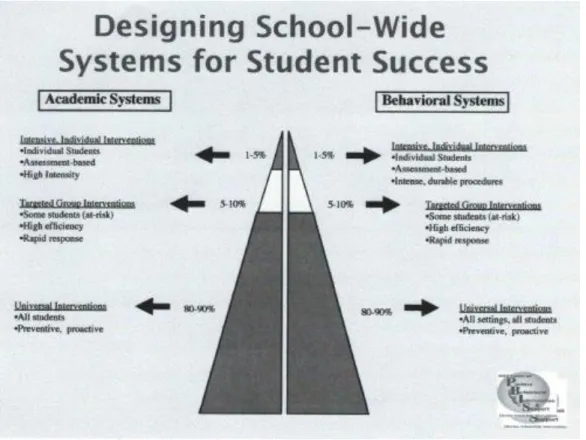
Figure 2.1 Designing School-Wide Systems for Student Success 23
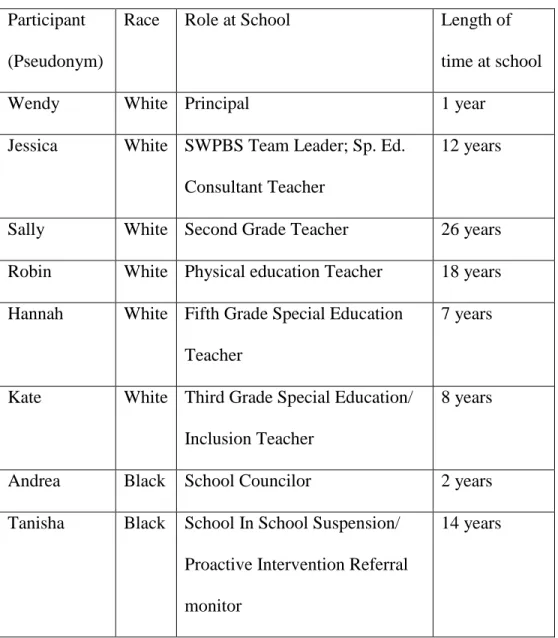
Table 3.1. Participant Demographics 61
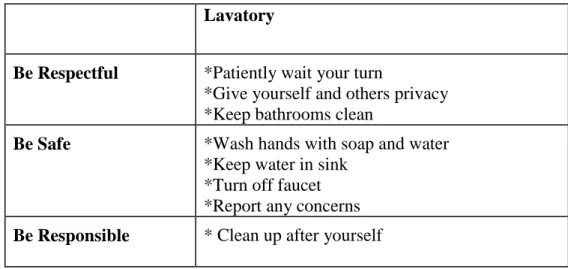
Figure 4.1. Morgan Matrix for Restroom 83
Figure 5.1. Replica of the heading of the Morgan’s Discipline Data Report 116
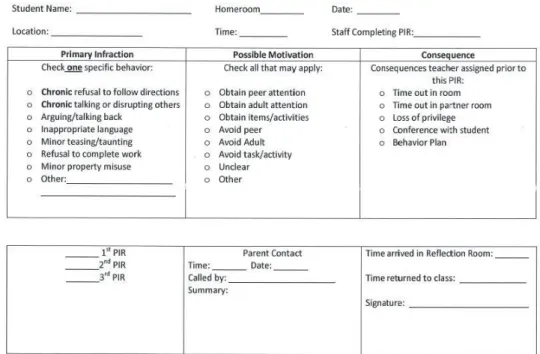
Figure 5.2. Morgan Elementary PIR form 118
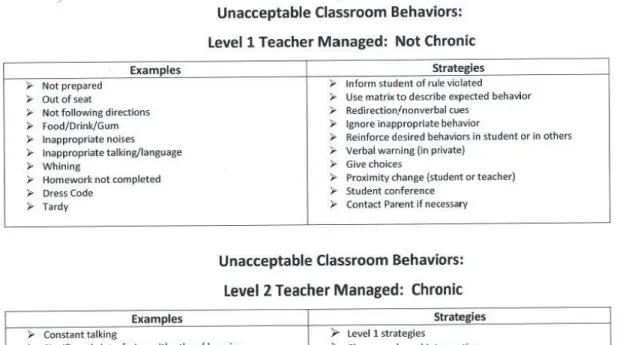
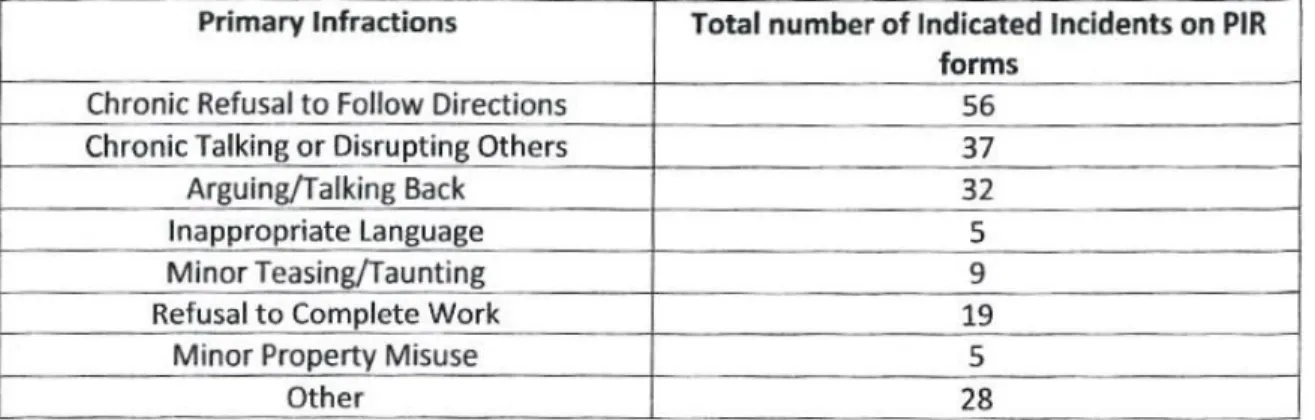
Figure 5.3. Unacceptable Behaviors for Level 1 and Level 2 Consequences 121 Figure 5.4. Record of the Number of Proactive Incidents Reports and the Reason 122 Figure 5.5. P.I.R. Proactive Incident Report 122
Chapter One Introduction
As a child I had a difficult time in school. I often found myself sitting in the hallway or outside of the principal’s office. I have a learning disability and during my education in middle and high school, I found myself struggling more and more with the academic work. Not knowing how to get help I became increasingly frustrated at school. I began to avoid going to school by either pretending to be sick, skipping classes, or getting in trouble. I would rather spend time in detention than sit through an English class. I had been labeled as a slacker and a troubled kid, however I was someone who wanted to do well in school, to have teachers like me, and to have friends in school. I barely graduated from high school and it took me five years before I decided to try community college. Community college is where I realized I was smart and that I loved to learn. It is during my time in community college that I decided to become a teacher. I was accepted to the education program at the University of Texas at Austin and was on the Dean’s list many times. I made it my goal to make sure that marginalized students would have at least one teacher that would build a relationship with them, help them realize what they could do, and advocate for them. I earned a dual certification in elementary and special education and began my career as a high school special education teacher, teaching students in a segregated setting who were labeled as emotionally disturbed.
It was during my second year teaching in a rural school district that I began advocating for my students to be educated in the regular education classes instead of being sent to my classroom. This did not make me very popular and I often ate lunch in my classroom with my students. I began to realize that my students were increasingly being sent to the office, as well as being suspended from school. It was only after I began to advocate for my students more
vigorously during nexus hearings (before a student is suspended from school a meeting is conducted to determine if the student’s conduct is a manifestation of their disability) that I realized I was probably not going to get tenure. I had aligned myself with the students and tried to change a structure that allowed students with disabilities to be disproportionately disciplined for minor infractions based on what seemed to me to be the whim of the a few teachers. I resigned and took a position as a special education teacher at a residential (correctional) facility for boys in central New York.
The residential facility housed 25 residents (inmates) which were 20 African-Americans, two Whites, and three were Latino; all of them came from the New York City area. Most of the students were performing below grade level academically and more than half had individual education plans (IEPs). Although it was difficult to get academic records from the schools the students last attended, their school discipline records followed them everywhere.
The facility was located in a rural area of central New York making it difficult for families to visit their children. The odds of them being released from the facility were stacked against them mostly because of the criteria they had to meet to be released, one of which was to have consistently good behavior at the facility and another was to show they had strong
relationships with their families. This criterion could be difficult because it meant that the resident’s family would have to visit. The distance between the facility and New York City was far and most of the residents had families who cannot afford to travel or take time off of work. I learned how systemic racism created an (in)justice system where children of color were left in facilities six months to a year past their release date because they did not meet the criteria on an objective survey. By systemic racism, I am referring to the ways racism works structurally through institutions like education and not only on an individual level (by suggesting who is
racist or not in these systems) but throughout the very structures and systems in place. Unfortunately, my input was of little value when it came to advocating for their release.
I then left my position at the facility and went back to teaching in public schools. I again worked with students labeled as emotionally disturbed as a teacher in a segregated classroom located in an adult vocational center. I also taught as a homebound instructor for students who had been suspended from school. In these positions, I continued to advocate for my students and worked to get students back in their home school. I also worked with parents to help them use their child’s individualized education plans and Individuals with Disabilities Act (IDEA) as leverage to get their child back in school and to have access appropriate services. I was frustrated with a school system that would suspend a kindergartner for throwing a block or for pulling the principal’s tie while being restrained by him. When the mother came to pick up her child, the child was in the office crying with his shirt ripped. I wanted to make a difference.
After years of fighting the system that disregarded what I said, as well as parents’ involvement in their children’s education, I decided to pursue a PhD in special education. I hoped that a PhD would allow me the opportunity to make changes in education policy in regards to the way marginalized students and their families are disenfranchised in schools. It is due to my educational history as a child and a teacher that I took a special interest in oppressive structures that affect discipline policies in schools, particularly with regard to special education and minority populations. My position in this research is informed and motivated by this location.
Coming to the Research Project
The idea for my research project came from my interest in discipline policies and behavior management and how these two things affect students with disabilities and other
marginalized populations in our public schools. In addition, it came from my own experiences as a teacher dealing with punitive systems of behavior management and an unjust judicial system and as a student teacher supervisor observing behavior management styles across a variety of educational settings.
In an effort to find alternative ways of meeting students’ behavioral needs in non-punitive ways, I took an interest in school-wide positive behavior supports (SWPBS). SWPBS is a
framework for implementing a school-wide behavior management system that focuses on proactive rather than reactive behavior interventions. SWPBS was recommended in No Child Left Behind and Individuals with Disabilities Education Act as a positive alternative to punitive discipline policies and strategies.
This research project came to fruition after I learned that school-wide positive behavior supports (SWPBS) would be implemented at several of the elementary schools where I had observed student teachers. The behavior authoritarian management styles that I witnessed being used in schools were, in my perception, particularly harsh and humiliating to the students. It made me uncomfortable to watch the interactions between the teachers and the students in these classes, a majority of whom were African-American. As the supervisor of student teachers placed in these classrooms, I felt as though I could not offer suggestions to the host teachers about how to manage their classrooms, however I did conference with the student teachers I worked with about alternative ways to manage their classrooms and more appropriate strategies they could use than the ones they were seeing.
I knew the statistics for students of color in special education and as the recipients of harsh discipline policies (Kim, Losen, & Hewitt, 2010) and, as someone who worked in a correctional facility for boys, I want to put an end to exclusionary tactics that can push students
out of school. In research literature, SWPBS has been shown to be successful in the reducing office discipline referrals and suspensions, in addition to organizations, such as Dignity in Schools Campaign, who are fighting to end the school-to-prison pipeline are demanding that schools use SWPBS (Dignity in Schools Campaign, 2011). I was hopeful that the SWPBS framework would provide the necessary structure to create systemic change in the way teachers interacted with students, in particular, marginalized student populations.
I was interested in a particular school, Morgan1 Elementary, which was located in an urban school district in New York State. I had observed student teachers in Morgan and I had already established a connection with teachers at the school. Before the school began the process of implementing SWPBS during the 2010 – 2011 school year, I had been given permission to do participant observations of the SWPBS school leadership team meetings, conduct interviews with teachers, staff, and administrators participating in the implementation process. The premise for this research is discussed further in Chapter Three.
My Research Questions The following research questions helped guide my investigation:
1. What are the factors that influence the implementation of SWPBS in an urban elementary school?
2. How do factors related to school-based reforms mandated by No Child Left Behind impact an underfunded urban school serving mostly students of color as it implements SWPBS?
1
3. How do schools, administrators and teachers negotiate expectations for fidelity of implementation, which is seen as central to successful SWPBS, given the local conditions and the day-to-day realities of one urban school?
My research questions were based on the process of implementing SWPBS at Morgan
Elementary and much of the groundwork for implementation took place during the first year I was at the school. Halfway through the first year of SWPBS implementation, the school district threatened to close Morgan Elementary due to budgetary issues. Although I continued to collect data around these research questions, the fact that Morgan was put on a list of schools that were going to close while I was in the midst of my data collection no doubt influenced the findings, as I discuss this further in Chapter 6. Thus, in addition to the above questions about implementation of SWPBS at Morgan, I was also interested in the ways school closure (or its threat), in
particular, impacted the implementation of SWPBS.
Summary of Chapters
In this introductory chapter I have provided a personal narrative that sets the background for my interest in this research topic. I chose to conduct an ethnographic case study of Morgan Elementary, which was implementing SWPBS during the 2010 – 2011 school year. I wanted to learn how SWPBS was implemented in schools and what strategies were employed that would turn around a school with high numbers of discipline referrals. In the rest of this chapter, I provide brief description of what is contained in each chapter.
In Chapter Two, I review literature on the history of segregation of African American students in regular and special education. I connect this history to school exclusion and the school to prison pipeline. In addition, I include a discussion of comprehensive school reform, scientifically-based research, and school-wide positive behavior supports.
In Chapter Three I describe my research methodology for this project, which is an ethnographic case study using qualitative methods of participant observation, semi-structured interviews, as well as documents in my data collection. I lay out the design of my research, which includes the background, setting, information on participants and how I collected data. In this chapter I also demonstrate how my analysis incorporated elements of institutional
ethnography.
The data are presented in three chapters. In Chapter Four, Lived Experiences with the Implementation of SWPBS, I follow the SWPBS school leadership team as they began to
implement the school-wide behavior management system. Through observations and interviews, I explored experience and training in school-wide positive behavior supports effected the
implementation outcomes of SWPBS in Morgan Elementary. I also noted how positively stated behavioral objectives posted around the school did not lead to positive behavior outcomes when there was not a lot of teacher buy-in for another new initiative.
In Chapter Five, Fidelity Vs Reality in A School Struggling to Stay Afloat, I provide an analysis of what is called for in PBIS Implementers Blueprint to establish SWPBS with fidelity. I compared this “blueprint” to the realities of Morgan’s implementation phase.
In Chapter Six, School Closure and Neoliberal Education Reforms, I follow the events that took place as the community and teachers learned that Morgan Elementary was to close. I examined reactions from the teachers through interviews, as well as those of community members, which I gathered from online news organizations. In addition, I critique neoliberal education reforms, which negatively impacted many urban schools.
I conclude the study with Chapter Seven, which gives an overview of the study. In addition to an analysis of the findings, the conclusion provides the limitations of the study as well as its implications.
Chapter Two Literature Review
The elementary school I have focused my research on is in an urban school district in a midsize city in Central New York. I provide more specific details and demographics in the next chapter, but not surprisingly, the students in this school, as well as in the district, were mostly students of color. At the time of the study, 10% of student population in the district was White and 79% was black, mostly from low-income families (New York State Education Department [NYSED], 2012). At this particular school it was estimated that in the 2010-2011 school year, 81 to 90% of students were from families receiving public assistance, and 84% of the students received free lunch (NYSED, 2012). Because of the stark reality of over representation of minority children in this school, it is necessary to provide some background on the issue of historical racial segregation in general education and over-representation of students of color in special education, more specifically.
This chapter provides a review of the literature regarding the use of special education as a tool for resegregating African American students in education, as well as litigation and
legislation to end the over-representation of students of color in special education. In addition, a review of the literature is provided on the disproportionate numbers of students of color and students with disabilities being excluded from school through harsh discipline policies. This is followed by literature on comprehensive school reform, response to intervention, school-wide positive behavior supports, the use of token economies, cultural relevance, and disability studies in education.
Historical Segregation of Students of Color
Harry and Klingner (2006) noted that before the civil rights movement, children with disabilities and minorities received an inadequate education or none at all. Practices based on eugenic ideologies, or beliefs about racial inferiority and the genetic basis of certain disabilities, particularly intellectual and/ or emotional disabilities, led to sorting children into specific educational settings, further justified by the use of intelligence testing. Although the Brown v. Board of Education decision should have ended racial segregation in schools, Whites found other ways to keep students of color segregated by providing “specialized” instruction for students of color classified as having learning or emotional deficits (Connor & Ferri, 2005).
The sorting of students through tracking systems was set up by school districts after Brown v. Board, supposedly to improve educational opportunities for African American students, many of whom were reportedly experiencing a high rate of academic achievement problems compared with White students. Connor and Ferri (2005) provided the example of school officials in Washington, DC, in 1955, placing over 24 percent of the African American student population in special education classrooms as opposed to 3 % of the White student population (p. 108). Ability tracking, based on standardized testing, resulted in the
overrepresentation of African American students in the lower ability tracks (Reschly & Bersoff, 1999) and in special education classes that continues to this day.
Segregation through Special Education
Segregating students of color through special education continued through the 1950s, and into the 1960s, when there was an increase “in both the number of students considered
emotionally disturbed (ED) educated by public schools and the number of corresponding special education teachers for the students” (Danforth & Smith, 2005, p. 26). When the Education for
All Handicapped Children Act (Public Law 94-142) was signed into law, the federal government estimated that 1.75 million children with disabilities were not being educated in public schools (Zettel & Ballard, 1979). In addition, a study conducted by the National Rural Research and Personal Preparation Research Project in 1980, after P.L. 94-142 was enacted, found there was a “478% increase in the number of students labeled Emotionally Disturbed (ED) in American public schools in less than 5 years” (Danforth & Smith, 2005, p. 27). Students labeled as ED were, and are for the most part, educated in segregated classrooms or in separate schools within school districts. These segregated programs were a new addition to a well-established ability tracking system that maintained the separate and unequal educational structure within the school building (Danforth & Smith, 2005).
In terms of legal protections, Title VI of the Civil Rights Act of 1964 was supposed to make sure that “[n]o person in the United States shall, on the ground of race, color, or national origin, [be] excluded from participation in, be denied benefits of, or be subjected to
discrimination under any program or activity receiving Federal financial assistance” (42 U.S.C. § 2000(d)). In addition, in 1964, the Elementary and Secondary Education Act was established and Title I of the act addressed the specific educational needs of children from low-income families and targeted funding to schools with high concentrations of low-income families. This funding was used to create Head Start programs, as well as remedial math and reading programs in schools to improve the quality of education for poor children (Title I). In total, these civil rights acts and educational policies improved educational opportunities for poor and minority children; however, they did not succeed to the extent that could have been possible, due to the widespread mis/identification of minorities as intellectually deficient and emotionally disordered.
In the 1960s, researchers began to notice that African Americans were overrepresented in programs for students with labels of “mental retardation” and later “learning disabled (LD)”, and that these students were most often placed in segregated settings (Garda, 2005). As civil action and grassroots advocacy increased, the public and Congress became increasingly aware of the problem. The government established the Office of Civil Rights (OCR) to monitor and enforce Title VI. It collected data on school enrollment and student placement and was later given authority to monitor and enforce Section 504 of the Rehabilitation Act of 1973 (Russo & Talbert-Johnson, 1997). The OCR was very successful in enforcing desegregation in southern schools with the percentage of African American students in segregated settings being reduced from 98% in 1964 to 8.7% in 1972. However OCR was not so successful in dealing with segregation taking place within schools (Glennon, 2002). In fact, the OCR was sued in 1970 by civil rights advocates for not enforcing Title VI in schools that were resistant to desegregation. As Harry and Klinger (2006) stated, “...sometime in the early 1970s, the special education
movement and the desegregation movement officially collided. Those whom the society rejected, and excluded from its public schools, would meet in the special education setting” (p. 11). Civil Rights and Disability Lawsuits in Education
Most of the lawsuits involving desegregation within schools in the 1970s were brought under Title VI of the Civil Rights Act as cases of racial discrimination in education. The use of Title VI began to decline as means to desegregate students within the schools, as disability laws, such as Section 504 of the Rehabilitation Act, took effect and became more effective tools to increase the integration of students with disabilities, including those of color (Losen &Welner, 2002). Section 504, enacted in 1973, stated that “no otherwise qualified handicapped individual in the United States.... shall, solely by reason of his handicap, be excluded from participation in,
be denied the benefits of, or be subjected to discrimination under any program or activity receiving Federal financial assistance..." (29 U.S.C. 794 § 504). Section 504 should have aided OCR’s efforts in addressing discrimination of minorities in school settings; however,
overrepresentation of minorities in segregated programs continued (Garda, 2005).
U. S. Congress passed the Education for All Handicapped Children Act (EAHCA) during a time when wrongful identification of minority students was thought to be "the
major controversy in special education" (Russo & Talbert-Johnson, 1997, p. 140). Between 1974 and 1978, OCR documented overrepresentation of African Americans in “educable mentally retarded” classes and in 1979, OCR established the Panel on Selection and Placement of
Students in Programs for the Mentally Retarded. The panel concluded that the overrepresentation of students of color in special education could be attributed in part to bias in the tests used to measure students’ academic and intellectual capabilities, although no single factor could be identified (Russo & Talbert-Johnson, 1997, p. 140).
Congress did not fully acknowledge overrepresentation of African Americans in special education until the Individuals with Disabilities Education Act (IDEA) was reauthorized and amended in 1997. Garda (2005) stated that when Congress amended the IDEA they recognized that,
…Poor African-American children are 2.3 times more likely to be identified by their teacher as having mental retardation than their White counterpart[s].... Although African-Americans represent sixteen percent of elementary and secondary enrollments, they constitute twenty-one percent of total enrollments in special education. (p. 1077)
Unfortunately, the reauthorization of IDEA had little effect and in a 2002 study, conducted by the National Research Council, researchers again verified that African Americans were over represented in special education programs (Garda, 2005, p. 1077).
In the 2004 reauthorization, IDEA was again amended and re-titled the Individuals with Disabilities Education Improvement Act (IDEIA) to align with the No Child Left Behind (NCLB) act. At the time, President Bush stated, “The Individuals with Disabilities Education Improvement Act of 2004 will help children learn better by promoting accountability for results, enhancing parent involvement, using proven practices and materials, providing more flexibility, and reducing paperwork burdens for teachers, states and local school districts” (New York State Education Department [NYSED], 2011). The new IDEIA along with NCLB have provisions to specifically address overrepresentation of minorities in special education and to hold school districts accountable, not only for overrepresentation but for exclusionary practices, such as suspensions and expulsions that lead to high dropout rates (Losen, 2011). However, it appears that the only accountability measures that schools are actually held to are the one addressing academic progress. Thus, overrepresentation of students of color in special education has continued.
Congress mandated that the National Academy of Sciences conduct a study on the factors accounting for the overrepresentation of minorities in special education programs for
the “mentally retarded.” As Garda (2005) described, “the resulting 1982 study by the National Research Council (NRC) concluded that African-Americans were represented in the mentally retarded category disproportionate to their numbers in general education” (Garda, 2005, p. 1076). There were no changes in the statistics between 1978 and 1992, and by 1992,
“African-Americans were twice as likely to be classified as mentally retarded as their White peers, and 1.46 times more likely to be classified as emotionally disturbed” (Garda, 2005, p. 1076).
As I discuss in more depth below, there is no one agreed upon definition of what gets to be categorized as “emotional disturbance.” Harry and Klingner (2006) discussed how the category of emotionally disturbed has been defined and assessed differently across states due to projective testing, which heavily rely on clinical judgment and interpretation, as well as
subjective rating scales. The resulting lack of reliability and consistency makes it difficult to compare data across states. According to Tisdale (2003),
Emotional disturbance has been a technical term but has not been in the exclusive domain of special education. The term has been used by various disciplines including clinical psychology, psychiatry, social work, and the juvenile justice system. The use of the term by these different disciplines has contributed to the murky nature of its existence—to borrow a marketing idea, there has been brand confusion. (p. 87)
As a result, just like with the category of intellectual disability, students of color are
overrepresented in the category of ED. According to the U.S Department of Education, 473,633 students were identified with ED and receiving special education services in the 2000-2001 school year. Moreover, this same report, stated that African-American students are 1.68 times more likely than White students to be identified with ED. According to the National Health Interview Survey, the ED label is applied disproportionately among low-income families, with public insurance or not insured, and those who are African-American or Latino.
As with any category under special education, there are detrimental consequences to labeling. Merrell and Walker (2004) documented that students with ED are more likely to be placed in restrictive settings; have a high dropout rate; and within three years of leaving school,
50% of students with ED have at least one arrest. The vast majority of research on
overrepresentation does not address ED or analyze various disabilities as distinct categories, including at the district or federal level. These patterns led me to address below more broadly the relationship between education, special education and the forces of referral and suspensions that push out some students out of school (and not others).
Segregation Through School Discipline Policies
There is a strong correlation between special education placement and school push-out and/or drop-out. Kim, Losen, and Hewitt (2010) wrote that,
Although only approximately 9 percent of students aged six to twenty-one have been identified as having disabilities that impact their ability to learn, a survey of correctional facilities found that nationally approximately 34 percent of youth in juvenile corrections had been previously identified as eligible for special education pursuant to the Individuals with Disabilities Education Act (IDEA). (p .51)
Losen and Gillespie (2012), from the Civil Rights Project at UCLA, reported that during the 2009-2010 school year, even though every racial group was represented in the data on
suspensions, none were as significant as the number of African American students, whereby one out of every six was suspended as opposed to White students whereby only one out of 20 were suspended. In addition, “... students with disabilities are suspended about twice as often as their non-disabled peers. The rates for all racial groups combined are 13% for students with
disabilities and 7% for those without disabilities” (p. 14) and the risk for African American students with disabilities being suspended “is a full 16 percentage points higher than for White students with disabilities” (Losen & Gillispie, 2012, p. 16). The statistics indicate that even with the protections given to students with disabilities under IDEA, NCLB, and Section 504, districts
continue to push students with disabilities, especially those of color, out of school and deny them the right to a free and appropriate education.
When I worked as a special education teacher in a juvenile detention center in Central New York, more than half of the residents had been in special education and 98% were African American and Latino from New York City and surrounding areas. Many of the students I worked with were labeled as emotionally disturbed or learning disabled, although I did have a few
students who were labeled as having cognitive disabilities. Their school records, when we were able to get them, came in thick binders showing repeated behavioral offenses, such as disrespect to authority figures, physical altercations, as well as skipping school, which led to multiple suspensions.
The students in this juvenile facility were a product of the school to prison pipeline, which “refers to the confluence of education policies in under resourced public schools and a predominantly punitive juvenile justice system that fails to provide education and mental health services for our most at-risk students and drastically increases the likelihood that these children will end up with a criminal record rather than a high school diploma” (Kim, Losen, & Hewitt, 2010, p.4). Repeated suspensions due to harsh discipline policies, such as zero-tolerance, create gaps in a student's education causing them to fall behind in their academics, and decreasing their chance of passing the high-stakes tests needed to graduate (Gregory, Skiba, & Nogurea, 2010). A lack of social and academic support within the school system and community often leads to frustration and anger, which manifests itself in behavior considered aberrant by those in
authority, but which can be considered justified when looked at through a critical lens (Gregory, Skiba, & Nogurea, 2010). The pressure for schools to meet their annual yearly progress through high-stakes testing and new policies linking teacher performance to student success on state tests
has led to increase of some students being pushed out of schools, which is ironic under a policy whose name is NCLB.
Overrepresentation of minorities in special education has been an issue for four decades. It was hoped that with the passage of NCLB and IDEIA school districts would be able to reduce the achievement gap between students of color and White students and stop the bias in special education placement. According to Blanchett, Klinger, and Harry (2009),
African American children with disabilities have not received schooling opportunities comparable to those of their White peers. Segregation on the basis of race, poverty, disability/perceived disability and poverty, and the intersection of race and poverty is still pervasive in our American education system as a whole and in special education
programs in particular. (p. 378)
Urban schools are subjected to the actions of those in power, which are based on White middle class values and perceptions of people of color, culture, poverty, and family dynamics. The actions or inactions of those with political power have led to schools that are under-funded, resulting in “a high turnover of teaching and instructional staff, a high number uncertified or provisionally licensed teachers, limited access to technology, few educational specialists” (Blanchett, Mumford, & Beachum, 2005, p.72) and the results have a devastating effect on the academic achievement of students and overall performance of schools. Through NCLB’s Comprehensive School Reform Program, under-performing schools are labeled as “failing schools” because the students have not met standardized benchmarks set by the state for academic subjects and behavioral expectations. Schools can be punished by a loss of funding, school restructuring, or school closure. In the following section I discuss neoliberal school reform policies that rely on quantitative data to measure the success of students, teachers, and
schools. I explain the meaning comprehensive school reform and how response to intervention and school-wide positive behavior supports are intervention strategies that are promoted as a way to improve academic achievement.
Scientifically Based Research in Education
There continues to be a debate in education about what constitutes scientifically-based research (SBR), since the passage of the No Child Left Behind Act of 2001 (Eisenhart & Town, 2003; Slavin, 2002; Riehl, 2006). Bush’s major education policy initiative, NCLB, mentioned scientifically-based research 110 times, defining it as "rigorous, systematic and objective procedures to obtain valid knowledge." Specifically, SBR was defined as research that "is evaluated using experimental or quasi-experimental design" (U.S. Congress, 2001). Although findings based on experimental design is a valued form of research, policies that stipulate that there is only one method for valid research is limiting. Articulations of SBR elevated the randomized control study as the gold standard for educational research, which has had far-reaching effects in terms of federal funding for research and programs in education.
Slavin (2002) argued that, “At the dawn of the 21st century, educational research is finally entering the 20th century. The use of randomized experiments that transformed medicine, agriculture, and technology in the 20th century is now beginning to affect educational policy.” He further surmised that, “Education is on the brink of a scientific revolution that has the potential to profoundly transform policy, practice, and research” (p. 15). Slavin's (2002) article, however, was written prior to the adoption of Education Science Reform Act (ESRA) in 2002 and his hopes for strong language regarding scientifically-based research were not realized. ESRA (2002) was put up for public review and the definition of what constituted scientifically-based research that could be federally funded was broadened. The ESRA no longer promoted
quantitative research as the only scientifically-based research method; it also removed the requirement that “studies always test hypotheses" (Eisenhart & Towne, 2003, p. 34). Even so, quantitative methods are still viewed, by traditional education scholars, as the favored method for showing scientific evidence of success in educational programming and it is for this reason that comprehensive school reform requires that all schools use intervention methods that have been proven successful through scientifically based research.
NCLB and IDEIA have both promoted the use of Response to Intervention (discussed below) and SWPBS to provide a structure for identifying students “at-risk” of failing and providing supports for students. SWPBS has been recommended by organizations who are fighting to change discipline policies that push-out students are promoting SWPBS as an alternative. For example, Dignity in Schools Campaign, a national organization, put up a fact sheet on their website displaying the success of PBS as well as other alternatives such as restorative justice.
Losen (2011) also supports SWPBS and cites that, “Several prominent civil rights organizations have been seeking greater federal support for PBIS [PBS], and several child advocacy groups point to successful PBIS-based interventions” (p. 14). The hope is that these supports and programs would reduce the number of students identified for special education and reduce suspension and expulsion rates, therefore keeping students in school and reducing the achievement gap. This is one of the reasons why it is crucial to examine these programs on the ground and see whether their implementation in an urban setting with an over-representation of students of color does what the policy aims for, especially decreasing the number of students of color in special education. I will discuss response to intervention, an evidence based reform strategy, and how it intersects with SWPBS.
Response to Intervention and Its Connection to School-wide Positive Behavior Supports The response to intervention (RTI) model has been promoted in the reauthorization of the Individuals with Disabilities Education Act in 2004 (IDEIA, 2004) for use in reducing the over identification of students as learning disabled and has shown to be successful in many schools using this model (Hawken, Vincent, & Schumman, 2008). Response to intervention (RTI) is defined as “the practice of providing high-quality instruction and interventions matched to student need, monitoring progress frequently to make decisions about changes in instruction or goals, and applying child response data to important educational decisions” (Batcshe, L., Elliot, J., Graden, J. L., Grimes, J., Kovaleski, J. F., Prasse, D., et al., 2005). It is a multi-tiered
approach that provides academic interventions and supports on a continuum. Teachers identify students who are struggling academically, most often in the areas of reading and math, or behavior. The student’s progress is closely monitored and adjustments are made in instructional methods and interventions are adjusted accordingly.
The first tier signifies the standard curriculum taught by a general education teacher in a regular education setting. This tier should meet the academic needs of at least 80% of the student body; however, if a student is struggling in this setting they will be placed in Tier 2 and given more intensive instruction, often in small group settings. Tier 2 should meet the needs of the approximately 10 to 15% of the students who require more support than is typically provided in Tier 1. Additional supports in Tier 2 of RTI often take the form of a standardized intervention system. Thus, interventions are evidence-based: “packaged and…delivered systematically, often using scripts, to a group of students" (Hawken, Vincent, & Schumman, 2008, p. 214). It is this standardization of methods and intense data collection that creates the criteria for implementation with fidelity.
Students who continue to struggle despite extra supports at Tier 2, qualify for Tier 3 interventions, where they receive individualized, intensive interventions. Tier 3 interventions are often provided one-on-one or with another student. The intervention targets specific skills that are needed, such as letter sound recognition. In some iterations of RTI, this level is a special education placement; other models use four tiers and typically place special education on the last tier. If a student is not successful at the last tier and the teacher can show that the intervention was done with fidelity, then the model positions the student and not the intervention as deficient (Orosco and Klingner, 2010). RTI is also viewed as a way to provide a continuum of support for students exhibiting behaviors that interrupt the learning environment or their own learning. The connection was made between academic success and behavior. School-wide positive behavior supports was introduced as the behavioral equivalent to RTI in that they are both based on a three tiered system that provides increasing levels of support for students struggling to meet the school’s expectations both academically and behaviorally (See figure 2.1 for a graphic
comparison of the models). If a student struggles academically then they may become frustrated and exhibit behaviors that reflect that frustration. RTI, like SWPBIS (discussed below), is meant to provide the interventions to help students learn new skills that will reduce behaviors that often lead to disciplinary actions, such as removal from class, which hinders academic performance. It is for this reason that both systems are promoted by education agencies as ways to increase performance on standardized tests and lower suspension rates.
Figure 2.1. Designing School-Wide Systems for Student Success.
Figure 2.1. A pyramid diagram comparing the three tiered intervention models for academic and behavior systems. Retrieved from www.pbis.org
What is School-wide Positive Behavior Supports?
In the 1990s positive behavior supports (PBS) gained recognition as an alternative to punitive methods of behavior modification being used in schools, group homes, and institutions. PBS is an applied behavioral approach for children and adults who have impeding behaviors that significantly impacted their ability to participate in school, work, and social activities. (Turnball, H.R., et al., 2000). PBS teaches desired behaviors, such as not touching people without
by groups such as TASH, an international advocacy organization for the rights of people with significant disabilities, as well as the Alliance to Prevent Restraint, Aversive Interventions and Seclusion (APRAIS). This approach is designed to circumvent the use of seclusion, restraints, and aversives, such as the use of unpleasant taste, smells, sound or painful stimuli (electric shock) to modify behavior.
In 1997, with the re-authorization of the IDEA, Congress saw the need for a successful approach to managing behaviors of students with disabilities in a positive and supportive way that would keep students in schools and allow for the opportunity to be educated with their non-disabled peers. Positive behavior interventions and Supports (PBIS) was recommended as a method for schools to use (Turnball, H.R., et al., 2000). In addition, Congress encouraged
implementation of PBIS in IDEA by authorizing states to use professional development funds for training in PBIS methods (20 U.S.C. §1454(a)(3)(B)(iii)(I)), as well as competitive grant funds that could be used for training.
Funding is important to the success of all school reform measures and without it schools can have difficulty sustaining intervention programs; “Professional development is key to proper implementation of PBIS and the improved behavioral outcomes that PBIS can foster. After all, for an IEP team to truly "consider" the use of PBIS requires knowledge of PBIS, discussion of its use, and the capacity to implement PBIS to improve outcomes and address behavior” (Office of Special Education Programs (OSEP) Center on Positive Behavioral Interventions and Support).
School-wide positive behavior support (SWPBS) applies the framework of PBS to the entire school. SWPBS is not a method of behavior management but a "decision-making framework that guides selection, integration, and implementation of the best evidence-based academic and behavioral practices for improving important academic and behavior outcomes for
all students" (Office of Special Education Programs (OSEP) Center on Positive Behavioral Interventions and Support (CPBS), 2004). SWPBS is about changing schools systemically in order to address issues related not only to the area of discipline, but also to the academic, social, and emotional needs of students in the school.
An important part of the SWPBS model is its continuum of supports, which are aligned with the Response to Intervention (RTI) model. SWPBS is a tiered system, based on normative goals set by the school and/or the district. In SWPBS the primary level (Tier 1) is characterized as the “norm” and approximately 80 to 85% of the population are expected to follow the behavioral norms set by the school. The remaining 15-20% of the population may exhibit specific behaviors that fall outside this norm. These students are evaluated through observations, discipline data, and interviews with faculty and staff. The interventions at the second level (Tier 2) are not specific to the individual, they are designed to be implemented as small group
instruction aimed at remediating and rehabilitating the students, enabling them to move back to the Tier 1 level. It is estimated that only three to five percent of the student population will exhibit behaviors that are considered so significant that they need intensive services beyond Tier 2.
The intensive services for students at the Tier 3 level are based on a functional behavior assessment (FBA). A FBA aims to determine the antecedent, define the behavior, and document the consequence. Although it is supposed to consider environmental factors that are affecting students’ behavior, the FBA, is still focused on the specific student and what the specific
behavior is doing for the student. The purpose ultimately is to use this data to develop a proactive plan to support this student in exhibiting appropriate behaviors as determined by the school community.
Importance of Data Collection in SWPBS
As mentioned earlier in the chapter, scientifically based research (SBR) methods are important in establishing legitimacy, maintaining recognition at the federal level, and for securing funding. Although there has been much debate over what types of research constitutes SBR, large-scale quantitative studies with random assignment have been touted as the method of choice (Slavin, 2002). The developers of the SWPBS framework have been able to use a large-scale quantitative database, called the School-Wide Information System (SWIS), to validate the success and validity of SWPBS in schools nationwide.
The University of Oregon, in collaboration with the Technical Assistance Center on Positive Behavioral Interventions and Supports (TAPBIS), developed SWIS, “a web-based information system designed to help school personnel to use office referral data to design school-wide and individual student interventions” (www.swis.org). The SWIS includes all the criteria previously outlined in the School-wide Positive Behavior Support Implementers’ Blueprint and Self-Assessment (Blueprint). Schools using SWPBS can use SWIS if they pay a yearly fee of $250 per an academic year.
This system is marketed to schools based on its ease of use and because it consumes very little staff time to do the required data entry after they are trained by a facilitator in how to collect and input data in to the system. The aim of SWIS and systems like it is to establish the validity of the data collected and to facilitate the implementation of research-based interventions by schools with a SWPBS (OSEP CPBS, 2004).
Data collection is not only important for researchers, it is important for schools
implementing SWPBS. SWPBS is focused on four elements that are designed to work together: “data for decision-making; measurable outcomes supported and evaluated by data; practices with
evidence that these outcomes are achievable; and, systems that efficiently and effectively support implementation of these practices” (OSEP CPBS, 2004). SWPBS must include all four of these elements in order to demonstrate that a school is implementing it with fidelity and that the interventions put in place are successful as evidenced by data.
Under this model, schools must collect discipline data on each student who is having behavioral issues. This data is taken from the discipline referrals that teachers write when a student is not following school expectations. Data is also collected on teachers through their referrals. This information can be valuable in determining the actors that influence a teacher’s decision to write a referral, such as which students are being sent out of the room and the number of overall referrals being written. This data can reveal patterns of teacher behavior that is having a negative impact on the students. The teacher may be the one in need of intervention services, but since the data is garnered from student referrals, it is the student’s behavior that is the main focus for interventions. The level of interventions a student gets is based on the quantity of office referrals and the severity of the behavioral infraction. The data is analyzed by a student support team to determine if an intervention is working.
Collecting and analyzing data on student behavior is necessary because programs supported by the government must be data-driven and research-based. What this means is that schools must collect this data and track whether interventions that they've given improve the students’ behavior or not. Therefore, based on students’ behavior, students are placed either at the primary tier, which means their behavior is perceived to be in line with school norms, or if they continue to experience difficulties that cannot be addressed at the primary tier, they are placed at the secondary tier. If the student continues to have difficulty following norms after behavioral remediation and supports provided in the second tier, they are then moved to the third
or intensive tier. Students moved to the third tier have behavior that is considered so significant and far from the norm that they need more intensive, one-on-one intervention specifically geared for that individual student. At each stage of the process, however, decisions must be based on data.
The use of Token Reinforcement in SWPBS
The primary motivating force used in SWPBS is a school-wide token economy that uses tokens, in most cases slips of paper, as a reward for meeting behavioral expectations in the school or classroom. The tokens are exchanged for tangible items or activities, such as time on the computer. In token economies, the tokens have a specific value and the students must decide the cost and benefits of the items or activities that the token will be exchanged for (Maggins, Chafouleas, Goddard, & Johnson, 2011).
The idea of token economies as a management tool in schools has been around since the 1800s, when Joseph Lancaster and James Perry used tokens as a reward for students meeting the teacher’s academic and social expectations (Stilitz, 2009), so there is no argument about its use as an evidence-based classroom management practice. Behavioral token-based management systems have been studied for decades in small experimental settings, but it was not until the 70s that they began to be used on a wider scale.
Kadzin (1982) reviewed the expansion of the use of token economies on a larger scale, such as in institutions and schools. One of the largest programs was the “Behavioral Analysis Follow Through program for disadvantaged elementary children,” (p. 431) which was set up as an extension of Head Start and was also used with Native American children (McLaughlin, Williams, Cady, & Bement, 1982). The descriptions of the token systems used are very similar to
SWPBS in that the goal was to improve behavior and academic performance and a school-wide token system was put in place as a motivator.
Kadzin (1982) writes that some of the barriers to the success of token economies can be the result of the program itself and not the clients (students) who do not respond to the
intervention. Token economies are not successful when students do not buy in to them because either the rewards do not appeal to them or there is not an opportunity to exchange tokens for desired rewards.. Staff training through ongoing professional development was mentioned as one of the major factors necessary to maintaining a token economy. It is important that everyone is consistent with procedures for administering tokens and there must be follow through. In addition Kadzin reported that when there was not an administrator evaluating the program and supporting staff that often the integrity of the program fell apart.
Maggins, Chafouleas, Goddard, & Johnson (2011) contend, after their review of research literature on the use of token economies in schools, that there is currently insufficient empirical support to label token economies as an evidence-based practice, due to lack of fidelity in the way the token systems have been implement. In addition, they state that, “school personnel need to develop explicit rules and procedures to guide the implementation of the token economy system and without this explicit protocol of the behavioral expectations and contingencies, educators will probably not see a significant benefit from the use of token economy…programs” (p. 550). Their observations raise questions about how token economies can continue to be used in schools and institutions when there is little research that shows this system is effective, especially on a school wide basis.
Kohn (1998) warns that “a doing to approach involves the imposition of the adult will on the child” (p. 7) and, along with coercion and punishment, reward (token) systems are
categorized by Kohn as in the category of “doing things to” approach when working with children. In a critique of behaviorist methods of management, Kohn likens rewards, whether tangible or verbal (praise), to rewarding pets for good behavior. A child will perform the
behavior the adult wants when there is a chance they will be rewarded, however they do not learn problem solving or empathy. These systems do not help teachers to build trusting relationships with students. Token systems are about compliance and control in the classroom and the results are often quite short lived. Moreover, token economies, like all behavioral interventions tend to focus on low-level behaviors because they are observable. These may not actually lead to more higher ordered behaviors that have a greater impact on student achievement and later success.
Schools that implement SWPBS use tokens and praise as a way to coerce students into following the behavioral expectations set by the school. Students are taught the behaviors that adults expect them to perform and their performance is rewarded with tokens that can be exchanged for activities or goods. The unfortunate consequence of token systems, as I learned during my research, is that the token reinforcement was not consistent and tokens end up being used as bribes to get students to behave.
Schools in urban settings and with diverse populations also need to consider how to make sure school expectations and behavior systems are culturally relevant to the community where the school is located. If there is a mismatch in the intervention methods being used for behavior management and the way the students learn, then the reward system put in place will have little effect in reinforcing the schools expectations. SWPBS stresses the importance of cultural relevance in its implementation, but there is little research or guidance about how to do this.
Culturally Relevant Behavior Management and SWPBS
On paper, SWPBS seems like a promising approach that will promote inclusivity and community caring. It begins with a school-wide system which uses a team approach to problem solve discipline issues in schools. It emphasizes teaching behavioral expectations so that students understand what is expected of them and then provides recognition for positive behaviors that students exhibit. The approach stresses that the whole school and the larger community should be involved in the development of the SWPBS plan, and intensive interventions are supposed to include the family, the student, school personnel, and outside community resources that can help both the family and the student. According to the School-wide Positive Behavior Support Implementers’ Blueprint and Self-Assessment (Blueprint), school-wide behavior systems need to incorporate the community when developing the system and it is supposed to be culturally relevant. As the Blueprint states, "Implementation of effective practices at the local level will require modification of procedures to ‘fit’ the culture, structure, and needs of the local setting: the same practices will look slightly different in different schools and settings" (OSEP CPBIS, 2004, p. 13).
Fallon, O’Keeffe, and Sugai (2012) write that over the past 15 years SWPBS has been very successful and, as student outcomes improve, there has been an increased interest in the role and meaning of culture, “especially, in the context of unique student, teacher, family, and
community characteristics” (p 209). Because of the authors’ increased (and I would argue recent) interest in socially relevant practice, they conducted a review of literature “that emphasizes the subject of culture in the context of behavior and classroom management, as well as school-wide discipline and climate” (p. 209) to enhance implementation of SWPBS. Fallon et al., reviewed 21 qualitative studies and seven quantitative studies and in discussing these studies they state, “in
general and not surprisingly, we found that relatively little empirical research has been conducted with this focus on culture and behavior management” (p. 215). After reviewing a quantitative article by Skiba, Michael, Nardo, and Peterson (2002) that reviewed office referral data for disruptive behavior and concluded that racial and gender differences remain when controlling for socioeconomic status and that African Americans were most often referred for more subjective reasons, Fallon et al., remarked that “no study to date has successfully explained this pattern” (p. 215). Yet, there have been many studies that explain the patterns that Skiba et al. found in their study, however, these are studies that include a qualitative component to them. The researchers connected to SWPBS (i.e. Sugai and Horner) place a higher value on quantitative data collected from large databases as the only way to show scientific evidence. After reviewing the research, Fallon et al., “suggest that educators define, describe, justify, interpret, and teach what they do and see from the perspective of their own culture or learning history, and in the context of the learning histories of the individuals and groups with whom they interact and are responsible” (p. 217). Thus, it could be that Fallon et al., too, interpret these studies from their own lens and see them as less persuasive.
In response to the lack of cultural relevance in SWPBS, Bal, Thorius, and Kozleski, (2012) discuss the importance of making positive behavior supports truly culturally responsive and have developed a framework for culturally responsive school wide positive behavior interventions and supports (CRPIBS) in schools. Bal et al., write that, “much of the original research and development of PBIS was done in suburban, dominant culture schools where assumptions about how and who should be involved in the development of school-wide disci-pline systems were closely tied to specific cultural views of behavior and development that most often coincided with the dominant cultural norms.” (p. 5). In addition, the authors explain that
SWPBS implementation has had an overall impact on decreasing suspension rates, much of the success has been with White students; African American students are still overrepresented in exclusionary discipline practices (Bal et al.,). Bal et al. define CRPBIS’
as a process-oriented framework aimed at restructuring school cultures through understanding and influencing interacting educational and socio-political processes reproducing the behavioral outcome disparities, the racialization of school discipline, and exclusion and marginalization of non-dominant students and families.. (p. 9)
The CRPBIS framework is truly focused toward systemic change that can only be done by examining the historical and structural bases of oppression.
Research about and Critiques of SWPBS
SWPBS has been praised by researchers and education departments for its alignment with RTI’s three tiered model of intervention, its systematic data collection, and its insistence on using evidence-based interventions in implementing school-wide behavior systems. However, the majority of research currently available has been written by the developers of the model and those associated with them. Much of the research on PBS, PBIS and SWPBS is published in the
Journal of Positive Behaviors Supports, whose editorial team includes the authors of the PBS blueprint or their colleagues. When running a citation index in the Web of Science it further appears that Horner and Sugai (who wrote the PIBS blueprint) and McIntosh (who collaborates with many of their publications) have authored or co-authored about a third of the published articles on SWPBS. It is, in fact, incredibly hard to find studies that were conducted
independently from the original PBS team or not published by them.
Moreover, the preponderance of research is based on quantitative analysis of statistical data collected by schools, rather than in depth studies of how schools actually implement these