IMPROVEMENT OF RELEASE METHOD FOR APHIDOLETES
APHIDIMYZA (DIPTERA: CECIDOMYIIDAE) BASED ON
ECOLOGICAL AND BEHAVIORAL STUDIES
Junichiro Abe and Junichi Yukawa
Entomological Laboratory, Kyushu University, Japan
ABSTRACT. In many countries, Aphidoletes aphidimyza (Rondani) has been used effectively as a
biological control agent against aphids, particularly in greenhouses. In Japan, A. aphidimyza was
reg-istered as a biological control agent in April 1999, and mass-produced cocoons have been imported from The Netherlands and United Kingdom since mass-rearing methods have not yet been
estab-lished. In recent years, the effect of imported A. aphidimyza on aphid populations was evaluated in
greenhouses at some Agricultural Experiment Stations in Japan. However, no striking effect has been reported yet from Japan.
The failure of its use in Japan seems to be caused chiefly by the lack of detailed ecological or
behavioral information of A. aphidimyza. Therefore, we investigated its ecological and behavioral
attributes as follows: (1) the survival of pupae in relation to the depth of pupation sites; (2) the time of adult emergence in response to photoperiod during the pupal stage; (3) the importance of a hanging substrate for successful mating; and (4) the influence of adult size and nutrient status on adult longev-ity and fecundlongev-ity.
(1) A commercial natural enemy importer in Japan suggests that users divide cocoons into groups and put each group into a plastic container filled with vermiculite to a depth of 100 mm.
However, we believe this is too deep for A. aphidimyza pupae, since under natural conditions mature
larvae spin their cocoons in the top few millimeters to a maxmum depth of 30 mm. Our experiments indicated that the deeper the pupation site in the vermiculite, the higher the pupal and adult mortality.
(2) In nature emergence of A. aphidimyza adults peaks soon after sunset. From the imported
cocoons, however, most adults emerged near midnight. This means that the imported individuals were apparently no longer in synch with local time after transportation to Japan.
(3) Unlike many other cecidomyiids, A. aphidimyza mate by hanging from spider webs and
facing each other. Our experiment showed that A. aphidimyza could not copulate without a hanging
substrate.
(4) The females of A. aphidimyza reared with honey solution lived significantly longer and
had significantly more eggs than those reared with water alone.
Based on these results, we suggest the following ideas to improve the release methods of use of imported cocoons: (1) keep the cocoons in shallow containers to increase pupal survival; (2) keep cocoons under local photoperiod immediately after arrival in Japan to adjust synchrony to local time; (3) provide hanging substrate sites for adult mating near release locations using spider-web-like sub-strates such as fishing lines; and (4) provide females with artificial nutrient diet near the release locations.
DEVELOPMENT OF MOLECULAR MARKERS TO STUDY THE
ROLE OF COLLEMBOLA AS AN ALTERNATIVE PREY
SUSTAINING SPIDERS IN CEREAL CROPS
N. Agustí and W.O.C. Symondson
Cardiff University, Cardiff, Wales, United Kingdom
ABSTRACT. The conservation and fostering of larger populations of native predator species can be effectively used to regulate crop pests. In order to manipulate generalist predators and use them for this purpose in a safe, environmentally friendly and sustainable manner, food webs in farmland eco-systems must be well understood.
We focused on developing novel molecular techniques to analyze the gut contents of polypha-gous predators to investigate how prey species diversity and the availability of nonpest prey help to maintain predator populations within crops. The model system chosen was linyphiid spider predators and Collembola, a major nonpest prey. These spiders have been shown to be potentially important predators of aphids and other pest species in winter wheat crops, while Collembola are a numerically dominant alternative prey of linyphiids. Understanding the role of such nonpest prey in the spider-aphid system provides a model with much wider application to other predator-prey systems. Recent studies, based on the development of molecular markers as tools for the analysis of predator-prey interactions, have shown DNA techniques to be an exciting new approach with enormous potential for the study of complex food webs in farmland and other ecosystems.
Here we report how relevant parts of the mitochondrial gene Cytochrome Oxidase I (COI)
were amplified by PCR from the three most common species of Collembola in our area of study:
Isotoma anglicana (Lubbock) (Collembola: Isotomidae), Lepidocyrtus cyaneus Tullberg, and
Entomobrya multifasciata (Tullberg) (Collembola: Entomobrydae). The DNA from these Collembola was sequenced and aligned with sequences for other potential prey species present in the same crop and several species of spider. Specific primers were then designed for the target Collembola species. We used three pairs of these primers, one for each of the three different species of Collembola, all of which amplified short sequences (~200 bp). Specificity analyses were performed using these primers, in which all the species previously sequenced plus many others were tested.
The primers proved to be species-specific, amplifying exclusively the target prey species and no other Collembola, other prey, or spiders, effectively eliminating the possibility that predation might be overestimated though the detection of false positives. Experiments are in progress to measure the detection period for Collembola DNA in the guts of these spiders following ingestion. Preliminary results have already shown that detection of Collembola ingested by the spiders is possible using our primers. Application of these methods will allow us in future to determine the prey range (pest and nonpest) of linyphiid spiders in the field, will help us to quantify the role of predation (by both indi-vidual species of predator and predator guilds) in prey population dynamics, and will help us to ana-lyze the effects of biodiversity on the natural regulation of pests.
USING MOLECULAR MARKERS TO DETECT CACOPSYLLA
PYRICOLA REMAINS IN ARTHROPOD PREDATOR GUTS
N. Agustí,
1T.R. Unruh,
2and S.C. Welter
3 1Cardiff University, Wales, United Kingdom
2
Yakima Agricultural Research Laboratory, U.S. Department of Agriculture, Agricultural
Research Service, Wapato, Washington, U.S.A
3
Department of Environmental Science, University of California, Berkeley, California,
U.S.A.
ABSTRACT. The pear psylla, Cacopsylla pyricola (Förster) (Homoptera: Psyllidae), one of the main pear pests in the United States, can severely affect the productivity of pear trees in three different ways: by acting as a vector for the pear decline disease, by producing honeydew blackening the foliage and provoking skin russets on the fruits, and by injecting a toxin into the tree causing death. To solve this problem, predators have been studied for use in Integrated Pest Management (IPM) programs against this species. In recent years, the main approach to studying predation in the field by predators that suck liquefied prey has been the use of protein-based techniques, particularly, the development of Monoclonal Antibodies (MAbs). An attractive alternative to the expensive and complex processes involved with the production of MAbs is the development of molecular markers using PCR-based techniques for detection and identification of prey DNA in predator guts.
We developed DNA markers to detect pear psylla remains in arthropod predator guts using
specific primers designed from mitochondrial Cytochrome Oxidase I (COI) gene sequences. COI
gene segments 400 bp long from C. pyricola, other psyllid species, other potential prey species present
in the same crop, and several predator species included within the Heteroptera, Neuroptera, Co-leoptera, and Arachnida were sequenced. Alignment and comparison of these sequences allowed the
design of12 pairs of primers potentially specific for C. pyricola.
Here we show the results of one of these pairs of primers, which allow the amplification of a 271 bp fragment. When this pair of primers was tested for species specificity against DNA from other prey and predator species, the 271 bp fragment was detected exclusively in species within the
Cacopsylla genus. These results indicate that primers with high specificity were designed from the COI gene to detect prey remains in predator guts. In order to study the ability of the primers to detect
the psyllid sequence over time following ingestion, Anthocoris tomentosus Pericart (Heteroptera:
Anthocoridae) adults were fed C. pyricola nymphs and were then either immediately frozen or were
held for 2, 4, 6, 8, 16, 24 or 32 h at 22 ºC. Predators were then assayed for the presence of pear psylla DNA in their gut. These primers demonstrated successful detection of psyllid DNA in the predator gut at all digestion periods tested.
DEVELOPMENT OF THE PARASITOID ALLOTROPA SP. AND ITS
EFFECT ON THE SUPPRESSION OF THE MEALYBUG
PSEUDOCOCCUS CRYPTUS)
Tomonori Arai
Department of Citrus Research, Kuchinotsu, National Institute of Fruit Tree Science,
NARO, Nagasaki, Japan
ABSTRACT. Allotropa sp. (Hymenoptera: Platygasteridae) is one of the most important native
para-sitoids of Pseudococcus cryptus Hempel (Homoptera: Pseudococcidae) in Japan. It could parasitize all
the nymphal stages of the mealybug. Percentage parasitism of Allotropa sp. on the first and second
instars did not differ, although percentage parasitism on the third instar was lower than that on the first and second instars. Development of this parasitoid was faster in the older stadium of the nymph, although the developmental duration did not differ in the first and second instars. Therefore, the first and second instars were considered as suitable host stages for the parasitoid. Lower developmental
threshold temperature and the thermal constant of Allotropa sp. were 10.1‡and 518.1 degree-days.
Allotropa sp. has five generations per year in Kuchinotsu, compared with four for its host
When Allotropa sp. females were released onto the first instar of P. cryptus on potted citrus
trees in a room at 25 ! under a photoperiod of 16:8 L:D, the parasitoid suppressed the first mealybug generation. However, the parasitoid did not reproduce well, and mealybug density increased about 80
days after parasitoid release. I conclude that a single release of Allotropa sp. cannot suppress P. cryptus
for more than two months.
NON-TARGET HOST ACCEPTANCE AND PARASITISM BY
TRICHOGRAMMA BRASSICAE UNDER LABORATORY AND
FIELD CONDITIONS
D. Babendreier, S. Kuske, and F. Bigler
Swiss Federal Research Station for Agroecology and Agriculture, Zürich, Switzerland
ABSTRACT. The egg parasitoid Trichogramma brassicae Bezdenko (Hymenoptera:Trichogrammatidae) is released in European maize fields against the European corn borer (Ostrinia
nubilalis [Hübner]) in large numbers. This practice has raised concerns that parasitoid females might attack eggs of non-target hosts outside release fields, especially those of butterflies. We carried out no-choice tests on acceptance and suitability of 23 non-target butterfly species in the laboratory, includ-ing species named on the red list of endangered species in Switzerland. From direct observations we conclude that many nontarget hosts were accepted at a high level, and several even showed a higher acceptance rate than the target pest. With a subset of six non-target species we evaluated the impact of
T. brassicae in field cages (2 x 2 x 2 m). Eggs were glued on the host plant along with Ephestia kuehniella
Zeller eggs which served as a control. Parasitism rates were low under these semi-field conditions. Finally, we exposed the eggs of two non-target butterflies in meadows at 2 and 20 m distance from the
edge of maize field where we released 120,000 T. brassicae females per ha. Nontarget parasitism rates
reached up to 11% at the 2-m distance, while no parasitism was observed at the 20-m distance from the edge of the maize field. These results are discussed with respect to potential risks for butterfly
SELECTIVE BREEDING FOR HIGHER FECUNDITY IN
CATOLACCUS GRANDIS (HYMENOPTERA: PTEROMALIDAE)
N.M. Bárcenas, R. Meraz, J.L. Leyva, and E. Rodríguez.
Colegio de Postgraduados en Ciencias Agrícolas, Texcoco, México.
INTRODUCTION
The potential of Catolaccus grandis (Burks) as a biological control agent against the boll weevil,
Anthonomus grandis Boheman, a key pest in most cotton producing areas of North America, has been
established (Summy et al., 1995). In the Lower Rio Grande of Texas, boll weevil densities and cotton
fruit damage were significantly lower in fields treated with the parasitoid than in fields treated with insecticides. Up to 90% mortality of boll weevil third instars and pupae was recorded in three
parasi-toid-release fields, and mortality was substantially less in three insecticide-treated fields (King et al.,
1995). Lint yield was significantly higher in the parasitoid release fields (mean = 1047 lb/acre) than in insecticide-treated control (mean 929 lb/acre), yet chemical insecticide applications were reduced from
11 to 5. King et al. (1993) outlined a strategy for integrating augmentation into short-season cotton
production as a regional approach. Such strategy requires the mass production of millions of parasites.
The technical feasibility of mass producing C. grandis in vitro and in vivo (the latter in either its
natural host A. grandis or in an artificial host, Callosobruchus maculata [Fabricius]) has been
demon-strated (Rojas et al., 1996; Bárcenas et al. 1997a). A C.grandis strain with higher fecundity could
improve not only mass production efficiency but also field effectiveness. This quantitative trait may
be improved by artificial selection. The response of C. grandis to four selection cycles of selective
breeding for higher fecundity is documented.
MATERIALS AND METHODS
The CHS1-CP laboratory strain from the C. grandis Germoplasm Bank at the Colegio de Postgraduados
(Bárcenas et al. 1997b), was used as the baseline strain. This colony was founded with 90 females and
36 males from Chiapas, Mexico, and the parasitoid had been reared for three years using C. maculata
as the host.
The original strain was characterized by analyzing fertility table parameters in 50 individual females. Each freshly emerged virgin female was confined with two 6- to 12-day old males in petri dishes (10 x 10 x 1.5 cm) and maintained at 27 ± 1 °C, 60 ± 10% RH, and a 14:10 L:D photoperiod. Water, honey, and 12 cells of parafilm-encapsulated fourth instar host larvae were exposed for 24 h
and replaced daily from the first day of female emergence to death. The number of C. grandis eggs
were recorded daily. The number and sex of the resulting adult offspring was also recorded. Life table parameters were estimated according to Ravinovich (1982). Preoviposition period, fecundity, and sex ratio were also estimated.
A 20-day maximum fecundity period was estimated (Table 1), so the useful life of the colony is around 30 days. The accumulated fecundity during the first 12 days after emergence correlates with
that accumulated at 20-30 days (r = 0.92 and 0.79, P<0.05), so the former was used as selection
param-eter.
The offspring of 30% of the most fecund females during the first 12 days after emergence were selected in each of four cycles. The number of females evaluated was 150 in the first selection cycle and 100 in the rest. The selected colony was increased during three to four generations before the following selection cycle. The resulting colony after four selection cycles was characterized during 30 days after emergence and compared with the original unselected colony.
RESULTS AND DISCUSSION
Although fecundity was the only selection parameter, other related parameters were indirectly
se-lected. Pupal weight increased significantly, by 33% (2.7 to 3.7 mg). Greenberg et al. (1995)
docu-mented a significant correlation of 0.94 between pupal weight and fecundity in C. grandis. According
to their equation (Y = -83.58 + 66.35X), the expected number of eggs from a 3.68 mg female reared on
boll weevil larvae is 160.6. However, a female of the same weight reared on C. maculatus (a smaller
host) oviposited 283.1 eggs, i.e., 76% higher, which supports the hypothesis of adaptation to a facti-tious (nonnatural) host.
The preoviposition period decreased 42.6% (5.4 to 3.1 days). The number of precocious females (those that start oviposition within the first three days after emergence) increased 61%. Accu-mulated fecundity increased significantly by 38.8% at day 12 and 25.8% at day 20, but the 17.1% increase by day 30 was not significant. Given that the useful life of a laboratory colony is 22-30 days,
the fecundity increases are important for C. grandis mass rearing.
The maximum fecundity period during the first 30 days after emergence was 14 days for the selected colony and 16 days for the original colony. The original colony oviposited a maximum of 12 eggs per day, while the selected colony reached 18 eggs per day. This is a desirable field behavior because the selected females would oviposit most of their eggs immediately after release. Fertility increased 27.8% (72-92% fertile females), a desirable character in laboratory and field efficiency.
In the original colony, sex ratio was 1.5:1 females: male at 12 and 20 days, and decreased to 1:1 by day 30. In contrast, the selected colony maintained a 1.5:1 sex ratio throughout the 30-day
period. The net reproductive rate (Ro) (number of females produced by each female) increased from
35.0 to 65.3 at day 30, a significant and desirable increase for mass rearing. The generation time had a
tendency to increase, but the daily intrinsic rate of increase (rm) did not change.
A heritability of 0.21 was estimated for accumulated fecundity during the first 12 days after emergence. Further genetic improvement might be obtained by continuing selective breeding.
REFERENCES
Bárcenas O., R. Meraz, G. Aquino, and E. G. King. 1997a. Cría de Catolaccus grandis (Burks)
(Hymenoptera: Pteromalidae) en el huésped facticio Callosobruchus maculatus (Fabricius)
(Coleoptera: Bruchidae): Efecto del número de huéspedes por celda, pp. 184-186. En XX
Congreso Nacional de la SMCB, Guadalajara, Jalisco, México.
Bárcenas, O., G. García, R. Meraz, R. W. Jones, R. Solis and E. G. King. 1997b. Establecimiento in
situ de líneas de laboratorio de Catolaccus grandis (Burks) y Catolaccus hunteri Crawford
(Hy-menoptera: Pteromalidae) de la región del Soconusco, Chiapas, pp. 187-190. En. XX Congreso
Nacional de la SMCB. Guadalajara, Jalisco, México.
Greenberg, S. M., J. A. Morales-Ramos, E. G. King, K. R. Summy, and M. G. Rojas. 1995.
Biologi-cal parameters for mass propagation of Catolaccus grandis (Hymenoptera: Pteromalidae).
Envi-ronmental Entomology 24: 1322-1327.King, E. G., K. R. Summy, J. A. Morales-Ramos, and R. J. Coleman. 1993. Integration of boll weevil biological control by inoculative/augmentative releases
of the parasite Catolaccus grandis in short-season cotton, pp. 915-921. In: Proceedings of the
Beltwide Cotton Conference. National Cotton Council of America, Memphis, Tennessee, U.S.A. King, E. G., R. J. Coleman, L. Wood, L. Wendel, S. Greenberg, and A. W. Scott. 1995. Suppression
of the boll weevil in commercial cotton by augmentative releases of a wasp parasite, Catolaccus
grandis, pp. 26-30. In: Addendum to Proceedings of the Beltwide Cotton Conference. National Cotton Council of America, Memphis, Tennessee, U.S.A.
Rojas, M. G., J. A. Morales-Ramos, and E. G. King. 1996. In vitro rearing of the boll weevil
(Co-leoptera: Curculionidae) ectoparasitoid Catolaccus grandis (Hymeoptera: Pteromalidae) on
meridic diets. Journal of Economic Entomology 89: 1095-1104. Summy, K. R., J. A.
Morales-Ramos, and E. G. King. 1995. Suppression of boll weevil infestations on South Texas cotton by
augmentative releases of exotic parasite Catolaccus grandis (Hymenoptera: Pteromalidae).
Bio-logical Control 5: 523-529.
IMPACT OF AN INTRODUCED PARASITOID (PTEROMALUS
PUPARUM) ON THE ABUNDANCE AND DYNAMICS OF THE
RED ADMIRAL BUTTERFLY (BASSARIS GONERILLA), A
PRELIMINARY REPORT
M. Barron
Lincoln University, AgResearch, Lincoln, New Zealand
ABSTRACT. Bassaris gonerilla Fab. is an endemic butterfly in New Zealand. Its distribution is
deter-mined by the availability of the larval food plant, Urtica ferox Forst. There is anecdotal evidence that
populations of the butterfly have declined since the early 1900s, perhaps due to the introduction of the
generalist pupal parasitoids Pteromalus puparum L. (Hymenoptera: Pteromalidae) and Echthromorpha
intricatoria Fab. (Hymenoptera: Ichneumonidae). Pteromalus puparum was introduced to New Zealand
in 1933 for the biological control of the cabbage white butterfly (Pieris rapae [L.]); however, it also
attacked non-target species such as B. gonerilla. The ichneumonid E. intricatoria attacks a wide range
of Lepidoptera native to New Zealand andis thought to have invaded from Australia around 1915.
There are no data on red admiral abundance before versus shortly after the introduction of these parasitoids, so the quantification of parasitoid impacts demands a novel approach. A population model is proposed as a means of separating parasitoid impacts from other potentially regulatory mecha-nisms. This occurs in two steps. Initially, a model is built to describe total mortality of red admiral populations. Second, the mortality due to parasitism (as determined by laboratory and field manipu-lations) is removed, assuming no compensatory changes occur in rates of other subsequently acting factors. The modified model, with parasitoid mortality removed, is then used to predict the red admi-ral density that would have occurRed before the introduction of parasitoids.
Preliminary data have been collected to estimate parameter values for the model. Butterflies emerged from only 9% of red admiral pupae collected from three regions (Wellington, Canterbury,
and Dunedin); 68% of pupae were parasitized by E. intricatoria, 8% by P. puparum, and 15% were
dead (N=261). However, this percent parasitism is likely to be an over-estimate, because many of the bushes where the pupae were collected had very visible, high densities of pupa on them and it is probable that parasitoids were also attracted to these populations. Furthermore, intensive monitoring
of sample plants in the Canterbury region showed much lower overall rates of parasitism (26% by E.
intricatoria, 14% by P. puparum), although this could be a reflection of temporal and spatial variation in parasitism. The parasitoids’ response to host density will be measured in the future by placing trap pupae out in the field at varying densities. Data from Canterbury field sites revealed low hatching rates of red admiral eggs (5%), mainly due to high parasitism rates (57%, N=374) by an unidentified
Telenomus spp. The stage specific survival rates for the five larval instars, in order, were 59, 50, 40, 31, and 25%.
CLASSICAL BIOLOGICAL CONTROL OF COFFEE BERRY BORER,
HYPOTHENEMUS HAMPEI (COLEOPTERA: SCOLYTIDAE) IN
COLOMBIA WITH AFRICAN PARASITOIDS
P. Benavides,
1A.E. Bustillo,
2M. Portilla,
3and J. Orozco
2 2Purdue University, West Lafayette, Indiana, U.S.A.
2
Cenicafé, Manizales, Colombia
3
Mississippi State University, Starkville, Mississippi, U.S.A.
INTRODUCTION
Coffee (Coffea arabica L.) is the most extensively consumed beverage in the world. It is grown
through-out many regions of the world, including Central Africa, Asia, and Central and Sthrough-outh America. Brazil, Vietnam, and Colombia produce about 45% of the world’s coffee. Colombia grows coffee on 2.3 million acres and supplies 10% of the world’s coffee demand. Colombian coffee is also recognized as high quality because of its unique acidity, body, and aroma.
Coffee berry borer, Hypothenemus hampei (Ferrari), is the most important insect pest on
coffee crops worldwide (Baker, 1999). The female leaves an infested berry and colonizes new beans in order to provide food and protection for its progeny (Ticheler, 1963). The life cycle of this insect occurs exclusively inside the bean, so its control is very difficult in such a protected habitat. This insect is already present in most of the coffee producing countries, directly damaging the beans and
decreas-ing the quality of the beverage, thus makdecreas-ing its damage of great importance (Bustillo et al., 1998).
Coffee berry borer was found in 1988 in Colombia, when it was detected on the border with
Ecuador (Bustillo et al., 1998). Currently, coffee berry borer is present in all coffee fields in Colombia,
and the infestation has reached levels of up to 13% of the coffee produced by the entire country. After the appearance of coffee berry borer in Colombia, the National Coffee Research Cen-ter (Cenicafé), a branch of the Colombian Coffee Grower’s Federation (Federacafé) developed strat-egies to control coffee berry borer under an Integrated Pest Management (IPM) scheme. The basis of the IPM program was manual control by picking all the beans in the field during the harvest periods, since coffee berry borer has a high reproductive rate and can continue its life cycle inside coffee beans that fall to the ground. A great number of insecticides were tested, including both high and low
toxic-ity materials. Coffee berry borer infected with Beauveria bassiana Bals. (Vuillemin) was found, and a
strain of this entomopathogen was isolated, tested and then used as a spray to control populations in
the field (Bustillo et al., 1998).
African parasitoids were a component of this IPM program that captured great public atten-tion. Since coffee berry borer completes its life cycle inside the berry, organisms that could reach the
pest in its microhabitat are highly desirable. Cephalonomia stephanoderis Betrem and Prorops nasuta
Waterston (both Hymenoptera: Bethylidae) were introduced first, followed later by Phymastichus
coffea La Salle (Hymenoptera: Eulophidae). Heterospilus coffeicola Schneideknecht (Hymenoptera: Braconidae) is the next prospective candidate likely to be introduced in the future.
We address in this paper the results obtained through the research on African parasitoids and their impact on coffee berry borer carried out in Colombia since 1989. Most of this information is available in cited literature.
Cephalonomia stephanoderis (Betrem) and Prorops nasuta Waterson
Prorops nasuta was the first African parasitoid used for biological control of coffee berry borer in the Americas. This wasp was introduced to Brazil from Uganda in 1929 and released in 1930 (Hempel, 1934). Biological control efforts, however, were later suspended with the development of chemical insecticides.
Cephalonomia stephanoderis was discovered by Ticheler in Ivory Coast in 1960 (Ticheler, 1963), but it was used only as a local form of natural control until 1988 when it was introduced into Mexico and Ecuador (Moore and Prior, 1988).
These parasitoids were introduced in Colombia in 1989 and 1990, both from a colony main-tained in Ecuador and from new material collected in Africa (with quarantine services provided in England). These two parasitoids show very similar life cycles (Benavides and Portilla, 1990). Female wasps contact the coffee berry borer female inside the berry. After paralyzing the coffee berry borer female, the parasitoids consume any coffee berry borer eggs and small larvae. They then lay their own
eggs on the bigger coffee berry borer larvae, pre-pupae and pupae (Bustillo et al., 1997). Attempts to
rear these parasitoids on infested ripe beans were previously made in all countries where they were introduced, but the results were not satisfactory (Baker, 1999).
The coffee berry borer’s life cycle was first studied on different materials such as ripe beans, processed beans, humidified coffee, and coffee grains with 45% water content. The last of these proved to be the best material in which to rear coffee berry borer and its parasitoids (Benavides and Portilla, 1990).
In the laboratory, the life cycle of coffee berry borer requires only 28 days, even though 45–
60 days are needed under field conditions. Coffee berry borer parasitoids (C. stephanoderis and P.
nasuta) were successfully reared in the laboratory, although P. nasuta production was lower than that of C. stephanoderis (Portilla and Bustillo, 1995).
Field studies with these parasitoids have been carried out since 1991. Cephalonomia
stephanoderis, the first coffee berry borer parasitoid to be successfully reared, was released in eight
experimental plots located at four different altitudes (Benavides et al., 1994). Three releases of
parasi-toids, in proportions of 1:1, 1:2, and 1:3 wasps per infested bean, were made during the first months of the experiment, and observations on the pest infestation level and rate of parasitism were made for three consecutive years. There was no harvesting of the coffee beans, thus the plots were left to re-semble the parasitoids’ natural habitat. The results showed this parasitoid successfully established in coffee crops in Colombia, being more efficient at lower altitudes and causing levels of parasitism as high as 60%.
Prorops nasuta was released, in small numbers, as long as they were being reared in the laboratory, but no evaluations were conducted after the releases. The first field study was carried out
five to six years after the first releases. Prorops nasuta was found in 73% of randomly chosen coffee
farms where parasitoids had previously been released, and in 53% of those farms where no attempts to
release the parasitoid had ever been made. Also, C. stephanoderis was found in 27% of farms that had
previous releases of this parasitoid and 10% where it had not been released. The level of the parasitism
of coffee berry borer-infested berries was up to 8.3% by P. nasuta and 1.3% by C. stephanoderis.
These results suggested that P. nasuta had a more active host searching behavior in the field and
perhaps was able to exert higher control at lower coffee berry borer infestation levels (Quintero et al.,
1 2 3 4 5 6 7 8
P C C
C P C P C P P C P C P C P
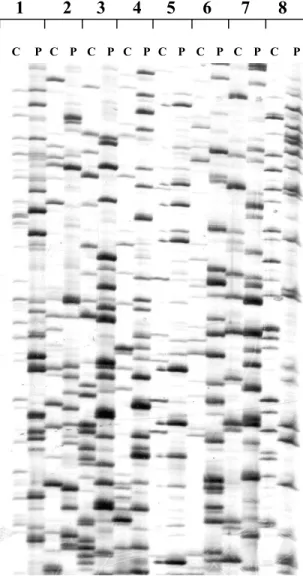
Figure 1. DNA fingerprints of Cephalonomia
stephanoderis Betrem (C) and Prorops nasuta Waterston (P) generated with eight primer combinations (1 to 8) through AFLPs.
Amplified Fragment Length Polymorphism (AFLP) analysis was performed on bulk DNA
from P. nasuta and C. stephanoderis in order to establish genetic differences. DNA fingerprints were
obtained showing distinguishable and very well differentiated bands between these two populations (Fig. 1).
Phymastichus coffea La Salle
Phymatichus coffea is a parasitoid of coffee berry borer adults that was discovered in 1987 in Togo (Borbon, 1990). The wasp paralyzes the coffee berry borer female when it begins to bore into the bean, then the parasitoid lays two eggs inside the abdo-men. After the eggs hatch, larvae feed internally on the host and then pupate. The male pupates in the pronotum of the host, and the female in the
abdo-men. New adults of P. coffea emerge fromthe host
in about 38 days.
Phymatichus coffea was introduced into Colombia through quarantine in England in 1995, mass reared under laboratory conditions, and
re-leased in the field in 1997. In 1998 P. coffea was
re-covered in field plots, and levels of parasitism of 41% and 67% were observed (Baker, 1999).
Two million adults of this parasitoid have been released over 33 farms in Colombia, causing 2 to 6% parasitism. Releases are still taking place. Although these parasitism levels are not as high as desired, the parasitoid does appear to be adapted to the environmental conditions found in coffee crops in Colombia.
Heterospilus coffeicola Schneideknecht
Adults of H. coffeicola arepredators of the imma-ture stages of coffee berry borer. This insect was discovered in Uganda in 1923 (Hargreaves, 1926). The adult female lays one egg inside an infested cof-fee berry; the egg hatches and the larva cof-feeds on eggs and larvae of coffee berry borer. An exploratory trip to Uganda by Jaime Orozco in 1997 showed that this predator causes about 16% of coffee berry borer mortality in the field (Baker, 1999). Attempts to rear the parasitoid in the laboratory in Uganda were unsuccessful. Nevertheless, it was possible to rear the wasp under field conditions once the female had laid her eggs on infested berries (Baker, 1999). Work to develop an artificial diet for this species is continuing.
Artificial Diets
Research on artificial diets has been performed in order to mass produce coffee berry borer and its parasitoids. Early artificial diets (Villacorta–140 diet and Ecobrovil-160) served as a basis for develop-ment of the currently used diet, called CENIBROCA (Portilla, 1999). This artificial diet uses more common ingredients; therefore, diet cost was reduced by about 90%. Studies in the laboratory found the optimal humidity and temperature for coffee berry borer rearing to be 60% RH and 27 ºC. Under those conditions, five generations of coffee berry borer can be reared without loss of fertility (Portilla,
1999). Cephalonomia stephanoderis can be reared on artificially produced coffee berry borer, yielding
a sex ratio of 1:6 females to males. Artificially produced parasitoids were compared in a field trial against a wild parasitoid population and one reared in coffee parchment. The parasitism in these three treatments ranged between 58% and 61%, and no statistical differences were found (Baker, 1999).
In an initial trial to mass rear coffee berry borer and its parasitoid C. stephanoderis, 20,000
coffee berry borers in various life stages were harvested per 750 ml of diet. These hosts allowed the production of 10,000 parasitoids from 480 founders (Baker, 1999). Research on artificial diets is still in progress.
DISCUSSION
Controversy has arisen about which parasitoid might be the best species for control of coffee berry
borer. Cephalonomia stephanoderis was successfully mass reared, established after release and reached
high levels of parasitism; but the level of parasitism decreased faster than expected in the field. Never-theless, the predatory effect of this parasitoid on the host is very significant, and it is easier to rear than the other parasitoids.
Prorops nasuta has a more aggressive searching behavior when released, but it is more
diffi-cult to rear. This wasp has been recovered in higher numbers than C. stephanoderis from the field,
even when released in lower numbers. It is perhaps better adapted to the environment in the coffee
plantations in Colombia since it has been recovered in higher proportions than C. stephanoderis from
plots where no releases were conducted. However, the greater difficulty in rearing P. nasuta favors use
of C. stephanoderis, at least in augmentative programs.
Phymastichus coffea appears to be easy to rear and effective when in contact with its host.
However, this parasitoid has not yet been produced in as large numbers as C. stephanoderis. Heterospilus
coffeicola seems a likely new agent, but research is still needed before predictions can be made about its performance in the field.
Many authors have shown that these four parasitoids provide considerable control of coffee berry borer in natural conditions and in experimental plots. The unpredictable weather conditions in tropical coffee-producing areas have complex effects on coffee berry borer parasitoids. Some species may be favored during certain periods, while others are suppressed. We believe that the more parasi-toids that are introduced, the better the chances will be to keep coffee berry borer populations under natural equilibrium on a permanent basis. In addition, development of an inexpensive artificial diet appears to offer promise for augmentative releases of coffee berry borer parasitoids. We look forward to continue production of coffee in Colombia with the highest quality in harmony with the environ-ment. To this end, we hope to continue developing clean techniques such as biological control and manual control rather than encouraging chemical control as the only alternative to control coffee berry borer.
ACKNOWLEDGMENTS
Molecular analysis of the parasitoids was performed in the Insect Genetics lab at Purdue University, West Lafayette, Indiana, U.S.A., under the guidance of Dr. Jeff Stuart.
REFERENCES
Baker, P. S. 1999. The Coffee Berry Borer in Colombia; Final Report of the DFID – Cenicafé – CABI Bioscience IPM for Coffee Project (CNTR 93/1536A). Chinchiná (Colombia), DFID – CENICAFE.
Benavides, M. and M. Portilla. 1990. Uso del café pergamino para la cría de Hypothenemus hampei
y de su parasitoide Cephalonomia stephanoderis en Colombia. Revista Cenicafé 41(4): 114-116.
Benavides P., A. E. Bustillo, and E. C. Montoya. 1994. Avances sobre el uso del parasitoide
Cephalonomia stephanoderis para el control de la broca del café, Hypothenemus hampei. Revista Colombiana de Entomología 4(20): 247-253.
Borbon M. O. 1990. Un nuevo parasitoide de Hypothenemus hampei en Togo. In: Taller Regional
sobre la Broca del Fruto del Cafeto. ISIC, IICA y PROMECAFE. San Salvador, El Salvador. October 9-12, 1990.
Bustillo, A. E., R. Cardenas, D. Villalaba, P. Benavides, J. Orozco, and F. Posada. 1998. Manejo
integrado de la broca del café Hypothenemus hampei (Ferrari) en Colombia. Chinchiná
(Colom-bia), CENICAFE.
Bustillo, A. E., J. Orozco, P. Benavides, and M. Portilla. 1997. Producción masiva y uso de
parasitoides para el control de la broca del café en Colombia. Revista Cenicafé 64(4): 164-189.
Hargreaves, H. 1926. Notes on the CBB (Stephanoseris hampei) in Uganda. Bulletin of Entomology
Research 16(4): 347-354.
Hempel, A. A. 1934. Prorops nasuta Waterston no Brasil. Arquivos do Instituto Biologico 5:
197-212.
Moore, D. and C. Prior. 1988. Present status of biological control of the coffee berry borer
Hypothenemus hampei (Ferrari) (Coleoptera: Scolytidae). In Proceedings of the British Crop Protection Conference, Pests and Diseases, London. British Crop Protection Council. 3: 1119-1124.
Portilla, M. and A. E. Bustillo. 1995. Nuevas investigaciones en la cría masiva de Hypothenemus
hampei y de sus parasitoides Cephalonmia stephanoderis y Prorops nasuta. Revista Colombiana de Entomología 21(1): 25-33.
Portilla, M. 1999. Mass rearing technique for Cephalonomia stephanoderis (Hymenoptera:
Bethylidae) on Hypothenemus hampei (Coleoptera: Scolytidae) developed using Cenibroca
artificial diet. Revista Colombiana de Entomología 25(1-2): 57-66.
Quintero C., A. E. Bustillo, P. Benavides, and B. Chaves. 1998. Evidencias del establecimiento del
Cephalonomia stephanoderis y Prorops nasuta (Hymenoptera: Bethylidae) en cafetales del
departamento de Nariño, Colombia. Revista Colombiana de Entomología 3-4(24): 141-147.
Ticheler, J. 1963. Estudio analítico de la epidemiología del escolítido de los granos de café,
THE EFFECTS OF HABITAT DIVERSIFICATION ON A
GENERALIST INSECT HERBIVORE POPULATION AND
IMPLICATIONS FOR BIOLOGICAL CONTROL BY A PARASITOID
WASP
T.A. Bensen
1and S. Rao
21
University of California, Davis, California, U.S.A.
2Oregon State University, Corvallis, Oregon, U.S.A.
ABSTRACT. Preference for one host plant over another can be used to manage generalist insect herbivores in some agricultural crops. However, this approach has not always been found to be effective in diverting insect herbivore populations away from target agricultural crops. Hence prefer-ence is not the only factor to be considered when diversifying crop habitat for insect management. Another factor of importance to overall population growth is performance of the insect herbivore, since growth and survivorship vary with host plant species. We investigated the effect of habitat
diversification on the generalist insect herbivore, Lygus hesperus Knight (Hemiptera: Miridae), and its
performance as influenced by mortality due to a natural enemy, Anaphes iole Girault (Hymenoptera:
Mymaridae). The results indicated that preference alone was insufficient for reducing the insect
her-bivore population and subsequent damage to a target agricultural crop. In addition, A. iole abundance
and performance differed between host plants. Collectively, these results suggest that, if habitat is to be diversified toward the goal of generalist insect herbivore management, the host plant species used for diversification must be selected carefully. Ideally, a host plant species used would be one that the insect herbivore prefers, and one on which it suffers high mortality due to natural enemies. Research is ongoing to investigate this approach as a simple biological control strategy.
A HISTORICAL AND GEOGRAPHICAL ANALYSIS OF WORK ON
HABITAT MANIPULATION FOR ARTHROPOD BIOLOGICAL
CONTROL
L. Berndt,
1G. Gurr,
2S. Wratten,
1and N. Irvin
31
Division of Plant, Soil and Ecological Sciences, Lincoln University, Canterbury, New
Zealand
2
Faculty of Rural Management, University of Sydney, Orange, Australia
3Department of Entomology, University of California, Riverside, California, U.S.A.
ABSTRACT. Habitat manipulation, along with reducing pesticide-induced mortality of natural en-emies, offers scope to conserve biological control agents. This study, the first stage of a comprehensive analysis of the literature, investigated historical and geographical trends in such work.
The CAB Abstracts computer database was searched to identify relevant publications in the years 1973 to 1999. Seven or fewer habitat manipulation papers were published each year between the early 1970s and mid 1980s. There was an increasing rate of habitat manipulation publication from the mid 1980s to mid 1990s and fluctuating numbers of papers (15-25 per year) in the second half of the 1990s. The United States and Europe (especially the United Kingdom, Switzerland, and Germany)
together accounted for around half of habitat manipulation publications. General reviews and labora-tory or modeling studies accounted for 14% of publications. China, Oceania (especially Australia and New Zealand), Russia, and Africa each accounted for 4-9% of all publications.
To gauge the amount of habitat manipulation activity in relation to overall biological con-trol activity, a second search identified publication activity in all fields of biological concon-trol. This showed that the percentage of biological control publications concerned with habitat manipulation was low–less than 1%. There was a modest but erratic increase in percentage of habitat manipulation publications since the 1970s.
Further analysis will consider agent and target taxa, agricultural system, level of success, and degree of adoption.
THE EFFECTS OF ALYSSUM FLOWERS ON THE FITNESS OF THE
LEAFROLLER PARASITOID DOLICHOGENIDEA TASMANICA
(HYMENOPTERA: BRACONIDAE)
L. Berndt and S. Wratten
Ecology and Entomology Group, Lincoln University, New Zealand
ABSTRACT. Many parasitoid wasps feed on nectar or pollen, and the presence of these resources in agricultural ecosystems may enhance the effectiveness of biological control. To investigate how im-portant floral resources are to the fitness of parasitoids, a laboratory cage experiment was conducted
comparing longevity, realized fecundity and offspring sex ratio of Dolichogenidea tasmanica (Cameron)
with and without alyssum flowers (Lobularia maritima [L.]). The experiment was set up in a
random-ized block design with six treatment and six control cages. Cage temperature averaged 18 °C. Each
cage held one female and two male wasps, along with a potted alyssum plant with flowers (treatment) or without flower (control). All cages were also provided with water on cotton wool. Each female
wasp was confined with an excess of second instar leafroller larvae (Epiphyas postvittana [Walker]) in
a box with artificial leafroller diet for four hours each morning throughout the life of the female. The same box of leafrollers was presented to a female for three consecutive days before a fresh box was
used. Leafrollers were reared at an average temperature of 20 °C, and the number of parasitoid
co-coons and the sex of the wasps produced every three days were recorded.
Female wasps caged with flowers lived seven times as long (P < 0.001) and males three times
as long (P < 0.01) as those caged without flowers. Significantly more leafrollers were parasitised per
day by wasps with access to flowers than by those without (P < 0.01). The offspring of wasps in
control cages were almost exclusively male, compared with a sex ratio approaching 50:50 produced in
treatment cages (P < 0.05). These results show that the fitness of D. tasmanica, as represented by
longevity, realized fecundity, and sex ratio, is strongly affected by the presence of food in the form of flowers. This study demonstrates the importance of providing biological control agents with easily accessible sources of food.
BIOLOGICAL CONTROL OF THE MANGO MEALYBUG,
RASTROCOCCUS INVADENS (HOMOPTERA:
PSEUDOCOCCIDAE) IN AFRICA
Aimé H. Bokonon-Ganta,
1P. Neuenschwander,
2and H. de Groote
31
Service Protection des Végétaux, Direction de l’Agriculture, Porto-Novo, Bénin
2International Institute of Tropical Agriculture, Cotonou, Bénin
3
International Maize and Wheat Improvement Center, Nairobi, Kenya
INTRODUCTION
Mango (Mangifera indica L., Anacardiaceae) is an ancient fruit of Indian origin (Butani, 1975) under
cultivation for over 6000 years (Hill, 1952). Today, mango is a fruit of great importance throughout the tropics (Laroussihle, 1980). It is sold at local markets in Africa and constitutes an important source of energy and nutrients. Mango is also a valuable ornamental shade tree and contributes to the protec-tion of soil against erosion. Until recently, damage to mango trees by insect pests and diseases in Africa was insignificant (Butani, 1975; Laroussihle, 1980). In 1986, however, a mealybug–later
de-scribed as Rastrococcus invadens Williams (Homoptera: Pseudococcidae) of Southeast Asian origin–
was reported to cause serious damage to various fruit trees, especially mango (Williams, 1986; Agounké
et al., 1988). Colonies of R. invadens are generally located on the lower side of the leaves, where the insects suck the sap of infested plants. Mealybug infestations, together with sooty mold, seriously affect plant growth, flowering, and fruiting of attacked trees. Chemical and mechanical (i.e.,
trim-ming) control measures were adopted, but failed to control the pest (Agounké et al., 1988). Because a
perennial plant providing shade and fruit was threatened, the whole community including decisionmakers in towns became concerned. As chemical and mechanical control, together with local natural enemies, appeared ineffective to control the pest, introduction of specific natural enemies from the origin of the pest was considered to achieve a long-term control.
This paper presents results of a successful biological control project in which the Interna-tional Institute for Tropical Agriculture (IITA), CABI Bioscience, The Deutsche Gesellschaft für Technische Zusammenarbeit (GTZ) in Togo, the Food and Agriculture Organization (FAO), and several African biological control programs were involved. Results summarized below demonstrate the success of the program and show that a properly conducted biological control remains an excellent pest management option.
METHODS
Rearing and Releases of Introduced Hymenopterous Parasitoids
Gyranusoidea tebygi Noyes and Anagyrus mangicola Noyeswere reared in the insectary at the IITA
Station in Benin on R. invadens as described by Neuenschwander et al. (1994). Releases were made
from the ground by placing insects on infested trees (Neuenschwander et al., 1994; Bokonon-Ganta
Laboratory Studies
Host stage selection and sex allocation by G. tebygi and A. mangicola were studied in no-choice and
choice experiments (Boavida et al., 1995; Bokonon-Ganta et al., 1995). Studies on life histories of the
two parasitoids were conducted to compare their biological potentials for a better understanding of
the outcome of their releases in the same environment. (Boavida et al., 1995 ; Bokonon-Ganta et al.,
1995). Host discrimination and larval competition by G. tebygi were studied to determine by direct
observation a parasitoid’s response to parasitized and unparasitized mango mealybugs offered at the
same time. (Bokonon-Ganta et al., 1996). Competition between G. tebygi and A. mangicola was
studied in multiparasitized second instar hosts, for two different time intervals between the first and
second attack (Bokonon-Ganta et al., 1996).
FIELD STUDIES
The distribution of the mango mealybug and the establishment, spread, and dispersal of natural
en-emies were studied by surveys (Neuenschwander et al., 1994; Bokonon-Ganta and Neuenschwander,
1995). Impact of the mango mealybug on infested trees and results of the biological control program
implemented was assessed in exclusion experiments and population dynamic studies (Boavida et al.,
1995) and countrywide entomological and socioeconomic surveys (Bokonon-Ganta et al., 1995;
Bokonon-Ganta et al., 2002).
RESULTS AND DISCUSSION
Introduction of the Mango Mealybug and its Hymenopterous Parasitoids
Rastrococcus invadens was first reported in Africa in the early 1980s. The pest was accidentally
introduced into Africa from Southeast Asia. Rastrococcus invadens was found to be highly
polypha-gous shortly after its introduction, with mango being the most affected plant species (Löhr, 1985;
Agounké et al., 1988). Indigenous predators adapted to R. invadens were very scarce and their relative
inefficiency to control its populations was confirmed in subsequent surveys (Bokonon-Ganta and
Neuenschwander, 1995). Similar observations were made for local natural enemies on the exotic
cas-sava mealybug, Phenacoccus manihoti Matile Ferrero (Neuenschwander et al., 1989, 1990, 1991).
Me-chanical and chemical measures were adopted to control the pest, but appeared ineffective. It was then necessary, in a classical biological control approach, to locate natural enemies offering the best chance to control the pest, and introduce them.
After quarantine by the CAB International, the parasitic wasps G. tebygi and A. mangicola
were introduced and mass reared at the International Institute of Tropical Agriculture (IITA) in
Cotonou, Benin, on R. invadens maintained on Ficus polita Vahl. (Moraceae), a fast growing alternate
host plant. Releases were made with the agreement of the Inter-African Phytosanitary Council of the Organization of African Unity (OAU) in collaboration with several African biological control pro-grams. The natural enemies adapted easily to their host and new environment and were found to
disperse rapidly. Gyranusoidea tebygi was recovered not only in the large mealybug populations
some-times observed in towns, but also on isolated mango trees in farmers’ fields (Bokonon-Ganta and
Neuenschwander, 1995). After the establishment of G. tebygi and the concomitant decline in
mealy-bug populations, the range of host plants infested by the mealymealy-bug was drastically reduced and mango remained the only important host (Bokonon-Ganta and Neuenschwander, 1995). Similar observa-tions were made in Gabon (Boussienguet and Mouloungou, 1993).
Laboratory Studies
Host stage selection and sex allocation by G. tebygi and A. mangicola. Boavida et al. (1995) studied
the host stage selection, sex ratio, and survival of G. tebygi in hosts of different ages and sizes and
found that the parasitoid reproduced on first and second instars of the mango mealybug as reported by Narasimham and Chacko (1988), but also on third instars. In this study, sex ratios were highly female biased. Females had longer developmental times than males, developed faster in larger mealy-bugs than in smaller ones, and were always larger than males from the same host instar.
Bokonon-Ganta et al. (1996) studied the host stage selection, sex ratio, and survival of A.
mangicola in hosts of different ages and sizes and revealed that the wasp parasitized all host instars of the mango mealybug. First instars were less often encountered and were seldom parasitized. First instars were, however, preferred for host feeding. Handling time per host decreased with increasing host size. Female wasps recognized previously parasitized hosts and, in cases where they attacked them, did not oviposit into them. The sex ratio of emerging parasitoids, expressed as proportion of males, was lowest when mango mealybug was parasitized as mature adult females and increased with decreasing host size, from young adult females to first instars. Female wasps emerging from any size of host were always larger than the corresponding males. Male size increased with that of the host, while female size was independent of host instar at oviposition.
Competition between G. tebygi and A. mangicola. Introduction of the second parasitoid
was justified by reports of persistent “hot spots” of infestations by R. invadens, despite the presence
of G. tebygi. Studies of competition between G. tebygi and A. mangicola showed that no significant differences were found in the way each parasitoid species examined, attacked, stung, and oviposited into hosts, unparasitized, or previously parasitized by the other species. This suggests that neither species discriminates against each other. The total number of parasitoids of either species emerging
did not significantly differ between competition experiments. When A. mangicola was the first
parasi-toid to attack a host, it had no significant advantage over G. tebygi. However, when A. mangicola
followed G. tebygi by either 4 or 24 hours, A. mangicola clearly won. Overall A. mangicola won the
competition in 70.9% of all cases.
The competitive interaction between these two parasitoid species contrasts with the one
between Apoanagyrus (Epidinocarsis) lopezi De Santis and Apoanagyrus diversicornis Howard (both
Hymenoptera: Encyrtidae) introduced against the cassava mealybug, Phenacoccus manihoti
Matile-Ferrero (Homoptera: Pseudococcidae) (Herren and Neuenschwander, 1991). The later-attacking A.
diversicornis proved to be competitively inferior (Pijls et al., 1990; Gutierrez et al., 1993) and could not be established as a biological control agent against cassava mealybug in Africa (Neuenschwander, 1996; Neuenschwander and Markham, 2001).
Differences in host selection by G. tebygi and A. mangicola, the demonstrated competitive
superiority of A. mangicola in multiparasitized hosts together with results of further comparative
studies on life history characteristics of G. tebygi and A. mangicola–most particularly the higher
life-time fecundity and longevity of G. tebygi–explain why A. mangicola could be established in Africa on
R. invadens already under control by G. tebygi (Neuenschwander et al., 1994; Boavida et al., 1995;
Bokonon-Ganta et al., 1995, 1996).
By contrast to Godfray and Waage (1991), who predicted that A. mangicola was not a useful
addition to the parasitoid complex of the mango mealybug, an effective reduction of mealybug
popu-lations was demonstrated in the present study and seems in fact attributable to the establishment of A.
Field Studies for Measuring Impacts of R. invadens on Mango Production and Natural
Enemies on Biological Control
From physical exclusion experiments, Boavida et al. (1995) concluded that G. tebygi was an effective
biological control agent against R. invadens. This result was confirmed in population dynamic studies
over five years that recorded a marked and stable reduction of pest levels (Boavida et al.,1992,1995),
demonstrating that G. tebygi was responsible for successful biological control. The same conclusion
was drawn from similar population dynamic studies in Togo (Agricola et al.,1989) and Congo (Matokot
et al.,1992). Repeated detailed countrywide surveys in Benin (Bokonon-Ganta and Neuenschwander, 1995) based on multiple regression analyses of several interacting abiotic and biotic factors affecting
R. invadens populations, their damage, and their influence on the growth of mango trees, confirmed
that effective control occurred over large areas.These studies were based on 2,067 trees in three
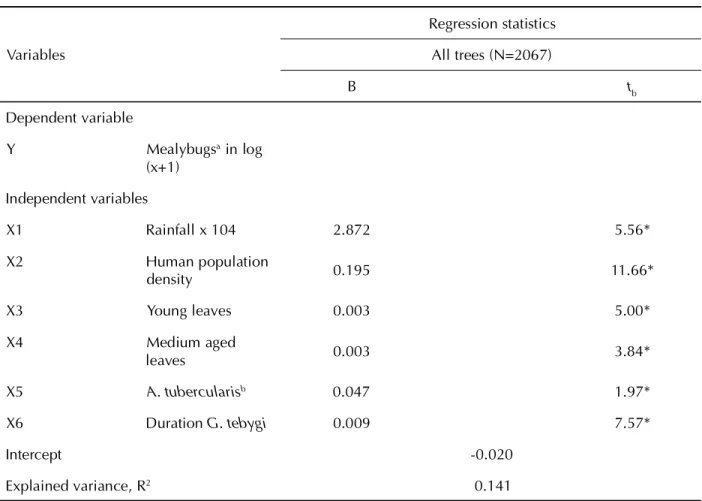
sur-veys across different ecological zones of Benin. The overall yield loss due to infestations by mango mealybug was assessed at 72%. From the first survey year to the third, the percentage of infested mango trees declined from 31.0% in 1989 to 17.5%. During the same period, the mean percentage of infested mango trees having indigenous predators declined from 42.3% to 20.9%. Average mealybug densities declined steadily from 9.7 females per sampling unit in 1989, with 3.2% of all mango trees having densities above 100 mealybugs, to 6.4 in 1991, with 1.3% of all trees having densities above 100 mealybugs. In multiple regression analyses, based on 23 meteorological, agronomic, and plant vari-ables, the duration of the parasitoid’s presence proved to be a major factor. It influenced mealybug population densities and sooty mold incidence, which in turn affected the production of new leaves (Table 1) (Bokonon-Ganta and Neuenschwander, 1995). Similar multiple regression analyses have
been used in studies on rice pests (Baumgärtner et al.,1990), cassava mealybug (Neuenschwander et
al.,1989, 1990, 1991; Chakupurakal et al.,1994), and stem and ear borers of maize (Gounou et al.,
1994).
A socioeconomic study for assessing the impact of R. invadens on mango production and
the results of its biological control by the exotic parasitoids was carried out (Bokonon-Ganta et al.,
2002). Information obtained in interviews concerned the host plant, the pest and its social effects, the
control efforts and damage by the pest to fruit production.
Most producers attributed the observed improvement to the success of biological control. Similar observations on the awareness amongst the local population of the value and practice of
bio-logical control of R. invadens were made by Vögele et al. (1991) in Togo. Based on production
esti-mates by producers, the negative impact of the pest on plant production and the positive impact of the introduced natural enemy were demonstrated. Socioeconomic studies extend the already quantified
effect of G. tebygi on the mealybug populations and the leaf loss reduction (Bokonon-Ganta and
Neuenschwander, 1995) to fruit production. Each mango farmer gained on average $328 per year through this biological control program. Including operational costs, the present value of IITA’s in-volvement was estimated at $U.S. 1.75 million. Other organizations provided additional support (GTZ, FAO, CAB International, and the Benin Plant Protection Service). The total depreciated cost of bio-logical control of mango mealybug in Benin, taking into account the initial activities in Togo, amounted to $U.S. 3.66 million. Compared with the benefit of $U.S. 531 million, the benefit-cost ratio was calculated at 145:1.
ACKNOWLEDGMENTS
We thank all the donors of IITA’s Biological Control Program for their financial and material sup-port. The contribution of Profs. J. J. M. van Alphen and M. W. Sabelis to some of the findings in this research program is gratefully acknowledged.
REFERENCES
Agounké, D., U. Agricola, and H. A. Bokonon-Ganta. 1988. Rastrococcus invadens Williams
(Hemiptera: Pseudococcidae), a serious pest of fruit trees and other plants in West Africa.
Bulle-tin of Entomological Research 78: 695-702.
Agricola, U., D. Agounké, H. U. Fischer, and D. Moore. 1989. The control of Rastrococcus
invadens Williams (Hemiptera: Pseudococcidae) in Togo by the introduction of Gyranusoidea tebygi Noyes (Hymenoptera: Encyrtidae). Bulletin of Entomological Research 79: 671-678. Baumgärtner, J., U. Regev, N. Rahalivavololona, B. Graf, P. Zahner and V. Delucchi. 1990. Rice
production in Madagascar: Regression analysis with particular reference to pest control.
Agricul-ture Ecosystems and Environment 30: 37-47.
Boavida, C. and P. Neuenschwander. 1995. Population dynamics and life tables of the mango
mealybug, Rastrococcus invadens Williams and its introduced natural enemy, Gyranusoidea
tebygi Noyes in Benin. Biocontrol Science and Technology 5: 489-508.
Boavida, C., P. Neuenschwander, and F. Schulthess. 1992. Spatial distribution of Rastrococcus
invadens Williams (Hom., Pseudococcidae) in mango trees. Journal of applied Entomology 114: 381-391. Variables Regression statistics All trees (N=2067) B tb Dependent variable Y Mealybugsa in log (x+1) Independent variables X1 Rainfall x 104 2.872 5.56* X2 Human population density 0.195 11.66* X3 Young leaves 0.003 5.00* X4 Medium aged leaves 0.003 3.84* X5 A. tubercularisb 0.047 1.97* X6 Duration G. tebygi 0.009 7.57* Intercept -0.020 Explained variance, R2 0.141
a Total number of adult female mango mealybugs, estimated on 48 leaves per tree.
b The scale, Aulacaspis tubercularis Newstead, played an important role but was never seen to interfere in
any way with the mealybug.
Table 1. Multiple regression analysis for assessing the importance of factors influencing mango mealybug,
Boavida, C., P. Neuenschwander, and H. R. Herren. 1995. Experimental assessment of the impact
of the introduced parasitoid Gyranusoidea tebygi Noyes on the mango mealybug Rastrococcus
invadens Williams by a physical exclusion method. Biological Control 5: 99-103.
Boavida, C., M. Ahounou, M. Vos, P. Neuenschwander, and J. J. M. van Alphen. 1995. Host stage
selection and sex allocation by Gyranusoidea tebygi (Hymenoptera: Encyrtidae), a parasitoid of
the mango mealybug, Rastrococcus invadens (Homoptera: Pseudococcidae). Biological Control 5:
487-496.
Bokonon-Ganta, A. H. and P. Neuenschwander. 1995. The impact of the biological control agent
Gyranusoidea tebygi Noyes (Hymenoptera: Encyrtidae), on the mango mealybug, Rastrococcus
invadens Williams (Homoptera: Pseudococcidae) in Benin. Biocontrol Science and Technology 5:
95-107.
Bokonon-Ganta, A. H., H. De Groote, and P. Neuenschwander. 2002.Socio-economic impact of
biological control of mango mealybug in Benin. Agriculture, Ecosystem and Environment 93:
367-378.
Bokonon-Ganta, A. H., P. Neuenschwander, J. J. M. van Alphen, and M. Vos. 1995. Host stage
selection and sex allocation by Anagyrus mangicola (Hymenoptera: Encyrtidae), a parasitoid of
the mango mealybug, Rastrococcus invadens (Homoptera: Pseudococcidae). Biological Control 5:
479-486.
Bokonon-Ganta, A.H., J. J. M. van Alphen, and P. Neuenschwander. 1996. Competition between
Gyranusoidea tebygi and Anagyrus mangicola, parasitoids of the mango mealybug, Rastrococcus invadens: interspecific host discrimination and larval competition. Entomologia Experimentalis et Applicata 79: 179-185.
Boussienguet, J. and J. Mouloungou. 1993. Pression démographique et choix alimentaire chez
Rastrococcus invadens, un ravageur du manguier récemment introduit en Afrique (Homoptera,
Pseudococcidae). Bulletin de la Société Entomologique de France 98: 139-148.
Butani Dhamo, K. 1975. Parasites et maladies du manguier en Inde. Fruits 30: 91-101.
Chakupurakal, J., R. H. Markham, P. Neuenschwander, M. Sakala, C. Malambo, D. Mulwanda, E. Banda, A. Chalabesa, T. Bird, and T. Haug. 1994. Biological control of the cassava mealybug,
Phenacoccus manihoti (Homoptera: Pseudococcidae), in Zambia. Biological Control 4: 254-262. Godfray, H. C. J. and J. K. Waage. 1991. Predictive modelling in biological control: the mango
mealybug (Rastrococcus invadens) and its parasitoids. Journal of Applied Ecology 28: 434-453.
Gounou, S., F. Schulthess, T. Shanower, W. H. O. Hammond, H. Braima, A. R. Cudjoe, R. Adjakloe, K. K. Antwi, and I. Olaleye. 1994. Stem and ear borers of maize in Ghana, Plant Health Management Research Monograph 4. International Institute of Tropical Agriculture, Ibadan, Nigeria.
Gutierrez, A. P., P. Neuenschwander, and J. J. M. van Alphen. 1993. Factors affecting biological control of cassava mealybug by exotic parasitoids: a ratio-dependent supply-demand driven
model. Journal of Applied Ecology 30: 706-721.
Herren, H. R. and P., Neuenschwander. 1991. Biological control of cassava pests in Africa. Annual
Review of Entomology 36: 257-283.
Hill, A. F. 1952. Economic Botany. McGraw Hill Co., New York.
Laroussihle, F. 1980. Le Manguier. Maisonneuve et Larose, Paris, France.
Löhr, B. 1985. Rapport d’un Court Séjour au Togo pour l’ Etude d’ une Gradation de Cochenilles en
Arboriculture Fruitière. Rapport de Mission DPV, GTZ, Lomé, Togo.
Matokot, L., G. Reyd, P. Malonga, and B. Le Ru. 1992. Dynamique des populations de Rastrococcus
invadens (Hom.: Pseudococcidae) au Congo; influence de l’introduction accidentelle du
Narasimham, A. U. and M. J. Chacko. 1988. Rastrococcus spp. (Hemiptera: Pseudococcidae) and
their natural enemies in India as potential biocontrol agents for Rastrococcus invadens Williams.
Bulletin of Entomological Research 78: 703-708.
Neuenschwander, P. 1996. Evaluating the efficacy of biological control of three exotic homopteran
pests in tropical Africa. Entomophaga 41: 405-424.
Neuenschwander, P. and R. Markham. 2001. Biological control in Africa and its possible effects on
biodiversity, pp 127-146. In Waijnberg, E., J. K. Scott, and P. C. Quimby (eds). Evaluating
Indirect Ecological Effects of Biological Control. CAB International, Silwood Park, United Kingdom.
Neuenschwander, P., W. N. O. Hammond, A. P. Gutierrez, A. R. Cudjoe, R. Adjakloe, J. U. Baumgärtner, and U. Regev. 1989. Impact assessment of the biological control of the cassava
mealybug, Phenacoccus manihoti Matile-Ferrero (Hemiptera: Pseudococcidae), and its
intro-duced parasitoid, Epidinocarsis lopezi (De Santis) (Hymenoptera: Encyrtidae). Bulletin of
Ento-mological Research 79: 579-594.
Neuenschwander,P., W. N. O. Hammond, O. Ajuonu, A. Gado, N. Echendu, A. H.
Bokonon-Ganta, R. Allomasso, and I. Okon. 1990. Biological control of the cassava mealybug, Phenacoccus
manihoti (Hom.: Pseudococcidae) by Epidinocarsis lopezi (Hym.: Encyrtidae) in West Africa, as
influenced by climate and soil. Agriculture, Ecosystems and Environment 32: 39-55.
Neuenschwander, P., R. Borowka, G. Phiri, H. Hammans, S. Nyirenda, E. H. Kapeya, and A.
Gadabu. 1991. Biological control of the cassava mealybug Phenacoccus manihoti (Hom.,
Pseudococcidae) by Epidinocarsis lopezi (Hym., Encyrtidae) in Malawi. Biocontrol Science and
Technology 1: 297-310.
Neuenschwander, P., C. Boavida, A. H. Bokonon-Ganta, A. Gado, and H. R. Herren. 1994.
Estab-lishment and spread of Gyranusoidea tebygi Noyes and Anagyrus mangicola Noyes
(Hy-menoptera: Encyrtidae), two biological control agents released against the mango mealybug
Rastrococcus invadens Williams (Homoptera: Pseudoccocidae) in Africa. Biocontrol Science and Technology 4: 61-69.
Pijls, J. W. A. M., K. D. Hofker, M. J. van Staalduinen, and J. J. M. van Alphen. 1990. Interspecific
host discrimination and competition by Apoanagyrus (Epidinocarsis) lopezi and A. diversicornis,
parasitoids of the cassava mealybug, Phenacoccus manihoti. Mededelingen van de Faculteit
Landbouwwetenschappen van de Rijksuniversiteit Gent 55: 405-415.
Vögele, J. M., D. Agounké, and D. Moore. 1991. Biological control of the fruit tree mealybug
Rastrococcus invadens Williams in Togo: A preliminary sociological and economic evaluation.
Tropical Pest Management 37: 379-382.
Williams, D. J. 1986. Rastrococcus invadens sp. n. (Hemiptera: Pseudococcidae) introduced from the
Oriental Region to West Africa and causing damage to mango, citrus and other trees. Bulletin of