Knowledge And Technology
Transfer Between Science
And Businesses: Academic
KTT Offices’ Experience And
Good Practice
Methodology for
Innovation Management
Methodology for
Innovation Management
Impressum
WBCInno - Modernization of WBC universities through strengthening of structures and services for knowledge transfer, research and innovation
530213-TEMPUS-1-2012-1-RS-TEMPUS-JPHES
Publisher University of Kragujevac
WBCInno project For publisher
Prof. Dr. Slobodan Arsenijević
Rector of University of Kragujevac Editor
Prof. Dr. Vesna Mandić
University of Kragujevac Project Coordinator
Authors
Prof. Dr. Vesna Mandić, University of Kragujevac, Serbia Vitomir Rašić, Intranea Solutions, Serbia Jelena Jevtović, University of Kragujevac, Serbia Tatjana Knežević, University of Montenegro, Montenegro Lamija Subašić, University of Zenica, Bosnia and Herzegovina Daniela Zlatić Šutić, Intellectual Property Office, Republic of Serbia
Digital Design
Milan Kostadinović
Printing
Inter Print, Kragujevac, Serbia Circulation
1000 copies Kragujevac, February 2014
ISBN 978-86-81037-41-6
Table of Contents
Figures | 7
List of Abbreviations | 7
Executive Summary | 8
1. Introduction | 11
2. Innovation Management Techniques | 13
2.1. Knowledge management techniques | 14
2.2. Market intelligence techniques | 15
2.3. Cooperative and networking techniques | 16
2.4. Human resources management techniques | 17
2.5. Interface management techniques | 18
2.6. Creativity development techniques | 18
2.7. Process Improvement Techniques | 19
2.8. Innovative project management techniques | 20
2.9. Design management | 21
2.10. Business creation techniques | 22
3. Intellectual Property Aspects | 25
3.1. State in the Region | 25
3.2. The role of intellectual property rights | 26
3.3. Invention protection – Patents | 30
3.3.1. Basic information | 30
3.3.2. Filling the patent application | 31
3.3.2.1 National route: the Republic of Serbia | 32
3.3.2.2 National route: Bosnia and Herzegovina | 34
3.3.2.3 National route: Montenegro | 37
3.3.3. International patent protection | 38
3.4. Trade marks | 38
3.4.1. Basic information | 38
3.4.2. Why to use trade mark | 38
3.4.3. Terms of trademark protection | 39
3.4.4. Filing the application for trademark protection | 39
3.4.4.1. Procedure for registration of the trademark in The Republic of Serbia | 40
3.4.4.2. Procedure for registration of the trademark in Bosnia and Herzegovina | 40
3.4.4.3. Procedure for registration of the trademark in Montenegro | 41
3.4.4.4. International trademark registration | 41
3.4.4.5. Information on trademark registration | 41
3.5. Industrial design protection| 42
3.5.1. Basic information | 42
3.5.3. Terms for protection of industrial design | 42
3.5.4. Procedure of protection of industrial design | 42
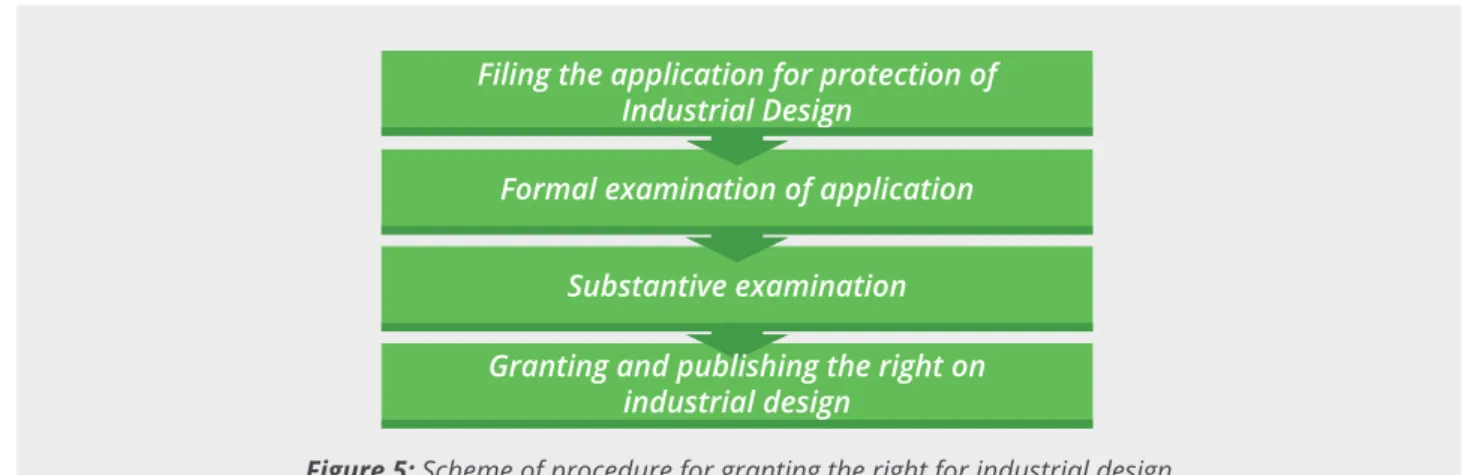
3.5.4.1. Procedure of protection of industrial design in The Republic of Serbia | 43
3.5.4.2. Procedure of protection of industrial design in Bosnia and Herzegovina | 43
3.5.4.3. Procedure of protection of industrial design in Montenegro | 44
3.5.4.4. International protection of industrial design | 44
3.6. Indications of geographical origin | 45
3.7. Copyright | 45
3.8. Other intellectual property rights | 46
3.8.1. Other intellectual property rights in the Republic of Serbia | 46
3.8.2. Other intellectual property rights in Bosnia and Herzegovina | 47
3.8.3. Other intellectual property rights in Montenegro | 47
4. Innovation Cycle with Financial Aspects | 49
4.1. Market research | 51
4.2. Analytical design and technical feasibility | 51
4.3. Detailed design and test | 52
4.3.1. Detailed design and innovation development | 52
4.3.2. Test | 53
4.4. Redesign and production | 53
4.4.1. Redesign | 53
4.4.2. Production | 53
4.5. Distribution and marketing | 54
4.6. Financing of Innovation | 54
5. Software Support to the Innovation Management | 57
5.1. Introduction | 57 5.2. Benefits | 58
5.3. Innovation Management Techniques Used | 59 5.4. Work flow | 59
5.4.1. Idea management workflow | 59
5.4.1.1. General ideas workflow | 60
5.4.1.2. Specific (Confidential) Ideas Workflow | 62
5.4.2. Project management workflow | 62
5.5. Some of the functions | 64
5.6. Idea Station Features | 67
5.7. Launch Station Features | 68
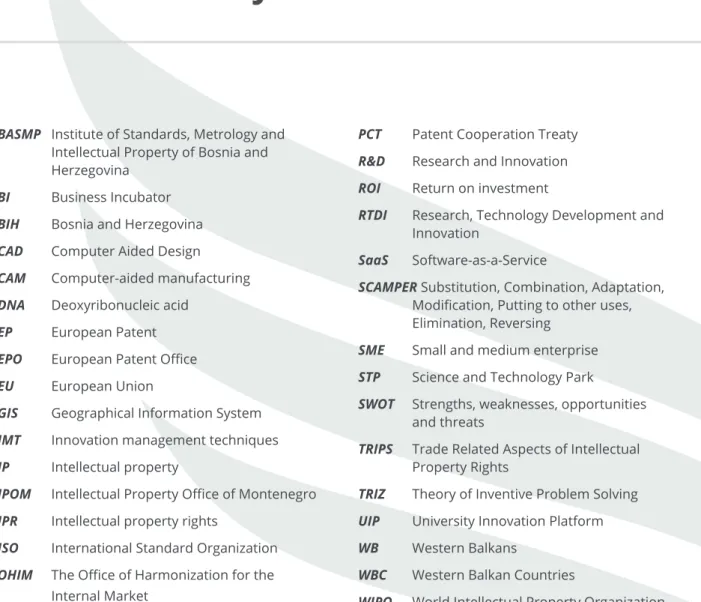
List of Abbreviations
Figures
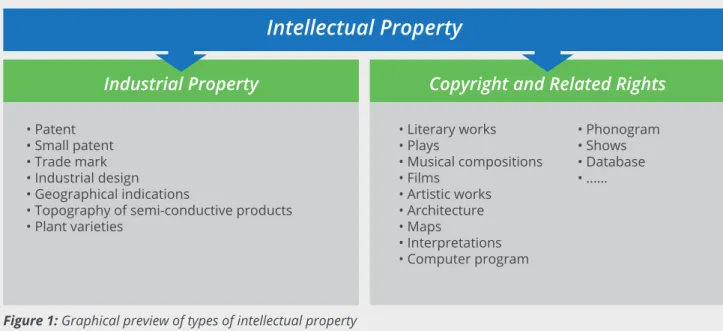
Figure 1 Graphical preview of types of intellectual property | 27
Figure 2 Scheme of the procedure for granting a patent and small patent | 33
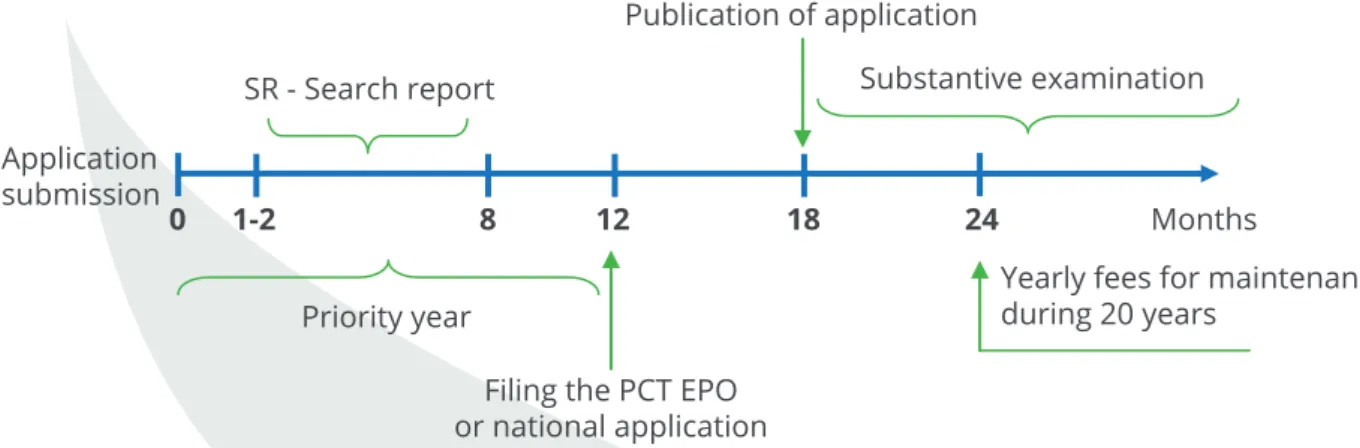
Figure 3 Timeline with important deadlines in the patent granting procedure | 33
Figure 4 Scheme of procedure for trademark registration | 40
Figure 5 Scheme of procedure for granting the right for industrial design | 43
Figure 6 Five steps of innovation process [3] | 49
Figure 7 Analytical innovation process workflow [3] | 50
Figure 8 Curve of cumulative profit/loss [3] | 55
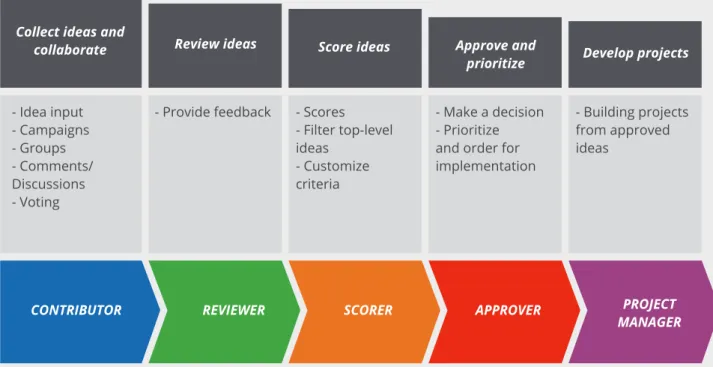
Figure 9 Idea management workflow and roles | 60
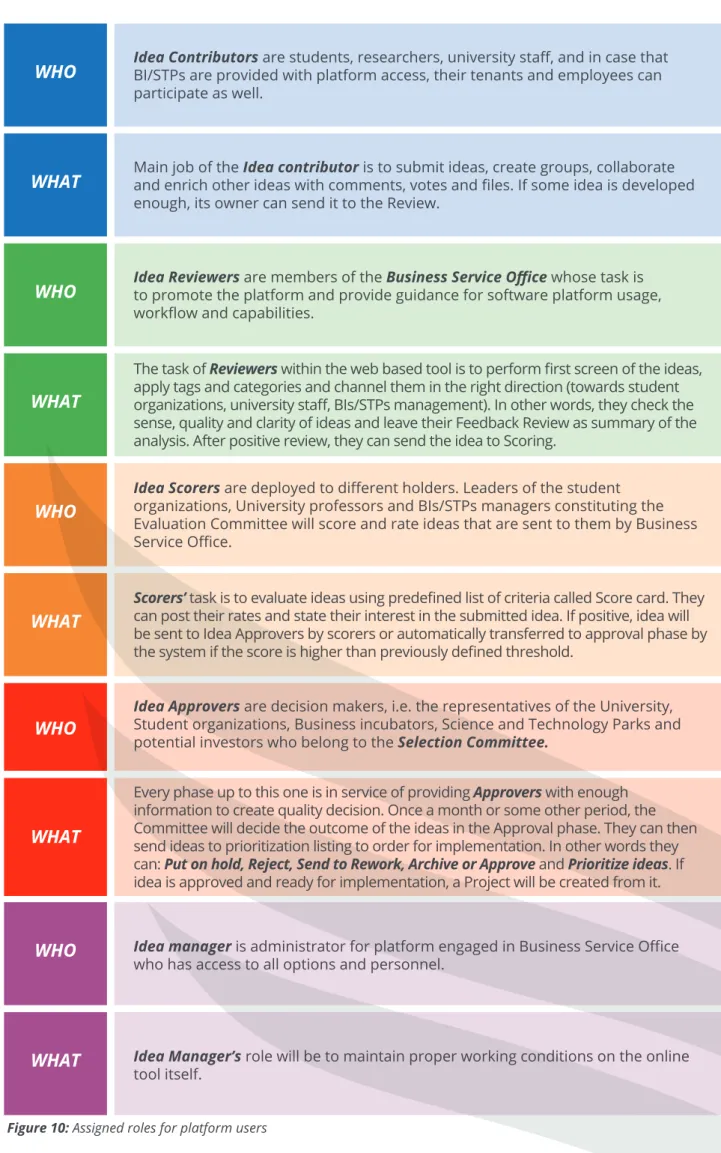
Figure 10 Assigned roles for platform users | 61
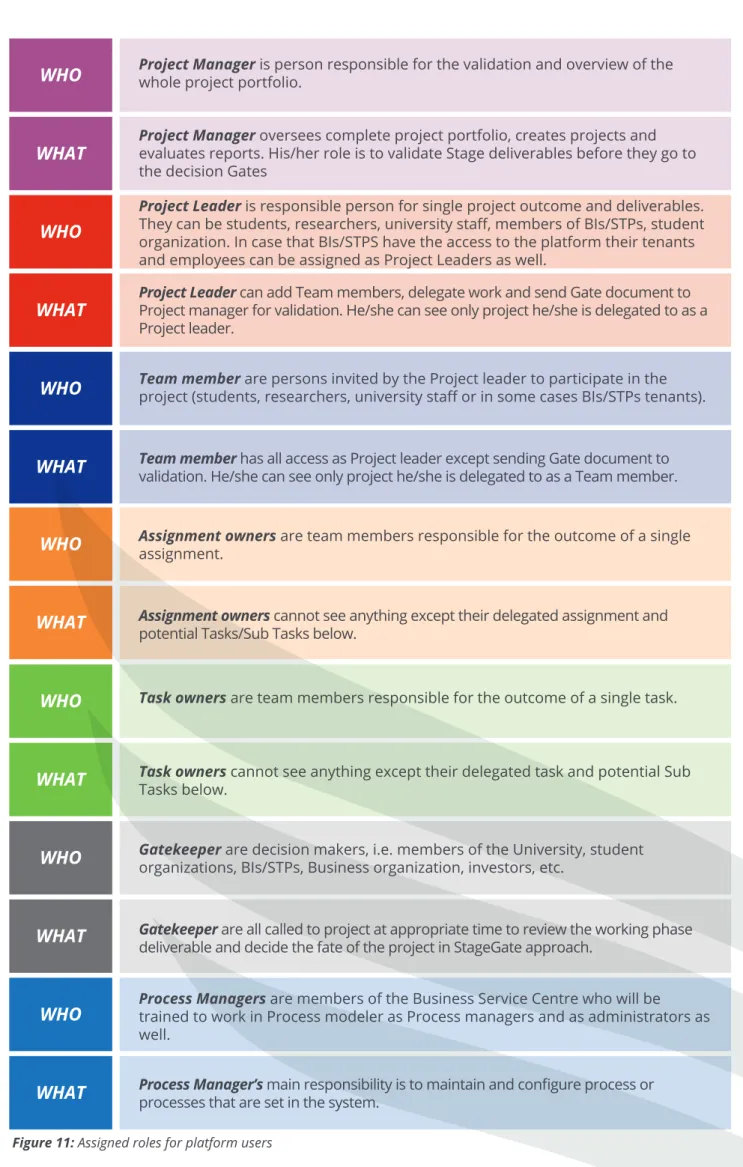
Figure 11 Assigned roles for platform users | 63
BASMP Institute of Standards, Metrology and Intellectual Property of Bosnia and Herzegovina
BI Business Incubator
BIH Bosnia and Herzegovina
CAD Computer Aided Design
CAM Computer-aided manufacturing
DNA Deoxyribonucleic acid EP European Patent EPO European Patent Office
EU European Union
GIS Geographical Information System
IMT Innovation management techniques
IP Intellectual property
IPOM Intellectual Property Office of Montenegro
IPR Intellectual property rights
ISO International Standard Organization
OHIM The Office of Harmonization for the
Internal Market
PCT Patent Cooperation Treaty
R&D Research and Innovation
ROI Return on investment
RTDI Research, Technology Development and Innovation
SaaS Software-as-a-Service
SCAMPER Substitution, Combination, Adaptation,
Modification, Putting to other uses,
Elimination, Reversing SME Small and medium enterprise
STP Science and Technology Park
SWOT Strengths, weaknesses, opportunities and threats
TRIPS Trade Related Aspects of Intellectual Property Rights
TRIZ Theory of Inventive Problem Solving UIP University Innovation Platform
WB Western Balkans
WBC Western Balkan Countries
Executive Summary
The Methodology for Innovation Management deals with the different aspects of the innovation management process starting from definition of ten recommended innovation management techniques, across the intellectual property aspects, review of innovation cycle phases with financial aspects to the
software innovation management support. All of these aspects are elaborated in the separate chapters. The introduction presents the general idea about the innovation management as a process. It gives the brief description of the WBCInno project and explains the background that led to the development of such publication and actors included in its elaboration.
The second chapter is focused on the innovation management techniques. Based on the Innovation Management and the Knowledge-Driven Economy [1], which deals with the overview of the trends and relevant actors in the innovation management process, the Methodology gives the list of ten recommended innovation management techniques that are most relevant for the development of knowledge-based economy in the WBC region. Innovation management techniques are presented as the set of tools and
mechanisms which support the innovation process, helping individuals and organizations/companies to
deal with the market challenges in a systematic way. Those techniques are: 1. Knowledge management techniques
Knowledge audits, Knowledge mapping, Document management, IP management 2. Market intelligence techniques
Technology watch, Patents analysis, Customer relationship management, Geo-marketing, Business intelligence
3. Cooperative and networking techniques
Team building, Groupware technologies, Supply chain management, Industrial clustering 4. Human resources management techniques
Online recruitment, Management, Corporate intranet, Tele-working techniques, E-learning,
Groupware tools
5. Interface management techniques
Concurrent engineering, R&D marketing interface 6. Creativity development techniques
Brainstorming, Lateral thinking, Theory of Inventive Problem Solving – TRIZ, SCAMPER method,
Mind mapping
7. Process improvement techniques
Workflow management, Business process re-engineering, Just-in-time, Total quality management,
Lean process technology
8. Innovative project management techniques
Pre-project management phase, Development project management phase, Post-project management phase, project portfolio
9. Design management techniques
Computer Aided Design (CAD) Systems, Rapid prototyping, Usability, Value analysis 10. Business creation techniques
The Chapter Intellectual Property Aspects deals with the general IPR aspects in three countries of the WB region: Serbia, Bosnia and Herzegovina, and Montenegro. This chapter also gives a preview of all types of intellectual property rights and the list of steps and procedures that need to be followed in order to protect those rights.
Innovation Cycle with Financial Aspect describes in details the innovation cycle, with its five stages as well as short preview of innovation financing issues:
1. Market research
2. Analytic design and technical feasibility 3. Detailed design and test
4. Redesign and production 5. Distribution and marketing
In the last chapter of this publication, the software support to innovation management is described
in terms of the special innovation management techniques used and their benefits for end-users of such software platform. This chapter also gives the detailed definition and description of Idea and Project Management workflows, along with the roles and responsibilities assigned within each of them. These workflows will be applied in the software platform that will be developed in accordance with this
Methodology. A brief preview of the platform features is also provided at the end of the chapter, in order to get this idea closer to its end-users.
© michaeljung - Fotolia.com © contrastwerkstatt - Fotolia.com
1
Introduction
Innovation management is the process that encompasses the whole range of decisions, activities and measures in order to facilitate the transfer of an idea into the business value. This process can be applied for all kind of ideas, whether it is about a product, process or a service. The focus of the Innovation Management is to provide the set of measures and tools which will facilitate the inventors to respond to the challenges in the whole innovation cycle and to turn their ideas into successful innovations on the market. As stated in the European Planning Studies [2], the innovation system includes three main elements: the knowledge generation sub-system, the knowledge application sub-system and the linkages between
these two sub-systems. The first sub-system includes the institutions whose main mission is to generate
and transfer the knowledge, such as research institutions, universities, technology transfer organizations,
etc. On the other side, the knowledge application sub-system is related to the business sector where
this knowledge is applied and exploited in order to solve everyday challenges. What seems to be
insufficiently developed in the Western Balkans region is the link that connects those two sub-systems.
This challenge was recognized by the WBCInno project which tends to contribute to the modernization
of WBC universities through the strengthening of their management structures/services for cooperation
with the world of business in the areas of knowledge transfer, research and innovation, as well as to the creation of strong entrepreneurial universities and innovative regions.
For that reason, one the main goals of WBCInno project is to develop the University Innovation Platform
(UIP) that will define the priority research areas for WBC universities and present the potential for research and knowledge capitalization. As it has been already defined within the UIP, one of the priorities for WBC region is to develop the collaborative software platform as an efficient online tool for innovation management. This Stage-Gate-based platform will gather new ideas from university staff, researchers and students, in order to boost knowledge transfer and commercialization of R&D results. As the first
step in its development, WBCInno project found necessary to develop this Methodology to describe the innovation management as a process, give a preview of the techniques successfully used in practice
and chose the most effective ones that can be successfully applied through the platform, taking into consideration the specificities of the WBC region. Besides, the Methodology offers the IPR background
of an innovation cycle, specially focused and aligned with the relevant legislation in Serbia, Bosnia and
Herzegovina and Montenegro, as well as with EU practice. In its final chapter, it provides the detailed
overview of the platform’s structure, roles and responsibilities assigned, and available features.
The Methodology for Innovation Management gathered the most relevant actors in its elaboration: representatives of knowledge-generating institutions (University of Kragujevac, University of Montenegro,
University of Zenica) and the company Intranea Solutions, as one of WBCInno project partner, whose
main expertise is implementation of the collaborative software platforms for innovation management.
Intranea has provided its expertise for the elaboration of effective innovation management methodology in describing the workflows, data structure, people involvement, action plan which are tailor made to project’s needs and specifics, according to global best practices in the field. The company also supports
this methodology technically by establishing DataStation Innovation Cloud as a software platform to
facilitate and implement the methodology piloting at five WBC universities (University of Kragujevac, University of Novi Sad, University of Banja Luka, University of Zenica, University of Montenegro).
© Gajus - Fotolia.com
2
Innovation Management Techniques
Innovation does not always mean to use advanced technologies. On the contrary, it is rather a way ofthinking and creativity expressed through development of new product, process or service. In this context, innovation management techniques (IMT) can be understood as the whole set of various measures and methods, whose application can help companies adjust more easily to the current market terms and requirements.
The impact of each of these techniques on the enterprises competitiveness development in the knowledge based economy where the knowledge is appropriately exploited is increasingly important. European Commission and Directorate-general for Enterprise developed the publication Innovation Management and the Knowledge-Driven Economy [1]. The aim of this publication was to provide an overview of the trends and most relevant actors in the development and application of the methods for innovation management in knowledge-based economy. For that purpose, Innovation Management Techniques are presented as the set of tools, techniques and methodologies supporting the innovation process in enterprises and helping them to deal with the market challenges in a systematic way.
For the purpose of this Study elaboration, 433 questionnaires were collected and accordingly 32 categories
are defined and grouped in accordance with their concept, objectives, application model and the impact
they have. By further selection, this list was narrowed down to eight categories the most convenient for raising the corporate competitiveness:
• Emphasis on knowledge • Strategic influence • Availability • Documentation level • Practical use • Technique age
• Resources necessary for implementation • Measurability
Based on the defined categories, the selection of 10 categories most relevant for innovation management
was carried out:
• Knowledge management techniques • Market intelligence techniques
• Cooperative and networking techniques • Human resources management techniques • Interface management techniques
• Creativity development techniques • Process improvement techniques
• Innovative project management techniques • Design management techniques
• Business creation techniques
Out of these ten, the most frequently used are those for project management (82%), business plan development techniques (67%), corporate intranet (66%) and benchmarking techniques (60%).
Knowledge management is the process whose main objective is to generate, collect and exploit the knowledge inside the organization in a continuous and systematic manner, and in this way improve its creative and innovative potential as a whole. With the proper combination of human resources, process and technologies management, this process is realized at two levels: management of the existing knowledge that is available inside the organization, and promotion of organization’s capacity to use new knowledge, regardless of its source (from outside or inside the organization).
Although this technique is suitable for implementation in all types of enterprises, it is still most commonly used in those with large number of employees, which naturally leads to the increased need to exchange the relevant information among employees in a controlled and systematic way. In those environments, the knowledge management technique is usually implemented through technology platform for information
and knowledge exchange, which can significantly improve the innovative potential, through:
Knowledge audits as a process of evaluation and auditing of innovation capacity, gives an insight into current knowledge base in an enterprise. In this way, the enterprise can take advantage of being able to identify shortages, information overloads, information duplication and barriers for the active data exchange;
Knowledge mapping gives the preview of the sources, flows, limitations or halts in the process of
knowledge transfer and exchange inside the organization. In order to map knowledge, it is extremely important to recognize it in all segments: processes, relations, communications, users and in various forms (as explicit knowledge, hidden, knowledge from outside and from inside the organization, etc.). Document management is the source of knowledge and innovations, whether we talk about manuals, reports, methodologies or other forms of documents. This is why it is of utmost importance to develop
tools for their classification, search, archiving and using in order to facilitate the management of those
documents through unique system based on information technologies.
IP management is the ground of general corporate strategy. It includes protection of products, corporate intellectual property and results derived from an organization’s innovation activities.
2.1 Knowledge Management Techniques
2.2 Market Intelligence Techniques
Market intelligence refers to detailed competition research and analysis which enables the enterprise
to collect, filter, analyse and distribute relevant reliable and timely information on information on
competition and end users, transforming thus information into knowledge as the ground for decision making process. Due to this, many of these techniques depend on information technologies, internet
particularly, which enable systematic processing and classification of information. They are most usually
realized through:
Technology watch as soon as some technological advance appears on the market in order to identify
potential innovation that can influence enterprise competitiveness and analyse possible changes in
behaviour of end users;
Patents analysis enables assessment of results competitiveness before the enterprise undergo an expensive research and development, applying for patent, etc;
Customer relationship management is about recognizing, establishing and improving the relationships with users in order to build their loyalty and trust;
Geo-marketing or thematic market monitoring for innovative sales and marketing planning. One of the
forms of this technique is Geographical Information System (GIS), a computer tool for generating the
map that can provide all information on users, target groups and market that can be easily filtered;
Business intelligence integrates all methods for collecting, filtering, analysing and distributing the
information needed for business.
© Serg Nvns - Fotolia.com
© contrastwerkstatt - Fotolia.com
Knowledge based economy requires team work of people from different departments and organizations
as well as connections among them which is most often realized through information technologies. However, the real challenge is to make a transition from communication to team coordination.
In order to successfully realize such coordination and to produce expected results, various initiatives have been developed lately to provide collaborative environment where knowledge, information and service exchange among relevant actors is encouraged.
In this way, organization can take advantages on various levels:
• Increase of creativity and easier problem solving inside the group • Improved, faster and clearer communication
• Developed corporate spirit
• Collection of various expertise and experiences in one place
• Forming of the group of people with common interests regardless of their current location • Reduction of travel costs for realization of joint activities
• Savings in coordination time and costs
There are many approaches to this technique. Some of them are as follows:
Team building, which improves the corporate culture inside the organization by fostering the collective obligation among members, encourages their active participation in the decision-making process, facilitates the delegation of responsibilities and provides complementarity, i.e. adequate structure of experiences and knowledge;
Groupware technologies as a kind of corporate software relying on three principles: communication (dissemination and collection of information), collaboration (information exchange and building the mutual understanding) and coordination (delegation of tasks inside the network);
Supply chain management, deals with suppliers, sub-contractors and users through active and controlled system that integrates the whole chain into one entity;
Industrial clustering groups the organization’s capacities with the same activities and interest on regional and local level in order to support their innovation process. The cluster members have strong support
through network and infrastructure provided by universities, research institutes, financial institutions,
incubators, etc. In this way, cluster members can additionally increase their competitiveness and reduce the time-to-market for their products, services and processes.
2.4 Human Resources Management Techniques
Human resources management is extremely significant aspect of business. Having in mind that
information technologies are increasingly developing as the support in this area, this technique is widely accepted as technological revolution, whether we are talking about employment, trainings, mobilities, internal communication or assessment of the work results, team building and employees productivity monitoring. Its application leads to improved innovative potential of an organization, because it facilitates the access to the outside specialized knowledge (through participation in the e-learning programmes), knowledge and experience exchange through corporate intranet and access to the most prominent
experts regardless of their current location. On the other side, it allows at the same time the automation of the employment process (through internet), more efficient system of productivity and work quality
monitoring, as well as improvement of internal communication. The most commonly used tools for human resources management:
Online recruitment via internet, whether it is simple advertising of vacancies or establishing the complete system for career development;
Management of employees competencies and skills;
Corporate intranet which through internet protocol and applications allows better availability of data, their facilitated monitoring and transfer within an organization. In this way, the decision making process is encouraged and improved with active participation of relevant actors;
Tele-working techniques which combine telecommunication and computer technologies, where employees can work from remote locations, from home, etc.;
E-learning consists of trainings organized through the network (intranet or internet), facilitating in this way interactive, personalized learning with large savings in time and money;
Groupware tools which enable groups to organize their activities within the network, offering various
options from appointment of meetings and sending the post to protection of the documents in the network.
Decision-making process is based on information coming from different departments within the organization (marketing, R&D department, production, financial or human resources department, etc.).
This is why it is very important to connect all these units and facilitate their interaction, in order to provide the quality operations of the organization and the decision-making process with it. If this kind of management is adequately exploited and applied not only to individuals but their knowledge as well,
it can improve the organization’s innovation potential and thus significantly facilitate the successful
realization of certain tasks or projects. Due to this, today we have several approaches in this area: Concurrent engineering is a systematic approach to an integrated, concurrent development of products and accompanying processes, including production and support system. This approach held development departments to analyse all elements of the life cycle of a product, from the concept to production and
disposal. Using the programming elements, knowledge based systems, CAD/CAM techniques, etc., reduces the product development time 30-70%, number of engineering changes 65-90%, time-to-market 20-90%. At the same time, their application increases the product quality 200-600% and administrative productivity for 20-110%.
R&D marketing interface as a form of interconnection between development and marketing department is of great importance for the organization business. It depends on the fact if the certain product is based
on technology research or on specific market requirements. If the organization can provide the quality
link between these two departments, good structure and decision-making process, this approach can be
very beneficial for the organization.
Development of creativity is the key element in the innovation process. It refers to creation of new ideas or combination of existing ones in order to innovatively improve the everyday problem solving. These techniques
not only decrease the negative filtering of ideas and early giving up the concepts, they also facilitate developing different solutions to one problem, connecting elements that usually cannot be connected.
One of the widely spread and used techniques for developing of creativity is brainstorming. This is a
method where a number of people simultaneously generate different ideas or solutions for defined
problems. In this process, there are no good and bad ideas. The success of brainstorming depends on the number of ideas (the more the better), which through combination can produce expected results. Lateral thinking implies non-traditional methods which in logical thinking are dismissed as inadequate. These nonconventional techniques increase the creativity and produce alternative solutions.
Theory of Inventive Problem Solving – TRIZ is creative approach based on existing solutions and available information for solving new problems, for example in order to determine application for already developed technology. SCAMPER method is the model of transforming one idea into several ideas. Its name is actually the
acronym Substitution, Combination, Adaptation, Modification, Putting to other uses, Elimination and
Reversing, which tells us about the main elements of the method itself.
Mind mapping could be defined as individual brainstorming, with the aim to investigate the ideas by
graphically connecting of the term (which represents the problem) with ideas for its solution.
2.5 Interface Management Techniques
2.7 Process Improvement Techniques
The process of improvement allows the breakdown of tasks to the set of measures and steps in order
to find the most efficient way to exceed the expectations and pre-defined requirements of the process.
The success of this technique is based on its continuity and constant adaptation to the business and
technology requirements. Using different shapes and methods facilitates discovering and testing of the
problems cause, easier planning of activities for the business process improvements, their realization
and application in controlled environment, achieving of higher efficiency, etc. some of those techniques
are:
Workflow management is the process of automation of organization’s internal activities and tasks, which leads to simpler and channelled business processes and procedures. In other words, the document,
information and tasks inside the organization “flow” in clearly defined way following the internal rules
and procedures.
Business process re-engineering is the way to restructure and transform business processes and procedures, both industrial and administrative, in order to achieve essential improvements in the price and quality of the product or service, but also of the organization itself. This method eliminates activities
that lead to efficiency reduction, simplification of procedures and introduction of alternative processes, through series of steps from isolating the business process itself and its definition, through identification
of measures necessary for its improvement to the control of those measures’ application results; The process known as just-in-time is today the most widely spread in industry, especially in production and logistics sectors. It means that certain activities are realized or parts are delivered exactly when needed – not before (to avoiding piling up), and not later (to avoid being late). In this way, the maximum can be achieved in every segment of production or logistics, increasing the enterprises’ capacity to respond to dynamic requirements of their end users.
Total quality management is the process where all activities and processes values are improved to the highest possible level. The main objectives of this technique are to provide internal and external users with products and services that permanently satisfy their demands. Also, this eliminates the procedures that lead to losses in money, time or reliability of a product or a service. This type of management is based on internal control within every system unit, where employees on all levels are expected to participate in the decision making process relevant for their activities.
Lean process technology is the concept based on removing all traditional activities that do not have added value (changes, waiting period, postponing, etc.) in order to prevent unnecessary resources spending. This concept was developed from the production system of Toyota, and it can be implemented in almost every production environment.
There is substantial tendency today that all innovation should be realized through projects, regardless of the area they are in or the size and structure of the organization. Through projects, this type of management is directed to research and development, production and marketing, with an experienced
leader team whose main role is to secure the quality if technical and financial realization in each of these
segments.
Successful management of innovation projects means pre-defined action plan, deadlines for completion
of tasks (milestones), resources planning, etc. however, organization often come across some unexpected barriers and problems in their projects, risking in this way the achievement of the set goals. In order to prevent and mitigate those risks, the best solution is to break down the whole process into three phases: pre-project management, project development management and post-project development.
Pre-project management phase refers to the selection and assessment of the project idea and the
very beginning of the process realization. However, sometimes, there is insufficient information and
knowledge, so the project idea can be poorly assessed, organizations are not able or do not have enough
capacities to realize the idea, etc. The most efficient way to avoid this risk is to develop strategic approach
to this process.
Development project management phase refers to integration of the different capacities and resources. The greatest challenge in that process, especially for organization still developing, is to find the competent
team that can develop an adequate approach to the management process and to professionally and
efficiently respond to project realization requirements.
Post-project management phase is not related to the project development, but to long-term sustainability and further improvement after the project completion. What appears to be extremely important is to learn from experience and to know the organization very well. This is important because even the most successful development projects can face the problems when they come to the point where the sustainability of project needs to be ensured: there is large number of complex interaction that need to
be analysed, sometimes it is difficult to foresee the nature of results before they are achieved, lack of
time or too great pressures to start the next project, etc. This is why the project leaders are the one who must identify the need to improve and expand this kind of knowledge and to shape their experience into systems, tools and procedures that others in the organization can apply.
Very important segment in innovation project management is project portfolio. It is used to define the
areas and segments in which some organization can successfully realize innovative processes, through generation of new and combination of existing ideas in order to respond to market demands. The aim of project portfolio is to make a selection and combination of innovative projects, where organization can take the best advantage of available resources, to expand or create new market for the application of new technologies.
2.9 Design Management Techniques
Today, the design of new products goes beyond simple optimization of design or development process. Besides these, it has to satisfy simultaneously many external factors that need to be considered in early product development phase (buyers’ requirements, quality, production costs, impact on environment, recyclability, etc.). All these lead to the point when the design can no longer be considered as isolated activity, but as in interaction with other segment of product development. Using design management techniques allows the product to respond to the market requirements, to reduce development costs
and time necessary for its commercialization, and provides efficient coordination of all activities related
to design and development. However, only integration of mentioned objectives into one development strategy in accordance with the organization’s capacities, can produce substantial results.
Computer Aided Design (CAD) Systems use powerful computer tools for advanced product design. They include simulation and modelling with the aim to test functionality of a design and provide incomparably more possibilities than traditional design.
Rapid prototyping is technique which is used to directly transform the CAD models into physical models, without using tools or other conventional methods. In this way, the productivity is improved, especially in production industry, because costs of product development from concept to market are drastically reduced.
According to the International Standard Organization (ISO), usability of a product depends on the
simplicity, efficiency and functionality of its application in order to solve problems and tasks in certain
environment. This is why usability is considered to be the measure of potential of a product on the market and can be applied on all types of products.
Value analysis is systematic review of a product’s existing design with the aim to test and analyse those
specific features and functions defined by the users, as well as to answer to those requirements without
great expenses, at the same time keeping the functionality and reliability of the product. This is why the
main objective of this technique is to reach the highest degrees of efficiency through improvement of
products and processes, eliminating all necessary costs.
The most critical phase in the development of an enterprise is the early development phase. Decisions
made in this phase can significantly influence the enterprise in long term. However, when business
process is considered, the main part of the research is directed towards already developed enterprises. Very little attention is paid to the process of creation and establishment of the enterprises, especially technological ones. In order to develop successfully from the beginning, the enterprise must undertake certain steps:
• Formulation of business idea and definition of commercial direction • Development from idea to final product
• Definition of market
• Development of operative organization • Setting up of key expertize
• Dedication of group of key people and motivation of each of them individually • Building relations with users
• Establishing the links with other enterprises
For development of enterprises, business environment within a country is crucial and has direct impact to the enterprises’ internationalization process, availability of facilities and infrastructures,
but also entrepreneurial climate (available financing and subvention mechanisms), education and
training, knowledge and technology transfer, etc.). The role of universities and research institutions in this process is increasingly important, especially if we have in mind that lately they tend to promote their entrepreneurial capacities through engagement of students, professors and researchers into the commercialization of research results. Following examples illustrate the techniques of business creation successfully applicable in the practice.
Virtual incubator is internet based system with the aim not to provide only offices and laboratory space
like traditional incubators, but also to provide other services necessary for entrepreneurs such as support on the process of development from idea to the business plan, application of the business plan and the
first activities on the market, support in the financing, institutionalization, restructuring, management, etc.
Spin-off is very efficient modality for improvement of innovative application of research results. It presents
the strong link between two worlds: science and research on one side and industry on the other side. Its success depends on the level of entrepreneurial structure development, available seed and venture capital, network opportunities, etc.
Entrepreneurship is the process to initiate, organize and innovate in business process, with the main
aim to create new markets and produce profit. Lately, entrepreneurship has become the key segment of
economic development in the whole world and increasingly more attention is paid to the establishment and development of culture rich with knowledge, skills and capacities, but also with creativity and entrepreneurial spirit.
Business plan, according to the traditional definition, is a document whose aim is to define development process of an enterprise, to provide innovation description and validation, to define action plan and project implementation. At the same time, through clearly defined aspects such as investment return time, founder’s qualifications, market opportunities and technology, the enterprise can create strong
negotiation arguments in the process of selling its project to investors.
© michaeljung - Fotolia.com
3
Intellectual Property Aspects
The Republic of Serbia, in its legal continuity through the Kingdom of Serbia, was one of the 11 founder
countries of Paris union for intellectual property rights in 1893, although the Office for industrial property
was founded in 1920. The Republic of Serbia is the signatory of all international conventions from the area of intellectual property and is a member of the most important international intellectual property
organizations, such as World Intellectual Property Organization (WIPO) and European Patent Office (EPO). The membership in The Office of Harmonization for the Internal Market (OHIM) is conditioned
by the accidence of Serbia to the European Union. All laws that regulate the terms and procedures of acceptance of intellectual property rights as well as the rights holders, are in line with the European legislation and the Agreement on Trade Related Aspects of Intellectual Property Rights (TRIPS).
All data related to the intellectual property in Bosnia and Herzegovina were taken from the web-site of the Institute for intellectual property of Bosnia and Herzegovina [3] (http://www.ipr.gov.ba/bs/).
This Institute is legal successor of the Institute of Standards, Metrology and Intellectual Property of
Bosnia and Herzegovina (BASMP) which was founded on October 1st, 1992. Since then, three laws have
regulated the Institute status. In September 2004, the Law on Establishment of Institute for Intellectual
Property of Bosnia and Herzegovina was brought defining it as independent state organisation (“Official Gazette BH”, number 43/04).
The process of dividing of the Institute predecessor (BASMP) into three separate state institutions lasted until the end of 2006. By Decision from 29th December 2006, the Institute took over the activities from the area of intellectual property that were previously carried out at the Institute of Standards, Metrology and Intellectual Property of Bosnia and Herzegovina (BASMP), and since 1st January 2006 it performs its activities as independent institution.
Bosnia and Herzegovina signed all international conventions and contracts which define the area of
intellectual property rights with international and European organisations. The complete list of these
decisions on ratification of contracts, protocols and conventions can be found at the web-site http://www.ipr.gov.ba/bs/.
It should be also noted that the Agreement between the Council of Ministers of Bosnia and Herzegovina
and European Patent Organisation on Cooperation in the Field of Patents, The Regulation on ratification
of Contract on Cooperation in the Field of Patents(PCT) and Agreement on Trade-Related Aspects of Intellectual Property Rights (TRIPS Agreement).
Montenegro is the member of WIPO since 2006 (same year the country established independence), but we can safely say that it was the establishment of Intellectual Property Office of Montenegro [4] (May
2008) that boosted the process of the respective legislative framework and bylaws development (http:// www.ziscg.me/index.php/en). The Office is operating under the umbrella of the Ministry of Economy,
focusing its activities on coordination of the process of establishing a sustainable IPR protection system in the country.
Several laws have been adopted over the last years, facilitated by the rapid EU integration process, with next positive boost coming from the ongoing EU membership negotiation process. Chapter 7 – Intellectual Property Law is the acquis chapter where IP is negotiated. So far, within the process of screening it has been concluded that “Overall, Montenegro has reached a high level of alignment with the acquis in the area of IPR. Montenegro has also demonstrated that it has the basic administrative capacity to enforce IPR effectively. Montenegro has to maintain an effective and operational monitoring system of the implementation of its IPR strategy. It has to demonstrate efficient coordination between different bodies involved in IPR protection, including adequate IT infrastructure.”
Speaking of RTDI institutions, there are still no internal IP management, protection and support system in place. However, the issue is seen to be of utmost importance, and to be tackled on the institutional level
in the period to come, starting with defining IP ownership, through providing strategic and structural
support to the researchers.
Intellectual property is a result of people’s activity when innovating some product or process through new
and original ideas. The creators of intellectual property want to protect their efforts and investment from
unauthorized use and competition, which is guaranteed by the intellectual property rights. Intellectual property rights (IPR) is a term that includes all rights concerning industrial property and copyrights and
related rights. The industrial property rights include: patent/small patent, trademark, industrial design,
geographical indications, topographies of semiconductor products and plant varieties.
In the Republic of Serbia all industrial property rights, copyright and related rights have separate law
to determine the conditions and procedure of protection and holders rights. What makes significant difference in the process of obtaining those two types of rights is that for getting exclusive rights for industrial property a legal procedure has to be initiated at the Intellectual Property Office [5] (http:// www.zis.gov.rs/home.59.html), while copyright and related rights are protected per se if they have been recorded on any data-bearing media or presented in some particular form.
In Bosnia and Herzegovina, the system of intellectual property includes the whole series of elements that can be grouped into three components whose establishment and harmonised functioning allow the system to operate as a whole: legislation, institutions and users. Applied legislation relates to international
conventions and contracts, national laws defining industrial property and copyrights and related rights,
3.2 The Role of Intellectual Property Rights
as well as we the set of by-laws and Methodology of the Institute’s practice in relevant administrative procedures in the matters concerning intellectual property rights.The principle that copyright is acquired without forma procedures is applicable in most countries worldwide, including BIH.
In Montenegro, as mentioned, IPR is regulated through a set of laws that are supported by the overarching strategic framework of the National Strategy on Intellectual Property Rights (2012 - 2015), adopted in December 2011.
The Strategy objectives are focusing on the improvement the IPR implementation, increasing economic
growth through efficient use of the IP, improving methods on managing IP, raising awareness about value
of IP and importance of the IPR implementation and last, but not least, improving and modernizing ICT systems related to IP. The Strategy also deals with the institutional framework for IP issues, identifying
main actors: Ministry of Economy, IPOM, Customs Directorate, Directorate for Development of SMEs,
ministries in charge of science and education, as well as other relevant stakeholders.
• Intellectual property rights give their holders the legal remedy to exclude others, usually competitors, from commercial exploitation of the protected product. More precisely, they can prevent: production, use, selling, marketing and advertising of protected product, process or service without the consent of the rights holder.
• Intellectual property rights transform innovations and creations into market values and goods of an enterprise/rights holder. IP right can be sold, licenced, pledged or transferred to a third party.
• Intellectual property is a valuable source of information for enterprises, scientific researchers and those who work on product development. Since for some IP, the publishing of relevant information is mandatory in exchange for monopoly on certain rights, inexistence of information on certain technical solutions, trademarks and design in the IP registers provide the possibility of their free use.
• Intellectual property rights have the role in marketing of product or services and promote their reputation. With the strong brand or superior product, it is easier to return the investments in development and launching the product, because better perception on quality of products and services can be achieved in customers.
Intellectual Property
Industrial Property
• Patent • Small patent • Trade mark • Industrial design • Geographical indications• Topography of semi-conductive products • Plant varieties • Literary works • Plays • Musical compositions • Films • Artistic works • Architecture • Maps • Interpretations • Computer program • Phonogram • Shows • Database • ...
Copyright and Related Rights
• For optimal protection of products or services in terms of time and resources, a certain strategy should be developed and following questions should be considered.
- Is the protection necessary? Is there a chance that it will be misused by others?
- What kind of protection is the most appropriate? Besides formal ones, already stated above, protection of business secret or know-how through contracts with employees within an enterprise
or with third parties could be more efficient. Even publishing the papers and articles can be a way to
break the novelty condition so that third parties cannot protect the same product (patent, design)? - Which IP right to choose so that it covers all aspects of a product? Patent for an invention, trademark or industrial design for the new product look?
- In which countries do you want to launch your product? Would it be under your name or your partner’s name for that country? Are you ready to protect you product from rights infringements in
the countries where the product has been launched? What is the balance of costs and profits?
- Also, the others’ rights should be taken into consideration. Is others’ rights are infringed? Do you follow activities in innovations and creativity of competitors?
1) Additional 5 years of protection can be provided for patents for certain human or veterinary medicaments and plant protection products. It is called Supplementary Protection Certificate.
2) Optionally, in Intellectual Property Office copyright can be deposited as a way of providing proof in possible
dispute and a certificate on depositing in the IPR Office, but it cannot be considered as proof of authorship
3) There are some exceptions in duration of copyrights and related rights such as rights of interpreter, phonogram producers, and data base creators, etc.
Type of rights Patent Trademark Design Topographies of semiconductor products Geographical indications Copyright Protection subject Invention which represents technical solution of a certain technical problem
A mark that can label the goods or services in the market Mark can be a company’s name, sign in a word, logo, combination of words and colours, etc.
External appearance of a product or some of its parts that can be two or three dimensional 3-D configuration of semiconductor products Natural, agricultural, industrial and trade products and services
Original work
expressed in certain forms (literature, musical composition, art works, computer programs, etc.)
Through registration in the process of patent approval at
relevant IPR office in the country / region
where the protection will be applied Through registration in the procedure for trademark protection in the corresponding
IPR office
Through registration in the procedure for design protection in corresponding IPR
office
Through registration in corresponding
IPR office within two years from first
commercial use Through establishment of geographical indication at corresponding IPR office Copyright is active from the moment of creation without any additional procedures of protection2).
Maximum up to 20 years with maintenance of those rights at yearly level1)
Duration of a trademark is 10 years with possibility of unlimited prolongation by paying a tax for following 10 years
Duration of design protection is maximum 25 years with maintenance of rights on yearly level
after first five years
10 years Geographical indications has unlimited duration. Authorized users of geographical indications renew their rights every three years
Author’s ownership
rights last during his/
her life plus 70 years
after his/her death3).
• Novelty
• Inventiveness level • Industrial applicability
• Suitableness • Distinctiveness • It is not similar with
existing, previously protected trademark or a trademark in the procedure of protections on the territory where protection is to be applied • Novelty • Individual character of a design Semiconductor product is not generally known at the time of its development Product coming from certain geographical area whose quality, special properties, reputation and other characteristic are conditioned by the geographical area or can be assigned essentially to that area
• It has to be a work of
a man
• It has to be recorded,
the idea is not
sufficient
• It has to be original
Protection
conditions Claiming the rights Duration
What is a patent?
• Patent protects the invention from any technical area which presents new technical solution of a certain problem, with certain inventiveness level and industrial application
• Patent is territorial right and is valid in the countries where it is granted. It is valid for 20 years from
the date of imitating the procedure of protection that is from the date of delivery of application. Patent gives right to its holder to prevent third parties from commercial exploitation of protected invention
without his/her approval
What cannot be patented due to lack of “technical character”?
• Discoveries, scientific theories and mathematic methods • Aesthetical creations
• Plans, rules and procedures for performing intellectual activities, for game playing or work
performance
• Computer programs per se(but inventions applied via computers are patentable) • Information preview
What is not patentable from other reasons?
• Inventions whose commercial use would be against public order and ethics • Surgical and diagnostic procedures or medical procedures on people and animals • Plant and animal species
What should not be done if you are to file a patent application?
• Do not publish information on invention before filing the patent application, for example in the form
of articles in newspapers, conference presentations, fair exhibitions, blog information, etc.
• Do not sell the product with incorporated invention before filing the application
• Do not give lectures or presentations before filing an application unless the Non-Disclosure
Agreement is signed
... because it “annuls“ the novelty as the basic condition for granting the patent.
3.3 Invention Protection – PATENTS
National patent office:
• National patent is valid only in the country which issued the patent • Non-residents can also file an application in any national office
• The “priority year” is provided (12 months) for filing and application in other national/regional offices
European Patent Office – EPO:
• One patent procedure with the possibility to extend it on 38+2 European countries
• In all EPO member countries (Serbia is one of them) or countries that are members of expanded list, European patent gives to its holder the same rights as the national patent in his/her own country
Using the PCT route:
• With one international PCT route filed through national office to WIPO, the procedure for patenting
in 148 countries is initiated
• After PCT application initial phase, international application leads to multiple national procedures for
reviewing patent applications
• Decision on the selection of the territory of the countries/regional offices for further procedures is postponed, as well as implications of the costs until 30-31 months after the first application submission
– the date of priority
Where to file application to protect the invention?
*There is no international patent applicable for the whole world!
*Country in which the invention was created often is not the most significant for commercialization of the invention! That is why the international protection should be taken into consideration on time.
3.3.2 Filing the Patent Application
National Patent Office
Intellectual Property Office European Patent Office Using the PCT routeWIPO
3.3.2.1 National Route: the Republic of Serbia
Intellectual property office of the Republic of Serbia is a national institution for protection of industrial
property rights (patents, petty patents, trademarks, industrial design, geographical indications, and topographies of semiconductor products).
Who can file an application for the patent/petty patent?
• The right for protecting the invention belongs to the inventor or his/her legal successor or the heir, as well as his/her employer or his/her legal successor
• If more inventors made an invention by their joint work, they have a joint right to protect intellectual
property
• Employer has the right to protect the invention made by an employee within his/her regular work activities or within specific activities at his/her workplace
What does patent application need to have?
• A request for a patent
• A description of the invention • One or more patent requests • Drawings
• Abstract
Which forms of protection are there in Serbia?
Patent and petty patent. Patent can protect the product, process and application of product and process. The patenting procedure itself has several phases, out of which the most important is report on search within 8 months from the application date, so that applicant could decide whether to move on with the protection procedure or to start international protection procedure, which should be done in order to keep the application date before the expiry of priority year (12 months from the
date of filing the national application).The application is published within 18 months or sooner at
the applicant’s request and substantive examination has to be done, after which the patent is either granted or refused. A granted patent has maximum duration of 20 years with the yearly fee for its maintenance. There is also a useful model or petty patent as a form of IPR in some countries such as Austria, Germany, Spain, Russia, Australia, Croatia and others. In the Republic of Serbia, petty patent
can protect only the product in terms of construction and configuration of its elements. Opposite to a
patent, petty patent has maximum duration of 10 years, and during the application procedure there is no substantive examination. The procedure is completed by granting the unexamined petty patent. © pressmaster - Fotolia.com
When filing the patent application or petty patent application, a fee has to be paid. The fees for filing the
application, maintenance of patent and other costs that have to be paid in the granting procedure in the
Intellectual Property Office can be seen on the website of the Intellectual Property Office. Additionally, if applicants decide to ask for assistance in the procedure clarification and composing the patent application, they can come to the IPR Office or Institute and seek assistance of the authorized counsellors
whose lists and contacts can be found on the websites.
Intellectual Property
PATENT applicationFormalities examination Search report
Publication of patent application Substantive examination
Decision to grant and publishing the patenting act
Submitting an application for PETTY PATENT Petty patent formalities examination Decision to grant and publishing the petty
patenting act
Figure 2: Scheme of the procedure for granting a patent and petty patent
Figure 3: Timeline with important deadlines in the patent granting procedure
SR - Search report Substantive examination
Publication of application
Priority year
Filing the PCT EPO
or national application
Yearly fees for maintenance during 20 years Months Application submission 24 18 12 8 1-2 0
Intellectual property office of Serbia
Kneginje Ljubice 5 11 000 Belgrade www.zis.gov.rs
3.3.2.2 National Route: Bosnia and Herzegovina
The procedure for acquiring, maintaining, ending and recording of patents and consensual patents is led by the Institute for Intellectual Property of Bosnia and Herzegovina (the Institute). It maintains the Register of Patent Applications and the Register of Patents.
The phases of the patent grant procedure: 1. Filing an application with the Institute
2. Formal examination of the application in the Institute
3. Publishing the patent application in the Official Gazette of the Institute, available in paper and
electronic forms on the Institute’s web-site www.ipr.gov.ba
4. The applicant’s request to the Institute related to the type of examination of the patent application.
Within six months from the publication date of the patent application in the Official Gazette, the applicant files the request for:
- the grant of a patent based on the substantive examination of the patent application in the Institute, or
- the grant of a patent based on accepted submitted results of substantive examination of the patent application carried out by some other authority, or
- delay of substantive examination of the patent application and the grant of a consensual patent 5. Examination of the patent application in the Institute
6. Issuing of a decision to grant a patent by the Institute
7. Publication of the patent in the Institute’s Official Gazette
Filing the patent application
The procedure is initiated by filing the application for granting the patent with the Institute. It is required to file the filled in application for grant of a patent, supporting documentation and the evidence on payment of necessary costs. The application is filed in written form, directly or by post, telefax or to official email of the Institute, provided that the written form is filed to the Institute within 15 days after its electronic submission. The separate application is filed for each invention.
Patent application consists of:
• request for the grant of a patent (P1 Form) with notification that granting of the patent is required, as well as with title of the invention reflecting its essence, information about the applicant and inventor.
The Request is available at the Institute’s web site: www.ipr.gov.ba • invention description that needs to be clear and detailed
• one or more patent requests that need to be clear, concise and fully supported by the invention description and drawings (if any)
• drawings that invention description and patent requests refer to
• summary of the invention essence that serves exclusively for the purpose of providing technical information
The form should be filled in on computer or type writer. It is applied in one of the official languages
in Bosnia and Herzegovina, in two copies, and other accompanying application documents should be submitted in one copy. Institute keeps one copy, and the other with the number of patent application,
incoming correspondence serial number, date and official seal is delivered to the applicant and serves as
proof in determining the patent application date.
The following accompanying documents should be submitted with the application:
• The proof (original money order) of the payment of administrative fee and the prosecution costs • Inventor’s statement in case he/she does not want to be mentioned in the application
• Power of attorney if the application is filed through a representative • Statement on joint representative in case there are several applicants
For further information, the Regulations Concerning Procedure for the Grant of a Patent and a Consensual Patent should be referred.
Costs of patent application and maintenance
For all procedures of acquisition, maintenance, recording of transfer and termination of patent, as well as for provision of information services, administrative fee and application procedure costs should be
paid at bank or post office. The amount of these fees and costs can be found on the Institute’s web-site www.ipr.gov.ba, section Fees and Costs-Patent.
The proof of payment is to be submitted in application procedure. If the patent is granted, the right holder is obliged to pay maintenance fees very year.
Hiring the legal representative
Hiring the legal representative by national natural person or national legal entity is not an obligation
regulated by the Law, so the applicant decides on his/her engagement.
The register of patent attorneys is available in electronic format on the Institute’s web-site www.ipr.gov.ba. © XtravaganT - Fotolia.com
Duration of patent protection
Patent can be protected only for a limited period. The patent lasts 20 years, while consensual patent lasts 10 years from the application submission date.
Difference between the patent and consensual patent
Patent and consensual patent differ:
• According to the protection duration – patent lasts 20 years, and consensual patent lasts 10 years
from the application submission date;
• According to the application procedure – during the application of consensual design, the procedure
of substantive examination* of grant condition.
* Procedure without substantive examination simplifies the procedure of granting the patent and reduces the accompanying costs. But, every natural and legal entity can file an opposition against the grant of consensual within the period of six months from the date of publication of patent request to the Institute. After that, the applicant needs to file an application for substantive examination of the patent. More information on the patent protection can be found in Patent Law.
The patent granted in BH is valid only for BH.
Institute for intellectual property of Bosnia and Herzegovina
Institute
88000 Mostar, Kneza Domagoja bb
Tel: + 387 36 334 381 Fax: + 387 36 318 420 Tel: + 387 36 334 382
E-mail: [email protected] Institute subsidiary
71000 Sarajevo, H. Ćemerlića 2/IX Tel: + 387 33 652 765
Fax: + 387 33 652 757 Tel: + 387 33 652 798
(for national/international trademark) Tel: + 387 33 618 095 (for patents) Tel: + 387 33 521 848
E-mail: [email protected]
Institute subsidiary (PATLIB centre) 78000 Banja Luka,
Kralja Petra I Karađorđevića 83A Теl: + 387 51 226 840
Fax: + 387 51 226 841
![Figure 7: Analytical innovation process workflow [6]](https://thumb-us.123doks.com/thumbv2/123dok_us/31906.2504476/50.892.87.795.86.858/figure-analytical-innovation-process-workflow.webp)
![Figure 8: Curve of cumulative profit/loss [6]](https://thumb-us.123doks.com/thumbv2/123dok_us/31906.2504476/55.892.77.815.161.666/figure-curve-of-cumulative-profit-loss.webp)