University of Bradford eThesis
This thesis is hosted in
Bradford Scholars
– The University of Bradford Open Access
repository. Visit the repository for full metadata or to contact the repository team
© University of Bradford. This work is licenced for reuse under a
Creative Commons
Licence
.
A HEURISTIC FEATURE BASED QUANTIFICATION
FRAMEWORK FOR EFFICIENT MALWARE DETECTION
Measuring the Malicious intent of a file using anomaly probabilistic scoring and evidence combinational theory with fuzzy hashing for malware detection in
Portable Executable files.
Anitta Patience Namanya
Submitted for the degree of Doctor of Philosophy
School of Electrical Engineering and Computer Science University of Bradford
ii
To my Mum and Dad, Alice and Nathan for their love, prayers and never
ending encouragement.
To Mac, thank you for being you.
To Amara, very excited to meet you.
To my sisters Itah, Anolyne, Anglyne and Anabella, the best siblings anyone
would ever ask for.
iii ABSTRACT
Anitta Patience Namanya “A HEURISTIC FEATURE BASED QUANTIFICATION FRAMEWORK FOR EFFICIENT MALWARE DETECTION”
Keywords: Malware detection, evidence combinational theory, hashes, portable executable, file features, anomalies, probabilistic scoring, automated static analysis, malware
Malware is still one of the most prominent vectors through which computer networks and systems are compromised. A compromised computer system or network provides data and or processing resources to the world of cybercrime. With cybercrime projected to cost the world $6 trillion by 2021, malware is expected to continue being a growing challenge. Statistics around malware growth over the last decade support this theory as malware numbers enjoy almost an exponential increase over the period. Recent reports on the complexity of the malware show that the fight against malware as a means of building more resilient cyberspace is an evolving challenge. Compounding the problem is the lack of cyber security expertise to handle the expected rise in incidents.
This thesis proposes advancing automation of the malware static analysis and detection to improve the decision-making confidence levels of a standard computer user in regards to a file’s malicious status. Therefore, this work introduces a framework that relies on two novel approaches to score the malicious intent of a file. The first approach attaches a probabilistic score to heuristic anomalies to calculate an overall file malicious score while the second approach uses fuzzy hashes and evidence combination theory for more efficient malware detection. The approaches’ resultant quantifiable scores measure the malicious intent of the file.
The designed schemes were validated using a dataset of “clean” and “malicious” files. The results obtained show that the framework achieves true positive – false positive detection rate “trade-offs” for efficient malware detection.
iv ACKNOWLEDGEMENTS
I would like to thank God for everything; His Grace, Guidance and the faith I have in Him to enable me finish this study. I would like to thank my parents for loving me unconditionally and their belief that allowed me to believe that I could accomplish all I set out to do. I am eternally grateful for Mac, baby Amara and my sisters. You are the inspirations that make me do my best each day.
I am very grateful to the University of Bradford for funding this research degree. This was an amazing opportunity that I shall forever be thankful for.
This work would not have been possible without the untiring support of my supervisors; Prof Irfan Awan, Dr Jules Pagna Disso and Dr Andrea Cullen who gave me so many chances to get this right that I am glad, I did not let you down. Thank you very much for your belief in me and your support. I also would like to extend both my examiners for the corrections suggested that enabled me to make this thesis a better write-up of my work.
My guardians in faith; Pastor Akpo. Pastor Andrea and Chapel of Grace friends, thank you for standing with me in prayer and being my tether to the Lord that makes all things amazing in His time.
A big thank you to Nettitude Ltd for all the support during this study. Access to data, technical support and the opportunity to work with such an amazing group of people shaped my thinking process every day.
I am indebted to all my siblings for being the much-needed inspiration, my colleagues in the cybersecurity research group; Adeeb, Rashid, Qublai and Hammad for being great sounding boards in these 4 years. To my new working family at Nettitude especially my boss Mark, my colleagues in Research at Bradford, thank you for all the laughter and jokes that kept me sane. To all my friends and family that kept me believing I could do this, Rashid, Mac, Bashir, Kabiru, Odili, Mwanja, Kemi, Pamela, Amanda, Aunt Joy, Aunt Jadress and many others, thank you and May God bless you.
v PUBLICATIONS:
1. Namanya, A.P; Pagna-Disso, J; Awan, I (2015): Evaluation of automated static analysis tools for malware detection in Portable Executable files; UK Performance Engineering Workshop(UKPEW), 2015 31st UKPEW, pp. 81-95, 17 Sept 2015, University of Leeds, UK.
2. Namanya, A.P; Mirza, Q.K.A; Al-Mohannadi, H; Pagna-Disso, J; Awan, I (2016): Detection of Malicious Portable Executables using Evidence Combinational Theory with Fuzzy Hashing; Future Internet of Things and Cloud (FiCloud2016), 2016 IEEE 4th International Conference, 22-24 August 2016, Vienna, Austria.
3. Al-Mohannadi, H; Mirza, Q.K.A; Namanya, A.P; Pagna-Disso, J; Awan, I (2016): Cyber-Attack Modelling Analysis Techniques: An Overview; Future Internet of Things and Cloud Workshops (W-FiCloud2016), 2016 IEEE 4th International Conference, 22-24 August 2016, Vienna, Austria.
4. Namanya, A.P; Mirza, Q.K.A; Al-Mohannadi, H; Cullen, A; Awan, I (2016): Towards Building a Unified Threat Analysis and Management Framework; UK Performance Engineering Workshop(UKPEW)& Cyber Security Workshop (CyberSecW), 2016 32nd UKPEW&CyberSecW, 7th – 8th
Sept 2016, University of Bradford, UK.
5. Munir, R; Ahmed, B; Al-Mohannadi, H; Rafiq, M; Namanya, A.P; (2016): Performance Security Trade-off of Network Intrusion Detection and Prevention Systems; UK Performance Engineering Workshop(UKPEW)& Cyber Security Workshop (CyberSecW), 2016 32nd UKPEW&CyberSecW, 7th – 8th Sept 2016, University of Bradford, UK.
6. Namanya, A.P; Pagna-Disso, J (2013): Performance modelling and analysis of the delay aware routing metric in Cognitive Radio Ad Hoc networks; Wireless and Mobile Networking Conference (WMNC), 2013 6th Joint IFIP , vol., no., pp.1,8, 23-25 April 2013, Dubai, UAE.
Submitted Journal Work:
1. Namanya, A.P; Mirza, Q.K.A; Al-Mohannadi, H; Pagna-Disso, J; Awan, I: Malicious Portable Executables Scoring Methodology using Evidence
vi
Combinational Theory with Fuzzy Hashing.; Second stage review - IEEE Transactions on Dependable and Secure Computing 2017.
Posters:
1. Namanya,A.P; Pagna-Disso, J, Awan, I (2015): A framework for automated hybrid signature generation for Portable Executable malware detection; Poster presented at the ACM-W UK Inspire 2015 Celebration of Women in Computing. Imperial College, London, UK – Awarded 2nd Prize in Best Poster
Award.
2. Namanya, A.P; Pagna-Disso, J, Awan, I (2016): Malicious PE Static Scoring method using Evidence Combinational Theory with Fuzzy Hashing; Poster Presented at ACM-W Europe WomENcourage 2016 Celebration of Women in Computing. Johannes Kepler University, Linz, Austria.
vii CONTENTS ABSTRACT ... iii ACKNOWLEDGEMENTS ... iv PUBLICATIONS: ... v List of Tables... xi
List of Figures ... xii
List of Algorithms ... xv
CHAPTER 1. INTRODUCTION ... 1
1.1 Motivation ... 1
1.2 Proposed Solutions ... 2
1.3 Aims and Objectives ... 4
1.4 Contributions ... 4 1.5 Thesis Scope ... 5 1.6 Thesis Structure ... 6 CHAPTER 2. BACKGROUND ... 8 2.1 Malware Overview ... 9 2.1.1 Evolution of Malware ... 13
2.2 Portable Executable File Format (PE)... 16
2.2.1 PE Standard Structure ... 18
2.3 Hashing algorithms ... 20
2.3.1 Cryptographic Hashing algorithms ... 20
2.3.2 Fuzzy Hashing algorithms ... 21
2.4 Evidence Combinational Theory Methods. ... 24
2.4.1 Fuzzy Logic ... 25
2.4.2 The Certainty Factor model ... 25
2.5 The Challenge of Evaluating Anti-Malware Solutions ... 26
2.5.1 Proposed solutions evaluation method ... 26
2.5.2 Dataset preparation ... 27
2.6 Chapter Summary ... 28
CHAPTER 3. LITERATURE REVIEW ... 29
3.1 Malware Analysis Techniques ... 29
viii
3.1.2 Basic Static Malware Analysis ... 31
3.1.3 Dynamic Malware Analysis ... 32
3.1.4 Reverse Engineering ... 33
3.2 Malware Evasion of Analysis and Detection Evasion. ... 34
3.2.1 Anti-Analysis Techniques: ... 35
3.2.2 Obfuscation Techniques ... 37
3.2.3 Types of Obfuscated Malware ... 40
3.3 Existing Malware Detection Techniques and Solutions... 42
3.3.1 Integrity Checker ... 42
3.3.2 Signature Based Detection ... 43
3.3.3 Semantic Based Detection. ... 44
3.3.4 Behavioural Based Detection ... 44
3.3.5 Heuristic Based Detection ... 45
3.4 Recent Heuristic Based Malware Detection Research Solutions ... 46
3.5 Chapter summary ... 49
CHAPTER 4. EVALUATION OF AUTOMATED STATIC ANALYSIS TOOLS FOR MALWARE DETECTION IN PORTABLE EXECUTABLE FILES ... 50
4.1 Introduction: ... 50
4.2 Overview of automated Static Analysis tools. ... 51
4.2.1 Peframe ... 51
4.2.2 Pyew ... 52
4.2.3 Mastiff ... 53
4.3 Test Environment ... 54
4.3.1 Comparison, Analysis and Evaluation Approach ... 54
4.4 Test Scenarios ... 55
4.4.1 File Identification: ... 55
4.4.2 Detection of Obfuscation Techniques ... 55
4.4.3 Analysis of APIs ... 56
4.4.4 PE file feature analysis ... 56
4.4.5 Ssdeep hashing and Malware clustering ... 56
4.4.6 Call Graph Extraction and Comparison ... 57
4.4.7 String Analysis... 57
ix
4.4.9 Usability ... 58
4.5 Feature Comparison, Analysis and Evaluation. ... 58
4.5.1 Tool Feature Comparison ... 58
4.5.2 Analysis and Evaluation ... 59
4.6 Chapter Summary ... 67
CHAPTER 5. MALSCORE: AN ANORMALY HEURISTIC FEATURE BASED PROBABILISTIC SCORING METHOD FOR DETECTION OF MALICIOUS PORTABLE EXECUTABLES ... 68
5.1 Introduction ... 68
5.2 Heuristic observations from the static analysis data of 1.6 million malware samples and discussion. ... 69
5.3 Methodology Design and Implementation ... 74
5.3.1 Test Environment and Dataset formulation. ... 74
5.3.2 Aggregation of the Anomalies. ... 75
5.3.3 Application of the Conditional Probability Theories. ... 76
5.3.4 Identification of Trigger features. ... 76
5.3.5 Formulation of the Individual Anomaly Score. ... 77
5.3.6 MalScore: The Heuristic Scoring Algorithm. ... 77
5.3.7 Formation of the Heuristic Detection Score threshold. ... 79
5.4 Proposed Scoring and detection Method Results and Analysis ... 79
5.5 Chapter Summary ... 81
CHAPTER 6. MALHASCORE: MALICIOUS PORTABLE EXECUTABLE STATIC SCORING METHODOLOGY USING EVIDENCE COMBINATIONAL THEORY WITH HEURISTIC FEATURE CALCULATED HASHES. ... 83
6.1 Introduction ... 83
6.2 Design choice of Hashes in scope ... 85
6.3 Modelling and implementing the proposed method design. ... 86
6.3.1 Single File Hashing Study ... 87
6.3.2 Collecting the Datasets ... 87
6.3.3 Populating the Database of Hashes Signatures ... 89
6.3.4 Hashes Similarity Based Criteria Factor Index (CFI) Formulation. 89 6.3.5 Application of Evidence Combination Theory Approach ... 93
x
6.3.6 Generation of the Traffic Light Based Scoring Assessor (TLBSA)
Thresholds. ... 94
6.4 Dataset preparation and test environment. ... 97
6.5 Experimentation results and analysis ... 98
6.5.1 Observations from the single file study test ... 98
6.5.2 Malware detection performance of the individual in-scope Hashes and calculation of the CFI. ... 98
6.6 Results Discussion of the proposed Evidence Combination of Hashes methods for malware detection. ... 105
6.7 Chapter Summary. ... 107
CHAPTER 7. CONCLUSION ... 109
7.1 Findings ... 109
7.2 Comparison of the two proposed approaches ... 109
7.3 Limitations and Challenges ... 110
7.4 Future work ... 111
7.5 Summary ... 112
xi LIST OF TABLES
Table 2.1 PE file features included the PeHash Calculation ... 24
Table 2.2 Confusion Matrix ... 26
Table 2.3 The Experiment Dataset ... 27
Table 2.4 Malware type distribution in the Malware Dataset ... 28
Table 4.1 Experiment Setup Specifications for the evaluation of automated static analysis tools ... 54
Table 4.2 Static Analysis Tool Feature Comparison ... 59
Table 4.3 Comparison of Mastiff Similarity detection vs Pyew cluster graph similarity analysis ... 64
Table 4.4 Top URLs extracted ... 65
Table 4.5 VirusTotal analysis results giving 0% detection of known malware ... 66
Table 5.1 The top 20 malware types identified during analysis ... 69
Table 5.2 Top 20 identified Packers ... 70
Table 5.3 Email Addresses extracted from the data ... 73
Table 5.4 Top 20 URLs extracted from the analysis data ... 74
Table 5.5 MalScore datasets formation and their uses ... 74
Table 5.6 Malscore Test Bench Specifications ... 75
Table 5.7 The HIoC set Scoring formulation. ... 78
Table 6.1 Argument for in scope Hashes ... 85
Table 6.2 The Algorithm Notations ... 86
Table 6.3 Datasets Formation and their uses ... 89
Table 6.4 The TLBSA Colour definitions ... 94
Table 6.5 The Initial (St.1) Study Dataset ... 97
Table 6.6 The Final (St.2) Experiment Dataset ... 97
Table 6.7 Test Bench Specifications ... 97
Table 6.8 Comparison of Hashes from the Single File Study ... 99
Table 6.9 Experimentation Calculated Metrics ... 100
Table 7.1 Comparing the two proposed methods ... 110
Table 7.2 Comparing the malware type detection ratios for the two proposed methods ... 110
xii LIST OF FIGURES
Figure 2.1 OS Market Share [23] ... 9
Figure 2.2 An Example of a Botnet layout [37] ... 12
Figure 2.3 Ransomware display messages [38], [39] ... 12
Figure 2.4 Elk Cloner Poem seen on infected Apple computers in 1981 ... 13
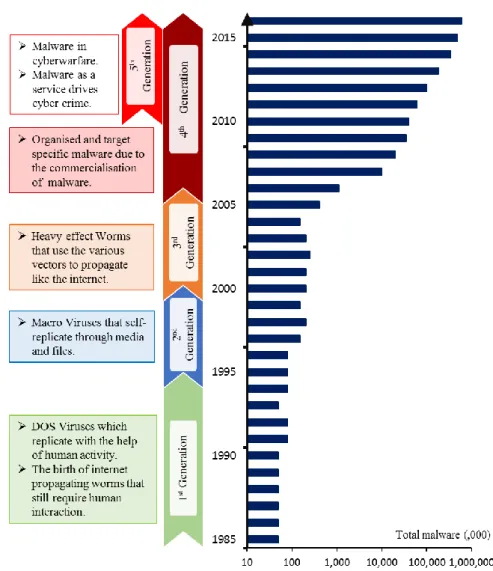
Figure 2.5 The evolution of generations of malware over the years ... 14
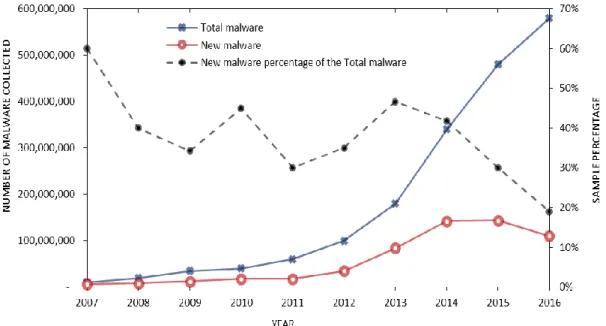
Figure 2.6 Malware sample statistics for the last decade ... 15
Figure 2.7 Relationship between the linker, executable(Image) and loader ... 16
Figure 2.8 Generic PE File Structure [48] ... 18
Figure 2.9 The PE File details in PEiD ... 18
Figure 2.10 PE file stucture [49] ... 19
Figure 2.11 The Cryptographic Hashes of a malware Sample ... 21
Figure 2.12 Calculating the Ssdeep Signature ... 22
Figure 2.13 Ssdeep Signature Form ... 22
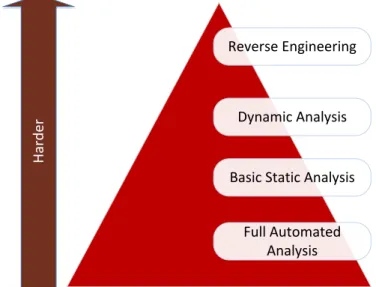
Figure 3.1 Stages of presentday Malware analysis ... 30
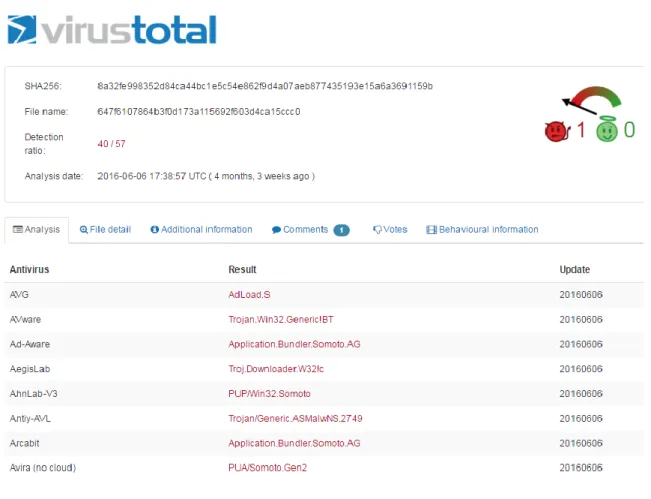
Figure 3.2 Virus Total Report of a malicious sample ... 31
Figure 3.3 Basic String analysis command in a Linux Enviroment ... 31
Figure 3.4 File Processing in Anti-virus systems [88] ... 35
Figure 3.5 Some of the Anti- Vm tricks seen in Peframe [73] ... 37
Figure 3.6 Program Obfuscation ... 37
Figure 3.7 Extract from Zero Access Self decoding Subroutine ... 38
Figure 3.8 Malware sample details packed with UPX (a) and after unpacking (b) ... 39
Figure 3.9 Structure of a Packed PE File[100] ... 41
Figure 4.1 Hex-Dump of entrypoint of file md5- a3c5e50c55c901767b0c3b7749a48c9b ... 51
Figure 4.2 Peframe Report Extract of the file ... 51
Figure 4.3 Call Graph of a sample malware ... 52
Figure 4.4 Mastiff Work Flow [75] ... 53
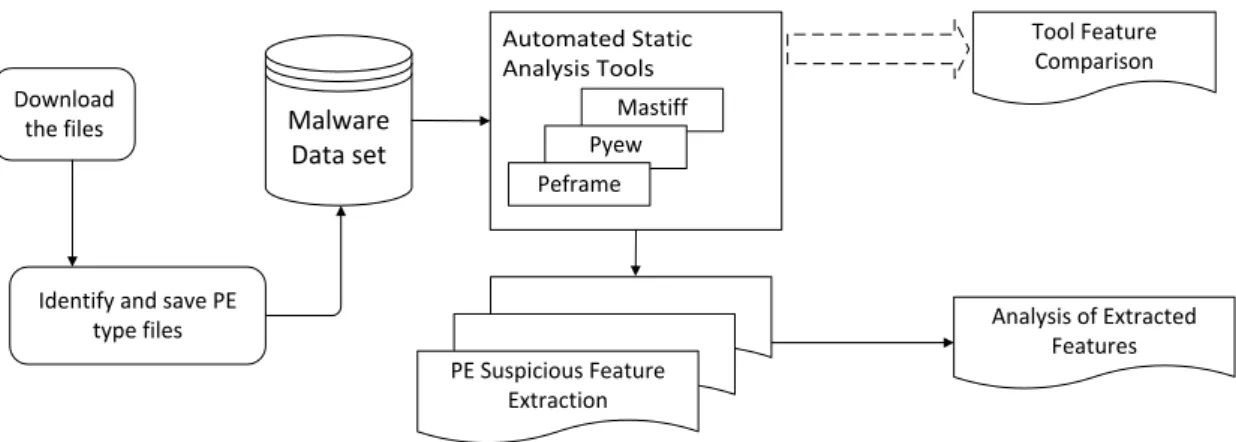
Figure 4.5 Pictorial representation of evaluation study Approach ... 55
Figure 4.6 Call Graph (G) Structure ... 57
xiii
Figure 4.8 Compile year analysis of the files analysed ... 61
Figure 4.9 Pyew Report ... 61
Figure 4.10 Peframe report ... 62
Figure 4.11 Mastiff Report ... 62
Figure 4.12 Mastiff Fuzzy Hashing results ... 63
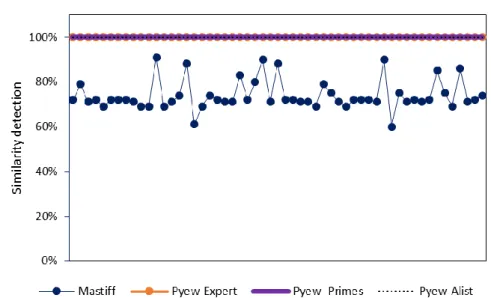
Figure 4.13 Similarity Detection Comparison ... 65
Figure 4.14 Virus Total Detection Analysis of the samples ... 66
Figure 5.1 Peframe errors based on failed file analysis ... 69
Figure 5.2 Malware compile time ... 70
Figure 5.3 The Distribution of the number of sections in the analysis data ... 71
Figure 5.4 Top 20 Section Names in analysed sample ... 71
Figure 5.5 The Section Entropy distribution ... 71
Figure 5.6 Top DLLs in the Analysed sample ... 72
Figure 5.7 Top 20 Anti-debug APIs indentified ... 72
Figure 5.8 Top 20 Suspicious APIs indentified ... 72
Figure 5.9 Filenames extracted from the data ... 73
Figure 5.10 PE file Feature Analysis Component Layout ... 75
Figure 5.11 Pictorial representation of the Heuristic anomaly probabilistic score generation module ... 75
Figure 5.12 Pictorial representation of the MalScore approach ... 77
Figure 5.13 MalScore Malicious and Clean files Score Area curves ... 80
Figure 5.14 False and True Positive Detection Rates against the MalScore file scores ... 80
Figure 5.15 The Malscore ROC curve ... 81
Figure 5.16 The detection ratio of the malware types in the test Dataset ... 81
Figure 6.1 Old malware and New malware statistics ... 83
Figure 6.2 The single file Hashes Study ... 87
Figure 6.3 The pictorial representation of the system ... 88
Figure 6.4 Flow chart for Algorithm used to set the HashFlags ... 91
Figure 6.5. Flow chart showing the calculation of the MalHaScore for file samples. ... 95
Figure 6.6 Result Log showing the Analysis results of 6 different files ... 98
xiv
Figure 6.8 Comparing the individual hashes against the proposed combined method for the initial study ... 102 Figure 6.9 Comparing the individual hashes against the proposed combined method for the final study ... 102 Figure 6.10 The Combined Hash Score Clean and Malware file Area curves (a) Common Factor method and (b) Fuzzy Logic Method from the initial study ... 103 Figure 6.11 The Combined Hash Score Clean and Malware file Area curves (a) Common Factor method and (b) Fuzzy Logic Method from the final study ... 103 Figure 6.12 True positive rate vs False positive rate curves for Evidence
Combination methods ... 104 Figure 6.13 Precision- Recall curve of the proposed evidence combination methods ... 104 Figure 6.14 Model F-score for the different score percentage threshold ... 104 Figure 6.15 Recall, Precision, Accuracy and F-score Comparison for the
proposed methodology percentage thresholds ... 105 Figure 6.16 Malware type detection ratios for the dataset used. ... 105
xv LIST OF ALGORITHMS
Algorithm 5.1 MalScore- Heurisitic scoring ... 79
Algorithm 6.1 Algorithm for Populating database of Hashes ... 89
Algorithm 6.2 Algorithm for Hash Comparison ... 90
Algorithm 6.3 Algorithm for populating Detection Rates ... 92
1 CHAPTER 1. INTRODUCTION
1.1 Motivation
The internet has revolutionised the way the world manages information and data in academia, industry or individually. The evolution of the internet of things means that even the way of life is changing through the integration of technology use in everyday activities. With all the positives of having information at the fingertips, self-driven cars, smart homeware comes the downside of having compromised systems. The internet of things has already proved to be a very successful resource of a DDOS attack against KrebsonSecurity website [1] by “Mirai” [2] botnet malware. The DDoS attack set the highest record traffic known yet against a website on 620Gbps. The same botnet is also known to have been used to arguably take Liberia off the internet [3]. Cybercrime which is powered by criminals having access to compromised systems and information cost United Kingdom businesses over £ 1 billion and United States of America businesses over $3.8 billion in 2015 [4], [5]. Having already seen an increase of 200% in the last five years [6], cybercrime is expected to cost the world $ 6 trillion by 2021 [7] making it one of the most lucrative businesses. One of the biggest banking theft heists of 2016 was the $81 Bank of Bangladesh swift attack where malware was used to compromise a poorly configured network switch [8]
Malware is still one of the main vectors used to compromise networks and computer systems. With the expected growth in cybercrime, the fight against malware as a need in order to build a more resilient cyber space will continue to be challenging for both the industry and research community. The statistics where almost 600 million malware have been collected in 2016 [10] as of writing this report indicate that analysis and thereafter detection of these samples is bound to be a daunting task.
There is a scarcity of cyber security expertise [9], [11] which implies that there is not enough skilled people in the world to manage the ever growing cyber incidents, later on perform in-depth malware analysis. Automation of the malware analysis processes and detection of malware similar to already detected malware allows for the reduction of the ever widening gap created by the growing malware samples collected [12]
2
Many of the anti-malware solutions are fighting to keep up with the evolution of malware [13] and there is a continuous looming challenge of not having malware analysis and detection methods that are fast enough. Malware signatures that utilise a lot of resources and file scanning as a step in malware detection end up requiring a lot processing power [14]. Present day systems are high performance and resource-aware and therefore having an anti-malware scanning process like sandboxing which requires a lot of time is not optimal in these systems [12] especially when dealing with the huge number of samples discovered daily. Malware; the ever-evolving threat to the cyberspace, provides an interesting challenge and therefore this study was undertaken to find a working solution that can strengthen the anti-malware community. For the rest of this chapter, we define proposed solutions in section 1.2, the aims and objects in section 1.3, our contributions in section 1.4 and scope of the work in section 1.5. We then provide an overview of the presentation structure of this thesis in section 1.6.
1.2 Proposed Solutions
The growing need for advanced secure systems implies that new, efficient and faster malware detection algorithms are required. Therefore, better alternatives to present day methods must be developed or existing methods need to be optimised with new approaches. Malware analysis and detection has been a topic of interest in the research community and a lot of advancements have been achieved in many of the malware analysis methods [15]. Unlike signature based detection methods, heuristics utilise different features in the malware and have proven to be better at unknown malware detection [16]. Heuristic based detection in the anti- malware research is used to describe effective algorithms used in malware detection which do not necessarily provide an optimum solution [17]. Combining multiple features to make a decision is seen in heuristic engines which use machine learning with malware attributes to provide improved detection [18]–[21]. This work proposes utilising the theory of multiple attribute based decision making, evidence combinational mathematical models and heuristic analysis to automate and improve malware analysis and detection. We propose measuring the malicious intent of a file by attaching a calculated score based on uncertainty models and probability scoring. The proposed solutions are:
3
a) We use probabilistic scoring and combine evidence from different heuristic anomaly features of PE files to measure the file’s malicious intent. File format anomalies as some of the known heuristic indicators of compromise. Although the anomalies have been used in heuristic engines as a way of detecting malware [22] , there is no defined approach and scoring mechanism that can allow of a more universe file malicious intent score. We proposed using probability theory to make an intelligent algorithm that scores the file based on known anomaly chances in clean vs malicious files. Using a sample dataset, the anomaly scores are calculated and then used on another dataset for validation. CHAPTER 5 5 details the proposed method in achieving the scoring system. The developed algorithm automates the analysis and detection process while also attaching a quantifiable metric. The metric is used for better cognitive based decision making of the user thus improving their confidence in their decision on whether the file is clean or malicious.
b) We look at statically computed similarity hashes as heuristic feature representatives and investigate the effect of similarity hashes in relation to malware detection. Statistics from AV- test institute [10] show that only 12% of malware samples collected by the end of 2015 were new malware samples. This implies that similarity of the different sections and the files can be a measure of file maliciousness and therefore malware detection. The initial stage of triaging the malware to cluster the samples is a well-known step that normally uses hashing as a methodology. Although hashing faces the issue of high false negatives, a combinational approach could lead to better results. Our study in chapter 6 focuses on how to combine known similarity hashing methods in order to produce effective malware detection results. The similarity in the files detected by the hashing functions is used as the attribute similarity factor for a sample dataset and multiple attribute decision making and evidence combination mathematical models are applied to attach a score representing the malicious intent of the file. This automates the malware analysis and detection process and presents the system user with a quantifiable metric
4
that improves the confidence in their decision making about the malicious state of the file.
1.3 Aims and Objectives
The main aim of this thesis is to design and implement two heuristic malware scoring approaches that make for a more efficient malware detection framework in Portable Executable files. Efforts towards achieving this aim led to the following objectives:
• Evaluate three prominent, open source automated malware static analysis tools focusing mainly on the analysis of Portable Executable files.
• Use the best automated static analysis tool to perform a study of PE file feature anomalies.
• Formulate approaches towards providing a malware scoring mechanism for improved confidence level in decision making for a standard computer user.
• Design, implement and test a heuristic scoring approach that uses the identified anomalies for detection of malicious portable executable files. • Identify a fast and light heuristic based similarity hashing functions that can
be combined for better malware detection rates in portable executable files.
• Carry out an investigation into the effect of the application of evidence combinational theory to the hashing analysis for more efficient malware detection and design, implement and test an approach that uses these techniques for more efficient malware detection.
1.4 Contributions
The main contribution of this work is the design of the approaches for a heuristic feature based quantification framework for efficient malware detection. The process of achieving this main contribution lead to:
1. An evaluation study of three prominent automated malware static analysis tools. This study provides an in-depth analysis of three prominent tools and leads to table that compares the various features of the different tools so that the reader can make an informed decision on which tool is better depending on their requirements. This study also identifies features
5
that are later incorporated into the design and implementation of the proposed approaches. Using a dataset of 2620 malicious samples, the study provides important statistics that are extracted using the tools and are detailed in chapter 4
2. MalScore: This is the first proposed approach that uses heuristic anomalies and attaching a probabilistic score so that the file’s malicious intent can be quantified. This approach utilises a combination of Bayesian probability theory and the theory of total probabilities to generate the anomaly scores. Statically extracted features for Portable Executable files are compared malicious files vs the clean executables as a training phase in the design of the scoring method. The resulting file score can be used as a detection strategy or as a customised score to filter large datasets. Chapter 5 details the design, implementation, testing and analysis of this approach.
3. MalHaScore: This is the second approach and it introduces and investigates how different similarity hashing techniques can be combined to achieve better malware detection rates. Initially, this study explores 4 different hashing techniques that are currently used in malware analysis. Although each hashing technique produces interesting results independently, two evidence combination theory based methods are applied in order propose a novel way of combining the results achieved. The results achieved show that the detection rates are improved when evidence combination techniques are applied. Chapter 6 details the design, implementation, testing and analysis of this approach.
1.5 Thesis Scope
This work focuses on the use of automated static analysis and the features extracted to design and implement approaches that can provide efficient malware detection. This implies that dynamic analysis based approaches are not covered and are outside the scope of this work.
Using file heuristic features requires that file structure is uniform so the scope of this work covers only Portable Executable (.exe) files. We focus on designing approaches for improving the malware detection rates in PE files with the expectation that these approaches can be replicated for other file formats.
6
Replication of the approaches for other file types is outside scope and is not covered herein.
The implemented methods are tested on a dataset of known malicious files and clean files that are specified in section 2.5.2. Since our objective was to improve malware detection through scoring the malicious intent of the file, tests using a different dataset should achieve similar malware detection trends but different results.
1.6 Thesis Structure
The rest of this thesis is structured as follows:
• CHAPTER 2. BACKGROUND: This chapter covers the introduction to the world of malware by briefly discussing the various malware types, the evolution and the number growth trends seen in the last decade. It then also discusses the Portable File format structure, the evaluation methods employed in this study and the dataset preparation process.
• CHAPTER 3. LITERATURE REVIEW: This chapter discusses malware analysis techniques, the evasion techniques used by present day malware to thwart analysis and detection and the known malware detection techniques. It then delves into relevant recent literature related to the study that forms the foundation of the work presented in this thesis.
• CHAPTER 4. EVALUATION OF AUTOMATED STATIC ANALYSIS
TOOLS FOR MALWARE DETECTION IN PORTABLE EXECUTABLE FILES: Three new automated static analysis tools are evaluated in this chapter. The intention is to identify the tool that extracts information needed for the study. The work presented in this chapter provides insight into how the evaluation was carried out, the results achieved, observations made and how the challenges faced were overcame.
• CHAPTER 5 MALSCORE: AN ANORMALY HEURISTIC FEATURE
BASED PROBABILISTIC SCORING METHOD FOR DETECTION OF MALICIOUS PORTABLE EXECUTABLES: This chapter covers the design, implementation and analysis of the first proposed approach; MalScore. The details pertaining to all the steps taken to achieve and test the proposed scheme are discussed in detail and the results are presented and analysed. Arguments for this approach are discussed in the chapter.
7
• CHAPTER 6 MALHASCORE: MALICIOUS PORTABLE EXECUTABLE
STATIC SCORING METHODOLOGY USING EVIDENCE
COMBINATIONAL THEORY WITH HEURISTIC FEATURE
CALCULATED HASHES.: This chapter discusses in the detail the design, modelling, implementation and testing of the second approach proposed. It further discusses the analysis results achieved for this approach and the reasons as to why this method works.
• CHAPTER 7 CONCLUSION This chapter presents the conclusion of the thesis and the known limitations of the proposed approaches. We also discuss some of the interesting areas that have been identified for future work in association to this study.
8 CHAPTER 2. BACKGROUND
Malware, short for Malicious software is a program code that is hostile and often used to corrupt or misuse a system [12]. Introducing malware into a computer network environment has different effects depending on the design intent of the malware and the network layout. The internet and the worldwide web have given great advancement in how society communicates and the face of business. This has also given rise to the number of propagation avenues available to malware. Introduction of malicious code in one node can create a chain reaction across all the nodes accessible through the network, the node seats on. With organisations and countries heavily relying on network technologies, the commercial value of computer networks implies that exploitation of the vulnerability of the business network can cripple its operations and provide access to intellectual property and personal information to cyber criminals. This creates a commercial opportunity for malware and anti-malware ventures and therefore it is no surprise that it is estimated that cybercrime is expected to raise.
Malware has been a persistent problem across all computer networks and detection of malware is quite vital in securing a networking environment. The common used form of malware detection is signature based detection where a malware “signature” is constructed from unique patterns and characteristics derived from the malware code and the file contents. This is the technique used in most commercial anti-malware systems and the malware signature is relied upon because already discovered malware always tend to keep in circulation [22]. This implies that if an analysed malware is identified to have a form of an already known signature in its characteristics, it can be isolated or the program can be deleted from the system without knowing what other system changes it could have targeted.
With more than 91% [23] of computer users still using Windows Operating Systems based computers, more efficient detection of malicious files in the windows environment is of paramount importance. Moreover, the introduction of Windows 10, the cross-platform compatibility across different devices leads to the expectation that the analysis of the PE structure will play a big role in future endpoint security as the Internet of Things (IoT) evolution takes off.
9
Figure 2.1 OS Market Share [23]
The fact that malware is software means that it follows a standard format required for it to be executed on the target. Portable Executable (PE) is the format for Microsoft binary executables and is very well document in [24]. Heuristic based detection uses distinct file features identified to be specific to malware for more efficient malware detection like the file compile time. Over the years, malware has evolved to add detection evasion methods also called obfuscation techniques. This has led to the introduction of semantic based detection where malware is detected based on the information obtained during the behavioural analysis of the malware sample. This chapter explores malware as an evolving topic and the structure of the Portable executable file with respect to heuristic based malware detection which is the focus of this study.
2.1 Malware Overview
Malware is defined as "any code added, changed or removed from a software system in order to intentionally cause harm or subvert the intended function of the system" [25]. The fact that malware can bring down a system which can cause loss of information and therefore money as well as life [26] represents a big threat to technology advancements. Recent developments in computer systems have seen a corresponding if not higher growth in variants of malware and their functionality. To understand what the malware is intended for in the system therefore identifying it, there is need to understand what class it falls under. The classification of malware depends on execution characteristics of the program. Malware is also classified depending on its payload, how it exploits or makes the system vulnerable and how it propagates [27]. This enables the malware to be subdivided into different types as further discussed below.
10 Virus
A virus is self-replicating malicious program. It exists as an executable and spreads by copying itself to other host systems. It is passive and needs to be transferred through files or media files or network files. Depending how the complex the code is, it can modify the replicated copies of itself [26], [28], [29]. Viruses can be used to harm host computers and networks, steal information, create botnets, render advertisements, and steal money among other malicious activities.
Worm
This is a self-replicating and active malicious program that can spread over the network by exploiting various system vulnerabilities. It uses targeted vulnerabilities in the operating system or installed software. It contains harmful routines but can be used to open communication channels which serve as active carriers. The Worm consumes a lot of bandwidth and processing resource through continuous scanning [28] and makes the host unstable which can sometimes cause the system to crash. It may also contain a payload that are pieces of code written to affect the computer by stealing data, deleting files or create a bot that can lead the infected system being part of a botnet. While viruses require human activity to spread, worms have the ability spread and replicate independently.
Trojan horse
Commonly referred to as Trojan, this is a program that presents as a legitimate software which when downloaded and executed embeds malicious routines or files on the host [29], [33]. In most cases, the Trojan horse when executed will install a virus or may have no payload. It cannot self-replicate and relies on the system operators to activate. It can however give remote access to an attacker who then can perform any malicious activity that is of interest to them. Trojan horse programs have different ways they affect the host depending on the payload attached to them and are usually spread through social engineering [30]. Spyware
This is a malicious program that uses functions in an operating system with the intention of spying on user activity. They sometimes have additional capabilities like interfering with network connections to modifying security settings on the
11
system on the infected host. They spread by attaching themselves to legitimate software, Trojan horse or even taking advantage of known software vulnerabilities. Spyware can monitor user behaviour, collect keystrokes, internet usage habits and send the information to the program author [31].
Adware
Adware which is short for advertising supported software, automatically delivers advertisements seen especially in website pop-up ads and displayed by software. Most are designed to serve as revenue generating tools by advertisers. Some adware may come packaged with spyware which then makes this very dangerous as it can track user activity and steal user information [31], [32].
Root Kit
This is a program that employs a set of tools to avoid detection in a system. The tools are very advanced and complex programs written to hide within the legitimate processes on the computer infected therefore are very invasive and are difficult to remove. They are designed with the capability of taking full control of the system and gaining the highest privileges possible on the machine among other possible malicious activities [22], [28]. Because of the evasion techniques used by rootkits, most security vendor solutions are not effective in detecting and removing them and therefore, their detection and remove rely heavily on manual efforts. These may include but not limited to monitoring computer system behaviour for abnormal activities, storage dump analysis and system file signature scanning.
Bots
Bots are programs designed to perform specific operations. Bots are derived from 'robots' which were first developed to manage chat channels of IRC- Internet Relay Chat a text based communication protocol that appeared in 1989 [33]–[36]. Some bots are used for legitimate purposed like video programming and online contest among other functions. Malicious bots are designed to form botnets. A botnet is defined as a network of host computers (zombies/bot) that is controlled by an attacker or botmaster as seen in Figure 2.2. Bots infect and control other computer which in turn infect other connected computers thus formulating a network of compromised computers called a botnet. Bots are very commonly used as spambots, DDOS attacks, webspiders to scrape server data and
12
distributing malware on download sites. CAPTCHA tests are used by websites to guard against bots by verifying users as humans.
Figure 2.2 An Example of a Botnet layout [37] Ransomware
Ransomware is a program that infects a host or network and holds the system captive while requesting a ransom from the system/network users. The program normally encrypts the files on the infected system or locks down the system so that the users have no access. It then displays messages as seen in Figure 2.3 that force the users to pay to have access to their systems again.
Figure 2.3 Ransomware display messages [38], [39]
Ransomware uses the same propagation means as a computer worm to spread and therefore user awareness and system updates are important mitigation measures.
13 2.1.1 Evolution of Malware
Malware has evolved from the days when it was an exciting prank/experiment gone wrong or uncontrolled to now when malware is used for commercial gain by exploiting and stealing user information. There are various documented instances of malware created within a laboratory setting like the 1962 Darwin game, 1971 Creeper, 1974 Rabbit Virus and 1975 Pervading Animal [28]. However, all the mentioned malware were kept within a laboratory environment and never escaped to the wild. The first virus known to have been able to escape its creation environment was the Elk Cloner introduced in 1981, six years after the first personal computers [40]. Elk Cloner infected Apple DOS 3.3, spread by attaching to disks introduced to the system and once triggered, it run a poem shown in Figure 2.4. After the success of this prank gone wild, Brain the first Microsoft PC virus was seen in the wild in 1986 [28] and like Elk Cloner, it was more annoying than harmful. However, it is the first virus known to conceal its existence on the disk thus evade detection. The next malware that would get out of hand and change the propagating properties of malware would be the Morris worm written in 1988 as an experimental, self-propagating, self-replicating program which was released on the internet [41].
Figure 2.4 Elk Cloner Poem seen on infected Apple computers in 1981 In 1990, Yisreal Radai coined the term malware, short for malicious software that would thereafter be used to as a generic umbrella term for all software with undesired intent within a system [34]. The following decades saw an evolution in malware that is best defined as a two-dynamic evolution; the growth in complexity and malware sample numbers.
14
Figure 2.5 The evolution of generations of malware over the years
The growth in complexity is defined by the different generations of malware seen over the years [28], [30], [42] shown in Figure 2.5:
• The first generation (DOS Viruses) of malware mainly replicate with the assistance of human activity.
• Second generation malware self-replicate without help and share the functionality characteristics of the first generation. They propagate through files and media.
• Third Generation utilise the capabilities if the internet in their propagation vectors leading to big impact viruses.
• Fourth Generation are more organisation specific and use multiple vectors to attack mainly anti-virus software or systems due to the commercialisation of malware.
15
• Fifth Generation is characterised by the use of malware in cyberwarfare and the now popular malware as a service.
These generations group the various types of malware that were earlier identified and described. Each jump in generation is characterised by increase in complexity of the malware seen and more propagation vectors. The complexity in the malware discovered over the years always seem to follow the evolving trends in technology [28]. With the commercial value attached to having access to exploited systems or the ability to infiltrate a network, the malware writers do not want their malicious creations detected, analysed and rendered useless. This has led to the birth of malware samples which are very evasive when it comes to their analysis and detection. The known methods seen in malware to evade analysis and or detection are discussed in the next chapter.
The evolution of the malware sample numbers is best reflected by the number of malware samples collected by AV-test institute over the last decade as shown in Figure 2.6 [43]. From the trends seen in the graph, although the total malware samples collected are growing in number, the percentage of the total that is new malware shows a decreasing trend over the last 3 years. This percentage shift enables us to predict that if old malware can be detected and eliminated from the samples automatically, then the analysis time spent on the discovered samples can be greatly reduced.
16 2.2 Portable Executable File Format (PE)
The Portable Executable (PE) format is an independent file structural format used for 16 bit and 32 bit windows systems. Pietrek [44] best describes the PE file format in a construction analogy “a PE file is like a prefabricated home. It's essentially brought into place in one piece, followed by a small amount of work to wire it up to the rest of the world (that is, to connect it to its DLLs and so on).” PE
file format were introduced as part of the original specifications for Win32 with the release of Windows NT 3.1 in 1993 and was derived from the earlier Common Object File Format (COFF) [44]. It allows the Windows Operating system loader to manage the compiled executable code.
The PE file types are referred to as image files in [24] and the two types; DLL and EXE files are solely differentiated at the semantic level. DLL (Dynamic- Link Library) type files are used to export data or functions that other programs use. The functions are defined based on their intended use; internal or exported [45]. Internal functions are used with the DLL where they are defined while exported functions are used by other modules as well as with the DLL in which they are defined. A modular format provided by the design of the DLLs allows for easier modification and reuse in the ever evolving windows environment [24]. DLLs have various file extensions; .sys, .dll, ocx, .cpl, .fon, and .drv EXE type files (.exe) when launched run within their own process, not loaded into existing processes of other programs unlike DLL type files [46].
The creation and usage of EXE and DLL files is defined by the linker and loader as shown in Figure 2.7. Preprocessor Source Code Libraries Compiler Preprocessed Code Assembler Assembly Code Linker Object Code
Loader Executable Code
Debugger
17
A linker is a process that collects and combines different pieces of data and code into an executable file that can be loaded into memory. The linker combines libraries and object files into an executable code /image file. This processes leads to an image also called the portable executable file [24]. The loader is the program that loads the executable into main memory and an example is the windows installer.
Being Relocatable is one of the most important characteristics of the PE type files and this means that addressing during the loading process and therefore how internal address is handled in an PE file is important [46]. The addressing of the PE file is defined by the physical address, Base Address and the Virtual Addresses; relative or absolute. Physical addresses are used to access PE file parts that must be read from the storage disk. The base address stored in the field called ImageBase is the address of the first byte where the image file is loaded into memory [47]. The address specified in the ImageBase is always the preferred address although it is possible during the loading process of the image that this address might not be available in memory. This leads to the relocation of the module where another base address is chosen [46]. Relative virtual addresses (RVA) are offset addresses into the file that are used while the image file is loaded in memory. The loader calculates the required absolute address for the specific instruction by adding the base address to the RVAs. Using RVAs that are independent of the base address allows for the relocation of the image without having to re-calculate all the addresses. Although Virtual addresses are defined in [24] as absolute in-memory addresses , they are actually used relative to the BaseImage specified address. Addressing is important because malicious files tend to have anomalies in PE address field as intentional malformations, obfuscations mechanisms or malicious intent. These can be used as detected file vulnerabilities or indicators of compromise in malware prevention and detection. The PE file Format has evolved over the years of the MS-DOS to the Win32 specifications to the now Win64 specification. Only a few changes have been introduced with each new specification because there is always need for compatibility across the operating systems and it makes sense for developers to use already existing and working file formats. The basic PE file format is best defined by Figure 2.8.
18
Figure 2.8 Generic PE File Structure [48]
Figure 2.9 The PE File details in PEiD
This known specification of the PE file allows for deeper file analysis based on its structure. For example, Figure 2.9 shows a file’s structural details using PEiD; one of the many static parsers for the PE file format. However, the extract of the PE file details in PEiD in Figure 2.9 is quite limited based on the PE file detailed structure. There is more to explore in the PE file format and to do that, there is need to understand the standard structure as discussed in the next section. 2.2.1 PE Standard Structure
The PE Standard structure is a collection of different subdivisions which are necessary because the memory manager treats each differently when the file is loaded. Each subdivision contains different file content that are important for
19
proper execution of the file. A normal PE standard file consists of the MSDOS Stub, PE File Header, and sections. Any other optional data is appended to the file also called an overlay [24] . Some applications use the overlay to store data without having to worry about the PE format or sometimes to prevent the data from being loaded into memory by the operating system.
As seen in [24], [44], [47], the PE file structure shown in Figure 2.10 starts with the MS-DOS Stub which is an application that has the ability to run in MS-DOS and is mainly supported for backward compatibility. The stub contains the file format signature; “MZ” in its magic feature and prints out the message “This program cannot be run in DOS mode“ if there is an attempt to run the image in DOS. This stub is ignored when the program is loaded in operations systems of higher versions. Next in the format is the PE File Header which consists of the PE signature (‘PE\0\0’), the COFF File Header, the Optional Header, and the Section Table. Compatibility of the PE file format to the operating system is specified by the certain signatures found within the file structure and always defined at the very beginning of the file. The PE signature is placed after the MS-DOS-Stub and its offset is defined in the e_lfanew field of the MS-DOS Stub.
20
After the PE signature, the COFF file Header is located at the fixed offset relative to the start of the PE signature. Some of the features in this subheader are important in terms of anomaly analysis as a means for malware detection. Like all the substructure before, one of its features helps define the next chunk; SizeofOptionalHeader defines the size of the next subheader. The Optional Header which appears right after the COFF file Header is subdivided into 3 import chunks; Standard COFF Field, Windows Specific Fields and Data Directions. Some of the fields in these different subdivisions are later examined for the possibility to be heuristic indicators of compromise in case of detection of anomalies. After the optional Header, the Section table that contains the section headers; each defining the properties of related section found within the PE image file.
The sections as a chunk appear next and are subdivided based on the sections contained with the PE file. Each section defined as ‘basic unit of code or data within a PE or COFF file’ contains information specific for certain applications but not relevant to all. The naming convention of the sections allows for identification of the purpose of the section. However, since this naming convention is not strict, many malicious files and some legitimate packers and compile do not follow it. Misuse of section names is one of many anomalies is an interest in heuristic based detection despite the possibility of high false positives. Some of the section names that follow the standard convention are .text - a section that contains the executable or object code, .data- a section which consists of variable, uninitialized data, .bss – this section is typically used for program-wide initialized, global data, .rsrc – the resource section that consists of the embedded items.
2.3 Hashing algorithms
Hashing algorithms are computed digests of a file that are unique to the sequence of the file binary contents and structure [50].
2.3.1 Cryptographic Hashing algorithms
The cryptographic hashes like MD5, SHA1 and SHA256 shown in Figure 2.11 have been very popular in malware identification for integrity checking [51]. Since they are so unique, they are used when there is a need to have 100% match in the compared files as seen on most legitimate software distribution websites. An exact match of the file download shows that the file has not been compromised
21
and is, therefore, safe before it is executed [22]. Whilst this is a safety measure that works for files where care is taken during file installation, sometimes, files are downloaded and installed in a hurry or without the knowledge of the computer user.
Figure 2.11 The Cryptographic Hashes of a malware Sample
These are the cases where detection of malicious or compromised files is very important. Although the different file hash typesmight not be very useful in such cases since a simple bit change in the file affects the hash digest computed, they have been repurposed and become useful in other methods. For example, section md5 and SHA hashes can be used to detect types of packing [52] and in some cases classification of malware families [53]. For this study, these specific hashes are not used, however, the work focuses on fuzzy hashing and feature specific file, section hashes that are further discussed in detail in the next subsections.
2.3.2 Fuzzy Hashing algorithms
Fuzzy hashing algorithms are designed to compare two different files and produce a percentage measure that represents the similarity between the files [54]. In this work, we review fuzzy hashes of interest that have been designed for malware detection and used in different studies focused on malware classification and detection.
2.3.2.1 Ssdeep Hash
Also known as Context Triggered Piecewise Hashing(CTPH) [54] or fuzzy hashing was first introduced in anti-spam research to detect similarity in files. Ssdeep one of the most famous methods of fuzzy hashing is a freeware, open source program that generates fuzzy hashes that when compared one against another, a similarity percentage score between the files is returned with a very high confidence of 99. The original idea of fuzzy hashing was developed by
22
combining the piecewise hashing (Fowler/Noll/Vo –FNV hash) and the rolling hashing to produce a none cryptographic hash that is then used by a comparison algorithm that uses Levenshtein Distance to compare any 2 generated hashes for sequence similarity [50], [55]. The score is normalised to a range of [0-100] and the 50 is noted to be a reasonable threshold for a good match for spamsum algorithm.
Figure 2.12 Calculating the Ssdeep Signature
Figure 2.13 Ssdeep Signature Form
Kornblum [54] adopted it for Ssdeep for the purposes of forensic science and this application was extended to malware by the Mandiant cybersecurity firm with the purpose of providing the malware analysts [56] with information to guide their next step in the file analysis. An Ssdeep signature of a file takes the form shown in Figure 2.13 which also includes an extract of an Ssdeep hash of a file. When two hashes of two different files are compared, a similarity percentage score between the files is returned with a very high confidence of 99.
It is now a very crucial step in static analysis with many analysis tools attaching this hash next to the cryptographic hashes in any malware analysis report. This string is used to provide the similarity percentage [0-100] when compared with another hash from another file. The percentage of similarity attached to any two files can be sometimes the justification why the files are the same or in the same family of malware. In this work, the file Ssdeep hash and the resource section Ssdeep hash are considered.
Blocksize: Block_Signature:Double-Block_Signature
23
2.3.2.2 Imphash
First proposed by Mandiant cybersecurity firm [57], Imphash is a hashing method that is calculated from the digest of the import section of the executable file. With many researchers focusing on the imported APIs as a way of understanding how the file would interact with the system based, the Import table which holds the APIs under traditional conditions provides added insight into the expected behaviour of the file. Its algorithm is implemented following these stages:
• Extract the structure of the PE file.
• Populate the imports in the order {API, Function (dll or sys or ocx)} for APIs found.
• Return the MD5 digest of the import strings populated.
Imphash matching allows the analyst to cluster malware based on the order and the contents of the import table. This means that a change of order in the imports in table compromises this hash value and packers can also be used to overcome this hash as a detection method since the import table is sometimes hidden. However, Imphash is still very useful considering that most malware share some common behaviour on how they interact with systems which allows for clustering and detection of similar structured malware. Imphash has been incorporated in many static analysis tools like VirusTotal.com, Peframe and Pefile among others.
2.3.2.3 PeHash
It is a function that generates the binary cryptographic hash value of the structural data found in the file header and executable’s sections [58]. Apart from the structure of the file, it also uses bzip2 compression ratio as an approximation for Kolmogorov complexity for obfuscated data in the sections. With the possibility that some malware repeat the use of specific encryption techniques, different instances of the malware sample can result in the same Kolmogorov complexity thus creating a clustering mechanism. The algorithm first creates 2 classes of hash buffers; global properties and Section hashes buffer. The structural features whose hash is included the calculation of the hash buffers in Table 2.1.
24
Hash Buffer Structural Features used
Global properties Image Charactersitics, Subsystem, Stack Commit Size and Heap commit size.
Section Virtual Address, Raw Size, Section Characteristics
Table 2.1 PE file features included the PeHash Calculation
The bzip2 compression ratio for each section is included in the calculated section’s hash buffer. The PeHash that is the result used is the SHA1 value of the overall hash buffer of the file. The analysis of this hash shows that this metric hash provides good clustering matches for instances of similar polymorphic malware samples. PeHash has not been fully extended into most static analysis tools since it is file type specific. However, since this work focuses on PE type files, this hash is considered.
2.4 Evidence Combinational Theory Methods.
These are methods used for decision support when there is uncertainty in the data being used to make the decision [59]. The introduction of uncertainty works well for malware detection as with each new sample analysed, there is always a degree of ignorance. This is mainly true because each file is deemed non-malicious until confirmed to be non-malicious. In malware analysis, analysts are more likely to obtain uncertain information from different analysis methods. Based on their expertise, they make decisions on the malicious status of the file. Evidence combinational theory provides a way to automate this process. If there are two different pieces of evidence with two different degree of belief (X with Degree x and Y with degree y) that support the hypothesis (M) that the file is either malicious or not, the result heavily depends on the degree of belief placed on the different pieces of evidence. Methods of how to combine the different evidence is what is needed to be applied in the systems to make better informed decisions about how malicious the file is. However, with the need to keep the already designed systems working as they are modified to do better, there is need to look at building the frameworks using the existing and new tools to keep the malicious files out of the computing systems. In this study, likelihood of a file being malicious is based on different results of the hashing analysis. Using the fuzzy set union operators T-conorms introduces logical connectives to design the reasoning
25
system [60] based on the degrees of belief. Strict Archimedean t-conorm are used because they can approximate every continuous t-conorm that takes the value in the range [0-1] [60]. This section discusses the two identified methods; fuzzy logic and the certainty-factor model that can be used to provide mathematically supported uncertain based decisions.
2.4.1 Fuzzy Logic
It is used in decision making where there is no deterministic data on which to rely the decision. The theory based on fuzzy sets was introduced in 1965 [61]and the resultant the fuzzy logic approach follows that the end result is only true if and only if either of the support evidence is true. Considering the initial hypothesis of Maliciousness (M), the degree in belief of this hypothesis using fuzzy logic approach defines the function:
x*y in M (2.1)
Using the important class of “strictly Archimedean” t-conorms of fuzzy logic [62] the algebraic sum is given by:
y
x
y
x
y
x
(2.2)This is the sum that used to assign a new percentage belief on the overall degree of belief in the hypothesis.
2.4.2 The Certainty Factor model
A reasoning method that manages uncertainty in rule based systems which was developed in 1975 for MYCIN expert system [63]. MYCIN was a rule based expert system that was designed to diagnosis infections due to bacteria [64]. To compute the overall belief in the hypothesis, an expert represents the uncertainty in the rule by using a single Common Factor (CF) for every rule. The CFs work as the degree of belief attached to each rule. Following the T-conorms, the degree of belief in the overall hypothesis using two supporting evidence is always higher or equal to the degree of belief in M obtained from one piece of evidence [65]. Using the notation defined, the overall belief is given by:
y
x
y
x
y
x
1
(2.3)26
2.5 The Challenge of Evaluating Anti-Malware Solutions
Building an “anti-malware algorithm” that perfectly determines whether a PE file is malicious or not with 100% accuracy [66] is challenge that is yet to be overcome. To evaluate that the designed methods work, they should be trained and tested by a dataset. In this section, we discuss our dataset preparation and the evaluation metrics used to validate the designed systems.
2.5.1 Proposed solutions evaluation method
In this study, we use the binary classification matrix to test the proposed solutions. Evaluating the proposed algorithms follows the same approach where the achieved detection rates are calculated using the confusion matrix in Table 2.2. The objective is to achieve high true positive detection rates while keeping the false positive detections very low [43]. Therefore, the confusion matrix based metrics are computed for all the proposed algorithms to evaluate the effectiveness of the proposed methods. Based on the metrics achieved, the proposed method is analysed and discussed.
Analysis Results Actual
Sample State
Malicious Clean
Malicious True Positive(TP) False Negative (FN)
Clean False Positive (FP) True Negative (TN) Table 2.2 Confusion Matrix
The options in the confusion matrix describe the different detection rates in the system and metrics are defined as [67]:
True Positive (TP): files that form part of the malicious dataset that are identified by the method as malicious.
False Negative (FN): files that form part of the malicious dataset that not flagged as malicious by the method.
True Negative (TN): files that form part of the clean files dataset that not flagged as malicious by the method.
False Positive (FP): files that form part of the clean files dataset that are flagged as malicious by the method wrongly.
False Positive Rate (FPR): a measure of the negative samples flagged as positive.
![Figure 2.2 An Example of a Botnet layout [37]](https://thumb-us.123doks.com/thumbv2/123dok_us/9949355.2487683/28.892.170.843.168.502/figure-example-botnet-layout.webp)
![Figure 2.10 PE file stucture [49]](https://thumb-us.123doks.com/thumbv2/123dok_us/9949355.2487683/35.892.338.642.636.1112/figure-pe-file-stucture.webp)
![Figure 3.4 File Processing in Anti-virus systems [88]](https://thumb-us.123doks.com/thumbv2/123dok_us/9949355.2487683/51.892.327.686.526.823/figure-file-processing-anti-virus-systems.webp)
![Figure 3.9 Structure of a Packed PE File[100]](https://thumb-us.123doks.com/thumbv2/123dok_us/9949355.2487683/57.892.310.670.386.649/figure-structure-packed-pe-file.webp)