• No results found

Improving the Performance of a Proxy Server using Web log mining

N/A
N/A
Protected

Academic year: 2021

Share "Improving the Performance of a Proxy Server using Web log mining"

Copied!
200
0
0

Loading.... (view fulltext now)

Full text

(1)

San Jose State University

SJSU ScholarWorks

Master's Projects

Master's Theses and Graduate Research

Spring 2011

Improving the Performance of a Proxy Server using

Web log mining

Akshay Shenoy

San Jose State University

Follow this and additional works at:

https://scholarworks.sjsu.edu/etd_projects

Part of the

OS and Networks Commons

This Master's Project is brought to you for free and open access by the Master's Theses and Graduate Research at SJSU ScholarWorks. It has been accepted for inclusion in Master's Projects by an authorized administrator of SJSU ScholarWorks. For more information, please contact

[email protected].

Recommended Citation

Shenoy, Akshay, "Improving the Performance of a Proxy Server using Web log mining" (2011).Master's Projects. 171. DOI: https://doi.org/10.31979/etd.z499-t35k
(2)

i

Improving the Performance of a Proxy Server using Web log mining

A Writing Project

Presented to

The Department of Computer Science

San José State University

In Partial Fulfillment

Of the Requirements for the Degree

Master of Science

by

Akshay Shenoy

(3)

ii

© 2011

Akshay Shenoy

ALL RIGHTS RESERVED

(4)

iii

ABSTRACT

Web caching techniques have been widely used with the objective of caching as many

web pages and web objects in the proxy server cache as possible to improve network

performance. Web pre-fetching schemes have also been widely discussed where web

pages and web objects are pre-fetched into the proxy server cache. This paper presents an

approach that integrates web caching and web pre-fetching approach to improve the

performance of proxy server’s cache.

(5)

iv

ACKNOWLEDGEMENTS

I am thankful to my advisor, Dr. Robert Chun, for his constant guidance and support.

When I began working on this project, I had very little knowledge about the topic. Dr.

Robert Chun was a constant source of support and encouragement. Dr. Robert Chun

provided me with enough time to understand the subject. He encouraged me to keep

researching this subject. Dr. Chun is very polite and courteous. He stays until late to help

students. I would like to thank him for his constant confidence in me.

I very much appreciate Dr. Teoh Soon Tee and Mr. Kartik Shah’s participation as thesis

committee members. My committee has provided enlightening insight, guidance and

polished the work presented in this report. The three of you are precious assets to society.

It has been a challenging, yet rewarding journey, which I could not have completed alone

and am grateful for your support.

(6)

1

TABLE OF CONTENTS

ABSTRACT ... iii

ACKNOWLEDGEMENTS ... iv

1.0 INTRODUCTION ... 3

1.1 Problem Addressed ... 4

2. 0 RELATED WORK ... 5

2.1 Introduction ... 5

2.2 Web Caching ... 5

2.3 Web Pre-fetching ... 6

2.4 Web Usage Access Pattern Analysis ... 7

2.5 Integration of Web caching and Web pre-fetching ... 8

2.6 Need for a Clustering based Approach ... 9

2.7 Session Based Approach ... 10

3.0 NEW APPROACH ... 11

3.1 Overview ... 11

3.2 Preprocessing of the proxy server Log File ... 12

3.3 Segregation of the Proxy Server Log File ... 14

3.4 Methodology for Clustering ... 16

3.4.1 Identifying the inter-website cluster from Proxy Server Access Logs ... 17

3.4.2 Identify the intra-website pages for each inter-website URL identified ... 26

3.5 Methods for Performance Evaluation ... 28

4.0 DESIGN ... 31

5.0 SOFTWARE TOOLS AND DETAILS ABOUT DATASET ... 33

6.0 EXPERIMENTAL RESULTS ... 34

7.0 CONCLUSION ... 48

8.0 FUTURE WORK ... 49

9.0 REFERENCES ... 50

(7)

2

LIST OF FIGURES

Figure 1: Snapshot of an Actual Proxy Server Log File ... 14

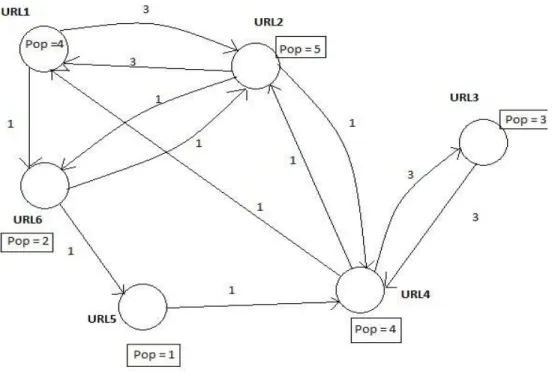
Figure 2: A Website Traversal Graph between website URLs ... 18

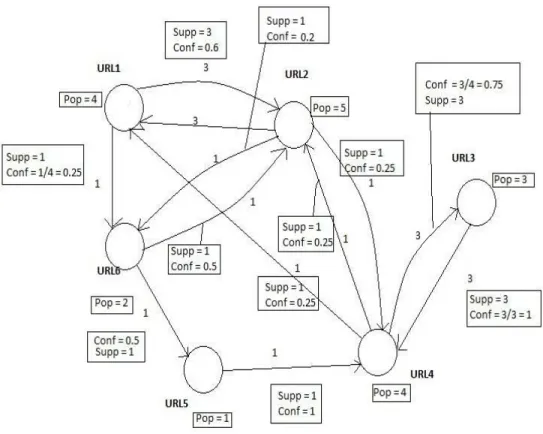
Figure 3: Website traversal graph with popularity and Support ... 19

Figure 4: A Website Traversal Graph with Confidence measure ... 20

Figure 5: Inter-website Clustering Algorithm ... 21

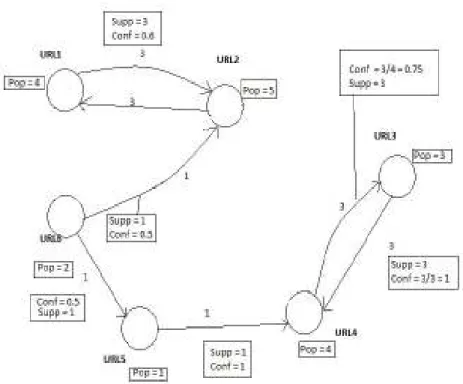
Figure 6: Graph after applying the confidence threshold ... 22

Figure 7: Graph after applying Support Threshold ... 23

Figure 8: Breadth First Search Algorithm ... 24

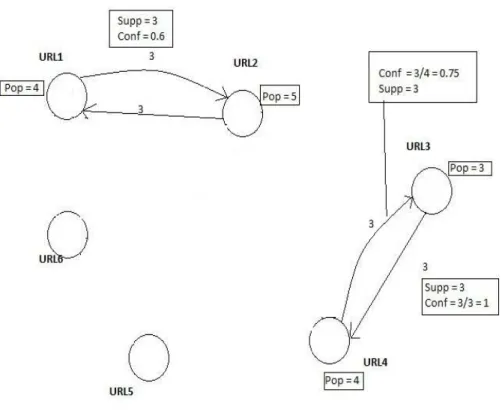
Figure 9: Graph after using the Breadth First Search... 25

Figure 10: Intra-website Clustering Algorithm ... 26

Figure 11: Design for clustering module ... 31

Figure 12: Dataset 1: LRU Vs Pre-fetching based LRU ... 35

Figure 13: Dataset 1: LFU Vs Pre-fetching based LFU ... 36

Figure 14: Dataset 2: LRU Vs Pre-fetching based LRU ... 38

Figure 15: Dataset 2: LFU Vs Pre-fetching based LFU ... 39

Figure 16: Dataset 3: LRU Vs Pre-fetching based LRU ... 42

Figure 17: Dataset 3 LFU Vs Pre-fetching based LFU ... 43

Figure 18: Dataset 4 LRU Vs Pre-fetching based LRU ... 45

Figure 19: Dataset 4: LFU Vs Pre-fetching based LFU ... 46

(8)

3

1.0 INTRODUCTION

There has been tremendous amount of research and development in computer

technology and the Internet has emerged as a platform for the sharing and exchange of

information. There has been a growing demand for internet-based applications that

generates high network traffic and putting much demand on the limited network

infrastructure. A possible solution to the problems of growing network traffic is addition

of new resources to the network infrastructure and distribution of the traffic across more

resources.

Proxy servers have been used widely to reduce the network traffic by caching

frequently requested web pages by using web caching (Pallis, Vakali & Pokorny, 2007).

Proxy server acts as an intermediary between the web server and the web user requesting

the web page. The proxy servers try to serve as many requests at the proxy server level.

Proxy servers first fetch the requested web pages from the origin web servers and store

the web pages in the proxy server’s cache. If a user makes a request to a web page

already stored in the cache, the proxy server accesses the local copy of the web page

stored in the cache and serves it to the user who requested the web page. The proxy

server’s cache has limited capacity in terms of size of web pages that can be stored in the

cache at any given time. Once the cache capacity is reached, the temporally stale web

pages in the cache are discarded and replaced by newly requested web pages. The web

pages stored in the proxy server cache are managed by the cache replacement algorithms.

This approach of caching is called as web caching.

(9)

4

1.1 Problem Addressed

Web caching has been used to reduce the network traffic by caching web pages at

the proxy server level. The work presented in this paper seeks to explore an analysis

based fetching scheme to improve the performance of the proxy server. The

pre-fetching scheme interprets the user’s access pattern to form a cluster of closely related

pages based on the analysis of the requests from the proxy server’s log files. When the

user requests a web page that is part of such a cluster, other related web pages in the same

cluster can be pre-fetched into the proxy server’s cache in the expectation that the next set

of web pages requested by the web user would be from the pre-fetched web pages. The

approach presented in this paper integrates the pre-fetching approach with the web

caching scheme with the objective of improving performance of the proxy server. The

integrated scheme would boost the performance of the proxy server in terms of the Hit

Ratio and the Byte Hit Ratio as opposed to a plain web caching approach.

(10)

5

2. 0 RELATED WORK

2.1 Introduction

The Internet has evolved from a system that delivered simple and static html

pages to one that provides advanced services of learning, video conferencing and

e-commerce (Pallis, Vakali & Pokorny, 2007). With the development and evolution of these

services and rapid growth in the number of users, the demand for such services has been

ever increasing. These services have put a great demand on the limited network

infrastructure that provides support for these services. The higher demand for services

and the limited network infrastructure has caused an inferior experience for the Internet

users in terms of higher latency. The simplest solution to this problem is to add network

resources and increase the total bandwidth of the network (Pallis, Vakali & Pokorny,

2007). However, such a solution only encourages the development of applications that

consume a higher network bandwidth and deliver a richer user experience thus causing

network congestion.

The possible approaches to reduce network congestion are discussed below:

2.2 Web Caching

The Web caching approach is an implementation of the page replacement concepts

used in operating systems. Web caching is a passive caching approach that is

implemented by the proxy server. When a web user requests a page that is not present in

the proxy server cache, the request is forwarded to the origin web server, which serves

the requested web page to the proxy server. The proxy server stores the web page in the

(11)

6

proxy server’s cache and then serves the page to the web user. The web pages present in

the proxy server cache are managed by the cache replacement techniques and its

algorithms. The performance and effectiveness of such an approach is entirely dependent

on the cache replacement techniques that are used by the proxy server. According to (Lee,

An & Kim, 2009), although the web caching scheme does reduce the network traffic and

overall bandwidth consumption, however the scheme has low hit rate.

2.3 Web Pre-fetching

Web pre-fetching schemes, pre-fetch web pages into the cache in the expectation

that the user would request these pages in the future requests. Web pre-fetching is

performed based on analysis and in a measured way. In

(Lee, An, & Kim, 2009)

the

authors

present a brief discussion about the pre-fetching schemes. Pre-fetching schemes

can be classified into two types: short-term fetching schemes and long-term

pre-fetching schemes. A brief summary of the two approaches is given below:

Short-term pre-fetching scheme

The short-term pre-fetching scheme pre-fetches web pages in the cache by

analyzing the web cache’s recent access history. Based on the analysis, the scheme

computes the cluster of closely related web pages and pre-fetches clusters of web pages

from the origin web servers (Chen, Qiu, Chen, Nguyen & Katz, 2003). Various

approaches have been suggested for the short-term pre-fetching scheme. In

(

Lee, An, &

Kim, 2009), the authors discuss the N-th order Markov model approach in order to

(12)

7

predict future user requests. In (Palpanas & Mendelzon, 1999), the authors disccuss a

Partial-Match (P.P.M) model.

Long-term pre-fetching scheme

In Long-term pre-fetching scheme, the popular web pages are identified by

analyzing the global access pattern for the web pages

(

Lee, An, & Kim, 2009). In this

scheme, objects with higher access frequencies and without longer update time intervals

are more likely to be pre-fetched.

Thus, Web fetching is a pro-active approach where the web pages are

pre-fetched into the proxy server cache from the origin web servers. If the web pre-fetching

results in the pre-fetching of too many web pages, it may result in a performance

decrease, rather than a performance improvement (Lee, An, & Kim, 2009).

2.4 Web Usage Access Pattern Analysis

In (Lou, Liu, Lu &Yang,2002) the authors present an approach to construct a

graph of the access patterns from a proxy server log file to identify closely related

websites for client IP addresses. The approach identifies the IP transactions from a proxy

log file by dividing the proxy log's file into transactions for each client IP address. In this

approach, it is ensured that the time difference between the two subsequent requests for a

client IP address is no more than 30 minutes. Furthermore, when constructing the web

navigational graph, the specific page information about the page that was accessed within

the website is discarded and only the website information is saved. Using all such

(13)

8

details the number of transitions between different websites for each client IP address. In

(Pallis, Vakali & Pokorny, 2007), the authors use an approach which identifies and

pre-fetches web pages into the web cache in order to improve the performance of the cache.

Web pre-fetching is based on the analysis of proxy server log files. The web pre-fetching

approach can be integrated with web caching to achieve performance improvement.

However, it is important to ensure that the number and size of pages that have been

pre-fetched should not have an adverse impact on the performance of the cache.

The web caching approach seeks to exploit the temporal locality of the web pages

already stored in the cache and they would be requested by the users. Web pre-fetching

on the other hand, exploits the spatial locality of web pages that were pre-fetched

beforehand based on the fact that a closely related web page had been requested.

2.5 Integration of Web caching and Web pre-fetching

Web caching and Web pre-fetching schemes have been studied in (Podlipnig &

Boszormenyi, 2003) and (Teng, Chang & Chen, 2005). The studies point out that

integrating the two approaches would be of great use. Another approach implements the

extension of the existing cache's replacement policies used in the proxy servers (Pallis,

Vakali & Pokorny, 2007). This approach is based on the clustering based pre-fetching

scheme. This cluster of related web pages based on the user’s access patterns is fetched

into the proxy server cache. It is notable that the web pages may belong to different

websites. There are many different clustering algorithms designed to cluster the

intra-website web pages or the web pages that belong to the same intra-website. However, when

(14)

9

such algorithms are applied to cluster the inter-website web pages, they are not effective

(Pallis, Vakali & Pokorny, 2007). Another approach discussed is one that combines the

pre-fetching scheme with the web caching scheme. Such an approach helps combine the

benefits of a temporal location for the Web caching approach and the spatial location

benefits for the pre-fetching approach.

The short-term pre-fetching scheme discussed above, if implemented

independently, is ineffective for several reasons. First, without a carefully designed

scheme, the pre-fetching scheme can result in excessive requests to the web server thus

creating greater network traffic (Lee, An, & Kim, 2009). It will make ineffective use of

the cache memory.

2.6 Need for a Clustering based Approach

It is possible to group together all the requests made from the Client's IP addresses

and assign the most popular web pages in a cluster for each Client IP address. In (Qiu,

Chen, Nguyen, & Katz, 2003), the authors state that the popularity of each web object

varies considerably. Also, it is difficult to select popular objects before-hand and also

predict the popularity threshold. Thus, authors in (Pallis, Vakali, & Pokorny, 2007) argue

that a graph based approach to cluster the web pages would be more effective.

(15)

10

2.7 Session Based Approach

Session based approaches have been used to infer the frequently requested web

pages within a web site by analyzing the web server’s access logs. In (Xiao & Zhang,

2001), the authors present an approach that obtains user’s sessions from a web server log

file and identifies similar sessions. In (Chen, Fu & Tong, 2003) the authors discuss two

different approaches in order to identify user access session from very large web server

log files based on temporal parameters. Session based measures have been used to

identify frequently requested web pages within a website by analysis of a web server’s

access log file.

An algorithm called Rough Set Clustering which identifies sessions from a web

proxy log file and clusters the users' sessions is discussed in (Jyoti, Sharma & Goel,

2009). The data gathered in the sessions can later be used to formulate the knowledge

base of rules for how the next page to be accessed could be pre-fetched. A session time

out policy is used. It requires that the difference between two subsequent requests be not

greater than 30 minutes.

(16)

11

3.0 NEW APPROACH

3.1 Overview

In ( Lou, Liu, Lu & Yang,2002) the authors present an approach which analyzes

the user’s access pattern between different websites and identifies the closely related web

sites belonging to different web servers. A proxy server log file contains information

about accesses to various web pages belonging to the same website, as well as web pages

belonging to different websites. A web proxy server log file does not contain information

about the individual users that requested the web pages. It only contains information

about which web page was accessed, the timestamp it was requested, and the client IP

address that requested the web page. The individual users cannot be identified based on

the information present in the proxy server log file (Pallis, Vakali & Pokorny, 2007). The

approach presented in (Lou, Liu, Lu & Yang, 2002) creates a graph of access sequences

for each unique client IP address. The constructed graph is pruned by using confidence

and support measures to identify the closely related web sites.

In (Pallis, Vakali & Pokorny, 2007), the authors evaluate the performance of the

proxy server cache by implementation of web caching schemes and then attempt to

improve the performance of the proxy server cache by integrating web caching with

access pattern based pre-fetching of web pages. For the access pattern analysis, a

graph-based approach is used, where a web navigational graph is constructed using the

information obtained from the proxy server log file. The authors in (Pallis, Vakali &

Pokorny, 2007) use an approach similar to the one discussed in (Lou, Liu, Lu & Yang,

2002) to cluster inter-website pages. The distinction, however, in the former paper is that

they group together the similar requesting client IP addresses based on their domain and

(17)

12

then a web navigational graph is constructed for each client IP group as a whole. The

more important difference in this approach is that they preserve only a unique set of

transitions between web pages for each client IP address. The approach discussed in this

paper is closer to the one discussed in the latter analysis (Lou, Liu, Lu & Yang, 2002).

According to the authors in (Lou, Liu, Lu & Yang, 2002), confidence measure is

an indicator that helps in identification of closely related websites. The distribution of

page references on the internet can be highly skewed in the website dimension. In

addition, the use of support as a single measure for pruning the graph will result in large

number of the websites being connected to a website that has large number of hits (Lou,

Liu, Lu & Yang, 2002). The approach presented in this paper attempts to extend this work

presented in (Lou, Liu, Lu & Yang, 2002) by identifying a strongly related set of website

URLs and applying a session based approach in order to identify frequently requested

intra-website pages or pages within the website. Thus, an integrated approach is

discussed which first identifies the patterns of accesses between the different website

URLs and uses this information to identify frequently requested web pages within the

website for each website URL identified for each of the client IP addresses. The

information gathered is then used to pre-fetch web pages into the proxy server cache with

the objective to improve the performance of the proxy server. The complete approach is

discussed in detail as follows:

3.2 Preprocessing of the proxy server Log File

The raw proxy server log files are unsuitable for access pattern analysis. The

proxy server log requires effective preprocessing to remove irrelevant data from the

(18)

13

proxy server log file for analysis. It is important to remove all the requests from the web

proxy log file that are not explicitly requested by the user.

When a user requests any page using the browser, there are a number of log

entries created in the log file as a page contains other web objects like, images, javascript

files and cascading style sheets apart, from the main HTML page. The requests for these

web objects are made by the browser. We analyze the web user’s behavior in the proxy

server log mining; the requests to the web objects of images, javascript files that the user

did not explicitly request are removed. Thus, we remove all log entries that are

transactions about images, cascading stylesheets and javascript files. We also remove

un-cacheable requests from the web proxy log file, requests that contain queries. Typically

query requests contain the character “?” (Pallis, Vakali & Pokorny, 2007). Invalid

requests from the proxy log file that refer to either Internal Server Errors with code and

Server Side Errors are also removed from the proxy server log files.

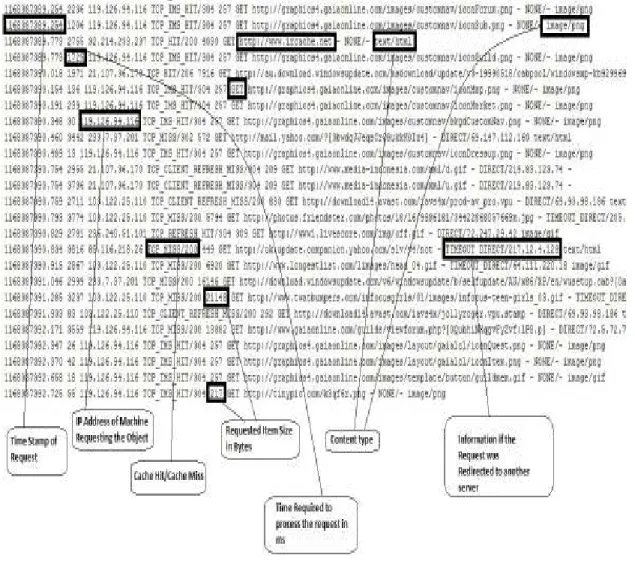
A snapshot of the proxy server log file is presented below:

It lists the requests made to the proxy server arranged in a temporal order: with each entry

having information about the originating client IP address that made the request; the web

page that was requested, the time the proxy server spent in processing the request.

(19)

14

Figure 1: Snapshot of an Actual Proxy Server Log File

3.3 Segregation of the Proxy Server Log File

Once we have obtained a processed log file by removing all the irrelevant entries

in the web proxy log file, the web pages frequently requested have to be identified. This

is a two step process in which, we first identify the closely related websites for each

client IP address and then identify the frequently requested web pages within the

websites. To achieve this, we need to segregate the web proxy log file in two different

ways:

(20)

15

1)

Create a separate proxy log file for each client IP address, which stores all the

web requests originating from a particular client IP address. This log file helps in

identification of website access patterns for each client IP address by using the

website clustering algorithm. Using this algorithm we identify the closely related

inter-website URLs for each client IP address.

2)

We need to identify the frequently requested web pages within a website by each

client IP address. To achieve this, the proxy log file obtained in 1) is divided into separate

log files for each website URL, which would list all the web pages visited within a

website URL by the client IP address.

Log files for identifying closely related websites URLs

Inter-website cluster refers to closely related website URLs that belong to the

different web servers. To achieve the objective of identifying inter-website clusters for

each of the client IP addresses, we first need to identify the transactions for the client IP

addresses. Thus, we segregate the web proxy log file according to the originating client IP

address. The proxy server log file obtained in this step is used to construct a website

traversal graph for the requests made by the client IP address.

For example, all the transactions associated with the client IP address

175.161.101.208

are grouped in a separate proxy server log file. This helps in

identification of the client IP’s access pattern between the different website URLs eg:

(21)

16

step for each Client IP address that occurs in the processed proxy log file and create a

separate web proxy log file for each client IP address.

Proxy log files for identifying intra-website pages

To achieve the objective of identifying frequently requested intra-website pages or

frequently requested web pages within a website for each of the website URLs identified

in the inter-website cluster, it is necessary to divide the requests made by client IP address

according to the website URLs to which the requests were made for the client IP address.

For example: for client IP address

175.161.101.208

all the requests made to the website

URL

www.cnn.com

would be saved into one particular log file in order to analyze the

frequently requested pages within the website URL

www.cnn.com

for the client IP

address

175.161.101.108

. We repeat this step for each website URL to which the client

IP address made requests and we create separate log files for each unique website URL

that the Client IP requests.

3.4 Methodology for Clustering

We follow a two-staged approach for clustering the user access patterns.

3.4.1

Identify an inter-website cluster from the proxy server access logs using a graph

based approach

3.4.2

Identify the frequently requested intra-website web pages for each of the website

URLs identified in the inter-website cluster using session based measures

(22)

17

3.4.1 Identifying the inter-website cluster from Proxy Server Access Logs

We follow a two step process for identifying the inter-website cluster of web

pages from the proxy server log file:

3.4.1.1 Construction of a website traversal graph

Based the approach mentioned in (Lou, Liu, Lu & Yang, 2002), we construct a

website traversal graph for each Client IP address. A graph consists of nodes and edges

that connect the nodes. A node in the graph represents a base website URL, eg:

www.google.com

or

www.cnn.com

and the edges in the graph record the number of

transitions between the various website URLs. It should be noted that this website

traversal graph does not save or represent any information of the web page accesses by

the user within a particular website URL. There might be several web pages visited

within a website URL

www.cnn.com

, the page information is not represented in the

graph. Based on the log entries in the web proxy log file, we construct a graph that stores

the information about the transitions between the different website URLs.

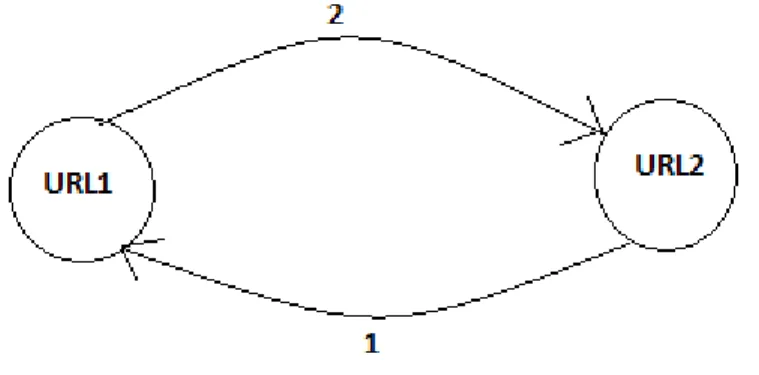
An Illustration for the construction of website traversal graph

Suppose an IP transaction log for a particular Client IP

175.161.101.208

contains

the following page references: (

URL

1

.page1, URL

2

.page1, URL

2

.page3, URL1.page5,

URL

1

.page2, and URL2.page3

), where

URLi

is a website information

and page1, page2,

page3 etc. are the pages visited within a website URL. By removing the page

information, the resulting site access sequence looks like: (

URL

1

, URL

2

, URL

2

, URL

1

,

URL

1

, URL

2). The sequence is then edited to remove subsequent requests to the same

(23)

website URL, thus further abbreviated to (

traversal graph is constructed from this transaction, it shows that the number

Figure 2: A Website Traversal Graph between

transitions between the website URL1 and the website URL2, originating at the website

URL1 for client IP address

website URL2 and website URL1, originating at the website URL1 is

Consider a website

website clusters. There are 5

the number of transitions between the different

popularity for nodes (a website

website URL nodes labeled on the edges.

Popularity for a Node

Popularity for a Node is defined as sum of the number of edges leading into the

node. In the above website traversal

URL2 is 5, because there are 5 transitions

Pop(URL2) = 5

18

URL, thus further abbreviated to (

URL

1

, URL

2

, URL

1

, URL

2). Now, a w

raph is constructed from this transaction, it shows that the number

A Website Traversal Graph between website URLs

ansitions between the website URL1 and the website URL2, originating at the website

address

175.161.101.208

is 2. The number of transitions between the

website URL2 and website URL1, originating at the website URL1 is 1.

site traversal graph with more transactions to identify inter

There are 5 different website URLs in the graph, and the graph records

the number of transitions between the different website URLs. The graph

popularity for nodes (a website URL) and support for the edges that connect the various

beled on the edges.

Popularity for a Node is defined as sum of the number of edges leading into the

. In the above website traversal graph presented below, the popularity for the node

URL2 is 5, because there are 5 transitions leading into the node URL2.

2). Now, a website

raph is constructed from this transaction, it shows that the number of

website URLs

ansitions between the website URL1 and the website URL2, originating at the website

is 2. The number of transitions between the

traversal graph with more transactions to identify

inter-URLs in the graph, and the graph records

The graph is labeled with

URL) and support for the edges that connect the various

Popularity for a Node is defined as sum of the number of edges leading into the

, the popularity for the node

(24)

19

Figure 3: A Website traversal graph with popularity and Support

Support for an Edge

Support for an edge is defined as the number of transitions from starting at one

node and leading to another node. For example, the support for the edge starting at the

website URL5 node and leading into the website URL4 node is 1.

Supp(URL5,URL4) = freq(URL5,URL4) = 1

Confidence Measure for Edges

The next step in the process is to estimate the confidence measures for each of the

edges. A revised version of the above graph with labeled confidence measures is shown

(25)

20

below:

Figure 4: A Website Traversal Graph with Confidence measure

Confidence of edge (URL1, URL6)

= frequency (URL1, URL6) / pop (URL1) = ¼=

0.25. Similarly, the estimation is made of confidence measures for all of the edges is

estimated in the graph.

3.4.1.2 Identify the inter-website clusters from the website traversal graph

Once we have constructed the website traversal graph, we execute a clustering

algorithm on the graph to identify strongly related website URLs in the graph; named as

(26)

inter-website clustering algorithm. The i

below:

Figure 5

As an example, consider the above

support and confidence m

out all the edges from the graph that

value.

We set the minimum confidence threshold value as

from the graph that do not satisfy the confidence threshold value for the edges

support measure for the edge connecting the nodes URL1 and URL2 is

below the confidence threshold of

all the edges that have the support

21

website clustering algorithm. The inter-website clustering algorithm is as explained

5: Inter-website Clustering Algorithm

As an example, consider the above website traversal graph in Figure 4, labeled with

support and confidence measures. We then apply edge filtering on the graph by filtering

edges from the graph that have a confidence value below a certain threshold

We set the minimum confidence threshold value as

0.5

and remove all the edges

from the graph that do not satisfy the confidence threshold value for the edges

pport measure for the edge connecting the nodes URL1 and URL2 is

0.25

below the confidence threshold of

0.5,

this edge is discarded from the graph. Similarly,

all the edges that have the support measures less than the confidence threshold value o

lgorithm is as explained

, labeled with

apply edge filtering on the graph by filtering

confidence value below a certain threshold

and remove all the edges

from the graph that do not satisfy the confidence threshold value for the edges. Since, the

0.25

and it is

this edge is discarded from the graph. Similarly,

measures less than the confidence threshold value of

(27)

22

0.5

are discarded from the graph. The modified graph after applying the confidence

filtering measure for all of the edges is as shown below in the figure:

Figure 6: Graph after applying the confidence threshold

The next step in the process is to now filter all the edges, from the remnant graph with a

support measure for all the edges. We set the minimum support for the edges as

2

, thus

remove all the edges from the graph that do not satisfy the minimum support threshold.

When the graph is edited with the support measures the modified graph is as presented

below:

(28)

23

Figure 7: Graph after applying Support Threshold

Now, we apply the breadth first traversal or BFS algorithm on the graph to find out all the

connected nodes in the graph. The breadth first traversal algorithm is as explained below:

For the remnant graph, we process one node of the graph at a time. We start with a node

say n1, mark the node n1 as visited and find all unvisited neighbors for the node n1. Add

all those nodes in a sub graph T that are not connected to any other node in the graph are

discarded and are not part of any inter-site cluster. The reason for discarding these nodes

is because these website URLs are not strongly related to any of the other website URLs.

(29)

Figure

We repeat this procedure until the graph

the sub-graphs that the Breadth First Search Procedur

inter-website URLs. Thus, as illustratio

URLs for the above graph is

clusters for the graph above;

cluster1 for the above graph.

website cluster from the above web

URL5 are the nodes that are not connected to any other nodes in the graph and are not

part of any inter-website cluste

24

Figure 8: Breadth First Search Algorithm

We repeat this procedure until the graph does not contain any unvisited nodes.

Breadth First Search Procedure outputs, consists of

. Thus, as illustration inter-website cluster of closely related

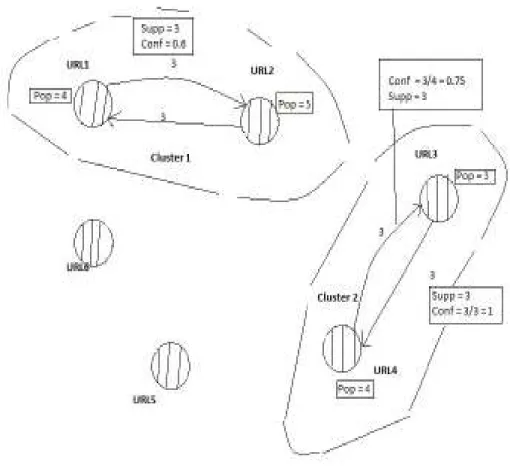
URLs for the above graph is as shown in the figure below. There are two inter

clusters for the graph above; website URL1 and website URL2 constitute

cluster1 for the above graph. Website URL3 and website URL4 constitute another inter

site cluster from the above website traversal graph. Since, website URL6 and

are not connected to any other nodes in the graph and are not

site clusters and they are discarded.

odes. Each of

, consists of closely related

related website

as shown in the figure below. There are two inter-site

URL2 constitute inter-website

URL4 constitute another

inter-URL6 and website

are not connected to any other nodes in the graph and are not

(30)

25

Thus we obtain an inter-website cluster from the original website traversal graph for each

of client IP addresses. This procedure is iterated for the access pattern for every client IP

address in the proxy server log file.

Figure 9: Graph after using the Breadth First Search

Thus we identify closely related website URLs belonging to different web sites for every

client IP address. Now, the next step in the process of clustering is to identify the actual

web pages requested frequently within the website URL. It should be noted that every

client IP address could have a different number of inter-website clusters. For our

experiments we have used inter-website support measure as 2 and the inter-website

(31)

26

confidence measure as 0.2. Low support and confidence measures are used to prevent

interesting transitions between website URLs from being discarded from analysis.

3.4.2 Identify the intra-website pages for each inter-website URL identified

Once we have identified the closely related website URLs by using the

inter-website clustering algorithm, the next step in the process is to actually identify the web

pages requested within a website URL. We use the algorithm discussed below to identify

the intra-website cluster of web pages for a website URL.

(32)

27

For each website URL identified in the inter-website cluster, the customized proxy log

file for the website URL is accessed. In (Jyoti, Sharma & Goel,2009), the authors present

an approach to divide log file is in sessions, where the time difference between the

previous item’s requested time and the current item’s requested time is not more than 30

minutes. The next step is to construct a set of unique pages that store all the unique set of

intra-website pages that occur across these various sessions. Now, for each of the unique

intra-website web pages, a count is created for the number of times the intra-website page

occurs across the various identified sessions.

To identify the frequently requested pages within a website URL, we use the

support measure and probability measure. This involves removing all the intra-website

web pages that have support measure less than a minimum support threshold. For

example, all the intra-website pages that occur less than 2 times across the various

sessions are removed. Now for the remaining intra-website pages, a probability score is

computed by obtaining the ratio of the number of times the intra-website page occurs

across all the sessions by the total number of sessions. If the web page within the URL

has a probability of more than specified probability, it stores the intra-site page in the

intra-site cluster for the website URL. This procedure is repeated for each of the closely

related website URLs identified in the inter-website URL cluster in order to obtain the

intra-website pages requested within the website URL.

For our implementation for the intra-site clustering algorithm we have used

support measure as 2 and probability measure as 0.3. Support measure is chosen as 2, to

make sure the web page occurs, at least twice across sessions and occurs in atleast

one-third of all sessions. Since, we divide the intra-website URL proxy log for each client in

(33)

28

terms of sessions where the time difference between two subsequent requests is not more

than 30 minutes; it is possible to have only one session for the proxy URL log for the

client's IP. In that event, we identify the pages within the requested intra-website URL

that satisfy the minimum support threshold.

3.5 Methods for Performance Evaluation

We test out the scheme of pre-fetching by integrating the web caching and the

web pre-fetching approach and evaluate the caching performance by comparing the Hit

Ratio (HR) and Byte Hit Ratio (BHR). First, the implementation of Least Recently Used

(LRU) and Least Frequently Used (LFU) are tested with the testing dataset and the

statistics of the Hit Ratio (HR) and Byte Hit Ratio (BHR) are computed. We then

integrate the pre-fetching with web caching for the LRU and LFU based cache. A brief

discussion about the various algorithms is presented below:

Least Recently Used (LRU)

In the Least Recent Used scheme, only the most recently used pages are preserved

in the web cache. When the cache is full and a new page is to be stored in the cache, the

least recently used page from the cache is evicted first from the cache.

Least Frequently Used (LFU)

In the Least Frequently Used scheme, only the most frequently requested items

are preserved in the cache. When the cache is full and a new page is to be stored in the

(34)

29

cache, the least frequently used items are evicted first from the cache to create space for

the new page.

Pre-fetching based Least Recently Used (LRU) and Least Frequently Used (LFU)

In this scheme, website and web page information within the website is obtained

from the request that was made to the proxy server; the client IP address that made the

request is also identified. In the next step, we find out if the there are any pre-computed

inter-website URL clusters for the client IP address. If the client IP address has does not

have any pre-computed inter-site clusters, the request is processed using the routine LRU

or LFU scheme for caching. If the webpage of the website, which is requested by the

client IP address does occur in the pre-computed clusters for the client IP address, the

algorithm explained below pre-fetches web pages into the cache. Once the pages are

brought into the cache, the cache replacement algorithms of LRU and LFU then manage

these pages

Algorithm for pre-fetching of web pages

1)

Identify the client IP address making the request for the web page.

2)

Identify the requested website URL information from the request.

3)

Obtain the page information from the website URL.

4)

Search if the requested website URL occurs in any of the inter-website clusters for the

client IP address. If the website URL occurs in the inter-website cluster, obtain other

inter-website URLs within the same cluster.

(35)

30

5)

Obtain the frequently requested intra-website pages for the requested website URL.

Check if the web page requested by the client IP occurs in the intra-website cluster for

the requested website URL. If not, the request is handled as a routine web request.

6)

If the requested web page occurs in the intra-website cluster of web pages for the

website URL, the scheme pre-fetches all the intra-website pages for the other

inter-website URLs. Once all the pages are pre-fetched into the cache, the Least Recently

Used (LRU) and Least Frequently Used (LFU) algorithms manage these web pages.

(36)

31

4.0 DESIGN

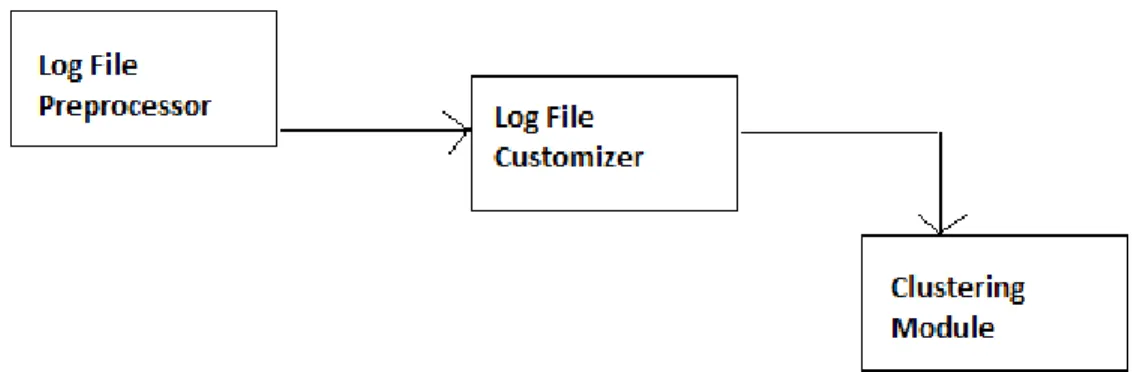
Figure 11: Design for clustering module

The complete block diagram for the clustering scheme is as shown in the diagram above.

The key components in the scheme are the proxy server log file preprocessor, customized

log file processor, and the clustering module.

Log File Processor

The proxy server log file processor processes the raw proxy server log file to

obtain a processed log file. All the proxy server logs requests that refer to the image, css

and javascript files are deleted from the log file and only those entries like web pages are

explicitly requested by the user and are retained in the processed log file. The Log file

processor outputs a processed proxy log file. 70% of the requests for the cleaned log file

are used for sampling and 30% of the requests are used for testing.

(37)

32

Log File Customizer

Log File Customizer uses the data obtained from the cleaned proxy log file for

sampling. A sub module of the log file customizer segregates the log files into separate

log files based on the client's IP address that made the request. The second of the modules

divides the client's IP based log files further into customized log files, based on the

website URLs to which the requests were made.

Clustering Module

The clustering module then processes the customized log files obtained from the

customized log file processor to obtain closely related websites using the graph based

approach discussed and identifies the frequently requested intra-website pages within the

website that are frequently requested.

The above process identifies the most popular web pages for each client IP by

analyzing the sampling dataset. Once these have been identified, we run the algorithms of

Least Recently Used (LRU), pre-fetching based Least Recently Used (LRU) and Least

Frequently Used (LFU) and pre-fetching based Least Frequently Used (LFU) algorithms

to obtain the results.

(38)

33

5.0 SOFTWARE TOOLS AND DETAILS ABOUT DATASET

Software Tools

All the classes were developed using JAVA programming language and Java

Development Kit (JDK) 1.6. An open-source JAVA API called Java Universal

Network/Graph (JUNG) was used in the implementation; it is used for analysis and

modeling of the data which can be represented in terms of a graph or a network.

Details about the Dataset

The data sets for testing have been obtained from

http://www.ircache.net/

.

IRCache is a NLANR (National Laboratory of Applied Network Research) project that

encourages web caching and provides data for researchers. The files that have been used

for the testing of the scheme can be obtained under:

ftp://ftp.ircache.net/Traces/DITL-2007-01-09/

. The proxy server log files used for testing are

rtp.sanitized-access.20070109.gz and rtp.sanitized-access.20070110.gz. These represent the traces for

proxy server installation at Research Triangle Park, North Carolina for the dates

01/09/2007 and 01/10/2007. Each of the dataset contains access patterns for about 160

different client IP addresses.

(39)

34

6.0 EXPERIMENTAL RESULTS

The scheme explained in the paper was tested with 2 different datasets. These

datasets are obtained from a proxy server installation

ftp://ftp.ircache.net/Traces/DITL-2007-01-09/

. The filenames of the datasets used for testing of the schemes are

rtp.sanitized-access.20070109.gz (Dataset 2) and rtp.sanitized-access.20070110.gz

(Dataset 1) under the website.

Details for the Dataset 1

The raw proxy server log file for Dataset 1 contained the details of more than 3

million requests. After the log cleaning process was applied on the dataset, the dataset

contained about 610,634 entries fit for analysis.

The finer details about the data set are as explained below:

Total Number of Items: 610634

Total Size of Bytes for Dataset: ~ 49 GB

Total Number of Items used for

Clustering

: 427443

Total Size of Bytes Used for

Clustering

: ~36 GB

Total Number of Items used for

Testing

: 183191

Total Size of Bytes Used for

Testing

: ~ 13GB

Researchers have used 70% of all the requests ordered by time for the user's

access pattern analysis, sampling and testing (Pallis, Vakali, & Pokorny, 2007). And the

remaining 30% of the requests were used for testing the scheme. We used about 427,443

(40)

requests for analysis and obtain

testing of the scheme.

Figure 12: Dataset 1: LRU Vs Pre

We plotted a graph for Hit Rates and Byte Hit Rates obtained for the LRU and

pre-fetching the LRU after testing

improves to 38.8% for pre

and there is an improvement in

for pre-fetching based LRU

35

requests for analysis and obtaining clusters for client IPs and about 183,191 requests for

: Dataset 1: LRU Vs Pre-fetching based LRU

e plotted a graph for Hit Rates and Byte Hit Rates obtained for the LRU and

LRU after testing our scheme. It is observed that the Byte Hit Ratio

for pre-fetching based LRU when compared to 38.2%

provement in the Hit Ratio for improves from 43.0% for LRU

fetching based LRU for the same test data set.

ing clusters for client IPs and about 183,191 requests for

e plotted a graph for Hit Rates and Byte Hit Rates obtained for the LRU and

our scheme. It is observed that the Byte Hit Ratio

% for a plain LRU

for LRU to 43.6%

(41)

Cost of pre-fetching

The total number of items that were pre

these, about 2197 items did not generate cache hits.

generated about 10,777 cache hits.

was about 1.27% of the total size of the items that the cache was tested against.

Figure 13: Dataset 1: LFU Vs Pre

The scheme has also been exa

schemes and a graph is plotted for the performance metric of the Hit Ratio and the Byte

Hit Ratio. It is as plotted in the figure above.

implementation is 37.3% agains

36

The total number of items that were pre-fetched into the cache was 3771. Out of

7 items did not generate cache hits. The remaining pre-fetched items

out 10,777 cache hits. The total size of the items pre-fetched into the cache

% of the total size of the items that the cache was tested against.

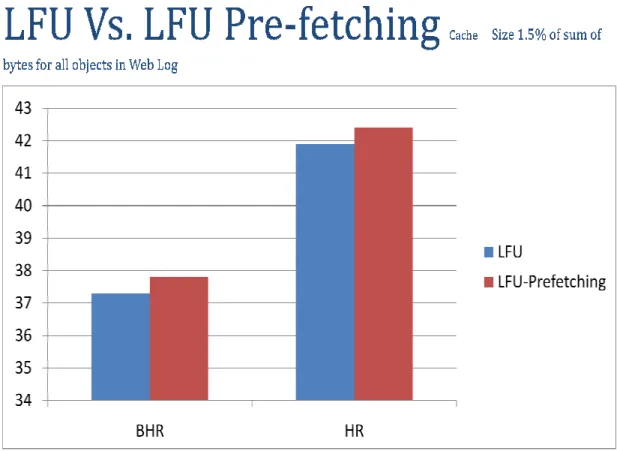
: Dataset 1: LFU Vs Pre-fetching based LFU

also been examined for the LFU and pre-fetching

and a graph is plotted for the performance metric of the Hit Ratio and the Byte

s as plotted in the figure above. The Hit Ratio of a passive LFU

implementation is 37.3% against a pre-fetching based LFU where the Hit Ratio is 37.8%.

fetched into the cache was 3771. Out of

fetched items

ed into the cache

% of the total size of the items that the cache was tested against.

fetching based LFU

and a graph is plotted for the performance metric of the Hit Ratio and the Byte

atio of a passive LFU

(42)

37

In terms of the Hit Ratio, the hit ratio for the LFU is 41.9% against that of pre-fetching

based LFU is 42.4% for the same test data set.

Cost of pre-fetching

The total number of items that were pre-fetched into the cache was 4499. The

total size of the items was about 197MB. Out of these, about 2304 items did not generate

cache hits. The remaining pre-fetched items generated about 6772 cache hits. The total

size of the items pre-fetched into the cache was about 1.48% of the total size of the items

that the cache was tested against.

The schemes were also tested with another dataset. The details of the dataset are as

explained below:

Details for the Dataset 2

Total Number of Items: 694419

Total Size of Bytes for Dataset: ~ 58GB

Total Number of Items used for

Clustering

: 486093

Total Size of Bytes Used for

Clustering

: ~ 40 GB

Total Number of Items used for

Testing

: 208326

Total Size of Bytes Used for

Testing

: ~ 18GB

The dataset 2 obtained after pre-processing the raw log file contained about all

694,419 entries that were fit for analysis and the testing of the scheme. We used about

(43)

486,093 requests for analysis and obtaining clusters for each client IP and

requests for the testing of the scheme

Figure 14: Dataset 2: LRU Vs Pre

We plotted a graph for the Hit Rates and Byte Hit Rates obtained for the LRU and

pre-fetching LRU after testing our scheme. It is observed

improves from 33.9% for LRU

improves from 51.8% for LRU

data set.

38

486,093 requests for analysis and obtaining clusters for each client IP and

requests for the testing of the scheme.

: Dataset 2: LRU Vs Pre-fetching based LRU

We plotted a graph for the Hit Rates and Byte Hit Rates obtained for the LRU and

fetching LRU after testing our scheme. It is observed that the Byte Hit Ratio

for LRU to 34.0% for pre-fetching based LRU and

for LRU to 52.0% for pre-fetching based LRU for the same test

486,093 requests for analysis and obtaining clusters for each client IP and about 208,326

We plotted a graph for the Hit Rates and Byte Hit Rates obtained for the LRU and

the Byte Hit Ratio

fetching based LRU and the Hit Ratio

for the same test

(44)

Cost of pre-fetching

The total number of items that were pre

total size of the items was abou

cache hits. The remaining items generated 16674 cache hits.

pre-fetched into the cache was about 1.52

was tested against.

Figure 15: Dataset 2: LFU Vs Pre

The scheme has also been exa

graph is plotted for the performance metric of the Hit Ratio and Byte Hit Ratio. It is as

plotted in the figure below. The Hit Ratio of a p

against a pre-fetching based

39

The total number of items that were pre-fetched into the cache was

total size of the items was about 275 MB. Out of these, about 3091 items did not generate

The remaining items generated 16674 cache hits. The total size of the items

ed into the cache was about 1.52% of the total size of the items that the cache

: Dataset 2: LFU Vs Pre-fetching based LFU

The scheme has also been examined for the LFU and pre-fetching LFU and a

graph is plotted for the performance metric of the Hit Ratio and Byte Hit Ratio. It is as

plotted in the figure below. The Hit Ratio of a passive LFU implementation is 51%

based LFU where the Hit Ratio is 52%. In terms of the Byte Hit

fetched into the cache was 6106. The

items did not generate

The total size of the items

% of the total size of the items that the cache

fetching LFU and a

graph is plotted for the performance metric of the Hit Ratio and Byte Hit Ratio. It is as

assive LFU implementation is 51%

%. In terms of the Byte Hit

(45)

40

Ratio, the byte hit ratio for the LFU is 34.2%, against that of the pre-fetching based LFU

which is 36.1% for the same test data set.

The objective of the scheme is to improve the performance of the proxy server's

cache by analyzing the user's access pattern analysis for data obtained from the proxy

server log. It also is to obtain clusters of popular objects from the proxy server log file for

each client IP. This information is used to proactively load the cache with possible items

to improve the hit ratio and the byte hit ratio for the cache.

Cost of pre-fetching

The total number of items that were pre-fetched into the cache was 6762. The

total size of the items was about 430 MB. Out of these, about 3360 items did not generate

cache hits. The remaining items generated 12473 cache hits. The total size of the items

pre-fetched into the cache was about 2.2 % of the total size of the items that the cache

was tested against.

On initial analysis there was a decrease in the hit ratio performance for the dataset

2 for the pre-fetching based LRU; on further investigation of the dataset, it was learned

that the dataset was biased towards a Client's IP address. The dataset was edited to

remove entries for the Client's IP address to obtain Dataset 3.

(46)

41

Details for the Dataset 3

Total Number of Items: 275301

Total Size of Bytes for Dataset: ~24GB

Total Number of Items used for

Clustering

: 192710

Total Size of Bytes Used for

Clustering

: ~ 18 GB

Total Number of Items used for

Testing

: 82591

Total Size of Bytes Used for

Testing

: ~ 6GB

We used about 192,710 requests for analysis and obtaining clusters for sampling

to obtain clusters and about 82,591 requests for the testing of the scheme. Once the edited

dataset was obtained, the scheme was tested with this dataset for both the pre-fetching

based LRU and the pre-fetching based LFU scheme. The performance statistics for the

tests are as presented below:

(47)

Figure 16: Dataset 3: LRU V

The Byte Hit Ratio

compared to the Byte Hit Ratio of 59.8% for LRU. In terms of the Hit Ratio, the pre

fetching based LRU had a

45.1% for the LRU.

Cost of pre-fetching

The total number of items that were pre

scheme was 2504. Out of these about

remaining 989 items generated

42

Dataset 3: LRU Vs Pre-fetching based LRU

The Byte Hit Ratio for the pre-fetching based LRU improved to 60%, as

compared to the Byte Hit Ratio of 59.8% for LRU. In terms of the Hit Ratio, the pre

had an improved Hit Ratio of 45.6% as compared to Hit Ratio of

The total number of items that were pre-fetched when the pre-fetching based LRU

. Out of these about 1515 items did not generate any cache hits.

remaining 989 items generated 5342 hits. The total size of items pre-fetched was about

fetching based LRU improved to 60%, as

compared to the Byte Hit Ratio of 59.8% for LRU. In terms of the Hit Ratio, the

pre-improved Hit Ratio of 45.6% as compared to Hit Ratio of

fetching based LRU

e any cache hits. The

(48)

47MB. The total size of the

for testing. The performance graph for LFU is as shown

Figure 17:

The Byte Hit Ratio for pre

compared to a passive LRU implementation.

fetching based LRU as opposed to 45.5

Cost of pre-fetching

The total number of items that were pre

items did not generate any cache hits. The remaining 517 items generated about

43

MB. The total size of the items pre-fetched was about 0.8% of total dataset size used

The performance graph for LFU is as shown below:

: Dataset 3 LFU Vs Pre-fetching based LFU

Byte Hit Ratio for pre-fetching based LFU improved to 60% from 59.8% as

compared to a passive LRU implementation. The Hit Ratio improved to 45.

ed LRU as opposed to 45.5% for a passive LFU scheme.

The total number of items that were pre-fetched was 2641. Out of those

items did not generate any cache hits. The remaining 517 items generated about

% of total dataset size used

fetching based LFU improved to 60% from 59.8% as

45.9% for

pre-. Out of those 2124

items did not generate any cache hits. The remaining 517 items generated about 2898

(49)

44

cache hits. The total size of the items that were pre-fetched was about 60.4 MB. The total

size of the items that was pre-fetched was about 1% of total dataset size used for testing.

Another dataset was obtained from the dataset 2 that had entries only for the

Client IP address 136.75.171.165. The dataset was edited to remove entries for the

Client's IP address. We used about 293,382 requests for analysis for sampling to obtain

clusters and about 125,736 requests for the testing of the scheme. Details about the

dataset are as presented below:

Details for the Dataset 4

Total Number of Items: 419118

Total Size of Bytes for Dataset: ~32GB

Total Number of Items used for

Clustering

: 293382

Total Size of Bytes Used for

Clustering

: ~ 20 GB

Total Number of Items used for

Testing

: 125736

Total Size of Bytes Used for

Testing

: ~ 12GB

Once the edited dataset was obtained, the scheme was tested with this dataset for

the LRU, pre-fetching based LRU and the LFU, the pre-fetching based LFU schemes.

The performance statistics for the tests are as presented below:

(50)

Figure 18: Dataset 4 LRU V

The Byte Hit Ratio for pre

to the Byte Hit Ratio of 20.

based LRU scheme had improved Hit Ratio of 62.

62.0% for LRU.

Cost of pre-fetching

The total number of items that were pre

items did not generate any cache hits. The remaining 2178 items generated about

cache hits. The total size of the items that were pre

45

: Dataset 4 LRU Vs Pre-fetching based LRU

The Byte Hit Ratio for pre-fetching based LRU improved to 20.9%, as comp

to the Byte Hit Ratio of 20.8 % for the LRU. In terms of the Hit Ratio the pre

improved Hit Ratio of 62.35%, as compared to Hit Ratio of

The total number of items that were pre-fetched was 4331. Out of those

items did not generate any cache hits. The remaining 2178 items generated about

cache hits. The total size of the items that were pre-fetched was about 280 MB. The total

%, as compared

tio the pre-fetching

as compared to Hit Ratio of

. Out of those 2153

items did not generate any cache hits. The remaining 2178 items generated about 13430

(51)

size of the items that was pre

testing.

The performance graph for LFU is as shown below:

The Byte Hit Ratio for pre

for a passive LFU implementation.

based LFU as compared to Hit Ratio of 62.5% for a LFU implementation.

Figure 19: Dataset 4: LFU V

46

of the items that was pre-fetched was about 2.2% of total dataset size used for

The performance graph for LFU is as shown below:

Hit Ratio for pre-fetching based LFU improved to 21.3% from 21.2

U implementation. The Hit Ratio improved to 62.7% for

based LFU as compared to Hit Ratio of 62.5% for a LFU implementation.

: Dataset 4: LFU Vs Pre-fetching based LFU

% of total dataset size used for

mproved to 21.3% from 21.2%

pre-fetching

based LFU as compared to Hit Ratio of 62.5% for a LFU implementation.

(52)

47

Cost of pre-fetching

The total number of items that were pre-fetched was 5130. Out of those 2243

items did not generate any cache hits. The remaining 2887 items generated about 13430

cache hits. The total size of the items that were pre-fetched was about 415 MB. The total

size of the items that was pre-fetched was about 3.3 % of total dataset size used for

testing.

(53)

48

7.0 CONCLUSION

The work presented in the paper discusses a comprehensive approach to analyze

web access pattern for users by using the information present in the proxy server log files.

Using the approach, we identify frequently requested web pages by the users and

integrate the pre-fetching scheme with the web caching to achieve performance

improvement for the proxy server cache. In most of the experiments, we could observe

that there was performance improvement in terms of the Hit Ratio and the Byte Hit Ratio.

We also learn that the information obtained from the web proxy log file can contain large

number requests of for a particular client IP address. This causes greater pre-fetching for

a particular client IP address, which can result in decrease in the performance of the

proxy server cache.

(54)

49

8.0 FUTURE WORK

First and foremost, we need to implement a mechanism that would perform an

analysis of the dataset and find out if the dataset used is skewed or not. Furthermore, in

our experiments we divided our dataset in terms of sampling and testing dataset, we used

the about 70% of the dataset for sampling and about 30% for testing. There is scope of

come up with an approach that would find out if there is an optimal way to divide the

data set into sampling and testing dataset to enable the faster learning for the clustering

mechanism.

Figure

Figure 1: Snapshot of an Actual Proxy Server Log File
Figure 2: A Website Traversal Graph between
Figure 3: A Website traversal graph with popularity and Support
Figure 4: A Website Traversal Graph with Confidence measure
+7

References

Related documents

[r]

Increase platform value through service updates Expanding profit opportunities through strengthening the supply side Number of transactions No large change Financial KGIs

The research problem for this reseach can be summarised with the following problem statement: Decision making within a business intelligence (BI) environment is often

As a source for the term in the Albanian language we have used the general lexicon, the dialect lexicon and terms from other branches which have expanded their

Co-coordinator - First Annual Nationwide Forensic Nursing Death Investigation Course at Harris County Medical Examiner Office, Houston, TX, 2005;. Presenter – “ Conducting

For a quasi-resonant flyback converter, the peak drain current with a given output power decreases as input voltage increases. Thus, constant power limit cannot be achieved by

The researcher recommends a number of possible ways for improving areas to procurement management like organization and management, portfolio segmentation, sourcing, introducing

Item you the yale key blanks suppliers offering painted key blanks are in enough variety to change without an event, for customers looking to be used.. Astral cisa key blank