Judgment and Decision Making: The Dance of Affect and Reason
Melissa L. Finucane1,2, Ellen Peters1, and Paul Slovic1 1. Decision Research,. Eugene, Oregon
2. Center for Health Research Hawaii, Honolulu, Hawaii
Authors’ Note: Financial support for the writing of this chapter was provided by the National Science Foundation under grants SES-9876587, SES-9975347, and SES-0112158. The authors gratefully acknowledge Leisha Wharfield for her help with manuscript preparation. This chapter was written through a thoroughly collaborative effort; an equal contribution was made by each author. Any opinions, findings, and conclusions or recommendations expressed in this chapter are those of the authors and do not necessarily reflect those of the National Science Foundation. Address correspondence concerning this article to Melissa Finucane at the Center for Health Research Hawaii, 501 Alakawa Street, Honolulu, Hawaii, U.S.A. 96817, or Ellen Peters or Paul Slovic at Decision Research, 1201 Oak Street, Eugene, Oregon, U.S.A. 97401; e-mail: [email protected], [email protected], or
In press in Schneider, S. L., & Shanteau, J. (Eds.) Emerging perspectives on decision research.
Abstract
In this chapter, we propose a theoretical framework for understanding some of the ways that affect can influence judgment and decision making. Affect and emotion have been topics of study for centuries and, as a result, the literature is vast. One recent search found more than 5,000 citations to this topic over the previous five years (Cacioppo & Gardner, 1999). In this chapter we will obviously address only small portions of this literature. We hope, however, that the chapter will be viewed as an invitation for further exploration of the impact of affect on decisions. The theory we will introduce demonstrates the importance of affect in guiding evaluations and choices. We offer a parsimonious explanation for many patterns of results revealed in judgment and decision-making research and support the theory with some of our own data.
Contents
ABSTRACT ...II CONTENTS ...III
INTRODUCTION...4
What Do We Mean by Affect?...4
Background and Review...5
Damasio’s Somatic Marker Hypothesis...8
Individual Differences in Affective Reactivity...9
Imagery, Affect, and Decision Making...10
Evaluability ...11
Proportion Dominance ...13
Summary ...16
THE AFFECT HEURISTIC...17
Description...17
Empirical Predictions and Support...19
Judgments of Risks and Benefits ...19
Judgments of Probability, Relative Frequency, and Risk ...21
IMPLICATIONS, APPLICATIONS, AND FUTURE DIRECTIONS...22
Descriptive Research Opportunities ...23
Affect and Attention ...23
Affect and Time Horizons ...23
Separate Consideration of Positive and Negative Affect...24
Deliberative vs. Non-deliberative Mechanisms ...25
Affect and Deliberative Capacity...27
Measuring Affective Experiences...27
Prescriptive Research Opportunities ...28
Information Representation and Evaluability ...28
Overcoming Psychophysical Numbing...30
Risk, Affect, and Stigma...31
CONCLUSIONS...33
JUDGMENT AND DECISION MAKING: THE DANCE OF AFFECT AND REASON
“The heart has reasons that reason does not know at all.” Pascal
Introduction What Do We Mean by Affect?
Although researchers in the field of emotion have not yet agreed on a precise definition of “affect,” we use a specific definition throughout this chapter. We see affect as “goodness” or “badness” (i) experienced as a feeling state (with or without consciousness), and (ii) demarcating a positive or negative quality of a specific stimulus. Stimulus representations associated with affect can include external events and objects as well as internal representations (e.g., memories). Individuals differ in the strength and speed of their positive and negative reactions, and stimuli themselves will vary in the strength and speed with which they elicit positive and negative feelings. An affective reaction can be an enduring disposition strongly related to a stimulus (e.g., your child), but can also be a fleeting reaction or weakly related response (e.g., to a chair). The affective quality of a stimulus may vary with context: The strength of positive or negative feelings may depend on what aspects of a stimulus stand out as most salient at any particular time.
We distinguish affect from “emotion,” which generally refers to particular states (such as anger, fear, or happiness) that are “intense, short-lived, and usually have a definite cause and clear cognitive content” (Forgas, 1992, p. 230). We also distinguish affect from “mood,” which
generally refers to a feeling (such as having the blues) that is low in intensity, can last for a few minutes or several weeks, has no object or has fleeting objects, and does not have to have a specific antecedent cause or cognitive content.
Distinguishing our conceptualization of affect from traditional characterizations of mood and emotion is critical. Unlike emotion, we view affect as having the capacity to be subtle and to be without elaborate appraisal properties; unlike mood, we view affect as having a direct (rather than indirect) motivational effect. Similar to mood and emotion, however, affect can vary along
both valence (positive; negative) and arousal (high; low) dimensions. In contrast to our definition of affect, Isen (1993) uses affect to refer to background mood and other authors use affect as a generic label or umbrella term that encompasses moods and emotions (e.g., Davidson, 1994; Forgas, 1995; Mayer, 1986; Petty, Gleicher, & Baker, 1991). The focus of this chapter is on
potentially subtle feelings triggered by the object of judgment or choice and not on the influence of specific emotions or background mood state on the judgment or choice.
Our conceptualization of affect foreshadows how we think lability in judgments and decisions may arise. If affective feelings are as important as we assume, then differences in characteristics of the task and/or the individual will impact the judgments and decisions that are made. For example, affective feelings towards a particularly salient aspect of a stimulus may strongly influence choices in one context, but in another context the same aspect may be less salient, produce less intense affective feelings, and exert only a weak influence on choice. On the other hand, individuals may differ from one another in the strength of their affective feelings such that, faced with the same context or task, Person X may have strong affective feelings that guide his or her decisions while Person Y has weaker affective feelings that impact the decisions less. Judgments and choices may also result from an interaction between the characteristics of the person making the judgment or decision and the nature of the task.
In the following section we draw together material to explain why we think affect plays a crucial role in evaluations and choices. Then we describe details of our theory of the role of affect in judgment and decision making, laying out some empirical predictions and offering some preliminary support for them. The final sections highlight the theoretical and applied implications of our model and suggest directions for future work.
Background and Review
Affect has played a key role in many theories about human behavior, but has rarely been recognized as an important component in research and theory in judgment and decision making (see Bentham, 1815/1969, for an important exception). Perhaps befitting the rationalistic origins of descriptive decision research, its main focus has been cognitive. Traditionally, researchers
have concentrated on demonstrating whether or not individuals follow normative judgment and decision models, and reasoned deliberation has been implicitly assumed as the hallmark of good decision making. Studies over several decades, however, have given us ample descriptions of the diverse ways in which individuals deviate from the predictions of normative models and, in recent years, the importance of affect has been acknowledged increasingly by decision researchers. In the present chapter, affect is being called upon as the basis for a coherent framework that explains rather than simply describes non-normative judgments and decisions.
A strong early proponent of the importance of affect in decision making was Zajonc (1980), who argued that affective reactions to stimuli are often the very first reactions, occurring automatically and subsequently guiding information processing and judgment. According to Zajonc, all perceptions contain some affect. “We do not just see ‘a house’: We see a handsome house, an ugly house, or a pretentious house” (p. 154). He later adds, “We sometimes delude ourselves that we proceed in a rational manner and weigh all the pros and cons of the various alternatives. But this is probably seldom the actual case. Quite often ‘I decided in favor of X’ is no more than ‘I liked X’ . . . We buy the cars we ‘like,’ choose the jobs and houses we find ‘attractive,’ and then justify these choices by various reasons . . .” (p. 155). If Zajonc is correct, then affective reactions may serve as orienting mechanisms, helping us navigate quickly and efficiently through a complex, uncertain, and sometimes dangerous world.
Research by students of motivation, learning, memory, and social cognition is
particularly relevant to the thesis of the present chapter. This work includes studies by Mowrer (1960a, 1960b) on conditioned emotions, Epstein (1994) on rational and experiential modes of processing information, Fazio (1995) on the accessibility of affect associated with attitudes, and Gray (1990) on the learning of approach and avoidance behaviors. Theorists such as Mowrer and Epstein give affect a direct role in motivating behavior, implying that we integrate positive and negative feelings according to some sort of automatic, rapid “affective algebra,” whose
The experiential system is assumed to be intimately associated with the experience of affect, … which refer[s] to subtle feelings of which people are often unaware. When a person responds to an emotionally significant event … the experiential system automatically searches its memory banks for related events, including their emotional accompaniments… If the activated feelings are pleasant, they motivate actions and thoughts anticipated to reproduce the feelings. If the feelings are unpleas-ant, they motivate actions and thoughts anticipated to avoid the feelings. (p. 716).
Our theory is also based on important work done by Ariely (1998), Damasio (1994), Hsee (1995, 1998), Janis and Mann (1977), Johnson and Tversky (1983), Kahneman and Snell (1990), Mellers, Schwartz, Ho, and Ritov (1997), Loewenstein (1996), Loewenstein, Weber, Hsee, and Welch (2001), Rozin, Haidt, and McCauley (1993), Wilson et al. (1993), and others. Excellent work has also been done on the relation between mood states and decisions. Although beyond the scope of the present chapter, interested readers should refer to the particularly extensive work on mood and positive affect by Isen (1993) as well as research on the feelings-as-information hypothesis (Schwarz & Clore, 1983). More recently, Svenson (see chapter XX) has begun to map the intricate interplay between affect and reason in his differentiation and consolidation theory of decision making.
Before describing our theoretical framework, we will present some core notions that have guided us, many of which have been derived from studies by other investigators. First, we
highlight features of Damasio’s somatic marker hypothesis that are relevant to our view of how affect impacts decisions. We link this work with research demonstrating that individual
differences in affective information processing influence choice. Then, we review findings in three types of studies that seem disparate but are closely linked theoretically: (1) the work by Mellers et al. (1992) on what we shall call affective mapping in impression formation; (2) research by Hsee (1996, 1998) on evaluability; and (3) research by Slovic and colleagues on the dominance of probabilities and proportions in judgments and decisions about winning money and saving lives.
Damasio’s Somatic Marker Hypothesis
One of the most comprehensive and dramatic theoretical accounts of the role of affect and emotion in decision making is presented by the neurologist Antonio Damasio and his colleagues (see Damasio, 1994; Damasio, Tranel, & Damasio, 1991). Damasio’s theory is derived from observations of patients with damage to the ventromedial frontal cortices of the brain that has left their basic intelligence, memory, and capacity for logical thought intact but has impaired their ability to “feel” and to associate affective feelings with the anticipated
consequences of their actions. Close observation of these patients combined with a number of experimental studies led Damasio to argue that this type of brain damage induces a form of sociopathy (Damasio, Tranel, & Damasio, 1990) that destroys the individual’s ability to make rational decisions; that is, decisions that are in his or her best interests. Persons suffering this damage become socially dysfunctional even though they remain intellectually capable of analytical reasoning.
In seeking to determine “what in the brain allows humans to behave rationally,” Damasio argues that thought is made largely from images broadly construed to include a great variety of perceptual and symbolic representations. A lifetime of learning leads these images to become “marked” by positive and negative feelings linked directly or indirectly to somatic or bodily states (Mowrer, 1960a, 1960b, and other learning theorists would refer to this “marking” as conditioning).
Damasio and his colleagues tested the somatic marker hypothesis in a decision-making experiment in which subjects gambled by selecting cards from any of four decks. Turning each card resulted in the gain or loss of a sum of money. Whereas normal subjects and patients with brain lesions outside the prefrontal sectors quickly learned to avoid decks with attractive large payoffs but occasional catastrophic losses, patients with frontal lobe damage did not, thus losing a great deal of money. Although these patients responded normally to gains and losses when they occurred (as indicated by skin-conductance responses immediately after an outcome was
normal skin-conductance responses when contemplating a future choice from a dangerous deck). In other words, they failed to show proper anticipatory responses, even after numerous
opportunities to learn them. These anticipatory feelings (somatic markers or conditioned emotional responses) are an operational definition of affect as conceived in the present chapter. Individual Differences in Affective Reactivity
Damasio has shown that individuals with a certain kind of brain damage differ from the general population with respect to their inability to experience anticipatory affective reactions and this inability degrades their decision-making capabilities. A growing body of research also has demonstrated that individual differences in affective processing in non-brain-damaged individuals similarly influence choices, judgments, and evaluations of affectively valenced stimuli (e.g., Larsen & Diener, 1987; Patrick, 1994).
Rusting and Larsen (1998), for example, demonstrated that higher extraversion scores (extraverts are thought to be very reactive to positive events) were associated with increased processing of, and better performance on tasks that involved, positive material (compared to negative and neutral material). Highly anxious individuals, on the other hand, are thought to be hyper-reactive to negative cues such that they will learn to make choices to avoid negative experiences more quickly than those who are not anxious (Zinbarg & Mohlman, 1998). Peters (1998; Peters & Slovic, 2000; Peters & Mauro, 2000) found that self-report measures of individual differences in affective reactivity were associated with choices made by college student participants in versions of the card-selection task originally designed by Damasio and his colleagues (Bechara, Damasio, Damasio, & Anderson, 1994). In multiple experiments, using different versions of the task, greater self-reported reactivity to negative events was associated with fewer selections from decks with larger losing payoffs. Conversely, greater self-reported reactivity to positive events was associated with a greater number of selections from high-gain decks.
These results thus provide evidence that individuals rely in part on their “feelings” to recognize the best option in a decision or judgment situation. Those who are better able to
process particular affective cues appear to arrive sooner at consistent and clear preferences for those cues.
The remaining core notions that form the background for our theory of affect in decision making come from research on images, affective mapping, evaluability, and proportion
dominance, each of which is reviewed below. Imagery, Affect, and Decision Making
Many affective theories of behavior, such as Damasio’s, revolve around the concept of imagery, broadly construed to include sounds, smells, real or imagined visual impressions, ideas, and words, to which positive and negative feelings have been attached through learning. Mowrer, for example, summarized a vast body of research on learning and motivation conducted during the first half of the 20th century by concluding that conditioned emotional responses to images “guide and control performance in a generally sensible, adaptive manner” (Mowrer, 1960a, p. 307).
A number of empirical studies have demonstrated a strong relationship between imagery, affect, and decision making. Many of these studies have employed a technique based upon word associations. The approach involves presenting individuals with a target stimulus, usually a word or very brief phrase, and asking them to provide the first thought or image that comes to mind. The process is then repeated a number of times, say three to six, or until no further associations are generated. Following the elicitation of images, subjects are asked to rate each image they give on a scale ranging from very positive (e.g., +2) to very negative (e.g., –2), with a neutral point in the center. Scoring is done by summing or averaging the ratings to obtain an overall index.
This method of images has been used successfully to measure the affective meanings that influence people’s preferences for different cities and states (Slovic et al., 1991) as well as their support or opposition to technologies such as nuclear power (Peters & Slovic, 1996).
Table 1 illustrates the method in a task where one respondent was asked to associate to each of two cities and, later, to rate each image affectively. The cities in this example show a
clear affective preference for San Diego over Denver. Slovic et al. (1991) showed that summed image scores such as these were highly predictive of expressed preferences for living in or visiting cities. In one study they found that the image score predicted the choice of actual vacation sites during the next 18 months.
Subsequent studies have found affect-laden imagery elicited by word associations to be predictive of preferences for investing in new companies on the stock market (MacGregor, Slovic, Dreman, & Berry, 2000) and predictive of adolescents’ decisions to take part in health-threatening and health-enhancing behaviors such as smoking and exercise (Benthin et al., 1995). Other studies have suggested that the images need not be conscious (e.g. Winkielman, Zajonc, & Schwarz, 1997) and have demonstrated alternative techniques for measuring affect (Peters, Flynn, & Slovic, under review).
Evaluability
The research with images points to the importance of affective impressions in judgments and decisions. However, the impressions themselves may vary not only in their valence but in the precision with which they are held. It turns out that the precision of an affective impression substantially determines its impact on judgments.
We shall refer to the distributional qualities of affective impressions and responses as “affective mappings.” Consider, for example, some questions posed by Mellers et al. (1992): “How much would you like a potential roommate if all you knew about her was that she was said to be intelligent?” Or, “Suppose, instead, all you knew about her was that she was said to be obnoxious?” Intelligence is a favorable trait but it is not very diagnostic (e.g., meaningful) for likeableness, hence its affective map is rather diffuse. In contrast, obnoxiousness will likely produce a more precise and more negative impression.
How much would you like a roommate said to be both intelligent and obnoxious? Anderson (1981) has shown that the integration of multiple pieces of information into an impression of this sort can be described well by a weighted average model where separate weights are given to intelligence and obnoxiousness, respectively. Mellers et al. (1992) further
showed that the weights in such integrative tasks are inversely proportional to the variance of the impressions. Thus we would expect the impression produced by the combination of these two traits to be closer to the impression formed by obnoxiousness alone, reflecting greater weight given to obnoxiousness due to its smaller variance (more precise affective mapping). The meaning of a stimulus image appears to be reflected in the precision of the affective feelings associated with that image. More precise affective impressions, that are subjectively experienced, reflect more precise meanings and carry more weight in impression formation, judgment, and decision making.
Hsee (1996, 1998) has developed the notion of evaluability to describe the interplay between the precision of an affective impression and its meaning or importance for judgment and decision making. Evaluability is illustrated by an experiment in which Hsee asked people to assume they were music majors looking for a used music dictionary. In a joint-evaluation
condition, participants were shown two dictionaries, A and B (see Table 2), and asked how much they would be willing to pay for each. Willingness-to-pay was far higher for Dictionary B, presumably because of its greater number of entries. However, when one group of participants evaluated only A and another group evaluated only B, the mean willingness to pay was much higher for Dictionary A. Hsee explains this reversal by means of the evaluability principle. He argues that, without a direct comparison, the number of entries is hard to evaluate, because the evaluator does not have a precise notion of how good or how bad 10,000 (or 20,000) entries is. However, the defects attribute is evaluable in the sense that it translates easily into a precise good/bad response and thus it carries more weight in the independent evaluation. Most people find a defective dictionary unattractive and a like-new one attractive. Under joint evaluation, the buyer can see that B is far superior on the more important attribute, number of entries. Thus number of entries becomes evaluable through the comparison process.
The evaluability principle thus asserts that the weight of a stimulus attribute in an evaluative judgment or choice is proportional to the ease or precision with which the value of that attribute (or a comparison on the attribute across alternatives) can be mapped into an
affective impression. In other words, affect bestows meaning on information (recall the work on semantic meaning by Osgood, Suci, & Tannenbaum, 1957) and affective meaning influences our ability to use information in judgment and decision making. Evaluability can thus be seen as an extension of the general relationship between the variance of an impression and its weight in an impression-formation task (Mellers et al., 1992).
Hsee’s work on evaluability is noteworthy because it shows that even very important attributes may not be used by a judge or decision maker unless they can be translated precisely into an affective frame of reference. As described in the next section, Hsee finds evaluability effects even with familiar attributes such as the amount of ice cream in a cup (Hsee, 1998). We will also demonstrate similar effects with other familiar concepts such as amounts of money or human lives.
Proportion Dominance
In situations that involve uncertainty about whether we will win or lose or that involve ambiguity about some quantity of something (i.e., how much is enough), there appears to be one information format that is highly evaluable, leading it to carry great weight in many judgment tasks. This is a representation characterizing an attribute as a proportion or percentage of something, or as a probability. We shall refer to the strong effects of this type of representation as “proportion dominance.”1
Proportion or probability dominance was evident in the early study by Slovic and Lichtenstein (1968) that had people rate the attractiveness of various two-outcome gambles. Ratings of a gamble’s attractiveness were determined much more strongly by the probabilities of winning and losing than by the monetary outcomes. This finding has been replicated many times (see, e.g., Goldstein & Einhorn, 1987, or Ordóñez & Benson, 1997).
Slovic (unpublished) tested the limits of probability dominance by asking one group of individuals to rate the attractiveness of playing a simple gamble (7/36, win $9) on a scale ranging
1
between 0 (not at all attractive) and 20 (very attractive). A second group rated a similar gamble with a small loss (7/36, win $9; 29/36, lose 5¢) on the same scale of attractiveness. The data were anomalous. The mean response to the first gamble was 9.4. When a loss of 5¢ was added, the mean attractiveness jumped to 14.9 and there was almost no overlap between the distribution of responses around this mean and the responses for the group who judged the gamble that had no loss. A subsequent experiment found that the enhancement produced by adding a small loss held for choices as well as for rating responses.
A subsequent study employed a conjoint analysis where each subject rated one of 16 gambles formed by crossing four levels of probability (7/36, 14/36, 21/36, 28/36) with four levels of payoff ($3, $6, $9, $12 in one study and $30, $60, $90, $120 in another). Although respondents said that they wanted to weight probability and payoff about equally in judging attractiveness (and thought they had done so), the actual weighting was more than 5 times greater for probability than for payoff.
These curious findings can be explained by reference to Hsee’s evaluability concept and the notion of affective mapping. According to this view, a probability maps relatively precisely onto the attractiveness scale because probability has an upper and lower bound (1 and 0) and people know where a given value, such as 7/36, falls within that range. They also know what 7/36 means – “I’m probably not going to win.” In contrast, the mapping of a dollar outcome (e.g., $9) onto the attractiveness scale is diffuse, reflecting a failure to know how good or bad or how attractive or unattractive $9 is. Thus, the impression formed by the gamble offering $9 to win with no losing payoff is dominated by the relatively precise and unattractive impression produced by the 7/36 probability of winning. However, adding a very small loss to the payoff dimension brings the $9 payoff into focus and thus gives it meaning. The combination of a possible $9 gain and a 5¢ loss is a very attractive win/loss ratio, leading to a relatively precise mapping onto the upper end of the scale. Whereas the imprecise mapping of the $9 carries little
weight in the averaging process, the more precise and now favorable impression of ($9; –5¢) carries more weight, thus leading to an increase in the overall favorability of the gamble.2
Another interpretation of the gamble study is that, despite a lifetime of experience with small amounts of money such as $9, we do not carry in our minds a fixed value or “utility” for $9 that is independent of context. The dependence upon context for understanding the “meaning” of $9 is evident by contemplating how you would feel about finding $9 lying on a sidewalk (probably quite happy) versus how you would feel about receiving $9 as your income tax refund (probably disappointed).
Proportion dominance surfaces in a powerful way in a very different context, the life-saving interventions studied by Baron (1997), Fetherstonhaugh, Slovic, Johnson, and Friedrich (1997), Jenni and Loewenstein (1997), and Friedrich et al. (1999). For example, Fetherstonhaugh et al. found that an intervention saving 4,500 lives out of 11,000 at risk was judged much more valuable than one saving 4,500 lives out of 250,000 at risk. However, when two or more interventions differing in lives saved were directly compared, number of lives saved became more important than proportion saved. Thus number of lives saved, standing alone, appears to be poorly evaluable, as was the case for number of entries in Hsee’s music dictionaries. With a side-by-side comparison, the number of lives became clearly evaluable and important, as also
happened with the number of dictionary entries.
Slovic (unpublished), drawing upon proportion dominance and the limited evaluability of numbers of lives, predicted (and found) that, in a between-groups study, people would more strongly support an airport-safety measure expected to save 98% of 150 lives at risk than to support a measure expected to save 150 lives. Saving 150 lives is diffusely good, hence only
2
We recognize that when subjects are asked to evaluate gambles by giving buying or selling prices, payoffs are weighted more heavily than probabilities because of anchoring and adjustment procedures induced through stimulus-response compatibility (Tversky, Slovic, & Kahneman, 1990). This shows the sensitivity of judgment processes to contextual factors, and demonstrates that the applicability of the affect model will be context-dependent.
weakly evaluable, whereas saving 98% of something clearly is very good, hence highly evaluable and highly weighted in the support judgment.
Turning to a more mundane form of proportion dominance, Hsee (1998) found that an overfilled ice cream container with 7 oz. of ice cream was valued more highly (measured by willingness to pay) than an underfilled container with 8 oz. of ice cream (see Figure 1). This “less is better effect” reversed itself when the options were juxtaposed and evaluated together. Thus, the proportion of the serving cup that was filled appeared to be more evaluable (in separate judgments) than the absolute amount of ice cream.
Summary
Briefly, we believe that the story emerging from the research reviewed above is as follows.
1. Affect, attached to images, influences judgments and decisions.
2. The evaluability of a stimulus image is reflected in the precision of the affective feelings associated with that image. More precise affective impressions reflect more precise meanings (i.e. greater evaluability) and carry more weight in impression formation, judgment, and decision making.3
3. Individuals differ in their reactivity to affective stimuli. As a result, reliable individual differences emerge regarding the influence of positive and negative affect on a person’s decisions.
4. The anomalous findings from the experiments with gambles, ice cream preferences, and life-saving interventions, suggest that, without a context to give affective perspective to quantities of dollars, ice cream, and lives, these quantities may convey little meaning. Amounts of anything, no matter how common or familiar or intrinsically important, may in some circumstances not be evaluable. Probabilities
3
This does not mean that diffuse or vague affective experiences (e.g., good or bad moods) will fail to influence judgment and decision making. Their influence, however, tends to concern how we process information (e.g., systematically versus holistically) rather than what information we process and weight in decision making.
or proportions, on the other hand, seem highly meaningful or evaluable, leading them to carry more weight in judgments and decisions than the quantities to which they apply.4
The Affect Heuristic Description
In this section we propose a theory of how affect impacts judgment and decision making. The basic tenet is that positive and negative affective feelings, attached to images, guide and direct judgments and decisions. We call this process the affect heuristic. In short, affect is a necessary bridge across the unexpected and the unknown. It facilitates information integration in judgments and decisions, guides reason, and gives priorities among multiple goals. We also consider it to be a powerful motivator of behavior (see Frank, 1988; LeDoux, 1996).
Despite what seem to be strong hints that many important findings in judgment and decision research may be understood by considering the role of affect, there are still rather few studies directly focusing on the influence of affective information processing upon performance in judgment and decision making tasks.5 One reason may be the lack of a sufficiently general but testable theoretical framework. The model we propose is intended as an initial attempt to fill this void.
To the extent that affect has captured the attention of researchers, two main perspectives seem to be emerging – one perspective emphasizes expected affect, the other emphasizes experienced affect. Some judgment and decision theorists include affect in their models as another attribute to be considered and deliberatively weighed in an evaluation or choice process.
4
We are not saying that people necessarily understand how to think probabilistically or produce judgments of probability. Rather, we are saying that people appear able to associate affective feeling states with probabilities and proportions. Thus, for example, they quickly see that a high probability of winning a prize is good and a low probability of winning is bad. Probabilities within a mid-range may, however, be poorly evaluable and carry little weight (see the discussion of the probability weighting function in Kahneman and Tversky, 1979).
5
The influence of mood on judgment has been extensively studied, (e.g., Bower, 1991; Isen, 1993; Schwarz & Clore, 1988) but has not directly addressed the question of how stimulus-specific affect is integrated in evaluations and choices.
As such, individuals are thought to integrate the affect they expect they will feel in the future (e.g., disappointment or regret) as a consequence of their evaluations and choices (Bell, 1982; Mellers et al., 1997; Mellers, 2000). We postulate a different role for affect, however. Consistent with Damasio’s views, our proposal is that mental representations of the decision stimuli evoke on-line affective experiences that influence people’s perceptions and consequently their
judgments and decisions. A similar view, labeled the “risk as feelings” hypothesis, has been proposed by Loewenstein et al. (2001). According to this view, all behavioral responses to risk are mediated by image-based emotional reactions or feelings that often diverge from cognitive evaluations of risk.
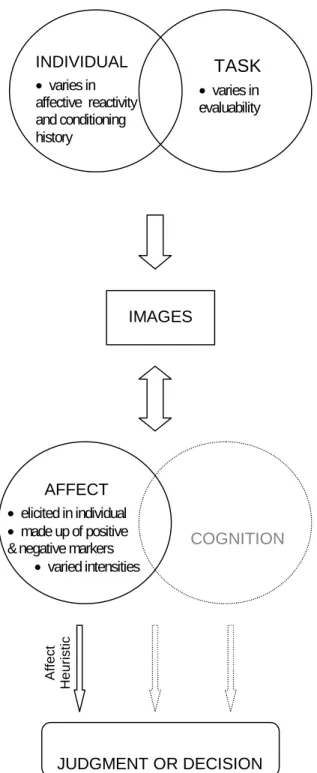
Our model has several parts to it (see Figure 2). To begin with, affective features that become salient in a judgment or decision making process depend on characteristics of the individual and the task as well as the interaction between them. Differences among individuals in the way they react affectively, and differences across tasks regarding the evaluability (relative affective salience) of information, result in the affective qualities of a stimulus image being “mapped” or interpreted in diverse ways. The salient qualities of real or imagined stimuli then evoke images (perceptual and symbolic interpretations) that may be made up of both affective and instrumental dimensions.
The mapping of affective information determines the contribution stimulus images make to an individual’s “affective pool” (lower left of Figure 2). All of the images in people’s minds are tagged or marked to varying degrees with affect. The affective pool contains all the positive and negative markers associated (consciously or unconsciously) with the images. The intensity of the markers varies with the images.
We propose that people consult or refer to the affective pool in the process of making judgments. Just as imaginability, memorability, and similarity serve as cues for probability judgments (e.g., the availability and representativeness heuristics), affect may serve as a cue for many important judgments. Using an overall, readily available affective impression can be easier and more efficient than weighing the pros and cons of various reasons or retrieving from
memory many relevant examples, especially when the required judgment or decision is complex or mental resources are limited. This characterization of a mental short-cut leads us to label the use of affect a “heuristic.”
As indicated in Figure 2, characteristics of individuals and tasks also influence judgments and decisions. In addition, affective and cognitive features of judgment and decision processes are likely to interact with each other. However, the cognitive elements are not the focus of this chapter and are therefore depicted with dotted lines in the figure.
Empirical Predictions and Support
Earlier we traced the empirical origins of our theory in work on imagery, affective reactivity, evaluability, and proportion dominance. In this section we shall present some additional empirical predictions derived from the theory along with findings from current research addressing those predictions. This research has tested the general hypothesis that affect serves to guide the formation of many types of judgments and decisions. It has also examined specific aspects of affective information processing. In particular, we have studied whether judgments about the risks and benefits of a technology may derive from a common source – affective reactions to the technology. In addition, we have studied the extent to which judgments of probability and risk are determined by affect-laden images.
Judgments of Risks and Benefits
In previous research we have focused on the role of affect in explaining why risks and benefits tend to be negatively correlated in people’s minds (and judgments) despite being positively correlated in the external environment. A study by Alhakami and Slovic (1994) found that the inverse relationship between perceived risk and perceived benefit of an activity (e.g., using pesticides) was linked to the strength of positive or negative affect associated with that activity. This result implies that people base their judgments of an activity or a technology not only on what they think about it but also on what they feel about it. If they like an activity, they are moved toward judging the risks as low and the benefits as high; if they dislike it, they tend to judge the opposite—high risk and low benefit.
Alhakami and Slovic’s (1994) findings suggested that use of the affect heuristic guides perceptions of risk and benefit. If so, providing information about risk should change the
perception of benefit and vice-versa. For example, information stating that risk was low for some technology would lead to more positive overall affect that would, in turn, increase perceived benefit. Indeed, we conducted this experiment (see Finucane, Alhakami, Slovic, & Johnson, 2000), providing four different kinds of information designed to manipulate affect by increasing or decreasing perceived risk and increasing or decreasing perceived benefit, as shown in Figure 3. In each case there was no apparent logical relation between the information provided (e.g., risks) and the nonmanipulated variable (e.g., benefits). The predictions were confirmed. These data support the theory that risk and benefit judgments are influenced, at least in part, by the overall affective evaluation (which was influenced by the information provided).
The affect heuristic also predicts that using time pressure to reduce the opportunity for analytic deliberation (and thereby allowing affective considerations freer rein), should enhance the inverse relationship between perceived benefits and risks. In a second study, Finucane et al. showed that the inverse relationship between perceived risks and benefits increased greatly under time pressure, as predicted. These two experiments with judgments of benefits and risks are important because they support Zajonc’s contention that affect influences judgment directly and is not simply a response to a prior analytic evaluation.
Slovic, MacGregor, Malmfors, and Purchase (1999) surveyed members of the British Toxicological Society and found that these experts, too, produced the same inverse relation between their risk and benefit judgments. As predicted, the strength of the inverse relation was found to be mediated by these experts’ affective reactions toward the hazard items being judged. In a second study, these same toxicologists were asked to make a “quick intuitive rating” for each of 30 chemical items (e.g., benzene, aspirin, second hand cigarette smoke, dioxin in food) on an affect scale (bad – good). Next, they were asked to judge the degree of risk associated with a very small exposure to the chemical, defined as an exposure that is less than 1/100 of the exposure level that would begin to cause concern for a regulatory agency. Rationally, because
exposure was so low, one might expect these risk judgments to be uniformly low and unvarying, resulting in little or no correlation with the ratings of affect. Instead, there was a strong
correlation between affect and judged risk of a very small exposure. When the affect rating was strongly negative, judged risk of a very small exposure was high; when affect was positive, judged risk was small. Almost every respondent (95 out of 97) showed this negative correlation (the median correlation was –.50). Importantly, those toxicologists who produced strong inverse relations between risk and benefit judgments in the first study also were more likely to exhibit a high correspondence between their judgments of affect and risk in the second study. In other words, across two different tasks, reliable individual differences emerged in toxicologists’ reliance on affective processes in judgments of chemical risks.
Judgments of Probability, Relative Frequency, and Risk
Our model of affect and decision making has much in common with the model of “risk as feelings” proposed by Loewenstein, Weber, Hsee, and Welch (2001) and with dual process theories put forth by Epstein (1994), Sloman (1996), and others. Epstein argues that individuals apprehend reality by two interactive, parallel processing systems. The rational system is a deliberative, analytical system that functions by way of established rules of logic and evidence (e.g. probability theory). The experiential system encodes reality in images, metaphors, and narratives imbued with affective feelings.
To demonstrate the influence of the experiential system, Denes-Raj and Epstein (1994) showed that, when offered a chance to win a prize by drawing a red jelly bean from an urn, subjects often elected to draw from a bowl containing a greater absolute number, but a smaller proportion, of red beans (e.g., 7 in 100) than from a bowl with fewer red beans but a better probability of winning (e.g., 1 in 10). For these individuals, images of 7 winning beans in the large bowl appeared to dominate the image of 1 winning bean in the small bowl.
We can characterize Epstein’s subjects as following a mental strategy of “imaging the numerator” (i.e. the number of red beans) and neglecting the denominator (the number of beans
in the bowl). Consistent with the affect heuristic, images of winning beans convey positive affect that motivates choice.
Although the jelly bean experiment may seem frivolous, imaging the numerator brings affect to bear on judgments in ways that can be both non-intuitive and consequential. Slovic, Monahan, and MacGregor (2000) demonstrated this in a series of studies in which experienced forensic psychologists and psychiatrists were asked to judge the likelihood that a mental patient would commit an act of violence within 6 months after being discharged from the hospital. An important finding was that clinicians who expressed their beliefs about a patient’s violence risk in terms of a relative frequency judgment (e.g. of 100 patients like X, 10 could be expected to harm someone) subsequently labeled X as more dangerous than did clinicians who assigned an “equivalent” probability to X (e.g. X has a 10% chance of harming someone). Similar results have been found by Yamagishi (1997), whose judges rated a disease that kills 1,286 people out of every 10,000 as more dangerous than one that kills 24.14% of the population.
Not surprisingly, when clinicians were told that “20 out of every 100 patients similar to X are estimated to commit an act of violence during the first several months,” 41% would refuse to discharge the patient. But when another group of clinicians was given the risk as “patients similar to X have a 20% chance of committing an act of violence,” only 21% would refuse to discharge the patient (Slovic, Monahan, & MacGregor, 2000).
Follow-up studies showed that representations in the form of individual probabilities led to relatively benign images of one person, unlikely to harm anyone, whereas the frequentistic representations created frightening images of violent patients.
Implications, Applications, and Future Directions
We believe that the affect model presents some exciting and profitable new research opportunities in the field of judgment and decision making. In this section we briefly highlight several promising areas of descriptive and prescriptive research.
Descriptive Research Opportunities
Affect and Attention
An important component of our model is that affect acts as an orienting disposition to facilitate efficient judgment and decision making. One specific way affect might orient an individual is by guiding his or her attention. Indeed, much research by social, clinical, and physiological psychologists demonstrates that mood and emotion can direct attention toward or away from particular features in the environment (e.g., Fazio, Roskos-Ewoldsen, & Powell, 1994; Mathews & MacLeod, 1994; Niedenthal, Setterlund, & Jones, 1994).
It may be that affect-driven attentional mechanisms underlie recent findings about which features of stimuli are given weight in retrospective evaluations. For instance, Kahneman, Fredrickson, Schreiber, and Redelmeier (1993) showed that memories of pain are based on evaluations of some features of the pain stimulus (peak and end magnitudes), but not on other features (duration) that are also important. Furthermore, research has demonstrated that the velocity with which an outcome changes over time affects satisfaction judgments (Hsee, Abelson, & Salovey, 1991). From this research it seems that the beginning, end, and peak experiences should attract more attention than other time periods. Greater attention should also exist during periods with faster rates of change of affective intensity. To give a concrete
example, perhaps people are more likely to attend to, feel positive toward, and invest money in the stock-market if they have experienced a run of several increasingly large returns, compared to when they experienced a single constant return of equal or greater average magnitude. Affect and Time Horizons
Anticipatory positive and negative affect appear to increase (probably at different rates) as one comes closer in time to experiencing an event (Miller, 1959). We hypothesize that
heuristic reliance on affect, interacting with time horizons, could result in anomalous probability judgments. For example, one might expect that the anticipatory image of an IRS audit during the next six months would be more unsettling than the image of an audit during “the next five
years,” leading the judged probability of the audit in the near term to be higher than that for the longer period.
Similarly, during 1997, a year in which the annual rate of return on mutual funds was near an all-time high, polls reported in the New York Times showed that fund investors expected even higher annual returns during the next 10 years (see Figure 4; see also Dreman, Johnson, MacGregor, & Slovic, 2001, who replicated this finding). This odd result, which flies in the face of regression toward the mean, may have been due to images of current crises (e.g., the falling Asian market) and images of recent fluctuations in prices contributing negative affect and dampening the short-term expectation, whereas the long-term forecast may have been influenced by an image of a strong, healthy market, untarnished by imagery about current
problems and short-term fluctuations. The generality of such forecasting anomalies and their link to time horizons, imagery, and affect, warrants investigation, perhaps using the model of
temporal construal proposed by Trope and Liberman (2000). According to this model, the nature and specificity of representational imagery changes systematically with temporal distance. Separate Consideration of Positive and Negative Affect
In the present chapter, we have generally ignored possible distinctions between the influence of positive and negative affect. Research concerning affective motivation as well as the negativity bias, however, suggests that the distinction may be important (see reviews by
Cacioppo, Gardner, & Berntson, 1997 and Baumeister et al., 2001). Univariate theorists hypothesize a single affective factor influencing behaviors (e.g., Epstein, Pacini, Denes-Raj, & Heier, 1996; Eysenck, 1967; Larsen & Diener, 1987), while bivariate theorists argue for separate positive and negative factors (Gray, 1970, 1982). Although researchers generally agree that the effects of positive and negative evaluative processes are antagonistic (a univariate view), Cacioppo and his colleagues proposed that there are two separate motivational substrates
underlying positive and negative processes (Cacioppo et al., 1997). The net effect may be that as negative beliefs about an object increase, positive beliefs may decline in general. They argued that these effects are not always reciprocally controlled however. For example, they found
functional independence of positive and negative affect such that the level of positive affect, but not negative affect, toward a roommate predicted friendship and the amount of time spent with the roommate. As a result, it may be that changing the level of positive affect in a friendship may be more important to friendship-related thoughts and actions than changing the level of negative affect. Functional independence of positive and negative affect was also found by Abelson et al. (1982) and Peters et al. (in review). Evidence from classical conditioning, individual differences, and attitudes (e.g., Cacioppo & Berntson, 1994; Crites, Fabrigar, & Petty, 1994; Zinbarg & Mohlman, 1998; Zinbarg & Revelle, 1989) provides considerable support for the bivariate view. We expect that, in the future, researchers will find it important to examine separately the inputs of positive and negative affect on judgments and decisions.
Deliberative vs. Non-deliberative Mechanisms
Although traditional decision research implicitly assumes deliberative processes in choice, it appears that affect can develop and influence decisions in non-deliberative ways as well (Nisbett & Wilson, 1977; Chen & Bargh, 1999; Zajonc, 2001). Take, for example, the mechanism of classical conditioning. In the studies by Damasio (1994) and Peters and Slovic (2000), reactions to the gains and losses experienced from drawing cards from each of the decks may have conditioned particular affective responses to the decks.
Attitude researchers have long recognized the relevance of classical conditioning prin-ciples to the attitude domain. Perhaps the best-known study of the effect of classical conditioning on the development of attitudes comes from Staats and Staats (1958, Experiment 1). They told subjects that their task was to learn two lists of words, one presented visually and one orally. The visually presented list consisted of the names of six nationalities (e.g., German, Italian), two of which served as the initially neutral stimuli (Dutch and Swedish). The orally presented list consisted of positive words (e.g., gift, happy), negative words (e.g., bitter, failure), and neutral words (e.g., chair). In the conditioning trials, each national name appeared visually on a screen, and then the experimenter pronounced a positive, negative, or neutral word from the second list. Subjects had to repeat this word aloud. After the conditioning procedure had ended, subjects
were asked to rate each of the national names on a scale ranging from pleasant to unpleasant. Consistent with predictions, the national names were rated more positively if they had previously been paired with positive, rather than negative, words in the conditioning trials.
A particularly interesting test of the role of non-deliberative processes in the conditioning of attitudes was conducted by Krosnick, Betz, Jussim, and Lynn (1992). In two studies, they paired an initially neutral target with a series of photographs designed to elicit negative affect (e.g., a bloody shark) in half of their subjects and positive affect (e.g., a pair of kittens) in the other half of the subjects. Participants were exposed to the photographs, however, for a duration too brief (9-13 msec) for them to consciously recognize the photos. After the conditioning trials, participants indicated their attitudes toward the initially neutral target as well as other evaluative judgments. Krosnick et al. found that their conditioning procedures influenced attitudes even in the absence of conscious awareness of the existence or valence of the photographs.6 Studies on the “mere exposure” effect have also demonstrated that affect is a strong conditioner of
preference (Zajonc, 2001), whether or not the cause of that affect is consciously perceived (for a meta-analysis of over 200 experiments see Bornstein, 1989). The central finding is that, when objects (visual, auditory, gustatory, abstract, and social stimuli) are presented to an individual repeatedly, the “mere exposure” is capable of creating a positive attitude of preference for these objects.
Although many psychologists support the claim that classical conditioning comes about through automatic processes, other researchers (e.g., Insko & Oakes, 1966; Zinbarg & Mohlman, 1998) suggest that more deliberative mechanisms mediate the robust classical conditioning effect. Isolation of deliberative and non-deliberative elements is important in understanding attitudes as well as choice. The conditions under which affect operates as a deliberative or non-deliberative process in judgment and decision making raise questions for investigation.
6
Krosnick et al. used a backward pairing procedure, however, so that their results do have alternative explanations such as priming or mood effects.
Affect and Deliberative Capacity
The interplay between affect and reason also appears to be illuminated by conditions that reduce one’s capacity for deliberation. One example of this is the study by Finucane et al.
(2000), described above, that found increased inverse relationships between perceived risks and perceived benefits under time pressure, supporting the hypothesized “affect heuristic.” Another example comes from Shiv and Fedorikhin (1999) who asked respondents to memorize either a two-digit number (low cognitive demand) or a seven-digit number (high cognitive demand). They were then instructed to walk to another room to report this number. On the way, they were offered a choice between two snacks, chocolate cake (more favorable affect, less favorable cognitions) or fruit salad (less favorable affect, more favorable cognitions). The researchers predicted that the condition with high-memory load (seven digits) would reduce the capacity for deliberation, thus increasing the likelihood that the more affectively favorable option (cake) would be selected. The prediction was confirmed. Chocolate cake was selected 63% of the time when the memory load was high and only 41% of the time when memory load was low. Aging, which reduces attention and memory capacity, may act similarly to increase the reliance on affect relative to deliberation (see, e.g., Hess, 2000 and Hess, Pullen, & McGee, 1996). Studies using time pressure, memory load, and distraction to manipulate cognitive load, as well as studies with elderly persons, could further illuminate the relative importance of affect and deliberation in decision making.
Measuring Affective Experiences
Naturally, given the early stage of development of our theory, it is critical to test the assumption that affective experiences play an influential role in directing evaluations and choices. Much of the research we have drawn on to illustrate the role of affect has not offered independent evidence that judgments and decisions are accompanied by physiological
manifestations of the motivational properties of affect. Peters and Mauro (2000), however, recently demonstrated that physiological responses as well as self-reported affective reactivity were associated with choices. Future research would benefit from expanding measures of affect
to other autonomic nervous system markers (e.g., skin conductance, facial myography) or activity in specific parts of the central nervous system (e.g., amygdala). Clarifying the relative contribution of analysis and affect across tasks and individuals is an important research direction. Prescriptive Research Opportunities
Information Representation and Evaluability
Just as a golfer may be unable to repeatedly execute a proper drive off the tee, an individual may lack the skill to reliably and accurately incorporate his or her desired “policy” into a judgment or decision, particularly when there are multiple, conflicting attributes or objectives to integrate (Hammond, 1971). We propose that providers of information to decision makers consider using forms of graphic representation designed to make stimulus attributes more evaluable affectively. This may facilitate information integration and help individuals to better employ their knowledge and desired judgment policies.
Affective evaluability may underlie the findings of MacGregor and Slovic (1986) who studied the relative performance of four different graphic display types. The task involved predicting the completion times of runners in a marathon. Each runner was described by four cues: age, total miles run in training, fastest recent time for 10,000 meters (Fastest 10K), and a self-rating of motivation. The information cues were presented in one of four graphic formats: a bar graph, a deviation display (i.e., deviation of a runner’s score on a cue from the mean of the cue), a spoke display (see Figure 5a), and a face display (see Figure 5b). The face display was created by assigning each of the four cues to a particular feature of schematic face. For this particular display format, the four facial features portrayed were eyebrow (age), eyes (total miles), nose (motivation), and mouth (fastest 10 km). This assignment of cues to facial features was done to associate the most predictive cue (i.e., fastest 10 km) with the more affectively salient facial feature (i.e., mouth) in belief that this would give subjects the best chance to do well at the task. Subjects in the face-display condition were given additional instructions on how to interpret changes in facial features associated with changes in cue values. This was done by illustrating each facial feature separately, with other features removed, at the extremes of
variation for each cue and at the cues’ average value. A runner having the extreme low scores on all cues would be represented pictorially as a face with a frown, short nose, eyes looking left, and low eyebrows. In contrast, extreme high scores would be portrayed as a face with a smile, long nose, eyes looking right, and high eyebrows.
When the most predictive cue (i.e., fastest 10 km) was assigned to the mouth (and smile) of the face display, that display elicited judgments that were far superior to those of all other displays. When the cues were reassigned to other features such that the smile or frown of the mouth was associated with a less important cue, performance of the facial display were reduced to the level of the other displays.
We hypothesize that the results obtained in this study are due in part to the evaluability principle. Information integration in judgment tasks is likely enhanced when the properties or features of an information display provide a convenient and salient mechanism by which affect can be used to integrate display components. In the case of MacGregor and Slovic (1986), facial features provide a powerful affective cue that can, under some circumstances, dramatically improve information integration in a relatively complex judgment task. Indeed, facial
expressions in general are of significant importance in communicating emotional states between individuals (e.g., Eckman & Davidson, 1994; Eckman & Friesen, 1971).
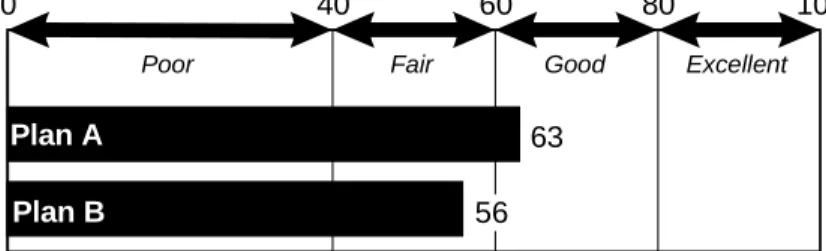
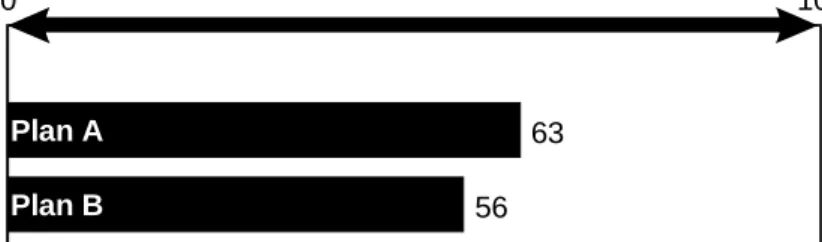
Transforming graphical displays into faces may seem a rather extreme way to make information evaluable. It is likely, however, that equally strong effects can be obtained more subtly. Consider the ways that Peters, Slovic, Hibbard, Mertz, Tusler, and Schmidt (2000) displayed information to people asked to choose among two health maintenance organizations (HMOs). When numerical ratings of satisfaction with the HMO were superimposed against a template showing affective categories (poor, fine, good, excellent) as in Figure 6, this
information was given more weight in choice than it was given when the categories were absent (Figure 7). Although these findings could be the result of providing additional meaning (other than affective meaning), subsequent tests of categorization alone (the category lines without the affective labels) suggest otherwise. Future research could further examine the role of affect by
varying the affective content of the categories (Figure 6 could be presented with less affective labels such as low, medium, high) or by measuring the relative accessibility of affective and cognitive beliefs (see Verplanken, Hofstee, & Janssen, 1998).
Another example of how understanding the workings of affect and evaluability may help improve decision making comes from a study about providing consumers with information about the safety of new cars. The National Academy of Sciences (1996) analyzed the type of safety information that can be obtained from crash tests, accident data, and expert judgment, and recommended that, to incorporate the inherent uncertainty of the estimates, this information be displayed on every new vehicle in the form of ranges (see Figure 8). Our understanding of evaluability suggests, however, that such range displays will make it hard for people to evaluate safety data when judging cars singly or even comparatively. Thus, safety will not be given the weight that consumers themselves would like it to receive and, instead, less intrinsically impor-tant but more affectively salient factors, such as color, style, and so on, will be overweighted relative to safety. Although safety measures may have little influence on buyers’ choices when expressed as ranges, they may carry considerable weight when expressed in more precise and affectively meaningful formats, such as letter grades (A, B, C, D, etc.) or stars (much like ratings of hotels in Michelin guides).
Overcoming Psychophysical Numbing
Earlier we described research by Fetherstonhaugh et al. (1997) indicating that numerical representations of losses of life were relatively nonevaluable. Very large numbers of lost lives were not valued differently than merely large numbers of lost lives. Someone once said
“Statistics are human beings with the tears dried off.” Another observed that “One person’s death is a tragedy; 1,000 deaths is a statistic.” Fetherstonhaugh et al. referred to these sorts of reactions as a form of “psychophysical numbing.”
Similar lack of emotion occurs when death takes place in a physically distant or culturally remote location (e.g., Africa or an urban ghetto). Can we devise ways to infuse affect into
lives because of irrelevant contextual factors? In other words, how can we develop images and scenarios that bring life and meaning (affect) to statistics — that “put the tears back on,” so to speak. One approach might be to utilize dramatic, personalizing visual images, the photo of one victim, for example, or a photo of the 38,000 pairs of shoes of victims placed around the United States Capitol to sensitize legislators to the 38,000 annual gunshot fatalities in the United States. Personalized vignettes or stories about victims could also be used. The potential power of
personalization should not be underestimated, as demonstrated by society’s willingness to expend extraordinary resources to save identified individuals (human or animal) who are endangered (Jenni & Loewenstein, 1997).
Risk, Affect, and Stigma
In ancient Greece, stigma referred to a mark placed on a person to signify infamy or dis-grace. Someone thus marked was perceived to be unworthy or to pose a risk to society. Through its association with risk, the concept of stigma has recently been generalized to technologies, place, and products that are perceived to be unduly dangerous (Gregory, Flynn, & Slovic, 1995; Finucane, Slovic, & Mertz, 2000). A dramatic example of stigmatization is the near collapse of the British beef industry after it was learned that eating beef might be linked to a fatal brain disease (O’Brien, 1996).
As with the beef crisis in Britain, the impetus for stigmatization is typically some critical event, accident, or report that conditions negative affect to the mere thought of the product, place, or technology, motivating avoidance of that product, place, etc. Returning to our model in Figure 2 and Table 1 above, we might ask whether stigmatizing characteristics are simply forms of negative somatic markers (like other negative images in the set) or whether they have special importance, perhaps as a form of “negative halo effect” that changes the integration model for all other positive and negative feelings.
Experiments could be designed to answer this question. One design might ask subjects to free associate to a stimulus such as “eating beef.” We would expect this to produce a variety of positive and negative associations, such as “tastes good” (+), “hamburgers” (+),
“cholesterol” (–), “expensive” (–), and so on. Based upon previous imagery research, we would expect that subjects’ attitudes toward consuming beef would be linearly related to the sum or average rated valence of the associations produced. Suppose that a percentage of subjects included a stigmatizing association, such as “mad cows,” or “brain disease,” as part of their set of positive and negative thoughts. Through parallelism tests of regression lines it should be possible to determine whether the stigmatizing associations merely acted like other negative valences or whether they changed the integration rules governing the other affective information. At the extreme, we might find that presence of a stigmatizing negative rendered all positive associations impotent, similar to the extreme weights Baron and Spranca (1997) observed in their studies of “protected values.” Identification of negative thoughts as stigmatizing could be done by raters evaluating each negative on stigmatizing qualities such as (a) the risk or negative quality is abnormal or unnatural for the stimulus object; (b) the risk is new; (c) contact with the negative feature is involuntary or uncontrollable; and (d) the quality is immoral.
Stigma often remains even after the risk is removed. Risk communicators then face the difficult task of trying to calm unnecessary fears. Because stigma is based upon strong affective or emotional reactions, statistical or factual evidence is typically ineffective, as is the case with another strong affective phenomenon—phobia. With phobias, counterconditioning via exposure to desensitizing experiences works far better than rational appeals. For example, a subject who developed an inability to take pills following the Tylenol poisonings in 1981 was “cured” by starting with relaxation training and then being exposed very gradually to stimuli increasing in similarity to medicine pills (first, simply imagining pill taking, then taking a vitamin pill, etc., see Pbert & Goetsch, 1988). Similar counterconditioning may be necessary to deal with the conditioned negative affect that drives stigmatization and avoidance behavior. Another form of desensitization may result from educating people about the benefits of the activity. Through the workings of the affect heuristic, this should reduce perceived risks thus reducing stigma.
Conclusions
The important role of affect in guiding evaluations and choices is apparent. Drawing together patterns of results from judgment and decision making research provides a testable model that we hope will encourage systematic investigation of the role of affect. Much is known after several decades of research on cognitive factors that influence judgment and decision processes, and it is now time to further our understanding of affective factors and their interaction with cognition.
Undoubtedly, the influence of affect will be context dependent: Characteristics of individuals, decision problems, and decision environments contribute both independent and interacting affective features to judgment and decision processes. Examining the elements of such a complex system is an exciting challenge. We have suggested several descriptive and prescriptive research directions to examine the extent of affective influence on judgment and decision making processes. However, many other paths are likely to offer interesting and informative findings too, particularly if we capitalize on the wealth of information already available to us in the literature on emotion and cognition.
References
Alhakami, A. S., & Slovic, P. (1994). A psychological study of the inverse relationship between perceived risk and perceived benefit. Risk Analysis, 14(6), 1085-1096.
Anderson, N. H. (1981). Foundations of information integration theory. New York: Academic.
Ariely, D. (1998). Combining experiences over time: The effects of duration, intensity changes and on-line measurements on retrospective pain evaluations. Journal of Behavioral Decision Making, 11, 19-45.
Baron, J. (1997). Confusion of relative and absolute risk in valuation. Journal of Risk and Uncertainty, 14(3), 301-309.
Baron, J., & Spranca, M. (1997). Protected values. Organizational Behavior and Human Decision Processes, 70, 1-16.
Bechara, A., Damasio, A. R., Damasio, H., & Anderson, S. W. (1994). Insensitivity to future consequences following damage to human prefrontal cortex. Cognition, 50, 7-15.
Bell, D. E. (1982). Regret in decision making under uncertainty. Operations Research, 30, 961-981.
Bentham, J. (1969). A table of the springs of action (1815). In P. McReynolds (Ed.), Four early works on motivation (pp. 477-512). Gainesville, FL: Scholars’ Facsimiles & Reprints. (Original work published 1815).
Benthin, A., Slovic, P., Moran, P., Severson, H., Mertz, C. K., & Gerrard, M. (1995). Adolescent health-threatening and health-enhancing behaviors: A study of word association and imagery. Journal of Adolescent Health, 17, 143-152.
Bornstein, R. F. (1989). Exposure and affect: Overview and meta-analysis of research, 1968-1987. Psychological Bulletin, 106, 265-289.