From Department of Clinical Science and Education,
Södersjukhuset, Karolinska Institutet, Stockholm,
Sweden
NEGATIVE PRESSURE
WOUND THERAPY
TREATMENT OUTCOMES
AND THE IMPACT ON THE PATIENT'S
HEALTH-RELATED QUALITY OF LIFE
Ann-Mari Fagerdahl
All previously published papers were reproduced with permission from the publisher. Published by Karolinska Institutet. Printed by Larserics Digital Print AB, Sundbyberg © Ann-Mari Fagerdahl, 2013
ABSTRACT
Throughout history wounds have been a cause of great distress to the sufferer and a major burden to society. Especially the slow-healing wounds have been an issue and in order to find healing treatments, complementary methods have been developed. Negative pressure wound therapy (NPWT) is one such complementary method. The overall aim of this thesis was to study if NPWT is an effective and safe method for wound treatment and to enhance the knowledge of the patients’ experience of the treatment and the impact on his/her health-related quality of life (HRQoL).
Studies I and II aim at describing basic demographic data, co-morbidity, treatment results and complications in relation to wound etiology in patients treated with NPWT and at identifying risk factors for non-successful treatment and complications. A chart review was conducted based on a consecutive series of 87 patients treated with NPWT. Successful treatment was noted for 62 patients (71%). Treatment complications were observed in 18 patients (21%). The strongest risk factors associated with non-successful treatment were having a pressure ulcers or a positive culture for Staphylococcus Aureus, and for complications a positive culture for either Staphylococcus Aureus or Pseudomonas Aeruginosa. Patients with insufficient peripheral circulation in the lower extremities had a risk of both non-successful treatment and complications.
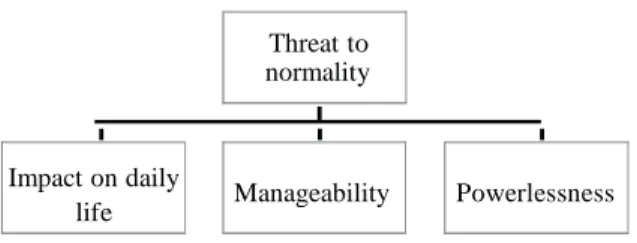
Study III is a descriptive qualitative study aiming at describing the experience of patients with wounds treated with advanced moist wound therapy (AMWT) or with NPWT. Data were collected from 15 day to day diaries written by patients during their treatment and analysed with content analysis. The results identified an overall theme “threat to normality” and three categories “impact on daily life”, “manageability” and “powerlessness”. For patients treated with AMWT, the main concern was pain, while patients treated with NPWT focused on the machine and its optimal functioning.
Study IV is a translation and validation study of the wound-specific HRQoL instrument Cardiff Wound Impact Schedule (CWIS), motivated by a requirement of extended tools for evaluating HRQoL, generated by Studies I-III. A total of 117 patients with acute and hard-to-heal wounds were included. The assessment of the psychometric properties of the instrument as to reliability, validity, responsiveness and ceiling- and floor-effect proved the Swedish version of the CWIS to be a reliable and valid tool for measuring HRQoL.
Conclusions
NPWT may be an effective and safe treatment method where the outcome is dependent on the etiology of the wound. The risk factors identified of a non-successful result pinpoint the necessity of taking steps to ensure meticulous controls of infection and insufficient peripheral circulation. The NPWT has an impact on the patients´ HRQoL. Patients undergoing wound treatment have different focus, concerns and needs related to treatment modality. Further research on effectiveness of the treatment and impact on the patient’s HRQoL is required and the Swedish version of the CWIS has been proven useful for the assessment.
LIST OF PUBLICATIONS
I. Negative pressure wound therapy - a descriptive study Wallin A., Boström, L., Ulfvarson, J., & Ottosson, C. Ostomy Wound Management. 2011; 57(6):22-9
II. Risk factors for non-successful treatment results and complications with Negative Pressure Wound Therapy
Fagerdahl, A., Boström, L., Ulfvarson, J., & Ottosson, C. Wounds. 2012; 24(6):168-77
III. Patients' experience of advanced wound treatment - a qualitative study Fagerdahl, A., Boström, L., Ottosson, C., & Ulfvarson, J.
Submitted
IV. Translation and Validation of the wound-specific quality of life instrument Cardiff Wound Impact Schedule in a Swedish population
Fagerdahl, A., Boström, L., Ulfvarson, J., Bergström, G., & Ottosson, C. Submitted
CONTENTS
1 Introduction... 1
2 Background ... 2
2.1 Wounds and wound healing ... 2
2.2 Wound treatments ... 2
2.2.1 Advanced Moist Wound Therapy... 2
2.2.2 Negative Pressure Wound Therapy ... 3
2.3 Research methods and outcome measures ... 6
2.3.1 Wound-related outcomes ... 7
2.3.2 HRQoL-related outcomes ... 8
2.4 Results of previous research in NPWT ... 9
3 Thesis Rationale ... 12
4 Aims of the thesis ... 13
5 Methods and participants ... 14
5.1 Participants... 14
5.1.1 Study I and Study II... 14
5.1.2 Study III ... 15
5.1.3 Study IV... 16
5.2 Data collection ... 16
5.2.1 Study I and Study II... 16
5.2.2 Study III ... 17
5.2.3 Study IV... 17
5.3 Data analysis ... 18
5.3.1 Statistics ... 18
5.3.2 Qualitative content analysis ... 19
5.3.3 Psychometric testing ... 19
5.4 Ethical considerations... 20
6 Results... 21
6.1 Treatment efficiency... 21
6.2 Treatment safety ... 21
6.3 Impact on the patient´s HRQoL ... 23
6.4 Psychometric properties of the Swedish CWIS ... 24
7 Discussion ... 25
7.1 General discussion ... 25
7.2 Methodological considerations ... 28
7.3 Implications for clinical practice ... 30
7.4 Future research... 30
8 Conclusions... 32
9 Sammanfattning (Summary in Swedish) ... 33
10 Acknowledgements ... 35
LIST OF ABBREVIATIONS
AMWT CWIS EWMA HRQoL NHP NPWT OR PSDL PVD RCT SL SRM VAC WB WUWHSAdvanced Moist Wound Therapy Cardiff Wound Impact Schedule
European Wound Management Association Health-Related Quality of Life
Nottingham Health Profile Negative Pressure Wound Therapy Odds Ratio
Physical Symptoms and Daily Living, domain of the CWIS Peripheral Vascular Disease
Randomized Controlled Trial Social Life, domain of the CWIS Standardized Response Mean Vacuum Assisted Closure Well-Being, domain of the CWIS
1 INTRODUCTION
What is a wound? Cat's scratch on a finger or an ulcer that covers the entire lower limb? Whatever cause, it is not the size or location that plays a role for the person involved, other more complex factors decide whether the wound is something that heals in a couple of days or will become a long lasting problem. Throughout history, wounds have been a cause of great distress to the sufferer and a major burden to society. Especially the slow-healing wounds have been an issue, and in order to find healing treatments, complementary methods have been developed. Negative Pressure Wound Therapy (NPWT) is one such complementary method. Even if studied in multiple studies the effects of the treatment and the impact on the patient's health-related quality of life (HRQoL) still need to be explored.
Medical science contains a wide range of aspects of the medical field, including nursing, physiotherapy and occupational therapy. Wound treatment is complex and need a multi-dimensional approach using different facets within the medical science. From one perspective it is important to establish knowledge on treatment efficacy and safety, i.e. whom to treat with NPWT and whom not to treat. From another perspective it is essential to get a deeper understanding of the impact the treatment has on the patient's HRQoL and everyday life, and how the patient experiences the treatment. It is also important to identify similarities and differences in experience between patients treated with NPWT and those treated with traditional wound treatments, giving the health care professionals possibilities to provide an optimal and individualized wound care.
This thesis encompasses different perspectives of the medical science, including the patient's perspective, to highlight various aspects of the concept NPWT.
2 BACKGROUND
2.1 WOUNDS AND WOUND HEALING
A wound is defined as an injury creating a disruption in the normal anatomical structure and function of the skin. There are two different types of wounds: vulnus that is an acute wound, which heals according to the normal wound healing process, and ulcus that is defined as hard-to-heal wounds (previously labeled chronic wounds) such as leg ulcers, pressure ulcers and diabetic foot ulcer. These wounds have a duration of more than six weeks and often show a disturbed wound healing process due to underlying causes other than direct trauma1.
Wound healing is a complex process in which the skin repairs itself after injury. In the normal skin, the epidermis and dermis forms a protective barrier against the external environment, but once the protective barrier is broken, the normal process of wound healing is immediately set in action1.
The classic model of normal wound healing is divided into three sequential, yet overlapping, phases: inflammatory, proliferative and remodeling. However, this process can easily be interrupted due to several inhibiting factors such as smoking, ischemia in the tissue, diabetes and infections, leading to the formation of a hard-to- heal wound, by definition wounds that have failed to heal within six weeks1-4.
Wounds may heal by three principles: primary, secondary or tertiary healing. Primary healing occurs when the wound edges are put together, often with sutures, and healing occurs with minimal tissue defects. Secondary healing occurs in open wounds, when the wound edges are not put together and healing occurs with formation of granulation tissue. Tertiary healing is delayed primary healing and occurs when a wound is allowed to heal openly for a few days and then is closed with secondary sutures as if primarily5.
2.2 WOUND TREATMENTS
2.2.1 Advanced Moist Wound Therapy
The modern theories of moist wound therapy for wound treatment were developed in the 1950's when Odland showed that wound healing in unbroken blisters was faster than in broken blisters, indicating that occlusive moist environment was beneficial6. These results were followed up by the research by Winter published in 1962 which made him considered “the father of moist wound healing”. He investigated the effect of occlusive dressings compared to air drying for epithelialization in wounds, with a large difference in favour for occlusive dressings7. Moist wound therapy can be attained by using wet gauze. This method, however, demands continuous dressing changes to keep the gauze wet and the wound moist, and a large amount of nursing resources. A review article by Eaglstein concludes the existing research in a general consensus for wound treatment with recommendations of advanced occlusive dressings for creating a moist environment in the wound8. This method is called Advanced Moist Wound Therapy (AMWT). Today there are numerous commercial types of AMWT-dressings available,
such as hydrofibre, hydrocolloids, films, foams, hydrogels and alginates. This wide selection of dressing categories enables the health-care personnel to decide on the most appropriate treatment for the individual patients, given the characteristics of the wound9.
Despite solid evidence, there still exist a skepticism and resistance towards using occlusive dressings in the clinical setting, mainly based on the fear of infections8. Paradoxically, as there is evidence of fewer infections when using occlusive dressings10. Eaglstein discusses this skepticism in his review article and defines it as being a medical conservatism to acceptance of new medical discoveries and a predilection of favoring more glamorous and high-tech innovations, leading to a selective interpretation of the evidence8.
2.2.2 Negative Pressure Wound Therapy
History
NPWT originates from cupping therapy, which is an ancient form of alternative medicine in which a local suction is created on the skin which mobilizes the blood flow in order to promote healing. The earliest record of cupping is from ancient Egypt, China and The Middle East11.
In the 1830's the so called Junod's boot was developed by Dr. Junod. It was known as the haemospasic apparatus or exhausting apparatus (Figure 1). The idea was similar to cupping but on a larger scale. By sucking the blood into the limb and withdrawing it from the general circulation, it was believed to reduce fever and forestall inflammatory conditions12.
Figure 1. Junod's exhausting apparatus13. Used with permission from The Lancet.
In 1986-1987 the five so called “Kremlin papers” described closed suction as effective in decreasing wound healing time and reducing hospitalization as well as reducing bacterial counts in purulent wounds, using a method of wall suction and gauze to create a negative pressure to evacuate exudates from post operative wounds14.
In the late 1980's, Chariker, Jeter, Tintle and Bottsford used negative pressure with the gauze-technique in seven patients with fistulas. The result was minimized morbidity, improved wound contracture and re-epithelialization, and reduced nursing resources
.
.
.
and costs15
The first commercially NPWT system was available on the market in 1995.
It was the Vacuum Assisted Closure® (VAC) introduced by the American researchers
Argenta and Morykwas. They used poly-urethane foam as wound filler instead of the previous gauze-technique, with excellent result: 99% of 300 patients with acute, sub-
acute and hard-to-heal wounds responded favorably to the treatment16
Today numerous medical manufacturers provide NPWT systems, both with the gauze- technique and the foam-technique, and there is an ongoing excessive development of new products and also improvements of existing systems.
Treatment
The NPWT method consists of a device that creates a vacuum in the wound using a wound filler of polyurethane foam, polyvinyl alcohol foam dressing or gauze (Figure 2). The foam, or gauze, is adapted exactly after the size of the wound (a) and then the wound filler and the entire wound are covered with a transparent adhesive drape (b). A hole is cut in the drape and a suction tube is adapted (c). The tube is connected to the vacuum machine and a subatmospheric pressure ofnormally 80-125 mmHg is applied (d), dependent on which system used.
d
Figure 2. Dressing technique. Used with permission from KCI International.
Indications and goals of treatment with NPWT
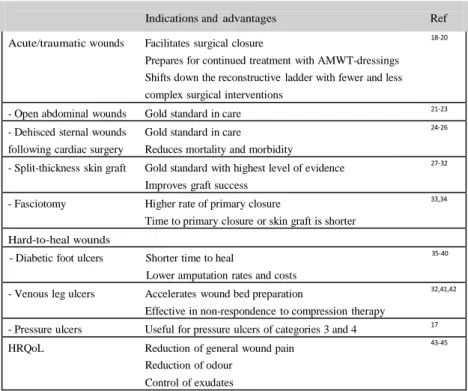
NPWT can be used in wound treatment for a broad variety of indications, both for acute wounds and for hard-to-heal wounds. For some diagnoses the treatment has become the gold standard and is routinely used, for others the indication has been more
controversial. An overview of the indications is presented in Table I. The treatment
goals ofNPWT are mainly for secondary healing: to prepare the wound for secondary intention such as split-thickness skin graft, secondary surgical suture or continuous treatment with different dressings. However, using NPWT as a tool for managing the wound also exists, i.e. to reduce complexity and size, to manage wound fluid and to prevent deterioration of the wound. Treatment goal in terms of improvement of the patients' HRQoL is discussed and controversial but can be seen as part of achieving a
Table I. Indications and advantages with NPWT in the literature
Indications and advantages Ref
Acute/traumatic wounds Facilitates surgical closure 18-20
Prepares for continued treatment with AMWT-dressings Shifts down the reconstructive ladder with fewer and less complex surgical interventions
- Open abdominal wounds Gold standard in care 21-23
- Dehisced sternal wounds Gold standard in care 24-26
following cardiac surgery Reduces mortality and morbidity
- Split-thickness skin graft Gold standard with highest level of evidence 27-32 Improves graft success
- Fasciotomy Higher rate of primary closure 33,34
Time to primary closure or skin graft is shorter Hard-to-heal wounds
- Diabetic foot ulcers Shorter time to heal 35-40
Lower amputation rates and costs
- Venous leg ulcers Accelerates wound bed preparation 32,41,42 Effective in non-respondence to compression therapy
- Pressure ulcers Useful for pressure ulcers of categories 3 and 4 17
HRQoL Reduction of general wound pain 43-45
Reduction of odour Control of exudates
Contraindications and complications with treatment
In the manufacturer's manual, the contraindications are listed being untreated osteomyelitis, non-enteric or unexplored fistulae, present necrotic tissue, malignant wounds and direct placement over exposed structures e.g. tendons, ligaments, blood vessels, anastomosis sites, organs and nerves. Precautions should be taken for patients with active bleeding, with difficult wound haemostasis and patients under anticoagulant therapy46. Bearing the contraindications in mind it is a bit surprising that research is presented where clearly these contraindications have not been followed. For example: complications in terms of bleeding causing severe injuries and death have been described, mainly associated with vascular grafts, sternal and groin wounds and anticoagulant therapy47. In Sweden a case series has been published describing five cases of severe bleeding due to rupture of the right ventricle when deep sternal wound infection was treated with NPWT, three with fatal outcome48.
Complications and adverse events associated with NPWT have not been thoroughly investigated, but reports of complications are present in the literature47,49. Veurstaek et al showed statistically significant higher presence of cutaneous damage secondary to therapy, and a numeric thus not statistically significantly higher complication rate in the NPWT group (40%) compared to treatment with AMWT (23%)32.
Decrease in pain has been regarded as an advantage when using NPWT for wound treatment. However, the review by Ousey, Cook and Milne revealed that pain was the most frequently cited reason for terminating the NPWT. Pain was reported during dressing changes and the pain rating was higher in the group using foam as wound filler compared to gauze, which may be due to adhesion and tissue in-growth caused by the effect of the foam50.
Limitations of mobility and a deterioration of the physical functioning was a major HRQoL complication seen in 42% of the patients in the study by Mendonca, Drew, Harding and Price51. This negative effect of NPWT was also described by patients in the studies of Abbots and of Bolas and Holloway52,53.
2.3 RESEARCH METHODS AND OUTCOME MEASURES
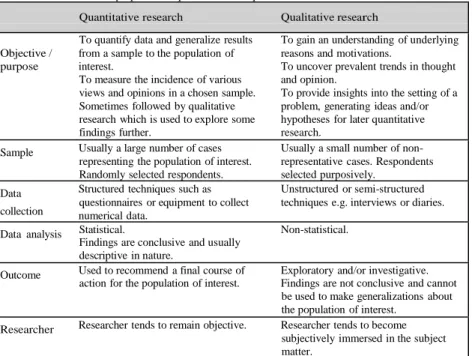
Research can be divided into two basic categories or paradigms, quantitative and qualitative research54. An overview of the properties of the two research approaches is presented in Table II.
Table II. Overview of the properties of quantitative and qualitative research54
Quantitative research Qualitative research
To quantify data and generalize results To gain an understanding of underlying Objective / from a sample to the population of reasons and motivations.
purpose interest. To uncover prevalent trends in thought
To measure the incidence of various and opinion.
views and opinions in a chosen sample. To provide insights into the setting of a Sometimes followed by qualitative problem, generating ideas and/or research which is used to explore some hypotheses for later quantitative
findings further. research.
Sample Usually a large number of cases Usually a small number of non- representing the population of interest. representative cases. Respondents Randomly selected respondents. selected purposively.
Data Structured techniques such as Unstructured or semi-structured questionnaires or equipment to collect techniques e.g. interviews or diaries. collection numerical data.
Data analysis Statistical. Non-statistical. Findings are conclusive and usually
descriptive in nature.
Outcome Used to recommend a final course of Exploratory and/or investigative. action for the population of interest. Findings are not conclusive and cannot
be used to make generalizations about the population of interest.
Researcher Researcher tends to remain objective. Researcher tends to become subjectively immersed in the subject matter.
Quantitative methods have a focus on numbers and frequency, provide information easy to analyse statistically. They are associated with a scientific and experimental approach but are criticized for not providing an in-depth description. Qualitative methods on the other hand are ways of collecting data which are concerned with describing meaning rather than drawing statistical conclusions and so provide a more in-depth and rich description54.
The so called "qualitative-quantitative debate", arguing which method is the most accurate and reliable has been going on for decades. However, in modern research, a combination of qualitative and quantitative approach is recommended, which allows for statistically reliable information obtained from numerical measurements to be backed up and enriched by information on the participants' explanations and experience55.
A large amount of clinical epidemiological methods and study designs exist for quantitative research. Nevertheless there is a lack of high quality evidence in wound research, since many studies are based on insufficient sample size, short follow-up time and issues concerning comparability between different studies due to poor description of the control group. Often the treatment in the control group is described as "standard of care" which could mean anything from saline gauze dressings to AMWT56.
The impact of the wound and the wound treatment can be deeper understood by conducting qualitative research. This gives an opportunity to explore the patients' perceptions and experience of having a wound and undergoing a wound treatment. There are several designs used in qualitative wound research, and different methods are available for collecting data. Questionnaires and interviews are the most common methods for data collection in qualitative research54. The shortcomings of these two traditional qualitative methods are that the patients are asked to recall past experience, something that has been shown to be unreliable by causing recall bias57,58. This systematic bias occurs when answering questions that are affected by the memory and is considered as the most significant methodological factor affecting self-reported data. To avoid and minimize the effect of recall bias, a number of methods have been developed to bring the assessment closer to real-time. Using diaries to collect data is one method59. Written diaries were initially used in the 1940's as a way of collecting health data from patients. In the beginning diaries were seen as a tool for the patients to remember health events, but over time they became a way to reduce recall bias in research. The methodological limitations with diaries are the risk of poor data quality and non-compliance by patients which can decrease reliability59,60. Broderick, Schwartz, Shiffman, Hufford and Stone showed that auditory signaling enhances compliance with the patients' use of diaries61.
2.3.1 Wound-related outcomes
The most common endpoints used in wound research are time to complete healing and percentage of wound size change during the study period. A weakness of the two endpoints is the subjective interpretation of when a wound is completely healed, how to measure the wound and what method to use for measuring wound size56. Another problem with these endpoints is that the intervention or treatment often is performed for reasons other than complete healing, as in the case of NPWT. To achieve a more clinical and realistic outcome measure, the endpoints should instead be related to the purpose of the intervention. Examples of endpoints could be preparation of wound bed for secondary intervention, control of exudation, wound debridement, reduction of pain, rate of granulation, dressing performance etc as recommended by European Wound Management Association (EWMA)56. The review articles published so far by Cochrane Library, internationally recognized as the highest standard in evidence-based health- care and often leading the research opinion, and the Swedish Council on Health
Technology Assessment, called SBU, indicative in Swedish healthcare, all use complete healing as primary outcome measure.
In future research the question to address must be what outcome to use. The most sensible and logical answer would be to use an outcome that reflects whether the intention of the treatment has been achieved or not.
2.3.2 HRQoL-related outcomes
The concept HRQoL is defined as those aspects of overall quality of life that can be clearly shown to affect health, either physical or mental62.
HRQoL can be measured by two basic approaches: generic instruments that provide a summary of HRQoL in general terms, and disease- or condition-specific instruments that are adapted to different diseases or conditions. The generic instruments are used to compare different diseases and conditions in a wider sense, while the specific instruments can detect small but clinically relevant differences and can be used to measure the impact the disease has on the individual. Disease-specific tools often have advantages over the generic regarding ease of administration, acceptability by the patient, cost, and simplicity of scoring. It is recommended to combine the two for complete assessment of the patient's HrQoL63.
Examples of commonly used generic HRQoL-instruments in health research are the SF-36, the EQ-5D and the Nottingham Health Profile (NHP). The SF-36 (Short Form- 36 Health Survey) contains 36 items which measure eight health-related domains: physical activity, role-physical, body pain, general health perceptions, vitality, social functioning, role-emotional, and mental health. The 36 scores are summerized and transformed into a scale from zero (poor health) to 100 (good health). The SF-36 has good to excellent psychometric properties of reliability and validity and appears sensitive to change64. The EQ-5D (EuroQoL) consists of five items each measuring one health domain: mobility, self-care, role (or main) activity, family and leisure activities, and pain and mood. The respondents also rate their health on a visual analogue scale from zero (worst imaginable health state) to 100 (best imaginable health state) 65. The NHP consists of two parts which can be used together or separately. Part I consists of 38 items dealing with six domains of health: energy levels, pain, emotional reaction, sleep, social isolation and physical abilities. Each question is assigned a weighted value, and the sum of all weighted values of a given domain adds up to 100. Part II contains seven general questions regarding daily life66.
Having a wound and the necessity of having to undergo wound treatment affects the patient's daily life and has an impact on the HRQoL. This was first acknowledged by Lindholm, Bjellerup, Christensen and Zederfeldt. They studied how leg ulcers affected the patient's HRQoL using the NHP, and found that the wound had a clearly negative impact on the patient's perceived health, particularly evident for the male patients in comparison to the norm population. Pain was the most bothersome symptom and created the most stress67.
Following Lindholm et al's pioneering study67, a large amount of research has been conducted regarding the impact of HRQoL in wound patients, indicating that patients with wounds have a significantly poorer HRQoL compared to healthy people. In a review article by Persoon et al which included results from both qualitative and quantitative research, pain was recognized as the major concern in studies of both designs68. Other limitations and restrictions of the daily life has been described in the literature as due to immobility, worries, frustrations and being dependent on others68-70.
The advantages of using instruments like SF-36, EQ-5D and NHP are that they are well validated, frequently used empirically and give the possibility to compare results across different diseases, conditions, populations, or studies62. To satisfy the requirement of a disease-specific tool for evaluation of the HRQoL of wound patients, the Cardiff Wound Impact Schedule (CWIS) has been developed at Cardiff University of Wales College of Medicine. The CWIS is validated to measure the HRQoL of patients with hard-to-heal wounds such as venous leg ulcers and diabetic foot ulcers, but has also been used for patients with acute wounds51,71-73. The instrument consists of 47 questions which are divided into three domains, 'well-being' (WB), 'physical symptoms and daily living' (PSDL) and 'social life' (SL). The values of the items add together and calculate according to a specific formula that creates an index from zero to 100, where a high value represents a high HRQoL and a low value a low HRQoL. Validation of the CWIS was made with the SF-36 as gold standard. CWIS is translated and validated to French, German and American English languages but not to Swedish74.
2.4 RESULTS OF PREVIOUS RESEARCH IN NPWT
NPTW has been in clinical use since 1995. A literature search of Medline revealed over 1400 published articles. As presented before, a lot of the articles can be disputed as using unrealistic outcome variables or being poor in study design. The publications up to today conclude that sufficient evidence for the superior clinical use of NPWT is presented only for split-thickness grafts27-32. Research showing positive results of the efficiency of NPWT exists but with weaker levels of evidence, not leading to other conclusions than indications of possible use, presented in Table II.
Examples of the interpretations of the existing research are three Cochrane reviews evaluating NPWT in the area of hard-to-heal wounds (chronic), partial-thickness burns and skin grafts, and surgical wounds healing by primary healing which conclude that there is not sufficient evidence that NPWT is superior to AMWT and other conventional wound treatment methods and that additional studies are required75-77. The SBU-report from the Swedish Council on Health Technology Assessment also presents a review of the published research on NPWT. The final conclusion is that the advantage of NPWT is unclear in many clinical situations and that there is a major lack of existing high quality studies to clearly evaluate the treatment. The SBU-report also goes as far as asking whether it is ethically justifiable to use the method at all since it has not been proven to be superior to conventional wound healing31. However, bearing in mind that these reviews solely evaluated randomized controlled trials (RCT's) with complete healing as the primary endpoint, the question is if these results should be interpreted with precaution.
Another example is the review article by Xie, McGregor and Dendukuri on diabetes foot ulcers where the evidence for beneficial use of NPWT has been regarded as consistent and given as an example where NPTW can be used40. However, the studies assessed relate to patients with sufficient arterial circulation in the lower extremities, something that is mentioned in passing in the review, giving a situation where the interpreter could believe that diabetic wounds could be treated with NPWT as such. Instead the clinical recommendations are that NPWT should not be used in patients with insufficient circulation and only be used in a chronic ischemic limb when all other treatment alternatives have failed, and finally never in an acute ischemic limb17.
The use of NPWT in pressure ulcers has also been debated, and the literature shows varying results. The general opinion is that NPWT has not been proven to be more effective than other control interventions and the clinical recommendation is that NPWT is suitable only for pressure ulcers in the most severe stages (categories 3 and 4), but even then a possible use could be not to heal the wound but to improve the patient's HRQoL with fewer dressing changes and a better comfort of the dressing17,78,79.
The World Union of Wound Healing Societies' (WUWHS) consensus document for NPWT states that NPWT can have a positive impact on a patient's HRQoL80. However, Ousey et al conclude in their review of the impact of NPWT on the patient's HRQoL that it is not possible to determine whether the impact is positive, neutral or negative, based on existing research50.
One small cohort study by Mendonca et al using the CWIS as instrument for measuring HRQoL at treatment start and at four weeks after treatment did not find any differences in patients with acute or hard-to-heal wounds. The study showed, however, that treatment with NPWT may worsen the HRQoL for some patients. Particularly the physical-functioning domain in ambulatory patients was affected during this period of time51. In another study using the CWIS to compare HRQoL in patients treated with either NPWT or standard wound treatment, the results showed no overall significant differences between the two treatments. However, an unexpected improvement of HRQoL in the domain social life was identified in the group treated with NPWT, which the authors explained could be due to the small sample size or to enhanced attention given to patients treated with a machine81. Why it was interpreted as unexpected is a little surprising as one question that comes to mind is that NPWT often reduces the odour from the wound which could lead to a wish to retain a social life.
An improved HRQoL during NPWT in patients with hard-to-heal wounds has also been reported. Vuerstaek et al showed a similar improvement in patients' HRQoL and decrease in pain scores in patients treated with NPWT. However, in the control group with patients treated with AMWT the changes were significantly faster than in the NPWT group32.
The impact on the HRQoL during NPWT has been explored qualitatively in a few studies focusing on the patient's conceptions and experience of the treatment. Both studies by Abbotts and by Wallin showed that the treatment with NPWT was
experienced as stressful, especially regarding the impact on daily life and organization around dressing changes52,82. An interview study by Bolas and Holloway confirms the findings in the two latter studies but also emphasizes the technical aspect of NPWT and describes the feelings of distress associated with its use53.
Since the literature presents varying results with both negative and positive impact on the patient's HRQoL, it is necessary to perform larger quantitative studies and also to conduct more qualitative research on the effects of NPWT on the HRQoL of patients with different wound etiology. Upton, Stephens and Andrew recently published an article reviewing the research on patients' experience of treatment with NPWT. They also emphasize the need of more knowledge, particularly exploring the patient's experience throughout the treatment process in order to minimize negative effects of NPWT83.
3 THESIS RATIONALE
Although numerous studies on treatment with negative pressure have been conducted there is still a lack of evidence of which patients and which wound types will have the best result of the treatment.
In the clinical use, NPWT has sometimes been viewed as a “simple dressing” which could be considered as an ignorance of the risks and safety issues with the treatment. This phenomenon is also seen in research, where adverse events and risk factors with NPWT have not been the primary focus and that there is no study that includes a risk analysis of the impact of the wound etiology or patient-related factors.
The limited research of the NPWT's impact on the patient's HRQoL points out a huge knowledge gap and more research are needed. To emphasize the impact the treatment has on the individual it is important to perform both qualitative and quantitative studies. To quantify data of HRQoL a validated disease-specific HRQoL instrument for patients with wounds treated with NPTW is required.
The knowledge gained on treatment indications, risk factors and impact on the patient's HRQoL can lead to an individualized wound treatment, achieving an effective and gentle wound treatment that can decrease the suffering and increase the HRQoL of the patient.
4 AIMS OF THE THESIS
The overall aim of this thesis was twofold: to study if NPWT is an effective and safe method for wound treatment, and to enhance the knowledge of the patient's experience of the treatment and the impact on the patient's HRQoL.
Specific aims were:
Study I to describe basic demographic data, co-morbidity, treatment results, and complications in relation to wound etiology in patients treated with NPWT.
Study II to identify wound- and patient-related factors associated with an increased risk of non-successful treatment and complications during treatment with NPWT.
Study III to describe the experience of patients with wounds treated with AMWT and NPWT.
Study IV to translate the wound-specific HRQoL-instrument CWIS and validate it for a Swedish population.
5 METHODS AND PARTICIPANTS
In this thesis different designs and research methods have been used based on the research question of each study. An overview is presented in Table III.
Table III. Overview of designs and methods
Study Design Participants Data collection Data analysis I Descriptive
retrospective
Consecutive series of patients treated with
Chart review Fisher’s exact tests, Mann- Whitney U-test
study NPWT (n=87)
II Retrospective study
Same as Study I Same as Study I Fisher’s exact tests, Chi- square test, Logistic
Risk analysis regression
III Qualitative descriptive study
Patients treated with AMWT and NPWT having an acute wound
Written diaries Qualitative content analysis
(n=15)
IV Validation study
Patients with acute and hard-to-heal wounds (n= 117) SF-36 and CWIS questionnaires Psychometric statistical analyses
The NPWT system used to treat all patients included in this thesis was the vacuum- assisted closure (VAC) device (Kinetic Concepts, Inc., San Antonio, TX) using regularly continuous subatmospheric pressure of 125 mm Hg. Dressings were changed two or three times a week.
Hydrofibre (Aquacele®) with transparent film dressing attached on top was the dressing used for creating a moist wound environment in the patients treated with AMWT in Study III. The dressing was changed three times a week.
5.1 PARTICIPANTS 5.1.1 Study I and Study II
Studies I and II were based on the same population. A consecutive series consisting of all patients who had been treated with NPWT during 2005-2007 at the hospital were included. Initially 92 patients were identified from hospital data charts. Three patients were excluded due to missing data and two patients had incomplete follow-up information, giving a final sample size of 87 patients. Demographic data are shown in Table IV.
Female 34 (39) ”59 \UV 25 (29) Age 60-74 yrs 32 (37) • 5 \UV 30 (34) Postoperative wound 45 (52)
Peripheral vascular disease 11 (13)
Etiology of wound Infection 9 (10)
Trauma 8 (9)
Pressure ulcer 14 (16)
Existing Co-morbidity 63 (72)
Table IV. Demographic data of Studies I and II
Patient characteristics No (%)
Male 53 (61)
Gender
5.1.2 Study III
From a large ongoing quantitative RCT all patients who completed their diaries were consecutively included in Study III. To be eligible for inclusion in the RCT, all participants had to have an acute wound (duration <six weeks), had to be cognitively adequate and able to speak and write the Swedish language. The included patients were between 41 and 91 years of age. All patients had wounds in the lower extremities (Table V).
Table V. Demographic data of Study III
AMWT n= 7 NPWT n=8
Gender Male 4 6
Female 3 2
Age 41-91 47-80 Wound diagnosis - Postoperative complication
- Trauma - Infection - Arterial insufficiency - Postoperative complication - Trauma - Venous insufficiency
Data material Days 89 84
Words/day 3-73 2-89
The analysis of the included patients was conducted with diaries written by seven patients treated with AMWT and eight patients treated with NPWT. In contrast to quantitative research, where the sampling is preferably randomized, the most common sampling in qualitative research is purposive. The qualitative researcher aims at getting a sample that is rich enough to get an understanding of the phenomenon rather than to justify generalization of the findings. However, since the aim of Study III was to
describe the experience of patients treated with two different wound treatment methods and to see if there were any differences between the patients' experience of the two methods, the ambition was to get the sampling as objective as possible.
5.1.3 Study IV
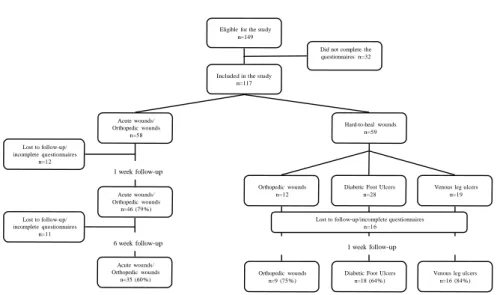
The patients in Study IV were recruited from the orthopedic out- and inpatient clinics and wards, the dermatology and the podiatric/diabetic clinic at the hospital. Initially 149 patients with wounds were eligible for inclusion. Thirty-two patients were excluded due to incomplete answers in the questionnaires, leaving a sample size of 117 patients. The response rate for all patients at the one-week follow-up was 76% and at the six-week follow-up for the group with an acute wound 60% (Figure 3). The mean age of the population was 59 years (range 19-89) and 61% of the patients were male.
Eligible for the study n=149
Included in the study n=117
Did not complete the questionnaires n=32 Lost to follow-up/ incomplete questionnaires n=12 Acute wounds/ Orthopedic wounds n=58 1 week follow-up Hard-to-heal wounds n=59 Lost to follow-up/ incomplete questionnaires n=11 Acute wounds/ Orthopedic wounds n=46 (79%) 6 week follow-up Orthopedic wounds n=12
Diabetic Foot Ulcers n=28 Lost to follow-up/incomplete questionnaires
n=16
1 week follow-up
Venous leg ulcers n=19 Acute wounds/ Orthopedic wounds n=35 (60%) Orthopedic wounds n=9 (75%)
Diabetic Foot Ulcers n=18 (64%)
Venous leg ulcers n=16 (84%)
Figure 3. Flow-chart Study IV
5.2 DATA COLLECTION 5.2.1 Study I and Study II
Studies I and II are chart reviews of all medical records of the included patients. Data was entered into a study-specific predefined protocol. The protocol included basic demographic data, wound data, ASA-classification, co-morbidity and results from bacterial cultures taken during treatment. The etiology of the wounds was divided into five groups: 1) open postoperative wounds after either orthopedic or general surgery; 2) wounds related to peripheral vascular disease (PVD), including diabetic foot ulcers and arterial leg ulcers; 3) wounds due to primary infections, such as necrotizing fasciitis and erysipelas; 4) trauma-related wounds that could not be treated with primary closure; 5) pressure ulcers. In five cases, clarification was done for classification of the wound
etiology made by a general surgeon or an orthopedic surgeon. To calculate interrater reliability, a nurse not involved in the study reviewed a sample of the medical charts (n=9), and results were compared to those of the chart reviewer's, with an 84% agreement, which was regarded as excellent.
Treatment outcome was abstracted verbatim from the medical records and classified as either: successful treatment (wound healed, wound bed improved and left for secondary intention as secondary granulation, secondary suture or skin graft) or: non-successful treatment (wound not improving or worsened or treatment discontinued due to complications). The motive for using this outcome measurement was to avoid non- adapted measurements for NPWT, such as complete healing and reduction of wound size and to achieve a more clinically useful assessment related to the purpose of the treatment. The duration of treatment was calculated from the recorded treatment start to the stop date. The follow-up time ranged from 24 to 48 months.
All forms of adverse events and complications related to the treatment and documented in the patients' medical records were registered and categorized as wound related, related with quality of life issues for the patient or related to problems with the technical equipment of the NPWT device.
5.2.2 Study III
Study III is a qualitative study using diaries as data collection method, to minimize the risk of recall bias as described by Gendrau, Hufford and Stone59. The patients were asked to write diaries every day during two weeks of treatment, or less if the wound treatment was terminated earlier for some reason. The patients were instructed to focus on their experience of the treatment. An enrolled team of nurses reminded the participant to write in the diary to enhance compliance according to Broderick et al61.
The final material of the diaries written by the two treatment groups consisted of 173 days of diary entries, ranging from two to 89 words each. The text was transferred into a computerized document to create a systematic overview of the entire material and to facilitate analysis.
5.2.3 Study IV
The CWIS instrument in Study IV was translated by a standardized method developed by MAPI Research Institute84. An example of the structure of the original CWIS is presented in Figure 4. The translated Swedish version underwent psychometric testing for reliability, validity and responsiveness.
At baseline, the patients included in the validation part of Study IV filled in the Swedish version of the CWIS and the SF-36. All patients received instructions to fill in the same two questionnaires after one week and then return them by mail. At the time of the one-week follow-up the patients received a text message or a telephone reminder. Patients with acute wounds were also followed up after six weeks by mail with a letter of instructions and a pre-paid postage envelope to send back the two questionnaires.
Figure 4. Items from the well-being domain of the original CWIS. With permission from the Cardiff University of Wales College of Medicine.
5.3 DATA ANALYSIS 5.3.1 Statistics
The SPSS 17.0 and 20.0 (SPSS, Chicago, IL) was used for statistical calculations and analyses. Differences were considered significant if the two-tailed p-value was <0.05. In Study I Fisher's exact test was used for comparison of demographic variables due to small subgroups85. The distribution in age and treatment time was skewed, therefore presented as median values. The comparison in treatment time between patients with successful and non-successful NPWT treatment was calculated with the nonparametric Mann-Whitney U-test.
In Study II binary logistic regression was used to study the associations between different risk factors and two dependent variables: non-successful treatment and complications. The associations were presented as odds ratios (OR). The model strategy was to first study crude association with each risk factor in the univariable model, then adjusting the model for all the other variables resulting in a final model by excluding all non-significant variables. The Hosmer-Lemeshow goodness-of-fit test was used to examine if the final model sufficiently fit the data, with a p-value > 0.05 showing an acceptable fit86.
5.3.2 Qualitative content analysis
Qualitative content analysis was chosen as the best method for analysing the data in Study III. Content analysis is a method for data analysis and was first described in the 1950's. Initially it was predominately used in quantitative research but gradually it gets more often applied in qualitative research87.
In Study III content analysis according to Graneheim and Lundman was performed and divided into seven steps87. The first six steps contained: 1) selecting the unit of analysis, in this study the diaries, 2) repeatedly reading the text to obtain a sense of the central message of the text and a deeper understanding of the content, 3) identifying meaning units which is the constellation of words that relate to the same central meaning relevant to the research question and condensing the meaning units to get a better overview of the data, 5) the condensed meaning units were labeled with codes, 6) the codes were grouped into categories that reflected the central message of the text. This step was performed within the research team and discussions took place until consensus was reached. At this stage of the analysis, the researchers discussed their preconceptions developed through clinical experience of working with this group of patients for several years. Preconceptions can be seen as an asset and a great contributor to qualitative research when being recognized88.
In the final seventh step, after the analysis had been made, the material was divided into two groups, patients treated with AMWT and patients treated with NPWT. Differences and similarities between the two groups were analysed and discussed within the research group. In this material the codes were grouped into three categories that reflected the central message of the text from both groups, and the underlying meaning of the categories was formulated in one main theme.
The analysis was performed initially with six diaries from patients treated with AMWT and six from patients treated with NPWT. An additional three diaries were then analysed (one from the AMWT-group and two from the NPWT-group), but no new information was obtained which led to a feeling of saturation. Saturation is a concept in qualitative research explaining the state when the collection of new data does not contribute to exploring the issue further and the amount of data analysed is considered to be sufficient89.
5.3.3 Psychometric testing
The Swedish version of the CWIS was evaluated for its psychometric properties by assessing reliability, validity, responsiveness and measures of ceiling- and floor-effects. Reliability was measured with internal consistency of the three domains of the CWIS at baseline, using Cronbach's alpha coefficient considered acceptable when 0.70 or higher. The test-retest stability was calculated with intraclass correlation based on patients with hard-to-heal wounds at baseline and at the one-week follow-up, using 0.60 as the lowest acceptable level90,91.
Validity was estimated by using methods for face, content, discriminant and criterion validity. Face and content validity measures the perceived clinical relevance of the
questionnaire by intended users, and were assessed by wound patients and an expert group during the translation process. Discriminant validity is a measurement of the instrument's capacity to distinguish between different conditions and is calculated with mean difference of the two groups at baseline. Criterion validity compares scores of the instrument to another similar instrument regarded as gold standard. In Study IV the domains of the CWIS were compared to relevant domains of the SF-36 at baseline and correlations were calculated with Spearman's rho.
Responsiveness estimates the ability of the instrument to detect clinically important changes. Standardized response mean (SRM) was used to evaluate internal responsiveness, calculated by dividing the difference between baseline and the six- week follow-up in patients with an acute wound, with the standard deviation of that difference. SRM was considered small (<0.5), moderate (0.5-0.8) or large (>0.8)92.
Estimates of ceiling- and floor-effects were also performed since it is regarded as impossible to detect improvement or decline in health if over 15 percent of a group's scores are at the maximum or minimum possible score93.
5.4 ETHICAL CONSIDERATIONS
The ethical principle non-maleficence is embodied by the phrase, "first, do no harm," which states that it is more important not to harm your patient than to do him/her good. Of course this ethical principle is not absolute since many treatments will harm the patient, but the final outcome must be beneficial. There is a constant balance between the principle of beneficence (doing good) and the non-maleficence, defined as the principle of double effect.
With the principle of non-maleficence as a base for the studies in this thesis, the focus of the objectives was to gain more knowledge, especially concerning risk factors for treatment failure, complications and negative impact of NPWT on the patients' HRQoL. By getting this further knowledge it is possible to balance the principle of double effect, i.e. the benefits of the treatment and the risks, so that, in the end, the patient will not be harmed.
Ethical approval for collecting data from the medical records for the chart review in Studies I and II was obtained by the local Ethics Committee.
In Studies III and IV the participants were given verbal and written information on the studies, and their consent was given. Ethical approval was obtained by the local Ethics Committee.
All studies were performed in accordance with the Helsinki Declaration and with good clinical practice.
6 RESULTS
6.1 TREATMENT EFFICIENCY
In Studies I and II, the primary outcome was if the treatment goals were achieved or not, and a success rate of 71 % (n=62) was noted.
The present studies showed that the wound etiology had a significant impact on the treatment outcome (p=0.001). The highest rate of successful treatment was shown in patients with infectious wounds (100%), followed by post-operative wounds (82%). Patients with PVD had the lowest rate of successful treatment, with only three patients (27%) recorded as having had a successful outcome. The indication for treatment of the wound had an impact on the outcome. Wounds with the treatment goal of optimized wound healing, when all other treatment options had failed, had the lowest success rate (p=0.03).
The importance of treatment time and treatment result for patients with different wound etiology treated with NPWT was assessed in Study I. There were no significant differences in the length of treatment between the successfully treated (median 17 days) and the non-successfully treated wounds (median 19 days). However, wounds with different etiology required different treatment time to achieve a successful result. For wounds caused by trauma the figures showed that wounds with a successful treatment outcome had a rather short treatment time. Wounds with non-successfully treatment outcome tended to have a longer treatment time, indicating that results of treatment should be noted early, otherwise there seems to be no advantage to keep on with the treatment. On the contrary, pressure wounds needed a longer time to achieve a successful result.
Non-successful treatment results were noted for 25 patients (29%). Risk factors associated with an increased risk of treatment failure was presented in the univariable logistic regression analysis in Study II: atherosclerosis in the lower extremities (OR 5.4), diabetes (OR 3.2), having a wound due to PVD (OR 12.3) or a pressure ulcer (OR 4.6), and positive bacterial culture for Staphylococcus Aureus (OR 3.4) and Pseudomonas Aeruginosa (OR 4.4) in the wound. In the adjusted multivariable model only the risk factors of having a pressure ulcer (OR 6.2) and the presence of Staphylococcus Aureus (OR 4.7) remained statistically significant. The Hosmer- Lemeshow goodness-of-fit test indicated adequately fit the data for the final model (0.28).
6.2 TREATMENT SAFETY
Studies I and II showed a complication rate of 21% (Figure 5). Wounds associated with PVD had the highest frequency of complications (64%). Wounds with an infectious origin and wounds related to trauma had no complications registered during treatment. Complications related to the wound (n=10) were the most common adverse
event with infection being the most frequently occurring complication (n=5), followed by patient-perceived deterioration of the HRQoL (n=4).
Unintended termination of treatment due to complications with NPWT was registered for 14 patients, mainly due to wound complications and because the patients perceived a deterioration of his/her HRQoL.
Complications* n=18/87 (21%) Successful treatment result n=2 Non successful treatment result n=16 Wound infection (Post-op wound) Technical problem (Pressure ulcer) Terminated treatment n=14 Continued treatment n=2 Post-operative wound (n=5) Wound infection Worsened skin status Bleeding Decreased HRQoL
Wound due to PVD (n=7) Wound infection Worsened skin status Bleeding Decreased HRQoL (n=2) Pressure ulcer (n=2) Wound infection Decreased HRQoL
Worsened skin status (Post-op wound) Wound infection (Pressure ulcer)
Suspicion bowel fistula Decreased general health status Technical problem
Figure 5. Distribution of complications
*Infectious wounds and wounds due to trauma had no complications registered.
The univariable logistic regression analysis performed in Study II, showed a significant association of higher risk for complications in patients with atherosclerosis in the lower extremities (OR 4.4), wounds due to PVD (OR 9.5), positive culture of Staphylococcus Aureus (OR 5.3) or Pseudomonas Aeruginosa (OR 6.1). In the multivariable analysis statistical significance only remained for the presence of Staphylococcus Aureus (OR 14.3) and Pseudomonas Aeruginosa (OR 18.5). The Hosmer-Lemeshow goodness-of-fit statistics was 0.87.
Gender, age, ASA-score, ongoing dialysis, diabetes, smoking, current cardiovascular disease, alcohol abuse and other bacterial species registered in the cultures taken during treatment were variables tested as non-significant, as well as the other wound types not mentioned above.
6.3 IMPACT ON THE PATIENT'S HRQOL
The results from Studies I and II showed that treatment with NPWT could have a negative impact on the patient's HRQoL. In four cases, which represent 22% of all documented complications, it was reported of patients' perceived deterioration in HRQoL. The impact on the patients was severe enough for the physician to terminate the treatment in all cases.
Patients treated with NPWT and AMWT describe their experience of the treatment in
Study Ill There were a lot of similarities but also descriptions unique for the different treatment modalities. The content analysis identified one main theme and three categories, which covered both groups (Figure 6).
Threat to normality I I I I Impact on daily Manageability Powerlessness life
Figure 6. Theme and categories of Study III
Having a wound and the necessity of having to undergo wound treatment had an impact on the patients and threatened their possibilities of being able to lead a normal life, regardless of treatment modality.
Both patient groups described that the wound treatment affected their daily life. However, there were differences in how their lives were affected depending on the treatment modality. The group treated with AMWT mainly focused on pain during the treatment, which was not described at all by the group treated with NPWT. This is in line with the findings in Study II, only one patient related his/her deteriorated HRQoL to increased pain during treatment with NPWT. The main focus of patients treated with NPWT described in Study III was instead machine-associated. Particularly the optimal functioning of the machine and problems with a non-functioning machine was described as being major concerns to the patients treated with NPWT. In Study II the majority ofHRQoL-related complications were related to the NPWT device.
The patients treated with AMWT and NPWT had different ways of managing the impact the treatment had on their daily life. Patients treated with AMWT expressed a desire for external feedback and support from the health-care personnel to feel safe and cared for. Patients treated with NPWT needed the health-care personnel to facilitate the development of an internal confidence for the patient to feel safe in managing the treatment and the machine at home.
When the patients did not have enough strength and resources to cope with the strains of the treatment, feelings of weakness and powerlessness arouse. Patients treated with
AMWT expressed this state as being tired; tired of the wound, the treatment, not being able to live their normal life, loss of their social role and a feeling of inadequacy. The patients treated with NPWT described helplessness, the feeling of being abandoned with the machine as the most stressful feeling. An explanation could be that these patients were treated on an outpatient basis and had no back-up during afterhours when the clinic was closed, contributing to increased anxiety in case of mal-functioning of the machine.
6.4 PSYCHOMETRIC PROPERTIES OF THE SWEDISH CWIS
As shown in studies I-III the treatment with NPWT has an influence on the patients' HRQoL generating a need of a wound-specific HRQoL instrument to quantify the findings and bring the research in this matter further. The CWIS was translated and then validated in a Swedish context regarding reliability, validity, responsiveness in Study IV.
Reliability of the CWIS calculated with Cronbach's alpha showed acceptable internal consistency of the three domains 'well-being', 'physical symptoms and daily living' and 'social life' (0.69-0.92). All domains proved stable over time with measurement of test- retest stability with interclass correlation >0.60 (0.66-0.80).
Face and content validity were judged as good by the assessment made by patients and the expert group. The instrument was seen as comprehensible and clinically relevant. The mean difference between acute and hard-to-heal wounds, in the assessment of discriminant validity, was statistically significant for the domains WB and SL. There were numeric differences in the domain PSDL. Criterion validity was calculated with correlation between the CWIS and relevant domains of the SF-36, reaching moderate to high values, and was comparable to a reference material71 .
SRM, used for calculations of internal responsiveness, showed moderate to large values (0.62-1.12), indicating that the Swedish version of the CWIS has the ability to detect changes that are considered clinically important.
There were no signs of either ceiling- or floor-effect, since none of the patients scored the lowest possible score and only seven percent reached the highest value, leaving a wide margin to the cut-of-point of 15 percent93.
The measurement of the psychometric properties of the Swedish version of the CWIS in Study IV showed that it is a reliable and valid tool for measuring the HRQoL in patients with acute and hard-to-heal wounds.
7 DISCUSSION
7.1 GENERAL DISCUSSIONThis thesis shows that NPWT is an effective and safe treatment, and that the treatment results are influenced by the etiology of the wound. It also presents risk factors for a non-successful treatment result and for complications, which should be taken into consideration in the clinical setting. The thesis also presents the differences in focus, concerns and needs between patients treated with either AMTW or NPTW and that the need to further investigate the treatment's impact on the patients' HRQoL is met by the translation and validation of a Swedish wound-specific HRQoL instrument.
NPWT has been defined as the greatest innovation and progress in modern wound management and the treatment results seen have been astounding. Clinically, the method has made it possible to perform advanced surgery with minimized morbidity and mortality in patients with severe and hard-to-heal wounds. It has also contributed to managing HRQoL-issues, particularly in patients with large dehiscent wounds as it gives a wound closure and the patient a “whole” body, creating a hope of recovery and health. However, despite experienced overwhelming success of the treatment there is a minority of patients that do not benefit from the treatment. In every day work the health-care personnel are forced to make decisions on treatment options, trying to balance the effectiveness and results of the treatment with the wellbeing of the patient. The goal of this decision is that the cure should never be worse than the disease and always be beneficial to either the patient him/herself directly or indirectly to posterity. To facilitate treatment decisions, extended knowledge is needed to establish if NPWT is an effective and safe treatment method and the impact on the patient's HRQoL and experience of the treatment. The main objective of this thesis was to generate this knowledge.
The success rate of NPWT presented in Study I was 71%. It was concluded that treatment with NPWT is safe and effective. However, when turning the figures around, almost one third (29%) had a non-successful treatment result. The result caused great concern and demanded a re-evaluation of the true conclusion of the efficiency and safety of NPWT. The final statement is that NPWT is an effective and safe treatment for most patients, although not beneficial to all, even worse: it may even be harmful to some. This implies a demand for further research on risk factors for treatment failure and complications.
The finding that wounds due to infectious origin had a 100% treatment success and no complications registered is a contradiction, as infection was the most common complication. This can eventually be explained by the bacterial cultures. Patients with wound infection as a complication during treatment were mostly infected by Pseudomonas Aeruginosa or Staphylococcus Aureus, both associated with a high risk of complications. For patients with a wound of infectious origin the cultures mainly consisted of anaerobe bacterial species not associated with complications in the risk analysis of Study II. Another explanation could be a neglect to treat an infection that