MultiBoost: A Multi-purpose Boosting Package
Djalel Benbouzid1,2R´obert Busa-Fekete1,3 [email protected]
Norman Casagrande4 [email protected]
Fran¸cois-David Collin1 [email protected]
Bal´azs K´egl1,2 [email protected]
1Linear Accelerator Laboratory, University of Paris-Sud, CNRS Orsay 91898, France 2Computer Science Laboratory, University of Paris-Sud, CNRS Orsay 91405, France
3Research Group on Artificial Intelligence of the Hungarian Academy of Sciences and University of Szeged, Aradi v´ertan´uk tere 1., H-6720 Szeged, Hungary
4wavii.com
Editor:S¨oren Sonnenburg
Abstract
The MultiBoost package provides a fast C++ implementation of multi-class/multi-label/multi-task boosting algorithms. It is based onAdaBoost.MHbut it also implements popular cascade classifiers andFilterBoost. The package contains common multi-class base learners (stumps, trees, products, Haar filters). Further base learners and strong learn-ers following the boosting paradigm can be easily implemented in a flexible framework.
Keywords: boosting,AdaBoost.MH,FilterBoost, cascade classifier
1. Introduction
AdaBoost (Freund and Schapire, 1997) is one of the best off-the-shelf learning methods
developed in the last fifteen years. It constructs a classifier in an incremental fashion by adding simple classifiers to a pool, and uses their weighted “vote” to determine the final classification. AdaBoost was later extended to multi-class classification problems
(Schapire and Singer,1999). Although various other attempts have been made handle the multi-class setting, AdaBoost.MHhas become the gold standard of multi-class boosting
due to its simplicity and versatility.
Despite the simplicity and the practical success of the AdaBoost, there are relatively
few off-the-shelf implementations available in the free software market. Whereas binary
AdaBoostwith decision stumps is easy to code, multi-classAdaBoost.MHand complex
base learners are not straightforward to implement efficiently. The MultiBoostsoftware
package is intended to fill this gap. Its main boosting engine is based on theAdaBoost.MH
algorithm ofSchapire and Singer(1999), but popular cascade classifiers (VJCascade(Viola and Jones,2004),SoftCascade(Bourdev and Brandt,2005)) andFilterBoost(Bradley and Schapire,2008) have also been implemented. The package includes common multi-class base learners (real and nominal valued decision stumps, trees, products (K´egl and
Busa-Strong Learner AdaBoost.MH FilterBoost Viola-Jones Cascade Soft Cascade Data Representation Dense Sparse Integral Image Data Parser ARFF SVM Light Simple text Base Learner SingleStump HaarSingleStump SparseSingleStump Selector Indicator
Meta Base Learner
Tree learner Product Learner Output Information 0-1 loss Hamming loss AUC ... option al
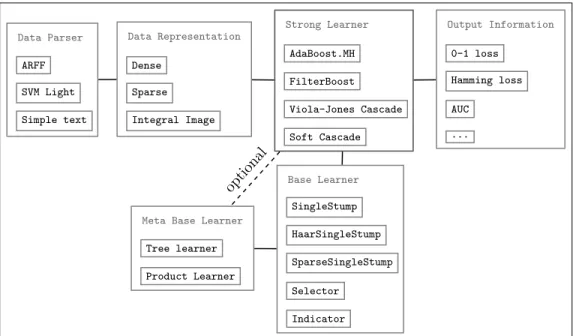
Figure 1: The decoupled architecture of MultiBoost
1
Figure 1: The architecture of MultiBoost
Fekete,2009), and Haar filters), but the flexible architecture makes it simple to add new base learners without interfering with the main boosting engine. MultiBoostwas designed in
the object-oriented paradigm and coded in C++, so it is fast and it provides a flexible base for implementing further modules.
The rest of this paper is organized as follows. Section 2 describes the general archi-tecture and the modules of MultiBoost. Section 3 deals with practical issues (website,
documentation, licence), and Section4describes some of our results obtained on benchmark data sets and in data mining challenges.
2. The Architecture
MultiBoost was implemented within the object-oriented paradigm using some design
patterns. It consists of several modules which can be changed or extended more or less independently (Figure1). For instance, an advanced user can implement a data-type/base-learner pair without any need to modify the other modules.
2.1 Strong Learners
The strong learner1 calls the base learners iteratively, stores the learned base classifiers and their coefficients, and manages the weights of the training instances. The resulting classifier is serialized in a human-readable XML format that allows one to resume a run after it was stopped or crashed. MultiBoostimplements the following strong learners:
1. The name originally comes from the boosting (PAC learning) literature. Here, we use it in a broader sense to mean the “outer” loop of the boosting iteration.
• AdaBoost.MH (Schapire and Singer, 1999): a multi-class/multi-label/multi-task version of AdaBoost that learns a “flat” linear combination of vector-valued base
classifiers.
• FilterBoost (Bradley and Schapire,2008): an online “filtering” booster.
• VJCascade (Viola and Jones, 2004): an algorithm that learns a cascade classifier tree by running AdaBoostat each node.
• SoftCascade(Bourdev and Brandt,2005): another cascade learner that starts with a set of base classifiers, reorders them, and augments them with rejection thresholds. 2.2 Base Learners
MultiBoostimplements the following base learners.
• The Stumplearner is a one-decision two-leaf tree learned on real-valued features. It
is indexed by the feature it cuts and the threshold where it cuts the feature.
• Selector is a one-decision two-leaf tree learned on nominal features. It is indexed by the feature it cuts and the value of the feature it selects.
• Indicatoris similar toSelector but it can select several values for a given feature
(that is, it canindicate a subset of the values).
• HaarStump is a Stump learned over a feature space generated using rectangular
filters on images.
• Treeis ameta base learner that takes any base learner as input and learns a vector-valued multi-class decision tree using the input base learner as the basic cut.
• Productis another meta base learner that takes any base learner as input and learns a vector-valued multi-class decision product (K´egl and Busa-Fekete, 2009) using the input base learner as terms of the product.
2.3 The Data Representation
The multi-class data structure is a set of observation-label pairs, where each observation is a vector of feature values, and each label is a vector of binary class indicators. In binary classification, we also allow one single label that indicates the class dichotomy. In single-label multi-class classification, only one of theK labels is 1 and the others are −1, but the framework also allows multi-label classification with several positive classes per instance. In addition, multi-task classification can be encoded by letting each label column represent a different task. We implement a sparse data representation for both the observation matrix and the label matrix. In general, base learners were implemented to work with their own data representation. For example,SparseStumpworks on sparse observation matrices and HaarStump works on an integral image data representation.
2.4 The Data Parser and the Output Information
The training and test sets can be input in the attribute-relation file format (ARFF), in the SVMLight format, or using a comma separated text file. We augmented the first
two formats with initial label weighting, which is an important feature in the boosting framework (especially in the multi-class/multi-label setup).
In each iteration,MultiBoostcan output several metrics (specified by the user), such
as the 0-1 error, the Hamming loss, or the area under the ROC curve. New metrics can also be implemented without modifying other parts of the code.
2.5 LazyBoost and BanditBoost
When the number of features is large, featurewise learners (Stump, Selector, and In-dicator) can be accelerated by searching only a subset of the features in each iteration. MultiBoostimplements two options, namely,LazyBoost(Escudero et al.,2000), where
features are sampled randomly, and BanditBoost (Busa-Fekete and K´egl, 2010), where
the sampling is biased towards “good” features learned using a multi-armed bandit algo-rithm.
3. Documentation and License
The code of MultiBoosthas been fully documented inDoxygen. It is available under the
GPL licence at multiboost.org. The website also provides documentation that contains detailed instructions and examples for using the package along with tutorials explaining how to implement new features. The documentation also contains the pseudo-code of the multi-class base learners implemented inMultiBoost.
4. Challenges and Benchmarks
We make available reproducible test results (validated test errors, learning curves) of Multi-Boost on the web site as we produce them. Among other results, the boosted decision
product is one of the best reported no-domain-knowledge algorithms on MNIST. An early version of the program (Bergstra et al.,2006) was the best genre classifier out of 15 submis-sions and the second-best out of 10 submissubmis-sions at recognizing artists in the MIREX 2005 international contest on music information extraction. More recently, we participated in the
Yahoo! Learning to Rank Challengeusing a pointwise ranking approach based on hundreds of MultiBoost classifiers. We finished 6th in Track 1 and 11th in Track 2 out of several
hundred participating teams (Busa-Fekete et al.,2011).
Acknowledgments
This work was supported by the ANR-2010-COSI-002 grant of the French National Research Agency.
References
J. Bergstra, N. Casagrande, D. Erhan, D. Eck, and B. K´egl. Aggregate features and Ada-Boost for music classification. Machine Learning Journal, 65(2/3):473–484, 2006.
L. Bourdev and J. Brandt. Robust object detection via soft cascade. In Conference on Computer Vision and Pattern Recognition, volume 2, pages 236–243. IEEE Computer Society, 2005.
J.K. Bradley and R.E. Schapire. FilterBoost: Regression and classification on large datasets. InAdvances in Neural Information Processing Systems, volume 20. The MIT Press, 2008. R. Busa-Fekete and B. K´egl. Fast boosting using adversarial bandits. In International
Conference on Machine Learning, volume 27, pages 143–150, 2010.
R. Busa-Fekete, B. K´egl, ´Eltet˝o T., and Gy. Szarvas. Ranking by calibrated AdaBoost. In
(JMLR W&CP), volume 14, pages 37–48, 2011.
G. Escudero, L. M`arquez, and G. Rigau. Boosting applied to word sense disambiguation. In Proceedings of the 11th European Conference on Machine Learning, pages 129–141, 2000.
Y. Freund and R. E. Schapire. A decision-theoretic generalization of on-line learning and an application to boosting. Journal of Computer and System Sciences, 55:119–139, 1997. B. K´egl and R. Busa-Fekete. Boosting products of base classifiers. In International
Con-ference on Machine Learning, volume 26, pages 497–504, Montreal, Canada, 2009. R.E. Schapire and Y. Singer. Improved boosting algorithms using confidence-rated
predic-tions. Machine Learning, 37(3):297–336, 1999.
P. Viola and M. Jones. Robust real-time face detection. International Journal of Computer Vision, 57:137–154, 2004.