Illinois State University
ISU ReD: Research and eData
Theses and Dissertations11-20-2018
A Mixed Methods Study Of The Implementation
Of Collaborative Technology Tools For Enhancing
Collaboration And Student Engagement In Online
Learning: Faculty Experiences And Student
Perspectives
Ayshah Abdullah Alahmari
Illinois State University, [email protected]
Follow this and additional works at:https://ir.library.illinoisstate.edu/etd
Part of theHigher Education Administration Commons,Higher Education and Teaching
Commons, and theInstructional Media Design Commons
This Thesis and Dissertation is brought to you for free and open access by ISU ReD: Research and eData. It has been accepted for inclusion in Theses and Dissertations by an authorized administrator of ISU ReD: Research and eData. For more information, please [email protected].
Recommended Citation
Alahmari, Ayshah Abdullah, "A Mixed Methods Study Of The Implementation Of Collaborative Technology Tools For Enhancing Collaboration And Student Engagement In Online Learning: Faculty Experiences And Student Perspectives" (2018).Theses and Dissertations. 1034.
A MIXED METHODS STUDY OF THE IMPLEMENTATION OF COLLABORATIVE TECHNOLOGY TOOLS FOR ENHANCING COLLABORATION AND
STUDENT ENGAGEMENT IN ONLINE LEARNING: FACULTY EXPERIENCES AND
STUDENT PERSPECTIVES
AYSHAH ABDULLAH ALAHMARI 220 Pages
The appropriate implementation of collaborative technology tools in online courses leads to a culture of social learning where technology empowers students to take central roles in their learning. Yet, critical questions still exist about how faculty design, develop, implement
collaborative eLearning activities using technology tools that support collaboration and student engagement in online courses, and what perspectives students have toward their experiences while participating in these activities. The purpose of the study is to explore the experiences of faculty members implementing collaborative technology tools in online courses to support collaboration and student engagement, in addition, to obtain the perspectives of students toward their experiences while participating in these activities. The study attempts to better understand the potential and use of technology for enhancing collaboration and student engagement in online settings and the factors that influence the selection of collaborative technology tools for incorporating collaborative eLearning activities in online courses. An explanatory sequential mixed methods approach was utilized to collect data from a total of 210 faculty and student participants who met the participation criteria and volunteered to participate in the study at a
large Midwestern state university. Out of the 210 participants, 29 faculty members and 181 students were surveyed, and after a review of the results, follow-up interviews were conducted with four faculty members and two students. The findings of this study confirmed that
collaborative technology tools have the potential to create a virtual collaborative environment that enables instructors to establish a learning community within online courses where students can synchronously or asynchronously work together toward a common task, in which each student adds to an emerging pool of knowledge of the group. This study provides evidence that the use of collaborative technology tools positively affects students’ experiences with
collaborative eLearning activities in online learning. The instructor's ability to successfully select and implement collaborative technology tools that effectively support collaborative eLearning and student engagement in online courses is a primary concern. This concern raises the demand for online instructors who are well-prepared and fully-supported to integrate collaborative technology tools into online settings and design eLearning activities that engage students and foster interaction and collaboration. Possible implications of the study and practical
recommendations drawn from the findings of the study for professional and meaningful practice are discussed.
KEYWORDS: collaborative eLearning; collaborative technology tools; online learning; social constructivism; transactional distance; social presence
A MIXED METHODS STUDY OF THE IMPLEMENTATION OF COLLABORATIVE TECHNOLOGY TOOLS FOR ENHANCING COLLABORATION AND
STUDENT ENGAGEMENT IN ONLINE LEARNING: FACULTY EXPERIENCES AND
STUDENT PERSPECTIVES
AYSHAH ABDULLAH ALAHMARI
A Dissertation Submitted in Partial Fulfillment of the Requirements
for the Degree of DOCTOR OF EDUCATION School of Teaching and Learning ILLINOIS STATE UNIVERSITY
A MIXED METHODS STUDY OF THE IMPLEMENTATION OF COLLABORATIVE TECHNOLOGY TOOLS FOR ENHANCING COLLABORATION AND
STUDENT ENGAGEMENT IN ONLINE LEARNING: FACULTY EXPERIENCES AND
STUDENT PERSPECTIVES
AYSHAH ABDULLAH ALAHMARI
COMMITTEE MEMBERS: Ryan A. Brown, Chair Steve Mertens
Lydia Kyei-Blankson Jay C. Percell
DEDICATION
I dedicate this dissertation to my parents, my husband, and my children, who mean the world to me…
ACKNOWLEDGMENTS
In the Name of Allah, the Beneficent, the Merciful. All praise and thanks are due to Allah, the Lord of the Universe for the blessing providing me the strength and patience to
complete this dissertation. I pray that I utilize the knowledge Allah has provided me through this journey for good and to benefit others earnestly.
First and foremost, I would like to express my sincere appreciation to my dissertation committee chairperson, Dr. Ryan Brown, for the invaluable support, guidance, and
encouragement throughout my journey. I would also like to acknowledge my dissertation committee members, Dr. Steve Mertens, Dr. Lydia Kyei-Blankson, and Dr. Jay Percell for their insightful comments and encouragemen. Their guidance, advice, and support have largely contributed to the successful completion of this dissertation.
I would like to express my great gratitude to my family for all of the spiritual support throughout this process. To my parents, thank you for your prayers, inspiration, and endless encouragement. Thank you for believing in me and I hope that I have made you proud. To my sisters and brothers, thank you for all the love, encouragement, and endless support. To my beloved husband, words cannot express my appreciation and gratitude to you for being always by my side to provide love and support. Without your care, patience, sacrifices, and endless support, I would not be where I am today. To my brilliant children, thank you for being my inspiration to achieve greatness and success. Thank you for all the love, joy, and happiness that you gave me. Thank you for coming into my life, you are my greatest accomplishment.
CONTENTS Page ACKNOWLEDGMENTS i TABLES vii FIGURES viii CHAPTER I: INTRODUCTION 1
Background of the Study 1
The Purpose of the Study 4
Research Questions 4
Assumptions 5
Definition of Key Terms 6
Rationale 7
Significance of the Study 7
Limitations of the Study 9
Organization of the Dissertation 9
CHAPTER II: LITERATURE REVIEW 11
Introduction 11
Online Education 12
Influence of Technology 16
Design and Development 18
Collaborative Learning 20
Effective Collaborative Learning 21
Theoretical Framework 33
Theory of Social Constructivism 33
Theory of Transactional Distance 39
Theory of Social Presence 43
Conclusion 45
CHAPTER III: METHODOLOGY 46
Introduction 46
Research Design 47
Research Setting & Study Sample 51
Research Participants 52
Description of the faculty participants. 53 Description of the student participants. 54 Description of the interviewees. 55
Research Instruments 59
Survey Instrument 59
Interview Instrument 64
Pilot Study Procedures 65
Data Collection Techniques 66
Quantitative Data Collection 68
Qualitative Data Collection 69
Data Analysis Procedures 70
Quantitative Data Analysis 70
Triangulation 72
Validity and Reliability 73
Positionality Statement 75
Ethical Assurances 79
CHAPTER IV: FINDINGS 81
Overview of the Study 81
Findings 83
Research Question 1 83
Integration of collaborative technology tools. 88 Preparedness and proactive thinking. 90 Creating a sense of instructor presence. 91 Establishing a sense of community. 94 Engaging student collaboration. 95
Troubleshooting. 96
Practical guidelines and considerations. 100
Research Question 2 102 Faculty-related factors. 104 Student-related factors. 109 Research Question 3 111 Faculty perspectives. 111 Student perspectives. 116
CHAPTER V: DISCUSSION AND IMPLICATIONS 125
Summary of Findings 126 Research Question 1 126 Research Question 2 128 Research Question 3 130 Discussion 131 Collaboration Tools 132
Instructional Influence of Technology Integration 133
Fostering student engagement. 134
Demonstrating and building knowledge. 134 Promoting collaborative authoring. 135
Increasing online presence. 135
Establishing a sense of learning community. 136 Instructing 21st-century skills. 137 Factors Influence the Tool Selection Process 138 Faculty roles and responsibilities. 140 Faculty professional development. 141
Implications and Contributions 144
Recommendations for Future Practice 147 Practical Recommendation for Faculty 147 Practical Recommendation for Educational Institutions 149 Recommendation for Future Research 150
Conclusion 151
APPENDIX A: PILOT STUDY RECRUITMENT EMAIL 174 APPENDIX B: E‐MAIL INVITATION TO PARTICIPATE IN A SURVEY 176 APPENDIX C: INFORMED CONSENT FOR THE SURVEY 178
APPENDIX D: FACULTY SURVEY 180
APPENDIX E: STUDENT SURVEY 199
APPENDIX F: E‐MAIL INVITATION TO PARTICIPATE IN A FOLLOW-UP
INTERVIEW 212
APPENDIX G: INFORMED CONSENT FOR THE INTERVIEW 214 APPENDIX H: FACULTY INTERVIEW PROTOCOL 216 APPENDIX I: STUDENT INTERVIEW PROTOCOL 219
TABLES
Table Page
1. Description of Faculty Participants 53 2. Description of Student Participants 55
3. Description of the Interviewees 58
4. Description of Study Variables 62
5. Data Sources for Research Questions 67 6. Cronbach’s Alpha Reliability for the Survey Subscales 75 7. List of Collaborative Technology Tools Reported by Faculty Members 86 8. Faculty’s Comfort Level Using Collaborative Technology Tools in
Online Course 89
9. Faculty Perceived Factors to Consider when Selecting Collaborative
Technology Tools 103
10.Faculty Perceived Influence of Using Collaborative Technology Tools for
Online Learning 112
11.Student Perceived Influence of Using Collaborative Technology Tools on
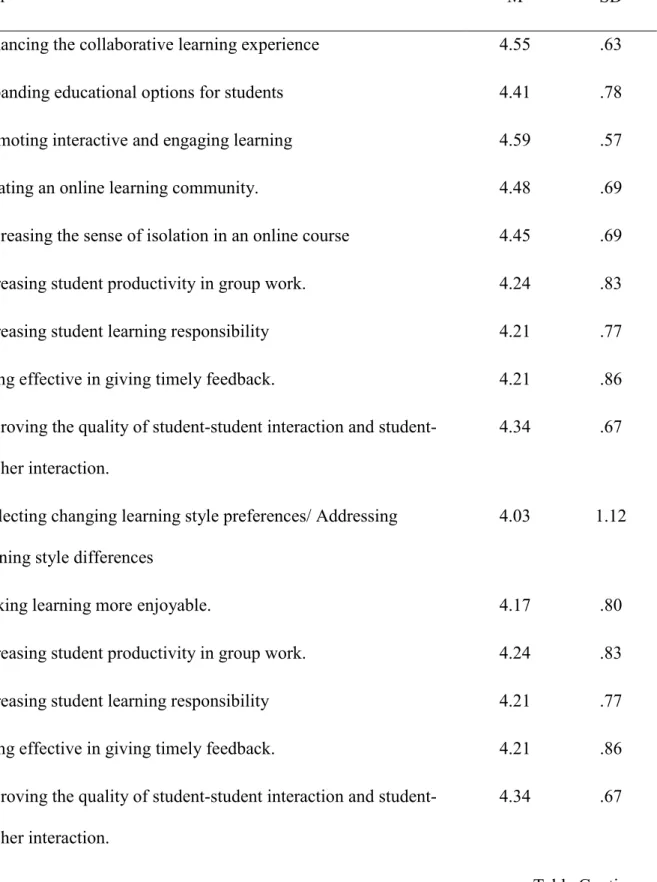
Online Learning 117
12.Student Perceived Impact of Collaborative Technology Tools in
Collaborative Learning 119
FIGURES
Figure Page
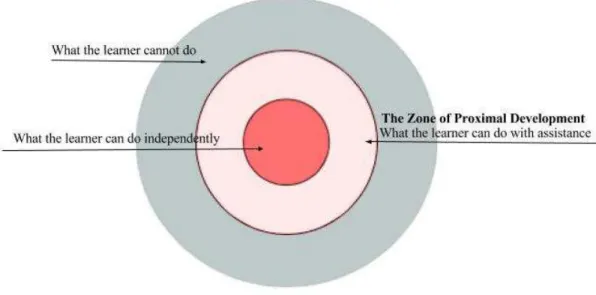
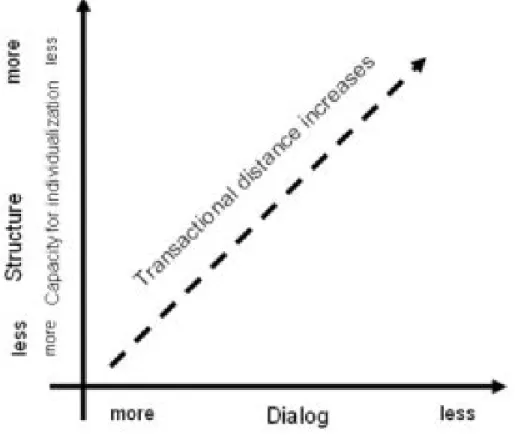
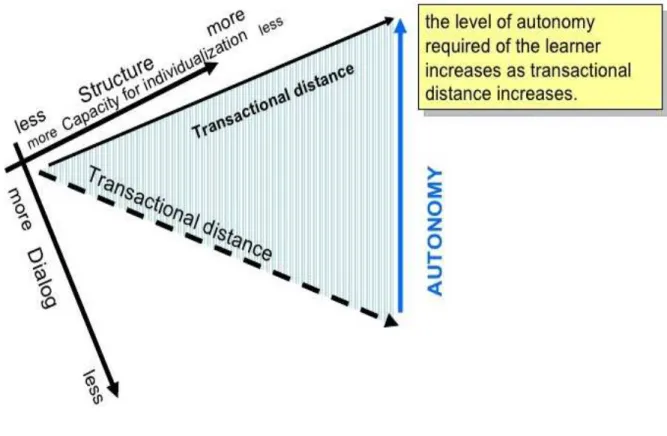
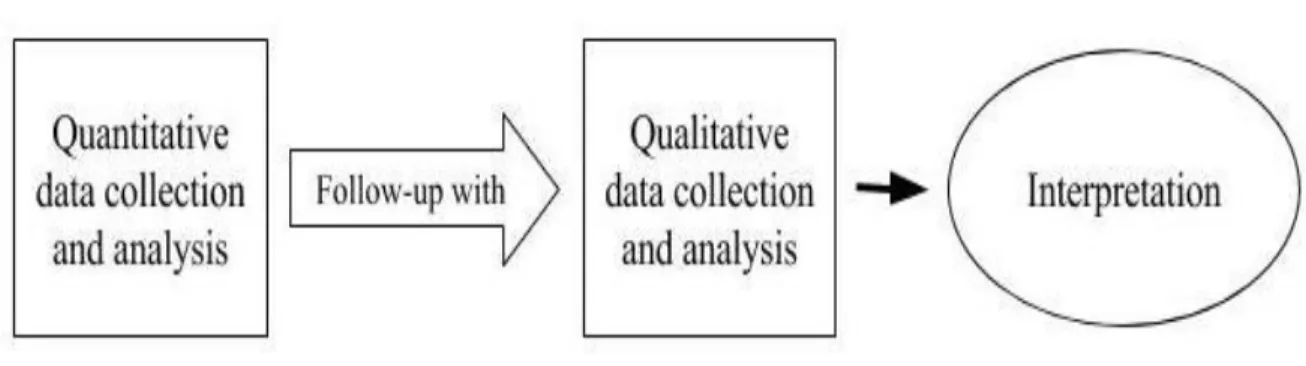
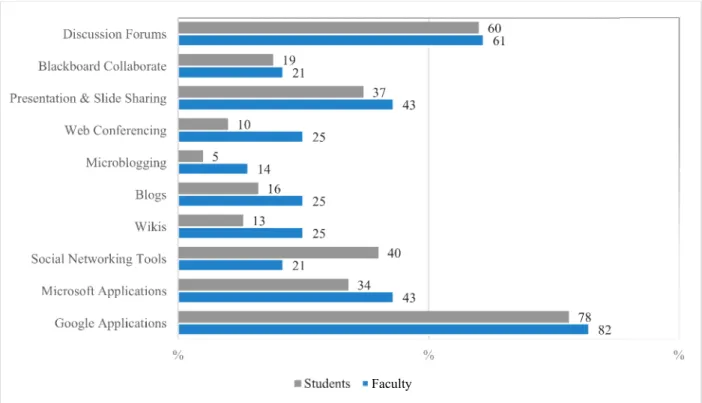
1. The Rate of Online Enrollments in U.S. Higher Education 14 2. Vygotsky’s Zone of Proximal Development Model 37 3. The Relationship between Structure, Dialogue, and Transactional Distance 41 4. The Relationship between Autonomy and Transactional Distance 42 5. Explanatory Sequential Mixed Method Design Diagram 49 6. The Perceived Most Commonly Used Technology Tools for Collaboration
CHAPTER I: INTRODUCTION
This chapter provides background and explanation of the problem of the study. This chapter includes the following: (a) background of the study, (b) the purpose of the study, (c) research questions, (d) assumptions, (e) limitations of the study, (f) definition of key terms, (g) rationale, and (h) significance of the study.
Background of the Study
The new vision of education is to provide valuable and accessible education for all
learners. Students who learn in different manners need various options and learning opportunities to succeed. Online education is seen to be a suitable educational trend to help achieve this vision. Online educationis a form of education that provides resources and learning materials to learners and can give them options to study at a place and time that is feasible for them (Akhter, 2015). Thus, online learning is designed to provide students who may not be physically present on campus with a quality university education (Simonson, Smaldino, Albright, & Zvacek, 2014). The primary aim of online education is to make learning accessible for students using various technological tools that are available and easy to use. This advantage of accessibility in online classrooms expands learning opportunities for many students, including those who work full time or who have special needs and are unable to physically attend regular classes at a specific time and place.
Online learning has become increasingly popular in higher education over the last decade due to its flexibility, accessibility, and affordability. Along with the continuous development of technology, the popularity of online education is destined to grow (Allen & Seaman, 2014). Although online learning predominantly depends on student independence, collaboration can play a key role in student learning via interactions and construction of knowledge with other
students. Collaborative learning is learning that occurs through a coordinated and shared environment where groups of students work together toward a common task, in which each student adds to an emerging pool of knowledge of the group while creating learning communities (Moore & Kearsley, 2012; Tsai, 2013; Zygouris-Coe, 2012). Thus, collaborative learning is one of the key elements to the twenty-first century learning that aims to prepare students for life, work, and citizenship in the twenty-first century by exhibiting the ability to collaborate with others. Collaboration is one of the major skills that students need to survive as twenty-first century workers (Barry, 2012; Luna Scott, 2015). Perhaps as a consequence, Choi and Lee (2009) stated that the role of higher education is “helping college students develop as
professionals who are able to deal with real-world problems in complex and dynamic situations, and who can make reasoned and reflective decisions” (p. 100). Therefore, higher education faculty are increasingly designing and implementing collaborative learning in their online courses. Thus, they are attempting to create a suitable environment for social interaction and collaboration in their online courses (Mashaw, 2012). Creating online collaborative activities and encouraging students to actively participate in discussion and group work are seen as essential to the success of online learning (Jacobs, 2013). However, it is a challenging task to establish and maintain an active collaborative environment, especially when group members are not active participants in their group work (Chiong, Jovanovic, & Gill, 2012).
The development of technology has significantly impacted the implementation of collaborative learning in online courses. There are a growing number of technology tools that help facilitate collaborative learning where students work together toward a common task, in which each student adds to an emerging pool of knowledge. These tools can help drive online learning toward more learner-centered and interactive learning. These collaborative technologies
excite a creative explosion of new ideas and opportunities for collaborative learning (Cheung & Vogel, 2013). New technologies have expanded the opportunities for students to collaborate with others and to shift online learning toward more collaborative learning and interactive teaching and learning. The effective use of collaborative technology tools can foster student engagement and positively impact the outcomes of online learning (Revere & Kovach, 2011). Online
instructors must consider how to use collaborative technologies effectively for instructional purposes and how to ensure student engagement and interaction support collaborative learning. However, the choice of which technology tools to use should depend in part on students’ needs and interests. Students must become familiar with the collaborative technology tools used in their courses, which can prevent them from being overwhelmed by the technologies themselves.
Successful collaborative learning experiences are mediated by collaborative technology tools that afford communication, sharing, and knowledge construction (Johnson, Adam, & Cummins, 2012). Designing collaborative eLearning activities in online courses requires strategic use of these tools in order to enhance collaborative learning and student engagement. Despite considerable research in the literature exploring the values of online education and collaborative learning as standard practices in higher education, few studies have yet examined the potential and use of technology for enhancing collaborative learning in online education. There is a growing body of literature that examines designing and implementing collaborative eLearning activities to promote online learning. However, most of the studies in the current literature do not simultaneously examine the use of collaborative technologies to support collaborative eLearning and student engagement in online learning environments. Currently, critical questions still exist about how faculty design, develop, implement collaborative
online courses, and what perspectives students have toward their experiences while participating in these activities. The present study seeks to further investigate this area.
The Purpose of the Study
A broad goal of this study is to advance the understanding of how collaborative
technologies are effectively implemented in online courses to enhance collaborative learning and student engagement. To achieve this goal, this study aims to explore the experiences of faculty members regarding using collaborative technology tools to design, develop, and implement collaborative eLearning activities in their online courses, in addition, to obtain the perspectives of students toward their experiences while participating in these activities. Accordingly, it is central to the study to identify the current use of collaborative technology tools to incorporate collaborative eLearning activities in online learning environments and to explore the perceived impact of such an approach on student learning. This study intends to gain a better understanding of how faculty integrate these technology tools into their online courses and how their choices of these tools affect collaborative learning and student engagement. Furthermore, this study seeks to understand the perspectives of students toward the implementation of collaborative technology tools for collaborative learning. Thus, this mixed method study seeks to better understand the potential and use of technology for enhancing collaboration and student engagement in online settings and the factors that influence the selection of collaborative technology tools for collaborative eLearning activities in online courses.
Research Questions
Determining research questions is a beneficial technique to narrow the purpose of a study into specific questions (Creswell & Plano-Clark, 2011). The “research question drives the data collection, data analysis, and inference methods” (Dahlberg, Wittink, & Gallo, 2010, p. 777).
The goal of the study is to explore the experiences of faculty members regarding using collaborative technology tools to design, develop, and implement collaborative eLearning activities in their online courses, in addition, to obtain the perspectives of students toward their experiences while participating in these activities. Therefore, the primary research questions guiding the study are as follow:
1. What collaborative technology tools do faculty use and how do they incorporate collaborative eLearning activities in their online courses using those tools? 2. What are the factors that faculty may consider when selecting collaborative
technology tools for collaborative eLearning activities?
3. How do faculty and students perceive the influence of collaborative technology tools on online collaborative learning?
Assumptions
According to Leedy and Ormrod (2010), “assumptions are so basic that, without them, the research problem itself could not exist” (p. 62). Thus, the following assumptions are made regarding this study. It was assumed that:
1. The participants of the study answered the survey and interview questions in an honest and candid manner since anonymity and confidentiality were preserved to maximize truthfulness.
2. The sample of participants is appropriate and representative of the population and therefore, assures that the participants have all experienced the same phenomenon of the study.
3. All faculty members who participated in the study have had experience teaching online and integrating collaborative technology tools for collaborative eLearning activities.
4. All students who participated in the study have enrolled in at least one online course and use some collaborative technology tools for collaborative eLearning activities.
Definition of Key Terms
To increase accuracy in presenting this study and to minimize the possibility of misinterpretation, some terms that are used throughout the document are defined:
1. Collaborative learning: A learning that occurs through a coordinated and shared environment where groups of students work together toward a common task or goal, in which each student adds to an emerging pool of knowledge of the group (Moore & Kearsley, 2012; Tsai, 2013; Zygouris-Coe, 2012);
2. Collaborative eLearning activity: An educational activity that allows a group of students to work together within the online environment where they can connect, interact, and collaborate for a common task.
3. Collaborative technology tools: The technology tools that enable individuals and groups to communicate, collaborate, and interact in online environments in order to accomplish a common task, share or exchange information, and construct knowledge; 4. Online Course: A courses where all or at least 80 percent of the content is delivered
online (Allen & Seaman, 2014); and
5. Online Collaborative Learning: A learning process where two or more people work together within the online environment to create meaning and construct knowledge.
“Online collaborative learning comprises the same indispensable features as onsite collaborative learning” (Barkley, Major, & Cross, 2014, p. 5)
6. Online Learning Environment: A learning environment that refers to the e-learning environment used asynchronously for knowledge acquisition within a Web-based platform.
Rationale
In online learning, educators need to know the educational technology tools that can be effectively used to facilitate student learning and the appropriate use of these tools to support eLearning activities. According to Paechter, Maier, and Macher (2010), “when designing an e-learning course, instructors are faced with many considerations and decisions that consequently affect how students experience instruction, construct and process knowledge” (p. 223). This study aims to provide insights into the experiences of faculty implementing collaborative technology tools in online courses with the aim of improving collaboration and student
engagement. The experiences of faculty members and the perceptions of students regarding the use of collaborative technology tools in online courses help recognize areas in need of
improvement and factors that need to be taken into consideration when designing an online course and implementing collaborative activities to facilitate learning and increase student collaboration and communication. The findings of this study provide insights into the practical implications for designing online courses and developing collaborative eLearning activities.
Significance of the Study
Recently, a considerable literature has grown up around the theme of collaboration, collaborative learning, and student engagement in online learning environments. However, this study provides new insights into the experiences of faculty members regarding the
implementation of collaborative technologies to design, develop, and implement collaborative eLearning activities in their online courses. Insights gained from this study may be of assistance to online instructors who are seeking methods and instructional strategies to engage students and provide opportunities for interaction and collaboration in online courses. The findings of the study provide insights into the practical implications for implementing collaborative technology tools to design and facilitate collaborative eLearning activities by informing instructors and instructional designers of the perceptions of both students and instructors. The study provides guidance and practical suggestions for online instructors as they make informed decisions in the development of collaborative learning in their online courses. Knowing the ideal implementation of the advanced collaborative technology tools to promote interaction and collaboration in online courses is of great significance to online instructors who are concerned about designing effective collaborative eLearning activities.
The study offers more important insights into students’ perspectives toward their experiences while participating in collaborative eLearning activities using collaborative technology tools. It is hoped that this research will contribute to a deeper understanding of the perspectives of students regarding the technology used for collaborative eLearning activities, which is influential and critical to the success of the integration of collaborative technology tools in higher education settings. More broadly, the findings should make an important contribution to the field of online education in higher education by enabling online instructors and institutions to better design their online courses to meet students’ learning needs, resulting in increasing student enrollment and retention. Therefore, this study makes a major contribution to the body of knowledge regarding collaboration, collaborative learning, technology integration, student engagement and online education in general.
Limitations of the Study
This study has several limitations. The first limitation is that this study only included faculty members who teach at least one online course and students who are enrolled in at least one online course at the Midwestern state university. Therefore, the responses cannot be assumed to represent a larger population of online faculty who teach online or students who enroll in online courses. Another limitation is that the data collected is self-reported and dependent on the understandings and emotional aspects of the participants. Thus, the study was limited to the beliefs of the faculty and students, their technical knowledge and skills, and their willingness to express their feelings and perceptions.
Organization of the Dissertation
Chapter I presents an introduction to the study, including the background of the problem, the purpose of the study, research questions, rationale, definition of key terms, and significance of the study.
Chapter II provides a review of the existing literature in the areas related to online learning, collaborative learning, and collaborative technology tools. The literature review discusses the potential and use of technology for enhancing collaboration and student engagement in online settings and the factors that influence the selection of collaborative technology tools for collaborative eLearning activities in online courses. The chapter concludes with definitions and synthesis of the learning theories that guided the processes of the study.
Chapter III provides details of the research methodology utilized to address the research questions. This chapter clearly describes the process by which data were generated, gathered, and analyzed. Accordingly, the chapter is organized into nine sections as follows: (a) Research design, (b) Research setting and study sample, (c)Research instruments, (d) Pilot study
procedures, (e) Data collection techniques, (f) Data analysis procedures, (g) Validity and reliability, (h) Positionality statement, and (i) Ethical Assurances.
Chapter IV began with a very brief review of the overall research design. The chapter presents, in detail, the research findings of the study in a manner that addresses the research questions. Thus, the experiences and perspectives of faculty regarding the integration of collaborative technology tools into online courses for collaborative eLearning activities were revealed, along with students’ perspectives toward their experiences while participating in these activities. These findings provide the foundation for the conclusions and implications outlined in the following chapter.
Chapter V begins with a summary of the research findings in light of the research questions and the purpose of the study. The chapter provides a discussion on the findings of the study, accompanied by the conclusions and the possible implications of the study, along with practical recommendations drawn from the findings of the study for professional and meaningful practice. The chapter concludes by recommendations for future research.
CHAPTER II: LITERATURE REVIEW
This chapter begins by reviewing the appeal and nature of online learning as a standard practice in higher education followed by the influence of technology on the design and
development of online learning. Next, the focus turns to the collaborative learning as an approach that is commonly implemented to support student learning, reviewing the effective practices of collaborative learning in higher education. Then, the review narrows to consider the collaborative benefits of some technology tools that have been used to support collaborative learning in online settings. This chapter provides a discussion of three learning theories that best suit the current study, serving as the theoretical grounding for the study.
Introduction
The purpose of this study is to explore the experiences of faculty members implementing collaborative technology tools in online courses to support collaboration and student
engagement, in addition, to obtain the perspectives of students toward their experiences while participating in these activities. This study attempts to better understand the potential and use of technology for enhancing collaboration and student engagement in online settings and the factors that influence the selection of collaborative technology tools for collaborative eLearning
activities in online courses. Findings of the current study provide insights into the practical implications for implementing collaborative technology tools to design and facilitate collaborative eLearning activities by informing instructors and instructional designer of the perceptions of both students and instructors. The implementation of advanced technology tools that support collaborative learning in online settings constitutes the basis for the review of the literature. Numerous scholarly databases were used to find most of the relevant research, using
keywords that include online learning, collaboration, collaborative eLearning, collaborative technologies, collaborative technology tools, and student engagement.
Online Education
Online education has developed from the concept of distance education that is designed for learners who are unable to attend regular classes due to personal or geographical reasons (Lei & Gupta, 2010). In the first American study to define distance education, Moore (1973)
challenged the prevalent perspective toward distance education at that time and stated: Learning and instruction to take place in other situations. Millions of learners, particularly adults, do not learn in classrooms, never meet or speak directly to their teachers and learn from teachers with whom they have no personal acquaintance at all as contrasted to contiguous teaching-learning, theirs is a distant learning and teaching situation (p.664).
Later, Schlosser and Simonson (2009) defined distance education as an “institution-based, formal education where the learning group is separated, and where interactive
telecommunications systems are used to connect learners, resources, and instructors” (p. 1). However, the definition of distance education has evolved over time due to the development of online learning as it has become the primary form of distance education. Notably, online education is variously termed, and the terms are sufficiently synonymous; some of these terms include distance education, e-learning, online learning, blended learning, computer-based
learning, Internet-based learning, web-based instruction, and virtual learning (Milman, 2010; Sun & Chen, 2016).
Advancements in information and technology have created formal online learning environments in which online learning can be delivered asynchronously or synchronously or a
combination of both. Synchronous learning is a form of online education that refers to teaching and learning that occur at a specific time where all students are expected to be available to participate such as participating in live lectures, discussions, and video conferencing while asynchronous learning is teaching and learning that do not occur at the same time such as reflecting on recorded lectures and asynchronously participating in discussions (Moore & Kearsley, 2012; Sun & Chen, 2016).
Sun and Chen (2016) categorized online education into two models; one is a University-Based Online Education to obtain degrees and diplomas, and the other is the Massive Open Online Course (MOOC). The MOOC is a recent development in online learning that focuses on increasing the accessibility to higher education by the public. Most of the MOOCs are
exclusively offered by Ivy-league institutions in addition to organizations, corporations, and individuals. These groups provide a range of online courses that are free and widely available to the public (Daniel, 2012; Sun & Chen, 2016). These online education initiatives are booming exponentially by offering ongoing open learning opportunities to self-motivated individuals. University-based online education provides the opportunity and accessibility for learners to upgrade their educational status without attending institution campuses regularly and leaving their jobs or business. It makes a university degree more accessible and, potentially, less expensive.
In the United States, online education has rapidly grown and became standard practice and in some cases a preferred option of higher education (Carrol & Burke, 2010; Caruth & Caruth, 2013). Advances in the Internet and technology have made online education the fastest growing sector of higher education (Carol & Burke, 2010; Sun & Chen, 2016). Therefore, the number of students enrolled in online courses has significantly increased and “online courses are
becoming a more widely popular and viable option for many adult learners” (Lee, 2016, p.81). According to the report series that originated in 2002 to investigate the state of online learning at 2,800 institutions in the United States, online enrollments have continued to grow at rates that far exceed the growth rate the total higher education student population (Allen & Seaman, 2010). The number of students taking online courses has increasingly grown from 3.9 million in 2007 to 6.7 million in 2013 (Allen & Seaman, 2013). In the 11th annual report, Allen and Seaman (2014) tracked online education in the United States since 2002 until 2012 and found that the growth rate of online enrollments has ranged between 9.6% in 2002 and 33.5% in 2012 (see Figure 1). In the latest report, Allen and Seaman (2017) reported that the rate of online learning enrollment continues the previous steady growth (Allen & Seaman, 2017). The 15 annual reports showed a steep rise of online learning enrollments over time and the overall number of students who are taking at least one online course have continued to grow. Thus, online learning has become a common learning option for millions of U.S. students (Zygouris-Coe, 2012).
On an international scale, some U.S. institutions have started intentional marketing of their online courses to international students (Rovai & Downey, 2010). Offering online courses overseas meets the needs of students in developing countries who are unable to attend colleges due to the limited number of higher education institutions (Oteng-Ababio, 2011). Thus, the potential for strong growth of online learning is not limited inside the United States, but also in other parts of the world. In this sense, So and Bonk (2010) claimed that “the vast majority of formal as well as informal learning experiences in the future will be blended ones” (p. 198).
Regarding the quality of online learning, Ward, Peters, and Shelley (2010) asserted that the quality of learning achieved by students in a face-to-face environment can be achieved in an online format. In this regard, U. S. Department of Education (2009) commissioned a meta-analysis of studies that compared fully online courses to face-to-face courses and concluded that student-learning outcomes in online conditions were equal to or better than those in traditional face-to-face conditions. It was found that there are additional learning time and other
instructional elements in the online learning environments that are not received by students in face-to-face learning conditions (U.S. Department of Education, 2009). Online learning is an alternative and unique method of learning that addresses many of the issues that instructors and students face in traditional education. While it is often difficult for instructors to interact with all students in a traditional classroom, online learning provides opportunities to increase the
interactions, which is considered the key to successful online education (Rao & Tanners, 2011). The use of asynchronous discussion board in online courses facilitates student-student interaction where students can post timely, reflect, respond, and reply to their peers' postings (Chou, 2012). In most online environments, students are allowed to complete discussions and assignments on their own time and instructors have a flexible time to interact with the students. Mbuva (2015)
determines the advantages of online education to include: convenience, time efficiency, accessibility, dynamic interactions, and creativity. Furthermore, online education permits the opportunity to facilitate collaboration and take full advantage of new technologies (Johnson, 2013).
Influence of Technology
The 21st-century students, who have been raised and socialized by exploring and using advanced technological innovations in all aspects of their lives, may no longer benefit from traditional education where students are expected to learn in a certain place and time using traditional strategies of learning (Blair, 2012). In learning theory, technology is considered an effective way to support learning and behaviorist learning approaches; and technology is effective in facilitating constructivist theories of learning (Tamin, Bernard, Borokhovski, Abrami, & Schmid, 2011). Therefore, technology has become increasingly integrated into instruction and considered an essential component of education around the world. Technology has created new and powerful learning tools that aim to improve instruction and make learning more accessible for twenty-first century students. It is acknowledged that technology plays a key role in delivering instruction at distance. Simonson et al. (2014) indicate that program
administrators are able to bridge the transactional distance between students and instructors through the use of technology. Technology is seen as an essential tool to reduce the transactional distance that exists in online learning between student and instructor, student and peers, student and the institution (Mafenya, 2014). Therefore, online courses are commonly dictated by technology (Cole, Shelley, & Swartz, 2014)
The role of technology in online learning significantly increased due to the rapid change of the nature of the information age and communication were technologies that were previously
considered advanced are becoming more familiar and new technologies are still being developed. However, since the invention of the Internet in 1983 and the World Wide Web (WWW) in 1989, they were and still the primary means of delivering distance learning and advancing online learning. Later, widespread technological innovations provide diverse tools of delivery that can be used in online education (Al Ghamdi, 2017). The use of online education platform comes as a powerful alternative to face to face education (Mbuva, 2015). Other effective technologies that can be used to deliver online education include (a) interactive audio or video conferencing that provide real-time interaction, (b) pre-recorded audio or video that can be used to present class lectures and visually oriented content and allow students to watch/ listen at their own pace, (c) discussion forums and threads that allow students to interact with their instructor and with each other, and (d) electronic mail that can be used to send messages and assignment feedback (Al Ghamdi, 2017; Bell & Fedeman, 2013; Simonson et al., 2014, Yates, Thorn, Han, & Deacon, 2018).
Typically, online learning has been offered through Learning Management Systems (LMS) which are learning platforms that are widely adopted by educational institutions to assist instructors in structuring online courses and arranging learning materials. The widespread adoption of LMSs in schools and universities is undoubtedly related to their features that allow instructors to replicate most of the traditional classroom activities into an online format. Some of the LMSs which have proven effective in enhancing effective teaching and learning include the Blackboard, eCollege - ClassLive Pro, Moodle, Desire2Learn, ANGEL, WebCT, Edmodo, Schoology, and Canvas (Mbuva, 2015).There are many other LMSs, with rapid growth and competition to best deliver educational programs (Mbuva, 2015).
The continued proliferation of new digital tools has a great impact on online education in higher education, especially with the new capabilities, such as automated online grading with real-time feedback, course discussion boards, and blogs. In addition, some interactive
multimedia components, such as video and audio clips, animation have been used to effectively deliver distance education. Many colleges and universities around the world made the decision to adopt online learning because of technological advances that made distance learning options more robust while less costly (Simonson et al., 2014). Most observers regard online learning technologies as the best hope for cost-saving innovations in higher education by reducing labor costs by increasing class size and reducing face-to-face interaction (Bowen, 2012). Certainly, “the unbundling capacity of new cloud capabilities will make it possible for academics to assemble just-in-time collaborative environments and to assemble an infrastructure and open source tools that might be needed to facilitate a learning encounter or research effort” (Katz, 2010, p. 28).
Design and Development
With the significant increase in online enrollment in the past decade, higher education faculty have been increasingly required to teach online (Allen & Seaman, 2015). One of the strongest motivations for faculty to teach online is the flexible schedule (Chapman, 2011; Wingo, Ivankova, & Moss, 2017). However, the standard of designing online classes is often to take the curriculum from traditional classrooms and to force it into an online format, without taking full advantage of the affordances of technology. Meier (2015) described this approach as “codifying past educational practice in a digital form—merely digitizing the status quo” (p. 5). Yet, designing learning activities that engage students and foster interaction and collaboration is still one of the many challenges that instructors face while creating online courses. Nayan,
Shafie, Mansor, Maesin and Osman (2010) argued that some instructors are reluctant to
implement collaborative learning activities because of the “fear or the loss of content coverage and lack of teacher training in collaborative learning methods” (p. 116). As a matter of fact, many faculty had little or no experience or background in instructional design which resulted in poorly designed online courses and even entire online programs. Mbuva (2015) reported the lack of adequate training for faculty and online administrators as one of the current and foreseeable challenges of online education.
In online learning, several challenges appear such as lack of interaction, lack of sense of community, and lack of collaboration with peers that may lead some students to drop the online courses. That being the case, more colleges and universities have incorporated instructional designers to assist faculty with the design of online courses. Online instructors have been assisted in developing new approaches to teach online taking advantage of the capabilities of e-learning rather than transferring their in-class pedagogy to an online format (Jaggars & Bailey, 2010). Lalonde (2011) indicates that online instructors must “foster flexibility in their teaching practices—a central theme in using these approaches in online teaching environments—which involves consistently updating their approaches and curricula in response to their students and social environment” (p. 408). It became a necessity for online instructors to design instructional tools that allow effective online interaction and collaboration. Instructors can appropriately use technology tools to build a learner-centered environment and foster student engagement (Revere & Kovach, 2011).
Sun and Chen (2016) reviewed 47 research studies of online learning since 2008 and concluded that “effective online instruction is dependent upon 1) well-designed course content, motivated interaction between the instructor and learners, well-prepared and fully-supported
instructors; 2) creation of a sense of online learning community; and 3) rapid advancement of technology” (p. 157). Online instructors need to consider how to adapt technologies applicable to online teaching for achieving the course objectives (Rao & Tanners, 2011). Technology can provide a wide range of options to present material in various formats, such as videos, audios, narrated presentations, animated videos, and others, which can make online courses more interesting.
Indeed, having faculty members who are well-prepared and fully-supported is crucial for effective online education (Sun & Chen, 2016). The success of online education depends largely on a high-quality faculty and a well-designed online course (Brannagan, 2012). Therefore, more emphasis should be placed on the need for specific training to help online instructors update their teaching practices and navigate the technological aspects of teaching in a new format that
enhances their teaching practices, not just learning how to manage the learning management system (Crawford-Ferre & Wiest, 2012). Consequently, instructors need sufficient professional development and training related to the instructional design to use proper online teaching strategies and promote effective online collaboration for students (Crawford-Ferre & Wiest, 2012). It is essential to find a balance between pedagogy and technology when designing and delivering online course content (Keengwe & Kid, 2010).
Collaborative Learning
Moore and Kearsley (2011) define collaborative learning as “a learning environment in which individual learners support and add to an emerging pool of knowledge of a group;
emphasizes peer relationships as learners work together creating learning communities” (p. 305). According to Deejring (2015), online education provides “space for learners to share experiences and knowledge as well as corporate with peers without the limitations of time and without
boundary” (p.35). Therefore, collaborative learning has become a well-established instructional method used in online courses. Razali, Shahbodin, Hussin, and Bakar (2015) identified some advantages of collaborative learning such as improving academic performance, increasing satisfaction in the learning experience, enhancing creativity, and promoting soft skills development including communication, collaboration, problem-solving and critical thinking skills. Commenting on the potential of collaborative learning in developing soft skills, Panitz (1996) argued that “collaborative learning is a personal philosophy, not just a classroom technique. In all situations where people come together in groups, it suggests a way of dealing with people, which respects and highlights individual group members’ abilities and
contributions. There is a sharing of authority and acceptance of responsibility among group members for the groups actions” (p. 3). Collaborative learning contributes to better learning outcomes by providing opportunities for students to engage in interactive and collaborative activities with their peers in quality learning environments (Brindley, Walti, & Blaschke, 2009). Such environments enhance collaborative learning and have a positive effect on student
development and success. Nowadays, collaborative learning has become of vital importance in higher education due to the significant increase in online enrollments compared to on-campus enrollment (Allen & Seaman, 2010; Ku, Tseng, & Akarasriworn, 2013).
Effective Collaborative Learning
Numerous studies have attempted to highlight the factors that influence student
collaboration experiences whether online or offline. For instance, Brindley, Walti, and Blaschke (2009) conducted a study to explore factors impact creating effective collaborative learning groups. The data collected from the Foundations course in the Master of Distance Education (MDE) program offered jointly by the University of Maryland University College (UMUC) and
the University of Oldenburg for over a three-year period. The findings of this study suggested that instructors need to incorporate a variety of instructional strategies in order to improve the quality of group collaboration such as: facilitating learner readiness for group work, establishing a sense of community within groups, monitoring group activities, providing clear instructions and feedback, and allowing sufficient time for collaborative learning activities. Razali et al. (2015) identified that some other strategies including creating a learning environment, learning interaction, and learning design that impact effective collaboration in online learning
environments.
In a significant study, Swan, Day, Bogle, and Matthews (2014) examined the effects of a collaborative, design-based approach to improving teaching and learning in four core courses in a fully online graduate program in Teacher Leadership. The researchers redesigned their core courses using two measures specific to online learning to improve their core courses; (a) the Quality Matters (QM) rubric which is a faculty-oriented instrument designed based on instructional design principles to assure quality design in online; and (b) the Community of Inquiry (CoI) framework that represents online learning as supported by three presences – social presence, teaching presence, and cognitive presence. The results of this study showed significant increases in student learning outcomes in most core courses where the positive changes in outcomes resulting from the combination of the two-step process (Swan et al., 2014). The researchers recommended using the QM framework to guide initial course redesign and CoI framework to building communities of inquiry in online courses. Furthermore, they suggested creating “a collaborative community of educators to share responsibility for ongoing course improvement and redesign” (p.79).
Another significant study conducted by Jain and Jain (2015) examined the relationship between the instructional design elements and the overall meaningful interactions among eighteen online graduate students using bivariate and multivariate analysis techniques. The results of this study suggested that the quantity of meaningful interaction among learners can be improved by some instructional design elements in online courses. These elements include dividing the students into smaller groups, using introduction sections, increasing social interaction among students, and limiting participation from the instructor. Likewise, student assessment is a key element of the online course built based on the social constructivist theory to effectively improve collaborative learning. Online instructors need to carefully design the
assessments that allow students to freely demonstrate what they have learned in forms of “portfolios, projects, and performances” and not only to answer what instructors want to hear from them (Fennema, 2010, p. 34).
Effective feedback is another technique for effective collaborative learning. Guasch, Espasa, Alvarez, and Kirschner (2013) conducted a quasi-experimental study within the virtual campus (VC) of the Open University of Catalonia (UOC) to examine the effects of feedback on writing quality and student learning in an environment based on asynchronous written
communication. Guasch et al (2013) identified four types of feedback for writing assignments; (a) corrective feedback, (b) epistemic feedback, (c) suggestive feedback, and (d) epistemic plus suggestive feedback. The results of this study showed a significant impact of the epistemic and suggestive feedback on improving the quality of collaborative writing performance in online learning environments. Taken together, the results suggest that the epistemic and suggestive feedback given by instructors and peers have positive effects on the quality of collaborative writing performance.
One technique commonly used to overcome the difficulties in collaboration is a collaborative learning script where learners are expected to follow the steps to engage in collaborative learning. In this regard, Handayani (2012) examined the impact of using collaboration scripts as a pedagogical method to facilitate collaborative learning for graduate students at the University of Sydney. Using a multiple case study design, Handayani (2012) divided student participants to three groups as writers, editors, and reviewers in online collaborative writing to explore the impact of these roles on the group’s collaboration. The results showed that each group developed unique emerging roles. It was found that the collaboration scripts enhanced group collaboration and ensured that the task given was completed within the framework. However, the results reported, "unequal participation in collaboration, especially free riding, ghosting, and ghostwrite as recognized both by some active members of the group and by some less active members themselves" (Handayani, 2012, p. 378). To overcome this challenge, Handayani (2012) suggested designing a script that can engage students equally in collaborative writing and increase the instructor’s role during collaboration.
Another technique to improve collaborative learning is the use of peer evaluation which is an effective strategy that allows students to evaluate the performance of their peers during group work and to reflect on their own work (Wang, 2011; Wever, Keer, Schellens, & Valcke, 2011). Peer evaluation, however, has also been criticized with respect to credibility and
differences in the evaluations between teachers and students. Considering the fact that instructors and students evaluate different aspects of the learning process, Lee and Lim (2012) investigated the important components of peer interaction in team project-based learning using the message analysis of a total of 773 messages posted by 32 students. The results of this study showed that students evaluate their peers on managerial, procedural, and social contributions as being more
important components of peer interaction. These results imply that students valued social and managerial contributions more significantly than cognitive contributions in peer evaluations. Students regard managerial, procedural, and social contributions to be more influential in collaborative learning. Lee and Lim (2011) recommended using a peer evaluation “as a useful strategy to encourage and support social competencies, especially in higher education” to prepare students for the work phase where “employers consider social abilities to be of critical
importance” (p. 222).
According to Wever, Keer, Schellens, and Valcke (2011), peer evaluation is as valid as instructor evaluation. Substantially, peer evaluation is considered fair and can be employed as a complementary strategy for group work because students can perceive each of the different types of contributions while instructors are unable to access the process of team collaboration.
Instructors are not able to assume that all students make equal contributions to the group work and then allocate the same marks to all group members (Wang, 2010). More specifically, Brutus and Donia (2010) stated that “peer evaluation processes are relatively simple to develop, and their use follows an important trend in higher education of relying on peer relationships to support educational objectives” (p. 653).
In an investigation into the use of an online community, Dorner & Kumar (2016) examined the implementation of an online collaborative mentoring model, the Mentored
Innovation Model (MIM), in a teacher education program where pre-service Hungarian teachers learn to effectively integrate technology into their classrooms. This model combines a formal online pedagogical ICT training with an informal online community. In the online community, pre-service teachers had the opportunity to share, develop, and critique shared learning resources to help them integrate technology in their classroom. The researchers used two online
questionnaires to collect data from 116 pre-service teachers. One questionnaire explored their self-efficacy with technology before the mentoring began and the other surveyed their
satisfaction with the mentoring experience once it was over. The results of this investigation showed that MIM served as a useful platform to support pre-service teachers with technology integration in their teaching, leveraging expertise with the active online collaboration between pre-service teachers and educational researchers, subject-specific mentors, and others. Dorner & Kumar (2016) recommended this model to build a community of multiple teachers, educators, and stakeholders.
The previous research determined some instructional strategies and techniques to create an effective online collaborative learning environment such as the use of collaborative learning script, student assessment, epistemic and suggestive feedback, and peer evaluation. When used appropriately, these strategies and techniques can positively impact collaboration experiences in online learning environments. Additionally, technology fosters interaction and collaboration by providing innovative and collaborative tools in the learning environment.The significant increase of technology tools allows individuals to share content and commentary using “wikis, discussion forums, and through various file formats that can be shared or edited online” (Cheung & Vogel, 2013, p. 160).
Technology Tools for Collaborative Learning
The current and continuous development of technology has produced new technology tools that provide significant opportunities for collaborative learning. These collaborative technology tools have greatly created opportunities for collaboration in online learning
environment. According to Cheung and Vogel (2013), “collaborative learning technologies refer to a set of tools for task-specific collaborations and are associated with goal and work-oriented
activities” (p.161). The collaborative technologies can be employed to support faculty members in designing collaborative eLearning activities in their online courses. The online collaboration is fostered by the availability of synchronous and asynchronous communication and collaborative tools in the online learning environment. Based on the idea of 'tool mediation' that stems from Vygotsky's work, using collaborative technology tools as a source of mediation for learning can accomplish the goals of a social constructivist learning (Cheung & Vogel, 2013). Integrating collaborative technology tools in online courses encourage interaction between students at convenient times. Online collaboration can be easily designed through the use of technology via Wikis, Blogs, and other web-based technology. Such tools that provide collaborative document development opportunities help instructors to develop collaborative eLearning activities in their online courses.
Collaboration in online courses is influenced by the types of technology tools that instructors use to design collaborative activities. Thus, it is increasingly necessary to determine the best and most effective technology tools that faculty can use to create activities that enhance interaction and collaboration in an online learning environment. One of the common technology tools that instructors can incorporate into online courses to enhance student interaction and collaboration is the discussion board which is included as a learning tool in most online course systems (Crawford-Ferre & Wiest, 2012; Lalonde, 2011). As students learn best when they are able to interact with other students, instructors need to carefully design discussion forums that allow students to share their knowledge, experiences, and understandings to learn from each other in a safe environment. In a small study, Weidman and Bishop (2009) examined the impact of technology support on the implementation of cooperative learning in an online post-secondary English course that utilized discussion boards. The findings of this study revealed that
communication through discussion boards encouraged students to be more eager to form groups for learning projects.
The newer collaborative tools that have become more popular in fostering student learning are Web 2.0 tools (Hew & Cheung, 2013). Web 2.0 tools are web-based applications that “allow collaboration and information sharing” (Moore & Kearsley, 2012, p. 313). Web 2.0 applications have emerged in recent years and have been utilized to support student interaction and collaboration. In this regard, Capo and Orellana (2011) conducted survey research to examine the factors that contribute to use Web 2.0 technologies for classroom instruction. The findings revealed that online instructors who incorporated social media tools in their courses reported the improvement of student interaction and learning due to the students' use of social media in carefully designed activities. The findings also reported some of the factors contributed to the use of Web 2.0 for student interaction include teachers’ behavioral intention to use Web 2.0 technologies, perceived usefulness, and compatibility. Social media has become a socio-technical phenomenon that has the potential to become a valuable resource to improve the quality of educational communications and collaborations in online learning environments. Social media tools that emerged in recent years with benefits to online collaboration,
communication, and interaction include Facebook, Linked-in, Skype, Google Plus, and Twitter (Jacobs, 2013; Leafman, 2015).
Facebook is a social networking site that has been widely used all over the world. It is the most popular global social networking site among university or college students for social
interaction and has been largely used for educational communications and collaborations (Roblyer, McDaniel, Webb, Herman & Witty, 2010). Facebook “allows the users to keep up-to-date on their friends, depending, of course, on the information provided by them. This feature
can be very useful in an e-learning environment, allowing students to keep updated on a
particular course” (Rodrigues, Sabino, & Zhou, 2010, p.1148). Results from earlier studies that examined Facebook adoption and usage for educational purposes demonstrate that Facebook is currently considered as the most popular platform for communications and collaboration among students who reported a positive feedback for supporting their learning and academic
engagement (Roblyer et al., 2010; McCarthy, 2010; Wise, Skues & Williams, 2011). Although Facebook is seen as an effective educational tool with its features such as peer feedback and interaction tools, the use of Facebook in the field of education is very limited (Hew, 2011).
Wikis are social media tools that have been used in educational settings to facilitate online collaborative learning. They allow students to create a website with editable pages, which other students can make changes. In an experimental study, Kimmerle, Moskaliuk, and Cress (20111) examined the impact of using Wikis on the processes of learning and knowledge building. The results revealed that “wikis seem to be suitable instruments to encourage and facilitate processes of individual learning and collaborative knowledge building at the same time” (Kimmerle et al., 2011, p. 146). Another study conducted by Popescu (2014) reported the successful experiences of 215 post-secondary students over a period of 4 years when using Wiki to support project-based learning. The findings of this study provided evidence that the use of Wikis can promote collaborative learning and support student engagement.
With the aim of enhancing problem-solving skills and ICT literacy within undergraduate students, Nookhong, and Wannapiroon (2015) developed a collaborative learning model using case-based learning via cloud technology and social media. The collaborative learning model consisted of four components as follows: (1) The principles of instruction model, (2) The
Then, the researchers proposed the developed model to five experts in the field of curriculum design, information and communication technology (ICT), and undergraduate-level instruction selected by purposive sampling. The results of the evaluation indicated that the collaborative learning model was beneficial and effective for enhancing problem-solving skills, accessing information, and presenting interaction and collaboration.
Other technology tools that can enhance collaborative learning are Google applications which are a suite of cloud-based tools that can be used for real-time collaboration. The
collaborative features embedded in these applications include "synchronous group composing and commenting, capabilities that are not offered by other word processors or file sharing services" (Hocutt & Brown, 2018, p.52). In particular, Google Drive applications provide
students with opportunities to share documents and work collaboratively to brainstorm ideas and build knowledge. Google Drive is a cloud storage and synchronization service that includes: (1) Google Docs, (2) Google Sheets, (3) Google Slides, (4) Google Sites, and others. Many schools and educational institutions are currently subscribed to Google for Education, recently named G Suite for Education (Ventayen, Estira, De Guzman, Cabaluna, & Espinosa, 2018).
Cheung and Vogel (2013) examined the factors that influence the acceptance of Google Applications for collaborative learning by extending the technology acceptance model and the theory of planned behavior to develop a research model. Using a structured questionnaire, data were collected from 136 students enrolled in an advanced marketing research course at the Hong Kong Polytechnic University. In this study, a project Web site was used for supporting an
advanced marketing research project where students were required to work collaboratively in groups to complete the project using Google Applications to facilitate collaborations including Google’s share spaces, Forms, Google Docs, discussion forums, and Sites. According to the
results of the study, Google Applications have significant contributions in enhancing collaborative learning environments. The ease of use and usefulness were major factors influencing the acceptance of collaborative technologies.
In a recent study, Hocutt and Brown (2018) conducted a multi-year study exploring student attitudes toward the use of Google Apps for Education, renamed G Suite for Education, for collaborative composing in two first-year composition environments. The data were collected between 2013 and 2015 using mixed methods to capture students’ reflections on the
effectiveness of Google applications for composing including invention, drafting, revising, finalizing, submitting, and reviewing. The results of this study suggested that "the remediation of the composing process as collaborative, convenient, and cloud-based in Google Docs via Google Drive resulted in remediation through reform of traditional composition pedagogy" (Hocutt & Brown, 2018, p.52). It was also found that the use of Google Drive for collaboration and composing contributed to the perception of equality through the remediated roles of writer, reviewer, and instructor.
Google Docs is a great educational tool that is commonly used for collaborative writing, editing, and peer reviewing where students can share, write, comment, and edit collaboratively. To assess the effectiveness of using Google Docs in a collaborative writing activity, Zhou, Simpson, and Domizi (2012) compared students' collaborative performance and learning across two out-of-class assignments. In this study, 35 students at the University of Georgia were required to complete two assignments over a six-week period, the first assignment was
completed without Google Docs, and the second assignment was completed with Google Docs. The results of the study showed that Google Docs was a useful tool for collaborative writing and influenced student learning.
Liu and Lan (2016) investigated the differences in motivation, vocabulary gain, and perceptions between individual and collaborative learning at a tertiary level using the Google Docs. Involving 65 English-as-a-Foreign Language (EFL) students, the results of the study indicated that collaborators performed better than the individuals regarding vocabulary gain. The collaborators were motivated to acquire knowledge and to perceive the learning experience more positively. The researchers concluded that "students will be more capable of thinking critically if they work collaboratively rather than working individually" (p.181). Regarding the usage of the web-based applications, it was found that the collaborators had high levels of motivation and self-efficacy, a lower level of test anxiety, and a more positive perception towards learning on Google Docs. Liu and Lan (2016) asserted that "Google Docs plays a pivotal role in enhancing students' motivation and involvement" (p.171).
Another significant Google application for collaborative learning is Google Sites, which is a structured web page-creation tool. Google Sites provides opportunities to promote 21st century learning enabling instructors to create a collaborative learning environment. For the same purpose, Gan, Menkhoff & Smith (2015) used Google Sites to help students stay organized and on track in a resource-rich project-based course. They found that Google Sites not only enabled easy access to course content, discussion forums, and class sharing and collaboration but also enabled students to embrace the new challenges in their future careers, such as lack of collaboration skills.
In sum, successful online collaborative learning needs to be mediated by some forms of technology that affords communication, interaction, knowledge build