Doctoral Dissertations Graduate School
Summer 2008
Attitudes related to CEO compensation
Donald S. WhiteLouisiana Tech University
Follow this and additional works at:https://digitalcommons.latech.edu/dissertations
Part of theBenefits and Compensation Commons
This Dissertation is brought to you for free and open access by the Graduate School at Louisiana Tech Digital Commons. It has been accepted for inclusion in Doctoral Dissertations by an authorized administrator of Louisiana Tech Digital Commons. For more information, please contact
Recommended Citation
White, Donald S., "" (2008).Dissertation. 462. https://digitalcommons.latech.edu/dissertations/462
by
Donald S. White, B.S., M.B.A.
A Dissertation Presented in Partial Fulfillment of the Requirements for the Degree of
Doctor of Business Administration
COLLEGE OF BUSINESS LOUISIANA TECH UNIVERSITY
INFORMATION TO USERS
The quality of this reproduction is dependent upon the quality of the copy submitted. Broken or indistinct print, colored or poor quality illustrations and photographs, print bleed-through, substandard margins, and improper alignment can adversely affect reproduction.
In the unlikely event that the author did not send a complete manuscript and there are missing pages, these will be noted. Also, if unauthorized copyright material had to be removed, a note will indicate the deletion.
®
UMI
UMI Microform 3318925 Copyright 2008 by ProQuest LLC.
All rights reserved. This microform edition is protected against unauthorized copying under Title 17, United States Code.
ProQuest LLC
789 E. Eisenhower Parkway PO Box 1346
THE GRADUATE SCHOOL
J u n e 3 , 2 0 0 8
Date
We hereby recommend that the dissertation prepared under our supervision
by D o n a l d S . W h i t e
entitled A t t i t u d e s R e l a t e d t o CEO C o m p e n s a t i o n
be accepted in partial fulfillment of the requirements for the Degree of
Doctor of Business Administration
Supervjsor ofDksertation Research
Head of Department
Management and Information Systems
Department
Recommendation concurred in:
V I0\4jje^irt<\
Advisory Committee Appn>¥ed: f \ Approved Appnwed: > " " ~ \ Director of Graduarastudies t-""^/ intftheCollegfe/ ' Dean ^ GS Form 13a (6/07)This dissertation examines attitudes of individuals related to Chief Executive Officer (CEO) compensation within the context of interactions between organizational variables (level of employee pay, firm performance, and corporate social responsibility) and individual-level variables (equity sensitivity, race similarity to CEO, and respondent's pay). Vignettes (see Appendix A) were created in which respondents will have an opportunity to express their opinions on the distributive justice of CEO pay. The CEOs presented in the vignettes represented non-specific companies and had the same level of high total compensation. The respondents provided opinions of CEO pay and information about their own pay on a paper-and-pencil survey.
I used correlation analysis, t-tests, and moderated hierarchical regression to investigate whether or not the assumed organizational and individual variables actually interacted to predict perceptions of distributive justice of CEO pay. This dissertation used three measures of attitudes: perceived distributive justice of CEO pay, perceived prestige of organization, and likelihood of buying a product from the organization.
Results indicated that when the CEO's pay was perceived as fair, that respondents felt that the reputation of the firm was more positive. Additionally, if the pay of the employees in the vignettes was perceived by the respondents to be low, then the CEO pay was seen as less fair. However, respondent perceptions of the level of firm performance
and of corporate social responsibility in the vignette (high versus low) were not related to perceptions of the distributive justice of CEO pay.
Interactions between respondents' equity sensitivity and the three organization-level variables in the vignette were tested to determine if they related to distributive justice of CEO pay; however, only one interaction was supported. Further, respondents' demographic similarity to the CEO did not interact with organization-level variables to predict distributive justice of CEO pay.
The author grants to the Prescott Memorial Library of Louisiana Tech University the right to reproduce, by appropriate methods, upon request, any or all portions of this Thesis/Dissertation. It is understood that "proper request" consists of the agreement, on the part of the requesting party, that said reproduction is for his personal use and that subsequent reproduction will not occur without written approval of the author of this Thesis/Dissertation. Further, any portions of the Thesis/Dissertation used in books, papers, and other works must be appropriately referenced to this Thesis/Dissertation.
Finally, the author of this Thesis/Dissertation reserves the right to publish freely, in the literature, at any time, any or all portions of this Thesis/Dissertation.
Author
Date (p/30/C?
To my late parents, Limous and Vera Scott White, my wife Valerie; my daughter, Alexis; and my son, Donald, Jr.
ABSTRACT iii DEDICATION vi LIST OF TABLES ix LIST OF FIGURES x ACKNOWLEDGMENTS xi CHAPTER 1 INTRODUCTION 1 Statement of the Problem 2 Need for Further Research 4 Objectives of the Study 5 Contributions of the Study 6
Plan of Study 6
CHAPTER 2 REVIEW OF LITERATURE AND HYPOTHESES 7
CEO Compensation 8 Dependent Variables 16
Distributive Justice 16 Perceived Organizational Prestige 21
Likelihood of Patronizing a Firm 23
Summary of Expected Outcomes 26 Organizational-Level Variables and Attitudes towards CEO Pay 26
Level of Employee Pay 27 Firm Performance 27 Corporate Social Responsibility 29
Individual-Level Variables and Attitudes towards CEO Pay 32
Equity Sensitivity 32 Demographic Similarity to CEO 34
Respondents' Pay 39
CHAPTER 3 METHODS 41 Participants and Procedure 41
Vignettes 42 Measures 44
Respondent Salary 44 Pay Satisfaction Questionnaire 44
Equity Preference Questionnaire 45
Pay Equity 50 Company Reputation 50 CEO Reputation 52 CHAPTER 4 RESULTS 55 Hypothesis Testing 55 Correlation Analysis 55 T-Tests 56 Moderated Regression Analysis 58
CHAPTER 5 DISCUSSION 67 Summary of Findings 67
Limitations 75 Future Research 76 Implications for Managers 77
Conclusion 78 APPENDIX A VIGNETTES 79
APPENDIX B SURVEY ITEMS 88
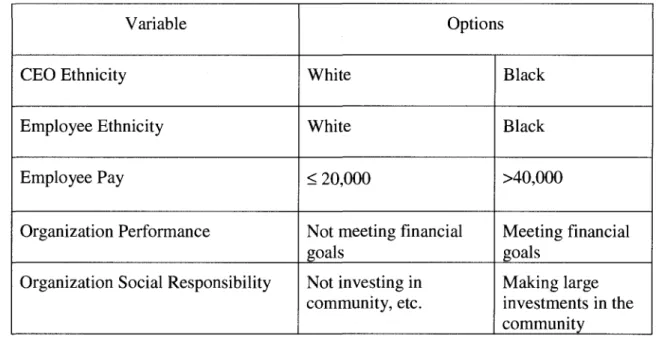
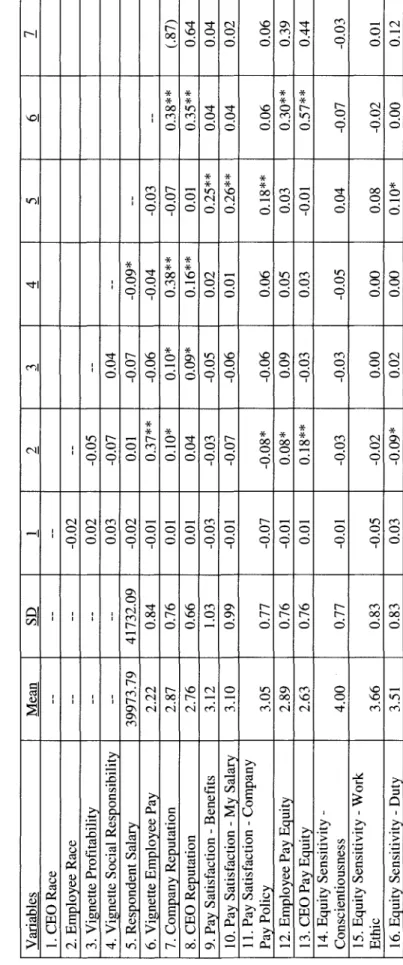
Table 3.1 Manipulations in Vignettes 43 Table 3.2 Means, Standard Deviations, and Correlations 46
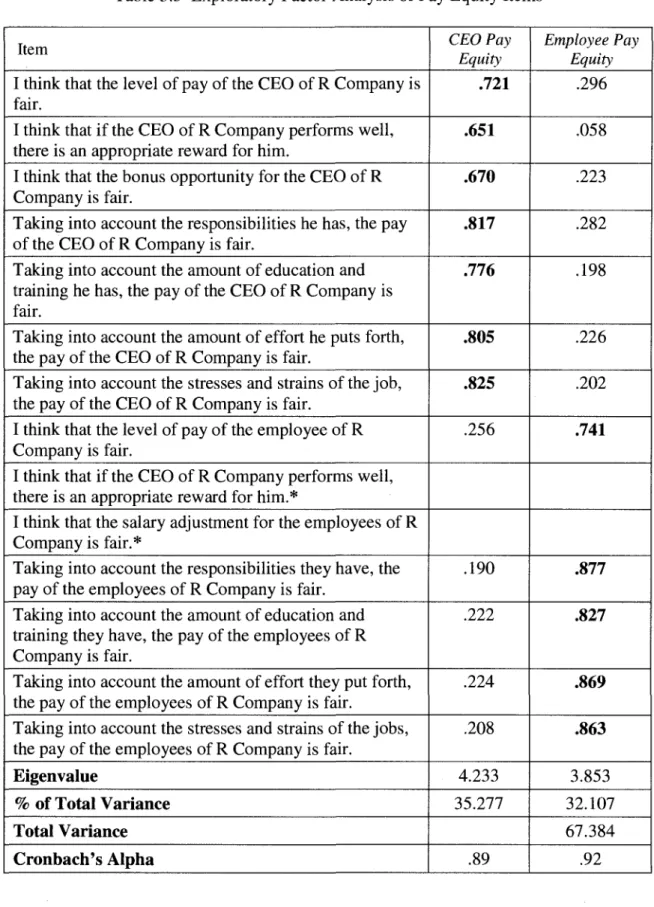
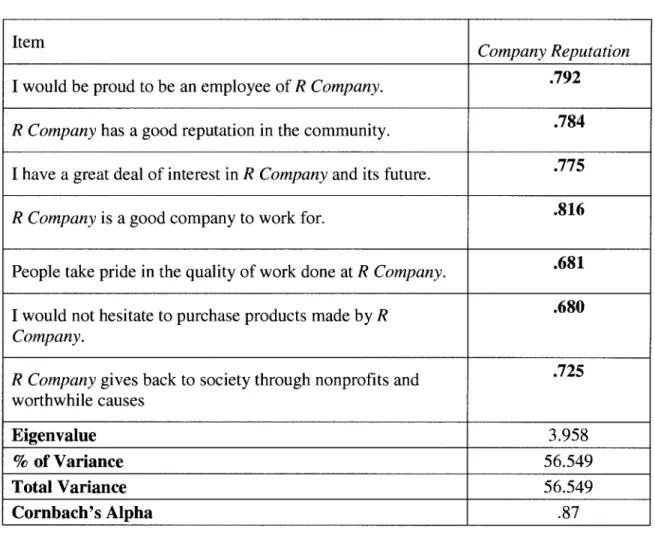
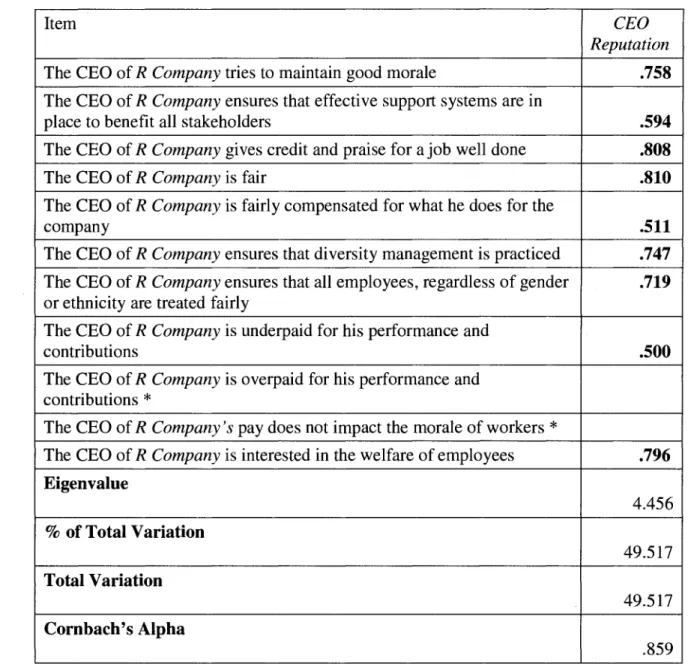
Table 3.3 Exploratory Factor Analysis of Pay Satisfaction Scale 48 Table 3.4 Exploratory Factor Analysis of Equity Sensitivity Scale 49 Table 3.5 Exploratory Factor Analysis of Pay Equity Items 51 Table 3.6 Factor Analysis of Company Reputation Scale 52 Table 3.7 Exploratory Factor Analysis of CEO Reputation Scale 54
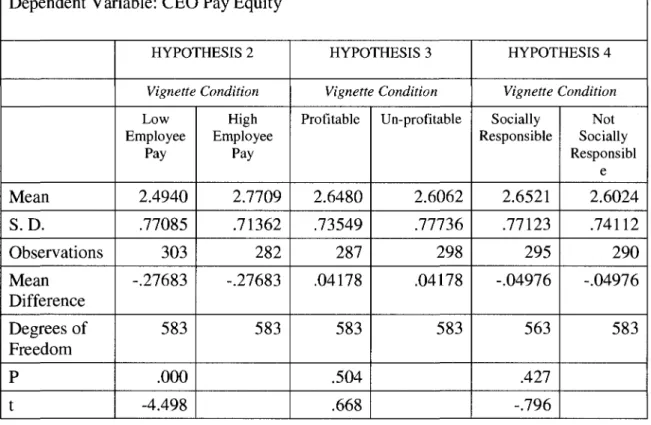
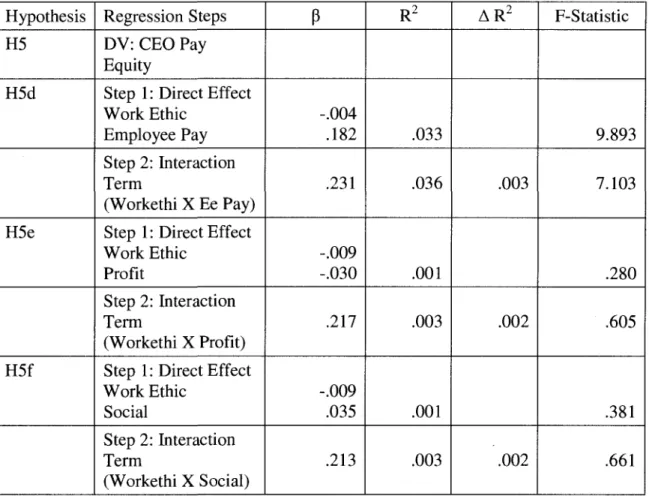
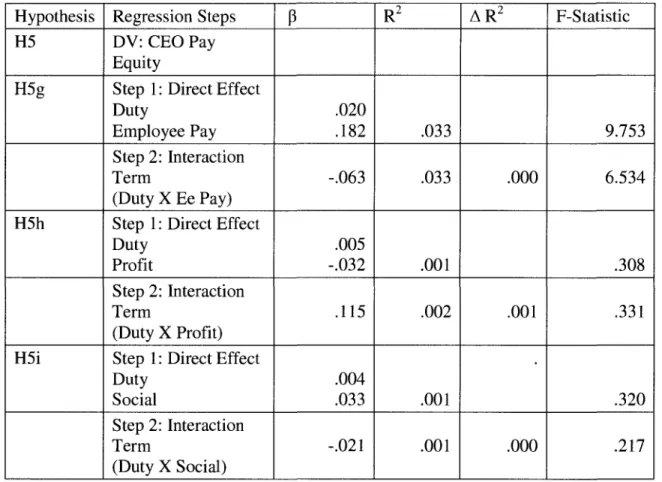
Table 4.1 T-Test Results for Hypotheses 2, 3, & 4 57 Table 4.2 Moderated Regression Results for Hypothesis 5 Using
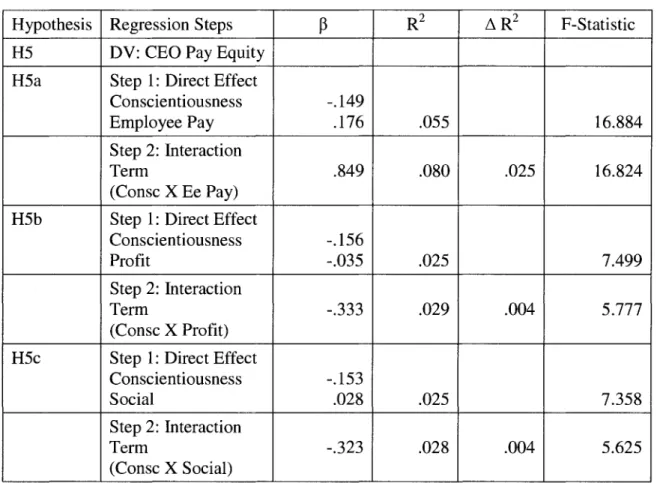
Conscientiousness Dimension of Equity Sensitivity 59 Table 4.3 Moderated Regression Results for Hypothesis 5 Using Work
Ethic Dimension of Equity Sensitivity 60 Table 4.4 Moderated Regression Results for Hypothesis 5 Using Duty
Dimension of Equity Sensitivity 61 Table 4.5 Moderated Regression Results for Hypothesis 6 65
Table 4.6 Moderated Regression Results for Hypothesis 7 66
Figure 1.1 Conceptual Model 1
This process, though challenging but obviously possible- could not have been accomplished alone. Therefore, I give thanks to my many supporters at Louisiana Tech and Grambling State. Moral support, encouragement and prayer all played a significant role.
Thanks go to my committee members. Neither one of you actually taught me in class; therefore, there had to be something on the inside of you that stimulated you to take on such an arduous task. For that "something on the inside," I am eternally grateful. To Dr. Rebecca Bennett, I thank you. To Dr. Bruce Walters, I thank you.
To the "fruit tree" of this process and chairperson of my committee, Dr. Marcia Simmering Dickerson, a special thanks. Your support, encouragement, praise, patience, enthusiasm, as well your conscientiousness, was all needed. You provided that and more. Without it, I would not have made it. I sum it up in an old story.
...One day three young boys were walking through the neighborhood and they saw an old man (81 years) planting pecan saplings about 18 inches tall. One of the innocent young boys asked, "Old man, why are you planting those trees? By the time they get up large enough to bear something, you will be dead." The old man kept on planting the pecan saplings. Finally the old man replied to the young boy, "Son, all of my life I have been eating fruit from trees that I did not plant or cultivate. For me not to plant these trees will be for me to not have faith." I do not know why, Dr. Dickerson, but you
had faith in me. You not only guided me through this process, but you have stimulated me to have more faith in my pupils. That is why you are my "fruit tree."
INTRODUCTION
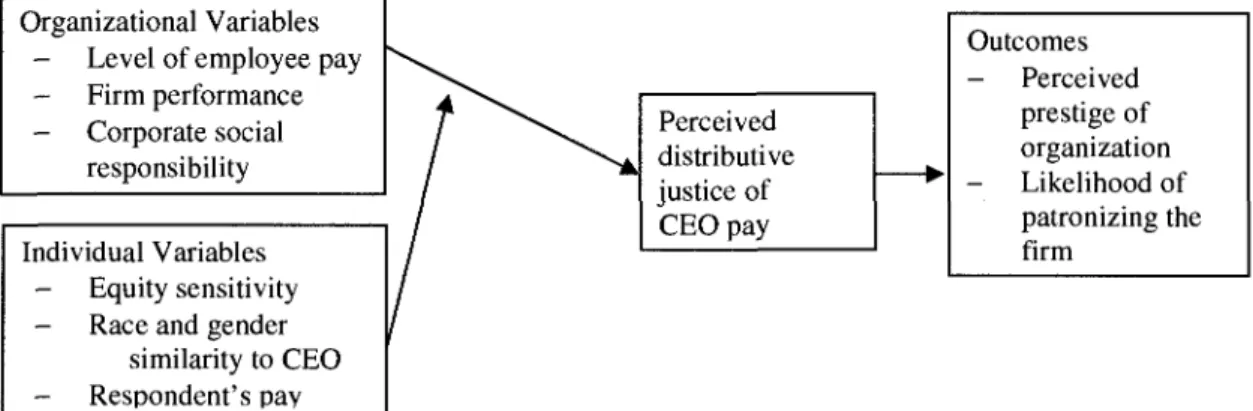
This dissertation examines attitudes of individuals related to Chief Executive Officer (CEO) compensation within the context of interactions between organizational variables (level of employee pay, firm performance, and corporate social responsibility) and individual-level variables (equity sensitivity, race and gender similarity to CEO, and respondent's pay). Vignettes (see Appendix A) were created in which respondents will have an opportunity to express their opinions on the distributive justice of CEO pay. The CEOs presented in the vignettes represented non-specific companies and had the same level of high total compensation. The respondents provided opinions of CEO pay and information about their own pay on a paper-and-pencil survey. The relationships of the aforementioned variables are presented in the conceptual model in Figure 1.1.
Organizational Variables - Level of employee pay - Firm performance - Corporate social
responsibility Individual Variables
- Equity sensitivity - Race and gender
similarity to CEO - Respondent's pay Perceived distributive justice of CEO pay Outcomes - Perceived prestige of organization - Likelihood of patronizing the firm
Figure 1.1. Conceptual Model
Statement of the Problem
CEO compensation is a much-debated topic. According to an article in Executive
Excess, in 2000, (Anderson, cavanagh, Hartman, & Leondar-Wright, 2001)after about 10
years of rapid growth, an economic slowdown occurred. However, firms still gave big raises to CEOs. Executive pay jumped 571 percent between 1990 and 2000. During this same time, average worker pay barely outpaced inflation. Those CEOs that were involved in the most layoffs of ordinary workers earned 80 percent more than the average CEO in 2000. Moreover, when CEOs cash in their stock options, their personal wealth grows and the company gets smaller tax bills. Those firms that received tax rebates gave CEOs an average raise of 69 percent compared to the average CEO raise of 38 percent. Also in 2000, the top women CEOs earned one dollar for every thirteen dollars men CEOs received. Shareholder resolutions as well as other forms of complaints have brought attention to what many feel unfair compensations practices swayed toward the CEO while in most cases not even paying a living wage to ordinary workers. According to a report issued by a Boston, Massachusetts organization, Responsible Wealth, studies and surveys of business reveal that the benefits of paying decent wages include higher employee morale, better productivity, lower absenteeism, and lower turnover as well as improvements in quality and service {Executive Excess, 2001) (Anderson et al., 2001).
Perceived wage inequality touches a lot of nerves and a lot of pocketbooks. Many people are incensed with top managers being paid multi-million dollars while overall paychecks remain small and in some cases workers are being laid off. Responsible Wealth, on behalf of its national network of business people, investors, and affluent Americans, filed 11 resolutions in 2000 asking corporate boards to reduce pay disparities
within their companies. These types of actions imply that people are becoming more vocal and persistent in quest to remedy the perceived injustices related to CEO pay.
Several studies relating CEO pay to organizational performance have been conducted. Some have found there to be a positive relationship between pay and financial performance (Tai, 2004). Others have found a positive relationship between CSR and CEO pay (Deckop, Marriman, & Gupta, 2006). However, others have found pay to be out of line with performance (Bachelder, 2005). Never the less, very few studies have been conducted on attitudes related to CEO pay. All too often, the employment and compensation practices separate organizational members into the "haves" and the "have not" groups. Consequently, some women and minorities do not feel that they have a chance at responsible and prestigious positions. Moreover, members of these groups do not identify themselves with the contemporary CEOs' position. There might, in some cases, be resentment toward the CEO because of what might be considered neglect. This perceived neglect comes from the idea that CEOs are aware of the plight of disenfranchised organizational members and have the power—but apparently not the will—to improve employment opportunities for all organizational members. It is common knowledge that in most cases if not all, CEOs "call the shots" by institutionalizing what actions or practices they condone. It seems plausible then for an individual who feels deprived of opportunities for advancement or equitable pay to not comprehend or appreciate the level of CEO pay, relative to their own. Therefore, attitudes toward CEO pay were measured as well as respondents' identification with the CEOs' racial group and some potential consequences of that interaction are discussed.
Unfair treatment or perceived inequities result in relative deprivation and this could lead to distress and anger. Behavioral reactions to the distress and anger may result in lowered individual work performance and dissatisfaction and hence to lowered organizational performance, turnover and possibly litigation. Considering the power of mass media, public knowledge of these injustices could lead to a negative company image or lower external prestige. Corporate image or reputation influences the type of employees that are attracted to the firm as well as the level of customer patronage. If a firm hopes to recruit managerial candidates successfully, a negative reputation from wage inequality may harm their chances to do so.
Need for Further Research
There is very little empirical research relating employee attitudes to CEO compensation. However, Tremblay Sire, & Balkin (2000) discussed a strong link between organizational justice and corporate performance. Their theory suggests that organizational justice is linked to employee commitment and employee commitment is linked to corporate behavior. Moreover, they state that employee commitment improves by the perception of justice (Tremblay et al., 2000). In addition, employees have a tendency to decrease output or quit work if they perceived their salary levels were low overall (Terpstra & Honoree, 2005). With the current interest on CEO compensation, the time is now right to pursue this stream of research. Very little is shown in current literature about the impact of social identity on individual and organizational performance and CEO compensation. Therefore, this theoretical framework will attempt to explain and predict potential outcomes as a response to attitudes toward high CEO pay.
Objectives of the Study
The primary objective of this dissertation was to test hypothesized relationships between organizational level variables (employee pay, firm performance, and corporate social performance) and perceptions of distributive justice of CEO pay within the context of individual level variables (equity sensitivity, demographic similarity to CEO). Specifically, I will use correlation analysis, t-tests, and moderated hierarchical regression to investigate whether or not the assumed organizational and individual variables actually interacted to predict perceptions of distributive justice of CEO pay. This dissertation used three measures of attitudes: perceived distributive justice of CEO pay, perceived prestige of organization, and likelihood of buying a product from the organization.
The second purpose of this study was to test hypotheses drawn from Corporate Social Responsibility (CSR) and equity theory. Testing hypotheses is critical in the development of a theoretical framework. Research on CEO compensation suggests that in many cases there are no strong relationships between CEO compensation and firm performance (Finklestein & Hambrick, 1988; Tosi et al., 2000). In addition, public knowledge about CEO compensation has left many "not so fortunate ones" to question the fairness of the system. Moreover, some people believe that weight given to factors unrelated to merit makes it extremely difficult for them to achieve the same level of success as those in power. Therefore, it is necessary to isolate those instances where these areas of concern are prevalent and the system does not seem fair. Conversely, we attempted to identify and benchmark those areas where equitable reward systems, positive mental attitudes, firm performance, stakeholder interests and CEO compensation
are properly aligned. This dissertation used hypotheses related to the listed theories to test them.
Contributions of the Study
The major contribution of this study is that it offers the opportunity for greater understanding of the impact of CEO compensation on external stakeholders in addition to the impact on potential stakeholders (potential employees, special interest group members, and potential customers). CEO compensation is a "hot" topic. Therefore, understanding how it impacts stakeholders could aid managers in mitigating potential repercussions as well as in taking advantage of some opportunities that could benefit their firms. Ultimately, this dissertation offers implications and insight into how organizations might enhance performance through adopting policies that maximize employee inputs while avoiding potentially negative side effects.
Plan of Study
Chapter 1 provided a statement of the problem, the need for further research, and contributions of the study. Additionally, a figure detailing the study model was provided. Chapter 2 discusses related literature and the hypotheses. Chapter 3 includes the sampling methods used, data collection techniques, and statistical techniques. The results of the data analysis are included in Chapter 4. Finally, Chapter 5 includes the conclusions of the study, the limitations of the study, organizational implications and recommendations for future research.
REVIEW OF LITERATURE AND HYPOTHESES
This chapter serves as a review of existing literature concerning attitudes towards CEO compensation and presents hypotheses that were subsequently examined. The first section reviews common conceptualizations and elements of CEO compensation and provides a definition for CEO compensation. The following section identifies the theoretical framework used as basis for this study. Empirical work related to each framework was examined.
The theoretical framework for this dissertation included concepts from agency theory, equity theory, identity theory, perceived external prestige, and corporate social responsibility. The organizational moderators (which are manipulated in the different vignettes) include: level of employee pay, firm performance, and corporate social responsibility (CSR). Employee pay refers to the overall average level of compensation of individuals working for specific organizations receive. Firm performance consists of the financial performance of the firm (e.g., market value added or return on investment-profitability). CSR refers to social contributions made to society by organizations under study. The individual moderators (which are measured characteristics of the study's respondents) include: equity sensitivity, race similarity to CEO, and respondent's pay. Equity sensitivity refers to the degree of tolerance or intolerance people have for
inequitable situations or treatment. This chapter concludes with the hypothesis formulation.
CEO Compensation
CEO compensation includes direct and indirect benefits CEOs get for their contributions to organizations. However, total cash compensation, which includes the sum of salary and bonus, is an effective proxy for measures including deferred compensation; plus it has been used in most studies of CEO compensation (Boyd, 1994). Included in CEO compensation are stock options, stock grants and other fringe benefits.
According to a 2001 BusinessWeek survey, the average CEO of a major U. S. company earned $15.5 million in total compensation. This figure was actually down from the year 2000 but the number is skewed by declines in sizable pay packages for the largest companies (BusinessWeek, 2002). Actual CEO pay was larger in 2002 than it was in the late 1990s. In 2002, CEO pay was 531 times that of the average hourly worker. In 2007, CEOs received 364 times what the average American worker received. The average CEO pay in 2006 was $10.4 million (Anderson et al., 2007). In this vein, research on the ordinary worker, has found that absenteeism and turnover are affected by perceptions of pay equity (Finkelstein & Hambrick, 1988).
The complexity of CEO pay cannot be easily understood through simple models because they result in inadequate conclusions. The economic, social, political, and individual forces must be considered jointly in order for effective analysis to occur (Finkelstein & Hambrick, 1988). CEOs, by some standards, may be over-rewarded for what they do; however, there are others who feel that CEOs deserve what they get paid.
While CEO pay in the U.S. does seem overly large to some people, one must be vigilant in keeping CEO compensation in the proper context. The responsibility of the CEO compared to other employees must be considered, as this responsibility may warrant higher levels of pay. CEO responsibilities can be compressed into three areas. First a CEO must be a visionary, a problem solver, and a communicator. This requires environmental scanning and ensuring proper response from the organization. Second, the CEO must be a role model and leader. Third, the CEO must set effective performance standards and make sure they are being met. These functions must be performed regardless of the competitiveness or the complexity of the environments (McClayland, 2002).
One of the hallmarks of attractive and desirable CEOs is their perceived ability to breathe new life into a firm. Research has shown that a CEO's track record and established reputation in developing and successfully implementing so called popular management techniques in past engagements (quality circles, empowerment, and teams, total quality management programs) correlates strongly with pay the CEO receives in a new position. However, the same research found no correlation between implementation of these popular management techniques in organizations and the actual business performance of those organizations (Staw & Epstein, 2000).
Al Dunlap was notorious for his pro CEO philosophy and earned the legend of "chain saw" Al. His reputation was achieved through his apparent insensitivity toward workers when he was called upon to position companies for viability through downsizing of rightsizing. Thousands of workers were laid off while he held to the philosophy that "you can not overpay a good CEO" (Dunlap & Andelman, 1997). Hiring the best CEO
money can buy, and tying CEO compensation to company performance, seems plausible since one role of CEOs is to continually improve the financial health of the firm.
Unfortunately, Dunlap's declaration is not consistent with public opinion. Evidence suggests that good CEOs can be overpaid (Anderson et al., 2001; Anderson et al., 2007). Further, tying compensation to shareholder returns raises serious ethical questions. Finally, there is a widespread belief within academia, industry, the popular press, and among the public that much of the ethical misconduct in business during the latter half of the 1990s can be blamed on excessive incentive packages offered to CEOs. These packages, in combination with soaring equity prices and relatively lax institutional controls, have offered yielding temptation for CEOs to take whatever actions needed to keep a company's stock price high (Piper, 2002).
Clearly, CEOs have considerable responsibilities in the firm. Nevertheless, there is a broad based outcry against the level of CEO pay given ordinary worker pay (Pfeffer, 2006). In addition, the U.S. Securities and Exchange Commission has proposed a set of new rules designed to facilitate disclosure of executive compensation and to more fully explain the criteria used in setting compensation. In 1992, U. S. executive compensation was substantially higher than that of their counterparts in Europe or Asia. In the early to mid nineties, the U.S. CEO of a mid-sized firm had an average compensation of $717,237. CEOs of similar sized firms averaged $439,441 in Britain, and $390,723 in Japan (Boyd, 1994). Similar trends continue have continued. According to a recent article in the Wall Street Journal, the typical British CEO earns slightly more than half of what U. S. CEOs make ($1.2 million to $2.2 million respectively). The Towers Perrin study compared executive compensation packages for 26 countries and indicated that
bonuses and long-term incentives make up a larger proportion of U.S. CEO pay packages as compared to Britain's (62 percent to 35 percent respectively) (Ossinger, 2006). Labor unions, workers, and in some cases special interests groups as well as the general public are interested in the level of CEO compensation. In many cases, it is often felt that CEO pay is too high relative to the plight of the ordinary workers' (pay and job security) (Anderson et al., 2001; Anderson et al., 2007).
There are no hard and fast rules on executive compensation. However, the makeup of the board of directors and the board's vigilance in making sure that all stakeholders' interests are represented has a lot to do with preventing conflicting performance goals from occurring. Compensation committee structure most often influence whether all stakeholders interests are represented or not. According to Felo (2001), this is not always the case, especially if too many committee members are from the inside.
Evidence suggests that many directors, even those sitting on board compensation committees, are ill qualified to proffer opinions on executive compensation (Elson, 2003). Therefore, many boards rely on compensation consultants for expertise and advice. Frequently, though, these are the same people who work in other consulting areas or are otherwise already retained for other purposes. This situation is fraught with potential conflicts of interest. To mitigate such conflicts, some board compensation committees have hired independent compensation consultants (as now advocated by recently promulgated New York Stock Exchange rules). Unfortunately, in many cases these consultants eventually feud with company-retained consultants, rendering the process quite ineffective (Elson, 2003).
As shown to this point, many well-intentioned aspects of CEO compensation have failed to produce the intended effects. Weinberg and Hiller (1994) set forth several such common CEO compensation practices that could produce unintended consequences. These included: (1) Large stock option grants with a grant value (defined as the exercise price times the number of shares) at least three times the CEO's basic salary. Objections to this practice noted by Weinberg included transferring too much wealth from shareholders to CEOs, creating too large a pay disparity between CEOs and average workers, and not tying the reward to performance, meaning that even poor performance could create an enormous option value; (2) In situations where an industry image is not attractive to investors, board compensation committees will not to take whatever steps they feel will motivate CEOs to restore investor confidence in the firm. In such cases, compensation committees rely too heavily on stock options, reasoning that CEOs will profit handsomely from a more valuable company. The complexities and dynamics of the market challenge this logic. CEOs, who believe their superior performance in certain situations, do not improve the company's financial position or the value of their options, might look for more favorable opportunities with other firms.
Concern is often expressed that attractive stock option plans dilute a company's value. While many high technology firms believe their continued growth and consequent stock price rises will minimize any dilution impacts, other firms are less sanguine. These latter firms try to minimize dilution concerns by repurchasing shares whenever employees exercise options. This strategy requires cash, which typically is either funded from internal reserves (which reduces the value of the firm) or is borrowed, (which further leverages the balance sheet). Either approach compromises shareholder interests.
Recently, the tendency for company compensation committees to grant failed CEOs large severance packages has drawn considerable attention in the media, scrutiny by regulators and anger from shareholders. While the direct financial impact of large severance packages may not contribute materially to the overall decline in a company's value, such favorable arrangements have an important second order effect. Over-rewarding a CEO has a negative impact on shareholders, retirement savings for workers and the morale of employees. However, the boards of directors set CEO pay. There is growing belief that the boards of directors are failing to police CEOs and serve as stakeholders' representatives in the boardroom. An AFL-CIO official recently explained his frustration with numbers. In the last 25 years the ratio of CEO pay has grow from 42 to 1 to 364 to 1 (Ryan, 2008). Union officials are now asking Congress to pass a "sat on pay" law which will allow - if passed - nonbinding shareholder vote on executive pay plans of publicly traded companies. This measure will motivate corporate boards to engage shareholders in meaningful dialogue about appropriate levels of CEO pay before it is approved (Ryan, 2008).
Some of the happenings of the 1990s have presented challenges as well as opportunities. Increasing stock option packages, a fast rising stock market, and poorly monitored and enforced internal procedures and controls, have placed enormous temptations in the way of corporate executives and other employees (Piper, 2002).
The compensation mix, or the proportion of long-term incentives in a compensation contract, may serve to align the interests of managers with those of shareholders by rewarding CEOs only if shareholder returns are enhanced (Beatty & Zajac, 1994; Gomez-Mejia, 1994; Zajac & Westphal, 1994). Long-term incentives reduce
the need for constant monitoring (Beatty & Zajac, 1994; Zajac & Westphal, 1994). While stakeholders favor long-term incentives, CEOs (for personal reasons) generally do not primarily because can benefit only if the firm performs well (Gomez-Mejia, 1987; Westphal & Zajac, 1994). CEOs realize that pay linked to long-term performance takes into account not only those factors they have control over, but critical factors that they do not have control over as well. Some major factors of concern include aggregate market demand and stock market fluctuations, which can increase the volatility of compensation (Hill & Phan, 1991). Furthermore, long-term incentives granted in the form of stock increases a CEO's firm specific investment and, consequently, the associated risk (Beatty & Zajac, 1994). CEOs would presumably prefer to retain control over their pay by getting compensated through cash, thereby limiting the extent to which their income is exposed to risk. Consistent with these arguments, research has shown that incentive alignment is greater in owner controlled than in manager-controlled firms (Tosi & Gomez-Mejia,
1989) and that, when CEOs gain power-as they do, for instance, when they also hold the board chairperson title-the compensation mix reflects CEO preferences for minimizing the long-term component of pay (Beatty & Zajac, 1994; Zajac & Westphal, 1994). The importance of linking CEO performance with the overall objectives of stakeholders resides in agency theory.
Even though I have discussed aspects and rationale for CEO compensation, I feel as though the general public, represented by the respondents to this survey, still has misgivings related to CEO pay. Rising or extremely high CEO pay for the productive as well as the non-productive executive has left even some advocates of pay for performance wondering whether the balance between the CEO and the shareholder is
tilting the wrong way (Byrne, 1996; Anderson et al., 2007)). Agency theory has been relied upon to get ideal efforts from CEOs. This effort has not completely led to desired results of stakeholders, including the CEOs themselves.
Agency theory has been defined as a separation of corporate ownership and control. It permits owners or principals to freely transfer ownership of the firm without disrupting operations because the agents or managers have taken over the controls of the firm (Fama & Jenson, 1983). As firms grow and compete, there could be many benefits to agents and principals alike. CEOs are agents of stakeholders and are therefore responsible to shareholders and other stakeholders for the performance of the firm. Principals are stakeholders other than the CEO who have some form of ownership or interest in the firm. As firms grow in size or complexity, it often becomes wise for owners or principles to enlist competent leadership or management.
The demand for additional skill sets or competencies are not uncommon in a competitive business environment. Professional managers play a significant role in sustaining and advancing organizations through different stages of growth. However, sometimes agency costs rise where the best interest of the firm is not in the best interest of the CEO. As a result, a contract must be developed to ensure that the manager's interests are aligned with those of the stakeholders. The contract may be classified as either behavior oriented (e.g. merit) or outcome oriented (e.g. stock options or commission (Eisenhardt, 1988). Moreover, the contract could contain long-term or short-term components of pay.
Even though agency theory has been promoted as a reasonable approach to matching up the interests of agents (managers) and principals (stakeholders), there still
seem to be some imbalance in terms of outcomes. This imbalance refers to the rewards or outcomes of the relative contributions made by the CEO as compared to other stakeholders. CEOs get paid well even though in many cases the firm is not profitable, socially responsible or workers might be underpaid or laid off. Therefore, the corporate board, in its deliberations with the CEO, must ensure that the contract calls for not only reasonable financial performance measures, but social or contextual performance measures as well.
In relations to financial measures, CEOs need to be held to higher standards of equity since the additional costs incurred as people attempt to restore equity diminishes the bottom line. In addition, hiring individuals of underrepresented groups could have positive effects on operations as well as sales. Therefore, tying part of the CEOs' pay to these variables seems plausible.
In this study, I investigate attitudes related to CEO pay when that pay is perceived as being high. To determine high pay, I conducted a pilot study using a sample very similar to that for the actual dissertation. This pilot study and the subsequent determination of "high" compensation are discussed in the methods section. The variables in the study, then, were all manipulated or measured in the context of this high CEO pay.
Dependent Variables Distributive Justice
Equity theory had its beginnings in personnel management. Henri Fayol, an organizational theorist, discussed it as one of his original fourteen principles (Nickels, McHugh, & McHugh, 2002). Fayol's principles were established to solve persistent
organizational problems of that era. Adams (1963) made major contributions to the theory. As of today however, problems with fairness or justice and the many benefits that can be derived from equity are yet unrealized. On several occasions, equity theory has been advanced to address this issue.
According to Adams, inequity exists when a person is overpaid or underpaid relative to another person (Adams, 1963). This can be perceived in a direct exchange or (b) when both are in an exchange relationship with a third party. The theory states that employees will be better satisfied if they think they are compensated fairly. If an employee believes that his or her ratio of inputs-to-outcomes is equal to the ratio of inputs-to-outcomes of "others", the work situation is fair. "Others" could refer to employees on the same job, same industry, or any worker anywhere, though the impact might be stronger among coworkers.
Social exchanges have the potential to be deemed just or unfair. Adams (1963) has deemed the unfair exchanges as relative deprivation. When relative deprivation exists, dissatisfaction occurs. Relative deprivation is the unfair violations of expectations. Relative deprivation raises a question about distributive justice. There are three main types of justice related to equity theory: distributive justice, procedural justice and interactional justice. Distributive justice is related to the perceived justice of allocation outcomes (Barber & Simmering, 2002) and is the focus of this section as well as this dissertation. According to Goodman and Friedman (1971), the basic assumptions, propositions, and derivations of Adams' theory of inequity have support. They can be divided into two general classes: those dealing with the conditions of inequity and those dealing with the resolution of inequity.
According to Homans (1961), distributive justice among men who are in an exchange process occurs when the profits of each are proportional to their investments. Profits refer to what is received minus what it cost to generate or realize what is received. Cost refers to what is given up in the exchange. Investments in the exchange are the attributes such as skill, effort, education, training, age, gender, and ethnic background. When inequality between the proportions exists, a feeling of injustice will arise and one party will experience deprivation (Adams, 1963). Obviously, when one feels deprived, the resultant dissatisfaction can lead to behaviors to rectify the sense of distributive justice. Some examples include withdrawing effort, filing grievances or some other counterproductive behaviors.
However, the theory of distributive justice suggests that when two or more individuals receive their rewards from a third party such as an employer, each individual will expect the employer to maintain a fair ratio of rewards relative to inputs or contributions. Theoretically, inequity exists whether a person is relatively overpaid or relatively underpaid, though the threshold is much higher when an individual is overpaid (Adams, 1963; Goodman & Friedman, 1971).
However, one person might not perceive the situation the same as the next person. Moreover, two employees might disagree on the value or weight to be given their contributions (Adams, 1963). In addition, there might be situations where one individual perceives that the ratio of his outcomes to inputs to another individual's ratio of outcomes to inputs is unequal. This situation can happen when two individuals are in a direct exchange relationship or when they are in an exchange relationship with a third party. In either scenario, a perceived (or real) inequity exists.
In the case of different work groups, one group might compare the importance of his or her group to the organization with the importance of another group to the organization. If the groups are perceived to be equal in terms of importance to the organization, the rewards are expected to be equal. In order for equity to exist, this must be the case. Importance can be accounted for through the comparisons made between efforts, skills, length of service, or type of work performed of the two groups (Adams,
1963). Others have focused their writings on perceived or real inequities as well.
Festinger's (1957) theory of cognitive dissonance suggests that a worker might compare his or her pay to another person's pay relative to dimensions of pay such as skill, education and seniority. When inequities exist from the comparison of the two proportions, cognitive dissonance is experienced. When cognitive dissonance is experienced, dissatisfaction occurs. Very little research had been done to determine what the consequences of perceived injustices were other than dissatisfaction prior to Adams's work (Adams, 1963). Adams suggested that experiences of injustice do not have to be accepted as a way of life. More research should be done so that a better general understanding of this phenomenon can be held and so that a degree of social control can be realized. Obviously, four decades have elapsed, more studies have been done; however, inequities still exist.
Some equity theorists posit that inequity results in tension and distress. As one might expect, the inequities are followed by consequences. Some approaches possibly used by dissatisfied individuals and discussed by Adams (1963) include: (1) person altering his inputs, (2) person altering his outcomes, (3) person distorting his inputs and outcomes cognitively, (4) person leaving the field, (5) person acting on other, (6) person
changing the object of comparison, and (7) choice among modes of inequity reduction (Adams, 1963).
First, a person may vary inputs by increasing or decreasing them, depending on whether it is advantageous or disadvantageous. An individual might increase productivity or the quality of work if possible. On the other hand, a person might restrict production if possible. There are instances though when a person cannot alter inputs (i.e. gender, age, seniority, or ethnicity). Second, a person might vary his or her outcomes by increasing or decreasing them depending on whether the inequity is advantageous or disadvantageous to that individual. Third, substantial distortion is difficult because individuals are strongly influenced by reality; however, a person might cognitively distort inputs or outcomes to a degree. The direction of the distortion will be consistent with the nature of cognitive distortions. Fourth, the magnitude of the perceived inequity will impact whether a person quits the job, obtain a transfer or miss work more often or resort to some other means. Fifth, a person might attempt to influence or cognitively distort the other persons input or outputs or even try to influence the individual to leave the job (Adams, 1963). Leventhal (1964) suggests that it would be easier to get a person to accept greater outcomes than fewer outcomes. On the other hand, it would be better to get a person to lower inputs than to increase them. Sixth, a person might compare him or herself with another person. This is obviously difficult to do if the comparison other has been used for a long time. The individual would first have to make him or herself non-comparable to the previous person on one or more dimensions. The comparative other person might be given an increase in responsibility. This alone will justify an individual changing comparison partners. However, if no perceived differences have occurred over the long haul and outcomes for
comparison others exceed the outcomes of the comparing other, perceived injustice will persist (Adams, 1963).
The theory states that employees will be better satisfied if they think they are compensated fairly. On the other hand, if workers feel that they are being deprived justice, it is plausible to assume some of them will attempt to restore justice. This could
result in them going public or exposing the organization in a negative light. It this happens, the organizations' image might be impacted. This could have dire marketing or recruiting consequences for organization. In addition, production employees might have a desire to leave for more attractive options (companies). Moreover, internal strife, whatever the cause, might eventually impact the perceived prestige of an organization and consequently the bottom line.
Perceived Organizational Prestige
The image an organization portrays impacts significantly the level of prestige its members' possess. However, it would appear that conflicts might evolve if individual organizational members are not satisfied with the social exchange process or the rewards they receive for the contributions they make to the organization. Moreover, if hiring or promotion practices adversely impact certain protected or disgruntled groups (i.e., ethnic or gender), a degree of resentment might cloud the image employees have of the organizations that might otherwise be praised by outsiders. Whether employee appointments, promotions, pay-raises, or pay are perceived as fair or not, external perceptions might be altered with the next complaint, news report, or lawsuit.
If worker outcomes are not considered fair, it seems plausible to expect affected employees to choose to employ one of the approaches to restore equity. If the perceived
problems are not effectively mitigated internally, the possibility exists for affected employees to choose an alternative (i.e. legal action, slacking, and self-selection) that might result in a tarnished image or counter productivity unnecessarily.
March and Simon (1958) proposed that if employees perceived that people external to the organization held their firms in high esteem, the individual employee would become attached to the organization. If certain workers feel this way, they might even relish being a part of such an organization. However, internal corporate problems related to equity or social issues can escalate and result in a damaged corporate image.
Perceived External Prestige (PEP) answers the question "what do outsiders think of me because I belong to this organization?" or "what is the social value of organizational membership?" (Dutton, et al., 1994). This project answers the more important and persistent question such as, "What is the effect of fairness on PEP?" Moreover, knowledge of the possible impact of organizational image on performance might be beneficial to any organization member or stakeholder.
The contention here is that some employees expect organizations to "practice what they preach." If the public relations campaigns used by companies to influence a positive external image of the firm are inconsistent with perceived internal practices, some employees could feel deprivation. In the process of restoring equity, the organization could be exposed in a negative light, resulting in strained relationships and the loss of critical stakeholders such as partners, customers and employees. However, regardless of how employees perceive corporate behavior, relative to image, there could still be pressures to leave or to stay with the company. However, likelihood of people "rolling with the punches" will possibly decrease as relative deprivation increases. If
employees are not satisfied with a firm relative to image, or perceive themselves as being deprived, their behavior will reflect those feelings somehow. Depending on the size of the firm and what products and services they sell, this could have marketing implications. These individuals might not patronize that particular firm.
Likelihood of Patronizing a Firm
The perception of fairness and the lack of fairness could dictate whether individuals are motivated to react in a certain way. In addition to the actions already stated regarding restoring equity, individuals might be moved to boycott or avoid purchasing products or services from firms that are perceived as unfair. Employees make excellent customers and can have a significant impact on the bottom line. However, the probability of individuals patronizing a firm depends on several factors. Scholars have known this for some time now and have developed models to explain consumer behavior. A brief discussion of models related to consumer behavior will follow.
The economic man model represents an ideal buyer who thinks exclusively in rational terms. It assumes individual's needs are unlimited but resources are limited. Decisions and purchases are based on economic considerations and need satisfaction. If given a choice, customers will want the lower priced product or service (Husted, Varble, & Lowery, 1989).
The psychoanalytic model, based on the work of Sigmund Freud, assumes that subconscious forces influence one to behave instinctively, consciously, and logically. This model posits that some behavior cannot be explained by economic principles. However, because of the range of possible subconscious motivations, an accurate explanation of consumer behavior is hard to pin point (Husted ,Varble, & Lowery, 1989).
Armstrong and Kotler (2005), developed a consumer behavior model that somewhat overlapped the psychoanalytic model. The components listed included: (1) culture, (2) social, (3) personal, and, (4) psychological factors. The cultural factors included the basic culture, subculture, and social class. Culture influences people to want something or to behave in a certain way. It can be defined as the set of basic values, perceptions, wants, and behaviors learned by a member of society from family or other important institutions. In addition, subcultures include nationalities, religions, racial groups and geographic regions. Social class is a relatively permanent and ordered division in a society whose members share similar attributes such as values, interests, and behaviors (Armstrong & Kotler, 2005). The social factors that influence behavior include reference or member groups, and family. Moreover, the roles and status of individuals help identify products individual have a tendency to buy as well (Armstrong & Kotler, 2005).
The personal factor includes occupation, age and lifecycle stage, personality and self-concept. The final factor, psychological, include motivation, perception, learning, beliefs and attitudes. Motivation was described as a need that is sufficiently pressing to direct one to seek satisfaction of that need. Perception was defined as the process by which individuals select, organize and interpret information to form a picture of the world. Attitudes are a person's enduring favorable or unfavorable cognitive evaluations, feelings and tendencies toward some object or idea (Kotler, 1984). The attitude component of this model has direct application to this project.
Some people might or might not be stimulated to patronize a firm if they have a positive attitude toward the firm, whether that positive attitude is moderated through positive perceptions of prestige, equity, CSR, or employee satisfaction or not. However, if the attitudes are negative relative to those factors, Armstrong and Kotler's (2005) theory suggests that individuals will not patronize firms in this case. Therefore, the assumption is held that employees who are dissatisfied with a particular situation at their firm might not be inclined to support the firm wholeheartedly. This attitude could spill over into respective cultural groups. Whatever the case might be, CEOs, in light of their sometimes handsome pay, have the power to mitigate most employee concerns. In reality, employees are sometimes considered ambassadors for the companies they work for. Employee opinions are sometimes the driving factor in selling a particular organization. In addition, employees make good customers. It might prove cumbersome to sell a product to others if a company's own employees will not purchase them. Moreover, a lot of purchasing power resides with gainfully employed people. According to the 2000 Census report, African Americans as well as Hispanics control over $500 billion worth of purchasing power each. Female consumers control even more. Moreover, women and minorities make up a major portion of the workforce. Nevertheless, fair participation and rewards systems should be based on good business acumen. If employees attitudes are impacted negatively because of perceived inequities or if relative deprivation sets in, one employees' exposed unwillingness to purchase his or her company's product could have a snowball effect and lead to declining market opportunities.
For example, Denny's Corporation, as a result of discrimination lawsuits filed in the early 1990s estimated three years later, that it lost $100 million per year in sales. Needless to say, now racial diversity initiatives have been implemented from the corporate board down throughout its restaurants (Cole, 2005). Regardless of the makeup of the workforce, however, all demographic groups have experienced unfairness.
Summary of Expected Outcomes
I anticipated that the level of CEO total compensation would be related to the three outcomes of perceived distributive justice of CEO pay, the perceived prestige of the organization, and the likelihood of patronizing a firm. I did not make any predictions about the main effects of this relationship. This is because in the study, I used only one level of CEO compensation—that which pilot testing indicated was perceived as high. Because the focus of this study is on high CEO pay, there is no need to vary the level of compensation. Thus, the analyses were focused on the relationship among the moderators and the outcomes.
Hypothesis 1: Perceived distributive justice of CEO pay will be positively related to the perceived prestige of the organization and the likelihood of patronizing a firm.
Organizational-Level Variables and Attitudes towards CEO Pay
The organizational-level variables used in this study included firm performance (profitability), employee pay and Corporate Social Responsibility (CSR). These variables are presented in vignettes and were therefore be manipulated, not measured. However, the representation of these variables in vignette form was intended to reflect actual U.S. business situations
Level of Employee Pay
Employee pay refers to direct compensation as well as indirect compensation received by fictitious employees in the vignettes. According to representatives of the AFL-CIO, CEO compensation has grown too dramatically and out of proportion to employee pay. In addition, the CEO-to-worker wage gap is rising. The ratio of CEO pay was 301: 1 in 2003, up from 282:1 in 2002. If the minimum wage had increased as quickly as CEO pay since 1990, it would presently exceed $15.76 per hour as compared to $5.15 per hour workers are now guaranteed under the law. Moreover, firms are still cutting jobs while CEO pay is rising. However, public pressure is beginning to have an impact, however small. Investors are beginning to demand greater accountability from the CEOs (U. S. Newswire, 2004). AFL-CIO Secretary-Treasurer, Richard Trunka has been urging shareholders to take proactive steps to stop runaway CEO pay. He feels that compensation committee directors should not be supported when attempting to approve excessive CEO pay (PR Newswire, 2002).
Hypothesis 2: Level of employee pay will be positively related to perceived distributive justice of CEO pay. When employees are more highly paid, CEO pay will be seen as more fair.
Firm Performance
Firm performance is represented as financial performance (profitable or unprofitable) in the vignettes; either the firm met financial goals or it did not. Firm performance has been paramount in the study of organizations.
Many studies have been conducted to study the relationship between firm performance and CEO pay. Therefore, firm performance will be discussed in tandem with CEO pay. There several measures or metrics used to measure firm performance.
Financial performance may be defined as short-term return on equity and long-term return on assets (Tosi et al., 2000). Other studies have measured performance using economic value added (the difference between net operating profit after taxes and total cost of capital). Market value added is the difference between market value - debt plus equity - and investor funds since inception. In addition, stock price is often seen as a performance metric leading many CEO to receive lucrative options packages. Moreover, nearly 80 percent of the gain in CEO compensation for the past 10 years has come from stock options (Elson, 2003).
Conventional belief in determining CEO compensation is that a correlation exists between compensation and company performance. Research does not support such a correlation. As a matter of fact, CEO pay often rises while business falls off and layoffs occur. Sheikholeslami (2001) investigated total CEO compensation in relation to contemporary performance measures. Iyengar (2002) reported studies that showed managers' compensation being largely unaffected when firms performed poorly. Tosi et al. (2000), found only a small percentage of variation in CEO compensation could be explained by a change in financial performance.
However, when the firm is performing well, respondents are more likely to believe that high CEO pay is fair. According to Walters, Hadin, & Schick (1995), high pay is perceived as fair when pay is linked to organizational performance. Moreover, this argument is consistent with equity theory which incorporates contributions to a firm in the form of inputs to outputs or rewards. If CEOs are instrumental in increasing shareholder wealth, they are entitled to be justly compensated for it.
Hypothesis 3: Firm performance will be positively related to perceived
distributive justice of CEO pay. When the firm is meeting financial goals, CEO pay will be seen as more fair.
Corporate Social Responsibility
According to Nickels, McHugh, and McHugh (2005), CRS is the concern businesses have for society. Specifically, businesses are responsible to customers, investors, employees, society, and the environment. Businesses should create wealth, promote social justice, and satisfy customers by offering real value in products and services. These authors note that honesty goes a long way in satisfying customers. CSR can be a function of organization size or success. Moreover, it can be a direct result of the philosophy of the CEO. Some firms are now holding their CEOs responsible for social goals by tying some elements of compensation to the social goals. Thus, elements of what constitute CSR will be represented in the study vignettes.
In addition to financial or market performance, firms find themselves accountable now to stakeholders regarding social responsibility. Prior to the 1950s, the two distinct theories of management were administrative and sociological. Administrative theory focused on internal operations and structures. Taylor's (1911) and his followers' works were rooted in engineering and experimentation in an attempt to optimize efficiency or productivity. The sociology stream was known as "social organization." The aim of this social analysis was to understand how the institutional sphere (education, family and economy, etc.) was structured and how developments in one affected the other (Stern & Barley, 1996).
A particularly influential theorist on this stream was Talcott Parsons. In his essay "Suggestions for a Sociological Approach to the Theory of Organizations," he disclosed
three foci: (1) adaptation of an organization to the situation in which it must operate (which dealt with resource acquisition, dependence, and transaction cost theory), (2) mechanisms of implementations (which dealt with structures, processes and decision making relative to goal attainment), and (3), mechanisms by which the organization is integrated with other entities in the total social system (excluding relationships between organizations and their environments, because that was the thrust of the first focus),(Stern & Barley, 1996).
One of the early opponents of social responsibility was Milton Freidman. In 1962, he argued that the doctrine of social responsibility was "fundamentally subversive". He felt that the trend of social responsibility would undermine the foundation of a free society if it included anything other than profit maximization for stockholders (Caroll, 1979).
However, early writers indicated that business seldom had so much power with so little responsibility. Carroll (1979) observed that the "social responsibility of business encompasses the economic, legal, ethical, and discretionary expectations that society has of organizations at a given point in time." In 1986, Frederick summed up the position as: "The fundamental idea of 'corporate social responsibility' is that business corporations have an obligation to work for social betterment" (Wood, 1991).
The CEO has become a key player in society's renewed emphasis on social responsibility. Conventional belief in determining CEO compensation is that a correlation exists between compensation and company performance. Research does not support such a correlation. As a matter of fact, CEO pay often rises while business falls off and layoffs occur. Sheikholeslami (2001) investigated total CEO compensation - defined as base
salary, benefits, cash bonuses, and deferred compensation - in relation to contemporary performance measures of what he termed economic value added (the difference between net operating profit after taxes and total cost of capital) and market value added (the difference between market value - debt plus equity - and investor funds since inception). Research revealed that even though CEOs are paid quite well, certain performance goals or social issues are not adequately addressed. Moreover, gender and ethnicity issues are primarily some of the metrics evaluated in determining whether firms are being socially responsible. However, women and minorities are still underrepresented in some upper level positions and occupants of upper level positions usually determine what is and is not tolerated in organizations.
The top 50 companies for diversity are vastly different from the rest of corporate America. The main reason given is diversity in the board room. In comparing the top 50 companies with Fortune 1,000 companies, the Top 50s board members were 11.3 percent black, compared to the national average of 5.6 percent. The Top 50s' board members were 10.3 percent Latino, compared to a national average of 1.97 percent. The Top 50s'board members were 4.3 percent Asian compared to the national average of 1 percent. The Top 50s' board directors were 20.3 percent women, 35 percent higher than the national average of 13.6 percent (Frankel, 2005). In some instances, these people have different mindsets and challenge the prevailing way of thinking. According to Michael Critelli, CEO/Chairman, Pitney Bowes, women and people of color get away from groupthink and pay more attention to moral issues and how the front line people feel. In addition, they are more challenging of the orthodox way of thinking and cause scandals to be prevented or become serious (Cole, 2005). If this were the general trend,
there would possibly be less uproar about CEO compensation and other inequities. In general though, the wage gap still exists with women and minorities being paid less than their white counterparts. Compounding these problems, CEO compensation has skyrocketed while thousands of front line workers and middle level workers are laid off or, by their perception, underpaid.
Hypothesis 4: Corporate social responsibility will be positively related to perceived distributive justice of CEO pay. When the firm is investing money in CSR, CEO pay will be seen as more fair.
Individual-Level Variables and Attitudes towards CEO Pay
Equity Sensitivity
Equity theorists suggest that when people feel that they are improperly or unfairly under rewarded for contributions made to the organization relative to others, unpleasant feelings result, which normally results in a person's move to reduce it. Different conditions produce distress of different qualities; therefore, different behaviors will result. Therefore, different equity-restoring responses should be experienced (Adams & Freedman, 1976). Some individuals might be moved to restore equity through withdrawing effort, complaining, quitting, or pursuing some legal remedy (Robbins & Coulter, 2005). However, all individuals do not react the same way when perceived inequities exist. Some individuals might not have a choice in not reacting to a perceived inequity because opportunities to do so might not exist (or options to respond negatively might not exist). Never the less, even if an individual has a choice to restore equity in an acceptable way, the individual may or may not be motivated to do so. As a result, equity sensitivity theory will help us explain whether or not individuals are "moved" to respond.
How individuals respond to perceived inequity could have an impact on individual as well as organizational performance.
Equity theory's distress prediction was based on the assumption that individuals are equally sensitive to equity. However, more recent research indicates something to the contrary. The equity sensitivity construct suggests that individuals react in consistent but individually different ways to both equity and inequity. Three classes of individuals are identified along a continuum. They include: (1) Benevolents who prefer their outcomes/input ratios to be less than those of their comparative other, (2) Equity Sensitives, who prefer their outcome/input ratios to be equal to those of their comparative others and, (3) Entitleds, who prefer their outcome/input ratios to be more than those of the comparative others. This adds a new dimension to predicting outcomes of relative deprivation or inequities in organizations (Huseman, Hatfield, & Miles, 1985; Huseman, Hatfield, & Miles, 1987).
Huseman's Equity Sensitivity Instrument (ESI) has been used in many studies over the last several years to measure equity sensitivity. With the ESI, ten points are allocated to each of five items, and scores on the five items are summed. Respondents who score low on all items are labeled Benevolents, and those who score high on all items are labeled Entitleds (Shore Sy, & Strauss, 2006)
However, some authors have suggested that the ESI does not measure equity sensitivity (Greenberg, 1990), and an alternative measure developed by Sauley and
Bedeian (2000) exists. The Equity Preference Questionnaire (EPQ) employes Likert-scale responses, not a forced-distribution method (as does the ESI). Thus, comparisons among individual respondents are more accurate. Sauley and Bedeian (2000) based their scale on
systematic item-development procedures, and demonstrated the strong reliability and validity of their measure.
Hypothesis 5: Equity sensitivity will interact with the organization-level variables to predict perceptions about the distributive justice of CEO pay. High equity sensitivity of respondents will strengthen the relationship between the organizational-level variables and perceptions of CEO pay fairness.
Demographic variables should be factored into any contemporary study on equity sensitivity. Individual behavior has everything to do with the success of organizations. There are several instances where employee attitudes might directly or indirectly impact the bottom line. First, employees may not feel attached to the firm. Secondly, employees might feel disgusted with CEO pay. Thirdly, employees might not feel that they are being compensated fairly. Fourthly, they might feel that the firm is socially irresponsible. Fifthly, employees might feel that they are underrepresented depending on the makeup of the executive management team. They might also feel that they do not have access to top management or the connections needed to pursue opportunities for advancement and growth.
Demographic Similarity to CEO
In addition, an individual's similarity or dissimilarity to the CEO might help explain whether or not individuals feel they will be given an objective or fair opportunity for career advancement and growth. Social identity theory defines and differentiates between individuals who are included in the category of employees that receive these "fair" opportunities and those that do not. The ones that are included are referred to as in-group participants and the ones who are not are considered in the out-in-group. Never the less, pay inequities and under-representation in top management, for all practical
purposes are characteristics of individuals in the out-group (Ellemers, van Rijswijk, Roefs, & Simons, 1997)
There is a growing consensus that people who are similar to their CEOs tend to fare better in organizations. Much of this phenomenon can be explained by identity theory. According to Tajfel (1982) identity refers to common identification with a collectivity or social category. Identity theory traces its root to Mead (1934) where his framework asserted the formula "Society shapes self shapes social behavior." Identity theory has evolved into two somewhat closely related but different strands. The first focuses on how social structures affect the structure of self and how the structure of the self influences social behavior. The second focuses on the internal dynamics of self-processes as these affect social behavior (Stryker & Burke, 2000).
Stryker (1968), consistently with contemporary sociology, suggests that society is perceived as a mosaic of patterned interactions and relationships. The relationships are differentiated but organized and embedded in an array of groups, organizations, communities, and institutions. Moreover, crosscutting boundaries of class, ethnicity, age, gender, religion, and other variables intersects these relationships (Stryker & Burke, 2000).
Social Identity theory has been proposed by a number of researchers as a means by which similarity to others is a meaningful construct (Ashforth & Mael, 1989; Tsui, Egan, & O'Reilly, 1992). Individuals define themselves in terms of an infinite number of groups they belong to such as organizations, religious groups, gender, and age cohorts (Ashforth & Mael, 1989). This is referred to as social classification. Social classification serves two functions: (1) it cognitively segments and orders the social environment,