EFFECTS OF AN EIGHT-WEEK HAND EXERCISE PROGRAM ON OLDER WOMEN WITH OSTEOARTHRITIS
A Thesis by Ella Suzanne Hubele
Bachelor of Arts, University of Kansas, 2001
Submitted to the Department of Kinesiology and Sport Studies and the faculty of the Graduate School of
Wichita State University in partial fulfillment of the requirements for the degree of
Master of Education
EFFECTS OF AN EIGHT-WEEK HAND EXERCISE PROGRAM ON OLDER WOMEN WITH OSTEOARTHRITIS
I have examined this final copy of this Thesis for form and content and recommend that it be accepted in partial fulfillment of the requirement for the degree of Master of Education, with a major in Physical Education – Exercise Science.
____________________________________ Dr. Michael E. Rogers, Committee Chair We have read this Thesis and recommend its acceptance.
_____________________________________ Dr. Jeremy Patterson, Committee Member _____________________________________ Mr. Robert Manske, Committee Member
ACKNOWLEDGEMENTS
I wish to give thanks to my graduate advisor, Dr. Michael Rogers. He consistently expected a higher standard of analysis, research, and technical writing that had previously been lacking in my educational experience. This made graduate school a refreshing challenge, and a lot of fun to complete. No, I still haven’t learned how to juggle; I think I’m completely hopeless. I am also indebted to my graduate committee, Dr. Jeremy Patterson and Mr. Robert Manske for their guidance and insight into my research. Their recommendations helped simplify data collection, which was invaluable during the research phase.
Gratitude is also due to all my other professors who understood that life is an obstacle to overcome, and gave me the flexibility to overcome my Everest.
Thank you to Dr. Michael Rogers and Mr. Phil Page for the use of the photos and exercises in this project. Thank you also to Professor Bellamy, for the use of the AUSCAN in this project.
Thank you, Janice Pankratz of Salina Parks and Recreation; you were an answer to a prayer. Thanks also goes to the Directors of Eagle Crest, Salina Presbyterian Manor, and Riverside Plaza for letting me use your facilities for classes. Thank you to every person who took my classes and participated in my research project.
Thank you, Catherine, for the all the last minute details. You are the best twin a gal could have. Thank you, Thad and Rachel, for your support, encouragement, and patience.
ABSTRACT
Osteoarthritis is a disease that causes decreases in hand function in the elderly adult and can lead to full disability of the hand. There is no clear cause of osteoarthritis of the hand, although injury and overuse can contribute to development of the disease. Traditional treatments include splinting, paraffin therapy, medications and, in severe cases, joint replacement. Non-traditional therapies include mobility training, therapeutic touch, acupuncture and exercise. The purpose of this study was to explore the non-traditional treatment of hand-strengthening exercise as a way to improve hand function. Specifically, this study evaluated the effects of an eight-week hand exercise program utilizing Hand Exercisers and FlexBars on hand grip strength and dexterity in 13 elderly women aged 70-85 (M=80.4, SD= +/- 4.25) who showed signs and symptoms of hand osteoarthritis, which are pain, stiffness and swelling.. Participants were evaluated before and after the exercise intervention for grip strength, pinch strength, range of motion of the trapeziometacarpal, metacarpophalangeal, interphalangeal and wrist joints, and were timed on a hand dexterity test that involved putting on and buttoning a shirt with ten 3/8th inch buttons. A repeated measures ANOVA was the mode of data analysis. Hand strength significantly improved (p<0.05), as both grip (19%) and pinch (26%) strength showed
improvements. In range of motion testing, palmar flexion (12%), interphalangeal flexion (46%), metacarpophalangeal flexion (39%) and wrist extension (11%) showed significant improvements while palmar abduction (12%) and wrist flexion (8%) did not. Hand dexterity also improved as evidenced by a 24% decrease in the amount of time to button a shirt. Pain, stiffness and
disability, as measured by the AUSCAN, also decreased significantly, with a 17.3% decrease in means. The results indicate that hand exercise programs can be used to increase hand function while decreasing the signs and symptoms in patients with hand osteoarthritis.
TABLE OF CONTENTS
Chapter Page
I. INTRODUCTION 1
Purpose of the Study 2
Research Hypothesis 2
Significance of the Study 2
Variables 3
Limitations 3
Delimitations 4
Assumptions 4
List of Abbreviations and Nomenclature 5
II. LITERATURE REVIEW 7
The Disease 7
Causes 8
Progression, Effects on Bone Density, Prevention 9
Disability 11 Treatment 12 Summary 15 III. METHODOLOGY 16 Participants 16 Participant Screening 16 Clinical Tests 17
Hand Strength Measurements 17
Range of Motion Measurements 18
Hand Dexterity 18
The AUSCAN Index 19
Intervention Protocol 20
Data Analysis 21
IV. RESULTS 22
Descriptive Characteristics 22
Hand Strength Assessments 22
Range of Motion Measurements 23
Hand Dexterity 25
The AUSCAN Index 26
TABLE OF CONTENTS (continued) Chapter Page V. DISCUSSION 28 Strength 28 Flexibility 29 Hand Function 30
Combining Home and In-Class Exercises 30
Limitations 31
Future Research 31
Conclusion 32
LIST OF REFERENCES 33
APPENDICES 38
A. Hand Exercise Program 39
B. Informed Consent Form 51
LIST OF TABLES
Table Page
1. Participant Ages (years) 21
2. Hand Strength (kg) 22
3. Range of Motion (degrees) 23
4. Hand Dexterity Time (seconds) 25
LIST OF FIGURES Figure Page 1. Hand Strength 22 2. Palmar Flexibility 23 3. Phalangeal Flexibility 24 4. Wrist Flexibility 24 5. Hand Dexterity 25
Chapter I INTRODUCTION
Osteoarthritis of the hand is a degenerative hand disease that can cause a patient to lose all ability to open and close the hand. Although there have been many studies that have documented the effects of exercise on osteoarthritis in the knee, hip and spine, there are only a few studies that document the effects of exercise on the hand (Stamm et al, 2002; Zelazny, 2001; Peck, 1998).
Once osteoarthritis is diagnosed, patients often begin to undergo treatment in the form of medication and therapy. According to Holbrook and Bennett (1990), treatment is based on disability and pain levels. Traditional treatments include non-steroidal anti-inflammatory agents, paraffin therapy and/or splinting. Most physicians and orthopedic specialists suggest keeping the hands mobile through activity and range of motion exercises, but do not prescribe a specific exercise program. More drastic approaches are direct injections of pharmaceuticals into a joint, or replacement of the joint affected by osteoarthritis. Yet, non-traditional management programs are starting to emerge, and the studies performed on many interventions have been promising. For example, providing joint protection and exercise literature has been shown to increase the grip strength by 25% and global hand function by 65% (Stamm et a.l, 2002). Music therapy via piano playing also increases pinch strength and range of motion (Zelazny, 2001). Furthermore, therapeutic touch, a combination of mobility exercise and massage, has reduced pain and increased mobility (Peck, 1998). Based on these recent studies, it appears that exercise therapy can attenuate the degenerative progression of osteoarthritis that can lead to disability.
There are many methods of hand exercise that can improve strength, mobility, and function. The current study examined the effects of hand exercise on mobility and hand strength
in older adults with osteoarthritis of the hand. Grip strength, range of motion, and dexterity of the hand were assessed before and after completing an exercise program that utilized specific training tools.
Purpose of the Study
Osteoarthritis can lead to diminished hand function, complete hand disability, and loss of independence in elderly adults. It was the purpose of this study to evaluate the effects of a hand exercise program in older women with hand osteoarthritis.
Research Hypothesis
Older women with hand osteoarthritis who participate in an 8-week hand exercise
program will improve their hand grip strength, pinch strength, range of motion and the score on a hand dexterity test.
Significance of the Study
It was the purpose of this study to examine a hand exercise program for older women that will potentially increase hand function. Considering the progression of osteoarthritis to full disability of the hands, this study could lead to older adults remaining independent for months or even years longer than they would have expected otherwise. It also could provide a method for the older adult to prevent or regain their independence by increasing hand dexterity and strength.
Variables
Independent Variables: Exercise Program
a. Hand exercise with Hand Exerciser (Thera-Band® Hygenic Corp., Akron, OH) b. Hand exercise with the FlexBar (Thera-Band® Hygenic Corp., Akron, OH)
Dependent Variables: Measures of Hand Function
a. Grip strength b. Pinch strength c. Range of motion d. Hand dexterity
Control Variables
a. Age of the participant b. Gender of the participant c. Severity of osteoarthritis
d. Current medicinal or physical therapies e. Joint replacement
Limitations
a. May be difficult to control outside influences such as changes in medication or other therapies in which patients are already enrolled
b. Severity of osteoarthritis may make exercise more or less difficult for some participants c. This study will not be able to predict if hand exercise will increase or even decrease
function in participants with severe cases of osteoarthritis d. This study does not contain a control group.
Delimitations
a. Results are limited to elderly women with mild to moderate osteoarthritis, as determined by their responses to the AUSCAN Osteoarthritis Hand Index
b. Results are specific to the types of exercises used in the study
Assumptions
a. Participants will be willing to complete exercises in the program through mild hand discomfort and stiffness while still doing all their ADLs and BADLs
b. Participants will perform their pre and post tests to the best of their capability
c. Participants will not perform hand exercises in addition to those listed in their exercise program
LIST OF ABBREVIATIONS/NOMENCLATURE
AUSCAN Index: An international standard of clinical measurement of osteoarthritis of the
hand. It consists of questions that probe the extent of symptoms in the areas of pain, stiffness, and physical function in patients with osteoarthritis of the hand joints. It has been shown to be valid, reliable and responsive in detecting clinically important changes in health status. The version used in this study is the AUSCAN LK3.0 USA English, which consists of 15 questions that are evaluated on a five point Likert scale (Bellamy 2003).
Mild to Moderate Osteoarthritis: A condition characterized by the breakdown of the articular
cartilage of the hand. It is diagnosed by symptom history and joint deterioration measured by hand X-ray or magnetic resonance imaging. Severity of osteoarthritis is determined by the patient’s physician.
Dexterity: Readiness and grace in physical activity; especially: skill and ease in using the hands
(Merriam-Webster 2002)
Hand grip strength: The pounds of pressure that the grip exerts when the hand is squeezed.
Grip strength is measured by the JAMAR hand dynamometer.
Hand Exerciser: The Hand Exerciser manufactured by Thera-Band® (Hygenic Corp., Akron,
OH) are exerciser tools that are color coded by the amount of resistance in pounds when compressed 50%. The standard hand exerciser is for smaller hands, and is available in five resistances. The yellow is 1.5 lbs of resistance, the red 3 lbs, the green 5 lbs, the blue 8 lbs, and the black 17 lbs. The extra large size is for larger hands or for people who have limited hand mobility, and it is available in four resistances, from the red or 3 lbs up to the black or 17 lbs of resistance.
The Hand Exercisers can be used hot to decrease stiffness and increase circulation or cold to reduce swelling of the hand.
FlexBar: The Thera-Band® FlexBars are made from natural rubber and are available in 3 levels
of resistance. The Red FlexBar takes 10 lbs. of force to bend to a u-shape, and is 1 ½” in diameter. The Green takes 15 lbs., and is 1 ¾” in diameter. The Blue FlexBar takes 25 lbs to bend to a u-shape, and is 2” in diameter.
Range of motion: The extent of movement of a joint from maximum extension to maximum
Chapter II
REVIEW OF LITERATURE
Osteoarthritis of the hand is a serious disease that can rob a person of their independence and sense of well-being. Osteoarthritis is a degenerative disease, which over time can cause a patient to completely lose all ability to open and close the hand. The progression of the disease has a symmetrical pattern, although it is not necessarily bilateral. There is no one specific cause of osteoarthritis because so many factors contribute to longitudinal joint damage. However, there seem to be genetic links to osteoarthritis, as the risk for developing the disease is greater if family members suffer from it. The unilateral nature of osteoarthritis has also led researchers to believe that overuse or abuse of a joint can also cause the breakdown of cartilage. Although there are many treatment options available to ease the pain, there currently is no way to completely reverse the damage. If the treatment plan does not include exercise of afflicted joints, complications can result in additional pain and loss of mobility. Therefore, it is useful to explore all treatment options available to patients, and specifically focus on the non-traditional therapy of hand exercise.
The Disease
Osteoarthritis of the hand is a recognized disease. Osteoarthritis of the hand is characterized by the breakdown of the articular cartilage of the carpometacarpal, metacarpophalangeal, and interphalangeal joints. Osteoarthritis can be in one digit or a combination of digits. The synovial membranes and the joint capsule are also damaged or destroyed (Carmeli et al., 2003). The loss of cartilage causes pain and restricts movement in the
joint. It can also cause bone spurs, deformities, and difficulty in performing activities of daily living (Carmeli et al., 2003). To be diagnosed with osteoarthritis, the patient must have a history of symptoms and show signs of joint deterioration by x-ray or magnetic resonance imaging. The severity of osteoarthritis can be determined by clinical diagnosis, yet there are other tests
available to determine the effects the disease has on independent living and daily activities. According to Spirduso (1995), two of the most common assessments are the Williams Test of Hand Function developed by Williams, Hadler, and Earp in 1982, and the Jebsen Test of Hand Function developed by Jebsen, Taylor, Trieschmann, Trotter and Howard in 1969. The Williams Test of Hand Function has the patient open and close nine different types of door latches and can predict functional dependency by the patient's performance. The Jebsen Test of Hand Function uses seven common tasks, including moving and shifting objects, in order to determine hand function.
Causes
Patients are diagnosed either with primary and/or secondary osteoarthritis. These two types of the disease are partitioned by the suspected cause. Primary osteoarthritis is not thought to have one definite cause, and secondary arthritis seems to be linked to an injury or abuse of a joint (Spirduso, 1995). Although no one determinate factor has been proven to cause
osteoarthritis, there are studies that show certain risk factors may increase the chance of
developing it. Overuse or injury of a joint have been linked to the disease, and are now widely accepted as risk factors. Environmental factors and grip strength have also been indicated as risk factors. In a 2003 study, Sayer et al. suggest that men’s prenatal joint formation, low birth weight, and high adult weight is correlated to developing osteoarthritis. Also, another report
from the Framingham Study correlates high grip strength with developing osteoarthritis in all but the distal interphalangeal joints (Chaisson et al., 1999). Most significant are the studies that suggest susceptibility to primary and secondary osteoarthritis of the hand may be genetically linked. Bijker et al. (1999) discovered that hand radiologic osteoarthritis (ROA) and disc
degeneration were found significantly more frequently in siblings than in the general population. Hirsh et al. (1998), as part of the Baltimore Longitudinal Study on Aging, also identified a familial aggregation of osteoarthritis of the hand joints, suggesting that it is inheritable. Finally, a report from the Framingham Study suggests that there is a genetic contribution to osteoarthritis, with evidence of a major recessive gene that can possibly be triggered by the presence of
polygenic or environmental factors (Felson et al., 1998). Given that the causes of osteoarthritis are multivariate, it only makes sense to continue to research all possible causes in order to reduce the incidence in the population.
Progression, Effects on Bone Density, and Prevention
The progression of osteoarthritis has been clinically documented as starting with mild pain and stiffness, moving to moderate pain, discomfort and restriction of range of motion, concluding with deformity and loss of ability to use the joint. While modern medicine does not dispute the course of the disease, there are conflicting opinions on how the disease affects variations in symptoms and progression to different joints of the hand. In the past, the incidence and symptoms of osteoarthritis in the hand were considered unpredictable. Contemporary studies have uncovered that multiple joints are affected in pattern, and they suggest a radial type of symmetry. The radial symmetry theory of osteoarthritis states that joints in a ray of the hand (from wrist to distal point of phalange) have a greater tendency to develop the disease. Despite
the fact that a recent study concurs that multiple joints are afflicted symmetrically, the study disputes the radial symmetry pattern. Niu et al. (2003) studied 976 subjects with symptomatic osteoarthritis. They discovered that multiple joints are affected, but the joints were clustered more by row than ray, meaning the same joint on each separate digit was afflicted. They also agreed that osteoarthritis does have a symmetry that most often occurs in women. Another study done by Bellamy et al. (2002) noted that pain, stiffness, and manual dexterity have a rhythmic variation throughout the day.
The effect of osteoarthritis on bone mineral density is a new research field in
gerontology. Only a handful of studies have been conducted on this topic, and no one study has established a clear effect. However, Sowers et al. (1999) published a study that looked at the pathogenesis of osteoarthritis in the hand and knee. They ascertained that women with
radiographic osteoarthritis do have a greater bone mineral density and are less likely to lose that higher level of bone mineral density. Also, bone turnover rates were lower in women with osteoarthritis of the hand and/or the knee. This study suggests that bone-forming cells reacted differently in those women, compared to the normal population. Although further study is needed, it may be good for the patient to know that osteoarthritis may provide some protection against osteoporosis.
There is no treatment that can reverse osteoarthritis; however, prevention may be fundamental in reducing the incidence of osteoarthritis. One avenue of prevention may be in decreasing overuse of the joints in the workplace. Vingard (1996) and Croft et al. (1992) found that prolonged heavy lifting or heavy use of a joint in occupations such as dock loader or farmer may contribute to osteoarthritis of the knee and hip. Rettig (1994) also found that in tennis athletes, osteoarthritis of the wrist can be linked to the intense loads and pressure placed on the
wrist. The relationship between hand osteoarthritis and occupational overuse has only been clearly established in the cotton worker (Hadler 1977, March 2004). However, this finding is important because effective prevention of overuse of the hand within this population can possibly be adapted to help prevent the occurrence of hand osteoarthritis in the general public.
Another avenue of prevention available to women may lie in hormone replacement therapy (HRT). Spector et al. (1997) found that women currently using HRT had a significant protective effect for knee osteoarthritis, with a less clear effect for the carpometacarpal joint. HRT did have an effect on all the hand joints, but it was not statistically significant. However, it is promising that they did find a slower pathogenesis for osteoarthritis of the hand for current users of HRT.
Disability
As stated earlier, osteoarthritis can progress to full disability of the hands. This is of great concern to older adults, as their ability to remain independent is contingent on their hand function. In The Aging Hand, a review of hand function in older adults, Carmeli et al. (2003) discuss the deterioration and resulting dysfunction of the hand. They explain that the hand is the most active part of the upper extremity and is required to perform all of the basic activities of daily living. The older adult without a degenerative disease naturally loses some hand function. Osteoarthritis can cause the hand to lose the ability to grip and pinch, and perform common tasks involving precision dexterity. Thus, osteoarthritis is a serious concern for the aging adult as it can cause a patient to lose mobility and function above the normal deterioration that happens as a result of the aging process. According to Spirduso (1995), the reduced ability to perform the activities of daily living classifies the older adult as physically frail. The physically frail adult
borders on partial or complete dependence on a caregiver. Typically, the frail have a morbid disease that usually results in disability such as arthritis. Simple tasks, such as combing the hair or fixing a meal are almost impossible to an individual that has lost manual dexterity. Once they lose the capacity to take care of themselves, they are usually institutionalized in nursing homes or hospitals, which is at best a difficult adjustment. Therefore, the loss of hand function due to osteoarthritis and the resulting frailty or dependence can take a heavy toll on the older adult.
Treatment
Once a patient has been diagnosed with osteoarthritis, the patient is then prescribed a treatment program. According to Holbrook and Bennett (1990), treatment depends on the disability and pain levels present in a patient. Traditionally, the main prescription for pain is non-steroidal anti-inflammatory agents (NSAIDs). Also, paraffin therapy can be used along with warm compresses to loosen the joints and help ease stiffness. Splinting is also effective if the joint is unstable. Mobility is also very important. Most physicians and orthopedic specialists recommend keeping the hands and fingers vigorous through activity. Holbrook and Bennett (1990) also suggest gentle stretching, or range of motion activities and NSAIDs to help maintain dexterity, although they do not prescribe specific activities or stretches for the patient.
Traditional treatments are widely prescribed and used because they have been proven effective in relieving the symptoms of osteoarthritis.
More radical approaches for pain and deformities are injections and joint replacement surgery. Joint injection is the direct infusion of pharmaceuticals into a joint to relieve pain or swelling. Joint injection has been shown to be effective for the first carpometacarpal joint (Tallia & Cardone, 2003). If all other treatments have failed, or the deformity is severe, then a surgeon
will recommend joint replacement. One type of flexible joint replacement arthroplasty is the silicone joint. Usually this is prescribed for the metacarpophalangeal joint. In a study done over 30 years ago, both rheumatic and osteoarthritis patients showed significant increases in flexion of the joint and 97% of the deformities were corrected (Swanson, 1972). A recent development is the use of pyrolytic carbon implants for the metacarpophalangeal joints. These implants show little abnormal growth around the implant, and have a very low failure and complication rate (Cook et al., 1999). Whereas artificial joints work best for the metacarpophalangeal joint, the carpometacarpal joint of the thumb has a greater success rate using natural tissue. Kalb (1998) explains the procedure as removing the worn out trapezium bone and replacing it with a part of the flexor carpi radialis or the palmaris longus rolled up. These three types of joint replacements represent only a scant few of the many types of joint replacements and procedures available to the patient.
Non-traditional medicine and therapy has taken strides to adjoin traditional and non-traditional treatments for osteoarthritis. The benefits of supplements, acupuncture, exercise and various types of therapies have gained public interest. Glucosamine is a supplement advertised as increasing the lubrication of joints and reducing cartilage damage. Although glucosamine has been shown to be effective for animals, there is not sufficient research to support the findings in humans and any improvements in joint function have merely been anecdotal. In contrast, acupuncture was once considered as effective as a sugar pill by the community. However, a recent conference held by the National Institute of Health (JAMA, 1998) concluded that acupuncture may have scientific validity for osteoarthritis. Acupuncture has been shown to be effective for nausea and vomiting caused by surgery and chemotherapy. The research supporting acupuncture could be used as an alternate or adjunct treatment for osteoarthritis in a
comprehensive management program (JAMA, 1998).
Exercise, music therapy, and therapeutic touch are other therapies available to patients, and all are very effective. One study showed that just providing instruction to patients in joint protection and home hand exercises increased grip strength by 25% and global hand function by 65% (Stamm et al., 2002). Another study showed that providing skilled finger exercise to older adults with or without hand osteoarthritis improved hand function (Ranganathan, 2001).
Strengthening, joint protection, and stretching are all effective for chronic epicondylitis of the wrist for decreasing pain and improving hand function (Martinez-Silvestrini 2005). Also, for rheumatoid arthritis of the hand, a program of hand exercise, joint protection, and stretching has been shown to be more effective than just strengthening and stretching alone (O’Brien 2006). Music therapy, another type of hand exercise, showed promising results in four case studies. Along with being a meaningful exercise to older adults, it provided an opportunity for
socialization, and an increase in finger pinch meter values and range of motion. Two
participants also noted significant decreases in arthritis pain after each therapy session (Zelazny, 2001). Finally, therapeutic touch, a cross between mobility and massage, can be used as an effective tool for relieving pain and stiffness. One study showed the benefits therapeutic touch can have for debilitating osteoarthritis. The participants for this study were patients in a direct care nursing home. They reported a significant decrease in pain, and an increase in mobility, along with a marked improvement in mood and easement of depression symptoms that stem from the disease (Peck, 1998). In conclusion, non-traditional treatments for the symptoms of osteoarthritis can be used as a part of a wide-ranging management program, in conjunction with traditional and radical treatments.
Summary
While the existing literature has demonstrated the effectiveness of traditional therapies for osteoarthritis, more research is needed to explore the non-traditional therapy option of hand strengthening and stretching for hand osteoarthritis as a way to reduce symptoms and retain mobility. This study will explore the effects of an eight-week exercise program on participants with mild to moderate osteoarthritis of the hand, thus seeking to close the gap in the literature.
Chapter III METHODOLOGY
Participants
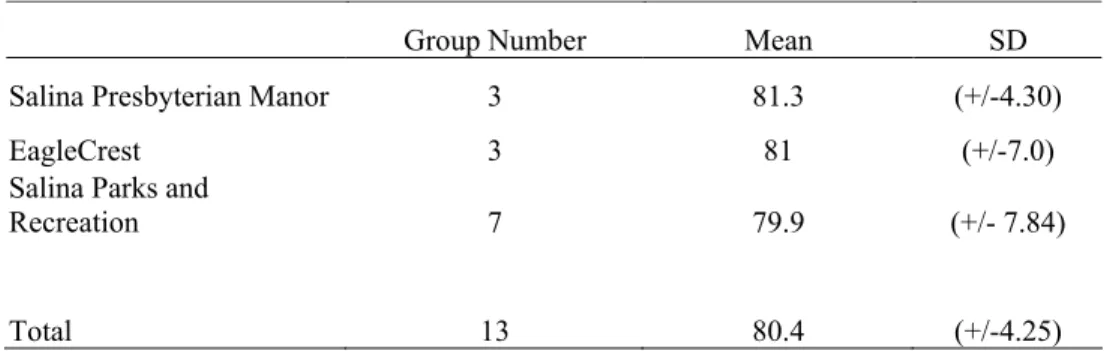
Thirteen women aged 70-85 completed the study. The mean age was 80.4, SD= +/- 4.25. Participants were recruited from two facilities, the Salina Presbyterian Manor (n=3, M=81.3, SD= +/- 4.3) and Eaglecrest (n=3, M = 81.0, SD= +/- 7.0) and the community through a class held with Salina Parks and Recreation (n=7, M=79.9, SD= +/- 7.84). Although four men had been recruited and participated in part of the study, none were able to complete the study due to their own declining health or death of a spouse. Two participants were eliminated from the study because they had been determined incompetent to understand directions and complete activities. Also, participants would have been ineligible to participate if they had a joint replacement in any joint of the hand used in the study. However, no participants had joint replacement in the tested hand. This was a targeted sample, with the classes chosen at the facilities to aid in finding participants with hand osteoarthritis. All participants signed an informed consent document approved by the Wichita State University Institutional Review Board, (see appendix D).
The AUSCAN Index was administered to determine the signs and symptoms of
osteoarthritis, and no participant was eliminated since no participant had severe osteoarthritis. The Health History and Activity Questionnaire was administered to determine suitability for exercise.
Participant Screening
The AUSCAN Index was administered to all participants to assess the three dimensions of pain, disability and joint stiffness in hand osteoarthritis. Any participant that had at least two
of the symptoms of osteoarthritis or has been diagnosed with osteoarthritis in one or both hands was eligible for the study. No participant was eliminated due to lack of signs and symptoms arthritis or severity of their symptoms of arthritis. The Health History and Activity
Questionnaire, (see Appendix C) was then administered to determine suitability for exercise and inclusion in this study. No participant was eliminated due to a health condition or joint
replacement in the tested hand, although two participants were eliminated because of their inabilities to understand and follow directions. Two participants withdrew from the study due to deteriorating health, and two other participants withdrew because of a change in condition of their spouse.
Clinical Tests
Pre-tests and post-tests were conducted for all participants. Participants signed the informed consent document and subsequently completed the Health History and Activity Questionnaire and the AUSCAN Index. Participants were then pre-tested to determine grip strength, pinch strength, range of motion and hand dexterity in the hand that had the most pain, or their dominant hand if pain levels were felt to be equal between hands. Participants were asked throughout the study if their medications or therapies had changed, but no participant that completed the study had any change in medication or therapy. Post-tests measured the grip strength, pinch strength, range of motion and hand function of the remaining participants.
Hand Strength Measurements
Hand strength was evaluated through grip strength and pinch strength. Grip strength was measured by a JAMAR hand dynamometer, (Sammons Preston, Boilingbrook, IL). Participants
were seated, with the shoulder abducted and neutrally rotated. The elbow was flexed to 90 degrees, and the forearm and wrist were placed in a neutral position. Grip strength was
conducted in three trials, and the highest value was used as the final value. Pinch strength was measured by a pinch strength dynamometer (Sammons Preston, Boilingbrook, IL). Participants were seated, with the shoulder abducted and neutrally rotated, the elbow flexed to 90 degrees, and the forearm and wrist in a neutral position. The pinch used was the pinch between the thumb and the index finger. Pinch strength was conducted in three trials, and highest value was used as the final value.
Range of Motion Measurements
Range of motion was assessed using the procedures determined by the American Academy of Orthopedic Surgeons as described in the Clinical Measurement of Joint Motion (Greene & Heckman 1994). This manual sets the standard for measuring and recording joint motion of the human body for the clinician, researcher and therapist. For the thumb, palmar abduction and flexion at the metacarpophalangeal joint was measured using a goniometer. Ability to oppose the thumb was noted, but not measured by a goniometer. For the fingers, only flexion of the proximal interphalangeal joint and metacarpophalangeal joint of the index finger was measured. For the wrist, both flexion and extension was measured.
Hand Dexterity
Hand dexterity was measured by administering a timed test. Participants were timed on how fast they put on and buttoned ten buttons on a dress shirt with buttons that are 3/8th inch in diameter. This field test was devised from examining hand function tests, ADLS, and BADLS.
Many of the tests available from clinical trials had a completion time of 10 to 30 minutes per participant, with only one participant able to be tested at one time. This is not practical for field exercise testing. In examining ADLS as listed by Spirduso, (1997), one ADL that required dexterity, was easily timed, easily tested over many participants and would be practical for field exercise testing was buttoning buttons. Although clinical validity and reliability of this test has not been established, buttoning buttons has been recognized as an important ADL that requires hand dexterity, and was chosen as the measure of hand dexterity for this intervention. The diameter of the buttons was taken from an informal survey of over 40 men’s and women’s dress and polo shirts in three popular department stores. Two participants who were unable to put on the shirt due to hemipalegia from a stroke were asked to take the shirt from a bunched roll on the table, place it neatly in their lap or in front of them on the table, and proceed with buttoning the shirt.
The AUSCAN Index
The AUSCAN Index was chosen for this study because it is a disease specific health status measure of osteoarthritis, and easily used in field exercise testing. It is short, as it consists of 15 questions and takes approximately 5 minutes to complete. It probes clinically important, patient relevant symptoms in the areas of pain, stiffness and physical function in patients with osteoarthritis of the hand joints (Bellamy 2006). It has been shown to be valid and reliable in clinical testing (Bellamy et al. 2002, Slatkowsky-Christensen et al 2001). It has also shown to be responsive to changes in health status in a washout treatment study (Bellamy 2002). It was not the intent of this study to use the AUSCAN as a diagnostic agent, but rather to identify
exercise study. Participants’ scores were weighted by simple addition of scores without any correction for relative importance of the subscales of pain, stiffness, or disability. Participants were pre and post-tested with the AUSCAN.
Intervention Protocol
Prescreened participants in the exercise groups were tested on their ability to bend the red Thera-Band FlexBar (Hygenic Corp., Akron, OH) ten times, which takes 10 pounds of force to bend into a U-shape. If this was accomplished without undue strain, they were then tested with the other Thera-Band FlexBars to find the FlexBar that fit their ability to bend it 10 times without undue strain. The participants were able to request a lower or higher resistance at any time. A similar test was administered for the Hand Exerciser. No participant was interested in squeezing the yellow ball, but reached straight for the red, and squeezed it 10 times, which took 1.5 pounds of force to compress 50%. If the participant was interested, they then tested their abilities with the green Hand Exercisers, which no participant that completed the study was able to use successfully during the first four weeks. Only one participant chose to increase the resistance by using a green Hand Exerciser.
A unique class design of both in-class and at-home hand exercise sessions was used for the intervention. Participants performed hand exercises in a class held once weekly, and then performed the training two times during the week at their residence. Participants received a training chart with pictures of the exercises used in the intervention; a training schedule and a training log that was included within the chart by the second week per participant request (see Appendix A). Participants that missed a class were very proactive, and requested the new materials to either be picked up the following day or requested them a week in advance.
Participants then showed the researcher their training log at each class session and it was noted on the attendance sheet if they completed all home sessions. Only one participant from
Eaglecrest and one from Salina Parks and Recreation did not complete one session of the home hand exercise.
Data Analysis
Statistical analysis was completed using the statistical software program SPSS for
Windows V.14.0 (SPSS Inc., Chicago, IL). Means and standard deviations were computed. Due to the small size of the targeted sample, a repeated measures analysis of variance (ANOVA, Wilk’s criterion) was used as the principal mode of computing results. The difference between groups of participants was not computed due to uneven and small group size. Percent changes were computed from the mean pre and post values. A probability value, set a priori, of less than 0.05 was considered statistically significant.
Chapter IV RESULTS
Descriptive Characteristics
Participant ages are presented in Table 1. Participants were aged 70-85. All were female, and were divided into three groups of unequal values. The mean age was 80.4, SD= +/- 4.25. Participants were recruited from two facilities, the Salina Presbyterian Manor (n=3, M=81.3, SD= +/- 4.3) and Eaglecrest (n=3, M = 81.0, SD= +/- 7.0) and the community through a class held with Salina Parks and Recreation at Riverside Plaza (n=7, M=79.9, SD= +/- 7.84).
Hand Strength Assessment
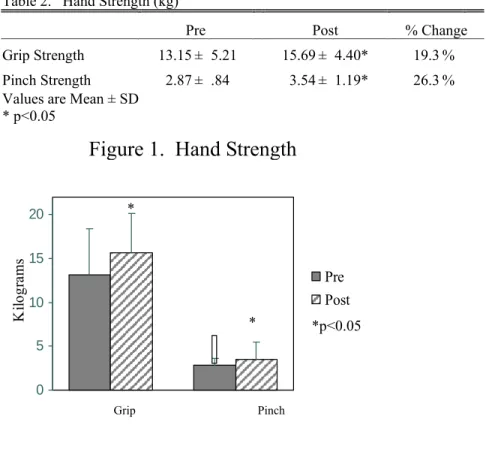
A repeated measures ANOVA, Wilks criterion, was used to evaluate grip strength pre and post values. The results indicated that the grip strength did improve significantly, Wilks Λ = .41, F(1, 25) = 17.57, p< .001, with a 19.3% mean improvement. A repeated measures ANOVA was also used to evaluate pinch strength. Pinch strength was significant, Wilks Λ = .57, F(1, 25) = 8.97 , p< .01, with mean improvement of 26.3%. The means and standard deviations of hand strength are presented in Table 2 and represented in figure 1.
Table 1. Participant Ages (years)
Group Number Mean SD
Salina Presbyterian Manor 3 81.3 (+/-4.30)
EagleCrest 3 81 (+/-7.0)
Salina Parks and
Recreation 7 79.9 (+/- 7.84)
0 5 10 15 20 Ki lo gr am s Pre Post
Figure 1. Hand Strength
Grip Pinch
Range of Motion Measurements
Repeated measures ANOVAs, Wilks Criterion were used to investigate if the six measurements of palmar abduction, palmar flexion, interphalangeal flexion,
metacarpophalangeal flexion and wrist flexion and wrist extension showed significant
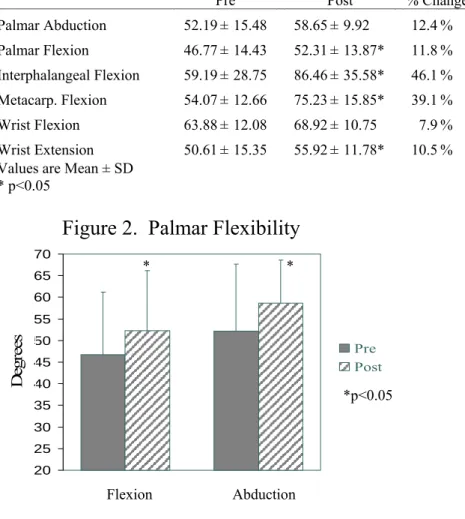
improvements. Means and standard deviations are represented in Table 3. Palmar abduction did not show a significant improvement, Wilks Λ = .76, F(1, 25) = 3.74 , p= .077, but showed a 12.4% improvement (Figure 2). Palmar flexion showed a significant improvement Wilks Λ = .55, F(1, 25) = 9.86 , p= .009, with a mean improvement of 11.8% (see Figure 2).
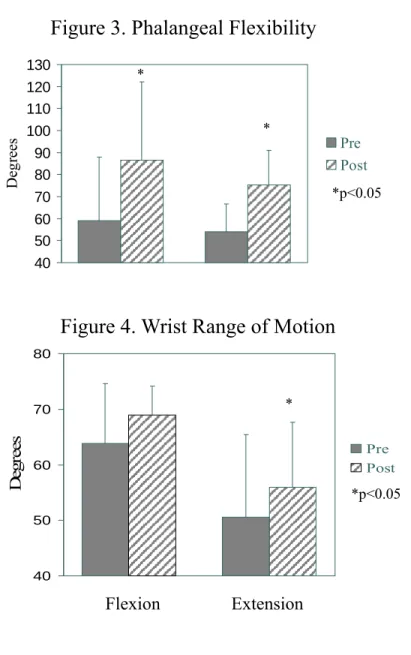
Interphalangeal flexion showed a significant improvement Wilks Λ = .43, F(1, 25) = 15.71, p= .002, and showed a 46.1% mean improvement (Figure 3). Metacarpophalangeal flexion showed a significant improvement, Wilks Λ = .51, F(1, 25) = 11.60, p= .005 with a 39.1% mean
Table 2. Hand Strength (kg)
Pre Post % Change
Grip Strength 13.15 ± 5.21 15.69 ± 4.40* 19.3 % Pinch Strength 2.87 ± .84 3.54 ± 1.19* 26.3 % Values are Mean ± SD
* p<0.05
*p<0.05 *
improvement (Figure 3). Wrist flexion did not show a significant improvement, Wilks Λ = .84, F(1, 25) = 2.22, p= .162, but showed a 7.9% mean improvement (see Figure 4). Wrist extension showed a significant improvement, Wilks Λ = .46, F(1, 25) = 13.90, p= .003, with a 10.5% mean improvement (Figure 4). Although opposition had been noted in all cases, it was not measured using a goniometer. That said, each participant showed improvement proximally and medially, meaning they could touch the palm instead of the fingers, move their thumb proximally down the palm, or touch the palm below their fifth digit instead of the fourth.
Table 3. Joint Range of Motion (degrees)
Pre Post % Change
Palmar Abduction 52.19 ± 15.48 58.65 ± 9.92 12.4 % Palmar Flexion 46.77 ± 14.43 52.31 ± 13.87* 11.8 % Interphalangeal Flexion 59.19 ± 28.75 86.46 ± 35.58* 46.1 % Metacarp. Flexion 54.07 ± 12.66 75.23 ± 15.85* 39.1 % Wrist Flexion 63.88 ± 12.08 68.92 ± 10.75 7.9 % Wrist Extension 50.61 ± 15.35 55.92 ± 11.78* 10.5 % Values are Mean ± SD
* p<0.05 20 25 30 35 40 45 50 55 60 65 70 De gr ee s Pre Post
Figure 2. Palmar Flexibility
Abduction Flexion
* *
Hand Dexterity
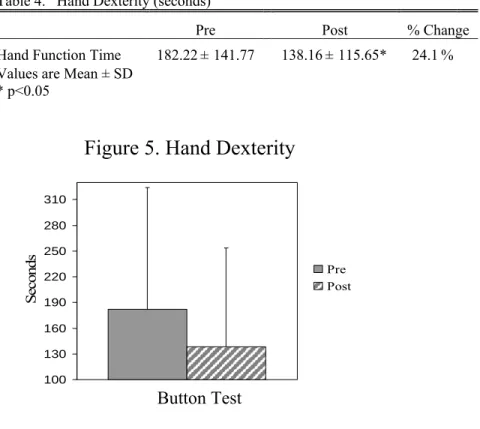
A repeated measures ANOVA, Wilks criterion, was used to evaluate hand dexterity time. Hand dexterity showed a significant decrease in time to complete the button evaluation, Wilks Λ = .43, F(1, 25) = 15.72, p< .002, and the means decreased by 24.1 % (see Table 4 and Figure 5).
40 50 60 70 80 90 100 110 120 130 Deg
rees PrePost
Figure 3. Phalangeal Flexibility
* * 40 50 60 70 80 De gr ee s Pre Post
Figure 4. Wrist Range of Motion
Extension Flexion
*p<0.05 *
The AUSCAN Index
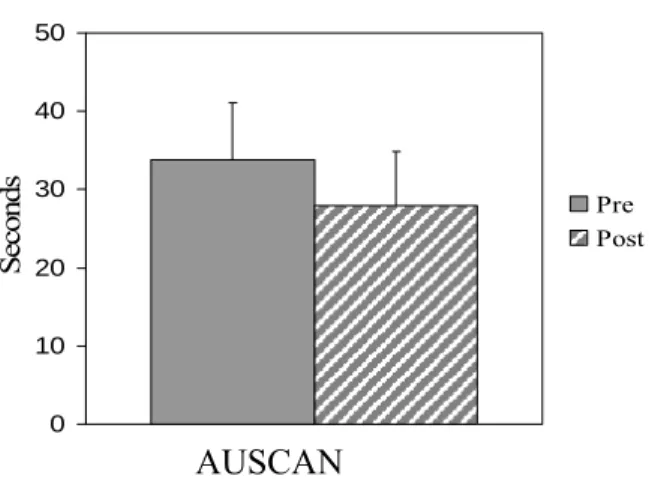
As stated earlier, the evaluation of the AUSCAN was weighted, using a simple summation of the scores of each section as the final score. This allowed for a simple means comparison for pre and post-test results. A repeated measures ANOVA, Wilks Λ = .343, F(1, 25) = 24.95, p< .001 was used to evaluate the effectiveness of the intervention (see table 5 and figure 6). The mean decreased by 17.3%. As determined by the AUSCAN, this intervention did significantly decrease the participant’s perception of pain, stiffness and disability.
Table 4. Hand Dexterity (seconds)
Pre Post % Change
Hand Function Time 182.22 ± 141.77 138.16 ± 115.65* 24.1 % Values are Mean ± SD
* p<0.05
Table 5. AUSCAN Index Score
Pre Post % Change
AUSCAN Score 33.77 ± 7.28 27.92 ± 6.97 17.3 % Values are Mean ± SD
* p<0.001 100 130 160 190 220 250 280 310 S econds Pre Post
Figure 5. Hand Dexterity
Other Results
Many participants reported a decrease in pain, swelling, and stiffness by the fifth week of the study. One of the participants with hemipalegia reported that she had regained a small but noticeable change in her affected hand, as she was now able to lightly grasp objects for a few seconds. The other hemipalegic participant had noticed an increase in her total hand function, and her grip strength actually improved. On the final day of class, it was noted that she wore a shirt with buttons, which she had not done since her stroke. Another participant proudly
announced that for the first time in two years, she had been able to open a pickle jar without the use of an aid. One other participant noted that she could finally wring out a washcloth without pain in her thumbs, and she could also open soda bottles without help.
0 10 20 30 40 50 Seconds Pre Post
Figure 6. AUSCAN Index Scores
Chapter V DISCUSSION
The purpose of this study was to explore the non-traditional treatment of hand exercise as a way to improve the hand function of the older adult with osteoarthritis. In order to retain participants, and to ease participants into hand exercise, this study utilized a novice exercise plan as defined by the ACSM in their Position Stand of 1998. The main findings are that even a novice exercise program could improve hand function, index finger range of motion, and strength of the hand.
Strength
Both grip and pinch strength improved 19.3 and 26.3%, respectively in the study, which is similar to the improvements reported in the home hand exercise study conducted by Stamm et. al. (2002) where hand grip strength improved 25%. Participants in this study were given
exercises, joint protection information, and then were allowed to increase intensity as often as desired. The difference in results between this study and the current intervention could be related to the pace of each study, as participants in the home hand study were self-paced, but those in the intervention were paced by the weakest in the class. If the participants had been on individual exercise prescriptions, they could have increased sets or repetitions more frequently. Also, the difference could be attributed to the exercises or equipment used, as Stamm et al (2002) study did not use all of the same hand exercises or equipment as this study. Further research into comparing this study to other possible hand exercise studies was difficult, as there is not
beginning exercise program is beneficial to hand strength in patients with osteoarthritis. Yet, this exercise program could be used by all older adults, with or without osteoarthritis to combat the 30% decrease in hand strength seen in normal aging by Ranganathan et al. (2001). A more aggressive intervention could possibly eliminate the age-related decline in hand strength altogether.
Flexibility
Flexibility increased significantly for interphalangeal flexion, palmar flexion,
metacarpophalangeal flexion and wrist extension. Interphalangeal flexion showed the highest improvement percentage, at 46.1%, with metacarpophalangeal flexion close behind at 39.1%. Most interesting was the increase in the participants’ ability to oppose their thumbs, as all participants showed improvement both proximally and medially. Palmar abduction did not increase significantly, and this could be contributed to the exercise program, as it did not include exercises that focused on abduction. Wrist flexion did not show a significant increase, yet there were exercises that included stretching and strengthening of the wrist. The slight improvement in wrist flexion suggests that the intensity of the program was not strong enough to have a significant effect and that in subsequent studies additional wrist flexion exercises could be added to increase the effect. Another possibility is that these movements of the hand and wrist may not have been significantly affected by osteoarthritis or any other factor, and therefore were not significantly increased by exercise. The results of this study are unique in that most studies evaluate hand function, pain, or hand strength, but not flexibility. The one study that does evaluate hand flexibility in hand arthritis interventions is for another form of non-traditional therapy, Light Laser Therapy (Brosseu et al. 2005). It is difficult to find studies of hand arthritis
that have identical comparisons to this study. An attempted meta-analysis of studies conducted by Towheed (2005) is in agreement with this statement, and also finds that a meta-analysis could not be performed due to a lack of randomized, controlled studies.
Hand Function
Hand function was measured utilizing a simple test of putting on and buttoning a dress shirt. At the start of the study, three participants could not complete the task within ten minutes. At the end of the study, all participants could button the 3/8th inch buttons, with only one
finishing outside of 10 minutes. As different studies use different scales of hand function, it was difficult to compare these results to other studies. However, whether ADLs were measured, arm function was reported by survey, or hand function was timed, hand function increased with exercise interventions (Suomi & Collier, 2003; Wajon & Ada, 2005; Stamm et al., 2002; O’Brien et al., 2006; Martinez-Silvestrini, 2005).
Combining Home and In-class Exercises
This study used a unique design, in that it combined both one in-class and two at-home sessions, and was not found in other studies of hand osteoarthritis. Stamm et al. (2002) utilized a three-month home hand exercise program only, and the study of Martinez-Silvestrini et al. (2005) lasted six weeks. Both studies did give an initial lesson of the exercises, and provided the participants with instructional sheets that described the exercises in detail. Yet the combination of at-home and in-class sessions used for the current study was very successful, as it allowed participants to receive instruction for use of Hand Exercisers and FlexBars, receive corrections in their form weekly, ask questions, and be provided with feedback. It also held participants
accountable for completing exercises within the week. Previous versions of the research design showed that participants are not interested in attending classes more than once per week for “just exercising our hands”. Thus, this class format would be useful to researchers or groups who are investigating hand exercise as a non-traditional treatment for hand osteoarthritis. It would also be useful for researchers who include hand exercise equipment such as the FlexBars and Hand Exercisers used in this study, or other hand exercise equipment available.
Limitations
The limitations in this study presented several challenges. The first challenge was the lack of a control group to compare values. This was met but not overcome by comparing the post-test scores to the baseline score. The second challenge was to track and monitor changes in therapy, medications and health status. In this small group, this limitation did not have an effect, as there were no changes in participants that completed the study. However, in future studies, medication and therapy changes might affect the results. A third limitation was the severity of arthritis. This novice short-term exercise program may not show as much improvement in participants with mild arthritis as compared to participants with moderate arthritis. Also, participants with moderate arthritis may not be as willing to complete exercises because of pain or stiffness. The final limitation was that this study did not include participants with severe arthritis. Although this exercise program might be useful to patients with severe osteoarthritis, it cannot predict outcomes for cases of severe arthritis.
Future Research
arthritis research, and the field of medicine. As Towheed (2005) stated after a meta-analysis of effective treatments, there are not many published random controlled trial studies for hand arthritis. Because of the intricate function of the hand, and the affect hand function has on the ADLS (Spriduso 1995), traditional and non-traditional hand research is vital to keep older adults with arthritis independent for as long as possible. Since the study of hand arthritis is so limited, future research is needed in many areas, including hand exercise, hand function, joint
replacement, traditional therapies, occupational effects on hand arthritis and others. Other
research could include using the AUSCAN as a diagnostic tool for field exercise or other testing. Dose-response testing of the Hand Exerciser and FlexBar could also be useful for physical
therapy of patients with hand osteoarthritis. Finally, this project could be expanded to include all forms of hand arthritis.
Conclusion
In conclusion, osteoarthritis has a degenerative effect on hand function and mobility, (Carmeli et al., 2003; Spriduso, 1995; Holbrook and Bennett, 1990). The exercise intervention in this study had a significant increase in hand function, strength and flexibility in older adults with hand osteoarthritis. Due to the importance of hand function in ADLS, this exercise program could be used to improve the quality of life in older adults.
LIST OF REFERENCES
American College of Sports Medicine. (1998). The recommended quantity and quality of exercise for developing and maintaining cardiorespiratory and muscular fitness, and flexibility in healthy adults. Medicine & Science in Sports & Exercise, 30,
975-991.
Anderson, Kenneth, ed. Mosby’s Medical Nursing and Allied Health Dictionary. (1998).
Saint Louis, MO: Mosby’s.
Bellamy, N. (2006). AUSCAN Hand Osteoarthritis Index User Guide III.
Bellamy, N. Campbell, J., Haraoui, B., Gerecz-Simon, E., Buchbinder R., Hobby K., et al. (2002). Clinimetric proerties of the AUSCAN Osteoarthritis Hand Index: an evaluation of reliability, validity and responsiveness. Osteoarthritis and Cartilage, 10, 863-869. Bellamy, N., Sothern, R. B., Campbell, J., Buchanan, W. W. (2002). Rhythmic
variations in pain, stiffness, and manual dexterity in hand osteoarthritis. Annals of the Rheumatic Diseases, 61, 1075-1080.
Bijkerk, C., Houwing-Duistermaat, J. J., Valkenber, H. A., Meulenbelt, I., Hofman, A., Breedveld, F. C., et al. (1999). Heritabilities of radiologic osteoarthritis in peripheral joints and of disc degeneration of the spine. Arthritis and Rheumatism, 48, 1729-1735.
Brosseau, L., Wells, G., Marchand, S., Gaboury, I., Stokes, B., Morin, M., et al. (2005). Randomized controlled trial on low level laser therapy (LLLT) in the treatment of osteoarthritis (OA) of the hand. Lasers in Surgery and Medicine, 36, 210-219.
Carmeli, E., Patish, H., Coleman, R. (2003). The aging hand. The Journals of
Gerontology, Series A, Biological Sciences and Medical Sciences, 58, 146-152.
Chaisson, C. E., Zhang, Y., Sharma, L., Kannel, W., Felson, D. T. (1999). Grip strength and the risk of developing radiographic hand osteoarthritis: results from the Framingham Study. Arthritis and Rheumatism, 42, 33-38.
Cook, S. D., Beckenbaugh, R. D., Redondo, J., Popich, L. S., Klawitter, J. J., Linscheid, R. L. (1999). Long-term follow-up of pyrolytic carbon metacarpophalangeal implants. The Journal of Bone and Joint Surgery, 81, 635-648.
Croft, P., Coggon, D., Cruddas, M., Cooper, C. (1992). Osteoarthritis of the hip: an occupational disease in farmers. British Medical Journal, 304, 1269-1272.
Felson, D. T., Couropmitree, N. N., Chaisson, C. E., Hannan, M. T., Zhang, Y.,
McAlindon, T. E., et al. (1998). Evidence for a Mendelian gene in a segregation analysis of generalized radiographic osteoarthritis: The Framingham Study.
Arthritis and Rheumatism, 41, 1064-1071.
Hadler, N. M. (1977). Industrial Rheumatology. Investigations into the influence of the pattern of regional musculoskeletal diseases. Medical Journal of Australia, 20,
1025.
Hirsch, R., Lethbridge-Cejku, M., Hanson, R., Scott, W. W., Jr., Reichle, R., Plato, C. C., et al. (1998). Familial aggregation of osteoarthritis: data from the Baltimore Longitudinal Study on Aging. Arthritis and Rheumatism, 41, 1227-1232.
Holbrook, J. L., & Bennett, J. B. (1990). Arthritis of the hand and wrist. Management options for some common arthritic conditions. Postgraduate Medicine, 87, 255-
262.
Journal of the American Medical Association. (1998). NIH Consensus Conference. Acupuncture. The Journal of the American Medical Association, 280, 1518-1524.
Kalb, R. L. (1998). Evaluation and treatment of wrist and hand pain. Hospital Practice (Office ed.), 33, 129-132, 135.
March, Lynette, Bagga, Hanish. (2004). Epidemiology of Osteoarthritis in Austrailia.
Medical Journal of Australia, 180, S6-S10.
Martinez-Silvestrini, J. A., Newcomer, K. L., Gay, R. E., Schaefer, M. P., Kortebein, P., Arendt, K. W. (2005). Chronic lateral epicondylitis: comparative effectiveness of a home exercise program including stretching along versus stretching
supplemented with eccentric or concentric strengthening. Journal of Hand Therapy, 18, 411-419.
Merriam-Webster. (2002). Merriam-Webster Medical Dictionary. Springfield, MA:
Merriam-Webster, Inc.
Niu, J., Zhang, Y., LaValley, M., Chaisson, C. E., Aliabadi, P., Felson, D. T. (2003). Symmetry and clustering of symptomatic hand osteoarthritis in elderly men and women: The Framingham Study. Rheumatology, (Oxford, England), 42, 343-
348.
O’Brien, A. V., Jones, P., Mullis, R., Mulherin, D., Dziedzic, K. (2006) Conservative hand therapy treatments in rheumatoid arthritis—a randomized controlled trial.
Rheumatology (Oxford), 45, 577-583.
Peck, S. D. (1998). The efficacy of therapeutic touch for improving functional ability in elders with degenerative osteoarthritis. Nursing Science Quarterly, 11, 123-132.
Ranganathan, V. K., Siemionow, V., Sahgal, V., Yue, G. H. (2001). Effects of aging on hand \ function. Journal of the American Geriatric Society, 49, 1478-1484.
Rettig, A. C. (1994). Wrist problems in the tennis player. Medicine and Science in Sport and Exercise, 26, 1207-1212.
Sayer, A. A., Poole, J., Cox, V., Kuh, D., Hardy, R., Wadsworth, M., et al. (2003). Weight from birth to 53 years: a longitudinal study of the influence on clinical hand osteoarthritis. Arthritis and Rheumatism, 48, 483-489.
Slatkowsky-Christensen, B, Bellamy, N. Kvien, T. K. (2001). Examinations of the Norwegian version of the AUSCAN—a disease specific measure of hand osteoarthritis (OA). Annuals of the Rheumatic Diseases, 60, 233.
Spector, T. D., Nandra, D., Hart, D. J., Doyle, D. V. (1997). Is hormone replacement therapy protective for hand and knee osteoarthritis in women?: The Chingford Study. Annals of the Rheumatic Diseases, 56, 432-434.
Spirduso, W. W. (1995). Physical Dimensions of Aging. Champaign, IL: Human
Kinetics.
Stamm, T. A., Machold, K. P., Smolen, J. S., Fischer, S., Redlich, K., Graninger, W., et al. (2002). Joint protection and home hand exercises improve hand function in Patients with hand osteoarthritis: a randomized controlled trial. Arthritis and Rheumatism, 47, 44-49.
Suomi, R. & Collier, D. (2003) Effects of arthritis exercise programs on functional fitness and perceived activities of daily living measures in older adults with arthritis. Archives of Physical Medicine and Rehabilitation, 84, 1589-1594.
Swanson, A. B. (1972). Flexible implant arthroplasty for arthritic finger joints: rationale, technique, and results of treatment. The Journal of Bone and Joint Surgery, American Volume, 54, 435-455.
Tallia, A. F, & Cardone, D. A. (2003). Diagnostic and therapeutic injection of the wrist and hand region. American Family Physician, 67, 745-750.
Towheed, T. E. (2005) Systematic review of therapies for osteoarthritis of the hand.
Osteoarthritis and cartilage / OARS, Osteoarthritis Research Society, 13, 455-
462.
Vingard, E. (1996). Osteoarthritis of the knee and physical load from occupation.
Wajon, A., & Ada, L. (2005). No difference between two splint and exercise regimens for people with osteoarthritis of the thumb: a randomized controlled trial. The
Australian Journal of Physiotherapy, 51, 245-249.
Zelazney, C. M. (2001). Therapeutic instrumental music playing in hand rehabilitation for older adults with osteoarthritis: four case studies. Journal of Music Therapy, 38, 97-113.
APPENDIX A
Hand Exercise Program Week One
Exercise Description Demonstration Minutes Set Repetition
Warm-up A way to warm
up and stretch the muscles, tendons and ligaments of the
hand which can reduce the chance of injury
Spreading the fingers and thumb of the hand Opening and closing of the fist Opening and closing of the hand touching thumb to four fingers Rolling of the wrists Stretching of individual fingers
5
Bar Twist Holding the
FlexBar as shown, twist forwards and backwards. Each twist is one repetition.
Wed__ Fri___
Mon__
1 10
Superman Start with the
FlexBar grasped in both hands, palms downward, then bend bar as shown Wed__ Fri___ Mon__ 1 10 Right U-benders
Start with the FlexBar grasped in both hands, palms upward, then bend bar as shown Wed__ Fri___ Mon__ 1 10 Left U-Benders
Start with the FlexBar grasped in both hands, palms upward, then bend bar as shown Wed__ Fri___ Mon__ 1 10 Thumb breakers Start with FlexBar grasped in hand, with fingers wrapped around the bar and thumb in line with bar, then use thumb to bend upward
Wed__ Fri___
Mon__
APPENDIX A (continued) Bar squeezes Grasp FlexBar as shown, with thumb resting on index finger, then squeeze Wed__ Fri___ Mon__ 1 10
Bar rolls With FlexBar on
hard surface, and heel of hand off the table, roll FlexBar towards and away from you with fingertips Wed__ Fri___ Mon__ 1 10 Thumb presses With FlexBar on hard surface, place thumb on FlexBar as shown, use thumb to push downward on FlexBar Wed__ Fri___ Mon__ 1 10 Thumb benders Grasping the FlexBar as shown with the thumb on the same side as the fingers, use the thumb to bend the FlexBar toward the palm
Wed__ Fri___ Mon__ 1 10 Finger presses
Place the bar on a hard surface, with fingertips on bar as shown. Press fingertips into bar, keeping fingers as straight as possible. Wed__ Fri___ Mon__ 1 10
Rolling pins Place the
Flexbar on a hard, flat surface with hand on bar as shown. Roll the bar forwards and backwards Wed__ Fri___ Mon__ 1 10
APPENDIX A (continued)
Hand Exercise Program Week Two
Exercise Description Demonstration Min/Day Set Repetition
Warm-up A way to warm
up and stretch the muscles, tendons and ligaments of the
hand which can reduce the chance of injury
Spreading the fingers and thumb of the hand Opening and closing of the fist Opening and closing of the hand touching thumb to four fingers Rolling of the wrists Stretching of individual fingers
5
Bar Twist Holding the
FlexBar as shown, twist forwards and backwards. Each twist is one repetition. Wed__ Fri___ Mon__ 2 5
Superman Start with the
FlexBar
grasped in both hands, palms downward, then bend bar as shown Wed__ Fri___ Mon__ 2 5 Thumb breakers Start with FlexBar grasped in hand, with fingers wrapped around the bar and thumb in line with bar, then use thumb to bend upward as shown Wed__ Fri___ Mon__ 2 5
Bar squeezes Grasp FlexBar
as shown, with thumb resting on index finger, then squeeze Wed__ Fri___ Mon__ 2 5
APPENDIX A (continued)
Bar rolls With FlexBar
on hard surface, and heel of hand off the table, roll FlexBar towards and away from you with fingertips Wed__ Fri___ Mon__ 2 5 Thumb presses With FlexBar on hard surface, place thumb on FlexBar as shown, use thumb to push downward on FlexBar Wed__ Fri___ Mon__ 2 5 Thumb benders Grasping the FlexBar as shown with the thumb on the same side as the fingers, use the thumb to bend the FlexBar toward the palm Wed__ Fri___ Mon__ 2 5 Finger presses
Place the bar on a hard surface, with fingertips on bar as shown. Press fingertips into bar, keeping fingers as straight as possible. Wed__ Fri___ Mon__ 2 5
Rolling pins Place the
Flexbar on a hard, flat surface with hand on bar as shown. Roll the bar forwards and backwards Wed__ Fri___ Mon__ 2 5
APPENDIX A (continued)
Hand Exercise Program-Week 3
Name Description Exercise Min/Day Sets Rep
s
Warm-up A way to warm
up and stretch the muscles, tendons and ligaments of the hand which can reduce the chance of injury
Spreading the fingers and thumb of the hand Opening and closing of the fist Opening and closing of the hand
touching thumb to four fingers Rolling of the wrists Stretching of individual fingers
Bar Twist Holding the
FlexBar as shown, twist forwards and backwards. Each twist is one repetition. Wed__ Fri___ Mon__ 2 5
Superman Start with the
FlexBar grasped in both hands, palms downward, then bend bar as shown
Wed__ Fri___
Mon__
2 5
Agility With the ball
in the palm of the hand, touch the tip of the thumb to the tips of all four fingers
Wed__ Fri___
Mon__
2 5
Tweaks With the ball
on a hard surface, squeeze the top half of the ball between the tips of the fingers and thumb Wed__ Fri___ Mon__ 2 5
APPENDIX A (continued)
Baby Jaws Grasping the ball
with the tip of the index finger and the tip of the thumb, pinch the ball Wed__ Fri___ Mon__ 2 5 Table loops
Roll the ball in a small circle with the fingers, trying not to move the arm or the hand
Wed__ Fri___ Mon__ 2 5 Scissor ball
Place the ball between the index and middle finger as shown, then squeeze the two fingers in a scissor motion Wed__ Fri___ Mon__ 2 5
Bar rolls With FlexBar on
hard surface, and heel of hand off the table, roll FlexBar towards and away from you with fingertips Wed__ Fri___ Mon__ 2 5 Thumb presses With FlexBar on hard surface, place thumb on FlexBar as shown, use thumb to push downward on FlexBar Wed__ Fri___ Mon__ 2 5 Finger presses
Place the bar on a hard surface, with fingertips on bar as shown. Press fingertips into bar, keeping fingers as straight as possible. Wed__ Fri___ Mon__ 2 5 Rolling pins
Place the Flexbar on a hard, flat surface with hand on bar as shown. Roll the bar forwards and
Wed__ Fri___
Mon__
APPENDIX A
Hand Exercise Program Week 4
Name Description Exercise Day Sets Re
ps
Warm-up A way to warm
up and stretch the muscles, tendons and ligaments of the hand which
can reduce the chance of
injury
Spreading the fingers and thumb of the hand Opening and closing of the fist Opening and closing of the hand
touching thumb to four fingers Rolling of the wrists Stretching of individual fingers
5 Min
Bar Twist Holding the
Flexbar as shown, twist forwards and backwards. Each twist is one repetition. Wed__ Fri___ Mon__ 2 5
Superman Start with the
Flexbar
grasped in both hands, palms downward, then bend bar as shown
Wed__ Fri___
Mon__
2 5
Agility With the ball in
the palm of the hand, touch the tip of the thumb to the tips of all four fingers
Wed__ Fri___
Mon__
2 5
Tweaks With the ball
on a hard surface,
squeeze the top half of the ball between the tips of the fingers and thumb Wed__ Fri___ Mon__ 2 5
APPENDIX A (continued)
Baby Jaws Grasping the
ball with the tip of the index finger and the tip of the thumb, pinch the ball Wed__ Fri___ Mon__ 2 5 Table loops
Roll the ball in a small circle with the fingers, trying not to move the arm or the hand Wed__ Fri___ Mon__ 2 5 Scissor ball
Place the ball between the index and middle finger as shown, then squeeze the two fingers in a scissor motion Wed__ Fri___ Mon__ 2 5
Bar rolls With FlexBar on
hard surface, and heel of hand off the table, roll FlexBar towards and away from you with fingertips Wed__ Fri___ Mon__ 2 5 Thumb presses With FlexBar on hard surface, place thumb on FlexBar as shown, use thumb to push downward on FlexBar Wed__ Fri___ Mon__ 2 5 Finger presses
Place the bar on a hard surface, with fingertips on bar as shown. Press fingertips into bar, keeping fingers as straight as possible. Wed__ Fri___ Mon__ 2 5 Rolling pins
Place the Flexbar on a hard, flat surface with hand on bar as shown. Roll the bar forwards and
Wed__ Fri___
Mon__