Excerpted from the dotFIT Supplement Reference Guide
1
dotFIT™ CreatineMonohydrate
Goal
Creatine, a natural substance found in the muscle, is now a proven safe and powerful, size and
performance-enhancing dietary supplement. The goal of supplementing creatine is to increase
the muscle levels of creatine and speed the regeneration of creatine phosphate beyond what can
practically be accomplished by diet alone. Maximizing muscle stores of creatine through
supplementation has been shown in hundreds of clinical trials to improve anaerobic
performance
1,2,3,4,5,6,7,8,9,10,11,12,13,14,15,
power, strength
4,11,13,14, 15,164
,
and enhance muscle size and/or
body composition
,7,13,16,17,18,19,20,21,22,23when compared to placebo.
dotFIT CreatineMonohydrate is designed to match the exact compound and dosage used in
successful clinical trials that have demonstrated size and performance enhancement. The dotFIT
tablet form of creatine allows the user the freedom to conveniently and accurately control
delivery and dosage throughout the day. Additionally because of its single ingredient, tablet
form and size, dotFIT CreatineMonohydrate is ideal for increasing total creatine intake to
desired levels when using other creatine products that contain mixed ingredients with limited
dosage recommendations.
Rationale
Creatine (Cr) is a substance found in skeletal, cardiac, and smooth muscle. Creatine synthesis
occurs in the liver, kidneys, and pancreas from the amino acids methionine, glycine, and
arginine.
24Most of the total body creatine resides in skeletal muscle where about 1/3 exists as
creatine (Cr) and 2/3 as phosphocreatine (PCr). Typically, the human body manufactures about
1 g of creatine, obtains 1 g from food, and loses about 2 g/d. Therefore, under normal
circumstances, creatine levels are fairly constant.
25Creatine enters a number of cell types by a sodium-dependent neurotransmitter transporter in
the family, related to the taurine transporter and the members of the subfamily of
GABA/betaine transporters
The average concentration of total Cr in
skeletal muscle varies between 100 and 150 mmol/kg dry weight in normal humans. Cr and PCr
are degraded to creatinine in a non-enzymatic, irreversible reaction. Creatinine is then filtered
by the kidneys into the urine, the primary route of loss. The primary food sources of Cr are
animal muscle meats.
26,27,28
Creatine uptake appears to be enhanced by insulin
29,30and
triiodothyronine.
31Harris found that 5g of CrM, ingested five to six times daily, increased total
creatine (TCr) from a mean level of 126 mM/kg dry muscle to 148.6mM/kg, with
phosphocreatine representing from 20%-40% of the increase.
32Hultman et al later found a
more gradual increase in TCr by ingesting 3g/day for 28 days. In both methods, TCr levels
increased by approximately 20%.
33Excerpted from the dotFIT Supplement Reference Guide
2
Role of Creatine in muscle
Creatine plays a pivotal role in muscle ergogenics by acting as part of an energy-buffering
system.
34When phosphorylated by the enzyme creatine phosphokinase (CK), the resulting
product, PCr, can donate the inorganic phosphate to adenosine diphosphate (ADP), making
adenosine triphosphate (ATP), thus supporting muscle contraction.
During periods of muscle contraction, when ATP breakdown exceeds synthesis, PCr rapidly
replenishes ATP. PCr supplies the required energy to fuel ten to fifteen high-intensity
contractions, such as in weight lifting. The availability of PCr in skeletal muscle has often been
cited as limiting to the continuation of maximal physical effort. To be sure, the depletion of
muscle PCr stores during intense exercise is associated with the onset of muscle fatigue.
35Creatine Supplementation and performance
Utilization of PCr will also contribute to the buffering of lactic acid, assisting in continuation of
maximal exercise.
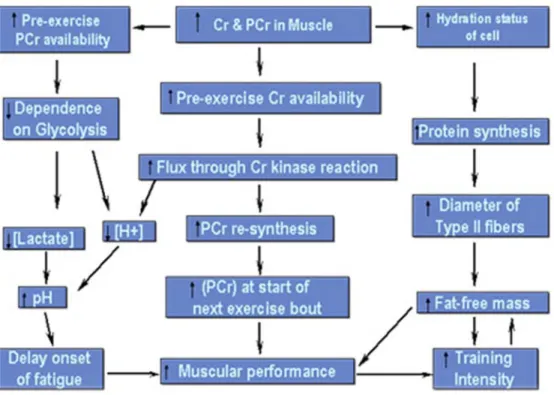
The onset of fatigue during high-intensity exercise may be linked to PCr depletion, pH
alterations, or lactate accumulation. Supplemental creatine may play a role in ameliorating all of
these factors as shown in (Figure 8).
Excerpted from the dotFIT Supplement Reference Guide
3
Cr phosphate, with its high-energy phosphoryl transfer potential, serves to maintain
intracellular ATP levels.
3737
At rest, concentrations of ATP, PCr, and Cr in skeletal muscle are 4,
25, and 13mM, respectively. During exercise, levels of ATP decline very little until the stores of
PCr are used.
38Since creatine supplementation has been shown to increase intracellular levels
of PCr, intracellular levels of ATP may be maintained at higher levels for a longer period of
time.
39,40Creatine ingestion has shown a reduction in plasma concentrations of hypoxanthine
and lactate following exercise, suggesting lower levels of anaerobic glycolysis and another
possible contribution to delaying muscular fatigue by maintaining a normal pH.
41Creatine supplementation and hypertrophy
The goal of creatine loading is much like the goal of carbohydrate loading by endurance athletes,
but instead of increasing glycogen storage, and thus delaying glycogen depletion, loading Cr
would enhance PCr levels and delay its depletion. This practice would benefit activities that are
dependent on PCr as an energy source such as sprinting and weightlifting.
Creatine (Cr) supplementation is thought to contribute to hypertrophy (1) by its ability to
increase high intensity muscle work capacity
3,13,16,41,42,43,44,45,46,47,48,49,50,51,52and (2) the resultant
stimulation of protein synthesis. If creatine use in healthy athletes enables them to train at a
higher level for extended periods (ten to twelve weeks), this should increase protein synthesis.
53Figure 9
Thus, strength and bodybuilding athletes would have better workouts and greater muscle gain
(see
Figure 10Figure 11 ).
Figure 2: Clearly shows the creatine group out-performing the other groups.63
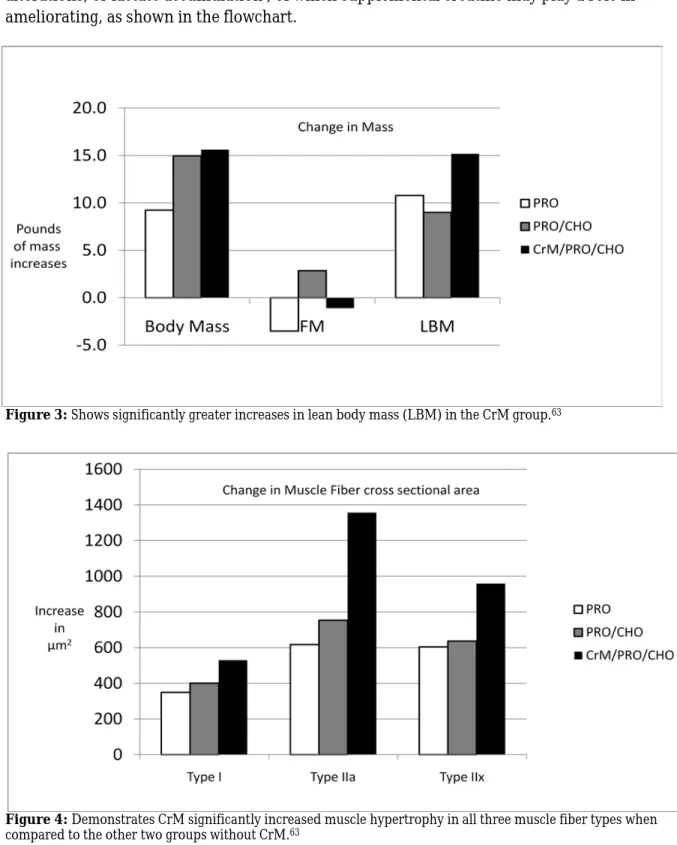
An increase in the synthesis of contractile protein may be responsible for this increase in
diameter. As Figure 4 demonstrates, a significantly greater muscle hypertrophy response from
the addition of CrM was evident at three different levels of physiology. That is, the CrM-treated
Excerpted from the dotFIT Supplement Reference Guide
4
group demonstrated a greater gain in LBM, hypertrophy of the type IIa and IIx fibers, and
increase in contractile protein. Cr is theorized to be the chemical signal, coupling increased
muscular activity to increased protein synthesis in hypertrophy.
54,55,56,57As mentioned above,
the onset of fatigue during high-intensity exercise may be linked to PCr depletion, pH
alterations, or lactate accumulation , of which supplemental creatine may play a role in
ameliorating, as shown in the flowchart.
Figure 3: Shows significantly greater increases in lean body mass (LBM) in the CrM group.63
Figure 4: Demonstrates CrM significantly increased muscle hypertrophy in all three muscle fiber types when
Excerpted from the dotFIT Supplement Reference Guide
5
Therefore, increasing creatine levels may not only increase work capacity, but also the signal to
remodel the affected tissue. It has been suggested that Cr acts as a transcriptional or
translational factor, or alters the levels of charged tRNAs or amino acid pools specific for muscle
protein synthesis.
54,58In addition, creatine may act indirectly by increasing the hydration status of the cell. Evidence
linking cellular volume and protein synthesis has been emerging.
59,60,61,6259
Alterations in cell
volume may affect many hormone and amino acid functions by affecting the cell membrane
potential or Na+ driven substrate transport.
,60,61Thus, there is an inverse relationship between
muscle cell fluid content and whole body nitrogen balance. Therefore, an increase in
intracellular Cr from Cr supplementation may induce cell volumizing. Volumizing over a long
period, a greater amount of fat-free mass (FFM) may be yielded from resistance training in
healthy athletes.
22,55,56,57,58,59,60,63Creatine Monohydrate
Supplement Facts (2 tablets)
2500 mg*
*Daily value has not been established.
Typical Use
•
Performance enhancement for experienced anaerobic athletes unconcerned with
weight gain.
•
Experienced exercisers for improving muscle hypertrophy outcomes from resistance
training.
•
Enhancing daily functions in the elderly (confirmed by physician).
9,18,19•
Two tablets with carbohydrate for every 30-60 pounds taken before and after
workout and anytime on non-training days throughout training cycle.
•
People with renal complications, consult a physician before use.
•
Studies involving creatine supplementation beyond 10 weeks have shown decreases
in muscle creatine stores toward baseline values.
16,22,64This may be due to an
inadequate amount of creatine during the training cycle (most studies used a
maintenance dose of 5 grams a day) and/or the result of creatine transporters
down-regulating. One short-term (eight to nine days) human study indicates creatine
transporters do not down regulate while one long-term (12 weeks) animal study
utilizing extremely high dosages in comparison to human studies had opposing
results.
65To ensure muscle creatine stores remain elevated throughout intense training cycles and to
prevent the possibility of transport down-regulation, it is recommended that 5 -10 grams be
utilized for up to 10 weeks, followed by a two to four week period without supplementation.
Body stores of creatine return to baseline within 4 weeks after supplementation is
discontinued.
16,33Users can repeat the cycle if appropriate. The loading strategy utilized may
depend on training status and need.
Excerpted from the dotFIT Supplement Reference Guide
6
Rapid Creatine Loading Strategy
•
The supplementation protocol most often described in the scientific literature is
referred to as the "loading" protocol. This protocol is described as ingesting
approximately 5 grams of CrM four times per day for 5 – 7 days and 3–5 grams/day
thereafter.
66,67•
Studies utilizing loading protocols of 20 to 30 grams per day for five to seven days
resulted in approximately 50 percent absorption.
Most often used in scientific literature to increase muscle creatine
stores
64,68,69
•
Performance benefits may occur more rapidly
•
Maybe more beneficial for athletes in a time crunch, and need a boost in
performance or strength
Gradual Creatine Loading Strategy
•
It has been demonstrated that lower dosages (3 grams per day) have shown to
gradually (28 days) increase creatine stores to the same extent.
64Long-term studies
using low dosages (5 to 6 grams for 10 to 12 weeks, no loading phase) resulted in
significant increases in strength and muscle size when combined with resistance
training.
21,70•
The effect is more gradual, therefore performance benefits do not occur as quickly
•
Athletes following a specific training cycle (e.g. muscle hypertrophy) and not in a
time crunch can utilize this protocol
•
Users can start slowly to maximize absorption and to let their connective tissue and
muscle repair keep up with strength increases to avoid injury.
•
Ultimately a user’s terminal/maintenance dose will depend on goal and personal
preference. Creatine loading is personal and varies based on a user’s physiological
state. A minimum of 5gms daily may maintain desired levels for many users and up
to 15gms/daily is not uncommon for larger individuals. During non-training days,
the amounts should continue to be split throughout the day.
•
Approximately 25 to 45 g of carbohydrate (depending on size) should be ingested
with each dosage to maximize creatine storage.
71,72,73Precautions
Creatine Supplementation in Children and Teens
Pediatricians have stated that creatine supplementation is not safe for children and
adolescents.
74While there is a shortage of investigations that have been conducted using young
subjects, no study has shown creatine monohydrate to have adverse effects in children. In fact,
long-term CrM supplementation (e.g., 4 – 8 grams/day for up to 3 years) has been used as an
adjunctive therapy for a number of creatine synthesis deficiencies and neuromuscular disorders
in children.
75,76,Considering the lack of available data on youth sports performance and CrM
supplementation dotFIT® does not recommend that children under the age of 18 use creatine
monohydrate. Young athletes must learn that creatine is not a magic potion or short cut to
athletic success and that proper training and dietary strategies to optimize performance must be
accomplished first.
77Excerpted from the dotFIT Supplement Reference Guide
7
Contraindications
Due to one study performed on rats and two human case reports, creatine supplementation is
contraindicated for those with kidney problems or at risk for kidney disease because of possible
increased kidney stress.
7878
However, clinical trials involving creatine supplementation in healthy
adults have found serum creatine and creatinine levels (indicators of renal dysfunction) within
normal ranges. Creatine supplementation should be avoided by pregnant or lactating women
because of the lack of studies done with this population. Athletes not desiring weight gain
should avoid creatine supplementation or attempt to lose body fat simultaneously in order to
off-set muscle weight increases thus still receiving creatine’s potential performance benefits
Adverse Reactions
Despite the amount of creatine ingested (i.e. up to 30 grams/day for 5 years) in clinical research,
no adverse reactions (e.g. cramping or increases in core body temperature) have been
documented.
6,8,40,79,80,81,82,83,84,85,86,87,88,89,90,91,92,93,94,95,96,97The upper limit for creatine monohydrate has not been established.
Upper Limit/Toxicity
78
Summary
Purpose
•
Performance enhancement for experienced anaerobic athletes unconcerned with
potential weight gain
o
Especially those with a poor intake (low or no meat intake) or low biosynthesis
•
Experienced exercisers for improving muscle hypertrophy outcomes from resistance
training
o
Especially those with a poor intake (low or no meat intake) or low biosynthesis
•
Enhancing daily functions in the elderly (confirmed by physician).
•
When using other multi ingredient formulas that contain creatine, it can be a
convenient way to increase total daily creatine without increasing intake of the other
ingredients
Unique Features
•
Contains pure creatine-monohydrate, the form shown in over 500 studies to yield
results
•
Convenient tablet delivery (no mess, consistent dose, no stomach upset)
•
Manufactured in a FDA-registered facility, in compliance with Good Manufacturing
Practices (GMPs) exclusively for dotFIT™
Excerpted from the dotFIT Supplement Reference Guide
8
dotFIT CreatineMonohydrate
1
Balsom PD, Ekblom B, et al. Creatine supplementation and dynamic high-neuromuscular performance. Eur J Appl Physiol 1985;53:287-293
2
Birch E, Noble D, Greenhaff PL. The influence of dietary creatine supplementation on performance during repeated bouts of maximal isokinetic cycling in man. Eur J Appl Physiol 1994;69:268-270.
3
Greenhaff PL, Casey A, Short AH, et al. Influence of oral creatine supplementation of muscle torque during maximal short term exercise in man. Clini Sci (Colch) 1993 May;84(5):565-71.
4
Volek JS, Kraemer WJ. Creatine supplementation : its effect on human muscular performance and body composition. J Strength and Cond Res 1996;10(3):200-10.
5
Brannon TA, Adans GR, Conniff CL, Baldwin KM. Effects of creatine loading and training on running performance and biochemical properties of rat skeletal muscle. Am J Physiol 1998 Aug;255(2 Pt 1): E166-172.
6
Cox G, Mujika I, Tumilty D, Burke L. Acute creatine supplementation and performance during a field test simulating match play in elite female soccer players. Int J Sport Nutr Exerc Metab 2002 Mar;12(1):33-46.
7
Van Loon LJ, Oosterlaar AM, Hartgens F, Hesselink MK, Snow RJ, Wagenmakers AJ. Effects of creatine loading and prolonged creatine supplementation on body composition, fuel selection, sprint and endurance performance in humans. Clin Sci (Lond) 2003 Feb;104(2):153-62
8
Ziegenfuss TN, Rogers M, Lowery L, Mullins N, Mendel R, Antonio J, Lemon P. Effect of creatine loading on anaerobic performance and skeletal muscle volume in NCAA Division I athletes. Nutrition. 2002 May;18(5):397-402. 9
Gotshalk LA, Volek JS, Staron RS, Denegar CR, Hagerman FC, Kraemer WJ. Creatine supplementation improves muscular performance in older men. Med Sci Sports Exerc 2002 Mar;34(3):537-43.
10
Tarnopolsky MA, MacLennan DP. Creatine Monohydrate Supplementation Enhances High-Intensity Exercise Performance in Males and Females. Int J Sport Nutr and Exerc Metabol 2000;10:452-63.
11
Volek JS, Kraemer WJ, Bush JA, Boetes M, Inclendon T, Clark KL, Lynch JM. Creatine supplementation enhances muscular performance during high-intensity resistance exercise. J Am Diet Assoc 1997;97:765-70.
12
Casey A, Constantin-Teodosiu D, Howell S, Hultman E, Greenhaff PL. Creation ingestion favorably affects performance and muscle metabolism during maximal exercise in humans. Am J Physiol 1996;271:E31-7.
13
Earnest DP, Snell PG, Rodriguez R, Almada AL, Mitchell TL. The effect of creatine monohydrate ingestion on anaerobic power indices, muscular strength and body composition. Acta Physiol Scand 1995;153:207-9.
14
Balsom PD, Soderlund K, Sjodin B, Ekblom B. Skeletal muscle metabolism during short duration high-intensity exercise: influence of creatine supplementation. Acta Physiol Scand 1995;154:303-10.
15
Preen D, Dawson B, Goodman C, Lawrence S, Beilby J, Ching S. Effect of creatine loading on long-term sprint exercise performance and metabolism. Med Sci Sports Exerc 2001;33(5):814-21.
16
Vandenberghe K, Goris M, Van Hecke P, Van Leemputte M, Van Hecke P, Vanstapelf F, Hespel P. Long-term creatine intake is beneficial to muscle performance during resistance training. J Appl Physiol 1997;83:2055-63.
17
Beque MD, Lochmann JD, Melrose DR: Effects of oral creatine supplementation on muscular strength and body composition. Med Sci Sports Exerc 2000;32:654-8.
18
Brose A, Parise G, Tarnopolsky MA. Creatine supplementation enhances isometric strength and body composition improvements following strength exercise training in older adults. J Gerontol A Biol Sci Med Sci 2003 Jan;58(1):11-9.
19
Chrusch MJ, Chilibeck PD, Chad KE, Davison DS, Burke DG. Creatine supplementation combined with resistance training in older men. Med Sci Sport Exerc 2001;33(12):2111-17.
20
Ziegenfuss TN, Lemon PWR, Rodgers MR, Ross R, Yarasheski KE. Acute creatine ingestion: effects on muscle volume, anaerobic power, fluid volumes and protein turnover. Med Sci Sports Exerc 1996;29:S732.
21
Willoughby DS, Rosene J. Effects of oral creatine and resistance training on myosin heavy chain expression. Med Sci Sports Exerc 2001;33(10):1674-81.
22
Volek JS, Duncan ND, Mazzetti SA, Staron RS, Putukian M, Gomez AL, Pearson DR, Fink WJ, Kraemer WJ. Performance and muscle fiber adaptation to creatine supplementation and heavy resistance training. Med Sci Sports Exerc 1999;31(8):1147-56. 23
Volek JS, Rawson ES. Scientific basis and practical aspects of creatine supplementation for athletes. Nutrition. 2004 Jul-Aug;20(7-8):609-14. Review.
24
Excerpted from the dotFIT Supplement Reference Guide
9
25
Soderlund K, Balsom PD, Ekblom B. Creatine supplementation and high-intensity exercise: Influence on performance and muscle metabolism. Clin Sci 1998;87(Suppl):120-121.
26
Bennett SE, Bevington A, Walls J. Regulation of intracellular creatine in erythrocytes and myoblasts: influence of uraemia and inhibition of Na,K-ATPase. Cell Biochem Funct 1994 Jun;12(2):99-106.
27
Guimbal C, Kilimann MW. A Na(+)-dependent creatine transporter in rabbit brain, muscle, heart, and kidney. cDNA cloning and functional expression. J Biol Chem 1993 Apr 25;268(12):8418-21.
28
Schloss P, Mayser W, Betz H. The putative rat choline transporter CHOT1 transports creatine and is highly expressed in neural and muscle-rich tissues. Biochem Biophys Res Commun 1994 Jan 28;198(2):637-45.
29
Haugland RB, Chang DT. Insulin effect on creatine transport in skeletal muscle (38464). Proc Soc Exp Biol Med 1975 Jan;148(1):1-4.
30
Koszalka TR, Andrew CL, Brent RL. Effect of insulin on the uptake of creatine-1-14 C by skeletal muscle in normal and x-irradiated rats. Proc Soc Exp Biol Med 1972 Apr;139(4):1265-71.
31
Odoom JE, Kemp GJ, Radda GK. Control of intracellular creatine concentration in a mouse myoblast cell line. Biochem Soc Trans 1993 Nov;21(4):441S.
32
Harris RC, Söderlund K, Hultman E. Elevation of creatine in resting and exercised muscle of normal subjects by creatine supplementation. Clin Sci (Lond). 1992 Sep;83(3):367-74.
33
Hultman E, Soderlund K, Timmons JA, Cederblad G, Greenhaff PL. Muscle creatine loading in men. J Appl Physiol 1996 Jul;81(1):232-7.
34
Sweeney HL. The importance of the creatine kinase reaction: the concept of metabolic capacitance. Med Sci Sports Exerc 1994 Jan;26(1):30-6.
35
Hultman E, Bergstrom J, Anderson NM. Breakdown and resynthesis of phosphorylcreatine and adenosine triphosphate in connection with muscular work in man. Scand J Clin Lab Invest 1967;19(1):56-66.
36
Volek JS, Kraemer WJ. Creatine supplementation: its effect on human muscular performance and body composition [Graphic] with permission. J Stren Cond Res 1996 Aug;10(3):207.
37
Stryer L. Biochemistry, 3rd ed. New York: Freeman & Company; 1988. 38
Wallimann T, Wyss M, Brdiczka D, Nicolay K, Eppenberger HM. Intracellular compartmentation, structure and function of creatine kinase isoenzymes in tissues with high and fluctuating energy demands: the 'phosphocreatine circuit' for cellular energy homeostasis. Biochem J 1992 Jan 1;281(Pt 1):21-40.
39
Febbraio MA, Flanagan TR, Snow RJ, Zhao S, Carey MF. Effect of creatine supplementation on intramuscular TCr, metabolism and performance during intermittent, supramaximal exercise in humans. Acta Physiol Scand 1995 Dec;155(4):387-95. 40
Gordon A, Hultman E, Kaijser L, Kristjansson S, Rolf CJ, Nyquist O, Sylven C. Creatine supplementation in chronic heart failure increases skeletal muscle creatine phosphate and muscle performance. Cardiovasc Res 1995 Sep;30(3):413-8.
41
Balsom PD, Ekblom B, Soderlund K, Sjodin B, Hultman E. Creatine supplementation and dynamic high-intensity intermittent exercise. Scand J Med Sci Sports 1993 Aug;3(3):143-149.
42
Birch R, Noble D, Greenhaff PL. The influence of dietary creatine supplementation on performance during repeated bouts of maximal isokinetic cycling in man. Eur J Appl Physiol 1994;69(3):268-76.
43
Harris RC, Viru M, Greenhaff PL, Hultman E. The effect of oral creatine supplementation on running performance during maximal short term exercise in man. J Physiol 1993;467:74P.
44
Soderlund K, Balsom PD, Ekblom B. Creatine supplementation and high-intensity exercise: Influence on performance and muscle metabolism. Clin Sci 1994;87(Suppl):120-121.
45
Volek JS, Kraemer WJ, Bush JA, Boetes M, Incledon T, Clark KL, Lynch JM. Creatine supplementation enhances muscular performance during high-intensity resistance exercise. J Am Diet Assoc 1997 Jul;97(7):765-70.
46
Balsom PD, Soderlund K, Sjodin B, Ekblom B. Skeletal muscle metabolism during short duration high-intensity exercise: influence of creatine supplementation. Acta Physiol Scand 1995 Jul;154(3):303-10.
47
Casey A, Constantin-Teodosiu D, Howell S, Hultman E, Greenhaff PL. Creatine ingestion favorably affects performance and muscle metabolism during maximal exercise in humans. Am J Physiol 1996 Jul;271(1 Pt 1):E31-7.
48
Grindstaff PD, Kreider R, Bishop R, Wilson M, Wood L, Alexander C, Almada A. Effects of creatine supplementation on repetitive sprint performance and body composition in competitive swimmers. Int J Sport Nutr 1997 Dec;7(4):330-46.
49
Schneider DA, McDonough PJ, Fadel PJ, Berwick JP. Creatine supplementation and the total work performed during 15-s and 1-min bouts of maximal cycling. Aust J Sci Med Sport 1997 Sep;29(3):65-8.
50
Bosco C, Tihanyi J, Pucspk J, Kovacs I, Gabossy A, Colli R, Pulvirenti G, Tranquilli C, Foti C, Viru M, Viru A. Effect of oral creatine supplementation on jumping and running performance. Int J Sports Med 1997 Jul;18(5):369-72.
Excerpted from the dotFIT Supplement Reference Guide
10
51
Prevost MC, Nelson AG, Morris GS. Creatine supplementation enhances intermittent work performance. Res Q Exerc Sport 1997 Sep;68(3):233-40.
52
Cribb PJ, Hayes A. Effects of supplement timing and resistance exercise on skeletal muscle hypertrophy. Med Sci Sports Exerc. 2006 Nov;38(11):1918-25.
53
Kreider RB, Klesges R, Harmon K, Grindstaff P, Ramsey L, Bullen D, Wood L, Li Y, Almada A. Effects of ingesting supplements designed to promote lean tissue accretion on body composition during resistance training. Int J Sport Nutr. 1996
Sep;6(3):234-46. 54
Ingwall JS. Creatine and the control of muscle-specific protein synthesis in cardiac and skeletal muscle. Circ Res 1976 May;38(5 Suppl 1):I115-23.
55
Ingwall JS, Morales MF, Stockdale FE. Creatine and the control of myosin synthesis in differentiating skeletal muscle. Proc Natl Acad Sci USA. 1972 Aug;69(8):2250-3.
56
Ingwall JS, Weiner CD, Morales MF, Davis E, Stockdale FE. Specificity of creatine in the control of muscle protein synthesis. J Cell Biol 1974 Jul;62(1):145-51.
57
Zilber ML, Litvinova VN, Morozov VI, Pliskin AV, Pshendin AI, Rogozkin VA. [The creatine effect on RNA and protein synthesis in growing culture of chick embryo myoblasts]. Biokhimiia 1975 Jul-Aug;40(4):854-60.
58
Deldicque L, Atherton P, Patel R, Theisen D, Nielens H, Rennie MJ, Francaux M. Effects of resistance exercise with and without creatine supplementation on gene expression and cell signaling in human skeletal muscle. J Appl Physiol. 2008
Feb;104(2):371-8. Epub 2007 Nov 29. 59
Haussinger D, Lang F. Cell volume in the regulation of hepatic function: a mechanism for metabolic control. Biochim Biophys Acta 1991 Dec 12;1071(4):331-50.
60
Haussinger D, Roth E, Lang F, Gerok W. Cellular hydration state: an important determinant of protein catabolism in health and disease. Lancet 1993 May 22;341(8856):1330-2.
61
Haussinger D. The role of cellular hydration in the regulation of cell function. Biochem J 1996 Feb 1;313(Pt 3):697-710. 62
vom Dahl S, Haussinger D. Nutritional state and the swelling-induced inhibition of proteolysis in perfused rat liver. J Nutr 1996 Feb;126(2):395-402.
63
Cribb PJ, Williams AD, Hayes A. A creatine-protein-carbohydrate supplement enhances responses to resistance training. Med Sci Sports Exerc. 2007 Nov;39(11):1960-8.
64
Hespel P, Eijnde BO, Van Leemputte MV, Urso B, Greenhaff PL, Labarque V, Dymarkowski S, Van Hecke P, Richter EA. Oral creatine supplementation facilitates the rehabilitation on disuse atrophy and alters the expression of muscle myogenic factors in humans. J Phys 2001 Oct;536(2)625-33.
65
Guerrero-Ontiveros ML, Wallimann T. Creatine supplementation in health and disease. Effect of chronic creatine ingestion in vivo: down regulation of the expression of creatine transporter isoforms in skeletal muscle. Mol Cell Biochem 1998;184:427-37.
66
Williams MH, Kreider R, Branch JD: Creatine: The power supplement. Champaign, IL: Human Kinetics Publishers; 1999:252. 67
Kreider RB: Creatine. Sports Nutrition: Fats and Protein Edited by: Wolinsky I, Driskel J. CRC Press LLC: Boca Raton, FL; 2007:165-178.
68
Harris RC, Soderlund K, Hultman E. Elevation of creatine in resting and exercised muscle of normal subjects by creatine supplementation. Clin Sci 1992; 83:367-374.
69
Loike JD, Zalutsky DL, Kaback E, Miranda AF, Silverstein SC. Extracelluar creatine regulates creatine transport in rat and human muscle cells. Proc Natl Acad Sci USA 1988;85:807-11.
70
Pearson DR, Hamby DG, Russel W, Harris T. Long-term effects of creatine monohydrate on strength and power. J Strength Cond Res 1999;13(3):187-92.
71
Green AL, Hultman E, Macdonald IA, Sewell DA, Greenhaff PL. Carbohydrate ingestion augments skeletal muscle creatine accumulation during creatine supplementation in humans. Am J Physiol 1996 Nov;271(5 Part 1):E821-6.
72
Green AL, Simpson EJ, Littlewood JJ, Macdonald IA, Greenhaff PL. Carbohydrate ingestion augments creatine retention during creatine feeding in humans. Acta Physiol Scand 1996 Oct;158(2):268-76.
73
Steenge GR, Simpson EJ, Greenhaff PL. Protein- and carbohydrate-induced augmentation of whole body creatine retention in humans. J Appl Physiol 2000;89:1165-71.
74
Metzl JD, Small E, Levine SR, Gershel JC. Creatine use among young athletes. Pediatrics. 2001 Aug;108(2):421-5. 75
Felber S, Skladal D, Wyss M, Kremser C, Koller A, Sperl W. Oral creatine supplementation in Duchenne muscular dystrophy: a clinical and 31P magnetic resonance spectroscopy study. Neurol Res. 2000 Mar;22(2):145-50.
76
Tarnopolsky MA, Mahoney DJ, Vajsar J, Rodriguez C, Doherty TJ, Roy BD, Biggar D. Creatine monohydrate enhances strength and body composition in Duchenne muscular dystrophy. Neurology. 2004 May 25;62(10):1771-7.
Excerpted from the dotFIT Supplement Reference Guide
11
77
Buford TW, Kreider RB, Stout JR, Greenwood M, Campbell B, Spano M, Ziegenfuss T, Lopez H, Landis J, Antonio J. International Society of Sports Nutrition position stand: creatine supplementation and exercise. J Int Soc Sports Nutr. 2007 Aug 30;4:6.
78
Shao A, Hathcock JN. Risk assessment for creatine monohydrate. Regul Toxicol Pharmacol. 2006 Aug;45(3):242-51. Epub 2006 Jun 30. Review.
79
Anomasiri W, Sanguanrungsirikul S, Saichandee P. Low dose creatine supplementation enhances sprint phase of 400 meters swimming performance. J Med Assoc Thai. 2004 Sep;87 Suppl 2:S228-32.
80
Bellinger BM, Bold A, Wilson GR, Noakes TD, Myburgh KH. Oral creatine supplementation decreases plasma markers of adenine nucleotide degradation during a 1-h cycle test. Acta Physiol Scand. 2000 Nov;170(3):217-24.
81
Burke DG, Smith-Palmer T, Holt LE, Head B, Chilibeck PD. The effect of 7 days of creatine supplementation on 24-hour urinary creatine excretion. J Strength Cond Res. 2001 Feb;15(1):59-62.
82
Cottrell GT, Coast JR, Herb RA. Effect of recovery interval on multiple-bout sprint cycling performance after acute creatine supplementation. J Strength Cond Res. 2002 Feb;16(1):109-16.
83
Eckerson JM, Stout JR, Moore GA, Stone NJ, Nishimura K, Tamura K. Effect of two and five days of creatine loading on anaerobic working capacity in women. J Strength Cond Res. 2004 Feb;18(1):168-73.
84
Jacobs I, Bleue S, Goodman J. Creatine ingestion increases anaerobic capacity and maximum accumulated oxygen deficit. Can J Appl Physiol. 1997 Jun;22(3):231-43.
85
Louis M, Poortmans JR, Francaux M, Berré J, Boisseau N, Brassine E, Cuthbertson DJ, Smith K, Babraj JA, Waddell T, Rennie MJ. No effect of creatine supplementation on human myofibrillar and sarcoplasmic protein synthesis after resistance exercise. Am J Physiol Endocrinol Metab. 2003 Nov;285(5):E1089-94. Epub 2003 Jun 24.
86
Louis M, Poortmans JR, Francaux M, Hultman E, Berre J, Boisseau N, Young VR, Smith K, Meier-Augenstein W, Babraj JA, Waddell T, Rennie MJ. Creatine supplementation has no effect on human muscle protein turnover at rest in the
postabsorptive or fed states. Am J Physiol Endocrinol Metab. 2003 Apr;284(4):E764-70. Epub 2002 Dec 10. 87
Maganaris CN, Maughan RJ. Creatine supplementation enhances maximum voluntary isometric force and endurance capacity in resistance trained men. Acta Physiol Scand. 1998 Jul;163(3):279-87.
88
Mendel RW, Blegen M, Cheatham C, Antonio J, Ziegenfuss T. Effects of creatine on thermoregulatory responses while exercising in the heat. Nutrition. 2005 Mar;21(3):301-7.
89
Mihic S, MacDonald JR, McKenzie S, Tarnopolsky MA. Acute creatine loading increases fat-free mass, but does not affect blood pressure, plasma creatinine, or CK activity in men and women. Med Sci Sports Exerc. 2000 Feb;32(2):291-6.
90
Nelson AG, Day R, Glickman-Weiss EL, Hegsted M, Kokkonen J, Sampson B. Creatine supplementation alters the response to a graded cycle ergometer test. Eur J Appl Physiol. 2000 Sep;83(1):89-94.
91
Odland LM, MacDougall JD, Tarnopolsky MA, Elorriaga A, Borgmann A. Effect of oral creatine supplementation on muscle [PCr] and short-term maximum power output. Med Sci Sports Exerc. 1997 Feb;29(2):216-9.
92
Poortmans JR, Auquier H, Renaut V, Durussel A, Saugy M, Brisson GR. Effect of short-term creatine supplementation on renal responses in men. Eur J Appl Physiol Occup Physiol. 1997;76(6):566-7.
93
Smith JC, Stephens DP, Hall EL, Jackson AW, Earnest CP. Effect of oral creatine ingestion on parameters of the work rate-time relationship and time to exhaustion in high-intensity cycling. Eur J Appl Physiol Occup Physiol. 1998 Mar;77(4):360-5. 94
Smith SA, Montain SJ, Matott RP, Zientara GP, Jolesz FA, Fielding RA. Creatine supplementation and age influence muscle metabolism during exercise. J Appl Physiol. 1998 Oct;85(4):1349-56.
95
Stevenson SW, Dudley GA. Creatine loading, resistance exercise performance, and muscle mechanics. J Strength Cond Res. 2001 Nov;15(4):413-9.
96
Theodorou AS, Havenetidis K, Zanker CL, O'Hara JP, King RF, Hood C, Paradisis G, Cooke CB. Effects of acute creatine loading with or without carbohydrate on repeated bouts of maximal swimming in high-performance swimmers. J Strength Cond Res. 2005 May;19(2):265-9.
97
Volek JS, Mazzetti SA, Farquhar WB, Barnes BR, Gómez AL, Kraemer WJ. Physiological responses to short-term exercise in the heat after creatine loading. Med Sci Sports Exerc. 2001 Jul;33(7):1101-8.