1
Introduction
§ 1.1
General introduction:
Creative potential of human spearheads their civilization. In fact, progress in every sphere of our lives crucially depends on our creativity. Emphasizing the role of creativity in design even more than other disciplines pushes one to explore understanding of creativity as a key role player in Architecture. Furthermore, by identifying the basic principles of our ingenuity/creativity, researchers might be able to enhance these abilities in the future.
But how can we define creativity? Though creativity is the hallmark of human cognition, and therefore a topic of enormous scientific importance, yet not a single definition of creativity exists that is universally accepted by creativity researchers, and the scenario hasn’t changed much in the last fifty years. Nevertheless, any creative output (be it an idea, product, or performance) should have, at least, three characteristics: novelty (it is original), usefulness (it is functional and adaptive), and surprising (it is non-obvious, therefore eliciting an aesthetical or affective response).
Many architects confess that, very gradually and unconsciously they tend to inherit and hold on to conventional design approaches, because slowly confinements in construction and conventional stereotypes impose on them, dominate them and prevent them to think innovatively. Now, it is seemingly logical that if you get a chance to see and explore some innovative notions in virtual environments, devoid of any physical limitation, then it will lead to conceptual expansion, since diverse pictures/ inspirations shall be added to pre-conceived design ideas. This will help designers to expand their conceptual boundaries and thus eventually help them to enhance their creativity. Being in varied or miscellaneous environments can help train individuals to encode information in multiple ways, building a myriad of associations between diverse concepts.
§ 1.2
Terminology
§ 1.2.1
Creativity
Creativity is a vague term, and its definition is totally pertaining to the context of study and the discipline. As far back as 1959, Taylor surveyed about 100 definitions in his attempt to clarify the creative process (Taylor 1959). The definitions vary significantly by the content and complexity. Nevertheless, there are two commonly “universal” attributes of creativity: novelty and appropriateness. Any creative output (be it an idea, product, or performance) should have, at least, three characteristics: novelty (it is original), usefulness (it is functional and adaptive), and surprising (it is non-obvious, therefore eliciting an aesthetical or affective response) (Simonton, 1999). For the purpose of this research, we will consider creativity as a cognitive process that generates new concepts, which are novel and unconventional.
§ 1.2.2
Abstract design
Abstraction is the process of taking away or removing characteristics from something in order to reduce it to a set of essential characteristics. In other words, it is the act of considering something as a general quality or characteristic, apart from concrete realities, specific objects, or actual instances (Langer, 1953). Narrowing down the concept of abstraction to architectural space, the definition can be modified to: Abstract architectural environments are those, which, use a visual language of form, color and line to create a composition which may exist with a degree of independence from visual references in the physical world. For the sake of this research, “degree of independence” is considered as “not complying with physical rules, e.g. lack of gravity, infinite depth, continuous change and whatever that is not perceivable in the physical world.
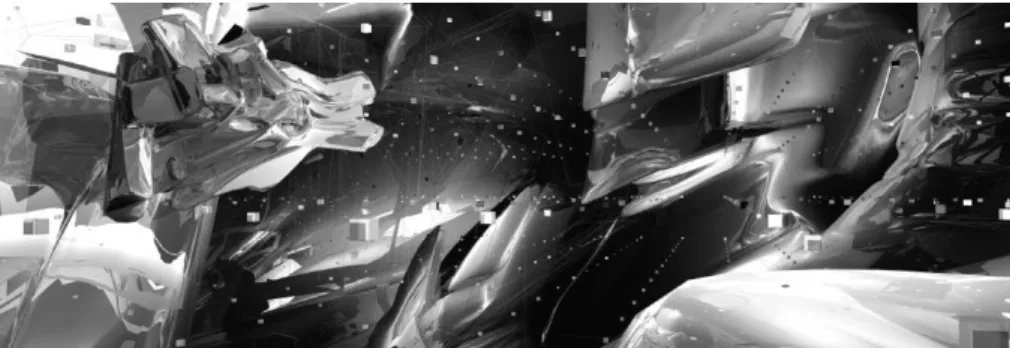
FIGURE 1.1 Abstract environment by Alireza Mahdizadeh Hakak
§ 1.2.3
Unconventional Virtual Environments (UVEs)
A UVE is an abstract environment which designed with a degree of independence from rules of physical world, e.g. lack of gravity, infinite depth, continuous change, etc. A UVE can be sophisticated, complicated and fully detailed, but still apart from concrete realities, specific objects, or actual instances.
FIGURE 1.2 Sample of Unconventional virtual environment by Marcos Novak
§ 1.3
Research aims and questions
As a designer, I was always curious as to why children tend to be more creative than adults. They always have a solution for every problem. I did spend a lot of time observing their behavior to try to find a pattern or reasonable answer to my questions. And besides, after spending 8 years in practice and dealing with almost all aspects of the discipline of architecture (as a lecturer at a University, an Architect with consulting engineers, as a Project Manager handling different scales of projects and as a Construction Supervisor), and interviewing a variety of different designers and architects with different backgrounds, ages, sex and expertise coming from different contexts, I can summarize subjectively, the problems related with the discipline of architecture as follows:
1. Gradually thinking out of box becomes a very difficult task for the designer
2. Designers tend to follow the same design methodology each time (Irrespective of the differences in Content and Context)
3. Construction related constrains impose upon designers and restrict them from exploring unconventional design solutions
4. Designers find it difficult to update themselves with new technologies not only due to the cost of new technologies, the learning curve involved as well as the fear of swaying away from their set methodology of operation but also since the brain, in the long run tends not to think divergently.
5. Tendency to deploy convergent thinking means instead of divergent thinking during the early stages of design
Considering the aforementioned problems and context, this dissertation explores the application of Unconventional virtual environments (UVEs) for enhancing creativity in the domains of architecture pedagogy and practice. Besides finding parameters which are correlated with creativity in architecture design, the two main primary objectives driving this research are the following:
1. Is it possible to reverse the process of diminishing creativity by providing new visual feed/stimulus to the brain by exploring UVEs? Does the combination of this new visual feed with the previous knowledge of space and geometry, help the brain in generating creative ideas? Does the mutation in combination of ideas happen? 2. Does starting the design process from a higher dimension help the designer generate
more creative ideas? Does changing the medium and design tools help the architect to be more creative? If the answer is positive how this can be implemented in architecture practice?
§ 1.4
Boundary condition
This research is narrowed down based on two different boundary conditions that make it more specific.
Firstly, since there is no global definition for creativity and it changes from context to context and there are more than 100 different definitions according to different disciplines, this study embraces the definition of David Jones and the idea of “Conceptual Blending” by Arthur Koestler.
Secondly, creativity has different aspects to be compared; due to the vagueness of the topic according to different contexts. The scope of this research has thus been narrowed down to creativity in architecture/design and all other aspects of creativity including personality and behavior of creative people, mood, state, temper, intelligence vs. creativity, motivation, prediction of the brain and so forth have been ignored. Instead, cognitive aspects of creativity including thinking patterns, conceptual blending, idea expansion and tolerance of ambiguity have been focused upon.
§ 1.5
Research questions
From these main objectives, the following main research questions arise: 1. What are effective parameters correlated with creativity in architectural design? 2. Does changing the tool and changing the dimension of design process (from an
analogue 2D pen and paper to 3D software interface) help in enhancing creativity? 3. Theoretically, how can unconventional virtual environments (UVEs) be helpful for
enhancing creativity?
4. Are there any methods to boost [spatial] creativity in architecture?
5. Does the human brain detect any difference while perceiving different spatial environments? (E.g. Abstract designed, Semi designed and Fully designed
environment). Can we provide an objective empirical evidence of this difference in perception?
Research question 1) is addressed after an in-depth literature review to find effective parameters correlated with creativity in architectural design. This question is answered via a scientific journal paper, published in Journal of civil engineering and architecture (JCEA) with the following title:
CREATIVITY IN ARCHITECTURE -A REVIEW ON EFFECTIVE PARAMETERS CORRELATED WITH CREATIVITY IN ARCHITECTURAL DESIGN
Research question 2) is addressed in chapter 3 via a research experiment. In this experiment a group of architects were asked to perform the same design task using two different mediums, tools and dimensions: once using a 2D pen and paper and the next time by using a 3D software interface. The question is answered via a scientific journal paper, published in “Scientific Research Publishing” with the following title:
“THINKING OUT OF THE BOX” FROM OUT OF THE BOX! INCREASING THE DIMENSION OF “STARTING POINT”
Research question 3) is answered in chapter 4. The chapter also has a complete/detailed elaboration of the hypothesis:
-What types of virtual environments are needed for enhancing creative performance? -Will surfing/exploring UVEs enhance creative performance and creativity-supporting cognitive processes (e.g., recruitment of different ideas and retrieval of unconventional knowledge)
-How can UVEs contribute towards developing a pedagogy of architecture
The Research question 3) is answered via a scientific journal paper published in The International Journal of Virtual and Personal Learning Environments (IJVPLE) with the following title:
IMPLEMENTING UNCONVENTIONAL VIRTUAL ENVIRONMENTS FOR ENHANCING CREATIVITY IN ARCHITECTURE PEDAGOGY
Research question 4) is answered in chapter 5. In this chapter an experimental research project has been introduced: Proto-fuse. In this project conceptual blending and tolerance of ambiguity have been addressed. The project and its findings are introduced via a scientific journal paper published in The International Journal of Design Creativity and Innovation (IJDCI) with the following title:
THE PROTO-FUSE PROJECT: METHODS TO BOOST CREATIVITY FOR ARCHITECTS
Research question 5) is answered in the chapter 6. This chapter elaborates upon experiments which have been conducted to analyze the differences between human perception while observing three different environments:
1- Abstract environment 2- Semi-designed environment 3- Fully-designed environment
The results of these experiments have been published in a scientific journal paper published in the journal of Cognitive Neurodynamics with the following title:
§ 1.6
Research Method
§ 1.6.1
Research steps and approaches
This dissertation is an exploratory research that tests the hypothesis of using unconventional virtual environments (UVEs) for enhancing creativity of architects. Therefore, different parameters which were correlated with creativity in architecture were studied from the available literature. Since creativity is a multi-faceted topic, which can be approached from different angels and viewpoints, a boundary condition has been subsequently defined for this dissertation as the first step.
After reviewing relevant literature, a hypothesis has been defined clearly and the potentials for implementing UVEs in pedagogy of architecture have been outlined as the second step. Yet there is no clear road map which has been defined, since one needs to conduct more explorative experimentations to recognize better the characteristics of human perception, the role of the unconscious mind, and creativity supporting tools. For this reason, three different experiments have been designed to address each of these questions separately as the third step.
As the fourth step, a sample UVE has been designed and tested by a group of unbiased participants. The facilities and fund, tools and the ground for the last experiment has been provided by Visionair (http://www.infra-visionair.eu/) as a part of an FP7 program. This experiment was conducted in ITIA-CNR of Italy. For creating this environment, 3D max software was interfaced with a 3D interface Glove, in order to develop a 3D stereoscopic environment. A Conexxion 3D navigation mouse and 3D Goggle were used to create a highly immersive environment. Group of 20 participants subsequently provided feedback after navigating in this UVE.
Fifth and final step is the conclusion. In this chapter all the question were answered. Besides, suggestion for future researches and recommendation for application in practice were also provided.
§ 1.6.2
Research tools
In this research, computer simulations, experiments and analysis were done. The tools used are described here in three categories: simulation software, analysis software and technical devices.
§ 1.6.2.1
Computer design and simulation tools
3ds Max - Autodesk:Autodesk 3ds Max, formerly 3D Studio, then 3D Studio Max is a professional 3D computer graphics program for making 3D animations, models, games and images. The software is used to create the design environment of UVE for the experiment. Giove
GIOVE stands for: “Graphics and Interaction for OpenGL-based Virtual Environments” and is a set of software libraries (SDK Software Development Kit) written in C and C++ for developing applications that use real time 3D graphics. GIOVE was specifically used for creating stereoscopic environments in this research. ITIA-CNR (National Research Council: Institute of Industrial Technologies and Automation) of Italy had developed this stereoscopic interface for its internal research. GIOVE is an internal “product”, it does not have any licenses, it is not open source either. GIOVE is based on OpenGL (www.opengl.org) and is compatible with Windows. It can load 3d models in 3DS and Obj format. FBX and DXF formats are under development depending on the demand of the projects in progress. For utility purposes there is an application called “GIOVE-Viewer”, an application for loading 3D models and that allows various basic operations including navigating in the scene, positioning/rotating models, taking screenshots, adding lights, customizing observer’s point of views, and enabling real time shadows and so forth.
§ 1.6.2.2
Analysis tools
sLORETAUzh.ch/keyinst/loreta.htm, has been successfully used in a number of recent EEG studies. The software provides a 3d map of the activated parts of the brain and has powerful capabilities of data normalization, baseline correction, etc.
EEGLAB
EEGLAB is an interactive Matlab toolbox for processing continuous and event-related EEG, MEG and other electrophysiological data incorporating independent component analysis (ICA), time/frequency analysis, artifact rejection, event-related statistics, and several useful modes of visualization of the averaged and single-trial data.
§ 1.6.2.3
Technical devices
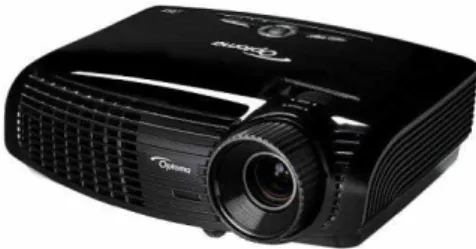
3D projector:The projector used in this experiment was EX762, XGA - 4000 ANSI Lumens. Using the inherent speed of DLP technology, The Optima EX762 can output video and images at the rate of 120Hz, allowing one to project in full screen, full color, stereoscopic 3D. The 3D effect is generated by splitting one signal into two standard video streams, one for each eye. Using DLP® Link™ technology, the 3D glasses synchronize with the image on screen to filter each stream to the correct eye. The brain then combines the two streams. The 3D features of the EX762 can only be used with compatible 3D content (Figure 2).
FIGURE 1.3 3D stereoscopic projector
3D goggle:
DLP (Digital light processing) technology uses millions of microscopic, digital mirrors that reflect light to create a picture for projectors. This imaging technology is so fast, it can actually produce TWO images on the screen at the same time: One for the “left” eye and
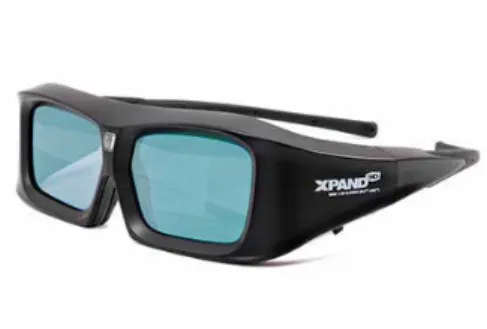
one for the “right” eye. To create the 3D effect, you need 3D Glasses that combine the two images (Figure 3). For the sake of an experiment we decided to use XPAND 3rd generation of DLP® Link™ 3D Glasses: XPAND Edux 3 3D Glasses (X103-EDUX3 / X103-EDUX3-R1).
FIGURE 1.4 XPAND 3D Goggle 3D navigation tool:
3Dconexxion was employed to navigate virtual environment. Commonly utilized in CAD applications, 3D modeling, animation, 3D visualization and product visualization, users can manipulate the controller’s pressure-sensitive handle (historically referred to as either a cap, ball, mouse or knob) to fly through 3D environments or manipulate 3D models within an application.3Dconnexion patented 6-degrees-of-freedom (6DoF) technology – smooth and intuitive control of 3D models and environments. The appeal of these devices over a mouse and keyboard is the ability to pan, zoom and rotate 3D imagery simultaneously, without stopping to change directions using keyboard shortcuts or a software interface giving the participants a clear sense of immersion in virtual space.
32 Enhancing [Spatial] Creativity
§ 1.7
Dissertation outline
This dissertation has three main parts:
Part Ais based on literature review. All different effective parameters correlated with creativity in architectural design have been reviewed. Other related parameters of creativity which may not directly related to design and were more into personal behavior, were dismissed (chapter 2).
Part B demonstrates series of experiments to investigate different aspects of human perception, creativity, tools which can enhance creativity. (Chapters 3-5).Also, two sample experiment have been introduced which can increase tolerance of ambiguity and also help for mutation in conceptual blending (chapter 6). Both concepts will indirectly enhance creativity.
Part C presents a sample designed UVE which has empirically approved that by navigating in that sample environment [spatial] creativity of the user will improve.
Part E
Part D
Part C
Part B
Part A
IntroductionLiterature review
1-‐ 2D vs. 3D: Incresing dimension of the starting point in design process 2-‐ Implementing UVEs in architecture pedagogy
3-‐ Proto-‐fuse project: Methods to boost [spatial] creativity
4-‐ How human perception works and its correlation with creativity
Sample UVE