Bags of Binary Words for Fast Place Recognition in Image Sequences
Dorian G´alvez-L´opez and Juan D. Tard´os,Member, IEEE
Abstract—We propose a novel method for visual place recognition using bag of words obtained from FAST+BRIEF features. For the first time, we build a vocabulary tree that discretizes a binary descriptor space, and use the tree to speed up correspondences for geometrical verification. We present competitive results with no false positives in very different datasets, using exactly the same vocabulary and settings. The whole technique, including feature extraction, requires 22ms per frame in a sequence with 26300 images, being one order of magnitude faster than previous approaches.
Index Terms—Place Recognition, Bag of Words, SLAM, Computer Vision.
I. INTRODUCTION
One of the most significant requirements for long-term visual SLAM (Simultaneous Localization and Mapping) is robust place recognition. After an exploratory period, when areas non-observed for long are re-observed, standard matching algorithms fail. When they are robustly detected, loop closures provide correct data asso-ciation to obtain consistent maps. The same methods used for loop detection can be used for robot relocation after track lost, due for example to sudden motions, severe occlusions or motion blur. In [1] we concluded that, for small environments, map-to-image methods achieve nice performance, but for large environments, image-to-image (or appearance-based) methods such as FAB-MAP [2] scale better. The basic technique consists in building a database from the images collected online by the robot, so that the most similar one can be retrieved when a new image is acquired. If they are similar enough, a loop closure is detected.
In recent years, many algorithms that exploit this idea have appeared [2]–[6], basing the image matching on comparing them as numerical vectors in the bag-of-words space [7]. Bags of words result in very effective and quick image matchers [8], but they are not a perfect solution for closing loops, due mainly to perceptual aliasing [6]. For this reason, a verification step is performed later by checking the matching images to be geometrically consistent, requiring feature correspondences. The bottleneck of the loop closure algorithms is usually the extraction of features, which is around ten times more expensive in computation cycles than the rest of steps. This may cause SLAM algorithms to run in two decoupled threads: one to perform the main SLAM functionality, and the other just to detect loop closures, as in [5].
In this paper, we present a novel algorithm to detect loops and establishing point correspondences between images in real time, with a conventional CPU and a single camera. Our approach is based on bag of words and geometrical check, with several important novelties that make it much faster than current approaches. The main speed improvement comes from the use of a slightly modified version of the BRIEF descriptor [9] with FAST keypoints [10], as explained in Section III. The BRIEF descriptor is a binary vector where each bit is the result of an intensity comparison between a given pair of pixels around the keypoint. Although BRIEF descriptors are hardly invariant This research has been partly funded by the European Union under project RoboEarth FP7-ICT-248942, the Direcci´on General de Investigaci´on of Spain under projects DPI2009-13710, DPI2009-07130 and the Ministerio de Educaci´on (scholarship FPU-AP2008-02272).
The authors are with the Instituto de Investigaci´on en Ingenier´ıa de Arag´on (I3A), Universidad de Zaragoza, Mar´ıa de Luna 1, 50018 Zaragoza, Spain. {dorian, tardos}@unizar.es.
to scale and rotation, our experiments show that they are very robust for loop closing with planar camera motions, the usual case in mobile robotics, offering a good compromise between distinctiveness and computation time.
We introduce a bag of words that discretizes a binary space, and augment it with a direct index, in addition to the usual inverse index, as explained in Section IV. To the best of our knowledge, this is the first time a binary vocabulary is used for loop detection. The inverse index is used for fast retrieval of images potentially similar to a given one. We show a novel use of the direct index to efficiently obtain point correspondences between images, speeding up the geometrical check during the loop verification.
The complete loop detection algorithm is detailed in Section V. Similarly to our previous work [5,6], to decide that a loop has been closed, we verify the temporal consistency of the image matches obtained. One of the novelties in this paper is a technique to prevent images collected in the same place from competing among them when the database is queried. We achieve this by grouping together those images that depict the same place during the matching.
Section VI contains the experimental evaluation of our work, in-cluding a detailed analysis of the relative merits of the different parts in our algorithm. We present comparisons between the effectiveness of BRIEF and two versions of SURF features [11], the descriptor most used for loop closing. We also analyze the performance of the temporal and geometrical consistency tests for loop verification. We finally present the results achieved by our technique after evaluating it in five public datasets with 0.7–4 Km long trajectories. We demonstrate that we can run the whole loop detection procedure, including the feature extraction, in52ms in 26300 images (22ms on average), outperforming previous techniques by more than one order of magnitude.
A preliminary version of this work was presented in [12]. In the current paper we enhance the direct index technique and extend the experimental evaluation of our approach. We also report results in new datasets and make a comparison with the state-of-the-art FAB-MAP 2.0 algorithm [13].
II. RELATED WORK
Place recognition based on appearance has obtained great attention in the robotics community because of the excellent results achieved [4,5,13,14]. An example of this is the FAB-MAP system [13], which detects loops with an omnidirectional camera, obtaining a recall of 48.4% and 3.1%, with no false positives, in trajectories 70 Km and 1000 Km in length. FAB-MAP represents images with a bag of words, and uses a Chow Liu tree to learn offline the words’ co-visibility probability. FAB-MAP has become the gold standard regarding loop detection, but its robustness decreases when the images depict very similar structures for a long time, which can be the case when using frontal cameras [5]. In the work of Angeli et al. [4], two visual vocabularies (for appearance and color) are created online in an incremental fashion. The two bag-of-words representations are used together as input of a Bayesian filter that estimates the matching probability between two images, taking into account the matching probability of previous cases. In contrast to these probabilistic approaches, we rely on a temporal consistency check to consider previous matches and enhance the reliability of the detections. This technique has proven successful in our previous works [5,6]. Our work also differs from the ones above in that we use a bag of binary words for the first time, as well as propose a technique to prevent images collected close in time and depicting the same place from competing between them during the matching, so that we can work at a higher frequency.
To verify loop closing candidates, a geometrical check is usually performed. We apply an epipolar constraint to the best matching candidate as done in [4], but we take advantage of a direct index to calculate correspondence points faster. Konolige et al. [3] use visual odometry with a stereo camera to create in real time a view map of the environment, detecting loop closures with a bag-of-words approach as well. Their geometrical check consists in computing a spatial transformation between the matching images. However, they do not consider consistency with previous matches, and this leads them to apply the geometrical check to several loop closing candidates.
In most loop closing works [4]–[6,14] the features used are SIFT [15] or SURF [11]. They are popular because they are invariant to lighting, scale and rotation changes and show a good behavior in view of slight perspective changes. However, these features usually require between100and700ms to be computed, as reported by the above publications. Apart from GPU implementations [16], there are other similar features that try to reduce this computation time by, for example, approximating the SIFT descriptor [17] or reducing the dimensionality [18]. The work of Konolige et al. [3] offers a qualitative change, since it uses compact randomized tree signatures [19]. This approach calculates the similarity between an image patch and other patches previously trained in an offline stage. The descriptor vector of the patch is computed by concatenating these similarity values, and its dimensionality is finally reduced with random ortho-projections. This yields a very fast descriptor, suitable for real-time applications [19]. Our work bears a resemblance with [3] in that we also reduce the execution time by using efficient features. BRIEF descriptors, along with other recent descriptors as BRISK [20] or ORB [21], are binary and require very little time to be computed. As an advantage, their information is very compact, so that they occupy less memory and are faster to compare. This allows a much faster conversion into the bag-of-words space.
III. BINARY FEATURES
Extracting local features (keypoints and their descriptor vectors) is usually very expensive in terms of computation time when comparing images. This is often the bottleneck when these kinds of techniques are applied to real-time scenarios. To overcome this problem, in this work we use FAST keypoints [10] and the state-of-the-art BRIEF descriptors [9]. FAST keypoints are corner-like points detected by comparing the gray intensity of some pixels in a Bresenham circle of radius 3. Since only a few pixels are checked, these points are very fast to obtain proving successful for real-time applications.
For each FAST keypoint, we draw a square patch around them and compute a BRIEF descriptor. The BRIEF descriptor of an image patch is a binary vector where each bit is the result of an intensity comparison between two of the pixels of the patch. The patches are previously smoothed with a Gaussian kernel to reduce noise. Given beforehand the size of the patch, Sb, the pairs of pixels to test are
randomly selected in an offline stage. In addition toSb, we must set
the parameter Lb: the number of tests to perform (i.e., the length
of the descriptor). For a point pin an image, its BRIEF descriptor vector B(p)is given by:
Bi(p) =
1 ifI(p+ai)< I(p+bi)
0 otherwise ∀i∈[1..Lb] (1)
where Bi(p) is the i-th bit of the descriptor, I(·) the intensity of the pixel in the smoothed image, andai andbithe 2D offset of the i-th test point with respect to the center of the patch, with value in h −Sb 2 . . . Sb 2 i ×h−Sb 2 . . . Sb 2 i
, randomly selected in advance. Note that this descriptor does not need training, just an offline stage to select random points that hardly takes time. The original BRIEF de-scriptor proposed by Calonder et al. [9] selects each coordinate of the
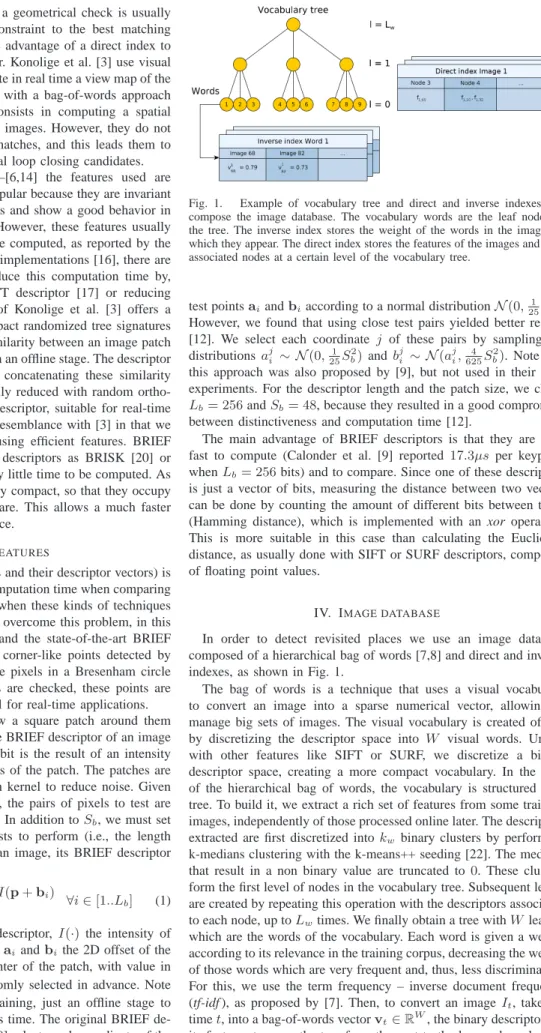
Fig. 1. Example of vocabulary tree and direct and inverse indexes that compose the image database. The vocabulary words are the leaf nodes of the tree. The inverse index stores the weight of the words in the images in which they appear. The direct index stores the features of the images and their associated nodes at a certain level of the vocabulary tree.
test pointsaiandbiaccording to a normal distributionN(0,251Sb2).
However, we found that using close test pairs yielded better results [12]. We select each coordinate j of these pairs by sampling the distributionsaji ∼ N(0, 1 25S 2 b) and b j i ∼ N(a j i, 4 625S 2 b). Note that
this approach was also proposed by [9], but not used in their final experiments. For the descriptor length and the patch size, we chose Lb= 256andSb= 48, because they resulted in a good compromise
between distinctiveness and computation time [12].
The main advantage of BRIEF descriptors is that they are very fast to compute (Calonder et al. [9] reported 17.3µs per keypoint whenLb= 256bits) and to compare. Since one of these descriptors
is just a vector of bits, measuring the distance between two vectors can be done by counting the amount of different bits between them (Hamming distance), which is implemented with an xor operation. This is more suitable in this case than calculating the Euclidean distance, as usually done with SIFT or SURF descriptors, composed of floating point values.
IV. IMAGE DATABASE
In order to detect revisited places we use an image database composed of a hierarchical bag of words [7,8] and direct and inverse indexes, as shown in Fig. 1.
The bag of words is a technique that uses a visual vocabulary to convert an image into a sparse numerical vector, allowing to manage big sets of images. The visual vocabulary is created offline by discretizing the descriptor space into W visual words. Unlike with other features like SIFT or SURF, we discretize a binary descriptor space, creating a more compact vocabulary. In the case of the hierarchical bag of words, the vocabulary is structured as a tree. To build it, we extract a rich set of features from some training images, independently of those processed online later. The descriptors extracted are first discretized intokw binary clusters by performing
k-medians clustering with the k-means++ seeding [22]. The medians that result in a non binary value are truncated to0. These clusters form the first level of nodes in the vocabulary tree. Subsequent levels are created by repeating this operation with the descriptors associated to each node, up toLwtimes. We finally obtain a tree withW leaves,
which are the words of the vocabulary. Each word is given a weight according to its relevance in the training corpus, decreasing the weight of those words which are very frequent and, thus, less discriminative. For this, we use the term frequency – inverse document frequency (tf-idf ), as proposed by [7]. Then, to convert an imageIt, taken at
timet, into a bag-of-words vectorvt∈RW, the binary descriptors of
at each level the intermediate nodes that minimize the Hamming distance.
To measure the similarity between two bag-of-words vectorsv1 andv2, we calculate aL1-scores(v1,v2), whose value lies in[0..1]:
s(v1,v2) = 1− 1 2 v1 |v1|− v2 |v2| (2) Along with the bag of words, an inverse index is maintained. This structure stores for each wordwiin the vocabulary a list of imagesIt
where it is present. This is very useful when querying the database, since it allows to perform comparisons only against those images that have some word in common with the query image. We augment the inverse index to store pairs< It, vit>to quickly access the weight
of the word in the image. The inverse index is updated when a new imageIt is added to the database, and accessed when the database
is searched for some image.
These two structures (the bag of words and the inverse index) are often the only ones used in the bag-of-words approach for searching images. However, as a novelty in this general approach, we also make use of a direct index to conveniently store the features of each image. We separate the nodes of the vocabulary according to their levellin the tree, starting at leaves, with levell= 0, and finishing in the root, l=Lw. For each imageIt, we store in the direct index the nodes at
levell that are ancestors of the words present inIt, as well as the
list of local featuresftj associated to each node. We take advantage
of the direct index and the bag-of-words tree to use them as a means to approximate nearest neighbors in the BRIEF descriptor space. The direct index allows to speed up the geometrical verification by computing correspondences only between those features that belong to the same words, or to words with common ancestors at levell. The direct index is updated when a new image is added to the database, and accessed when a candidate matching is obtained and geometrical check is necessary.
V. LOOP DETECTION ALGORITHM
To detect loop closures, we use a method based on our previous work [5,6] that follows the four stages detailed next.
A. Database query
We use the image database to store and to retrieve images similar to any given one. When the last imageItis acquired, it is converted into
the bag-of-words vectorvt. The database is searched forvt, resulting
in a list of matching candidates < vt, vt1 >, < vt, vt2 >, . . . ,
associated to their scores s(vt,vtj). The range these scores varies
is very dependent on the query image and the distribution of words it contains. We then normalize these scores with the best score we expect to obtain in this sequence for the vector vt, obtaining the
normalized similarity scoreη[6]: η(vt,vtj) =
s(vt,vtj)
s(vt,vt−∆t)
(3) Here, we approximate the expected score of vt with s(vt,vt−∆t),
wherevt−∆tis the bag-of-words vector of the previous image. Those
cases where s(vt,vt−∆t) is small (e.g. when the robot is turning)
can erroneously cause high scores. Thus, we skip the images that do not reach a minimums(vt,vt−∆t)or a required number of features.
This minimum score trades off the number of images that can be used to detect loops with the correctness of the resulting score η. We use a small value to prevent valid images from being discarded. We then reject those matches whose η(vt,vtj)does not achieve a
minimum threshold, denotedα.
B. Match grouping
To prevent images that are close in time to compete among them when the database is queried, we group them into islands and treat them as only one match. We use the notation Ti to represent
the interval composed of timestampstni, . . . , tmi, andVTi for an
island that groups together the matches with entriesvtni, . . . ,vtmi.
Therefore, several matches<vt, vtni >, . . . , <vt, vtmi >are
converted into a single match < vt, VTi > if the gaps between
consecutive timestamps in tni, . . . , tmi are small. The islands are
also ranked according to a scoreH: H(vt, VTi) =
mi
X
j=ni
η(vt, vtj) (4)
The island with the highest score is selected as matching group and continue to the temporal consistency step. Besides avoiding clashes between consecutive images, the islands can help establish correct matches. IfIt andIt′ represent a real loop closure,Itis very likely
to be similar also to It′±∆t, It′±2∆t, . . . , producing long islands.
Since we define H as the sum of scores η, the H score favours matches with long islands as well.
C. Temporal consistency
After obtaining the best matching island VT′, we check it for temporal consistency with previous queries. In this paper we extend the temporal constraint applied in [5,6] to support islands. The match < vt, VT′ > must be consistent with k previous matches
<vt−∆t, VT1 >, . . . ,< vt−k∆t, VTk >, such that the intervals
Tj and Tj+1 are close to overlap. If an island passes the temporal constraint, we keep only the match <vt, vt′ >, for the t
′ ∈ T′ that maximizes the scoreη, and consider it a loop closing candidate, which has to be finally accepted by the geometrical verification stage. D. Efficient geometrical consistency
We apply a geometrical check between any pair of images of a loop closing candidate. This check consists in finding with RANSAC a fundamental matrix between It and It′ supported by at least 12 correspondences. To compute these correspondences, we must com-pare the local features of the query image with those of the matched one. There are several approaches to perform this comparison. The easiest and slowest one is the exhaustive search, that consists in measuring the distance of each feature ofIt to the features ofIt′ in the descriptor space, to select correspondences later according to the nearest neighbor distance ratio [15] policy. This is aΘ(n2)operation in the number of features per image. A second technique consists in calculating approximate nearest neighbors by arranging the descriptor vectors in k-d trees [27].
Following the latter idea, we take advantage of our bag-of-words vocabulary and reuse it to approximate nearest neighbors. For this reason, when adding an image to the database, we store a list of pairs of nodes and features in the direct index. To obtain correspondences betweenIt andIt′, we look up It′ in the direct index and perform the comparison only between those features that are associated to the same nodes at levellin the vocabulary tree. This condition speeds up the correspondence computation. The parameterlis fixed beforehand and entails a trade-off between the number of correspondences obtained betweenItandIt′ and the time consumed for this purpose. Whenl= 0, only features belonging to the same word are compared (as we presented in [12]), so that the highest speed-up is achieved, but fewer correspondences can be obtained. This makes the recall of the complete loop detection process decrease due to some correct loops being rejected because of the lack of corresponding points. On the
TABLE I
DATASETS
Dataset Camera Description Total length Revisited length Avg. Speed Image size (m) (m) (m·s−1) (px×px)
New College [23] Frontal Outdoors, dynamic 2260 1570 1.5 512×384
Bicocca 2009-02-25b [24] Frontal Indoors, static 760 113 0.5 640×480 Ford Campus 2 [25] Frontal Urban, slightly dynamic 4004 280 6.9 600×1600 Malaga 2009 Parking 6L [26] Frontal Outdoors, slightly dynamic 1192 162 2.8 1024×768
City Centre [2] Lateral Urban, dynamic 2025 801 - 640×480
other hand, whenl=Lw, the recall is not affected but the execution
time is not improved either.
We only require the fundamental matrix for verification, but note that after calculating it, we could provide the data association between the images matched to any SLAM algorithm that would run beneath, with no extra cost.
VI. EXPERIMENTAL EVALUATION
We evaluate the different aspects of our proposal in the following sections. In VI-A, we introduce the methodology we followed to evaluate our algorithm. Next, we compare the reliability of BRIEF and SURF in our system in VI-B. In VI-C we analyze the effect of the temporal consistency of our algorithm, and in VI-D we check the efficiency of our geometrical verification based on the direct index. Finally, the execution time and the performance of our complete system are evaluated in VI-E and VI-F.
A. Methodology
The aspects to evaluate loop detection results are usually assumed to be of general knowledge. However, little detail is given in the literature. Here, we explain the methodology we followed to evaluate our system.
1) Datasets: We tested our system in five publicly available datasets (see Table I). These present independent indoor and out-door environments, and were collected at different speed by several platforms, with in-plane camera motion. CityCentre is a collection of images gathered at low frequency, with little overlap. The others provide images at high frequency (8–20Hz).
2) Ground truth: To measure the correctness of our results we compare them with a ground-truth reference. Most of the datasets used here do not provide direct information about loop closures, so that we manually created a list of the actual loop closures. This list is composed of time intervals, where each entry in the list encodes a query interval associated with a matching interval.
3) Correctness measure: We measure the correctness of the loop detection results with the precision and recall metrics. The precision is defined as the ratio between the number of correct detections and all the detections fired, and the recall, as the ratio between the correct detections and all the loop events in the ground truth. A match fired by the loop detector is a pair of query and matching timestamps. To check if it is a true positive, the ground truth is searched for an interval that contains these timestamps. The number of loop events in the ground truth is computed as the length of all the query intervals in the ground truth multiplied by the frequency at which the images of the dataset are processed. When a query timestamp is associated to more than one matching timestamp in the ground truth because of multiple traversals, only one of them is considered to compute the amount of loop events.
4) Selection of system parameters: It is common practice to tune system parameters according to the evaluation data, but we think that using different data to choose the configuration of our algorithm and to evaluate it demonstrates the robustness of our approach. We
0.5 0.55 0.6 0.65 0.7 0.75 0.8 0.85 0.9 0.95 0.3 0.4 0.5 0.6 0.7 0.8 0.9 1 Recall
Precision BRIEF, NewCollege
SURF 64, NewCollege U−SURF 128, NewCollege BRIEF, Bicocca25b SURF 64, Bicocca25b U−SURF 128, Bicocca25b
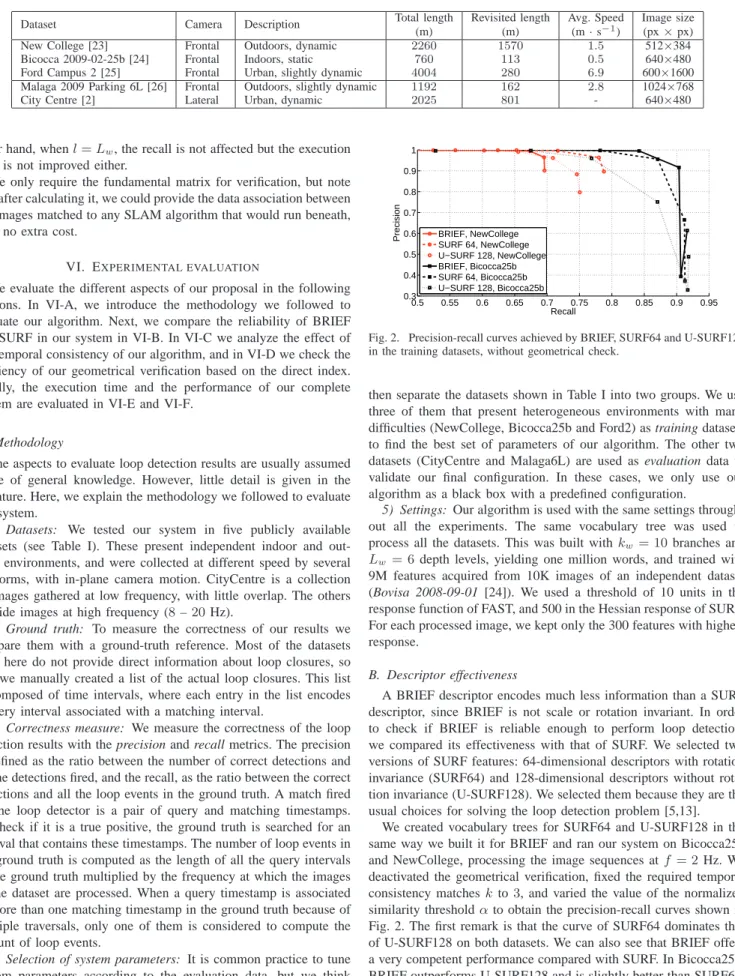
Fig. 2. Precision-recall curves achieved by BRIEF, SURF64 and U-SURF128 in the training datasets, without geometrical check.
then separate the datasets shown in Table I into two groups. We use three of them that present heterogeneous environments with many difficulties (NewCollege, Bicocca25b and Ford2) as training datasets to find the best set of parameters of our algorithm. The other two datasets (CityCentre and Malaga6L) are used as evaluation data to validate our final configuration. In these cases, we only use our algorithm as a black box with a predefined configuration.
5) Settings: Our algorithm is used with the same settings through-out all the experiments. The same vocabulary tree was used to process all the datasets. This was built withkw= 10branches and Lw = 6depth levels, yielding one million words, and trained with
9M features acquired from 10K images of an independent dataset (Bovisa 2008-09-01 [24]). We used a threshold of 10 units in the response function of FAST, and 500 in the Hessian response of SURF. For each processed image, we kept only the 300 features with highest response.
B. Descriptor effectiveness
A BRIEF descriptor encodes much less information than a SURF descriptor, since BRIEF is not scale or rotation invariant. In order to check if BRIEF is reliable enough to perform loop detection, we compared its effectiveness with that of SURF. We selected two versions of SURF features: 64-dimensional descriptors with rotation invariance (SURF64) and 128-dimensional descriptors without rota-tion invariance (U-SURF128). We selected them because they are the usual choices for solving the loop detection problem [5,13].
We created vocabulary trees for SURF64 and U-SURF128 in the same way we built it for BRIEF and ran our system on Bicocca25b and NewCollege, processing the image sequences atf = 2Hz. We deactivated the geometrical verification, fixed the required temporal consistency matcheskto 3, and varied the value of the normalized similarity thresholdαto obtain the precision-recall curves shown in Fig. 2. The first remark is that the curve of SURF64 dominates that of U-SURF128 on both datasets. We can also see that BRIEF offers a very competent performance compared with SURF. In Bicocca25b, BRIEF outperforms U-SURF128 and is slightly better than SURF64. In NewCollege, SURF64 achieves better results than BRIEF, but BRIEF still gives very good precision and recall rates.
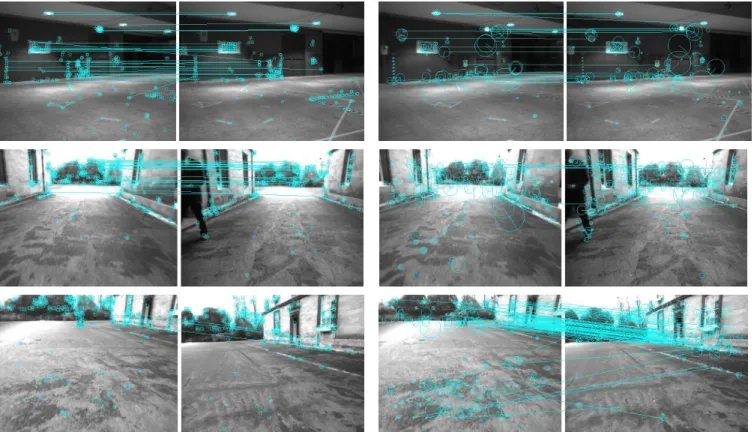
Fig. 3. Examples of words matched by using BRIEF (pair on the left) and SURF64 descriptors (pair on the right).
To better illustrate the different abilities of BRIEF and SURF64 to find correspondences, we have selected some loop events from the previous experiments. In Fig. 3 the features that are associated to the same word of our vocabulary are connected with lines. These are the only matches taken into account to compute the normalized similarity score. In most cases, BRIEF obtains as many correct word correspondences as SURF64, in spite of the slight perspective changes, as shown in the first example (first row). In the second example, only BRIEF is able to close the loop, since SURF64 does not obtain enough word correspondences. These two examples show that BRIEF finds correspondences in objects that are at a middle or large distance, such as the signs on the wall or the trees in the background. In general, distant objects are present in most of the imagery of our datasets. Since the scale of the keypoints extracted from distant objects hardly varies, BRIEF is suitable to match their patches. In cases where objects are close to the camera, SURF64 is more suitable because of its invariance to scale changes. However, we observed very few cases where this happened. In the third example of Fig. 3, the camera tilted, making the image appear rotated in some areas. This along with the scale change prevented BRIEF from obtaining word correspondences. In this case, SURF64 overcame these difficulties and detected the loop.
Our results show that FAST features with BRIEF descriptors are almost as reliable as SURF features for loop detection problems with in-plane camera motion. As advantages, not only they are much faster to obtain (13ms per image instead of 100–400ms), but they also occupy less memory (32MB instead of 256MB to store a 1M word vocabulary) and are faster to compare, speeding up the use of the hierarchical vocabulary.
C. Temporal consistency
After selecting the features, we tested the numberkof temporally consistent matches required to accept a loop closure candidate. For
0 0.2 0.4 0.6 0.8 1 0 0.2 0.4 0.6 0.8 1 Recall Precision f = 1 Hz, k = 0 f = 1 Hz, k = 3 f = 2 Hz, k = 0 f = 2 Hz, k = 3 f = 3 Hz, k = 0 f = 3 Hz, k = 3
Fig. 4. Precision-recall curves in Bicocca25b with no geometrical check, for several values of similarity thresholdα, number of temporally consistent matcheskand processing frequencyf.
this, we ran our system in the training datasets withf = 2Hz, for several values ofkandαand without any geometrical constraint. We testedkfor values between0(i.e., disabling the temporal consistency) and4. We observed a big improvement betweenk= 0andk >0for all the working frequencies. Askincreases, a higher recall is attained with100%precision, but this behavior does not hold for very high values ofk, since only very long closures would be found. We chose k = 3since it showed a good precision-recall balance in the three training datasets. We repeated this test in Bicocca25b for frequencies f = 1 and 3 Hz as well, to check how dependent parameter k is on the processing frequency. We show in Fig. 4 the precision-recall curves obtained in Bicocca25b by varying the parameterα; for clarity, onlyk = 0and 3are shown. This shows the temporal consistency is a valuable mechanism to avoid mismatches, as previously seen in [12]. We can also see that k = 3 behaves well even for different frequency values, so that we can consider this parameter stable.
TABLE II
PERFORMANCE OF DIFFERENT APPROACHES TO OBTAIN
CORRESPONDENCES INNEWCOLLEGE
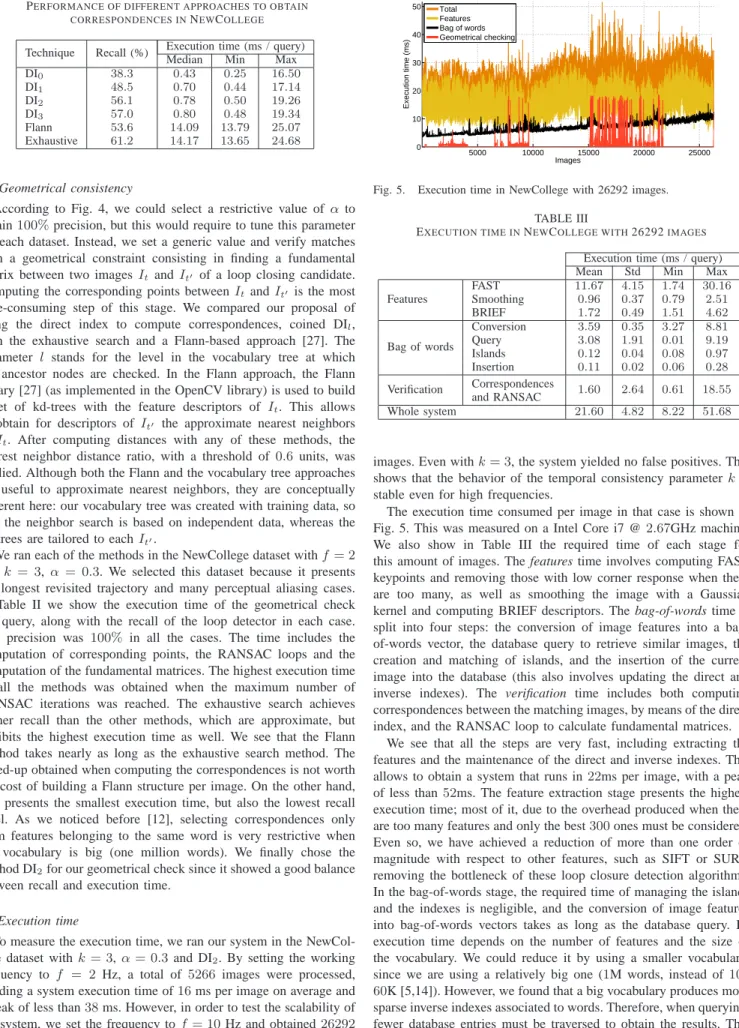
Technique Recall (%) Execution time (ms / query) Median Min Max DI0 38.3 0.43 0.25 16.50 DI1 48.5 0.70 0.44 17.14 DI2 56.1 0.78 0.50 19.26 DI3 57.0 0.80 0.48 19.34 Flann 53.6 14.09 13.79 25.07 Exhaustive 61.2 14.17 13.65 24.68 D. Geometrical consistency
According to Fig. 4, we could select a restrictive value of α to obtain100%precision, but this would require to tune this parameter for each dataset. Instead, we set a generic value and verify matches with a geometrical constraint consisting in finding a fundamental matrix between two images It and It′ of a loop closing candidate. Computing the corresponding points betweenIt andIt′ is the most time-consuming step of this stage. We compared our proposal of using the direct index to compute correspondences, coined DIl,
with the exhaustive search and a Flann-based approach [27]. The parameter l stands for the level in the vocabulary tree at which the ancestor nodes are checked. In the Flann approach, the Flann library [27] (as implemented in the OpenCV library) is used to build a set of kd-trees with the feature descriptors of It. This allows
to obtain for descriptors of It′ the approximate nearest neighbors in It. After computing distances with any of these methods, the
nearest neighbor distance ratio, with a threshold of 0.6 units, was applied. Although both the Flann and the vocabulary tree approaches are useful to approximate nearest neighbors, they are conceptually different here: our vocabulary tree was created with training data, so that the neighbor search is based on independent data, whereas the kd-trees are tailored to eachIt′.
We ran each of the methods in the NewCollege dataset withf= 2 Hz, k = 3, α = 0.3. We selected this dataset because it presents the longest revisited trajectory and many perceptual aliasing cases. In Table II we show the execution time of the geometrical check per query, along with the recall of the loop detector in each case. The precision was 100% in all the cases. The time includes the computation of corresponding points, the RANSAC loops and the computation of the fundamental matrices. The highest execution time of all the methods was obtained when the maximum number of RANSAC iterations was reached. The exhaustive search achieves higher recall than the other methods, which are approximate, but exhibits the highest execution time as well. We see that the Flann method takes nearly as long as the exhaustive search method. The speed-up obtained when computing the correspondences is not worth the cost of building a Flann structure per image. On the other hand, DI0 presents the smallest execution time, but also the lowest recall level. As we noticed before [12], selecting correspondences only from features belonging to the same word is very restrictive when the vocabulary is big (one million words). We finally chose the method DI2for our geometrical check since it showed a good balance between recall and execution time.
E. Execution time
To measure the execution time, we ran our system in the NewCol-lege dataset with k= 3, α= 0.3and DI2. By setting the working frequency to f = 2 Hz, a total of 5266 images were processed, yielding a system execution time of16ms per image on average and a peak of less than38ms. However, in order to test the scalability of the system, we set the frequency tof= 10Hz and obtained26292
5000 10000 15000 20000 25000 0 10 20 30 40 50 Images Execution time (ms) Total Features Bag of words Geometrical checking
Fig. 5. Execution time in NewCollege with 26292 images. TABLE III
EXECUTION TIME INNEWCOLLEGE WITH26292IMAGES
Execution time (ms / query) Mean Std Min Max Features FAST 11.67 4.15 1.74 30.16 Smoothing 0.96 0.37 0.79 2.51 BRIEF 1.72 0.49 1.51 4.62 Bag of words Conversion 3.59 0.35 3.27 8.81 Query 3.08 1.91 0.01 9.19 Islands 0.12 0.04 0.08 0.97 Insertion 0.11 0.02 0.06 0.28 Verification Correspondences and RANSAC 1.60 2.64 0.61 18.55 Whole system 21.60 4.82 8.22 51.68
images. Even withk= 3, the system yielded no false positives. This shows that the behavior of the temporal consistency parameterk is stable even for high frequencies.
The execution time consumed per image in that case is shown in Fig. 5. This was measured on a Intel Core i7 @2.67GHz machine. We also show in Table III the required time of each stage for this amount of images. The features time involves computing FAST keypoints and removing those with low corner response when there are too many, as well as smoothing the image with a Gaussian kernel and computing BRIEF descriptors. The bag-of-words time is split into four steps: the conversion of image features into a bag-of-words vector, the database query to retrieve similar images, the creation and matching of islands, and the insertion of the current image into the database (this also involves updating the direct and inverse indexes). The verification time includes both computing correspondences between the matching images, by means of the direct index, and the RANSAC loop to calculate fundamental matrices.
We see that all the steps are very fast, including extracting the features and the maintenance of the direct and inverse indexes. This allows to obtain a system that runs in22ms per image, with a peak of less than52ms. The feature extraction stage presents the highest execution time; most of it, due to the overhead produced when there are too many features and only the best300ones must be considered. Even so, we have achieved a reduction of more than one order of magnitude with respect to other features, such as SIFT or SURF, removing the bottleneck of these loop closure detection algorithms. In the bag-of-words stage, the required time of managing the islands and the indexes is negligible, and the conversion of image features into bag-of-words vectors takes as long as the database query. Its execution time depends on the number of features and the size of the vocabulary. We could reduce it by using a smaller vocabulary, since we are using a relatively big one (1M words, instead of10– 60K [5,14]). However, we found that a big vocabulary produces more sparse inverse indexes associated to words. Therefore, when querying, fewer database entries must be traversed to obtain the results. This
TABLE IV
PARAMETERS
FAST threshold 10
BRIEF descriptor length (Lb) 256
BRIEF patch size (Sb) 48
Max. features per image 300
Vocabulary branch factor (kw) 10
Vocabulary depth levels (Lw) 6
Min. score with previous image (s(vt,vt−∆t)) 0.005
Temporally consistent matches (k) 3
Normalized similarity score threshold (α) 0.3
Direct index level (l) 2
Min. matches after RANSAC 12
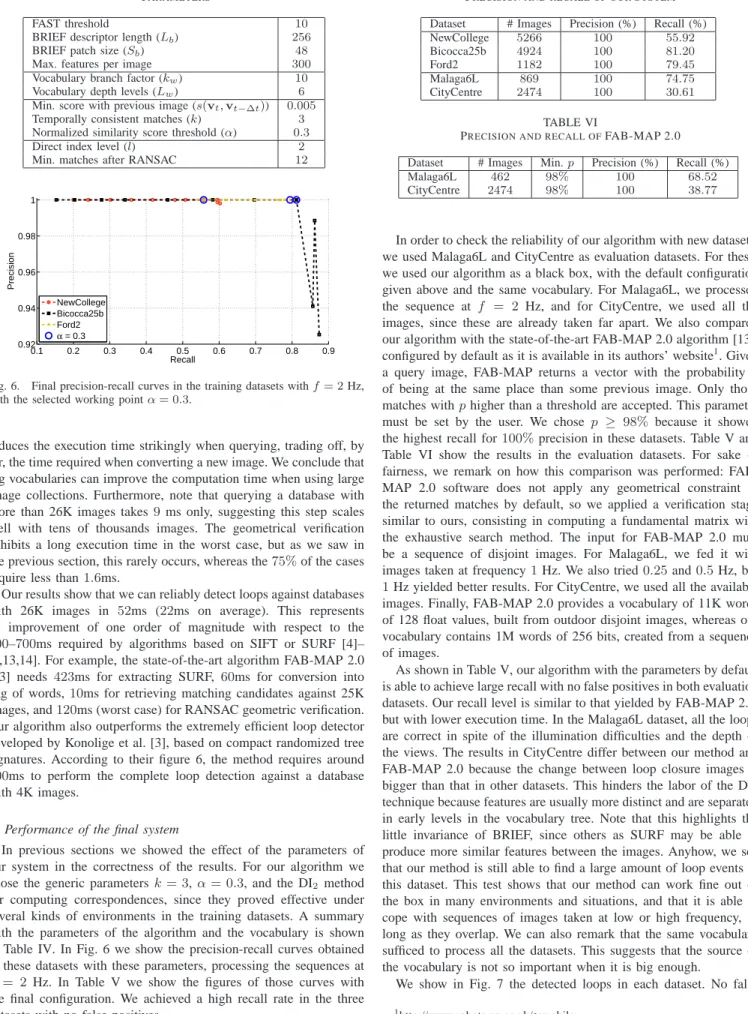
0.1 0.2 0.3 0.4 0.5 0.6 0.7 0.8 0.9 0.92 0.94 0.96 0.98 1 Recall Precision NewCollege Bicocca25b Ford2 α = 0.3
Fig. 6. Final precision-recall curves in the training datasets withf= 2Hz, with the selected working pointα= 0.3.
reduces the execution time strikingly when querying, trading off, by far, the time required when converting a new image. We conclude that big vocabularies can improve the computation time when using large image collections. Furthermore, note that querying a database with more than 26K images takes 9ms only, suggesting this step scales well with tens of thousands images. The geometrical verification exhibits a long execution time in the worst case, but as we saw in the previous section, this rarely occurs, whereas the75%of the cases require less than1.6ms.
Our results show that we can reliably detect loops against databases with 26K images in 52ms (22ms on average). This represents an improvement of one order of magnitude with respect to the 300–700ms required by algorithms based on SIFT or SURF [4]– [6,13,14]. For example, the state-of-the-art algorithm FAB-MAP 2.0 [13] needs 423ms for extracting SURF, 60ms for conversion into bag of words,10ms for retrieving matching candidates against 25K images, and120ms (worst case) for RANSAC geometric verification. Our algorithm also outperforms the extremely efficient loop detector developed by Konolige et al. [3], based on compact randomized tree signatures. According to their figure 6, the method requires around 300ms to perform the complete loop detection against a database with 4K images.
F. Performance of the final system
In previous sections we showed the effect of the parameters of our system in the correctness of the results. For our algorithm we chose the generic parameters k= 3, α= 0.3, and the DI2 method for computing correspondences, since they proved effective under several kinds of environments in the training datasets. A summary with the parameters of the algorithm and the vocabulary is shown in Table IV. In Fig. 6 we show the precision-recall curves obtained in these datasets with these parameters, processing the sequences at f = 2 Hz. In Table V we show the figures of those curves with the final configuration. We achieved a high recall rate in the three datasets with no false positives.
TABLE V
PRECISION AND RECALL OF OUR SYSTEM
Dataset # Images Precision (%) Recall (%) NewCollege 5266 100 55.92 Bicocca25b 4924 100 81.20 Ford2 1182 100 79.45 Malaga6L 869 100 74.75 CityCentre 2474 100 30.61 TABLE VI
PRECISION AND RECALL OFFAB-MAP 2.0
Dataset # Images Min.p Precision (%) Recall (%)
Malaga6L 462 98% 100 68.52
CityCentre 2474 98% 100 38.77
In order to check the reliability of our algorithm with new datasets, we used Malaga6L and CityCentre as evaluation datasets. For these, we used our algorithm as a black box, with the default configuration given above and the same vocabulary. For Malaga6L, we processed the sequence at f = 2 Hz, and for CityCentre, we used all the images, since these are already taken far apart. We also compared our algorithm with the state-of-the-art FAB-MAP 2.0 algorithm [13], configured by default as it is available in its authors’ website1. Given a query image, FAB-MAP returns a vector with the probability p of being at the same place than some previous image. Only those matches withphigher than a threshold are accepted. This parameter must be set by the user. We chose p ≥ 98% because it showed the highest recall for100%precision in these datasets. Table V and Table VI show the results in the evaluation datasets. For sake of fairness, we remark on how this comparison was performed: FAB-MAP 2.0 software does not apply any geometrical constraint to the returned matches by default, so we applied a verification stage similar to ours, consisting in computing a fundamental matrix with the exhaustive search method. The input for FAB-MAP 2.0 must be a sequence of disjoint images. For Malaga6L, we fed it with images taken at frequency1Hz. We also tried0.25and0.5Hz, but 1Hz yielded better results. For CityCentre, we used all the available images. Finally, FAB-MAP 2.0 provides a vocabulary of 11K words of 128 float values, built from outdoor disjoint images, whereas our vocabulary contains 1M words of 256 bits, created from a sequence of images.
As shown in Table V, our algorithm with the parameters by default is able to achieve large recall with no false positives in both evaluation datasets. Our recall level is similar to that yielded by FAB-MAP 2.0, but with lower execution time. In the Malaga6L dataset, all the loops are correct in spite of the illumination difficulties and the depth of the views. The results in CityCentre differ between our method and FAB-MAP 2.0 because the change between loop closure images is bigger than that in other datasets. This hinders the labor of the DI2 technique because features are usually more distinct and are separated in early levels in the vocabulary tree. Note that this highlights the little invariance of BRIEF, since others as SURF may be able to produce more similar features between the images. Anyhow, we see that our method is still able to find a large amount of loop events in this dataset. This test shows that our method can work fine out of the box in many environments and situations, and that it is able to cope with sequences of images taken at low or high frequency, as long as they overlap. We can also remark that the same vocabulary sufficed to process all the datasets. This suggests that the source of the vocabulary is not so important when it is big enough.
We show in Fig. 7 the detected loops in each dataset. No false 1http://www.robots.ox.ac.uk/∼mobile
detections were fired. The trajectory in NewCollege is based on partially corrected GPS data, so that some paths are inaccurately depicted. Note that part of the vehicle where the camera is mounted is present in all the images of Ford2; we removed the features that lay on it. We see that detecting55.92%of the loop events is enough to, for example, widely cover all the loop areas in a long trajectory as that of NewCollege. On the right hand side of Fig. 7, we show examples of correct loop detections in the training and evaluation datasets, with the final corresponding features. These examples make the limited scale invariance of BRIEF descriptors apparent. Most of the features matched are distant, as we noticed in Section VI-B. The scale change that BRIEF tolerates is shown in the correspondences that are close to the camera in NewCollege and Bicocca25b, and those on the cars in Malaga6L. However, BRIEF cannot handle such a large scale change as that produced on the car in CityCentre, where all correspondences were obtained from distant features. On the other hand, whenever features are matched in background objects, a loop can be detected despite medium translations. This is visible in CityCentre and Ford2, where the vehicle moved along different lanes of the road.
VII. CONCLUSIONS
We have presented a novel technique to detect loops in monocular sequences. The main conclusion of our work is that binary fea-tures are very effective and extremely efficient in the bag-of-words approach. In particular, our results demonstrate that FAST+BRIEF features are as reliable as SURF (either with 64 dimensions or with 128 and without rotation invariance) for solving the loop detection problem with in-plane camera motion, the usual case in mobile robots. The execution time and memory requirements are one order of magnitude smaller, without requiring special hardware.
The reliability and efficiency of our proposal have been shown on five very different public datasets depicting indoor, outdoor, static and dynamic environments, with frontal or lateral cameras. Depart-ing from most previous works, to avoid over-tunDepart-ing, we restricted ourselves to present all results using the same vocabulary, obtained from an independent dataset, and the same parameter configuration, obtained from a set of training datasets, without peeking on the evaluation datasets. So, we can claim that our system offers robust and efficient performance in a wide range of real situations, without any additional tuning.
The main limitation of our technique is the use of features that lack rotation and scale invariance. It is enough for place recognition in indoor and urban robots, but surely not for all-terrain or aerial vehicles, humanoid robots, wearable cameras, or object recognition. However, our demonstration of the effectiveness of the binary bag-of-words approach paves the road for the use of new and promising binary features such as ORB [21] or BRISK [20], which outperform the computation time of SIFT and SURF, maintaining rotation and scale invariance.
As a final contribution to the community, the implementation of our algorithm is publicly available online2.
REFERENCES
[1] B. Williams, M. Cummins, J. Neira, P. Newman, I. Reid, and J. D. Tard´os, “A comparison of loop closing techniques in monocular SLAM,” Robotics and Autonomous Systems, vol. 57, pp. 1188–1197, December 2009.
[2] M. Cummins and P. Newman, “FAB-MAP: Probabilistic Localization and Mapping in the Space of Appearance,” The International Journal of Robotics Research, vol. 27, no. 6, pp. 647–665, 2008.
[3] K. Konolige, J. Bowman, J. Chen, P. Mihelich, M. Calonder, V. Lepetit, and P. Fua, “View-based maps,” The International Journal of Robotics Research, vol. 29, no. 8, pp. 941–957, July 2010.
2http://webdiis.unizar.es/∼dorian
[4] A. Angeli, D. Filliat, S. Doncieux, and J. Meyer, “Fast and incremental method for loop-closure detection using bags of visual words,” IEEE Transactions on Robotics, vol. 24, no. 5, pp. 1027–1037, 2008. [5] P. Pini´es, L. M. Paz, D. G´alvez-L´opez, and J. D. Tard´os, “CI-Graph
SLAM for 3D Reconstruction of Large and Complex Environments using a Multicamera System,” International Journal of Field Robotics, vol. 27, no. 5, pp. 561–586, September/October 2010.
[6] C. Cadena, D. G´alvez-L´opez, J. D. Tard´os, and J. Neira, “Robust place recognition with stereo sequences,” IEEE Transactions on Robotics, vol. 28, no. 4, p. (to appear), 2012.
[7] J. Sivic and A. Zisserman, “Video Google: A text retrieval approach to object matching in videos,” in IEEE International Conference on Computer Vision, vol. 2, October 2003, pp. 1470–1477.
[8] D. Nister and H. Stewenius, “Scalable recognition with a vocabulary tree,” in IEEE Conference on Computer Vision and Pattern Recognition, vol. 2, 2006, pp. 2161–2168.
[9] M. Calonder, V. Lepetit, C. Strecha, and P. Fua, “BRIEF: Binary Robust Independent Elementary Features,” in European Conference on Computer Vision, vol. 6314, September 2010, pp. 778–792.
[10] E. Rosten and T. Drummond, “Machine learning for high-speed corner detection,” in European Conference on Computer Vision, vol. 1, May 2006, pp. 430–443.
[11] H. Bay, A. Ess, T. Tuytelaars, and L. V. Gool, “SURF: Speeded Up Robust Features,” Computer Vision and Image Understanding, vol. 110, no. 3, pp. 346–359, June 2008.
[12] D. G´alvez-L´opez and J. D. Tard´os, “Real-time loop detection with bags of binary words,” in IEEE/RSJ International Conference on Intelligent Robots and Systems, September 2011, pp. 51–58.
[13] M. Cummins and P. Newman, “Appearance-only SLAM at large scale with FAB-MAP 2.0,” The International Journal of Robotics Research, vol. 30, no. 9, pp. 1100–1123, August 2011.
[14] R. Paul and P. Newman, “FAB-MAP 3D: Topological mapping with spatial and visual appearance,” in IEEE International Conference on Robotics and Automation, May 2010, pp. 2649–2656.
[15] D. Lowe, “Distinctive image features from scale-invariant keypoints,” International Journal of Computer Vision, vol. 60, no. 2, pp. 91–110, November 2004.
[16] S. Heymann, K. Maller, A. Smolic, B. Froehlich, and T. Wiegand, “SIFT implementation and optimization for general-purpose GPU,” in International Conference in Central Europe on Computer Graphics, Visualization and Computer Vision, January 2007.
[17] M. Grabner, H. Grabner, and H. Bischof, “Fast approximated SIFT,” in Asian Conference on Computer Vision. Springer, 2006, pp. 918–927. [18] Y. Ke and R. Sukthankar, “PCA-SIFT: a more distinctive representation
for local image descriptors,” in IEEE Conference on Computer Vision and Pattern Recognition, vol. 2, June 2004, pp. 506–513.
[19] M. Calonder, V. Lepetit, P. Fua, K. Konolige, J. Bowman, and P. Mi-helich, “Compact signatures for high-speed interest point description and matching,” in IEEE International Conference on Computer Vision, October 2010, pp. 357–364.
[20] M. C. Stephan Leutenegger and R. Siegwart, “BRISK: Binary Robust Invariant Scalable Keypoints,” in IEEE International Conference on Computer Vision, November 2011, pp. 2548 –2555.
[21] E. Rublee, V. Rabaud, K. Konolige, and G. Bradski, “ORB: An Efficient Alternative to SIFT or SURF,” in IEEE International Conference on Computer Vision, November 2011, pp. 2564–2571.
[22] D. Arthur and S. Vassilvitskii, “k-means++: The advantages of careful seeding,” in ACM-SIAM Symposium on Discrete Algorithms, January 2007, pp. 1027–1035.
[23] M. Smith, I. Baldwin, W. Churchill, R. Paul, and P. Newman, “The new college vision and laser data set,” The International Journal of Robotics Research, vol. 28, no. 5, pp. 595–599, May 2009.
[24] RAWSEEDS. (2007-2009) Robotics Advancement through Web-publishing of Sensorial and Elaborated Extensive Data Sets (Project FP6-IST-045144). [Online]. Available: http://www.rawseeds.org/rs/datasets [25] G. Pandey, J. R. McBride, and R. M. Eustice, “Ford campus vision and
lidar data set,” The International Journal of Robotics Research, vol. 30, no. 13, pp. 1543–1552, November 2011.
[26] J.-L. Blanco, F.-A. Moreno, and J. Gonz´alez, “A collection of outdoor robotic datasets with centimeter-accuracy ground truth,” Autonomous Robots, vol. 27, no. 4, pp. 327–351, November 2009.
[27] M. Muja and D. G. Lowe, “Fast approximate nearest neighbors with automatic algorithm configuration,” in International Conference on Computer Vision Theory and Application, February 2009, pp. 331–340.
Fig. 7. Loops detected by our system in the five datasets (from up to down: NewCollege, Bicocca25b, Ford2, Malaga6L, CityCentre), with some examples of correct loops detected in scenes with motion blur and slight scale and perspective change. On the right hand side, lines depict final corresponding features. On the left hand side, the trajectory of the robot is depicted with thin black lines in new places, and with thick red lines in revisited areas. There are no false positives in any case.