Dissertations & Theses Student & Alumni Scholarship, including Dissertations & Theses
2015
Adapting to a Virtual Learning Environment
Winston H. MaddoxAntioch University - PhD Program in Leadership and Change
Follow this and additional works at:http://aura.antioch.edu/etds
Part of theCommunity College Leadership Commons,Curriculum and Instruction Commons, Higher Education and Teaching Commons,Leadership Studies Commons,Online and Distance Education Commons, and theScholarship of Teaching and Learning Commons
This Dissertation is brought to you for free and open access by the Student & Alumni Scholarship, including Dissertations & Theses at AURA - Antioch University Repository and Archive. It has been accepted for inclusion in Dissertations & Theses by an authorized administrator of AURA - Antioch University Repository and Archive. For more information, please [email protected], [email protected].
Recommended Citation
Maddox, Winston H., "Adapting to a Virtual Learning Environment" (2015).Dissertations & Theses. 197. http://aura.antioch.edu/etds/197
ADAPTING TO A VIRTUAL LEARNING ENVIRONMENT
WINSTON H. MADDOX A DISSERTATION
Submitted to the Ph.D. in Leadership and Change Program of Antioch University
in partial fulfillment
of the requirements for the degree of Doctor of Philosophy
This is to certify that the Dissertation entitled:
ADAPTING TO A VIRTUAL LEARNING ENVIRONMENT prepared by
Winston H. Maddox
is approved in partial fulfillment of the requirements for the degree of Doctor of Philosophy in Leadership and Change.
Approved by:
Jon Wergin, Ph.D., Chair date
Elizabeth Holloway, Ph.D., Committee Member date
Marcus Tillery, Ph.D., Committee Member date
Copyright 2015 Winston H. Maddox All rights reserved
I want to thank my wife (Sheila) and our children (Rachel and Zachary) for their patience with me. They made the bigger part of the sacrifice for me to pursue a dream.
I am grateful for my mother and father Irene W. Maddox, and William O. Maddox, Jr, who provided a very strong and solid family environment where I could dream of obtaining college degrees in the midst of academic challenges, and what some would consider
insurmountable obstacles.
Thank you to my dissertation committee. I am indebted to Dr. Jon Wergin for believing in me and the value of my work. I could not have had a more supportive Advisor or Dissertation Chair. I could not have achieved this milestone without his support. I am honored to have my name in print with his! Thank you to Dr. Elizabeth Holloway for her technical input and analytical insight. Thank you to Dr. Marcus Tillery who believed I could complete this Ph.D. before I believed it. I will always be grateful to Dr. William Graves who saw value in my dissertation. I am indebted to the entire Antioch Ph.D. in Leadership and Change faculty for my personal transformation.
Thank you to Cohort 5 for their enthusiasm and support for my pursuit of a Ph.D., in addition my college colleagues who were instrumental in helping me achieve this goal. Thank you to Susan O’Brien, Jamil Watson, Ira Gerald, J. Howard, Mary McGriff, Denise Gray, Laura Sosa, Framarz Khoushab, Jerry Kuhl, Florin Neagu, Nicola Smith and Valarie Daniels for helping me to better understand research methodologies.
Finally, thank you to the many organizations who gave of their time to make this study possible.
This participatory action research (PAR) dissertation examines the experiences of five
experienced faculty transitioning from teaching in a traditional classroom to a virtual learning environment. The research participants used technology to deliver course material and reflected on the changes in their pedagogical practice. Data were collected using four phased sessions, including the completion of interview questions, individual interview video sessions, and group video sessions and the review of participant video validation postings. Research participants used journaling to reflect on their values, beliefs, assumptions, and experiences associated with teaching and learning. Research participants teaching in virtual learning environments were provided an avenue to develop an understanding of previous encounters with technology, attitudes toward technology, and the relationship they envisioned for the use of technology in their classrooms. The study concluded with the development of an “Introduction to Online Teaching for Experienced Faculty Workshop.” The results of this dissertation substantiated that faculty experience various disorienting dilemmas that correlate with a progressive
transformation, resulting in at least one case in a paradigm shift. The study also highlights the faculty participants’ concerns, issues, and perspectives of positivist versus constructivist teaching styles as a function of their participation. This dissertation is accompanied by 22 MP4 videos of the participants in this study (see List of Supplemental Files). This dissertation is available in open access in AURA http:/aura.antioch.edu and OhioLink ETD Center, www.ohiolink.edu/etd
Acknowledgements ... i
Abstract ... ii
List of Figures ... vii
List of Tables ... viii
List of Supplemental Files ... ix
Introduction ...1
Background of the Problem ...1
Teaching Online ...3
New Perspective on Teaching ...4
Another New Role: Instructional Designer and Facilitator ...5
Professional Development to Prepare Faculty to Teach Online ...7
Purpose of the Research ...9
Overview of the Theoretical Framework ...10
Key Elements of Transformative Learning ...10
Disorienting Dilemma ...11
Critical Reflection ...11
Review of Literature ...15
Introduction ...15
Literature Reviewed ...15
Participatory Action Research ...18
New Culture of Learning ...24
Introduction ...32
Pilot Study ...32
How Experienced Educators Approach Virtual Learning Environments ...36
Focus of the Study ...38
PAR Partnership...40
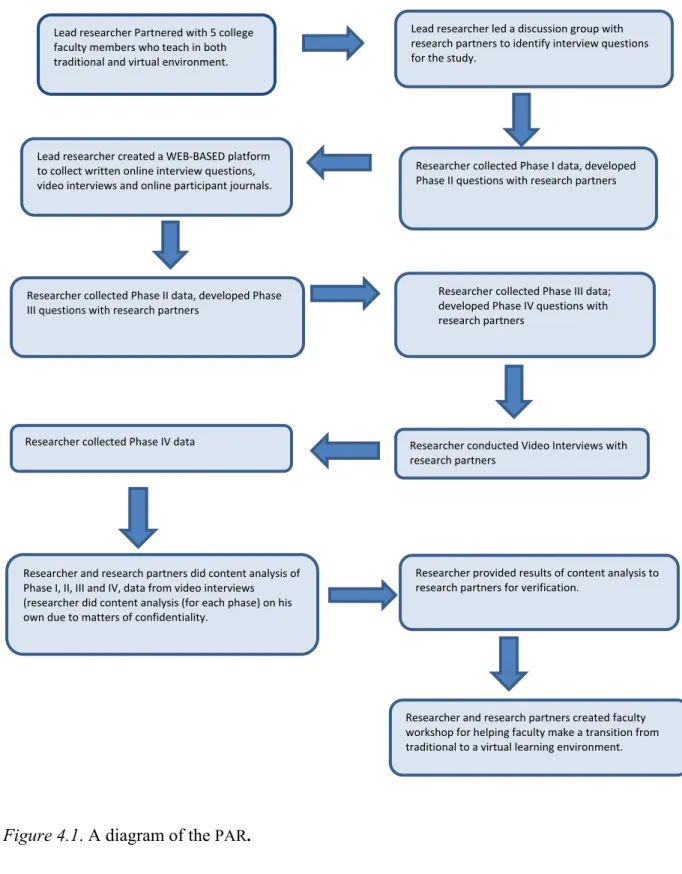
Study Procedures ...41
Discussion Group ...43
Instructions ...44
Research Data Collected ...44
Interviews and Journaling ...50
Coding ...50
Data Analysis ...52
Ethical Assurances ...54
Data Collection and Analysis...55
Selection of Research Participants ...56
Instructions for Research Participants ...59
Phase I-III: Individual Research Participant Sessions ...60
Phase I Questions ...62
Phase II Questions...69
Phase III Questions ...73
Phase IV Questions ...79
Conclusion ...84
Summary and Discussion of Findings ...87
Problem Summary and Methodology ...87
Review and Discussion of the Main Conclusion of the Study...90
Phase I-IV Interviews via Vidyo Sessions ...92
Significant Learning From Phase I Interviews ...93
Technology Issues ...93
Pedagogical Themes ...93
Research Challenges ...94
Significant Learning From Phase II Interviews ...94
Technology Issues ...94
Pedagogical Themes ...94
Research Challenges ...95
Significant Learning From Phase III Interviews ...96
Technology Issues ...96
Pedagogical Themes ...96
Research Challenges ...99
Significant Learning From Phase IV Interviews ...99
Technology Issues ...99
Pedagogical Themes ...99
Research Challenges ...100
Pedagogical Themes ...101
Research Challenges ...102
Significant Learning From PAR Group Sessions ...102
Technology Issues ...102
Pedagogical Themes ...103
Research Challenges ...103
Limitations of the Study...104
Sample Size ...104
Data Collection Measurement Tool ...104
Self-Reported Data...104
Practical Implications and Research Contribution ...105
Recommendations for Faculty Development ...106
The Introduction to Online Teaching for Experienced Faculty Workshop ...107
Concluding Remarks and Reflections on the Process ...109
Need for Future Research ...111
Appendix ...112
Appendix A Online Enrollment Example of Growth ...113
Appendix B Data Collection ...114
Appendix C Consent Form ...116
Appendix D Sample of Actual Participant Feedback From Each Phase ...118
Figure 2.1 Action Research Diagram ...21 Figure 4.1 A Diagram of the PAR ...42
Table 5.1 Description of Research Participants ...58
Table 5.2 Participant Instructions and PAR Overview ...59
Table 5.3 Sample Phase I Response Quote(s) From Participants ...64
Table 5.4 Sample Phase II Response Quote(s) From Participants ...70
Table 5.5 Sample Phase III Response Quote(s) From Participants ...75
Table 5.6 Sample Phase IV Response Quote(s) From Participants ...81
Filename Type Duration Size 1.1 Participant_S MP4 1:21 2,496 1.2_Participant_J MP4 0:49 2,094 1.3_Participant_D MP4 2:04 5,427 1.4_Participant_F MP4 2:30 8,276 1.5_Participant_I MP4 0:45 1,801 2.1_Participant_S MP4 1:21 2,621 2.2_Participant_J MP4 0:43 2,710 2.3_Participant_D MP4 1:56 4,592 2.4_Participant_F MP4 0:42 2,216 2.5_Participant_I MP4 0:37 1,609 3.1_Participant_S MP4 1:32 2,956 3.2_Participant_J MP4 1:12 2,560 3.3_Participant_D MP4 2:04 3,262 3.4_Participant_I MP4 1:19 3,259 3.5_Participant_F MP4 3:02 9,073 4.1_Participants_JJ MP4 1:43 4,866 4.2_Participant_F MP4 3:02 5,042 4.3_Participant_S MP4 0:32 2,177 MP4 1:24 1,552 MP4 1:02 4,106 MP4 1:45 4,022 4.4_Participants_SF 4.5_Participants_SF 4.6_Participant_I 4.7_Participant_I MP4 0:45 1,834
Introduction
Higher education and technology have become inextricably intertwined. Even the most technologically resistant instructor has to use technology to report enrollment statistics and submit grades. Although there are those who resist and continue to use overheads and demand hard copies, it is becoming increasingly difficult to avoid the technology of computer-generated presentation slides and computer-submitted papers and projects. The English department at a local county community college, for example, has long been resistant to technology use, not seeing its applicability. But now, according to Professor Malcom Edwards, a young English professor who has always embraced technology, composition classes use the Purdue Online Writing Lab (OWL) rather than an MLA style guide as the primary resource for citing references in papers and provide classes on finding sources in online databases rather than in books and hard copy journals. “It would be impossible for anyone teaching a class that includes research to remain ignorant about online databases and Internet sources,” said Edwards. In addition to making it easier to do research, continues Edwards, “It’s the only way to reach a new generation of kids who’ve never been without computers and who learn that way by using computers” (M. Edwards, personal communication, 2011).
Background of the Problem
An even greater challenge, especially at the community college level, are new course delivery systems, for example, Virtual Campuses, which are becoming increasingly prevalent. From the fall of 2009 to the fall of 2011, the number of online versions of traditional classes in the technology department grew more than 680% (see Appendix A). Moreover, the average distance learner is more likely to be older, hold a full-time job, or have other challenges that make it difficult for the student to come to the campus (Makoe, Richardson, & Price, 2008). At
Mercer County Community College the average age of full-time matriculating students is 25; the average age of distance learners is 31 (Intuitional Research Office, Mercer County Community College, 2011).
These mature students are, paradoxically, less experienced at being students. The entire process of going back to being students is adjustment enough, but the process of learning in an unfamiliar way can be what Mezirow called a disorienting dilemma (1995). What this means is that some crisis in the student’s life, combined with the crisis of learning in a new style, creates a transformative change in the student. For example, especially in the present recessionary
economy, we might witness a mature worker without much formal higher education who is out of work. Through a government stimulus program this worker is given funds to retrain. This worker probably has less computer experience than the more traditional student. Learning in a distance learning environment creates an additional source of disorientation for this individual, making it more likely that the change that takes place as a result of adapting to a new style of learning will be a transformative one. However, there is a real danger that the disorientation leads the student to give up the pursuit of learning, rather than to transform. For the mature student, such a departure from the learning community is likely to be final. A younger student is more likely to try again. The positive and negative outcomes can be of a greater magnitude for the mature student than for the traditional student. Teaching perspectives comprise a critical success factor. Positivist and constructivist approaches to teaching create different learning environments.
Positivists view classrooms as teacher-centered environments where the instructor is the conduit through which information flows, from the reservoir of accepted truths to the students’ minds (King, 1994, p. 4). In most classrooms, the instructor lectures and the students listen
(sometimes) and take notes. This sage on the stage transmittal method of instructor to the
students, who memorize information and reproduce it for exams assumes the students’ brains are empty vessels requiring teachers to input knowledge (King, 1994).
On the other hand constructivist learning is a student-centered method where instructors facilitate student interaction, using materials, interactive projects, and group learning in a
knowledge-producing endeavor (King, 1994, p. 3). This model employs collaboration where the student functions as a sculptor, using information, prior knowledge, and experiences to develop new knowledge and reorganize existing knowledge.
Constructivist faculty see themselves more as a guide on the side. The sage on the stage is a positivist pedagogical approach. Constructivist knowledge is developed as a result of people working or studying together. Espinoza (2012) suggests yet another paradigm shift: “[We should] instead consider the need to adapt to the times for the sake of the student. I suggest we are already beyond guide on the side and our role today is that of co-learner––we are learning with” (p. 31). Espinoza’s observation resonates with my research interest in that educators may have subject matter expertise yet find themselves learning from or learning with when it comes to the use of technology in pedagogy.
Chizmar and Williams (2001) firmly believe that pedagogy drives technology. However, they also note, “Nothing frustrates students, especially technophobes, more than instructional technology that doesn’t work” (p. 18), supporting the concept of quality online teaching that includes a real paradigm shift by educators.
Teaching Online
All too often instructors have limited or no virtual experience as a student or a teacher; faculty experience considerable differences when they teach online. Several studies have found
that faculty are very aware of that which is unfamiliar, different, or absent. They note that roles seem to change when moving to the online environment (Conceicao, 2006; Conrad, 2004; Diekelmann, Schuster, & Nosek, 1998; Morris, Xu, & Finnegan, 2005). Another important point are the changes in face-to-face education. The reduction of face-to-face contact and interaction with students is a common concern shared by faculty teaching online (Conrad, 2004;
Diekelmann et al., 1998). In addition, online teaching appears to place demands on faculty that are different from those encountered in a traditional classroom (Cowham & Duggleby, 2005). Experienced faculty comment on the extensive planning and attention to detail required to teach online (Hinson & LaPrairie, 2005). For example, some instructors believe all class handouts must be prepared in advance, taking away the spontaneity possible in the face-to-face classroom (Conceicao, 2006; Diekelmann et al., 1998). In these cases, the degree of advance preparation and organization equates to more course development time, which gives the online course the distinction of being labor-intensive (Conceicao, 2006).
New Perspective on Teaching
Barker (2003) noted that moving from a traditional classroom to a virtual environment requires a shift from teacher-centered instruction to learner-centered instruction. This change in the delivery of instruction and acquisition of knowledge modifies faculty’s instructional roles, which places a greater responsibility for learning on the students (Barker, 2003; Gallant, 2003). Such a shift of responsibility can be attributed to the increased opportunity and responsibility for student participation in the online environment (Jaffee, 1997), often observed in student
discussion boards. In traditional classrooms the introverted students can sit passively and choose not to participate, but receive credit. However, in the online classroom participation is a
requirement, and discussion boards require every student to contribute. The online environment provides ample opportunity for this to occur.
Another New Role: Instructional Designer and Facilitator
Morris et al. (2005) and Von Holzen (2000) state that another change in faculty roles and responsibilities is the separation of curriculum development, content development, delivery, tutoring, student support services, administration, and assessment from the responsibility of individual faculty members to multiple individuals or departments (Dirr, 2003). Sometimes virtual faculty have a team or group of individuals helping them develop the materials required to teach an online course. This individual or team might provide suggestions of models for instructional design as well as technical support. Such collaboration often occurs in conjunction with faculty release time. This modification in faculty roles and responsibilities will often redefine a faculty position or result in the creation of a new one.
Barker (2003) suggests that altered roles are inevitable in this changing environment. According to Diekelmann et al. (1998) other teaching roles develop when moving from classroom teaching to virtual education. For example, in a virtual learning environment there exists the possibility to develop different teaching and learning roles with a less positivist structure (Jaffee, 1997). Faculty have the opportunity to begin to move away from their role as sage on the stage deliverers of content to constructivist-based facilitators of collaborative learning (Barker, 2003). This potential role change could result in experienced teachers finding themselves as beginning teachers in the online environment (Diekelmann et al., 1998; Gallant, 2000; King, 2002; Lawler, King, & Wilhite, 2004). The virtual class environment challenges experienced first time online instructors’ self-concept as subject experts and sometimes results in their resistance to online teaching, due, in part, to their loss of identity. Faculty who have not yet
taught an online course may perceive their online teaching expertise at the novice and advanced beginner levels (Tallent-Runnels et al., 2005).
A shift to online instructional delivery provides an opportunity for faculty to reflect on, evaluate, and modify their current teaching practices. The potential opportunity to develop new ideas and embrace different concepts about teaching and learning (Tallent-Runnels et al., 2006) allows faculty to restructure traditional classroom roles and relationships (Jaffee, 2003). The virtual educational environment has been described as a new dimension within the field of education that prevents faculty from teaching in their most comfortable style and setting the stage for reflection and evaluation of their teaching practices (Diekelmann et al., 1998).
Effective virtual teaching is not intuitive (Palloff & Pratt, 2001). Methods that may have worked in traditional classrooms may hinder students in the virtual environment. Faculty must develop a different perspective of teaching and the learning environment in order to prepare for online delivery of instruction (King, 2002), often resulting in a review and evaluation of their responsibilities and practices as teachers (West, Waddoups, &Graham, 2007).
According to Cranton (2006a) institutions need to evaluate comprehensive adult learning theories and develop a process that facilitates examining, questioning, validating, and revising transformative learning theory. For this process to succeed, faculty would need to examine their “problematic frames of reference to make them more inclusive, discriminating, open, reflective, and emotionally able to change” (Cranton, 2006b, p. 36). Institutions need to develop and implement reflective and supportive faculty development opportunities that foster paradigm shifts that allow this type of faculty change. There appears to be a void in this space.
Professional Development to Prepare Faculty to Teach Online
There is a need for faculty development in the virtual environment, and a variety of models are being implemented. Some institutions allow faculty to learn using the old fashioned on-the-job-training method. Other institutions provide structured courses providing online course development that allows experienced faculty to adapt traditional material to the virtual
environment. The most successful development programs provide faculty realistic online experiences that provide a step-by-step training process (Diekelmannet al., 1998; Hinson & LaPrairie, 2005; King, 2002).
The successful development programs provide activities meant to develop various online teaching competencies. Many of the online competencies are applicable in traditional
face-to-face classrooms. Some of the competencies include modeling tone, expecting high quality interactions among students, providing clear and concise grading criteria or grading rubrics, allowing and encouraging diverse perspectives discussions, providing clear assignment dates, and establishing a non-threatening classroom atmosphere (Mandernach, Donnelli, Dailey, & Schulte, 2005). Given the competency similarities, one might wonder what is so different about teaching in a virtual environment that faculty roles are so different that they are once again considered to be beginning teachers. Maybe it is not so much the virtual environment but the challenge of evaluating how information is shared that causes so much change in faculty teaching practices as they transition to the virtual environment online.
Considering the teaching competencies required of virtual instructors, the issue becomes how one develops these skills. Covington, Petherbridge, & Warren (2005) suggest structured peer group, self-paced tutorials, faculty guided practice sessions, and discussions. Their
perception is that faculty will choose to participate in the most appropriate area where the learning would apply directly to their course structure or method of delivery.
This kind of flexibility would provide faculty with the support similar to the experience of their actual needs, building in an affinity. Some two and four year institutions have already implemented a variety of development solutions. Some require mandatory training for all faculty who teach online, with programs ranging from a 6-week intensive program to a 6-month course (Abel, 2005). Some institutions offer an immersive one week program in which faculty are trained in the use of the technologies, procedures, and pedagogies required for teaching online courses (Covington et al., 2005). Another method uses an interactive Web site and CD-ROM that provides the elements needed to develop online courses. Some universities provide streamed videos as a way to share current projects with other faculty.
One of the most important considerations when changing from a traditional classroom to a virtual environment is to be cognizant of the changed environment (Tallent-Runnels et al., 2005; Barker, 2003; Diekelmann et al., 1998; Jaffee, 2003). Faculty can move away from their role as deliverers of content to constructivist facilitators (Barker, 2003; Conrad, 2004; Pedersen & Liu, 2003). The results of my own research suggest that (a) the best distance learning contains multi-sensory learning opportunities and (b) training professors to teach differently in a
distance-learning environment is paramount.
The literature provides clear information on the changing roles, responsibilities, and challenges facing traditional classroom faculty moving to the virtual environment. The literature is however devoid of information between the thought of teaching online and the actual
Purpose of the Research
Professional development programs to prepare faculty to teach online are needed, not only to learn the technical aspects of teaching online, but, more importantly, to consider new and different ways of teaching. Too many faculty professional development programs have
concentrated on instrumental knowledge, including the conversion of course material for the online environment, such as adding audio to slideshows or uploading syllabi to a course
management system used for course delivery. These programs often overlook or only skim over the communicative knowledge needed to be successful in the online classroom. This might include how to establish an online teaching presence, foster a rapport with students, and create an environment where students develop relationships with each other. Preparing to teach online also presents an opportunity to rethink assumptions and beliefs about teaching, which may serve as a catalyst for change.
The facilitators designing these professional development programs need to recognize faculty as adult learners and their professional development courses as adult learning. This brings all of the theory, research, and literature from the field of adult education and its effective
principles, practices, strategies, applications, and experience to the facilitator (Lawler, 2003). The purpose of this study is (a) to identify challenges experienced faculty face in the transition from teaching in traditional classrooms to virtual learning environments, and (b) to identify the psychological phenomena and the paradigm shift(s) required to teach in a different environment. A qualitative design, more specifically, Participative Action Research (PAR) is the most
appropriate design for this research. The research question that will guide the course of this research is as follows: What kind of paradigm shifts must an experienced educator make in order to teach in an online learning environment?
Overview of the Theoretical Framework
Mezirow (1978) stated there are two types of transformation in meaning perspective. He calls them ‘epochal’ transformations and ‘incremental’ transformations (Mezirow, 1978,
p. 1991a). Epochal transformation, the transformation of a meaning perspective, is directly experienced. Insight is a familiar concept, and an epochal transformation would be considered a very deep insight because it’s a conscious experience of a transformation from a state of
unawareness to a state of awareness.
An incremental transformation, on the other hand, is the result of small shifts in meaning schema that, over time, perhaps over months or years, lead a learner to slowly recognize that a meaning perspective has shifted or changed. With incremental transformation there is a growing awareness that a meaning perspective has changed, rather than a direct experience of change. This is a type of retrospective remembering, for example, individuals remembering a belief that they could never complete a significant project successfully, yet finding they have completed a university degree. Both incremental and epochal transformations assume there is a conscious appreciation of a shift in meaning perspective in order to be called transformative.
Key Elements of Transformative Learning
According to Mezirow (1978, 1991a), the elements of “disorienting dilemmas,” “critical reflection,” and “rational discourse” are key to bringing about transformative learning. Mezirow asserted that experiencing one or a combination of these elements may lead to transformative learning. It is important to note that a person can utilize all of these elements and not necessarily have a transformative learning experience. Transformative learning may occur as a wholly linear process, or it may be stepwise or disjointed (Coffman as cited in Taylor, 1997). The path to a transformative learning experience is “individualistic, fluid and recursive” (Taylor, 2000,
p. 292). It is clear that Mezirow’s transformation in transformation theory is in many ways a description of a number of elements that show a recognizable pattern which has led to a consciously understood, permanent, and integrated positive directional shift in a person’s meaning perspective.
Disorienting dilemma. Mezirow (1978, 1991a) referred to a disorienting dilemma as a
type of significant stimulus that leads many people to undergo a meaning perspective
transformation. A disorienting dilemma is a dilemma that causes a significant level of disruption or disturbance in a person. A disorienting dilemma could be as extreme as the death of a
significant other or a close friend, a life-threatening illness, a divorce, or a job loss. It could be a modest dilemma such as engaging in a professional development program, attending a
university, beginning a new career, or reading a particularly disturbing book. One possible result of this disorienting dilemma is that the disoriented individuals are led to examine and reflect on why they are doing what they are doing at this particular time in their lives.
The disoriented individuals may also examine the beliefs and implicit or tacit
assumptions underlying their own beliefs and subsequent actions, a process that Mezirow (1978, 1991a) calls critical reflection. When the disoriented individuals do this with others, it brings in the third element of rational discourse. Mezirow suggests that self-examination through critical reflection and rational discourse might not occur without the disorienting dilemma taking place (Mezirow, 1991a).
Critical reflection. Mezirow (1978, 1991a) considers critical reflection an important
aspect of his theory. It is the process whereby a person intentionally construes new meanings through critically examining one’s beliefs or a set of beliefs. Mezirow presents critical reflection as a process that can occur in many ways and through many avenues. Critical reflection includes
identifying embedded assumptions as well as considering these assumptions in an objective and rational manner through conscious reflection. Mezirow (1991, 2000) describes three main frames for critical reflection: content reflection, sociolinguistic habits of mind, and epistemic habit of mind.
Content reflection is the initial aspect of critical reflection, which is reflection based on what happens, how it happens, and a review of the data available about an area of concern. For instance, in assessing someone’s leadership, we would reflect on the data available on the types of leadership they have exhibited.
“Sociolinguist habits of the mind are content reflection questions that take a generic form” (Cranton, 2006b, p. 239). One might ask questions about social norms or political or social issues. Epistemic habits of the mind are content reflection issues that relate to obtaining knowledge about moral, ethical, and philosophical concepts (Mezirow, 2000).
This conceptual framework—disorienting dilemmas, critical reflection, and paradigm shifts—will be the foundation of my participatory action research project. Disorienting dilemmas are handled in one of three ways: ignore the dilemma, manage the dilemma as transactional, or see the dilemma as leading to needed transformation (Raskin, Berstein, & Buck-Morss, 1987). Ignoring the dilemma allows the experience to take its natural course, accepting the inevitable outcome. The transactional approach to a disorienting dilemma uses a standard problem solving method, with little if any significant change, while the transformative approach requires an examination of every aspect of the dilemma, looking for opportunities to change one’s complete approach to the situation. “A transformation can occur from a
disorienting dilemma or from a gradual accumulation of experiences that challenge our previously established perspectives” (McQuiggan, 2011, p. 12). A transformation of habits of
mind can promote reflective learning and a transformation of frames of reference can promote transformative learning. With critical situational reflection and critical self-reflection,
experiences open new perspectives or challenges to existing frames of reference. Both types of reflection are integral to the process of transformation (Cranton, 2006b; Cranton & Wright, 2008; Mezirow, 2000).
This will result in a significant change, a paradigm shift. A paradigm shift occurs when a disorienting dilemma causes a transformative experience, resulting in a significant change to specific aspects of one’s pedagogy. A paradigm shift in pedagogy occurs when teachers have a significantly different perception of their “teaching selves.” Strengthening the long term relevance of teacher education to teacher change and development in the new era must be a key issue in the quest for a new paradigm for teacher education (Smylie, Bay, & Tozer, 1999). Paradigm shifts may also occur when a faculty member implements virtual teaching methods in a creative manner.
Overview of the Research Methodology
The objective of this study was to examine how faculty handle disorienting dilemmas and the process that may (or may not) lead to paradigm shifts. This Participatory Action Research project examined five experienced educators to determine what they will do in order to teach in an online environment. It included individual prior and post interviews with face-to-face and video group conferences; in addition, participants were required to maintain a journal and share in online discussions.
Participatory Action Research is a research technique that empowers the research
subjects. Action research, unlike typical academic research, uses the input of the study members to shape the next phase of the project at each step. This creates a progressive problem-solving
model that consists of 3 cycles of research, each to include the following steps: 1) study and plan, 2) take action, 3) collect and analyze the evidence, and 4) reflect on the data collected (Center for Collaborative Action Research).
Participatory Action Research requires a reciprocal relationship between asking the questions and taking action as one receives the answers to these questions (Anderson & Herr, 2009). In this study, the five participants formed a group for the purpose of evaluating the way in which online instructors are trained and the strategies and techniques that work for online
courses. As Altrichter and Posch (2009) pointed out, the action research style is a “powerful strategy for professional development of teachers and other professional practitioners” (p. 213), precisely because the pedagogical mindset lends itself to the repeated experiment/evaluate model.
The following chapters include: a literature review, to include a discussion of Participatory Action Research; a description of the research methodology and its associated processes; a reporting of the results of this study; and a summary and discussion of the findings of the study.
Review of Literature Introduction
Over the past decade, online education, distance education, or virtual education, as some prefer to call it, has become a permanent fixture within our society and has experienced
tremendous growth within higher education. According to the National Center for Education Statistics (National Center for Education [NCES], 2010), the number of degree-granting colleges and universities offering virtual education courses increased from 44% between 1997 and 1998 to 65% in 2010. Examples include for-profit educational institutions like Western Governors University (WGU) and the University of Phoenix, which now has 224,000 students enrolled at their virtual college, making it the largest institution of higher education in the nation.
Given its popularity among a wide range of students, both in the two-year and four-year college setting, one can reasonably conclude that online degree granting programs will continue to grow. These programs and courses provide students with the flexibility to learn at their own pace under the guidance of an instructor. Even though the demand for online education has dramatically increased, faculty at community and four-year colleges have been slow in fending off their fears and anxieties about embracing this relatively new technology. Understanding why faculty members remain ambivalent to online education is critical since this form of educational instruction is not likely to fade away anytime soon.
Literature Reviewed
According to the literature, faculty participation in teaching online courses is manifold, and studies elicit a wide range of concerns, including the rigors of the curriculum standards for online courses (National Education Association [NEA], 2000). In addition, faculty at two and four-year colleges often complain about the lack of time, institutional support, scholarly respect
in the areas of promotion and tenure, and overall training as primary reasons they tend to opt out of teaching in virtual education programs, leaving a majority of the distance education courses to adjunct faculty members (Bonk, 2001; Curry, Baldwin, & Sharpe, 1998; Lee, 2001; Northrup, 1997; O'Quinn & Corry, 2002; Parisot, 1997).
It should be noted that many instructors, particularly at the community college level, cite the high rate of failures and withdrawals from online courses as reason to be alarmed about the rise in online programs, particularly those granting full degrees online versus a hybrid teaching model. Aragon and Johnson (2008) noted that the withdrawal rates of students enrolled in online classes at the community college level is about 20% higher than students enrolled in traditionally based courses. To address this disparity and to lure full time faculty into the process, Nishikant (2009) forcefully argued that there is a need for a paradigm shift in the way that institutions introduce distance education to faculty. In other words, a new vocabulary is needed to talk about the importance of distance education for students who think that they know everything about technology and an older, aging faculty who tend to dismiss the belief that online education can ever be an effective teaching tool for the mastery of content material. Unless these issues are resolved, many faculty members will likely remain unwilling players in the distance education movement, and student achievement in these courses will continue to wane.
While 50% of faculty in a National Education Association survey noted negative or uncertain feelings about distance learning (NEA, 2000), there is a need to devote more time to researching faculty attitudes toward online and web-based teaching in a holistic manner (Dillon & Walsh, 1992; Williams, 2002). Much of the existing literature argues that intrinsic motivators are often used to entice faculty to become online teachers (Betts, 1998; Bonk, 2001; Lee, 2001; Rockwell et al., 1999; Schifter, 2000). For those instructors who do teach online, the experience
has been rewarding, with some stating that teaching via distance learning actually added to their overall job satisfaction and enhanced their pedagogical skills (Betts, 1998; Schifter, 2000). They note that teaching online provided optimal working conditions, as they were able to teach at any time and from any place (Rockwell et al., 1999). Avid online instructors have also expressed an interest in developing online collaboration opportunities with faculty from other institutions in the areas of online education (Murphrey & Dooley, 2000).
The degree of satisfaction among students in an online environment seems to be mixed. A 2009 survey conducted by the Instructional Technology Council noted that community college students are particularly attracted to online education for its flexible nature, noting that a
community college student is more likely to take a distance education course than a traditional 4-year student (Horn & Nevill, 2006). “When compared to students attending 4-year colleges, community college students are more likely to be older, female, Black or Hispanic, and from low-income families” (Horn & Nevill, 2006, p. iv). Although these students find online learning desirable, course completion rates continue to remain low. Ironically, the very reason that community college students prefer online learning (flexibility to balance outside commitments) may stand as an impediment to their success. In an effort to explain why community college students drop online courses with greater frequency, Aragon and Johnson (2008) surveyed 305 students from a rural community college. They found that most students indicated a lack of time due to personal commitments as a main reason for course withdrawal or failure. Moreover, grade point average (GPA) was noted as a strong predictor of success (Aragon & Johnson, 2008). These findings are particularly troublesome because they pose real obstacles for graduate completion rates.
There is a plethora of research about community college students and academic achievement in online education. The research in this dissertation is a participatory action research (PAR) study designed to add to our knowledge about the experience of teaching and learning in an online community college environment. There are multiple pieces to the puzzle and thus the literature discussed here is divided into four categories: PAR, teaching styles, online learning environments, and finally an examination of transformation in teacher education. The second and third categories overlap a great deal, of course. One cannot discuss approaches to online learning without first dealing with how different pedagogical approaches affect learning in traditional environments.
Participatory Action Research
Participatory action research (PAR) is action research for the purpose of professional or organization development. What makes PAR unique is its participatory nature. In PAR, the study subjects participate in framing the questions asked as they see where the research is taking them. All action research adapts as the answers to study questions are found; in PAR, the subjects, themselves, get to change the shape of the study. Unlike normal academic research, action research is dynamic. As information is gathered, the shape of the project changes, based on that information. As Altrichter and Posch pointed out, the action research style is a “powerful strategy for professional development of teachers and other professional practitioners” (2009, p. 213) because the pedagogical mindset lends itself to the cycle of experiment/evaluate/
implement. Indeed, according to Ferrance (2000), PAR refers specifically to that undertaken by a teacher “with the intent that the research will inform and change his or her practices in the
reflecting, and deciding on a course of action mirrors the everyday practices of good teachers, who are constantly updating their teaching methods in response to student reaction.
A good first primer on action research is Reason and Bradbury’s book Handbook of Action Research (2001). In the earlier edition, Pasmore (pp. 38–48) attributed the origins of participatory action research to Dewey’s (1933) drive to democratize education. Collier (1945, p. 39) and Lewin (1951, p. 39) used Dewey’s ideas, and Lewin coined the term action research. Collier used the idea of collaborative research in his work, attempting to improve race relations between whites and Native Americans. He found that far greater results could be achieved in an environment in which the researchers and participants act together to find solutions. Lewin, although he conducted much of the same research at the same time, is much more widely
credited with using action research as a tool. He worked in manufacturing environments to create collaborative learning organizations in which workers were encouraged to participate in
improving work processes. Lewin discovered that participation in the process led to a reduction in resistance to change. Workers bought into the process of changing if they felt they had a voice. This is a very important concept, on two levels, in education. If Lewin is accurate, instructors who have a say in the way technology is used in a learning environment are more likely to be enthusiastic about the technology; if faculty and students within those classrooms are encouraged to participate in their own learning environments, they, too, will be more likely to be successful in carrying out a shift in curriculum. This change from the inside out, when faculty and students actually embrace the constructivist way of teaching and learning, is much more likely to be transformative rather than transactional.
In The SAGE Handbook of Educational Action Research (2009), a number of action researchers discuss using action research in educational rather than business environments.
Orland-Barak and Leshem (2009), Israeli researchers, described a number of participatory action research projects that were carried out in Israel. One of the important findings for stage 2
described above—allowing students to participate in the research—is particularly relevant in community college attempts at action research. The researchers found that there may be dangers when a researcher/educator pushes students from various cultural backgrounds to be too
self-reflective/autobiographical. This is an insight that I have not seen elsewhere in the literature, but Orland-Barak and Lesham found that if these differences were not managed sensitively, conflict and a sense of alienation could result. She concluded that it was important to maintain a balance between divergent (conflict-oriented) and convergent (coming together) reflective processes. But her experience showed that success could be achieved if the students were helped “to move from a positivistic paradigm of representing research, to a qualitative, interpretive one” (2009, p. 169). In other words, the students were helped to create a transformative learning environment for themselves. Keiny, in her field testing, concluded that the more a “community of learners” can be created, with the personal relationships that imply the more participatory action research will be undertaken with positive results. Both researchers stress the ability of educational action research to be a “paradigm of change” (p. 174).
Goodnough (2008) presented a recent perspective on the nature of participatory action research. She looked at a group of K-12 teachers who were engaged in a PAR project very similar in its scope to the one I am undertaking. The teachers were meeting to try to improve science education across the curriculum. Goodnough concluded that “messiness and uncertainty” are inherent in PAR. Because many educators are uneasy with this uncertainty, this element must be discussed before starting a PAR project. The research questions that guided Goodnough’s study were as follows: “What types of challenges do teachers experience as they engage in PAR?
And, what are the teachers’ perceptions of PAR as a strategy for fostering teacher development?” (2008, p. 432). Goodnough (2008) defined participatory action research as the “systematic
inquiry into practice through cycles of planning, acting, observing, and reflecting” (p. 432). She views action research as a transformative activity—as a vehicle to improve teaching practices, curriculum, and student learning.
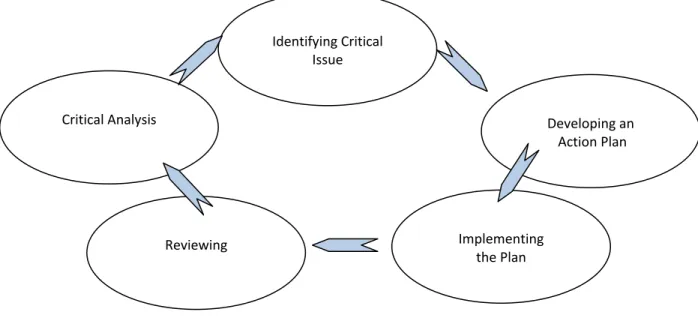
Figure 2.1 is an information technology (IT) systems representation of action research. The five-phase model provides another approach. At each step, or phase, participants identify a critical issue, develop an action plan, implement the plan, review the plan, and provide a critical analysis and once again identify the next critical issue as a result of the cycle.
Figure 2.1. Action research diagram.
The important feature is the continuous nature of the process, which is particularly well-suited to the subject of using (ever-changing) technology in the teaching process. It is the democratic nature of this cyclical approach that Fine (2010) referred to in her description of the
Identifying Critical Issue Developing an Action Plan Critical Analysis Implementing the Plan Reviewing
Institute for Participatory Action Research and Design at the City University of New York. Fine is particularly interested in high-conflict issues, like Brown v. Board of Education (1954), but her discussion of PAR as a tool for social change is just as pertinent to a huge pedagogical shift, like distance education, as it is to the social unrest of the 1960s.
What struck me again and again upon conducting this literature review were the
numerous discussions of teaching styles and the important role they have in fostering successful learning environments. What is missing from the discussion is an integrated approach to faculty paradigm shifts in course design that acknowledges and addresses all of the well-known research in teaching styles, acknowledges the preferences of students for different learning approaches, and also allows faculty to learn how to create a successful distance-learning curriculum. The PAR project described in this dissertation is an attempt to develop a method of class
development that can be replicated throughout the institution. This PAR also attempts to determine if a paradigm shift occurs when experienced faculty begin teaching in a virtual environment. While used at Mercer County Community College, I believe this methodology is applicable to colleges and universities increasing their number of distance-learning programs.
Riley and Moltzen (2011) attempted to use action research in a similar way in evaluating gifted and talented programs in New Zealand. Their stated purpose was to
develop innovative approaches to gifted and talented education that would result in improved outcomes for students;
research the impact of innovative approaches on teaching and learning; and disseminate knowledge, understanding, and models of effective practice. (Riley &
Given that these goals are quite similar to my own goals, I was interested in how PAR worked and what the authors’ conclusions were. The authors framed each stage of their action research on three simple questions:
1. What is going on? 2. Is it working? 3. How do we know?
The process entailed “planning, implementation, evaluation, and then the creation of a plan of action for improvement.” While they found the process useful, the authors say that “it was not always smooth sailing” (Riley & Moltzen, 2011, p. 26).
What were the advantages and problems? The most important of the advantages seems to be that “the use of a collaborative approach gave key stakeholders, including students and
parents, opportunities to have a voice; and to influence program development and implementation” (Riley & Moltzen, 2011, p. 26).
The most important stakeholders in the current study are the educators, who must feel they have a voice while they are being pushed to use a new model of teaching.
Difficulties identified by Riley and Moltzen (2011) included tension between the
researchers and stakeholders—in our situation, this would be administration versus faculty, and, to a lesser degree, faculty versus students. This is one area where it is very important for the PAR researcher to take the concerns and suggestions of the faculty seriously in order to reduce these tensions.
A second, related difficulty was defining the roles of the participants. This is particularly important as we expand our distance-learning programs, because the faculty are the content
specialists, and the facilitators are the distance-learning specialists. The more each can understand the others’ roles, the better.
New Culture of Learning
Thomas and Brown (2011) pointed out that, to most people, learning and schools are synonymous. However, with the advent of online learning “a new culture of learning is taking place in the academy” (p. 17). This has major implications, because it presents a challenge to the whole traditional student-teacher relationship. Older faculty have resisted the new tools, creating a disconnect with the current student population. Thomas and Brown liken this to pre-World War II-era teachers being confronted with overhead projectors and being forced to incorporate them into their teaching arsenal.
Thomas and Brown (2011) stress the necessity for expanding our definitions. For example, gaming software can be a collaborative teaching tool (p. 34). To teach game
development, one must embrace the whole game environment. This means completely redefining the traditional hierarchical teacher-student relationship and expanding it. In the gaming model, students form communities on their own and learn without a hierarchical presence. Young people, with their experience with social media, gaming, and other forms of interacting, are more at home in this non-traditional environment. Professors who can embrace this new world have discovered that the type of collaborative learning found in gaming is very powerful and can provide students with a reason to stay engaged.
According to Thomas and Brown (2011), the Internet has provided many examples that share more with the gaming model than the traditional classroom model of learning. As a matter of fact, some of the newer learning environments, like Khan Academy, do away with the model of classroom teacher entirely (p. 36). Other knowledge-sharing environments set up chat rooms
for issues people wish to learn about (e.g., health issues). If individuals wish to find alternatives or learn more about a medical condition, they can join a group discussion, contact doctors, or conduct additional research, all without having the guidance of an expert. Familiarity with the virtual learning environment changes classroom control; students feel less inhibited, and off-site computers provide students a different level of comfort. This makes it more likely that a student will challenge a professor. Thomas and Brown (2011) suggested that when we think of culture, we “think of existing ones. Individuals can choose to join a culture, but no individual(s) can create one. What becomes important in this traditional sense of culture is the process through which people join a culture and the transformation that occurs as a result” (p. 36).
As one becomes immersed in a culture, one undergoes a process of transformation in which one adapts to the customs of the new culture—or cannot integrate and elects instead to leave. Students, particularly those who want to learn at their own pace (for example, gifted students or academically challenged students), groups that in the past decided to leave at a higher rate than average, are most likely to embrace this new egalitarian learning environment.
This new culture of learning “thrives on change” (Thomas & Brown, 2011, p. 36) and is a thriving participatory learning environment. Virtual learning is really a PAR, because it’s always learning from its environment. As the learners improve, the teachers are forced to change (or leave). Note that this is the reverse of the non-PAR, non-virtual learning model of the traditional classroom. PAR tells us that the researcher starts at point A, but after some preliminary work, finds that the direction needs to be modified to A plus B, resulting in a new, modified AB direction.
It is relatively easy to teach educators the tools necessary to teach in a virtual
learning environment. Although some aspects of virtual learning have the potential to solve many of the problems plaguing higher education, such as access issues due to finances, if the model is used the wrong way, it will add to the problem. For example, new content available for free has the potential to even the playing field and give greater access to people who could not afford an advanced education, but if the hardware, like computers, tablets, and smartphones, is not readily available, there is the danger that it will actually widen the digital divide and create more inequity.
A good primer on the dissertation question “What kind of paradigm shifts must an experienced educator make in order to teach in an online learning environment?” is
McQuiggan’s (2007) Preparing to Teach Online as Transformative Faculty Development. McQuiggan’s research study was conducted on the Harrisburg campus of Pennsylvania State University. The Penn State study used a qualitative action research method to determine how faculty learned to teach online and how that influenced face-to-face teaching.
McQuiggan examined the changes faculty made in face-to-face teaching practices as a result of a professional development experience. The Penn State study examined faculty who were participants in an online professional development course to explore transformative learning among higher education faculty as a result of participating in a blended program to prepare them to teach online. The transformation or translation occurred as a result of a desire to move toward online teaching by preparing a course for hybrid delivery during the fall semester of 2009 with a particular focus on the transformation. McQuiggan’s study used a qualitative action research methodology. The study explored the methods faculty used to learn to teach in a virtual environment and examined if that may have impacted a faculty member’s face-to-face teaching. The researcher examined three questions: (1) “Which aspects of the professional
development activities do faculty perceive as being most effective in helping them to reflect on and question their previously held assumptions and beliefs about teaching? (2) Do faculty experience changes in their previously held assumptions and beliefs about teaching as a result of learning to teach online and, if so, how does transformative learning explain the changes? (3) What impact does learning to teach online have on face-to-face teaching practices?” (McQuiggan 2007)
This study is similar to the one I am proposing in the use of transformational learning among faculty teaching undergraduate courses. However, McQuiggan’s (2007) participants were required to participate in a formal online teaching development program, while this project’s participants were not in a formal online course for teaching teachers to teach online.
According to Meyer (2013)this research project was a professional development program that achieved the following changes in the following areas: connections, preparation through reflection and discourse, reflections on assumptions, face-to-face teaching practices, time and level of engagement in professional development and reflection, changes to
professional development and reflection and design of faculty professional development programs.
A Connections session focused on a faculty professional development program that provided opportunities for faculty to discuss their concerns with virtual teaching with experienced online associates, review and examine preexisting online courses, and discuss preparations to teach online in a supportive environment.
Preparation through Reflection and Discourse was a reflective writing and discussions session concerning teacher preparation for virtual teaching online that provided the opportunity to discuss previously held assumptions and beliefs about teaching in a virtual environment.
Reflections on Assumptions was part of the professional development program which focused on reflective writing and discussions about classroom changes that might result from virtual teaching and modifications in previously held assumptions and beliefs regarding teaching in this environment.
Other areas were impacted as well. The potential for a change to face-to-face teaching practices resulted because faculty learning to teach online potentially would modify their face-to-face teaching practices. Faculty who spent a significant amount of time in the professional development program that included focused reflection may have made some movement toward transformative learning and modifying teaching practices.
According to McQuiggan (2007) the final result was support for the Design of Faculty Professional Development Programs, which the researcher believes supports that “programs for online teaching should be designed to intentionally inform and change faculty’s face-to-face teaching practices” (p. 11).
However, McQuiggan’s (2007) study stops short of examining how a faculty member’s prior experiences or lack of experience with multimedia and its virtual classroom application, one’s attitude(s) toward the use of technology as a teaching tool or method, and one’s vision of the use of technology within a traditional versus a virtual environment will determine willingness to make a paradigm shift for teaching in the virtual environment and transformation. The current study also examined how different disciplines approached and implemented virtual methods and the paradigm shifts older faculty had to make in order to teach in the virtual environment.
Unlike McQuiggan’s research, this PAR unpacked that critical moment between the disorienting experience where the paradigm shift is about to occur and, in one case, determined the critical aspect(s) of this phenomenon before the transformation started. Experienced faculty
participated in this PAR because it provided each a significant amount of control over most aspects of their participation including the installation of the software, research interview location, and limited control of the technology. I believe this was a critical factor in the success of this PAR. This was a very important concept, on multiple levels, in an education
environment. If Lewin et al. (2006) are correct, instructors who have a say in the way technology is used in a learning environment are more likely to be enthusiastic about the technology; and if faculty are encouraged to participate in their own learning environments, they, too, will be more likely to be successful in carrying out a change in curriculum. This change from the inside out, where instructors actually embrace the new way of teaching and learning, is much more likely to be transformative rather than just transactional.
Summary
This PAR examined: What kind of paradigm shifts must an experienced educator make in order to teach in an online learning environment?I sought to determine if faculty experience a unique paradigm shift between the disorienting experience and the initial phase of
transformation. Mezirow’s theory of transformative learning and pedagogical concepts of positivist and constructivist teaching styles provide a foundation for examining paradigm shifts.
The literature review has shown that educators are facing many challenges not only in the way students have traditionally learned, but also in the way education is being delivered. As online educational programs continue to grow nationally (and globally), educational institutions must adapt their pedagogical practices to meet these changes if they want to meaningfully engage and teach students. What strategies should be implemented to effectively address the changes being brought about by the influx of technology and online learning? What is the best way to enhance faculty performance in an online environment? What traits and characteristics
do instructors need to flourish in the new online learning community? These are a few questions that must be addressed if higher education institutions wish to remain relevant in educating the next generation of learners. More importantly, do instructors make paradigm shifts when moving from teaching in a traditional classroom to an online environment?
Finding an answer to the last question is at the center of this research project. Of the many research tools available, PAR provides a useful approach to addressing this question. The PAR methodology enables subjects to participate in framing the question being asked as they see where research is taking them. This interchange between researcher and participants creates the opportunity for deeper and more meaningful results.
As we move into the methodology section, it is important to have grounding in this educational research, and to know what has come before. However, the very nature of PAR allows us to take a more practical, hands-on approach. Our stakeholders were not by and large experts in educational research. They were experts in their academic fields. We had to balance the precepts of educational research with the realities of the classroom as well as online, and a collaborative approach was necessary to successfully convince the stakeholders to participate. There has been a great deal of research done on teaching styles, disorienting dilemmas, paradigm shifts, and transformative learning, but most academic research has been a conversation among academics without immediate practical application. While this research informed much of my study, I could not have come up with the study question or, indeed, questioned the approach of much online teaching without learning about the current state of teacher online training and development and learning research presented here. Still, my intent here is far more practical. My aim was to determine if there is a critical moment between the disorienting experience where the paradigm shift is about to occur and, if so, determine the critical aspect(s) of a physiological
phenomenon before the transformation starts. At Mercer County Community College, where much of my research is centered, the online teaching staff helps individual professors to create an online version of their courses. This staff ultimately reports to the Dean of Institutional Research and Virtual Instruction. So far, their mission has been merely to translate classroom syllabi into the online version. If my concept is correct, the goal is to create a unified approach to helping experienced faculty understand and make the transition to creating online course content, using the experiences of the participants in my study as well as the literature to structure this content. Ultimately, this approach could be used beyond Mercer County College in any college dealing with the ever-increasing demand for online courses. If successful, it could create a new and exciting learning environment geared to experienced professors in the 21st century.
Research Methodology
The purpose of this study was (a) to identify challenges that experienced faculty face in the transition from teaching in traditional classrooms to virtual learning environments and (b) to identify the psychological phenomena and the paradigm shift(s) required to transition to a virtual teaching environment. I believed this study required a collaborative research method. I felt a better fit was a qualitative design, more specifically PAR.
Introduction
PAR is action research implemented for the purpose of professional, organizational, or community development. As noted in earlier chapters,there is a reciprocal relationship between asking the questions and taking action as one receives the answers to these questions (Anderson & Herr, 2009).PAR is also designed to develop and create partnerships with community
members to identify issues of importance to them, develop a means for studying matters of importance, gather and analyze data, and take action on the knowledge that is produced
(Rodriguez & Brown, 2009; Smith, Rosenzweig, & Schmidt, 2010). In the pilot study preceding the current research, three participants formed a group for the purpose of evaluating how online instructors are trained and what works and does not work when developing online courses.
Pilot Study
Advances in technology have significantly impacted academia. Ten or 15 years ago, it was still acceptable for, say, an English professor to wear his or her computer illiteracy as a badge of honor. Today, that professor will need to, at the very least, keep track of the class roster and enter grades online. In many schools, including Mercer County Community College, virtual campuses are becoming more prevalent, and there is a real need for professors to develop self-efficacy with respect to the use of technology and to be able to conduct their classes using
distance-learning software. The pilot project was an attempt to use action research to come to some conclusions about technology use, particularly in the virtual classroom. Three of my academic colleagues helped me design a model for virtual classroom design. These colleagues had all expressed an interest in learning how to teach an online course but had very different degrees of experience with technology and its use in a classroom. There was, at one end of the spectrum, a technology professor who thought she merely needed to learn how to structure an online course and, at the other end, an English teacher who had never used the computer in his classroom.
Our goal at this stage was mostly to determine what steps we needed to take before we were ready to train large numbers of instructors in online instructing. The expert participant was more concerned with what parts of her course would translate easily into an online environment, while our novice participant wanted to become familiar with the basics of the system itself. The intermediate participant was most concerned with system application configuration issues. We ended up with a lot more technical problems/areas of concern than we ever anticipated.
The pilot study put teachers in a very structured environment and forced those with little or no online teaching knowledge to apply their expertise in a non-traditional setting. The three instructors taught the same material; they were charged with teaching a specific task with a real target and a projected completion date. According to Zhang, Ke, Wu, and Liu (2010),
a centralized teaching approach is different from general lecture course and laboratory course, as it requires students to complete a project task within a period of time and to achieve real targets. This will allow students to focus all time and efforts for a specific goal. (p. 3)
Although the class, IST 101, is billed as a laboratory class, it contains discrete modules for teaching specific tasks, and so it was ideal for our research. Specifically, the instructors were