ScholarWorks
Walden Dissertations and Doctoral Studies Walden Dissertations and Doctoral Studies Collection
2017
Effects of a Tier 2 Intervention in Eighth Grade
English Classes
Tara Roane Walden University
Follow this and additional works at:https://scholarworks.waldenu.edu/dissertations Part of theEducation Commons
This Dissertation is brought to you for free and open access by the Walden Dissertations and Doctoral Studies Collection at ScholarWorks. It has been accepted for inclusion in Walden Dissertations and Doctoral Studies by an authorized administrator of ScholarWorks. For more information, please [email protected].
College of Education
This is to certify that the doctoral study by
Tara Roane
has been found to be complete and satisfactory in all respects, and that any and all revisions required by
the review committee have been made.
Review Committee
Dr. Donna Graham, Committee Chairperson, Education Faculty Dr. Kim Nisbett, Committee Member, Education Faculty Dr. Catherine Watt, University Reviewer, Education Faculty
Chief Academic Officer Eric Riedel, Ph.D.
Walden University 2017
Effects of a Tier 2 Intervention in Eighth Grade English Classes by
Tara Roane
MEd, Regent University, 2011 BSBA, Longwood College, 1994
Project Study Submitted in Partial Fulfillment of the Requirements for the Degree of
Doctor of Education
Walden University September 2017
Many school administrators in the United States continue to struggle with students not meeting the pass rate on statewide assessments. This study examined the effectiveness of a Tier 2 reading intervention, the Wilson Reading System (WRS) that was implemented at a local Virginia school for 1 semester to address the low pass rate on the statewide reading assessments. The framework for this study was based on the multi-tiered systems of support and the response to intervention model. A quasi-experimental pre-post
research design was used to examine the differences on two reading assessments after completing the 16-week WRS program. A multivariate analysis of variance was used to examine the change between the 8th grade reading Student Growth Assessment (SGA) pretest and posttest scores, as well as the Lexile scores from the Scholastic Reading Inventory (SRI) of the 82 8th grade students that received the WRS intervention. The results indicated a significant difference in the SGA (p < .005) and the SRI Lexile reading pretest and posttest scores (p < .005). These findings led to a recommendation to the school district leadership team to expand their reading intervention program at the middle school and to adequately train teachers on using the WRS. If students can maintain their respective reading grade level, students will be able to not only pass statewide reading assessments but also succeed in other school subjects, increasing the opportunity for students to graduate from high school and obtain successful careers.
by Tara Roane
MEd, Regent University, 2011 BSBA, Longwood College, 1994
Project Study Submitted in Partial Fulfillment of the Requirements for the Degree of
Doctor of Education
Walden University September 2017
This project is dedicated to my family, who has been a support system for me my entire life. My husband, my dad, and my mom have all supported me in tremendous ways. The drive in me is because they have inspired me to be my best and saw in me the ability to be my best.
I would like to thank everyone who encouraged me and showed support through the years as I pursued this degree. First, I would like to thank my husband, who was supportive and called this into existence prior to me starting this path. His encouragement and love has been an inspiration. Even when I was not sure of how I was going to make it or felt overwhelmed, he always spoke a word to help push me to the next level. It was during those tired days that his words would come to mind and I felt inspired to complete the task at hand. He sacrificed just as much as I did and I am grateful for his love.
I would also like to thank the best parents in the world, who always supported me and showed me love. Words cannot express the love I have in my heart for the two of you. My support team consists of many and I would like to acknowledge each of them for their love and encouragement. They include my brother, sisters, nephews and nieces. Every week, each of you would uplift me in some form or fashion to continue to pursue this dream. In addition, I must include the love and encouragement of Rickie and Antoinette Hopkins. Over the last twenty years, the two of you have been my second parents and your prayers and love have lifted me when I felt drain and defeated. I must also thank my superintendent and my administrative assistant, who gave valuable advice to help see me through this doctoral study. To each person I acknowledge, please know that you truly hold a special place in my heart.
A very special thanks goes to my doctoral chair, Dr. Donna Graham. She has been there through this entire project. I appreciate the time and effort you put forth to help me. You were always there to answer questions and give guidance. I am so appreciative for your support and help, as well as the encouragement of my second chair Dr. Kim Nesbitt.
i
List of Tables ...v
Section 1: The Problem ...1
The Local Problem ...1
Rationale ...2
Evidence of the Problem at the Local Level ... 2
Evidence of the Problem from the Professional Literature ... 3
Definition of Terms...6
Significance of the Study ...6
Research Question(s) and Hypotheses ...7
Review of the Literature ...8
Theoretical Foundation ... 8
Review of Broader Problem... 11
Foundational Reading Elements ... 12
Instructional Interventions ... 16
Types of Reading Intervention Programs ... 20
Implications...24
Summary ...24
Section 2: The Methodology ...26
Research Design and Approach ...26
Setting and Sample ...26
Instrumentation and Materials ...28
ii
SRI….. ... 31
Independent Variable ... 32
Data Collection and Analysis...35
Data Collection ... 35
Data Analysis ... 35
Assumptions, Limitations, Scope and Delimitations ...36
Delimitations ...37
Limitations ...37
Protection of Participants’ Rights ...38
Data Results ...38
Descriptive Analysis ...38
Demographics of the Study Sample ... 38
Descriptive Analysis of the Student Growth Assessment... 39
Descriptive Analysis of the Student Reading Inventory ... 39
Multivariable Analysis ...40
Conclusion ...43
Section 3: The Project ...45
Introduction ...45
Goals… ...45
Rationale ...46
Review of Literature ...47
iii
Structure of Position Papers and White Papers... 49
Advantages of a Position Paper ... 50
Position Papers and Policy Recommendations ... 50
Position Paper-Education Centered ... 51
Project Description...53
Project Evaluation Plan ... 55
Project Implications ... 56
Section 4: Reflections and Conclusions ...58
Introduction ...58
Project Strengths and Limitations ...58
Recommendations for Alternative Approaches ...59
Project Development ...59
Leadership and Change ...60
Analysis of Self as Scholar ...60
Analysis of Self as Practitioner ...61
Analysis of Self as Project Developer ...62
Reflection on the Importance of the Work ...62
Implications, Applications, and Directions for Future Research ...63
Conclusion ...64
References ...66
Appendix A: Reading Intervention Position Paper ...79
iv Multi-tiered Frameworks ...83 Reading Components ...86 Phonemic awareness ... 86 Phonics ... 87 Fluency ... 87
Types of Reading Intervention Programs ...89
Wilson Reading System Components ...92
WRS Intervention Research ...94
The Current Study ...96
Results. ...99
Recommendations ...99
v
Table 1 . Study Site Grade 8 Statewide Pass Rate Scores ………..3
Table 2 . Frequencies and Percentages for Sample Demographics ………...….26
Table 3. Frequencies and Percentages for Eighth-Grade Lexile Scores………30
Table 4. Mean and Standard Deviations for Variables………..……36
Table 5. Multivariate Analysis of Variance for SGA Pretest/Posttest Scores …………..37
Section 1: The Problem The Local Problem
Many middle school students continue to struggle with reading and basic reading skills (Cantrell, Alsami, Carter, and Rintamaa, 2016) that they should have acquired while in elementary school. Calhoun and Petscher (2013) suggested that some struggling readers might not have been able to develop these skills because they did not receive sufficient or appropriate reading instruction. Struggling readers are considered to be 4 to 6 years below grade level and often show difficulties in oral reading fluency and
comprehension (Cirino et al., 2013). Students need to receive effective reading
instruction or they will continue to fall further behind others in their grade level (Moreau, 2014).
The site school for the project has failed to meet the state requirements for the last three years on the English 8 end of the year reading assessment (Table 1). The required pass rate to meet state required standards in English is 75 percent in the state of Virginia. In reviewing the reading levels, student growth assessment (SGA), and previous
standards of learning (SOL) scores, it was determined that several students in the eighth grade were unable to comprehend material at an age appropriate reading level. The site school began to review supplemental programs that would help students who displayed reading difficulties in the classroom setting with reading. In order to determine which program would be most beneficial, they reviewed programs that focused on developing basic reading skills. The project will contribute to the knowledge about program
Table 1
Study Site Grade 8 Statewide Pass Rate Scores
Year Virginia Department of Education State Avg. Pass Rate
Study Site Grade 8 Reading Statewide Pass Rate Difference in Pass Rate Scores 2012-2013 70.9% 56.0% 14.9% 2013-2014 70.6% 52.0% 18.6% 2014-2015 75.1% 63.0% 12.1% 2015-2016 75.5% 64.0% 11.5% Rationale Evidence of the Problem at the Local Level
Over the last three years, the site school has seen a 9% increase in the pass rates on the Grade 8 Reading Statewide assessment. (Table 1). Although the differences in pass rates decreased from the 2013-2014 to the 2015-2016 school year, the local school continues to be below the state average pass rate. The state average pass rate is 75 percent, and a school is considered passing when that pass rate has been met. The site school incorporated several steps to towards improving English pass rates.
During the past three years, the school updated its reading curriculum to ensure alignment to the state’s reading curriculum framework. The state’s curricula are used as the blueprints for creating the statewide assessments. In addition, the school added a reading enhancement course to work with students who were close to passing the
statewide assessment. Finally, a one-hour remediation and enrichment block was added at the end of the school day to provide reading interventions for the students. Students who scored below the passing score on the eighth-grade reading SGA pretest and received a
Lexile score under 849 on the Scholastic Reading Inventory (SRI) were placed in the remediation block.
Evidence of the Problem from the Professional Literature
Students who are not reading on grade level continue to be a concern for educators in the United States, especially adolescent students. Growth in reading achievement is normally highest during elementary school years (Ahmed et al., 2016). When a student enters middle school, he or she should have mastered the basic reading skills, and comprehension should be the main focus (Ahmed et al., 2016). Moreau (2014) indicated that students who continue to struggle with reading at the end of Grade 2 continue to have reading problems as they move into
adulthood. The National Center for Education Statistics (NCES) provides a national report card that indicates how students across the United States continue to
experience difficulties in reading in the higher grades.
The Nation’s Report Card (2015) is published every two years for reading achievement. Students across the United States in the fourth and eighth grade are administered the paper and pencil test. It is used to measure what students
comprehend at their respective grade levels. A student can receive four different ratings based on their scores, which can range from 0-500 (The Nation’s Report Card, 2015). The scores include Below Basic (242 and lower), Basic (243-280), Proficient (281-322), and Advanced (323 and up) (The Nation’s Report Card, 2015).
On the 2015 Nation’s Report Card, only 32 percent of eighth graders scored in the proficient range (The Nation’s Report Card, 2015). Twenty-five percent of the
United States’ eighth graders who scored below basic on the national reading assessment are not equipped for the reading requirements of middle school
(Hemphill et al., 2015). Since the students are not adequately equipped for reading, they continue to struggle with decoding words and the basic reading skills needed for successful readers (Cirino et al., 2013). Based on the data from the National Report Card, some middle school students continue to be at risk for academic failure due to insufficient reading abilities. Calhoun and Petscher (2013) identified these students as struggling readers because they have difficulty acquiring the reading skills
necessary to be successful readers. This becomes an even greater concern when these readers are weak in one reading area and that weakness impacts other reading
components. Cirino et al. (2013) indicated that over 70 percent of struggling readers will need remediation to help them improve their reading.
By the time students enter the middle school, they should be able to decode and comprehend what they read. These students should also possess the reading components identified by the National Report Card, which include phonetic skills, phonological awareness, fluency, vocabulary and reading comprehension (NCES, 2015). Each reading component should be evaluated for each student, but also in combination with each other (Cirino et al., 2013). Cirino et al. (2013) indicated that struggling readers often exhibit difficulties where the reading components overlap. Once the exact area of concern in reading and reading-related process is identified for the student, then the deficits can be addressed more specifically to help the reader improve his or her reading skills.
Direct instruction in reading will be necessary to help struggling readers in middle school. These students will need remediation in all aspects of the reading components, especially in decoding to help build their comprehension skills (Cirino et al., 2013). Berkeley et al. (2012) reported that approximately 10% of students entering middle and high school are unable to decode print, which affects their fluency and comprehension. Researchers have recommended that in order for these students to make increases in their reading level, they will need approximately two hours per day of direct, explicit,
systematic instruction using age suitable reading material (Berkeley et al., 2012). Schools like the one in this project continue to work towards finding ways to provide intervention to help students learn how to decode words and build
comprehension skills, even at the middle school level (Fogarty, 2014; Hemphill et al., 2015; Marchessault & Larwin, 2013; Moreau, 2014). Stebbins, Stormont, Lembke, Wilson, & Clippard (2012) indicated that a delay in any reading area could decrease the student’s success in reading. The local middle school continued to experience low scores on the English 8 reading statewide assessment, especially with students who scored below grade level on the SRI. The administrators at the school decided to implement a supplemental intervention instruction to address the concerns with the eighth-grade reading. Wilson Reading System (WRS) was chosen as the supplemental intervention program to use for the students selected to receive the Tier 2 instruction based on the criteria selected by the school. WRS provides explicit and structured instruction to help students develop foundational reading skills (Stebbins et al., 2012).
Definition of Terms
Multi-Tiered Systems of Support (MTSS): A three-tiered approach that focuses on prevention in the areas of academics and behaviors for all students in the classroom setting (Ross & Lignugaris-Kraft, 2015).
Response to Intervention (RTI): RTI is a multi-tiered system that integrates interventions to increase student achievement in academics (Bemboom & McMaster, 2013).
Scholastic Reading Inventory (SRI): Reading assessment taken on the computer to measure reading skills (Houghton Mifflin Harcourt, 2016).
Standard of Learning (SOL) Test scores: Score that must be achieved to meet the
Commonwealth’s expectations for achievement in English, mathematics, science and history with a passing score from 400-600 (Virginia Department of
Education, 2015).
Student Growth Assessment (SGA): Assessments that are administered once in the fall and once in the spring to identify student strengths as well as gaps in student knowledge based on the SOLs (L’Anson, 2015).
Wilson Reading System (WRS): A comprehensive reading intervention with a systematic multisensory approach to reading instruction for struggling readers (Wilson Language Training, 2016).
Significance of the Study
The local school district administrators may find this study useful in focusing on how using the WRS with the identified Tier 2 students may affect the statewide
information about the effectiveness of the WRS with middle school students who are not able to read on grade level or comprehend what they read. This study could be used to increase awareness of identifying the reading skills students need prior to entering middle school. The findings of the research could provide information on how reading
interventions help students make progress in their reading abilities and comprehension of what they read.
Research Question(s) and Hypotheses
School leaders wanted to find out to what extent the WRS intervention would improve the eighth-grade SGA posttest scores for students who did not pass the pretest. The participating sample is comprised of students who did not pass the pretest and, therefore, participated in the WRS 16-week intervention.
Research Question 1: To what extent, do students demonstrate a significant difference in the reading SGA posttest scores after receiving the WRS intervention for 16 weeks?
H01: There is no significant difference between pretest and posttest scores on the reading SGAs.
H a1: Eighth-grade students who did not pass the SGA pretest demonstrate a significant difference in the reading SGA posttest scores after receiving the WRS intervention for 16 weeks.
Research Question 2: Do eighth-grade students who scored a Lexile score two grades below grade level on the SRI demonstrate a significant difference on the SRI scores after receiving the WRS intervention for 16 weeks?
H02: There is no significant difference between pre-test and post-test scores of the SRI.
H a2: Eighth-grade students who scored a Lexile score two grades below grade level on the SRI at the beginning of the year did demonstrate a significant difference on their end of the year SRI after receiving the WRS intervention for 16 weeks.
Findings from this study will be used to indicate if there is a significant difference in the SGA pretest and posttest scores of students who receive the WRS intervention for 16 weeks. These findings will also be used to determine if there were any changes in the student’s reading level as measured by the student’s SRI scores.
Review of the Literature Theoretical Foundation
The framework for this study is based on the multitiered systems of support (MTSS) and the Response to intervention (RTI) model. Both models use a framework called multitier instruction (Spencer et al., 2014). MTSS is a three-tiered approach that focuses on behavior and academic support for students in the classroom setting (Ross & Lignugaris-Kraft, 2015). Ross and Lignugaris-Kraft (2015) indicated that MTSS is an intervention that involves universal screening of all students and then determining which students need additional intervention in all subject areas. MTSS focuses on working with all students in the district to help meet the students’ needs (Morrison, Russell, Dyer, Metcalf, & Rahschulte, 2014).
The goal of MTSS from an instructional level is to provide highly qualified, evidenced based instruction in the classroom setting (Shogren, Wehmeyer, & Lane, 2016). MTSS is used to conduct universal screening to determine the academic and behavior needs of students (Norman, Nelson, & Klingbeil, 2016). Based on the data from the screening, interventions are put in place to help students improve academically and behaviorally. Students are monitored as interventions are implemented, and it is
determined whether students need additional interventions or not after each intervention (Shogren et al., 2016). MTSS uses a tiered system, as a way to identify what
interventions will be utilized (Norman et al., 2016).
The tiered system is designed to ensure that all students receive the interventions, if necessary, to help them succeed. A three-tiered system of support is utilized with the MTSS model (Shogren et al., 2016). Once all students have received the instruction, universal screening is conducted to determine if additional interventions need to be implemented. Using the data from the universal screening, students are then placed in Tier 1, Tier 2, or Tier 3.
Tier 1 involves all students receiving high quality instruction. Shogren et al. (2016) indicated that this type of instruction is provided to all students in the classroom. Tier 2 involves a smaller group of students who may not be successful with Tier 1 instruction and may need additional support in order to be successful in the classroom (Shogren et al., 2016). The final tier in MTSS is Tier 3. Tier 3 instructions are provided to students who need more intensive instruction than Tier 1 and Tier 2 instruction. These students are few in number and may require more specialized and individualized
instruction in order to meet the student’s instructional needs (Shogren et al., 2016). After receiving the appropriate interventions, strategies are modified to help students succeed academically (Norman, Nelson, & Klingbeil, 2016).
The RTI model is also a multitiered system that integrates interventions to increase student achievement in academics (Mellard, McKnight, & Jordan, 2010). It measures the student’s response to research-based interventions (Faggella-Luby & Ward, 2011). The RTI framework aims to be a problem solving and treatment mechanism to help students succeed. Sharp, Sanders, Noltemeyer, Hoffman, & Boone (2016) indicated different steps are necessary in the RTI process to determine the needs of the student. First, universal screening of all students in the school setting, as it relates to academics in all subjects and behavior is needed to decide the student’s needs. Secondly, determine which students are experiencing difficulties by monitoring the student’s progress. Next, the school determines and offers interventions to those students who are experiencing difficulties based on the specific needs. Finally, the school continues to monitor and offer interventions until the student is successful or not.
Bemboom and McMaster (2013) stated that the RTI process involves students being placed in different tiers based on how they respond to instruction and interventions introduced in class. An RTI model consists of a three-tier concept of the framework, which involves Tier 1, Tier 2, and Tier 3. Kuo (2014) indicated that Tier 1 involves evidence-based instruction, and approximately 80% of students will make academic progress. Tier 2 interventions and instructions involve teachers working with at-risk students in small groups on a regular basis to provide more explicit instruction with ten
percent to fifteen percent of students requiring these interventions (Goss & Brown-Chidsey, 2012). Tier 2 interventions and instructions are meant to complement the Tier 1 instruction in the class (Kelley & Goldstein, 2015). Tier 2 instruction can be used to address students’ reading fluency and comprehension in an English class (Bemboom & McMaster, 2013). Tier 3 involves more intensive and direct instruction that will involve 1-5% of the student population (Kuo, 2014).
Mitchell, Deshler, and Ben-Hanania Lenz (2012) indicated in their study that RTI can be used as a way to assist students to meet the state standards scores. RTI allows students to receive the interventions to help students improve in the core areas of academics: math, writing, and reading. Research suggested that there are gaps between the research on RTI that indicates increased student achievement and the actual practice of accurately implementing RTI in the classroom setting by the teacher (Hill, King, Lemons, & Partanen, 2012). According to Faggella-Luby and Ward (2011), there is still time for struggling readers in middle school to learn how to read because their study found that most middle school students have not reached their full comprehension
abilities and gaps still exist. Therefore, the proposed projects seek to and help address the gaps in the literature.
Review of Broader Problem
A comprehensive review of the literature was completed in order to provide information about the study. Several online databases were used to obtain literature, including Walden Dissertations, ERIC, Institute of Education Sciences, and Walden online databases. The search terms included struggling readers, Wilson Reading System,
response to interventions, middle schools, types of reading programs, reading
comprehension, effective reading skills, instructional interventions, Tier 2 Interventions,
and foundations of reading.
The section begins with explaining the elements necessary for reading instruction to be effective. It discusses the necessary components to help students become successful readers. Information about fluency, decoding, and phonics are
examined. The next section provides background information on reading comprehension and how the basic reading skills must be developed for students to comprehend
information they read. In addition, information about how reading comprehension is necessary for students to pass assessments is mentioned. Different instructional interventions and programs are presented, including the WRS, to determine what interventions have been utilized in the middle school setting and found to be effective. Foundational Reading Elements
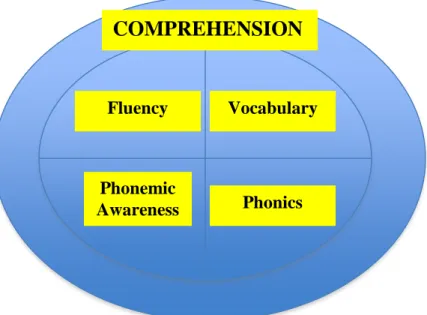
Reading is an important component needed for children to become independent and successful learners. This issue was so important to the United States government that in the late 1990s, they worked with the National Institute of Child Health and Human Development (NICHD) to start an organization that would research ways that show the best ways for children to read (National Reading Panel, 2016). The National Reading Panel (2016) identified five essential elements needed for independent reading. They included phonemic awareness, phonics, fluency, vocabulary, and comprehension (Konza, 2014). Although the National Reading Panel has identified elements needed to be a successful reader, Christopher et al. (2016) indicated that a student’s reading ability could
also be associated with the student’s cognitive thinking and reasoning. A student’s cognitive ability is composed of working memory, naming speed, inhibition, and
processing speed (Christopher et al., 2016). The combination of using cognitive skills and the essential components of reading can lead to positive outcomes for a student to
comprehend what they read (Melley-Lervag & Lervag, 2014). As students continue to develop the essential elements necessary to become independent readers, they increase the ability to build their comprehension skills.
Phonemic awareness. Phonemic awareness is the reader’s ability to focus on how words sound (Konza, 2014). As students develop how words sound, they must understand how sounds and spoken language relate to each other (Konza, 2014). Konza (2014) indicated that if students struggle with phonemic awareness, then they would have difficulty reading. Phonemic awareness is known to be a predictor of reading skills (Park & Lombardino, 2013).
Phonics. Phonics is a method of teaching beginners to read and pronounce words by learning the phonetic value of letters, letter groups, and especially syllables (Phonics, 2016). Sitthitikul (2014) stated that teaching phonics involves students learning how to recognize sounds and symbols that go together and manipulate sounds that lead to spelling words correctly. Berkeley et al. (2012) stated that some middle and high school students continue to struggle with decoding. As adolescent students continue to struggle with decoding, it affects all the other components necessary to be successful in reading (Cirino et al., 2013).
Fluency. Fluency is when students can read words automatically with expression and be able to comprehend what they read (Rasinski, Rupley, Paige, & Nichols, 2016). Fluency allows a student to go from learning to read to reading to learn (Konza, 2014). When students are fluent in their reading, they are able to interpret information quickly. As students develop their fluency, their reading abilities will improve. Rasinski, Rupley, Paige, and Nichols (2016) indicated that three concepts are necessary for a student to be fluent in reading: accuracy, rate, and oral expression. Each component of fluency is necessary for students to become proficient readers. Accuracy is being able to decode and say words accurately (Rasinski et al., 2016). This includes quickly recognizing sight words. Rate is the second component of fluency. Rate refers to how quickly students read and understand text presented to them (Konza, 2014). The final component is oral
expression, which involves how a student reads as it relates to pitch, rhythm, and phrasing (Konza, 2014). As the three components are combined, they allow students to become fluent readers with the opportunity to develop better comprehension skills.
Students need to have opportunities to practice if they are to develop fluency. This can be presented through independent reading or oral reading. As students practice, they will have the chance to build their vocabularies and increase comprehension. Different interventions can be used to improve fluency. Rasinski, Rupley, Paige, and Nichols (2016) suggested that repeated oral readings, modeling, and scaffolding are ways to promote fluency for students. Oral reading involves students rehearsing text over and over through songs, reading, scripts, and poetry ((Rasinski et al., 2016).). Kuhn, Rasinski, and Zimmerman (2014) indicated that modeling fluency allows students to hear others
say and express the words so that the student can develop an understanding of how to use the word. Finally, teachers can use scaffolding by breaking the reading into different sections or chunks and then adjusted as needed to help the student improve their fluency (Kuhn, Rasinski, &Zimmerman, 2014).
Vocabulary. Vocabulary is defined as a list or collection of words, or phrases and words usually alphabetically arranged and explained or defined (Vocabulary, 2016). Konza (2014) indicated that vocabulary is necessary for students to comprehend the information they read. It had been suggested that indirect instruction in vocabulary helps students learn and build comprehension (Konza, 2014). This type of instruction can occur by parents reading to students and students building vocabulary as they listen. Students who do not receive this indirect instruction from parents are not able to capitalize on the opportunity to build their vocabulary (Konza, 2014).
A recent study indicated that direct instruction is a component necessary to help students build vocabulary (Konza, 2014). When direct instruction is used to build vocabulary, then all students receive instruction in vocabulary regardless of their background and exposure to reading (Konza, 2014). As schools continue to work with students to increase reading, they must include vocabulary-building activities in the curriculum. The vocabulary component is essential to reading and reading
comprehension.
Comprehension. The goal of all readers is to comprehend what they read. Comprehension is understanding what is read. Konza (2014) indicated that
phonics, phonemic awareness, fluency, and vocabulary, the goal is to help students comprehend material at an age-appropriate reading level.
Reading comprehension requires that students use different cognitive process to help them understand the reading process (Tighe & Schatschneider, 2014). Students learn in different ways, and this is also true as they develop the reading skills needed to be successful readers. Good readers are purposeful, understand the purpose of text, and actively engage with the text (Konza, 2014). When students have difficulty with basic reading skills, it makes their attempt to develop comprehension skills challenging. Instructional Interventions
Instructional interventions are effective measures to use to help struggling readers (Moreau, 2014). Some middle school students continue to struggle in the area of reading (Calhoon, Scarborough, & Miller, 2013; Fisher & Frey, 2014; Frijters, Lovett, Sevcik, & Morris, 2013; Pittman & Honchell, 2014). These students continue to benefit from systematic and explicit instruction, and preventions and remediation are offered to help students improve their reading abilities (Roberts, Vaughn, Fletcher, Stuebing, & Barth, 2013). When schools review different interventions, they must explore the different types of interventions and the fidelity of implementing an intervention in their school system.
Intervention is a key concept necessary to help students develop the skills to comprehend at their age appropriate reading level. Implementation of an intervention should be approached carefully and reviewed to determine the effectiveness of the intervention. Feldman, Feighan, Kirtcheva, and Heerin (2012) indicated that four key features are normally present in effective interventions. First, consideration should be
given to how the intervention is used (Feldman et al., 2012). Each student may require a different intervention for specific needs. Therefore, a review of how the intervention is used is imperative to ensure students are afforded the opportunity to succeed. Secondly, it is important to examine how the intervention is used with students. Educators may need to try different interventions with each student until one shows improvement for the individual student (Feldman et al., 2012). Next, the intervention needs to be evaluated to determine whether the intervention is effective or not (Feldman et al., 2012). Finally, reviewing the outcomes associated with the intervention is a key element (Feldman et al., 2012). If an intervention is going to be used, it should be one that has already produced positive outcomes in similar situations. The goal of the intervention is to help students who are not able to read age appropriate receive the direction instruction they need to read on grade level.
RTI is a tiered system of support used to identify which interventions are needed to help each student at his or her individual level. RTI is being used by school districts to determine the intensity of the intervention needed for struggling readers (Roberts et al., 2013). Students are placed into tiers based on their needs. Roberts (2013) indicted that the range is from Tier 1(less intense intervention) to Tier 3 (more intense intervention), which will include students who are having difficulty with decoding and comprehension. Roberts (2013) stated that the type of intervention and length of intervention is based on the student’s location in the tiers. A plethora of interventions are suggested to help students build the skills needed to read age appropriate materials.
Although students can benefit from interventions, providing direct instruction is also necessary to see gains in reading for middle school students (Roberts et al., 2013). Moreau (2014) indicated that students who experience reading problems in middle school experience difficulties in the areas of decoding and comprehension. Therefore,
interventions are necessary to help address these areas and guide improvement. Roberts et al. (2013) listed some middle school interventions to include summarization, question and answer, and monitoring. As more data is collected in this area, other interventions will be provided.
The literature review uncovered several studies related to improving students’ reading abilities. Burdumy et al. (2012) conducted a study that reviewed different reading interventions at the middle school level. Four reading comprehension interventions were implemented over a two-year period at 10 school districts with more than 200 schools and over 10,000 intermediate school students (Burdumy et al., 2012). Each school was assigned a number, one to four, and was randomly selected to utilize one of the four interventions. Read for Real, Reading for Knowledge, Project Criss, and Read About Scholastic were the reading interventions selected to use for the study (Burdumy et al., 2012). Teachers received training on how to use the different programs, and students also received the necessary materials for the interventions. Control groups and experimental groups were used during the implementation of the interventions.
Read for Real was used before reading strategies, during reading strategies, and after reading strategies to help students with activating prior knowledge, making connections, and recalling (Burdumy et al., 2012). Reading for Knowledge focused on
four key comprehension strategies: clarifying, predicting, summarizing, and questioning (Burdumy et al., 2012). Project CRISS used five strategies to help students become strategic learners. These strategies included background knowledge, purpose, text structure, writing and discussion, and organization (graphic organizers) (Burdumy et al., 2012). Read About taught the students ten comprehension strategies and different reading strategies to use when summarizing the author’s main ideas of a story (Burdumy et al., 2012). The different studies were reviewed to determine the effectiveness of each reading intervention utilized and whether or not the students improved their reading abilities.
The results from the interventions showed different outcomes. The Project CRISS and Read for Real interventions had no statistically significant effect (Burdumy et al., 2012). Read for Knowledge had a statistically significant negative result. The negative results indicated that after receiving the Read for Knowledge intervention, the students scored lower on the posttest than the pretest. (Burdumy et al., 2012). Read About was the only intervention that had a statistically significant positive effect. The student’s scores were higher on the posttest after receiving the Read About intervention (Burdumy et al., 2012). Burdumy et al. (2012) indicated that it is believed the Read About had a more positive effect due to teachers implementing the program accurately to the students and because it was the only program where the students received immediate, extensive feedback from teachers to help them improve their reading.
These individual interventions are examples of why interventions are needed, how interventions can be implemented, and how outcomes of the interventions can help
focusing on the needs of the students is the main concern. When implementing an intervention, the type of intervention should be one that will address the reading skill or skills that are lacking.
Types of Reading Intervention Programs
Different RTI programs have been established to help increase literacy among students, specifically at the middle school level. Although these programs are limited in numbers, some programs have been identified and reviewed to determine their
effectiveness. A few RTI programs are described below.
Reading Edge. Reading Edge is a program designed for middle schools. It is a literacy program that can be offered in whole group sessions; however, it does provide a stand-alone option. The program is currently delivered through 60-minute instructional settings and consists of eight levels of instructions with four learning domains (What Works Clearinghouse Intervention Report: Reading Edge, 2012). The four learning domains in the Reading Edge program are alphabetic, reading fluency, comprehension, and general literacy achievement. Students learn the basic decoding skills and reading fluency skills in Level 1 to Level 3 and Level 4 to Level 8 focus on comprehension. Level 3 and above provides instruction on comprehension strategies to help students improve their reading skills.
Reading Naturally. Reading Naturally was created in 1989 to help students achieve fluency and is still used today (Read Naturally, 2016). It utilizes a three-approach method to help struggling readers. The three-approach method involves teacher
intervention programs have been created based on the Reading Naturally strategy intervention. The intervention continues to be available with the addition of online applications.
Reading Naturally can be used as a supplemental reading program for students who experience difficulty in reading. It uses books, audio and computer software to improve fluency, comprehension, and accuracy in reading (What Works Clearinghouse Intervention Report: Reading Naturally, 2013). Students work independently with the program and monitor their progress. The program uses modeling of story reading, repeated reading of text, and monitoring of the program as the main strategies.
Odyssey Reading. According to What Works Clearinghouse (2012), Odyssey Reading was released or published between 1989 and 2011 to address phonics, context, decoding, and comprehension (What Works Clearinghouse Intervention Report: Odyssey, 2012). It is currently in use and published by Compass Learning as a web-based program for reading and language arts. Odyssey Reading was created to use as a stand-alone curriculum or has a supplementary reading intervention program. The focus of Odyssey Reading is to provide instruction in phonics, context, decoding, and comprehension (What Works Clearinghouse Intervention Report: Odyssey, 2012). The program uses differentiated instruction through a computer program to deliver the instruction.
Academy of Reading. In 2004, Academy of Reading was released in a web-based format utilizing short intensive sessions to help students in reading (What Works Clearinghouse Intervention Report: Academy of Reading, 2014). Academy of Reading currently uses a structured curriculum to help improve student’s reading skills. The
program is administered during the classroom instructional time. It focuses on phonemic awareness, phonics, fluency, vocabulary, and comprehension (What Works
Clearinghouse Intervention Report: Academy of Reading, 2014). The program breaks each focus area into smaller parts as it provides instruction to the student online and adjusts the instruction based on the student’s responses.
Successmaker. Successmaker is a supplemental program used along with the regular language arts curriculum. The program is computer based and adjusts to the students’ reading abilities, and new skills are introduced throughout the lesson. The program starts with a section called Foundation, which focuses on basic skills, and Exploreware contains opportunities for students to build their reading and writing skills (What Works Clearinghouse Intervention Report: Successmaker, 2015). The program indicates the areas of comprehension and reading fluency.
Wilson Reading System. WRS is a reading intervention program that teaches word structures to students. A multisensory approach is used to help students complete a 12-step process to develop the skills to learn phonics, decode words, and spell
(Wilson Language Training, 2016). Students are taught a “sound tapping” process as they recognize different phonemes, as well as, use a pencil technique to separate syllables (Wilson Language Training, 2016). WRS is available for students in grades two through twelve and for adults who experience difficulties with recognizing sound and decoding (Wilson Language Training, 2016). The WRS is composed of the following components; (a) phonemic awareness, (b) decoding, (c) fluency, (d) vocabulary, and (e) comprehension (Wilson Language Training, 2016).
As noted earlier in this section, the NRP identified five pillars students need to succeed in reading, which include phonemic awareness, phonics, fluency, vocabulary, and comprehension (Cervetti & Hiebert, 2015). To address those areas, WRS provides explicit and direct instruction by utilizing a 10-part lesson plan through three blocks in a small group or individual setting (Wilson Language Training, 2016). Block 1 includes Lesson Plans 1-5 and focuses on word study, which includes phonemic awareness, decoding, vocabulary, fluency and comprehension (Wilson Language Training, 2016). Block 2 includes Lesson Plans 6-8 and provides instruction, which includes spelling, sight word instruction, vocabulary, and proofreading (Wilson Language Training, 2016). Block 3 includes Lesson Plans 9-10 and helps develop reading fluency and comprehension, visualization at the text-level (both literary and informational), and oral language skills.
Effective interventions are needed to help struggling readers acquire the skills necessary to be successful readers and lifelong learners (Scammacca, Roberts, Vaughn, & Stuebing, 2015). Each intervention listed above focuses on programs middle schools can utilize to improve the reading abilities of struggling readers. The primary emphasis of the different interventions involves students learning the basic reading skills and then how to implement those skills as they work towards becoming productive readers. Direct instruction and providing strategies to help students improve their reading are important components schools can use to determine interventions that would meet the needs of their students who have difficulty with reading (Cheung, Mak, Sit, & Soh, 2016; Ciullo et al., 2016).
Implications
The project will add to the body of knowledge on reading intervention strategies for middle school students, but caution should be taken not to extrapolate beyond the project student body. The school can help meet the needs of specific students by providing reading intervention models targeted directly at those student’s needs. It may be necessary for school divisions to implement reading interventions earlier in the student’s education to increase reading proficiency to ensure that students remain on their respective grade level. If the school leaders make changes to
strengthen the reading intervention models, they may see an increase in the reading proficiencies at the middle school level. Improved reading scores may provide
opportunities for the school to meet state accreditation and possibly receive additional funding to help each school within the district.
Summary
This section was a review of literature related to the project study, including the background on reading comprehension, instructional interventions, understanding Tier 2 interventions, and types of reading programs to help struggling readers. The literature review indicated that understanding the role of interventions, as it relates to students not reading age appropriate materials, is imperative to helping students succeed and be proficient readers in the school setting. The review confirms the purpose of the study, which was to determine the effect of a Tier 2 intervention for eighth-grade readers who were not able to read on grade level.
Section 2 is a description of the research design and approach, as well as a description of the research questions. Information discussing the instruments and variables of the study will also be discussed. This will include a description of the
instruments used, data collection tools, and an analysis of the data. Additional sections of the study will consist of an evaluation of the curriculum plan, professional development, and policy recommendation. The study will conclude with the assumptions, limitations, scope, delimitations, and a reflection.
Section 2: The Methodology Research Design and Approach
A quasi-experimental pretest/posttest design was used to measure the impact the WRS intervention has on the SGA posttest reading scores and SRI scores for eighth graders who received the intervention for 16 weeks. Lodico, Spaulding, and Voegtle (2010) indicated that if a study requires pretest/posttest scores, then the project is a quasi-experimental design. These assessment scores will be used to determine if there is a significant difference between the eighth grade reading SGA pretest and posttest scores, as well as, the students SRI scores. These assessments are administered online. A comparison group was not used because the school wanted to focus on the needs of those students who had not passed the SGA pretest, due to the low pass rate on the English statewide assessment scores.
The Lexile scores received on the SRI indicate the student’s reading level. The first SRI was administered online to the students at the beginning of the school year and prior to the WRS intervention. The second SRI was administered at the end of the school year and after the WRS intervention. The teachers obtained the scores electronically from an Excel spreadsheet. Differences in the student’s reading level were examined for significant differences.
Setting and Sample
The study site is a small rural middle school located in Virginia with an enrollment of approximately 450 students. The sample consisted of 82 eighth-grade students who scored below 75 percent on the eighth-grade reading SGA pretest and
received below an 849 Lexile score on the beginning of the year SRI test. For the 2015-2016 school year, the student racial/ethnic demographics of the school were 47 percent Blacks, 39 percent Whites, 8 percent two or more race, 5 percent Hispanic, 0.3 percent American Indian and 0.7 percent Asian (Virginia School Report Card, 2015). Within this student population, 16.6 percent were students with learning disabilities and 55 % of students received free and reduced lunch (Virginia School Report Card, 2015). The Virginia Department of Education indicated that the average percentage of students receiving special education in Virginia is 15 percent, with 35.9 percent of students receiving free and reduced lunch (Virginia Department of Education, 2015).
A convenience sample was used to identify participants for the study (Creswell, 2012). A data file from the site school provided individual information on each of the 82 participants. The gender, race, reading level, eighth-grade reading SGA pretest scores, and eighth-grade reading SGA posttest were included in the data file. As Table 2
presents, 57 percent (n=47) of the participants were males and contributed to over half of the study population. Based on the demographics, the majority (50%) of participants were Black (n=41). A summary of the demographic characteristics of the study’s sample is shown in Table 2.
Table 2
Frequencies and Percentages for Sample Demographics
Demographics N % Gender Male 47 57 Female 35 43 Ethnicity Hispanic Asian Black White American Indian 5 1 41 34 1 6 1 50 41 1
Note. Due to rounding error percentages may not sum to 100%.
A power analysis was conducted to determine if the sample size would be sufficient to test the null hypothesis. The power analysis was used to test the null hypothesis with an alpha set of .05 and a medium effect size of .50. Based on the power analysis, a minimum sample size of 79 participants would be needed to achieve the power of .95. In using the power analysis, 82 pretest/posttest scores were sufficient.
Instrumentation and Materials
I examined the extent to which the 16-week WRS intervention (independent variable) impacted the difference between the pretest/posttest eighth-grade reading SGA scores (dependent variable) and pretest/ posttest eighth-grade SRI scores (dependent variable) for students who received the WRS intervention.
Dependent Variable
The eighth-grade SGA pretest and SGA posttest assessments consist of questions in the areas of (a) word analysis, (b) comprehension of nonfiction, and (c) comprehension of fiction (Virginia Department of Education, 2015). The scores are calculated based on
the student’s answers to these questions in each area. The SRI Lexile reading scores measure the students’ reading level based on a computer-based assessment. Based on a preassessment, the computer determines the student’s current reading level and provides additional text to determine their overall reading level (The Lexile Framework for Reading, 2016). The site school provides a data file with the scores of each assessment included. This study addresses the effect of the WRS intervention on the student scores. Other factors such as, motivation, readiness, and teacher’s perception are not included in this study.
SGA Test Scores
The SGA is an assessment designed by Interactive Achievement used by the state of Virginia (Interactive Achievement, 2015). It was formally called Benchmarks and was changed to SGA to align with the Virginia Standard of Learning (SOLs). The Virginia Department of Education (2015) based the decision to use the SGA, as a growth assessment for the state, on reports from other states presented by Interactive
Achievement. Based on the Virginia Department of Education (2015), other states found a positive correlation between the student growth assessment and probability of success on the statewide assessments.
Ohio, Tennessee, and North Carolina were states that reported positive correlation between the modeled student growth assessments used in their states, as compared to the scores the students received on the actual statewide assessment (Virginia Department of Education, 2015). Ohio found that the SGA was providing information that students were testing 3 years in advance of their actual grade level (Virginia Department of Education,
2015). For example, the eighth-grade math tests for the current fifth grade students were more closely correlated to students’ actual performance than the math scores they received on their seventh grade test. Tennessee showed that students who scored at least 70% on the SGA received either proficient or advanced on the statewide assessment (Virginia Department of Education, 2015). The reports indicated the SGA are stable and reliable (Virginia Department of Education, 2015).
The SGA is presented in the same format as the end of the year statewide assessments (Interactive Achievement, 2016). This involves multiple-choice questions. The SGA will be used to determine the progress students make on the reading statewide assessment (Interactive Achievement, 2016). It is taken three times a year during the fall, midyear, and end of the year (Virginia Department of Education, 2015). In addition, the SGA is also used as a growth assessment to determine the areas where the student may continue to need targeted instruction to help them pass the statewide assessment (Interactive Achievement, 2016).
Students are administered the SGA online and answer approximately 50 multiple choice questions on word analysis and comprehension Interactive Achievement, 2016). The SGA assessments are measured on a score range of 0 to 100. When the students take the SGA during the various times of the school year, the objective is for the students to score at least 75 percent on the assessment. This score is considered a passing grade for the school district Interactive Achievement, 2016). The SGA also provides information about the student growth on the assessment. The school reviews the SGA scores from the fall to midyear (January) to the end of the school year and determines if the student made
in growth on the assessment from one-time period to the next time period Interactive Achievement, 2016).
SRI
The SRI is a research based, computer-adaptive assessment that measures a student’s reading comprehension and reading ability (The Lexile Framework for
Reading, 2016). The student’s reading ability is measured by a scale called Lexile scores, which measures reading capability and text difficulty (The Lexile Framework for
Reading, 2016). The Lexile scores are determined based on the text read by the student. The Lexile measures the text based on the difficulty of the words and complexity of the sentences in the text read by the student. As students read the text, the computer program adjusts the text based on the sentences and words read by the students. The Lexile score ranges from 200L to 1700L with the lower number indicating an easier to read texts to a more difficult text (The Lexile Framework for Reading, 2016). The SRI can be used to determine the appropriate text for a student and monitor that student’s reading growth. The validity and reliability of the SRI program have been ensured (The Lexile
Framework for Reading, 2016). The Lexile score can be used to help teachers determine the appropriate reading level for a student and determine instruction (Matching Readers with Texts, 2017). The Lexile score is a widely known measure and is assigned to different material, which is used by teachers to help determine reading materials for students (The Lexile Framework for Reading, 2016). The Lexile score falls within certain Lexile ranges and are equivalent to different grade levels. However, the student’s Lexile
score has the potential to increase as the student’s reading abilities improve (Matching Readers with Texts, 2017).
The site school used the SRI Lexile scores to determine the reading level of each participant in the study. In addition, the site school utilized the SRI Lexile scores to determine if the student could benefit from additional reading interventions to help them succeed. The site school provided WRS interventions for students who did not pass the eighth-grade reading SGA pretest and received a SRI Lexile score under 849, which falls within the sixth grade Lexile grade level. Based on the SRI Lexile scores, approximately 49% of the eighth-grade participants scored within the Lexile score grade levels of one through four (Table 3).
Table 3
Frequencies and Percentages for Eighth-Grade Lexile Scores
Grade Level Lexile Scores N % 100-299(Grade 1) 2 3 300-499(Grade 2) G 15 18 500-599(Grade 3) 8 10 600-699(Grade 4) 15 18 700-799(Grade 5) 20 25 800-849(Grade 6) 22 25
Note. Due to rounding error percentages may not sum to 100%. Independent Variable
The independent variable in the study is WRS intervention. The program was implemented for 16 weeks during the 2015-2016 school year. Since reading is the focus of the study, the components of the National Reading Panel (2016), along with the implementation of the WRS were addressed during this study. WRS follows a 10-part
lesson plan that addresses phonemic awareness, phonics and word study, encoding, high frequency/sight word instruction, fluency, vocabulary, and listening and reading
comprehension in a sequential and method (Wilson Language Training, 2016). WRS (a) includes systematic and cumulative approach to teach total word structure for decoding and encoding, (b) makes all instruction multisensory and interactive, (c) uses a unique sound tapping system to help students segment and blend sounds, (c) teaches concepts through the manipulation of sound, syllable, and suffix cards, (d) contains collections of controlled and decodable text, and (e) vocabulary (Wilson Language Training, 2016).
WRS is divided into three blocks that use a sequential system in 12 steps (Wilson Language Training, 2016). Steps 1-6 teach word knowledge and are taught according to six syllable types (Wilson Language Training, 2016). Steps 7-12 teach more complex concepts and advanced language structure (Wilson Language Training, 2016). According to (2016), the blocks are comprised of elements that provide reading and spelling components to help students learn to read.
Block 1: Parts 1-5 of the lesson plan are introduced and the emphasis is on word study.
1. Quick Drill: Students accurately provide letter name-keyword-sounds at each session.
2. Teach/Review Concepts for Reading: Finger tapping is used to help teach the students segmentation and blending. Teacher makes words with sound or syllable cards and discusses word structure. Students read words and demonstrate knowledge of word structure.
3. Word Cards: Using flashcards, students read card packets that include targeted vocabulary words and high frequency.
4. Wordlist Reading: Students read wordlist.
5. Sentence Reading: Students read sentences with proper phrasing to the teacher and challenging vocabulary is addressed.
Block 2 includes Parts 6-8 and emphasizes spelling.
6. Quick Drill in Reverse: Students match letters to sounds produced by the teacher.
7. Teach/Review Concepts for Spelling: Students make words with letter tiles or syllable cards, as teachers ask them questions about those words. 8. Written Work Dictation: Students write five sounds, five words, nonsense
words, sight words, and two-three sentences with teacher asking questions.
Block 3 includes the last section of the 10-part lesson plan, which contains Parts 9 and 10 of the lesson plans and emphasizes fluency and comprehension 9. Controlled Passage Reading: Using pencil-tapping technique, students read
text passages and retell what they read.
10.Listening Comprehension/Applied Skills: The teacher reads a story to the student and student retells the story to the teacher.
The program suggests that the WRS is administered in 45-60 minute increments three to five times per week. Students at the site school will receive the WRS by an English teacher. The sessions were 45 minutes a day, two to three times a week, for 16 weeks.
Data Collection and Analysis Data Collection
I started collected the data from the school once the IRB was approved (IRB approval number 06-12-17-0430012). The data collection consisted of the eighth-grade reading SGA pre- and posttest scores for each participant. In addition, the SRI Lexile scores were obtained for each student participating in the study to determine the reading abilities. The eighth-grade English teachers administered the eighth-grade reading SGA pretest to the students midyear of the school year (January) and prior to the
implementation of WRS. The SRI was administered at the beginning of the school year. The English teachers administered the eighth-grade reading SGA posttest 1 week after the 16-week intervention of the WRS. The SRI was administered the second time after completing the intervention.
The eighth-grade reading SGA pretest and posttest were administered online and the scores were automatically recorded electronically in the Interactive Achievement database. The SRI Lexile scores were obtained electronically by the teacher and entered into an Excel sheet created by the site school. I retrieved the eighth-grade reading SGA pretest and posttest scores from a secured data file from the site school. The SRI Lexile excel sheet was provided online by the school through a secured document. Any
identifying information of the student was replaced with an individual Student ID that I assigned.
Data Analysis
repeated measure and nonparametric design. Lodico, Spaulding, and Voegtle (2010) indicated that nonparametric tests use nominal or ordinal data and does not require the data to be normally distributed. A nonparametric method does not make any
presumptions and ignores data characteristics (Anjum, Kanwal, Altaf & Shaukat, 2016). The nonparametric design utilized for this study was the Wilson Signed Ranks Test. This test examines the differences on performance tests that involve small amounts of data (Neuhauser, 2015).
The Wilson Signed Ranks Test analyzed the effect the Tier 2 intervention had on eighth-grade English students who received the WRS intervention. The study objective was to compare the means for a sample of 82 participants, without using a comparison group, specifically reviewing the scores before and after the treatment. Neuhauser (2015) indicated that in practical applications distribution of scores generally deviate from a normal distribution. This makes the nonparametric test appropriate for analysis.
The test scores and reading level information was uploaded into the Statistical Package for Social Sciences (SPSS). The test scores include the eighth-grade reading SGA pretest and posttest scores, as well as, the reading level. The descriptive analysis used to examine the scores was calculated using SPSS and included the mean, variance, minimum, maximum, and p-values (Creswell, 2012). The Wilcoxon Signed Ranks Test was the nonparametric assessment used to analyze the data in the study to determine if a significant difference existed as it relates to each research question.
Assumptions, Limitations, Scope and Delimitations
The intent was to determine if implementing a Tier 2 reading intervention for students who are not reading on grade level would help the students improve their posttest eighth-grade reading SGA scores. One assumption is that the teacher will present the
intervention in the order recommended by the WRS manual. The WRS must be
implemented as presented in the manual. It will be assumed that the teachers will record the data correctly. An assumption will also be made that students took their time to answer the questions on the SRI assessment to obtain an appropriate reading level. A related assumption is that the students will put forth their best effort on all assessments. Finally, an assumption will be made that students participated in all intervention sessions.
Delimitations
The purpose of the study was to determine the effectiveness of a Tier 2 reading intervention in a school division. The study does not cover the effect of teacher training on how to effectively implement an intervention. Furthermore, the study did not intend to gather the perceptions of how teachers and students feel about reading interventions. This study will be limited due to the fact the site school is a small school and may not
generalize to a larger school setting. Finally, the study will focus on the site school participants and may not generalize to other school settings.
Limitations
One limitation to the study will be the 16-week time frame for the intervention because additional time may be necessary to see progress in the students’ reading
abilities. Some studies suggest that students with severe reading programs need intensive interventions and instruction to make progress (Moreau, 2014 & Roberts, Vaughn,
Fletcher, Stuebing, & Barth, 2013). The teachers may not implement the WRS in the correct format or utilize the materials accurately as recommended in the manual is a possible limitation. The teachers may not record the student reading scores accurately. The students could have improved their reading during the 16 weeks; regardless of the intervention is a limitation to the study. The midyear (January) eighth-grade SGA will be used as the pretest score and the end of the school year SGA scores will be used as the posttest is a limitation. Another limitation involves the researcher’s current position as Director of Special Education and Student Services. The researcher obtained this position after the research had started.
Protection of Participants’ Rights
All human subject requirements will be followed in agreement with Walden University IRB procedures and the school district protocols. Any permission necessary to obtain archival data will be obtained from the appropriate individual. Student privacy will be maintained throughout the data collection process and analysis of the data. The study will be conducted in accordance with all human subject requirements of the Virginia Public School System protocols.
Data Results Descriptive Analysis Demographics of the Study Sample
Information was gathered to identify the demographics of the students participating in the study. There were more males (47, or 57%) than females (35, or 43%). The study sample consisted of more Blacks (41, or 50%) than Whites (34, or
41%). The remaining students were Hispanic (5, or 6%), Asian (1, or 1%), and American Indian (1 or 1%). All participants in the sample received free or reduced lunch (71, or 100%). The information is shown in Table 2.
Descriptive Analysis of the Student Growth Assessment
The SGA measures along a scale of 0 to 100. The SGA eighth-grade English pretest scores ranged from 7 to 78 with M=42.98 and SD=19.60. The range for the SGA eighth-grade English posttest scores were 16 to 86 with M=52.65 and SD=19.18. There were mean gains of 9.67 from the SGA pretest and posttest scores, suggesting that the eighth-grade English SGA posttest scores were higher than the eighth grade English SGA pretest scores. Table 4 shows the means and standard deviation for the SGA scores. Descriptive Analysis of the Student Reading Inventory
The SRI measures Lexile reading scores using a scale of 0 to 1220 with a minimum score of 820 and a maximum score of 1140 for eighth graders. The pretest SRI Lexile reading scores for the eighth grade English students ranged from 288 to 849 with M=656 and SD=170. The posttest SRI reading scores for the eighth grade English students ranged from 302 to 854 with M=674 and SD=165. There were mean gains 18 between the SRI pretest and posttest scores. Means and standard deviations for the SRI are presented in Table 4.